


Behavioural research, defined as ‘systematic investigation undertaken to advance knowledge and understanding about behaviour’ (BR-UK Behavioural Concept Group), has gained increasing prominence in addressing global societal challenges, with its application expanding across public, private and third sectors (Sanders et al., Reference Sanders, Snijders and Hallsworth2018; Naru, Reference Naru2024), often under the umbrella of ‘behavioural insights’. There is growing recognition that interdisciplinary collaboration is essential to the success and scalability of applying behavioural research to complex problems (Hart et al., Reference Hart, Davan Wetton, Coupe, Bauld, Alejandre and Michie2025; Hertwig et al., Reference Hertwig, Michie, West and Reicher2025). However, much of behavioural research remains siloed, with notable disconnections between ‘pure’ (designed to gain new knowledge) and ‘applied’ (designed to apply new knowledge) research communities, within and across sectors and disciplines, with climate action as a prime example of this (Naru, Reference Naru2024; Lah, Reference Lah2025). This translation gap between behavioural research theory and practice is also apparent in the application of behavioural research to public health policy and practice (Byrne-Davis et al., Reference Byrne-Davis, Turner, Amatya, Ashton, Bull, Chater, Lewis, Shorter, Whittaker and Hart2022; Moffat et al., Reference Moffat, Cook and Chater2022).
The UK has recently advanced efforts to enhance national capability and leadership in behavioural research through the Economic and Social Research Council’s £17 million investment to establish the National Capability in Behavioural Research (NCBR) programme. This initiative currently encompasses two major components: Behavioural Research UK (BR-UK), a hub designed to provide leadership for UK behavioural research, connect diverse stakeholders and drive innovation, and the Centre for National Training and Research Excellence in Understanding Behaviour, responsible for training the next generation of behavioural researchers (doctoral and post-doctoral) and providing tailored Continuing Professional Development for consumers and producers of behavioural research working outside of academia. The NCBR programme seeks to support a more integrated and cohesive behavioural research landscape, enhancing the UK’s ability to tackle major societal challenges through a multidisciplinary approach to understanding and influencing human behaviour.
The extent and nature of behavioural research activity in the UK are not yet fully understood, and interpretations of what constitutes ‘behavioural research’ vary across sectors and communities. To advance capability in this field and strengthen its application, the first critical step is to develop a clearer picture of the existing landscape. Building an effective and inclusive strategy requires a shared understanding across diverse viewpoints of who is conducting what kinds of behavioural research, and where this work is taking place. Such understanding can help to identify and prioritise the field’s strengths, gaps, needs and opportunities.
In this context, capability is understood through the COM-B model (Michie et al., Reference Michie, Van Stralen and West2011), a framework for understanding behaviour that proposes three essential components: Capability, Opportunity and Motivation, which together interact to generate Behaviour. Capability here specifically relates to the psychological and physical capacity to engage in behavioural research, encompassing the relevant knowledge and skills required to do so. For both individuals and organisations, this includes not only a conceptual grasp of behavioural principles but also the practical ability to apply them effectively within policy and practice settings.
Previous initiatives to map global behavioural science networks have primarily relied on online surveys to collect data on research activities, public policy, thematic areas, fields of application, team composition, geographic distribution and perceived challenges or opportunities for improvement (Wendel, Reference Wendel2020; World Health Organization, 2023; Naru, Reference Naru2024; Behavioural Teams, n.d.; BeSci, n.d.; Teams, n.d.). We aim to add to these surveys by capturing UK perspectives across a broader range of contexts where behavioural research is conducted and applied. We report here the first phase of a UK-wide survey of behavioural researchers and research users, building on work mapping UK organisations and networks engaged in behavioural research. The two-part survey explored people’s roles, capabilities and activities (Part 1), alongside background and identity information to understand the representativeness of respondents (Part 2). During the same period, a partner survey was conducted by Zinc VC (a member organisation of BR-UK) to investigate behavioural research capability in start-up and scale-up companies. The methods (https://osf.io/hvn87) and full results of the Zinc VC partner survey are reported elsewhere (Fomina, Reference Fomina, Webster and Carey2025). In this paper, we present a pooled analysis of responses from both surveys.
Findings will enhance collective understanding of the UK’s behavioural research landscape, inform the allocation of a commissioning fund, contribute to an online map of behavioural research activity and support the development of a national network to foster collaboration and build research capability.
Our specific research questions addressed in this study are, across public, private and voluntary (‘third’) sectors:
1. What behavioural research activity is reported across different UK regions, and in what work, study or volunteer roles?
2. What societal issues and topics are being investigated by behavioural researchers?
3. What are the perceived current and future needs for behavioural research?
4. What is the organisational capacity for engaging with behavioural research (e.g., researcher/user numbers relative to organisation size)?
5. In what areas and through what means would behavioural researchers and research users like to improve their capability?
Methods
We conducted a cross-sectional online survey of UK-based behavioural researchers and behavioural research users between 15 April and 14 August 2024 via Qualtrics XM. For the purpose of this study, a behavioural researcher was defined as ‘Someone who works on behavioural research projects, as part of a formal role in employment, study or volunteering’, and a behavioural research user as ‘Someone who draws upon behavioural research projects, as part of a formal role in employment, study or volunteering’.
The study was pre-registered at https://doi.org/10.17605/OSF.IO/73BKF). A more comprehensive overview of the methods can be found in our published protocols (https://osf.io/2rab8; https://osf.io/pyjct; https://osf.io/hvn87). There were no deviations to report.
Participants
Participants were UK-based behavioural researchers or research users aged 18 or over, recruited through purposive (BR-UK mailing listFootnote 1), convenience (website and social media) and snowball sampling (email referrals). Recruitment materials encouraged responses from underrepresented groups, with optional demographic questions included. Participant information and consent statements with required tick boxes were included at the start of the survey to ensure all participants provided informed consent; no incentives were offered. No set target sample size was set, as the population size of UK behavioural researchers is not known; however, as per BR-UK usual practice, we sought guidance from our internal equality, diversity, inclusion and intersectionality (EDII)Footnote 2 group to ensure our approach was inclusive. This resulted in the inclusion of the following statement in our posts: ‘we welcome responses from people who belong to any parts of society that are under-represented in the field of behavioural research’, as well as the inclusion of optional demographic questions to help understand to what extent respondents are representative of UK society.
Materials
The online survey (Qualtrics XM) had two parts. Part 1 asked about roles, sectors, research topics, activities, outputs and capability needs, using categorical, Likert-scale and free-text items. Items were developed by the research team, informed by prior surveys (Wendel, Reference Wendel2020; World Health Organization, 2023) and reviewed for clarity by four external behavioural science researchers who are not working directly as part of BR-UK. Part 2 was optional and collected demographic information developed by BR-UK’s EDII Group. Full survey items are available via OSF: https://osf.io/pcdgz.
Procedure
After providing informed consent, participants completed Part 1 (∼10 min). Those who identified as working in start-ups or scale-ups were redirected to a partner survey by Zinc VC; these data were later pooled with BR-UK survey responses. Participants who did not identify as a behavioural researcher or behavioural research user were screened out. At the end of Part 1, respondents could provide contact details for future studies. Participants could then opt to complete Part 2 (∼2 min), which was fully anonymised. Respondents could skip any question or select ‘prefer not to say’.
Data preparation
Responses from both surveys were combined, with exclusions for nine respondents outside the UK and 92 bot responses. Although concerns around potential bot-generated responses are increasingly relevant in online survey research (Griffin et al., Reference Griffin, Martino, LoSchiavo, Comer-Carruthers, Krause, Stults and Halkitis2022), in this study, such data were easily identified and excluded. The extensive free-text fields, which would have posed difficulty for bots, provide additional assurance that the final analysed dataset is of high integrity. Data were cleaned by removing ‘N/A’ entries, redacting identifying details and correcting clear errors. Details of cleaning steps are available via OSF: https://osf.io/2rab8.
Data analysis
Quantitative and qualitative analyses were conducted on the pooled, cleaned data, in line with the study protocol (https://osf.io/r4d5k) and data analysis plans (https://osf.io/2rab8 and https://osf.io/pyjct).
Quantitative analyses
Quantitative (categorical and Likert scale) data were summarised with descriptive statistics in RStudio (v2023.12.1) and Excel (v2142). Missing data were omitted on a question-by-question basis. Where relevant, we report this by providing the number of respondents who answered each question (base size) and the percentage of those invited who responded (response rate).
Qualitative analyses
Qualitative (free-text) data were analysed through inductive and deductive content analysis using NVivo (v.14.).
Responses regarding societal topics and use of theories, models and frameworks and future priority areas were coded inductively through the six stages of data familiarisation, open coding, category formation, theme development, theme refinement, and where appropriate, frequencies of coded responses were recorded. Responses to questions about barriers to conducting or using behavioural research were analysed deductively by mapping responses to the COM-B model (Michie et al., Reference Michie, Van Stralen and West2011).
Sector-specific personas
Personas were developed using a structured synthesis of quantitative and qualitative survey responses consistent with established persona development methodologies (Jansen et al., Reference Jansen, Jung, Nielsen, Guan and Salminen2022). Quantitative responses on reported needs, barriers, organisational size, research focus and use of models, theories and frameworks were analysed to identify patterned similarities across respondents, while qualitative open-text responses were used to enrich and interpret these patterns. Personas were constructed as data-grounded profiles representing coherent clusters of needs, organised by sector and shaped by organisation size. Personas do not represent individual respondents but were used as a tool to synthesise complex patterns across the dataset and facilitate interpretation of sectoral differences.
Results
Respondents
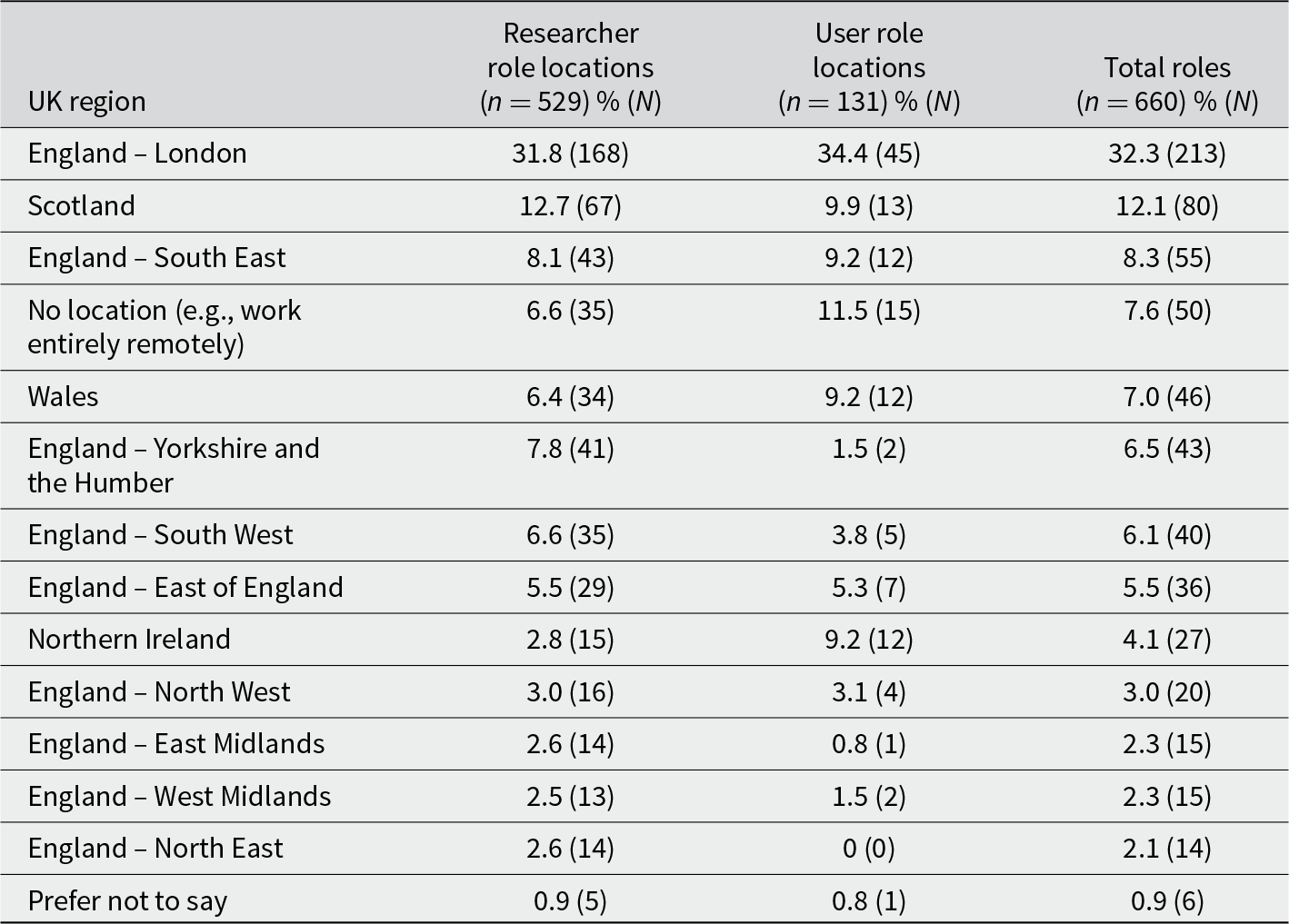
In total, 529 behavioural researchers and 128 behavioural research users responded to the survey, including 69 respondents in UK start-ups and scale-ups from the Zinc VC partner survey. Table 1 presents the number of roles reported by region of the UK (note that participants could respond up to 1 main employment role, 1 study role and 1 main volunteering role). Approximately one-third of roles were based in London.
Number of roles reported by region of the UK

Table 1 Long description
UK region is listed with percentages and counts for researcher role locations out of 529, user role locations out of 131, and total roles out of 660. Researcher roles by region are: England London 31.8 percent 168; Scotland 12.7 percent 67; England South East 8.1 percent 43; no location 6.6 percent 35; Wales 6.4 percent 34; England Yorkshire and the Humber 7.8 percent 41; England South West 6.6 percent 35; England East of England 5.5 percent 29; Northern Ireland 2.8 percent 15; England North West 3.0 percent 16; England East Midlands 2.6 percent 14; England West Midlands 2.5 percent 13; England North East 2.6 percent 14; prefer not to say 0.9 percent 5. User roles by region are: England London 34.4 percent 45; Scotland 9.9 percent 13; England South East 9.2 percent 12; no location 11.5 percent 15; Wales 9.2 percent 12; England Yorkshire and the Humber 1.5 percent 2; England South West 3.8 percent 5; England East of England 5.3 percent 7; Northern Ireland 9.2 percent 12; England North West 3.1 percent 4; England East Midlands 0.8 percent 1; England West Midlands 1.5 percent 2; England North East 0 percent 0; prefer not to say 0.8 percent 1. Total roles by region are: England London 32.3 percent 213; Scotland 12.1 percent 80; England South East 8.3 percent 55; no location 7.6 percent 50; Wales 7.0 percent 46; England Yorkshire and the Humber 6.5 percent 43; England South West 6.1 percent 40; England East of England 5.5 percent 36; Northern Ireland 4.1 percent 27; England North West 3.0 percent 20; England East Midlands 2.3 percent 15; England West Midlands 2.3 percent 15; England North East 2.1 percent 14; prefer not to say 0.9 percent 6. England Yorkshire and the Humber is higher for researcher roles than user roles, while Northern Ireland and no location are higher for user roles than researcher roles.
Background characteristics and representativeness of UK society
Of the 529 participants, 467 (71 per cent) provided optional responses to Part 2 of the surveys about their background and identities. Results are compared to national average data based on the Office for National Statistics’ 2021 Census data, provided in the supplementary materials (Supplementary Table 1). Of the 467 respondents, the majority identified as women (68 per cent, n = 315), British (60 per cent), White–UK (63 per cent) and heterosexual (80 per cent). Most reported English as their main language (90 per cent) and no religion or belief (67 per cent).
Characteristics of behavioural researchers’ roles
Of 529 researchers who took part in the surveys, 92 per cent work on behavioural research as part of their job (including employment, self-employment and freelance); 13 per cent as current students in higher education, and 5 per cent in voluntary roles; 1 per cent reported ‘none of the above’ (base size 522, 99 per cent response rate). The largest job sector was academia (43 per cent), followed by 26 per cent in the private sector, 24 per cent in the public sector, 5 per cent in the third/voluntary sector and 2 per cent ‘other’ (base size 485, 100 per cent response rate).
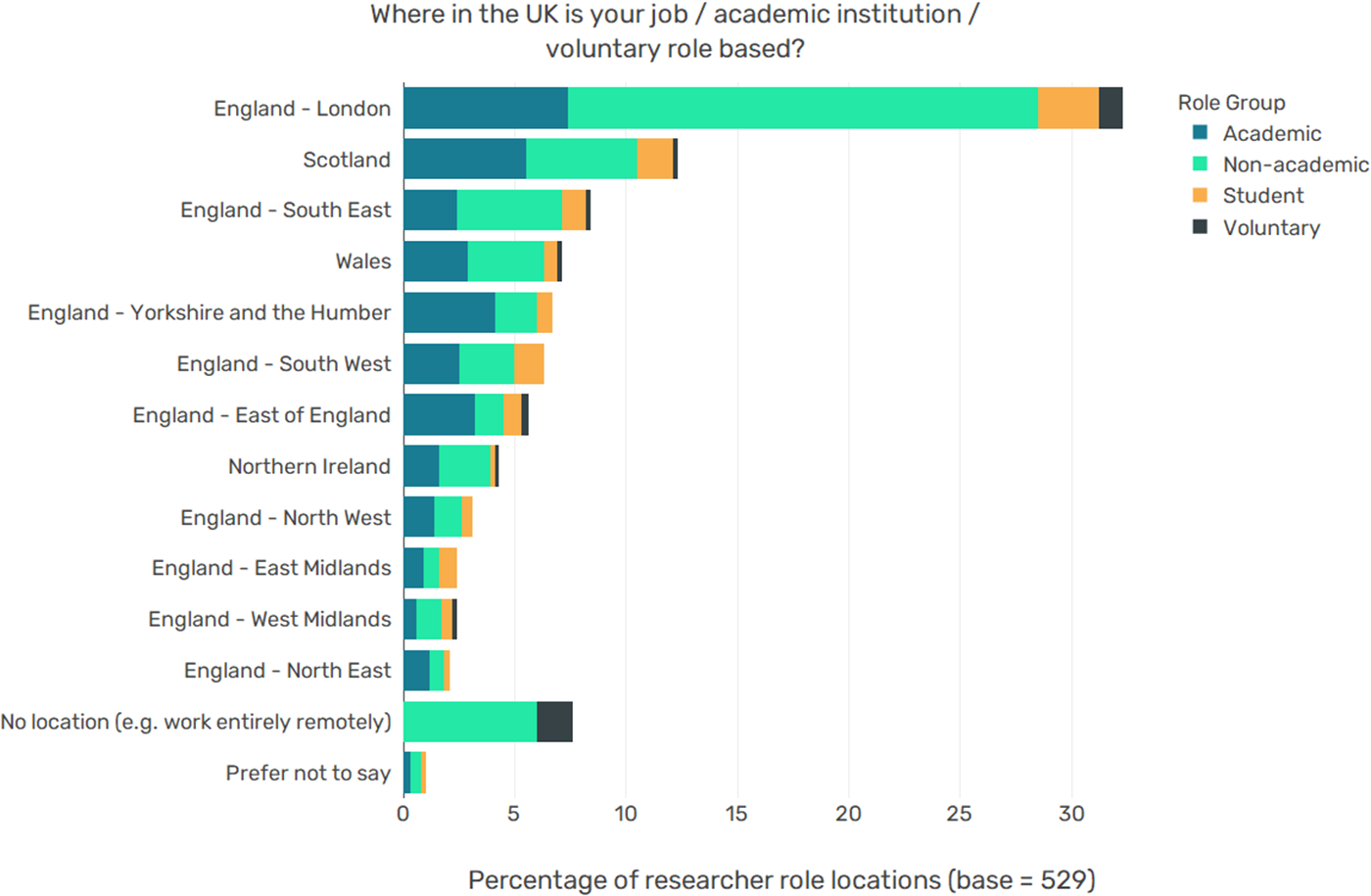
Figure 1 gives a breakdown of academic, non-academic, student and voluntary role locations by region of the UK. Non-academic jobs accounted for the largest proportion of roles based in London, or with no location (e.g., work entirely remotely).
Behavioural research roles by region of the UK.

Figure 1 Long description
Horizontal stacked bar graph with a legend titled, Role Group, listing Academic, Non academic, Student and Voluntary. The horizontal axis label is, Percentage of researcher role locations left parenthesis base equals 529 right parenthesis, with tick labels 0, 5, 10, 15, 20, 25, 30. The vertical axis lists categories: England minus London; Scotland; England minus South East; Wales; England minus Yorkshire and the Humber; England minus South West; England minus East of England; Northern Ireland; England minus North West; England minus East Midlands; England minus West Midlands; England minus North East; No location left parenthesis e g work entirely remotely right parenthesis; Prefer not to say. Each category has one stacked horizontal bar divided into four segments corresponding to the legend. The longest total bar is for England minus London, extending to just under 30 on the horizontal scale. The bar for No location left parenthesis e g work entirely remotely right parenthesis extends to around 15. The remaining categories have shorter total bars, generally extending to under 10 on the horizontal scale, with Prefer not to say near 0.
The majority (74 per cent) of respondents in non-academic jobs said that behavioural research is ‘definitely not’ (43 per cent) or ‘probably not’ (32 per cent) one of the main things their organisation is known for (base size 209, 77 per cent response rate).
When we asked researchers, ‘How well do you feel “behavioural researcher” describes you?’, 39 per cent responded very well, 34 per cent moderately well and 22 per cent slightly well. A minority of 4 per cent said ‘behavioural researcher’ does not describe them at all (base size 524, 99 per cent response rate). Reflecting this, behavioural researchers in start-ups reported operating under diverse job titles and performing multiple functions beyond research. These researchers often sit within leadership, design/UX, product and technology teams, handling responsibilities including user research, design, project management and data analytics.
When asked what proportion of time is typically spent on behavioural research projects, the modal response in all job sectors was ‘almost all my time’, although this only accounted for 37 per cent of responses. Around half (52 per cent) reported spending between one and three weeks on behavioural research in a typical month, while 6 per cent said ‘up to one day’ and 5 per cent found it hard to say (base size 445, 92 per cent response rate). In voluntary roles, the modal response was ‘up to one day in a typical month’ (base size 14, 56 per cent response rate).
Among student respondents, 75 per cent were doctoral and 21 per cent master’s students (n = 56, 80 per cent response rate). Most (90 per cent) reported behavioural research as a definite or probable main focus of their course (n = 57, 81 per cent response rate).
Characteristics of behavioural researcher users’ roles
Of the 125 users of behavioural research who responded to the surveys, 95 per cent were in jobs, 10 per cent studying and 10 per cent working in voluntary roles. Nearly half (48 per cent) work in the public sector, one quarter (26 per cent) in the private sector, 14 per cent in academia and 8 per cent in the third/voluntary sector. When asked how often they draw upon behavioural research, 42 per cent of users said in every or most pieces of work they do, 56 per cent said in some or a few pieces of work, 3 per cent found it hard to say and 1 per cent said they never draw upon behavioural research in their work (base size 100, 80 per cent response rate).
What behavioural research activity is happening across the UK?
The large majority (93 per cent) of behavioural researchers surveyed work on applied research, ‘designed to apply new knowledge to a particular problem, context or use-case’, and 27 per cent on pure research, ‘designed to gain new knowledge for its own sake, without a specific application in mind’ (base size 422, 80 per cent response rate). These options were not mutually exclusive and 24 per cent selected both. A small number (2 per cent) responded ‘neither of these, or hard to say’. For those working in start-ups and scale-ups, respondents reported working on software as a service platform (42 per cent), AI/Machine learning (33 per cent) and consumer-facing software (33 per cent).
A higher percentage of academic researchers reported sharing their findings publicly (99 per cent) compared with non-academic researchers (52 per cent; see Supplementary Table 2). Behavioural research users reported engaging with both public/external and peer-reviewed written reports (87 per cent and 81 per cent respectively), public/external and internal presentations (73 and 65 per cent respectively) and conceptual tools (71 per cent). The most commonly reported end-purposes for which these were used were ‘to address a problem or challenge facing society’ (75 per cent) and ‘to inform interventions or strategies or campaigns to change behaviour’ (63 per cent). Further details can be seen in supplementary materials (Supplementary Table 3). Additionally, the main goals of behavioural research in ventures included increasing engagement and supporting product credibility and marketing.
Use of behavioural theories, models or frameworks
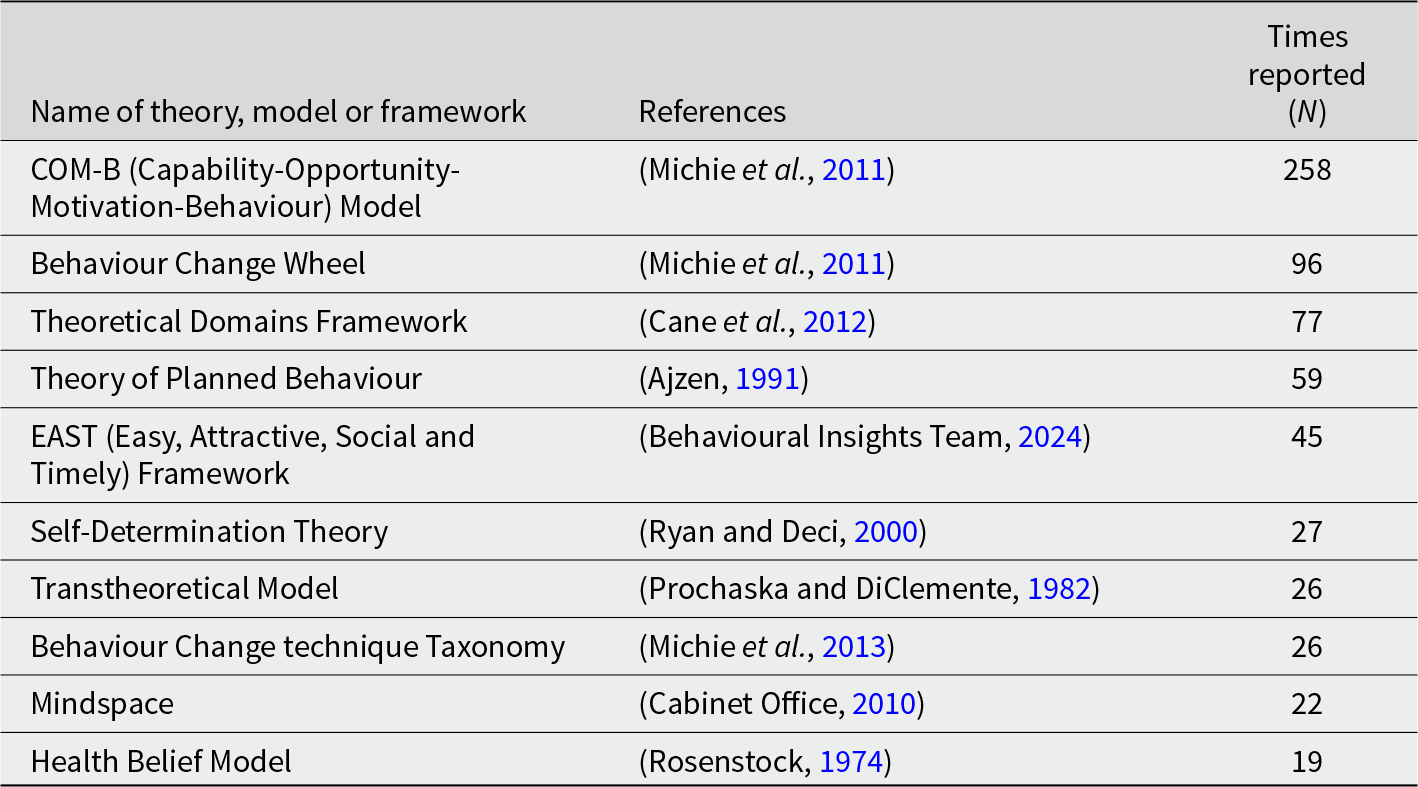
A high proportion of both academics (72 per cent) and non-academics (62 per cent) reported using theories, models and/or frameworks in all (33 per cent academics; 28 per cent non-academics) or most of their projects (39 per cent academics; 33 per cent non-academics). The 10 most commonly reported theories, models or frameworks are presented in Table 2. An overview of the types and frequencies can be seen in supplementary material (Supplementary Table 4).
Ten most reported theories, models or frameworks

Table 2 Long description
Columns list name of theory, model or framework, references, and times reported with N values. Com B Capability Opportunity Motivation Behaviour Model, reference Michie et al. 2011, was reported 258 times. Behaviour Change Wheel, Michie et al. 2011, was reported 96 times, and Theoretical Domains Framework, Cane et al. 2012, 77 times. Theory of Planned Behaviour, Ajzen 1991, was reported 59 times, and East Easy Attractive Social and Timely Framework, Behavioural Insights Team 2024, 45 times. Self Determination Theory, Ryan and Deci 2000, was reported 27 times. Transtheoretical Model, Prochaska and DiClemente 1982, and Behaviour Change technique Taxonomy, Michie et al. 2013, were each reported 26 times. Mindspace, Cabinet Office 2010, was reported 22 times, and Health Belief Model, Rosenstock 1974, 19 times.
Note: Base size 409, 77.3 per cent response rate.
The COM-B model appeared to be a shared foundation for behavioural researchers across all sectors. However, academic respondents demonstrated higher theoretical diversity, often combining COM-B with a wide range of specialist frameworks. Public and private sector respondents converged more strongly on COM-B, BCW, EAST and MINDSPACE, reflecting the need for scalable, policy-ready tools. Third and voluntary sector respondents appeared to rely heavily on COM-B.
What societal issues and topics are being addressed?
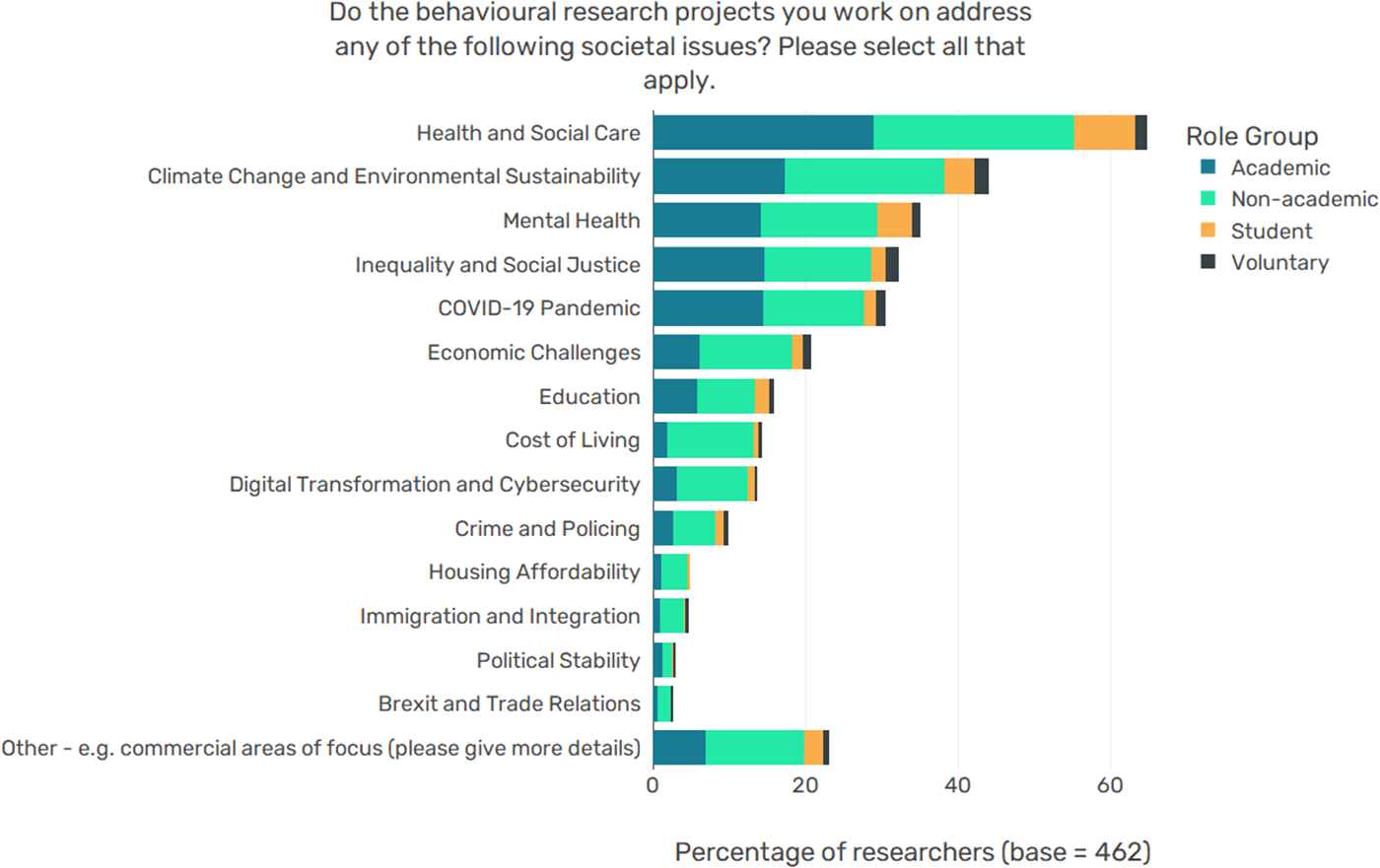
Figure 2 shows the pre-specified societal issues addressed by researchers who responded to the surveys (base size 462, 87 per cent response rate), with the top three being health and social care, climate change and environmental sustainability and mental health.
Overview of societal issues addressed by respondents.

Figure 2 Long description
The horizontal bar graph has a legend with five categories: Role Group, Academic, Non academic, Student, Voluntary. The horizontal axis label is Percentage of researchers left parenthesis base equals 462 right parenthesis, with tick labels 0, 20, 40, 60, 80. The vertical axis lists categories: Health and Social Care; Climate Change and Environmental Sustainability; Mental Health; Inequality and Social Justice; COVID dash 19 Pandemic; Economic Challenges; Education; Cost of Living; Digital Transformation and Cybersecurity; Crime and Policing; Housing Affordability; Immigration and Integration; Political Stability; Brexit and Trade Relations; Other dash e g comma commercial areas of focus left parenthesis please give more details right parenthesis. Each category has a stacked horizontal bar divided into the five legend segments. The longest stacked bar is for Health and Social Care, extending past 60 and ending before 80. Climate Change and Environmental Sustainability extends past 60 and ends before 80. Mental Health extends past 40 and ends before 60. Inequality and Social Justice extends past 40 and ends before 60. COVID dash 19 Pandemic extends past 20 and ends before 40. Economic Challenges extends past 20 and ends before 40. Education extends past 20 and ends before 40. Cost of Living extends past 20 and ends before 40. Digital Transformation and Cybersecurity extends past 0 and ends before 20. Crime and Policing extends past 0 and ends before 20. Housing Affordability extends past 0 and ends before 20. Immigration and Integration extends past 0 and ends before 20. Political Stability extends past 0 and ends before 20. Brexit and Trade Relations extends past 0 and ends before 20. Other dash e g comma commercial areas of focus left parenthesis please give more details right parenthesis extends past 20 and ends before 40.
For those working in start-ups and scale-ups, behavioural research in early-stage ventures was reported primarily in healthcare (33 per cent), education (19 per cent), climate (13 per cent) and finance (10 per cent).
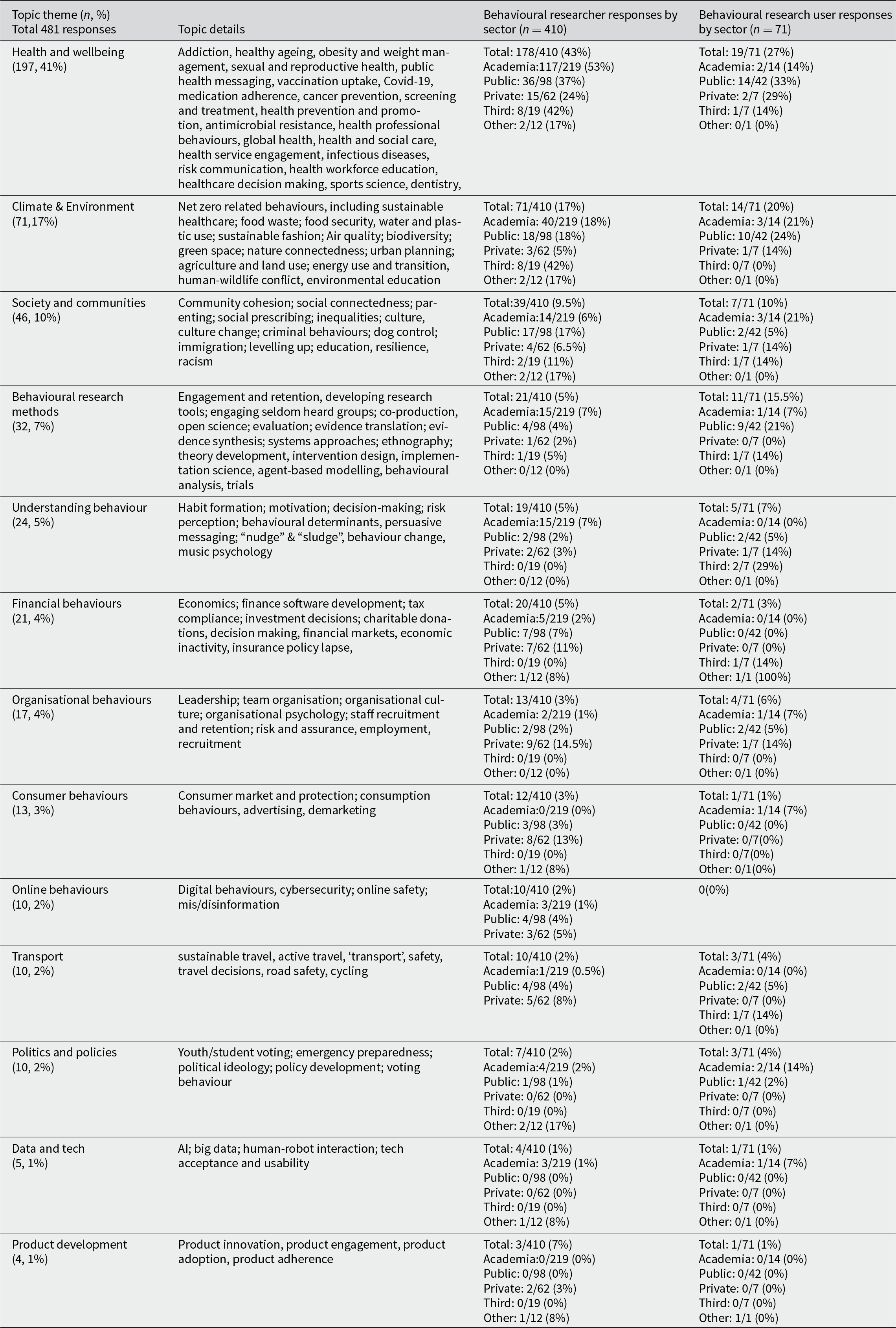
Free text survey items for all respondents provided some more detail about the types of issues or topics under investigation by respondents, which are summarised in Table 3 along with a breakdown by respondent and sector type. For both behavioural researchers and research users, there was a clear dominance of health as a topic, followed by climate and environment. For behavioural researchers, this was followed by society and communities. For behavioural research users, this was followed by behavioural research methods. When breaking down by sector, the private sector showed relatively stronger representation of financial, consumer, transport and organisational themes.
Societal topics under investigation by respondents

Table 3 Long description
Topic themes are listed with total counts and percentages from 481 responses, plus topic details and sector breakdowns for behavioural researcher responses and behavioural research user responses. Health and wellbeing has 197 responses at 41 percent, with behavioural researchers at 178 of 410 and behavioural research users at 19 of 71; by sector, researchers report 117 of 219 in academia, 36 of 98 in public, 15 of 62 in private, 8 of 19 in third, and 2 of 12 in other, while users report 2 of 14 in academia, 14 of 42 in public, 2 of 7 in private, 1 of 7 in third, and 0 of 1 in other. Climate and environment has 71 responses at 17 percent, with researchers at 71 of 410 and users at 14 of 71; sector counts are 40 of 219 academia, 18 of 98 public, 3 of 62 private, 8 of 19 third, and 2 of 12 other for researchers, and 3 of 14 academia, 10 of 42 public, 1 of 7 private, 0 of 7 third, and 0 of 1 other for users. Society and communities has 46 responses at 10 percent, with researchers at 39 of 410 and users at 7 of 71; sector counts are 14 of 219 academia, 17 of 98 public, 4 of 62 private, 2 of 19 third, and 2 of 12 other for researchers, and 3 of 14 academia, 2 of 42 public, 1 of 7 private, 1 of 7 third, and 0 of 1 other for users. Behavioural research methods has 32 responses at 7 percent, with researchers at 21 of 410 and users at 11 of 71; sector counts are 15 of 219 academia, 4 of 98 public, 1 of 62 private, 1 of 19 third, and 0 of 12 other for researchers, and 1 of 14 academia, 9 of 42 public, 0 of 7 private, 1 of 7 third, and 0 of 1 other for users. Understanding behaviour has 24 responses at 5 percent, with researchers at 19 of 410 and users at 5 of 71; sector counts are 15 of 219 academia, 2 of 98 public, 2 of 62 private, 0 of 19 third, and 0 of 12 other for researchers, and 0 of 14 academia, 2 of 42 public, 1 of 7 private, 2 of 7 third, and 0 of 1 other for users. Financial behaviours has 21 responses at 4 percent, with researchers at 20 of 410 and users at 2 of 71; sector counts are 5 of 219 academia, 7 of 98 public, 7 of 62 private, 0 of 19 third, and 1 of 12 other for researchers, and 0 of 14 academia, 0 of 42 public, 0 of 7 private, 1 of 7 third, and 1 of 1 other for users. Organisational behaviours has 17 responses at 4 percent, with researchers at 13 of 410 and users at 4 of 71; sector counts are 2 of 219 academia, 2 of 98 public, 9 of 62 private, 0 of 19 third, and 0 of 12 other for researchers, and 1 of 14 academia, 2 of 42 public, 1 of 7 private, 0 of 7 third, and 0 of 1 other for users. Consumer behaviours has 13 responses at 3 percent, with researchers at 12 of 410 and users at 1 of 71; sector counts are 0 of 219 academia, 3 of 98 public, 8 of 62 private, 0 of 19 third, and 1 of 12 other for researchers, and 1 of 14 academia, 0 of 42 public, 0 of 7 private, 0 of 7 third, and 0 of 1 other for users. Online behaviours has 10 responses at 2 percent, with researchers at 10 of 410 and behavioural research users shown as 0 at 0 percent; sector counts are 3 of 219 academia, 4 of 98 public, and 3 of 62 private for researchers, with no sector breakdown shown for users. Transport has 10 responses at 2 percent, with researchers at 10 of 410 and users at 3 of 71; sector counts are 1 of 219 academia, 4 of 98 public, and 5 of 62 private for researchers, while users list 0 of 14 academia, 2 of 42 public, 0 of 7 private, 1 of 7 third, and 0 of 1 other. Politics and policies has 10 responses at 2 percent, with researchers at 7 of 410 and users at 3 of 71; sector counts are 4 of 219 academia, 1 of 98 public, 0 of 62 private, 0 of 19 third, and 2 of 12 other for researchers, and 2 of 14 academia, 1 of 42 public, 0 of 7 private, 0 of 7 third, and 0 of 1 other for users. Data and tech has 5 responses at 1 percent, with researchers at 4 of 410 and users at 1 of 71; sector counts are 3 of 219 academia, 0 of 98 public, 0 of 62 private, 0 of 19 third, and 1 of 12 other for researchers, and 1 of 14 academia with 0 of 42 public, 0 of 7 private, 0 of 7 third, and 0 of 1 other for users. Product development has 4 responses at 1 percent, with researchers at 3 of 410 and users at 1 of 71; sector counts are 0 of 219 academia, 0 of 98 public, 2 of 62 private, 0 of 19 third, and 1 of 12 other for researchers, and 0 of 14 academia, 0 of 42 public, 0 of 7 private, 0 of 7 third, and 1 of 1 other for users.
What are seen as current and future needs?
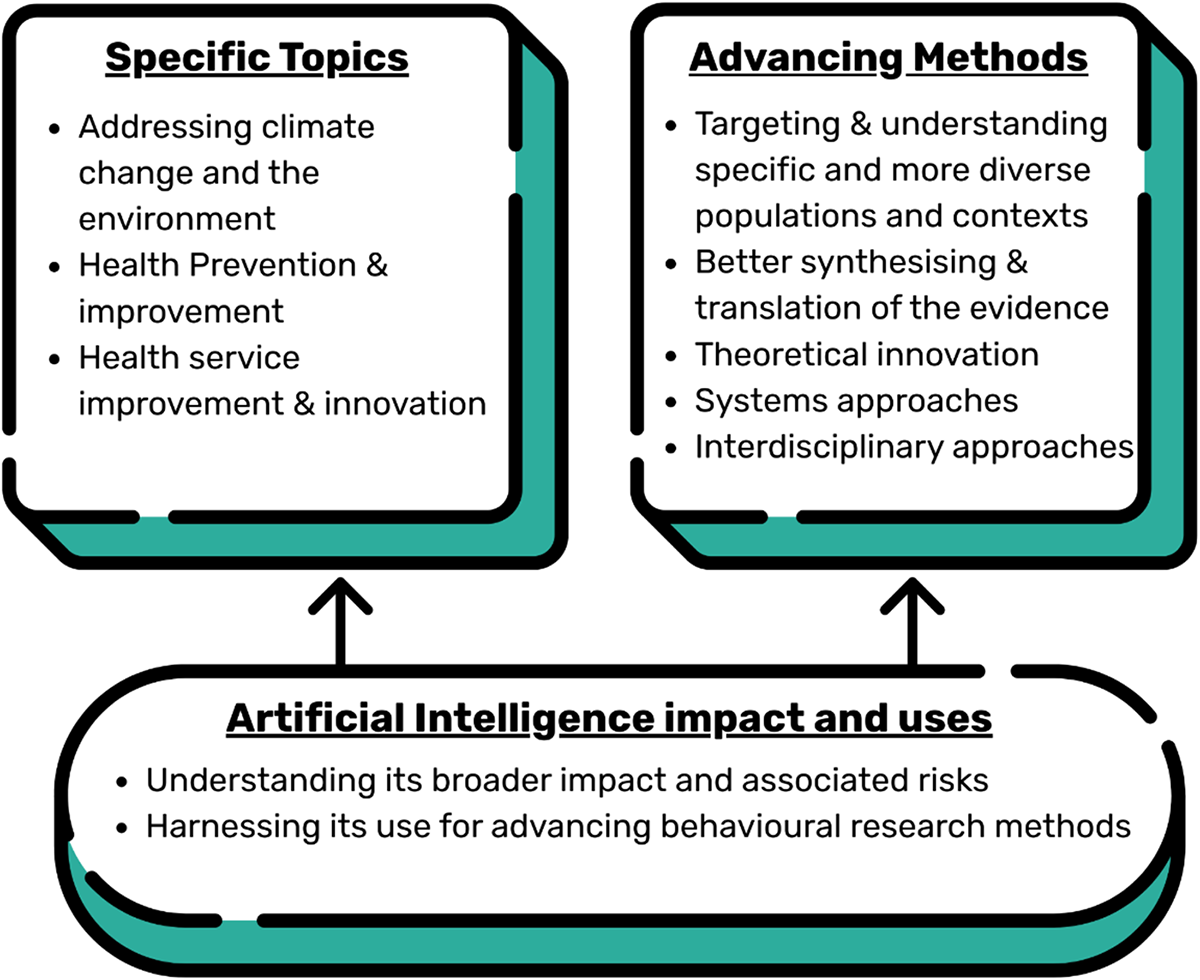
Most commonly reported priority areas are summarised in Figure 3 and highlight that respondents are keen to prioritise specific research topics (climate and sustainability, health), advancing research methods and artificial intelligence (AI). Future priority areas largely reflected the current societal issues being addressed by respondents, particularly regarding health, climate and advancing methods. However, unlike the other priorities, AI was not reflected in the number of participants reportedly working in this field (Table 3), suggesting a potential capability gap and requirement for interdisciplinary working to address this need.
A summary of responses given to the question ‘In the next 10 years, the UK needs more and better behavioural research looking at ______’.

Priority topics
Fifty-four per cent (177/331) of responses related to tackling health, which was especially high among academia, public and third sector responses (50–61 per cent). These priority health topics spanned health promotion (diet and physical activity, health inequalities, addiction and commercial determinants of health), management of specific health conditions (mental health, cancer and long-term conditions) and healthcare improvement (access to healthcare, healthcare innovation, digital transformation and antimicrobial resistance). This largely reflects the current focus of respondents’ field of work.
Forty-five per cent of all responses (149/331) included areas related to climate or the environment and were widely salient across all sectors, more so than reported in relation to the current focus of work. Almost half of these simply stated ‘climate change’, with the remaining highlighting specific aspects including pro-environmental behaviour, net-zero and green transitions, adaptation and mitigation (‘how to enable society to adapt to a net zero world’), agriculture and land management, biodiversity loss, energy and water use and sustainable food systems.
Advancing behavioural research methods
Twenty-six per cent of responses (86/331) mentioned some aspect of advancing behavioural research through the methods we use. Reflecting current research focus, this was highest among academic responders (33 per cent), with responses from other sectors ranging from 17 to 23 per cent. Responses included theoretical innovation, better synthesis of the existing evidence base and improved approaches to doing this (‘Clearly synthesising past research & resolving inconsistencies’), systems thinking and interdisciplinary approaches (‘Application of systems thinking to sustaining behaviour change, including joining up approaches to tackling pressing global challenges’), targeting and understanding specific and more diverse populations and contexts, including codesign and participatory methods (‘How to improve inclusiveness of behavioural research for underserved populations’).
AI in behavioural research
AI was mentioned 48 times by 40 unique respondents, out of 313 respondents (13 per cent) who provided a response, with the highest among the private sector (18 per cent) and lowest among third sector (6 per cent). Though related, this has been separated from methods above because of the significant number, and because some responses linked use of AI to tackling health and sustainability issues. Responses indicated that there is a need to both better understand the impacts and risks of using AI, as well as how AI can be used to advance behavioural research, such as for evidence synthesis, and its role in advancing healthcare (‘Using AI in behavioural research (how do we make the most of it, use cases, but also dangers and limitations)’).
These priorities do not represent all priorities reported, but rather the most commonly reported. Other areas where there were clusters of responses include addressing broader inequalities, engaging policymakers and the public in behavioural research, organisational behaviours and online behaviours. A full list of these key priorities can be seen in the supplementary material (Supplementary Table 5), mapped against the existing themes and current BR-UK work packages.
What is the organisational capacity for engaging with behavioural research?
Data from the Zinc partner survey provide some insight into organisational capacity. Our analysis of 69 respondents working in start-ups and scale-ups indicates that behavioural research is frequently conducted within small teams. Specifically, in 88 per cent of ventures employing behavioural researchers, fewer than 10 individuals were actively engaged in conducting behavioural research. Over 40 per cent of survey participants reported conducting behavioural research within teams of just one to nine members. As previously highlighted, behavioural research within smaller start-ups is often conducted as part of broader roles or teams, suggesting limited capacity for dedicated behavioural research roles in this context.
In what areas would researchers and users like to improve their capability?
Whilst our research question focuses on capability, barriers to behavioural research from the deductive analysis were mapped across capability, opportunity and motivation. These are discussed in turn below alongside the quantitative results which summarise how these might be addressed.
Capability
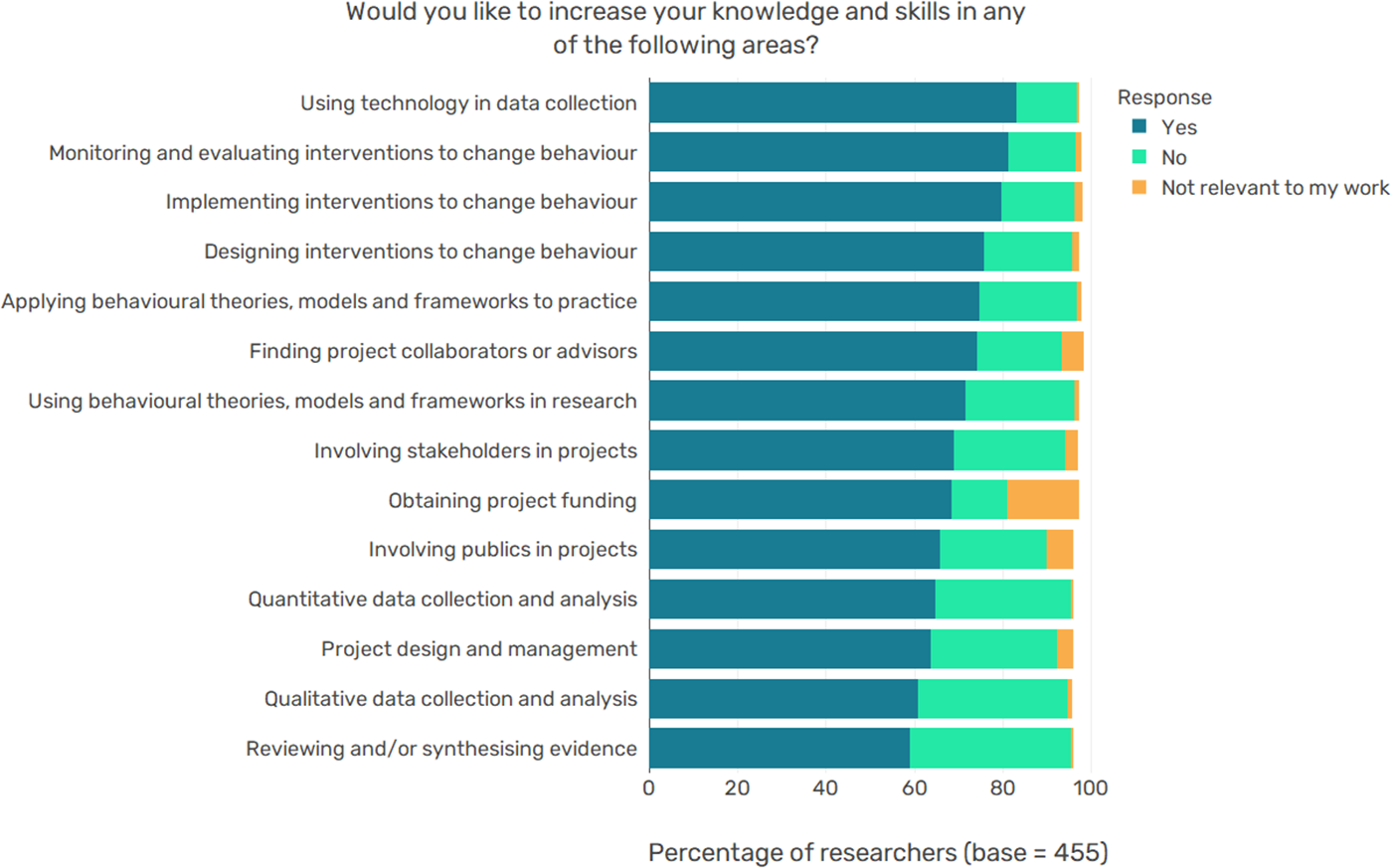
The deductive qualitative analysis of respondents’ barriers to conducting or using behavioural research identified barriers related to capability, including knowledge of methods, funding options and theories (‘How to make decisions when it comes to a plethora of theories and models and frameworks’). Despite the number of theories, models and frameworks reportedly used, increasing skills and knowledge of applying frameworks was also high on the list of pre-specified capability requirements (Figure 4, base 455, 86 per cent response rate) across all sectors, particularly among private (49 Yes vs 5 No), public (75 Yes vs 16 No) and third sector (13 Yes vs 5 No). Academia showed greater dispersion, suggesting a higher degree of confidence in applying frameworks, though ‘Yes’ responses still outnumbered ‘No’ (123 vs 63).
Areas in which researchers would like to increase knowledge and skills.

Figure 4 Long description
A horizontal stacked bar graph titled Would you like to increase your knowledge and skills in any of the following areas. The x axis is labeled Percentage of researchers, base 455 and ranges from 0 to 100 percent in steps of 20. The y axis lists 13 topic areas. A legend shows three response categories: Yes, No and Not relevant to my work. Each bar is divided into three segments corresponding to these three categories. The 13 topic areas listed from top to bottom are: Using technology in data collection; Monitoring and evaluating interventions to change behaviour; Implementing interventions to change behaviour; Designing interventions to change behaviour; Applying behavioural theories, models and frameworks to practice; Finding project collaborators or advisors; Using behavioural theories, models and frameworks in research; Involving stakeholders in projects; Obtaining project funding; Involving publics in projects; Quantitative data collection and analysis; Project design and management; Qualitative data collection and analysis; Reviewing and or synthesising evidence. Across all 13 items, the Yes segment occupies the largest portion of each bar, appearing to account for roughly 60 to 80 percent for most items. The No segment is visibly smaller across all items. The Not relevant to my work segment is the smallest across most items. Items toward the top of the list, such as Using technology in data collection and Monitoring and evaluating interventions to change behaviour, show notably large Yes segments. Items toward the bottom, such as Reviewing and or synthesising evidence and Qualitative data collection and analysis, show comparatively smaller Yes segments and slightly larger Not relevant to my work segments.
The full list of COM barriers is presented in the supplementary material (Supplementary Table 6).
Motivation
The deductive qualitative analysis identified some barriers related to motivation (confidence and beliefs around the value of BR) which impacted capability. Relating to respondents’ motivation, users of behavioural research rated their confidence in finding, understanding, applying and commissioning behavioural research (base size 95, 74 per cent response rate). When it comes to finding relevant behavioural research, 58 per cent of users were quite or very confident, and 40 per cent of users were only somewhat or not at all confident. In using the findings of behavioural research, 59.0 per cent were quite or very confident, and 39 per cent were somewhat or not at all confident. When it came to understanding strengths and limitations, only 43 per cent were quite or very confident, and 55 per cent were somewhat or not at all confident. In commissioning behavioural research, 24 per cent of users were quite or very confident, 65 per cent were somewhat or not at all confident, and for 11 per cent, it was not relevant to their role. Users also rated their confidence in selecting relevant behavioural theories, models and frameworks: 36 per cent were very or quite confident and 59 per cent only somewhat or not at all confident. This may explain why those in sectors particularly outside academia used a much smaller array of theories, models and frameworks.
Opportunity
The majority of barriers from the deductive analysis sat within opportunity. Physical opportunity barriers included cost and funding (‘Higher education funding models are restrictive’), capacity (‘Lack of time to spend on behavioural research due to other project commitments’), available resources and limited work and training opportunities (‘Hard to find short training courses for established researchers, beyond 101 style courses’). Social opportunity barriers focused on lack of buy-in from senior colleagues and policymakers.
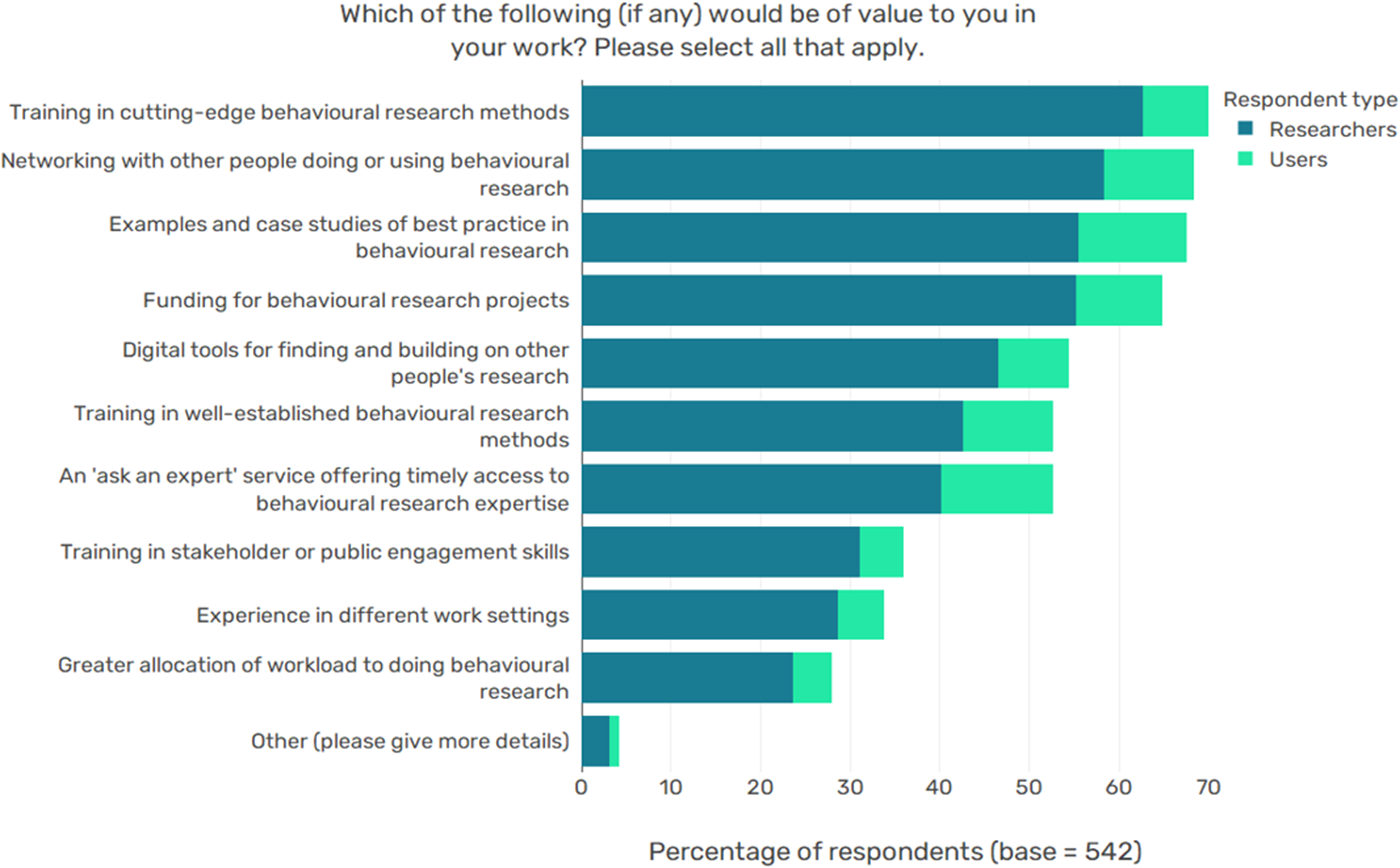
Figure 5 shows opportunities that researchers and users said would be of value in their work from preselected options. The most frequently selected across all respondents were training in cutting-edge methods, networking, examples, case studies and funding. Comparisons between behavioural researchers and behavioural research users indicate differing support needs, where users more frequently selected access to experts and case studies, and were more likely to prioritise training in well-established methods over training in cutting-edge approaches.
Opportunities to add value to behavioural research or its use.

Figure 5 Long description
The bar graph title reads, Which of the following if any would be of value to you in your work question mark Please select all that apply period A legend titled, Respondent type, lists Researchers and Users. The horizontal axis label reads, Percentage of respondents left parenthesis base equals 542 right parenthesis, with tick labels 0, 10, 20, 30, 40, 50, 60, 70. The vertical axis lists these categories from top to bottom: Training in cutting edge behavioural research methods; Networking with other people doing or using behavioural research; Examples and case studies of best practice; Funding for behavioural research projects; Digital tools for finding and building on other peoples research; Training in well established behavioural research methods; An ask an expert service offering timely access to behavioural research expertise; Training in stakeholder or public engagement skills; Experience in different work settings; Greater allocation of workload to doing behavioural research; Other left parenthesis please give more details right parenthesis. Each category has two horizontal bars, one for Researchers and one for Users. Bar endpoints align to the axis as follows. Training in cutting edge behavioural research methods: Researchers 60, Users 65. Networking with other people doing or using behavioural research: Researchers 55, Users 60. Examples and case studies of best practice: Researchers 55, Users 60. Funding for behavioural research projects: Researchers 50, Users 60. Digital tools for finding and building on other peoples research: Researchers 50, Users 55. Training in well established behavioural research methods: Researchers 45, Users 50. An ask an expert service offering timely access to behavioural research expertise: Researchers 40, Users 45. Training in stakeholder or public engagement skills: Researchers 30, Users 35. Experience in different work settings: Researchers 25, Users 30. Greater allocation of workload to doing behavioural research: Researchers 20, Users 25. Other left parenthesis please give more details right parenthesis: Researchers 5, Users 10.
Personas
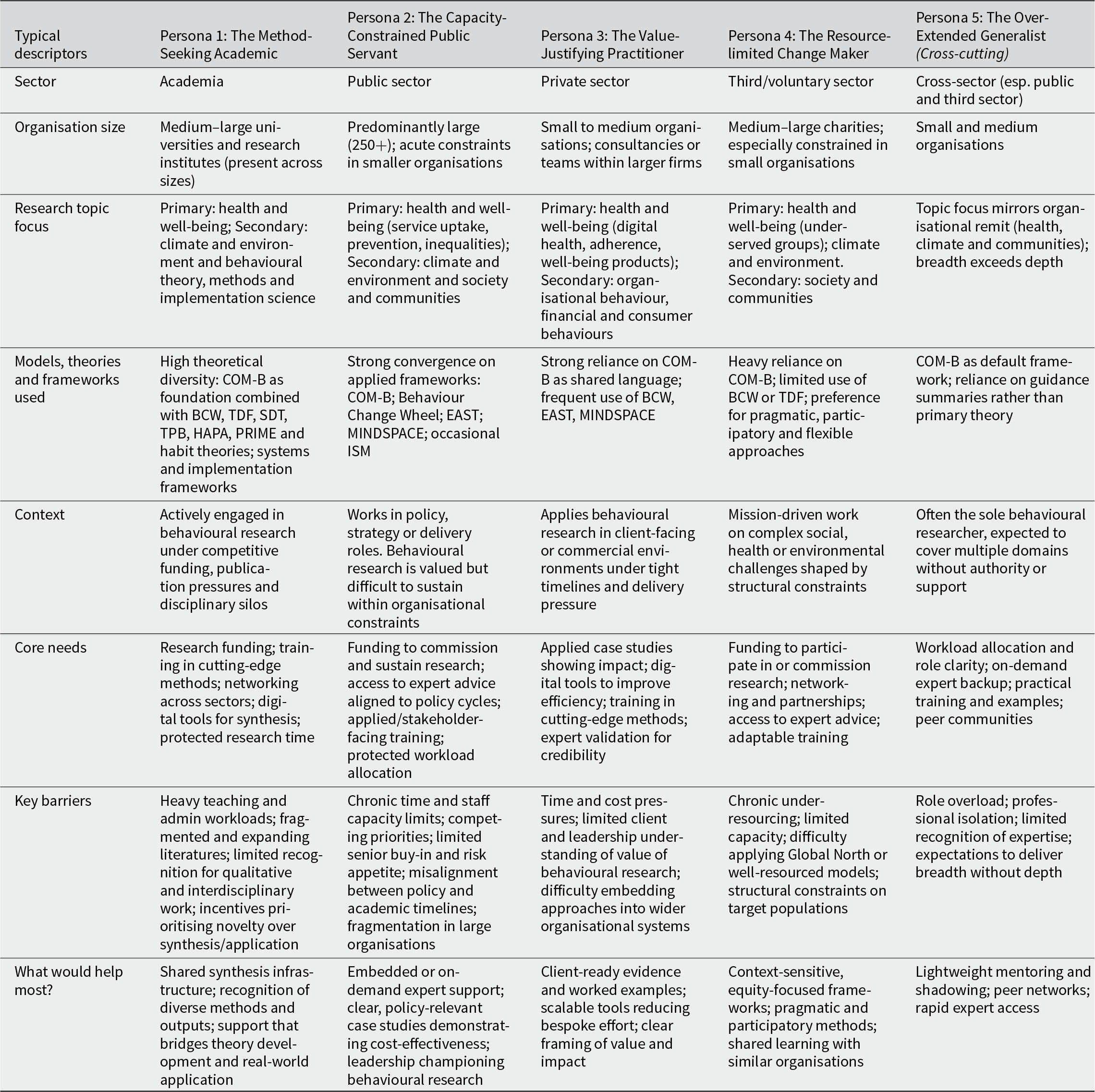
Personas presented in Table 4 synthesise the broad-ranging findings reported above to provide an overarching view of sector-specific behavioural research capability needs. While funding was a near-universal requirement across all personas, the barriers shaping these needs varied by sector: public and third-sector respondents emphasised time, capacity and organisational constraints; academic respondents highlighted workload pressures and incentive structures linked to publishing and funding; private-sector respondents highlighted commercial pressures and the need to demonstrate value rapidly. Health and well-being dominated as a shared research focus, with academia emphasising theory, methods and evidence synthesis, the public sector prioritising service uptake, prevention and policy delivery, the private sector focusing on products, users and organisational performance, and the third sector centring equity, access and community impact. Organisation size was also an important factor, with large organisations facing challenges of coordination, fragmentation and governance, and smaller organisations encountering barriers related to access to expertise, role overload and professional isolation. Taken together, the personas demonstrate that strengthening behavioural research capability requires tailored, sector- and size-sensitive approaches.
Behavioural researcher personas across sectors

Table 4 Long description
Five personas are compared across typical descriptors: sector, organisation size, research topic focus, models theories and frameworks used, context, core needs, key barriers, and what would help most. Sector varies by persona: academia, public sector, private sector, third or voluntary sector, and cross sector especially public and third sector. Organisation size ranges from medium to large universities and research institutes, predominantly large public organisations with acute constraints in smaller ones, small to medium private organisations, medium to large charities with constraints in small organisations, and small and medium cross sector organisations. Research topic focus is primarily health and wellbeing for all personas, with secondary topics including climate and environment, society and communities, and in the private sector organisational behaviour plus financial and consumer behaviours; the cross cutting persona mirrors organisational remit with breadth exceeding depth. Models theories and frameworks used show COM-B in every persona, with academics listing high theoretical diversity including Behaviour Change Wheel, Theoretical Domains Framework, Self Determination Theory, Theory of Planned Behavior, Health Action Process Approach, PRIME, habit theories, and systems and implementation frameworks; public and private sectors also list Behaviour Change Wheel, EAST, and MINDSPACE, with occasional ISM in the public sector; the third or voluntary sector lists heavy reliance on COM-B with limited use of Behaviour Change Wheel or Theoretical Domains Framework; the cross cutting persona relies on guidance summaries rather than primary theory. Context descriptions range from competitive funding and publication pressures in academia, to policy and delivery roles with sustainability constraints in the public sector, to client facing commercial timelines in the private sector, to mission driven work shaped by structural constraints in the third sector, and to being the sole behavioural researcher without authority or support in the cross cutting persona. Core needs and key barriers repeatedly reference funding, protected time or workload allocation, access to expert advice, training, and networking, alongside barriers such as heavy workloads, fragmented literatures, chronic time and staff limits, limited senior buy in, time and cost pressures, chronic under resourcing, and role overload with professional isolation. What would help most includes shared synthesis infrastructure and recognition of diverse outputs for academia, embedded or on demand expert support and policy relevant case studies for the public sector, client ready evidence and scalable tools for the private sector, context sensitive equity focused frameworks and shared learning for the third sector, and lightweight mentoring plus rapid expert access for the cross cutting persona.
Discussion
From 657 respondents who conduct or use behavioural research in public, private and third sectors, over 9 in 10 reported conducting applied research, and 4 in 10 reported conducting pure research. This was across all UK nations and regions, with a concentration in London. A high proportion of both academics (72 per cent) and non-academics (61.5 per cent) reported using behavioural theories, models and frameworks in all or most of their projects, with COM-B (Michie et al., Reference Michie, Van Stralen and West2011) being the most commonly reported. Current research topics ranged across health and environmental sustainability, data and technology, financial and consumer behaviours, and behaviours relating to society, communities and politics. There was also research on developing behavioural research methods and on understanding behaviour more broadly, independently of the topic. Top future priorities centred on planetary and population health, and methodological advances, including harnessing the potential and better understanding the risks of AI. Areas identified for increasing capability included the use of technology for data collection, and behaviour change intervention design, implementation and evaluation. Perceived challenges that need addressing included confidence and ability gaps, limited funding and training, and lack of behavioural research buy-in at leadership level. Acceptance of behavioural research at leadership level was highlighted across sectors, especially within start-ups and scale-ups.
While funding, time and senior buy-in were common barriers, some cross-sector differences were identified. For example, academic respondents describe barriers shaped by incentive systems that prioritise novelty over synthesis or translation, whereas public sector respondents emphasise misalignment between behavioural research timelines and policy delivery cycles. Private-sector practitioners face pressure to repeatedly justify impact under tight commercial timelines, while third-sector respondents highlighted under-resourcing and the limited applicability of frameworks to constrained real-world contexts, which may also reflect the lack of confidence in selecting appropriate frameworks. The personas also highlight organisation size as an important factor, with larger organisations facing coordination and governance challenges, and smaller organisations experiencing barriers linked to professional isolation and limited access to expert support. These differences suggest that common barriers require tailored solutions rather than uniform capability-building approaches.
Whilst previous studies have offered valuable insights into behavioural research activities, they have tended to adopt a more global perspective which may lack the detail required to inform strategies to increase behavioural research capability in individual countries such as the UK. For instance, Wendel’s (Reference Wendel2020) online survey included data from across the world, including 82 UK-based teams and 87 individual practitioners; substantially fewer than the 657 respondents included in the current study. Our survey results have provided a more detailed snapshot of the specific types of work and methods employed, future priorities and barriers to achieving these, which is important for planning capability building for UK behavioural research. Moreover, the respondent profile in the Wendel (Reference Wendel2020) survey was predominantly from the for-profit sector, encompassing large multinational corporations, aid organisations, consultancies and financial firms. This differs notably from the current survey, which captured more responses from the academic sector (43 per cent). Consequently, some of the challenges reported by respondents of the global survey, such as ethical concerns relating to their work, are more typical of private-sector work and may not fully reflect the concerns of the broader behavioural research community we have presented. Those working in the academic sector, for example, are moving more rapidly towards an open science approach in a bid to address the ‘replication crisis’, as such sharing and disseminating protocols, findings and data are becoming commonplace (Munafò et al., Reference Munafò, Nosek, Bishop, Button, Chambers, Percie du Sert, Simonsohn, Wagenmakers, Ware and Ioannidis2017). This trend also aligns with broader UK research policy, particularly the EPSRC’s Framework for Responsible Innovation, which emphasises the importance of inclusion and responsiveness in research practice (UK Research and Innovation, 2023). In Zinc’s associated qualitative work reported elsewhere (Fomina et al., Reference Fomina, Webster and Carey2025), they report that although behavioural researchers in industry would find sharing their findings valuable, having the competitive edge in their sector is a large barrier; as such, finding a way forwards for sharing findings and developments both within and across sectors is challenging.
A key common challenge identified in the literature (Wendel, Reference Wendel2020; Fomina et al., Reference Fomina, Webster and Carey2025; Hart et al., Reference Hart, Davan Wetton, Coupe, Bauld, Alejandre and Michie2025), which is supported by our findings, is that there is a need to ‘sell’ the value of behavioural science to senior leadership to ensure resources are allocated to its inclusion as an integral element, rather than it being a ‘nice to have’. Whilst this was particularly highlighted within public sector responses, private-sector responses also emphasised the importance of client buy-in. This suggests that despite its growing popularity, the value of BR has not yet been realised across sectors at senior or client levels. There is an opportunity to address this both top down and bottom up, through identifying public, private and third sector leaders who are aware of the value of behavioural research who can advocate for its inclusion, and to equip researchers with the confidence and skills to communicate effectively the value of behavioural research. This is an area explored further through BR-UK’s follow-on sector-specific workshops to identify strategies to address this.
Strengths and limitations
This study builds on previous surveys in the field (Wendel, Reference Wendel2020; Naru, Reference Naru2024) by capturing additional views across sectors and further exploring participants’ views on barriers, priorities and the theoretical frameworks they employ. The high volume and quality of free-text responses suggest a strong motivation among participants to engage in this study, which may, in part, be attributed to the participatory design of the survey, with items developed in consultation with key stakeholders to ensure relevance and practical value (Grill, Reference Grill2021). While we collected EDII data, it was optional, leading to some missing data that constrains our ability to comprehensively assess the societal representativeness of the sample. Nonetheless, we argue, as per best practices (Cordis Bright, 2023), that offering participants the choice as to whether to disclose EDII data respects participant autonomy and ethical standards. Whilst we cannot be confident about the demographic make-up of UK behavioural researchers, we concur with other calls to increase diversity among behavioural researchers, particularly ethnic and racial diversity (Hallsworth Reference Hallsworth2023).
A limitation is that using a convenience sample drawn predominantly from the BR-UK mailing list, and broader dissemination through similar networks, introduces potential self-selection bias. With an approximate one-third response rate, it remains possible that the sample overrepresents people who are particularly active or invested in BR activities, thus potentially limiting the generalisability of findings. Furthermore, there is a potential bias towards those working in health, as the personal networks of the BR-UK team are potentially skewed towards health applications. This may mean that other societally significant domains such as transport, organisational behaviour and consumer and financial decision-making are underrepresented due to sampling bias rather than need.
In terms of research questions, while we adhered to the analytic plan specified in our protocol, some questions, particularly those regarding societal representativeness and organisational readiness, could not be fully answered within the limits of the survey format (due to self-selection and optional EDII questions). For example, ‘organisational readiness’ for behavioural research (Weiner, Reference Wendel2020) was not investigated in this survey but will be addressed as part of forthcoming BR-UK work within the theme of ‘Organisations, markets and the economy’. Understanding how well the behavioural research community is represented in our survey is unclear, given we compare background characteristics from our data with the population at large from the UK 2021 census data.
Implications for research, policy and practice
A key contribution of this survey is its identification of climate and health as priority areas where behavioural science can drive meaningful policy impact, aligning with national and international behavioural and social research strategies (Hart et al., Reference Hart, Davan Wetton, Coupe, Bauld, Alejandre and Michie2025), and the UK’s net-zero and NHS reform (HM Government, 2021, 2025) goals. Such a coordinated approach will enhance the UK’s behavioural research capability to address current urgent societal issues (Hertwig et al., Reference Hertwig, Michie, West and Reicher2025). However, there is some evidence that even in the health sector where behavioural research is most well established, its use is limited and inconsistent (Moffat et al., Reference Moffat, Cook and Chater2022). As identified in our survey, including within ventures, senior leadership buy-in is a key barrier to the inclusion of behavioural research across sectors. It is not clear why this is the case, highlighting an important area for future research.
Whilst the issue reported by respondents around difficulty selecting appropriate models represents a capability gap, it also represents a broader translational gap, emphasising the need to bridge the divide between research and practice (Naru, Reference Naru2024). In addition to the identified skills and knowledge gaps, our findings suggest some structural misalignment across sectors; for example, academics reported limited incentives to prioritise synthesis, whilst those in other sectors were expected to translate evidence without sufficient authority, time or organisational support. One emerging approach to addressing this gap for policy specifically is the introduction of embedded researchers within government and public institutions, which aim to (i) facilitate the integration of behavioural research into policy design and delivery and (ii) share decision-maker priorities back to academia, ensuring policy-relevant behavioural research is conducted. Other suggestions include efforts by researchers to ensure resources are accessible to non-academic audiences to improve knowledge translation, and the need to synthesise the large bodies of evidence, which is particularly important in times of emergency, such as the COVID-19 pandemic (Byrne-Davis et al., Reference Byrne-Davis, Turner, Amatya, Ashton, Bull, Chater, Lewis, Shorter, Whittaker and Hart2022). This aligns with the BR-UK findings and overall approach as a leadership hub for behavioural research in embedding cross-sector collaboration and diverse stakeholder involvement in supporting the translation of behavioural research into practice. Further work is needed to identify other sector leaders and support cross-sector collaboration to continue to address this issue.
Whilst the focus of this work is on building behavioural research capability, as demonstrated in relation to barriers and needs, this requires consideration of approaches beyond building knowledge and skills. This reflects work conducted in behavioural research in relation to antimicrobial stewardship, whereby training and education, whilst typically associated with building knowledge and skills, should also address issues relating to motivation (e.g., addressing fears and confidence), as well as addressing social opportunity (e.g., hierarchical issues) to ensure impact (Lorencatto et al., Reference Lorencatto, Charani, Sevdalis, Tarrant and Davey2018; Turner et al., Reference Turner, Coupe and Griffithsunder review). Similarly, building knowledge, for example, about academic funding structures and skills in grant writing (capability), would have limited impact on behavioural research activity if there remains limited behavioural research funding and no time for researchers to apply these skills (physical opportunity).
Our definitions of behavioural research and researchers have implications for ensuring representativeness in engaging the behavioural research community, given there may be those who study human behaviour but would reject the identity of ‘behavioural researcher’. Although only a small proportion (4 per cent) stated that the term did not describe their role well, more may have excluded themselves at an earlier stage of the recruitment process and, indeed, were actively screened out. This might be a language issue, reflecting those from disciplines outside of psychology who may not use the term ‘behaviour’ in relation to their work, such as sociologists and anthropologists (Davis et al., Reference Davis, Campbell, Hildon, Hobbs and Michie2015). Similarly, this may also apply to those working in ventures where it is not always possible to differentiate from other types of research in this context (e.g. user research, market research), or who are performing a broad range of tasks across the business, with behavioural research being only one small element of this. Further work may be required to bring together shared language (or understanding and acceptance thereof) across disciplines and sectors to facilitate the multidisciplinary nature of behavioural research.
Understanding how to use AI responsibly within behavioural research is an emerging and urgent area of interest. Given the concurrent identification of climate action as a research priority, it is also important to recognise that AI presents both opportunities and challenges in this context. AI can be harnessed to advance and inform climate-related research and policy-making, such as predicting climate projections (Biswas, Reference Biswas2023). However, the environmental costs associated with large-scale models such as ChatGPT, such as water use for cooling the data centres (Mytton, Reference Mytton2021), warrant careful consideration of how often we should be employing AI within our day-to-day activities. An initial resource repository on the responsible use of AI in behavioural research has been developed in response to this need (Behavioural Research UK, 2025), but ongoing and adaptive frameworks will be essential to keep pace with this rapidly evolving field. Future development opportunities include leveraging behavioural research to support the equitable adoption and effective use of AI tools, particularly among sectors or communities that risk being left behind.
Conclusions
As summarised in Box 1, the study findings provide a detailed snapshot of UK behavioural research and behavioural researchers’ top priorities for the next decade: climate and environmental sustainability, health, advancing BR methods, and how we can harness AI to develop BR whilst also considering the risks. Challenges to conducting and using behavioural research to address these include knowledge and skills gaps around using technology for data collection, intervention design and evaluation, and how to select and apply the most appropriate behavioural models and theories. Broader gaps beyond capability were also identified, including opportunities (e.g., funding and training, senior buy-in) and motivation (confidence). Patterns in research focus suggest that expertise in some areas of behavioural research is clustered within particular sectors, which may limit the opportunities to tackle these collaboratively. These findings have been explored through sector-specific workshops; we will also conduct further surveys co-created with stakeholders to build on findings from the workshops and investigate remaining gaps. Future capability-building efforts should maintain existing strengths in health and climate while deliberately developing capability in other policy-relevant domains across multiple sectors. Whilst BR-UK aims to address some barriers around knowledge and skills gaps and available resources, engagement from research funders and commissioners is needed to address identified barriers around funding availability for behavioural research. Further work is also needed to identify sector leaders to advocate for behavioural research, particularly for organisations addressing our most pressing societal needs.
Box 1. Key takeaways from this study.
• Top Behavioural Research Priorities: The next decade's focus areas include climate and environmental sustainability, health and healthcare improvement, advancing behavioural research (BR) methods and leveraging AI while addressing its risks.
• Key Challenges: Significant barriers to addressing these include gaps in knowledge, skills and confidence in conducting behavioural research, alongside broader issues like limited funding, training opportunities and organisational support.
• Next Steps and Needs: Sector-specific workshops and stakeholder-led surveys will further inform how to address these gaps. Overcoming major barriers, especially funding, will require coordinated action from research funders and commissioners.
Supplementary material
The supplementary material for this article can be found at https://doi.org/10.1017/bpp.2026.10048.
Funding statement
Behavioural Research UK (BR-UK) is supported by UK Research and Innovation (UKRI) with funding from the Economic and Social Research Council (ESRC), Grant Ref: ES/Y001044/1. All authors are funded or part-funded by BR-UK.
Competing interests
No conflicts of interest declared.
Data availability statement
The data that support the findings of this study are available on the Open Science Framework https://osf.io/4z6gn/overview.
Ethical statement
This study was approved by the University College London Research Ethics Committee (ID number 27193/001).


 Open access

