Introduction
Polypropylene (PP) is widely used in medical and food industries for manufacturing of catheters, syringes, sutures, or packaging in contact with food, due to its excellent mechanical properties, chemical stability, and low reactivity. However, many of these applications are subject to the proliferation of microorganisms which might produce infections or affect the product shelf life.[ Reference Cunningham, Proctor and Goetsch 1 ] Providing antimicrobial features to the material is an excellent strategy to increase their value. Some methods reported to provide the antimicrobial properties to PP are by loading of drugs,[ Reference Muñoz-Muñoz, Ruiz, Alvarez-Lorenzo, Concheiro and Bucio 2 ] metallic nanoparticles,[ Reference Oliani, Fernandes Parra, Pedroso Lima, Lincopan and BenevoloLugao 3 ] enzymes, and functional groups or molecules with antimicrobial and bacteriostatic activity such as polyvinylimidazole.[ Reference López-Saucedo, Flores-Rojas, Bucio, Alvarez-Lorenzo, Concheiro and González-Antonio 4 ]
The immobilization of antimicrobial enzymes such as lysozyme offers several advantages since this enzyme is a biomolecule able to afford biocompatibility[ Reference Thevenot, Hu and Tang 5 ] and to control on the attachment of a broad variety of Gram-positive pathogenic and non-pathogenic bacteria[ Reference Caro, Humblot, Méthivier, Minier, Salmain and Pradier 6 ] to the material.
The enzyme immobilization has been performed by means of thiol-disulfide,[ Reference Neves-Petersen, Snabe, Klitgaard, Duroux and Petersen 7 ] peptide,[ Reference Guadarrama-Zempoalteca, Díaz-Gómez, Meléndez-Ortiz, Concheiro, Alvarez-Lorenzo and Bucio 8 ] and diazo bonds[ Reference Masoom and Townshend 9 ] or by the formation of imines[ Reference Flores-Rojas, Pino-Ramos, López-Saucedo, Concheiro, Alvarez-Lorenzo and Bucio 10 ] (Schiff bases). However, the best method is the last one since this is achieved at low or high temperature, being not affected by the presence of other chemical groups such as hydroxy, thiols, esters, amides, etc. which are part of many types of enzymes.[ Reference Flores-Rojas, Pino-Ramos, López-Saucedo, Concheiro, Alvarez-Lorenzo and Bucio 10 ] Unfortunately, the direct immobilization on PP film is not likely, requiring a prior modification of PP to provide the formyl groups to achieve the immobilization by Schiff bases.
Nowadays, there have been remarkable advances in the research and development of materials either by new molecular design[ Reference Flores-Rojas, Lijanova, Morales-Saavedra, Sanchez-Montes and Martínez-García 11 ] or by modification of conventional polymers. One of the most common methods to obtain these new materials is by grafting polymerization, categorized in three: “grafting-from, grafting-to”, and “grafting-through”[ Reference Flores-Rojas and Bucio 12 ] methods. The “grafting-from” method offers an enormous advantage, since the modification occurs on the surface of the material, retaining the bulk properties, as in this approach the growth of polymer chains takes place from initiating sites on the backbone polymer.[ Reference Fujiki, Tsubokawa and Sone 13 ]
In the specific case of the PP, the modification by “grafting-from” method is impossible because this material does not have any groups as initiator so that it is chemically inert in the grafting conditions. Therefore, it is essential to provide the reactive sites as initiators on the surface. The γ-rays offer an easy method to endow radical precursors with low reactive backbone polymers. The pre-irradiation method in the presence of air leads to creating the initiator[ Reference Aliev, García and Burillo 14 ] on the polymeric surface either as peroxides or hydroperoxides species,[ Reference Guadarrama-Zempoalteca, Díaz-Gómez, Meléndez-Ortiz, Concheiro, Alvarez-Lorenzo and Bucio 8 ] enabling the grafting polymerization of the monomers with adequate conditions.[ Reference Islas, Ruiz, Muñoz-Muñoz, Isoshima and Burillo 15 ]
This methodology has provided the matrix with responsiveness to pH,[ Reference Burillo, Bucio, Arenas and Lopez 16 ] temperature,[ Reference Burillo, Bucio, Arenas and Lopez 16 , Reference Bucio, Burillo, Adem and Coqueret 17 ] magnetic field, and also with functional groups for subsequent chemical reactions[ Reference Nava-Ortiz, Burillo, Bucio and Alvarez-Lorenzo 18 ] in less aggressive conditions which may damage the matrix.
Based on this background, the goal of this work was to make the surface modification of PP films with ethylene glycol dimethacrylate (EGDMA)/glycidyl methacrylate (GMA) grafting by means of the grafting-from method. Where poly(GMA) allowed the chemical activation and the antimicrobial biofunctionalization with lysozyme; and the case of poly(EGDMA), also employed to provide non-reactive hydrophilic groups, being biocompatible this pair of polymers[ Reference Adali and Yilmazm 19 – Reference Pujari, Vaidya, Bagalkote, Ponrathnam and Nene 21 ] doing them excellent candidates to achieve this task. The enzymatic activity assays were carried out with a Micrococcus lysodeikticus (coccus, Gram-positive bacteria) suspension as a bacterium model and investigated at different temperatures and pH values.
Results and analysis
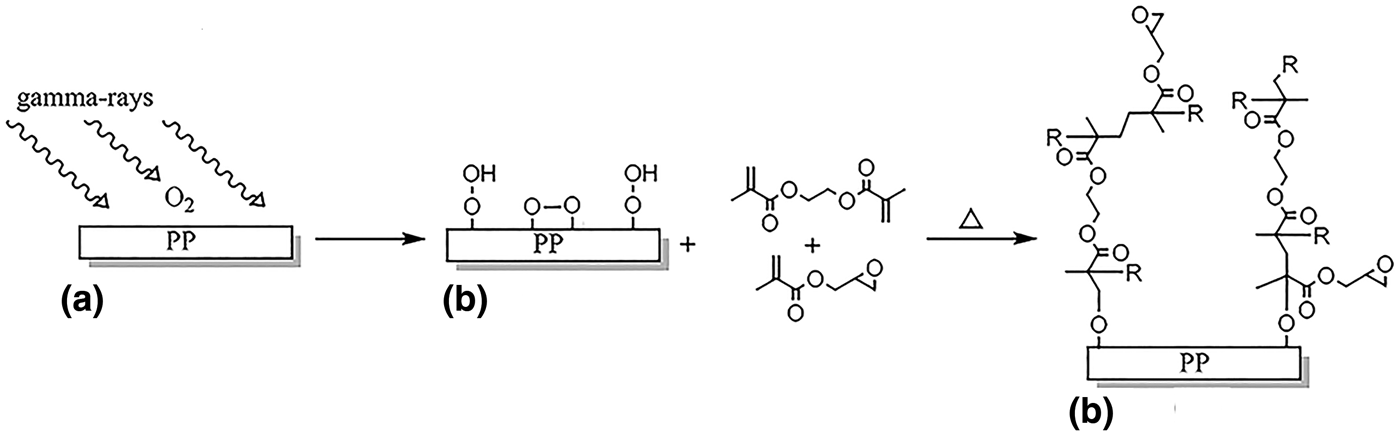
The first attempts to graft the PP films were performed by the direct irradiation method. However, it was not successful due to the low chemical reactivity of PP films compared with the chemical reactivity of monomers leading to copolymerization of the monomers. Therefore, the “grafting-from” method was employed to take an advantage that this method requires the initiator put in the matrix ensuring the grafting. The initiator on the PP film was generated as peroxides and hydroperoxides by the pre-irradiation method in the presence of air. Those chemical species are precursors of free radicals at high temperatures, guaranteeing the grafting onto the matrix (Fig. 1).
Scheme of grafting reaction by the “grafting-from” method: (a) PP film, (b) PP film functionalized by peroxides and hydroperoxides, and (c) PP-g-(EGDMA/GMA).

Additionally, using the “grafting-from” method, the effect of different solvents on the grafting degree was examined. The results exhibited that toluene was the best medium for the grafting polymerization because the copolymer was soluble. Hence, toluene was used as a medium of reaction for the effect of absorbed dose, monomer concentration, and reaction temperature and time on the grafting degree.
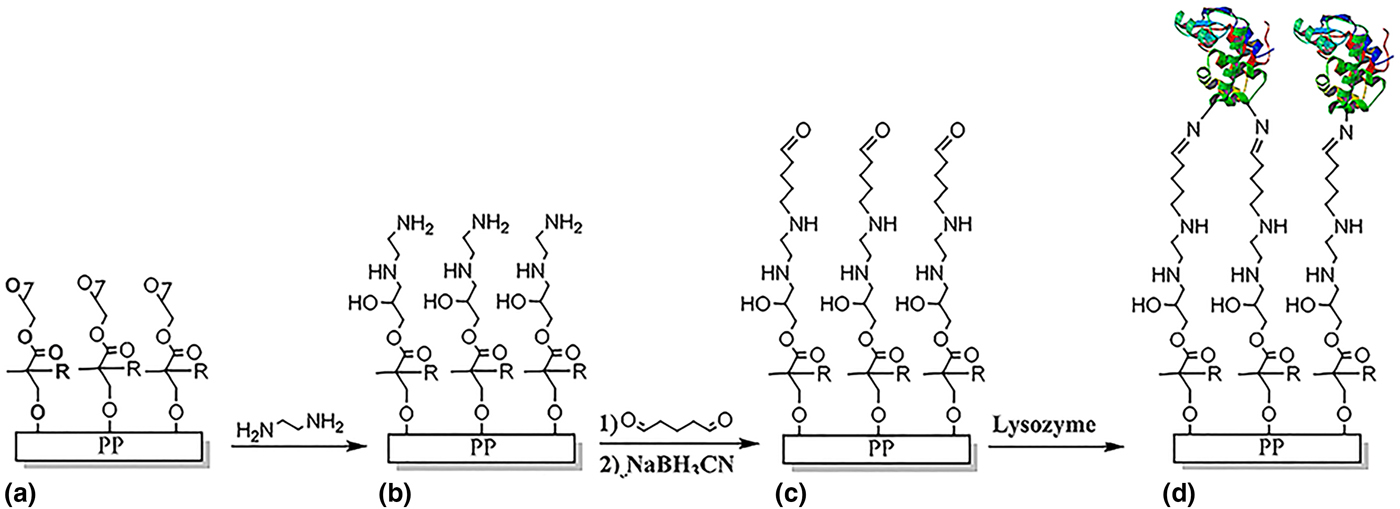
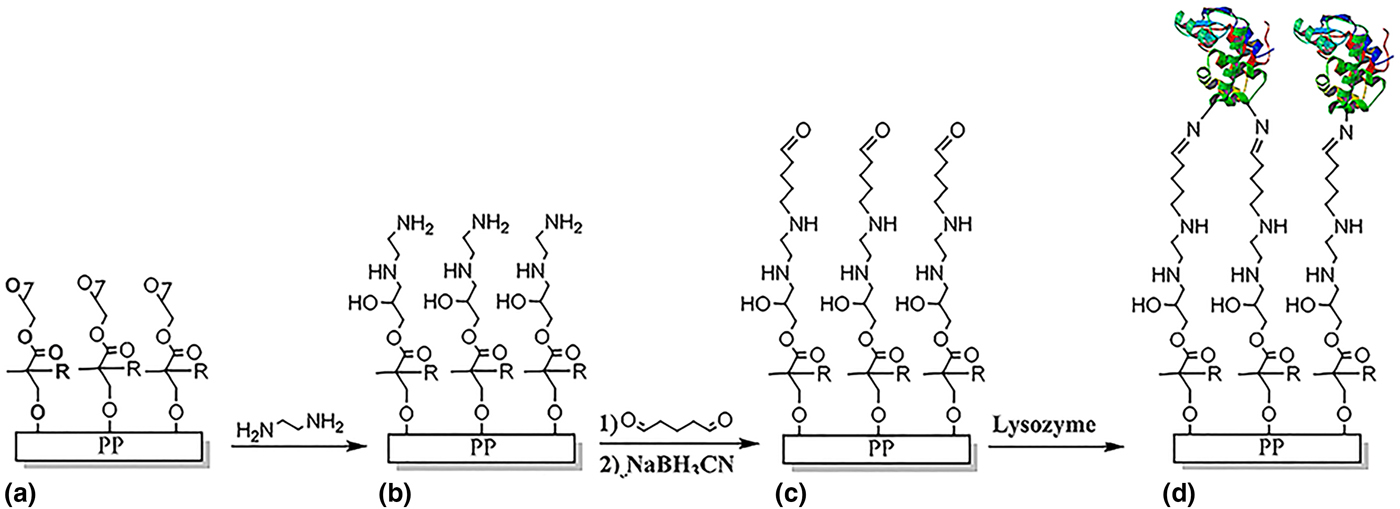
On the other hand, the lysozyme immobilization was achieved with the series of PP-g-(EGDMA/GMA) obtained at different monomer concentration and absorbed doses, in which addition of formyl groups was used for activation. This is because these groups are more reactive to lysozyme than epoxide groups, so that the lysozyme immobilization was performed using less aggressive conditions at low temperature (5 °C) (Fig. 2).
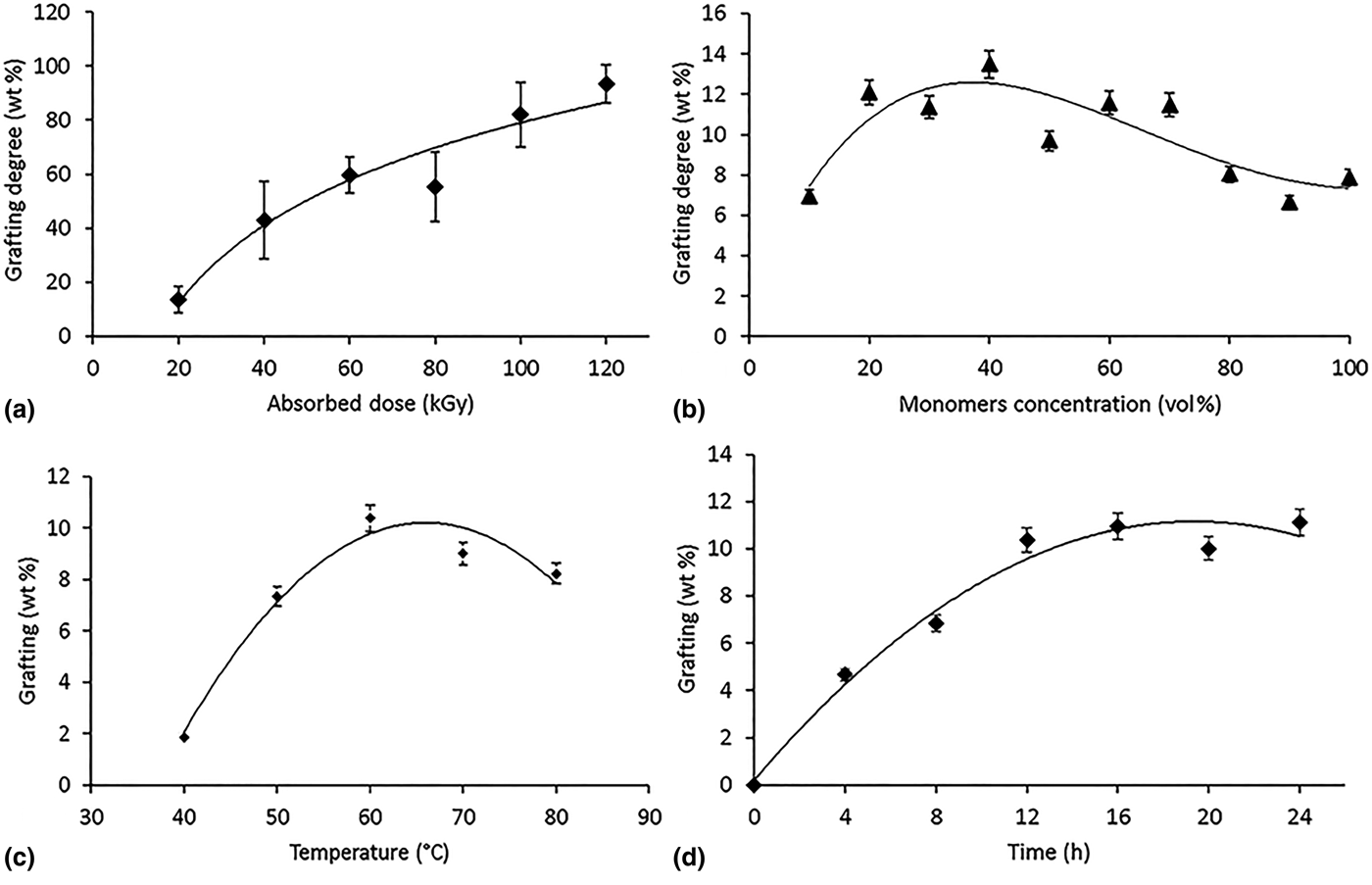
Grafting degree as a function of (a) absorbed dose, using a monomer concentration of 50 vol% in toluene at 70 °C and a reaction time of 22 h, (b) monomer concentration in toluene with PP film pre-irradiated at 20 kGy at 70 °C and a reaction time of 22 h, (c) reaction temperature using a monomer concentration of 50 vol% in toluene with PP film pre-irradiated at 20 kGy, and (d) reaction time using a monomer concentration of 50 vol% in toluene with PP film pre-irradiated at 20 kGy and 70 °C.

Synthesis and characterization of materials
Grafting degree of the PP film had a simple dependence on the absorbed dose; that increase of the absorbed dose resulted in the increase of the grafting degree [Fig. 3(a)]. This is because high absorbed doses generated a major number of active sites (peroxides and hydroperoxides). In the case of a constant absorbed dose, the grafting degree was only depending on the monomer concentration and the EGDMA ratio, which is able to hinder the grafting degree by the cross-linking provoked by this.
Scheme of activation of PP-g-(EGDMA/GMA) and the covalent immobilization of lysozyme. (a) PP-g-(EGDMA/GMA) the polymeric chains of PEGDMA were omitted for clarity of the scheme, (b) PP-g-NH, (c) PP-g-Al, and (d) PP-g-Lys.
The effect of monomer concentration [Fig. 3(b)] on the grafting degree showed no significant change in the range from 20 to 70 vol%, with a maximum grafting degree of 13 wt% at 40 vol% of monomer concentration. However, the grafting degree decreased at low monomer concentration of 10 vol% and at high concentration (80–100 vol%). The latter is possible due to the poor diffusion and the fast cross-linking of the monomers.
The effect of reaction temperature is shown in Fig. 3(c): the grafting degree showed an increase as the temperature increased, reaching the maximum at 60 °C, and decreased with further increase of temperature. This behavior was attributed to an increase of free radicals from the reactive sites (peroxides and hydroperoxides) of the irradiated PP film[ Reference Barrett 22 ] that not only benefited the grafting degree, but also the copolymerization resulting in the decrease of the grafting degree at high temperature. On the other hand, the effect of reaction time in grafting showed simple increasing dependence at shorter reaction time and saturation after 12 h of reaction onwards [Fig. 3(d)].
All kinetic studies indicated that it is possible to have an excellent control on grafting degree, leading to the procurement of PP films with tailored grafting degree.
Once the PP-g-(EGDMA/GMA) films are obtained, the series synthesized with different monomer concentrations and absorbed doses were chosen for the chemical activation and then the lysozyme immobilization was performed. The chemical activation was carried out using tetrahydrofuran (THF) as reaction medium. Other solvents such as methanol, ethanol, and water were also tried in the chemical activation, but the results were not satisfactory since the reaction did not take place with these solvents.
The first reaction endowed amine groups to the grafting copolymer film by the reaction of PP-g-(EGDMA/GMA) with ethylenediamine (PP-g-NH). The next reaction was the condensation reaction with glutaraldehyde and the amine groups from PP-g-NH followed by the reduction of the imine groups. The visual change of the films in the chemical activation process was the appearance of orange color in the film after the reaction with glutaraldehyde (PP-g-Al); this is due to the incorporation of formyl groups to the grafting copolymer.
Despite addition of the formyl groups to the films, the immobilization of lysozyme (PP-g-Lys) was evidently limited using only the buffer solution as the reaction medium. Therefore, it was tried to use enzyme solutions mixed with other solvents such as acetonitrile, methanol, and THF. The best results were obtained in methanol (33 vol%) as solvent, although this formed some precipitate.
Fourier transform infrared spectroscopy attenuated total reflectance (FTIR–ATR) analysis
FTIR–ATR study provided evidence of the film modification through the immobilization process of lysozyme (Fig. 4). This study was performed in dry and swollen conditions with PP-g-Lys. In the case of swollen conditions, the samples were immersed in water for 24 h before the spectrum was acquired.
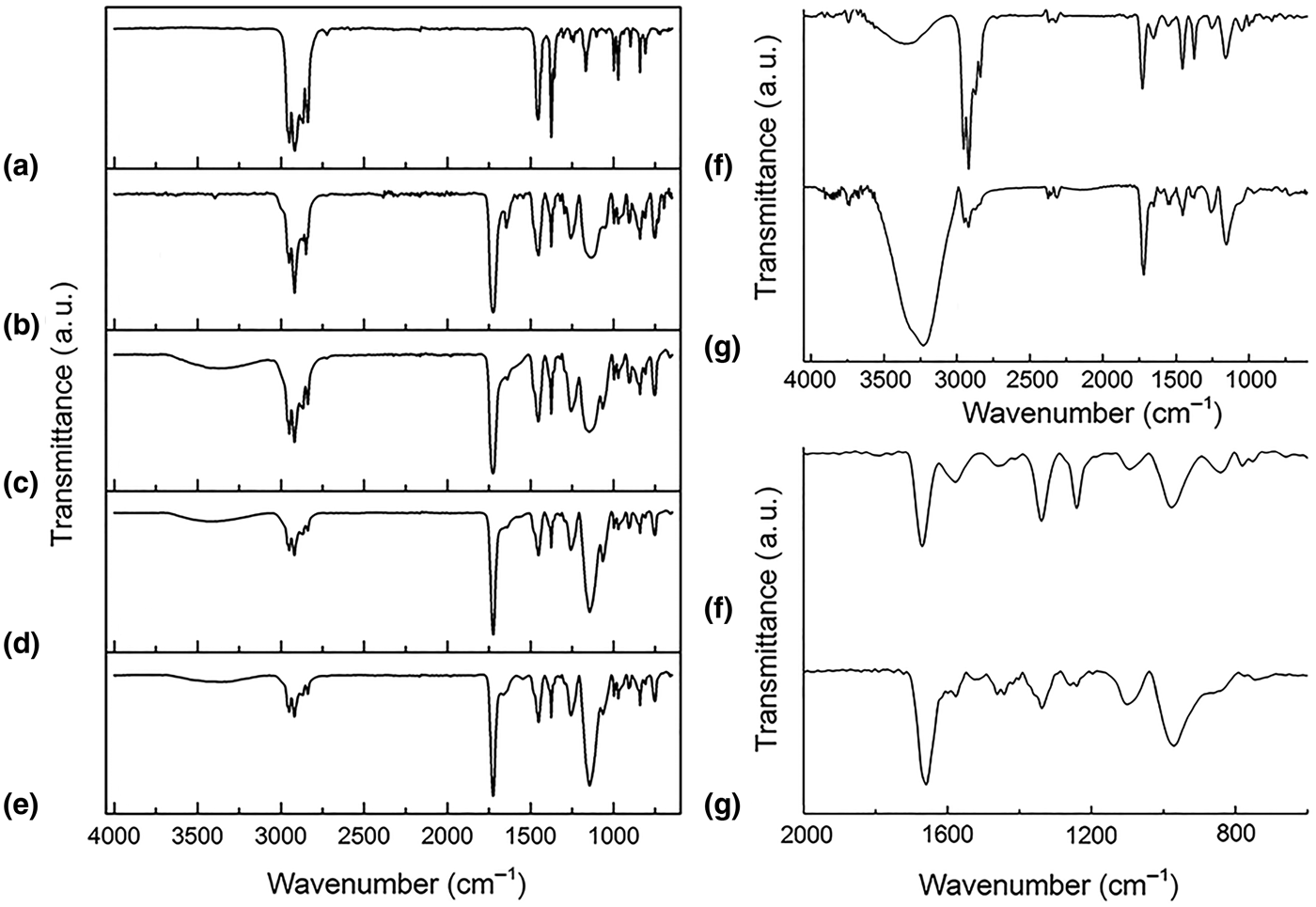
FTIR–ATR spectra in dry conditions of (a) PP film, (b) PP-g-(EGDMA/GMA), (c) PP-g-NH, (d) PP-g-Al, and (e) PP-g-Lys. FTIR–ATR spectra on right side were recorded using the dry and swollen samples, (f) dry PP-g-Lys, and (g) swollen PP-g-Lys.

The spectrum of PP-g-(EGDMA/GMA) [Fig. 4(b)] shows the corresponding bands of the carbonyl groups and the remaining C = C from EGDMA/GMA grafting at 1728 and 1646 cm−1, respectively [Fig. S1(a)]. The spectrum also exhibits the band of the epoxide groups from GMA at 975 cm−1, indicating that these groups were not affected by the grafting process.
The spectra of the films modified for the chemical activation (PP-g-NH and PP-g-Al) are shown in Figs. 4(c) and 4(d), where the spectrum of PP-g-NH exhibits a band at 3384 cm−1 attributed to amine and hydroxyl groups as well as the complementary bands at 1606 and 1546 cm−1, respectively. However, the spectrum of PP-g-Al [Fig. 4(d)] did not clearly show the band of the carbonyl from the formyl groups due to overlapping with the bands located at 1728 and 1648 cm−1 assigned to carbonyl groups and C = C from the EGDMA/GMA grafting.
Finally, the PP-g-Lys spectrum [Fig. 4(e)] evidenced a new band of weak intensity at 1664 cm−1, attributed to the stretching of the “amide I groups” from lysozyme. This band is the most characteristic bands of immobilized lysozyme.[ Reference Flores-Rojas, López-Saucedo, Bucio and Isochima 23 ] Regrettably, other bands of lysozyme groups were not observed due to the overlapping with the bands of PP-g-Al [Fig. S1(b)].
Infrared study of swollen PP-g-Lys sample [Fig. 4(g)] showed new bands in a range from 1724 to 1051 cm−1. The bands were assigned to functional groups of lysozyme since these were not observed on another spectrum of PP film through immobilization process. The corresponding band of the “amide I groups” in swollen PP-g-Lys indicates that the lysozyme keeps its globular structure since this band is associated with the perturbations of the secondary structure of proteins.[ Reference Remmele and Stushnoff 24 ] The spectrum also showed the bands corresponding to the carboxyl and “amide II” groups of lysozyme in a range from 1554 to 1519 cm−1 associated with the hydrogen bonding.[ Reference Yang, Mantsch, Arrondo, Saint-Girons, Guillou, Cohen and Barzu 25 ] These bands were observed in the swollen samples because these groups are hydrophilic; therefore, the groups interact better with the water resulting in their exposition, while under dry conditions they are not exposed due to compact structure and low hydration level.[ Reference Careri and Giansanti 26 ]
Differential scanning calorimetry (DSC) and thermogravimetric analysis (TGA) analysis
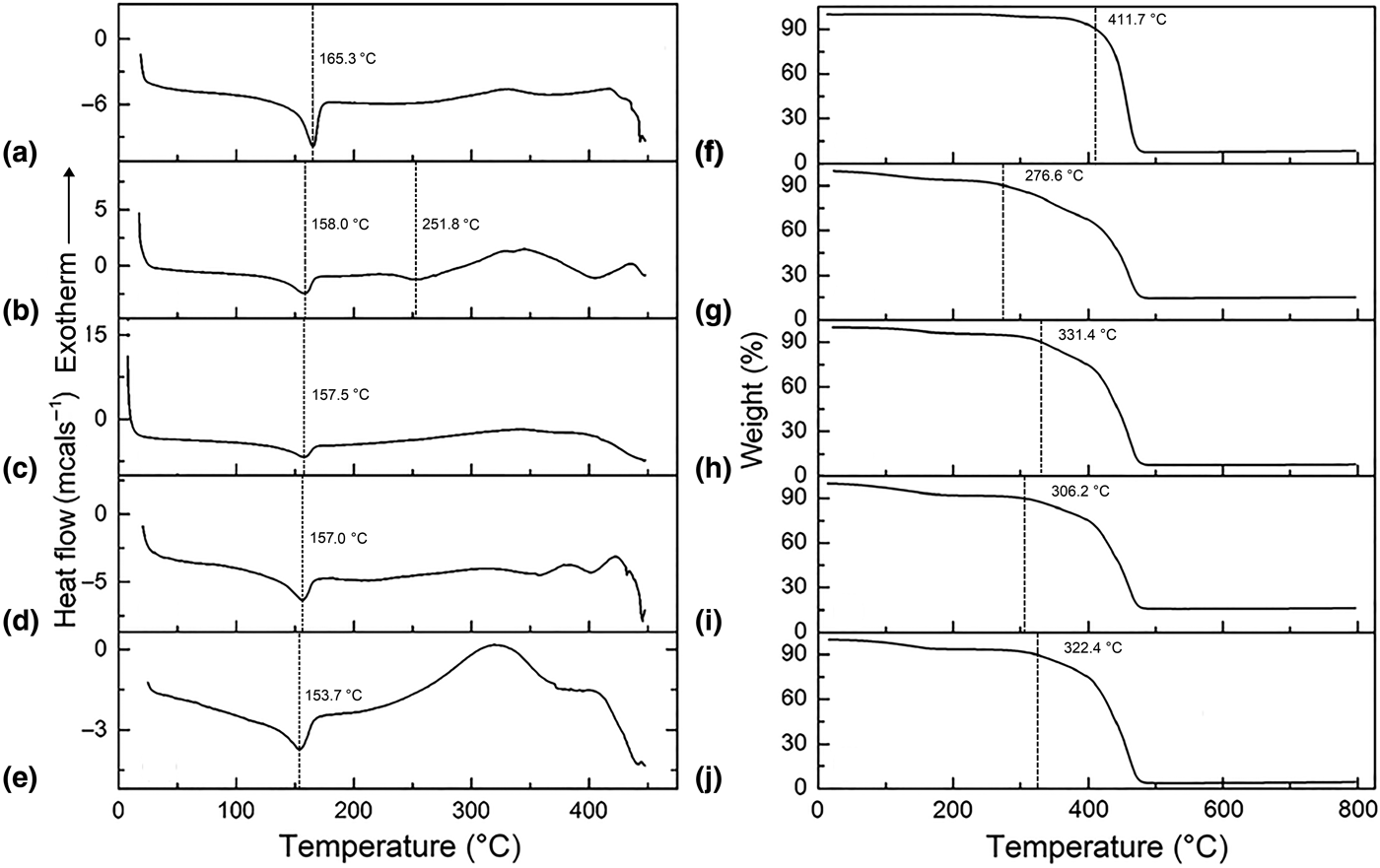
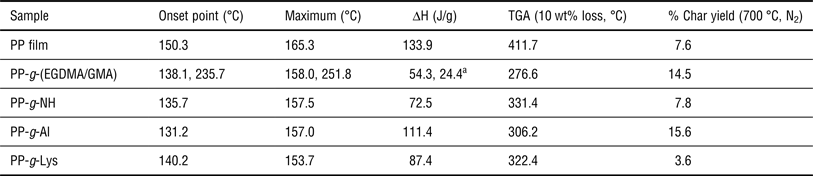
Thermal analysis DSC of PP film [Fig. 5(a)] shows an endothermic peak with an onset point at 150.3 °C, while the thermogram of PP-g-(EGDMA/GMA) [Fig. 5(b)] exhibited the onset point at 138.1 °C corresponding to the melting point of PP film matrix and an additional transition at 235.7 °C corresponding to the decomposition of EGDMA/GMA grafting which had a lower decomposition temperature compared with P(EGDMA/GMA), due to the combination of surface chains of PP matrix and the grafting (Fig. S2), where this combination also changed the form of the melting point peak of the PP matrix.
DSC thermograms of (a) PP film, (b) PP-g-(EGDMA/GMA), (c) PP-g-NH, (d) PP-g-Al, (e) PP-g-Lys. TGA thermograms, (f) PP film, (g) PP-g-(EGDMA/GMA), (h) PP-g-NH, (i) PP-g-Al, and (j) PP-g-Lys.

In the case of the PP-g-NH and PP-g-Al thermograms [Figs. 5(c) and 5(d)], they did not show a decomposition of the grafting, presenting only the onset point corresponding to the melting point of PP film at 135.7 and 131.2 °C, respectively. Finally, the thermogram of PP-g-Lys [Fig. 5(e)] had the highest onset point of grafted samples at 140.2 °C. The DSC also showed the changes on the enthalpies where the most significant change occurred after the grafting polymerization which is in accordance with the grafting and immobilization processes.
The thermal stability of PP-g-(EGDMA/GMA) was lower than that of the pristine PP film, showing a multistage decomposition where the first one corresponds to the EGDMA/GMA grafting (Fig. S3). The TGA analysis exhibited that the chemical activation and the lysozyme immobilization improved the thermal stability of the EGDMA/GMA grafting since the decomposition temperature of PP-g-NH, PP-g-Al, and PP-g-Lys were higher at 10% weight loss compared with PP-g-(EGDMA/GMA). Table 1 summarizes the transition and decomposition temperatures from DSC and TGA studies.
Temperatures and enthalpies of the DSC and TGA study.

a ΔH of (EGDMA/GMA) grafting decomposition.
The thermal analysis indicated that the bulk properties of PP film were kept because the melting point was not considerably affected, suggesting that only the surface intervened through the grafting and immobilization processes.
Contact angle
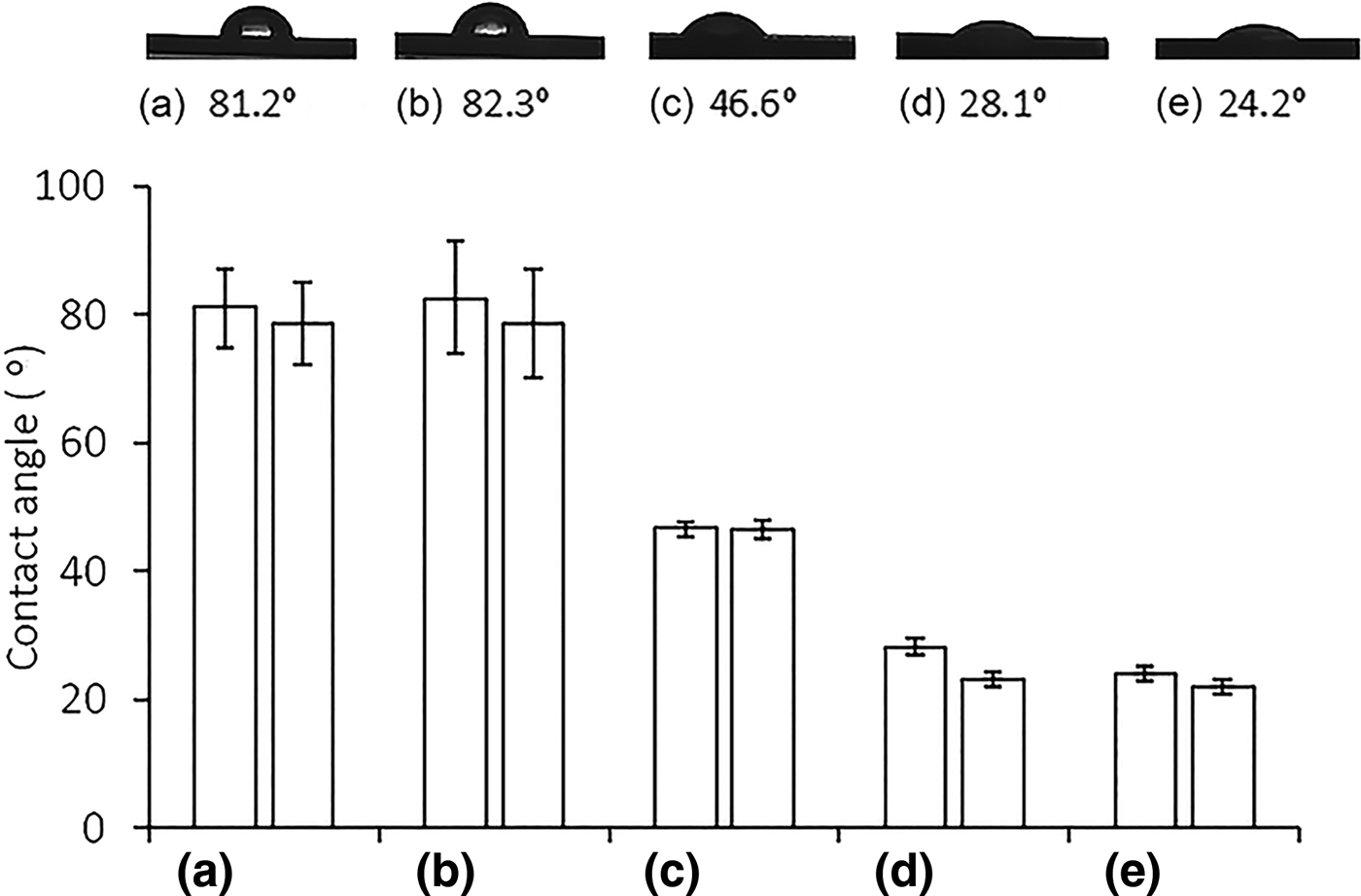
The water contact angle (Fig. 6) confirmed the changes of hydrophobicity on the surface of PP film caused by the grafting and further chemical modifications. The pristine PP film [Fig. 6(a)] and PP-g-(EGDMA/GMA) [Fig. 6(b)] had a similar hydrophobicity with a contact angle of about 80°. On the other hand, the contact angle for PP-g-NH and PP-g-Al [Figs. 6(c) and 6(d)] had a significant decrease, indicating a high hydrophilicity provoked by the incorporation of hydrophilic groups on the surface of the film. PP-g-Lys film presented further less contact angle, suggesting the immobilization of hydrophilic lysozyme.
Contact angle of the PP films in each step of lysozyme immobilization: (a) PP film, (b) PP-g-(EGDMA/GMA), (c) PP-g-NH, (d) PP-g-Al, and (e) PP-g-Lys.

Surface morphology
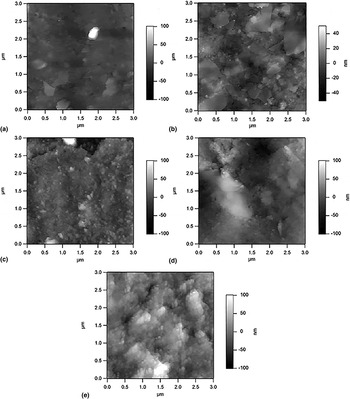
The surface morphology obtained by atomic force microscope (AFM) (Fig. 7) showed that PP films do not have a surface completely flat and homogeneous, covered with small platelet structures [Fig. 7(a)]. The surface of PP-g-(EGDMA/GMA) sample evidenced a coverage of small nanoparticle-like structures [Fig. 7(b)]. The surface of PP-g-NH and PP-g-Al was covered by more nanoparticle-like structures with slightly different morphology [Figs. 7(c) and 7(d)]. The PP-g-Lys surface presented slightly larger nanoparticle-like structures [Fig. 7(e)]. The surface morphologies study indicated the formation of different nanostructures through immobilization process of lysozyme. Considering the grafting degree (~60 wt%), the surface is mostly covered by the grafted compounds, resulting in difference of surface nanostructures.
AFM images in dry conditions, (a) PP film, (b) PP-g-(EGDMA/GMA), (c) PP-g-NH, (d) PP-g-Al, and (e) PP-g-Lys.

Study of enzymatic activity
Screening results of enzymatic activity of the PP-g-Lys series
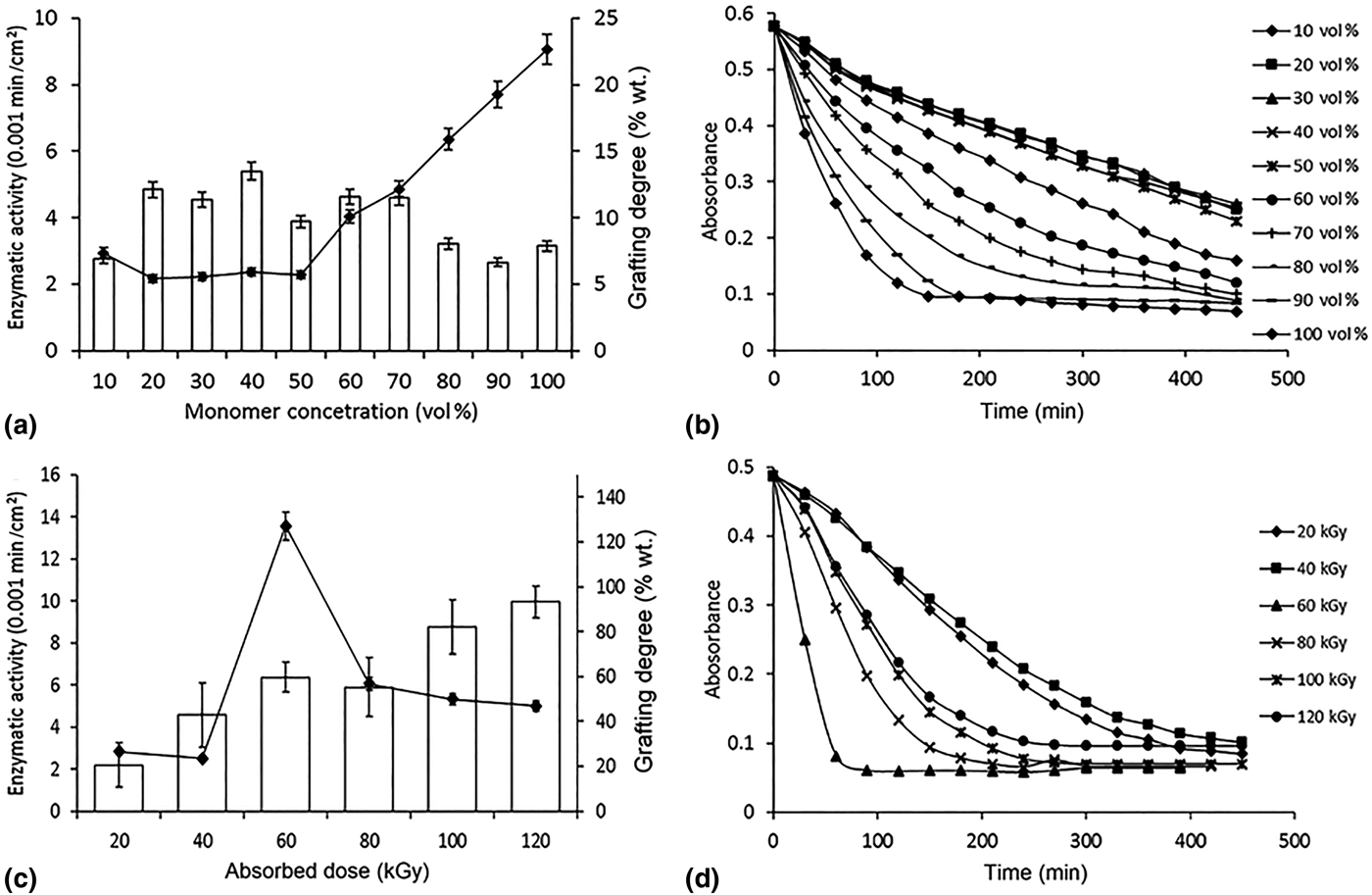
The screening of enzymatic activity was carried out with a sample of PP-g-Lys (0.5 cm2) synthesized from PP-g-(EGDMA/GMA) series obtained at different monomer concentrations and absorbed doses. The conditions were 4 mL of M. lysodeikticus suspension with an initial absorbance (A 0) ≈ 0.55. The loss of absorbance at 450 nm was monitored at 30 °C and pH 7, 0.01 M.
The results of enzymatic activity were almost constant in the series obtained at different monomer concentration in a range from 10 to 50 vol%, while the enzymatic activity showed an increase in a range from 60 to 100 vol% of monomer concentration [Fig. 8(a)]. In the case of PP-g-Lys synthesized from the PP film grafted at different absorbed doses, the enzymatic activity was not significantly improved with an increase of the grafting degree, giving the maximum enzymatic activity for PP-g-Lys synthesized with the PP film grafted with an absorbed dose of 60 kGy [Fig. 8(c)]. These screening results indicated that the enzymatic activity is independent of the grafting degree. However, the enzymatic activity suggested a dependence on the remaining double bonds (from the EGDMA/GMA grafting) which were calculated by FTIR–ATR and related to the carbonyl groups to obtain a ratio[ Reference Moraes, Rocha, Menegazzo, Borges de Araújo, Yukimitu and Moraes 27 ] (Supplementary material S4).
(a) Enzymatic activity at 30 °C of lysozyme immobilized on PP films grafted at different monomer concentration  enzymatic activity,
 grafting degree, (b) absorbance of Micrococcus lysodeikticus suspension at interval time of 30 min, (c) enzymatic activity at 30 °C of lysozyme immobilized on PP films grafted at different absorbed doses
 enzymatic activity,
 grafting degree, and (d) absorbance of M. lysodeikticus suspension at interval time of 30 min.

The results exhibited that enzymatic activity improved with the increase of remaining double bonds in the EGDMA/GMA grafting which was depending on the monomer concentration and the absorbed dose. In the case of series obtained at different monomer concentrations, the remaining double bonds increased as the monomer concentration increased. However, in the series grafted at different absorbed doses, only the film grafted at 60 kGy had the highest ratio of double bonds. These results agree with the enzymatic behavior that supposes that the presence of double bonds improves the enzymatic activity, either by the stabilization of the enzyme in the immobilization process which hinders the denaturation of the enzyme or by a probable unknown chemical reaction during the immobilization process of lysozyme (Fig. S4).
Based on the screening results, PP-g-Lys synthesized from PP-film grafted with a dose of 60 kGy was chosen as the best sample to continue the enzymatic activity study at different temperatures and pH values. For this sample, the surface density of amine groups in the film was calculated to be 0.099 mmol cm−2 by the difference of weight. Unfortunately, the quantification of lysozyme immobilized on the film was impeded by the formation of precipitate.
Enzymatic activity study at different temperatures and pH values
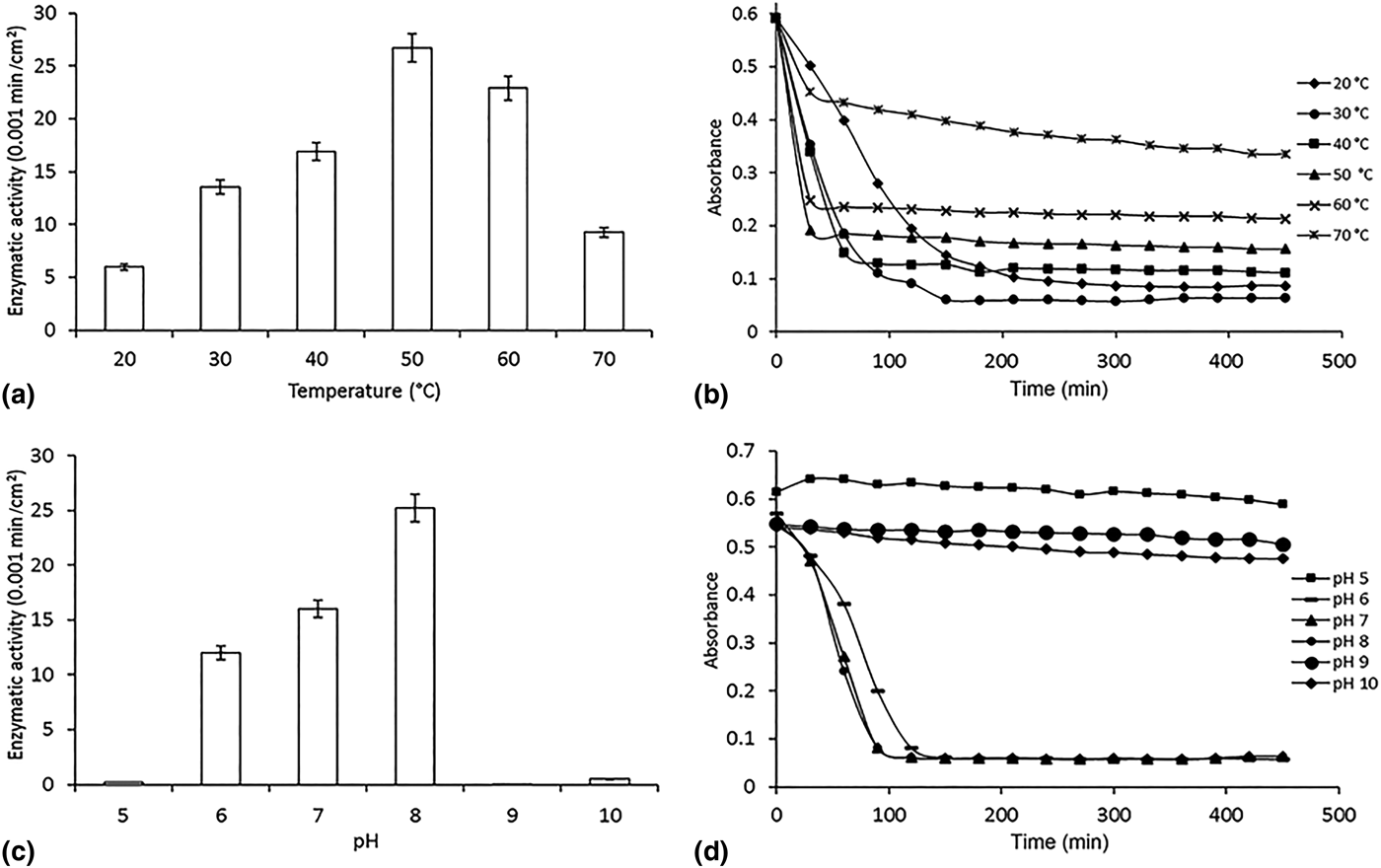
The thermal study exhibited a progressive increase of enzymatic activity in a range from 20 to 50 °C and decreasing at 60 °C or higher temperatures [Fig. 9(a)]. Interestingly, in a range from 50 to 70 °C, the absorbance decreased just in the first 30 min, and thereafter no significant decrease in the absorbance of the system was observed [Fig. 9(b)]. This indicates damage on the immobilized lysozyme at higher temperature. The results showed a slight stability improvement of the immobilized lysozyme compared with free one, since the immobilized lysozyme exhibited the maximum enzymatic activity at 50 °C, being 10 °C higher compared with maximum activity from free lysozyme [Fig. S5(a)]. Nevertheless, the minimum remaining absorption and thus the maximum efficiency of the enzymatic activity was observed between 20 and 40 °C at longer time (>200 min), suggesting a better hydrolysis of M. lysodeikticus at these lower temperatures.
(a) Enzymatic activity of PP-g-Lys at different temperature and pH = 6.2, (b) absorbance decrease of Micrococcus lysodeikticus suspension at different temperatures, (c) enzymatic activity of PP-g-Lys at different pH values, and (d) absorbance of M. lysodeikticus suspension at different pH values. The PP-g-Lys was synthesized using PP-g-(EGDMA/GMA) obtained with an absorbed dose of 60 kGy.

The enzymatic activity was also studied at different pH values in a range from 5 to 10. The study showed that PP-g-Lys had enzymatic activity in a range from 6 to 8 with a maximum enzymatic activity at pH = 8 [Fig. 9(a)]. This study also exhibited the important effect of lysozyme immobilization since this did not show enzymatic activity at pH = 9 and 10 while free lysozyme exhibited enzymatic activity at these pH values [Fig. S5(b)].
Reusability
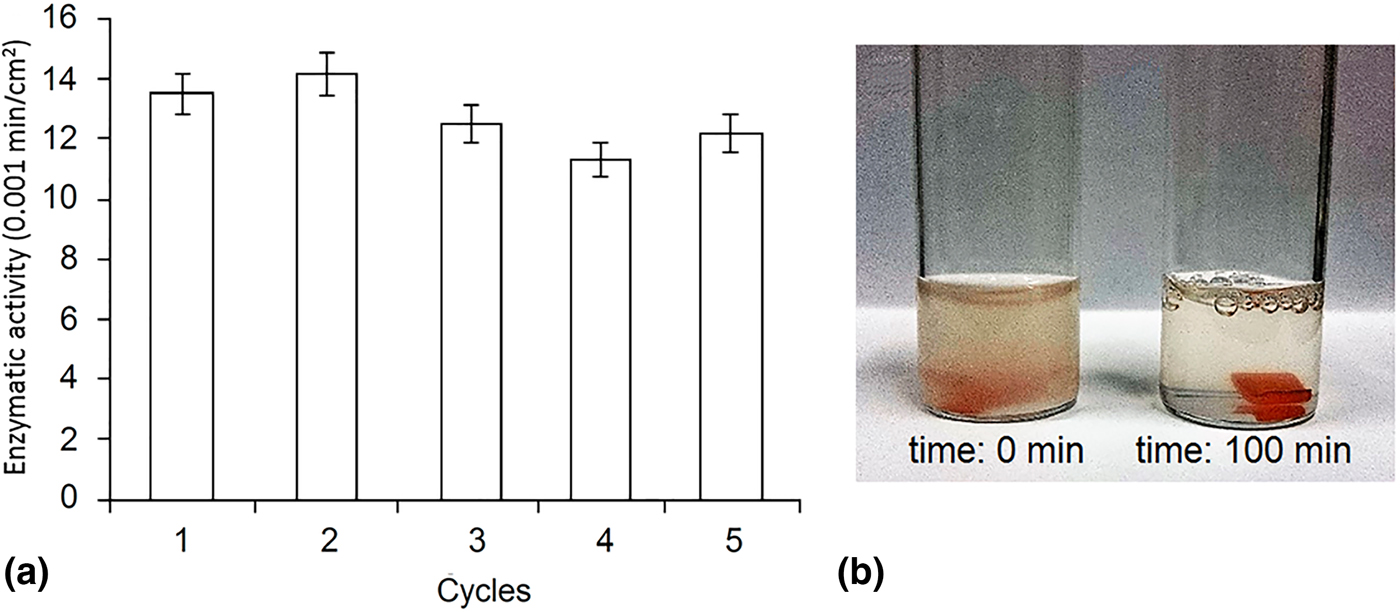
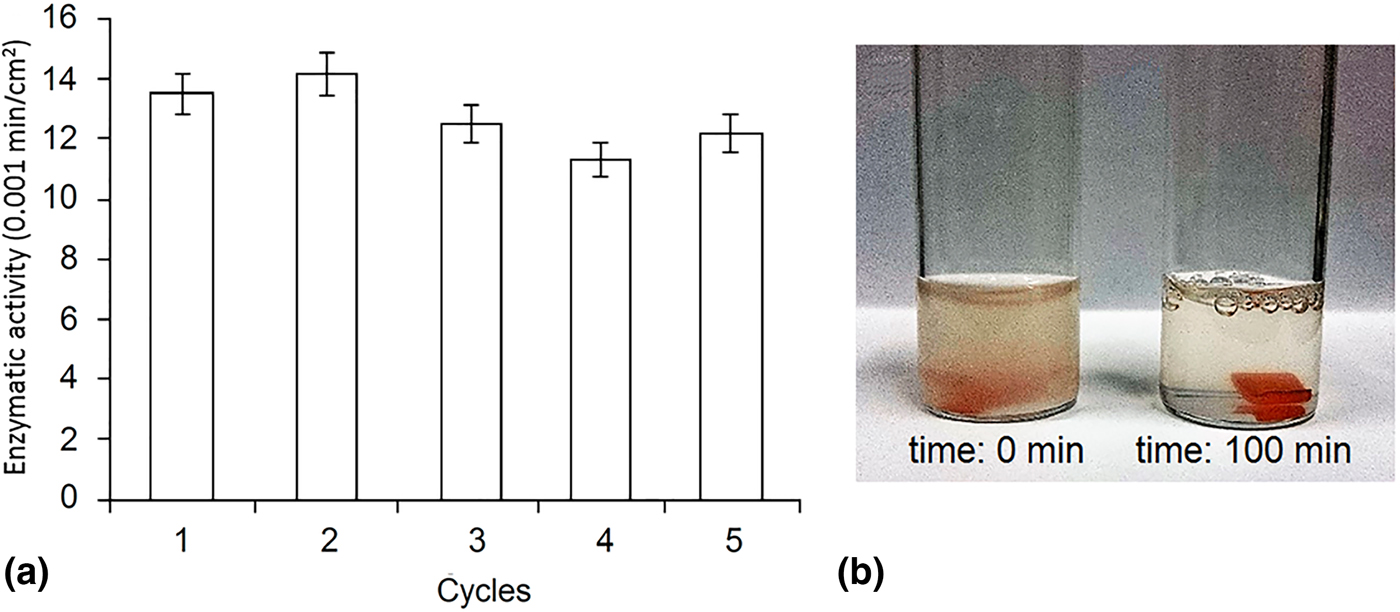
The reusability study of PP-g-Lys (Fig. 10) was made by cycles at pH = 6.2 and a temperature of 30 °C. The obtained results did not show a considerable change in the enzymatic activity after several cycles. This reusability is an advantage of the immobilized lysozyme over the free one since in the most of the cases it is impossible to recover the free lysozyme.
(a) Enzymatic activity of PP-g-Lys in different cycles at pH = 6.2 and 30 °C and (b) photographs of samples of Micrococcus lysodeikticus suspension at 0 and 100 min after addition of the PP-g-Lys sample.
Conclusion
Biofunctionalization of PP films with lysozyme was successfully achieved on PP-g-(EGDMA/GMA) obtained by the grafting-from method and successive chemical modifications with ethylenediamine and glutaraldehyde.
The grafting on PP films was carried out by the formation of the initiator with the pre-irradiation method. The grafting showed a clear dependence on the absorbed dose, increasing the grafting degree with an increase of the absorbed dose. In the case of monomer concentration study, the maximum grafting degree was obtained at 40 vol% of monomer in toluene, but the grafting degree did not exhibit a considerable dependence on monomer concentration as shown for the absorbed dose.
The enzymatic activity of PP-g-Lys showed a non-dependence on grafting degree of PP-g-EGDMA/GMA, but observed an improvement caused by the increase of the remaining double bonds of EGDMA/GMA grafting, being the best enzymatic activity for PP-g-Lys synthesized from PP-g-(EGDM/GMA) obtained with an absorbed dose of 60 kGy, which had the highest amount of remaining double bonds. The thermal and pH studies showed that the effect of the immobilization of lysozyme and the optimal conditions were in a range of temperature from 20 to 40 °C and pH values from 6 to 8.
In conclusion, this work demonstrated that the enzymatic activity was improved by the assistance of adequate chemical groups such as double bonds. Furthermore, the immobilization of lysozyme on the PP films allowed its recovery conserving the enzymatic activity, being this an advantage over the free lysozyme. These types of materials could be applied in the design of antimicrobial devices.
Supplementary material
The supplementary material for this article can be found at https://doi.org/10.1557/mrc.2018.14
Acknowledgments
This work was supported by DGAPA-UNAM Grant IN201617. The authors thank B. Leal and M. Cruz from ICN-UNAM, and E. Hernández-Mecinas and Carlos Flores from IIM-UNAM for their technical assistance.