Neurodevelopmental impairment is common in patients with congenital heart defects and is potentially the most damaging complication. Reference Gaynor, Stopp and Wypij1 Post-operatively, these patients are challenged with impairment of cognition, language, and motor functions during infancy. Reference Andropoulos, Ahmad and Haq2 Upon school entry, they are faced with deficits impacting the quality of life Reference Nyboe, Udholm and Larsen3 and have a higher prevalence of psychiatric diagnoses compared to their healthy peers. Reference Holst, Kronborg and Idorn4,Reference Nyboe, Fonager and Larsen5
The aetiology behind neurodevelopmental impairment in patients with CHDs has been the focus of numerous research efforts over the past decades. Factors mediating the risk of neurodevelopmental impairment can generally be divided into innate and modifiable risk factors. The interplay between these two components is suggested to induce neurodevelopmental impairment amongst CHD patients. These factors include, but are not limited to, exposure to volatile anaesthetic agents, length of ICU stay, Reference Andropoulos, Ahmad and Haq2 duration of cardiopulmonary bypass, Reference Gaynor, Stopp and Wypij7 and specific patient characteristics such as the presence of a genetic syndrome, low birth weight, and presence of APOE ϵ2 allele. Reference Gaynor, Wernovsky and Jarvik8
However, no studies have, to our knowledge, evaluated the association between mean arterial pressure during surgery and neurodevelopmental impairment in a population of atrial septal defect and ventricular septal defect patients. This is particularly interesting, as CHD patients are suggested to have an inherent vulnerability to intraoperative haemodynamic instability. Reference Gaynor9 Therefore, we hypothesised that a low intraoperative blood pressure, especially when operated at a young age, has a negative impact on neurocognitive development. Thus, the aim of this long-term retrospective study was to describe the relationship between blood pressure during septal defect closure in infancy or early childhood and full-scale intelligence quotient scores in adulthood.
Methods
This study was approved by the Regional Committee on Biomedical Research Ethics of the Central Denmark Region (1-10-72-233-17) and the Danish Data Protection Agency (2012-58-006) and complies with the World Medical Association’s Declaration of Helsinki. All patients provided written informed consent prior to enrolment. This study was conducted as a substudy of a previously published study assessing intelligence quotient scores in patients with septal defects and healthy controls. Reference Asschenfeldt, Evald and Heiberg10 This manuscript adheres to the applicable Equator guidelines.
Design and study population
In this retrospective study, inclusion criteria were (1) surgical closure of isolated atrial septal defect between 1988 and 1999 or (2) surgical closure of isolated ventricular septal defect between 1990 and 2002 at Aarhus University Hospital, Denmark. Exclusion criteria were (1) associated syndromes, (2) recent head trauma, (3) lack of Danish language skills, (4) diagnosis of coronary artery disease or other congenital cardiac abnormalities, (5) age at inclusion below 18 years, and (6) age at surgery above 1 standard deviation from mean age at surgery, as blood pressure was considered incomparable across wide ranges of age. The exclusion criteria 1–5 were applied primarily in the original study, whereas exclusion criteria 6 was applied secondarily for this substudy only. Patients were invited via electronic mail, and according to Danish law, patients were asked to express their interests prior to receiving the more comprehensive study material. Patients, who agreed to participate, received an email with practical information including the date and time of examination. In order to ensure that the number of patients included was in accordance with the conducted sample size calculation, patients were contacted in blocks of 50–100 patients at a time, and upon reaching the aimed number of patients, no further invitations were sent out.
Stratification of patients
In a subanalysis, patients were divided into two groups based on their mean arterial pressure during cardiopulmonary bypass. A threshold of 40 mmHg was set according to the guidelines from the European Resuscitation Council 2015 for a 1-year-old child. Reference Maconochie, Bingham and Eich11
Additional stratifications were performed in order to account for possible differences in intelligence scores at the extremities of bypass time and age at surgery. Long bypass time was defined as 75 minutes or above (1SD above mean value), whereas low age at surgery was defined as 0.7 years or below (1SD below mean value). All cut-off values used in the stratification of patients were set in advance prior to data analyses.
Data acquisition
Data related to the surgical intervention were retrospectively collected from reviewing the following charts: patient notes, anaesthesia records, and ICU charts. This included information on demographics, medical history, type of anaesthetic agents used during surgery, surgical technique, vital parameters (e.g. mean arterial pressure), and blood sample analyses. Throughout an operation, an anaesthesiologist or anaesthetic nurse manually noted the blood pressures with 5-minute intervals on the patient’s anaesthesia record. For each patient, an average mean arterial pressure was obtained for each of the three intraoperative phases (pre-, intra-, and post-cardiopulmonary bypass), by averaging all measurements in the respective phase.
Outcome data were prospectively collected and included neuropsychological testing and information on educational attainment. The neuropsychological test battery has been previously described in detail. Reference Asschenfeldt, Evald and Heiberg10 Retrospective data collection was conducted in the period from September, 2019 to January, 2020, whereas prospective data collection was performed in the period from March, 2018 to November, 2018.
Neuropsychological testing
Intelligence and cognitive abilities were obtained using the Wechsler Adult Intelligence Scale Version IV. The Wechsler Adult Intelligence Scale Version IV comprises four subdomains representing major components of intelligence (1) verbal comprehension, (2) perceptual reasoning, (3) working memory, and (4) processing speed. Full-scale intelligence quotient scores and the four subdomains, all with a scaled score mean of 100 (SD ± 15), were calculated according to the manual. A higher score indicated a better performance. The neuropsychological testing was conducted by trained research assistants under the supervision of an experienced research neuropsychologist (L.E). Testing personnel was blinded to the cardiac diagnosis.
Surgical technique
In brief, surgical closure was performed on cardiopulmonary bypass via a median sternotomy. Every patient was supported on the same standard cardiopulmonary bypass setup, which included (1) maintenance of hypothermia between 28 and 35°C, (2) priming with a combination of blood, Ringer’s lactate, bicarbonate, albumin, and heparin, (3) cardioplegic induction with St. Thomas solution, (4) blood flow target of 2.4 L/min/m2, and (5) haematocrit target of 25–30%. The defect was accessed through the right atrium, or for a ventricular septal defect occasionally the right ventricle and closed with either direct suture or insertion of a patch of artificial material or pericardium. All procedures were performed by one of the seven experienced paediatric cardiac surgeons at Aarhus University Hospital, Denmark.
Anaesthetic technique
The choice of anaesthetic technique was at the discretion of the attending paediatric anaesthesiologist. For all patients, intraoperative monitoring included intra-arterial blood pressures in the right radial artery, ECG, and peripheral oxygen saturation, whereas no anaesthetic depth monitoring was performed. Intraoperative arterial blood samples were analysed, and also at the discretion of the attending anaesthesiologist.
In general, a volatile anaesthetic agent was used for induction and maintenance in combination with one or more intravenous anaesthetic agents. For analgesia, intravenous opioids were used including mainly fentanyl, but also morphine and sufentanil. Intraoperative muscle relaxation with pancuronium, atracurium, or cisatracurium was used in all patients. Lastly, the majority of the patients were given either dopamine or dobutamine to increase inotropy.
Outcomes
Our primary outcome was full-scale intelligence quotient scores, whereas the index scores verbal comprehension, perceptual reasoning, working memory, and processing speed were secondary outcomes. Other secondary outcomes were educational attainment, which included educational level (assessed by the International Standard Classification of Education 2011), dyslexia, dyscalculia, special needs teaching, and educational psychologist counselling, which were all obtained through a personal interview by an experienced research nurse.
Statistical analyses
Data are reported as means ± standard deviations, absolute numbers with percentages of patients, or as medians with total range, as appropriate. Continuous data were compared using student’s t-tests or Wilcoxon rank-sum tests, as appropriate for normally and non-normally distributed data, respectively. Binary data were compared using chi-squared tests. A Spearman’s correlation was performed to test for a correlation between mean arterial pressure during cardiopulmonary bypass and full-scale intelligence quotient scores. Similarly, Spearman’s correlations were performed to assess whether cardiopulmonary bypass time and age at surgery correlated with full-scale intelligence quotient scores. P-values < 0.05 were considered statistically significant for our primary outcome, whereas only p-values < 0.01 were considered statistically significant for our secondary outcomes. All p-values are two-sided. The current study was conducted as a substudy of a previously published study, for which a sample size calculation was performed. Reference Asschenfeldt, Evald and Heiberg10 Furthermore, maximum and minimum values were identified for each blood parameter to evaluate possible predictors of lower neurodevelopmental outcomes. Data were stored in RedCap (Denmark), statistical analyses were conducted on a blinded dataset using Stata/SE 15.1 (Stata Corp., TX, United States of America), and data were graphically described in GraphPad Prism 8 (GraphPad Software, La Jolla, CA, United States of America).
Results
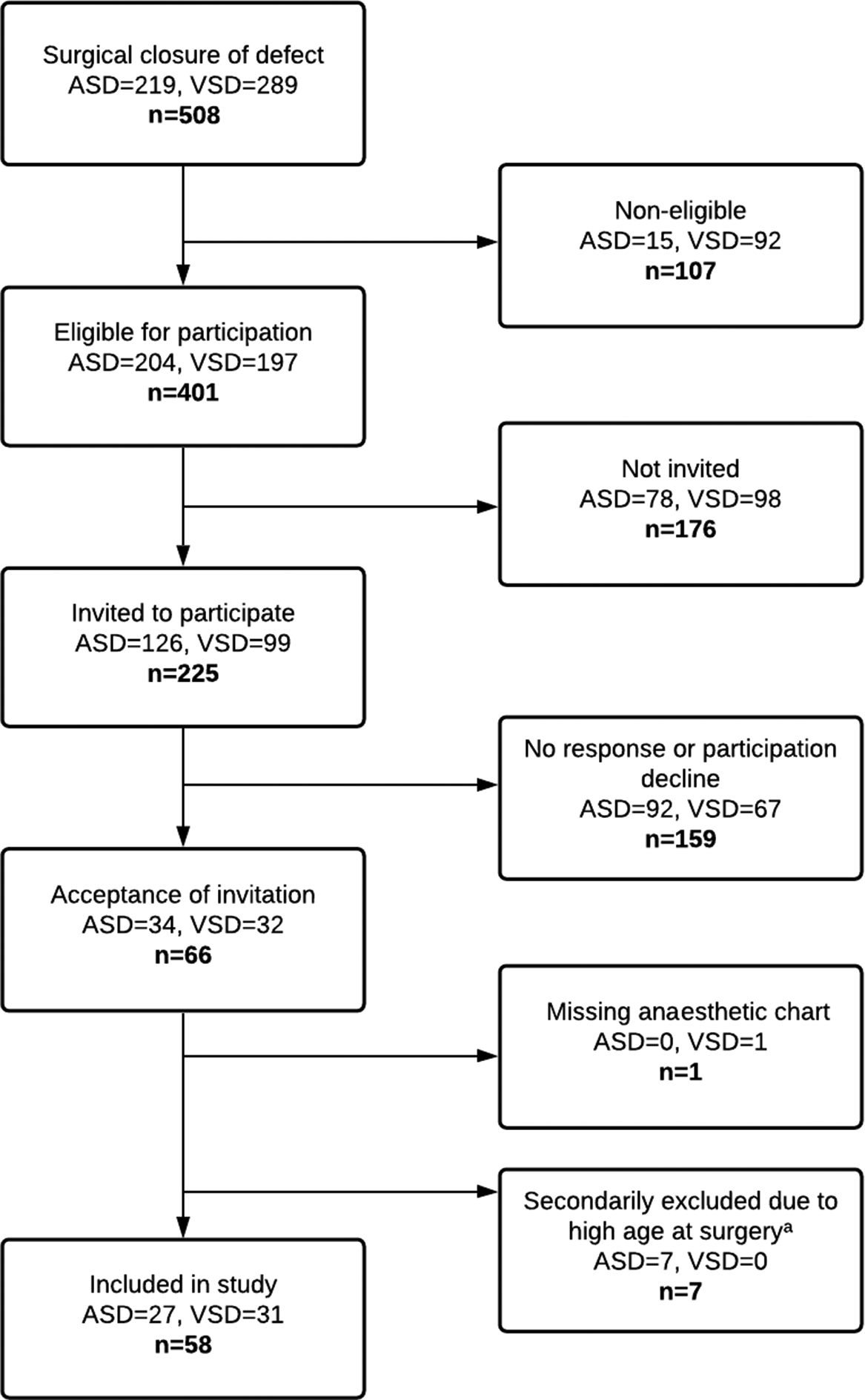
A total of 66 patients, who underwent surgical correction of either atrial septal defect or ventricular septal defect at Aarhus University Hospital between 1988 and 2002, gave their informed consent to participate in the original study. For this substudy, 1 patient was excluded due to missing anaesthetic chart and 7 patients were secondarily excluded due to high age at the time of surgery leaving 58 patients eligible for analyses (atrial septal defect: n = 27, ventricular septal defect: n = 31), as displayed in detail in Figure 1. Data collection was complete for all patients.
Flowchart of inclusion process. ASD=Atrial septal defect; VSD=Ventricular septal defect.
aHigh age at surgery was defined as age at surgery above 1SD from mean age at surgery.

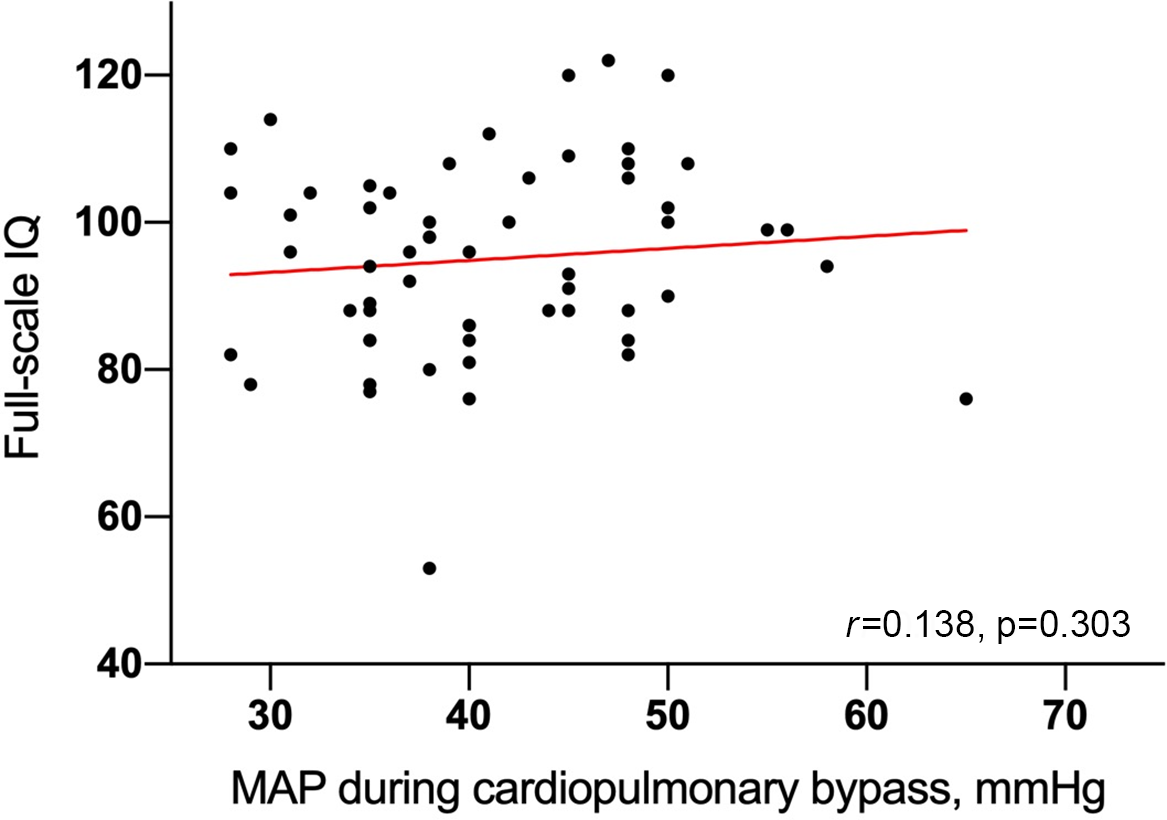
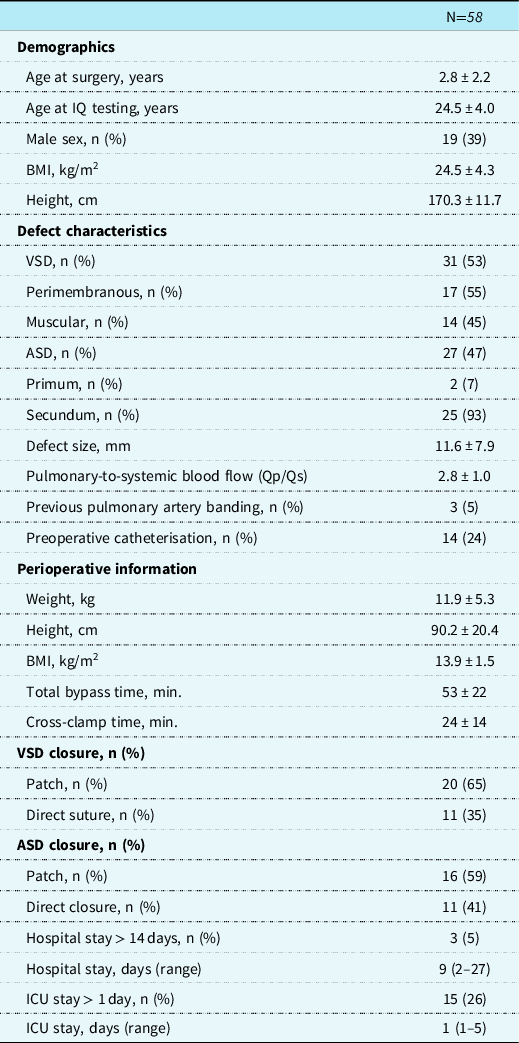
For the entire population, mean age at time of surgery was 2.8 ± 2.2 years with a median age of 2.2 years and total range from 0.2 to 8.2 years. Mean age at time of neurodevelopmental assessment was 24.5 ± 4.0 years with a median age of 24.5 years and total range from 18 to 32 years. Median times of post-operative stay at the ICU and hospital were 1 day (1–5 days) and 9 days (2–27 days), respectively. Mean arterial pressure was 66.4 mmHg before cardiopulmonary bypass, 41.0 mmHg during cardiopulmonary bypass, and 60.4 mmHg after cardiopulmonary bypass. No statistically significant correlation was found between blood pressure during cardiopulmonary bypass and full-scale intelligence quotient score in adulthood (r = 0.138; 95% CI −0.133–0.389, p = 0.303) (Fig 2).
Spearman’s correlation between full-scale intelligence quotient scores and MAP during cardiopulmonary bypass in patients operated for ASD or VSD. ASD=Atrial septal defect; MAP=Mean arterial pressure; VSD=Ventricular septal defect.

Upon stratification of patients based on mean arterial pressure during cardiopulmonary bypass, the distributions were as follows; 33 patients had a mean arterial pressure < 40 mmHg and 25 patients had a mean arterial pressure > 40 mmHg. Patient characteristics of the entire population are shown in Table 1, whereas characteristics of the stratified groups are shown in Supplementary Table S1.
Characteristics of patients undergoing surgery for ASD or VSD

Data are reported as mean ± standard deviation, absolute numbers, and percentages of patients or median with total range.
ASD = Atrial septal defect; ICU = intensive care unit; VSD = Ventricular septal defect.
Intelligence quotient scores and educational attainment
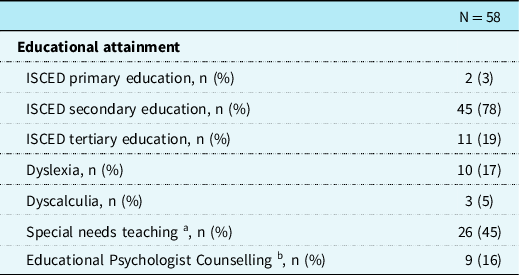
Intelligence quotient tests were performed in the period between March, 2018 and November, 2018. In the study population, mean full-scale intelligence quotient score was 95.0 ± 15.8, verbal comprehension was 90.9 ± 13.5, perceptual reasoning was 95.7 ± 15.8, working memory was 93.1 ± 12.9, and processing speed was 106.3 ± 16.5. Data on educational attainment are shown in Table 2.
Educational attainment

Data are reported as absolute numbers and percentages of patients.
ISCED = International Standard Classification of Education 2011.
a Received special needs teaching during primary or secondary school.
b Received educational psychologist counselling during primary or secondary school.
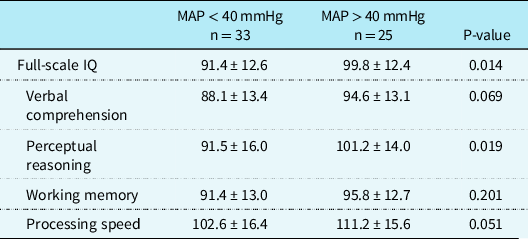
For the stratified groups, full-scale intelligence quotient scores were lower amongst patients with mean arterial pressure < 40 mmHg (91.4 ± 12.6) compared to patients with mean arterial pressure > 40 mmHg (99.8 ± 12.4), p = 0.014. The lower full-scale intelligence quotient scores amongst patients with mean arterial pressure < 40 mmHg were primarily driven by a significantly lower perceptual reasoning index score, whereas the other three subdomains; verbal comprehension, working memory, and processing speed analyses revealed only a tendency towards lower scores amongst patients with mean arterial pressure < 40 mmHg compared to patients with mean arterial pressure > 40 mmHg. Although mean full-scale intelligence quotient scores were within the expected population range (85–115), 33% of patients with mean arterial blood pressure < 40 mmHg had a full-scale intelligence quotient score below the expected population range compared to 12% amongst patients with mean arterial pressure > 40 mmHg, p = 0.060. Also, for the subdomains perceptual reasoning and verbal comprehension, we found significantly higher proportions of patients with scores below 85 amongst patients with mean arterial pressure < 40 mmHg compared to those with mean arterial pressure > 40 mmHg (33% versus 4%, p = 0.006, and 42% versus 12%, p = 0.012, respectively). Intelligence quotient scores and educational attainment distributions for the stratified groups are shown in Table 3 and Supplementary Table S2, respectively.
Intelligence quotient testing in stratified groups

Data are reported as mean ± standard deviation.
IQ = intelligence quotient; MAP = mean arterial pressure.
Anaesthetic agents and arterial blood samples during surgery
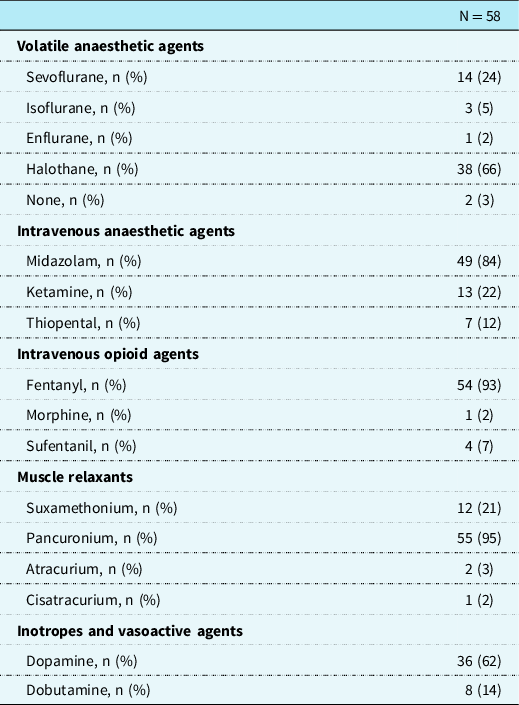
Anaesthetic agents used during surgery are presented in Table 4 and for the stratified groups in Supplementary Table S3. As shown, volatile anaesthetic agents were used in 100% of the patients, whereas inotropes were used in 76% of the patients. Intraoperative blood samples are displayed in Supplementary Table S4.
Intraoperatively administered drugs

Data are reported as absolute numbers and percentages of patients.
Supplementary analyses
Additional analyses were performed in order to identify potential confounding factors. First, a comparison of full-scale intelligence quotient scores between atrial septal defect and ventricular septal defect patients was performed and showed no statistically significant differences between the two groups (full-scale intelligence quotient score = 94.2 ± 12.5 and full-scale intelligence quotient score = 95.7 ± 13.7, respectively), p = 0.670. Additionally, no correlation between cardiopulmonary bypass time and full-scale intelligence quotient score was present (r = 0.076, 95% CI −0.201–0.342, p = 0.581). Furthermore, patients were divided into arbitrary subgroups based on cardiopulmonary bypass time under or above 75 minutes. No statistically significant differences in full-scale intelligence quotient scores were present between the group with short cardiopulmonary bypass time and the group with long cardiopulmonary bypass time (full-scale intelligence quotient score = 95.2 ± 13.5 and full-scale intelligence quotient score = 93.8 ± 10.7, respectively), p = 0.771.
In addition to surgical defect closure, a subgroup of patients underwent prior pulmonary artery banding and/or cardiac catheterisation. In total, 14 patients underwent cardiac catheterisation, and out of those, 3 patients also had pulmonary artery banding performed prior to the final ventricular septal defect repair. No statistically significant differences in full-scale intelligence quotient scores were found between patients who had undergone cardiac catheterisation and those who had not (full-scale intelligence quotient score = 91.5 ± 12.0 and full-scale intelligence quotient score = 96.1 ± 13.4, respectively), p = 0.252. Similarly, no statistically significant differences in full-scale intelligence quotient scores were found between patients who had undergone both cardiac catheterisation and pulmonary artery banding and those who had not (full-scale intelligence quotient score = 84.3 ± 8.5 and full-scale intelligence quotient score = 95.6 ± 13.1, respectively), p = 0.148.
Similarly, no correlation between age at surgery and full-scale intelligence quotient score was found (r = 0.023, 95% CI −0.244–0.287, p = 0.865). Analogously, patients were divided into arbitrary subgroups based on age at surgery under or above 0.7 years. No differences in full-scale intelligence quotient scores were present between the group with low age at surgery and the group with high age at surgery (full-scale intelligence quotient score = 96.8 ± 11.5 and full-scale intelligence quotient score = 94.8 ± 13.3, respectively), p = 0.723.
Lastly, we found no correlation between the size of the atrial septal defect or ventricular septal defect and full-scale intelligence quotient score (r = 0.041, p = 0.780), nor did we find any correlation between the pulmonary–systemic flow ratio and full-scale intelligence quotient scores (r = 0.090, p = 0.692).
Discussion
In this retrospective study, we did not find a linear correlation between mean arterial pressure during cardiopulmonary bypass and intelligence quotient scores in adults surgically treated for a septal defect in infancy or early childhood. However, in risk groups stratified by mean arterial pressure during cardiopulmonary bypass, the full-scale intelligence quotient score was found to be significantly lower amongst patients with mean arterial pressure < 40 mmHg compared to patients with mean arterial pressure > 40 mmHg. Interestingly, 33% of patients with mean arterial pressure < 40mmHg had full-scale intelligence quotient scores below 85, compared to only 12% amongst patients with mean arterial pressure > 40mmHg. In other words, a significantly larger proportion of patients with mean arterial pressure < 40mmHg had cognitive shortcomings that would be clinically recognisable and potentially disabling in their everyday life.
No previous studies have, to our knowledge, investigated the effects of blood pressure during surgery on neurodevelopmental outcomes in a population of simple CHD patients, although similar studies have been conducted on populations of complex CHD patients in an effort to identify intraoperative risk factors. The notion that cardiopulmonary bypass represents a critical phase during surgery was supported by a study showing that the duration of cardiopulmonary bypass was associated with reduced neurodevelopmental status after neonatal arterial switch operation, Reference Hövels-Gürich, Seghaye and Schnitker12 and it has been suggested that there is a special vulnerability to haemodynamic fluctuations in this population. Reference Mahle13,Reference Ballweg, Wernovsky and Gaynor14 This has been explained as the “Encephalopathy of congenital heart disease”, Reference Gaynor9,Reference Volpe15 which may represent a major innate risk factor of intraoperative hypoxic brain injury with subsequent neurodevelopmental impairment. It is proposed that the structural and haemodynamic characteristics of CHDs lead to autoregulation mechanisms, which ultimately result in delayed maturation of oligodendrocytes, reduced myelinisation, and increased vulnerability of the brain. Reference Donofrio, Duplessis and Limperopoulos16,Reference McQuillen, Goff and Licht17
Although we did not demonstrate a linear correlation between mean arterial pressure during cardiopulmonary bypass and full-scale intelligence quotient score, there may exist an inflection point at which low blood pressures become harmful. Our result suggests that this potential cut-off value is around 40mmHg, although this was an arbitrary value chosen for this study only. Galli et al showed that hypotension in the early post-operative period significantly increased the risk of cerebral necrosis. Reference Galli, Zimmerman and Jarvik18 Thus, it is within reason to conceptualise that low blood pressure during surgery could have the same implications, and it has been previously shown that children with CHD are at risk of cerebral hypoperfusion before, during, and after cardiac surgery. Reference du Plessis19 In ventricular septal defect-operated patients specifically, a study by Eichler et al Reference Eichler, Köhler-Jonas and Stonawski20 revealed no significant difference in intelligence quotient scores compared to healthy controls, but the mean age at testing in the study by Eichler et al was 7 years, whereas the mean age at testing in our study was 24 years. It is conceivable that testing at a higher age allows for a more nuanced assessment of the cognitive functions.
It is important to emphasise that a number of perioperative factors influence the neurodevelopmental outcomes in patients undergoing septal defect closure. Previous studies demonstrated associations between exposure to volatile anaesthetic agents and impaired neurodevelopmental outcome. Reference Andropoulos, Ahmad and Haq2,Reference Diaz, Gaynor and Koh6 In terms of blood analyses, we found a tendency towards lower levels of arterial pCO2 in the group with mean arterial pressure < 40mmHg. Low levels of pCO2 are known to induce vasoconstriction and decreased cerebral blood flow, Reference McCann and Schouten21 but we were not able to demonstrate any correlation between pCO2 levels during surgery and neurodevelopmental outcome.
Identification of risk factors during surgery, and subsequently avoidance thereof, could partly relieve these children of their cognitive deficits, knowing that impaired neurodevelopmental may not solely be associated with events happening in the operating room.
In this study, we included patients that were operated more than 20 years ago, and it is clear that some practices in terms of anaesthetic and surgical techniques have changed since then. In a contemporary cohort, atrial septal defect, as well as ventricular septal defect patients, are typically operated at an earlier age, total intravenous anaesthesia is more common, and patients are only rarely cooled to moderate hypothermia compared with 20 years ago. Nevertheless, at our institution, the practices used back then are generally very similar to today in terms of monitoring, surgical approach, and cardiopulmonary bypass management, including blood flow.
Limitations
Generally, it is obviously very challenging to assess a relationship between an exposure and an outcome when there are more than 20 years in between. In addition, the retrospective study design has inherent limitations, such as the inability to demonstrate causal inferences but only potential associations. It is clear that the time frame and the retrospective design make our study susceptible to confounding factors such as, for instance, multiple general anaesthesia procedures, either cardiac catheterisation or pulmonary artery banding prior to defect closure, or anaesthesia for any other reason later in life. Second, we did not have intraoperative indicators of diminished cerebral perfusion (transcranial Doppler, near-infrared spectroscopy, standard electroencephalography, or processed electroencephalography), which have previously been demonstrated to predict the occurrence of neurodevelopmental impairment. Reference Kussman, Wypij and Laussen22,Reference Finucane, Jooste and Machovec23 Third, the range in age at surgery in our population is rather wide, and it is obviously difficult to compare an 8-year-old with an infant. Nevertheless, we decided not to exclude more patients than we did, as this would have seriously compromised the power of our study. Fourth, since our study population is comprised of only a subgroup of the patients operated in the eligibility period, there is a risk of selection bias. Nevertheless, there is no reason to assume that the association between mean arterial pressure during cardiopulmonary bypass and full-scale intelligence quotient score is any different between included patients and non-included patients. Lastly, very few events were registered on educational attainment, which makes it difficult to draw any specific conclusions with respect to these particular outcomes.
Conclusions
For surgical closure of an atrial septal defect or ventricular septal defect in infancy or early childhood, mean arterial pressure during cardiopulmonary bypass was not found to correlate linearly with intelligence quotient scores in adulthood. However, an inflection point may exist at which blood pressures below a specific value lead to impaired neurodevelopment. Large-scale, prospective studies are warranted in order to assess whether mean arterial pressure below a specific cut-off value predicts neurodevelopmental impairment.
Acknowledgements
None.
Supplementary material
To view supplementary material for this article, please visit https://doi.org/10.1017/S1047951121001414.
Financial support
The authors would like to thank A.P. Møller Foundation, Familien Hede Nielsens Foundation, and William Demant Foundation for funding this study.
Conflicts of interest
None.
Ethical standards
The authors assert that all procedures contributing to this work comply with the Helsinki Declaration of 1975, as revised in 2008, and has been approved by the Regional Committee on Biomedical Research Ethics of the Central Denmark Region.