Introduction
Psychomotor disturbance (i.e. agitation and retardation) is a key symptom of depression, is present in up to 70% of patients with depression and is a core symptom of melancholia (Novick et al., Reference Novick, Stewart, Wisniewski, Cook, Manev and Nierenberg2005; Sobin & Sackeim, Reference Sobin and Sackeim1997). Psychomotor disturbance also predicts poorer treatment response and indicates a more severe depression syndrome (Buyukdura, McClintock, & Croarkin, Reference Buyukdura, McClintock and Croarkin2011; Parker, Reference Parker2000; Schrijvers, Hulstijn, & Sabbe, Reference Schrijvers, Hulstijn and Sabbe2008; Ulbricht, Dumenci, Rothschild, & Lapane, Reference Ulbricht, Dumenci, Rothschild and Lapane2018; van Diermen et al., Reference van Diermen, Vanmarcke, Walther, Moens, Veltman, Fransen and Schrijvers2019). Yet, research characterizing motor symptoms of depression is relatively sparse, although there have been recent initiatives to foster this area of research (Shankman, Mittal, & Walther, Reference Shankman, Mittal and Walther2020; Walther, Bernard, Mittal, & Shankman, Reference Walther, Bernard, Mittal and Shankman2019). One of the most challenging aspects in such research is operationalized, quantitative measurement of psychomotor disturbance. In fact, motor symptoms in depression are typically assessed by the broad general impression during interviews and distilled into one item in general depression rating scales such as Beck's Depression Inventory, the Hamilton Depression Rating Scale, or the Montgomery–Asberg Depression Rating Scale (Beck, Steer, Ball, & Ranieri, Reference Beck, Steer, Ball and Ranieri1996; Hamilton, Reference Hamilton1980; Montgomery & Asberg, Reference Montgomery and Asberg1979). In contrast, few observer-rated specific scales are available, such as Motor Agitation and Retardation Scale (Sobin, Mayer, & Endicott, Reference Sobin, Mayer and Endicott1998), the CORE assessment of psychomotor disturbance (Parker & Hadzi-Pavlovic, Reference Parker, Hadzi-Pavlovic, Parker and Hadzi-Pavlovic1996), and Salpêtrière Retardation Rating Scale (Dantchev & Widlocher, Reference Dantchev and Widlocher1998). However, these specific scales require training of raters, can be very time consuming to complete, and are susceptible to behavioral changes induced by the examination situation that potentially bias the specific scales even when carefully assessed under lab conditions. Consequently, these motor-specific scales are rarely employed. Therefore, motor symptoms are typically poorly characterized in clinical settings. To mitigate these limitations, objective measures of psychomotor disturbance in a naturalistic setting need to be established. One promising approach to assessing psychomotor disturbance is recording physical activity via actigraphs over several days or even weeks. Actigraphs are usually small wearable devices that can be worn like wristwatches and detect movement along one to three axes, as well as summarize and store activity – and thus are able to measure naturalistic physical activity unobtrusively in everyday life. Moreover, algorithms have been developed to reliably detect sleep and awake intervals, enabling the distinction of activity during the wearer's sleep and wake periods, and allowing an even more fine-grained assessment of retardation (Marino et al., Reference Marino, Li, Rueschman, Winkelman, Ellenbogen, Solet and Buxton2013; Withrow, Roth, Koshorek, & Roehrs, Reference Withrow, Roth, Koshorek and Roehrs2019).
Several studies have examined actigraphically measured activity levels in the case of depression. Either specifically with the aim of comparing activity levels, or as a byproduct of comparing sleep behavior between depressed and non-depressed populations. This evidence has been summarized by meta-analyses in the past: Tazawa et al. (Reference Tazawa, Wada, Mitsukura, Takamiya, Kitazawa, Yoshimura and Kishimoto2019) found lower activity for currently depressed patients than controls in 10 studies of major depressive disorder (MDD) and bipolar disorder (BD). Burton et al. (Reference Burton, McKinstry, Szentagotai Tatar, Serrano-Blanco, Pagliari and Wolters2013) summarized studies in MDD and also found lower diurnal activity in depressed patients in nine studies and increased activity after treatment in seven studies. De Crescenzo, Economou, Sharpley, Gormez, and Quested (Reference De Crescenzo, Economou, Sharpley, Gormez and Quested2017) reviewed activity in bipolar patients and found reduced activity in patients in six studies mostly including euthymic patients. Similarly, Ng et al. (Reference Ng, Chung, Ho, Yeung, Yung and Lam2015) found lower activity in interepisode, i.e. euthymic, bipolar patients in four studies.
Overall, these meta-analyses argue for lower activity in currently depressed patients, regardless of diagnosis, as well as lower activity in euthymic patients with BD. However, three out of these four analyses heavily focused on sleep parameters, studies in elderly and youth patients were excluded by three analyses respectively, and two analyses were restricted to BD. Moreover, the most recent of these meta-analyses included studies until December 2018 and the number of publications in the field increased substantially in the few years since. Furthermore, the low numbers of included studies prevented syntheses of comparisons of mood states for MDD and BD separately and no synthesis has been published comparing MDD and BD directly. Finally, none of the above-mentioned meta-analyses examined moderating variables of the included studies that may explain part of the observed effect or heterogeneity. Physical activity is correlated with age and sex (Bauman et al., Reference Bauman, Reis, Sallis, Wells, Loos and Martin2012) and concerns have been raised that an observed difference of activity between patients and controls may be attributable to inpatient setting rather than the disorders themselves (Burton et al., Reference Burton, McKinstry, Szentagotai Tatar, Serrano-Blanco, Pagliari and Wolters2013; Krane-Gartiser, Henriksen, Vaaler, Fasmer, & Morken, Reference Krane-Gartiser, Henriksen, Vaaler, Fasmer and Morken2015; Reichert et al., Reference Reichert, Lutz, Deuschle, Gilles, Hill, Limberger and Ebner-Priemer2015). Observation of differences could be impacted by the modalities of the measurement. For example, physical activity across 1 day may not be representative for a longer time span, devices may differ in sensitivity, and their wear location influences measured activity levels (Middelkoop, van Dam, Smilde-van den Doel, & Van Dijk, Reference Middelkoop, van Dam, Smilde-van den Doel and Van Dijk1997). Finally, it is unclear if both BD and MDD show the same effects for psychomotor retardation. Therefore, moderator analyses should examine the impact of these factors.
To overcome these limitations, we conducted a quantitative synthesis of studies comparing activity levels between controls and patients with MDD or BD in depressed and remitted or euthymic mood state, respectively. We aimed to synthesize all three comparisons (i.e. currently depressed v. controls, remitted/euthymic v. controls, currently depressed v. remitted/euthymic) in MDD and BD, as well as the direct comparison between the two diagnoses when possible. An additional novel aim was to examine the aforementioned moderators. Moreover, we did not set any age limits for inclusion of studies. We hypothesized that depressed state would be associated with lower activity levels. While lower activity in the euthymic state of patients with BD has been reported, no such synthesis has been conducted with MDD individual in remission. These analyses could indicate a common or differentiating feature of BD and MDD and therefore guide future investigations.
Methods
Search strategy
We searched the electronic databases of Medline/PubMed and Web-of-Science. Search terms were built by combining mood disorder keywords with actigraphy keywords, e.g. for PubMed: (Depress* OR Unipolar OR Bipolar OR ‘Mood disorder’) AND (Actigra* OR Actogra* OR Wearable OR Actimet*). No lower date limit for publication was applied and the last update of the search was completed end of September 2021.
Eligibility criteria
Inclusion criteria were: original research, continuous use of actigraphy for at least 24 h, comparison of at least two groups (depressed, remitted, or healthy), operationalized diagnosis of disorders. Exclusion criteria were: study population selected based on somatic problems, e.g. depression in cancer or dialysis patients, sample size <10 per group, publication language other than English, use of unvalidated consumer-level devices, i.e. devices that are not marketed and sold as medical or research devices including smartphone apps. Consumer devices were excluded as examination of their validity and reliability has yielded mixed results (Evenson, Goto, & Furberg, Reference Evenson, Goto and Furberg2015; Fuller et al., Reference Fuller, Colwell, Low, Orychock, Tobin, Simango and Taylor2020; Scott et al., Reference Scott, Grierson, Gehue, Kallestad, MacMillan and Hickie2019; Straiton et al., Reference Straiton, Alharbi, Bauman, Neubeck, Gullick, Bhindi and Gallagher2018). High inter-individual reliability is crucial for cross-sectional studies, which were expected to represent the majority of included studies. We set no restrictions on participants' age.
Selection process
For search result duplicate removal (two identical entries due to one entry from each database referencing the same study), search results were imported into EndNote and identified following a procedure suggested by Judy Wright (Wright, Reference Wright2016). Next, articles with language other than English, conference abstracts, reviews, and study protocols were removed. Two researchers (CBN, FW) then independently reviewed titles and abstracts of the remaining search results and selected articles for full-text review according to the eligibility criteria. Disagreements were discussed until consensus was reached. The same two researchers then independently reviewed the full-text articles to confirm eligibility, identify sample duplicates, and independently extracted data. Identification of sample duplicates was based on project names, funding, (co)authors, recruitment periods and places, and references and statements to the respective sample, where available. In the case of sample duplicates, only the article with the largest sample that reported activity levels was included. Again, disagreements were discussed until consensus was reached. We then contacted authors of articles meeting eligibility criteria but not reporting activity levels and authors of articles with unclear sample duplication status. Articles for which sample duplication was suspected but status remained unclear after contacting authors were excluded.
Data extraction
The primary outcome was activity level per group, as obtained by actigraphy. Since actigraphy measures activity based on acceleration across time, various units and modalities of activity levels can be reported. Common units of measurement were (a) counts (number of zero-point crossings), (b) METs (metabolic equivalent of tasks, a measure accounting for number and amplitude of movements and body mass of a subject), and (c) milli-g (cumulative acceleration in fractions of gravitational acceleration, accounting for number and amplitude of movements). The units and modalities reported in the selected articles were extracted. If studies used multiple measures, prioritized measures were as follows (descending priority): (1) counts, METs, or milli-g per day, (2) diurnal counts, METs, or milli-g, (3) counts, METs, or milli-g during the most active 10 h, and (4) MESOR (Midline Estimating Statistic Of Rhythm, a rhythm-adjusted mean). Two researchers also independently extracted data on year of publication, country of recruitment, sample size, mean age and gender distribution, age group (i.e. youth, adults, or elderly), diagnostic criteria for depression, depression severity scale and depression severity, duration of actigraphy recording, and accelerometer placement. While there was no age limit for study populations, subanalyses by age groups were conducted, for age impacts motor behavior (Bauman et al., Reference Bauman, Reis, Sallis, Wells, Loos and Martin2012; Ketcham & Stelmach, Reference Ketcham, Stelmach, Van Hemel and Pew2004). Cut-offs for age group allocation were 18 and 60 years. Samples crossing these cut-offs were allocated to the age group corresponding to the mean or median age. The somewhat lower cut-off for elderly populations was chosen as it is common in motor research due to the effects of aging (Ketcham & Stelmach, Reference Ketcham, Stelmach, Van Hemel and Pew2004). No data of (hypo)manic groups were extracted.
Risk of bias assessments
Two researchers independently assessed risk of bias using a modified Newcastle–Ottawa Scale (Wells et al., Reference Wells, Shea, O'Connell, Peterson, Welch, Losos and Tugwell2000). Items consisted of (1) selection of patient group(s); (2) selection of control group(s); (3) ascertainment of diagnosis; (4) comparability on the basis of age; (5) comparability on distribution of sex; (6) equality of group size; (7) placement of actigraphy device; (8) length of device wear time. This version of the scale ranged from 0 (lowest quality) to 13 (highest quality). However, since 0 ratings in items 3 or 8 would lead to exclusion of the article, the realistic range for included articles was 2–13.
Meta-analytic procedures
Standardized mean differences (s.m.d.) were calculated based on extracted means and standard deviations for activity levels. Then, pooled s.m.d. was estimated using random-effects models. Several subgroup analyses were conducted according to diagnosis, mood state, age group, and these factors' combination, where ⩾2 articles were eligible. Additionally, moderating effects of age, percentage of female participants, actigraph wear location, actigraphy duration, clinical setting (inpatients or outpatients), and diagnosis were examined by including these factors in mixed-effects models as moderators. For articles that reported median and interquartile range (IQR), the median was assumed to correspond with the mean and the standard deviation was calculated according to the Cochrane handbook (Higgins, Li, & Deeks, Reference Higgins, Li, Deeks, Thomas, Higgins, Chandler, Cumpston, Li, Page and Welch2021). However, medians are often reported instead of means when the data are skewed. To mitigate this concern, sensitivity analyses excluding the articles with converted medians were conducted. An additional sensitivity analysis was carried out including only studies with a recording duration of at least 1 week. Heterogeneity was evaluated by calculation of τ 2, I 2, and Q values. All statistical analyses were carried out in R 4.0.3 with compute.es 0.2-5 and metafor 2.4-0 libraries.
Risk of bias due to missing results
Reporting bias was assessed through examination of funnel plots with $1/\sqrt n$ as y-axis as recommended by (Zwetsloot et al., Reference Zwetsloot, Van Der Naald, Sena, Howells, IntHout, De Groot and Wever2017), for s.m.d. against s.e. funnel plots are susceptible to distortion. Following recommendations (Sterne et al., Reference Sterne, Sutton, Ioannidis, Terrin, Jones, Lau and Higgins2011) only (sub)analyses with ⩾10 studies were assessed. Additionally, Egger's test and trim-and-fill methods were conducted as complementary tests for reporting bias (Duval & Tweedie, Reference Duval and Tweedie2000; Egger, Davey Smith, Schneider, & Minder, Reference Egger, Davey Smith, Schneider and Minder1997).
Results
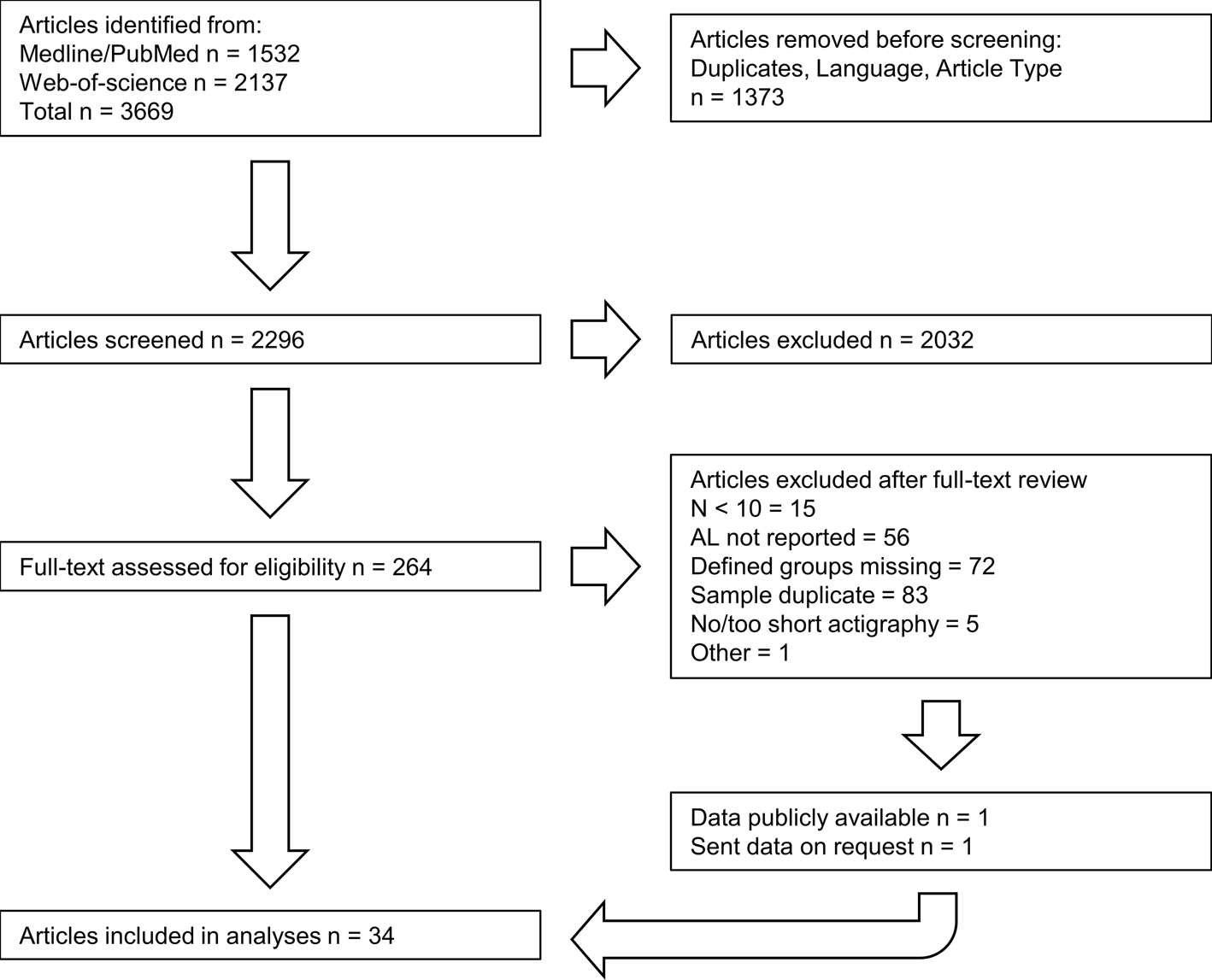
Database searches resulted in 2296 studies after removal of search result duplicates, non-English manuscripts, reviews, and conference abstracts. We selected 264 articles for full-text review and included 32 articles in our analyses directly. We received data from authors for one study that had not reported activity levels and included an additional study for which data were publicly available, resulting in 34 articles included in our analyses. Studies included 1804 mood patients and 1261 controls, totaling 3065 participants.
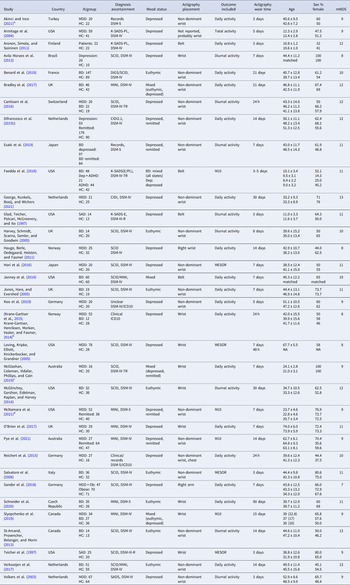
We contacted 23 authors to request clarification on sample duplications or data in case of unreported activity levels. As mentioned above, we received data for one additional study. Conversely, we could not resolve any sample duplication issues satisfactorily, i.e. we could neither confirm nor reject suspected sample duplication after contacting the respective authors. In one case, we combined reported values from articles of one study. Four studies examined children and adolescents, 26 adults, and 3 elderly populations. All child/adolescent studies used a version of K-SADS (Kaufman et al., Reference Kaufman, Birmaher, Brent, Rao, Flynn, Moreci and Ryan1997) for ascertainment of diagnosis. All three studies in elderly participants used either SCID (Spitzer, Williams, Gibbon, & First, Reference Spitzer, Williams, Gibbon and First1992) or MINI (Sheehan et al., Reference Sheehan, Lecrubier, Sheehan, Amorim, Janavs, Weiller and Dunbar1998) for DSM-IV diagnoses. Most of the adult studies (19) used either SCID or MINI for a version of DSM (American Psychiatric Association, 1987, 1994, 2013), five used medical records or an unstructured clinical examination, two used CIDI (Wittchen, Reference Wittchen1994), and one SADS for diagnosis ascertainment. Most studies took place in Europe (17) and North America (USA: 8; Canada: 2). Actigraphy recording duration ranged from 1 to 90 days, with a median of 7 (IQR: 11) days.
Study characteristics are shown in Table 1, and selection process is depicted in Fig. 1.
Selection flow chart. Note that only the first detected exclusion criterion is marked, while some excluded studies would fulfill several exclusion criteria.

Study characteristics of included studies

MDD, major depressive disorder; BD, bipolar disorder; SAD, seasonal affective disorder; DSM-III/IV/5, Diagnostic and Statistical Manual of Mental Disorders (American Psychiatric Association, 1987, 1994, 2013); ICD10, International statistical Classification of Disease (World Health Organization, 2004); MINI, Mini-International Neuropsychiatric Interview (Sheehan et al. Reference Sheehan, Lecrubier, Sheehan, Amorim, Janavs, Weiller and Dunbar1998); SCID, Structured Clinical Interview for DSM (Spitzer et al. Reference Spitzer, Williams, Gibbon and First1992); (K-)SADS-(PL), (Children) Schedule for Affective Disorders and Schizophrenia (Present/Lifetime) (Kaufman et al. Reference Kaufman, Birmaher, Brent, Rao, Flynn, Moreci and Ryan1997); MESOR, Midline Estimating Statistic of Rhythm; M10, activity in the most active 10 h per day; mNOS, modified Newcastle–Ottawa Scale.
a Studies reported median activity levels. Equality of median and mean was assumed for analyses.
b BD group from 2014 article, MDD group from 2015 article, shared control group.
c Activity levels not reported, but provided upon request.
d Activity levels not reported but dataset available. Means and s.d. calculated for depressed, remitted, and healthy. Subjects with other current diagnoses were excluded for remitted and healthy groups.
Patients v. healthy controls
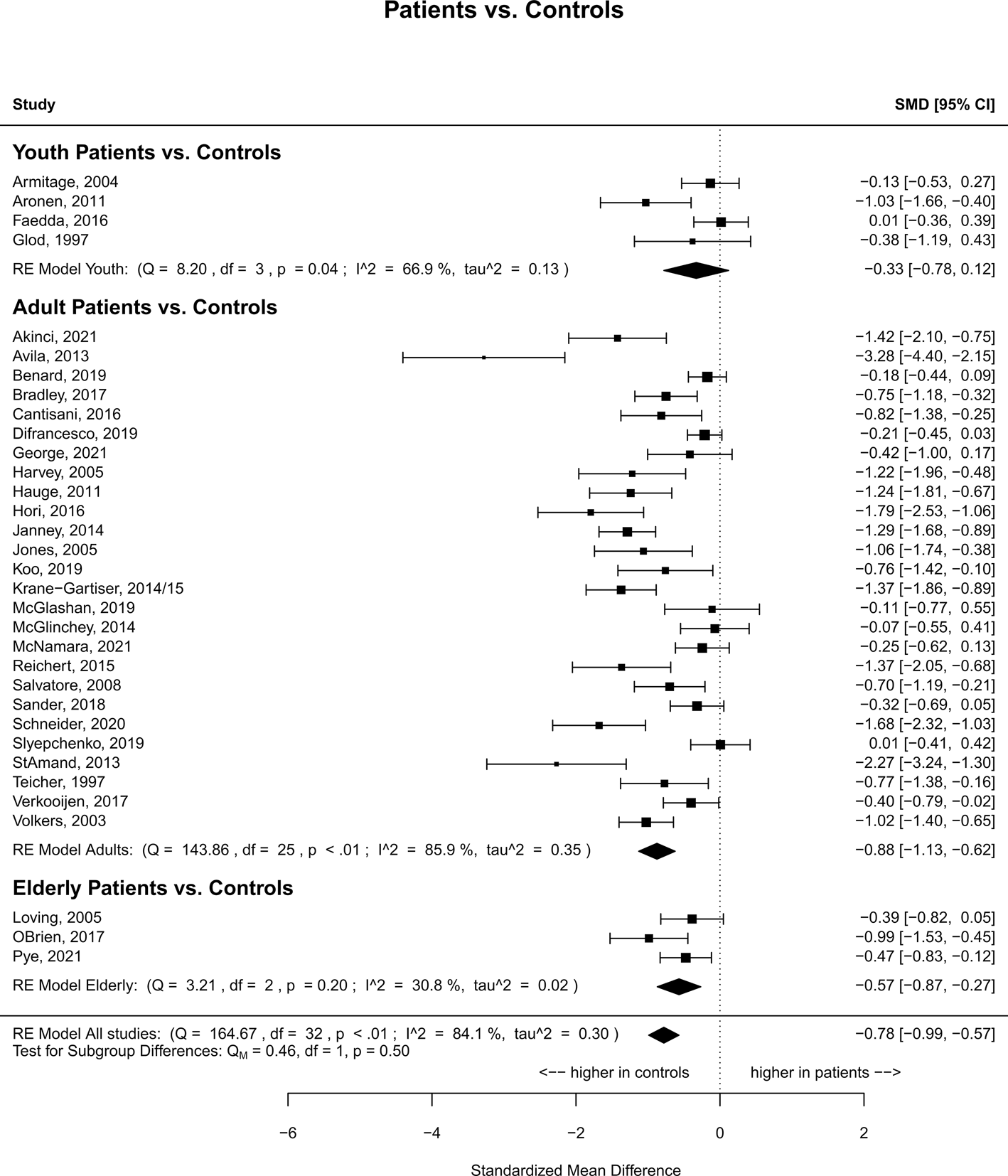
When pooling all 33 studies that compared patients with healthy controls, neglecting diagnosis or mood state, patients had significantly lower activity levels than controls (Fig. 2). The effect was significant for adults and elderly, but not for youth. However, differences between the age groups were not significant. Two included studies (Akinci & Ince, Reference Akinci and Ince2021; Difrancesco et al., Reference Difrancesco, Lamers, Riese, Merikangas, Beekman, van Hemert and Penninx2019) reported medians. Excluding them did not change the results substantially. No study in youth had a recording duration of at least 7 days. In the whole group, adults, and elderly, excluding studies with recording duration ⩽7 days did not change the results substantially. Comparison of BD and MDD in four studies showed no significant difference, neither in the two studies comparing mixed mood or depressed mood, respectively. Only one study (Slyepchenko et al., Reference Slyepchenko, Allega, Leng, Minuzzi, Eltayebani, Skelly and Frey2019) with recording duration ⩾7 days was available for this comparison that showed no difference between the diagnoses.
Forest plot of all included studies with patient v. control comparisons. Random-effects models for all studies and for each age group. MDD and BD patients are pooled where applicable. Youth: mean/median age <20 years, adults: mean/median age >20 and <60 years, elderly: mean/median age >60 years.

Major depressive disorder subanalyses
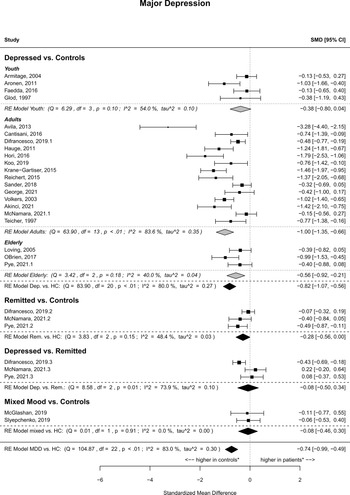
Across the 21 studies that compared depressed patients with MDD and healthy controls, patients had significantly lower activity than healthy controls (Fig. 3). Subanalyses for the three age groups showed significantly lower activity in adults and elderly patients, but not in young patients. However, between age group differences were not significant. Lower activity in remitted patients with MDD compared to controls in three studies was borderline significant (p = 0.05) with the 95% confidence interval including 0. In the same three studies, there was no significant difference between depressed and remitted patients with MDD. When only the two studies with adult remitted patients were evaluated, there was no significant difference between remitted and controls. Again, two included studies (Akinci & Ince, Reference Akinci and Ince2021; Difrancesco et al., Reference Difrancesco, Lamers, Riese, Merikangas, Beekman, van Hemert and Penninx2019) reported medians. Excluding them did not change the results substantially for the depressed mood state, but the lower activity of remitted MDD patients compared to controls became significant (p = 0.002) (see online Supplementary Table S2). The two studies in seasonal affective disorder (SAD) as a subtype of MDD showed significantly lower activity in depressed patients compared with controls. All results of the MDD subanalyses but those in youth and SAD subtype could be reproduced in the sensitivity analyses with recording duration of at least 7 days.
Forest plot of studies in MDD stratified by mood status. Patients were pooled across mood states for MDD v. HC model to avoid control sample duplications. Youth: mean/median age <20 years, adults: mean/median age >20 and <60 years, elderly: mean/median age >60 years. *For depressed v. remitted comparison negative values indicate higher activity in remitted patients.

Bipolar disorder subanalyses
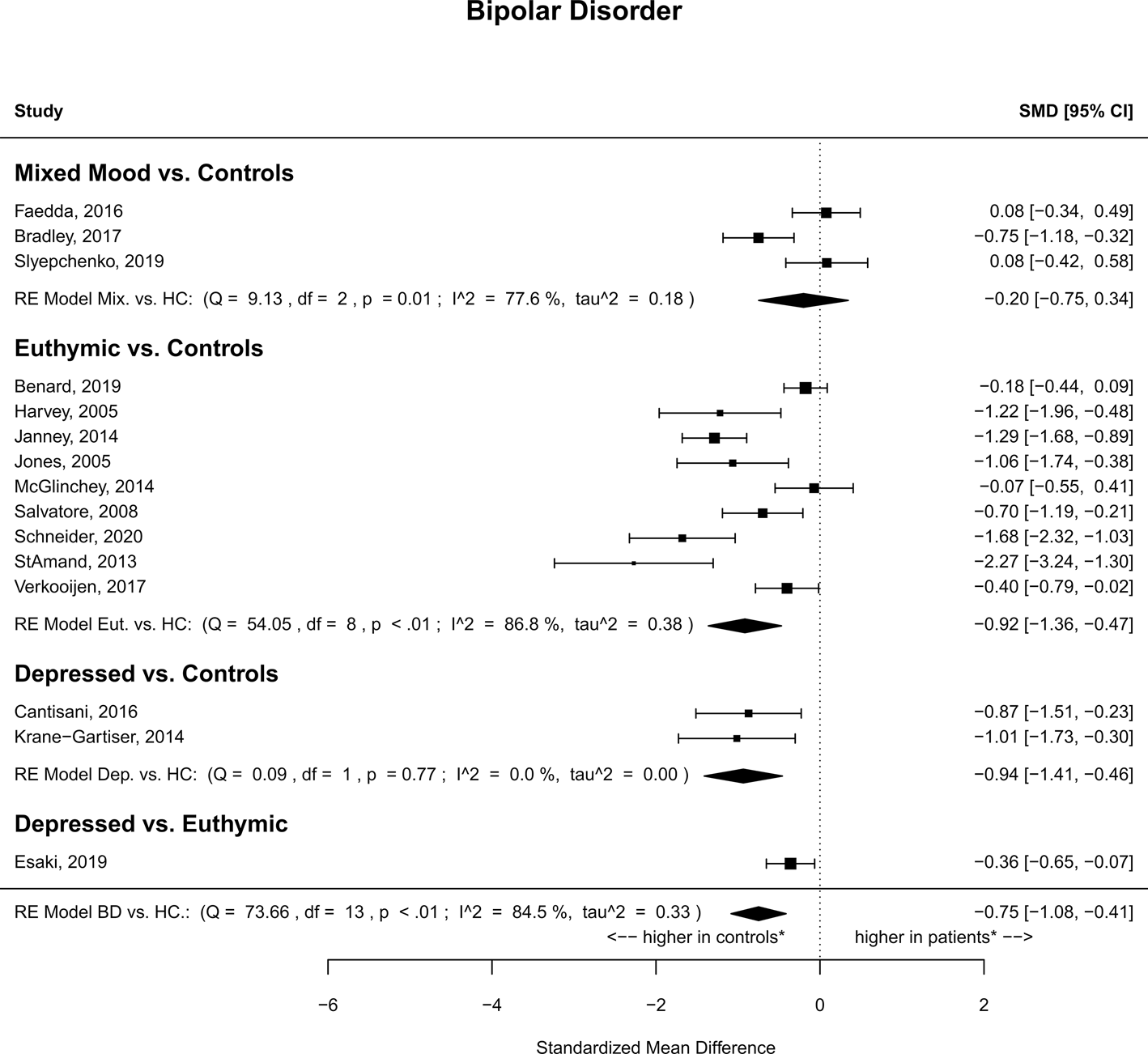
Across 14 studies that compared patients with BD and healthy controls, patients had lower activity (Fig. 4). Euthymic and depressed patients had lower activity than controls, but mixed mood (i.e. depressed, euthymic, rapid-cycling) patients did not significantly differ. Note that no data for patients in manic or hypomanic state was extracted. We included only one study comparing BD patients in depressed state with BD patients in euthymic state, in which depressed state had lower activity than euthymic state (Esaki et al., Reference Esaki, Kitajima, Obayashi, Saeki, Fujita and Iwata2019). All included studies in euthymic patients v. controls have been conducted in adults. Again, sensitivity analysis including studies with recording duration of at least 7 days confirmed these results where available (all BD patients v. controls, mixed mood v. controls, euthymic patients v. controls).
Forest plot of studies in BD stratified by mood status. *For depressed v. euthymic comparison negative values indicate higher activity in euthymic patients.

Moderators
Neither age, sex distribution, patient setting (outpatient v. inpatient), diagnosis (MDD v. BD), nor actigraph placement or recording duration had any significant effect on s.m.d. when examined across all studies. Moderator analyses in MDD and BD separately also showed no significant effect of any moderator. See online Supplementary Table S3 for detailed results.
Risk of bias
Summary study quality as evaluated by our modified Newcastle–Ottawa Scale is reported in Table 1. I 2 values of the three main analyses indicated substantial heterogeneity. Examination of funnel plots and Egger's test indicated publication bias in all examined analyses. However, application of trim-and-fill method indicated no publication bias in any of the studies.
Discussion
We conducted a meta-analysis of studies examining psychomotor retardation measured by actigraphy in depression. This is the largest meta-analysis examining this association to date, the first to investigate multiple moderators that could potentially contribute to psychomotor retardation. The results indicated patients with (a) current unipolar, (b) current bipolar depression in depressed state, (c) remitted unipolar depression, and (d) bipolar depression in euthymic state all exhibited significantly lower levels of activity compared to healthy controls. None of the moderators had an effect on the results.
Psychomotor disturbance is one of the most pernicious symptoms of unipolar and bipolar affective disorders and is included in their diagnostic criteria. Therefore, it is expected to be more prevalent in these populations than in controls. Indeed, the present synthesis of the studies that compare mood disorder patients across mood states with controls showed lower activity levels in patients. The separate syntheses in BD and MDD replicated that finding. As expected, across a large number of studies, activity was lower and effect sizes were large for patients in depressed state as compared to controls, regardless of diagnosis (Hedges' g MDD: −0.82, g BD: −0.94). This is in line with the smaller meta-analyses of Burton et al. (Reference Burton, McKinstry, Szentagotai Tatar, Serrano-Blanco, Pagliari and Wolters2013) and Tazawa et al. (Reference Tazawa, Wada, Mitsukura, Takamiya, Kitazawa, Yoshimura and Kishimoto2019) (g Burton et al.: −0.76, g Tazawa et al.: 1.27, Tazawa et al. used reversed differences, i.e. positive values indicate higher activity in controls). Likewise, we corroborated findings by De Crescenzo et al. (Reference De Crescenzo, Economou, Sharpley, Gormez and Quested2017) and Ng et al. (Reference Ng, Chung, Ho, Yeung, Yung and Lam2015), showing lower activity levels in BD patients in euthymic state compared to controls (g: −0.92, g De Crescenzo: −0.85, g Ng: −1.07). In contrast to the relatively well-studied euthymic state in BD, the remitted state in MDD remains poorly characterized. The present work is the first meta-analysis to synthesize the comparison between controls and MDD patients in remission. We found remitted MDD patients to have lower activity than controls (g: −0.28). The result of the synthesis of three studies was borderline significant (p = 0.05), but the sensitivity analysis excluding one study with assumed equality of median and mean indicated a clearly significant difference with lower activity levels in remitted MDD (p = 0.002, g = −0.45). The lower activity in remission of MDD might reflect the impact of residual depressive symptoms, for remission is usually not defined by complete absence of symptoms, but their subclinical severity (Trivedi, Hollander, Nutt, & Blier, Reference Trivedi, Hollander, Nutt and Blier2008). Alternatively, lower activity in remission could indicate a vulnerability that preceded the onset of MDD, possibly characterizing the melancholic subtype of depression (Weinberg & Shankman, Reference Weinberg and Shankman2017). Either way, the presence of psychomotor retardation might predict future relapse in those with remitted MDD. A systematic review of phenomenology found higher rates of melancholic depression and psychomotor retardation in bipolar than in unipolar patients (Mitchell & Malhi, Reference Mitchell and Malhi2004). As the studies in this meta-analysis did not specifically examine melancholic MDD, this might explain the generally larger effect sizes in BD compared with MDD.
Despite the smaller (but still medium) effect size in remitted MDD compared to the large effect for euthymic BD, the two groups show surprisingly little difference with regards to activity levels. This similarity of activity disturbance in unipolar and bipolar affective disorder that extends into relative healthy states is further corroborated by the synthesis of direct comparisons between the two diagnoses resulting in no significant difference. This similarity in activity disturbance suggests that motor behavior might be a common vulnerability for unipolar and bipolar depression.
The assessment of motor retardation with clinical rating scales highly depends on the training of the examiner and the interview situation. In contrast, actigraphy provides an objective, naturalistic and intrinsically valid measure of activity. Moreover, the assessment period of rating scales is limited to the interview duration or relies on potentially biased self-report, whereas even a relatively short 24 h actigraphy recording can cover a substantially longer and thus much more representative assessment window. Of note, one study compared unipolar depressed patients with and without motor retardation and found lower activity in patients with retardation compared to patients without retardation, but also lower activity in both patient groups compared to controls, as well as differences in diurnal patterns of activity and variability (Krane-Gartiser et al., Reference Krane-Gartiser, Henriksen, Vaaler, Fasmer and Morken2015). This demonstrates the added information and the more fine-grained measure of retardation that actigraphy can provide over a simple clinical rating. This line of research feeds into a general trend toward ambulatory instrumental assessment of psychopathology, which are particularly interesting to measure motor behavior (van Harten, Walther, Kent, Sponheim, & Mittal, Reference van Harten, Walther, Kent, Sponheim and Mittal2017).
Actigraphy may have significant clinical applications such as enhancing diagnoses, treatment planning, and at-home treatment monitoring of depressive disorders. For example, actigraphy may help to objectively identify and quantify psychomotor retardation in depression that is associated with more severe depression syndromes (Parker, Reference Parker2000; Ulbricht et al., Reference Ulbricht, Dumenci, Rothschild and Lapane2018). As psychomotor disturbance predicts better outcome of electroconvulsive therapy and might predict response to different classes of antidepressants, objective assessment of retardation may also inform therapy planning (Brancati et al., Reference Brancati, Tripodi, Novi, Barbuti, Medda and Perugi2021; Buyukdura et al., Reference Buyukdura, McClintock and Croarkin2011; Heijnen et al., Reference Heijnen, Kamperman, Tjokrodipo, Hoogendijk, van den Broek and Birkenhager2019; Hickie, Mason, Parker, & Brodaty, Reference Hickie, Mason, Parker and Brodaty1996; Schrijvers et al., Reference Schrijvers, Hulstijn and Sabbe2008; Valerio, Szmulewicz, & Martino, Reference Valerio, Szmulewicz and Martino2018; van Diermen et al., Reference van Diermen, Vanmarcke, Walther, Moens, Veltman, Fransen and Schrijvers2019). Moreover, actigraphy can enhance detection of depression in primary care settings with limited resources (Minaeva et al., Reference Minaeva, Riese, Lamers, Antypa, Wichers and Booij2020). In their meta-analysis, Burton et al. (Reference Burton, McKinstry, Szentagotai Tatar, Serrano-Blanco, Pagliari and Wolters2013) found an increase in activity after treatment in MDD. Therefore, the intraindividual change of activity levels might track with changes in depressive symptoms and may therefore be a useful marker for therapy monitoring. These potential clinical applications might rely on intraindividual comparisons and trajectories across relatively long timescales. In return, such measurements for individual evaluation might not require the high interindividual reliability needed for cross-sectional group comparisons. Therefore, consumer devices such as smartwatches or activity trackers, due to their increasingly widespread use, might facilitate the availability of longitudinal data from individual patients.
Few studies have examined neural correlates of psychomotor retardation in MDD and BD and found brain alterations in functional and structural networks, mainly including the motor circuitry (Bracht et al., Reference Bracht, Steinau, Federspiel, Schneider, Wiest and Walther2018; Buyukdura et al., Reference Buyukdura, McClintock and Croarkin2011; Koo et al., Reference Koo, Berger, Kronenberg, Bartz, Wybitul, Reis and Hoeppner2019; Martino et al., Reference Martino, Magioncalda, Conio, Capobianco, Russo, Adavastro and Northoff2020; Walther et al., Reference Walther, Hofle, Federspiel, Horn, Hugli, Wiest and Muller2012a, Reference Walther, Hugli, Hofle, Federspiel, Horn, Bracht and Muller2012b). There is some evidence suggesting distinct neural differences between unipolar and bipolar depression (Diler et al., Reference Diler, Pan, Segreti, Ladouceur, Forbes, Cela and Phillips2014; Han, De Berardis, Fornaro, & Kim, Reference Han, De Berardis, Fornaro and Kim2019). A meta-analysis on amplitude of low-frequency fluctuations found a common set of aberrant activity across BD and MDD in the insula, medial prefrontal cortex, and cerebellum, while activity in the limbic system and occipital areas differed between diagnoses (Gong et al., Reference Gong, Wang, Qiu, Chen, Luo, Wang and Wang2020). However, it remains unclear whether this difference pertains to psychomotor retardation, as very few studies have directly compared its correlates between the two diagnoses (Cantisani et al., Reference Cantisani, Stegmayer, Bracht, Federspiel, Wiest, Horn and Walther2016). Also in neuroimaging studies, actigraphy has proven to be an informative measure of psychomotor disturbance when exploring brain–behavior associations (Bracht et al., Reference Bracht, Federspiel, Schnell, Horn, Hofle, Wiest and Walther2012, Reference Bracht, Steinau, Federspiel, Schneider, Wiest and Walther2018; Cantisani et al., Reference Cantisani, Stegmayer, Bracht, Federspiel, Wiest, Horn and Walther2016; Walther et al., Reference Walther, Hofle, Federspiel, Horn, Hugli, Wiest and Muller2012a, Reference Walther, Hugli, Hofle, Federspiel, Horn, Bracht and Muller2012b).
To test whether the actigraphically measured retardation in mood disorders is impacted by multiple factors, several moderator analyses were conducted. None of the examined variables showed any significant effect (age group, sex distribution, diagnosis, actigraph placement, recording duration, patient setting), neither across diagnoses, nor in separate analyses for BD and MDD.
Device placement has been shown to influence measured activity levels, but recordings across different wear sites are highly correlated (Middelkoop et al., Reference Middelkoop, van Dam, Smilde-van den Doel and Van Dijk1997). Therefore, device placement does not substantially bias the difference of activity levels between measurements if placement is kept consistent. However, caution is warranted concerning laterality, as the dominant wrist yields higher activity measures than the non-dominant one (Middelkoop et al., Reference Middelkoop, van Dam, Smilde-van den Doel and Van Dijk1997).
Surprisingly, recording duration also did not show any significant moderating effect. Very short recordings of less than 7 days may be prone to changes in daily activity due to work week v. weekend days. However, this effect may not impact the overall group differences on activity levels and all the sensitivity analyses that only included studies with a recording duration of at least 7 days confirmed the respective results of analyses including studies with shorter recording durations.
Several authors (e.g. Burton et al., Reference Burton, McKinstry, Szentagotai Tatar, Serrano-Blanco, Pagliari and Wolters2013; Krane-Gartiser et al., Reference Krane-Gartiser, Henriksen, Vaaler, Fasmer and Morken2015; Reichert et al., Reference Reichert, Lutz, Deuschle, Gilles, Hill, Limberger and Ebner-Priemer2015) argued that generally lower activity in patients with MDD than healthy controls may be caused or affected by inpatient status of patients compared to community dwelling controls. However, moderator analysis of patient setting did not show any significant effect on the differences in activity levels, suggesting that this variable may not overcome the overall group effects. The majority of studies in this meta-analysis recruited their patients from the community or outpatient clinics (N = 15), rather than inpatients settings (N = 4), or mixed inpatient and outpatient settings (N = 4), so there may not have been enough studies to detect such an effect. The difference might be larger for inpatients, but is also present in outpatients.
Several limitations need to be considered interpreting our results. First, the number of studies in some comparisons was small with only two to four studies and many of the included studies had relatively few subjects. Only a few included studies examined elderly and youth patients and there was an underrepresentation of late-teen adolescents across the studies in youth. Second, we noticed substantial heterogeneity for most of the syntheses, although we followed recommendations and employed random-effects models that should be less susceptible to heterogeneity than fixed-effects models (Barili, Parolari, Kappetein, & Freemantle, Reference Barili, Parolari, Kappetein and Freemantle2018). Third, different devices and activity measures were used, and each may have had differing sensitivities. However, we limited device variability by exclusion of consumer level devices and extracted the outcome that was closest to diurnal activity when multiple measures of activity were available. Fourth, we applied a very strict exclusion policy for sample duplicates. It is likely that we missed some studies, as we excluded studies with unclear duplication status.
Conceptually, psychomotor disturbance is composed of retardation and agitation. As both symptom complexes may be present in the same group and even within the same patient simultaneously, it is possible that they mutually bias unidimensional measurements such as actigraphy toward null effects (Leventhal, Pettit, & Lewinsohn, Reference Leventhal, Pettit and Lewinsohn2008; Parker et al., Reference Parker, Hadzi-Pavlovic, Austin, Mitchell, Wilhelm, Hickie and Eyers1995; Vares, Salum, Spanemberg, Caldieraro, & Fleck, Reference Vares, Salum, Spanemberg, Caldieraro and Fleck2015). Moreover, psychomotor retardation involves multiple behaviors that are unrelated to physical activity, such as slowing or reduced volume of speech, lack of facial expression, or postural slumping. Finally, the studies included in this analysis conducted cross-sectional comparisons. It is possible that the individual patients' activity levels change and the lack of a significant difference between depressed and remitted MDD is only present at the group level.
Examination of funnel plots and Egger's test indicated publication bias. Contrarily, trim-and-fill methods only detected publication bias in only one subanalysis. Although we followed recommendations to reduce the systematic correlation inherent in s.m.d. analyses, funnel plots and the thereon based Egger test may not be ideal to examine publication bias in meta-analyses using the s.m.d.. Moreover, a large proportion of screened studies recorded actigraphy with the intention of examining sleep and circadian rhythmicity, not activity level itself. The non-reporting of activity levels in these studies may root in non-interest.
Conclusion
Physical activity is lower in patients with unipolar and bipolar depression in depressed and in remitted or euthymic mood state. Actigraphy is a tool capable of measuring this retardation and may be a promising instrument for screening and staging of depressive disorders. Future research should focus on trajectories of psychomotor symptoms and their predictive value for the course of depression. Finally, actigraphy holds promise as a standard objective and easily obtainable assessment in clinical practice.
Supplementary material
The supplementary material for this article can be found at https://doi.org/10.1017/S0033291722000903
Registration
This project was registered in PROSPERO (CRD42021231282) and conducted following the PRISMA guidelines. We deviated slightly from the protocol: first, only the initial title and abstract screening was performed by three reviewers, subsequent updates were completed by only two independent reviewers. Following guidelines, full-text review and data extraction was performed by the same two independent reviewers instead of one.
Acknowledgements
We thank research assistant Alara Ozsan for her help in the first round of title screenings.
Financial support
This project was supported by the National Institutes of Mental Health (NIMH grant R01-MH118741 to SAS, VAM, and SW). The funding source had no influence on study design, data analysis or interpretation, or the content or publication of the manuscript.
Conflict of interest
Dr Walther received honoraria from Janssen, Lundbeck, Mepha, Neurolite, Otsuka, and Sunovion in the past 5 years. All other authors report no competing interests.