Background
Growth and nutrition in early life are important determinants of health outcomes in later life. While prevention of growth faltering has many health benefits, accelerated growth in early life is increasingly recognized as a determinant of obesity in later life. Longitudinal evidence from the landmark studies has shown that small size at birth and during infancy, coupled with accelerated weight gain between 3 and 11 years, predicts higher incidence of cardiovascular disease, diabetes mellitus, and hypertension in later life.Reference Eriksson, Forsén, Tuomilehto, Osmond and Barker1–Reference Barker, Eriksson, Forsén and Osmond4
Studies have shown that rapid weight gain even as early as in the first year of life is associated with increased body mass index (BMI), central obesity, and metabolic consequences in childhood, adolescence, and adulthood.Reference Ong, Ahmed and Emmett5–Reference Braun, Kalkwarf and Papandonatos8 This association between early accelerated weight gain and later obesity and cardiometabolic risk in small-for-gestational-age babies, as well as babies of normal birth weight, is consistently highlighted in several reviews.Reference Baird, Fisher and Lucas9–Reference Weng, Redsell and Swift13 SinghalReference Singhal14 reviewing the evidence on accelerated growth in the first year of life suggests that growth patterns in different periods in infancy may have different programming effects leading to obesity and cardiometabolic risk in adulthood. Hence, it is important to identify these critical windows in infancy where accelerated weight gain may lead to the risk of non-communicable diseases in later life in diverse populations. Evidence shows that small-for-gestational-age infants who show higher weight gain in infancy and early childhood are at higher risk of a higher BMI and chronic diseases in adulthoodReference Adair, Martorell and Stein15–Reference Castanys-Muñoz, Kennedy and Ong17; this association becomes more important in lower and middle-income countries where the low birth weight rate is high. A recent systematic review by Andrea et al. Reference Andrea, Hooker, Messer, Tandy and Boone-Heinonen18 highlights the importance of ethnic and socioeconomic variations in the association between early accelerated growth and later cardiometabolic risk. Therefore, the health effects of early accelerated weight gain should be explored carefully taking into consideration low birth weight rates as well as growth patterns in different periods of early life in populations with diverse postnatal care and growth promotion practices.
South Asia has the highest low birth weight rate of 21%–28% in the world,19 and 16% of births in Sri Lanka are low birth weight.20 Standard care practices encourage “catch-up” growth in these children with enthusiastic feeding with high-energy food in the early years. South Asia has its own unique infant care and feeding practices. Exclusive breastfeeding rates in South Asia range from 38% to 82% during the first 6 months of life, while continued breastfeeding up to 2 years lies between 56% and 87%. Timing of complementary feeding is reported to be satisfactory in more than 80% in half of the countries in the region, while multiple sociocultural and economic factors contribute to the diversity of feeding practices in different South Asian communities.Reference Torlesse and Raju21 In this backdrop of low birth weight and feeding practices, the health effects of early accelerated weight gain could show interesting variations from what is already reported. The effects of early accelerated weight gain on body composition and cardiometabolic risk in later life are not well described in the South Asian context, and specifically not in Sri Lankan children.
Several mechanisms have been suggested to explain the association between early accelerated weight gain and later obesity. The “growth acceleration hypothesis”Reference Singhal22 and the “thrifty phenotype hypothesis”Reference Hales and Barker23 suggest that among children with fetal growth restriction and low birth weight, early and rapid growth during infancy programs the infant metabolic profile to be susceptible to obesity and metabolic abnormalities in later life. Appetite dysregulation and altered satiety response mediated through altered sensitivity to anorexigenic hormones are a postulated mechanism.Reference Young, Johnson and Krebs24 Higher nutrition in the postnatal period may program high leptin and high insulin concentrations, which lead to higher concentrations and resistance later in life, which, in turn, increases the threshold for satiety signals.Reference Singhal14 Appetite regulation and satiety mechanisms are identified as key areas that need to be further studied in the relationship between early nutrition and later obesity.Reference Grote, Theurich and Koletzko25
Objectives
This study aimed to identify the association between weight gain in the first 18 months of life and anthropometry, body composition, and anorexigenic hormones leptin and insulin levels during adolescence.
Methods
Participants
A cross-sectional study was conducted in school children aged 11–13 years in the Colombo educational zone of Sri Lanka. A sample of 360 students was selected through two-stage stratified cluster sampling. A cluster was defined as 30 students selected as 10 each from classes of grades 6, 7, and 8 in a single school; a total of 12 clusters were selected to obtain the sample of 360. In the first stage, all schools with grade 6, 7, and 8 classes in the Colombo educational zone were stratified according to boys, girls, and mixed schools and type of school (type IAB – which has advanced level science stream and type IC – which has advanced level arts or commerce streams but not science), and the total number of children in each type of school was tabulated. The 12 clusters were selected from among the different school types (strata) proportionate to the total number of students in each. Thus, five boys’ schools, five girls’ schools, and two mixed schools (of different school type strata) were selected randomly, proportionate to the total student population in each stratum.
Measurements
Anthropometric measurements (weight, height, and waist circumference (WC)) were taken adopting standard techniques26 and BMI was calculated. SD scores (SDSs) were calculated for height for age and BMI for age using WHO 2007 growth standardsReference De Onis, Onyango and Borghi27; for WC for age, the British 1990 growth standards were used.Reference McCarthy, Jarrett and Crawley28 Body composition was assessed by bioelectrical impedance analysis using an Impedimed-50 analyzer (Impedimed®, Pinkenba, Australia), and fat mass (FM) was determined using population-specific prediction equations validated for Sri Lankan children.Reference Wickramasinghe, Lamabadusuriya, Cleghorn and Davies29 High-percentage FM (%FM) was defined according to locally validated population-specific cut-off values.Reference Wickramasinghe, Arambepola and Bandara30 Fat mass index (FMI) (FM (kg)/(height in m)2) and fat free mass index (FFMI) [(body weight – FM in kg)/(height in m)2] were calculated. Pubertal staging was assessed using visual charts.Reference Morris and Udry31 Girls were shown a diagram depicting different stages of growth of breasts and pubic hair and asked to match it with their own with the assistance of the mother. Whenever, there was any doubt, the child was examined by a medical practitioner. Similarly, boys were shown diagrams of external genitalia and pubic hair and asked to match with their own. The size of the testes were measured by the examiner using a Prader orchidometer, and the self-assessed measures of external genitalia and pubic hair were confirmed by the examiner. Using the self-assessment of the child with the support of the mother, and having an examiner to confirm this assessment, ensured the validity of pubertal staging. The Child Health Development Record, issued to all children at birth, contains information related to birth as well as growth and development up to 5 years of age. Birthweight and weight at 6 and 18 months were extracted from the Child Health Development Records of the children. SDSs for weight for age at birth, at 6 months, and at 18 months were calculated using WHO 2007 growth standards.Reference De Onis, Onyango and Borghi27 An increase in weight SDS by ≥0.67 between a given time period in early life was defined as accelerated growth during that period.Reference Eriksson, Forsén, Tuomilehto, Osmond and Barker1,Reference Zhang, Du and Djemli32 After a 12-h overnight fast, blood was drawn for fasting insulin and leptin assays. Leptin levels were measured by ELISA technique using commercial test kits (EIA 2395; DRG International, New Jersey, USA). Serum insulin was measured using fully automated random access IMMULITE® 1000 immuno-assay system (Siemens Healthcare Diagnostics Inc., Pennsylvania, USA). Biochemical tests were conducted at the laboratory of the Vindana Reproductive Health Center, Colombo.
Analysis
Initially, the sample was analyzed based on the presence or absence of accelerated weight gain between birth and 18 months of age, birth and 6 months of age, and 6–18 months of age. Basic sociodemographic characteristics were compared between the two groups (with and without accelerated weight gain) using independent samples t-tests and chi-square tests. Mean values of the anthropometric, body composition, and metabolic parameters in children with and without accelerated weight gain were compared initially using independent samples t-test. In the next step, linear mixed-effects modeling was done to adjust for potential confounding factors. The independent variable of interest was the presence of (or absence of) accelerated weight gain, while anthropometry, body composition, and metabolic parameters were used as separate dependent variables in each linear mixed-effects model. Accelerated weight gain, sex, and pubertal status were considered fixed factors in the model, while age, birth weight, and family income were used as covariates. Since cluster sampling was carried out, the cluster variable, school, was used as a random intercept. It was assumed weight gain at 0–6 months would have an effect on accelerated growth during 6 to 18 months; hence, it was adjusted for as a fixed factor in the model.
Since body fat percentage could be a confounder for serum leptin levels, the liner fixed-effects model using leptin levels as the dependent variable was analyzed in relation to the other independent variables with and without percentage body fat as a fixed covariate in the model.
In order to explore the synergistic effect of birth weight and accelerated weight gain, an interaction term of these two variables was included in the liner mixed-effects model; the interaction between birth weight and accelerated weight gain between 0 and 6 months was statistically significant for BMI SDS and WC SDS. As the significant interaction terms suggested a possible synergistic effect, stratified analyses were performed on two strata – low birth weight (<2500 g) and normal birth weight (2501 – 3500 g). Within each birth weight stratum, anthropometric, body composition, and metabolic parameters of children with and without accelerated weight gain during 0–6 months of age were compared using linear mixed-effects models. In these analyses also, accelerated weight gain, sex, and pubertal status were used as fixed factors, age, and family income as fixed covariates and cluster (school) as a random intercept.
The effect of accelerated weight gain on pubertal staging (girls and boys separately) was analyzed using nonparametric Mann–Whitney U-test.
Results
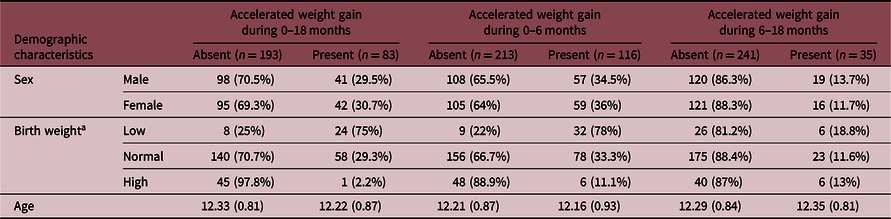
Out of the final sample of 366, data on accelerated weight gain at 6 months were available for 329 children and data at 18 months for 276 children. Table 1 summarizes the basic demographic characteristics of the children. There was no significant difference in the distributions of age and gender among children with and without accelerated weight gain. A significantly higher percentage of children with low birth weight (compared to normal and high birth weight) had accelerated weight gain from 0 to 18 months of age (P < 0.001) and from 0 to 6 months of age (P < 0.001), but not from 6 to 18 months of age.
Demographic characteristics of children according to their accelerated growth status during 0–6 months, 6–18 months, and 0–18 months
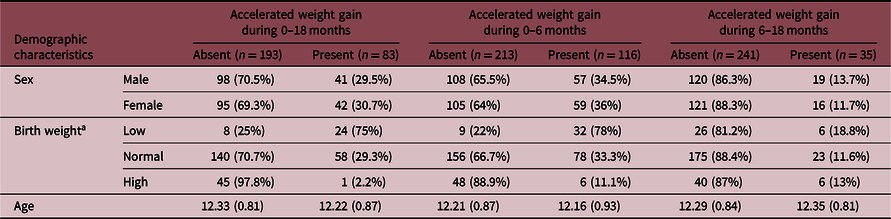
a Presence of accelerated growth during 0–18 months and 0–6 months is statistically significantly different by birth weight category. Accelerated growth during 6–18 is similar in all three birth weight categories.
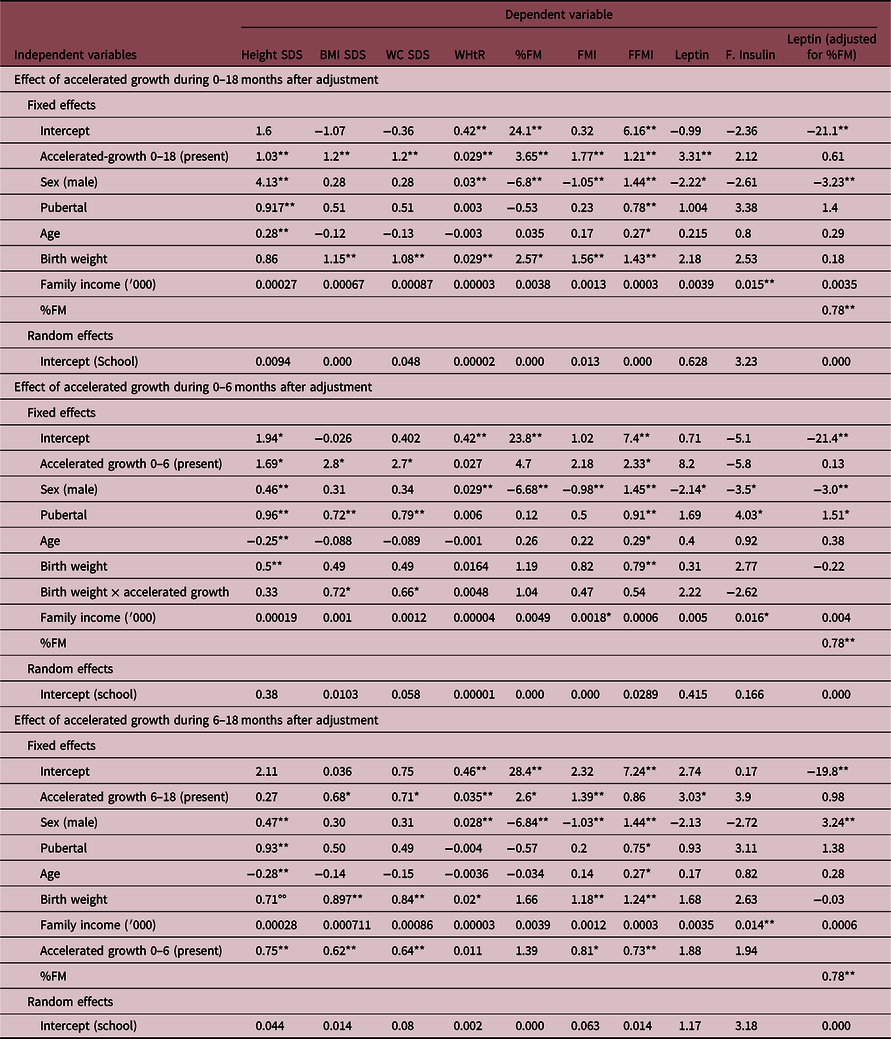
Table 2 shows the effects of independent variables on anthropometric, body composition, and metabolic outcomes using different linear mixed-effects models. Accordingly, accelerated weight gain at 0–18 months was independently positively associated with all outcomes except fasting insulin. Accelerated weight gain had an effect of 3.6 on %FM and an effect of 1.2 on FFMI. Accelerated weight gain during 0–6 months was positively associated with height SDS, BMI SDS, WC SDS, and FFMI in adolescence. Accelerated weight gain had an effect of 1.7 on height SDS and an effect of 2.3 on FFMI. Being pubertal had significant positive effects on the same outcomes; however, the magnitude of the effect was lower. Male sex increased height SDS, waist to height ratio (WHtR), and FFMI and decreased %FM and FMI. The interaction between birth weight and accelerated weight gain at 0–6 months significantly increased BMI SDS by 0.72 and WC SDS by 0.6 after adjusting for other variables. Birth weight increased BMI SDS and WC SDS by about 0.5 each. In analyzing the effects of accelerated weight gain at 6–18 months, it was expected that this weight gain would be associated with accelerated weight gain from 0 to 6 months. Therefore, accelerated weight gain during 0–6 months was included in the model to adjust accelerated weight gain during 6–18 months. Prior to adjustment, the effects of 6–18 months accelerated weight gain were significantly associated with BMI SDS, WC SDS, WHtR, %FM, FMI, and serum leptin in adolescence (results not shown). After adjustment, the independent effects of the accelerated weight gain during 0–6 months were significant in the models and the magnitude of the increase in the dependent variables due to the independent effect of accelerated weight gain during 6–18 months became less. Table 2 shows the independent effects of accelerated weight gain on different dependent variables during 6–18 months after adjusting for accelerated weight gain during 0–6 months. There were significant increases in BMI SDS, WC SDS, WHtR, %FM, FMI, and serum leptin in adolescence in children with accelerated weight gain during 6–18 months.
Summary of the adjusted parameter estimates of the effects of accelerated weight gain (during 0–18 months, 0–6 months, and 6–18 months) on anthropometric and metabolic variables using linear mixed modelsa
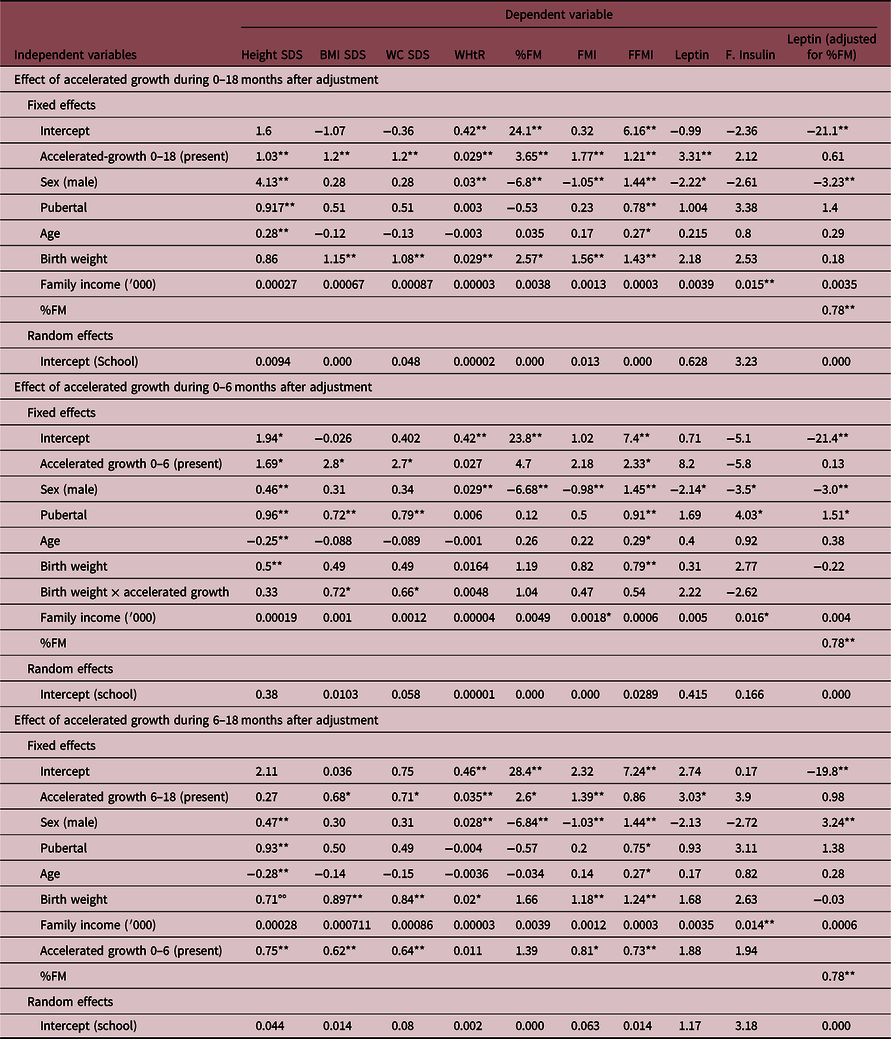
a Separate linear mixed-effect models were used to assess the adjusted effects of accelerated weight gain on different anthropometric and metabolic parameters. Accelerated weight gain, sex, and pubertal status are used as fixed factors; age, birth weight, and family income were used as fixed covariates, and school (cluster) as a random intercept.
*P < 0.05, **P < 0.01.
Serum leptin levels were significantly higher in children with accelerated weight gain during 0–18 months and 6–18 months. As current body fat could be a confounder, the analysis was repeated using %FM as a fixed covariate in addition to the other independent variables. Results showed that in the model with %FM as a covariate, the effects of accelerated weight gain during 0–18 months and 6–18 months on leptin were not significant.
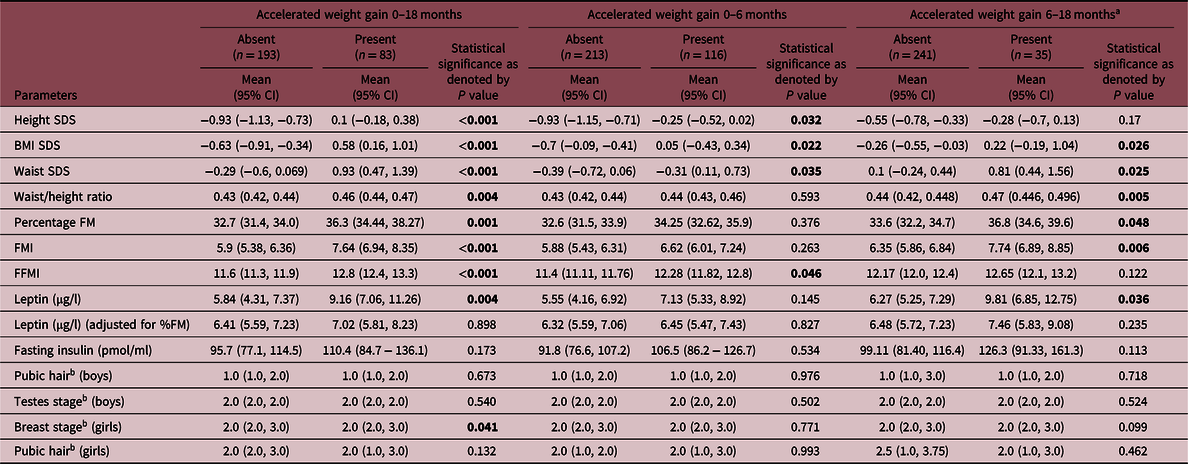
Comparison of adjusted means (adjusted for age, sex, family income, birth weight, and pubertal status) of anthropometric, body composition, and metabolic variables between children with and without accelerated weight gain is shown in Table 3. The adjusted means of height SDS, BMI SDS, WC SDS, WHtR, percentage FM, FMI, and FFMI were significantly higher in the adolescents who had accelerated weight gain between 0 and 18 months of age. Although serum leptin levels were also significantly higher in the initial analysis, the difference was not statistically significant after adjusting for %FM. Among adolescents who had accelerated weight gain between 0 and 6 months of age, the adjusted means of height SDS, BMI SDS, WC SDS, and FFMI were significantly higher compared to those with no accelerated weight gain. Children with accelerated weight gain between 6 and 18 months had significantly higher WC SDS, WHtR, percentage FM, and FMI as compared to those without accelerated weight gain after adjusting for the presence of accelerated weight gain during 0–6 months. Serum leptin levels were significantly higher in children with accelerated weight gain during 6–18 months in the initial analysis but not after adjusting for %FM.
Adjusteda mean differences in anthropometric, body composition, and clinical parameters among adolescents by accelerated weight gain from birth to 18 months, birth to 6 months, and 6 to 18 months
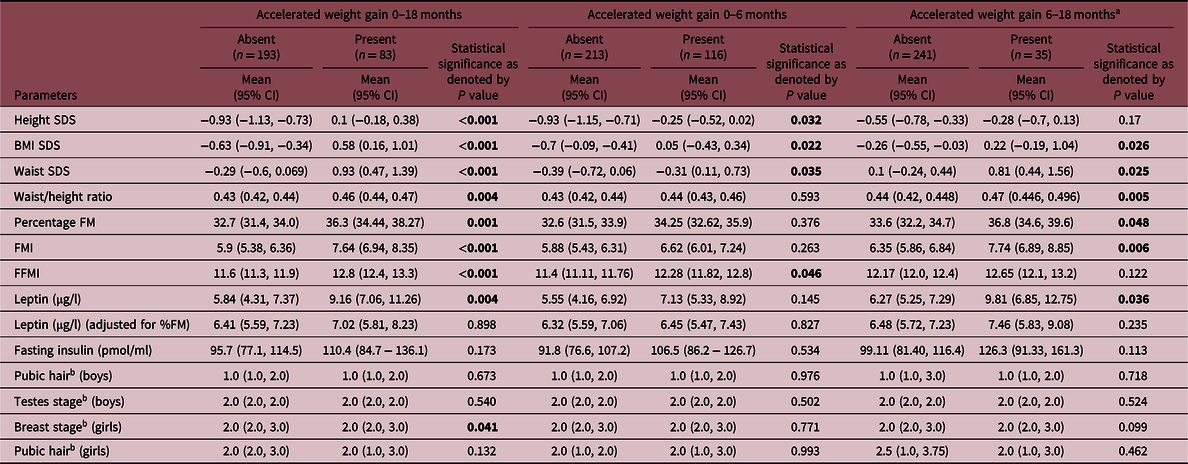
a Mean values of anthropometric, body composition, and metabolic parameters are compared after adjusting for age, sex, family income, school and birth weight of the child using a separate linear mixed models with each parameter as a dependent variable. Independent variables included accelerated weight gain, sex, and pubertal status as fixed factors; age, birth weight, and family income as covariates, and school as a random intercept.
b Pubertal stage-related variables were analyzed using nonparametric Mann–Whitney U-test. Statistically significant p values (P < 0.05) are shown in bold print.
There was no significant difference in height SDS or fat free mass (FFM) in children who had accelerated weight gain between 6 and 18 months compared to those who did not.
Pubertal stage was compared between children with and without accelerated weight gain during the different time intervals in girls and boys separately. Breast stage in girls with accelerated weight gain during 0–18 months (mean: 2.52, SD: 0.77 and median:2, interquartile range (IQR): 2–3) was significantly higher than those without (mean: 2.26, SD: 1.06 and median: 2, IQR: 2–3).
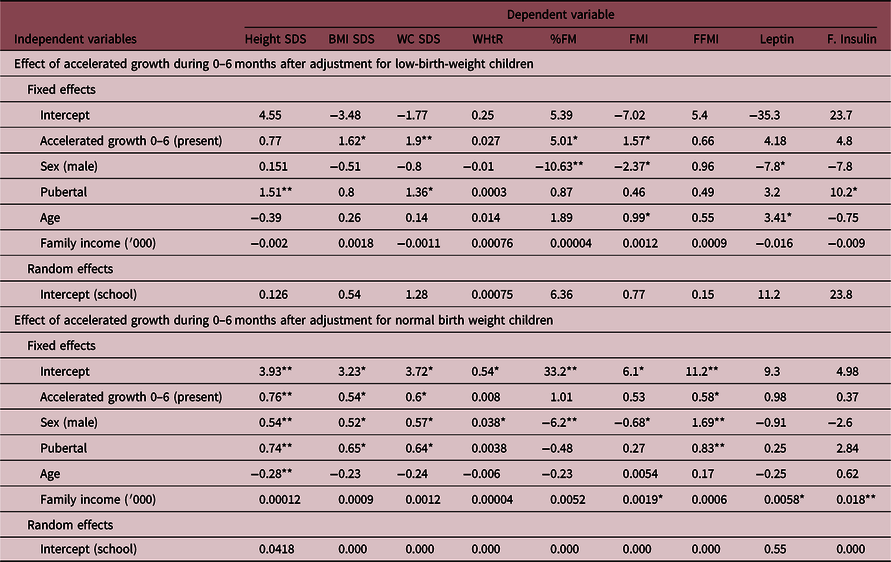
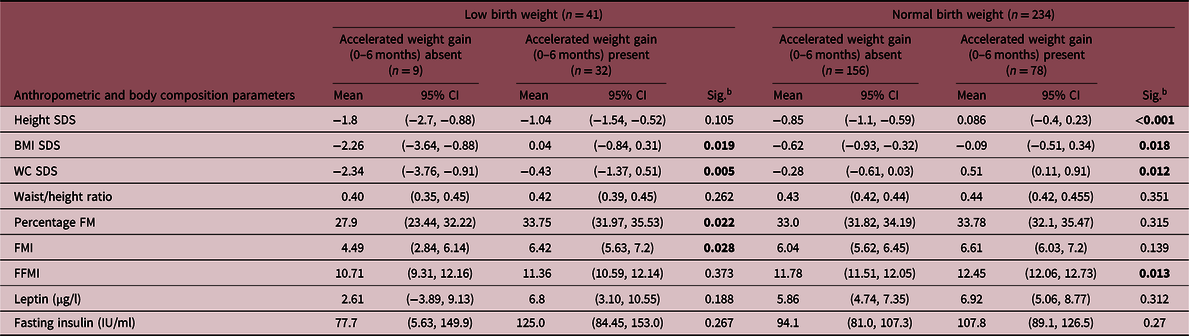
Accelerated weight gain during 0–6 months of age was further analyzed, stratified by birth weight, and the results are presented in Tables 4 and 5. The effect estimates of the linear mixed-effects models are shown in Table 4. Among children with low birth weight, accelerated weight gain during 0–6 months significantly increased BMI SDS, WC SDS, %FM, and FMI. Among those with normal birth weight, accelerated weight gain during 0–6 months significantly increased height SDS, BMI SDS, WC SDS, and FFMI. When comparing the marginal means, low-birth-weight children with accelerated weight gain had significantly higher height SDS, BMI SDS, WC SDS, percentage FM, and FMI, compared to those without accelerated weight gain; normal birth weight children with accelerated weight gain had significantly higher height SDS, BMI SDS, WC SDS, and FFMI, but there was no significant difference in percentage FM or FMI as compared to children with no accelerated weight gain.
Summary of the adjusted parameter estimates of the effects of accelerated weight gain (during 0–18 months, 0–6 months, and 6–18 months) on anthropometric and metabolic variables by birth weight using linear mixed modelsa
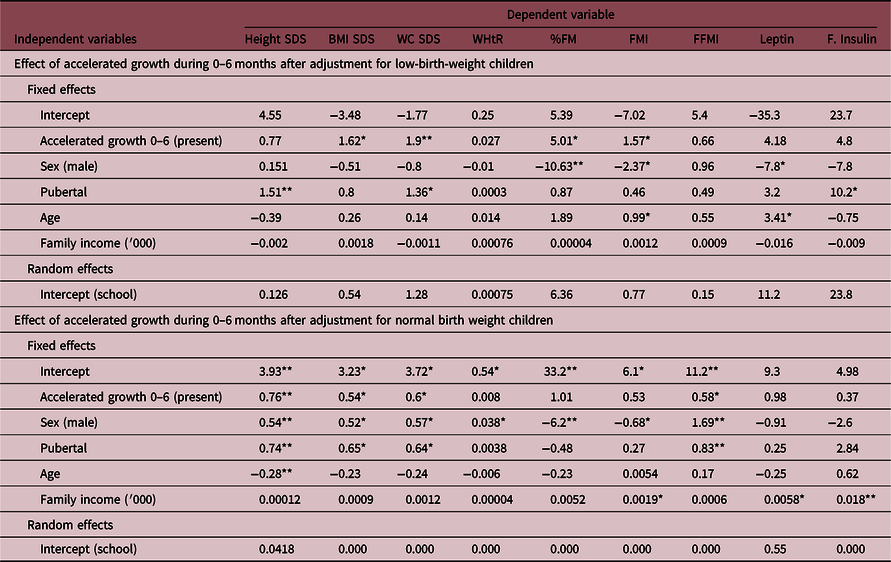
a Separate linear mixed-effect models were used to assess the adjusted effects of accelerated weight gain on different anthropometric and metabolic parameters. Accelerated weight gain, sex, and pubertal status were used as fixed factors; age, birth weight, and family income were used as fixed covariates, and school (cluster) as a random intercept.
*P < 0.05, **P < 0.01.
Comparison of adjusteda means of anthropometric, body composition, and clinical parameters in adolescence by birth weight and accelerated weight gain from 0 to 6 months
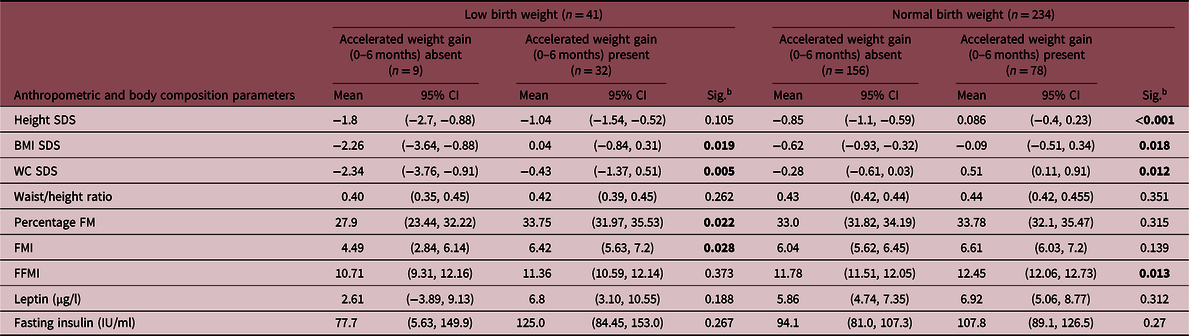
a Mean values of anthropometry, body composition, and metabolic parameters are compared after adjusting for age, sex, family income, school, and birth weight of the child using a separate linear mixed models with each parameter as a dependent variable. Independent variables included accelerated weight gain, sex, and pubertal status as fixed factors; age, birth weight, and family income as covariates, and school as a random intercept.
b Sig. – Statistical significance is denoted by the P value. Statistically significant P values (P < 0.05) are shown in bold print.
Discussion
This study aimed to identify the pattern of early accelerated weight gain on anthropometry, body composition, and anorexigenic hormones, leptin and fasting insulin levels, in adolescence. Weight gain between birth to 18 months of age was initially analyzed. In subsequent analysis, this growth window was separated into two periods – birth to 6 months of age and 6 to 18 months of age, and the effect of accelerated weight gain was determined. The classification of accelerated weight gain as a dichotomous variable was based on an increase of weight for age SDS of 0.67 or more. This classification represents a clinically interpretable outcome since it indicates the space between two centiles on a standard US growth chart. This classification has been widely used in research studies showing associations with later outcomes, and the same classification was used in the present study since it facilitated direct comparison with available evidence.Reference Ong, Ahmed and Emmett5,Reference Ong and Loos33–Reference Taal, Steegers, Hofman and Jaddoe35
Our findings showed that children who had accelerated weight gain from birth to 18 months had higher height SDS, BMI SDS, WC SDS, waist-to-height ratio, percentage FM, FMI, and FFMI in adolescence. This indicates that the early accelerated weight gain is associated with their linear growth and FFM (as shown by the height SDS and FFMI) as well as FM (as indicated by WC SDS, percentage FM, and FMI). The association observed between early accelerated weight gain and obesity-related parameters is consistent with the findings of several systematic reviews.Reference Baird, Fisher and Lucas9–Reference Weng, Redsell and Swift13,Reference Zheng, Lamb and Grimes36 A case–control study conducted in Sri Lanka has shown that accelerated growth between 0 and 24 months is associated with overweight and obesity as early as 3–5 years of age.Reference Rathnayake, Satchithananthan, Mahamithawa and Jayawardena37 However, as highlighted in the systematic reviews, most of the studies assessed obesity (as defined by BMI) as the key outcome, while studies assessing body composition-related outcomes are sparse. A study conducted among Chinese children shows that accelerated growth during 0–18 months is associated with higher percentage body fat and FMI at 7–9 years of age, which is consistent with our findings.Reference Zhou, Dang and Zeng38 Since rapid early growth was expected to be associated with early puberty, reaching puberty was also assessed as an outcome, and our findings showed that there was no significant difference in the percentage of children reaching puberty in those with and without accelerated weight gain. This could be due to the small number of children in the pre-pubertal group in this sample.
However, recent evidence suggests that it is not prudent to arrive at conclusions based on analysis of accelerated weight gain during wide growth windows, since growth patterns in different periods in infancy may have different programming effects leading to various obesity-related outcomes in adulthood.Reference Singhal14 Therefore, further analyses we undertook aimed to identify these diverse effects of the growth at different periods of early life. Analysis of accelerated weight gain during birth to 6 months of age showed that it is associated with an increase in the FFMI and linear growth (height SDS) as well as BMI, WC, and FMI in adolescence. However, it was interesting to see that accelerated weight gain during 6–18 months of age was not associated with an increase in linear growth or FFM. Instead, these children showed only higher BMI, WC, and FM (indicated by percentage FM and FMI) compared to their counterparts without accelerated weight gain. This association of accelerated weight gain during 6–18 months with higher body mass, higher central fat distribution, and increased FM in adolescence is consistent with the findings of previous longitudinal studies,Reference Ong, Ahmed and Emmett5,Reference Braun, Kalkwarf and Papandonatos8,Reference Kinra, Baumer and Smith39 which show gradually accruing adiposity risk with increasing obesity over the postnatal period. Accelerated weight gain between 6 and 18 months of age is very much related to the complementary feeding practices in the relevant population. About 54% of Sri Lankan babies were exclusively breast fed for 6 months during the period of 2006/2007 when study participants were in their infancy with the mean duration of exclusive breastfeeding being 4.5 months. Following this exclusive breastfeeding period, complementary feeding and other milk food feeding commenced, with 41% of infants aged 4–5 months and 85% aged 6–8 months being fed complementary feeds and other milk foods.Reference Torlesse and Raju21 Accelerated growth is generally considered beneficial and because of that the low-birth-weight babies are enthusiastically fed energy-rich food during complementary feeding. Feeding energy-rich food to promote rapid growth could predispose them to high FM and subsequent metabolic complications in later life.
Synergistic effect of birth weight and accelerated weight gain in 0–6 months was assessed in our study using interaction effect of these two variables. Significant interaction effect was seen on two outcomes, namely BMI SDS and WC SDS. However, when stratified by birth weight, there was no remarkable difference in the anthropometric, body composition, or metabolic outcomes between low-birth-weight and normal birth weight babies with accelerated weight gain. Hence, our findings do not support an added risk of adiposity with accelerated weight gain in low-birth-weight babies compared to normal birth weight babies.
However, our stratified analysis by birth weight shows two different patterns of variation in low-birth-weight babies and normal birth weight babies with regard to anthropometric, body composition, and metabolic outcomes occurring with accelerated weight gain during 0–6 months. In children with low birth weight, accelerated weight gain was associated with greater height, BMI, WC, and FM during adolescence. This is consistent with the theory of “fetal origins of adult disease”Reference Barker40 and the “thrifty phenotype hypothesis,”Reference Hales and Barker23 which suggests that fetal growth restriction and low birth weight followed by faster growth over the first 2 years lead to adverse metabolic programming effects on the child which results in obesity, high adiposity, and metabolic complications in later life. Evidence shows that accelerated growth even in the first few months of life predisposes to obesity and unhealthy body composition in childhood and adolescence.Reference Chomtho, Wells and Williams41,Reference Gillman42 Our findings, which support this evidence, can be explained by the programming of endocrine feedback mechanisms taking place during early accelerated growth. Despite this, the caring practices related to low-birth-weight babies are to promote enthusiastic feeding in early life, which is the case in the Sri Lankan context as well. While rapid weight gain in low-birth-weight infants is beneficial for neurodevelopment and fighting infections, long-term effects of adverse metabolic programming should also be taken into consideration when promoting their nutrition and growth.
Our analysis of children with normal birth weight showed that accelerated weight gain during the first 6 months was associated with significantly higher mean values of height SDS, BMI SDS, WC SDS, and FFMI in adolescence. Parameters related to linear growth and FFM as well as BMI and WC seem to be associated with accelerated weight gain in these children. However, FM seems to be unaffected as shown by the non-significant differences in percentage FM and FMI. There is limited evidence on accelerated growth in babies with normal birth weight, especially studies assessing body composition outcomes. Among available evidence, the systematic review of Druet et al shows that accelerated growth between 0 and 1 years of age is associated with obesity (as determined by high BMI) in childhood, and this association shows an equal effect size in children with normal birth weight as well as low birth weight.Reference Druet, Stettler and Sharp12 A prospective cohort study conducted in Sweden shows that accelerated growth in infancy (0–6 months age) is associated with higher FM, WC, BMI, FFM, and height at age 17 years.Reference Ekelund, Ong and Linné43 The association with linear growth, FFM, BMI, and WC in their sample comprising both low-birth-weight and normal birth weight babies, is consistent with our findings. However, since their analysis is not stratified by birth weight, direct comparison with our findings is not possible. Not seeing an association between increased FM and rapid weight gain in the first 6 months of life in normal birth weight infants is unique to our study. It is possible that the adverse programming effects of accelerated growth are not apparent in this population since they are of normal intrauterine growth and not of the classic “thrifty phenotypes.” However, the effect of accelerated weight gain during 0–6 months of age on FM and fat percentage in normal birth weight children needs to be explored further taking into consideration the breastfeeding and other childcare patterns.
Although metabolic programming is postulated to be the driving force, definite mechanisms underlying early accelerated growth and later obesity are overall poorly understood.Reference Stocker and Cawthorne44 Alterations in the energy environment during rapid growth influencing the appetite regulatory pathways during the perinatal period are one of the accepted mechanisms.Reference Ross and Desai45 Therefore, we assessed the anorexigenic hormones leptin and insulin levels and analyzed their association with early accelerated weight gain. Serum leptin levels in the children who had accelerated weight gain from birth to 18 months and 6–18 months were significantly higher than those who did not have accelerated weight gain. However, when adjusted for current %FM, the significant difference in leptin levels with accelerated growth was not seen. This indicates that adiposity level and leptin are not independently associated with accelerated weight gain. Leptin is an anorexigenic hormone produced by the adipocytes, involved in maintaining energy balance of the human body. It acts as a satiety signal to prevent obesity in times of energy excess, and as a “starvation signal” to maintain adequate fat stores for survival during times of energy deficit. High leptin levels and leptin resistance are known to occur in obesity, and this is associated with an elevated satiety threshold and increased appetite.Reference Alamri, Hussain and Alzein46 The association seen between accelerated weight gain and high leptin levels in adolescence could be due to two mechanisms. In our study, children with accelerated weight gain were more likely to be obese adolescents with higher fat content. Since leptin is a hormone produced by adipocytes, high leptin levels in these children could be a result of their high fat content. On the other hand, it is suggested that rapid growth in early life programs the infants to have increased levels of insulin and leptin which in turn leads to a higher threshold of satiety and obesity in later life.Reference Singhal14,Reference Stocker and Cawthorne44,Reference Ross and Desai45 Increased leptin levels among the adolescents who had accelerated growth during 0–18 months in our study could be due to their high adiposity being mediated through resistance to leptin and increased satiety threshold. However, due to the cross-sectional nature of the present study, it is not possible to confirm the mediating role of leptin in this association.
While our study used a cross-sectional design, the data related to early weight gain have been extracted from reliable documents maintained from birth. In the national child health program in Sri Lanka, growth monitoring is carried out by public health midwives who receive basic training of one and half years.47 In addition, they undergo mandatory in-service training on growth monitoring and promotion which is focused on correct techniques of anthropometric measurement, accurate recording of measurements, and maintenance of equipment.48 Therefore, the validity of the data extracted from the Child Health Development Record (CHDR) is likely to be high. Having access to retrospective longitudinal data from birth allowed the temporal analysis of data of each child and facilitated our interpretation of the association between early weight gain and subsequent obesity and adiposity in adolescence. Availability of early growth data was high, with data at 6 months being available for 90% of the sample and at 18 months being available for 75% of the sample. Comparison of the baseline sociodemographic and anthropometric characteristics of the children, whose growth data were available and not available, showed no significant difference. Our analysis was performed adjusting for age, sex, family income, and birth weight where relevant, to overcome confounding by these variables. Analyzing the effects of accelerated weight gain in two growth windows (0–6 months of age and 6–18 months of age), further analyzing the 0–6 months growth stratified by birth weight, and using body composition outcomes and leptin and insulin levels in addition to anthropometry are the strengths of our study. With regard to patterns of early weight gain, our study assessed only two growth windows – birth to 6 months and 6–18 months of age – and the variation in birth weight. We have used the widely used classification of 0.67 SDSs to define accelerated weight gain; however, the rise in weight for age of 0.67 SDSs in the 0–6 months age range and in the 6–18 month age range cannot be considered as the same, and this is a limitation of our study. Availability of data in the CHDR was limited to weight measurements only. Therefore, we were able to analyze only weight as a growth parameter. The metabolic programming and long-term risk may be dependent on whether weight gain disproportionately is of fat or lean tissue, but our study considered only weight gain and therefore is not able to determine these associations.
Conclusions and recommendations
Our findings confirm the existing evidence on the positive association between early accelerated weight gain and anthropometry and body composition. More importantly, our findings show that the accelerated weight gain in different growth windows in early life has different effects on anthropometry and body composition in adolescence. Accelerated weight gain during 6–18 months of age is associated with a higher FM rather than FFM or taller stature, as shown by the higher levels of BMI and adiposity in these children during adolescence. Our findings showed that the effect of early accelerated weight gain during 0–6 months of age varied with the birth weight of the child. In babies born low birth weight, this “catch up” growth seems to increase the linear growth and FFM as well as FM and adiposity by adolescence, which is consistent with the theory of programming of endocrine feedback. However, in children with normal birth weight, rapid weight gain in the first 6 months seems to increase the linear growth and FFM rather than FM and adiposity. These associations need to be further explored taking into consideration the breastfeeding and other childcare patterns of early life.
There are several public health implications arising out of this study. Association of increased adiposity with accelerated weight gain after 6 months of age highlights the importance of complementary feeding policies and practices that ensures optimum growth as characterized by linear growth and FFM in the child rather than rapid weight gain. In children with low birth weight, optimum growth in the first 6 months of life needs to be determined taking into consideration the long-term adverse effects of increased adiposity as well as the effects of poor weight gain on infections and undernutrition. More studies are needed to determine the appropriate feeding of the low-birth-weight infants that would promote optimum growth, and a reexamination of the aims of complementary feeding with regard to energy density and nutrient density. Effects of accelerated weight gain in children with normal birth weight needs to be further explored taking into consideration breastfeeding and other context-specific childcare practices.
Acknowledgments
Authors gratefully acknowledge the support provided by Dr. Sumedha Wijeratne and staff of the laboratory of Professorial Paediatric Unit, Lady Ridgway Hospital, Colombo.
Author Contributions
DS, PL, ML-D, IW, APH, ARW, and VPW designed the study. DS implemented the study and analyzed the data. All authors contributed to writing the manuscript and approved its final version.
Financial Support
This study was conducted with the support of a Technical Cooperation program grant from the International Atomic Energy Agency.
Conflicts of Interest
The authors declare that they have no conflicts of interest.
Ethical Standards
Ethics clearance has been obtained from Ethics Review Committee, Faculty of Medicine, University of Colombo (EC/16/192).