Introduction
Nigerian freshwater ecosystem is home to diverse fish fauna (Idodo-Umeh Reference Idodo-Umeh2003; Iyiola et al. Reference Iyiola, Nneji, Mustapha, Nzeh, Oladipo, Nneji, Okeyoyin, Nwani, Ugwumba, Ugwumba, Faturoti, Wang, Chen, Wang and Adeola2018; Oladipo et al. Reference Oladipo, Nneji, Anifowoshe, Nneji, Iyiola, Adeola and Mustapha2018a; Reference Oladipo, Nneji, Iyiola, Nneji, Ayoola, Adelakun, Anifowoshe, Adeola and Mustapha2020; Olaosebikan and Raji Reference Olaosebikan and Raji1998). The varied fish species have become significant protein sources and income (Mustapha Reference Mustapha2010). Over time, tremendous growth in the human population has increased pressure on fish resources (Olalekan and Ojebiyi Reference Olalekan and Ojebiyi2018). Anthropogenic activities have led to unsustainable fishing practices (Raji et al. Reference Raji, Okaeme, Omorinkoba and Bwala2012). Also, the pollution of the aquatic ecosystem is evident, which often destroys the fish habitat and its breeding sites (Dawodu et al. Reference Dawodu, Aderolu, Elegbede and Adekunbi2015). These threats have brought a decline in the fish catch. Despite this, there is a lack of adequate information on how environmental changes affect fish species availability and abundance.
Within the context of the loss in freshwater biodiversity in Nigeria, it is imperative to identify critical environmental factors that contribute to the patterns of distribution and abundance of freshwater fishes. Studies have shown that fluctuations in environmental conditions can lead to changes in stock diversity, composition, and catch abundance of fish (Ita and Balogun Reference Ita and Balogun1982; Mensah et al. Reference Mensah, Dankwa, Lauridsen, Asmah, Campion and Edziyie2018; Ogutu-Ohwayo Reference Ogutu-Ohwayo1993). For instance, turbidity and dissolved oxygen have been reported to affect fish species abundance and distribution (Daget et al. Reference Daget, Gosse and Thys van den Audenaerde1986; Goudswaard et al. Reference Goudswaard, Katunzi, Wanink and Witte2011; Njiru et al. Reference Njiru, Nyamweya, Gichuki, Mugidde, Mkumbo, Witte and Padilla2011; Paterson and Chapman Reference Paterson and Chapman2009; Taabu-Munyaho et al. Reference Taabu-Munyaho, Kayanda, Everson, Grabowski and Marteinsdóttir2013). Abiotic and biotic factors such as water depth, temperature, nutrients, predator–prey interaction, etc., have been reported to determine the distribution and abundance of pelagic fishes (Brosse et al. Reference Brosse, Grossman and Lek2007; Taabu-Munyaho et al. Reference Taabu-Munyaho, Kayanda, Everson, Grabowski and Marteinsdóttir2013). These factors could vary with the season, which may or may not affect fish abundance. For instance, earlier studies (e.g., Eby and Crowder Reference Eby and Crowder2002; Taabu-Munyaho et al. Reference Taabu-Munyaho, Kayanda, Everson, Grabowski and Marteinsdóttir2013) have revealed that fish catch abundance and distribution vary with season. On the contrary, Mensah et al. (Reference Mensah, Dankwa, Lauridsen, Asmah, Campion and Edziyie2018) argued that these seasonal differences in distribution, abundance, and diversity of the fish species might not be significant if the environmental factors were stable throughout the season.
Anthropogenic impacts on stream connectivity leading to dams and dewatering have been shown to disrupt the natural water flow as well as alter local species migration and dynamics (Trzcinski et al. Reference Trzcinski, Walde and Taylor2008). A reduction in the water velocity associated with dam creation could lead to significant differences in the oxygen content, the temperature of the water, and the sediment quality in the river bed (Melanie et al. Reference Melanie, Joachim and Juergen2011). Also, the damming of river has been related to some habitat quality changes such as neutralization of the pH, reduction of the oxygen content, retention of nutrients, and heavy metals in the water (Lazar et al. Reference Lazar, Addy, Gold, Groffman, McKinney and Kellogg2015). These factors could affect the survival of fish species. Unfortunately, information on the distribution and abundance of fish in hydroelectric dams in Nigeria is lacking. Recent studies have shown decreased fish diversity and catch assessment in Nigeria (FAO 2018). Despite this, the direct effects of environmental factors in structuring assemblages of certain economically important freshwater fishes in Nigeria are poorly understood.
The objective of our study is to examine the role of local environmental factors in structuring assemblages of three economically important freshwater fishes – Citharinus citharus (Geoffroy Saint-Hilaire 1809), Distichondus rostratus (Günther 1864), and Lates niloticus (Linne, 1762) – in a hydroelectric dam in Nigeria. This study system (Jebba Hydroelectric dam) is known to host diverse and poorly known fish species (Ita, Reference Ita1993; Oladipo et al. Reference Oladipo, Nneji, Iyiola, Nneji, Ayoola, Adelakun, Anifowoshe, Adeola and Mustapha2020). Given that species diversity and abundance is potentially related to environmental factors, such as dissolved oxygen, turbidity, etc., we predict that changes in environmental water conditions would determine the pattern of fish assemblages in Jebba Hydroelectric dam. We used data from a field survey of the selected fish communities in Jebba Hydroelectric dam to determine (i) the environmental variables that best account for distribution patterns of these selected species and (ii) the relative contribution of each of these components to the explained variation.
Methods
Study area and sampling sites
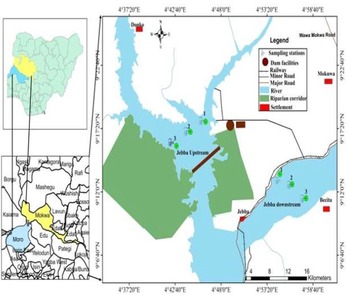
Jebba town is located in North-central Nigeria, separating northern Nigeria from the west (Figure 1). The river Niger divides into Jebba South and Jebba North, forming a lake with a Hydroelectric dam. Jebba Lake is created in 1983 on River Niger at Jebba North, downstream of the Kainji dam. It lies within the middle belt of Nigeria between the coordinates 4°34′12″–4° 43′48″E and latitude 9°10′–9°55′N. The area is characterized by dry and rainy seasons, with notable fishing activities generating freshwater fish for the area and the nation (Adelakun et al. Reference Adelakun, Mustapha, Amali and Mohammed2017; Oladipo et al. Reference Oladipo, Nneji, Anifowoshe, Nneji, Iyiola, Adeola and Mustapha2018a; Reference Oladipo, Nneji, Iyiola, Nneji, Ayoola, Adelakun, Anifowoshe, Adeola and Mustapha2020). According to the river’s ecological features, the monthly maximum temperature is about 30°C in March and the lowest at about 25°C in August. Annual rainfall ranges between 1270 and 1524 mm, with the highest observed in August (Adelakun et al. Reference Adelakun, Mustapha, Amali and Mohammed2017).
Map of up- and downstream of Jebba Dam showing the sampling points.

The upstream of the lake has a total length of 134 km, a width of 24.1 km, mean and maximum depths of 11 m and 60 m, respectively (Ita et al. Reference Ita, Omorinkoba and Bankole1984; Obot, Reference Obot1989; Oladipo et al. Reference Oladipo, Nneji, Iyiola, Nneji, Ayoola, Adelakun, Anifowoshe, Adeola and Mustapha2020). It has its source mainly from the Kainji reservoir with six other major rivers: Oli, Wuruma, Moshi, Awuru on the western side, and Kontangora and Eku (Adesina et al. Reference Adesina, Akinyemiju and Olaleye2007; Owolabi, Reference Owolabi2008). The lake experiences two major floods events per year, namely the white and black floods. The white flood results from the rainfall that enters mid-August with a peak flow of 4000–6000m3s−1 from September to October.
Jebba hydroelectric dam has good potentials for the fish catch, with an estimate of 909–1818 tons/annum (Adelakun et al. Reference Adelakun, Mustapha, Amali and Mohammed2017). The downstream lake flows through urban populated towns and villages, where human and fishing activities occur mainly at the river banks. Anthropogenic activities such as indiscriminate fish harvest, overexploitation, and obnoxious fishing practices have led to habitat destruction and common challenges to fishery resources in the area (Nwabeze and Erie Reference Nwabeze and Erie2013; Oladipo et al. Reference Oladipo, Nneji, Anifowoshe, Nneji, Iyiola, Adeola and Mustapha2018a).
Study species
The focal species – C. citharus, D. rostratus, and L. niloticus – were selected based on their importance and availability. Lates niloticus is a valuable large size fish species supporting a large export. It feeds on fishes ranging from medium to large sizes. Environmental factors such as high turbidity and low dissolved oxygen affect its abundance and distribution (Daget et al. Reference Daget, Gosse and Thys van den Audenaerde1986; Paterson and Chapman Reference Paterson and Chapman2009; Njiru et al. Reference Njiru, Nyamweya, Gichuki, Mugidde, Mkumbo, Witte and Padilla2011; Taabu-Munyaho et al. Reference Taabu-Munyaho, Kayanda, Everson, Grabowski and Marteinsdóttir2013). Changes in these factors could affect its habitat quality and sustainability in the ecosystem (Goudswaard et al. Reference Goudswaard, Katunzi, Wanink and Witte2011).
Generally, the large Citharinids (the moonfish) and Distichondus (the grass-eater) are of commercial importance, having their abundance recorded between August and December (Daget et al. Reference Daget, Gosse and Thys van den Audenaerde1984). The grass-eater and the moonfish have small heads with deep and flattened bodies covered with tiny scales (Gupta and Gupta Reference Gupta and Gupta2006). The small-sized ones are generally found in shallow waters covered by grass, while the larger ones are adapted to open waters during dry seasons (Daget et al. Reference Daget, Gosse and Thys van den Audenaerde1984). Agbabiaka et al. (Reference Agbabiaka, Kuforiji and Egobuike2010) stated that moonfish is abundant in swamps, creeks, and lakes in Nigeria and usually spawn during the rainy season. Moonfish is highly nutritious, having about 20.4% protein with low lipids and relatively cheap whether cooked, smoked, or in dried form (Agbabiaka et al. Reference Agbabiaka, Kuforiji and Egobuike2010; Omojowo and Ihuahi Reference Omojowo and Ihuahi2010).
Data collection
The fish and water samples were collected bimonthly from October 2017 to September 2018. The sampling points were selected purposefully based on fishing activities as follows:
1. UPS A = Rainy season upstream site A
2. UPS B = Rainy season upstream site B
3. UPS C = Rainy season upstream site C
4. DNS D = Rainy season downstream site D
5. DNS E = Rainy season downstream site E
6. DNS F = Rainy season downstream site F
7. UPS G = Dry season upstream site G
8. UPS H = Dry season upstream site H
9. UPS I = Dry season upstream site I
10. DNS J = Dry season downstream site J
11. DNS K = Dry season downstream site K
12. DNS L = Dry season downstream site L
The physicochemical variables of water, such as pH, total dissolved solids (TDS, mg/L), electrical conductivity (μS/cm), and temperature (°C), were measured in situ using Hanna portable pH/EC/TDS/Temperature combined waterproof tester model HI 98129. The water samples collected were brought to the laboratory for other water quality analyses using Hanna multi-parameter photometer. The physicochemical parameters were measured between 7.00 and 9:00 am.
Fish samples were collected with gillnets of different mesh sizes, measuring 50 m in length and 20 m deep. The surveys were set for both night and day fishing. Voucher specimens were preserved in a cooler with ice blocks and transported to the laboratory in the Department of Bioscience and Biotechnology, Kwara State University, Malete, Nigeria. Fish specimens were sorted and counted and identified following fish keys of Olaosebikan and Raji (Reference Olaosebikan and Raji1998), Idodo-Umeh (Reference Idodo-Umeh2003), and FishBase database (Froese and Pauly Reference Froese and Pauly2017).
Data analysis
The physicochemical parameters variables were computed in mean ± standard deviation and were compared among sampling stations in seasons. A Pearson correlation and canonical correspondence analysis (CCA) were conducted to investigate the relationship and association of the studied fish species abundance with physicochemical parameters. These analyses were performed using the PAST 3. Significant differences levels were considered at P<0.05.
Results
The physicochemical parameters
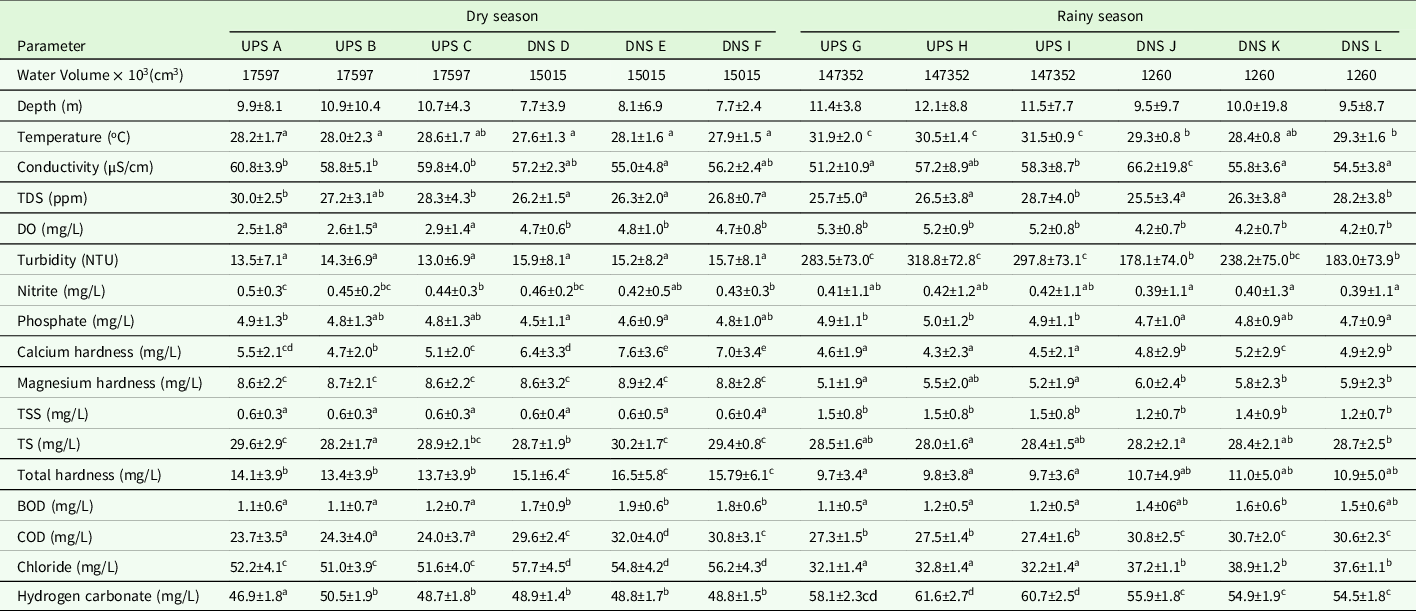
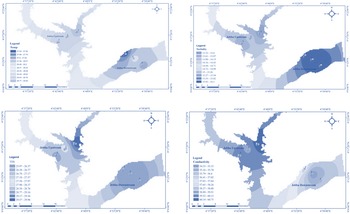
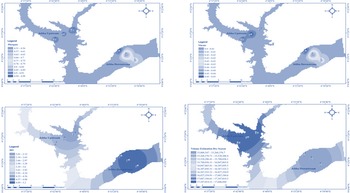
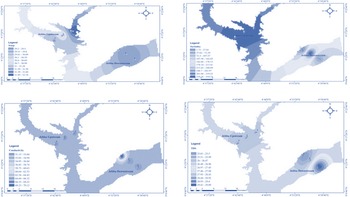
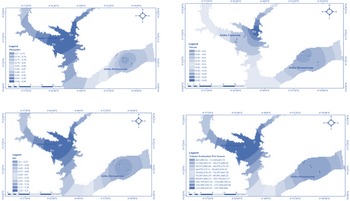
The temperature range was between 27.6–28.6 ºC in the dry season and 27.8–28.5 ºC in the rainy season (Table 1). At the end of the study, the reduction in temperature in the dry season followed the pattern: UPS C> UPS A > UPS E > DNS B > DNS F > DNS D (Figure 2a) while in rainy seasons DNS J> UPS I > UPS H >DNS J > DNS L > UPS K (Figure 3a). The conductivity and TDS increase in the same order during the dry season as follows: UPS A > UPS C > UPS B > DNS D> DNS F > DNS E, while in the rainy season, it was UPS J > UPS I > UPS H > UPS K > DNS L > DNS G > DNS J (Figure 2a and 3a). There was a significant difference between conductivity and TDS of the upstream and downstream during the dry season. The highest turbidity range of 178.10–318.80 NTU was recorded in the rainy season, and the lowest range of 13.00–15.90 NTU was observed during the dry season (Figures 2a and 3a). Generally, the DO ranges from 2.50 to 5.30 mg/L, with the lowest value recorded in the dry season. The mean values of the physicochemical parameters of water are shown in Table 1. The range of the mean value of nitrite was 0.42–0.5 mg/L in the dry season and 0.39–0.42 mg/L in the rainy season. Phosphate levels ranged between 4.50–4.90 mg/L in the dry season and 4.70–5.00 mg/L during the rainy season (Figures 3a and 3b). A higher mean Chloride value between 51.60–57.70 mg/L was recorded in the dry season than the rainy season with a mean range of 32.10–38.90 mg/L. The water depth had a range of 76.90–120.90 m during sampling (Table 1).
Physico-chemical parameters in upstream- and downstream of Jebba Dam during the sampling year

Two-dimensional map of temperature, turbidity, conductivity, and TDS parameters in up and down-stream of Jebba dam during dry season.

Two-dimensional map of nitrate, phosphate, DO, and water volume in up and down-stream of Jebba dam during dry season.

Two-dimensional map of temperature, turbidity, conductivity, and TDS parameters in up and down-stream of Jebba dam during wet season.

Two-dimensional map of nitrate, phosphate, DO, and water volume in up and down-stream of Jebba dam during wet season.

Patterns of distribution across seasons
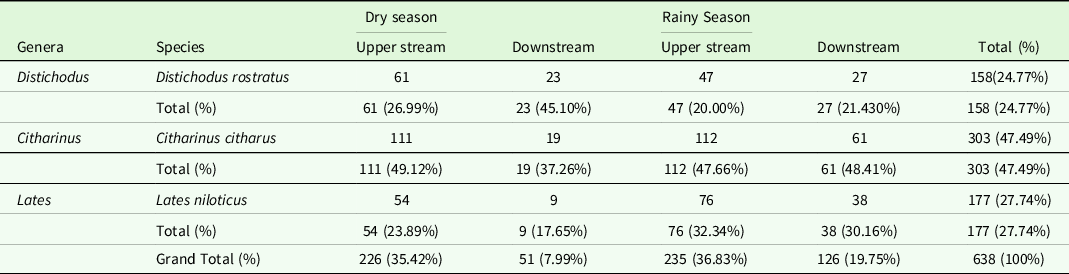
The catch abundance for all studied species was higher during the rainy season than in the dry season except for D. rostratus. At the upstream, C. citharus had a relative abundance of 49.12% in the dry season, followed by D. rostratus (26.99%) and L. niloticus (23.89%) (Table 2). During the rainy season, the relative abundance of C. citharus, L. niloticus, and D. rostratus were 47.66%, 32.34%, and 20.00%, respectively. Downstream, D. rostratus had the highest relative abundance of 45.10% during the dry season, followed by C. citharus (37.26%) and L. niloticus (17.65%). Downstream, C. citharus had a higher relative abundance of 48.41%, followed by L. niloticus (30.16%) and D. rostratus (21.43%) during the rainy season. The total relative abundance of 47.49%, 27.74%, 24.77% were observed for C. citharus, L. niloticus, and D. rostratus, respectively.
Overall distribution and abundance of Distichodus, Citharinus, and Lates in upstream and downstream of Jebba Dam

Relationship of species composition and environmental variables
The influence of the physicochemical variables on the selected fish species was shown in a CCA ordination plot (Figure 4). The first two correspondence axes explain 93.1% and 6.89% of the variance. The CCA model was significant (P = 0.0027). Our study showed that the abundance of L. niloticus was associated with water volume, phosphate, turbidity, total suspended solids (TSS), and hydrogen carbonate. However, the abundance of D. rostratus was associated with calcium hardness, total hardness, biological oxygen demand (BOD), dissolved oxygen (DO), total solids (TS), and chloride. Temperature and depth drove the abundance of C. citharus. High water volume, turbidity, TSS, nutrients, temperature, and depth were characteristics of the rainy season.
Canonical correspondence analysis bi-plot on the fish family abundance, physicochemical parameters variables, and location based on season.

The linear Pearson correlation showed a strong positive relationship of the abundance of L. niloticus with turbidity (0.51), phosphate (0.51), total suspended solids (0.62), hydrogen carbonate (0.68), water depth (0.75), temperature (0.87), and water volume (1.00; Table 3). There was a negative correlation of the abundance of L. niloticus with magnesium hardness (−0.61), COD (−0.64), and chloride (−0.72), dissolved oxygen (−0.73), total hardness (−0.78), total solids (−0.80), calcium hardness (−0.92), and BOD (−0.93). Our result showed a strong positive association of the abundance of C. citharus with water volume (0.55), TDS (0.59), temperature (0.72), and water depth (0.95) and a strong positive relationship of the abundance of D. rostratus with conductivity (0.69), water depth (0.73), and TDS (0.85). Further, our result showed a negative relationship of other variables examined on the abundance of C. citharus and D. rostratus.
Correlation coefficient between physico-chemical parameters and fish species abundance in up and down-stream of Jebba dam

Note: Bold value indicated high correlations between the studied species and physic-chemical parameter.
Discussion
Studies have shown that the physicochemical properties of the freshwater ecosystem determine the nature, abundance, health, and diversity of the fish species (Adeniji Reference Adeniji1991; Akinbuwa Reference Akinbuwa1999; Imevbore and Okpo Reference Imevbore, Okpo, Imevbore and Adegoke1975; Mustapha Reference Mustapha2010; Oladipo et al. 2018). The driving forces of the aquatic ecosystem’s health could be attributed to the water hydrology and nutrients that influence the population dynamics at different times and locations (Chalar and Tundisi Reference Chalar, Tundisi, Tundisi and Straskraba1999; Mustapha Reference Mustapha2009). The variation in the physicochemical parameters could indicate changes in the environmental conditions of the freshwater ecosystem. Our study shows that the physicochemical properties of the Jebba Hydroelectric dam could account for the abundance and distribution of some of its economically important fish species.
Temperature is a significant determinant of primary production in the aquatic ecosystem, and various environmental conditions could influence it. For optimal growth, aquatic species require a specific temperature range. For instance, in the tropics, fish potentially survives within a temperature range of 8–30°C (Mustapha Reference Mustapha2009). Many authors have reported temperature fluctuations in relation to different seasons in the Nigerian freshwater ecosystems, such as Ase river, Kainji lake, Jebba lake, Oyun, and Apodu reservoir (Adeniji Reference Adeniji1991; Idodo-Umeh Reference Idodo-Umeh1987; Imevbore and Okpo Reference Imevbore, Okpo, Imevbore and Adegoke1975; Mustapha Reference Mustapha2009; Oladipo et al. Reference Oladipo, Mustapha, Suleiman and Anifowoshe2018b). In our current study, we observed variations in temperature across seasons. We observed relatively higher temperatures during the dry season, a period that coincides with the harmattan usually influenced by the northeast trade winds (Mustapha Reference Mustapha2009). During the rainy season, the lower water temperature might result from low solar radiation and a high influx of rainwater. In sum, the observed temperatures are within the temperature range for optimal fish growth, which suggests that the temperature range in Jebba hydroelectric dam is suitable for fish growth.
Studies suggest 4–9 mg/L of DO as the optimal range for large and diverse fish populations. The DO levels recorded in the upstream and downstream of the Jebba Hydroelectric dam were generally low during the dry season. The lower DO, particularly below 3 mg/L, may negatively impact certain sensitive fish species (Abdus-Salam et al. Reference Abdus-Salam, Adekola and Apata2010). The range of the DO concentration observed in this work is similar to those observed by Olaniyan (Reference Olaniyan1969), Oyewo (Reference Oyewo2005), and Ayoola and Kuton (Reference Ayoola and Kuton2009). On the contrary, we observed higher DO concentrations during the rainy season due to lower temperatures and water mixing during rainfall. The higher DO value observed during the rainy season has also been reported by Adeniji Reference Adeniji1991) in Jebba Lake, Imvebore (1975) in Kainji Lake, Mustapha Reference Mustapha2009) in Oyun reservoirs, and Yakubu (Reference Yakubu2004) in Shiroro dam. This shows a typical value of DO obtainable in the Nigerian freshwater ecosystem.
Our focal fish species – C. citharus, D. rostratus and L. niloticus – have been previously reported in a considerable number in River Niger, Nigeria (Ita Reference Ita1978). Citharinus citharus is among the significant economic fish exploitable in Jebba hydroelectric dam. It feeds chiefly on insect larvae, plankton, and aquatic plants. They are highly priced due to their size and flesh quality, most times in a smoked-dried form because they die off immediately when removed from the habitat (Uneke Reference Uneke2015). We observed a high abundance of C. citharus in the study area throughout the survey period. This observation is similar to the high abundance of C. citharus in Njoboliyo Lake and the Anambra River basin in Nigeria (Odo et al. Reference Odo, Nwani and Eyo2009; Amos and Linus Reference Amos and Linus2017). The abundance of C. citharus could be related to its adaptation to the microphagous and planktivorous-feeding habitats associated with the lacustrine environment (Arawomo Reference Arawomo2006). This work also revealed that higher water level and optimal temperature ranges contributed to the high catch abundance of C. citharus in the Jebba Hydroelectric dam.
In this study, D. rostratus was abundant in the sampling area, especially the upstream. The total catch percentage recorded in this work was similar to the rate recorded by Odo et al. (Reference Odo, Nwani and Eyo2009) in the Anambra River basin, Nigeria. A higher abundance of D. rostratus was reported during the dry season than in the rainy season, and this trend has been reported in other rivers in Nigeria (Offem et al. Reference Offem, Samson and Omoniyi2009; Odo et al. Reference Odo, Nwani and Eyo2009). The abundance of D. rostratus might be associated with food availability and suitable environmental conditions upstream of the dam. Also, the increase in water depth, TDS, and conductivity might have increased the species’ abundance and availability. Studies have shown that the diet of D. rostratus comprises insect, detritus, and annelids worms (Offem et al. Reference Offem, Samson and Omoniyi2009), which are common at the upstream of Jebba Hydroelectric dam. These factors might have accounted for its high abundance at the upstream of the dam.
Lates niloticus is widely distributed in sub-Saharan African rivers, including River Niger, Volta and Nile, and lakes such as Chad, Kainji, Jebba, Albert, etc. (Paugy et al. Reference Paugy, Lévêque and Teugels2003; Montcho et al. Reference Montcho, Laleye and Linsenmair2009). It is of great commercial importance due to its size and flesh quality. The long-term persistence of this species could be explained by the ability of adults to inhabit deep water and the presence of abundant food resources in its local environment (Reed et al. Reference Reed, Burchard, Hopson, Jannes and Yaro1967; Froese and Pauly, Reference Froese and Pauly2017). Also, the species’ abundance could be justified by its growth pattern and condition factor of the study area (Oladipo et al. Reference Oladipo, Nneji, Anifowoshe, Nneji, Iyiola, Adeola and Mustapha2018a). A similar record of high abundance of L. niloticus was reported in the Pendjari River, West Africa (Montcho et al. Reference Montcho, Laleye and Linsenmair2009). On the contrary, Odo et al. (Reference Odo, Nwani and Eyo2009) reported a low abundance of L. niloticus from the Anambra River basin, Nigeria. The high abundance of L. niloticus reported in our study area could be related to species’ response to local environmental conditions and influence of local environmental conditions such as higher temperatures, high water volume, and depth on the species’ catch abundance. Although studies showed that L. niloticus is intolerant to low DO level at a higher temperature, this study revealed an increase in catch abundance at higher temperatures with low dissolved oxygen (Fish, Reference Fish1956; Schofield and Chapman Reference Schofield and Chapman2000; Getabu et al. Reference Getabu, Tumwebaze and MacLennan2003; Goudswaard et al. Reference Goudswaard, Katunzi, Wanink and Witte2011). It also revealed a positive relationship of depth, nutrients, and turbidity with the species’ catch abundance. Our result is in contrary to previous study that reported low catch abundance of L. niloticus in deeper water with low oxygen due to eutrophication (Wanink et al. Reference Wanink, Kashindye, Goudswaard and Witte2001; Kolding et al. Reference Kolding, Van Zwieten, Mkumbo, Silsbe, Hecky, Bianchi and Skjoldal2008; Taabu-Munyaho et al. Reference Taabu-Munyaho, Kayanda, Everson, Grabowski and Marteinsdóttir2013).
This present work confirms the effects of dams on a freshwater ecosystem. Our results confirm an increase in catch abundance of L. niloticus and C. citharus at higher temperatures with low dissolved oxygen, higher depth, nutrient, and turbidity. The downstream also shows variability in the catch abundance with season predictably higher assemblage of the studied species during the rainy season. Hence, the fluctuations in the water volume, during the dry season, may exert negative pressure on these species by altering the conditions required by this species through the higher risk of habitat degradation (Barbarossa et al. Reference Barbarossa, Rafael, Mark, Christiane, Henry and Aafke2020).
Conclusion
The Jebba Hydroelectric Power dam is a hotspot for many economically important fishes that are of good quality. The lacustrine habitat, the upstream has more relative higher catch abundance in C. citharus, L. niloticus, and D. rostratus than the downstream. This study also presents useful information on the effects of environmental factors on fish catch abundance. Therefore, this study concludes on need of using environmental variable knowledge in generating more protein for humankind through conservation and good management that ensures sustainability.
Acknowledgements
Our sincere thanks go to the fisher folk, Mr Sule Mohammed, for helping us collect the fish specimens, Mrs Roseline Adeshike Oladipo, for assisting in the field and being our interpreter. We also thank the Mainstream Energy Solution Nigeria Limited, Jebba, for the research permit. Most importantly, our gratitude goes to Mr Umar at the Environmental Unit of the company for his support and assistance during water sampling and analysis.
Author contributions
Study design: SOO; fieldwork: SOO, KMA; data analysis: SOO, AVA, LMN, AVA, writing: SOO, LMN, OAA.
Conflict of interest
The authors declared no potential conflicts of interest with respect to the research, authorship, and publication of this article.