


INTRODUCTION
How can states be restrained from excessive, unsustainable borrowing? Can they be restrained by law? Can they be restrained by markets? The long history of sovereign defaults and the economic suffering that follows in their wake highlights the enduring importance of these questions (Reinhart and Rogoff Reference Reinhart and Rogoff2009). The eurozone sovereign debt crisis makes these questions salient today and underlines the fact that they pose a particular challenge for federal-type systems.
Any federal or confederal system that shares a common currency and in which member states control important aspects of fiscal policy faces a fundamental challenge: it must find a credible way to discourage excessive borrowing by states. In the event of an asymmetric shock to a state’s economy or simply of a sudden revelation of a state fiscal crisis, there will be substantial pressure on the federal level to make fiscal transfers to bail out the struggling state. However, if the federal level is perceived as guaranteeing the solvency of member states, this will create moral hazard encouraging states to borrow excessively (and encouraging lenders to indulge them). Excessive borrowing by state governments, in turn, may threaten the value of the common currency and overall macroeconomic stability. This dilemma has, at various points in time, plagued federal-type polities across the world, from the United States, to Brazil, to Argentina, to Germany, to the European Union (Rodden Reference Rodden2002, Reference Rodden2006; Triesman 2000; Wibbels Reference Wibbels2000).
In recent years, judicially enforceable fiscal rules, such as balanced budget requirements, debt brakes, and expenditure limits, have become increasingly popular around the world in countries struggling to limit their debt (Hallerberg Reference Hallerberg2010; Liu and Webb Reference Liu and Webb2011). In particular, this approach has become common in federal-type systems that combine a common currency with state control over important aspects of fiscal policy. As we discuss below, while there are contradictory findings in the literature, the preponderance of empirical studies—most of which focus on U.S. statesFootnote 1 —suggest that entrenching balanced budget rules in state law can in fact limit state deficits and reduce state borrowing costs. These studies suggest that balanced budget rules work better, the stricter they are (Bohn and Inman Reference Bohn and Inman1996; Claeys Reference Claeys2008; Feld et al. Reference Feld, Kalb, Moessinger and Osterloh2013; Kiewiet and Szakaly Reference Kiewiet and Szakaly1996; Lutz and Follete Reference Lutz and Folette2012; Poterba and Rueben Reference Poterba and Rueben1997).Footnote 2
Many scholars have drawn lessons for the eurozone from the literature on U.S. state balanced budget rules (Bordo, Markiewicz, and Jonung Reference Bordo, Markiewicz and Jonung2011; Eichengreen and von Hagen Reference Eichengreen and Hagen1996; Henning and Kessler Reference Henning and Kessler2012; Inman Reference Inman1998, Reference Inman, Rodden, Eskeland and Litvack2003). One important lesson drawn by many is that the key to the effectiveness of any balanced budget rule is the strength of its judicial enforcement mechanisms. As they seek to reform eurozone governance in the wake of the sovereign debt crisis, E.U. leaders have placed great emphasis on empowering national and E.U. courts to enforce strict deficit and debt limits. This is manifest in the Fiscal Compact Treaty (formally the Treaty on Stability, Coordination and Governance in the Economic and Monetary Union), one of the cornerstones of the E.U.’s effort to reform eurozone governance. The treaty requires the 25 member states that have ratified it to enshrine a “structurally balanced budget rule”Footnote 3 in domestic law where it can be enforced by domestic courts.
Most of the literature that draws lessons from the U.S. emphasizing the importance of the “strictness” and legal enforceability of balanced budget rules has ignored a curious fact: state balanced budget rules in the U.S. have almost never been enforced in court. The only case in which a court held that a state had failed to balance its budget as required under a state constitution’s balanced budget rule was brought in 2004, over 160 years after states began adopting such rules (Briffault Reference Briffault, Garret, Graddy and Jackson2008, 429). This raises a puzzle. Most studies of balanced budget rules in U.S. states suggest that strict rules play a role in restraining sovereign debt and lowering sovereign borrowing costs, and yet these rules are practically never enforced. Why might public officials adhere to a rule that is practically never enforced in court? Most of the literature ignores this puzzle altogether. The only explicit effort to address this puzzle in the academic literature is made by Bohn and Inman (Reference Bohn and Inman1996), who invoke a legal deterrence logic: the fear of judicial enforcement of balanced budget rules dissuades politicians from breaking those rules in the first place, such that no enforcement actions are necessary.Footnote 4
We argue that the effectiveness of balanced budget rules does not depend on a legal deterrence logic. Though law often exerts its influence through the threat of coercive enforcement by a central authority (and behavioral changes that occur in the shadow of that threat), this is not the role law plays in the realm of balanced budget rules. Instead, we argue that to the extent that balanced budget rules “work,” they do so by acting as a focal point or coordination device that facilitates decentralized punishment of sovereigns by bond markets. Our argument builds on pioneering works by scholars such as Goldstein and Woglom (Reference Goldstein, Woglom, Canzoneri, Grilli and Masson1992), Bayoumi, Goldstein, and Woglom (Reference Bayoumi, Goldstein and Woglom1995), Poterba and Rueben (Reference Poterba and Rueben1997), and Lowry and Alt (Reference Lowry and Alt2001) who also suggest that it is the bond markets rather than the courts that discipline states who violate such fiscal rules. We advance on their contributions by linking their insights to the literature on the role of law as a coordinating device (Hadfield and Weingast Reference Hadfield and Weingast2011, Reference Hadfield and Weingast2012, Reference Hadfield and Weingast2013; McAdams Reference McAdams2000a, Reference McAdams2000b). Legal scholars have developed a sophisticated literature exploring how law can influence behavior not by threatening government imposed sanctions, but by coordinating decentralized punishment of rule violators by various societal actors. This is precisely the role we argue balanced budget rules can play in fiscal policy.
The clearer rules are, the more unambiguously, “they distinguish between the circumstances considered right and wrong” (Hadfield and Weingast Reference Hadfield and Weingast2011, 17). Where balanced budget rules have sufficient clarity, they present an unambiguous “red line,” the crossing of which would be evident to all investors. Clear balanced budget rules provide individual investors with a shared understanding of the point at which other bond buyers are likely to withhold further financing (i.e., the point when the balanced budget rules are violated). Thus, clear rules create a focal point that helps investors coordinate on when to demand higher yields, and fear of this coordinated market punishment will discourage sovereigns from violating the balanced budget rules.
Empirically, our primary aims are to reevaluate existing studies of balanced budget rules in U.S. states in light of our argument and to assess the implications of our argument for the balanced budget rules currently being introduced in the eurozone. However, our argument also has clear implications for other federal-type polities seeking to impose balanced budget rules on state governments and for sovereigns more generally. Our argument suggests that many empirical studies on the U.S. positing a causal relationship between the strictness of state balanced budget rules and their effectiveness may suffer from an omitted variable bias, in that they have ignored the impact that the clarity of rules has on their effectiveness. Put simply, if balanced budget rules work by coordinating decentralized punishment by bond investors rather than by posing a credible threat of judicial enforcement, then the clarity of the focal point provided by the rule, rather than the supposed strictness of its judicial enforcement mechanisms, should be the key to its effectiveness. These rules are unlikely to ever be enforced in court, and market participants recognize this. Balanced budget rules will work better where they provide a clear focal point for investors, not where they are designed to be stringently enforced by judicial authorities.
The implications of this argument for the role of balanced budget rules in the eurozone are not encouraging. First, the E.U. lacks some of the background conditions that have enabled bond markets to play an effective disciplinary role in other contexts above all the fact that the E.U. has set up a bailout fund (the European Stability Mechanism) undermines the potential for market discipline of sovereigns. Second, the types of structurally balanced budget rules called for in the Fiscal Compact Treaty do not provide a clear focal point for bond markets and are therefore unlikely to be effective. Our argument also has important implications beyond the U.S. and E.U. contexts. With fiscal rules becoming increasingly popular around the world (Hallerberg Reference Hallerberg2010; IMF 2012; Liu and Webb Reference Liu and Webb2011), our findings suggest that the designers of those rules focus less on their judicial enforceability and more on their clarity and the ease with which bond markets can use them as focal points.
The remainder of the article is divided into five sections. First, we review existing literature on whether and how balanced rules work, drawing on studies of the U.S. and other political systems. Second, we present our argument on how balanced budget rules work to coordinate decentralized punishment by bond markets, even in the absence of any realistic prospect of judicial enforcement. Third, we examine the empirical record of fiscal rules in the U.S. We then review the structure of the balanced budget rules being put into place in accordance with the fiscal compact treaty and assess whether they can be expected to serve as effective focal points. Finally, we conclude.
THEORETICAL PERSPECTIVES
In federal-type systems, the central government must find ways to restrain unsustainable borrowing by states, borrowing which, if left unchecked, can lead to disastrous spillover effects on neighboring states and ultimately to demands for federal bailouts. Markets alone fail to adequately discipline sovereigns. If they did, as Bayoumi, Goldstein, and Woglom (Reference Bayoumi, Goldstein and Woglom1995, 1046) explain, then yields on sovereign debt would “rise smoothly at an increasing rate with the level of borrowing, thereby providing the borrower with an incentive to restrain excessive borrowing.” But in fact yields often do not rise smoothly and excessive borrowing is not effectively restrained. Rather, sovereigns often build up substantial debt at low borrowing costs, and then face some type of fiscal crisis which prompts market panic, a rapid spike in borrowing costs to unsustainable levels. Instead of playing a helpful role deterring the accumulation of excessive debt, markets often react too late and then so forcefully that they help drive states to default.
To make up for the shortcomings of pure market discipline, many scholars and policy makers have called for the imposition of binding fiscal rules, including balanced budget rules. With the imposition of such rules, law and courts are expected to force politicians to engage in responsible fiscal policy. One approach to examining the effects of formal fiscal rules is to analyze the outcome of public finances. Focusing on the institutional variation across American states, Bohn and Inman (Reference Bohn and Inman1996) find that strict balanced budget rules have a greater deficit-reducing effect than more lenient rules. Furthermore, their results suggest that retrospective rules such as the no-carryover rule are more effective in lowering the likelihood of a state running a deficit in a given year than prospective rules. The benefits of strict fiscal rules are not restricted to lower deficits, however. A number of studies find that states with strict fiscal rules tend to issue less debt (Bunche 1991; Eichengreen Reference Eichengreen1992; Kiewiet and Szakaly Reference Kiewiet and Szakaly1996; von Hagen Reference von Hagen1991), have lower expenditures (Rueben 1996), and are quicker to restore fiscal balance following an economic shock (Poterba Reference Poterba1994).
Similar results emerge from outside the United States. In a sample of Latin American countries, Alesina et al. (Reference Alesina, Hausmann, Hommes and Stein1999) find that strict fiscal rules may contribute to lower fiscal deficits. Feld et al. (2011) find that the existence and strength of fiscal rules in Swiss cantons are associated with lower bond risk premia of bonds. Finally, cross-national studies on E.U. member states find that fiscal rules appear to be effective at lowering public sector debt levels and deficits (Debrun et al. Reference Debrun, Moulin, Turrini, Ayuso-i-Casals and Kumar2008; Hallerberg and Wolff Reference Hallerberg and Wolff2006).
At the same time however, other studies question the effectiveness of fiscal rules. Some argue that fiscally responsible countries do not need rules and fiscally irresponsible countries may not achieve fiscal discipline even with rules (Kennedy and Robbins Reference Kennedy and Robbins2001). If so, then fiscal prudence is less a function of fiscal rules than country-specific characteristics, such as political institutions. Briffault (Reference Briffault1996) charges that in the U.S. fiscal rules—state constitutional debt provisions in particular—are inconsistent, vague, and routinely circumvented by creative financing devices.Footnote 5 The International Monetary Fund (IMF) finds no significant effect of fiscal rules on bond spreads of 22 OECD countries (IMF 2009). In the E.U., Iara and Wolff (Reference Iara and Wolff2010) examine the relationship between numerical fiscal rules and government bond spreads and find that fiscal rules exert only a weak effect and that any impact occurs only in times of high risk and market stress. For reasons we explain below (see footnote 8), numerous studies suggest that the fiscal rules in place in German states have proven relatively ineffective in restraining deficits.
While recognizing that the literature remains somewhat ambiguous, it seems fair to conclude that the preponderance of studies on balanced budget rules suggest that they at least have some positive effect on restraining sovereign debt and lowering sovereign borrowing costs. But how do these laws work given that they are rarely, if ever, actually enforced in court?Footnote 6 Most of the literature has simply ignored this question, arguing that balanced budget rules work better where they are more “strict,” “stringent,” or “strong” but never questioning why these rules might be obeyed. The only explicit, theoretically grounded effort to address this question suggests that balanced budget rules work through a form of legal deterrence. Bohn and Inman (Reference Bohn and Inman1996) spell out this logic in their seminal article on balanced budget rules in U.S. states:
“To our knowledge no case has yet been brought to the state supreme court challenging a state deficit under the state’s no-carry-over rule. We interpret this fact not as a weakness, but rather as a strength of the supreme court enforcement mechanism. Perhaps the last place the state legislature and governor want their budget decision made is in the state court. The threat to take a case to the courts under the no-carry-over rule is therefore effective, and, as our results seem to show, a balanced budget follows.” (p. 54)Footnote 7
We find this causal explanation of how balanced budget rules influence government behavior unconvincing. First, Bohn and Inman’s (Reference Bohn and Inman1996) assertion that, “Perhaps the last place the state legislature and governor want their budget decisions made is in the state court,” is not compelling. The prospect of the judiciary making budget decisions is not necessarily anathema to law makers. In fiscal policy, as in many sensitive areas of policy making, law makers may be willing to punt sensitive questions to the courts (Frymer Reference Frymer2003; Lovell Reference Lovell2003; Whittington Reference Whittington2005). As Yoo and Gaziano (Reference Yoo and Gaziano2011) put it, “If legislators know that courts will be lurking in the background, they may simply abdicate their own responsibilities to comply with a balanced-budget requirement.” Similar dynamics seem to be at work in Germany, a country where there are routine violations of state balanced budget rules and where there have been a number of legal actions seeking to enforce them—with apparently little effect on state lawmakers.Footnote 8
Second, the experience of state courts enforcing fiscal rules in the US federal system suggests that they are inclined to show political branches considerable deference in this field—a posture which would hardly strike fear into the hearts of lawmakers. Though there are few cases of litigation involving balanced budget requirements, there is an extensive case law concerning other fiscal rules. As Briffault (Reference Briffault2003, p. 939–940) explains, in adjudicating cases involving such rules state courts have treated fiscal limits not as issues of fundamental rights to be subject to strict scrutiny by the courts, but rather as matters of public policy best left to legislatures. The New Jersey Supreme Court summarized this accommodating judicial attitude in a 1972 ruling explaining, “the modern science of government has found a method of avoiding [the debt] clause, and the courts have approved it.”Footnote 9 Moreover, as we discuss below in reference to a recent ruling of the Portuguese Constitutional Court, when courts are asked to balance the enforcement fiscal rules against the protection of other constitutionally guaranteed norms, they may allow the latter to take precedence over the former.
If lawmakers have less to fear from the prospect of judicial enforcement of balanced budget rules than the existing literature has theorized, how could it be that these rules nevertheless reduce state government deficits and state government borrowing costs?
A distinctive line of research on balanced budget rules developed by Goldstein and Woglom (Reference Goldstein, Woglom, Canzoneri, Grilli and Masson1992), Bayoumi, Goldstein, and Woglom (Reference Bayoumi, Goldstein and Woglom1995), Poterba and Rueben (Reference Poterba and Rueben1997), and Lowry and Alt (Reference Lowry and Alt2001) suggests that it is the bond markets rather than the courts that discipline states who violate such fiscal rules. Building on this line of research, we argue that balanced budget rules can serve as a coordinating device for bond markets. These laws provide a focal point, helping bond investors to coordinate on when to punish states for running excessive deficits by demanding higher yields. The dissuasive effect of these rules comes not from the expectation that a court will enforce them strictly, taking control of fiscal policy away from elected politicians. Rather, where these rules exist, politicians recognize that any indication that they are violating the rule is likely to be met with a punishment imposed by bond markets (i.e., a spike in borrowing costs). This decentralized punishment would be felt before and would be far more painful than any penalty that might eventually be meted out by a court. To the extent that states obey balanced rules, they do so not due to fear of centralized judicial enforcement, but due to fear of the bond markets.
Though the scholars mentioned above have emphasized the role bond markets play in enforcing fiscal rules, and though some of them (Lowry and Alt Reference Lowry and Alt2001) have explicitly suggested that balanced budget rules can play a role as a coordinating device, our argument differs from theirs in several ways. Lowry and Alt (Reference Lowry and Alt2001) suggest that investors lack adequate information on the intentions of government officials and that a particular form of balanced budget rule can help investors to “extract information from noisy signals” and coordinate their beliefs about how governments will react to one-time deficits (Reference Lowry and Alt2001, 52).
We suggest a different understanding of the coordinating role that balanced budget rules can play. Balanced budget laws help signal individual buyers the point at which other bond buyers are likely to withhold further financing; these rules thus create a focal point that can help investors coordinate on when to punish sovereigns by demanding far higher rates. In most cases, the fear of this coordinated market punishment is enough to restrain sovereigns from violating the balanced budget rules. On rare occasions where the rules are violated, the imposition of market discipline may quickly pressure sovereigns to rein in their deficits.
Scholars of political economy typically regard law as a sanctioning device, its impact on behavior a function of how strict and well-enforced it is. Thus in most of the research on the impact of fiscal rules, scholars focus on the strictness of the rules under the implicit assumption that these rules work under the threat of legal enforcement. However, as McAdams (2000) points out, law can affect behavior “independent of the sanctions it threatens to impose, that law works by what it says in addition to what it does” (emphasis added). Law can help actors overcome coordination problems by acting as a focal point, which helps provide information and expectations on how others will behave; law is expressive.
Given its expressive function, law can help participants coordinate punishment against a violator even in the absence of a formal enforcement mechanism (Hadfield and Weingast Reference Hadfield and Weingast2011, Reference Hadfield and Weingast2012, Reference Hadfield and Weingast2013). Hadfield and Weingast (ibid.) extend McAdams (2000) and others’ arguments by focusing on the characteristics that such a law must have. They argue that “an important role of legal process, therefore, is to make rulings that reduce ambiguity”. It is not sufficient that a law is common knowledge, it must also be clear. While other analyses examine how law, by acting as a focal point, can facilitate equilibrium selection, Hadfield and Weingast (Reference Hadfield and Weingast2011) contend that a coordination equilibrium exists only if players prefer the payoffs from coordinating successfully to those without coordination.
Following Hadfield and Weingast (Reference Hadfield and Weingast2011), our model assumes that individuals often hold different views, which makes coordination challenging and decentralized punishment difficult. We also make a similar assumption that each individual’s information is private and unobservable by others. Unlike Hadfield and Weingast (Reference Hadfield and Weingast2011) however, we make two modifications. First, the players in our model move simultaneously and are unable to observe the actions of other players prior to their decisions, as opposed to the sequential nature of Hadfield and Weingast’s (Reference Hadfield and Weingast2011) model, where players are willing to reveal information by taking costly actions if the benefits from doing so are sufficiently large. Second, we analyze explicitly how the clarity of a law—which Hadfield and Weingast (Reference Hadfield and Weingast2011) stress as one of the key features of a coordinating device—affects its ability to facilitate coordination.
To do so, we draw on recent advances in game theory—the theory of global games, pioneered by Carlsson and van Damme (Reference Carlsson and van Damme1993) and brought to the forefront of modern game theory by Morris and Shin (Reference Morris and Shin1998). Coordination games give rise to multiple equilibria. The problem of equilibrium selection in such games is due to the assumption that all relevant features of the game are common knowledge, or known to every player.Footnote 10 A global game removes the common knowledge of payoffs; the game becomes one of incomplete information. Instead, players’ payoffs are a function of some unknown “state” variable, a feature of the environment that affects the payoffs of all players. In our model, the state variable is a government’s fiscal situation.Footnote 11 In addition, players’ payoffs depend on the actions of other players in a particular way—the greater the number of players taking the same action, the higher the payoff to each individual player; players’ actions are strategic complements.
In brief, our model shows that the clearer a balanced budget rule, the more effective it is as a coordinating device. Only when a rule is sufficiently clear can it serve as an effective focal point to facilitate decentralized enforcement.Footnote 12 This implies that balanced budget rules can be effective in enabling states to borrow at sustainable rates while simultaneously preventing them from building up unsustainable debts—but that their effectiveness depends on their clarity and not on the strictness of their legal enforcement mechanisms.
THE MODEL
There is a continuum of buyers in a bond market indexed by i ∈ [0, 1]. Each risk-neutral buyer chooses some amount of bonds,
 $b_{i} \in \mathbb {R^+}$
, to purchase from a government. The simultaneous decisions of buyers form the aggregate level of financing the government receives,
 $\mathcal {B}$
. We assume that each buyer is “small” in the sense that an individual buyer’s stake is negligible as a proportion of the whole.Footnote
13
Two components enter into the decision-making process of each buyer. First, each buyer cares about the government’s fiscal situation, θ. A buyer would not want to purchase bonds from a government that is running unsustainable fiscal policies and may be potentially insolvent. Conversely, a government in good fiscal health makes for a sound investment. This uncertainty over the government’s fiscal situation is known as fundamental uncertainty. Second, each buyer also cares about other buyers’ beliefs and their decisions to finance the government’s debt, an uncertainty referred to as strategic uncertainty. Players care about one another’s beliefs and decisions about financing a governments debt, because they recognize that the sustainability of the government’s debt is itself a product of the bond markets’ willingness to finance that debt at reasonable rates. In other words, rational behavior for the individual bond buyer is not simply based on an assessment of economic fundamentals, but on their beliefs about the likely actions of other bond buyers.Footnote 14
Let π denote the weight that each buyer places on other buyers’ actions. That is, 0 < π < 1 captures the extent of complementarity. Each buyer’s concern for choosing the right value of financing given the government’s fiscal situation is thus 1 − π. We can then write each buyer’s utility as follows:Footnote 15
 \begin{eqnarray*}
u_{i} &=& \Big [\underbrace{(1 - \pi )\theta }_{\text{concern for government's fiscal situation}}\\
&&+\, \underbrace{\pi \mathcal {B}}_{\text{concern for other buyers' actions}}\Big ]b_{i}.
\end{eqnarray*}
The optimal strategy for buyer i is given by the first-order condition:
 \begin{eqnarray*}
b_{i}^* = (1-\pi )E_i(\theta ) + \pi E_i(\mathcal {B}),\vspace*{-4pt}
\end{eqnarray*}
where
 $\mathcal {B} = \int _0^1 b_{i}\ di$
, the average action of the mass of buyers, and Ei
(·) is the expectation operator for i.Footnote
16
The government’s true fiscal situation θ is unknown to the buyers. As such, each buyer relies on her research to obtain information and form beliefs about θ. Since buyers’ prior experiences are different, they do not share the same information.Footnote 17 Let this private information be represented by
 \begin{eqnarray*}
x_{i} = \theta + \epsilon _{i}, \epsilon _{i} \sim N(0, \sigma _{x}^2),\vspace*{-4pt}
\end{eqnarray*}
where ε i represents buyer i’s idiosyncratic uncertainty over θ, is independent of θ, independent and identically distributed across buyers with mean zero and variance σ2 x over the standard normal. xi is a private signal in the sense that it is not observable by others and only known to buyer i.
Suppose the government announces a balanced budget rule that is observable to all buyers; this rule is common knowledge. Let this public signal be denoted by
 \begin{eqnarray*}
y = \theta + \tau , \tau \sim N(0, \sigma _{y}^2),
\end{eqnarray*}
where τ is independent of θ, independent and identically distributed over all buyers with mean zero and variance σ2 y drawn from the standard normal. The distribution of τ is referred to as the common prior.
Whereas buyers have different priors in the absence of a balanced budget rule, the buyers can now update their heterogeneous priors using the public signal and thus share a common prior. That is, each buyer now receives a common signal about the government’s fiscal situation, which influences their expectations about other buyers’ likely actions. The balanced budget rule serves two purposes: (1) it conveys information about fundamentals and (2) provides a focal point which signals individual buyers the point at which other bond buyers are likely to withhold further financing.
With the common prior, buyer i now forms her posterior belief by updating her private signal with the public signal. For ease of exposition, let
 \begin{eqnarray*}
\alpha &=& \frac{1}{\sigma _y^2} \nonumber \\
\beta &=& \frac{1}{\sigma _x^2}
\end{eqnarray*}
Buyer i’s expected value of θ is then
 \begin{eqnarray*}
E_i(\theta | x_{i}, y) = \frac{\alpha y + \beta x_i}{\alpha + \beta }.
\end{eqnarray*}
Definition 1. An equilibrium of the game consists of a set of beliefs for buyer i and a set of strategies
 $b_i^*:\mathbb {R}^2 \rightarrow \mathbb {R}$
such that for all (xi
, y),
 \begin{equation}
u_i(b_i|x_i, y) = \arg \max _{b_i} (1-\pi )E_i(\theta ) + \pi E_i(\mathcal {B}).
\end{equation}
Definition 2. A linear equilibrium is any strategy that satisfies 1 and is linear in xi and y.
We solve for a linear equilibrium of this game and show that not only does such an equilibrium exist, it is unique.
Proposition 1. There exists a linear equilibrium in the game, b* i = ϕxi + (1 − ϕ)y, where
 \begin{eqnarray*}
\phi &=& \frac{\beta (1 - \pi )}{\alpha + \beta (1 - \pi )}, \\
\alpha &=& \frac{1}{\sigma _y^2}, \\
\beta &=& \frac{1}{\sigma _x^2}.
\end{eqnarray*}
See Technical Appendix for proof.
Proposition 2. (Morris and Shin 2002) The equilibrium identified in proposition 1 is the unique equilibrium of the game.
Given the equilibrium strategy of the buyer, we consider now how buyer i’s optimal decision, b* i , changes with respect to σ x and σ y , the clarity of buyer i’s private signal and the government’s balanced budget rule respectively. Recall that
 \begin{eqnarray*}
E_i(\theta | x_{i}, y) = \frac{\alpha y + \beta x_i}{\alpha + \beta }.
\end{eqnarray*}
For a given σ x , a reduction in σ y —which corresponds to a clearer signal—leads buyer i to place greater weight on the public signal relative to her private signal and consequently improves coordination. Where a balanced budget rule is sufficiently clear, violations of that rule are more likely to trigger the bond markets to withhold financing. Knowing that violations of clear balanced budget rules would elicit a decentralized punishment by bond markets, governments will avoid violating those rules in the first place. On the contrary, a vague signal, i.e., σ y is large, leads buyers to discount the information contained in the (noisy) public signal and instead place greater weight on their private signals, thereby making coordination more difficult. In other words, where a balanced budget rule is not sufficiently clear, violations of that rule will be more difficult to observe and will not provide bond markets with a clear focal point. Knowing that violations of a vague rule are unlikely to elicit a decentralized punishment by bond markets, governments have little incentive to respect the rule.
In sum, the model illustrates that a balanced budget rule can act as a focal point for the coordination of decentralized punishment by bond markets. More importantly, it shows that these rules need not be backed by the threat of legal enforcement to be effective; instead they can be backed by market deterrence. At the same time, focal points are not created equal. The extent to which a balanced budget rule can facilitate coordination is a function of its clarity. In particular, changes in the degree of clarity between private and public signals can affect the extent of coordination and thus the effectiveness of the rule. The clearer a balanced budget rule, the better it is as a focal point and, therefore, the more effective it is.
With this in mind, we specify the following hypotheses:
H1. The clearer a balanced budget rule, the greater its effectiveness.
H2. If a balanced budget rule is unclear, increasing the strictness of legal enforcement will not increase its effectiveness.
EMPIRICAL APPLICATIONS: THE U.S. AND THE E.U.
We begin the empirical assessment of our arguments with an analysis of data on the impact of the clarity of balanced budget rules in the U.S. Our quantitative analysis supports the hypotheses developed in the previous section, namely that the effectiveness of a balanced budget rule increases with its clarity (H1) and that if a balanced budget rule lacks sufficient clarity, increasing the strictness will not increase the rules effectiveness (H2). Moreover, in a brief qualitative analysis, we show that what occurred in one of the rare instances when a state government blatantly violated its balanced budget rules is more consistent with our “law as focal point” causal argument than with existing explanations. Next, we turn to the E.U. to examine the likely consequences of the 2012 Fiscal Compact Treaty, which seeks to reform eurozone governance in part by requiring all signatories to incorporate structural balanced budget rules into domestic law. While there is a rich literature on the effects of fiscal rules and fiscal institutions in E.U. member countries (Hallerberg and Wolff Reference Hallerberg and Wolff2006), balanced budget rules at the national level are a recent phenomenon in most member states, the Fiscal Compact Treaty only took effect from January 2013, and a number of signatories have yet to ratify and/or implement it. As such, it is far too early to conduct any sort of systematic quantitative analysis of the impact of the Fiscal Compact Treaty’s balanced budget requirements. Therefore, we offer a more qualitative, prospective analysis, assessing the empirical implications of our argument in the E.U. We suggest that the Fiscal Compact Treaty’s balanced budget rules lack the clarity needed to provide a focal point that could coordinate decentralized punishment by bond markets of excessive sovereign borrowing. Because the treaty focuses on strengthening the legal enforceability of balanced budget rules but leaves the rules themselves extremely vague, it is unlikely to prove effective.
State Balanced Budget Rules in the U.S.
Most quantitative studies on the impact of state balanced budget rules in the U.S. share two similarities.Footnote 18 First, they focus on examining the impact of rule strictness, which they operationalize using a measure of fiscal rule stringency compiled by the Advisory Commission on Intergovernmental Relations (ACIR 1987). Second, in measuring the impact of strictness, they use a “hypothetical” measure of bond yields drawn from the Chubb Relative Value Study.Footnote 19 Like other studies, our analysis considers the impact of rule strictness measured with the ACIR index; however, and critically, our analysis also considers the impact of rule clarity—a factor that has not been explored in previous empirical studies. Moreover, where most previous studies rely on data from the Chubb Relative Value Study for their dependent variable, we use a dataset of U.S. state general obligation (GO) bond credit ratings containing 521 observations between 1990 and 1999 from Johnson and Kriz (Reference Johnson and Kriz2005), which we argue provides a superior outcome with which to assess the effectiveness of balanced budget rules.
Dependent Variable: General Obligation (GO) Bond Credit Rating
We use credit ratings on state GO bonds from the three main credit rating agencies as a proxy for a rule’s effectiveness. The data set comes from Johnson and Kriz (Reference Johnson and Kriz2005), who highlight the limitations of data drawn from the Chubb Relative Value Study and the superiority of credit ratings as a measure in studies of the impact of fiscal institutions. Credit ratings on GO bonds are arguably superior to the Chubb survey data, first because they are based on actual market performance measures and expectations, such as the government’s financial position, its debt burden, and economic health. Furthermore, bond ratings affect the interest costs of municipal debt; higher-rated bonds have lower rates than their lower-rated counterparts (Capeci Reference Capeci1991). Second, investors in the bond market pay attention to these ratings in making purchase decisions. As such, states care about the ratings of their GO bonds.
Our measure of GO bond ratings is an ordinal variable coded five for the highest of the three credit ratings on state GO bonds (Aaa for Moody’s, and AAA for Standard and Poor’s, and Fitch), four the next highest, all the way to zero (the lowest of the three credit ratings). As a robustness check, we also run the models using credit ratings on GO bonds from each agency separately and obtain similar results.
Independent Variables
Rule Clarity
To construct our rule clarity index, we use the following dichotomous items from Alt, Lassen, and Rose’s (2006) fiscal transparency index (items 1, 3, 6, 8, and 9) of the American states:
-
1. Is the budget reported on a Generally Accepted Accounting Principles (GAPP) basis?
-
2. Is the frequency of the budget cycle annual?
-
3. Are all appropriations included in a single bill?
-
4. Is the legislature prohibited from passing open-ended appropriations?
-
5. Does the budget require published performance measures?
Each question is scored 1 if the answer is yes, and 0 otherwise. The final index ranges from 0 to 5, where higher values indicate greater clarity.Footnote 20
Rule Strictness
Like most studies of state balanced budget rules, we use the ACIR index of rule strictness as our indicator of the strictness of legal enforcement.Footnote 21 This measure ranges from 0 (states with lax requirements) to 10 (states with stringent requirements). Vermont is the only state that lacks a formal balanced budget rule.
Controls
We include a set of economic control variables at the state level: the state-wide unemployment rate (from the U.S. Bureau of Labor Statistics), per capita income (from the U.S. Bureau of Economic Analysis), general revenue, and debt outstanding (both from the U.S. Census Bureau). Unemployment, as well as higher levels of outstanding debt, may hinder a state’s ability to service its debt and negatively impact its credit rating. Richer states, as captured by per capita income, ought to have better credit ratings.
Finally, we include a standard set of political (dummy) controls covering the 1990s to account for the possible effects of fiscal institutions: revenue limit, expenditure limit, debt issuance restriction, and popular vote requirement (all coded one if such a restriction exists) from Poterba and Rueben (Reference Poterba and Rueben1997, 35).Footnote 22 Revenue and (tax or) expenditure limits typically restrict the growth rate of revenues as well as general fund expenditures (coded 1 if present, 0 otherwise in each case). Debt issuance restrictions refer to limits on the ability of states to issue long-term general obligation debt (coded 1 if present, 0 otherwise). Finally, the popular vote requirement captures states that require a popular vote to issue debt (coded 1 if present, 0 otherwise). Following Poterba and Rueben (Reference Poterba and Rueben1997), we focus on binding limits—limits that cannot be overridden by a simple legislative majority.
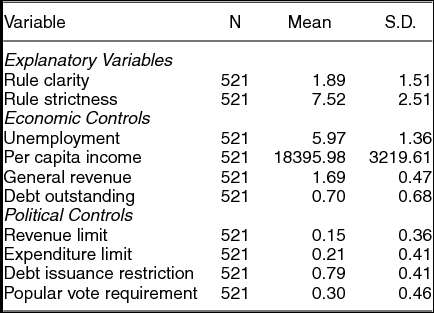
Table 1 presents summary statistics of the variables in our analysis.
Summary Statistics of Variables

Given our ordinal outcome, we estimate a series of ordered probit regressions typical in the literature. The first examines the effect of rule clarity and rule strictness with the consolidated bond credit ratings from all three ratings agencies as the outcome. The second includes a two-way interaction between clarity and strictness (clarity*strictness). As a robustness check, a third set of models uses bond credit ratings from each individual agency (Moody’s, Standard and Poor’s (S&P), and Fitch) as the outcome.
RESULTS
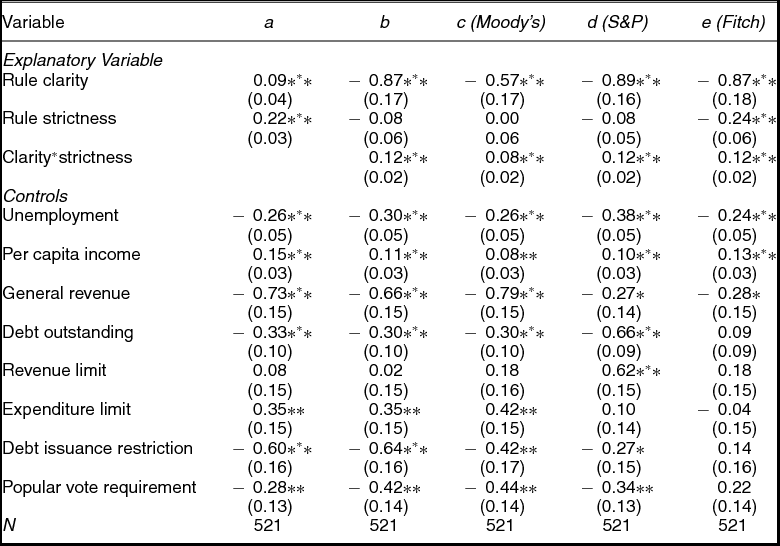
Table 2 presents the coefficient estimates from the ordered probit regressions. Both rule clarity and strictness have a statistically significant impact on credit ratings and are in the expected direction (column a). As clarity (and strictness) increases, the probability of achieving a higher credit rating increases (H1).
Ordered Probit Estimates of the Effects of Rule Clarity and Strictness on State GO Bond Credit Ratings

Notes: Robust standard errors are shown in parentheses. *** indicates statistical significance at p < 0.01, ** at p < 0.05, and * at p < 0.1.
Among the economic control variables, unemployment has a consistently negative and statistically significant effect on credit ratings, which suggests that higher unemployment is associated with lower credit ratings while per capita income is associated with higher credit ratings across all models. In addition, general revenue—a proxy for the relative tax burden of the state—and the amount of outstanding debt both have a negative impact on credit ratings.
Results on the political controls are mixed. Revenue limits appear to have no statistically significant effect on credit ratings; expenditure limits, which restrict the amount of state government spending, however, have a positive impact. Restrictions on the issuance of debt and the need of a popular vote majority to issue debt have the expected negative effect on credit ratings.
Our core arguments are that the effectiveness of a balanced budget rule increases with its clarity (H1) and that if a balanced budget rule lacks sufficient clarity, then increasing the strictness of legal enforcement will not increase the rule’s effectiveness (H2). To assess these arguments, we include an interaction term clarity*strictness to the baseline model. As column b shows, this interaction is statistically significant and is furthermore robust when we substitute credit ratings from each of the three agencies (Moody’s, S&P, and Fitch) as the outcome instead of the consolidated credit rating variable (columns c, d, and e, respectively).
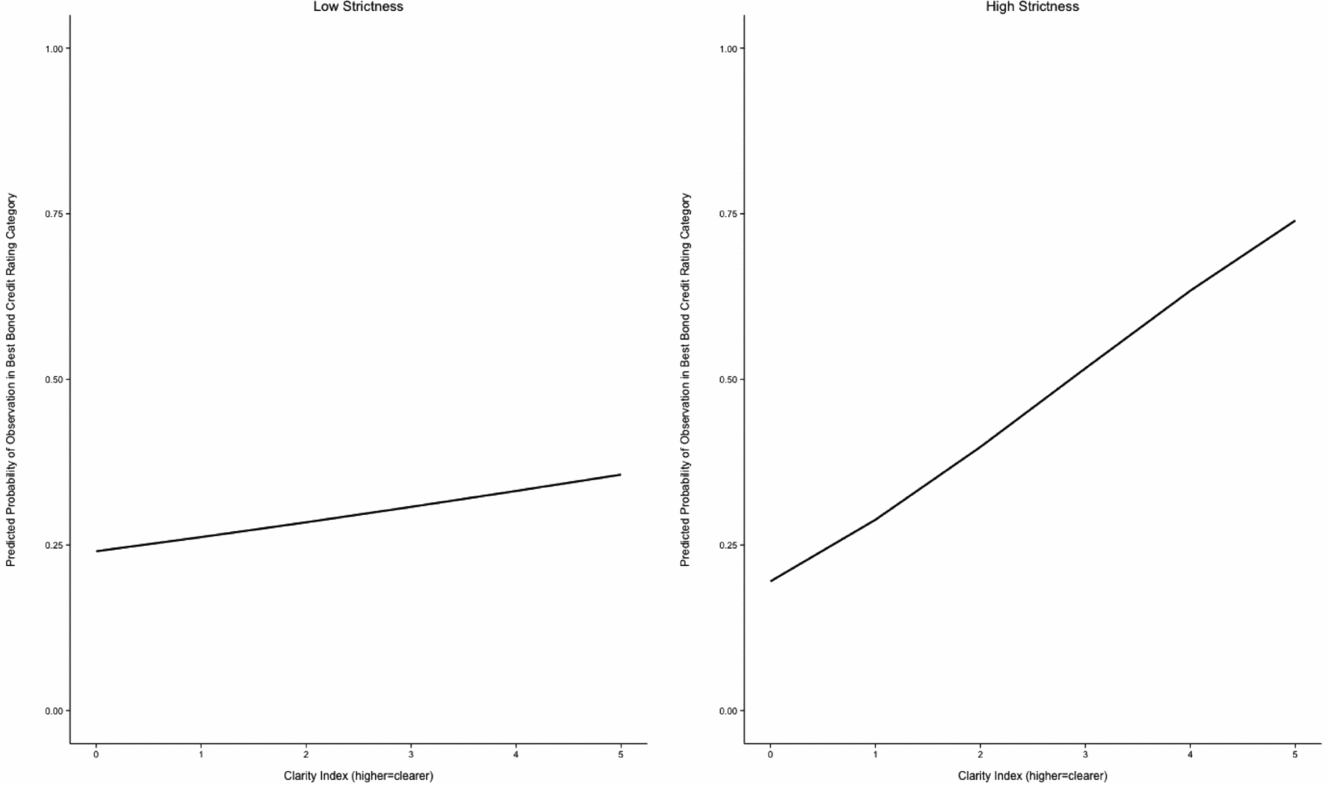
To better interpret the interaction between clarity and strictness, we construct plots that show how the predicted probability of a bond falling into the “best” credit rating category changes as a function of rule clarity and strictness. Figure 1 shows the likelihood of a bond obtaining the “best” credit rating at low and high levels of strictness as rule clarity increases, with all other variables held at their means. As expected, if strictness is high (right plot), the probability of attaining the “best” credit rating rises with rule clarity, from about 20 percent at the lowest value of clarity to 75 percent at maximum clarity. More tellingly, if strictness is low (left plot), the likelihood of attaining the “best” credit rating still rises with clarity, from 24 percent to slightly under 36 percent.
Predicted Probability of “Best” Credit Rating as Clarity Changes at Low and High Levels of Strictness

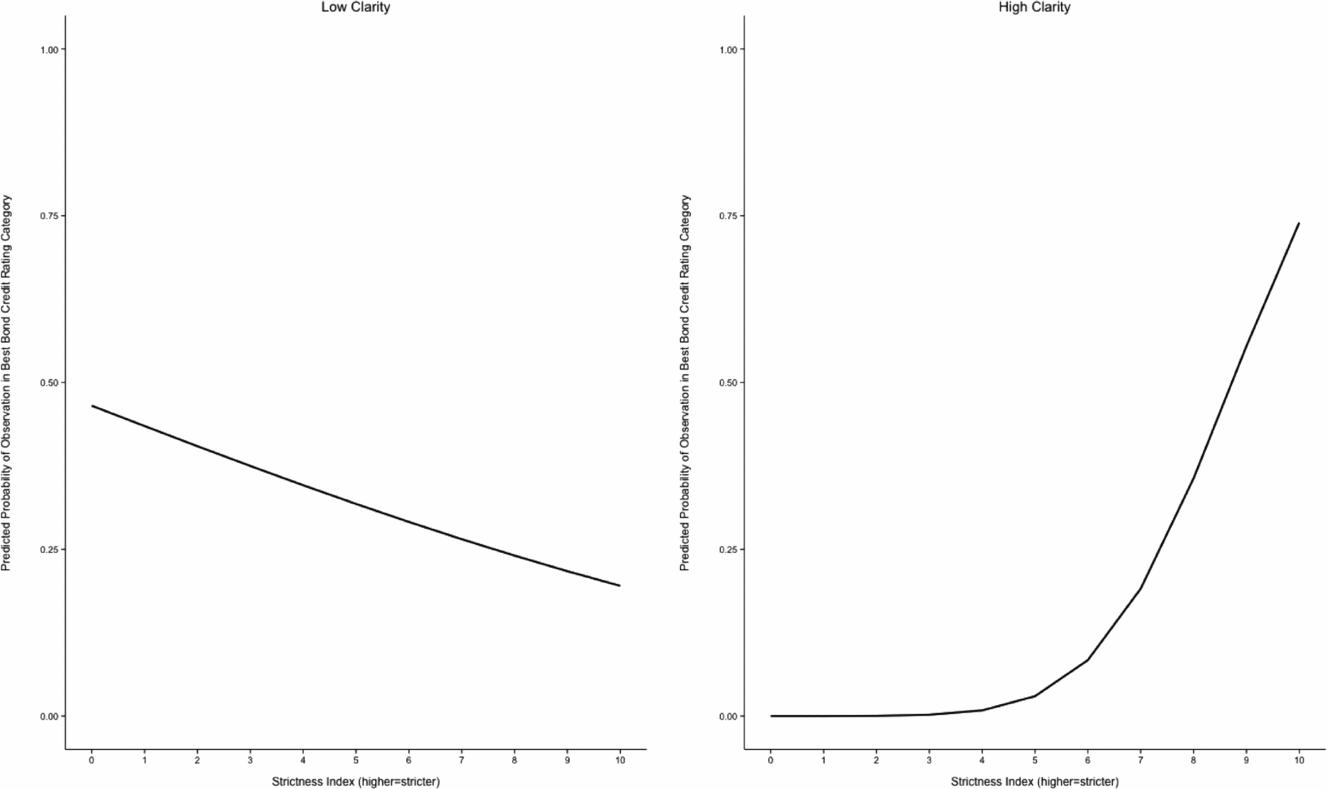
Figure 2 reveals how the probability of a bond getting the “best” credit rating changes at low and high levels of clarity as rule strictness increases, with all other variables at their means. If rule clarity is high (right plot), then increasing strictness does increase the likelihood of attaining the “best” credit rating. However, if rule clarity is low, then increasing strictness actually decreases the chances of obtaining the “best” credit rating. This suggests that the strictness of a rule does not offset the lack of clarity. Instead, if a rule is unclear, increasing strictness has the perverse effect of lowering the probability of getting the “best” credit rating.
Predicted Probability of “Best” Credit Rating as Strictness Changes at Low and High Levels of Clarity

Taken together, these results suggest the importance of clarity on a rule’s effectiveness. We would emphasize that the observation that state balanced budget rules in the U.S. have at least partially “worked” is entirely consistent with our model. State defaults have been extremely rare since the enactment of balanced rules in the mid-19th Century—indeed none have occurred since 1933 (Wallis and Weingast Reference Wallis and Weingast2008). But all of these findings could be explained as a result of the role that state balanced budget rules play in coordinating decentralized punishment of states (or the threat of such punishment) by bond markets.
Finally, the actual experiences of state governments that come into conflict with balanced budget rules is more consistent with our “law as focal point” causal argument than with the “law as threat of judicial sanction” argument. As Briffault (Reference Briffault1996, Reference Briffault2003) suggests, state governments often skirt fiscal rules with various creative accounting techniques, but they very rarely violate them openly. What unfolds on those extremely rare occasions is consistent with our theory. Consider briefly the experience of the state of California in 2009, when the deadlocked legislature was unable to fulfill its mandate to pass a balanced budget, which led the state government to run out of cash and to issue IOUs to state employees, suppliers, and other creditors. In reaction to this fiasco, bond rating agencies sharply downgraded California’s credit rating and the spread between the yield on its General Obligation and AAA rated municipal bonds reached an all-time high of 172 basis points (Lockyer Reference Lockyer2009). In other words, when California temporarily violated its balanced budget rule, bond markets stepped in immediately and forcefully to punish the state by charging higher interest rates. California soon succumbed to the pressure and passed a balanced budget. Throughout this episode, there was no talk of litigation that might lead a court to settle the budget dispute and balance the budget for the deadlocked legislators. The shadow of the law, the specter of coercive judicial enforcement of balanced budget rules that supposedly gives force to state balanced budget rules, was notable only in its absence. Indeed, if investors had expected that the courts would soon step in to enforce the state’s balanced budget rules and to force politicians to balance the budget, there would have been no reason for the state’s borrowing costs to spike. The very fact that borrowing costs spiked when the rule was violated is evidence against the “law as threat of judicial sanction” argument. By contrast, the fact that borrowing costs spiked when the state was unable to pass a balanced budget is consistent with our argument that the balanced budget rule served as a focal point for decentralized enforcement by bond markets. Put another way, the bond markets could react the way they did because the balanced budget rule allowed them to identify California’s fiscal situation and to coordinate a swift response.
NEW STRUCTURALLY BALANCED BUDGET RULES IN THE EUROZONE
The eurozone sovereign debt crisis revealed the failure of the governance regime that had been put in place at the inception of the euro to prevent eurozone states from accumulating excessive deficits. As E.U. leaders reform eurozone governance in the wake of the crisis, they seek to reduce political discretion over fiscal policy, empowering courts to enforce balanced budget rules to ensure member state fiscal discipline. This approach is manifest in the Fiscal Compact Treaty, which requires eurozone governments and other signatories to impose legally binding, “structurally balanced budget” rules, to be enforced by national courts. However, the analysis of the impact of balanced budget rules we developed above suggests that the E.U.’s effort to judicialize fiscal policy through balanced budget provisions of the Fiscal Compact Treaty is unlikely to succeed.
To place the E.U.’s current approach in perspective, we must turn briefly back to the regime for eurozone governance initially established under the Maastricht Treaty. In the Maastricht Treaty, the E.U. put in place two devices intended to prevent member states from accumulating excessive debt. First, under the Stability and Growth Pact (SGP) states were required to limit their deficit and debt levels. Second, to protect against moral hazard and bolster market discipline, the Maastricht Treaty contained a “no bailout” clause (Article 104b, now Article 125 TFEU) stating that neither the Community nor any individual member state could bail out (i.e., assume the debts of) another member state. Ultimately, however, both pillars of the Maastricht regime broke down. The Stability and Growth Pact crumbled in the mid-2000s after Germany and France, with the support of other member states, blocked a Commission effort to enforce the SGP and managed to violate its provisions with impunity (Heipertz and Verdun 2010, chaps. 7–8). This led in 2005 to a reform of the SGP that substantially loosened its requirements. The no bailout rule was violated in the Greek crisis, when the E.U.—unwilling to countenance a disorderly Greek default—agreed to cooperate with the IMF on a bailout of Greece. Bailouts for Ireland and Portugal followed soon after, and in February 2011, E.U. leaders agreed to establish a permanent bailout fund, the European Stability Mechanism (ESM).
As the cornerstones of the Maastricht eurozone governance regime were crumbling, E.U. leaders moved rapidly—if rather haphazardly—to construct a new regime designed to limit the moral hazard of member states running up unsustainable debts and turning again and again to the E.U. for bailouts. In December 2011, EU lawmakers agreed to the so-called “Six-Pack” of economic governance reforms, which strengthened the European Commission’s powers to monitor member state fiscal performance and to sanction those that violated E.U. requirements (European Commission 2011). In February 2012, E.U. leaders went a step further, with 25 governments signing the Fiscal Compact Treaty. In part, the Compact simply restated and raised the profile of measures already agreed to in the “Six-Pack,” but the Compact did change the E.U.’s approach in one crucial respect. Previous approaches to ensuring fiscal discipline had precluded a role for the judiciary and had relied on E.U.-level political institutions such as the Council and Commission. But the Compact Treaty sought to both judicialize and decentralize fiscal discipline, requiring all 25 signatory states to enshrine a balanced budget rule and an automatic correction mechanism (debt brake) in domestic law and to enforce these rules through their national courts. In a sense, the Compact Treaty tried to create by fiat a system with important similarities to that found in the U.S., where 49 of the 50 states have embedded balanced budget rules in state law (see footnote 2 above).
As discussed above, this approach to fiscal discipline has had considerable success in the U.S. Nevertheless, our analysis suggests that the Fiscal Compact Treaty’s approach to ensuring member state fiscal discipline is unlikely to work. To be fair, a number of the measures in the Compact Treaty and the Six-Pack—such as the strengthening of the Commission’s surveillance of national budgets—will enhance transparency and prevent the sort of fiscal deception that went on in Greece. These reforms will also make it easier for markets to discipline governments. However, other central elements of the new regime—those that focus on judicializing fiscal policy—are unlikely to function as hoped, in part because their design is based on a misunderstanding of the role law and courts play in maintaining fiscal discipline. Two sets of factors explain why the national balanced budget laws called for in the fiscal compact treaty are unlikely to work.
First, our argument suggests that balanced budget laws can work because they provide a focal point that enables investors to coordinate on when to punish governments for running excessive deficits—not because they establish a credible threat that the judiciary will step in to force governments to balance their budgets. From this perspective, the crucial attribute of a balanced budget rule is not the strength of its legal enforcement mechanisms, but rather its clarity. The clearer the rule in question, the more obvious it is when a government violates that rule and the better investors can coordinate on enforcing the rule (see Hypotheses 1 and 2 above). However, the “structurally balanced budget” rules called for in the Fiscal Compact Treaty are anything but clear. The Treaty focuses on the legal enforceability of the rules, but leaves the rules themselves extremely vague. Therefore, they are unlikely to help coordinate decentralized punishment of irresponsible governments.
Contrary to widespread reporting, the Fiscal Compact Treaty does not impose a clear-cut balanced budget rule on member states. Instead, the Treaty relies on the much more elastic concept of a structurally balanced budget and even then provides substantial discretion by allowing violations of the structural balanced budget rule in exceptional circumstances. A structurally balanced budget rule does not require a government to balance its budget every year, but rather requires that the budget be balanced across the business cycle. This allows for governments to engage in Keynesian countercyclical policies during economic downturns, but then requires them to make up for this by running surpluses during periods of growth.Footnote 23 Treaty Article 3(1)(b) explains that a state’s budget will be considered to be “balanced” if, “the annual structural balance of the general government is at its country-specific medium-term objective, as defined in the revised Stability and Growth Pact, with a lower limit of a structural deficit of 0.5% of the gross domestic product at market prices.”Footnote 24 Article 3(1)(c) further allows that states “may temporarily deviate from their respective medium-term objective or the adjustment path towards it only in exceptional circumstances.” Precisely what constitutes a cyclically adjusted, structurally balanced budget is subject to interpretation and debate as what might constitute allowable “exceptional” circumstances. As a letter from Professor David Cameron to the Financial Times put it, “Fiscal pact requires reliance on a statistic that cannot be observed.” (Cameron Reference Cameron2012). These vague concepts will not serve as clear focal points that could coordinate decentralized punishment by bond markets of excessive sovereign borrowing.Footnote 25
Supporters of the Treaty’s fiscal rules have made much of the fact that states are required to embed them in national law “through provisions of binding force and permanent character, preferably constitutional, or otherwise guaranteed to be fully respected and adhered to throughout the national budgetary processes” and to back them with an automatic “correction mechanism” (Article 3(2)). This legal enforceability might be important if it was the fear of legal enforcement that restrained government borrowing. But we suggest that fear of legal enforcement is not the causal mechanism through which balanced budget rules keep governments in check. Indeed, court rulings concerning fiscal policy are just as likely to undermine government efforts to cut deficits as they are to aid such efforts. A recent ruling by the Portuguese Constitutional Court nullifying several austerity measures underscores that courts may not simply be counted on to enforce balanced budget rules; rather, they may be just as likely to override deficit reduction measures in the name of other constitutional values (Wise Reference Wise2013). If it is decentralized punishment by bond markets that discourages governments from violating fiscal rules, then the clarity of those rules is paramount. And that clarity is strikingly absent in the provisions of the Fiscal Compact Treaty.
Secondly, in the E.U. the background conditions that surround these balanced budget rules undermine the credibility of the rules. Scholars of fiscal federalism emphasize that market forces can only effectively discipline subnational borrowing if there is no perceived chance of a bailout by the central government or central bank (Bordo, Markiewicz, and Jonung Reference Bordo, Markiewicz and Jonung2011, 6, 26; Hallerberg Reference Hallerberg2010). Thus, for instance, in the U.S., state level balanced budget rules have been able to restrain state deficits because the federal government had established a credible commitment not to bailout states. With the establishment of the ESM, there is now a permanent structure in place designed to provide bailouts to E.U. member states. The possibility of bailouts under the ESM is likely to undermine the effectiveness of market discipline. Nevertheless, because of the remaining uncertainty about the availability of bailouts for any given state and the extent of “private sector involvement” (including losses imposed on bondholders), bond markets can still play a constructive role in restraining excessive state borrowing.Footnote 26 However, this will only be the case where bond markets are presented with sufficiently clear focal points.
CONCLUSION
Typically, law is understood as a sanctioning device, backed up by the threat of coercive legal enforcement. In this view, actors operate under the shadow of the law, and law acts as a deterrent to help achieve desired behavior. This article highlights another—but no less effective—function of law: law can act as a focal point for beliefs and facilitate decentralized enforcement. We argue that balanced budget rules work not because governments fear legal enforcement, but because these rules allow bond markets to react more efficiently—by raising interest rates, for instance—and thereby discipline the potentially profligate government. Balanced budget rules serve as a public signal that reveals information about the government’s fiscal situation and more importantly, provides a focal point around which bond markets can coordinate. The effectiveness of this expressive function of law, however, hinges on its clarity and precision. If balanced budget rules work by coordinating decentralized punishment by the bond markets, then clarity, not strictness, is the key feature of the rule. We demonstrate that in the U.S., state balanced budget rules have proven more effective where they had greater clarity, and that where rules are unclear, increasing the strictness of enforcement does not increase rules’ effectiveness. Our findings suggest that existing studies on the impact of state balanced budget suffer from omitted variable bias, overestimating the impact of strictness due to neglecting the impact of clarity. We show that in the E.U., the “structurally balanced budget rules” called for under the Fiscal Compact Treaty are far less clear than any of the rules found in U.S. states, and conclude that we should not expect them to play a significant role in ensuring fiscal discipline in the eurozone. Balanced budget rules and other fiscal rules are increasingly popular around the world in countries struggling to limit their debt. Our analysis suggests that such rules are only likely to have the desired effect if great emphasis is placed on their clarity and not simply on their judicial enforceability.
TECHNICAL APPENDIX
Proposition 1. There exists a linear equilibrium in the game, b* i = ϕxi + (1 − ϕ)y, where
 \begin{equation}
\phi = \frac{\beta (1 - \pi )}{\alpha + \beta (1 - \pi )}.
\end{equation}
Proof. Recall that buyer i’s utility function is
 \begin{eqnarray*}
u_{i} = \Big [\!\underbrace{(1 - \pi )\theta }_{\text{concern for government's fiscal situation}} {\!+\!} \underbrace{\pi \mathcal {B}}_{\text{concern for other buyers' actions}}\!\Big ]b_{i}
\end{eqnarray*}
Let
 $b_i(\mathcal {I}_i)$
be buyer i’s decision given her information set,
 $\mathcal {I}_i$
. The information set
 $\mathcal {I}_i$
consists of the government’s public signal y and i’s private signal, xi
, i.e., the pair (y, xi
) that captures all information available to i.
The clarity of the public and private signal is α and β respectively, where
 \begin{eqnarray*}
\alpha &=& \frac{1}{\sigma _y^2}, \nonumber \\
\beta &=& \frac{1}{\sigma _x^2}.
\end{eqnarray*}
Thus buyer i’s expectation of the government’s fiscal situation, θ, is
 \begin{eqnarray*}
E_i(\theta ) = \frac{\alpha y + \beta x_i}{\alpha + \beta },
\end{eqnarray*}
where Ei
(·) is the conditional expectation
 $E_i(\cdot | \mathcal {I}_i)$
.
Suppose that the mass of buyers is following a linear strategy such that
 \begin{equation}
b_j(\mathcal {I}_j) = \phi x_j + (1 - \phi )y.
\end{equation}
Then buyer i’s conditional expectation of the average expected action across all buyers,
 $\mathcal {B}$
, is
 \begin{eqnarray}
E_i(\mathcal {B}) &=& \phi \left(\frac{\alpha y + \beta x_i}{\alpha + \beta }\right) + (1 - \phi )y \nonumber \\
&=& \left(\frac{\phi \beta }{\alpha + \beta }\right)x_i + \left(1 - \frac{\phi \beta }{\alpha + \beta }\right)y.
\end{eqnarray}
Substituting Equation (3) into Equation (2), buyer i’s optimal action is
 \begin{eqnarray}
b_i(\mathcal {I}_i) &=& (1 - \pi )E_i(\theta ) + \pi E_i(\mathcal {B})= (1 - \pi )\left(\frac{\alpha y + \alpha x_i}{\alpha + \beta }\right) \nonumber \\
&& +\, \pi \left[\left(\frac{\phi \beta }{\alpha + \beta }\right)x_i +\left(1 - \frac{\phi \beta }{\alpha + \beta }\right)y\right] \nonumber \\
&=& \left(\frac{\beta (\pi \phi + 1 - \pi )}{\alpha + \beta }\right)x_i + \left(1 - \frac{\beta (\pi \phi + 1 - \pi )}{\alpha + \beta }\right)y.\nonumber\\
\end{eqnarray}
Comparing coefficients from Equations (2) and (4), we have
 \begin{eqnarray*}
\phi x_j + (1 - \phi )y &=& \left(\frac{\beta (\pi \phi + 1 - \pi )}{\alpha + \beta }\right)x_i\\
&& +\, \left(1 - \frac{\beta (\pi \phi + 1 - \pi )}{\alpha + \beta }\right)y, \nonumber \\
\phi &=& \frac{\beta (\pi \phi + 1 - \pi )}{\alpha + \beta }.
\end{eqnarray*}
Solving for ϕ, we get
 \begin{eqnarray*}
\phi = \frac{\beta (1 - \pi )}{\alpha + \beta (1 - \pi )}.
\end{eqnarray*}
Consequently, b* i , the equilibrium strategy for buyer i, is
 \begin{eqnarray}
b_i^*(\mathcal {I}_i) &=& \frac{\alpha y + \beta (1 - \pi )x_i}{\alpha + \beta (1 - \pi )} \nonumber \\
&=& \phi x_i + (1 - \phi ) y.
\end{eqnarray}
■
Proposition 2. (Morris and Shin Reference Morris and Shin2002). The equilibrium identified in proposition 1 is the unique equilibrium of the game.
Proof. The proof follows from Morris and Shin (Reference Morris and Shin2002) and is presented in brief here.
Recall that buyer i’s best response is
 \begin{eqnarray*}
b_i^* = (1 - \pi )E_i(\theta ) + \pi E_i(\mathcal {B}).
\end{eqnarray*}
Let
 $\bar{E}(\theta )$
be the average expectation of θ across all buyers. Substituting
 $\bar{E}(\theta )$
for
 $E_i(\mathcal {B})$
,
 \begin{eqnarray}
b_i^* &=& (1 - \pi )E_i(\theta ) + \pi (1 - \pi )E_i(\bar{E}(\theta )) + \pi ^2(1 - \pi )E_i(\bar{E}^2(\theta )) \nonumber \\
&&+\, \ldots= (1 - \pi )\sum _{k=0}^{\infty }\pi ^k E_i(\bar{E}^k(\theta )).
\end{eqnarray}
To show that the infinite sum is bounded, we solve for
 $E_i(\bar{E}^k(\theta ))$
. To do this, note that buyer i’s expectation of θ is
 \begin{eqnarray*}
E_i(\theta ) = \frac{\alpha y + \beta x_i}{\alpha + \beta }.
\end{eqnarray*}
Across all buyers, the average expectation of θ is
 \begin{eqnarray*}
\bar{E}(\theta ) = \int _0^1 E_i(\theta ) \hspace{5.69054pt} di = \frac{\alpha y + \beta \theta }{\alpha + \beta }.
\end{eqnarray*}
Thus buyer i’s expectation of the average expectation of θ across buyers is
 \begin{eqnarray*}
E_i(\bar{E}(\theta )) &=& E_i\left(\frac{\alpha y + \beta \theta }{\alpha + \beta }\right) \nonumber \\
&=& \frac{\alpha y + \beta (\displaystyle\frac{\alpha y + \beta x_i}{\alpha + \beta })}{\alpha + \beta } \nonumber \\
&=& \frac{(\alpha ^2 + 2\alpha \beta )y + \beta ^2 x_i}{(\alpha + \beta )^2},
\end{eqnarray*}
and
 $\bar{E}^2(\theta )$
, the average expectation of the average expectation of θ, is
 \begin{eqnarray*}
\bar{E}^2(\theta ) = \bar{E}(\bar{E}(\theta )) = \frac{(\alpha ^2 + 2\alpha \beta )y + \beta ^2\theta }{(\alpha + \beta )^2}.
\end{eqnarray*}
Morris and Shin (Reference Morris and Shin2002) show, by induction, the following lemma:
Lemma 1. For any k,
 $\bar{E}^k(\theta ) = (1 - \gamma ^k)y + \gamma ^k(\theta )$
and
 $E_i(\bar{E}^k(\theta )) = (1 - \gamma ^{k+1})y + \gamma ^{k+1}x_i$
, where
 $\gamma = \frac{\beta }{\alpha + \beta }$
.
Substituting the result from Lemma 1 into Equation (6), we get
 \begin{eqnarray}
b_i^* &=& (1 - \pi )\sum _{k=0}^{\infty }\pi ^k(1 - \gamma ^{k+1})y + \gamma ^{k+1}x_i \nonumber \\
&=& \left(1 - \frac{\gamma (1 - \pi )}{1 - \gamma \pi }\right)y + \left(\frac{\gamma (1 - \pi )}{1 - \gamma \pi }\right)x_i \nonumber \\
&=& \frac{\alpha y + \beta (1 - \pi )x_i}{\alpha + \beta (1 - \pi )}.
\end{eqnarray}
Since Equation (7) = Equation (5), the linear equilibrium identified in Proposition 1 is unique. ■




Comments
No Comments have been published for this article.