Introduction
The late colonial era was, as many scholars have established, a period of expansion for Indian textile markets. As the overall volume of cloth sold doubled between 1900 and 1939, Indian producers benefited most, dramatically displacing imports which fell from more than 57 per cent of cloth sold down to less than 12 per cent over the same period.Footnote 1 Much of the expansion was concentrated in mills, which had captured over 56 per cent of the market by 1939, representing higher output at existing mills, new mills in existing industrial centres, and the emergence of textile mills in smaller towns and cities across India.Footnote 2 But artisanal producers also captured some of the new demand, maintaining control of almost 32 per cent of the vastly enlarged market by the start of the Second World War. This represented both the continued viability of traditional handlooms, but also the new energy created by Mohandas Gandhi's movement to promote khadi (handspun, hand-woven cloth). Just one sign of that energy is that by 1934 the All India Spinners’ Association employed almost 240,000 people.Footnote 3
As many historians have demonstrated, consumption trends helped determine the segmentation of production within different sectors of the textile industry. Tirthankar Roy, Haruka Yanagisawa, Douglas Haynes, and others have noted that rapidly westernizing styles of men's clothing helped fuel the expansion of mills, which produced plain or patterned medium-count fabrics to be made up into trousers, shirts, coats, and more. Strong and ever-evolving demand for more traditional and higher-end fabrics—bordered, with complex and variegated internal woven patterns, or with fragile silk or art-silk threads—tended to support artisanal producers, as those fabrics were uneconomical for mill production.Footnote 4 In western India, Haynes has argued that the incredible segmentation of taste by gender, region, and community benefited small workshops able to produce as little as two saris of a particular design, at the expense of large mills whose bulk production left them unable to respond to specific local consumption needs.Footnote 5 On a more national level, khadi production expanded in direct response to Gandhi's attempts to shift cloth use into more nationalist directions; as khadi became the required dress at Congress party events in 1924, and, more popularly, the fabric of nationalist sentiment in the 1920s and 1930s, a whole network of producers, distributors, and sales agents emerged to handle the demand.Footnote 6
Within this rich literature examining how expanded textile production responded to changing consumer demands there is, however, a curious slippage: between textiles overall and clothing in particular. Most discussions of the textile industry—whether focusing on artisanal, powerloom, or mill production—focus on clothing to the exclusion of fabrics used for other purposes. In his influential 1993 book, Artisans and Industrialization, Roy listed three sources of upheaval shaping early twentieth-century Indian production: changing garment preferences, new dyes and designs, and shifts in materials between silk, cotton, and art silk; he does not include preferences within non-clothing textiles as a possible element of change.Footnote 7 Yanagisawa's important analysis of Madras handlooms in the same period was similarly framed as an attempt to locate ‘the changes in handloom weaving in the context of the changing pattern of the clothing habits of the various classes in India’.Footnote 8 Finally, while Haynes’ recent book, Small-Town Capitalism in Western India, offers perhaps the most thorough discussion to date of changing consumption habits for cloth, the focus is, again, entirely on clothing.
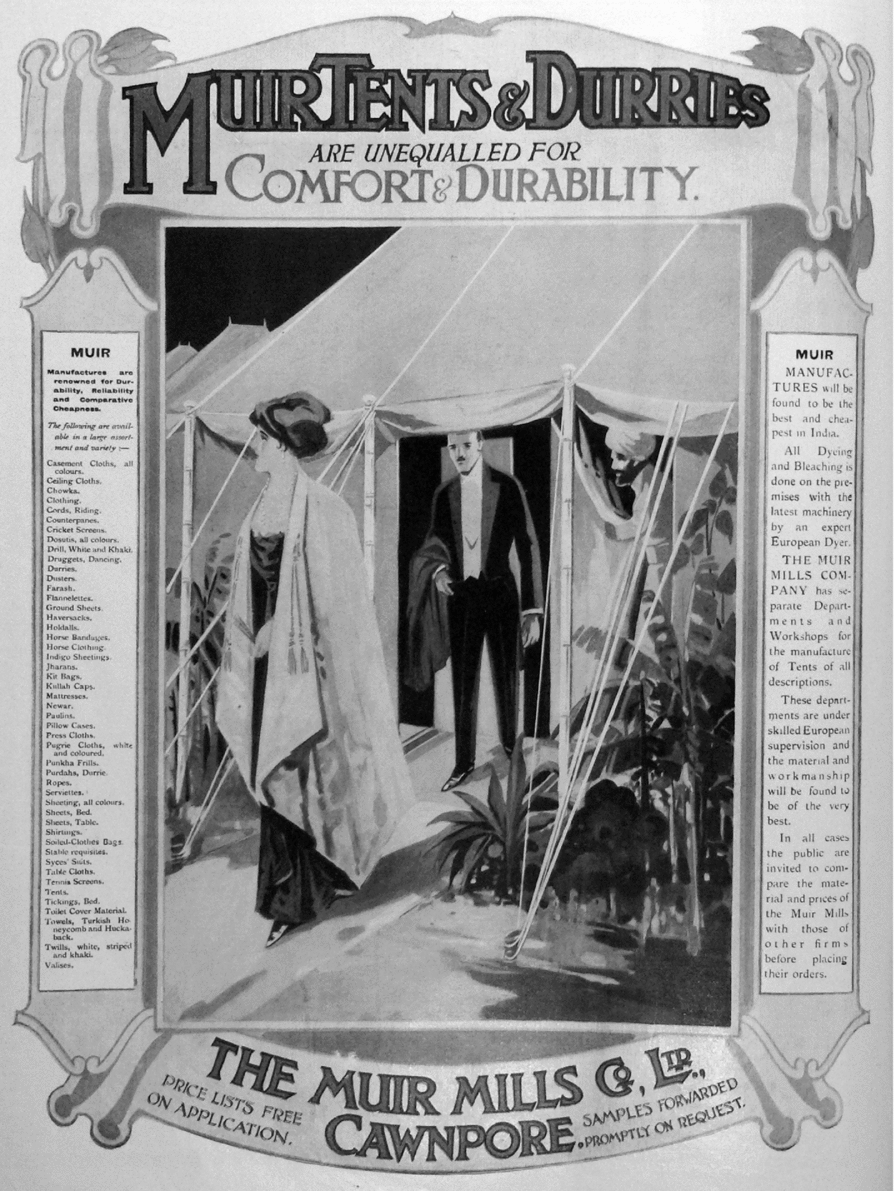
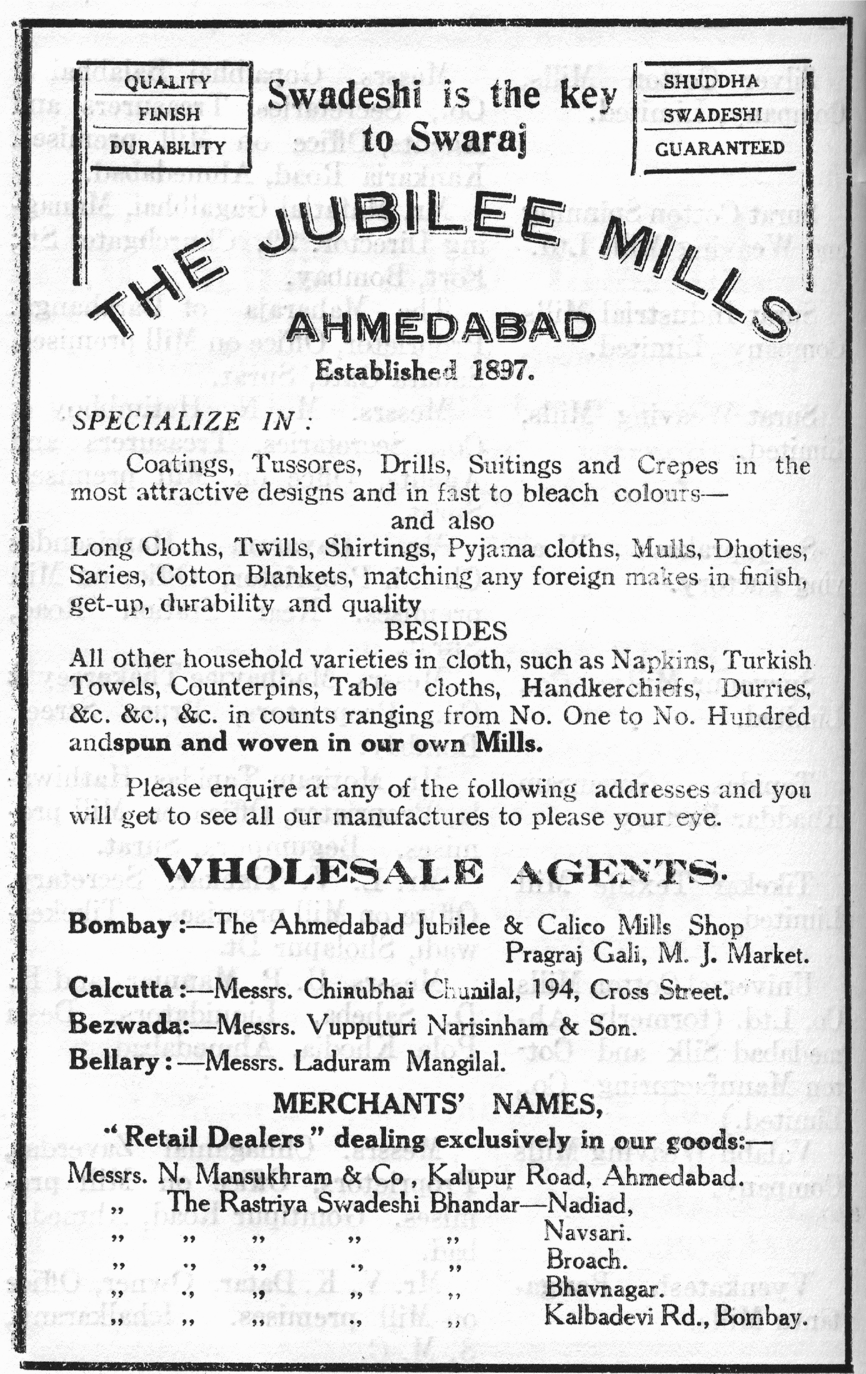
To be sure, a large portion of textile consumption in late colonial India was for clothing. As Haynes points out, clothing could make up a significant portion of consumption among agriculturalists as well as urban wage labourers.Footnote 9 In a 1928 study of working class family budgets in Ahmedabad, the Bombay Labour Office found that clothing represented between 8.28 per cent and 10.15 per cent of all expenditures in families earning from Rs. 30 to Rs. 90 a month, with proportionally more money devoted to clothing as incomes rose.Footnote 10 And yet, even at the bottom of the economic scale, clothing never represented all textiles in a household. As various family budget studies conducted in Bombay and Ahmedabad in the 1920s and 1930s suggest, cloth use among even the poorest groups included mattresses, blankets, and sheets; among middle and upper class consumers, the range of textiles for household use was far wider, expanding in variety, quantity, and quality as income rose.Footnote 11 Many of these textiles were produced in India. A 1921 advertisement for Cawnpore's Muir Mills in the Times of India Annual proudly trumpeted a wide range of items produced, including some intended for wear, like pugri cloth, khaki drill material, shirting, syce's suits, and ‘clothing’ (see Figure 1). The vast majority of the items listed, however, were non-clothing textiles: casement cloths, ceiling cloths, counterpanes, dhurries, dusters, ground sheets, haversacks, horse clothing, kit bags, mattresses, pillowcases, serviettes, bed sheets, tablecloths, tents, towels, and more.Footnote 12 Although the Muir Mills advertisement was clearly aimed at European readers, swadeshi (literally, ‘of one's own country’) producers in the early 1930s were similarly offering Indian consumers tablecloths, napkins, handkerchiefs, mosquito nets, blankets, towels, dusters, and sheets (see Figure 2).Footnote 13
Advertisement for the Muir Mills of Cawnpore, 1921: the left column lists the range of products available from the mill. Source: Times of India Annual (1921), n.p.

Advertisement for swadeshi products from Jubilee Mills, Ahmedabad. Source: Classified List of Manufacturers of Swadeshi Goods and Their Agents and Dealers, p. 84.
We know little to nothing about this larger, non-clothing market for textiles in early twentieth-century India. Histories of the rise of Indian textile mills have little to say about what was produced, why, and how that changed over time. Instead they have focused largely on social, economic, and political factors: the possibilities for entrepreneurship among Indian elites; the expansion of looms, spindles, and factories; or the emergence and politics of a new urban industrial working class.Footnote 14 In histories of artisanal goods, what little attention scholars—including myself—have paid to new products has tended to focus on how ‘traditional’ goods met the challenge of novel demands: silver workers adapting to new styles of adornment, carpet weavers introducing designs aimed at global markets, or weavers abandoning middle-range cloth for finer varieties.Footnote 15 By comparison, there has been little historical research on the emergence of entirely new textile ranges. Overall, this means that, in terms of understanding the cloth industry as a whole, we have little understanding of what portion of production at the Jubilee Mills was given over to tablecloths and towels in 1931, or how important the furnishing fabrics so heavily advertised by the Delhi Cloth and General Mills in the 1950s were to the company's overall market performance.
Inattention to non-clothing textiles may be partially explained by scholarly ambivalence about both consumption and Indian design. As Haynes and I have noted, there has been remarkably little scholarship on changing desires for goods and how those goods shaped new identities in colonial India, even while consumption has emerged as a fruitful area for historical research in other parts of the world.Footnote 16 To rehearse our arguments, this is a result of historiographical trends, with Marxist historians emphasizing production as the central analytic to understand the economy, and nationalist historians focusing on the colonial state or its opponents to understand society. The lack of scholarship on consumption is also the product of Gandhian- and Nehruvian-era hostility towards consumerism which has led many scholars to ignore the revolutions in demand across classes in the late colonial era. The one major exception to this trend of inattention only proves the rule. Scholars have investigated in detail the debates over clothing in the late colonial period in part because those debates brought together economic concerns about deindustrialization under British rule with Gandhian calls for simplicity and self-reliance; production, nationalism, anti-colonialism, and anti-consumerism thus all could be accommodated.Footnote 17 Other consumption trends less readily incorporated into nationalist narratives have received comparatively less attention.Footnote 18
If economic, social, and cultural historians have ignored changing desires for goods, design historians have thus far done little to explore the new but mundane objects of everyday life in late colonial India. With the exception of some remarkable recent work that looks at architectural styles meant for the middle classes,Footnote 19 design history in India has retained an elite focus: Anglo-Indian interior decoration strategies, the work of global modernists like Le Corbusier or Louis Kahn in the subcontinent, the adaptation of Art Deco styles by the first generations of Indian architects, and the sumptuous interiors of Indian industrialists’ homes.Footnote 20 This elite orientation represents an aesthetic judgement that innovations by exemplary designers represent the true history of the field. But it also reveals the narrow concerns of early professional designers in India. Unlike in Euro-America where modernism set out to build elite residences and transform the lives of the lower classes through new designs for kitchens, furniture, and everyday objects, late colonial Indian modernists rarely translated their ideas into products for broad markets.Footnote 21
Demand for tablecloths, curtains, and bed covers does not fit easily into a narrative of nationalist austerity or design achievement. And yet these types of cloth represented a growing segment of textile consumption and production in the late colonial period. I leave it to economic historians to detail the production end of this equation, including how these textiles shaped the relative fortunes of mills, powerlooms, and handlooms. Here I am focused solely on the consumption side of things, starting with a basic question: what prompted new demand for non-clothing textiles in the home? On the surface, it would be easy to attribute new interest in tablecloths and other things solely to emulation of Anglo-Indian furnishing strategies, part of a Westernizing impulse among those anxious to demonstrate modern, cosmopolitan credentials in a changing colonial world. Emulation, however, could never explain the rough textiles used by millworkers confined to overcrowded tenements or the khadi curtains put up in nationalist homes. To accommodate those broader shifts in consumption, we have to look at a range of changes under way within domestic spaces in urban India. In the late colonial period, the built environment transformed rapidly as suburbs and industrial housing projects grew and slums proliferated. At the same time, ideals of home were in flux, thanks to reform efforts targeting women's popular culture, the introduction of domestic science education, the reinvention of marriage, a new stress on the conjugal family, and emerging ideals of sanitary health.Footnote 22 In the context of all these changes, fabrics were crucial to the remaking of home in urban spaces, helping to negotiate between sometimes contradictory impulses: demands to open up the home to light, air, and scientific hygiene; urges to shut out the pressures of urban life; and desires to create aesthetically pleasing comforts within domestic space.
In this article I explore how expanded use of home furnishing fabrics reveal and made possible broad changes in urban homes. In particular, I examine changes in textile consumption through the material example of curtains and furnishing fabrics, and the geographic example of urban western India. Materially, of the new textiles for the home embraced by consumers, the two categories that found the widest markets in the early twentieth century were curtains and upholstery/furnishing fabrics; whether rich or poor, families trying to establish some modicum of privacy, beauty, and comfort needed fabric to shield their lives from others, brighten dull rooms, and cushion bodies at rest. Geographically, western India—and more particularly Ahmedabad and Bombay—offered markets with easy access to the latest textiles. As leading centres for India's textile industry, these two cities allowed new mill fabrics to move quickly into consumer hands; as equally important sites for the articulation of swadeshi and khadi sentiments in western India, the two cities also featured a range of shops promoting Indian-made and handmade cloth.Footnote 23 If Amdavadi and Bombayite consumers had ready access to a range of textiles, many were eagerly interested in those options. While some remained wedded to traditionalist ideas of material restraint and the working classes could scarcely afford basic necessities, among the middle classes and the new industrialist and official elites, Bombay's cosmopolitan ethos and Ahmedabad's economic self-confidence made for an open embrace of new consumer goods.
Housing and home in a time of transition
Demand for new textiles in the home emerged out of dramatic changes in the material possibilities of domestic life in early twentieth-century Ahmedabad and Bombay. Both cities expanded rapidly after the turn of the century, mushrooming in population even as their boundaries grew ever wider to incorporate formerly peripheral lands. In Ahmedabad, the overall population grew more than sixfold between 1901 and 1961, from 185,000 to more than 1,149,000; the boundaries of the municipality followed a similar trajectory, expanding from 3,482 acres in 1901 to a total of 22,985 acres in 1961.Footnote 24 Bombay's growth was equally fantastic, rising from almost 813,000 people in 1901 to 4.15 million in 1961, while the city's boundaries stretched northwards to include new lands on the island of Salsette with the creation of Greater Bombay in the 1950s.Footnote 25 Within both cities, residents witnessed profound transformations in the use of urban land. In the traditional urban cores, population densities shot up as landlords subdivided buildings into smaller and smaller units, infringed on open spaces with new construction, and squeezed more occupants into existing units. At the same time, new styles of housing sprung up just beyond that core as the urban population flowed out into suburban lands to escape overcrowding or follow jobs. Industrial areas offered crowded, barrack-style tenements (or chawls) for the working poor; leafy, exclusive suburbs provided spacious bungalows for the very rich, while more modest suburban developments featured small bungalows or apartment buildings for the middle classes.
Those changing urban conditions helped to prompt new focus on the home. For town planners, sanitary reformers, and social activists, such attention usually came in the language of crisis and danger, with many pointing out the dire social and physical threats posed by poor housing. In western India, this sense of crisis first developed in response to the plague epidemic that hit Bombay in 1898. As officials struggled to understand the disease, they noted that many victims came from densely overcrowded, poorly built houses, while those who enjoyed more space and better buildings often remained healthy. As one contemporary verse account of the plague put it:
The rich were spared, the poorest fell,
In numbers grieves one's heart to tell. . .
The reason's sure not far to seek,
Their humble diet, low physique. . .
Their dwellings void of air and light,
As dark at midday as at night,
O'er-crowded chawls where hundreds lie,
Close-huddled like pigs in a sty. . .
If not the cause, surroundings these,
Promoted much the fell disease.Footnote 26
Building on the association between disease and abysmal housing conditions, plague initiatives targeted not just native bodies but native homes.Footnote 27 Officials launched door-to-door inspections, turned inhabitants and furnishings out onto the street in order to cleanse and disinfect houses, altered the physical structure or occupancy of some buildings, and tore down others deemed particularly insanitary. These plague-eradication measures provided the impetus for a much broader intervention conducted by the Bombay Improvement Trust to reshape the city's urban landscape in the name of public health. A non-elected, governmental body set up in 1898, the Trust had as one of its central charges the eradication of slums and construction of new housing for the poor—although, as Prashant Kidambi has pointed out, destruction was pursued far more effectively than construction, thereby actually worsening housing conditions overall in Bombay.Footnote 28
Despite its dismal record, the Bombay Improvement Trust helped shape a growing debate about the impact of poor housing on cities overall. Trust officials like director J.P. Orr lectured regularly on the correlation between population density and mortality, and the health consequences of poor ventilation, sewage, and drainage systems.Footnote 29 In particular, Orr and others argued that closely packed, multi-storey buildings separated by only narrow passages kept direct sun and fresh breezes from reaching flats on the lower floors—flats whose residents then further impeded ventilation by shutting their windows tight against the stench of sewage- and garbage-filled gullies. At the same time, smaller buildings often featured single rooms built back-to-back; boasting only one window on the single exterior wall, such rooms had no through ventilation at all.Footnote 30 Within these units, crowding was severe. In Ahmedabad, as of 1921, almost half of the city's population lived in single-room units—a number that had soared to over 65 per cent by 1961.Footnote 31 Conditions were even worse in Bombay, where in 1931, 75 per cent of the population lived in single rooms.Footnote 32 Although Bombay's middle classes suffered from a shortage of space—one 1925 study of the lower middle classes found that 38 per cent of the 300 families surveyed lived in two rooms, while 18 per cent managed in just a single roomFootnote 33—the problem was most extreme among the poor and lower castes. According to G.R. Pradhan, a doctoral student in sociology at the University of Bombay in the mid-1930s, more than 35 per cent of all depressed class families in Bombay shared a single room with at least one other family.Footnote 34
These conditions, everyone agreed, were disastrous for health. In a 1935 book, Cheap and Healthy Homes for the Middle Classes, Pune-based engineer R.S. Deshpande blamed the poor state of Indian housing for the country's low life expectancy (which he put at 21 years), arguing that in dense, rapidly expanding urban neighbourhoods, malaria, typhoid, tuberculosis, plague, and other diseases ‘owe there [sic] origin entirely to deficient light and ventilation, to damp and to generally insanitary conditions in and around habitations’.Footnote 35 Hardest hit by poor housing were women and children, who spent most of their time indoors. Lucknow University lecturer Raj Bahadur Gupta argued in 1930 that ‘the causes of high infant mortality . . . lie mainly in the dark, dingy rooms in which the mother and the child have to spend the major part of their period of adolescence, and the impure atmosphere which they breathe at this delicate time of their life’.Footnote 36
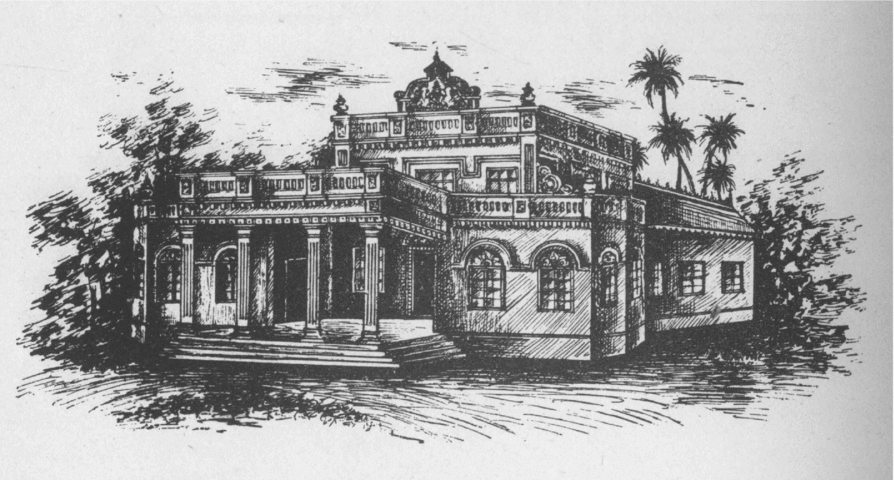
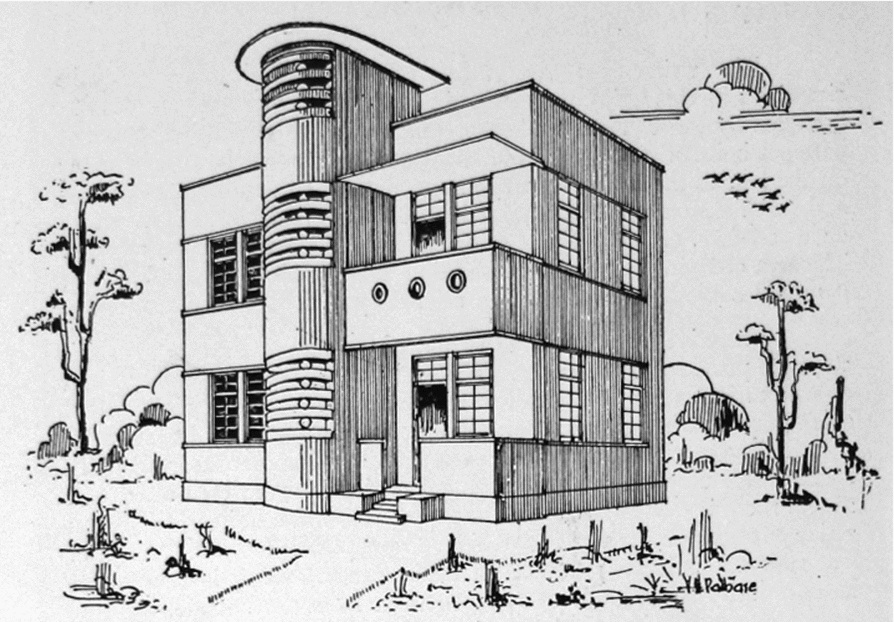
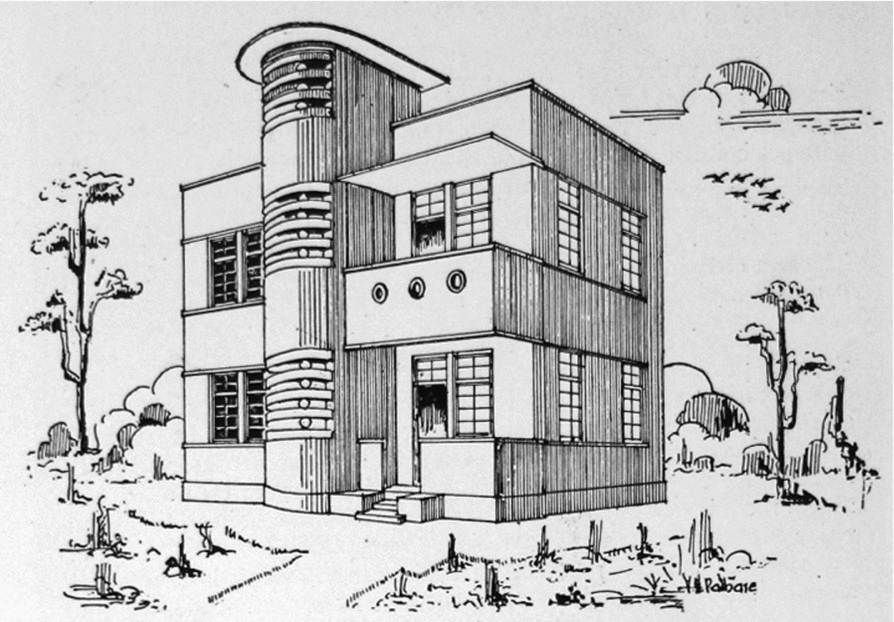
Inspired by the sense of crisis, reformers in both Bombay and Ahmedabad struggled from the turn of the century onwards—largely unsuccessfully, it should be said—to improve housing, launching a range of public, private, cooperative, and industry-led efforts to build homes for the poor and middle classes.Footnote 37 Merely providing more housing, though, was not enough; reformers demanded that the new homes be healthy as well, which meant both sanitary infrastructure from the city, but also adequate light and air within buildings. For, as Madras architect A.V. Thiagaraja Iyer noted, many disease-producing micro-organisms ‘can be rendered harmless by efficient ventilation’ while ‘the Sun's rays form a sure and wholesome disinfectant against all vitiating processes of foul air or other poisonous miasma rising from the surface of the earth’.Footnote 38 To ensure proper ventilation and sunlight, Iyer, Deshpande, and others designed urban middle class houses with a profusion of windows, roof ventilators, sky-lights, fan-lights, courtyards, and verandahs, and advised building in large compounds, carefully set apart from other structures (see Figure 3). Emphasizing the play of light and air through the house, building elevations often appear framed by open skies filled with scudding clouds, suggesting a breezy, sun-dappled backdrop for home life (see Figure 4).
Plan for a suburban bungalow. Source: Iyer, Indian Architecture: Book III, Modern Architecture, p. 160.
Plan for a suburban bungalow. Source: Deshpande, Modern Ideal Homes for India, p. 165.
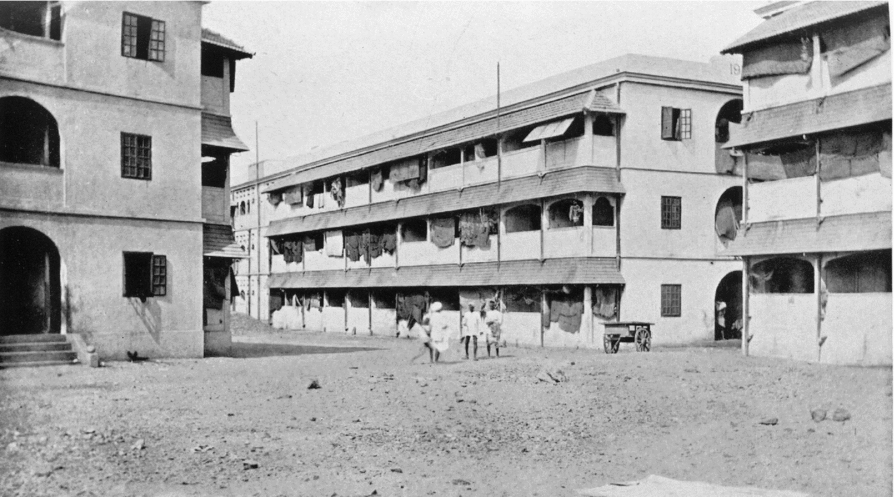
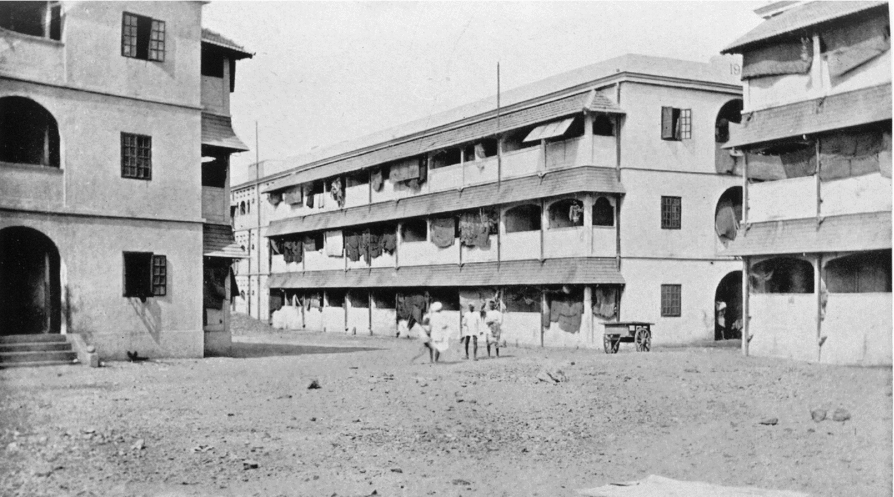
Housing for the poor similarly tried to ensure hygienic conditions by providing ventilation openings in every unit and carefully siting buildings in relation to one another.Footnote 39 In Ahmedabad, a model housing cooperative for Dalit mill workers, founded in 1931, featured compact semi-detached cottages open on three sides, each offering two covered verandahs and its own garden space.Footnote 40 In Bombay, one common Bombay Improvement Trust chawl design featured one-room units opening off a central corridor open on each end to allow air circulation throughout the interior (see Figure 5); within individual units, access to fresh air was ensured by a private verandah on the outside of the building, as well as by a ventilator opening into the central corridor fitted with a metal grill at the top of the wall.Footnote 41 In a later design for chawls put up by the Bombay Development Directorate, individual rooms still opened into the central corridor, but the verandahs were done away with so as to incorporate more living space into the unit; external walls were now fitted with concrete louvres rather than closeable windows in order, as Bombay Development Directorate director Lawless Hepper put it, to keep ‘out direct sunlight and rain, but at the same time to ensure as much diffused sunlight as possible, with proper ventilation and due regard for privacy’.Footnote 42
The Spring Mills Improvement Trust chawl, Bombay, circa 1925. Source: Burnett-Hurst, Labour and Housing in Bombay, opposite p. 26.
Despite all of the public attention to the housing crisis of the lower classes, however, not all conversations about home in the early twentieth century focused on dangers to health. For many, the novel habits, ideas, and principles of urban life offered both challenges and opportunities. Most basically, urban living often meant making homes anew. Whereas village residences tended to endure from one generation to another—inheritance and family structure permitting—urban homes were often peripatetic, shifting from one place to another as families fought to get a foothold in the city, pursued education and jobs, saw their fortunes rise and fall, and aspired to better surroundings. Among the poor, new migrants to the city frequently struggled to get formal leases on rental property; as sub-letters, many were forced to move every year or two, as landlords and primary tenants fought to stave off legal claims to tenancy.Footnote 43 Among the middle classes, renters also moved regularly, often in search of better accommodation. In a paper read before the Indian Institute of Architects in February 1936, a Mrs Hansa Mehta complained about having to shift flats often during her 11 years in Bombay, explaining that ‘I have done so because I could not find a single flat that would come up to my expectations of comfort or convenience.’Footnote 44 At still higher levels, autobiographies of elite Indian women from the early twentieth century tell of lives spent constantly recreating homes in new spaces. To give but one example, Gujarati social reformer Sharadaben Mehta spent the 30 years after her marriage in 1898 moving from one rented, borrowed, shared, or government-provided house to another as her husband's official career developed in Baroda State, she pursued reform initiatives, and their children attended school and college. During those 30 years, the couple's longest occupancy in any one home was less than five years.Footnote 45
All of those moves brought difficulties to be sure: securing new accommodation, shifting belongings, adjusting to new neighbours, and so on. And yet that impermanence also underlines one of the crucial developments in this period: a growing sense of homes as being in-the-making, subject to regular reinvention in terms of both social use and material contents. Socially, as individuals moved to cities or from one residence to another, established traditions had to adapt to new contexts. Urban hospitality, for instance, underwent significant changes. On the one hand, family remained central; memoirs of the early twentieth century emphasize the regular presence of close as well as distant relations in urban homes, either as occasional visitors or extended residents in often tightly packed spaces. On the other hand, however, many elite urban dwellings now offered new kinds of hospitality, as paying afternoon social calls on friends or hosting dinner parties became fashionable. In her memoir, ICS-wife, socialite, and eventual member of the Constituent Assembly of Pakistan Shaista Ikramullah recalled a shift in sociability in the 1920s when her Muslim mother and aunts had ‘just recently taken to visiting outside the family circle’; such developments would have been unthinkable during their youth, when even visits from female relatives were infrequent.Footnote 46 Other shifts in the use of domestic space came about due to the increased separation of work from home. As the lower classes found jobs in mills, railway sheds, or small factories, and the middle and upper classes journeyed to offices, new construction of chawls and bungalow or apartment suburbs provided little space for workshops or professional employment in the home.Footnote 47 Still another development related to the altered possibilities of purdah in the city. On the one hand, as pressure on space increased, fewer and fewer homes in Bombay or Ahmedabad were able to afford separate women's quarters. On the other hand, as the upper classes explored (sometimes tentatively, sometimes boldly) new ideas about housekeeping, motherhood, and companionate marriage, many saw separate quarters as outmoded. As a result, few modern bungalows offered much more than a single room or two reserved solely for female use. Describing her childhood bungalow in the ‘pseudo-English’ railway colony of Lilloah, outside Calcutta, Ikramullah noted that ‘in a modern house like ours there were no separate apartments for ladies’.Footnote 48 Architectural plan books reflect this trend. For, whereas books from the 1910s still offered designs that segregated space along traditional lines, by the 1940s almost all plans assumed men and women would socialize together. The Cement Marketing Company of Bombay's lavishly coloured 1946 book Sixty Designs for Your New Home went so far as to title the only two houses offering gender-segregated spaces as ‘A Mofussil Type’ and ‘A Villa for the Mofussil’ to emphasize that they were inappropriate for urban living.Footnote 49
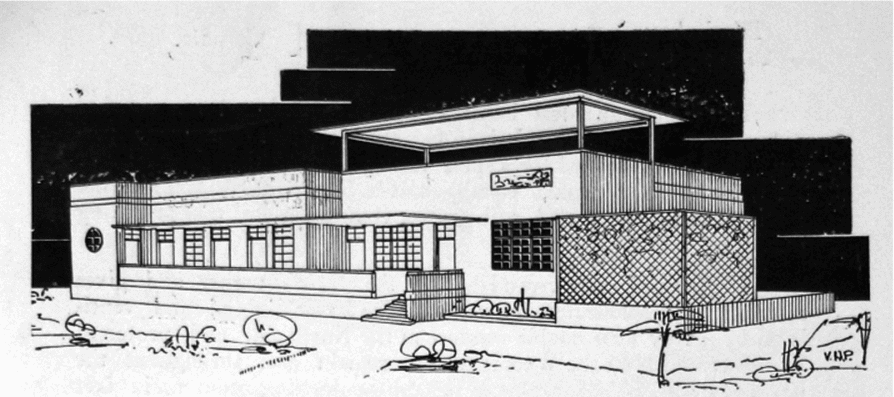
All these shifts in the utilization of domestic space—open to outsiders, isolated from work, shared by men and women in new ways—prompted new ideas about the purpose of a home in urban life. Increasingly, urban planners, designers, and home furnishing retailers emphasized the idea that home was to be a private refuge from the world, where harried, busy modern citizens could find solace from the stresses of urban life. One of the main motivations Deshpande offered for writing his 1939 book, Modern Ideal Homes, was to guide middle class families eager ‘to leave the heavily rented, dingy houses built by speculative investors in congested areas . . . and to go and build their own homes on the outskirts of towns’ where ‘they could be independent of the unreasonable demands of their landlords’.Footnote 50 Visually, this independence often appeared in Deshpande's elevations as a blacked-out background, leaving homes floating free of surroundings (see Figure 6).
Plan for a suburban bungalow. Source: Deshpande, Modern Ideal Homes for India, p. 153.
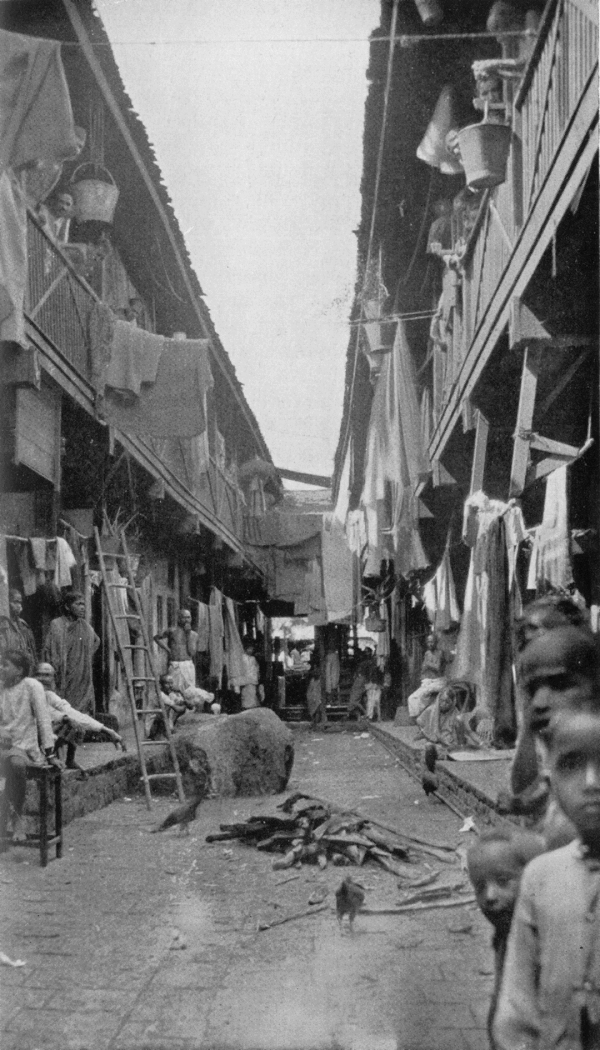
More practically, plans for bungalows in this period carefully carved off outdoor space for private enjoyment via front and back gardens shielded by compound walls, separate verandahs intended for only family use, and roof-top terraces where the household could enjoy the morning or evening air.Footnote 51 At the same time, plans for middle class flats offered a sense of privacy within multi-storied buildings via entrance vestibules that negotiated the transition into the home, separate staircases for servants, balconies carefully oriented away from neighbours, and—perhaps most crucially—toilets within the flat so all bodily needs could be attended to within the space of the home.Footnote 52 Even for the poor, planners insisted that new housing offer space for private family lives, protected from the view of neighbours. Instead of spilling belongings and activities out into public areas (see Figure 7),Footnote 53 each family should, as G.R. Pradhan put it, have ‘sufficient space with a good deal of privacy’—which to him meant ‘[a]n airy room, of reasonable dimensions with a small kitchen’.Footnote 54 In a 1918 public contest for ‘the best design for the accommodation suitable for occupation by the working classes’, sponsored by the Government of Bombay, the submissions that won praise all managed to combine independence and privacy for tenants with economy of construction. In describing the winning entry, exhibition organizer Arthur Mirams argued that the design provided tenements which ‘are independent, self-contained, and at the same time compact’.Footnote 55
Image from Burnett-Hurst's Labour and Housing in Bombay, captioned ‘A typical scene in working-class quarters’ circa 1925, offered as an illustration of how boundaries between public and private spaces were blurred in the slums. Source: Burnett-Hurst, Labour and Housing in Bombay, opposite p. 30.
If architectural plans tried to isolate families from the world, more and more home furnishings were available to turn that isolation from mere separation into appealing refuge. According to detailed accounts of consumption habits among different communities prepared for the 1899 gazetteer, new goods were appearing in homes across all classes. Among Muslims—generally thought to be relatively conservative in terms of consumption—elite homes featured sofas and easy chairs, clocks, chandeliers, music boxes and more; middle class homes often boasted several chairs and a table, a cupboard, and shelves bearing glass and china ware; even poor houses had a few copper vessels among the more traditional pottery.Footnote 56 Other communities turned to new things with even greater enthusiasm. In his contribution to the 1899 gazetteer, Kharshedji Nasarvanji Seervai described the typical contents of a rich Parsi man's house as including ‘sofas, chairs, tables, clocks, cabinets, mirrors, pictures, carpets and cushions, and in bedrooms bedsteads, boxes and wardrobes’ along with the ‘silver water-vessels, copper and brass cooking and water-vessels, cups, dishes and trays, and silver and brass goblets’ necessary for the eating and serving needs of such a household.Footnote 57 As the twentieth century unfolded, this embrace of new things picked up speed and density. By the 1930s, what would have been novelties or extravagances in earlier decades were now declared to be essential for modern living among the upper classes: portable fans, gas stoves, porcelain bathtubs, built-in draining boards in kitchens. The Times of India went so far as to argue in 1936 that ‘The refrigerator, once a luxury, has become a necessity’, while noting that, ‘We must all have noticed how much better furnished the average bedroom is now than even ten years ago.’Footnote 58
Building on these new consumer possibilities, design advice from the 1920s emphasized that the home was a space of comfort, ease, and beauty—all to be achieved through the proper deployment of furniture, fabric, colour, and décor. In the mid-1930s both the Bombay-based Illustrated Weekly of India and its sister publication the Times of India launched regular home-decorating features on modern furniture styles, new colour schemes, the latest bathroom fixtures and kitchen equipment, and how to render small modern flats up-to-date with built-in furniture and attractive decorative touches.Footnote 59 The point of this advice, according to the inaugural issue of the Times’s weekly ‘Beautiful Homes’ page, was ‘to afford practical aid to our readers in the achievement of beauty, character, comfort, and efficiency in their houses’.Footnote 60 Rejecting more traditional decorating strategies that employed very little furniture in favour of seating on cushions, carpets or low stools—decorating strategies which, to the eyes of European observers like J.E. Padfield, showed ‘the complete absence of all ideas of comfort’Footnote 61—advertisers and designers in the 1930s promoted a wide range of furniture and equipment intended to ease the body. An ‘extra comfortable reading chair’ allowed its occupant ‘to sink [in] without that upright or poky feeling’, curtains provided ‘restful darkness’ from the ‘harsh glare and brilliant light of the streets’, a good mattress permitted ‘that sound, deep sleep . . . essential for good health’, electric water heaters delivered ‘steaming hot water whenever you want it’, and occasional tables placed perfectly at hand in a drawing room offered ‘an adjunct so necessary to our ease in moments of relaxation’.Footnote 62
Complementing bodily comfort was visual beauty, achieved through individually attractive objects, the judicious combination of furnishings, and an appealing use of colour—all done, of course, in modern styles, suitable for modern times. Arguing for those styles, Deshpande noted in 1939 that it made no sense to hold onto older fashions when ‘so many changes have taken place in our food, dress, habits and social customs, so many new discoveries and inventions have been made, such as railways, telegraphs, television, gramophone, radio, electric appliances, aeroplanes, air conditioning, etc. that our entire out-look of life is metamorphosed [sic]’.Footnote 63 Comfortable, beautiful, and modern, these new furnishings available to elites in the markets of Bombay and Ahmedabad were to make the home a welcoming place such that, as one article on the Times of India’s Beautiful Homes page put it, ‘on coming home after the day's work is done, you may say “good-bye” to your business cares and be elevated’.Footnote 64 More than that, modern furnishings would provide a necessary respite from the growing stresses of fast-paced urban life. For, as another Times of India article in 1937 argued, ‘modern men and women’ needed homes that reflected a genuine understanding of ‘the demands of modern life—all rush and hurry without, demanding peace, comfort and efficiency within’.Footnote 65
Home furnishings
What had at first been a trickle of interest in Indian home reform in domestic advice manuals in the 1880s, had turned, by the 1910s and 1920s, into a flood of writing exploring the aesthetic, moral, economic, and political characteristics and potentials of homes across classes. Women's magazines offered advice on how to make the house welcoming to husbands, nurturing to children, and attractive to visitors. Textbooks instructed schoolgirls how to keep a healthy, efficient, tasteful home, subject to scientific principles. Sociologists surveyed furnishings and the use of domestic space to understand class and community. Architects designed luxurious homes for urban sophisticates and engineers planned hygienic housing for the poor.
Through these writings, reformers deployed concerns about health, comfort, convenience, and privacy to negotiate changing ideas about gender, class, family, and nation. These new ideals of home, however, pulled in different directions. On the one hand, the family was to turn inward, carefully shielding private activities from public view, with the home becoming a comfortable, beautiful haven from the world. On the other hand, the physical well-being of the family depended on the house being open to the free play of light and air, while the family's social reputation rested on the impression household décor made on guests. Attempts to reconcile those differences provided one rationale for increased use of textiles in homes. Obviously, textiles were in regular use as furnishing in more ‘traditional’ homes as well. The 1899 gazetteer survey of consumption in Gujarat, mentioned above, noted that conservative middle and upper class homes generally featured Persian carpets and dhurries in public rooms, on top of which would be spread cushions and mattresses for comfortable seating, and pillows or bolsters on which to lean.Footnote 66 What was new in late colonial houses was the deployment of cloth, which moved from floors to chairs, tables, windows, walls, and ceilings. Equally new was the density of cloth. As Mabel Needham and Ann Strong noted in their popular 1929 textbook Domestic Science for High Schools in India, modern living demanded a wide array of fabrics: carpets, dhurries, upholstery material for chairs, cushion covers, curtains, tablecloths, towels, mattresses and mattress covers, pillows, and bedclothes.Footnote 67
One of the many novel uses of textiles in the home was for curtains. Traditional domestic architecture in urban western India commonly took the form of courtyard houses built in rows with shared exterior walls.Footnote 68 In such houses, street-facing windows were confined to the front and the back of buildings, with interior light and air provided by open central chowks, or courtyards; with regard to windows opening onto the street, privacy was maintained architecturally via grilles, doors, or interior walls blocking sightlines into the core of the house. Modern designs, by contrast, often presented structural challenges to privacy. In the crowded chawls of Bombay, single rooms opening off a shared verandah or a common central corridor meant that, for any air circulation at all, doors, windows, and ventilator grilles had to remain open. Since that left indoor activities visible and audible to all, residents frequently tried to achieve some privacy by shutting doors, hanging fabrics over windows, and stuffing ventilators with rags, much to the frustration of sanitary reformers who valued ventilation above all else.Footnote 69 At the same time, frequent overcrowding within units resulted in the use of curtains to flexibly partition cramped spaces. In a much-cited case, a woman doctor investigating the condition of textile workers in Bombay found six families sharing a single room in 1921; to divide up the space, ‘bamboos were hung from the ceiling, over which, at night, clothes and sacking were hung’.Footnote 70
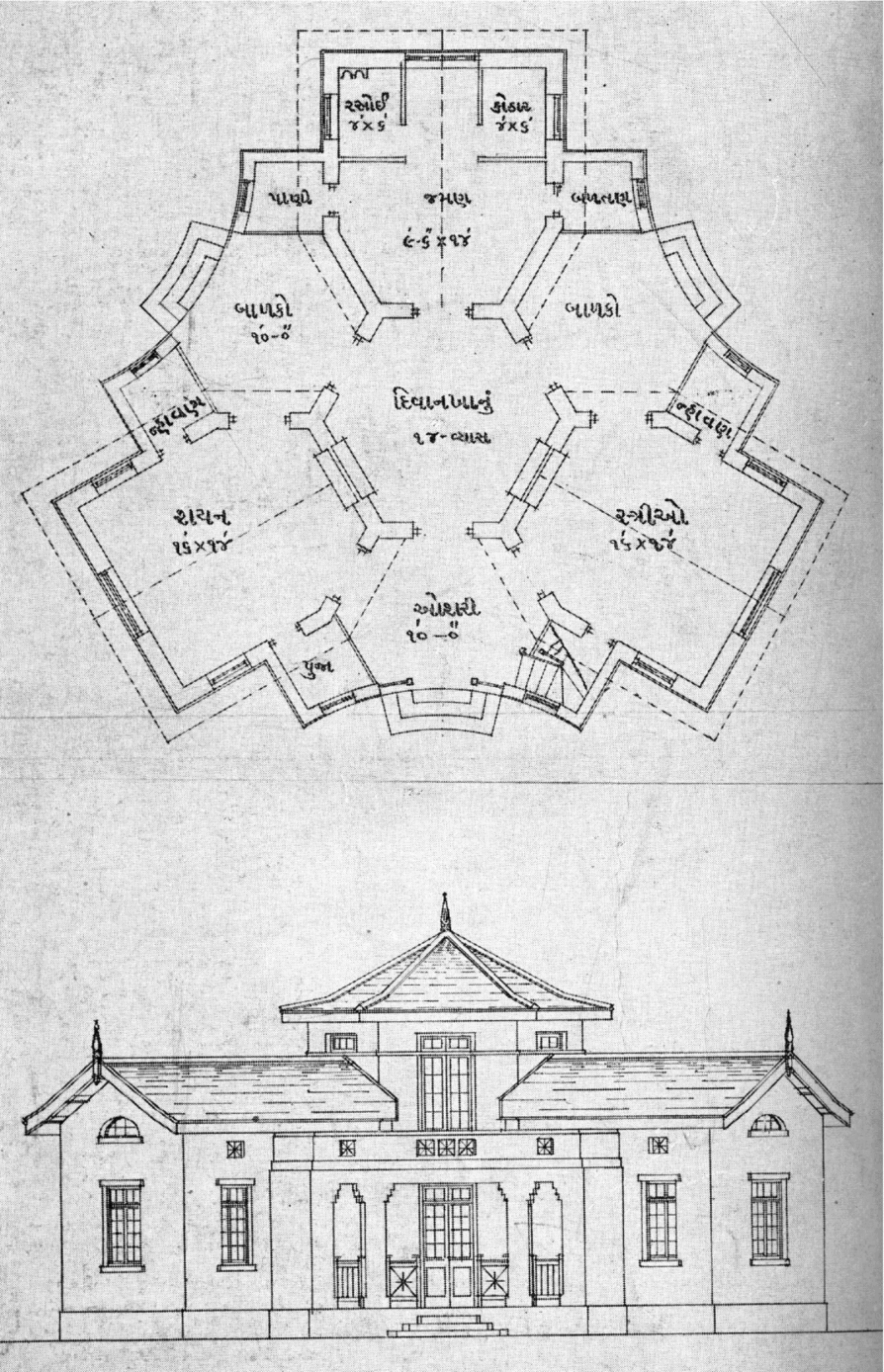
In more spacious dwellings, curtains played different, but equally important roles. Built to provide light and air to occupants, modern houses featured large external windows in most rooms. To give but one of many examples, in the 1937 Gujarati book Grihvidhan (‘House Planning’), Bhavnagar state engineer Virendraray Mehta offered plans for an irregularly shaped structure with external windows facing all directions (see Figure 8).Footnote 71 The design did nothing, structurally, to ensure privacy; indeed, both the bathrooms and the room labelled for women's use, to the immediate right of the main hall, have windows opening to the outside. In Mehta's plans, this bungalow would have been set back from the street within an expansive garden. But since large lots were rarely possible in rapidly growing suburbs, many windows ended up opening directly onto streets or neighbouring buildings. Curtains offered one way to shut off the outside world, mediating between the architectural imperative to ensure free ventilation and the desire for privacy. Curtains could also help to balance the architectural desire to bathe interiors with health-giving sun and the practical need to keep a house cool in a tropical climate. Labour union leader, Anasuya Sarabhai of Ahmedabad, for instance, had her curtains pulled every day after lunch so that she could sleep during the heat of the day; similarly, Jawaharlal Nehru noted in his 1930 prison diary the protection from the sun (and privacy) provided by curtains during the heat of April while he was jailed during the Salt Satyagraha.Footnote 72
Plan for a house with irregular exterior walls. Source: Mehta, Grividhan, p. 72.
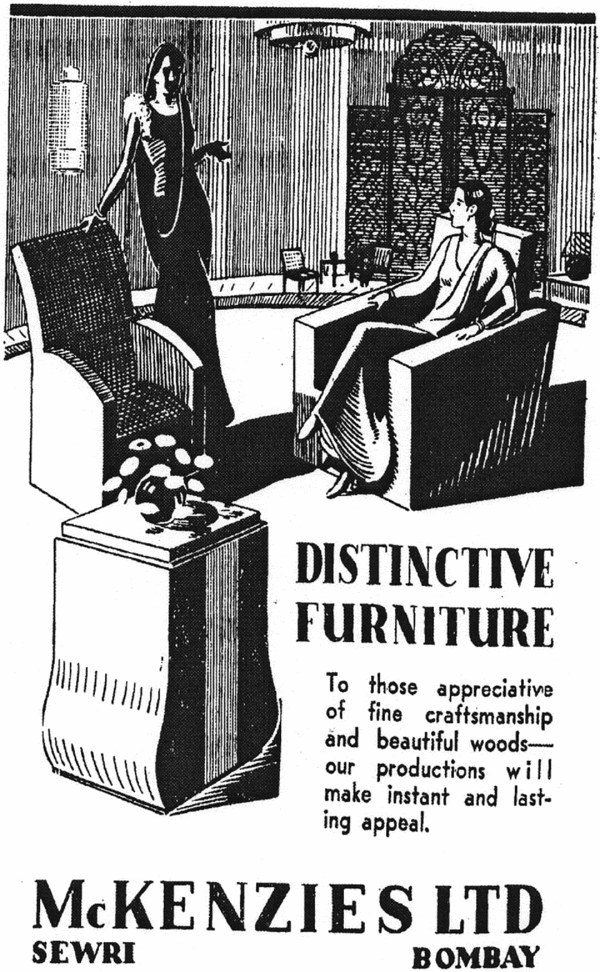
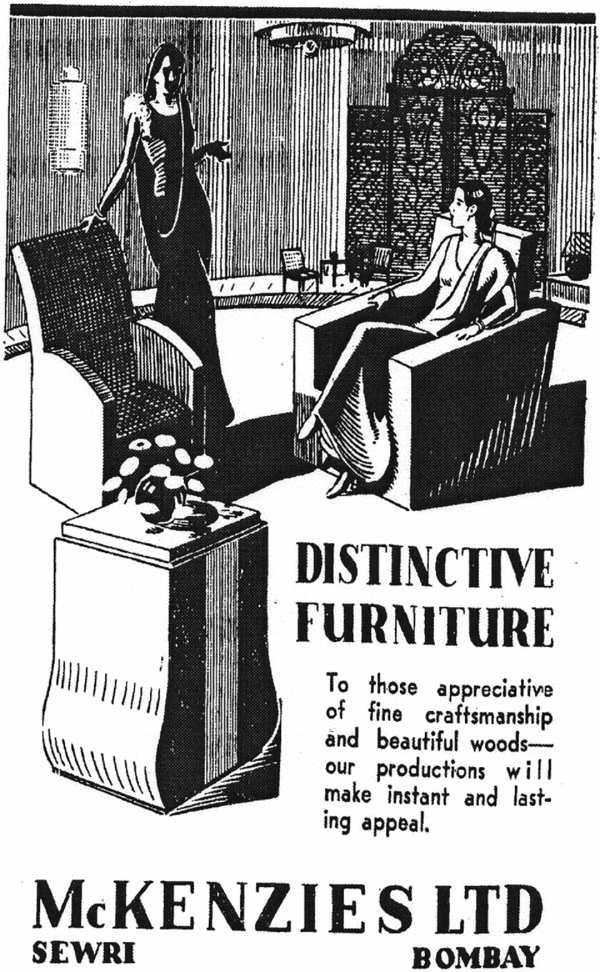
Another major innovation in home textile use was in the expanded use of soft furnishings. As suggested above, evolving ideas of comfort in the late colonial period introduced more seating options into upper class Indian homes. At the turn of the century, Hindu and Muslim upper class homes generally had a few European-style sofas and easy-chairs in public rooms where guests were entertained, while wealthy Parsi homes often featured complete living room suites of upholstered furniture along with European-style bedroom furnishings.Footnote 73 In more middle class homes, furniture use rarely extended beyond a couple of items. In her autobiography, Lakshmi Tilak recalled being astonished when her husband, Marathi poet Narayan Waman Tilak purchased ‘a great deal of furniture’ while they lived in Mahableshwar in the late 1890s—items that appeared in her account as proof of his profligate spending.Footnote 74 In subsequent decades, however, furniture use spread more widely. Describing her sprawling, ‘beautifully decorated’ childhood home in Bombay in the 1910s and 1920s, actress Durga Khote recalled lots of sofas and chairs that her mother ‘used to arrange and re-arrange . . . in attractive different ways, with colourful cushions and bolsters. Her curtains were soft and sheer, her lamp-stands and lampshades of modern design.’Footnote 75 In a 1925 book on domestic science for Indian girls, Constance Parsons went so far as to claim that ‘There are now few homes which do not boast several chairs and tables, a chest of drawers, a clothes-stand, a book case, some stools, looking glasses, wall brackets, European cots, and not infrequently, an almirah, sofa or settee.’Footnote 76 Writing for an elite audience of girls attending English-medium schools, Parsons could not have been describing all Indian homes; indeed, it is difficult to imagine her claims would have been true even for many in the middle classes. Still, expectations of increased furnishings did grow stronger over time. In advertisements from the 1930s, furniture signalled the modern home; living rooms appeared populated with sofas, easy chairs, side tables, and reading lamps (see Figure 9).Footnote 77 Separate furnishings for living room, dining room, and bedrooms were so taken for granted in the pages of the Times of India that numerous articles offered detailed advice on how to arrange everything within small flats—advice that encouraged judicious selection of sofas, side tables, dining tables, and dining chairs suitable for cramped spaces, rather than suggesting readers do without.Footnote 78 By the 1950s, even working class homes were imagined with fixed furnishings; thus architectural plans for working class housing from the period inserted beds, tables, and chairs into designs for even the smallest units.Footnote 79
Advertisement in the Times of India. Source: Times of India, 14 September 1936, p. 14.
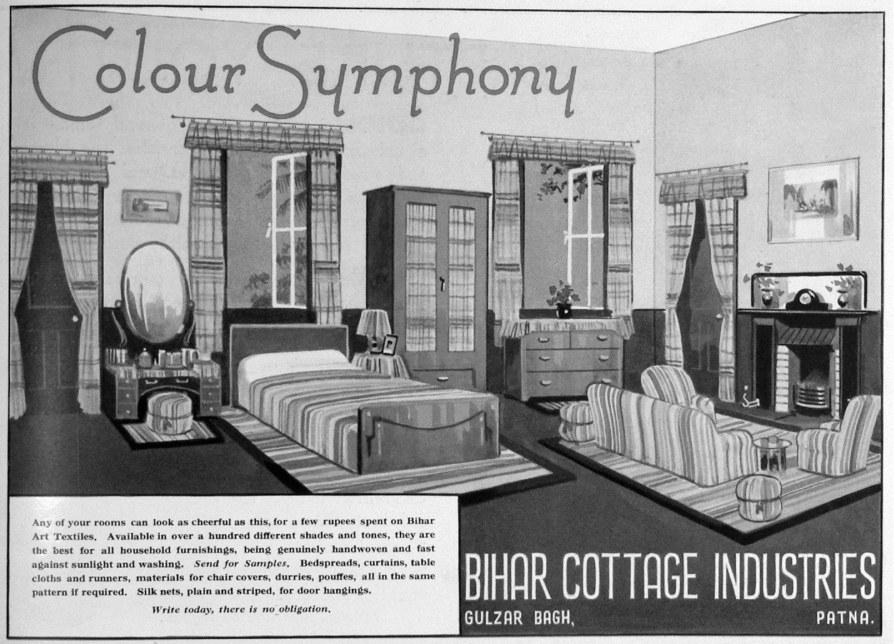
As furniture expanded, so too did textile use: sofas and armchairs were cushioned and upholstered, beds had mattresses, pillows, and bed covers. Since furnishing fabrics helped to make hard furniture not only comfortable but also beautiful, most advice on home decoration focused on how and where to use textiles to the best effect. In Modern Ideal Homes for India, for instance, Deshpande suggested that readers start decorating a room by first buying curtains, then choosing wall colours to match, after which ‘the colour and shade of the upholstery, chair covers, cushion covers, lamp shades, rugs, ash trays, book-cases, etc. is to be determined’.Footnote 80 An advertisement for Bihar Cottage Industries in the Times of India Annual for 1937 (see Figure 10) portrayed just such a coordinated effect, offering readers the chance to purchase ‘Bedspreads, curtains, table cloths and runners, materials for chair covers, durries, [and] pouffes all in the same pattern if required.’Footnote 81 In their 1929 domestic science textbook, Needham and Strong offered a chapter on ‘Furniture and Equipment’ that made decorating success dependent on fabric choices. Advising students how to create a well-furnished, European-style drawing-room, they noted that such a room,
Advertisement for Bihar Cottage Industries, Patna. Source: Times of India Annual (1937), n.p.
will contain chairs, stools, low tables, sofas, a small bookcase and perhaps a writing-table, a cabinet, a screen or two, a piano . . . The floor will be covered with a carpet, or partially covered with rugs. The chairs and sofas will be upholstered in tapestry or silk brocades, or may have washable loose covers of some plain coloured cotton cloth, or vari-coloured cretonne. Curtains of the same or a harmonising material will hang at the windows.Footnote 82
According to Needham and Strong, ‘an Indian drawing room’ had much simpler furnishings: ‘a carpet or dhurry, a gadi or two, sometimes cushioned seats round the walls, perhaps a table against a wall, and one or two chairs for those visitors who are not accustomed to the floor’. Still, the choice of fabrics was crucial:
If such a room is to be attractive, it is clear that its form and decoration, its outlook, and its colour scheme must be carefully considered. The gadi and cushions may be upholstered in rich silk brocade, or in plain khaddar that can be easily washed, or with a pretty washable cretonne that harmonises with the room. If the floor covering is plain, the coverings may be patterned; if figured, the coverings may be plain. Curtains, if used, should be of the same or a harmonising material, as should the punkah, if any.Footnote 83
The problem with all these new textiles in the home was that they could—ominously—threaten domestic health. Household advice manuals regularly warned that domestic fabrics harboured real dangers. Some lay in the making of the cloth; as Needham and Strong noted, cheap dyes could poison the skin, while insanitary production conditions could imbue fibres with toxins.Footnote 84 Other dangers lay in the how fabrics were used in the house; a 1912 domestic science textbook by Mrs Catherine Deighton warned that soiled materials harboured germs as well as organic matter given off by the skin and lungs, creating fertile ground for the spread of disease.Footnote 85 Still other dangers lay in the haven textiles provided to bugs; in her 1925 book Homecraft and Mothercraft in India, Constance Parsons alerted readers to bedbugs that came into the home from travel bedding and the ‘horrible insects’ that could hide in upholstery.Footnote 86
The solution? As Parsons put it, ‘the housekeeper must wage fierce and perpetual war against’ insects and pests ‘if she wishes to keep her house clean and beautiful and her family healthy’.Footnote 87 Textiles in particular demanded close attention, since, as Needham and Strong noted, ‘A considerable part of one's income is spent on cloth, either for personal or household use.’Footnote 88 Most writers advocated a multi-pronged approach to the war on contamination. First, the interior of the house had to be subjected to regular, thorough cleaning; most writers suggested turning rooms out completely once a week, a process that involved removing furniture, taking down all curtains and hangings, taking up and shaking rugs and mats, airing bedding, dusting all surfaces, and then sweeping and washing the floor.Footnote 89 Second, all varieties of cloth in the house needed to be regularly washed—not just sheets, tablecloths, and napkins but also lampshades, mosquito curtains, mattress covers, curtains, bed covers, and floor mats.Footnote 90 Third and finally, cloth needed to be replaced regularly. When upholstery grew shabby, curtains frayed, tablecloths collected stains, and lampshades faded, the only thing to do was to remake them with new cloth.
While solving health problems, new fabrics also provided a regular chance to change the artistic effect of a home, with a different lampshade, curtain or upholstery cloth offering an inexpensive way to alter décor. Few people would have been able to carefully coordinate all new furnishings as suggested by the Bihar Cottage Industries advertisement or follow the advice by Deshpande or Needham and Strong. Some lacked funds, others juggled furnishings bought at different times in different styles, moved too regularly to invest in the décor of one space, or faced family opposition in decorating choices. In all these cases, textiles offered an inexpensive way to redecorate on a piecemeal basis. An ugly tiled floor could be ‘disguised with rugs and carpets’, curtains could make a cavernous room feel smaller or a small room seem larger, and a bright cretonne cover could turn a trunk into a pretty bedside table.Footnote 91 Indeed, as one 1934 article in the Times of India advised, ‘There is no better tonic for a faded room than a pair of new curtains’; with prices for Indian cloth so low, ‘It's such an easy and inexpensive thing nowadays to give the home a new face once or twice a year!’Footnote 92 In a similar vein, in a 1947 article in the Indian magazine Art in Industry, British Army officer Michael Inchbald attributed to textiles much of his success in being able ‘to create a comfortable, amusing and attractive billet’ for himself out of ugly army quarters. Keeping to a limited budget by using locally available materials, he transformed his space by scattering woven rugs on the floor, hanging his camp bed with netting tied back with sari borders above and a cotton valence below, re-covering an arm chair, and cushioning a stool.Footnote 93
For the more ambitious, textiles offered a way to demonstrate personal creativity and craft skills. As ‘A Rajput Lady’ wrote in the Indian Ladies' Magazine in 1903, ‘I suppose every educated lady would like to have a nice room but it may not be within the means of every person to buy rich ornaments to furnish it with.’ All was not lost, however, since ‘she can make her room lovely by her skill in fine art work’, including embroidered cushions, bracket-wraps, tablecloths, mantelpiece borders, and decorative lace.Footnote 94 Detailed guidance on how, precisely, to create these personal touches in soft furnishings were a regular feature of popular publications aimed at women. In Homecraft and Mothercraft in India, Constance Parsons recommended khadi as ‘cheap and excellent’ for light curtains, and suggested decorating it ‘by dyeing and either by embroidery or stencilling. Both [sic] methods are cheap and easy.’Footnote 95 Regular articles in the Beautiful Homes pages of the Times of India in the 1930s suggested similar textile projects, including embroidering borders on towels, sewing matching place mats and candle shades, and weaving patterned rugs.Footnote 96 ‘Home Section’ articles in the Illustrated Weekly of India in the 1950s likewise advised readers on how to bring new life to a room with embroidery or appliqued motifs applied to lampshades, tablemats, tray clothes, cushions, curtains or bedspreads.Footnote 97
Home furnishings and textile demand: khadi curtains and saffron counterpanes
Whether to replace worn-out fabrics, introduce more privacy, create comfort, or change a decorative scheme, a steady supply of textiles was necessary in urban homes. Among the lower classes, the cloth employed was rarely originally intended for furnishing or curtains. More common was the reuse of old, discarded fabrics that had had earlier lives as clothing, packing material, or other things. In his 1938 study of untouchable workers in Bombay city, Pradhan identified a range of second-hand textiles in poor homes. With regard to curtains, gunny sacks, rags, and old clothes helped to transform verandahs into bedrooms, protect windows and doors from sun and rain, and separate out living spaces for families sharing single-room units.Footnote 98 For bedding, Pradhan found that ‘a long spreading of gunny bags with a quilt of torn clothes upon it, is used to sleep on by all the people sleeping in the room. Pillows are in many cases made of rags. Cotton blankets or even torn pieces of dhotis or sarees are used as covers.’Footnote 99
Since there has been little research on the second-hand textile markets of colonial India, it is difficult to say where such used fabrics would have come from, or how many times they changed hands before disintegrating entirely. For new textiles it is possible to piece together a slightly more complete story by utilizing advertisements and home decorating advice from the period. Here it is clear that many different Indian suppliers stepped forward to fill consumer demand for a range of textiles in the home. As early as the late nineteenth century, household manuals for British women regularly advised purchasing certain kinds of cloth in the subcontinent. One 1883 manual noted that table and house linen ‘of native manufacture . . . answer[ed] admirably for ordinary use’; another from 1887 advised readers that ‘very good household linen can be purchased at various up-country mills and manufactories’.Footnote 100 As Indian consumption of table linens and furnishing fabrics expanded, production seems to have increased likewise. Advertisements in the Times of India Annual from 1921 offered readers a wide variety of cloth from Indian mills: blankets and rugs from the New Egerton Woollen Mills in Dhariwal, Punjab; and from Cawnpore, towels and dhurries from the Elgin Mills, and bed sheets, tablecloths, bed ticking, towels, serviettes, counterpanes, and durries from the Muir Mills.Footnote 101 Quality and variety apparently kept pace. A November 1934 article in the Times of India declared approvingly that ‘the last decade has seen an enormous improvement in the design and manufacture of both furniture and furnishing materials’, with Indian cotton mills turning out fabrics every year ‘specially made for furnishing purposes, [that] are better and better’.Footnote 102 As a result, ‘the discerning housewife in India at least has not far to seek for our bazaars simply teem with Indian stuffs so lovely and colourful that they satisfy the most finicky and fastidious of buyers’. These included prints ‘in every conceivable design and colour, price and quality’ to drape over a sofa, Kashmiri designs for counterpanes, hand-embroidered silk curtains, and ‘richly coloured “kinkhabs”’ for upholstery.Footnote 103
Some of these furnishing fabrics were marketed in explicitly nationalist terms, underlining the specifically Indian nature of demand. In late 1910, for instance, the Indian General Stores opened in Madras ‘with a view to encourage all Swadeshi manufactures’. As their advertisement in The Indian Review noted, the store's offerings included plain and fancy towels as well as coloured bed sheets.Footnote 104 Advertisements in the 1931 Classified List of Manufacturers of Swadeshi Goods and Their Agents promoted a variety of purely swadeshi products, including napkins, dhurries, door curtains, mosquito nets, dusters, counterpanes, towels, sheets, blankets, and bed covers. Among the producers represented from across India were the Aryan Hosiery Factory of Bangalore, Currimbhoys Mills and the Morarjee Goculdas Spinning and Weaving Company of Bombay, the Jubilee Mills of Ahmedabad (see Figure 2), the Sholapur Spinning and Weaving Company, and the Bharat Abhyuday Cotton Mills of Calcutta.Footnote 105 Many of the mills used the language of swadeshi to tout their wares. Thus the Maharani Woollen Mills of Baroda advised readers of its production of ‘High Class Swadeshi Woollen Blankets, Rugs’ made with ‘Indian Capital. Indian Management. Indian Labour. Indian Staff’.Footnote 106 The Calico Mills claimed to ‘mean everything Indian’ and instructed consumers to ‘Help Yourself by Using Swadeshi Cloth’, including napkins and tablecloths.Footnote 107 Most insistently, the Khatau Makanji Mills of Bombay proclaimed that ‘Two words uppermost on people's lips are Swadeshi and Swaraj’, promising that ‘You can observe the Swadeshi pledge implicitly when you buy cloths [including towels and long cloth] manufactured with Swadeshi Yarn by Swadeshi Capital, under Swadeshi Management’.Footnote 108
Not all national production was by mills. When a new swadeshi store opened in Bombay in June 1920, it offered bleached and dyed khadi for curtains and cushions;Footnote 109 in the same year Gandhi advised readers of Young India that his ashram near Ahmedabad was able to supply consumers with khadi towels, bed sheets, holdalls, carpet pieces, and cushions.Footnote 110 Regularly using khadi bed sheets and cushion covers himself,Footnote 111 Gandhi chided his readers in 1925 that there was no longer any excuse not to switch over to national cloth since khadi stores could now ‘satisfy all reasonable tastes’. As proof, he cited a recent catalogue from the Bombay Khadi Bhandar that supplied (in addition to clothing) ‘bags, bedsheets . . . curtains, counterpanes, tablecloths, pillow-slips’ and more.Footnote 112 Independent of formal swadeshi outlets, local artisans continued to produce a variety of furnishing fabrics, including kinkhab for upholstery, block-printed bed sheets, woven and knotted carpets, and various kinds of handwoven silks and cottons.Footnote 113 Indeed, for many, crafts represented authentic national style, since they were Indian both in materials and aesthetics. Thus, on display in stalls and model houses at the 1932–33 Exhibition of Domestic Economy in Baroda were not only mill wares but also furnishing fabrics by artisanal weavers, printers, and dyers—items selected by Baroda State interior designer W.P. Kanoffsky to promote national culture.Footnote 114 Advice columnists agreed that handmade textiles were essential for distinctively Indian interiors. In a 1937 article, ‘Alida’ offered up an idea for a modern home evoking India's artistic heritage which included heavy khadi curtains, side drapes of ‘striped cottage weave’, straw-coloured matting on the floor, and a low khadi-covered divan piled ‘with coloured cushions of all shapes and sizes’.Footnote 115 A 1939 Times of India article entitled ‘Colour in the Home’ similarly advised consumers to try handmade numdas (felt rugs), jail-made carpets, and embroidered cushion and daybed covers.Footnote 116 To help align these artisanal goods with modern demands, the Sir Jamsetee Jeejeebhoy School of Art in Bombay introduced a new textile design course in the 1930s.Footnote 117
The nationalist dimension of demand for Indian fabrics should not, however, be overstated. For all the earnest politics in appeals to buy swadeshi or khadi products, the fact that Gandhi's own ashram sold bed sheets, towels, cushions, and carryalls suggests a complex set of factors influencing consumer desires. In discussions of clothing from the late colonial period, scholars have emphasized Gandhi's ability to reinterpret both a particular style of dress and a specific type of cloth—khadi—to forge a new uniform for Indian nationalism.Footnote 118 Even if, as Emma Tarlo points out, Gandhi was never fully successful in defining the use of khadi, scholars still credit the Mahatma with launching a new mode of national dress based on the use of simple, white clothing in austere styles.Footnote 119 But with furnishing fabrics, nationalism was but one influence among many, with demand shaped as much by new furnishing trends, expanding consumer desires, and new ideas of home. When Needham and Strong suggested in their 1929 textbook the use of either ‘rich silk brocade’ or ‘plain khaddar’ as upholstery in an Indian drawing room, they did so more on visual than nationalist grounds; either, they argued, could be harmonized into an attractive decorative scheme.Footnote 120 Similarly, when ‘Alida’ proposed khadi curtains and a khadi divan cover to readers of the Times of India, she did so as part of a sumptuous interior far removed from Gandhian visions of austere living. In these Indian drawing rooms, the meaning of khadi was not dictated by nationalism alone. Just as easily the plain, rough cloth might have signified simplicity in a region where restrained consumption honoured traditional norms, and might have offered interesting textural possibilities in the context of modern demands for comfort within the home.
Telling examples of the complex politics of home textiles in the late colonial period appear in stories about one of Gandhi's key followers in Ahmedabad, Anasuya Sarabhai. Sister of a prominent mill-owner, Anasuyaben worked closely with Gandhi to improve the lives of mill workers, first undertaking social work in mill areas, and then founding and running the famous Gandhian Textile Labour Association to fight for better wages and working conditions. By all accounts, Anasuyaben was a devoted khadi-wearer, dressing consistently in a plain, white sari with no border or pattern; her staff too all wore khadi as a sign of support for the nationalist cause.Footnote 121 Noting her early adoption of hand-spinning, a 1919 article in the Ahmedabad daily Prajabandhu called her ‘an object lesson to every patriot for resuscitating the dying embers of our time-honoured indigenous industry’.Footnote 122 And yet Anasuyaben was not nearly as restrained in her non-clothing textile choices. She recalled that when she first started working with mill children she addressed their physical needs first, washing their hair, combing out lice, and replacing their apparel by getting ‘clothes stitched from our curtains at home’.Footnote 123 Curtains and furnishing fabrics appear several times in stories about her. As mentioned above, when dining at home she had the curtains drawn after lunch so she could nap in the heat of the day. In a more particular incident, she had a special curtain with a Buddha design on it made up for Gandhi—a gift that he politely declined. Undaunted, she taught mill workers to make lunch-mats, tea-cosies, tray cloths, napkins, and cushions of khadi, items she then sent out as gifts to her friends. On one occasion she decided that a table in Gandhi's ashram needed a cloth to cover it but, according to a friend's account, she ‘had to make three trips before getting the old man to accept one!’ Apparently her final order placed with the Sabarmati ashram's khadi division was for a saffron-coloured counterpane and pillowcases with the sign ‘Om’ embroidered on them.Footnote 124
Conclusion: textiles in the politics of home in late colonial India
Anasuya Sarabhai's struggles to get Gandhi to accept curtains and tablecloths for his ashram offers a potent reminder of the material changes underway in domestic spaces in late colonial India. For a prominent activist like Anasuyaben, commitment to khadi posed no obstacle to embracing a broad range of new textiles within the home to fulfil a number of different objectives. Cushions and counterpanes offered bodily comfort. Pillowcases embroidered with ‘Om’, saffron-dyed cloth, and curtains displaying an image of the Buddha evoked religious traditions. Tea-cosies, tray cloths, napkins, place mats, and tablecloths facilitated Western-style dining habits. Curtains pulled tight against the sun helped negotiate the needs of privacy and coolness within a modern suburban bungalow.
As these examples suggest, nationalism might have determined the source of materials in Anasuya's home, but not their volume or deployment. For the latter we have to look at changing architectural styles, new definitions of comfort and style, and new ways of using domestic space. All of those influences on textile use were rooted in changing ideas about the home—ideas that tied into the politics of nationalism and empire, but also ranged more broadly to encompass the politics of class, gender, and community. Such broad politics had historical roots back in the late nineteenth century, when British writers—and some Indian ones too—presented Anglo-Indian homes as microcosms of empire, encapsulating the civilizational superiority on which imperial power was based and offering British women their own imperial authority. Footnote 125 As Rosemary Marangoly George puts it, popular home management guides of the day depicted ‘the management of Empire as essentially “home management” on a larger scale’.Footnote 126
Materially, the political charge of the Anglo-Indian home—with all that it was supposed to represent about middle class virtues, idealized femininity, and racial exclusivity—had a direct effect on some Indian decorating strategies. Among elites, thoroughly Westernized interiors could be used to express affiliation to the colonial state. Describing her childhood home in the late 1910s when her father was a district medical officer with the East India Railway, Shaista Ikramullah noted that:
This was the stage when Indians went in for extreme Westernization in every way, particularly those who joined the Service, which so far had been reserved for the English. They felt that it was their incumbent duty to prove to the Englishman that they could emulate him to perfection . . . Our house, therefore, was furnished to look exactly like an English house. . .Footnote 127
As a modern, secular Muslim, her father chose to define his home thoroughly in line with the West—much to the astonishment of her family's former servants, who saw such a house as the rejection of honoured traditions.Footnote 128 For those uninterested in wholesale English decoration or unable to afford it, individual pieces of Western furniture still carried power, expressed often in gendered terms. Thus, in more conservative homes, chairs, tables, and sofas were usually confined to men's rooms and reserved for men's use. Chastising the young Ramabai Ranade (wife of Mahadev Govind Ranade) in the early 1880s, one elderly relation mocked the young wife's modern ways with the sarcastic command ‘let the Sahib and the Memsahib sit together in chairs, books in hand’—clearly evoking moral and gendered upheaval.Footnote 129 Similarly, Ved Mehta recounts the story of his mother as a young bride in the 1880s daring to sit in her husband's office chair—then the only one in his village in Punjab. When discovered by her brother-in-law, she was roundly reprimanded and fled, ‘and thereafter she always approached the chair with respect’.Footnote 130
In a less material idiom, nationalists embraced the British idea that the home could serve political ends, but defined those ends differently. Rather than reproduce imperial power, the home became the place from which to challenge colonial rule. As Partha Chatterjee has argued, nationalists who were denied authority in the outside world dominated by the British declared the home to be free from colonial interference, where the spiritual essence of the nation could be protected. In this light home management could provide training in self-governance.Footnote 131 By introducing discipline, order, and routine into Indian homes—through the figure of the reformed Indian woman, subject to a new, modern patriarchy—the nation would be brought from backwardness into progress.Footnote 132 Thus, domestic manuals from the period advised women to be pious, modest, self-sacrificing, and wholly dedicated to the physical, moral, and spiritual needs of their husbands and families.Footnote 133
By the 1930s and 1940s, the politics of home had shifted, both materially and socially. In material terms, the presence of furniture no longer necessarily meant emulation of colonial rulers or support of British colonial power. Stylistically, many declared modern furnishings to be derived as much from Indian traditions as Western ones. Thus, ‘Alida’ argued in a 1937 Times of India article that,
There is something about these clean, cool, modern lines that almost demand to be put in the Tropics where the heat and glare make the sense[s] demand quiet. The eyes need rest after the dazzle of colour and sun in the streets and the mind wants soothing not a constant jangle of line and colour. This very element now so disregarded by those who furnish houses, was the keynote of interior decoration through the history of India.Footnote 134
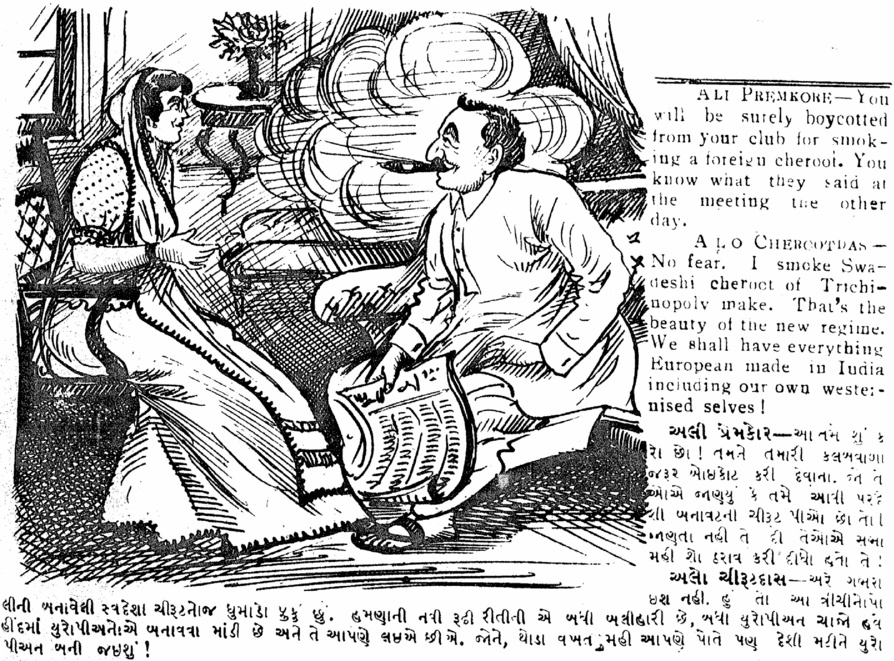
Since modern styles were so eminently suited to India, the desire to have a distinctively Indian home on contemporary lines offered no contradiction at all. As ‘Alida’ promised in another article, ‘An eye for colour and arrangement, coupled with even a little knowledge of India's arts and crafts can produce a room which is tasteful and in keeping with the times.’Footnote 135 In more economic terms, others noted that modern styles also posed no fundamental challenge to Indian patriotism, since so many of the latest goods were now made domestically. In a January 1930 cartoon in the Bombay-based Parsi weekly Hindi Punch, a husband in a thoroughly Westernized living room assures his wife that nationalist calls to boycott imports would not change their mode of living, saying: ‘That's the beauty of the new regime. We shall have everything European made in India, including our own westernised selves!’ (see Figure 11).Footnote 136
Cartoon from the Hindi Punch. Source: Hindi Punch, 19 January 1930, p. 2.
Even as the politics of Western furniture altered, new ideas emerged about the figure at the heart of the home: the ideal woman. Whereas late nineteenth-century reformers had emphasized womanly self-sacrifice and spiritual/moral responsibility, domestic science manuals and decorating advice from the interwar period stressed material skills in caring for the physical space, contents, and occupants of the home. Reflecting, as Mary Hancock has argued, changing ideas of female agency, these sources depict women as not just mothers and wives, but also as skilled managers of varied household possessions, aesthetic arbiters of domestic comforts, and careful designers of the family's image among social acquaintances.Footnote 137 Needham and Strong's 1929 high school domestic science textbook, for instance, offered five chapters on the design, construction, ventilation, decoration, and furnishing of a home alongside familiar advice on nursing the sick and basic hygiene. Arguing that ‘the House’ was one of the four main branches of domestic science (the others being food, clothing, and care of children), and thus essential for female education, Needham and Strong presented the home as both the site of women's work and also the canvas on which women could display aesthetic distinction.Footnote 138 As their chapter on ‘House Decoration’ put it, ‘We may live in an ugly street, our surroundings may be depressing, and we may not be able to alter them. Our house may not please in its construction or general appearance, but we can, by decorating in the right way, make its interior restful and cheering and pleasing to the eye.’Footnote 139 Decorating ‘in the right way’ meant not just obedience to the rules of colour harmony, but also artistic self-expression through material choices. The textbook thus advised particularly close attention to the décor of the drawing room as ‘this is especially the room of the mistress of the house and will reflect her taste’.Footnote 140 Implied here is that the mistress's taste would be visible and judged not just by members of her immediate family but also by visitors. Far from being secluded in separate women's quarters or warned off the furniture, here women are told to identify themselves to guests through furnishing choices. Indeed, so common was the idea that a woman's reputation rested on her domestic aesthetics that almost all interior design advice from the 1930s and 1940s addressed female readers, regularly reminding them that their homes would be open to outside scrutiny. To give but one example, a 1934 article in the Times of India declared,
A room to most men is merely a place where one eats, sleeps, bathes or sits, but to a woman it means considerably more; for her it is a medium of self-expression, a frame for her personality as well as an environment capable of affecting her moods . . . The home is woman's domain and the setting in which she will be most frequently seen and judged by her friends. So all decorative schemes should be chosen as a background that will enhance her personal charms, and colours that she avoids in her clothes, omitted here as well. So imbued with the individuality of its mistress should a room be, that strangers entering it in her absence will glean, from their surroundings, an indication of the type of woman they may expect to meet.Footnote 141
In these emerging politics of home, textiles played important roles. The same curtains that permitted privacy, or furnishing fabrics that facilitated comfort, allowed consumers to declare political allegiances, negotiate changing roles for men and women, and express individuality. Indeed, textiles were particularly well suited to all these strategies, offering individuals flexible ways in which to explore new ideas that were often impossible to effect in the physical structures of buildings themselves. For those who moved regularly, rented, or could only afford cramped spaces in crowded cities, there would have been obvious appeal in the promise that furnishing fabrics could help take a house that was not appealing ‘in its construction or general appearance’ and ‘make its interior restful and cheering and pleasing to the eye’.Footnote 142 More politically, khadi curtains, block-printed tablecloths, or embroidered pillow covers added distinctive Indian touches to rooms whose essential furniture might be Western, thereby localizing the effect of the sofas, armchairs, and dining tables that were increasingly seen as essential for modern urban sociability among the upper classes. In gendered terms, whether khadi or not, the same curtains, tablecloths and pillow covers were perfectly suited to women's emerging, idealized role as home-decorators. While decisions about purchasing costly furniture and major domestic overhauls usually involved male participation,Footnote 143 relatively modest expenditures on furnishing fabrics might be accommodated within the regular household budget managed by wives on their own.Footnote 144 At the same time, the use of new textiles in decorating schemes fitted easily into norms of women's work in the home, since the cleaning, care, preservation, and remaking of cloth was generally assumed to be a female purview—as evidenced by the fact that Needham and Strong devote 100 pages of their textbook to the use and care of fabric.Footnote 145 Women could deploy new textiles in their homes, then, without overstepping their financial bounds as household managers, giving them an inexpensive way to define their personal decorating taste.
This sense that textiles helped express new ideas of home shaped the marketing strategies Indian producers used to tap into growing demand for furnishing fabrics. In the 1950s, advertisements for major industrial producers like the Delhi Cloth and General Mills used Bollywood actresses to sell the beauty and versatility of their fabric lines, which they declared would ‘bring gracious living to your home’.Footnote 146 Also in the 1950s, the All-Indian Handloom Board deployed the language of style, not nationalism, to appeal to customers, touting handloom curtains, tapestries, carpets, tablecloths, place mats, towels, and napkins as essential to creating ‘that modern Indian look’ in elegant homes expressive of ‘the latest Indian fashion trends’.Footnote 147 That the central figure in the All-Indian Handloom Board advertisements from this era was the housewife-as-home-decorator—evoked with the tagline ‘To a Homemaker Elegant Décor matters’—only underscores how important textiles were to the changing material, cultural, and social context of home in western India.