Introduction
Malignant, invasive or necrotising otitis externa was first described as a serious pathological process affecting the outer ear by Chandler in 1968.Reference Chandler1 Cohen and FriedmannReference Cohen and Friedman2 further refined diagnostic criteria. A systematic review by Mahdyoun et al.Reference Mahdyoun, Pulcini, Gahide, Raffaelli, Savoldelli and Castillo3 concluded that there was little robust scientific evidence to support consensus regarding diagnostic criteria and the overall management of necrotising otitis externa.
Since then, there has been a significant increase in the recorded numbers of necrotising otitis externa cases requiring hospital admission in the UK.Reference Chawdhary, Liow, Democratis and Whiteside4 Whilst the precise epidemiological reason for this is not fully understood, necrotising otitis externa presents a significant challenge for patients and health professionals, and is a growing burden on our health service. The lack of consensus surrounding the diagnosis and management of necrotising otitis externa, the paucity of robust scientific studies, and the vast differences in resources and healthcare systems continue to render systematic reviews a challenge.
The most recent review of necrotising otitis externa literature focused on sources that are now over 10 years old.Reference Mahdyoun, Pulcini, Gahide, Raffaelli, Savoldelli and Castillo3 An updated review of the literature is therefore required. The main aim of our work was to perform a scoping review of literature from 2011 to 2020 in order to identify the key themes that emerge. This could direct researchers to areas requiring high quality research, working towards a goal of enhancing our understanding of necrotising otitis externa, and optimising its diagnosis and management.
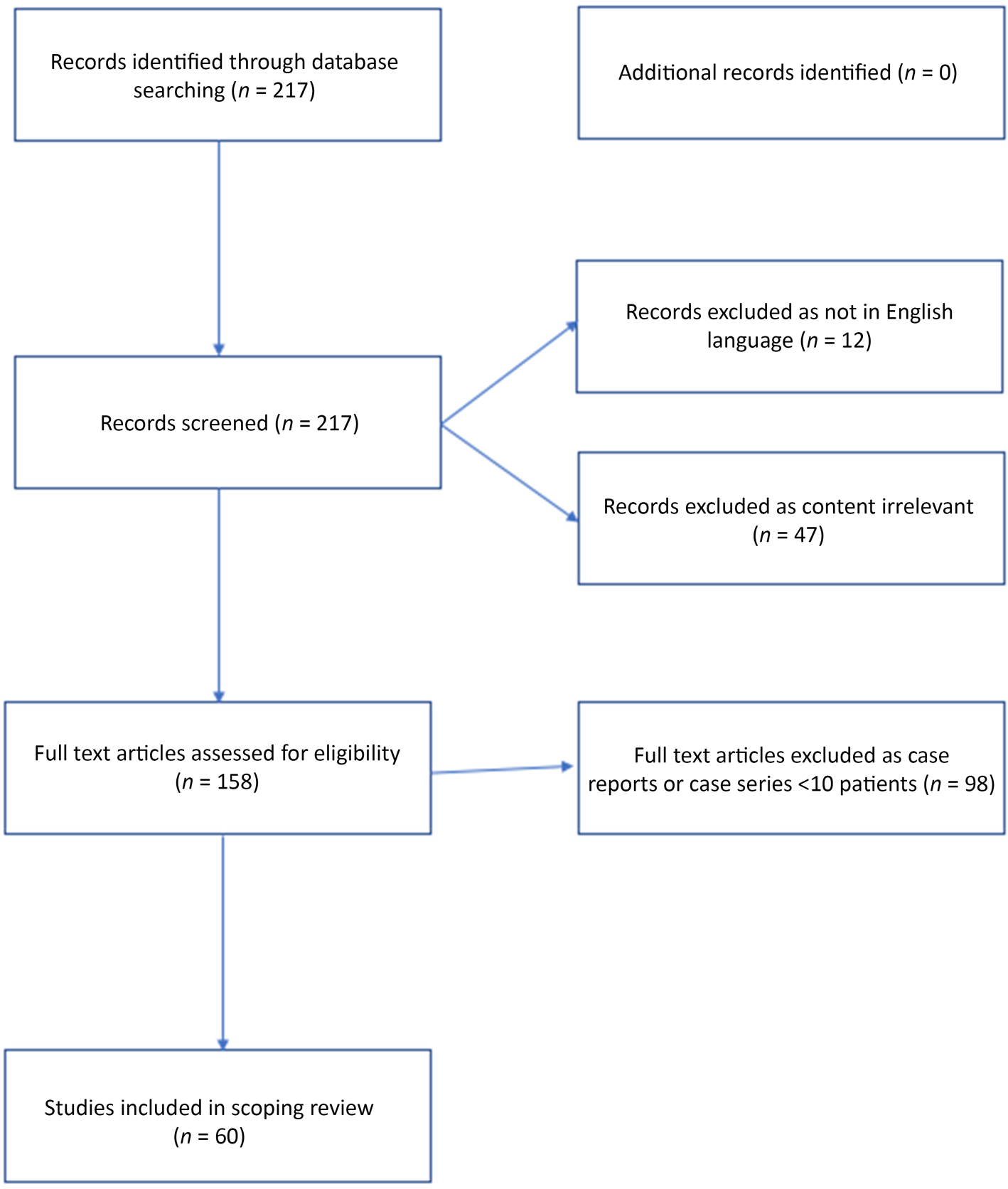
Our decision to carry out a scoping review followed an initial literature search (Figure 1) and analysis of current literature (Figure 2). There is no level 1, 2 or 3 evidence published on necrotising otitis externa; therefore, a systematic review would yield little useful information. Scoping studies can be used to map the key concepts underpinning a research area, ascertain the main sources and types of evidence available,Reference Mays, Roberts, Popay, Fulop, Allen, Clarke and Black5 and identify research gaps in the existing literature. A scoping review was therefore deemed the appropriate method for this work.
Preferred reporting items for systematic reviews and meta-analyses (‘PRISMA’) flow diagram of literature selection.

Study types included in the scoping review.

Materials and methods
The methodological framework for scoping studies described by Arksey and O'MalleyReference Arksey and O'Malley6 was used to guide this work. Relevant publications were identified by two researchers independently. These investigators searched Medline, Embase, PubMed and the Cochrane Library databases, identifying literature published from 2011 to 2020 inclusive. The search terms used were: ‘invasive otitis externa’, ‘invasive external otitis’, ‘malignant otitis externa’, ‘malignant external otitis’, ‘necrotizing/necrotising otitis externa’, ‘necrotizing/necrotising external otitis’, ‘skull base osteomyelitis’, ‘cranial base osteomyelitis’ and ‘temporal osteomyelitis’. All studies and reference lists were cross-checked by both researchers.
A total of 217 studies were identified, with 60 being filtered into the final scoping review (Figure 1). Of the excluded studies, 12 were not in English, 47 had irrelevant content, and 98 were case reports or case series comprising less than 10 cases. Prior to exclusion, the latter studies were scrutinised to ensure they did not add to the themes or concepts covered by the included studies.
In light of manuscript heterogeneity and the absence of consistent outcome measures, the content of each study was charted for qualitative analysis, identifying key themes addressed and discussed. These were coded using a grounded theory approachReference Patton7,Reference Sbaraini, Carter, Wendell Evans and Blinkhorn8 through several iterative cycles using a constant comparison technique. Categories were refined in order to classify key themes into core domains. Inclusion of a theme or a domain in our scoping review required it to have been addressed within the methods, results or discussion of the manuscript, and not merely mentioned in passing. These data formed the basis of the scoping review.
Results
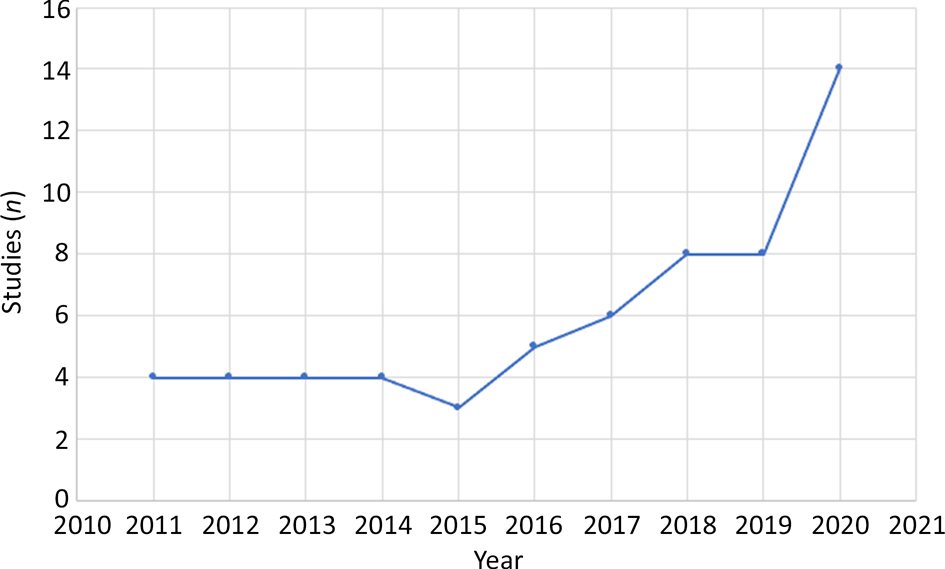
A variety of study types were included in the review (Figure 2). Forty-three out of 60 studies (72 per cent) were retrospective case series. There is currently no level 1, 2 or 3 evidence for the diagnosis and management of necrotising otitis externa. Published studies on necrotising otitis externa appear to be increasing over time (Figure 3).
Number of studies included in the scoping review, by year of publication.

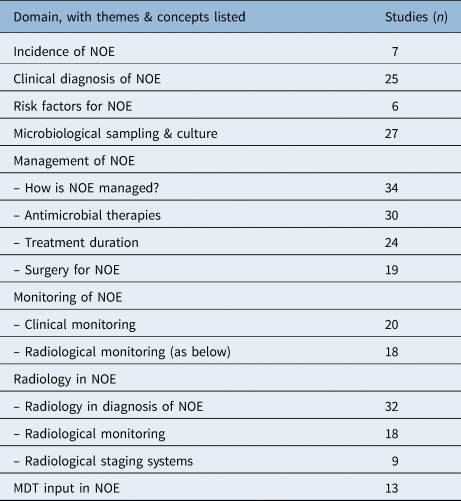
Themes that emerged from analysis of the included studies are shown in Table 1. Information from these core domains and themes are presented and discussed below.
Core domains arising from analysis of included studies

NOE = necrotising otitis externa; MDT = multidisciplinary team
Incidence
Seven studies discussed the incidence of necrotising otitis externa. Those from the UK literature discussed the increase in recorded cases of necrotising otitis externa in the past 15 years in England and Wales,Reference Chawdhary, Liow, Democratis and Whiteside4,Reference Lau, Scotta, Wu, Kabuli and Watson9–Reference Chawdhary, Pankhania, Douglas and Bottrill11 as well as in Scotland.Reference Hopkins, Bennett, Henderson, MacSween, Baring and Sutherland12 An epidemiological study from TaiwanReference Yang, Xirasagar, Cheng, Wu, Ka and Shia13 demonstrated a decrease in the incidence of necrotising otitis externa between 2001 and 2015, whilst an audit of the US National Inpatient Sample databaseReference Sylvester, Sanghvi, Patel, Eloy and Ying14 demonstrated a steady incidence of necrotising otitis externa between 2002 and 2013.
Clinical diagnosis
Thirteen of the included studies were case series that did not describe the criteria by which patients in their series were diagnosed with necrotising otitis externa. Twenty-five studies included explanations of how a diagnosis of necrotising otitis externa was made. Some used Cohen and colleagues’ criteriaReference Cohen and Friedman2 to identify cases,Reference Lambor, Das, Goel, Tiwari, Lambor and Fegade15–Reference Lee, Lee, Seon, Jung, Lee and Choi18 which other authors considered to be outdated. Other studies described modifications of Cohen and colleagues’ criteria.Reference Hobson, Moy, Byers, Raz, Hirsch and McCall19,Reference Soudry, Hamzany, Preis, Joshua, Hadar and Nageris20 Thirteen studies described their own diagnostic criteria, not based on existing definitions.Reference Chen, Chan, Chen and Wu21–Reference Stern Shavit, Soudry, Hamzany and Nageris33 Others based patient inclusion on the diagnosis made by senior authorsReference Stevens, Lambert, Baker and Meyer34 and the International Classification of Diseases code at discharge.Reference Hopkins, Bennett, Henderson, MacSween, Baring and Sutherland12
Several authors acknowledged the lack of universally accepted diagnostic criteria,Reference Chawdhary, Liow, Democratis and Whiteside4,Reference Hasnaoui, Mabrouk, Chelli, Ammari, Lahmar and Toumi35 and considered that this may account for apparent differences in incidence.Reference Yang, Xirasagar, Cheng, Wu, Ka and Shia13 A snapshot survey of clinicians by Chawdhury et al.Reference Chawdhary, Pankhania, Douglas and Bottrill11 ascertained that there is variation in the diagnostic criteria used by clinicians in the UK to diagnose necrotising otitis externa.
Risk factors
Whilst nearly all included studies mentioned diabetes and old age as risk factors for necrotising otitis externa, six of these studies went into more detail on this theme.
Guevara et al.Reference Guevara, Mahdyoun, Pulcini, Raffaelli, Gahide and Castillo36 identified a seasonal variation in necrotising otitis externa diagnosis, with 95 per cent of cases occurring between May and December. They also proposed water exposure, external auditory canal trauma, granulomatosis with polyangiitis, and radiotherapy 25 years earlier as potential risk factors, concluding that 55 per cent of their cases had identifiable factors which predisposed them to developing necrotising otitis externa. A literature review by Long et al.Reference Long, Koyfman and Long37 described diabetes, immunosuppression and age as risk factors. Yang et al.Reference Yang, Xirasagar, Cheng, Wu, Ka and Shia13 proposed that necrotising otitis externa is more common in warm, humid climates, and calculated that patients with necrotising otitis externa had a 54.8 per cent prevalence of prior diabetes, compared to 13.9 per cent of patients without necrotising otitis externa. A radiological study by Van de Meer et al.Reference Van der Meer, van Tilburg, Mitea and Postma38 identified the presence and increased size of a patent foramen of Huschke on imaging as being associated with anterior spreading of infection. Several studies explored the role of other risk factors, including diabetes, immune modulating medication, haematological malignancy, previous radiotherapy, neoplasia and human immunodeficiency virus.Reference Hutson and Watson10,Reference Peled, Parra, El-Saied, Kraus and Kaplan16,Reference Hatch, Bauschard, Nguyen, Lambert, Meye and McRackan39
Microbiological sampling and culture
Specimens were obtained from a swab of the ear canal alone in 15 studies, from both a swab and tissue biopsy in 10 studies, and from tissue biopsies alone in 2 studies; in another 5 studies, microbiological sampling was carried out, but the technique was not specified.Reference Sharma, Corrah and Singh40–Reference Bhasker, Hartley and Agada55
Pseudomonas aeruginosa remains the most common pathogen isolated (mean of 64.7 per cent of cultures across the case series; range, 25–100 per cent). Pseudomonal resistance appears to be consistent at 27 per cent when compared to 33 per cent reported by Mahdyoun et al.Reference Mahdyoun, Pulcini, Gahide, Raffaelli, Savoldelli and Castillo3 Pseudomonal resistance has been attributed to overzealous use of fluoroquinolones and delays in diagnosis allowing the organisation of biofilms.Reference Loh and Loh42,Reference Berenholz, Katzenell and Harell56 Nineteen studies reported Staphylococcus aureus in 1.2–35.7 per cent of the cultures (mean of 11.3 per cent) with the emergence of methicillin-resistant S aureus (MRSA). Staphylococcus aureus and MRSA were more prevalent in non-diabetics.Reference Hobson, Moy, Byers, Raz, Hirsch and McCall19 Resistant pseudomonal strains and MRSA have been linked to poor prognostic indicators.Reference Hobson, Moy, Byers, Raz, Hirsch and McCall19,Reference Clerc, Verillaud, Duet, Guichard, Herman and Kania23
Nineteen studies reported fungal species isolated in 5–43 per cent of cultures (mean of 12.5 per cent); in particular, Candida albicans and Aspergillus flavus/Aspergillus fumigatus were cultured in 4.5–42 per cent (mean of 15.8 per cent) and in 2.6–17.3 (mean of 9.1 per cent) of specimens, respectively.Reference Lee, Lee, Seon, Jung, Lee and Choi18 Marchionni et al.Reference Marchionni, Parize, Lefevre, Vironneau, Bougnoux and Poiree51 specifically looked at fungal infection, and proposed empirical treatment with voriconazole in refractory cases.
Management
How is it managed?
Thirty-four studies described treatment protocols for necrotising otitis externa. Several acknowledged the wide variety of treatment regimens, and no widely accepted guideline.Reference Hopkins, Bennett, Henderson, MacSween, Baring and Sutherland12,Reference Stern Shavit, Soudry, Hamzany and Nageris33,Reference Spielmann, Yu and Neeff48,Reference Pankhania, Bashyam, Judd and Jassar57 Chawdhary and colleagues’Reference Chawdhary, Pankhania, Douglas and Bottrill11 survey of 221 UK otologists found that the protocols involved: intravenous (IV) antibiotic therapies (89 per cent), diabetic control (82 per cent), topical antibiotics (67 per cent) and daily aural toilet (57 per cent).
Thirty studies recommended the use of empirical parenteral antibiotic therapy, modified according to microbial culture and sensitivities. Conversion to oral antibiotics was described following: a period of IV therapyReference Balakrishnan, Dalakoti, Nayak, Pujary, Singh and Kumar58 in 13 studies, with 8 utilising topical antibiotic drops or wicks;Reference Omran, El Garem and Al Alem59 or routine aural toilet and/or debridement. Surgery was part of a treatment protocol in six studies. Hyperbaric oxygen therapy was recommended in seven studies, for patients who failed to improve clinically after 5 days,Reference Verim, Naiboğlu, Karaca, Şeneldir, Külekçi and Oysu22 4 weeksReference Soudry, Hamzany, Preis, Joshua, Hadar and Nageris20 or an undefined time period.Reference Amaro, Espiney, Radu and Guerreiro60
The optimisation of glycaemic control was explicit in only three published protocols, as was analgesia. Honnurappa et al.Reference Honnurappa, Ramdass, Mahajan, Vijayendra and Redlea17 described a treatment protocol in which all patients were started on muscle relaxants, antacids, and multivitamins with zinc. Several studies recommended the commencement of antifungals in the absence of clinical improvement.Reference Hasibi, Ashtiani, Motassadi Zarandi, Yazdani, Borghei and Kuhi31,Reference Long, Koyfman and Long37
Antimicrobial therapies
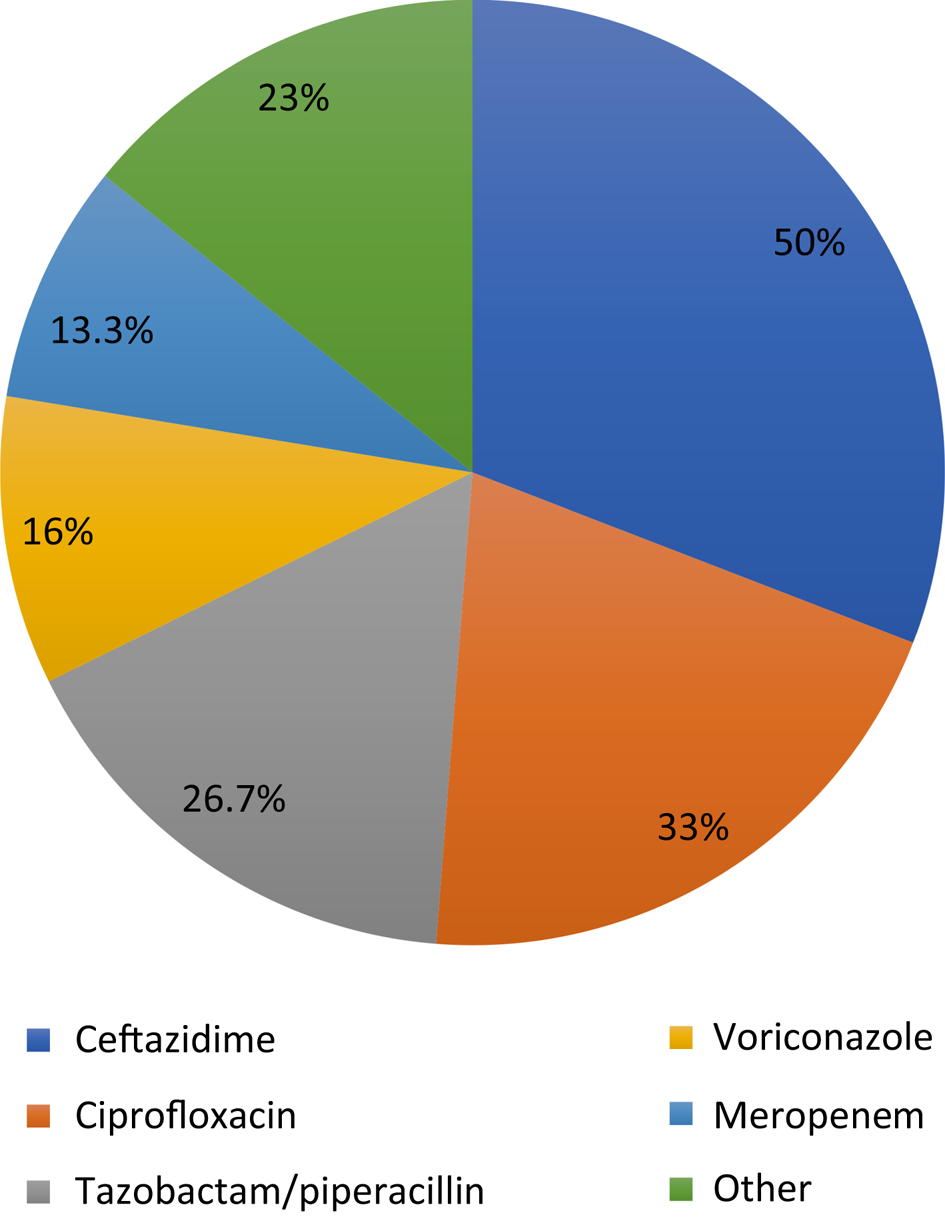
Thirty studies clearly describe antimicrobial choice. Single-agent antimicrobial treatment remains the first-line choice (Figure 4), with most favouring ceftazidime, ciprofloxacin, tazobactam/piperacillin, voriconazole for fungal infection, and meropenem. Other agents used included ceftriaxone, linezolid, cefoperazone-sulbactam, fluconazole and amphotericin B, depending on culture and sensitivity.
First-line choice of single-agent antimicrobials.

Sixteen studies employed two or more antimicrobials. Ceftazidime/ceftriaxone and ciprofloxacin, or tazobactam/piperacillin and ciprofloxacin were the most common agents of choice. Alternative dual agents were variable, and were driven by local availability, culture and sensitivity.
In a survey by Chawdhary et al.,Reference Chawdhary, Pankhania, Douglas and Bottrill11 69 per cent of clinicians in the UK used ciprofloxacin, 46 per cent used Tazocin® and 10 per cent used ceftazidime; 50 per cent used monotherapy and 37 per cent used dual therapy. Pulcini et al.Reference Pulcini, Mahdyoun, Cua, Gahide, Castillo and Guevara24 noted better outcomes with dual therapy versus single therapy, suggesting the need for future double-blind prospective trials.
Treatment duration
Duration of therapy, for in-patients and those treated in the community, varied widely. Decisions regarding treatment duration and cure definition were highly variable, with one paperReference Vion, Verillaud, Paycha, Benada, El-Deeb and Herman61 noting no current consensus on treatment duration. A number of studies documented treatment duration but did not explain how this was decided.
Mean IV treatment duration ranged between 21 days (minimum IV treatment duration ranged from 3.1 to 42 days) and 62 days (maximum IV treatment duration ranged from 18.6 to 143 days). Some studies additionally described subsequent oral treatment, with a mean duration of 10 weeks (range, 3–63 weeks); this wide range is the result of treatment continuation being largely based on clinical improvement.
The mean follow-up duration was 21.2 months (range, 7.5–61 months), with an average recurrence rate of 11.6 per cent (range, 2.9–21.4 per cent). In studies that reported mortality rates, this remained relatively low at 9.8 per cent (range, 2.9–17 per cent). The wide range could be explained by the fact that patients with significant disease were often treated in tertiary centres after a non-response to initial treatment, and some were lost to follow up.
Surgery
The role of surgery in the management of necrotising otitis externa was variable across published case series, with surgery incorporated into a treatment protocol in a minority of studies.Reference Hobson, Moy, Byers, Raz, Hirsch and McCall19,Reference Soudry, Hamzany, Preis, Joshua, Hadar and Nageris20,Reference Peled, El-Seid, Bahat-Dinur, Tzvi-Ran, Kraus and Kaplan28,Reference Glikson, Sagiv, Wolf and Shapira32,Reference Stern Shavit, Soudry, Hamzany and Nageris33,Reference Omran, El Garem and Al Alem59 In Chawdhary and colleagues’ 2017 survey,Reference Chawdhary, Pankhania, Douglas and Bottrill11 43 per cent of clinicians regularly used surgical management for necrotising otitis externa, with an additional 23 per cent occasionally using surgery. Surgery was indicated in cases of clinical non-improvement and cranial nerve palsy, and was also performed to obtain diagnostic samples and to remove sequestra.
Surgery for the purpose of obtaining tissue for histology and/or microbiology was described in five studies. Soudry et al.Reference Soudry, Hamzany, Preis, Joshua, Hadar and Nageris20 reported the goal of surgery as being the removal of diseased tissue and bone thus, debridement of the external ear canal and temporomandibular joint were performed, as well as mastoidectomy, depending on pre- and intra-operative findings. In another case series,Reference Kuczkowski and Nowicki62 75 per cent of patients required surgery because of a lack of improvement after conservative treatment. Surgery for debridement of granulation tissue and necrosed bone in selected cases was described in a minority of studies. Failure to respond to conservative management was also cited as an indication for surgery in a minority of studies.
A number of studies have described the use of surgery for specific sequelae of necrotising otitis externa, including facial or other cranial nerve palsies, abscesses, persistent otalgia,Reference Lambor, Das, Goel, Tiwari, Lambor and Fegade15 canalplasty,Reference Clerc, Verillaud, Duet, Guichard, Herman and Kania23 and ventilation tube insertion for glue ear.Reference Honnurappa, Ramdass, Mahajan, Vijayendra and Redlea17
Clinical monitoring
Clinical monitoring of necrotising otitis externa is used to guide treatment and define treatment duration. This varies between studies; indeed, Chawdhury et al.Reference Chawdhary, Liow, Democratis and Whiteside4 stated that ‘No single test reliably demonstrated disease resolution, therefore clinical examination, inflammatory marker normalization and radiological imaging are used to confirm cure’.
Radiological monitoring of necrotising otitis externa is addressed below. The monitoring of clinical responses to treatment was mentioned in 20 studies, with measures including improvement in pain and inflammatory markers, regular clinical review findings, or apparent remission of the condition.Reference Hutson and Watson10
Lambor et al.Reference Lambor, Das, Goel, Tiwari, Lambor and Fegade15 reported ‘discharge criteria’ that included the resolution of otalgia and granulations, normal otoscopy findings, and controlled diabetes. Resolution of necrotising otitis externa has been variously defined as: the absence of clinical signs or symptoms a month after antibiotic therapy completion;Reference Hobson, Moy, Byers, Raz, Hirsch and McCall19 the absence of symptoms for more than 2 weeks, with normalisation of inflammatory markers and without relapse within 12 weeks;Reference Loh and Loh42 and nocturnal otalgia resolution.Reference Honnurappa, Ramdass, Mahajan, Vijayendra and Redlea17 It is agreed that prognostic factors remain elusive.
Radiology
Radiology in diagnosis
Computed tomography (CT) was the most popular imaging modality for diagnosing necrotising otitis externa, utilised in 30 of 32 studies (94 per cent) that addressed imaging. Computed tomography alone was used in 28 per cent of studies; fluorodeoxyglucose (FDG) positron emission tomography (PET)/CT alone was used in one study.Reference Stern Shavit, Bernstine, Sopov, Nageris and Hilly29
Magnetic resonance imaging (MRI) featured in 50 per cent of studies; radiotracers (Technetium-99 (Tc99)/FDG PET-CT) featured in 46.9 per cent. A combination of CT, MRI and radiotracers was used in 28.1 per cent of studies, CT and radiotracers were used in 18.8 per cent, and CT and MRI were used in 21.9 per cent.
Despite the popularity of CT, several studiesReference Lau, Scotta, Wu, Kabuli and Watson9,Reference Cooper, Hildrew, McAfee, McCall, Branstetter and Hirsch63 noted that over 40 per cent of CT scans were difficult to interpret; they failed to clearly delineate soft tissue changes in early necrotising otitis externa, potentially leading to under-management and early recurrence.
Gamma-emitting tracers are expensive, time-consuming, have poor anatomical resolution, are not always accessible and expose patients to high-dose radiation;Reference Stern Shavit, Bernstine, Sopov, Nageris and Hilly29 hence, their use in the diagnosis and assessment of necrotising otitis externa has been questioned.Reference Sturm, Stern Shavit and Lalwani64
Radiological monitoring
Eighteen studies used imaging to monitor responses to treatment. The monitoring methods were variable, and included the use of MRI, gallium-67 (Ga67) and FDG PET-CT. There is a growing body of evidenceReference Van Kroonenburgh, van der Meer, Bothof, van Tilburg, van Tongeren and Postma65,Reference Kulkarni, Padma and Shanmuga Sundaram66 indicating that beta-emitting FDG combined with PET-CT may be useful for diagnosis and for monitoring the treatment response.Reference Stern Shavit, Bernstine, Sopov, Nageris and Hilly29,Reference Sturm, Stern Shavit and Lalwani64
Radiological staging systems
Nine studies used different staging systems to: quantify disease, monitor treatment and determine possible prognostic indicators. Two studies concluded that medial disease progression or major findings on CT were poor prognostic indicators.Reference Soudry, Hamzany, Preis, Joshua, Hadar and Nageris20,Reference Lee, Song, Oh, Chang, Kim and Lee52 Imaging was used to stage necrotising otitis externa depending on the direction of spread,Reference Lee, Song, Oh, Chang, Kim and Lee52 or anatomical subunits and bony involvement. There was low prognostic correlation, though medial disease progression,Reference Lee, Song, Oh, Chang, Kim and Lee52 clival involvementReference Loh and Loh42 and a meta-analysis of cranial nerve involvementReference Lee, Lee, Seon, Jung, Lee and Choi18 indicated worse clinical outcomes.
Multidisciplinary team input
Thirteen studies highlighted the importance of input from infectious diseases and microbiology departments, and from endocrinologists or diabetologists and neuroradiologists, when managing patients diagnosed with necrotising otitis externa. Chawdhary et al.Reference Chawdhary, Pankhania, Douglas and Bottrill11 ascertained that when managing patients with necrotising otitis externa, 78 per cent of clinicians liaised with microbiologists, 64 per cent utilised out-patient parenteral antimicrobial therapy services, 42 per cent worked with radiologists, 16 per cent liaised with endocrinologists and 10 per cent engaged with colleagues in geriatric medicine.
Discussion
In the past decade, there has been a continued increase in necrotising otitis externa cases in the UK, and an associated burden on patients and healthcare systems. Without an agreed framework of definitions and a standardised reporting dataset, published work remains heterogeneous, with a paucity of scientific analysis. This up-to-date scoping review identifies a number of key areas where further research could be focused, to optimise evidence and facilitate consensus. We suggest the following points.
First, there are no recognised diagnostic criteria or standardised reporting outcome measures for necrotising otitis externa. Published case series therefore have a heterogeneous case mix of patients. This means that analyses of investigations, therapies and outcomes are unreliable and poorly comparable. Universally recognised and accepted diagnostic criteria are required, as are standardised outcome measures, for future clinical trials to be reliable.
Second, diabetes is a recognised risk factor for necrotising otitis externa. Several other potential risk factors have been reported, but none have yet been explored scientifically. Analysis of the relative contribution of recognised factors to necrotising otitis externa risk would be useful.
Third, methods of microbiological sampling and culture are inconsistent between case series. It is likely that this contributes to the heterogeneity of results. Further work to clarify this is essential. The emerging trend is for both solid and liquid samples to be analysed for bacterial and fungal species, at the time of diagnosis.
Fourth, published necrotising otitis externa treatment protocols vary widely, not only in terms of antimicrobial therapies and duration, but also the role of adjunctive treatments such as surgery, hyperbaric oxygen therapy, optimisation of glycaemic control and analgesia. It is likely that the latter were utilised, but not explicitly mentioned in published series. Clinical trials to determine treatment protocols would be useful. Consistency of treatment reporting is essential for the reliability of future work. Recommendations for treatment duration, and the role of surgery and other adjunctive therapies, are highly varied in the literature, and require clarification.
Fifth, clinical monitoring and responses to treatment are widely utilised to determine the need for conversion from IV to oral antibiotic therapy, and cessation of treatment. There is currently no universally accepted method to recognise disease remission, resolution or recurrence.
Sixth, prognostic factors require clarification through large-scale trials, and are likely to include subjective and objective factors, and long-term follow up to identify disease-specific mortality.
Seventh, imaging performed for diagnosis and grading, to assess treatment response, and to determine antimicrobial treatment cessation in necrotising otitis externa, remains heterogeneous. The choice of imaging is often based on the strengths and weaknesses of each modality, as well as availability, rather than large, prospective, evidence-based studies. There is promising future work on the use of PET imaging (PET-CT and PET-MRI), but no studies to date have reliably explored these imaging modalities. A multi-centre study, with consistent strategies for necrotising otitis externa diagnosis, management, monitoring and treatment termination, is required to clarify the utility of imaging methodologies, and to optimise input from radiology.
Finally, input from multidisciplinary colleagues in the care of patients with necrotising otitis externa is important, yet evidence for this is currently elusive. Future research to clarify the importance of input from other specialties, and determine the relevance of factors such as nutrition, diabetic control, frailty and immunocompromise, is essential to optimise management of these patients.
Conclusion
This scoping review has identified key themes in the necrotising otitis externa literature, and highlighted the paucity of evidence on the diagnosis and management of necrotising otitis externa.
In this brief scoping review, we have taken a unique approach, identifying core themes in the necrotising otitis externa literature, and analysing the evidence within these categories, to recommend the next steps for large-scale, robust research and clinical trials on this topic. This is necessary to enhance our understanding of necrotising otitis externa and optimise its management.
Competing interests
None declared