



1 Introduction
The classical Alexandrov–Fenchel inequalities state that for a convex body
 $\Omega \subset \mathbb {R}^{n+1}$
with smooth boundary
 $M=\partial \Omega $
,
 $$ \begin{align} \int_{M}\sigma_{k}d\mu\geq\binom{n}{k}\omega_n\left(\frac{\int_{M}\sigma_{\ell}d\mu}{\binom{n}{\ell}\omega_n}\right)^{\frac{n-k}{n-\ell}}, \quad 0\leq\ell<k\leq n, \end{align} $$
where
 $\sigma _k$
is the kth mean curvature of M and
 $\omega _n$
is the area of the unit sphere
 $\mathbb {S}^n$
. Equality holds in (1.1) if and only if M is a sphere. The Alexandrov–Fenchel inequalities (1.1) have been generalized to non-convex domains, including the star-shaped and k-convex domains, through the work of Guan–Li [Reference Guan and Li19] by using an inverse curvature flow. Further extensions and related results can be found in [Reference Chang and Wang5, Reference Chang and Wang6, Reference Qiu30].
Recently, the study of weighted geometric inequalities has attracted a lot of attention. Kwong–Miao [Reference Kwong and Miao23] first obtained the inequality
 $$ \begin{align} \int_{M}\Phi Hd\mu \geq \frac{n(n+1)}{2}\operatorname{Vol}(\Omega), \end{align} $$
for star-shaped and mean convex hypersurface
 $M\subset \mathbb {R}^{n+1}$
enclosing a bounded domain
 $\Omega $
, where
 $\Phi =\frac {1}{2}r^2$
. Equality holds in (1.2) if and only if M is a round sphere centered at the origin. Later, the inequality (1.2) has been generalized to higher-order mean curvatures in [Reference Girão and Rodrigues17, Reference Kwong and Miao24, Reference Wei and Zhou34]. Wu [Reference Wu35] extended it to a broader weighted class
 $\Phi ^{\alpha }\, (\alpha \geq 1)$
via normalized inverse curvature flow. Kwong–Wei [Reference Kwong and Wei26] further generalized it to arbitrary non-decreasing convex
 $C^2$
positive weight function
 $g(\Phi )$
, and they proved for any smooth closed star-shaped and k-convex hypersurface
 $M\subset \mathbb {R}^{n+1}$
,
 $$ \begin{align} \begin{aligned} \int_M g(\Phi)\sigma_{k}d\mu \geq \binom{n}{k}\omega_n g\left(\frac{1}{2}\left(\frac{\int_{M}\sigma_{\ell}d\mu}{\binom{n}{\ell}\omega_n}\right)^{\frac{2}{n-\ell}}\right)\left(\frac{\int_{M}\sigma_{\ell}d\mu}{\binom{n}{\ell}\omega_n}\right)^{\frac{n-k}{n-\ell}}, \quad 0\leq \ell < k \leq n. \end{aligned} \end{align} $$
When
 $g(\cdot )\equiv 1$
, inequalities (1.3) reduce to the classical Alexandrov–Fenchel inequalities (1.1).
To state the weighted Alexandrov–Fenchel-type inequalities in general space forms
 $N^{n+1}(K)$
with constant sectional curvature
 $K=-1,0,$
or
 $1$
, we consider the space forms as the warped product manifolds
 $N^{n+1}(K)=I \times \mathbb {S}^n$
equipped with the metric
 $$ \begin{align*}\bar{g}=d r^2+\phi^2(r) g_{\mathbb{S}^n}, \end{align*} $$
where
 $g_{\mathbb {S}^n}$
is the standard round metric of
 $\mathbb {S}^n$
. More specifically,
 $N^{n+1}(0)$
is the Euclidean space
 $\mathbb {R}^{n+1}$
if
 $\phi (r)=r$
,
 $r\in [0,\infty )$
;
 $N^{n+1}(-1)$
is the hyperbolic space
 $\mathbb {H}^{n+1}$
if
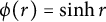 $\phi (r)=\sinh r$
,
 $r\in [0,\infty )$
; and
 $N^{n+1}(1)$
is the sphere
 $\mathbb {S}^{n+1}$
if
 $\phi (r)=\sin r$
,
 $r\in [0,\pi )$
. We define
 $$ \begin{align} \Phi(r)=\int_{0}^{r}\phi(s)ds=\left\{\begin{array}{@{}lll} \cosh r-1, & K=-1, \\ \frac{1}{2} r^2, & K=0, \\ 1-\cos r, & K=1. \end{array}\right. \end{align} $$
It is well-known that the vector field
 $V=\bar {\nabla }\Phi =\phi (r)\partial _r$
on
 $N^{n+1}(K)$
is a conformal Killing field, satisfying
 $\bar {\nabla }(\phi (r)\partial _r)=\phi '(r)\bar {g}$
.
For a smooth convex body
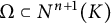 $\Omega \subset N^{n+1}(K)$
with boundary
 $M=\partial \Omega $
, the kth quermassintegral
 $W_{k}$
of
 $\Omega $
can be expressed as follows (see [Reference Solanes32]):
 $$ \begin{align*} W_{-1}(\Omega)&=\operatorname{Vol}(\Omega), \quad W_0(\Omega)=|\partial\Omega|, \\ W_1(\Omega)&=\int_{M} \sigma_1 d \mu + Kn\operatorname{Vol}(\Omega), \\ W_k(\Omega)&=\int_{M} \sigma_k d \mu + K\frac{n-k+1}{k-1}W_{k-2}(\Omega), \quad k=2, \ldots, n, \end{align*} $$
where
 $\sigma _k=\sigma _k(\kappa )$
is the kth elementary symmetric polynomial of the principal curvatures
 $\kappa =\left (\kappa _1, \ldots , \kappa _{n}\right )$
of M.
In hyperbolic space
 $\mathbb {H}^{n+1}$
, due to the close relationship with the quasilocal mass and the Riemannian Penrose inequality (see, for instance, [Reference Brendle, Hung and Wang4]), the weighted Alexandrov–Fenchel-type inequalities have been studied extensively. For h-convex hypersurfaces (i.e.,
 $\kappa _i \geq 1$
for all principal curvatures
 $\kappa _i$
), Hu–Li–Wei [Reference Hu, Li and Wei22] established the following inequalities comparing weighted curvature integrals to quermassintegrals,
 $$ \begin{align} \int_M \phi^{\prime}(r) \sigma_k d\mu \geq \eta_{k, \ell}\left(W_\ell(\Omega)\right), \quad -1\leq \ell <k\leq n, \end{align} $$
where
 $\eta _{k, \ell }$
is the unique function such that equality holds in (1.5) for geodesic spheres, and equality holds if and only if M is a geodesic sphere centered at the origin. This result generalizes earlier work by Ge–Wang–Wu [Reference Ge, Wang and Wu15], who proved the case for k being odd and
 $\ell =0$
. As an application, they proved a positive mass theorem for the Gauss–Bonnet–Chern mass of asymptotically hyperbolic graphs. For
 $k=1$
and
 $\ell =0$
, the corresponding weighted Minkowski inequality was established in [Reference De Lima and Girão8] for star-shaped and mean convex hypersurfaces. See also [Reference Brendle, Guan and Li3] for related results. Wei–Zhou [Reference Wei and Zhou34] subsequently proved the following improved weighted geometric inequalities for h-convex hypersurfaces:
 $$ \begin{align} \int_M \Phi \sigma_k d \mu \geq \xi_{k, \ell}\left(W_\ell(\Omega)\right), \quad -1\leq \ell < k \leq n, \end{align} $$
where
 $\xi _{k, \ell }$
is the unique function such that equality holds in (1.6) for geodesic spheres, and equality holds if and only if M is a geodesic sphere centered at the origin. In this direction, we refer to [Reference Kwong and Wei25].
In sphere
 $\mathbb {S}^{n+1}$
, there are less results concerning weighted geometric inequalities. Applying Guan–Li’s mean curvature type flow [Reference Guan and Li20], Wei–Zhou [Reference Wei and Zhou34] proved for convex hypersurfaces,
 $$ \begin{align} \int_{M}\Phi Hd\mu \geq \psi (\operatorname{Vol}(\Omega)), \end{align} $$
where
 $\psi $
is the unique function such that equality holds in (1.7) for geodesic spheres, and equality holds if and only if M is a geodesic sphere centered at the origin. For other related results, see [Reference Girão and Pinheiro16, Reference Kwong, Wei, Wheeler and Wheeler27] and references therein.
Based on the aforementioned works, a natural question is whether there exists a family of Alexandrov–Fenchel-type inequalities involving more general weight function in space forms
 $N^{n+1}(K)$
. In this article, we focus on the validity and the stability of various weighted geometric inequalities for nearly spherical sets in space forms
 $N^{n+1}(K)$
.
Let
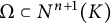 $\Omega \subset N^{n+1}(K)$
be a star-shaped domain with respect to the origin O. Denote
 $M=\partial \Omega $
, and let
 $u:\mathbb {S}^{n}\rightarrow (-1,+\infty )$
be a function such that M can be parameterized as
 $M=\{(\rho (1+u(x)),x):x\in \mathbb {S}^n\}$
, where
 $\rho>0$
is a constant. When
 $u=0$
, it reduces to the geodesic ball of radius
 $\rho $
centered at O, denoted by
 $\bar {B}_{\rho }$
. The barycenter of
 $\Omega $
, denoted by
 $\operatorname {bar}(\Omega )$
, is defined as the minimizer
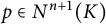 $p \in N^{n+1}(K)$
of the function (see, for instance, [Reference Bögelein, Duzaar and Fusco1, Reference Bögelein, Duzaar and Scheven2, Reference Zhou and Zhou37])
 $$ \begin{align*}p \mapsto \int_{\Omega} \mathrm{d}_K^2(y, p) d v_K(y), \end{align*} $$
where
 $\mathrm {d}_K(y, p)$
is the geodesic distance between
 $y \in \Omega $
and p, and
 $d v_K(y)$
is the volume measure of
 $N^{n+1}(K)$
.
Motivated by the analysis in [Reference Fuglede10], where a similar approach was applied to the isoperimetric inequality, Glaudo [Reference Glaudo18] investigated the validity and the stability of Minkowski-type inequalities for nearly spherical sets in
 $\mathbb {R}^{n+1}$
with
 $\rho =1$
. Specifically, for a domain
 $\Omega \subset \mathbb {R}^{n+1}$
with nearly spherical boundary
 $\partial \Omega =M=\{(1+u(x),x):x\in \mathbb {S}^n\}$
, where
 $\|u\|_{C^1}\ll 1$
,
 $\operatorname {Vol}(\Omega )=\operatorname {Vol}(\bar {B}_{1})$
and
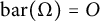 $\operatorname {bar}(\Omega )=O$
, they established the following volumetric Minkowski inequality:
 $$ \begin{align} \int_{M}H^{+}d\mu \geq n\omega_n \left(\frac{(n+1)\operatorname{Vol}(\Omega)}{\omega_n}\right)^{\frac{n-1}{n+1}}, \end{align} $$
where
 $H^+ = \max \{H,0\}$
denotes the positive part of the mean curvature. The first goal of this article is to generalize this result to space forms
 $N^{n+1}(K)$
with a general convex weight.
Theorem 1.1 Given
 $n \geq 3$
. Let
 $\Omega \subset N^{n+1}(K)\, (K=-1,0,1)$
be a domain with boundary
 $M=\{(\rho (1+u(x)),x):x\in \mathbb {S}^n\}$
, where
 $\operatorname {Vol}(\Omega )=\operatorname {Vol}(\bar {B}_{\rho })$
and
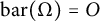 $\operatorname {bar}(\Omega )=O$
. Let g be a non-decreasing convex
 $C^3$
positive function. Then there exists
 $\varepsilon>0$
such that if
 $\|u\|_{C^1}<\varepsilon $
, it holds
 $$ \begin{align} \int_M g(\Phi) H^+ d \mu \geq \chi \left(\operatorname{Vol}(\Omega)\right), \end{align} $$
where
 $H^+ = \max (H,0)$
, and
 $\chi $
is the unique function such that equality holds in (1.9) when
 $\Omega $
is a geodesic ball. Equality holds in (1.9) if and only if
 $\Omega $
is a geodesic ball centered at the origin.
Remark 1.1 Notice that if
 $\Omega $
is
 $C^1$
-close to a geodesic ball, then the boundary M may have unbounded curvatures and may not be convex or mean convex. Under mean convex assumption, the weighted inequality (1.9) specializes to several cases:
-
(1) For Euclidean space (
 $K=0$
):
-
(2) For hyperbolic space (
$K=-1$
): -
(3) For spherical case (
$K=1$
):-
(i) when
$g(s)=s$
, it reduces to the inequality (1.7).
-


In [Reference Scheuer and Xia31], Scheuer–Xia deduced the following new Minkowski-type inequality in hyperbolic space.
Theorem A [Reference Scheuer and Xia31]
Let
 $\Omega $
be a star-shaped and mean convex domain with smooth boundary M in
 $\mathbb {H}^{n+1}$
. Then there holds
 $$ \begin{align} \int_M \phi^{\prime} H d \mu \geq n(n+1) \int_{\Omega} \phi^{\prime} d v+n\omega_n^{\frac{2}{n+1}}\left((n+1) \int_{\Omega} \phi^{\prime} d v\right)^{\frac{n-1}{n+1}}. \end{align} $$
Equality holds in (1.10) if and only if
 $\Omega $
is a geodesic ball centered at the origin.
The second goal of this article is to establish the inequality (1.10) with general convex weights for nearly spherical domains in
 $\mathbb {H}^{n+1}$
.
Theorem 1.2 Given
 $n \geq 3$
. Let
 $\Omega \subset \mathbb {H}^{n+1}$
be a domain with boundary
 $M=\{(\rho (1+u(x)),x):x\in \mathbb {S}^n\}$
, where
 $\int _{\Omega }\phi ' dv = \int _{\bar {B}_{\rho }}\phi ' dv$
and
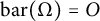 $\operatorname {bar}(\Omega )=O$
. Let g be a non-decreasing convex
 $C^3$
positive function which satisfies
 $(1+s)g'(s)-g(s)\geq 0$
. Then there exists
 $\varepsilon>0$
such that if
 $\|u\|_{C^1}<\varepsilon $
, it holds
 $$ \begin{align} \begin{aligned} \int_M g(\Phi) H^+ d \mu \geq &n \omega_n g\left(\left(1+\left(\frac{(n+1)\int_{\Omega}\phi'dv}{w_n}\right)^{\frac{2}{n+1}}\right)^{\frac{1}{2}}-1\right) \\& \times \left(\left(\frac{(n+1)\int_{\Omega}\phi'dv}{w_n}\right)^{\frac{2(n-1)}{n+1}} + \left(\frac{(n+1)\int_{\Omega}\phi'dv}{w_n}\right)^{\frac{2n}{n+1}}\right)^{\frac{1}{2}}, \end{aligned} \end{align} $$
where
 $H^+ = \max \{H,0\}$
. Equality holds in (1.11) if and only if
 $\Omega $
is a geodesic ball centered at the origin.
Remark 1.2 Recall that
 $\phi '=\Phi +1$
in
 $\mathbb {H}^{n+1}$
. When taking
 $g(s)=1+s$
, the inequality (1.11) reduces to (1.10) in the mean convex case. From the condition
 $(1+s)g'(s)-g(s)\geq 0$
, we can deduce
 $g(s)=C(s)(1+s)$
for some positive and non-decreasing function
 $C(s)$
. Theorem 1.2 generates a broad class of geometric inequalities via different convex weight selections, particularly including
 ${\phi '}^{\alpha } (\alpha \geq 1)$
and
 ${\Phi }^{\alpha } (\alpha \geq 1)$
.
For a bounded domain
 $\Omega $
in
 $\mathbb {H}^{n+1}$
with smooth boundary M, it is called static convex if its second fundamental form satisfies
 $$ \begin{align} h_{ij}\geq\frac{\bar{\nabla}_{N} \phi'}{\phi'}g_{ij}> 0, \quad \text{everywhere on }M, \end{align} $$
where N is the outward unit normal vector on M. Applying locally constrained curvature flows, Hu–Li [Reference Hu and Li21] proved the following weighted geometric inequalities for static convex domains in
 $\mathbb {H}^{n+1}$
.
Theorem B [Reference Hu and Li21]
Let
 $\Omega $
be a static convex domain with smooth boundary M in
 $\mathbb {H}^{n+1}$
. For
 $0 \leq k \leq n$
, there holds
 $$ \begin{align} \int_M \phi^{\prime} \sigma_{k} d \mu \geq \binom{n}{k} \omega_n \left(\left(\frac{(n+1) \int_{\Omega} \phi^{\prime} d v}{\omega_n}\right)^{\frac{2}{k+1}}+\left(\frac{(n+1) \int_{\Omega} \phi^{\prime} d v}{\omega_n}\right)^{\frac{2(n-k)}{(n+1) (k+1)}}\right)^{\frac{k+1}{2}}. \end{align} $$
Equality holds in (1.13) if and only if
 $\Omega $
is a geodesic ball centered at the origin.
When
 $k=1$
, (1.13) reduces to (1.10). Next, we investigate a generalization of (1.13) with more general convex weights for nearly spherical sets of the form
 $M=\{(\rho (1+u(x)),x):x\in \mathbb {S}^n\}$
, where
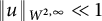 $\|u\|_{W^{2,\infty }}\ll 1$
. Here, since higher-order curvature terms are involved, we will require small bounds on
 $|\nabla ^2 u|$
as well.
Theorem 1.3 Let
 $\Omega \subset \mathbb {H}^{n+1}$
be a domain with boundary
 $M=\{(\rho (1+u(x)),x):x\in \mathbb {S}^n\}$
, where
 $\int _{\Omega }\phi ' dv = \int _{\bar {B}_{\rho }}\phi ' dv$
and
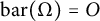 $\operatorname {bar}(\Omega )=O$
. Let g be a non-decreasing convex
 $C^3$
positive function which satisfies
 $(1+s)g'(s)-g(s)\geq 0$
. Then there exists
 $\varepsilon>0$
such that if
 $\|u\|_{W^{2,\infty }}<\varepsilon $
, it holds for
 $0\leq k \leq n$
,
 $$ \begin{align} \begin{aligned} \int_M g(\Phi) \sigma_{k} d \mu \geq &\binom{n}{k} \omega_n g\left(\left(1+\left(\frac{(n+1)\int_{\Omega}\phi'dv}{w_n}\right)^{\frac{2}{n+1}}\right)^{\frac{1}{2}}-1\right) \\& \times \left(\left(\frac{(n+1)\int_{\Omega}\phi'dv}{w_n}\right)^{\frac{2(n-k)}{(n+1)k}} + \left(\frac{(n+1)\int_{\Omega}\phi'dv}{w_n}\right)^{\frac{2n}{(n+1)k}}\right)^{\frac{k}{2}}. \end{aligned} \end{align} $$
Equality holds in (1.14) if and only if
 $\Omega $
is a geodesic ball centered at the origin.
In [Reference Zhou and Zhou37], Zhou–Zhou established the stability of weighted quermassintegral inequalities by estimating the upper bound of the Fraenkel asymmetry
 $\alpha (\Omega )$
in
 $N^{n+1}(K)$
, defined as
 $$ \begin{align*}\alpha(\Omega)=\inf \left\{\operatorname{Vol}\left(\Omega \Delta \bar{B}_\rho(x)\right): x \in N^{n+1}(K), \operatorname{Vol}(\Omega)=\operatorname{Vol}\left(\bar{B}_\rho(x)\right)\right\}, \end{align*} $$
where
 $\Delta $
is the symmetric difference between two sets. In the following, we prove the quantitative quermassintegral inequalities with general convex weights for nearly spherical sets in
 $\mathbb {H}^{n+1}$
.
Theorem 1.4 Suppose
 $0\leq k \leq n-1$
,
 $-1\leq j < k$
. Let
 $\Omega \subset \mathbb {H}^{n+1}$
be a domain with boundary
 $M=\{(\rho (1+u(x)),x):x\in \mathbb {S}^n\}$
, where
 $W_{j}(\Omega )=W_{j}(\bar {B}_{\rho })$
and
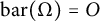 $\operatorname {bar}(\Omega )=O$
. Let g be a non-decreasing convex
 $C^3$
positive function which satisfies
 $(1+s)g'(s)-g(s)\geq 0$
. For any
 $\eta>0$
, there exists
 $\varepsilon>0$
such that if
 $\|u\|_{W^{2,\infty }}<\varepsilon $
, then
 $$ \begin{align} \begin{aligned} &\int_M g(\Phi) \sigma_{k} d \mu - \int_{\partial\bar{B}_{\rho}} g(\Phi) \sigma_{k} d \mu\\ &\qquad\qquad\qquad\qquad\qquad\qquad\geq \left(\frac{n(n-k)(k-j)}{4\operatorname{Area}(\mathbb{S}^n)}\binom{n}{k}\frac{{\phi'}^{k}(\rho)g(\Phi(\rho))}{\phi^{n+k+2}(\rho)} - \eta\right)\alpha^2 (\Omega). \end{aligned} \end{align} $$
Remark 1.3 Special cases of Theorem 1.4 include:
-
(i) For
$g(s) = 1 + s$
, inequality (1.15) reduces to the quantitative version of (1.5). -
(ii) For
$g(s) = s$
, it yields the quantitative version of (1.6).


This result extends Zhou–Zhou’s work [Reference Zhou and Zhou37, Theorem 1.6].
A direct consequence of Theorem 1.4 is the following Alexandrov–Fenchel-type inequalities with general convex weights for nearly spherical sets in
 $\mathbb {H}^{n+1}$
.
Corollary 1.1 Suppose
 $0\leq k \leq n$
,
 $-1\leq j < k$
. Let
 $\Omega \subset \mathbb {H}^{n+1}$
be a domain with boundary
 $M=\{(\rho (1+u(x)),x):x\in \mathbb {S}^n\}$
, where
 $W_{j}(\Omega )=W_{j}(\bar {B}_{\rho })$
and
 $\operatorname {bar}(\Omega )=O$
. Let g be a non-decreasing convex
 $C^3$
positive function which satisfies
 $(1+s)g'(s)-g(s)\geq 0$
. Then there exists
 $\varepsilon>0$
such that if
 $\|u\|_{W^{2,\infty }}<\varepsilon $
, it holds
 $$ \begin{align} \begin{aligned} \int_M g(\Phi) \sigma_{k} d \mu \geq &\zeta_{k, j}\left(W_j (\Omega)\right), \end{aligned} \end{align} $$
where
 $\zeta _{k, j}$
is the unique function such that equality holds in (1.16) for geodesic spheres, and equality holds in (1.16) if and only if
 $\Omega $
is a geodesic ball centered at the origin.
Remark 1.4 Recent work in [Reference Pan and Liu29, Reference Wu36] established weighted Alexandrov–Fenchel-type inequalities (1.14) and (1.16) for static convex hypersurfaces in
 $\mathbb {H}^{n+1}$
by using locally constrained inverse curvature flows. Their results required the stronger condition
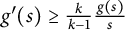 $g'(s) \geq \frac {k}{k-1}\frac {g(s)}{s}$
, whereas our results only assume
 $g'(s) \geq \frac {g(s)}{1+s}$
.
Finally, we establish the stability of inequality (1.3) for nearly spherical sets in
 $\mathbb {R}^{n+1}$
.
Theorem 1.5 Suppose
 $0\leq k \leq n$
,
 $-1\leq j < k$
. Let
 $\Omega \subset \mathbb {R}^{n+1}$
be a domain with boundary
 $M=\{(\rho (1+u(x)),x):x\in \mathbb {S}^n\}$
, where
 $W_{j}(\Omega )=W_{j}(\bar {B}_{\rho })$
and
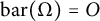 $\operatorname {bar}(\Omega )=O$
. Let g be a non-decreasing convex
 $C^3$
positive function. For any
 $\eta>0$
, there exists
 $\varepsilon>0$
such that if
 $\|u\|_{W^{2,\infty }}<\varepsilon $
, then
 $$ \begin{align} \begin{aligned} &{\int_M g(\Phi)\sigma_{k}d\mu-\int_{\partial\bar{B}_{\rho}} g(\Phi)\sigma_{k}d\mu}\\ \geq& \left[\binom{n}{k}\frac{n((n-k)(k-j)g(\Phi(\rho))+(2k-j-1)\rho^{2}g'(\Phi(\rho)))}{4\operatorname{Area}(\mathbb{S}^n) \rho^{n+k+2}}-\eta\right]{\alpha}^{2}(\Omega). \end{aligned} \end{align} $$
Remark 1.5 Notice that when g is a homogeneous function, that is,
 $g(s)=s^{\alpha }\, (\alpha =0\textit {~or~}\alpha \geq 1)$
, since the weighted curvature integrals are scaling invariant, one can restrict the stability result to the domain
 $\Omega $
which is close to the unit ball
 $\bar {B}_{1}$
and the stability is characterized using a rescaled version of the Fraenkel asymmetry, defined as
 $$ \begin{align*}\bar{\alpha}(\Omega)=\inf \left\{\frac{\operatorname{Vol}\left(\Omega \Delta \bar{B}_\rho(x)\right)}{\operatorname{Vol}\left(\bar{B}_\rho (x)\right)}: x \in \mathbb{R}^{n+1}, \operatorname{Vol}(\Omega)=\operatorname{Vol}\left(\bar{B}_\rho (x)\right)\right\}. \end{align*} $$
Theorem 1.5 generalizes several special cases:
-
1. For
$g \equiv 1$
, inequality (1.17) reduces to the quantitative Alexandrov–Fenchel inequality established by VanBlargan–Wang [Reference VanBlargan and Wang33, Theorem 1.3]. -
2. For
$g(s) = s$
, we recover the quantitative inequality proved by Zhou–Zhou [Reference Zhou and Zhou37, Theorem 1.5].


We mention that the Fraenkel asymmetry
 ${\alpha }(\Omega )$
is a well-studied quantity in stability analysis. The sharp quantitative isoperimetric inequality involving the Fraenkel asymmetry, with optimal exponent
 $2$
, was first established by Fusco–Maggi–Pratelli [Reference Fusco, Maggi and Pratelli13] through symmetrization arguments. Subsequently, Figalli–Maggi–Pratelli [Reference Figalli, Maggi and Pratelli9] extended this optimal result to the anisotropic perimeter by using mass transportation theory. For further reading on the quantitative isoperimetric inequalities and other weighted geometric inequalities in the quantitative forms, we refer to [Reference Fusco11, Reference Fusco and La Manna12, Reference Gavitone, La Manna, Paoli and Trani14, Reference Maggi28].
One might conjecture that inequality (1.9) holds in a
 $C^1$
neighborhood of the ball without any curvature assumption and without replacing H with
 $H^{+}$
. However, this is not true, as demonstrated by Glaudo [Reference Glaudo18, Appendix A] in the following result.
Theorem C [Reference Glaudo18]
Given
 $n\geq 2$
, for any
 $\varepsilon>0$
, there is a domain
 $\Omega \subset \mathbb {R}^{n+1}$
with smooth boundary
 $M=\{(1+u(x),x):x\in \mathbb {S}^n\}$
, where
 $\|u\|_{C^1}<\varepsilon $
, such that
 $$ \begin{align*} \int_{M} H d\mu < -1. \end{align*} $$
Additionally, Chodosh–Eichmair–Koerber [Reference Chodosh, Eichmair and Koerber7] recently provided a counterexample to the Minkowski inequality for closed surfaces that are
 $W^{2,p}\cap C^1$
-close to the sphere. This shows that the Minkowski inequality fails even for perturbations of a sphere that are small in
 $W^{2, p} \cap C^1$
unless additional convexity assumptions are imposed. This further illustrates that the regularity condition in Theorem 1.5 is optimal unless additional convexity assumptions are imposed. Specifically, they proved the following result.
Theorem D [Reference Chodosh, Eichmair and Koerber7]
For any
 $\varepsilon>0$
, there is a domain
 $\Omega \subset \mathbb {R}^{3}$
with smooth boundary
 $M=\{(1+u(x),x):x\in \mathbb {S}^n\}$
, where
 $\|u\|_{W^{2,p}\cap C^1}<\varepsilon $
for every
 $p\in [1,\infty )$
, such that
 $$ \begin{align*} \int_{M} H d\mu < \sqrt{16\pi |M|}. \end{align*} $$
The article is organized as follows: In Section 2, we review fundamental properties of elementary symmetric functions and present preliminary results for nearly spherical sets in space forms. In Section 3, we focus on the weighted Minkowski-type inequalities in space forms and prove Theorems 1.1 and 1.2. In Sections 4 and 5, we study the validity and the stability of weighted quermassintegral inequalities in both
 $\mathbb {R}^{n+1}$
and
 $\mathbb {H}^{n+1}$
and prove Theorems 1.3–1.5.
2 Preliminaries
In this section, first let us recall some basic definitions and properties of elementary symmetric functions.
For
 $1\leq k \leq n$
, let
 $\sigma _{k}$
be the kth elementary symmetry polynomial
 $\sigma _{k}:\mathbb {R}^{n}\rightarrow \mathbb {R}$
defined by
 $$ \begin{align*}\sigma_k(\lambda)=\sum_{i_1<\cdots<i_k} \lambda_{i_1} \dots \lambda_{i_k} \text { for } \lambda=\left(\lambda_1, \ldots, \lambda_{n}\right) \in \mathbb{R}^{n}. \end{align*} $$
As a convention, we take
 $\sigma _0 (\lambda ) = 1$
. For a symmetric
 $n \times n$
matrix
 $A=\left (A_i^j\right )$
, we set
 $$ \begin{align} \sigma_k(A)=\frac{1}{k !} \delta_{j_1 \dots j_k}^{i_1 \dots i_k} A_{i_1}^{j_1} \dots A_{i_k}^{j_k}, \end{align} $$
where
 $\delta _{j_1 \dots j_k}^{i_1 \dots i_k}$
is the generalized Kronecker symbol. If
 $\lambda (A)=\left (\lambda _1(A), \dots , \lambda _n(A)\right )$
are the real eigenvalues of A, then
 $$ \begin{align*}\sigma_k(A)=\sigma_k(\lambda(A)). \end{align*} $$
The kth Newton transformation is defined as follows:
 $$ \begin{align*}\left[T_k\right]_i^j(A)=\frac{\partial \sigma_{k+1}}{\partial A_j^i}(A)=\frac{1}{k !}\delta_{i i_1 \dots i_{k}}^{j j_1 \dots j_{k}} A_{j_1}^{i_1} \dots A_{j_{k}}^{i_{k}}. \end{align*} $$
If A is a diagonal matrix with
 $\lambda (A)=\left (\lambda _1, \ldots , \lambda _n\right )$
, then
 $$ \begin{align*}\left[T_k\right]_i^j(A) = \frac{\partial \sigma_{k+1}}{\partial \lambda_i}(\lambda)\delta_{i}^{j}. \end{align*} $$
Next, we collect some well-known results of nearly spherical sets parameterized by radial function in space forms
 $N^{n+1}(K)$
.
Let
 $\Omega $
be a smooth, bounded domain in
 $N^{n+1}(K)$
that is star-shaped with respect to the origin O and enclosed by M. We parameterize M via the radial function
 $M=\left \{(\rho (1+u(x)), x): x \in \mathbb {S}^n\right \}$
, where
 $u: \mathbb {S}^n \rightarrow (-1,+\infty )$
is a smooth function.
In geodesic polar coordinates of
 $N^{n+1}(K)$
, let
 $\left \{\frac {\partial }{\partial \theta _1}, \frac {\partial }{\partial \theta _2}, \ldots , \frac {\partial }{\partial \theta _n}, \frac {\partial }{\partial r}\right \}$
denote the tangent basis and
 $s_{i j}$
denote the canonical metric on
 $\mathbb {S}^n$
. Then
 $$ \begin{align*}\left\langle\frac{\partial}{\partial \theta_i}, \frac{\partial}{\partial r}\right\rangle=0, \quad \left\langle\frac{\partial}{\partial r}, \frac{\partial}{\partial r}\right\rangle=1, \quad \left\langle\frac{\partial}{\partial \theta_i}, \frac{\partial}{\partial \theta_j}\right\rangle=\phi^2(r) s_{i j}. \end{align*} $$
The tangent basis of M is given by
 $$ \begin{align*}e_i=\frac{\partial}{\partial \theta_i}+\rho u_i \frac{\partial}{\partial r}, \quad i=1,2, \ldots, n,\end{align*} $$
where
 $u_i=\frac {\partial u}{\partial \theta _i}$
. For convenience, we denote
 $$ \begin{align*}r=\rho(1+u),\quad \phi=\phi(r), \quad \phi^{\prime}=\phi^{\prime}(r), \quad D=\sqrt{\phi^2+\rho^2|\nabla u|^2}, \end{align*} $$
where
 $\nabla $
is the Levi–Civita connection on
 $\mathbb {S}^n$
and
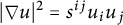 $|\nabla u|^2=s^{i j} u_i u_j$
. Then the induced metric
 $g_{i j}$
on M is
 $$ \begin{align*}g_{i j}=\rho^2 u_i u_j+\phi^2 s_{i j}. \end{align*} $$
Thus, the area element
 $\mathrm {d} \mu $
corresponding to the induced metric g is
 $$ \begin{align} d \mu=\sqrt{\operatorname{det}\left(g_{i j}\right)} dA=\phi^{n-1} D d A, \end{align} $$
the inverse of
 $\left (g_{i j}\right )$
is given by
 $$ \begin{align*}g^{i j}=\frac{s^{i j}}{\phi^2}-\frac{1}{\phi^2} \cdot \frac{\rho^2 u_k u_l s^{i k} s^{j l}}{D^2}, \end{align*} $$
and the outward unit normal vector N on M is
 $$ \begin{align*}N=\frac{-\rho s^{i j} u_i \frac{\partial}{\partial \theta_j}+\phi^2 \frac{\partial}{\partial r}}{\phi D}. \end{align*} $$
Denote
 $h_{i j}$
as the second fundamental form on M. Using the definition
 $h_{i j}=-\left \langle \bar {\nabla }_{e_i} e_j, N\right \rangle $
, then we have
 $$ \begin{align*}h_{i j}=\frac{1}{D}\left[2 \phi^{\prime} \rho^2 u_i u_j+\phi^2 \phi^{\prime} s_{i j}-\phi \rho u_{i j}\right], \end{align*} $$
and the Weingarten tensor
 $h^i_j=g^{i k} h_{k j}$
is
 $$ \begin{align*}h_j^i=\frac{\phi^{\prime} \delta_j^i}{D}-\frac{\rho u_j^i}{D \phi}+\frac{\phi^{\prime} \rho^2 u^i u_j}{D^3}+\frac{\rho^3 u^i u_k u_j^k}{D^3 \phi}, \end{align*} $$
where
 $u^i=s^{i j} u_j$
and
 $u_j^k=s^{k i} u_{i j}$
. The mean curvature H can be expressed as
 $$ \begin{align} H & = \frac{n\phi'}{D} - \frac{\rho \Delta u}{D\phi} +\frac{\phi' \rho^2 |\nabla u|^2}{D^3} + \frac{\rho^3 \nabla^2 u \left[\nabla u, \nabla u\right]}{D^3 \phi} \end{align} $$
 $$ \begin{align} & = \frac{n\phi'\phi^2 + \phi'\rho^2 |\nabla u|^2}{\phi^2 D} - \frac{\rho}{\phi^2} \operatorname{div} \left(\frac{\phi}{D} \nabla u\right). \end{align} $$
The volume and the weighted volume of
 $\Omega $
are given by
 $$ \begin{align} \operatorname{Vol}(\Omega) & = \int_{\mathbb{S}^n} \left(\int_{0}^{\rho(1+u)} \phi^n (r) dr\right) dA, \end{align} $$
 $$ \begin{align} \int_{\Omega} \phi^{\prime} d v & =\frac{1}{n+1} \int_{\mathbb{S}^n} \phi^{n+1}(\rho(1+u)) dA. \end{align} $$
Lemma 2.1 Let
 $\Omega \subset N^{n+1}(K)\, (K=-1,0,1)$
be a domain with boundary
 $M=\{(\rho (1+u(x)), x): x \in \mathbb {S}^n\}$
. Let g be a
 $C^3$
positive function defined on
 $[0,\infty )$
. Suppose
 $\|u\|_{C^1} < \varepsilon $
, then we have
 $$ \begin{align} \int_{M} & g(\Phi)H d\mu \notag\\ \!\!\!\!= &\int_{\mathbb{S}^n}n\phi^{n-1}(\rho){\phi'}(\rho)g(\Phi(\rho)) dA\notag \\ &+ n\left\{\left[(n{-}1)\phi^{n-2}(\rho){\phi'}^{2}(\rho){-} K\phi^n (\rho)\right]g(\Phi(\rho)) {+} \phi^n (\rho)\phi'(\rho)g'(\Phi(\rho))\right\} \rho\! \int_{\mathbb{S}^n}\! u dA \notag\\ &+ {n}\left\{\left[\frac{(n-1)(n-2)}{2}\phi^{n-3}(\rho) {\phi'}^{3}(\rho) + K(1-\frac{3n}{2})\phi^{n-1} (\rho) {\phi'} (\rho)\right]g(\Phi(\rho))\right. \notag\\&\left.+ \phi^{n-1} (\rho) {\phi'} (\rho)\left[\frac{1}{2}g"(\Phi(\rho))\phi^{2}(\rho) + (n-\frac{1}{2})g'(\Phi(\rho)){\phi'} (\rho)\right]\right.\\&\left. - K\phi^{n+1}(\rho)g'(\Phi(\rho))\right\} \rho^2 \int_{\mathbb{S}^n} u^2 dA\notag\\ & + \left[(n-1) \phi^{n-3}(\rho){\phi'} (\rho) g(\Phi(\rho)) + \phi^{n-1}(\rho)g'(\Phi(\rho))\right] \rho^2 \int_{\mathbb{S}^n} |\nabla u|^2 dA \notag\\ &+ \int_{\mathbb{S}^n} \frac{\phi^{n-2} g(\Phi) \rho^3}{D^2} \nabla^2 u \left[\nabla u, \nabla u\right] dA \notag\\ & + O(\varepsilon)\|u\|_{L^2\left(\mathbb{S}^n\right)}^2+O(\varepsilon)\|\nabla u\|_{L^2\left(\mathbb{S}^n\right)}^2.\notag \end{align} $$
Proof Starting from the expressions for the area element (2.2) and mean curvature (2.3), we obtain the identity
 $$ \begin{align} \begin{aligned} \int_{M}g(\Phi)H d\mu = \int_{\mathbb{S}^n}&\left[n\phi^{n-1}\phi' g(\Phi) - \rho\phi^{n-2}g(\Phi)\Delta u + \frac{\phi^{n-1}\phi'g(\Phi)\rho^{2}}{D^2}|\nabla u|^2\right.\\&\left. + \frac{\phi^{n-2}g(\Phi)\rho^3}{D^2}\nabla^2 u \left[\nabla u, \nabla u\right]\right] dA, \end{aligned} \end{align} $$
where
 $r=\rho (1+u)$
,
 $\phi =\phi (r)$
,
 $\phi '=\phi '(r)$
, and
 $D=\sqrt {\phi ^2 (r) + \rho ^2 |\nabla u|^2}$
can all be seen as functions of two independent variables u and
 $|\nabla u|^2$
.
We proceed with Taylor expansion at
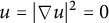 $u=|\nabla u|^2=0$
, using the assumption
 $\|u\|_{C^1} < \varepsilon $
to control the remainder terms and the fact
 $\phi "=-K\phi $
, which yield that the first term expands as
 $$ \begin{align*} \int_{\mathbb{S}^n}&n\phi^{n-1}{\phi'}g(\Phi) \\\!\!\!\!= &\int_{\mathbb{S}^n}n\phi^{n-1}(\rho){\phi'}(\rho)g(\Phi(\rho)) \\ &+ \int_{\mathbb{S}^n}n\left\{\left[(n-1)\phi^{n-2}(\rho){\phi'}^{2}(\rho)- K\phi^n (\rho)\right]g(\Phi(\rho)) + \phi^n (\rho)\phi'(\rho)g'(\Phi(\rho))\right\} \rho u \\ &+ \int_{\mathbb{S}^n}\frac{n}{2}\left\{\left[(n-1)(n-2)\phi^{n-3}(\rho) {\phi'}^{3}(\rho) + K(2-{3n})\phi^{n-1} (\rho) {\phi'} (\rho)\right]g(\Phi(\rho))\right. \\&+ \phi^{n-1} (\rho) {\phi'} (\rho)\left[g"(\Phi(\rho))\phi^{2}(\rho) + (2n-1)g'(\Phi(\rho)){\phi'} (\rho)\right]\\&\left. -\ 2K\phi^{n+1}(\rho)g'(\Phi(\rho))\right\} \rho^2 u^2\\& + O(\varepsilon)\|u\|_{L^2\left(\mathbb{S}^n\right)}^2. \end{align*} $$
Integrating by parts, the Laplacian term gives
 $$ \begin{align*} -\int_{\mathbb{S}^n}\rho\phi^{n-2}g(\Phi)\Delta u = & \int_{\mathbb{S}^n} \left((n-2) \phi^{n-3}{\phi'}g(\Phi) + \phi^{n-1}g'(\Phi)\right) \rho^2 |\nabla u|^2 \\= &\int_{\mathbb{S}^n}\left((n-2) \phi^{n-3}(\rho){\phi'} (\rho) g(\Phi(\rho))\right. \\&\left.+\ \phi^{n-1}(\rho)g'(\Phi(\rho))\right) \rho^2 |\nabla u|^2+ O(\varepsilon)\|\nabla u\|_{L^2\left(\mathbb{S}^n\right)}^2. \end{align*} $$
The gradient term can be simplified as
 $$ \begin{align*} \int_{\mathbb{S}^n}\frac{\phi^{n-1}{\phi'}g(\Phi)\rho^{2}}{D^2}|\nabla u|^2 = & \int_{\mathbb{S}^n}\phi^{n-3}(\rho){\phi'}(\rho)g(\Phi(\rho)) \rho^2 |\nabla u|^2 + O(\varepsilon)\|\nabla u\|_{L^2\left(\mathbb{S}^n\right)}^2. \end{align*} $$
Putting the above estimates together, we get formula (2.7).
Lemma 2.2 Let
 $\Omega \subset N^{n+1}(K)\, (K=-1,0,1)$
be a domain with boundary
 $M=\{(\rho (1+u(x)), x): x \in \mathbb {S}^n\}$
. Let g be a
 $C^3$
positive function defined on
 $[0,\infty )$
. Suppose
 $\|u\|_{W^{2, \infty }}<\varepsilon $
, then for any
 $0 \leq k \leq n$
, there holds
 $$ \begin{align} \int_{M} &g(\Phi)\sigma_{k}(\kappa) d\mu \\ =&\int_{\mathbb{S}^n} \binom{n}{k} \phi^{n-k}(\rho) {\phi'}^{k}(\rho) g(\Phi(\rho)) dA \notag\\ &+ \binom{n}{k} \left\{\left[(n-k)\phi^{n-k-1}(\rho) {\phi'}^{k+1}(\rho) - Kk \phi^{n-k+1}(\rho) {\phi'}^{k-1}(\rho)\right]g(\Phi(\rho))\right. \notag\\&\left.+\ \phi^{n-k+1}(\rho) {\phi'}^{k}(\rho) g'(\Phi(\rho))\right\} \rho \int_{\mathbb{S}^n} u dA \notag\\ &+ \binom{n}{k} \left\{\left[\frac{(n-k)(n-k-1)}{2} \phi^{n-k-2}(\rho) {\phi'}^{k+2}(\rho)\right.\right. \notag\\&\left.\left.\!\kern-1pt+\ K\left(k^2-kn-\frac{n}{2}\right) \phi^{n-k}(\rho) {\phi'}^{k}(\rho) + K^{2}\frac{k(k-1)}{2} \phi^{n-k+2}(\rho) {\phi'}^{k-2}(\rho)\right] g(\Phi(\rho))\right. \notag\\&\left.+\ \left(n-k+\frac{1}{2}\right) \phi^{n-k}(\rho) {\phi'}^{k+1}(\rho) g'(\Phi(\rho)) - Kk \phi^{n-k+2}(\rho) {\phi'}^{k-1}(\rho) g'(\Phi(\rho))\right. \notag\\&\left. +\ \frac{1}{2} \phi^{n-k+2}(\rho) {\phi'}^{k}(\rho) g"(\Phi(\rho))\right\} \rho^2 \int_{\mathbb{S}^n} u^2 dA \notag\\ &+ \binom{n}{k} \left\{\left[\frac{(n-k)(k+1)}{2n} \phi^{n-k-2}(\rho) {\phi'}^{k}(\rho) \right.\right.\nonumber\\&\!\left.\left.-\ K \frac{k(k-1)}{2n} \phi^{n-k}(\rho) {\phi'}^{k-2}(\rho)\right] g(\Phi(\rho))\right. \notag\\&\left. +\ \frac{k}{n} \phi^{n-k}(\rho) {\phi'}^{k-1}(\rho) g'(\Phi(\rho))\right\} \rho^2 \int_{\mathbb{S}^n} |\nabla u|^2 dA \notag\\ &+O(\varepsilon)\|u\|_{L^2\left(\mathbb{S}^n\right)}^2+O(\varepsilon)\|\nabla u\|_{L^2\left(\mathbb{S}^n\right)}^2.\notag \end{align} $$
Proof Starting from the expressions for the area element (2.2) and
 $\sigma _k(\kappa )$
[Reference Zhou and Zhou37, Lemma 3.1], we obtain the identity
 $$ \begin{align} \begin{aligned} \int_M g(\Phi) \sigma_k(\kappa) \mathrm{d} \mu =&\int_{\mathbb{S}^n}\sum_{m=0}^k (-1)^m \binom{n-m}{k-m} \frac{{\phi'}^{k-m}g(\Phi)}{D^{k+1}} \left[ \rho^m \phi^{n-m+1} \sigma_m\left(\nabla^2 u\right)\right. \\&\left.+\ \frac{k+n-2m}{n-m} \rho^{m+2} \phi^{n-m-1} u^i u_j\left[T_m\right]_i^j\left(\nabla^2 u\right)\right]\mathrm{d}A, \end{aligned} \end{align} $$
we expand
 $g(\Phi (\rho (1+u)))$
at
 $u=0$
as
 $$ \begin{align*} \begin{aligned} g(\Phi(\rho(1+u)))=\ &g(\Phi(\rho)) + g'(\Phi(\rho))\phi(\rho) \rho u \\&+ \frac{1}{2}\left[g"(\Phi(\rho))\phi^2(\rho)+g'(\Phi(\rho))\phi'(\rho)\right] \rho^2 u^{2} + o(u^2), \end{aligned} \end{align*} $$
and substitute the above formula into (2.10), then get
 $$ \begin{align*} \int_M g(\Phi) \sigma_k(\kappa) \mathrm{d} \mu =&\int_{\mathbb{S}^n}\sum_{m=0}^k\left[\frac{(-1)^m \rho^m \phi^{n-m+1} {\phi'}^{k-m}}{D^{k+1}} \binom{n-m}{k-m} g(\Phi(\rho)) \sigma_m\left(\nabla^2 u\right)\right.\\ &\left.+\ \frac{(-1)^m \rho^{m+1} \phi^{n-m+1} {\phi'}^{k-m} u }{D^{k+1}} \binom{n-m}{k-m} g'(\Phi(\rho))\phi(\rho) \sigma_m\left(\nabla^2 u\right)\right.\\ &\left.+\ \frac{(-1)^m \rho^{m+2} \phi^{n-m+1} {\phi'}^{k-m} u^2 }{D^{k+1}} \binom{n-m}{k-m}\right. \\ &\left.\times\ \frac{1}{2}\left(g"(\Phi(\rho))\phi^2(\rho)+g'(\Phi(\rho))\phi'(\rho)\right) \sigma_m\left(\nabla^2 u\right)\right.\\ &\left.+\ \frac{(-1)^m \rho^{m+2} \phi^{n-m-1} {\phi'}^{k-m} g(\Phi) }{D^{k+1}}\binom{n-m}{k-m}\right. \\ &\left.\times\ \frac{k+n-2 m}{n-m} u^i u_j\left[T_m\right]_i^j\left(\nabla^2 u\right)\right]\mathrm{d}A\\ &\ +O(\varepsilon)\|u\|_{L^2\left(\mathbb{S}^n\right)}^2+O(\varepsilon)\|\nabla u\|_{L^2\left(\mathbb{S}^n\right)}^2. \end{align*} $$
We proceed above equation with Taylor expansion at
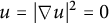 $u=|\nabla u|^2=0$
, using the assumption
 $\|u\|_{W^{2,\infty }} < \varepsilon $
to control the remainder terms. This yields
 $$ \begin{align} \begin{aligned} \int_M g(\Phi) \sigma_k(\kappa) \mathrm{d} \mu =&\int_{\mathbb{S}^n}\sum_{m=0}^k\left[\left(A_{0}^{m}+A_{1}^{m}u+A_{2}^{m}u^2+A^{m}|\nabla u|^2\right) g(\Phi(\rho)) \sigma_m\left(\nabla^2 u\right)\right.\\ &\left.+\ \left(B_{1}^{m}u+B_{2}^{m}u^2\right) g'(\Phi(\rho))\phi(\rho) \sigma_m\left(\nabla^2 u\right)\right.\\ &\left.+\ C_{2}^{m}u^2 \frac{1}{2} \left(g"(\Phi(\rho))\phi^2(\rho)+g'(\Phi(\rho))\phi'(\rho)\right) \sigma_m\left(\nabla^2 u\right)\right.\\ &\left.+\ D^m u^i u_j\left[T_m\right]_i^j\left(\nabla^2 u\right)\right]\mathrm{d}A\\ &\ +\ O(\varepsilon)\|u\|_{L^2\left(\mathbb{S}^n\right)}^2+O(\varepsilon)\|\nabla u\|_{L^2\left(\mathbb{S}^n\right)}^2, \end{aligned} \end{align} $$
where for
 $i=0,1,2,$
 $$ \begin{align} A_{i}^{m}=\ &(i!)^{-1}\left.\frac{\partial^{i}}{\partial^{i}u}\left[\frac{(-1)^m \rho^m \phi^{n-m+1} {\phi'}^{k-m}}{D^{k+1}} \binom{n-m}{k-m}\right]\right|_{u=|\nabla u|^2=0}, \end{align} $$
 $$ \begin{align} A^{m}=\ &\left.\frac{\partial}{\partial|\nabla u|^2}\left[\frac{(-1)^m \rho^m \phi^{n-m+1} {\phi'}^{k-m}}{D^{k+1}} \binom{n-m}{k-m}\right]\right|_{u=|\nabla u|^2=0}, \end{align} $$
 $$ \begin{align} B_{i}^{m}=\ &(i!)^{-1}\left.\frac{\partial^{i}}{\partial^{i}u}\left[\frac{(-1)^m \rho^{m+1} \phi^{n-m+1} {\phi'}^{k-m} u }{D^{k+1}} \binom{n-m}{k-m}\right]\right|_{u=|\nabla u|^2=0}, \end{align} $$
 $$ \begin{align} C_{i}^{m}=\ &(i!)^{-1}\left.\frac{\partial^{i}}{\partial^{i}u}\left[\frac{(-1)^m \rho^{m+2} \phi^{n-m+1} {\phi'}^{k-m} u^2 }{D^{k+1}} \binom{n-m}{k-m}\right]\right|_{u=|\nabla u|^2=0}, \end{align} $$
 $$ \begin{align} D^{m}=\ &\left.\frac{(-1)^m \rho^{m+2} \phi^{n-m-1} {\phi'}^{k-m} g(\Phi) }{D^{k+1}}\binom{n-m}{k-m}\frac{k+n-2 m}{n-m}\right|{}_{u=|\nabla u|^2=0}\nonumber\\ =\ &(-1)^m \rho^{m+2} \phi^{n-m-k-2}(\rho) {\phi'}^{k-m}(\rho) g(\Phi(\rho)) \binom{n-m}{k-m}\frac{k+n-2 m}{n-m}. \end{align} $$
Using the following identities which have been proved in [Reference VanBlargan and Wang33, Lemma 4.2]:
 $$ \begin{align} \int_{\mathbb{S}^n} u^i u_j\left[T_m\right]_i^j\left(\nabla^2 u\right) \mathrm{d} A= & \frac{m+2}{2} \int_{\mathbb{S}^n}|\nabla u|^2 \sigma_m\left(\nabla^2 u\right) \mathrm{d} A \nonumber\\ & +O(\varepsilon)\|\nabla u\|_{L^2\left(\mathbb{S}^n\right)}^2 \quad(m \geqslant 1), \end{align} $$
 $$ \begin{align} \int_{\mathbb{S}^n} \sigma_m\left(\nabla^2 u\right) \mathrm{d} A= & \frac{n-m+1}{2} \int_{\mathbb{S}^n}|\nabla u|^2 \sigma_{m-2}\left(\nabla^2 u\right) \mathrm{d} A \nonumber\\ & +O(\varepsilon)\|\nabla u\|_{L^2\left(\mathbb{S}^n\right)}^2 \quad(m \geqslant 2), \end{align} $$
 $$ \begin{align} \int_{\mathbb{S}^n} \sigma_1\left(\nabla^2 u\right) \mathrm{d} A= & 0, \end{align} $$
 $$ \begin{align} \int_{\mathbb{S}^n} u \sigma_m\left(\nabla^2 u\right) \mathrm{d} A=&- \frac{m+1}{2 m} \int_{\mathbb{S}^n}|\nabla u|^2 \sigma_{m-1}\left(\nabla^2 u\right) \mathrm{d} A \nonumber\\ & +O(\varepsilon)\|\nabla u\|_{L^2\left(\mathbb{S}^n\right)}^2 \quad(m \geqslant 1), \end{align} $$
 $$ \begin{align} \int_{\mathbb{S}^n} u^2 \sigma_m\left(\nabla^2 u\right) \mathrm{d} A= & O(\varepsilon)\|\nabla u\|_{L^2\left(\mathbb{S}^n\right)}^2 \quad(m \geqslant 1), \end{align} $$
we can rewrite (2.11) as
 $$ \begin{align*} \int_M &g(\Phi) \sigma_k(\kappa) \mathrm{d} \mu \\\!\!\!\!=&\int_{\mathbb{S}^n}\left[A_{0}^{0}g(\Phi(\rho))+\left(A_{1}^{0}g(\Phi(\rho))+B_{1}^{0}g'(\Phi(\rho))\phi(\rho)\right)u\right.\\& +\left(A_{2}^{0}g(\Phi(\rho))+B_{2}^{0}g'(\Phi(\rho))\phi(\rho)\right.\\&\!\!\left.\left.+\ C_{2}^{0}\frac{1}{2}\left(g"(\Phi(\rho))\phi^2(\rho)+g'(\Phi(\rho))\phi'(\rho)\right)\right)u^2+\left(A^{0}g(\Phi(\rho))+D^0\right)|\nabla u|^2\right]\mathrm{d}A\\&+\int_{\mathbb{S}^n}\left[-\left(A_{1}^{1}g(\Phi(\rho))+B_{1}^{1}g'(\Phi(\rho))\phi(\rho)\right)|\nabla u|^2\right.\\&\left.+\ \left(A^{1}g(\Phi(\rho))+\frac{3}{2}D^1\right)|\nabla u|^2\sigma_1\left(\nabla^2 u\right)\right]\mathrm{d}A\\&+\ \int_{\mathbb{S}^n}\sum_{m=2}^{k}\left[\frac{n-m+1}{2}|\nabla u|^2\sigma_{m-2}\left(\nabla^2 u\right)A_{0}^{m}g(\Phi(\rho))\right.\\&\left.-\ \left(A_{1}^{m}g(\Phi(\rho))+B_{1}^{m}g'(\Phi(\rho))\phi(\rho)\right)\frac{m+1}{2m}|\nabla u|^2\sigma_{m-1}\left(\nabla^2 u\right)\right.\\&\left.+A^{m}g(\Phi(\rho))|\nabla u|^2\sigma_m\left(\nabla^2 u\right)+D^m\frac{m+2}{2}|\nabla u|^2\sigma_m\left(\nabla^2 u\right)\right]\mathrm{d}A\\&+O(\varepsilon)\|u\|_{L^2\left(\mathbb{S}^n\right)}^2+O(\varepsilon)\|\nabla u\|_{L^2\left(\mathbb{S}^n\right)}^2\\ =&\int_{\mathbb{S}^n}\left[A_{0}^{0}g(\Phi(\rho))+\left(A_{1}^{0}g(\Phi(\rho))+B_{1}^{0}g'(\Phi(\rho))\phi(\rho)\right)u\right.\\&+\ \left(A_{2}^{0}g(\Phi(\rho))+B_{2}^{0}g'(\Phi(\rho))\phi(\rho)+C_{2}^{0}\frac{1}{2}\left(g"(\Phi(\rho))\phi^2(\rho)\right.\right.\\&\!\!\!\left.\left.\left.+\ g'(\Phi(\rho))\phi'(\rho)\right)\right)u^2\right]\mathrm{d}A\\&+\sum_{m=0}^{k-2}\int_{\mathbb{S}^n}\left[A^{m}g(\Phi(\rho))+D^m\frac{m+2}{2}-\left(A_{1}^{m+1}g(\Phi(\rho))\right.\right.\\&\left.+\ B_{1}^{m+1}g'(\Phi(\rho))\phi(\rho)\right)\frac{m+2}{2(m+1)}\\&\left.+\ A_{0}^{m+2}g(\Phi(\rho))\frac{n-m-1}{2}\right]|\nabla u|^2\sigma_m\left(\nabla^2 u\right)\mathrm{d}A\\&+\int_{\mathbb{S}^n}\left[A^{k-1}g(\Phi(\rho))+D^{k-1}\frac{k+1}{2}-\left(A_{1}^{k}g(\Phi(\rho))+B_{1}^{k}g'(\Phi(\rho))\phi(\rho)\right)\frac{k+1}{2k}\right]\\&\times|\nabla u|^2\sigma_{k-1}\left(\nabla^2 u\right)\mathrm{d}A\\&+\int_{\mathbb{S}^n}\left[A^{k}g(\Phi(\rho))+D^{k}\frac{k+2}{2}\right]|\nabla u|^2\sigma_{k}\left(\nabla^2 u\right)\mathrm{d}A\\&+\ O(\varepsilon)\|u\|_{L^2\left(\mathbb{S}^n\right)}^2+O(\varepsilon)\|\nabla u\|_{L^2\left(\mathbb{S}^n\right)}^2. \end{align*} $$
Note that for
 $1\leq k\leq n$
,
 $$ \begin{align*} \sum_{m=1}^{k}\int_{\mathbb{S}^n}C(n,m,k,\rho)|\nabla u|^2\sigma_{m}\left(D^2 u\right)\mathrm{d}A=O(\varepsilon)\|\nabla u\|_{L^2\left(\mathbb{S}^n\right)}^2, \end{align*} $$
we have
 $$ \begin{align*} \int_M &g(\Phi) \sigma_k(\kappa) \mathrm{d} \mu \\ \!\!\!=&\int_{\mathbb{S}^n}\left[A_{0}^{0}g(\Phi(\rho))+\left(A_{1}^{0}g(\Phi(\rho))+B_{1}^{0}g'(\Phi(\rho))\phi(\rho)\right)u\right.\\&\left.+\left(A_{2}^{0}g(\Phi(\rho))+B_{2}^{0}g'(\Phi(\rho))\phi(\rho)+C_{2}^{0}\frac{1}{2}\left(g"(\Phi(\rho))\phi^2(\rho)\right.\right.\right.\\&\!\!\left.\left.\left.+\ g'(\Phi(\rho))\phi'(\rho)\right)\right)u^2\right]\mathrm{d}A\\ &+\int_{\mathbb{S}^n}\left[A^{0}g(\Phi(\rho))+D^0-\left(A_{1}^{1}g(\Phi(\rho))+B_{1}^{1}g'(\Phi(\rho))\phi(\rho)\right)+A_{0}^{2}g(\Phi(\rho))\frac{n-1}{2}\right]\\&\times|\nabla u|^2\mathrm{d}A+O(\varepsilon)\|u\|_{L^2\left(\mathbb{S}^n\right)}^2+O(\varepsilon)\|\nabla u\|_{L^2\left(\mathbb{S}^n\right)}^2. \end{align*} $$
Then from (2.12)–(2.16), using the fact
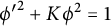 ${\phi '}^2 + K\phi ^2 =1$
and direct calculation, we get formula (2.9).
3 Weighted Minkowski-type inequalities in space forms
In this section, we will use the similar idea as in the work of Glaudo [Reference Glaudo18] to prove Theorems 1.1 and 1.2. Before that, the following Poincaré-type estimate is crucial for our proofs.
Lemma 3.1 (Poincaré-type estimate)
Let
 $M=\{(\rho (1+u(x)),x):x\in \mathbb {S}^n\}$
be a nearly spherical set with
 $\|u\|_{C^1}<\varepsilon $
for some small
 $\varepsilon>0$
. Let
 $\Omega $
be the domain enclosed by M in
 $N^{n+1}(K)\, (K=-1,0,1)$
satisfying
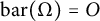 $\operatorname {bar}(\Omega )=O$
.
-
(i) If
$\ \operatorname {Vol}(\Omega )=\operatorname {Vol}(\bar {B}_{\rho })$
, then (3.1)
$$ \begin{align} \|\nabla u\|_{L^2\left(\mathbb{S}^n\right)}^2 \geq 2(n+1)\|u\|_{L^2\left(\mathbb{S}^n\right)}^2 + O(\varepsilon)\|u\|_{L^2\left(\mathbb{S}^n\right)}^2. \end{align} $$
-
(ii) If
$\int _{\Omega }\phi ' dv = \int _{\bar {B}_{\rho }}\phi ' dv$
, then (3.2)
$$ \begin{align} \|\nabla u\|_{L^2\left(\mathbb{S}^n\right)}^2 \geq 2(n+1)\|u\|_{L^2\left(\mathbb{S}^n\right)}^2 + O(\varepsilon)\|u\|_{L^2\left(\mathbb{S}^n\right)}^2. \end{align} $$




Proof Suppose u can be represented as
 $$ \begin{align*}u=\sum_{k=0}^{\infty} a_k Y_k, \end{align*} $$
where
 $\left \{Y_k\right \}_{k=0}^{\infty }$
corresponds the spherical harmonics which forms an orthonormal basis for
 $L^2 (\mathbb {S}^n)$
. Since
 $Y_0 = 1$
, we have
 $$ \begin{align*}a_0 = \int_{\mathbb{S}^n} u dA. \end{align*} $$
(i) Assume that
 $\operatorname {Vol}(\Omega )=\operatorname {Vol}(\bar {B}_{\rho })$
, by (2.5), we have
 $$ \begin{align*} \begin{aligned} 0=&\operatorname{Vol}(\Omega)-\operatorname{Vol}(\bar{B}_{\rho})\\ =&\int_{\mathbb{S}^n}\left(\int_{\rho}^{\rho(1+u)}\phi^n(r)dr\right)dA\\ =&\int_{\mathbb{S}^n}\phi^n(\rho)\rho udA + \int_{\mathbb{S}^n}\frac{n}{2}\phi^{n-1}(\rho)\phi'(\rho)\rho^2 u^2 dA + O(\varepsilon)\|u\|_{L^2\left(\mathbb{S}^n\right)}^2. \end{aligned} \end{align*} $$
It implies that
 $$ \begin{align} \int_{\mathbb{S}^n}udA=-\frac{n}{2}\frac{\phi'(\rho)}{\phi(\rho)}\rho \int_{\mathbb{S}^n}u^2 dA+ O(\varepsilon)\|u\|_{L^2\left(\mathbb{S}^n\right)}^2. \end{align} $$
Therefore, we get
 $$ \begin{align} a_0 = O(\varepsilon)\|u\|_{L^2\left(\mathbb{S}^n\right)}. \end{align} $$
(ii) Assume that
 $\int _{\Omega }\phi ' dv = \int _{\bar {B}_{\rho }}\phi ' dv$
, using (2.6) and
 $\phi "=-K\phi $
, we have
 $$ \begin{align*} \begin{aligned} 0=&(n+1)\int_{\Omega}\phi' dv - (n+1)\int_{\bar{B}_{\rho}}\phi' dv\\ =&\int_{\mathbb{S}^n} (n+1) \phi^{n}(\rho) \phi'(\rho) \rho udA + \int_{\mathbb{S}^n} \frac{n+1}{2} \left[n\phi^{n-1}(\rho){\phi'}^2 (\rho) - K \phi^{n+1}(\rho)\right]\rho^2 u^2 dA \\ &+ O(\varepsilon)\|u\|_{L^2\left(\mathbb{S}^n\right)}^2. \end{aligned} \end{align*} $$
It implies that
 $$ \begin{align} \int_{\mathbb{S}^n}udA=-\frac{1}{2} \left[n\frac{\phi'(\rho)}{\phi(\rho)} - K\frac{\phi(\rho)}{\phi'(\rho)}\right]\rho \int_{\mathbb{S}^n}u^2 dA+ O(\varepsilon)\|u\|_{L^2\left(\mathbb{S}^n\right)}^2. \end{align} $$
Thus, we have
 $$ \begin{align} a_0 = O(\varepsilon)\|u\|_{L^2\left(\mathbb{S}^n\right)}. \end{align} $$
As shown in [Reference VanBlargan and Wang33, Lemma 5.2] or [Reference Zhou and Zhou37, Lemma 4.1], under the assumption
 $\operatorname {bar}(\Omega )=O$
, then
 $$ \begin{align} a_1 = O(\varepsilon)\|u\|_{L^2\left(\mathbb{S}^n\right)}. \end{align} $$
Note that the eigenvalues of the Laplace–Beltrami operator
 $-\Delta $
on
 $\mathbb {S}^n$
are
 $\lambda _{k}=k(n+k-1)\, (k=0,1,\ldots )$
. When
 $k \geq 2$
, we have that
 $\lambda _k \geq 2(n+1)$
, then
 $$ \begin{align*} \|\nabla u\|_{L^2\left(\mathbb{S}^n\right)}^2 &= \sum_{k=1}^{\infty} \lambda_k a_k^2 = \sum_{k=2}^{\infty} \lambda_k a_k^2 + n a_1^2 \\ &\geq 2(n+1) \sum_{k=2}^{\infty} a_k^2 + n a_1^2 \\ &= 2(n+1) \sum_{k=0}^{\infty} a_k^2 - 2(n+1) a_0^2 - (n+2) a_1^2 \\ &= 2(n+1) \|u\|_{L^2\left(\mathbb{S}^n\right)}^2 + O(\varepsilon)\|u\|_{L^2\left(\mathbb{S}^n\right)}^2. \end{align*} $$
Proof of Theorem 1.1
Assume that
 $\operatorname {Vol}(\Omega )=\operatorname {Vol}(\bar {B}_{\rho })$
, then plugging (3.3) into (2.7) and using
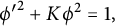 ${\phi '}^2 + K\phi ^2 =1,$
we have
 $$ \begin{align} \begin{aligned} &\int_{M} g(\Phi) H d\mu - \int_{\partial\bar{B}_{\rho}} g(\Phi) H d\mu \\= & - n\left[(n-1)\phi^{n-3}(\rho) {\phi'}(\rho) g(\Phi(\rho))-\frac{1}{2}\phi^{n+1}(\rho) {\phi'}(\rho) g"(\Phi(\rho))\right.\\&\left.-\frac{n+1}{2}\phi^{n-1}(\rho) {\phi'}^2(\rho) g'(\Phi(\rho))+\phi^{n-1}(\rho) g'(\Phi(\rho))\right] \rho^2 \int_{\mathbb{S}^n} u^2 dA \\&+ \left[(n-1)\phi^{n-3}(\rho)\phi'(\rho) g(\Phi(\rho)) + \phi^{n-1}(\rho) g'(\Phi(\rho))\right] \rho^2 \int_{\mathbb{S}^n} |\nabla u|^2 dA \\ & + \int_{\mathbb{S}^n} \frac{\phi^{n-2} g(\Phi) \rho^3}{D^2} \nabla^2 u \left[\nabla u, \nabla u\right] dA + O(\varepsilon)\|u\|_{L^2\left(\mathbb{S}^n\right)}^2+O(\varepsilon)\|\nabla u\|_{L^2\left(\mathbb{S}^n\right)}^2. \end{aligned} \end{align} $$
Recall the assumption that g is a non-decreasing convex
 $C^3$
positive function, we have
 $$ \begin{align} \int_{M}& g(\Phi) H d\mu - \int_{\partial\bar{B}_{\rho}} g(\Phi) H d\mu \notag\\ \geq & - n\left[(n-1)\phi^{n-3}(\rho) {\phi'}(\rho) g(\Phi(\rho))+\phi^{n-1}(\rho) g'(\Phi(\rho))\right] \rho^2 \int_{\mathbb{S}^n} u^2 dA \\&+ \left[(n-1)\phi^{n-3}(\rho)\phi'(\rho) g(\Phi(\rho)) + \phi^{n-1}(\rho) g'(\Phi(\rho))\right] \rho^2 \int_{\mathbb{S}^n} |\nabla u|^2 dA \notag\\ & + \int_{\mathbb{S}^n} \frac{\phi^{n-2} g(\Phi) \rho^3}{D^2} \nabla^2 u \left[\nabla u, \nabla u\right] dA + O(\varepsilon)\|u\|_{L^2\left(\mathbb{S}^n\right)}^2+O(\varepsilon)\|\nabla u\|_{L^2\left(\mathbb{S}^n\right)}^2.\notag \end{align} $$
Denote
 $H^{-} := -\min (H,0)$
, thanks to (2.4), we have
 $$ \begin{align} \begin{aligned} \operatorname{div}\left(\frac{\phi}{D}\nabla u\right) &= \frac{n\phi'\phi^2 + \phi'\rho^2 |\nabla u|^2}{\rho D} - \frac{\phi^2}{\rho}H \\ &= n\frac{\phi'(\rho)\phi(\rho)}{\rho} + O(\varepsilon) - H\left(\frac{\phi^2 (\rho)}{\rho} + O(\varepsilon)\right) \\ &\leq n\frac{\phi'(\rho)\phi(\rho)}{\rho} + O(\varepsilon) + 2\frac{\phi^2 (\rho)}{\rho}H^{-}. \end{aligned} \end{align} $$
Let
 $f(u,|\nabla u|^2) :=\frac {\phi ^{n-3}g(\Phi )}{D}$
and
 $F(u,|\nabla u|^2) := \int _{0}^{|\nabla u|^2}f(u,t) dt$
. One can check that
 $\partial _{1}F(u,|\nabla u|^2)=O(\varepsilon )$
,
 $\partial _{2}F(u,|\nabla u|^2)=f(u,|\nabla u|^2),$
and
 $F(u,|\nabla u|^2) = \phi ^{n-4}(\rho )g(\Phi (\rho ))(1+O(\varepsilon )) |\nabla u|^2$
. It implies
 $$ \begin{align*} \nabla\left( F \left(u,|\nabla u|^2\right)\right) = \frac{\phi^{n-3}g(\Phi)}{D} \nabla |\nabla u|^2 + O(\varepsilon) \nabla u. \end{align*} $$
Integrating by parts, the cubic term appearing in (3.9) becomes
 $$ \begin{align} \begin{aligned} \int_{\mathbb{S}^n} &\frac{\phi^{n-2} g(\Phi) \rho^3}{D^2} \nabla^2 u \left[\nabla u, \nabla u\right]\\ =& \frac{\rho^3}{2} \int_{\mathbb{S}^n} \frac{\phi}{D}\nabla u \cdot \frac{\phi^{n-3} g(\Phi)}{D}\nabla |\nabla u|^2 \\ =& \frac{\rho^3}{2} \int_{\mathbb{S}^n} \frac{\phi}{D}\nabla u \cdot \nabla\left( F \left(u,|\nabla u|^2\right)\right) + O(\varepsilon)\|\nabla u\|_{L^2\left(\mathbb{S}^n\right)}^2 \\ =& -\frac{\rho^3}{2} \int_{\mathbb{S}^n} \operatorname{div}\left(\frac{\phi}{D}\nabla u\right)F \left(u,|\nabla u|^2\right) + O(\varepsilon)\|\nabla u\|_{L^2\left(\mathbb{S}^n\right)}^2 \\ =& -\frac{1}{2}\phi^{n-4}(\rho) g(\Phi(\rho)) \rho^3 (1+O(\varepsilon)) \int_{\mathbb{S}^n} \operatorname{div}\left(\frac{\phi}{D}\nabla u\right)|\nabla u|^2 \\ &+ O(\varepsilon)\|\nabla u\|_{L^2\left(\mathbb{S}^n\right)}^2. \end{aligned} \end{align} $$
Decomposing
 $u=u_1 + u_2$
, where
 $u_1, u_2$
belong to the subspaces generated by the eigenfunctions of
 $-\Delta $
with eigenvalues, respectively, smaller and larger than a fixed
 $\lambda>0$
. Notice that
 $u_1$
lives in the finite-dimensional space and all norms are equivalent on a finite-dimensional space. Therefore,
 $\|\nabla ^2 u_1\|_{\infty } \leq c(n)\|\nabla u_1\|_{\infty } = O(\varepsilon )$
, where
 $c(n)> 0$
is a constant that depends only on n.
Let
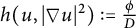 $h(u,|\nabla u|^2) :=\frac {\phi }{D}$
and
 $H(u,|\nabla u|^2) := \int _{0}^{|\nabla u|^2}h(u,t) dt$
. Notice that
 $\partial _{1}H(u,|\nabla u|^2)=O(\varepsilon )$
,
 $\partial _{2}H(u,|\nabla u|^2)=h(u,|\nabla u|^2),$
and
 $H(u,|\nabla u|^2) = (1+O(\varepsilon )) |\nabla u|^2$
. It implies
 $$ \begin{align*} \nabla\left( H \left(u,|\nabla u|^2\right)\right) = \frac{\phi}{D} \nabla |\nabla u|^2 + O(\varepsilon) \nabla u. \end{align*} $$
Integrating by parts, we get
 $$ \begin{align} \begin{aligned} \int_{\mathbb{S}^n} \operatorname{div}\left(\frac{\phi}{D}\nabla u\right)|\nabla u|^2 =& -2\int_{\mathbb{S}^n} \frac{\phi}{D} \nabla^2 u \left[\nabla u, \nabla u\right] \\ =& -2\int_{\mathbb{S}^n} \frac{\phi}{D} \nabla^2 u \left[\nabla u, \nabla u_1\right] -2\int_{\mathbb{S}^n} \frac{\phi}{D} \nabla^2 u_2 \left[\nabla u, \nabla u_2\right] \\ &+ O(\varepsilon)\|\nabla u\|_{L^2\left(\mathbb{S}^n\right)}^2 \\ =& -\int_{\mathbb{S}^n} \nabla\left( H \left(u,|\nabla u|^2\right)\right) \cdot \nabla u_1 -\int_{\mathbb{S}^n} \frac{\phi}{D} \nabla u \cdot \nabla |\nabla u_2|^2 \\ &+ O(\varepsilon)\|\nabla u\|_{L^2\left(\mathbb{S}^n\right)}^2\\ =& \int_{\mathbb{S}^n} H \left(u,|\nabla u|^2\right) \cdot \Delta u_1 + \int_{\mathbb{S}^n} \operatorname{div}\left(\frac{\phi}{D}\nabla u\right)|\nabla u_2|^2 \\ &+ O(\varepsilon)\|\nabla u\|_{L^2\left(\mathbb{S}^n\right)}^2\\ =& \int_{\mathbb{S}^n} \operatorname{div}\left(\frac{\phi}{D}\nabla u\right)|\nabla u_2|^2 + O(\varepsilon)\|\nabla u\|_{L^2\left(\mathbb{S}^n\right)}^2. \end{aligned} \end{align} $$
Applying (3.10) and (3.12), (3.11) becomes
 $$ \begin{align*}\begin{aligned}& \int_{\mathbb{S}^n} \frac{\phi^{n-2} g(\Phi) \rho^3}{D^2} \nabla^2 u \left[\nabla u, \nabla u\right]\\&= -\frac{1}{2}\phi^{n-4}(\rho) g(\Phi(\rho)) \rho^3 (1+O(\varepsilon)) \int_{\mathbb{S}^n} \operatorname{div}\left(\frac{\phi}{D}\nabla u\right)|\nabla u_2|^2 \\ &+ O(\varepsilon)\|\nabla u\|_{L^2\left(\mathbb{S}^n\right)}^2 \\ &\geq - \frac{n}{2}\phi^{n-3}(\rho) {\phi'}(\rho) g(\Phi(\rho)) \rho^2 \int_{\mathbb{S}^n} |\nabla u_2|^2 + O(\varepsilon) \int_{\mathbb{S}^n} H^{-} \\ & + O(\varepsilon)\|\nabla u\|_{L^2\left(\mathbb{S}^n\right)}^2. \end{aligned} \end{align*} $$
Notice that by (2.2), we have
 $$ \begin{align*} \begin{aligned} \int_{M}g(\Phi)H^{-} =& \int_{\mathbb{S}^n}g(\Phi)H^{-}\phi^{n-1}D = \int_{\mathbb{S}^n}H^{-}\phi^{n}(\rho)g(\Phi(\rho))(1+O(\varepsilon))\\ \geq &\frac{\phi^{n}(\rho)g(\Phi(\rho))}{2} \int_{\mathbb{S}^n}H^{-}. \end{aligned} \end{align*} $$
To sum the above two equations, we can obtain
 $$ \begin{align} \begin{aligned}\int_{\mathbb{S}^n} & \frac{\phi^{n-2} g(\Phi) \rho^3}{D^2} \nabla^2 u \left[\nabla u, \nabla u\right] + \int_{M}g(\Phi)H^{-}\\&\geq - \frac{n}{2}\phi^{n-3}(\rho) {\phi'}(\rho) g(\Phi(\rho)) \rho^2 \int_{\mathbb{S}^n} |\nabla u_2|^2 \\&+ O(\varepsilon)\|\nabla u\|_{L^2\left(\mathbb{S}^n\right)}^2. \end{aligned} \end{align} $$
Putting the last inequality and (3.9) together, we have
 $$ \begin{align} \begin{aligned} \int_{M}& g(\Phi) H^+ d\mu - \int_{\partial\bar{B}_{\rho}} g(\Phi) H d\mu \\\geq & \left[(n-1)\phi^{n-3}(\rho)\phi'(\rho) g(\Phi(\rho)) + \phi^{n-1}(\rho) g'(\Phi(\rho))\right] \rho^2 \int_{\mathbb{S}^n} |\nabla u_1|^2 dA \\&- n\left[(n-1)\phi^{n-3}(\rho) {\phi'}(\rho) g(\Phi(\rho))+\phi^{n-1}(\rho) g'(\Phi(\rho))\right] \rho^2 \int_{\mathbb{S}^n} u_1^2 dA \\&+ \left[\frac{n-2}{2}\phi^{n-3}(\rho)\phi'(\rho) g(\Phi(\rho)) + \phi^{n-1}(\rho) g'(\Phi(\rho))\right] \rho^2 \int_{\mathbb{S}^n} |\nabla u_2|^2 dA \\ & - n\left[(n-1)\phi^{n-3}(\rho) {\phi'}(\rho) g(\Phi(\rho))+\phi^{n-1}(\rho) g'(\Phi(\rho))\right] \rho^2 \int_{\mathbb{S}^n} u_2^2 dA \\&+ O(\varepsilon)\|u\|_{L^2\left(\mathbb{S}^n\right)}^2+O(\varepsilon)\|\nabla u\|_{L^2\left(\mathbb{S}^n\right)}^2. \end{aligned} \end{align} $$
Since
 $u_2$
belongs to the subspace generated by eigenfunctions of the Laplace–Beltrami operator with eigenvalues larger than
 $\lambda $
, it holds
 $$ \begin{align} \|\nabla u_2\|_{L^2\left(\mathbb{S}^n\right)}^2 \geq \lambda \| u_2\|_{L^2\left(\mathbb{S}^n\right)}^2. \end{align} $$
In addition, since
 $u_1$
is the projection of u onto low frequencies, it inherits the estimates of (3.4) and (3.7). Repeating the argument used to establish (3.1), we can also prove
 $$ \begin{align} \|\nabla u_1\|_{L^2\left(\mathbb{S}^n\right)}^2 \geq 2(n+1)\|u_1\|_{L^2\left(\mathbb{S}^n\right)}^2 + O(\varepsilon)\|u\|_{L^2\left(\mathbb{S}^n\right)}^2. \end{align} $$
Using the two Poincaré-type inequalities (3.15) and (3.16), the estimate (3.14) becomes
 $$ \begin{align} \begin{aligned} \int_{M} &g(\Phi) H^+ d\mu - \int_{\partial\bar{B}_{\rho}} g(\Phi) H d\mu \\\geq & \frac{n+2}{2(n+1)}\left[(n-1)\phi^{n-3}(\rho)\phi'(\rho) g(\Phi(\rho)) + \phi^{n-1}(\rho) g'(\Phi(\rho))\right] \rho^2 \int_{\mathbb{S}^n} |\nabla u_1|^2 dA \\&+ \left[\left(\frac{n-2}{2}-\frac{n(n-1)}{\lambda}\right)\phi^{n-3}(\rho)\phi'(\rho) g(\Phi(\rho))\right. \\&\left.+ \left(1-\frac{n}{\lambda}\right)\phi^{n-1}(\rho) g'(\Phi(\rho))\right] \rho^2 \int_{\mathbb{S}^n} |\nabla u_2|^2 dA \\&+ O(\varepsilon)\|u\|_{L^2\left(\mathbb{S}^n\right)}^2+O(\varepsilon)\|\nabla u\|_{L^2\left(\mathbb{S}^n\right)}^2. \end{aligned} \end{align} $$
Notice that
 $n\geq 3$
, if
 $\varepsilon $
is sufficiently small and
 $\lambda $
is sufficiently large, the right-hand side of the latter inequality is nonnegative and therefore the statement follows.
If equality holds in (1.9), then, from (3.17), we deduce
 $\nabla u_1 \equiv 0$
and
 $\nabla u_2 \equiv 0$
. Then the unit normal
 $\nu $
is parallel to the radial direction
 $\partial _r$
, and hence M is a geodesic sphere centered at the origin.
Proof of Theorem 1.2
Assume that
 $\int _{\Omega }\phi ' d\mathrm {vol} = \int _{\bar {B}_{\rho }}\phi ' d\mathrm {vol}$
, then plugging (3.5) into (2.7) and using
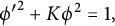 ${\phi '}^2 + K\phi ^2 =1,$
we have
 $$ \begin{align*} \int_{M}& g(\Phi) H d\mu - \int_{\partial\bar{B}_{\rho}} g(\Phi) H d\mu \\= & - n\left[(n-1)\phi^{n-3}(\rho) {\phi'}(\rho) g(\Phi(\rho))-\frac{1}{2}\phi^{n+1}(\rho) {\phi'}(\rho) g"(\Phi(\rho))\right.\\&+\left(\frac{K}{2}\phi^{n+1}(\rho) {\phi'}^{-1}(\rho) - \frac{n-1}{2}\phi^{n-1}(\rho) {\phi'}(\rho)\right)\\&\left.\left(g'(\Phi(\rho))\phi'(\rho)+Kg(\Phi(\rho))\right)\right] \rho^2 \int_{\mathbb{S}^n} u^2 dA \\&+ \left[(n-1)\phi^{n-3}(\rho)\phi'(\rho) g(\Phi(\rho)) + \phi^{n-1}(\rho) g'(\Phi(\rho))\right] \rho^2 \int_{\mathbb{S}^n} |\nabla u|^2 dA \\ & + \int_{\mathbb{S}^n} \frac{\phi^{n-2} g(\Phi) \rho^3}{D^2} \nabla^2 u \left[\nabla u, \nabla u\right] dA + O(\varepsilon)\|u\|_{L^2\left(\mathbb{S}^n\right)}^2+O(\varepsilon)\|\nabla u\|_{L^2\left(\mathbb{S}^n\right)}^2. \end{align*} $$
Notice that
 $\phi '=1+\Phi $
in
 $\mathbb {H}^{n+1}$
. Recall the assumption that g is a non-decreasing convex
 $C^3$
positive function which satisfies
 $(1+s)g'(s)-g(s)\geq 0$
, we have
 $$ \begin{align*}g'(\Phi(\rho))\phi'(\rho)-g(\Phi(\rho))\geq0. \end{align*} $$
Then
 $$ \begin{align} \begin{aligned} \int_{M}& g(\Phi) H d\mu - \int_{\partial\bar{B}_{\rho}} g(\Phi) H d\mu \\\geq & - n(n-1)\phi^{n-3}(\rho) {\phi'}(\rho) g(\Phi(\rho)) \rho^2 \int_{\mathbb{S}^n} u^2 dA \\&+ (n-1)\phi^{n-3}(\rho)\phi'(\rho) g(\Phi(\rho)) \rho^2 \int_{\mathbb{S}^n} |\nabla u|^2 dA \\ & + \int_{\mathbb{S}^n} \frac{\phi^{n-2} g(\Phi) \rho^3}{D^2} \nabla^2 u \left[\nabla u, \nabla u\right] dA + O(\varepsilon)\|u\|_{L^2\left(\mathbb{S}^n\right)}^2+O(\varepsilon)\|\nabla u\|_{L^2\left(\mathbb{S}^n\right)}^2. \end{aligned} \end{align} $$
Joining (3.18) with the estimate (3.13), we obtain
 $$ \begin{align} \int_{M}& g(\Phi) H^+ d\mu - \int_{\partial\bar{B}_{\rho}} g(\Phi) H d\mu \notag\\ \geq & (n-1)\phi^{n-3}(\rho)\phi'(\rho) g(\Phi(\rho)) \rho^2 \int_{\mathbb{S}^n} |\nabla u_1|^2 dA \notag\\&- n(n-1)\phi^{n-3}(\rho) {\phi'}(\rho) g(\Phi(\rho)) \rho^2 \int_{\mathbb{S}^n} u_1^2 dA \\&+ \frac{n-2}{2}\phi^{n-3}(\rho)\phi'(\rho) g(\Phi(\rho)) \rho^2 \int_{\mathbb{S}^n} |\nabla u_2|^2 dA \notag \\ & - n(n-1)\phi^{n-3}(\rho) {\phi'}(\rho) g(\Phi(\rho)) \rho^2 \int_{\mathbb{S}^n} u_2^2 dA \notag \\&+ O(\varepsilon)\|u\|_{L^2\left(\mathbb{S}^n\right)}^2+O(\varepsilon)\|\nabla u\|_{L^2\left(\mathbb{S}^n\right)}^2.\notag \end{align} $$
Repeating the argument used to establish (3.2), we can also prove
 $$ \begin{align} \|\nabla u_1\|_{L^2\left(\mathbb{S}^n\right)}^2 \geq 2(n+1)\|u_1\|_{L^2\left(\mathbb{S}^n\right)}^2 + O(\varepsilon)\|u\|_{L^2\left(\mathbb{S}^n\right)}^2. \end{align} $$
Using the two Poincaré-type inequalities (3.15) and (3.20), the estimate (3.19) becomes
 $$ \begin{align*} \begin{aligned} \int_{M} &g(\Phi) H^+ d\mu - \int_{\partial\bar{B}_{\rho}} g(\Phi) H d\mu \\\geq & \frac{(n-1)(n+2)}{2(n+1)}\phi^{n-3}(\rho)\phi'(\rho) g(\Phi(\rho)) \rho^2 \int_{\mathbb{S}^n} |\nabla u_1|^2 dA \\&+ \left(\frac{n-2}{2}-\frac{n(n-1)}{\lambda}\right)\phi^{n-3}(\rho)\phi'(\rho) g(\Phi(\rho)) \rho^2 \int_{\mathbb{S}^n} |\nabla u_2|^2 dA \\&+ O(\varepsilon)\|u\|_{L^2\left(\mathbb{S}^n\right)}^2+O(\varepsilon)\|\nabla u\|_{L^2\left(\mathbb{S}^n\right)}^2. \end{aligned} \end{align*} $$
Notice that
 $n\geq 3$
, if
 $\varepsilon $
is sufficiently small and
 $\lambda $
is sufficiently large, the right-hand side of the latter inequality is nonnegative and therefore the statement follows. We finish the proof by examining the equality case similarly to Theorem 1.1.
4 Stability of weighted quermassintegral inequalities in
$\mathbb {H}^{n+1}$

In this section, we study the validity and the stability of geometric inequalities involving weighted curvature integrals and quermassintegrals for nearly spherical sets in
 $\mathbb {H}^{n+1}$
. Based on the explicit formula for the weighted kth mean curvature integral established in Lemma 2.2 and combining with the Poincaré-type estimate, we derive our main results.
Proof of Theorem 1.3
Assume that
 $\int _{\Omega }\phi ' dv = \int _{\bar {B}_{\rho }}\phi ' dv$
, then plugging (3.5) into (2.9) and using
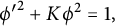 ${\phi '}^2 + K\phi ^2 =1,$
we have
 $$ \begin{align*} &\int_{M} g(\Phi)\sigma_{k}(\kappa) d\mu - \int_{\partial \bar{B}_{\rho}} g(\Phi)\sigma_{k}(\kappa) d\mu\\ &\quad= \binom{n}{k} \left\{\left[-\frac{(n-k)(k+1)}{2} \phi^{n-k-2}(\rho) {\phi'}^{k}(\rho) + K\frac{k(k-2)}{2} \phi^{n-k}(\rho) {\phi'}^{k-2}(\rho)\right] g(\Phi(\rho))\right. \\&\qquad-\left. \left(k-\frac{1}{2}\right) \phi^{n-k}(\rho) {\phi'}^{k-1}(\rho) g'(\Phi(\rho)) \right. \\&\qquad+ \frac{n}{2} \phi^{n-k}(\rho) {\phi'}^{k}(\rho) (\phi'(\rho)g'(\Phi(\rho))+Kg(\Phi(\rho)))\\&\qquad +\left. \frac{1}{2} \phi^{n-k+2}(\rho) {\phi'}^{k}(\rho) g"(\Phi(\rho))\right\} \rho^2 \int_{\mathbb{S}^n} u^2 dA \\ &\qquad+ \binom{n}{k} \left\{\left[\!\frac{(n-k)(k+1)}{2n} \phi^{n-k-2}(\rho) {\phi'}^{k}(\rho) - K \frac{k(k-1)}{2n} \phi^{n-k}(\rho) {\phi'}^{k-2}(\rho)\!\right] g(\Phi(\rho))\right. \\& \qquad+\left. \frac{k}{n} \phi^{n-k}(\rho) {\phi'}^{k-1}(\rho) g'(\Phi(\rho))\right\} \rho^2 \int_{\mathbb{S}^n} |\nabla u|^2 dA \\ &\qquad+O(\varepsilon)\|u\|_{L^2\left(\mathbb{S}^n\right)}^2+O(\varepsilon)\|\nabla u\|_{L^2\left(\mathbb{S}^n\right)}^2. \end{align*} $$
Recall the assumption that g is a non-decreasing convex
 $C^3$
positive function which satisfies
 $(1+s)g'(s)-g(s)\geq 0$
, we have
 $$ \begin{align} \begin{aligned} \int_{M} &g(\Phi)\sigma_{k}(\kappa) d\mu - \int_{\partial \bar{B}_{\rho}} g(\Phi)\sigma_{k}(\kappa) d\mu\\ \geq& \binom{n}{k} \left\{\left[-\frac{(n-k)(k+1)}{2} \phi^{n-k-2}(\rho) {\phi'}^{k}(\rho) + K\frac{k(k-2)}{2} \phi^{n-k}(\rho) {\phi'}^{k-2}(\rho)\right] g(\Phi(\rho))\right. \\&\left.- \left(k-\frac{1}{2}\right) \phi^{n-k}(\rho) {\phi'}^{k-1}(\rho) g'(\Phi(\rho))\right\} \rho^2 \int_{\mathbb{S}^n} u^2 dA \\ &+ \binom{n}{k} \!\left\{\left[\frac{(n-k)(k+1)}{2n} \phi^{n-k-2}(\rho) {\phi'}^{k}(\rho) - K \frac{k(k-1)}{2n} \phi^{n-k}(\rho) {\phi'}^{k-2}(\rho)\!\right]\! g(\Phi(\rho))\right. \\&\left. +\ \frac{k}{n} \phi^{n-k}(\rho) {\phi'}^{k-1}(\rho) g'(\Phi(\rho))\right\} \rho^2 \int_{\mathbb{S}^n} |\nabla u|^2 dA \\ &+O(\varepsilon)\|u\|_{L^2\left(\mathbb{S}^n\right)}^2+O(\varepsilon)\|\nabla u\|_{L^2\left(\mathbb{S}^n\right)}^2. \end{aligned} \end{align} $$
We notice that the coefficient of
 $\int _{\mathbb {S}^n}|\nabla u|^2 \mathrm {d} A$
in (4.1) is positive when
 $K=-1$
. Indeed, by using the condition
 $(1+s)g'(s)-g(s)\geq 0$
and the fact
 $\phi '(\rho )=1+\Phi (\rho )$
, we have
 $$ \begin{align*} &\left[\frac{(n-k)(k+1)}{2n} \phi^{n-k-2}(\rho) {\phi'}^{k}(\rho) + \frac{k(k-1)}{2n} \phi^{n-k}(\rho) {\phi'}^{k-2}(\rho)\right] g(\Phi(\rho)) \\&+ \frac{k}{n} \phi^{n-k}(\rho) {\phi'}^{k-1}(\rho) g'(\Phi(\rho))\\ \geq&\left[\frac{(n-k)(k+1)}{2n} \phi^{n-k-2}(\rho) {\phi'}^{k}(\rho) + \frac{(k+1)k}{2n} \phi^{n-k}(\rho) {\phi'}^{k-2}(\rho)\right] g(\Phi(\rho))>0. \end{align*} $$
Therefore, using the Poincaré-type estimate (3.2), the estimate (4.1) becomes
 $$ \begin{align} \begin{aligned} \int_{M} &g(\Phi)\sigma_{k}(\kappa) d\mu - \int_{\partial \bar{B}_{\rho}} g(\Phi)\sigma_{k}(\kappa) d\mu\\ \geq &\ \frac{1}{2} \binom{n}{k} \left\{\left[\frac{(n-k)(k+1)}{2n} \phi^{n-k-2}(\rho) {\phi'}^{k}(\rho)+ \frac{k(k-1)}{2n} \phi^{n-k}(\rho) {\phi'}^{k-2}(\rho)\right] g(\Phi(\rho))\right. \\&\left. +\, \frac{k}{n} \phi^{n-k}(\rho) {\phi'}^{k-1}(\rho) g'(\Phi(\rho))\right\} \rho^2 \|\nabla u\|_{L^2\left(\mathbb{S}^n\right)}^2 \geq 0. \end{aligned} \end{align} $$
We obtain the inequality (1.14) as desired.
If equality holds in (1.14), then, from (4.2), we deduce
 $\nabla u \equiv 0$
. Then the unit normal
 $\nu $
is parallel to the radial direction
 $\partial _r$
, and hence M is a geodesic sphere centered at the origin.
Proof of Theorem 1.4
From
 $W_{-1}(\Omega )=W_{-1}(\bar {B}_{\rho })$
, we have
 $$ \begin{align} \int_{\mathbb{S}^n} u dA=-\frac{n}{2} \frac{\phi'(\rho)}{\phi(\rho)} \rho \int_{\mathbb{S}^n} u^2 dA +O(\varepsilon)\|u\|_{L^2\left(\mathbb{S}^n\right)}^2, \end{align} $$
and from
 $W_j(\Omega )=W_j(\bar {B}_{\rho })(0 \leq j<k)$
, we have
 $$ \begin{align} \begin{aligned} \int_{\mathbb{S}^n} u dA= & - \left[\frac{n-j-1}{2} \frac{\phi'(\rho)}{\phi(\rho)} - K\frac{j+1}{2} \frac{\phi(\rho)}{\phi'(\rho)}\right] \rho \int_{\mathbb{S}^n} u^2 dA \\& - \frac{j+1}{2 n} \frac{1}{\phi(\rho)\phi'(\rho)} \rho \int_{\mathbb{S}^n} |\nabla u|^2 dA+O(\varepsilon)\|u\|_{L^2\left(\mathbb{S}^n\right)}^2 \\ & +O(\varepsilon)\|\nabla u\|_{L^2\left(\mathbb{S}^n\right)}^2. \end{aligned} \end{align} $$
These are proved in [Reference Zhou and Zhou37, Lemma 4.2]. Then by substituting (4.3) in (2.9) when
 $j=-1$
and substituting (4.4) in (2.9) when
 $0 \leq j<k$
, using
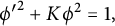 ${\phi '}^2 + K\phi ^2 =1,$
we have
 $$ \begin{align*} \int_{M} &g(\Phi)\sigma_{k}(\kappa) d\mu - \int_{\partial \bar{B}_{\rho}} g(\Phi)\sigma_{k}(\kappa) d\mu\\ =& \binom{n}{k} \!\left\{\left[\frac{(n-k)(j-k)}{2} \phi^{n-k-2}(\rho) {\phi'}^{k}(\rho) + K\frac{k(k-j-2)}{2} \phi^{n-k}(\rho) {\phi'}^{k-2}(\rho)\!\right]\! g(\Phi(\rho))\right. \\&\left.+ \frac{n+1}{2} \phi^{n-k}(\rho) {\phi'}^{k+1}(\rho) g'(\Phi(\rho)) + \left(\frac{j+1}{2} - k\right) \phi^{n-k}(\rho) {\phi'}^{k-1}(\rho) g'(\Phi(\rho))\right. \\&\left. + \frac{1}{2} \phi^{n-k+2}(\rho) {\phi'}^{k}(\rho) g"(\Phi(\rho))\right\} \rho^2 \int_{\mathbb{S}^n} u^2 dA \\ &+ \binom{n}{k} \left\{\left[\frac{(n-k)(k-j)}{2n} \phi^{n-k-2}(\rho) {\phi'}^{k}(\rho)\right.\right. \\&\left.\left.- K \frac{k(k-j-2)}{2n} \phi^{n-k}(\rho) {\phi'}^{k-2}(\rho)\right] g(\Phi(\rho))\right. \\&\left. + \frac{2k-j-1}{2n} \phi^{n-k}(\rho) {\phi'}^{k-1}(\rho) g'(\Phi(\rho))\right\} \rho^2 \int_{\mathbb{S}^n} |\nabla u|^2 dA \\ &+O(\varepsilon)\|u\|_{L^2\left(\mathbb{S}^n\right)}^2+O(\varepsilon)\|\nabla u\|_{L^2\left(\mathbb{S}^n\right)}^2. \end{align*} $$
Recall the assumption that g is a non-decreasing convex
 $C^3$
positive function, we have
 $$ \begin{align} &\int_{M} g(\Phi)\sigma_{k}(\kappa) d\mu - \int_{\partial \bar{B}_{\rho}} g(\Phi)\sigma_{k}(\kappa) d\mu \notag\\ &\quad\geq \binom{n}{k} \left\{\left[\frac{(n-k)(j-k)}{2} \phi^{n-k-2}(\rho) {\phi'}^{k}(\rho)\right.\right. \notag\\&\qquad+\left.\left. K\frac{k(k-j-2)}{2} \phi^{n-k}(\rho) {\phi'}^{k-2}(\rho)\right] g(\Phi(\rho))\right. \notag\\&\qquad +\left. \frac{j+1-2k}{2} \phi^{n-k}(\rho) {\phi'}^{k-1}(\rho) g'(\Phi(\rho))\right\} \rho^2 \int_{\mathbb{S}^n} u^2 dA \notag\\ &\qquad+ \binom{n}{k} \left\{\left[\frac{(n-k)(k-j)}{2n} \phi^{n-k-2}(\rho) {\phi'}^{k}(\rho)\right.\right. \\&\qquad-\left.\left. K \frac{k(k-j-2)}{2n} \phi^{n-k}(\rho) {\phi'}^{k-2}(\rho)\right] g(\Phi(\rho))\right. \notag\\& \qquad+\left. \frac{2k-j-1}{2n} \phi^{n-k}(\rho) {\phi'}^{k-1}(\rho) g'(\Phi(\rho))\right\} \rho^2 \int_{\mathbb{S}^n} |\nabla u|^2 dA \notag\\ &\qquad+O(\varepsilon)\|u\|_{L^2\left(\mathbb{S}^n\right)}^2+O(\varepsilon)\|\nabla u\|_{L^2\left(\mathbb{S}^n\right)}^2.\notag \end{align} $$
We notice that the coefficient of
 $\int _{\mathbb {S}^n}|\nabla u|^2 \mathrm {d} A$
in (4.5) is positive when
 $K=-1$
. Indeed, by using the condition
 $(1+s)g'(s)-g(s)\geq 0$
and the fact
 $\phi '(\rho )=1+\Phi (\rho )$
, we have
 $$ \begin{align*} &\left[\frac{(n-k)(k-j)}{2n} \phi^{n-k-2}(\rho) {\phi'}^{k}(\rho) + \frac{k(k-j-2)}{2n} \phi^{n-k}(\rho) {\phi'}^{k-2}(\rho)\right] g(\Phi(\rho)) \\&+ \frac{2k-j-1}{2n} \phi^{n-k}(\rho) {\phi'}^{k-1}(\rho) g'(\Phi(\rho))\\ \geq&\left[\!\frac{(n-k)(k-j)}{2n} \phi^{n-k-2}(\rho) {\phi'}^{k}(\rho) + \frac{(k{+}1)(k{-}j{-}1)}{2n} \phi^{n-k}(\rho) {\phi'}^{k-2}(\rho)\!\right]\! g(\Phi(\rho)){>}0. \end{align*} $$
Therefore, using the Poincaré-type estimate in [Reference Zhou and Zhou37, Lemma 4.2], the estimate (4.5) becomes
 $$ \begin{align*} \int_{M}& g(\Phi)\sigma_{k}(\kappa) d\mu - \int_{\partial \bar{B}_{\rho}} g(\Phi)\sigma_{k}(\kappa) d\mu\\ \geq &\frac{1}{2} \binom{n}{k} \left\{\left[\frac{(n-k)(k-j)}{2n} \phi^{n-k-2}(\rho) {\phi'}^{k}(\rho)+ \frac{k(k{-}j{-}2)}{2n} \phi^{n-k}(\rho) {\phi'}^{k-2}(\rho)\!\right]\! g(\Phi(\rho))\right. \\&\left. + \frac{2k-j-1}{2n} \phi^{n-k}(\rho) {\phi'}^{k-1}(\rho) g'(\Phi(\rho))\right\} \rho^2 \|\nabla u\|_{L^2\left(\mathbb{S}^n\right)}^2\\ \geq& \binom{n}{k}\frac{(n-k)(k-j)}{4n} \phi^{n-k-2}(\rho) {\phi'}^{k}(\rho)g(\Phi(\rho)) \rho^2 \|\nabla u\|_{L^2\left(\mathbb{S}^n\right)}^2. \end{align*} $$
Combining the estimate proved in [Reference Zhou and Zhou37, Lemma 4.3]:
 $$ \begin{align*}{\alpha}^2(\Omega) \leq \frac{1}{n^2} \operatorname{Area}\left(\mathbb{S}^n\right) \phi^{2n}(\rho) \rho^2 \|\nabla u\|_{L^2\left(\mathbb{S}^n\right)}^2+O(\varepsilon)\|\nabla u\|_{L^2\left(\mathbb{S}^n\right)}^2, \end{align*} $$
we obtain the inequality
 $$ \begin{align*} \begin{aligned} \int_{M} &g(\Phi)\sigma_{k}(\kappa) d\mu - \int_{\partial \bar{B}_{\rho}} g(\Phi)\sigma_{k}(\kappa) d\mu\\ \geq& \left(\binom{n}{k}\frac{n(n-k)(k-j)}{4} \frac{ {\phi'}^{k}(\rho)g(\Phi(\rho))}{\operatorname{Area}\left(\mathbb{S}^n\right)\phi^{n+k+2}(\rho)}+O(\varepsilon)\right) \alpha^2 (\Omega) \end{aligned} \end{align*} $$
as desired.
5 Stability of weighted quermassintegral inequalities in
$\mathbb {R}^{n+1}$

Finally, we establish quantitative weighted quermassintegral inequalities in
 $\mathbb {R}^{n+1}$
. The proof of Theorem 1.5 follows a similar method to that of Theorem 1.4 in hyperbolic space, though slight differences arise in the geometric analysis due to the vanishing curvature of the Euclidean setting.
Proof of Theorem 1.5
Taking
 $K=0$
,
 $\phi (r)=r$
in (2.9), we get that for any nearly spherical set
 $M=\{(\rho (1+u(x)), x): x \in \mathbb {S}^n\}$
in
 $\mathbb {R}^{n+1}$
,
 $$ \begin{align} \int_{M} &g(\Phi)\sigma_{k}(\kappa) d\mu \notag\\ =&\int_{\mathbb{S}^n} \binom{n}{k} \rho^{n-k} g(\Phi(\rho)) dA \notag\\ &+ \binom{n}{k} \left\{(n-k)\rho^{n-k-1} g(\Phi(\rho))+ \rho^{n-k+1} g'(\Phi(\rho))\right\} \rho \int_{\mathbb{S}^n} u dA \notag\\ &+ \binom{n}{k} \left\{\frac{(n-k)(n-k-1)}{2} \rho^{n-k-2} g(\Phi(\rho))\right. \\&\left.+ \left(n-k+\frac{1}{2}\right) \rho^{n-k} g'(\Phi(\rho)) + \frac{1}{2} \rho^{n-k+2} g"(\Phi(\rho))\right\} \rho^2 \int_{\mathbb{S}^n} u^2 dA \notag\\ &+ \binom{n}{k} \left\{\frac{(n-k)(k+1)}{2n} \rho^{n-k-2} g(\Phi(\rho)) + \frac{k}{n} \rho^{n-k} g'(\Phi(\rho))\right\} \rho^2 \int_{\mathbb{S}^n} |\nabla u|^2 dA \notag\\ &+O(\varepsilon)\|u\|_{L^2\left(\mathbb{S}^n\right)}^2+O(\varepsilon)\|\nabla u\|_{L^2\left(\mathbb{S}^n\right)}^2.\notag \end{align} $$
From
 $W_{-1}(\Omega )=W_{-1}(\bar {B}_{\rho })$
, we have
 $$ \begin{align} \int_{\mathbb{S}^n} u d A=-\frac{n}{2} \int_{\mathbb{S}^n} u^2 d A+O(\varepsilon)\|u\|_{L^2\left(\mathbb{S}^n\right)}^2, \end{align} $$
and from
 $W_j(\Omega )=W_j(\bar {B}_{\rho })(0 \leq j<k)$
, we have
 $$ \begin{align} \begin{aligned} \int_{\mathbb{S}^n} u d A=- & \frac{n-j-1}{2} \int_{\mathbb{S}^n} u^2 dA-\frac{j+1}{2 n}\int_{\mathbb{S}^n} |\nabla u|^2 d A+O(\varepsilon)\|u\|_{L^2\left(\mathbb{S}^n\right)}^2 \\ & +O(\varepsilon)\|\nabla u\|_{L^2\left(\mathbb{S}^n\right)}^2. \end{aligned} \end{align} $$
These are proved in Proposition 4.3 and Lemma 5.2 of [Reference VanBlargan and Wang33]. Then by substituting (5.2) in (5.1) when
 $j=-1$
and substituting (5.3) in (5.1) when
 $0 \leq j<k$
,
 $$ \begin{align*} \int_M &g(\Phi) \sigma_k(\kappa) d \mu -\int_{\partial\bar{B}_{\rho}} g(\Phi)\sigma_{k}(\kappa)d\mu\\ =&\binom{n}{k}\left\{\frac{(n-k)(j-k)}{2}\rho^{n-k+2}g(\Phi(\rho))+\frac{n-2k+j+2}{2}\rho^{n-k}g'(\Phi(\rho))\right. \\ &\left.+\frac{1}{2}\rho^{n-k+2}g"(\Phi(\rho))\right\}\rho^{2}\int_{\mathbb{S}^n}u^{2}dA\\ &+\binom{n}{k}\left\{\frac{(n-k)(k-j)}{2n}\rho^{n-k-2}g(\Phi(\rho))+\frac{2k-j-1}{2n}\rho^{n-k}g'(\Phi(\rho))\right\}\rho^{2} \int_{\mathbb{S}^n} |\nabla u|^{2} dA\\ & +O(\varepsilon)\|u\|_{L^2\left(\mathbb{S}^n\right)}^2 +O(\varepsilon)\|\nabla u\|_{L^2\left(\mathbb{S}^n\right)}^2. \end{align*} $$
Recall the assumption that g is a non-decreasing convex
 $C^3$
positive function, we have
 $$ \begin{align} \begin{aligned} &g(\Phi) \sigma_k(\kappa) d \mu -\int_{\partial\bar{B}_{\rho}} g(\Phi)\sigma_{k}(\kappa)d\mu\\ &\quad\geq\binom{n}{k}\left\{\frac{(n-k)(j-k)}{2}\rho^{n-k+2}g(\Phi(\rho))+\frac{n-2k+j+2}{2}\rho^{n-k}g'(\Phi(\rho))\right\}\rho^{2}\int_{\mathbb{S}^n}u^{2}dA\\ &\qquad+\binom{n}{k}\left\{\frac{(n-k)(k-j)}{2n}\rho^{n-k-2}g(\Phi(\rho))+\frac{2k-j-1}{2n}\rho^{n-k}g'(\Phi(\rho))\right\}\rho^{2} \int_{\mathbb{S}^n} |\nabla u|^{2}dA\\ &\qquad +O(\varepsilon)\|u\|_{L^2\left(\mathbb{S}^n\right)}^2 +O(\varepsilon)\|\nabla u\|_{L^2\left(\mathbb{S}^n\right)}^2. \end{aligned} \end{align} $$
We remark that the coefficient of
 $\int _{\mathbb {S}^n}|\nabla u|^2 \mathrm {d} A$
in (5.4) is positive. Therefore, using the Poincaré-type estimate in [Reference VanBlargan and Wang33, Lemma 5.2],
 $$ \begin{align*}\|\nabla u\|_{L^2\left(\mathbb{S}^n\right)}^2 \geqslant 2(n+1)\|u\|_{L^2\left(\mathbb{S}^n\right)}^2+O(\varepsilon)\|u\|_{L^2\left(\mathbb{S}^n\right)}^2 \end{align*} $$
(when
 $j=-1$
) and
 $$ \begin{align*}\|\nabla u\|_{L^2\left(\mathbb{S}^n\right)}^2 \geqslant 2(n+1)\|u\|_{L^2\left(\mathbb{S}^n\right)}^2+O(\varepsilon)\|u\|_{L^2\left(\mathbb{S}^n\right)}^2+O(\varepsilon)\|\nabla u\|_{L^2\left(\mathbb{S}^n\right)}^2 \end{align*} $$
(when
 $0 \leqslant j<k$
), the estimate (5.4) becomes
 $$ \begin{align*} \int_{M} &g(\Phi)\sigma_{k}(\kappa) d\mu - \int_{\partial\bar{B}_{\rho}} g(\Phi)\sigma_{k}(\kappa)d\mu\\ \geq &\frac{1}{2} \binom{n}{k} \left\{\frac{(n-k)(k-j)}{2n} \rho^{n-k-2} g(\Phi(\rho)) + \frac{2k-j-1}{2n} \rho^{n-k} g'(\Phi(\rho))\right\} \rho^2 \|\nabla u\|_{L^2\left(\mathbb{S}^n\right)}^2\\ =& \binom{n}{k}\frac{(n-k)(k-j)\rho^{n-k} g(\Phi(\rho))+(2k-j-1)\rho^{n-k+2} g'(\Phi(\rho))}{4n}\|\nabla u\|_{L^2\left(\mathbb{S}^n\right)}^2. \end{align*} $$
Combining the estimate proved in [Reference VanBlargan and Wang33, Lemma 5.3]:
 $$ \begin{align*}{\alpha}^2(\Omega) \leqslant \frac{1}{n^2}\operatorname{Area}\left(\mathbb{S}^n\right) \rho^{2n+2} \|\nabla u\|_{L^2\left(\mathbb{S}^n\right)}^2+O(\varepsilon)\|\nabla u\|_{L^2\left(\mathbb{S}^n\right)}^2, \end{align*} $$
we obtain the inequality
 $$ \begin{align*} \begin{aligned} \int_{M}& g(\Phi)\sigma_{k}(\kappa) d\mu - \int_{\partial\bar{B}_{\rho}} g(\Phi)\sigma_{k}(\kappa)d\mu\\ \geq& \left[\binom{n}{k}\frac{n((n-k)(k-j)g(\Phi(\rho))+(2k-j-1)\rho^{2}g'(\Phi(\rho)))}{4\operatorname{Area}(\mathbb{S}^n) \rho^{n+k+2}}+O(\varepsilon)\right] \alpha^2 (\Omega) \end{aligned} \end{align*} $$
as desired.



