

S01.01
Neurolinguistic changes in connected speech in preclinical Alzheimer's disease
Celeste de Jager, Ann Marie Haigh
Oxford Project to Investigate Memory and Ageing, University of Oxford, United Kingdom
Samrah Ahmed-Ali, Peter Garrard
Stroke and Dementia Research Centre, St. George's, University of London, United Kingdom
Aim: Early changes in linguistic competence that predated AD diagnosis have previously been described. The aim of this study was to detail the neurolinguistic changes in connected speech in MCI cases who progressed to AD.
Methods: 22 MCI patients, all with later post-mortem confirmation of AD, and 22 controls were identified from the Oxford Project to Investigate Memory and Aging longitudinal database. Cases and controls showed no differences in age, education or gender ratio. MMSE scores (mean ±SD) were significantly different between groups (controls: 28.8 ± 1.5 vs MCI: 25.8 ± 2.8, p < 0.05). All patients were followed annually with clinical, imaging and neuropsychological measures. Transcripts of digitally recorded Cookie Theft picture descriptions (Goodglass and Kaplan 1983) were subjected to the established discourse analysis methods as used by Wilson et al. (2010) to examine connected speech in semantic dementia. Five composite scores were calculated by taking an average of the linguistic items in each category. These were speech production, speech fluency, semantic errors, syntactic structure and lexical content.
Results: MCI cases had lower scores on syntactic structure and an increased number of semantic errors compared to controls, but were qualitatively similar to controls in fluency and lexical content. Speech rate, which is found to be reduced in AD, exceeded that of controls. Individual case analysis showed that MCI cases were not uniformly impaired across speech variables. Patients with lower education were more impaired in lexical content. Decline over time was gradual for syntactic structure, while there was a sharp increase in semantic errors and a sharp decline in speech production at time of clinical diagnosis of AD.
Conclusions: Language impairment in MCI can be identified by a mixture of features but was not identifiable as a typical aphasic syndrome. Analysis of language in progressive MCI is best examined with reference to detailed linguistic components. Analysis of particular connected speech indices may have diagnostic and prognostic utility.
S01.02
Connected speech in semantic dementia: Data from hand-scoring and automated extraction
Lotte Meteyard,University of Reading, Reading, Berkshire, United Kingdom
Karalyn Patterson, MRC Cognition and Brain Sciences Unit, Cambridge, United Kingdom
Semantic Dementia (SD) is a progressive neurological condition in which there is a fairly selective deterioration of conceptual and semantic information across all modalities of input and output. The canonical view is that patients with SD have anomia, but otherwise normal speech (i.e. no phonological, morphological or syntactic deficits). Word-finding difficulties are typically the first noticeable symptoms and when descriptive language is tested (e.g. complex picture description) connected speech shows a reliable pattern of light terms (e.g. ‘thing’ and ‘place’) in place of specific words (Bird et al, 2000; Patterson & MacDonald, 2006). However, there is suggestive evidence that SD causes problems with morphology and syntax, leading to reduced numbers of complex inflections, subcategorisations or embedded clauses (Benedet, MacDonald & Patterson, 2006; Patterson & MacDonald, 2006). Here, we present data from a detailed analysis of connected speech in SD, in which we explored (1) speech errors and (2) the frequency of particular morphological and syntactic structures. Data was collected from a semi-structured interview in which patients were asked to recall events from different periods of their life. Similar speech samples from an age and education matched control group were used for comparison.
Speech errors and some morphological/syntactic measures were extracted by hand-scoring the transcripts. The same transcripts were also prepared and analysed using a more automated means of analysis in order to further probe the lexical and syntactic characteristics of the connected speech samples.
Hand scoring This analysis revealed that SD patients made more speech errors overall, for example, making significantly more substitution errors on both free (0.44% vs 0.15% p < 0.01) and bound (0.08% vs. 0.01%, p > 0.005) morphological forms in comparison to a control group, for example “I think we got married at fifty nine” (substitution on in), “that's made me cried a lot” (substitution on cry). A descriptive analysis revealed that patients had more utterances that were syntactically and/or semantically anomalous (46 vs. 11) e.g. “it's a frustration with memory, people's faces”, “I effectively you know, helped with his intelligence, to mend the car”. There was no evidence of phonological errors or gross syntactic errors (e.g. word order violations) (Meteyard and Patterson, 2009).
Patients had significantly fewer subordinate clauses preceded by subordinating conjunctions, e.g. “I know the man who owns the shop” (0.027 vs 0.044, p < 0.01). In addition, the majority of patient's utterances had relatively simple verb constructions, with fewer utterances that contained multiple auxiliaries and inflections, e.g. “I could have walked”, “I was going to walk” (see Figure 1, using the Auxiliary Score measure from Saffran, Berndt & Schwartz; 1989).
Automated analysis: The hand-scored data provided evidence of speech errors, and preliminary evidence of morphological/syntactic simplification. However, the time and labour intensive nature of the method made further analysis difficult. To further probe the lexical and syntactic characteristics of the speech samples, automated analyses (e.g. frequency counts of individual lexical items and syntactic structures) were performed on the same data. This data will be presented and where available, compared to hand scored data for the same variables.
Discussion will focus on the utility of the different methods, and the methodological challenges that are common to both.
S01.03
Cognitive archaeology: From archived language to presymptomatic diagnosis
Peter GarrardDivision of Clinical Sciences, St. George's, University of London, United Kingdom
Current demographic trends indicate a sharp increase in the prevalence of dementia over the next 25 years. One approach to ameliorating the inevitable economic burden of this change is to identify modifiable factors associated with successful cognitive aging. To achieve this aim, a robust measure of ‘cognitive reserve’ is required. Whilst variations in the lead-time between the onset of the earliest symptoms of cognitive inefficiency [or ‘mild cognitive impairment’ (MCI)] and clinical dementia have offered some insights, the diagnosis of MCI is phenotypically heterogeneous and liable to self-selection bias. It is also a diagnosis of expectation. An alternative would be to use a retrospective approach, looking back for signs of cognitive change in patients who are already known to have developed dementia. Language abilities are known to decline in early Alzheimer's disease, and many individuals have left records by which changes can be identified, measured, and dated. That such records contain signs of developing dysfunction has been clearly shown by the findings of the Nun Study and more recently the Iris Murdoch text-analysis project. Measurement of preclinical language change at regular intervals in a larger population of patients will lead to robust quantification of the length of this phase and allow examination of the factors associated with a long or short duration. By subjecting archived material, in both spoken and written formats, to a range of data-driven textual analyses that have been validated in the fields of textual classification and scholarship, we aim to characterize the nature and timing of the earliest changes in language processing abilities. Subjects are drawn from two sources: The first is the OPTIMA cohort—a group consisting of patients with dementia and healthy elderly, in whom language as well as other cognitive and physical indexes are sampled twice yearly until death. The second source of discourse samples are written texts (in the form of letters, notebooks, and diaries) dating back over 2–3 decades from volunteers diagnosed with AD in later life and a similar number with normal cognitive ageing. Both sets of samples were digitally encoded and classified using a range of manual and automated techniques.
S01.04
Emotional expression, life events and Alzheimer's disease
Anne-Marie F. Haigh, Gordon K. Wilcock,Elizabeth MFO King
Oxford Project to Investigate Memory and Ageing, University of Oxford, United Kingdom
Paul Yerrell, Oxford Brookes University, Oxford United Kingdom
Background: The Alzheimer's Disease Life Events (ADLE) study examines the relationship between life events and Alzheimer's disease (AD). Psychologically significant life events have been found to have associations with physical illnesses (Brown and Harris, 1989), and the glucocorticoid cascade hypothesis (Deshmukh and Deshmukh, 1990) proposes a link between stress and AD. This study demonstrates a difference in the emotional expression of life events between those with Alzheimer's and those with normal cognition, using a mixed-methods approach.
Methods: The differences in emotional expression between the two groups were analysed using the Emotional Word Coding (EWC) by Danner, Friesen & Snowdon (2000), in the Life Events and Difficulties Schedule (LEDS)(Brown & Harris, 1978) interviews. The EWC quantified the frequency and type of emotional expression in the discussion of a life event. The cohort consists of 21 participants who have a diagnosis of possible or probable AD and 21 participants who have normal cognition. The LEDS (Brown & Harris, 1978) measurement tool was used to determine quantitative differences in the number and types of life events between these two groups. The Biographic Narrative Interpretive Method (BNIM)(Wengraf, 2001, 2008) was used to determine the qualitative differences in the narrative constructions of life events, between those who have a diagnosis of possible or probable AD (3 participants) and those who have normal cognition (3 participants).
Results: Even though there were significantly more life events experienced by the patients, the EWC (Danner et al., 2001) found significantly fewer discussions expressing emotion and a smaller range of negative and positive vocabulary being used by the Alzheimer's group, particularly the negatively described events. Thematic analysis was used to examine the BNIM interviews (Wengraf, 2001, 2008), and differences were found in the structure, subject content, and emotional content of the opening narratives between those with AD and those with normal cognition. The ADLE study found that the Alzheimer's group had experienced more life events in comparison with the normal cognition group, as defined by the LEDS (Brown & Harris, 1978) (p = 0.039), and that the patient group had experienced more bereavements under the age of 51 years (p = 0.032).
Conclusions: The results from this study demonstrate that the ways the patients express emotions about life events is substantially different from the controls, quantitatively and qualitatively. This result can be used in the design of questions that can be used as an aid to diagnosis. The quantitative and qualitative evidence supports the association between life events and AD and differences in expressing emotions during the discussion of life events, which would normally evoke strong emotions.
S01.05
Automated analysis of communication in mental health: Untapped potential?
Brita ElvevågUniversity of Tromsø, Tromsø, Norway
Information conveyed in the speech of patients is core in mental health diagnosis, targeting treatment, and in monitoring treatment success. A patient's verbal self-presentation as elicited in a clinical interview remains the essential diagnostic tool in psychiatry. The pattern and content of the communication provides large amounts of information that can be traced back to individuals’ cognitive abilities, knowledge, affective state, and consequently, their overall mental states. Indexing these disturbances has traditionally been done using a variety of measures and tests, including manual and labor-intensive discourse analysis techniques. There are also several fine-grained rating scales of the coherence of speech and communication, use of which requires extensive training, but nonetheless remain open to variance across raters, and given their time-consuming nature are frequently not employed as core metrics in clinical decisions. Recent work in computational linguistics and statistical-based semantic analysis has shown the potential of automated analysis of communication for clinical applications both at a case level and in large-scale studies. For example, studies—using Latent Semantic Analysis (LSA), which models and matches discourse content—have demonstrated that it is possible to evaluate patients with schizophrenia based on open-ended verbalizations. This automated and objective approach to modeling discourse is able to detect very subtle deviations such that the automatically derived language scores have distinguished patients from controls accurately, and patients from other patients, and also from their first-degree relatives, using both large discourse samples as well as responses consisting of only a few words. Such findings suggest a methodological framework and toolset with a large number of possible clinical applications. For example, mental disorders frequently require longitudinal monitoring on the scale of years, which is cognitively challenging for health professionals because patients have different clinical baselines against which they need to be compared, and human memory is simply not accurate enough for such a gigantic task. The needed computational techniques exist, and the research data upon which to design such tools is solid, but the critical momentum of this approach has not been met—and this solution not readily available—because the unique individual variability in mental illness is extremely pronounced. A possible solution is a longitudinal ‘personalized medicine’ approach such that each patient becomes his or her own baseline, and results from other patients with ‘similar sorts of illnesses’ are used as general guides. A medical informatics approach that employs computational linguistic and acoustic methods to analyze speech samples can provide useful measures that are consistent and reliable and that can be compared to previous measurements in the same patient, thereby acting as a ‘virtual memory’ of baselines and clinical states. The use of ‘sound’ in medical devices is not new. The stethoscope clearly has been a core component of the toolkit in medical diagnoses for considerable time. Recently, the electronic stethoscope has been demonstrated to provide a method for transmitting critical information about patients to the place where medical advice is available. Likewise, how we say something and what we say convey critical clues as to our ‘mental well-being.’ Indeed, there are many future possibilities for such an approach in mental health, including being a critical component of an e-mental health system.
S02.01
Utilization of electroconvulsive therapy in Victoria, Australia, 1998–2007
Daniel O'Connor, Chris Plakotis, George Kuruvilla
Monash University, Kingston Centre, Cheltenham, Victoria, Australia
Background and Objective: The existing literature regarding electroconvulsive therapy (ECT) utilisation and practices in Australia is limited, despite the long history of ECT as a psychiatric treatment modality in Australia. The availability of effective psychopharmacological alternatives to ECT for the treatment of severe mental illness raises the question of whether ECT has maintained its place among the repertoire of psychiatric treatment modalities or whether its use has declined over time. Our objective was to examine the provision of ECT in Victoria, Australia, to adults aged 25 years and older for the 10-year period from 1998 to 2007.
Methods: Statutory data regarding ECT service provision that is routinely collected by the Office of the Chief Psychiatrist of Victoria was made available to researchers for analysis in a de-identified format. This data set is unique because it includes information on all ECT treatments provided to the population of an entire jurisdiction over a 10-year period. The data were adjusted to take into account the rising population of Victoria during this period. We compared our results to previous literature in the field and hypothesised on possible explanations for the findings revealed.
Results: Our findings indicate a decline in ECT use from the early to the mid-2000s, followed by a small increase in use in 2007, taking into account the rising population of Victoria. ECT was administered for a diagnosis of depression in 80 percent of cases. Sixty-two percent of ECT recipients were female. Although relatively small numbers of patients aged 65 years and older received ECT, age adjustment of our data was indicative of higher rates of ECT utilisation among older adults. There was a greater gap between public (more) and private (fewer) ECT service provision among adults aged 65 years and older compared to younger adults. With increasing age, the likelihood of receiving ECT for depression (rather than other diagnoses) increased, whereas the likelihood of receiving ECT for psychosis decreased. Sixty percent of patients were treated in the public sector and 40 percent in the private sector. The number of patients treated with ECT for depression did not differ greatly between the public and private sectors, but the application of ECT for psychosis was markedly higher in the public sector. Patients aged 25–44 received more treatments in private compared to public settings, whereas those aged 65 years and older received an equivalent number of treatments in both sectors. The majority of patients were treated on a voluntary basis only, including those receiving ECT for a diagnosis of depression. However, the converse was true for patients with psychosis, with 60 perecent receiving treatment on an involuntary basis only. Unilateral electrode placement was most commonly used. A greater proportion of patients aged 65 years and older was treated with a bilateral electrode placement only relative to younger patients. More patients with depression were treated with a unilateral, rather than bilateral, electrode placement only, but the converse was the case among patients with psychosis.
Conclusions: Although there has been a small reduction overall in ECT use from 1998 to 2007, it is apparent from our data that ECT continues to be a significant psychiatric treatment modality and is likely to remain so into the future. Older adults aged 65 years and older are shown to be more likely than younger adults to receive ECT in Victoria and to be treated in the public sector. Our findings expand upon earlier research in this field and provide a framework for planning ECT service provision and training mental health workers in this important treatment modality.
Key Words: Electroconvulsive therapy, epidemiology, utilisation.
S02.02
Structural abnormalities in the brain and efficacy and safety of Electroconvulsive therapy in treating severely depressed elderly
Max Stek, Mardien Oudega, Eric van Exel, Hannie C. Comijs, Odile A. van den Heuvel, Aartjan T. F. Beekman
GGZ Ingeest, Free University, Amsterdam, The Netherlands
Background: Electroconvulsive therapy (ECT) is an important treatment option in severely depressed elderly patients. Structural abnormalities in the brain as measured on Magnetic Resonance Imaging (MRI) may influence therapeutic response and cognition during ECT.
Objective: To assess whether White Matter Hyperintensities (WMH), Medial Temporal lobe Atrophy (MTA), general cortical atrophy, or loss in regional brain volumes predict poor response to ECT in depressed elderly patients and lead to more temporary cognitive impairment.
Methods: In a naturalistic clinical cohort of 81 elderly patients with unipolar depression, white matter hyperintensities, medial temporal lobe atrophy, general cortical atrophy, and regional brain volumes were measured on MRIs with validated rating scales and Voxel-Based Morphometry (VBM). Response and speed of response to electroconvulsive therapy was determined as a decrease of 50% using weekly Montgomery-Åsberg Depression Rating Scales (MADRS) and remission was defined as a total score below 10 on the MADRS. Cognition was evaluated by weekly applied Mini Mental Scale Examinations.
Results: MTA, but not WMH and global cortical atrophy, predicted lower response in terms of speed of recovery and treatment effect, especially in nonpsychotic depression on visual rating scales of MRI. Bilaterally treated depressed elderly with WMH suffered more from temporary cognitive impairment compared to patients treated unilaterally. VBM results will be discussed.
Conclusions: Medial temporal lobe atrophy predicts a poor response to ECT in depressed elderly, especially in nonpsychotic patients. Bilaterally treated depressed elderly with WMH had more pronounced cognitive impairment during ECT but were equally well at the end of treatment in terms of mood and cognition.
S02.03
Optimise ECT techniques: The effects of pulse width manipulation on the efficacy of ECT treatment in geriatric depression
Harm-Pieter Spaans, Esmee Verwijk, Rob Kok
Parnassia Bavo Groep, The Hague, The Netherlands
King Khol, Parnassia Bavo Groep, The Hague, The Netherlands and GGZ Delfland, The Netherlands
Pascal Sienaert, Filip Bouckaert
Catholic University Leuven, Belgium
Hannie Comijs, Eric Scherder, Piet Eijkelenboom, Max Stek
GGZ InGeest/ Free University, The Netherlands
Background: Although electroconvulsive therapy (ECT) techniques have progressed in the past decades, retrograde amnesia remains an important adverse effect of ECT (Lisanby et al. 2000), which prevents the more widespread use of this most efficacious treatment of depression. Studies suggest that clinicians can, to a certain degree, manipulate the efficacy and amnesic effects of ECT. Unfortunately, more efficacious forms of ECT seem to induce more amnesia. ECT with bilateral electrode placement has been shown to be more efficacious than unilateral electrode placement but also carries an increased risk of memory problems (Sackeim et al., 1993). These authors showed that the relative strength of electrical stimulation above the seizure threshold was a major determinant for the efficacy of ECT. Unilateral ECT was more efficacious if the seizure was generated by an electrical stimulus with charges (mC) of at least two and a half times above the seizure threshold compared to an electrical stimulus just above the seizure threshold. Higher electrical stimulations resulted in significantly more adverse cognitive effects. Most ECT studies have used electrical stimulation with brief pulse devices delivering pulse widths of 1 msec. Newer ECT devices can deliver pulse widths of 0.3 msec. or less, the so called ultrabrief pulse stimulation.
Aim/hypothesis: In this study we aim to compare treatment with brief-pulse (1 msec.) versus ultrabrief pulse (0.3 msec.) stimulation. The antidepressive efficacy of both treatments is compared. We hypothesize that treatment with ultrabrief pulse stimulation has an equal antidepressive action compared to treatment with brief pulse stimulation.
Method: All patients (in- and outpatient) referred for ECT were screened for inclusion in the study. The preparations for ECT include physical examination, laboratory tests, and electrocardiogram, according to the ECT-guidelines (NVvP, 2000). Information about the study was given orally and in writing. Eligible patients were asked to participate and signed the informed consent form. Patients who didn't consent were treated with ECT as usual. In this prospective, single-blind controlled multicenter study, we compare brief-pulse (1 msec.) versus ultrabrief pulse (0.3 msec.) stimulation. After titration patients are treated with a stimulus 8 times seizure threshold. Except for pulsewidth and charge, all other treatment parameters are the same. After pretreatment assessment, patients are assessed weekly with MADRS / HRSD / CGI. Treatment is terminated after 6 weeks or when remission is established. Naturalistic follow up assessments are scheduled three and six months after index treatment. A total of approximately 130 patients (age 18+) were included for randomization.
Results: We present the first results from the randomized treatment comparing the efficacy of briefpulse vs. ultrabriefpulse ECT in the 55+ group of patients. These results are not available at this time.
S02.04
Optimise ECT techniques: The effects of pulse width manipulation on the amnesic side-effects of ECT treatment in geriatric depression
Esmee Verwijk Harm-Pieter Spaans, Rob Kok
Parnassia Bavo Groep, The Hague, The Netherlands
King Kho, Parnassia Bavo Groep and GGZ Delfland
Pascal Sienaert, Filip Bouckaert
Catholic University, Leuven, Belgium
Hannie Comijs, Erik Scherder, Piet Eikelenboom, Max Stek
GGZ InGeest/ Free University, The Netherlands
Background: Although electroconvulsive therapy (ECT) techniques have progressed in the past decades, retrograde amnesia remains an important adverse effect of ECT (Lisanby et al. 2000), which prevents the more widespread use of this most efficacious treatment of depression. Studies suggest that clinicians can to a certain degree manipulate the efficacy and amnesic effects of ECT. Unfortunately more efficacious forms of ECT seem to induce more amnesia. ECT with bilateral electrode placement has been shown to be more efficacious than unilateral electrode placement but also carries an increased risk of memory problems (Sackeim et al., 1993). These authors showed that the relative strength of electrical stimulation above the seizure threshold was a major determinant for the efficacy of ECT. Unilateral ECT was more efficacious if the seizure was generated by an electrical stimulus with charges (mC) of at least two and a half times above the seizure threshold compared to an electrical stimulus just above seizure threshold. Higher electrical stimulations resulted in significantly more adverse cognitive effects. ECT studies have used electrical stimulation with brief pulse devices delivering pulse widths of 1 msec. Newer ECT devices can deliver pulse widths of 0.3 msec. or less, the so called ultrabrief pulse stimulation.
Aim/hypothesis: All patients (in- and outpatient) referred for ECT were screened for inclusion in the study. The preparations for ECT include physical examination, laboratory tests, and electrocardiogram, according to the ECT-guidelines (NVvP, 2000). Information about the study was given verbally and in writing. Eligible patients were asked to participate and signed the informed consent form. Patients who didn't consent, were treated with ECT as usual. In this study we aim to compare treatment with brief-pulse (1 msec.) versus ultrabrief pulse (0.3 msec.) stimulation. The amnesic effects of both treatments are compared. We hypothesize that treatment with ultrabrief pulse stimulation has less adverse amnesic effects compared to treatment with brief pulse stimulation.
Methods: In this prospective single blind controlled multicenter study we compare brief-pulse (1 msec.) versus ultrabrief pulse (0.3 msec.) stimulation on their cognitive side-effects. An investigator who was blind for the treatment assesses the retrograde amnesia with the Autobiographical Memory Interview (AMI) (Kopelman et al. 1990) and the Amsterdam Media Questionnaire (AMV) (Meeter et al. 2005). The assessments are applied at baseline, after the sixth and the twelfth index ECT session. And directly after termination of the index ECT course as well as 3 and 6 months after termination of the index ECT course.
Results: We will present the first results from the randomized treatment comparing the efficacy of briefpulse vs. ultrabriefpulse ECT in the 55+ group of patients. These results are not available at this time.
S02.05
Efficacy and cognitive side effects of ECT in depressed elderly patients with or without preexisting cognitive impairment
Lucrezia Hausner, Marinella Damian, Alexander Sartorius, Lutz Froelich
Central Institute for Mental Health, Mannheim, Germany
Background and Objective: To study cognitive performance in depressed geriatric inpatients with or without preexisting cognitive impairment who received a first course of electroconvulsive therapy (ECT).
Methods: Forty-four elderly inpatients with major depressive disorder (ICD-10 criteria) were included in a prospective consecutive case series of a university hospital. The patients were divided into 3 groups (no cognitive impairment [NCI], mild cognitive impairment [MCI], dementia) and rated for cognitive performance with the MMSE before first ECT, after sixth ECT, and 6 weeks and 6 months after ECT termination. Affective symptoms were rated by 21-item Hamilton Depression Rating Scale (HDRS-21) before and 6 weeks after ECT. Analysis of variance or Kruskal-Wallis tests on ECT-induced MMSE and HDRS-21 score changes were compared to baseline. Binary logistic regression was used for predictor analysis. The study was conducted from April 2004 to April 2008.
Results: After initial nonsignificant cognitive deterioration in all 3 groups, the NCI group improved cognitively 6 weeks (P = .018) and 6 months (P = .027) after ECT. The MCI group improved in cognition 6 months (P = .036) after ECT. In the dementia group, mean MMSE scores also improved numerically over the course of ECT without significance. Dementia patients with antidementia treatment improved in cognition to a clinically relevant extent after the sixth ECT. Dementia subjects without antidementia treatment deteriorated. After the sixth ECT, 70.0 percent of dementia patients (P = .004) presented a cognitive decline, and 68.8 percent of MCI patients (P < .001) presented a decline 6 weeks after ECT. Six months after ECT, one third of the dementia patients (P < .036) still had a cognitive decline. Affective symptoms remitted after ECT in all 3 groups (P < .001). Pre-ECT cognitive deficits were the best predictor of MMSE decline (6 weeks after ECT, P = .007; 6 months after ECT, P = .055).
Conclusions: ECT is effective and well tolerated in geriatric depressed inpatients regardless of preexisting cognitive impairment. Cognitive deficits were transient.
S03.01
Introduction to chronotherapy: It's time for the elderly
Anna Wirz-Justice, Psychiatric Hospitals, University of Basel, Basel, Switzerland
The biological clock located in the suprachiasmatic nuclei (SCN) is important for cognition, mood, performance, sleep, biochemistry, and physiology. In ageing, SCN function diminishes, in Alzheimer's disease, even more so. This means that the amplitudes of circadian rhythms are reduced, leading to less stable synchronisation (entrainment) of the sleep-wake rhythm with the external day-night cycle. The major synchronising agent of the SCN is light, transmitted directly via novel blue-sensitive melanopsin-containing photoreceptors. The ageing lens becomes yellowish-brown, thus filtering this relevant wavelength; cataracts and glaucoma also diminish this light input to the clock, adding to the behavioural lack of outdoor light exposure in older persons and subsequent poor entrainment of the biological clock. Light has been developed as a therapeutic agent for major depression (seasonal and nonseasonal) and sleep disorders. The most rapid antidepressant modality we have is sleep deprivation, which has been successful also in older patients. These chronotherapies are ready to be used in psychogeriatry, given their rapid efficacy, lack of side effects, nonpharmacological nature (no interactions with ongoing multiple medications). New applications of light are being developed with architects of retirement and nursing homes in order to implement the above knowledge of the biological effects of light into everyday living.
S03.02
Circadian rhythms, sleep and cognition in aging and Alzheimer's disease
Eus Van SomerenNetherlands Institute for Neuroscience and VU University Amsterdam, The Netherlands
The presentation addresses the relevance of sleep-wake rhythms for cognition and brain function in elderly people and Alzheimer's patients and how these patients are affected by light exposure—from an evolutionary perspective the oldest cyclic stimulus. The first long-term study on light exposure showed that enhancement of the 24-hour rhythm in environmental light improves the sleep-wake rhythm in demented elderly and ameliorates their cognitive dysfunction (JAMA 2008;299:2642). Examples are given of how a brighter environment can be accomplished. There are strong indications that the effect of light is mediated by neuronal plasticity in the hypothalamic suprachiasmatic nucleus (PNAS 2009;106:2490), and that the medial temporal lobe, including hippocampus, is particularly sensitive to sleep-wake rhythm disturbances in elderly people (submitted). This sensitivity is supported by an experimental study showing how a subtle specific disruption of slow oscillations during sleep—leaving total sleep time intact—is sufficient to attenuate subsequent hippocampal activation during memory encoding, resulting in poor recall later (Nat Neurosci 2009;12:122). Of note, the subtle deprivation method differs from the usual total sleep deprivation method and may accordingly provide a better model for the study of age-related sleep changes and insomnia. Because insomnia is such a frequent complaint both in the healthy and diseased population and particularly in psychiatry and in old age, we recently initiated the Netherlands Sleep Registry, an internet survey and task-assessment platform for extensive characterization of subtypes of good and poor sleepers that will facilitate selection of homogeneous subgroups for imaging studies. The ultimate goal is to define the different endophenotypes and genotypes underlying different brain mechanisms that can each lead to a specific subtype of chronic insomnia (www.sleepregistry.eu). We hope that clinicians and researchers from all over Europe will join this effort for collective and homogenized dataassessment (Front Neurosci 2009;3:436).
S03.03
Bright light treatment in elderly patients with Nonseasonal Major Depressive Disorder: A randomized placebo-controlled trial
Ritsaert LieverseAmacura, Geleen, The Netherlands
Background: Major depressive disorder (MDD) in elderly individuals is prevalent and debilitating. It is accompanied by circadian rhythm disturbances associated with impaired functioning of the suprachiasmatic nucleus, the biological clock of the brain. Circadian rhythm disturbances are common in the elderly. Suprachiasmatic nucleus stimulation using bright light treatment (BLT) may, therefore, improve mood, sleep, and hormonal rhythms in elderly patients with MDD.
Aim: to determine the efficacy of BLT in elderly patients with MDD.
Materials and methods: Double-blind, placebo-controlled randomized clinical trial, home-based treatment in patients recruited from outpatient clinics and from case-finding using general practitioners’ offices in the Amsterdam region. Participants: Eighty-nine outpatients 60 years or older who had MDD underwent assessment at baseline (T0), after 3 weeks of treatment (T1), and 3 weeks after the end of treatment (T2). Intervention consisted of three weeks of 1-hour early-morning BLT (pale blue, approximately 7500 lux) vs placebo (dim red light, approximately 50 lux). Main Outcome Measures were mean improvement in Hamilton Scale for Depression scores at T1 and T2 using parameters of sleep and cortisol and melatonin levels.
Results: Intention-to-treat analysis showed Hamilton Scale for Depression scores to improve with BLT more than placebo from T0 to T1 (7%; 95% confidence interval, 4%-23%; P = .03) and from T0 to T2 (21%; 7%-31%; P = .001). At T1 relative to T0, get-up time after final awakening in the BLT group advanced by 7% (P<.001), sleep efficiency increased by 2% (P = .01), and the steepness of the rise in evening melatonin levels increased by 81% (P = .03) compared with the placebo group. At T2 relative to T0, get-up time was still advanced by 3% (P = .001) and the 24-hour urinary free cortisol level was 37% lower (P = .003) compared with the placebo group. The evening salivary cortisol level had decreased by 34% in the BLT group compared with an increase of 7% in the placebo group (P = .02).
Conclusions: In elderly patients with MDD, BLT improved mood, enhanced sleep efficiency, and increased the upslope melatonin level gradient. In addition, BLT produced continuing improvement in mood and an attenuation of cortisol hyperexcretion after discontinuation of treatment.
S03.04
Case report of an elderly outpatient treated with Wake Light Therapy
Harm-Pieter Spaans, Esmee Verwijk
Parnassia Bavo Groep, The Hague, The Netherlands
A 72 year old patient (woman) was referred for electroconvulsive therapy (ECT) to our ward, due to a refractory depression. Instead of ECT, she was suggested medication with additional Wake-Light therapy on an outpatient basis. We present her remarkable recovery and 3½ year follow-up with continuation of chronotherapeutic interventions in a case presentation and short video interview.
S04
The role of oxidative stress in delirium
Durk Fekkes (S04.01),Milly Van Der Ploeg (S04.02), Robert Jan Osse(S04.03)
Erasmus University Medical Center, Rotterdam, Netherlands
Tischa Van Der Cammen (S04,04)Erasmus MC, Rotterdam, The Netherlands
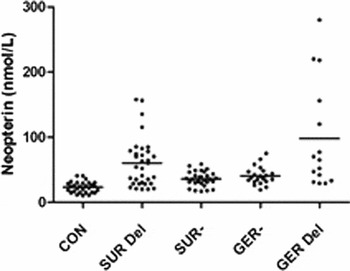
Introduction: In a previous study we found increased plasma levels of homovanillic acid (HVA) in delirious Alzheimer's disease patients compared to non-delirious patients. High plasma HVA levels reflect an increased metabolism of dopamine with concomitant production of neurotoxic metabolites. Neopterin is a marker of both immune activation and oxidative stress. The aim of this study is to analyze the changes in plasma HVA and neopterin levels in elderly patients after surgery and in geriatric patients with or without a delirium, and how such changes are related to a delirium.
Methods: In a sample of 62 patients after cardiac surgery (SUR group, aged 79 years), 44 geriatric patients (GER group, aged 84 years) and 29 healthy controls (CON group, aged 82 years), HVA and neopterin levels were measured in plasma. Delirium was assessed with the Confusion Assessment Method-Intensive Care Unit (SUR group) or the Delirium Observation Scale (GER group). Delirium was diagnosed according to the DSM-IV criteria. Patients were divided into delirious (SUR Del and GER Del) or non-delirious (SUR- and GER-) groups. Results (mean ± SD) were analyzed with GraphPad Prism version 5 using ANOVA and Tukey's Multiple Comparison Test as a post test. Since not all parameters were normally distributed, HVA and neopterin were log transformed.
Results: 33/62 patients in the SUR group and 17/44 patients in the GER group were delirious. ANOVA showed significant differences in both neopterin and HVA levels between the 5 groups (p < 0.0001). In all patient groups neopterin was higher than in the CON group. In addition, neopterin was higher in the SUR Del group than in the SUR- group (60.4 ± 37.8 vs. 35.9 ± 11.4 nM, p < 0.05) and in the GER Del than in the GER- group (97.9 ± 82.2 vs. 40.6 ± 13.8 nM, p < 0.01; see Fig. 1). HVA was also higher in the patients than in the CON group. Again HVA was higher in the SUR Del group than in the SUR- group (217 ± 189 vs. 109 ± 52 nM, p < 0.01). Although HVA levels in the GER Del group were higher than in the GER- group (181 ± 133 vs. 109 ± 65 nM), the difference was not statistically significant (see Fig. 2). Moreover, no differences in both parameters were found between the SUR- and GER- group.
Conclusion: Discussion: In both SUR and GER groups, delirious patients had increased plasma levels of neopterin and HVA compared to non-delirious patients. Our results suggest that increased dopaminergic oxidative stress as well as increased inflammation and immune activation, may contribute to the development of a delirium.
S05
Depression in dementia
This symposium will present new data on three interrelated topics:
1. treatment of depression in persons with dementing illness (Drs. Paul Rosenberg, Sube Banerjee, and Craig Nelson)
2. neurobiological bases of treatment response/failure to pharmacotherapy of depression in dementia (Dr. Alan Thomas); and
3. pathways from depression to mild cognitive impairment and dementia (Dr. Charles Reynolds)
S05.01
Pathways from depression to MCI and dementia
Charles Reynolds IIIUniversity of Pittsburgh, Pittsburgh, Pennsylvania, United States
Pathophysiological pathways from depression to MCI and dementia will be described
S05.02
Sertraline for the treatment of depression in Alzheimer's Disease (DIADS-2) and beyond
Paul Rosenberg MDJohn Hopkins School of Medicine, Baltimore, Maryland, United States
Depression is a major psychiatric comorbidity of Alzheimer's disease, contributing to patient and caregiver distress and to functional decline. Despite its importance, to date there have been few controlled trials of treatments. In a multicenter, double-blind, placebo-controlled trial of sertraline in 131 participants with depression of Alzheimer's disease (DIADS-2), sertraline treatment was not associated with improved outcomes. Additionally, sertraline treatment was not associated with improved outcomes for the subgroup of participants with diagnosis of major depressive episode. Future steps will be reviewed including (1) possible use of serotonin-noradrenergic reuptake inhibitors for depression of Alzheimer's disease (DIADS-3 proposes to assess efficacy of venlafaxine); (2) the possibility that neuroinflammatory mechanisms are involved in both late-life depression and Alzheimer's disease; (3) increasing evidence that the presence of depressive symptoms, even at mild severity, increase the risk of incident Alzheimer's disease in persons with mild cognitive impairment (MCI).
S05.03
Study of antidepressants for depression in dementia
Sube BanerjeeKing's College London, Institute of Psychiatry, London, United Kingdom
Depresson in dementia is a common and important in terms of its negative impact on the quality of life of people with dementia. Although clinical practice is to treat this with antidepressants, often SSRIs, the evidence base is less clear as to the potential benefits of medication. In the HTA-SADD trial (Study of Antidepressants for Depression in Dementia) 326 participants were randomised on a 1:1:1 basis to receive placebo, sertraline, or mirtazapine. Severity of depression, as measured by CSDD score, decreased in all three intervention groups compared with baseline. The greatest improvement at 13 weeks was seen in the placebo group (−5.6 sd 4.7) compared with −3.9 (sd 5.1) in the sertraline group and −5.0 in the mirtazipine group. At 39 weeks the recovery from baseline was sustained in all groups (−4.8 (sd 5.5) with placebo; −4.0 with sertraline; and −5.0 with mirtazipine). Linear mixed- modelling intention to treat adjusted analyses showed no statistically significant differences between either sertraline or mirtazipine and placebo or between sertraline and mirtazipine. These data provide strong evidence of a lack of effectiveness of the antidepressants tested compared with placebo. Adverse reactions were more common in the antidepressant groups than with placebo. These results suggest that current dominant practice with respect to the prescription of antidepressants for depression in dementia needs to be reconsidered. It may be that the nonspecific supportive work with people with dementia and their carers carried by the mental health teams that these cases were drawn from has a positive effect, compared to which any drug effect is trivial.
S05.04
Antidepressant efficacy in older depressed patients with dementia
Craig NelsonUniversity of California San Francisco, San Francisco, California, United States
Depression is common in patients with dementia and often treated with antidepressants. We performed a systematic search of the literature and identified 7 placebo-controlled trials of antidepressants in depressed patients with dementia. Trials ranged in size from 24 to 131 patients, were 6–12 weeks in duration, and employed TCAs (2), SSRIs (4) or venlafaxine. Two individual trials found evidence of efficacy. Metaanalyses of change scores, response rates and remission rates failed to find significant differences, but trend level probabilities were found (p = .06, .07 and .11 respectively). Depression inclusion criteria and outcome assessment methods were quite variable. No study examined outcome in patients with early onset recurrent depression vs. those with late onset separately.
S05.05
Mechanisms of treatment failure of depression in dementia
Alan ThomasNewcastle University, Newcastle Upon Tyne, United Kingdom
Evidence of neurotransmitter changes in depression in dementia and related neurobiological changes will be decribed and their implications for treatment discussed.
S06.01
Overview of the NIHR WHELD (Improving Well-being and Health for People with Dementia) programme
Raymond Koopmans, Radboud University Nijmegen, Medical Center, Nijmegen, The Netherlands
250,000 people with dementia in the UK live in care homes. The inconsistent quality of care, poor management of mental health problems, and widespread overuse of sedative drugs are matters for serious concern. The policy context within the UK regarding the use of sedative drugs provides an opportunity to move forward on a national basis to provide a better trained workforce that can improve the mental health of people with dementia living in care homes and reduce the use of sedative drugs. There is strong evidence that a number of specific interventions involving staff training, promoting person-centred care, and utilizing nonpharmacological interventions improve some key health and mental health outcomes and can reduce antipsychotic drug use. However, none of the interventions have directly improved quality of life for care home residents with dementia or achieved widespread implementation in clinical or care settings as part of routine UK healthcare practice. The Improving Well-being and Health for People with Dementia (WHELD) programme is an NIHR-funded programme, which started in 2010. It aims to improve mental health; reduce unnecessary prescription of antipsychotic drugs; and improve quality and duration of life of people with dementia in care homes, by developing an optimized intervention that can be routinely implemented as part of UK healthcare care, based upon the most effective, currently available interventions. This paper presents the aims, objectives and intended impact of the WHELD research programme, together with the context and rationale for the programme. These are described with reference to the overarching policy context and to a number of recent systematic reviews, highlighting the potential value of interventions aimed at improving the skills of care staff working in care home environments and overall health or key neuropsychiatric symptoms among residents with dementia. The programme's design and delivery are also described, in line with its six-component work packages.
Work Plan 1: Systematic review—A number of good quality studies have highlighted the potential value of interventions aimed at improving the skills of care staff working in nursing home environments and overall health or key neuropsychiatric symptoms among residents with dementia. However, there is no coherent picture of how to maximise the effectiveness or acceptability of these interventions in care homes, and little is known about what elements are valued by people with dementia or care staff. The purpose was to increase our understanding of what underlies the successful implementation of psychosocial interventions in care homes and to conduct a systematic review and metasynthesis of the qualitative evidence in this area. This review highlights the service models and interventions with the best available evidence base and increases our understanding of what underlies the successful implementation of psychosocial interventions in care homes.
Work Plan 2: Optimize interventions, model, and adapt for UK healthcare context—There are a number of established, effective interventions, all of which improve some aspects of mental health or reduce antipsychotic use. No intervention achieves both of these objectives, and none have been widely implemented in clinical practice. The objective is to model and adapt interventions to improve the breadth of benefit and enable widespread implementation.
Work Plan 3: Incremental evaluation of key interventions—This step will provide clear and comprehensive information from quantitative and qualitative evaluation regarding the specific benefits conferred by each intervention to enable the development of a practical and cost-effective intervention. It is a pilot study and qualitative evaluation to help to develop a larger randomised controlled clinical trial (WP5), which will establish the value of WHELD.
Work Plan 4: Optimizing an intervention to promote well-being, mental health, and the reduction of antipsychotic use for people with dementia in care homes (WHELD)—Based on the quantitative and qualitative results of the pilot studies, this will involve a Delphi-consensus process to reach a consensus interpretation of the results regarding the incremental benefits of each intervention. This will result in the development of an optimized intervention (WHELD) by ‘welding together’ the most effective elements of the best currently available intervention programmes and developing a standardised manual and training programme.
Work Plan 5: Field testing and randomised controlled trials—This step will determine the full breadth of benefit conferred by the optimized intervention, tailoring it through field testing to ensure it meets the needs of the healthcare and care home sectors.
Work Plan 6: Dissemination—This step will be undertaken with the aim of enabling the widespread national implementation of the optimized intervention programme, as part of achieving the vision of the National Dementia Strategy of living well with dementia in care homes.
S06.02
Implementing psychosocial interventions for people with dementia in care homes: a qualitative meta-synthesis
Vanessa LaurenceInstitute of Psychiatry, King's College London, London, United Kingdom
Dual concerns about the prevalence of neuropsychiatric symptoms among people with dementia in care homes and the overprescription of antipsychotic medication have led to a renewed emphasis on nonpharmacological interventions. Considerable variation exists, yet there is strong evidence that certain psychosocial interventions and training programmes for carers in long-term care can improve the quality of life of residents through reducing behavioural symptoms and depression and improving physical and cognitive function. However, there is no coherent picture of how to maximise the effectiveness or acceptability of these interventions in care homes. Little is known about what elements are valued by people with dementia or care staff. Qualitative methods are well situated to address such complex questions. Existing studies provide valuable insight into how psychosocial interventions are used and experienced in care homes. To our knowledge this is the first systematic review and metasynthesis of the qualitative evidence in this area. This review, which forms Work Plan 1 of the WHELD research programme, highlights the service models and interventions with the best available evidence base and increases our understanding of what underlies the successful implementation of psychosocial interventions in care homes. A search strategy based on terms relating to dementia, care homes, psychosocial interventions, and qualitative research was devised and adapted for 7 electronic databases for the period 1995-present. We augmented the electronic search by scanning reference lists and hand-searching relevant journals and publications of influential research groups. We identified 2,632 papers; following the initial screen, the full texts of 123 articles were assessed for relevance by two independent reviewers. 39 papers, pertaining to 34 individual studies, were included in the review. Two reviewers independently assessed each paper for methodological quality using the CASP checklist. Agreement was measured using Cohen's Kappa, weighted for closeness of scores, and disagreements were resolved by discussion. Data concerning the intervention, aims, participant characteristics, setting and methods were extracted for all 39 papers. Two further types of data were extracted: first-order constructs reporting benefits of the intervention and barriers and facilities to its implementation; second-order constructs including authors’ conclusions, interpretations, and recommendations. Through examining the concepts and interpretations, it was possible to identify shared constructs across studies and to note areas of discordance. The themes were combined in an interpretive method of metadata synthesis, grouping themes where they had greatest explanatory power. This enabled the construction of a taxonomy that categorised findings in three domains: the elements of a successful intervention, the conditions required for a successful intervention, and the challenges to a successful intervention. The studies examined the implementation of a wide range of psychosocial interventions. These were categorised as therapeutic activities (6), training and supervision (5), music interventions (4), reminiscence (4), communication strategies (3), Special Care Units (3), methods of orientation (2), animal interventions (2), and other (5). The studies were undertaken in the United States (14), Canada (5), England (5), Sweden (5), Australia (2), Ireland (1), Japan (1), and Norway (1). For people with dementia, three distinct features of successful interventions emerged: connecting with others, making a meaningful contribution, and opportunities to reminisce. For care staff, successful interventions were characterised by enabling staff to see beyond the illness and providing them with space for reflection. Interventions were reliant on the capacity of staff to provide appropriate encouragement and reassurance and to tailor the intervention to the individual's preferences and abilities. Further conditions for a successful intervention included the involvement of the family and flexibility regarding the complexity, pace, and level of engagement. Lack of resources, a focus on “priority needs,” attitudes of staff, and the physical lay-out of care homes presented key challenges to implementation. The synthesis of qualitative research allows the integration of findings from small studies to enhance the generalisability of qualitative research and its impact upon health policy and clinical practice. The findings presented in this paper provide the evidence base upon which to build the WHELD research programme, providing valuable insight into the effective components of psychosocial interventions and how they can be optimized in care homes.
S06.03
A qualitative review of psychosocial interventions for people with dementia living in care homes
Jane FosseyOxford Health NHS Foundation Trust, Oxford, Oxfordshire, United Kingdom
There are a number of established effective psychosocial interventions, all of which improve some aspects of mental health or reduce antipsychotic use in people with dementia living in care homes. No interventions achieve both of these objectives and none have been widely implemented in clinical practice. To our knowledge, this is the first systematic review of the training manuals that exists to operationalize psychosocial interventions for people with dementia in care homes. The purpose of the review was identify the most relevant evidence-based manuals representing various psychosocial intervention elements (person centred care, social intervention & pleasant activities, and exercise). This involved identifying manuals evidenced as being effective and rating these with respect to the WHELD programmes’ objectives. The findings from this review will inform the development of an optimized intervention, to identify which psychosocial intervention elements are effective for people with dementia living in care homes, specifically in the reduction of antipsychotic use and improvement of agitation and mental health. This review employed a hand search strategy to identify relevant resources, which consisted of several methods. An internet and data base search was conducted, using the terms ‘dementia’ with combinations of the following: ‘psychosocial’, ‘intervention’, ‘manual’, ‘person centred’, ‘social interaction’, ‘exercise’ and ‘training’. National and international experts were asked to identify relevant resources. The reference lists of the resources obtained were searched to highlight any other possibly relevant manuals. Once identified, resources that met the exclusion criteria (not an intervention, inaccessible, no instructional component/specific manual, a component, or previous version, of another manual or published pre-1995) were excluded. A literature search was conducted to try to identify any published evidence for the effectiveness of the remaining manuals using the manual title and the author's name as search terms. The remaining manuals were subjected to closer inspection and their contents summarised. The manuals were then rated against 2 screening criteria: ‘intervention’ and ‘operationalization.’ Manuals that met the screening criteria were rated on a further 7 items (‘relevance’, ‘population’, ‘feasibility’, ‘scope’, ‘evidence’, ‘development’, ‘theory’) and then excluded if they had no evidence base. The final manuals were then divided by the psychosocial intervention element they addressed (i.e. person-centred care, social intervention and pleasurable activities, or exercise) and those that rated highest in their category against the study criteria were selected for use in a subsequent pilot study. One hundred seventy-four books, videos, DVDs, leaflets, and packs were identified as possible manuals for psychosocial interventions for people with dementia. Upon closer inspection of content, 65 manuals were identified as possibly being relevant to the study programme outcomes and therefore suitable for more detailed review. Thirty-three manuals met the screening criteria and were rated against study criteria. Of these manuals, 15 had been evaluated either quantitatively or qualitatively and evidenced as being effective. The four highest scoring manuals will now be used to identify which psychosocial intervention elements are effective in improving outcomes for people with dementia in care homes, specifically the reduction of antipsychotic use and the improvement of agitation. The findings presented in this paper provide valuable insight into which manuals for implementing psychosocial intervention are effective for improving health and well-being outcomes for people with dementia living in care homes. These findings will then inform the production of an optimized intervention and a subsequent randomised controlled trial to ascertain its effectiveness.
S06.04
Optimizing psychosocial interventions for people with dementia living in care homes
Clive Ballard,Wolfson Centre for Age Related Diseases, Kings College, London, United Kingdom
The overarching goal of the WHELD programme is to provide an effective, simple, and practical intervention, which improves the mental health of, and reduces sedative drug use in, people with dementia in care homes so that it can be rolled out nationally to all UK care homes as a healthcare intervention. A review of psychosocial interventions has been undertaken, with the purpose of identifying manuals evidenced as being effective. Consequently, the most relevant evidence-based manuals, representing various psychosocial intervention elements, have been identified and rated with respect to the WHELD programmes’ objectives. The highest scoring manuals will now be used in a pilot study to identify which psychosocial intervention elements are effective in improving outcomes for people with dementia in care homes, specifically in reducing antipsychotic use and improving agitation. We will do this through coaching care staff to provide care that is focused on an understanding of individuals and their needs; and by using combinations of the following components: a structured medication review, exercise, activities, and social interaction. This will be with the aim of understanding the breadth of benefits conferred by the general training and the addition of combinations of the other psychosocial intervention elements. The findings of this pilot will inform the development of an optimized intervention, the effectiveness of which will be assessed through a subsequent randomised controlled trial. This paper describes the development of the following psychosocial interventions for use in the pilot study, which will aim to assess their effectiveness in improving the health and well-being of people with dementia living in care homes: (1) Person-Centred Care (PCC) will be delivered using the operationalized FITS manual ‘Evidence-based approaches for improving dementia care in care homes’ (Fossey & James, 2008), which has demonstrated efficacy in a robust randomised controlled trial (RCT), and incorporates relevant updated materials since its original publication. This will be further augmented by additional elements of leadership training on the basis of input from an expert therapy development group. (2) Antipsychotic Review will involve specific review of antipsychotic drugs by an expert clinician, based upon the principles outlined in the NICE dementia guidelines. (3) Social Interaction and Pleasant Activities: An intervention manual will be developed based upon evidence-based approaches and specific communication skills-training to enhance staff–resident interactions. Minor adaptations will be undertaken, in collaboration with the authors who developed the manuals, to ensure that they are suitable and practical for administration in a UK care home setting. (4) Exercise: The main focus will be to promote exercise through encouraging enjoyable positive activities. The findings presented in this paper provide valuable insight into the effective components of psychosocial interventions. Through refining established evidence-based interventions and evaluating these through pilot study, the goal then will be to develop an effective, simple, and practical intervention for subsequent randomised controlled trials, the results of which will enable further tailoring of the intervention to enhance both clinical and economic effectiveness of the intervention.
S07.01
A rapid participatory appraisal to improve end-of-life care for people with dementia: A whole-community study
Elizabeth L. SampsonUniversity College Medical School, London, United Kingdom
Introduction: Rapid Participatory Appraisal gains information from different sources in the study community (for example, qualitative interviews, observation of services). Results are combined to describe the delivery of, and possible improvements to, service provision. This form of “action research” also facilitates change.
Aims: To identify barriers for people with dementia and their carers to accessing good quality end-of-life care and identify cost-effective ways of enabling improvements.
Study setting: Haringey is a deprived, socioeconomically and ethnically diverse London borough (population 225,000, 11.1 percent aged 65 years or older, with 1,579 people having dementia).
Project management: A steering group consisting of a wide range of local professionals (physicians from palliative and primary care and old age psychiatry, district nurses, social services and primary-care trust commissioners, carer representatives, and community matrons) met four times and assisted in developing the protocol. Ethical permissions were granted.
Sources of data: We used mixed methods to explore a single health and social care locality; qualitative interviews with family carers, focus groups with health and social care professionals. Case notes were audited using a structured tool (demographics, severity of dementia, comorbidity, carer demographics, health and social care services received over the last six months of life, medications and home equipment provided). We mapped patient pathways and completed an economic analysis.
Synthesis of qualitative and quantitative findings: Key themes from the individual qualitative interviews and professional focus groups were triangulated with the findings of the audit and economic analysis, each validated by data from at least two other types of sources. Themes were presented to the stakeholder group who generated feasible recommendations to reflect local needs. Pathways of care were modeled; we mapped the typical trajectory over the last 6 months of life.
Results-identified themes—
Patient pathway: This was complex, involving a range of services, professionals and informal family carers, exacerbated by medical and social crises precipitating emergency hospital admission.
• Recommendation: a multi-agency dementia care pathway should be developed within the borough.
Impact of acute hospitalisation: this was common in the last six months of life, secondary to pneumonia and dehydration. Patients often experienced a marked deterioration; staff had difficulty managing people them on hospital wards.
• Recommendation: pro-active case management for people with dementia to avoid acute hospital admissions.
Economic costs
The average cost of their care over the six months prior to death was estimated at £25,000/ patient. Hospitalizations represented 20% of the total average costs of care.
• Recommendation: strategies should be generated to promote cost-effective interventions in the community.
Advance Care planning
Health and social care staff felt inexperienced and lacked confidence in adhering to advance directives and resuscitation orders.
• Recommendation: staff in residential and nursing homes had additional support in the use of advance care plans.
Impact on carers
Families provided a range of social, physical and emotional support. Physical disability was high, and family caregivers and professionals reported difficulties in accessing services. There was little support available to carers and care home staff after bereavement.
• Recommendation: the borough's Admiral Nurse Service should be more widely publicized and that bereavement support should also be provided to nursing home staff.
Skills and training of health and social care staff
A wide range of health and social care staff came into contact with people with advanced dementia; they realized that they needed to improve their skills. In particular, nursing staff in acute hospitals.
• Recommendation: training for staff at the local acute hospital
To complete the research cycle a public meeting was held with key stakeholders. Many of the recommendations were subsequently implemented.
Discussion: Using three different research methodologies (individual qualitative interviews, focus groups and detailed case not review) enabled us to “triangulate” our key findings. The whole systems approach followed the patient journey through a range of organizations, identifying barriers to care. Using Rapid Participatory Appraisal was key in effecting changes in the system. This action research method allows local context and needs to be considered and is more dynamic than traditional health services research techniques. The steering group made recommendations but it was local service providers who generated the solutions. Thus there was “ownership” of changes to service delivery.
S07.02
A booklet about comfort care in advanced dementia: Three-country evaluation by bereaved families
Jenny Van Der Steen,VU University Medical Center, Amsterdam, The Netherlands
Background: Families of nursing home residents with dementia are usually involved in care and treatment decisions. To this end, the family needs to be informed about the course of the dementia and possible palliative care. Written materials may be useful to support families’ discussions with the health care team. Experts have developed booklets to inform families in Canada, and more recently, in Australia and the United States. It is unclear, however, to what degree these booklets serve families’ needs in the country of origin and elsewhere, and how and when they are best provided.
Methods: Based on the Canadian booklet, we developed adapted versions for use in the Netherlands and in Italy. Because of their experience with end-of-life care, bereaved families (n = 138) of dementia patients who had resided in long-term care facilities participated in our evaluation study. Families were recruited from facilities in French-speaking Canada (the area of original development; n = 54), the Netherlands (across the country; n = 59), and Italy (Lombardia region; n = 25). Families completed a survey that was sent along with the booklet. In addition to an evaluation of the booklet's contents and format, an eight-item scale assessed the booklet's acceptability. Usefulness was rated on a 0–10 scale, and perceived usefulness referred to usefulness if family had had the booklet during the resident's stay. Families indicated preferred ways of obtaining and the most appropriate time to get the booklet. Results: Almost all families (94 percent) perceived the booklet as useful. Canadian and Dutch families evaluated the booklet's contents and format favorably, whereas Italian families’ evaluations were less favorable. Almost all (98 percent) of families endorsed roles for physicians or nurses or other healthcare professionals, and about half additionally accepted professional availability at their own initiative, in response to a letter or through the internet. Preference of timing was highly variable. Better acceptability, usefulness, and availability through their own initiative were independently associated with non-Italian nationality, presence of more physical signs discussed in the booklet, feeling ill-prepared, and higher satisfaction with care. A preference for receiving the booklet early was more likely in Italian families, those without university education, and those involved with older residents.
Conclusion: The booklet on comfort care that we evaluated is suitable to inform Dutch and Canadian families on comfort care in dementia, but implementation in Italy requires further consideration. The booklet may be integrated into advance care planning in long-term care and made available outside long-term care settings to serve families who wish to be informed early.
S07.03
Implementing palliative interventions in Irish residential dementia care settings
Marissa Butler,Clare Mental Health Services for Older People, Ennis, Co. Clare, Ireland
Background: The Irish Hospice Foundation /HSE Report of 2008, “Palliative Care for All: Integrating Palliative Care into Disease Management Frameworks,” examined the palliative care needs of people with dementia. It found little evidence of delivery of palliative care for people with dementia in Ireland and recommended that palliative care should be integrated into the care pathway of people with dementia in all care settings. In response to this key recommendation, a two-year action research project began in 2009, jointly funded by the Alzheimer Society of Ireland, the Irish Hospice Foundation, and the Baxter Foundation. Its aim is to devise, implement, and evaluate appropriate palliative care responses for people with dementia within an Irish health-care context. There are three different residential dementia care settings involved in the project. The main site is a Specialist Dementia Care Unit run by the Clare Mental Health Service for Older People. The other two dementia units are in a private nursing home and an Irish Health Service Executive Elderly Care Hospital.
Method: Action research methods were used. These have been shown to be effective in closing the theory-practice gap, facilitating collaboration and suited to small-scale projects to effect change locally. A questionnaire, adapted from three validated instruments (The Staff Learning Needs Assessment Tool, The Palliative Care Education Needs Survey, and The Approaches to Dementia Questionnaire, which measures levels of person-centredness), was used to gather qualitative and quantitative data in order to gain insight into professionals’ knowledge of both palliative and dementia care within the three sites. The Workplace Culture Critical Analysis Tool, which focuses on measuring the context of the person-centred culture, was also used at the end of the project.
Results: One hundred nineteen health care professionals (nurses and healthcare assistants) completed the questionnaire. Sixty-three percent of professionals working with people with dementia had not received any dementia training/development. Of the 37 percent that had received training, 58 percent had attended a one day-course. Fifty-four percent of professionals working with people with dementia had not received any palliative care training/development. From the questionnaire results, it was evident that in order to introduce palliative interventions, staff would need training/development in the basics of dementia care. The low hope score (25) in the Approaches to Dementia questionnaire was of significant interest and focused the researcher when looking at training and practice development issues. Dementia training incorporating practice development tools was introduced in the three sites, followed by Communication training around end-of-life with people with dementia and their families. Guidelines for advance care planning (ACP) were also developed and implemented as routine within the sites. A dementia palliative care booklet was developed collaboratively with a multidisciplinary group made up of a General Practitioner, Clinical Nurse Specialist (CNS) in Palliative Care, CNS in Psychiatry of Old Age, Primary Care Teams Coordinator, Advanced Nurse Practitioner Candidate in Dementia Care, and a representative from each of the three sites involved in the project. An expert team which included a person with dementia and a family carer reviewed the booklet prior to publication. This booklet was then introduced into General Practitioner surgeries around County Clare.
Conclusions: The action research methodology facilitated professionals in changing their practice in relation to palliative interventions in dementia care. This participatory approach has enabled health professionals to reflect on their practice and explore ways of improving service delivery. Participants in the study perceived a notable improvement in their knowledge of dementia and understanding of the palliative care needs for the person with dementia and his or her family. Professionals were facilitated to improve the quality of person-centred interactions with residents for whom they provide care through training/development in dementia care and communication skills at the end of life. Through staff and family reflections, it is emerging that ACP, as part of routine care, is leading to perceived better outcomes for the person with dementia, his or her family, and the professionals involved in their care.
S07.04
Assessing pain in dementia: One little study but one big concept
Julian Hughes,Institute for Ageing and Health, Newcastle University, North Shields, Tyne and Wear, United Kingdom
Background: Studies suggest that pain is underrecognized and undertreated in people with severe dementia. Identifying pain is the first step in its effective management. Relatively few studies have investigated the utility of behavioural pain tools in those with advanced dementia. We should, however, keep in mind that there might be other causes of distress. This is clearly important if we are to understand the behavioural and psychological symptoms of dementia (BPSD). And it could be argued that managing BPSD is a crucial element of palliative care for people with dementia; perhaps it is the equivalent of managing pain in cancer.
Objective: We wished to evaluate the utility of a distress tool and a pain tool, partly also to understand the nature of pain and distress in dementia.
Method: Participants were nursing home residents with advanced dementia who were observed on three occasions using a pain assessment tool (PAINAD). Following further assessment, an appropriate management plan was formulated for those thought to be in pain. Participants who scored above the cutoff (2) on the PAINAD scale, but were felt not to be in pain, formed the false positive group. The pain and false positive groups were reassessed at one and three months. In addition, we also used a distress (DisDAT) assessment tool.
Results: Seventy-nine participants completed the study, with 39 participants scoring above 2 on the PAINAD. Of these, only 13 were assessed as being in pain. The other 26 participants who scored above the cutoff on PAINAD were not felt to be in pain. Instead, their behaviour had a psychosocial explanation, often to do with a lack of understanding as to what was happening to them. The sensitivity of PAINAD was 92 percent. In those with pain, a significant decrease was demonstrated in the PAINAD scores on intervention following treatment for pain (p = 0.008). Behaviours were similar in both groups.
Conclusion: PAINAD is a sensitive tool for detecting pain in people with advanced dementia, but it has a high false positive rate, frequently detecting psychosocial distress rather than pain. PAINAD can be used to assess whether pain management strategies have been successful, but DisDAT is also useful. At a conceptual level, DisDAT facilitates broader thoughts about distress and pain. How do we distinguish between the two? And what then is the role of a “pain” assessment tool? The distress tool picks up a broader array of signs, which may be useful both in practice and in research. It may be that we need to think harder about distress in order to look after people with severe dementia more effectively.
S07A.01
Advance care planning for people with dementia in the United Kingdom; great in theory, a challenge in practice
Louise Robinson, Institute of Health and Society, Newcastle University, Newcastle upon tyne, United Kingdom
Background: Advance care planning (ACP) allows people to record their wishes about future health care choices in the event that they may lose mental capacity. In the area of dementia, where capacity loss is inevitable, ACP thus has the potential to facilitate a more person-centred care approach to care.
Objective: To explore the views of all key stakeholders, both professionals and people with dementia and their families about how, and if, ACP is implemented in dementia care.
Method: Qualitative data collection methods were used. Focus groups (n = 14) and one-to-one semistructured interviews (n = 17) were used to explore the views of a wide range of professionals (health and social care, advocacy organisations and legal services) involved in dementia care; in addition, one-to-one interviews were carried out with people with dementia (n = 17) and their main carers (n = 29).
Results: Despite a significant policy push, ACP does not appear to be routinely integrated into dementia services, although some examples of good practice exist—for example, the young dementia team. Contrary to recommended national guidance in dementia care, ACP discussions often occur late in the illness, with subsequent proxy decision making. According to policy and best practice, there is certainty that ACP is beneficial; however, in practice there is considerable uncertainty among professionals as to how best to implement ACP. This uncertainty exists at multiple levels, including allocation of professional responsibility, which documentation to use, assessment of capacity and legal dilemmas. People with dementia and their families do plan ahead in many areas of their lives, such as identifying an informal proxy-decision maker within their family, making wills, appointing a lasting power of attorney for property and finance, or making funeral plans. However, making plans regarding future healthcare choices was felt to be a much more difficult area due to uncertainty over future health and a preference to ‘take one day at a time.’
Conclusions: Although ACP offers opportunities for people with dementia to plan ahead, this does not appear to be a routine part of dementia care in England, despite certainty at the policy level that this constitutes best practice. Areas of additional training for professionals may help overcome some of the current barriers that exist. Support for people with dementia and carers to think about their wishes for the future may facilitate sharing of views and the beginnings of advance care planning for those who wish to take it further.
S07A.02
Barriers and facilitators of (timely) planning of palliative care for patients with dementia: A study in Dutch nursing homes
Mirjam Van Soest-Poortvliet,VU Medical Center, EMGO Institute for Health and Care Research, Amsterdam, The Netherlands
Background: With a growing number of elderly people, the number of people living and dying in long-term care (LTC) settings has increased enormously. Many nursing home patients with dementia may benefit from palliative care. However, difficulties in predicting death and failure to recognize dementia as a terminal disease may impede not only the provision but also (timely) planning of palliative care.
Objective: To determine barriers and facilitators of (timely) planning of palliative care in nursing home residents with dementia, as perceived by family and professional caregivers, in an environment with ample opportunity to discuss care with on-staff physicians.
Method: In-depth qualitative telephone interviews guided by an interview guide were held with families, on-staff elderly care physicians, and nurses approximately 3 to 6 months after death of a nursing home patient with dementia. Interviews were held between January 2010 and December 2010. All interviews were audiotaped, transcribed verbatim, and checked for accuracy. The interviews were performed by two master-level researchers with backgrounds in psychology and health sciences, both of whom had been involved in research in dementia care in nursing homes for several years and had received training in qualitative interview techniques. During the interview period, the interviewers were supervised by researchers with experience in qualitative research in nursing homes. The transcribed interviews are coded and analysed. Atlas.ti, an established software package for ordering qualitative data, was used to code and help interpretation of the interviews. Initial analyses of the interviews started early during the data collection period and allowed for adaptations to the topic list. Coding is extensive/open initially, and summary codes will be assigned later in the process. In later stages, interviews that referred to the same residents will be compared.
Results: A total of 64 interviews were held about 26 patients. Perspectives of all three caregivers are available on 13 patients. The caregivers differed in their definition of palliative care or were not able to define it well, which may impede communication and planning of care. Preliminary results further indicate that planning of care seemed to follow the patient's condition rather than being proactive and that continuity of medical care is very important to family members. A number of barriers and facilitators at different levels (patients, families, physicians, nurses, and organization) are being identified. An example of a patient factor is the presence or absence of an advance directive, and a factor influencing the family is whether or not there is consensus within the family. Physicians could influence the planning of care by anticipating family wishes, and nurses could play a signal role in this. The guidelines of the nursing homes could influence the planning of care at an organizational level. All identified barriers and facilitators will be discussed in detail, including implications as to how and when to plan palliative care in patients with dementia.
Preliminary conclusions: In our qualitative interview study, three types of caregivers identified a variety of barriers and facilitators regarding (timely) planning of palliative care in nursing home residents. There was overlap in barriers and facilitators, but some were brought up only by families or professional caregivers. A deeper insight in these potential barriers and facilitators may improve (timely) planning of palliative care.
S07A.03
Documented advance care planning among nursing home residents with dementia in Belgium: Prevalence and associated outcomes
An Vandervoort,Vrije Universiteit Brussel - UGent, Jette, Vlaams-Brabant, Belgium
Background: Advance care planning is an important element of high-quality care in nursing homes, especially for residents suffering from dementia who are often incompetent for decision making at the end of life.
Objective: The aim of this study is to describe the prevalence and content of documented advance care planning among nursing home residents with dementia in Flanders, Belgium, and study associated clinical characteristics and outcomes.
Method: All 594 nursing homes in Flanders were asked to participate in a retrospective quantitative study in 2006. Participating homes identified all residents who had died over the last two months. A structured questionnaire was mailed to the nurses closely involved in the deceased residents’ care regarding diagnosis of dementia and documented care planning (i.e., advance patient directives: written patient orders or living wills, appointment of proxy decision-makers: a document indicating a surrogate decision-maker who can make decisions for the resident in case of incompetency, general practitioners’ treatment orders (GP orders): instructions of the general practitioner in the resident's medical file regulating the use of specific treatments at the end of life).
Results: In 345 nursing homes (58 percent), nurses identified 764 deceased residents with dementia, of whom 63 percent had some type of documented care plan —i.e., advance patient directives in 3 percent, an appointed proxy decision-maker in 8 percent, and GP orders in 59 percent. An advance patient directive containing do-not-hospitalize orders (2.5 percent) and do-not-resuscitate orders (2.1 percent) was most common. Among GP orders, do-not-resuscitate orders (36.1 percent), nonhospitalization orders (46.3 percent), and withholding or withdrawing artificial food (30.6 percent) and fluids (29.5 percent) were most frequently reported. Multivariate logistic regression showed that GP orders were associated with receiving palliative care in the nursing home (OR 2.97; CI, 2.00 - 4.37). The odds of dying in a hospital, after controlling for differences in characteristics, clinical characteristics, and other outcomes such as deliverance of palliative care by the GP and/or nursing home caregivers, were three times lower if there was a GP order (OR 0.32; CI, 0.18 - 0.57).
Conclusions: Although GP orders are relatively common among residents with dementia in Belgium, advance patient directives and the appointment of a proxy decision-maker are rather uncommon. GP orders in particular appear very relevant in effecting place of death.
S07A.04
Advance care planning and dementia: Ethical and conceptual challenges
Cees Hertogh,VU University Medical Center, Amsterdam, The Netherlands
Background: The principal goal of ACP is to assist patients in making treatment decisions for the event of incapacity and hence to extend individual autonomy into a future state of incapacity. Although ACP seems of crucial interest for people suffering from dementia, this disease offers a challenge to prevailing concepts of ACP due to its slowly progressive course, the gradual loss of capacity, the instability of preferences, and the extended period of time elapsing between mental incapacity and the end of life.
Objective: To critically assess prevailing approaches to ACP from a conceptual and ethical perspective and to present a model that best serves the needs and interests of people with dementia and their families.
Method: Narrative (theoretical) review of key ethical, conceptual and empirical studies on ACP.
Results: Various models of ACP can be distinguished, including (1) Advance directives (AD): advanced by legal scholars and recognized in many jurisdictions. The focus is predominantly on refusal of (life sustaining) treatments near the end of life. AD can be classified into instruction directives and proxy directives; (2) ACP as a process of communication between a patient and a professional caregiver aimed at recording patient wishes regarding end-of-life care and decision making in case of decisional incapacity. The focus may be on recording treatment wishes, values in life, treatment outcomes, goals of care, or on the naming of a health care proxy; (3) ACP as in Number 2, but broadened from medical care in the event of incompetence to all medical care in the last stage of life (of the elderly); (4) ACP as a process of preparing for death and dying. Focus is on achieving a feeling of control in the dying experience, on assisting patients to reach closure in relationships, and on relieving dear ones from the burden of decision making; (5) ACP as in Number 2, but here the communication is between family caregivers of incompetent patients and healthcare professionals. Focus may be on interpreting ADs or reconstructing patient preferences (if possible), but also on elements of Number 4, such as relieving the burden of decision making and preparing for the end of life.
Conclusion: Pros and cons of the identified models will be discussed. It will be concluded that an approach to ACP suited to support patients with dementia as they confront the challenge of a progressive illness trajectory is best defined as a dialogical and dynamic process that starts early, engages patients together with their dear ones, and involves the development of treatment plans on the basis of realistic goals of care, to be reassessed regularly and following any significant change in health. Furthermore, this process must involve patients as long as possible and be sensitive to the occurrence of response shift in quality of life appraisals, and patient preferences. An ethic of care seems more appropriate to guide this process than an ethic of individual autonomy.
S08.01
General objectives RTPC and dissemination of results
Gabriele Meyer,University of Witten/Herdecke, Witten, North Rhine-Westfalia, Germany
Astrid Schmitz, Anna Renom
RightTimePlaceCare Consortium, University of Witten/Herdecke, Germany
The RTPC project started in January 2010. It comprises six work packages (WPs), led by five Consortium members. The project uses descriptive, qualitative, and observational methods. RTPC aims to advance the state of the art in health systems research in dementia care and tries to improve cooperation between researchers to promote integration and excellence of European dementia care research. The knowledge generated will empower the policy makers and decision makers to manage and reform dementia health care systems in view of common challenges and within the common framework of the EU. Management and dissemination are important tasks of a multinational study. Both are led by the RTPC coordinator in Germany and cover a wide range of activities—e.g., development and implementation of fair authorship rules aimed to ensure transparency and publication ethics and implementation of a detailed dissemination strategy for how to bring the project's results best to research, politics, practice, and public.
S08.02
Structure of long-term home and institutional care available to people with dementia in eight European countries
Ingalill Rahm Hallberg,Medicine, Lund University, Sweden
Staffan Karlsson, RTPC Consortium, Lund University, Sweden
The RTPC project also concerns the structure of long-term home and institutional care throughout the trajectory of dementia. To describe and analyse the European health, social care, and welfare systems, advocacy and informal caregiver support systems for patients/consumers with dementia, a template has been developed for the use of homogenous terminology, covering possible care and service interventions from diagnosis to end of life. The structure of the national health care and social service system was described as related to elderly in general and to people with dementia specifically. The system differs among the eight countries in terms of the demands on informal caregivers, financially, and the distribution and the emphasis on home care versus nursing home care. Resembling findings throughout the eight countries were that few had a diagnosis at early disease stage, support to family caregivers still can be improved, and palliative care concepts are sparsely applied.
S08.03
Factors influencing institutionalization and living conditions of people with dementia: A European survey
Hilde Verbeek,Maastricht University, Maastricht, The Netherlands
S Zwakhalen, B Afram, J PH Hamers
RightTimePlaceCare Consortium Maastricht University, The Netherlands
Most people with dementia live at home, but at some point, professional home care becomes insufficient and institutional nursing care is required. This “break-point” from formal home care to institutional nursing care may vary among countries, and although many predictors for institutionalization are known, it remains unclear if predictors are country specific. There is some evidence that the time of admission to a long-term care institution varies across Europe. The validity and time of diagnosis, treatment, quality of counselling, availability and use of community-based care, cultural aspects, and the specifics of the health care system, together with variables related to the people with dementia and their informal caregivers, such as social network, income, and mobility may influence the time of admission to institutional long-term nursing care facilities and may explain differences across Europe. Therefore, in this study, factors influencing institutionalisation (sociodemographics and relationship characteristics, stressors, and resources) are examined to describe cross-country differences. Furthermore, there are no data available contributing to the decision under which circumstances the formal professional home care or institutional long-term nursing care is favourable for people with dementia and their informal caregivers. This European survey will assess factors influencing the time of admission to institutional long-term nursing care facilities, investigate living conditions of people with dementia and their informal caregivers, and the related economic impact using a prospective design. Because less is known about the validity of predictors of admission to institutional long-term care facilities throughout Europe and the preconditions under which a prolongation of long-term home care is feasible and appropriate, guaranteeing the best available health of people with dementia and their informal caregivers, such a cohort comparison is urgently needed. This paper presents the development, execution, analysis, and utilisation of a survey on long-term formal professional home care and institutional long-term nursing care facilities in 8 European countries. It uses a prospective, single-arm, three-month survey design. A baseline assessment (including sociodemographic data) will be performed and there will be follow-up after three months. This survey has two strata: • People with dementia (PwD) newly admitted to institutional long-term nursing care facilities and their informal caregivers or next of kin (n = 115). • PwD who receive professional long-term home care and their informal caregivers. (n = 175) Data are collected via interviews, using standardized questionnaires. Important outcomes for PwD are, among others, quality of life (QoL-AD), cognition (MMSE), ADL functioning (KATZ), neuropsychiatric symptoms (NPI-Q), and quality of care. Outcomes for informal caregivers include burden (Zarit), psychological symptoms (GHQ-12), quality of life (EQ-5D), and positive aspects of caregiving. Furthermore, costs of care will be inventoried using the RUD questionnaire (WP4). The current paper presents preliminary results of the survey. Furthermore, several case studies will be discussed to illustrate and gain a more in-depth insight into differences among countries.
S08.04
Best practice strategies for integrated dementia care: Preliminary results of the literature review
Montserrat Navarro, E. Cabrera
The Righ Time Place Care Consortium, Fundacíó Privada Clinic per la Recerca Biomedica, Spain
A Zabalegui,Hospital Clinic of Barcelona, Barcelona, Catalunya, Spain
The WP5 systematically reviews the international body of best research evidence aimed to prepare best practice recommendations for dementia patient care and caregivers. The database literature search covered MEDLINE, CINHAL, PsycINFO, the Cochrane Library, and ISI Web of Science (1990 to 2010). Controlled trials and their systematic reviews were preferably included. The Donabedian model was used as a framework of reference due to the complexity of the phenomena information syntax. This model organizes the information related to patient care according to its structure, process, and outcomes. Findings were categorized in home care, nursing home care, and transition process from home care to institutional nursing care facilities. A total of n = 446 articles were included. A synthesis of the best practice review will be presented, focusing on the effects of healthcare interventions and treatments, organization of work, occupational prerequisites, and professionals training.
S09
IPA Testamentary Capacity Taskforce Mock Trial II
Carmelle Peisah (S09.01),University New South Wales, Sydney, New South Wales, Australia
Sanford Finkel, (S09.02)University of Chicago, Chicago, Illinois, United States
Cross-examining lawyers in a mock trial
Horacio Firmino, (S09.03), Centro Hospitalar Universitário Coimbra, Coimbra, Portugal
Judge in mock trial
Serge Gauthier (S09.04),McGill Centre for Studies in Aging, Montreal, Canada
Jay Luxenberg (S09.05),University of California, San Francisco, United States
Barry Reisberg (S09.06), New York University School of Medicine, New York, United States
Expert witnesses in mock trial
A case of retrospectively challenged testamentary capacity will be presented. The case will involve an 83-year-old Chinese gentleman from Singapore living in Australia. He had Parkinson's disease and a suggestion of cognitive impairment, but this was not well documented in the notes. He made three earlier wills leaving his assets mainly to his older son, but prior to the last will being executed, he had a rapprochement with his youngest son and favoured him in his last will.
Expert witnesses will be cross-examined regarding their opinion as to the nature and severity of the testator's cognitive impairment and the impact this had on the will-making process. The witnesses will be also questioned regarding risk factors for undue influence.
A determination will be made as to whether the testator had testamentary capacity at the time he wrote the last will, and, if so, whether he was subject to undue influence at the time.
S10.01
Divergent trajectories of physical, cognitive, and psychological aging in schizophrenia
Dilip Jeste,University of California, San Diego, California, United States
It has long been known that people age differently and within the same individual, different organs and systems change with age at varied rates. Aging-associated decline in physical and some cognitive functions is accompanied by enhancement in subjective quality of life and psychosocial functioning. This paradox may be even more striking in people with schizophrenia than in the general population. Compared to the population at large, individuals with schizophrenia have accelerated physical decline with age, manifested by premature medical comorbidity and increased mortality. Possible explanations for rapid physical aging in schizophrenia include inflammation and oxidative stress resulting from the effects of smoking, substance use, sedentary lifestyle, poor healthcare, and antipsychotic medications. However, accelerated biological aging may also be a result of fundamental biological processes underlying schizophrenia itself. In terms of cognitive impairment, mild deficits exist from early childhood (years prior to the onset of psychosis) and continue throughout life but follow the normal rate of age-related changes in community-dwelling individuals with the illness, although the severity of deficits is almost always greater than that of age peers without schizophrenia. Remarkably, psychosocial function improves with age among persons with chronic schizophrenia. This improvement may represent successful adaptation to illness, restructuring of the social networks, increased use of positive coping techniques, enhanced self-esteem, improved self-management, and reduced perceived impact of illness. Recent research has demonstrated functional and even structural brain changes with psychotherapeutic interventions in schizophrenia, suggesting neuroplasticity of aging, even in persons with schizophrenia. Although heterogeneity is a characteristic of both aging and schizophrenia, the variance in trajectories of different types of ages has several implications for preventive and therapeutic interventions.
S10.02
Cognitive decline and dementia in older people with psychotic symptoms
Sebastian Köhler,Universiteit Maastricht, Maastricht, Netherlands
Background: Research into psychotic disorder and psychotic symptoms in nondemented older adults is scarce. Although psychotic symptoms in later life are associated with poor cognition, it is not known whether they represent a vulnerability marker or risk factor for dementia. The aim of the present study, therefore, was to estimate the prevalence of psychotic symptoms in older adults and study their temporal association with cognitive decline and incident dementia.
Methods: The Medical Research Council Cognitive Function and Ageing Study is a population-based prospective cohort study with measures at 2, 6, and 10 years from baseline. A sample of 2,025 participants, representing a study population of 11,916 nondemented adults aged 65 years or older, was interviewed with the Geriatric Mental State for the presence of paranoid delusions, misidentification, and hallucinations. Decline on the CAMCOG and incident dementia at follow-up was studied as a function of the presence of these symptoms at baseline.
Results: Three hundred thirty participants reported baseline symptoms of paranoid ideation, misidentification, or hallucinations, representing 13.4 percent of the older population without dementia. Psychotic symptoms were cross-sectionally associated with worse cognitive functioning, and individuals with psychotic symptoms displayed more rapid cognitive decline from baseline to 6-year follow-up than people without such symptoms. They further carried an increased risk of later dementia (pooled OR = 3.06; 95%CI = 1.85 – 5.04). The risk increment was observed at all time points and independently of baseline cognition, depression, anxiety, and vascular risk factors increased with increasing numbers of psychotic symptoms and was highest in people aged 65 to 74 years.
Conclusion: Older adults with psychotic symptoms represent a high-risk group for developing dementia and might therefore be a promising target for indicated prevention strategies. However, more needs to be learned about the pathogenic mechanisms driving this effect.
S10.03
The care needs of elderly schizophrenia patients
Paul Meesters,GGZ inGeest, Amsterdam, The Netherlands
Background: The care needs of elderly patients with schizophrenia are still poorly understood, although it is estimated that about one in seven schizophrenia patients is more than 65 years old, and that numbers will double within two decades.
Method: Needs for care were identified in a sample of elderly schizophrenia patients (n = 114, mean age 69 years) within a Dutch psychiatric catchment area. The prevalence of needs was assessed using the Camberwell Assessment of Needs in the Elderly (CANE), both from the perspective of patients and that of staff members. Agreement between patients and staff on the presence of needs was evaluated. In addition, the association of various patient characteristics with the number of unmet needs was examined.
Results: On average, patients reported 7.6 needs, of which 6.1 were met and 1.5 were unmet. Staff members reported slightly more needs, both met and unmet. Psychological and social needs were met less often than environmental and physical needs. Agreement between patient and staff was satisfactory, but discrepancies existed in individual need areas. Having more unmet needs was associated with a lower quality of life.
Conclusion: Needs of elderly schizophrenia patients are prevalent and heterogeneous. Systematic assessment of care needs should be regarded as a prerequisite for delivering appropriate and comprehensive services to this group of patients. Unmet psychological and social needs warrant specific attention in clinical practice.
S10.04
Successful aging and treatment implications for older persons with schizophrenia
Ipsit Vahia,University of California, San Diego, California, United States
Recent evidence from psychiatry, psychology and gerontology literature has demonstrated that successful aging can be achieved by persons with chronic physical illness. However, it is less clear how chronic mental illness such as schizophrenia may be impacted. A growing body of literature suggests that although persons with schizophrenia may not age as successfully as age-matched counterparts without schizophrenia, it may nonetheless be possible to achieve relatively successful outcomes with age. This presentation will review the existing evidence and present data to outline how persons with schizophrenia may age successfully. The presentation will also discuss psychosocial interventions such as Cognitive Behavioral Social Skills Training (CBSST), Functional Adaptive Skills Training (FAST), and Occupational Rehabilitation, which have been shown to improve functional outcomes in older persons with schizophrenia. The presentation will conclude with suggestions for novel interventions aimed at improving successful aging and whether existing psychosocial interventions can be adapted to incorporate more global benefits.
S11.01
Non-drug treatments for Alzheimer's disease
Clive Ballard,Wolfson Centre for Age Related Disorders, London, United Kingdom
There is evidence of modest benefit in cognition and function from RCTs of cognitive rehabilitation and cognitive training delivered by a therapist, but there appears to be no benefit from online computer-based brain training. There is a strong evidnece base that person-centred care training for care staff results in improvement in behavioural and psychological symptoms of dementia (BPSD) for people with dementia living in nursing homes. There is also accumulating evidence that other specific psychological nterventions such as social interaction, positive acitivites, and interventions based upon Antecedent Behavior Consequence also confer benefit. There is also some evidence to support the potential value of exercise, personalized music, and aromatherapy.
S11.02
The role of vascular risk factor control in dementia: A paradox or a lack of appropriate strategies?
Leonardo Pantoni,University of Florence, Florence, Italy
A recent metaanalytic work derived from a National Institutes of Health consensus conference [1, 2] has concluded that among vascular modifiable risk factors current tobacco use and diabetes were likely to be associated with cognitive decline. Moreover, factors probably associated with a lower risk of cognitive decline were involvement in cognitive or physical activity, other leisure activities, and dietary factors including a Mediterranean diet or vegetable or omega-3 fatty acid intake. There was no consistent association, however, for hypertension, hyperlipidemia, homocysteinemia, or obesity. These conclusions have generated frustration in physicians but also concerns in patients and caregivers. We believe that this is a too nihilistic a view and that the conclusions expressed in the earlier mentioned consensus may not be the most appropriate and possibly not the most correct. This is particularly the case, in our opinion, of vascular cognitive impairment, because the evidence of the association between vascular risk factors and stroke and vascular lesions on neuroimaging and between these latter and cognitive decline is such that it appears paradoxical to deny a possible effect of vascular risk factors control on cognitive performances. In my presentation, I will try to briefly summarize the evidence concerning the effect of the treatment of major vascular risk factors (with the exclusion of physical activity that will be specifically dealt with in another presentation of the symposium) on cognitive decline and dementia. The approach that will be used will follow these points: (1) evidence about the effect of the treatment of vascular risk factors on dementia onset or cognitive decline; (2) evidence about the effect of the treatment of vascular risk factors on dementia progression; (3) evidence about the effect of the treatment of vascular risk factors on advanced dementia.
1. Daviglus ML, Bell CC, Berrettini W, Bowen PE, Connnolly ES, Cox NJ, Dunbar-Jacob JM, Granieri EC, Hunt G, McGarry K, Patel D, Potosky AL, Sanders-Bush E, Silberberg D, Trevisan M. National Institutes of Health State-of-the-Science Conference Statement: Preventing Alzheimer Disease and Cognitive Decline. Ann Intern Med 2010;153:176–181.
2. Plassman BL, Williams JW Jr, Burke JR, Holsinger T, Benjamin S. Systematic review: factors associated with risk for the possible prevention of cognitive decline in later life. Ann Intern Med 2010;153:182–193.)
S11.03
Is there enough evidence to recommend physical activity to improve brain health in older adults with mild cognitive impairment and dementia?
Nicola Lautenschlager,University of Melbourne, Kew, Victoria, Australia
Recently there has been an increased interest in whether regular physical activity might be a protective factor for brain health, additional to all the other health benefits. A more specific question is whether physical activity can have any positive impact on cognition, quality of life, neuropsychiatric symptoms, and activities of daily living in people with dementia. This question leads to asking whether physical activity might also be effective in delaying cognitive decline in those older adults who are at increased risk of developing dementia, such as older adults with mild cognitive impairment. This paper will address these questions as well as discuss whether and how the current research knowledge could be translated into clinical practice.
S12.01
Late-life bipolar disorder: A growing and complex challenge
A Netherlands Psychiatry Association Department of Old Age Psychiatry Symposium
Martha Sajatovic,Case Western Reserve University of Medicine, Cleveland, Ohio, United States
Bipolar disorders are complex genetically and neurochemically based illnesses which affect approximately 2.6 percent of the population, aged 18 and older. In contrast to rather low rates in the community, bipolar disorder (BD) is present in 6 percent of geriatric outpatient visits, 8 percent to 10 percent of geriatric inpatient admissions, 3 percent of nursing home residents, and 17 percent of geriatric patients presenting to psychiatric emergency departments. Given the global increase in elderly, it is anticipated that absolute numbers of elderly with BD will also increase. As with younger adults, BD in the elderly may be underdetected and undertreated, and 10 percent of BD cases first occur after age 50. Comorbidity such as anxiety, substance abuse, and medical illness complicate diagnosis and treatment. BD elders are especially vulnerable to adverse pharmacotherapy effects as a result of their multiple chronic diseases, use of multiple concomitant medications, and the pharmacokinetic and pharmacodynamic changes that accompany aging. Adverse drug reactions (ADRs) are a function of increase in age, with the number of ADRs per 10,000 individuals relatively low before the age of 40 but increasing sharply in the fifth decade of life and reaching 60 per 10,000 in the 80-year-olds. Factors that affect the types of adverse effects observed in older patients include age, gender, genetics, timing of medication, body habitus, and pharmacokinetic drug interactions. A growing body of evidence has identified biomarkers that are associated with disease, disease trajectory, or duration and with aspects of treatment response both in mixed-age and elderly BD populations. Lithium, anticonvulsants, atypical antipsychotics, antidepressants, and ECT are all established treatments for mixed-age patients with BD, and data is accumulating on the use of these modalities in geriatric BD. Preliminary open-label trials in BD elders and secondary analyses from mixed-age populations have suggested a beneficial role for lithium and the novel anticonvulsant lamotrigine as well as the atypical antipsychotics quetiapine, olanzapine and aripiprazole. However, larger and controlled trials are needed to validate the findings from smaller sample analyses. Although preliminary data on pharmacotherapies is encouraging, treatment nonadherence remains substantial in geriatric bipolar patients, as is the case with younger BD populations. Finally, psychological therapies appear promising, but have been understudied.
S12.02
A Netherlands Psychiatry Association Department of Old Age Psychiatry Symposium
Bipolar disorder across the life span
Ralph KupkaGGZinGeest/VUMC Amsterdam, The Netherlands
Bipolar disorder is a highly hereditary mood disorder that typically has its first manifestations in adolescence and early adulthood. Onset in prepubertal childhood is currently a matter of considerable controversy. New cases of bipolar disorder may occur at any age. In retrospect, subsyndromal symptoms of mood disorder may precede the onset of full-blown episodes for years. At every age, bipolar disorder has a different impact on the emotional and psychosocial development of the patients, and treatment approaches will be adapted accordingly. Conversely, the demands of each stage in life may influence the illness course. For women, hormonal influences appear to play an important role, because both the postpartum period and perimenopause are associated with increased incidence of mood disorders in general and bipolar disorders in particular. Over time, about 10 percent of unipolar depressions convert to bipolar disorders. In contrast to what many believe or hope, there is no evidence that bipolar disorder fades out with increasing age. True late-onset bipolar disorder—i.e., after age 50—differs in various aspect from early-onset bipolar disorder and is associated with more somatic determinants. This presentation gives an overview of the illness characteristics across the life span, including data from a large longitudinal international cohort study from the Stanley Bipolar Treatment Network.
S12.03
A Netherlands Psychiatry Association Department of Old Age Psychiatry Symposium
Late life mania
Annemiek Dols,GGZ inGeest/VUMC, Amsterdam, The Netherlands
Late life mania is an all-important clinical issue in old age psychiatry because many factors may hamper diagnosis and correct treatment of the underlying cause.
Objectives: To provide a comprehensive critical review of studies reporting the prevalence of late life mania.
Methods: We searched the PubMed and Psychinfo databases using combinations of the keywords ‘bipolar,’ ‘manic/a’, ‘manic depression’, ‘elderly’ and ‘older.’ Including all reports presenting quantitative data on the prevalence of mania and any descriptive information about adults with bipolar disorder over age 50.
Results: A total of 31 studies met our inclusion criteria Aside from common methodological problems, specific shortcomings are that very few studies were designed to identify and measure the prevalence of mania in elderly and even fewer to measure the prevalence of first late-life mania. For admitted patients of 50 years and older, the prevalence figure of first life-time mania is 1.1 percent. Furthermore, from data in admitted bipolar elderly, it may be concluded that 25 percent of these patients admitted for late-life mania had their first life-time experience with psychiatric health services. Limited data from study samples in other settings did not permit to measure prevalence figures.
Conclusions: Late-life mania is not rare, but there are no specific studies describing the prevalence, course, comorbidity, and treatment of late-life mania. Several studies in first life-time mania patients of 50 years and older show increased neurological comorbidity, suggesting that vascular risk factors prime development of mania. To understand late-life mania and aid diagnostic considerations, further research is warranted.
S12.04
A Netherlands Psychiatry Association Department of Old Age Psychiatry Symposium
Lithium and dementia
Lars Vedel KesslingUniversity of Copenhagen, Copenhagen, Denmark
Cross-sectional data show that cognitive problems are prevalent also during remitted phases of affective disorders hampering psychosocial functioning. Further, patients with recurrent depression or bipolar disorder seem to be at increased risk of developing dementia. New data suggest that continued treatment with lithium may reduce the risk of developing dementia in the long run among patients with affective disorders.
S13.01
Screening of older adults with personality pathology in primary care
Krystle Penders, Vivre, Maastricht, The Netherlands
Background: Late life personality pathology (>60 yrs) is quite prevalent and its presence is known to complicate both psychiatric as well as somatic care. However, it remains infrequently recognised in primary care, which may be due to the nearly absence of age-specific and well-validated screening instruments relying on both self-report as well as informant-report within this setting. Especially in the case of geriatric personality pathology, informant information is crucial, for this source of information serves both verifying as complementary purposes.
Aim: The present study assesses the concordance between informant- and self-report assessments based on the recent developed and very short screener of personality disorders in late life. This innovative screener is named the Gerontologic Personality disorders Scale which consists of the two subscales ‘habitual behaviour’ and ‘biographical information’ (GPS; Van Alphen et al., 2006).
Method: 216 older adults, also named ‘elderly patients’, from 3 primary care centres in the Netherlands and 216 informants are included. Both assessed the elderly's personality by filling out the 17 items of GPS. Inter-rater agreement between the elderly patient and his informant were estimated by the kappa statistic (κ) and the intraclass correlation coefficient (ICC).
Results: The inter-rater agreement on item level of the subscale ‘habitual behaviour’ ranges from κ = 0.06 to κ = 0.64. The patient-informant concordance on item level of the subscale ‘biographical information’ ranges from κ = 0.23 to κ = 0.79.The total GPS ICC was 0.60. The subscale score range: 0.42 (habitual behaviour) to 0.67 (biographical information).
Discussion: The general patient-informant concordance concerning personality pathology was reasonable to good, with a few ‘low agreement’ items decreasing the overall score. The inter-rater agreement proved to be higher for biographical information compared to data referring to intrapersonal aspects such as self-perceived excessive worrying, dependence as measured by the subscale ‘habitual behaviour’.
Thus, when using informant information in the context of personality pathology in old age, it is important to ask merely questions regarding observable and interpersonal information.
S13.02
Validation of five factor model personality disorder counts for screening personality pathology in community-dwelling older adults
Joke Van Den BroeckVrije Universiteit Brussels, Brussels, Belgium
Background: There is growing consensus within personality research that the Five-Factor-Model (FFM) of personality has great applicability in exploring the relations between personality disorders (PDs) and general personality functioning. A FFM PD count technique for describing and diagnosing PDs in an adult population was developed by Miller and colleagues (2005). Recently Decuyper and colleagues (2009) replicated this study in an adolescent sample. To date, the applicability of the FFM PD count technique in an elderly sample has not yet been investigated.
Aim: In this ongoing study we want to examine whether the FFM PD count technique proposed by Miller and colleagues (2005) can be used as a valid procedure for PD screening in an older population.
Method: In order to provide normative data and compute PD count benchmarks, the NEO-PI-R will be administered to a sample of approximately 660 community-dwelling older adults. A second sample of 250 participants will fill out the NEO-PI-R as well as a categorical (the Axis II ADP-IV questionnaire) and a dimensional measure of personality pathology (the DAPP-SF).
Results and Discussion: Mean-level scores on different constructs of personality pathology will be compared for elderly who score above and beyond the proposed PD count cut-off scores. These results will be discussed in terms of the generalizability of the PD count technique as a screening tool for personality pathology across age groups.
S13.03
Is the five-factor model predictive to detect Axis-II disorders in older mental health care patients?
Judith Tummers,Mondriaan, Heerlen, Heerlen, Netherlands
Background: The relationship between each of the five factor model (FFM) personality dimensions and the 10 DSM personality disorders (PD) diagnostic categories in younger adults has been topic of many studies. The results showed that each PD displays a specific five-factor model profile that is meaningful and predictable. Given the age related changes of FFM (Tummers et al., 2010), it is reasonable to suspect that the relationship between FFM and PD in old age is different. However, evidence is lacking.
Aim: Analysing meaningful and predictable values in the FFM related to older adults with PD and without PD.
Method: A Dutch multicentre study. More than 300 patients (>60 year) receiving either inpatient or outpatient care in one of four large mental health institutes in the Netherlands responded at the self-report questionnaire NEO FFI. NEO FFI profiles were compared to the DSM IV TR Axis II diagnosis (APA, 2000) by independent-samples T-tests and correlation analysis.
Results: Results were analysed both within patient with PD and without PD. There is a significant difference in scores at the neuroticism subscale of the NEO-FFI for patients with PD (sig < 0.05). However, the results revealed no significant difference in scores at the other four subscales, extraversion, openness to experience, agreeableness and conscientiousness. There is a medium positive correlation between the neuroticism score and the DSM Axis II diagnosis (r = .3, N = 300, p < 0.0005).
Conclusion & discussion: In this study neuroticism is the only predictable dimension of the FFM to predict PD in old age. Critical remarks are made concerning the clinical utility of the FFM in old age psychiatry. A multidimensional approach is suggested.
S13.04
Process and outcome monitoring of psychiatric inpatient or day treatment programs with older adults
Stefaan SoenenUniversitaire Psychiatrisch Centrum Kuleuven, Leuven, Belgium
Background: In psychiatric centers that offer intensive residential or day treatment programs, there is a growing demand for therapeutic practices that are based on scientific evidence. Until now, there is little thorough research on the efficacy of these expensive therapeutic programs. The Leuven Systematic Case study Protocol (LSCP) offers an exquisite chance to remedy this deficit. This single case protocol, constructed at the Katholieke Universiteit Leuven, not only offers research tools that follow the therapeutic process of a client in a thorough way, it also gives the possibility to lead the therapeutic process in a more constructive direction when it is blocked or when it slows down.
Aim: We illustrate the use of LSCP at the Driesprong, a residential setting for elderly people in Belgium.
Methods: At regular moments during therapy, a variety of quantitative and qualitative instruments is used to monitor important variables such as symptoms (Brief Symptom Inventory, HONOS65+), working alliance between client and different caregivers (Werkalliantievragenlijst, WAV-12, Session Rating Scale) and hope.
Results and Discussion: For outpatient therapy, Lambert and colleagues (Lambert et al., 2005) have shown that routine monitoring and the receipt of feedback reduce deterioration and dropout, enhance the probability of good therapy outcome, and contribute to an increased cost-effectiveness. There is some evidence that monitoring increases quality of care in residential settings for elderly people (Cheung & Strachan, 2007). Preliminary results of the LSCP will be discussed.
S13.05
Resilience and personality disorders in old Age
Erlene RosowskyHarvand Medical School, Boston, Massachusetts, United States
Background: Aging is accompanied by a myriad of losses—health, power, functional abilities, roles, and relationships, among others. Psychologically healthy older adults typically manage these losses well, in significant contrast to those older adults with personality disorders. The ways in which these losses are managed are related to factors of exposure, reactivity, and the capacity for reequilibration, collectively operationalizing the concept of resilience.
Aim: This paper will discuss the concept of resilience in old age and how older adults with personality disorder (PD) are particularly resilience-impaired.
Method: A conceptual model of three major functions of resilience will be presented along with case examples demonstrating how recognition of the relationship between their PD and resilience failure can be useful guiding the treatment plan.
Results and Discussion: A discussion of how these individuals are challenged in meeting frequently occurring stressors of older age relates to their specific PD, their dominant traits and patterns of behavior. It is important to identify which function of resilience the personality may be especially impaired.
S13.06
The interaction of aging and personality disorder on transference and countertransference in psychotherapy of the elderly
Joel Sadavoy,University of Toronto and Mount Sinai Hospital, Toronto, Ontario, Canada
Background: The therapeutic alliance is the only convincing common essential element of treatment that consistently emerges as crucial to effective psychotherapeutic outcome. Of the various factors that influence the alliance, the internal life and psychological makeup of both the patient and the therapist are central and are unique for every therapy.
Aim: This presentation addresses developmental personality-based factors in the elderly patient that disrupt the therapeutic alliance, induce unhelpful or unrecognized countertransference reactions, and lead to often puzzling and challenging behaviours and resistances that block successful therapy.
Method: This presentation will use clinical case material to examine primitive transferences in geriatric psychotherapy, the impact on the therapist and techniques for effective management.
Results and Discussion: The therapeutic environment of geriatric psychotherapy has unique elements that challenge the therapist's skill. Of particular importance is the challenge posed by personality disorder of elders to the accurate empathy of the younger therapist and his or her ability to see and work with the complex mix of internal psychological needs, desires, and anxieties, which are richly layered with factors that derive from youth to old age. The therapist is challenged to recognize the meaning and origin of this behaviour, reconcile it with the patient's chronological age, and deal with it effectively. In the process he or she must also understand and incorporate his or her own countertransference reactions.
S14.01
A European Delirium Association Symposium
Delirium in elderly patients and the risk of long-term mortality, institutionalization, and dementia. A metaanalysis
Joost Witlox,Medical Center Alkmaar, Alkmaar, The Netherlands
Context Delirium is a common and serious complication in elderly patients. Evidence suggests that delirium is associated with long-term poor outcome.
Objective: To assess the association between delirium in elderly patients and long-term poor outcome, defined as mortality, institutionalization, or dementia, while controlling for important confounders.
Data sources: A systematic search of studies published between January 1981 and April 2010 was conducted using MEDLINE, EMBASE, PsycInfo and CINAHL.
Study selection: Observational studies of elderly patients with delirium as a study variable and data on mortality, institutionalization or dementia after a minimum follow-up of 3 months. Titles, abstracts and articles were reviewed independently by 2 investigators. Out of 2,939 references in our original search, we identified 51 relevant articles. Data extraction information on study design, characteristics of the study population, and outcome were extracted. Quality of studies was assessed based on elements of the STROBE checklist for cohort studies.
Results: The primary analyses included only highquality studies with adequate statistical control for important confounders. Pooled effect estimates were calculated with random effects models. The primary analysis with adjusted hazard ratios (HR) showed that delirium is associated with an increased risk of death compared with controls after an average follow-up of 22.7 months (271/714 (40.0%) patients with delirium, 616/2243 (27.5%) controls; HR 1.95 [95% CI, 1.51–2.52]; I2 44.0%). Moreover, patients who had suffered from delirium were also at increased risk of institutionalization (average follow-up 14.6 months; 176/527 (33.4%) patients with delirium, 219/2052 (10.7%) controls; odd ratio (OR) 2.41 [95% CI 1.77–3.29]; I2 0%) and dementia (average follow-up 4.1 years; 35/56 (62.5%) patients with delirium, 15/185 (8.1%) controls; OR 12.52 [95% CI, 1.86–84.21]; I2 52.4). Sensitivity, trim and fill analyses, and secondary analyses with unadjusted high quality risk estimates stratified according to study characteristics confirmed robustness of results.
Conclusion: This metaanalysis provides evidence that delirium in elderly patients is associated with long-term poor outcome independent of important confounders such as age, gender, comorbid illness, and/or illness severity and dementia.
S14.02
A European Delirium Association Symposium
Inflammation and delirium
Sophia De RooijUniversity of Amsterdam Academic Medical Centre, Amsterdam, The Netherlands
Background: Delirium can be hypothesized to be an extreme manifestation of sickness behavior in elderly persons with neurodegenerative disease. The purpose of this study was to investigate whether there was an increased (cerebral) inflammation with microglial, astrocyte and cytokine activation in brain tissue, serum or cerebrospinal fluid (CSF) of patients with delirium compared to non-delirious patients.
Methods: Prospective cohort study in the Academic Medical Center in Amsterdam, running from April 2003 through August 2008. Patients, aged 65 years and older, acutely admitted to the medical department or to the surgical department following hip fracture were included. Delirium was diagnosed by the Confusion Assessment Method. TNF-α, IL-1β, IL-6, IL-8, IL-10 en IL-12 were determined in (repeated) samples of CSF and serum by cytometric bead array immunoassay.
Post-mortem brain tissue from 10 cases with delirium was compared to 6 age matched controls without delirium in a case-control study. GFAP, interleukin (IL)-1b and IL-6 expression were determined in hippocampus, frontal cortex and white matter.
Results: Differences between delirious and non-delirious patients were observed in IL-6 (median 51 versus 36 pg/mL, p = 0.01) and IL-8 (median 15 versus 9 pg/mL, p = 0.03) serum levels. Changes over time in IL-6 and IL-8 levels in patients with delirium differed significantly from changes in the levels in patients without delirium. The highest levels of IL-6 were present during delirium, and the highest levels of IL-8 were present before the development of delirium.
In brain tissue, markers for microglia activity, showed higher expression in cases than controls in the total brain score (HLA-DR 135 vs 20 and CD68 30 vs 8.5, p < 0.001) as well as in the various brain areas separately. IL-6 expression was higher in cases in all brain areas and IL-1b was not detectable. A coexisting infectious disease or pre-existent cognitive disorder did not influence the overall results. In CSF of delirious patients an increased IL-8, IL-1ra en IL-1β was found.
Conclusion: This study adds to the accumulating evidence that several inflammatory mechanisms are involved in the pathogenesis of delirium.
S14.03
A European Delirium Association Symposium
Cerebrospinal fluid studies in delirium
Roanna Hall,The University of Edinburgh, Edinburgh, Midlothian, United Kingdom
Introduction: Delirium is a common, serious and distressing acute neuropsychiatric syndrome [1]. Despite its ubiquitous presence in hospital wards [2] and its association with poor outcomes including an increased risk of dementia, institutionalization, and death [2,3], it has remained relatively underresearched, and its pathophysiology is incompletely understood. Cerebrospinal fluid (CSF) studies have great potential to improve understanding of delirium pathophysiology, potentially revealing deranged central processes of neurotransmission, inflammation or stress [4,5]. Due to the inherent practical and ethical difficulties in obtaining CSF samples in this often frail and cognitively impaired group, few studies have been done. This presentation will give an overview of previous CSF studies in delirium, present recent collaborative work performed by investigators in Edinburgh and Amsterdam, and give an update on the latest CSF work in Edinburgh.
Overview of previous CSF studies in delirium: A systematic literature review by Hall et al. [6] used a comprehensive electronic search to identify published studies examining CSF in delirium. The authors screened 2,307 citations and retrieved 142 articles for detailed analysis. Eight articles were suitable for inclusion, examining 17 biomarkers. A total of 235 patients were studied, 142 with delirium. The age range was 18–93. No clear pattern of results was evident. Across the studies, delirium was found to be significantly associated with: elevated serotonin metabolites [7], Interleukin (IL)-8 [8], cortisol [9], lactate and protein [10], and reduced somatostatin [11], β-endorphin [12], and neuron-specific enolase [10]. In patients with delirium, elevated acetylcholinesterase predicted poor outcomes [13] and higher dopamine metabolites were associated with psychotic features [14]. No clear conclusions can be drawn but these studies provide useful information on which to base future work. Studies of central nervous system (CNS) inflammation in delirium CNS inflammation may be important in the pathophysiology of delirium, but evidence in humans is lacking [4,15]. We performed two exploratory studies to investigate this. Patients with acute hip fracture awaiting surgery were recruited in Edinburgh and Amsterdam. Patients were assessed for delirium using validated instruments pre- and postoperatively. Preoperative CSF was collected at the onset of spinal anaesthesia.
Study A: Cerebrospinal IL-8 levels are higher in hip fracture patients with delirium versus controls [8] Study A compared CSF levels of IL-1β, IL-6, IL-8, IL-10 and IL-12p70, and tumour necrosis factor alpha (TNF-α). We hypothesised that delirium cases would show higher levels of pro-inflammatory cytokines. Thirty-six patients (28 female) aged 62–93 years were included. A Cytometric Bead Array immunoassay was used to measure cytokine levels. The assay had a detection limit of 20pg/mL; levels below this limit were considered to be zero. Groups were compared with the Mann-Whitney U test. Delirium was diagnosed in 15/36 patients. CSF IL-8 levels were above the detection limit in 33/36 samples (92 percent); delirium cases had significantly higher CSF IL-8, with median (interquartile range) of 69.8 pg/mL (47.9 – 125.6) compared with 39.6 pg/mL (28.0 – 64.5) for controls (p = 0.003). Only three of the CSF IL-6 levels (8 percent) were above the detection limit, precluding further analysis. All levels of CSF IL-1β, IL-10, IL-12p70 and TNF-α were below the detection limit.
Study B: Cerebrospinal fluid markers of neuroinflammation in delirium: an exploratory study Study B examined the hypothesis that delirium is associated with increased levels of IL-1β, glial fibrillary acidic protein (GFAP) and interferon-γ (IFN-γ) and decreased levels of interleukin-1 receptor antagonist (IL-1ra) and insulin-like growth factor 1 (IGF-1) in CSF. Forty-four participants were included. ELISA was used to measure the biomarkers. Results are expressed as median (interquartile range) or mean (standard deviation). Delirium was diagnosed in eight patients pre-operatively and 17 patients post-operatively. IL-1β in CSF was significantly higher in patients who developed delirium post-operatively (1.74pg/ml (1.02–1.74)) than controls (0.66pg/ml (0.16–1.02), p = 0.015 (Mann-Whitney U)). Patients with delirium at operation had significantly higher CSF levels of the anti-inflammatory IL-1ra (68.8pg/mL (7.57)) than controls (36.9pg/mL (14.75); p = 0.001, t-test). IGF-1 and GFAP were detected, but were not altered in delirium. IFN-γ was not detected.
Conclusions: These exploratory studies provide preliminary direct evidence for a role for CNS inflammation in delirium, particularly IL-8 and the IL-1 family. IL-1β may be involved early in delirium, and IL-1ra may form part of a neuroprotective response, although further work is needed to investigate this. An update on our most recent work will also be presented.
S14.04
A European Delirium Association Symposium
Effectiveness of melatonin treatment on circadian rhythm disturbances in dementia. Are there implications for delirium? A systematic review
Annemarieke De Jonghe,Academic Medical Center, University of Amsterdam, Amsterdam, The Netherlands
Objective: Circadian rhythm disturbances, like sundowning, are seen in dementia. Because the circadian rhythm is regulated by the biological clock, melatonin might be effective in the treatment of these disturbances. We systematically studied the effect of melatonin treatment in patients with dementia. In addition, we elaborate on the possible effects one might expect of melatonin treatment in patients with delirium, since dementia and delirium are strongly related. Moreover, some evidence exists that sundowning in patients with dementia and the alterations in the sleep/wake cycle, seen in patients with delirium both originate from circadian rhythm disturbances.
Design: A systematic search of the literature, published between 1985 and April 2009, was performed using PubMed and other databases. All articles on melatonin treatment in dementia were retrieved. Effects of melatonin on circadian rhythm disturbances were scored by means of scoring sundowning/agitated behaviour, sleep quality and daytime functioning.
Results: Nine articles, including four randomised controlled trials (RCTs) (n = 243) and five case series (n = 87) were reviewed. Two of the RCTs found a significant improvement on sundowning/agitated behaviour. All five case series found an improvement. The results on sleep quality and daytime functioning were inconclusive.
Conclusion: Sundowning/agitated behaviour improves with melatonin treatment in patients with dementia. There are several arguments that sundowning in patients with dementia and the alterations in the sleep/wake cycle in patients with delirium have a common background, namely a disturbance of the circadian rhythm. This suggests that melatonin treatment could also have the same positive effects in patients with delirium.
S15
New diagnostic criteria for Alzheimer's disease
Serge Gauthier (S15.01), McGill Center for Studies in Aging, McGill University, Montreal
Bruno Dubois (S15.02),INSERM U610, Hôpital de la Salpêtrière, Paris
In order to advance therapeutic research in Alzheimer's disease (AD) it is necessary to identify the condition at an earlier stage than clinically diagnosed dementia, in the hope that the underlying pathological cascade can be interrupted to the point of “disease modification” or “arrest of progression.” Clinicians have been trained to diagnose AD when dementia is clinically evident, dementia being a syndrome of cognitive decline interfering with daily life, as defined by successive editions of the Diagnostic and Statistical Manual of Mental Disorders, currently the 4th revised dating from 2000 (DSM 4). AD used to be considered a diagnosis of exclusion, after all other causes of dementia had been ruled out. The emphasis on positive (rather than exclusionary) diagnosis followed the publication of the NINCDS-ADRDA) Work Group criteria in 1984 by McKhan et al. (5), in which “probable AD” established a certainty in the order of 90 percent that AD was the cause of dementia. In 2007, the “Dubois criteria” (6) proposed diagnostic features of AD prior to the onset of dementia—i.e., a “prodromal AD” stage—further refined in a document published in 2010 (7). These new criteria are based on a clinico-biological entity, defined by a specific pattern of memory disorders associated with the presence of in vivo evidence of Alzheimer pathology. They constitute an important step in the evolution of our thinking on the diagnosis of AD across its continuum. More recently, revised diagnostic criteria were also elaborated by the Alzheimer Association (AA) that include “preclinical AD” (1), “Mild Cognitive Impairment (MCI) due to AD” (2) and “dementia due to AD” (3). The revised diagnostic criteria for AD in the MCI and dementia stages are congruent with current research and clinical practice, and the definition of a preclinical stage of AD will allow for preventive therapy.
Why would someone want to know a diagnosis of AD years before the traditional stage of dementia? First, there are individuals who experience early symptoms of memory decline and hesitation in making decisions and who fear making significant mistakes at work or in handling their finances. The diagnosis of AD, using ‘objective’ tests such as MRI, PET scans, CSF, and other biomarkers (akin to blood tests or X-rays in other medical conditions), may facilitate requests for early retirement when appropriate. Even in predementia stages of AD with little evidence of interference with daily life at home or in leisure activities (required for a diagnosis of dementia), professionals such as physicians, nurses, pharmacists, lawyers, accountants, and others are at risk of mistake from impaired memory and executive functions. Second, those with or without memory complaints may wish to participate in clinical trials. A diagnosis of “prodromal AD” is currently made in some memory clinics using the Dubois criteria, which were designed primarily for research purposes such as entry criteria for randomized clinical trials aiming at delaying progression to dementia.
Even in the absence of established disease-modifying treatments, early diagnosis of AD offers an opportunity to review cardiovascular risk factors and counsel the individual on healthy lifestyle issues including tobacco cessation and regular physical and mentally stimulating activities, which together may help deter the onset of dementia. The next step will be to conduct randomized clinical trials with appropriate control groups using nonpharmacologic interventions, such as structured physical exercise and cognitive training and possibly drug treatments modifying amyloid deposition in the brain. These drugs have so far been unsuccessful in the dementia stage of AD but there is a realistic hope that they may be efficacious in earlier stages of the disease.
The hope is that earlier specific treatment of AD in the pre-dementia stage will modify the rate of progression to dementia. As soon as a disease modifier treatment will prove efficacy, there will be a pressure for an early instauration of these treatments in prodromal AD patients. Until then, the benefits of earlier diagnosis will accrue to those individuals for whom advance planning is essential for professional and economic reasons, investigators who are studying the diagnostic characteristics of the newly proposed criteria, and those studying disease-modifying strategies.
(1) Sperling RA, Aisen P, Beckett L et al. Towards defining the preclinical stages of AD: recommendations from the NIA and AA Workgroup. Alzheimer's & Dementia, in press.
(2) Albert MS, DeKosky ST, Dickson D et al. The NIA and AA Workgroup on the diagnosis of MCI due to AD. Alzheimer's & Dementia, in press.
(3) McKhann GM, Knopman DS, Chertkow H et al. The NIA and AA Workgroup on the diagnosis of dementia due to AD. Alzheimer's & Dementia, in press.
(4) American Psychiatric Association. Diagnosis and Statistical Manual of Mental Disorders Fourth Edition Revised: DSM-IV-TR. Washington, D.C.: American Psychiatric Association, 2000.
(5) McKhann G, Drachman D, Folstein M et al. Clinical diagnosis of Alzheimer's disease: report of the NINCDS-ADRDA Work Group under the auspices of Department of Health and Human Services Task Force on Alzheimer's Disease. Neurology 1984, 34, 939–944.
(6) Dubois B, Feldman HH, Jacova C et al. Research criteria for the diagnosis of Alzheimer's disease: revising the NINCDS-ADRDA criteria. Lancet Neurology 2007, 6, 734–746.
(7) Dubois B, Feldman HH, Jacova C et al. Revising the definition of Alzheimer's disease: a new lexicon. Lancet Neurology 2010, 9, 1118–1127.
(*) Modified from COMMENTARY ON THE AA REVISED DIAGNOSTIC CRITERIA FOR ALZHEIMER'S DISEASE: A CANADIAN PERSPECTIVE, Gauthier S, Patterson C, Gordon M, Soucy JP, Schubert S, Leuzy A, Alzheimer's & Dementia, in press.
Proposed new lexicon for definition of Alzheimer's disease (AD)
Helen Fung-kum Chiu (S15.03),Tai Po Hospital, Hong Kong, SAR PR China
Henry Brodaty (S15.04),University of New South Wales, Sydney, Australia
Will the proposed new lexicon for definition of Alzheimer's disease advance treatment and care and quality of life for people with Alzheimer's pathology? The basis for the revisions to diagnostic criteria are the impressive developments in biomarker diagnosis of Alzheimer's disease (AD) and of presymptomatic states, using cerebrospinal fluid (CSF), positron emission tomography (PET), magnetic resonance imaging (MRI), and proteomics. However, many questions arise as to how this research will translate into practice. False positive and false negative rates may reduce their clinical utility. Overreliance on investigations diminishes the perceived value of clinical history and examination. Published results of sensitivities and specificities of varying tests have failed to demonstrate the incremental gain over clinical diagnosis using routine investigations in everyday practice. Many of the investigations such as PET scanning with amyloid binding ligands are simply not available or affordable in most countries, and even in those countries where it is available they are restricted to metropolitan tertiary centres. Technical confounds exist such as methods of collection of and analysis of CSF and of blood proteins. In many cultures, lumbar puncture is anathema—e.g., in the Chinese culture the CSF is considered vital fluid that should not be drained. As for genetic testing, consensus panels have repeatedly counselled against using genetic findings for predictive testing of sporadic AD.
The gold standard for validation of biomarkers is AD pathology postmortem, but even this may not equate to dementia. A new diagnosis has been created to explain this phenomenon, “AD not dementia.” Biomarkers attempt to differentiate discrete clusters of patients, but “nature does not carve at the joints,” and most pathology is dimensionally distributed in the population. In the very old, multiple pathologies—AD, cerebrovascular disease, and Lewy body disease—develop concurrently, making diagnosis of single disease states implausible. Neuropathology is the gold standard only when supported by clinical information.
Ethical, moral, and cultural issues are relevant. What are implications of presymptomatic diagnosis in the absence of disease modifying treatments? What will be the consequences for insurance, work, driving, family relationships and personal anguish? Is the drive to diagnose more people with AD pathology fuelled by market considerations for treatment development? Have the cost-benefits of expensive investigations such as use of PET PiB imaging been calculated? Even if biomarkers can deliver earlier diagnosis, the advantages of knowing one's diagnosis earlier are imputed and not empirically proven.
Developments in biomarker research represent a clear advance heuristically, are useful as research tools, are helpful in diagnosis of difficult cases in tertiary clinics but, as currently developed, do not belong in the kit bag of the journeyman clinician. Diagnoses of AD or pre-AD using biomarkers pose challenges yet to be met.
S16.01
An INTERDEM (Early detection and timely intervention in Dementia) Symposium
Challenges we are facing when establishing interventions for carers and patients living with dementia: Psychosocial interventions in Norway
Ingun Ulstein, Oslo University Hospital, Ullevål, Oslo, Norway
Ever since dementia was put on the agenda in Norway in the late 1980s, carers of people with dementia have been offered participation in support groups for carers as well as in educational programs (Pårørendeskole). Some of these programs have been subject to systematic evaluation, however, only focusing on to what degree the carers have been satisfied with and achieved benefit from the programs offered. The Norwegian “Dementia in the Family study (Nor-DIF) was the first attempt to carry out a structured randomized intervention program using cognitive techniques and internationally accepted and validated rating scales focusing on burden of care, psychological symptoms in the carers, as well as neuropsychiatric symptoms (BPSD) in the patients. The intervention lasted only for 4.5 months, and there were only uncertain and nondurable effects of the intervention when compared with the control group, who received follow-up as usual at the memory clinic they were attending. Still, the carers in the intervention group emphasized that they had benefited from the intervention with respect to knowledge as well as coping with the challenges of dementia. However, in an open pilot-study studying the effect of a comprehensive educational program conducted simultaneously, we found significant effects on burden of care, depression, BPSD of the patients, and burden associated with these symptoms. The effects lasted for at least 10 months. Later similar educational programs have been implemented in several municipalities throughout Norway. On the other hand we realized after the first Nor-DIF, that the program might have been of too short a duration as well as not intensive enough to meet the carers’ needs for knowledge, individual and family counseling, and support for the patients. Accordingly, a new randomized study was started where the carers in the intervention group are participating in a more comprehensive educational program (five to six evenings with education), five counseling sessions in which the patients participate in two and the families, if available, in one. Thereafter the carers take part in six group sessions where the focus is on how to deal with the challenges of caring. Cognitive techniques, such as structured problem solving and a modified ABC-model, are used in the counseling sessions as well as in the group meetings. To evaluate the effect of this program, we are focusing on burden of care, coping, and depression and quality of life in carers and patients. In this presentation, data from the intervention studies Nor-DIF I and II as well as the educational programs will be presented, together with a discussion concerning the difficulties we are facing when evaluating interventions for carers and patients suffering from dementia, due to the heterogeneity of the samples studied, the progression of the disorder, and the choice of measurements.
S16.02
An INTERDEM (Early detection and timely intervention in Dementia) Symposium
Gender differences in effectiveness of a combined cognitive rehabilitation/cognitive-behavioral intervention to reduce depression in early Alzheimer's disease
Katja Werheid, A Thoene-Otto, A Kurz
Humboldt University, Berlin, Germany
Depressive symptoms are frequent in early Alzheimer's disease, and known to accelerate cognitive and functional decline (Starkstein et al., 2008). Thus, treating depression is one of the symptomatic interventions available for Alzheimer's disease (Thompson et al., 2007). Alongside pharmacological treatment (Lyketsos et al., 2003), psychosocial interventions have proven to be effective in reducing depressive symptoms in healthy elder adults, especially cognitive rehabilitation (Clare et al., 2010) and cognitive behavioral (Teri et al., 2003) treatments. The current study is based on data from the CORDIAL study, a randomized-controlled trial in which a combined cognitive rehabilitation (CR) and cognitive behavioral (CB) therapy program was evaluated in 201 patients (Kurz et al., 2008). Half of the participants received the CORDIAL program (3 months/12 sessions), the other half treatment as usual. Caregivers, mainly spouses, were intensively involved in the therapy. Here we present moderator analyses of this study, investigating the influence of demographic variables and cognitive level on changes in depressive symptoms. Analyses of covariance (ANCOVAs) corrected for baseline were conducted to investigate the impact of age, gender, education, and Mini Mental Status on patients’ score in the Geriatric Depression Scale (GDS) at posttest, and 6-month follow-up. The ANCOVA results showed that, independent from baseline depression, gender had a significant impact on change in GDS, both immediately after the intervention and at 6-month follow-up. Female patients in the experimental group showed significantly lower levels of depressed mood than those in the control group. There were no significant effects for the other variables investigated. Different explanations can be raised for the enhanced antidepressive effect of the CORDIAL program in female patients. The standardized and manualized set of interventions may have met the needs of women, or, alternatively, improved the competences of their predominantly male caregivers to a larger degree. Examples given in materials may have been rather associated with female living contexts, and patients’ overall reduced executive functions may have in male patients limited transfer into personally relevant settings. Further, indepth-going investigations will be needed to elucidate which reasons might apply to the gender-specific outcome of our study. In a broader view, our results point to the view that in patients with Alzheimer's disease, therapy goals, and techniques should be individually tailored.
S16.03
An INTERDEM (Early detection and timely intervention in Dementia) Symposium
Recent developments in cognitive stimulation therapy
Martin Orrell,University College London, United Kingdom
Techniques to stimulate cognition in older people with dementia are widely used around the world. Despite this, there has been little systematic research into their effectiveness. The original randomised controlled trial by Spector et al., compared 7 weeks of a twice-weekly cognitive stimulation therapy group with treatment as usual for older people with dementia. Two hundred one people were in the study, and an intention to treat showed the intervention group improved relative to the group on the ADAS-Cog (p < 0.01), and the Quality of Life-AD scale (p < 0.05). The updated Cochrane review by Woods et al., looked at randomised controlled trials (RCTs) of cognitive stimulation as an intervention for dementia from a search of the Specialized Register of the Cochrane Dementia and Cognitive Improvement Group. Cognition improved on the ADAS-Cog and MMSE and cognitive stimulation also improved depressive symptoms and quality of life. There was no effect on activities of daily living. Other studies have used qualitative methods both to refine the CST package, and to investigate the experiences of the people attending CST groups, their carers, and the group facilitators. Themes identified in the analyses were positive experiences of being in the group and changes experienced in everyday life, providing evidence for the mechanisms of change. The current maintenance CST study has also evaluated predictors of response to CST in 238 people with dementia involved in groups, in terms of age, gender, severity of dementia, living situation, and receipt of anticholinesterase medication. Cognitive stimulation approaches improve cognition in people with dementia but many approaches remain somewhat unstandardised in terms of length and intensity of treatment. Training and manualisation of approaches should improve the delivery of treatment.
S16.04
An INTERDEM (Early detection and timely intervention in Dementia) Symposium
Multicomponent tailored intervention in meeting unmet needs of people with dementia: RCT in long- term care units
Ulla Eloniemi-SulkavaNational Institute for Health and Welfare, Helsinki, Finland
N Savikko, Central Union for the Welfare of the Aged
P Topo, National Institute for Health and Welfare, University of Tampere
T Köykkä, Nursing College, City of Vantaa
H Sillanpää-Nisula, Kustaankartano Centre for the Aged, City of Helsinki, Finland
Background: In recent years, there has been increasing understanding of behavior problems of people with dementia from the person-orientated perspective. The concepts of unmet need behavior and need-driven dementia-compromised behavior describe this perspective. Promising results have been achieved in the studies with a person-centred approach and personalized psychosocial interventions based on unmet needs.
Objectives: To determine the effects of supporting staff on unmet need behaviour, quality of life, and use of psychotropic drugs of residents with dementia. Additionally, effects of the intervention on staff's work stress over residents’ behaviour were studied.
Methods: Randomized, controlled intervention study of 17 long-term care units of older people in one municipality in Finland, randomly allocated to the intervention (n = 9) or control units (n = 8). Intervention staff were guided by an expert nurse to perform person-centred, tailored care based on residents’ well-being needs. The core functions were an expert nurse's activities, a geriatrician's consultations, and tailoring meetings. In the resident-specific tailoring meetings, the intervention team strived to understand, in collaboration with the family, the well-being needs and to find individual ways of responding to them. Main outcome measures were residents’ behaviour measured by NPI-NH, quality of life measured by QUALID and by ELO-D observation tool, and use of psychotropic medication.
Results: At baseline the residents’ mean age was 81 years, and 65 percent of them were women. Etiological diagnosis of dementia was diagnosed in 80 percent of the residents, most often Alzheimer's disease (64.8 percent). For more than a third (36.4 percent) of Alzheimer's patients, their disease involved also characteristics of dementia with Lewy bodies. Eighty percent of residents with dementia had unmet-need behaviours based on NPI-NH scale. Quality-of-life of residents measured by ELO-D observation tool improved (p = .009) in intervention units compared with control units. In both intervention and control units, the overall NPI-NH score of residents lowered significantly (p = .009), as did the stress experienced by nurses (p = .011). Also depressive symptoms measured by Cornell Scale for Depression decreased almost significantly (p = .078). Use of all psychotropics decreased significantly in the intervention group (p = .002) from the baseline to the end. Compared with control group, use of antidepressants in intervention group decreased significantly (p = .023).
Conclusions: Comprehensive, person-centred, and multicomponent tailored intervention improved the well-being of people with dementia and decreased unmet-needs behaviours and use of psychotropics. Effects of the intervention on control units will be discussed in the presentation.
S17.01
Overview of diagnostic complexities in late-life anxiety
Nancy PachanaUniversity of Queensland, Brisbane, Queensland, Australia
This series of papers presents reflections on the diagnostic complexities of late-life anxiety. Nancy Pachana and Richard Oude Voshaar are discussants.
S17.02
Comorbidity among anxiety disorders in later life
Aartjan BeekmanValeruis Clinic, Amsterdam, The Netherlands
Introduction: Research into late-life anxiety disorders is rapidly catching up with what is known about anxiety disorders among younger adults. In younger adults, it is well known that anxiety disorders often coexist. This is so common that the validity of our current classification of anxiety disorders, which has split anxiety disorders into several distinct disorders, is questioned. Generalised anxiety disorder (GAD) is sometimes considered to be related more closely to depression than to the other anxiety disorders, although the distinctions between the other anxiety disorders are sometimes questioned. Although research is under way, even less is known about comorbidity among anxiety disorders in later life. This is not only an academic question. A valid classification should help distinguish groups of disorders that differ by etiology, prognosis, or sensitivity to different treatments.
Hypotheses: (i) Both the pattern of comorbidity among anxiety disorders and the clinical significance of such comorbidity changes with age. (ii) Distinctions between specific anxiety disorders, defined according to their symptoms (such as is the case in our current classification of anxiety disorders) become increasingly blurred at higher ages. (iii) At all ages, avoidance behaviour and severity of anxiety symptoms are important predictors of the outcome. However, with aging, the relative importance of avoidance behaviour increases relative to the anxiety symptoms per se.
Method: Using data from recent studies reported in the literature, data from younger adults (Netherlands Study of Depression and Anxiety; NESDA) and data from older adults (Longitudinal Aging Study Amsterdam; LASA); the significance of co-morbidity among specific anxiety disorders will be compared across younger and older adults.
Relevance: In later life, the diagnosis of specific anxiety disorders may become less important, relative to a more dimensional assessment of important symptom dimensions, such as anxiety per se and avoidance behaviour. This may influence both our diagnosis and treatment of late life anxiety disorders.
S17.03
Towards a relevant definition of anxious depression
Richard Oude VoshaarUniversity Medical Center Groningen, Groningen, Netherlands
Hannie Comijs, Department Psychiatry/EMGO Institute for Health and Care Research/Institute for Neurosciences, VU University Medical Centre, Amsterdam, The Netherlands
Background: Reported comorbidity rates for anxiety disorders and depressive disorder in later life vary from less than 5 percent through 64 percent. Several studies have reported an association between anxious depression in the elderly with higher levels of somatic symptoms, disability, suicidal ideation, and impaired social function compared to nonanxious depressed patients, although negative results have also been reported. Anxious depression has been defined as either MDD with high levels of anxiety symptoms (dimensional approach) or MDD with comorbid/concurrent anxiety disorders (syndromal approach). Systematic assessment of co-morbid anxiety disorders is important as their presence is supposed to influence therapeutic decisions—for example, the focus of psychological interventions or first-choice antidepressants. The identification of anxious depression through high levels of concurrent anxiety symptoms is less time-consuming and more feasible. Therefore, most studies of anxious depression have used the dimensional approach to define this depressive subtype. Although substantial overlap between these two forms and definitions of anxious depression is supposed, the degree of overlap has not been studied adequately.
Objective: The main objective of the presentation is to give an overview of the clinical determinants of anxious depression (compared to nonanxious depression) and the clinical relevance of this concept (based on a literature review). Subsequently, results of the Netherlands Study of Depression in Older Persons (NESDO) will be presented to show the concordance between the two main definitions of anxious depression (categorical and dimensional approach) as well as to show empirically derived determinants.
Methods: NESDO is a multisite naturalistic cohort study designed to examine the (determinants of the) course and consequences of depressive disorders in older persons and to compare the concept of late-life depression with depression earlier in adulthood (Comijs et al, submitted for publication). From 2007 to 2010, the NESDO consortium has recruited 378 depressed and 132 nondepressed subjects of 60– 93 years of age at 5 locations throughout the Netherlands. The baseline assessment included internationally accepted measures of depression, demographics, psychosocial variables, (chronic) stressors, the Hypothalamic Pituitary Adrenal-axis, the Autonomic Nervous System, parameters for inflammation, somatic comorbidity, and cognitive functioning. Psychiatric diagnoses (mood disorders and anxiety disorders) were made according to DSM-IV-R criteria using the Composite International Diagnostic Interview (CIDI, WHO version 2.1). For the present study, we selected those patients who met DSM-IV criteria for major depressive disorder within the past 6 months (n = 359). Multiple logistic regression analyses were conducted to assess determinants of anxious depression compared to nonanxious depression using different definitions (with moderate/severe anxiety symptoms assessed with the Beck Anxiety Inventory (BAI), with any comorbid anxiety disorder according to DSM-IV criteria, and finally separate analyses per anxiety disorder). The following blocks were included as possible determinants: Block 1 sociodemographics (age, sex, years of education, cognitive functioning), block 2 lifestyle factors (smoking, use of alcohol, body mass index, use of antidepressants, use of lithium, use of antipsychotics, use of benzodiazepines), Block 3 psychosocial factors (severity of depressive symptoms with the Inventory of Depressive Symptoms (IDS), suicidal ideation (item of the IDS), duration of illness, age of onset, mastery (Pearlin Mastery Scale), loneliness, insomnia (Insomnia Rating Scale)), and Block 4 number of treated comorbid somatic diseases.
Results: The prevalence of at least one anxiety disorder was 39.3 percent (141/359); the prevalence of comorbid social phobia 18.1 percent, of panic disorder with and without agoraphobia 15.0 percent, of agoraphobia 10.0 percent, and of generalized anxiety disorder 9.7 percent. Furthermore, 38.7 percent (n = 139) of the depressed patients suffered for moderate to severe anxiety symptoms as measured with the Beck Anxiety Inventory (BAI). Nevertheless, the agreement between both definitions of anxious depression (categorical using DSM-IV criteria and dimensional using a cut-off on the BAI) was poor, as indicated by a kappa of .21. None of the determinants of anxious depression were consistently found across all definitions (results will be discussed).
Conclusion: Although the concept of anxious depression seems relevant, proposed definitions identify completely different groups. The study of determinants and course of anxious depression can be improved if different diagnostic approaches will be used in concert as done within the NESDO study.
S17.04
Can we improve the detection of anxiety disorder in older adults? A critical examination of DSM criteria and other barriers to better diagnosis
Christina Bryant,University of Melbourne, Melbourne, Australia
Background: It is well documented that the anxiety disorders tend to be underrecognised in older populations, despite evidence for their high prevalence and serious consequences for functioning. This underrecognition stems from two separate but related sources. The first relates to issues in the presentation of anxiety that are unique to older people. For example, older adults may be less likely to report symptoms of anxiety, and it may be easier for older adults to avoid situations that evoke anxiety. The second source of underrecognition relates to the current diagnostic criteria for anxiety in the DSM criteria, which, at present, do not reflect the complexities and heterogeneity of anxiety symptom presentation in older adults. The upcoming revision of the APA Diagnostic and Statistical Manual (APA, 2000) provides a timely opportunity to consider potential improvements to the diagnostic criteria for anxiety disorders in older adults. The author of this presentation was invited to contribute to that process as a member of the Late Life Anxiety Disorders advisory group, reporting to the DSM Advisory Committee to the Lifespan Disorders Work Group.
Objectives: This presentation will examine some of the barriers to diagnosing anxiety disorders in older people. First, some of the unique features of anxiety presentations in older people will be highlighted. These include both qualitative and quantitative differences in the experience and presentation of anxiety compared with younger adults. Second, the presentation will critically examine current diagnostic criteria for anxiety disorders, and report on suggestions that the Late Life Anxiety Disorders work group generated in a number of key areas.
Findings: The advisory group's submission included suggestions on how to assess anxiety symptoms in the context of physical illness, how to overcome difficulties in assessment of the “avoidance” and “excessiveness” criteria that are intrinsic to anxiety diagnosis, the importance of recognising age-specific variants of anxiety, such as fear of falling, and how to assess anxiety in the context of cognitive impairment. Generally, these findings can be accommodated within the existing diagnostic structure. We also highlight the lack of clinical guidance in the accompanying text and suggest that DSM-5 should include more age-sensitive information and examples to provide clinicians with better guidelines for eliciting relevant information from patients, thus enabling them to make more accurate diagnoses.
Conclusion: The anxiety disorders are highly prevalent and diverse in older adults but tend to be underdiagnosed. Their recognition is hampered by low levels of familiarity with the nature of anxiety presentations in older people. Consequently, the DSM criteria can be seen as a barrier, albeit not the only one, to their accurate recognition and diagnosis. The upcoming revision of the DSM provides an opportunity to improve the detection of anxiety disorders. This could be achieved by revising the diagnostic criteria of DSM in line with current understanding of late-life anxiety disorders and by revising the accompanying text to ensure that it, too, contains clinically relevant information that reflects current knowledge about the anxiety disorders. This may assist clinicians in making more accurate diagnoses and, consequently, more older adults receiving appropriate treatment. Meanwhile, work also needs to continue on the wider issues of reducing the stigma associated with psychological disorders in older people.
S18.01
Patients with dementia: Dignity and competence in long term and palliative care
S Husebo
Background: The number of demented persons will increase from 2 percent of the population 2011 to 4 percent in 2040. These demented persons will increasingly lose their autonomy and ability of competent communication. Their dignity and access to palliative care will depend on the skills, competence, and attitude of the surrounding others, the caring family, the caring staff, and volunteers, and their knowledge of and respect for the patient's individual life project.
Aim: To identify and discuss the basic needs of demented persons and their relatives and carers, the tools of assessment and preparing communication, the significance of identifying and practical implementation of the patients life project, the necessity of new caring concepts, and the establishment of a plan for palliative care, the attitude and competence needed for long term and palliative care, at home, in nursing facilities and in hospitals. www.dignityold.com –
S18.02
Which score represents pain on the observational PAINAD pain scale for dementia patients?
Sandra Zwakhalen,Maastricht University, School for Public Health and Primary Care (Caphri), the Netherlands
J van der Steen, VU University Medical Center, EMGO Institute for Health and Care Research, Department of Nursing Home Medicine and Department of Public and Occupational Health, Amsterdam, the Netherlands
MD Najim, nursing home “Hogewey,” Weesp, the Netherlands
Objectives: To determine a cut-off score for the observational Pain Assessment in Advanced Dementia (PAINAD) in order to adequately assess pain in clinical nursing home practice and research.
Design: We used data from multiple sources. We performed a literature review on PAINAD, performed secondary data analysis of a study examining psychometric properties of PAINAD in nursing home patients with dementia and performed another study in nursing home patients with dementia specifically aimed at determining a cut-off score for PAINAD.
Setting: Long-term care.
Participants: Patients with dementia.
Measurements: We related PAINAD scores (range 0–10) to: (1) self-reported and proxy-reported pain by global clinical judgment, (2) scores on another pain assessment instrument (DOLOPLUS2), and (3) we compared scores between painful and supposedly less painful conditions.
Results: Findings from this study showed that a cut-off value of 2 should serve as a trigger for a trial with pain treatment. Although the majority of patients scoring 1 or 0 were not in pain, pain could not be ruled out.
Conclusion: Based on the findings of multiple available data sources, we recommend that a PAINAD score of 2 or more can be used as an indicator of probable pain. A score of 1 is a sign to be attentive to possible pain. Future work may focus on cut-off scores for the presence of pain and severe pain in other frequently used pain tools, and on further development of methodology to assess cut-off scores.
S18.03
Pain in older persons, end of life, and cognitive impairment
Gisele Pickering,Clinical Pharmacology Department, INSERM U501 and 766. Faculty of Medicine and University Hospital of Clermont-Ferrand – France Member of the Special Interest Group “Pain in older persons” in the International Association for the Study of Pain.
Pain in older persons has numerous specificities in epidemiological, patho-physiological, psychological, pharmacological, and ethical domains. Its prevalence is very high, its causes are numerous, its evaluation is very specialised, and its treatment cannot always follow the rules and established guidelines. Pain treatment in the elderly needs a good clinical knowledge as well as a scientific approach combined with humaneness. At the end of life, pain and suffering often intermingle and suggest for the healthcare staff a combination of prevention and treatment, pharmacological and nonpharmacological approaches, competence and empathy. Pain prevalence in the elderly at the end of life is very high, reaching 85 percent. This symptom must be constantly looked for and cared for, not simply with an empathic attitude but with a rigorous and scientific strategy of evaluation, aetiology determination, pathophysiological mechanisms, individualised drug and nondrug treatment. In order not to miss pain, the use of behavioural scales has become more frequent in these patients, where self-evaluation is limited with age, polypathologies, anxiety, depression, and cognitive impairment/dementia. Impairment of cognitive functions often suggests a defensive attitude in the healthcare providers, all the more that tolerance threshold increases with age, especially when associated with dementia. Increasing age, dementia, loss of autonomy, global suffering and end of life do not justify ethical drifts (lack of care, sedative drug abuse, wrong interpretations) but call for technical and human competence in order to really take care of the patient.
S18.04
Palliative care for patients with dementia
Luc Deliens, J. van der Steen
VU University Medical Centre, Amsterdam, The Netherlands
According to the World Health Organization (WHO, 2002), palliative care is an approach that improves the quality of life of patients and their families facing the problems associated with life-threatening illness, through the prevention and relief of suffering by means of early identification and impeccable assessment and treatment of pain and other problems, physical, psychosocial, and spiritual. In addition to attending to physical needs, palliative care explicitly includes addressing of psychosocial and spiritual needs. This holistic care is frequently multidisciplinary. It is ideally initiated at the time of the diagnosis of any serious or life-threatening illness, independently of prognosis, and is delivered in concert with curative or life-prolonging therapies, provided these are beneficial to the patient. Until recently, little attention has been given to development of palliative care for dementia patients, and the provision of palliative care to this patient group is perceived as very challenging for all involved. However, palliative care is rapidly becoming the standard of care in advanced stages of Alzheimer's disease. In dementia patients, it is particularly relevant that palliative care should be initiated at the time of the diagnosis. This is because people and families face many problems over many years and need help at any time and not just at an easily definable point immediately before death. Palliative care, therefore, applies to earlier stages of dementia as well as to end-stage dementia. To improve end-of-life care for patients with dementia, palliative care and geriatric medicine should reach out and support each other. The core precepts of geriatric medicine and palliative care are similar: Care is patient-centered, comprehensive, and holistic; patients and families together are the unit of care, high priority is given to enhancing functional independence and quality of life, regular and formal assessment is employed to ensure the timely identification and treatment of problems; and an interdisciplinary team approach is required to address the spectrum of needs of patients and their families. The role of both specialties transcends the settings: Care is delivered wherever the patient happens to be (home, hospital, nursing home, elderly home, an), at whatever stage of illness and for whatever diagnoses. This presentation will address the needs for palliative care for patients with dementia as well as the challenges involved in providing palliative care to patients with dementia.
S19 Meet the Editors
Meet the Editors of International Psychogeriatrics and the IPA Bulletin or everything you always wanted to know about Editors, but were afraid to ask
Nicola Lautenschlager (S19.01), University of Melbourne, Kew, Victoria, Australia
William Burke (S19.02) University of Nebraska Medical Center, Omaha, Nebraska, United States
John O'Brien (S19.03), Newcastle University, Newcastle Upon Tyne, United Kingdom
Craig Ritchie (S19.04), Imperial College, London, United Kingdom
Guk Hee Suh (S19.05), Hallym University Hangang Sacred Heart Hospital, Seoul, South Korea
Nancy Pachana (S19.06), University of Queensland, Brisbane, Queensland, Australia
Michael Philpot (S19.07), Maudsley Hospital, London, United Kingdom
Joan Mould (S19.08), National Ageing Research Institute, Melbourne, Victoria, Australia
Jamie Hutchins (S19.09), Jacqueline Clark (S19.10), Cambridge University Press, New York, New York, United States
International Psychogeriatrics, published by Cambridge University Press, is an international peer-reviewed journal devoted to the mental health of older people. It is written by and for those doing clinical, teaching, and research work with older adults and is the official journal of the International Psychogeriatric Association (IPA). The latest available impact factor (2009) was 2.506 and most authors can expect to receive an initial decision on the fate of their paper within no more than 100 days. The IPA Bulletin's crucial role is to inform IPA members about IPA activities as well as provide informative articles on hot topics within the field of Psychogeriatrics.
Meet the Editors of International Psychogeriatrics (Nicola T. Lautenschlager) and the IPA Bulletin (William J. Burke). They will be joined by the Deputy Editors of International Psychogeriatrics John O'Brien, Nancy A. Pachana Guk-Hee Suh and Craig Ritchie, the book review editor Michael Philpot, the Editorial Assistant Joan Mould as well as Jamie Hutchins, Head of Journals - Americas and Jacqueline Clark, Publishing Editor - STM Journals from Cambridge University Press.
This session will go behind the scenes of International Psychogeriatrics and the IPA Bulletin and investigate daring questions such as how does the publishing world work, who are reviewers and how to respond to their queries, what is the Language Panel and what is the role of Associate Editors and the Editorial Assistant, why and how do books get reviewed, what are good stories for case reports and letters, to name just a view. It will provide valuable survival tips for publishing your work.
This session will also help the Editors to do their job by letting them know what you would like to read in both International Psychogeriatrics and the IPA Bulletin.
S20.01
An Alzheimer's Disease International Alzheimer's Netherlands Symposium
Assessment and outcome of older subjects with Subjective Cognitive Impairment (SCI) and No Cognitive Impairment (NCI): Findings from a 7-year longitudinal study and implications for future clinical trials
Barry Reisberg, MD, M Shulman, MD, A Khan, MD, Tariq Gill, MD, R Osorio, MD,
New York University School of Medicine, New York, New York, United States
Introduction: Subjective Cognitive Impairment (SCI), in the absence of mild cognitive impairment (MCI) or dementia, is a common condition which has been found in various studies to occur in 25 to 56 percent of community-residing persons aged 65 or older (Jonker, et al., Int J Geriatr Psychiatry, 2000). Longitudinal studies extending for 5 or more years have generally found an increased risk of dementia in persons with SCI in comparison with no cognitive impairment (NCI) cohorts (e.g. Van Oijen, et al., Alzheimer Dement, 2007; St. John & Montgomery, Int J Geriatr Psychiatry, 2002). However, since MCI has a mean duration of ~ 7 years in clinic populations prior to the dementia of Alzheimer's disease (AD) (Reisberg, Geriatrics, 1986; Kluger et al., J. Geriatr Psychiatry Neurol, 1999; Bruscoli and Lovestone, International Psychogeriatrics, 2004), an MCI, as well as a dementia outcome, may be more appropriate than dementia alone for longitudinal outcome studies of NCI versus SCI cohorts. We recently published an outcome study that uses MCI as well as dementia as an outcome criteria and that extended for a mean of 7 years of prospective observation (Reisberg, et al., Alzheimers Dement, 2010). Because of the outcome criteria applied and the extensive duration of this study, it provides a unique view in the current literature of SCI outcome, and of the differentiation of SCI form the NCI cohorts in terms of outcome.
Methods: Subjects (N = 213, 47 NCI and 166 SCI) were followed over a 7-year mean interval. There were no significant baseline group differences in any of 9 psychometric test scores, gender (63 percent women) or education (mean, 15.7 years), or in the follow-up time of the 2 groups. However the NCI subjects were younger (64.1 versus 67.5 years), and had significantly higher MMSE scores at baseline (29.6 vs. 29.0) (p < 0.001) than the SCI cohort.
Results: After controlling for baseline demographic variables, including age, and for follow-up time, SCI subjects had a 4.5 times greater risk of decline than NCI subjects, and the SCI subjects declined at 60 percent of the rate of NCI subjects. Furthermore, when decline occurred, mean time to decline was 3.5 years longer for NCI than SCI subjects (p < 0.001). Within the SCI subject group, the Brief Cognitive Rating Scale (BCRS) (Reisberg and Ferris, Psychopharmacol Bull, 1988) Axes 1–5 total score, as well as individual BCRS axes 1 and 5, assessing concentration/calculation, and functioning, respectively, were significantly worse at baseline in future decliners, as were the MMSE, and 6 of 9 psychometric assessments.
Conclusions: Using appropriate follow-up durations and appropriate clinical outcome criteria, a clear view of pre-MCI, SCI is emerging. This is a stage in the evolution of eventual AD, preceding MCI, in which persons perceive deficits that are real but that are still within the normal range in the context of mental status assessment or psychometric test scores. In retrospect, group aggregate data can show the evolution of these deficits in clinical, mental status, and psychometric assessment domains and measures. In the case of the BCRS clinical assessment measures, these are the same measures that have been used for current approvals of medications for the treatment of mild, moderate and severe AD (e.g., rivastigmine and memantine, see Reisberg, International Pychogeriatrics, 2007, for a review of clinical assessment measures used in current AD medication approvals in pivotal trials).
Disclosure: The work described in this abstract has been supported primarily by United States Department of Health and Human Services grants P30 AG08051, AG03051, AG09127, and AG11505 from the National Institute on Aging and by grant MH43486 from the National Institute of Mental Health of the US National Institutes of Health and by grant NCRRM01 RR00096 from the General Clinical Research Center Program and by Clinical and Translational Science Institute grant 1UL1RR029893 from the National Center for Research Resources of the U.S. National Institutes of Health. Additional support for this work is acknowledged from the Fisher Center for Alzheimer's Disease Research Foundation, grants from Mr. Zachary Fisher and Mrs. Elizabeth M. Fisher, Mr. William Siberstein, Mr. Leonard Litwin, the Hagedorn Fund, the Leonard Litwin Fund for Alzheimer's Disease Research, the Woodbourne Foundation, and the Louis J. Kay and June E. Kay Foundation. Dr. Reisberg is the developer and copyright holder of the Brief Cognitive Rating Scale (BCRS) discussed in the abstract and also of the Global Deterioration Scale (GDS), which will be discussed in this presentation.
S20.02
An Alzheimer's Disease International Alzheimer's Netherlands Symposium
The ambivalent nosological status of Subjective Memory Complaints (SMC): “Pre-MCI or worried well?”
Frans Verhey, I Ramakers
University Hospital of Maastricht, Maastricht, The Netherlands
Introduction: Subjects with subjective memory complaints (SMC) in the cognitive deficits are common. This group is increasingly seen in memory clinics, most often because a fear of becoming demented. This group has received relatively little attention, and little is known about their chance of conversion into dementia over time.
Aim: In this presentation we will address the characteristics of this group, and their relationship with preclinical Alzheimer Disease.
Methods: Data from clinical follow-up studies from the Maastricht memory Clinic.
Results: Thiry-three cases with SMC from the Maastricht Memory Clinic were compared to 85 control subjects with SMC who did not seek help for their complaints from a population-based study. Cases with SMC who sought help experienced less memory self-efficacy, lower quality of life, and had more worries due to a positive family history for dementia, compared with age-matched controls. Relatives of cases reported more deterioration in daily functioning than relatives of controls. Both the cases and control subjects had similar levels of depressive and anxiety symptoms, as well as levels of extraversion and neuroticism. In a second study (previously published in Lancet Neurology 2009:619–27), CSF amyloid and tau were collected in 66 subjects with SMC from the memory centres of the European Descripa study (aged 66 yrs, MMSE 28,8), who were followed up for three years. Subjects with SMC had a higher prevalence of a CSF Alzheimer profile compared with normal controls, but a lower prevalence when compared with subjects with MCI. However, cognition and daily functioning of SMC was similar to healthy controls and did not change after 3 years of follow-up.
Discussion: These data underline the ambivalent nosological status of SMC. Although SMC is associated with an increased risk for AD, this is not reflected in a loss of daily functioning or an increase of needs over a period of at least three years. This raises both clinical and ethical questions, which must be discussed thoroughly before implementing the SMC concept in daily practice.
Conclusion: Subjects with SMC living in the general population differ from those seen in Memory Clinics. There is an urgent need for more and longer lasting clinical follow-up data that allow for more specific and individualized prognostic predictions.
S20.03
An Alzheimer's Disease International Alzheimer's Netherlands Symposium
Clinical methodologies for the identification and assessment of Subjective Cognitive Impairment (SCI) and the differentiation of SCI from subjects with No Subjective or Objectively Evident Cognitive Impairment (NCI), Mild Cognitive Impairment (MCI), or dementia
Barry Reisberg, MD, New York University School of Medicine, New York, United States
Frans Verhey, University Hospital of Maastricht, Maastricht, The Netherlands
Clinical methodologies for the measurement of the presence of subjective cognitive impairment (SCI) will be presented. These methodologies include the Brief Cognitive Rating Scale (BCRS)1 and the Global Deterioration Scale (GDS)2. With these methodologies, persons with normal cognitive functioning who are free of subjective observations of deficits (NCI), can be differentiated from persons with subjective deficits (SCI). Also, persons with subtle manifest deficits associated with mild cognitive impairment (MCI) can be differentiated, as well as persons with all levels of dementia related pathology. These measures have been widely used in the approvals of current Alzheimer's medications as well as in research and clinical settings.
A subject with normal aging will be interviewed by Dr. Reisberg and the findings from this interview will be rated by the participating attendees. The findings and associated methodology will be discussed. The procedures utilized will be made available to all attendees.
References:
1Reisberg, B., Ferris, S.H. The Brief Cognitive Rating Scale (BCRS). Psychopharmacology Bulletin, 1988, 24:629–636. 2Reisberg, B., Ferris, S.H., de Leon, M.J., Crook, T. The global deterioration scale for assessment of primary degenerative dementia. American Journal of Psychiatry, 1982, 139:1136–1139.
Disclosure:
The work described in this abstract has been supported primarily by United States Department of Health and Human Services grants P30 AG08051, AG03051, AG09127, and AG11505 from the National Institute on Aging and by grant MH43486 from the National Institute of Mental Health of the US National Institutes of Health and by grant NCRRM01 RR00096 from the General Clinical Research Center Program and by Clinical and Translational Science Institute grant 1UL1RR029893 from the National Center for Research Resources of the U.S. National Institutes of Health. Additional support for this work is acknowledged from the Fisher Center for Alzheimer's Disease Research Foundation, grants from Mr. Zachary Fisher and Mrs. Elizabeth M. Fisher, Mr. William Siberstein, Mr. Leonard Litwin, the Hagedorn Fund, the Leonard Litwin Fund for Alzheimer's Disease Research, the Woodbourne Foundation, and the Louis J. Kay and June E. Kay Foundation.
Dr. Reisberg is the developer and copyright holder of the Brief Cognitive Rating Scale (BCRS) and also of the Global Deterioration Scale (GDS), which will be discussed and distributed in this presentation.

S21.01
New developments in Fronto-temporal dementia (FTD)
Philip ScheltensVU University Medical Center, Amsterdam, The Netherlands
The chair will introduce the session and explain the rationale behind the choice of topics.
S21.02
The clinical spectrum of FTD
Bruce MillerUniversity of San Francisco, San Francisco, California, United States
The wide range of behavioural and cognitive disturbances in FTD will be reviewed and illustrated.
S21.03
PET Imaging in FTD: towards better understanding
Rik VandenbergheUniversity Hospitals Leuven Neurology, Leuven, Belgium
In this presentation the role of PT imaging in disentangling the language variants of FTD will be reviewed.
S21.04
Frontal lobe syndrome: FTD or psychiatry?
Yolande PijnenburgVU University Medical Center, Amsterdam, The Netherlands
In this presentation the overlap between FTD and psychiatric syndromes will be featured. The role of biomarkers in the distinction will be explained.
S22.01
Enhancing interactions between healthcare staff and people with dementia
A Netherlands Society of Gerontology/Dutch Society of Gerontologists Symposium
Bernadette Willemse,Netherlands Institute of Mental Health and Addiction, Utrecht, The Netherlands
DSmit, L Arnold, J. de Lange
Program on Aging, Netherlands Institute of Mental Health and Addiction, Utrecht, The Netherlands
A.M. Pot, Program on Aging, Netherlands Institute of Mental Health and Addiction, Utrecht, Netherlands and Department of Clinical Psychology, Faculty of Psychology and Education, VU University, Amsterdam, The Netherlands
Objectives: Various experts have stated that people with dementia—just like everybody else—have needs that are important for their well-being, such as the need for attachment, comfort, inclusion, identity, and occupation. Self-evidently, people with dementia often need more help from others to fulfill these needs than persons without the disease. There is a growing awareness that long-term care for people with dementia should be centered around fulfilling these needs to maintain the quality of life of residents. In the last decades, this awareness has resulted in the focus on the person rather than on the disease in nursing home care for people with dementia. To provide person-centered care, daily interactions between healthcare staff and residents with dementia are assumed to be of great importance. Person-centered care as described by Kitwood (1997) distinguishes person detracting and person enhancing interactions. It is hypothesized that interactions that are detracting can decrease residents’ wellbeing, although enhancing interactions can have a positive impact on residents. This presentation focuses on the relationship between enhancing interactions of healthcare staff and residents’ wellbeing.
Methods: Data are derived from a substudy of the Living Arrangements for People with Dementia (LAD) study. The LAD study is a nationwide study of a wide range of living arrangements (n = 136), providing nursing home care for people with dementia in the Netherlands. Dementia care mapping was used to gain insight in the interactions of healthcare staff with residents and residents’ wellbeing. In total, 57 residents with dementia were observed in 10 living arrangements participating in this study. Results: Dementia care mapping showed that the number of person enhancing and detracting interactions between healthcare staff and residents varied to a great extent in the participating living arrangements. The interactions observed in some living arrangements were nearly all enhancing. On the other hand, in three living arrangements, more person-detracting than person-enhancing interactions were observed. Two thirds of the enhancing interactions observed were focused on the need for comfort and occupation. A considerable smaller number of the enhancing interactions were directed at the need for identity, attachment and inclusion. Residents’ wellbeing increased most often (64%) after interactions that focused on enhancing the identity of residents. In addition, interactions directed at the inclusion of residents also often resulted (62 percent) in an improvement of residents’ well-being. An improvement of residents’ well-being was less often observed after the interactions that focused on the other needs (attachment, comfort, and occupation). These results will be presented and illustrated with examples of interactions we observed that especially seem to enhance residents’ well-being.
Conclusion: This study shows that person-enhancing interactions of healthcare staff with people with dementia often have a positive impact on residents’ well-being. Consequences for daily practice will be discussed. Based on the positive impact of enhancing interactions, attention should be paid to the person-centeredness of healthcare staff in living arrangements for people with dementia. Healthcare staff should be alerted that their interactions substantially influence residents’ well-being, and the staff must be trained to interact with people with dementia in an enhancing way. Healthcare staff especially need instructions to focus their interactions more often on the need for identity, attachment, and inclusion. Interactions that are focused on these needs do not seem to be as common as interactions focused on the need for comfort and occupation, although they are important for residents’ wellbeing.
S22.02
A Netherlands Society of Gerontology/Dutch Society of Gerontologists Symposium.
The role of activities for the quality of life of people with dementia
Dieneke Smit, Bernadette Willemse, Jacomine de Lange
Program on Aging, Netherlands Institute of Mental Health and Addiction, Utrecht, The Netherlands
Anne Margriet Pot, Program on Aging, Netherlands Institute of Mental Health and Addiction, Utrecht, Netherlands and Department of Clinical Psychology, Faculty of Psychology and Education, VU University, Amsterdam, The Netherlands
Background: It is increasingly recognized that nursing home care should focus on preserving well-being and quality of life for residents with dementia, because the medical treatment options for moderate to severe dementia are still very limited. An important finding of the Netherlands living arrangements for people with dementia (LAD-) study—a large study on different types of long-term dementia care with a sample of 136 living arrangements and of 1,327 residents—was that quality of life was strongly related to resident involvement in activities. The results of dementia care mapping observations in a subsample of 10 living arrangements for people with dementia give further insight into this relationship.
Methods: The total LAD-study sample consisted of 136 living arrangements for people with dementia. Data were collected on four main quality indicators: resident quality of life, staff well-being, staff ratio, and quality of care. From this sample, 10 living arrangements were selected to participate in an additional study. These living arrangements represented different types of long-term dementia care (varying from traditional nursing home care to group living homes) and consisted of six best practices and four worst practices in terms of our four quality indicators. To study resident quality of life and involvement in activities, dementia care mapping observations were performed in one living room of each participating living arrangement. In total, 57 residents were observed during 6 hours. Every 5 minutes, the observant registered in which activity or behavior the residents were involved and rated their well-being at that time. This presentation will focus on the type of activities in which the residents were involved and for what time period. Furthermore, the effect of activity involvement on their well-being scores will be presented.
Results: A significant relationship was found between activity involvement and well-being scores of the residents with dementia. This relationship pointed in two directions. First, residents that had a higher overall well-being score were involved in more activities. Second, activity involvement led to higher well-being scores. In line with other research, the residents were only moderately involved in activities. Furthermore, there was much variety between the involvement within living arrangements and between individual residents in one facility. In many living arrangements, care staff failed to recognize opportunities for involving residents in activities.
Conclusion: Activity involvement is important for the well-being of nursing home residents with dementia, but many residents are hardly involved in activities. Therefore, staff needs to be trained in recognizing the opportunities for involving residents in activities to improve quality of life. Activities can be small and simple, and certain activity types especially contribute to the well-being of residents with dementia. Concrete examples will be presented.
S22.03
A Netherlands Society of Gerontology/Dutch Society of Gerontologists Symposium
The ROSETTA system: Development and evaluation of assistive technology for community-dwelling people with dementia and their carers
Franka Meiland, T Marx, ME de Boer, T Hofsäss, S Verhaeghe, C de Coster, M van Blanken, IP Karkowski, CMPM Hertogh, J van der Leeuw, RM Dröes,
VU University Medical Centre, Amsterdam, The Netherlands
Background and aim of the study: In the coming years, care resources for community-dwelling people with dementia are expected to be insufficient to provide adequate support for the growing number of people with dementia. Assistive technologies may provide good alternative sources of support in dementia care. In the European ROSETTA project, three ICT systems that are developed in previous projects (COGKNOW, EMERGE, UAS) are integrated, with the objective to create one modular ICT system that helps people with mild cognitive impairments and/or mild to severe dementia to retain their autonomy and quality of life for a longer period of time and that also supports the carers. The aim of this evaluation study is to assess the user-friendliness, usefulness, and impact of the ROSETTA system on autonomy and quality of life of persons with dementia and on burden, feelings of competence, and quality of life of their informal caregivers.
The intervention: The ROSETTA system integrates anAdvanced Awareness and Prevention System (AAPS), an Early Detection System (EDS), and an Elderly Day Navigator (EDN). AAPS will be able to detect emergency situations and generate alarms to informal carers or care organisations, EDS will monitor a person's daily behaviour in the house and will detect changes or deteriorations in functioning early that will be reported to carers, and EDN will support the persons with memory problems in their daily functioning in the areas of memory, social contact, daily activities, and safety. The assistive technology consists of a computer with touch screen, a mobile device, sensors, actuators, and cameras, all integrated into a single system where the real-time analysis of the situation at home is performed locally in the house, and the messages and alarms are processed in a centralized, virtual-hosted environment outside the home. The ROSETTA system is designed in cooperation with people with dementia, their informal caregivers, and dementia experts.
Methods: A randomized controlled trial is performed among people with severe memory problems and their informal carers in the Netherlands, Germany, and Belgium. Participants in the experimental group will receive the ROSETTA system in their homes for eight months, and persons in the control group will receive care and support as usual. Data are collected with pretest and posttest interviews, observations, in between telephone interviews and home visits, diaries, and logging.
Results: Results will be presented on background characteristics of the participants in the study and observations and opinions on user-friendliness, and usefulness of the ROSETTA system.
Conclusions: The ROSETTA system has been developed in cooperation with persons with dementia, carers, and dementia experts. The expected benefits of this service for people with severe memory problems are improvement of autonomy and quality of life and delay of admission into a nursing home, and for the informal carers, improved feelings of safety, competence, and quality of life.
S22.04
A Netherlands Society of Gerontology/Dutch Society of Gerontologists Symposium
Chronic disease self management intervention and mastery
Angele Jonker, H C Comijs, C P M Knipscheer, D J H Deeg
VU University Medical Centre Amsterdam, The Netherlands
Background: The majority of older people, especially those in need of elderly care, have a compromised health status accompanied by functional and cognitive limitations. Often they have two or more interacting diseases. Approximately 60% of the general older population is confronted with this multimorbidity. The prevalence increases up to 95% of older persons from 85 years and over. Older people who are confronted with deteriorating health often experience lower levels of well-being. As a consequence, many older people find it difficult to maintain control over their lives and to retain a certain feeling of self-worth. Then, coping resources appear to play an important role. The availability of coping resources such as mastery may influence people's self-appraisal of their situation and enable them to deal adequately with the challenging consequences of their diseases.
Objectives: We conducted a randomized controlled trial on Lorig's Chronic Disease Self-Management Program (CDSMP) in frail older persons using day care, with expected outcomes improved coping resources and well-being. We also investigated which subgroups of older persons benefited most from the CDSMP.
Methods: Sample sizes were 63 (intervention group) and 69 (controls). Outcome measures were mastery and self-efficacy (coping resources) and depression and valuation of life (well-being), which were assessed posttreatment and at a 6-month follow-up.
Results: We found that intervention participants improved their mastery and had better valuation of life than controls but showed no differences in self-efficacy. Those with lower education and those with higher cognitive functioning benefited most. The attendance rate remained high. All participants scored positively on the content and style of the program.
Discussion: Both the observed beneficial effects and the positive evaluation are indicative for the applicability of the CDSMP for this specific target group.
S23.01
Targeting the behavioural and cognitive domains: Lessons from Parkinson and Alzheimer's disease
Iracema LeroiBlackburn, Lancashire, United Kingdom
Objectives: To present the behavioural, cognitive, and functional aspects that may benefit from ICT • To underline the importance of the interaction between basic computer sciences and clinicians in order to build an “ICT or computer-to-clinic.”
Discussion: The neuropsychiatric changes in dementia due to Alzheimer disease and Parkinson's disease (PDD) are extremely common and may result in challenging management problems as well as impacting negatively on quality of life of both patients and carers. Neuropsychiatric symptoms include disorders of motivation, such as apathy, personality changes, mood deterioration, perceptual abnormalities, psychomotor disturbances (such as agitation, aggression, wandering and purposeless behaviour), as well as changes in sleep and appetite. Such problems are considered second only to decline in activities of daily living as the most problematic symptoms for carers and are a common first presentation of AD and PDD. In some cases, changes in personality or behaviour in later life may be a harbinger of later dementia or may signal a more rapid decline in an existing dementia. The assessment and quantification of neuropsychiatric symptoms should therefore be considered an essential part of a complete work-up of a patient with dementia. Quantifying the frequency and severity of the symptoms may enable a clear determination of the outcome of the therapeutic intervention. In general, there have been two main approaches to this: (1) rating scales and tools; and (2) diagnostic criteria specific for particular behavioural syndromes. Rating scales, although well-validated, may fall short of capturing the full extent of the behaviours and may be limited by the perspective of the observer. Diagnostic criteria, although not widely used in the clinical setting, have come about due to attempts to operationalize the examination of separate behavioural phenomena by proposing distinct sets of unique, validated criteria. However, these approaches are also not capable of adequately capturing all the information needed to fully understand and manage behavioural disturbances. They are also limited in their ability to detect many of such changes early, prior to the point of becoming “clinically significant”. Considering the limitations of the approaches outlined above, there is a role for the use of more objective, quantitative approaches to the assessment of neuropsychiatric symptoms using new technologies, based on the concept of “computer-to-clinic.” These approaches include automated surveillance systems, eye tracking devices, video detection, actigraphy, and infrared.
S23.02
GERHOME: The methodological aspect of an automatic video monitoring system
François Bremond,INRIA, Sophia, France
The elderly population is expected to grow dramatically over the next 20 years. As people grow older, they need more healthcare assistance. Without receiving sufficient care, elderly are at risk of losing their autonomy. Thus, a system permitting elderly to live safely at home is more than needed. Medical professionals believe that one of the best ways to detect emerging physical and mental health problems (before it becomes critical—particularly for the elderly) is to look for changes in their activities of daily living (ADLs). For this purpose, we propose a monitoring system which aims at detecting activities of daily living (ADLs) at home. In particular, the goal is to collect and combine multisensory information to detect activities and assess behavioral trends to provide user services at different levels: (i) the elderly will feel safer at home, and (ii) the care provider will be able to provide better support via the monitoring of health trends. To reach this goal, we have designed a video-understanding platform, including an event-recognition algorithm. In this approach, we propose to combine video cameras with few sensors embedded in the home infrastructure in order to recognize activities of interest at home. We propose also to describe activities within formal models by using a dedicated description language. The proposed system includes detecting people, tracking people as they move, recognizing events of interest, and identifying a behavioral profile of a person. The potential benefit to the elderly people is that they could enjoy an increased quality of life by remaining within their own homes. The laboratory GERHOME, equipped with many sensors and composed of two rooms, has been built at the CSTB to validate the monitoring system and to explore the ADLs that can be recognized automatically by a computer system. While living in the laboratory, fourteen elderly volunteers (aged from 60 to 85 years) have been observed during 4 hours and were asked to perform a set of household activities, such as preparing meals, taking meals, and washing dishes.
S23.03
SWEET Home: Automatic video monitoring system for the assessment of BPSD and autonomy in Alzheimer's disease
Emmanuel Mulin,Mémory Center, CMRR, CHU de Nice, Nice, France
Introduction: Behavioral and psychological symptoms of dementia (BPSD)—in particular, apathy—are important characteristics of Mild Cognitive Impairment (MCI) and early Alzheimer's disease (AD). Several studies have identified some BPSD (i.e apathy, depression, anxiety) as predictive factors of cognitive impairment and of conversion to dementia for patients with MCI. However, currently, assessment of BPSD is based on subjective tools such as clinical criteria or scales rated according to the patient or his caregiver's interviews. If rating scales are essential tools for their assessment, these instruments do not fully capture the complexity of BPSD. For this reason, information and communication technology (ICT), in particular, techniques involving imaging and video processing, could be of interest. The main impetus of the SWEET Home project (supported by the French National Research Agency through TecSan program - ANR-09-TECS-016) comes from the societal objective of assisting and keeping elderly people in their familiar home surroundings and to enable them to “age in place.” More specifically, the overall aim of the project is to develop a technological approach for behavioural assessment and preventative care in early and moderate stage AD. This article will present the following: (1) a clinical scenario of the project, highlighting behavioural indicators; (2) the ICT methodology using an automatic video monitoring system; (3) the results of a feasibility study with two AD patients and one elderly control participant. Such behavioural assessment using video monitoring system has never been done in AD.
Objectives: The following will be presented: (1) a clinical scenario of the project, highlighting behavioural indicators; (2) the ICT methodology using an automatic video monitoring system; (3) the results of a feasibility study in MCI and AD patients and elderly control participants.
Methods: Healthy elderly controls (HC) and patients with MCI, mild or moderate AD were recruited from the Nice Memory Center. Cognitive and behavioral examination included MMSE, Apathy Inventory (AI), Neuropsychiatric Inventory (NPI). The experimental room consisted of a 2 video-camera “smartroom” furnished as a home lounge with daily living equipment. The scenario was divided into three steps covering basic to more complex activities: (1) Directed activities, corresponding to the Short Physical Performance Battery with video-assessed gait parameters, rated by walking speed, length of step, and cadence; (2) Semidirected activities, consisting of a set of ordered activities of daily living, such as using the phone and cooking, rated as the number of activities completed and activity index; (3) Undirected (“free”) activities, for 30 minutes, rated as number and duration of goal-directed activities. The assessment of each participant of the study was done with an automatic video monitoring system composed of a vision component and an event recognition component.
Results: 42 participants (12 HC, mean age = 76.3 ± 5.5; 27AD, mean age = 79.4 ± 7.2) were included. Data were not collected on two participants. Preliminary results indicated that for the directed activities, compared to HC, those with MCI had: lower speed walk (p < .05); length of step correlated negatively with AI score (r = −0.54) and NPI apathy (r = −.76). In addition, several judgment criteria (number of activities, of ordered activities, speed of processing activities or distance of walk during partially and un-directed activities) were identified.
AD participants had more difficulties choosing one of the suggested activities and were not able to undertake any one activity in a sustained manner.
Conclusion: The procedures were well tolerated by the participants. The automatic video monitoring system presented here analyses human behaviours and looks for changes in activity through the detection of the presence of people and their movements in real time. The system also automatically recognizes events and positions. The vision component (e.g. detection, classification and tracking tasks) enables the person in the scene to be detected and his or her movements to be tracked over time.
S23.04
Advanced techniques of sleep monitoring and genetic analyses in the study of cognitive problems of older adults
Jerome YesavageStanford University School of Medicine, Stanford, California, United States
As individuals age, they are subject to several factors that negatively impact cognitive function. The most well-described is the development of Alzheimer's disease (AD) and its antecedent Mild Cognitive Impairment (MCI). The development of both AD and MCI has been linked to genetics factors such as apolipoprotein E4 (APOE4) genotype. The question this work addresses is whether there are other factors such as obesity, sleep apnea, and other genes than (APOE4) that might affect cognition in older adults without AD and MCI. To perform such work, it is necessary to obtain accurate data on sleep apnea (SA), which has long been linked to cognitive impairment as well as to obesity in older adults. New techniques for quantification of SA facilitate such work in outpatients. Currently, no genetic factor has been conclusively linked to the development of SA; however, genes have been linked to the development of obesity, which, in turn, is linked to the development of SA. For example, a recent metaanalysis of relevant studies involving 249,796 individuals two genes (FTO and TMEM18) and two SNPs (rs1558902 and rs2867125) were highly significantly (P = 4.8 × 10–120 and P = 2.8 × 10–49) associated with BMI (Speliotes et al., Nature Genetics, 2010, 42:937–948). Examination of such genetic factors has been facilitated by the use of gene chip technology. The presentation will examine in detail the relationship of these and other SNPs to cognitive function, BMI, and SA in a population of 420 older adults followed in our center.
S23.05
Relation between genetic analysis and actigraphy for the assessment of apathy in AD
Renaud David,Centre Memoire de Ressources et de Recherche, Nice, France
Background: Besides cognitive impairment, behavioral and psychological symptoms (BPSD) are now considered a major aspect of the clinical expression of patients suffering from Alzheimer's disease (AD) and related disorders. Among these, apathy is one of the most common symptoms across all stages of AD. Apathy has been associated with dysfunction in several fronto-subcortical circuits and could be at least partially explained by a dysfunction of the dopaminergic system involving the mesolimbic and mesocortical dopaminergic neural pathways. Ambulatory monitoring, such as actigraphy, has shown interest in assessing presence and severity of several behavioral disorders, including apathy, and could become a more objective assessment tool in addition to general BPSD-assessment scales and apathy-specific scales. Aim: This presentation will summarize results from 1/ actigraphic studies aimed to assess apathy using ambulatory actigraphy in AD and from 2/ genetic studies investigating single nucleotide polymorphisms (SNPs) in dopamine genes among AD patients with or without apathy.
Method: 1/ actigraphic studies have compared levels of apathy assessed by apathy clinical scales and levels of motor activity using a wrist worn actigraph. Motor activity was interpreted either as diurnal mean motor activity or variation of 24-h motor activity using fPCA (functional principal component analysis). 2/ for genetic studies, genotypes of dopamine SNPs (COMT, MAO-A and B, DAT, DRD1 to 4) were determined using the Human 610-Quad BeadChip (Illumina, San Diego CA) on an Illumina Beadstation.
S24.01
Neuropsychological functioning in late-life depression
Sharon Naismith,University of Sydney, Sydney, New South Wales, Australia
Neuropsychological functioning in late-life depression may be influenced by many processes including longstanding disease-specific effects, cerebrovascular disease, and neurodegenerative disease. It may also differ according to aetiological subtype. Importantly, cognitive decline in the presence of depression is a risk factor for dementia, warranting attempts to elucidate its correlates. This presentation will cover the neuropsychological features of late-life depression, including their associations with aetiological and clinical features and prognostic significance. This talk will also include new data pertaining to the link between sleep-wake disturbance and cognitive functioning in late-life depression. Using either clinician-ratings or the more objective method of actigraphy, this data suggest that neuropsychological functioning in late-life depression is associated with sleep-wake disturbance. New unpublished data examining the relationship between cognitive change and sleep architecture and circadian rhythms will also be presented and discussed with regard to treatment implications. The relevance of early assessment for secondary prevention of cognitive decline will also be considered.
S24.02
STRUCTURAL and functional imaging evidence for fronto-striatal dysfunction in late life depression
John O'Brien,Newcastle University, Newcastle Upon Tyne, United Kingdom
A considerable body of evidence suggests that fronto-striatal dysfunction is present in older people with depression. However, several important questions remain. For example, is this cause or effect of the depressive illness and is it related to vascular change (consistent with the “vascular depression” hypothesis) or related to neurochemical or some other alterations?
Previous structural imaging studies to date suggest convergence of evidence that there are structural changes in the frontal lobes, temporal lobes (including hippocampus and amygdale) and key subcortical structures such as thalamus, caudate and putamen. Within a cohort of older depressed subjects compared to controls and using automated (FSL integrated segmentation tool or FIRST) we have also found evidence of subcortical volume loss in those with late life depression. Resting BOLD offers a non invasive method of assessing functional connectivity, obtained while patients are at rest in the scanner. Signal is thought to be neuronal in origin and connectivity can be assessed between a specific region of interest and other areas in the brain. In a study of 17 older depressed subjects and 17 controls, matched for age and sex, we found alterations between resting BOLD time signal in caudate nucleus and other brain areas frontal and posterior brain areas in late life depression compared to controls, suggesting aberrant functional connectivity.
A series of studies from the LADIS (Leukoaraiosis and Disability) study have found cross sectional changes between depression and white matter lesions in frontal and temporal lobes and depression. Over one, two and three years white matter lesions at baseline have been shown to be significantly associated with the development of both new episodes of depression and the presence of depressive symptoms, even controlling for baseline variables. Such results strongly suggest that white matter change, associated with vascular pathology, in fronto subcortical areas pre-date the development of future depressive symptoms. Other studies now support this view. In contrast, it appears that depressive symptoms at baseline do not predict subsequent progression of white matter change, supporting the view that although there may be a bidirectional relationship between depression and vascular disease in the brain, there is emerging evidence that subtle vascular disease pre-dates future development of depression.
This body of evidence has important implications for understanding the pathophysiology of depression in late life, for informing possibly new therapeutic avenues and for identifying subjects at high risk of the development of future depression.
S24.03
Postmortem morphometric studies of frontal-subcortical circuits in late-life depression
Alan Thomas,Newcastle University, Newcastle Upon Tyne, United Kingdom
This talk will review the key findings from recent neuropathological investigations in major depression in older people. These have identified cellular abnormalities in pyramidal neurones in the prefrontal cortex and in striatal neurones but have not found evidence of the glial reduction reported in younger adults with depression.
S24.04
Depression, vascular disease, and incident dementia
Sebastian Köhler,Universiteit Maastricht, Maastricht, The Netherlands
Background: Cognitive impairment is a core feature of late-life depression and often persists despite remission of mood symptoms. A primary diagnosis of dementia is often refuted based on the observation of improving cognition. Mounting evidence, however, suggests that depression is a risk factor or a vulnerability marker for poor cognitive outcome, including dementia. Next, several studies suggest a bi-directional relationship between depression and vascular disease, with depression predicting incident myocardial infarction and cerebrovascular disease (CVD). It is therefore attractive to hypothesize that depression and CVD interact on the risk for dementia. We assessed this possibility in two prospective cohort studies from the Netherlands and the UK.
Methods: In the first study, the Maastricht Aging Study (MAAS), we followed 771 participants, aged 55 years and older, for nine years. Depressive symptoms were assessed with the Symptom Checklist 90. Dementia was recorded at the 3-, 6- and 9-year follow-up waves and diagnosed as Alzheimer-type dementia (AD) or vascular dementia (VaD). For the second study, baseline depression (Geriatric Mental State) and presence of vascular disease was assessed in 2,025 participants, aged 65 years and older, of the Medical Research Council Cognitive Function and Ageing Study (MRC CFAS). They were followed up 2, 6, and 10 years from baseline for a diagnosis of dementia.
Results: In MAAS, increasing severity of depressive symptoms predicted incident all-cause dementia (OR = 1.06, 96%CI = 1.01; 1.10), and VaD (OR = 1.11; 95% CI = 1.03; 1.19), but not AD (OR = 1.04; 95% CI = 0.98; 1.09). People scoring in the upper quartile of the SCL-90 depression scale (N = 180) were at increased risk for dementia (OR = 2.06, 95% CI = 1.01; 4.22). Results were unchanged after co-varying for baseline MMSE and presence of vascular disease. In MRC CFAS, we observed a strong interaction effect between stroke and depression (Wald ?2 = 8.36, P = .004). People suffering from both conditions were on average 5 times more likely to develop dementia during the follow-up period (OR = 5.29, 95% CI = 2.43 – 11.54). The effect was more pronounced in those younger than 85 years and was attenuated after covarying for baseline cognition, yet remained significant. In the absence of depression, stroke did not carry an increased risk. A similar, albeit much weaker, interaction was observed between depression and hypertension.
Conclusion: Cognitive impairment and cognitive decline in depressed older adults relate to vascular disease. Depression and CVD have a complex relationship in which their comorbid expression carries a highly increased risk for dementia, and depression is more likely to end up in VaD. This comorbid expression might thus indicate a high-risk group for further cognitive decline that asks for regular assessment of their neuropsychological status. In addition, screening for depression, even in long-term survivors of stroke, holds promises for selective prevention of dementia.
S24.05
Factors that affect treatment response of geriatric depression
Barry MeyersPayne Whitney Westchester, Weill Cornell Medical College, White Plains, New York, United States
The presence of either psychosis or impairment in executive functioning decrease treatment response to antidepressants in older persons. We will show data from two NIMH studies on the clinical and biological correlates of these “subtypes” and on approaches that increase treatment response. Data on postremission course and management will be discussed.
S25.01
A European Alzheimer's Disease Consortium Symposium
The European Alzheimer Disease Consortium (EADC) developments since 2001
Bengt Winblad,Karolinska Institute, Huddinge, Sweden
The EADC is a network of European Centers of Excellence working in the field of Alzheimer disease. It started in 2001 as a European Union-funded network and now includes 57 centers from 19 European countries. The EADC objectives are to establish and maintain a functional research network of European Alzheimer disease centers, mainly performing clinical research; facilitate large Europe-wide research studies by standardizing assessment methods for diagnosis, outcome measurements, and so forth; setting up a system for collecting and analyzing data; organizing trial recruitment and collection of minimum clinical data sets; identifying interesting areas for future studies; impact on politicians and society regarding Alzheimer disease issues—eg the position paper to the EU, EADC recommendations for future Alzheimer disease research in Europe. The EADC centers have run a number of larger EU-funded research projects, three of which will be presented in this symposium.
S25.02
A European Alzheimer's Disease Consortium Symposium
Prediction of Alzheimer-type dementia in subjects with Mild Cognitive Impairment: The DESCRIPA study
Pieter Jelle Visser,University of Maastricht, Amsterdam, The Netherlands
Background: Only a subgroup of subjects with MCI have AD, but it is still difficult to identify these subjects. The DESCRIPA study is a European multicentre study, which aims to develop and validate clinical criteria for AD in the predementia stage. The aim of the present study was to test the predictive accuracy of the newly proposed NIA-AA criteria for MCI due to AD.
Subjects: Inclusion criteria were age >55 years and a new referral to a memory clinic. Exclusion criteria were dementia and disorders causing cognitive impairment. For the present analysis we selected subjects who completed the 2-year follow-up and for which data on CSF markers and hippocampal atrophy were available at baseline (n = 245). Based on the biomarker profile we classified subjects as having a high likelihood for MCI due to AD (CSF abeta 1–42 concentration abnormal and hippocampal atrophy), intermediate likelihood (CSF abeta 1–42 concentration abnormal or hippocampal atrophy), low likelihood (CSF abeta 1–42 concentration normal and no hippocampal atrophy), and uninformative (one biomarker abnormal while the other was normal). Outcome measure was progression to AD-type dementia after 2 years.
Results: Subjects with a high likelihood had a 64% risk to progress to AD-type dementia at follow-up, subjects with an intermediate likelihood a 44% risk, and subjects with a low likelihood a 4.2% risk. Subjects with uninformative scores had a 29% risk for AD-type dementia at follow-up.
Conclusions: The likelihood levels in the NIA-AA criteria for MCI due to AD correlates with the 2-year dementia risk in subjects with MCI. Subjects with ‘uninformative’ scores due to conflicting biomarker results still have an increased risk for AD-type dementia compared to subjects with normal scores for both biomarkers. This suggests that conflicting biomarker scores may still be informative for dementia risk.
Acknowledgement: The study is presented on behalf of the DESCRIPA study group. The study was funded by the European Commission (QLRT-2001–2455). Presenting author: Pieter Jelle Visser, MD, PhD Department of Psychiatry Alzheimer centre Limburg School for Mental Health and Neuroscience University of Maastricht PO Box 616 6200 MD Maastricht The Netherlands Tel: + 31 20 6171721 Fax: + 31 842 134 161 E-mail: pj.visser@maastrichtuniversity.nl Department of Neurology Alzheimer centre VUMC PO Box 7057 1007 MB Amsterdam The Netherlands Tel: + 31 20 6171721 Fax: + 31 20 444 0715.
S25.03
A European Alzheimer's Disease Consortium Symposium
Progression of Alzheimer's disease in Europe: Data from the ICTUS study
Pierre-Jean Ousset,Toulouse University Hospital, Toulouse, France
Lucrezia Hausnera, INSERM U 1027, Alzheimer's Disease Research and Clinical Center, Toulouse University Hospital, France * Present address: Central Institute of Mental Health, Mannheim, Germany
Lutz Frölich, Bengt Winblad, Sandrine Andrieu, Bruno Vellasa aGerontopôle
INSERM U 1027, Alzheimer's Disease Research and Clinical Center, Toulouse University Hospital, France
The clinical progression of Alzheimer disease (AD) was studied in European subjects under treatment with AChE inhibitors (AChE-I) in relation to geographical location over a 2-year period. One thousand three hundred and six subjects from 11 European countries were clustered into 3 regions (north, south, west) and investigated with biannual follow-up over 2 years. Primary outcomes were cognitive, functional, and behavioral measures. Caregiver burden, hospital admission, and admission to nursing homes were also recorded. Participant cognitive function declined nonlinearly over time (MMSE: -1.5 pts/first year, -2.5 pts/second year; ADAScog: + 3.5 pts/first year, + 4.8 pts/second year), while the progression of behavioral disturbances (NPI scale) was linear. Neither scale showed regional differences, and progression of the disease was similar across Europe, despite different health care systems. Functional decline (ADL, IADL) tended to progress more rapidly in southern Europe (p = 0.09), although progression of caregiver burden (Zarit Burden Interview) was most rapid in Northern Europe (5.6 pts/y, p = 0.04). Incidences of hospital admission (10.44, 95%CI: 13–12.75, p < 0.001) and admission to nursing home (2.97, 95%CI: 1.83–4.11, p < 0.001) were lowest in Southern Europe. In general cognitive and functional decline was slower than in former cohorts. European geographical location reflecting differences in culture and in health care system does not impact on the progression of AD but does influence the management of AD subjects and caregiver burden.
S25.04
A European Alzheimer's Disease Consortium Symposium
Harmonization of protocols for The Manual Tracing of the Hippocampus: An EADC-ADNI joint effort
Giovanni Frisoni,IRCCS Fatebenefratelli, Brescia, Italy
Background: The estimate of hippocampal atrophy from magnetic resonance imaging (MRI) is a key supportive marker for the diagnosis of Alzheimer's disease (AD), but agreement is lacking on the anatomical landmarks and measurement procedure. Without comparability of methods, it is impossible to use hippocampal volumetry as a worldwide diagnostic tool, and to compare the effect of disease modifying drugs.
Objective: To develop an internationally harmonized procedure for the estimation of hippocampal volume by manual tracing on MRI.
Methods: The whole project is divided into 5 steps: (1) operationalization of differences among available protocols into segmentation units (SUs); (2) quantification of re-trace variability and informative value of SUs; (3) voting of international expert panellists through a Delphi procedure based on the quantitative evidence to define a consensual harmonized protocol; (4) validation of the harmonized protocol versus neuropathological data and currently used protocols; (5) creation of a standard web-based qualification system. Quantitative estimates were obtained through manual tracing of each SU on a sample of Alzheimer's Disease Neuroimaging Initiative (ADNI) subjects (31 controls, with normal CSF Aβ1–42 level, 23 MCI and 22 AD patients with abnormal CSF Aβ1–42 level). Results: The SUs representing differences among protocols were 4, all with re-trace reliability over 0.9, except from Alveus/Fimbria (intra-rater 0.863, inter-rater 0.885), and all with high informative value as to AD-related pathology, except from Subiculum (5%) and Alveus/Fimbria (6%).
Conclusion: The next steps, consisting in voting rounds of the Delphi panel for the definition of the harmonized protocol, in the validation of this protocol and in the implementation of the qualification system, are under construction. Updated information about the project is available at www.hippocampal-protocol.net.
S26.01
CBT with older people: Is it time to look more closely?
Ken Laidlaw,University of Edinburgh, Edinburgh, United Kingdom
CBT is the most systematically evaluated psychotherapy with older people. Although data suggests CBT is efficacious for late-life depression, caregiver depression, and increasingly late-life anxiety, this is only part of the story. Data for CBT for older people with depression and anxiety with comorbid physical health problems or depression in the presence of degenerating conditions such as Parkinson's disease and dementia is much less available. This paper looks at the outcome as it exists in ‘harder-to-reach’ older adult populations and also discusses potential augmentations to CBT to enhance CBT outcomes when working with more complex and challenging cases. Adaptations and modifications to CBT with older people have often been contemplated at the level of banal procedural suggestions, whereas a more sophisticated approach would be driven from an age-appropriate theoretical stance. This is advocated here so that CBT may be augmented by the application of theories of emotion in later life, successful ageing, forgiveness, and wisdom in order to potentiate treatment outcome with older people.
S26.02
CBT for older adults with chronic medical illnesses and psychological comorbidity
Mark Kunik,Houston Veterans Affairs Medical Center, Houston, Texas, United States
Up to 50 percent of patients with chronic obstructive pulmonary disease (COPD) and heart failure (HF) face clinically significant symptoms of depression and anxiety. Anxiety and depression can reduce patients’ abilities to cope with physical symptoms and adhere to medical treatment and are associated with increased mortality, worsening quality of life (QoL), functional disability, and increased healthcare use, increasing risk of death, physical-disease morbidity, poor QoL, and health-service use. Our initial study compared the effects of a group cognitive behavioral therapy (CBT) intervention relative to an education support group for COPD patients with depression and/or anxiety. Outcomes examined symptoms of depression and anxiety, disease-specific QoL, and physical functioning/disability. A total of 238 patients were randomized to either CBT or COPD Education. The CBT group received treatment focused on symptoms of depression and anxiety, using skills including education and awareness of mental health symptoms, relaxation, increasing pleasurable activities, addressing negative thoughts, problem solving, and sleep management but no COPD self-management skills. The Education group received education related to breathing strategies, pathophysiology, medications, use of oxygen, avoidance of environmental irritants, nutrition, exercise, and smoking cessation. Both CBT and Education consisted of eight 1-hour group sessions. Both groups improved anxiety, depression, and mental health QoL outcomes at 8-week follow-up. Effect sizes for depression were .71 (CBT) and .51 (Education); for anxiety, .47 (CBT) and .40 (Education); QoL ranged from .25 to .31 for CBT and from .20 to .27 for Education. One-year follow-up demonstrated that patient change was, generally, maintained. Intervention engagement and adherence were quite low. Additionally, the intervention treatment arms were not overlapping in that participants received either “physical” disease education or CBT skills that focused on their mental health functioning; yet both produced modest positive outcomes, leaving a question as to whether a combination of these skills might be best. Our follow-up study attempted to refine and expand the reach of our prior CBT intervention for a broader population of medically ill veterans with comorbid depression and anxiety. Twenty-three patients with a diagnosis of HF and/or COPD with comorbid symptoms of depression and/or anxiety were enrolled. Primary outcomes included the Beck Depression Inventory, State-Trait Anxiety Inventory, Chronic Respiratory Questionnaire, and Kansas City Cardiomyopathy Questionnaire (KCCQ). Patients attended two in-person appointments and could choose additional sessions by telephone or in-person. The intervention included six weekly sessions and an additional three biweekly booster telephone calls. Notable changes to the intervention included the use of individual sessions, the incorporation of physical and emotional health modules into one treatment, increased patient choice, and the use of elective telephone sessions. The modified CBT intervention produced medium-to-large effects for depression and anxiety outcomes. The intervention also produced large effects for HF patients on the KCCQ, overall QoL factor and self-efficacy domain. COPD patients also responded positively but ranged from no change on the dyspnea scale to roughly medium effect sizes on mastery, fatigue, and emotion. This open trial led to funding of an RCT, which will also be discussed.
S26.03
Life-review treatment in PTSD and depression
Andreas Maercker,Psychopathology & Clinical Intervention, Zurich, Switzerland
Life review interventions are psychotherapeutic techniques derived from gerontology and can be distinguished from biographical and reminiscing techniques. LRI is a directed process of remembering, in which a therapist helps the patient to organize and evaluate his or her memories of the consecutive stages of life. Life review can be described as a cognitive-emotional process by which biographical memories are selected, transformed, and reorganized as a function of the given context—e.g., the current emotional state, the precise instructions to reminisce, and the therapist-patient relationship. The process of a structured life review intervention will be demonstrated in the area of posttraumatic stress disorder and includes a case example of a World War II war-traumatized patient. The applied life-review approach takes place on a one-to-one basis; it is a structured and time-limited therapy. As a rule, between 10 and 13 sessions, including the diagnostic interview, are required. The limited duration of the treatment and the rationale of the therapy are discussed with the patient at the start of the intervention. The rationale of the therapy is to help the patient engage in the healing activity of reminiscing on the “highs” and “lows” of his or her life and to alleviate depression, persistent rumination, and distressing self-doubts. The life-review approach outlined is mainly characterized by its structure, which follows the framework of the developmental stages of life: Each consecutive stage of life from childhood to old age is discussed in a single therapy session. In sessions lasting from 50 to 90 minutes, patient and therapist focus on particular stages of life following a semistructured questionnaire. The patient is invited to reminisce on certain aspects of the period in question and to discuss his or her evaluation of these events and experiences. Individual sessions vary up to 90 minutes in length depending on the patient's needs. Patients are given an information booklet describing the therapy schedule and the contents of the individual sessions. They are also invited to bring props such as photos or objects to the sessions. The traumatic experience is integrated into this structure such that the trauma is reviewed and discussed in a session conducted either before or after the stage of life in which it occurred. As in the case of the PTSD patient with war-experiences at the age of 18, a particular session on the traumatic event would be conducted after the session focusing on the patient's adolescence. Life-review interventions have been systematically implemented and researched in elderly patients with depression, posttraumatic stress disorder, complicated grief, in oncology units and hospices. More recent metaanalyses have demonstrated that LRI belongs to the most effective antidepressant agents (comparably to or even more effective than antidepressants or other psychotherapeutic methods), leading to the conclusion that is should be applied broadly in evidence-based psychotherapy.
S26.04
Internet-based cognitive behavioral therapy: Mastery over dementia
Anne Margriet Pot, Bernadette Willemse, Marco Blom
Netherlands Institute of Mental Health and Addiction, Trimbos-institute, Utrecht, The Netherlands
A broad range of studies has been carried out to investigate whether psychological interventions originally developed for younger adults are also effective for older adults. Cognitive Behavioral Therapy (CBT) has been studied in particular. Results of these studies show that CBT has a beneficial impact on older adults with a variety of psychological problems or psychiatric disorders, such as depression, anxiety, sleeping disorders, substance abuse and probably also schizophrenia. In addition to face-to-face CBT, internet-based CBT for older adults and their caregivers has been developed in recent years. Research suggests that online guided self-help has as much effect as face-to-face therapy. This presentation will focus on an example of a guided self-help internet-based intervention, with the primary aim to prevent or diminish depressive symptoms of family caregivers of people with dementia. This course is called ‘Mastery over Dementia’ (demo: www.masteryoverdementia.com). The translation of elements of CBT included in this internet-based guided self-help course will be illustrated: changing nonhelpful thoughts into helpful thoughts and behavioral experiments. ‘Mastery over Dementia’ consists of eight lessons and a booster session (follow-up), whereas each lesson includes information, exercises, and homework. After finishing the homework, clients send the homework to a digital coach (a professional counselor) who provides feedback. Continuation to a next lesson is only possible after reading the feedback. Based on more than 2-years experience with Mastery over Dementia, the type of clients who are and who are not participating in this internet-based guided self-help course will be discussed, together with ways to improve the range of clients. Furthermore, points of attention for digital coaches— who only get information about the client based on what they write— will be presented, because in the forthcoming years, internet-based interventions will become more and more integrated in mental health care and an increasing number of clinicians will become digital coaches.
S27.01
The Netherlands Study of Depression in Older persons (NESDO)
Hannie Comijs,VU University Medical Center, Amsterdam, The Netherlands
Background: The concept of late-life depression and differences between younger and older adults in the course and consequences of depression are not firmly established yet. Therefore we designed the Netherlands Study of Depression in Older Persons (NESDO) in which the course of late-life depression and its comorbidities will be followed up in detail in a prospective design. For this, we established a research consortium, including specialists and researchers within the field of old-age psychiatry from the departments of psychiatry and general practice of four universities in the Netherlands. NESDO uses the same design and overlapping instruments as in The Netherlands Study of Depression and Anxiety (NESDA), which makes it possible to directly compare data from the older cohort with the existing data from depressed younger persons from NESDA.
Methods: NESDO is a multisite naturalistic cohort study. Recruitment of depressed older persons took place in five regions in the Netherlands from both mental health care institutes and general practitioners in order to include persons with late-life depression in various developmental and severity stages. Persons with a primary diagnosis of dementia, a Mini Mental State Examination-score (MMSE) under 18 (out of 30 points), and insufficient command of the Dutch language were excluded. Nondepressed controls were included in order to answer research questions on the etiology of depression and were recruited from general practitioners. Inclusion criteria for nondepressed controls were the following: no lifetime diagnosis of depression, dementia, or other serious psychiatric disorders and good command of the Dutch language. Data collection of the first measurement started in 2007 and was finished in September 2010. The baseline assessment included internationally accepted, commonly used measures of demographic variables, depression, psychosocial variables, (chronic) stressors, activity of the HPA-axis, (re)activity of the Autonomic Nervous Ssystem, parameters for inflammation, somatic comorbidity, and cognitive functioning. In addition, blood and saliva samples were obtained. The course of late-life depression is followed up every 6 months by means of a postal assessment and a second face-to-face assessment is performed 2 years after the baseline assessment.
Results: We collected data from 378 depressed older persons and 132 nondepressed controls. The overall sample has a mean age of 70.6 years (SD: 7.3; range = 60–93) and consists of 331 (64.9 percent) women and 179 (35.1 percent) men. The average years of education is 11.0 (SD = 3.6; range 5 -18 years). The majority of the sample has the Dutch nationality (99.4 precent). From the depressed persons, 95 precent has a current (six-month) major depressive disorder, 26.5 percent has dysthymia, and 5.6 percent has a minor depression. Twenty-six and a half percent of the depressed persons have two depressive disorders.
Conclusion: Knowledge about the adequacy of the postulated differences between late-life and early-life depression is important, because it will yield important implications for mental health care practice and research. By combining data from NESDA and NESDO, we will be able to address important questions that have potential relevance to the development of interventions capable of improving the course of late-life depression. The clinical relevance of the study is enhanced by the fact that several determinants of the course of depression may be used in prevention and treatment programs, which may be implemented in regular care.
S27.02
Does phenomenology of depression in late life differ from depression in early life?
Roos Van Der Mast,Leiden University Medical Center, Leiden, Zuid-holland, The Netherlands
A Hegeman, Department of Psychiatry, St Antonius Hospital, Utrecht, The Netherlands R Kok Department of Old Age Psychiatry, Parnassia, The Hague, The Netherlands. H Comijs Department Psychiatry/EMGO Institute for Health and Care Research/Institute for Neurosciences, VU University Medical Centre, Amsterdam, The Netherlands
Depression is a common psychiatric disorder at old age. Although a different phenomenology has been suggested for depression in late life compared to depression in early life, research data are scarce and inconsistent. A recent metaanalysis of our group on the effect of age on the phenomenology of major depression concluded that part of the phenomenology of late-life depression differs from that of early-life depression (Hegeman et al, submitted for publication). This may however in part be explained by age-related physical morbidity. To investigate differences in symptom profiles of depression of older depressed persons compared to younger depressed persons, depressive symptomatology as measured with the Inventory of Depressive Symptomatology (IDS) of two cohorts of depressed adults will be compared—the Netherlands Study of Depression in Older persons (NESDO) aged 60 and older and the Netherlands Study of Depression and Anxiety (NESDA) in younger depressed adults, aged under 60 years. IDS data will be analyzed by exploratory factor analysis and latent class analysis will be used to identify different symptom profiles. In NESDO, presence of apathy according to the Apathy scale of Starkstein will be correlated with different symptom profiles as identified with the IDS. We hypothesize that a mood and a motivational symptom profile of depression can be discerned, with the IDS items depressed mood, anxiety, irritability, and psychomotor and vegetative symptoms belonging to the mood profile and reduced activity and interest to the motivational profile. We also think that, in particular, the motivational symptom profile is related to late-life depression.
S27.03
The association between depressive symptoms and obesity in late-life depression
Radboud Marijnissen,Pro Persona-Arnhem, Arnhem, Gelderland, The Netherlands
H. Comijs, Department Psychiatry/EMGO Institute for Health and Care Research/Institute for Neurosciences, VU University Medical Centre, Amsterdam, The Netherlands
R. C. Oude Voshaar Department of Psychiatry, University Medical Centre Groningen, Groningen, The Netherlands
Background: Although obesity and depressive symptoms are associated, models of causality remain unknown. Current hypotheses include the predisposition of depression to obesity through changing life-style factors such as eating patterns and reduced physical activity as well as the predisposition of obesity to depression through psychological process due to a negative body image. Another explanation is sought in common determinants like genetic factors underlying both conditions. Results, however, are mixed and reported inconsistencies may be explained by gender-specific effects limited to the female sex, by age effects limited to people below 65 years, and finally artifacts caused by a U-shape relationship between obesity and depressive symptoms. Within a large sample of community-dwelling older people (n = 1517), we found a specific relationship between depressive symptom clusters, overall obesity indexed by the body mass index (BMI), and visceral obesity indexed by the waist circumference (Marijnissen et al, JAGS 2011). In this latter study, all different measures of depressive symptoms were associated with the BMI, but measures of visceral obesity were specifically associated with the somatic-affective symptom cluster. This relationship may suggest an organic etiology of these depressive symptoms.
Objective: Within the presentation, our results found among community-dwelling elderly will be discussed and extended to a cohort of clinically depressed older persons. This latter cohort is part of the Netherlands Study of Depression in Older Persons (NESDO).
Method: NESDO is a multisite naturalistic cohort study designed to examine the (determinants of the) course and consequences of depressive disorders in older persons and to compare the concept of late-life depression with depression earlier in adulthood, including 378 depressed and 133 nondepressed subjects aged 60 through 93 years. For the present study, we selected those patients who met DSM-IV criteria for a past 6-month diagnosis of major depressive disorder (n = 359), based on the Composite International Diagnostic Interview for DSM-IV (CIDI). The primary outcome variables were overall obesity as indexed by the BMI (weight divided by squared height) and visceral obesity as indexed by the waist circumference (at the level of the umbilicus). The severity of depression was measured by the self-report version of the Inventory of Depressive Symptoms (IDS-SR). We included both, its sum score reflecting the overall level of depressive symptoms as well as the mood/cognition and the anxiety/arousal subscales. Multiple linear regression analyses with different measures of depressive symptoms were regressed on different measures of obesity (dependent variable).
Results: Both the IDS sum score as well as the anxiety/arousal subscale score were associated with the body mass index and the waist circumference (all p-values < .040). However, associations between depressive symptoms and body mass index were lost after additional correction for the waist circumference (p-values > .18), whereas associations between depressive symptoms and the waist circumference remained significant after additional correction for body mass index (all p-values < .002). Post-hoc analyses by sex and age of onset of the first depressive episode, showed that the associations with the body mass index were primarily driven by female patients and the association with the waist circumference was primarily driven by patients suffering from late-onset depression. Conclusion: The sex-specific findings with respect to the body mass index may be explained by psychological processes as in Western societies the ideal of slimness in women (but not men) is associated with elegance, attractiveness, self-control, and youth. Nevertheless, this association was lost after additional control for waist circumference. Interestingly, the association between depressive symptoms and waist circumference was present in both, males and females, and remained significant after additional correction for overall obesity. Patients with a late-onset depression, however, primarily drove this association, which fits in current theories about ‘metabolic’ depression.
S27.04
Depression with and without frailty; what's the difference?
Richard Oude Voshaar,University Medical Center Groningen, Groningen, Netherlands
R. Collard Department of Psychiatry, Radboud University Nijmegen Medical Centre Nijmegen, The Netherlands Department of Old Age Psychiatry, ProPersona, Nijmegen, The Netherlands
P. Naarding, Department of Old Age Psychiatry, GGNet, Apeldoorn/Zutphen, The Netherlands
H. Comijs Department Psychiatry/EMGO Institute for Health and Care Research/Institute for Neurosciences, VU University Medical Centre, Amsterdam, The Netherlands
Background: Frailty can be considered as a condition of increased risk of adverse health outcomes, such as falls, reduced mobility, reduced independence, hospitalization, disability, and death. The explanation of the increased health risks is sought in a reduction of the reserve capacity of various physiological systems. Frailty is prevalent when the reserve capacity has decreased to a critically low point, where even small disturbances can lead to a series of complications. The operationalization of frailty, however, remains difficult. Most frailty definitions are at a syndromal level, namely the presence of a subset of characteristics that have been identified as independent predictors of future adverse health outcomes in epidemiological research projects. When occurring simultaneously, these characteristics do have a stronger negative impact on the future health of the older adult than the sum of each of these characteristics individually. Although there is growing consensus that markers of frailty include age-associated declines in lean body mass, strength, endurance, balance, walking performance, and low activity, and that multiple components must be present clinically to constitute frailty, considerable debate remains about the inclusion of cognitive impairment and psychosocial characteristics like depression and loneliness as core components. Moreover, applying the broad phenotype that includes depression as a core component of frailty precludes the opportunity to examine depression as a risk factor or consequence of frailty. As the criteria for frailty and depression partially overlap, both syndromes are associated with biological ageing processes and both syndromes are associated with adverse health outcomes, research into their (reciprocal) relationship is important for both, the management of frailty as well as late-life depression. For example, frail older persons may be misdiagnosed as depressed due to symptom overlap. If true, the classical correlates of depression would be less prevalent in this group. Within Netherlands Study of Depression Older persons (NESDO), we will try to disentangle some aspects of the relationship between depression and physical frailty. For the current presentation, our objective is (1) to examine the prevalence of frailty, according to the criteria of Fried et al. (2001), in depressed and nondepressed older persons, and (2) to examine whether frail and nonfrail depressed older persons differ with respect to severity and symptom profile of depressive symptoms, as well as the classical determinants and correlates of depressive disorder, like neuroticism, gender, life-events, loneliness, age of onset, vascular disease, somatic comorbidity, cognitive functioning, and lifestyle (smoking, alcohol, physical activity).
Methods: Frailty was defined according to the criteria of Fried and colleagues. In this definition three or more of the following criteria must be present: weight loss, slowness, poor endurance and energy, weakness, and low physical activity level. Within NESDO, we will compare the prevalence of frailty (as well as its individual components) between depressed patients (n = 378) and non-depressed controls (n = 132). Depressive disorders were assessed with the Composite International Diagnostic Interview (CIDI, WHO version 2.1). The severity of depression was measured with Inventory of Depressive Symptomatology (IDS).
Results: The prevalence of frailty was significantly higher in the depressed group than in the non-depressed group (27.0 percent versus 9.1 percent). Comparing frail and nonfrail elderly depressed patients, the frail were significantly more severe depressed (p < .001). Moreover, frail depressed patients had significantly higher scores on both the mood/cognition subscale and the anxiety/arousal subscale of the IDS (both p-values < .001). The only correlates of frailty within depression were a higher severity of anxiety (p < .001) and loneliness (p = .029). Although these differences remained significant when controlled for potential confounders, the significance was lost after additional control for the severity of depressive symptoms. Similar results were found when the analyses were repeated with proxies for frailty like handgrip strength and walking speed velocity.
Conclusion: The prevalence of frailty among depressed older adults is high and cannot be explained by symptom overlap. Future studies should be conducted on the relevance of frailty screening in depression, as well as a multidisciplinary approach in case frailty, is identified.
S28.01
Training mental health professionals across disciplines to be age-literate: Barriers and facilitators
Nancy Pachana,University of Queensland, Brisbane, Queensland, Australia
This symposium showcases training innovations and issues from an international and multidisciplinary perspective. Dr Ken Laidlaw and Professor Joel Sadavoy, discussants.
S28.02
Preparing psychologists for clinical work with older adults – knowledge and perceived relevance among clinicians and university students
Inger Hilde Nordhus, M. HynninenB. Sivertsen, S. Pallesen,
Faculty of Psychology, University of Bergen, Norway
Despite the growing number of older people in most global populations, only a small percentage of clinical psychologists have their daily work with older adults relative to younger patients. This fact has been demonstrated across studies worldwide, and various hypotheses have been suggested to explain this imbalance in mental health services across the adult life span. One of the major goals of European health care in general is equality: Whether you are young or old or suffer from generalized anxiety disorder or dementia, or both, you should receive the same evidence-based assessment and treatment delivered by competent professionals. Still, although we have well-documented, psychologically based intervention studies for mental health problems in later life, this is not adequately translated into the everyday clinical services. Mental health professionals will increasingly encounter older patients in their clinical practice, either directly or indirectly as relatives of their younger adult patients. Delivery of high-quality care relies upon our ability to strengthen academic as well as clinical preparation for adequate assessment and treatment procedures (Hinrichsen, Zeiss, Karel, & Molinary, 2010; Qualls, Scogin, Zweig, & Whitbourne, 2010). The dissemination of scientifically based knowledge about age-related changes is fundamental for students and professionals alike in order to develop appropriate expectations for clinical work with older persons, and to counteract biased images and stereotypes of mental health in old age (Jackson, Cherry, Smitherman, & Hawley, 2008). One critical issue of mental health in late life is the distinction between normal and pathological cognitive ageing. Among laypersons as well as health professionals, an exaggerated negative expectation about cognitive decline in older patients may often be expressed relative to younger persons. Otherwise, an equally fatal pitfall is to ignore symptoms in the older adult, which may often be the case in relation to anxiety and depression. Whether these symptoms appear alone or are comorbid with medical illness or dementia, they may often go unrecognized in older patients. Based on quantitative (survey) and qualitative (interviews) data gathered in Norway, this presentation focuses on the knowledge base of practicing clinical psychologist and students attending a professional psychology program on dementia and related disorders. In addition, responses to open-ended queries about expectations and the perception of future clinical work across the adult life span as perceived by our psychology students will be presented. It should be noted that clinical psychology as a specialty has a strong position in the Norwegian health care system; however, there is a dearth of trained clinical ageing psychology specialists. The data will be discussed in relation to preparing future psychologist to work with older patients, as well as preparing the health care system to add psychologists to their professional teams. References: Hinrichsen, G. A., Zeiss, A. M., Karel, M. J., & Molinari, V. A. (2010). Competency-based geropsychology training in doctoral internships and postdoctoral fellowships. Training and Education in Professional Psychology, 4, 91–98. Jackson, E. M., Cherry, K. E., Smitherman, E. A., & Hawley, K. (2008). Knowledge of memory aging and Alzheimer's disease in college students and mental health professionals. Aging & Mental Health, 12, 258–266. Qualls, S. H., Scogin, F., Zweig, R., & Whitbourne, S. K. (2010). Predoctoral training models in professional geropsychology. Training and Education in Professional Psychology, 4, 85–90.
S28.03
The development of entrustable professional activites as observable proxies for competencies in psychiatry of old-age training in Australia
Gerard Byrne,University of Queensland, Herston, Queensland, Australia
The Royal Australian and New Zealand College of Psychiatrists (RANZCP) is introducing a Competency-Based Fellowship Program (CbFP) in 2013, based broadly on the CANMEDS framework used in Canada. As a consequence, the RANZCP Faculty of Psychiatry of Old Age (FPOA) is currently working on a revised training curriculum that will cover both basic and advanced training in psychiatry of old age. The RANZCP runs a 5-year training program for medical graduates who have completed a generalist intern year. The first three years of psychiatry training (basic training) involve compulsory clinical rotations, generally of six months’ duration, in acute adult psychiatry, consultation/liaison psychiatry, child and adolescent psychiatry, and a rural rotation. All trainees undertake compulsory supervision in psychotherapy. Trainees have the option of undertaking a rotation in old age psychiatry, but this is not compulsory and can be substituted by 10 supervised cases. Those trainees who elect to do advanced training in old-age psychiatry then do two further years in specialised old -age psychiatry rotations, of which at least one year must be devoted to supervised clinical work. Up to one year can be spent in research activities related to old age psychiatry, although in practice this option is rarely available due to funding exigencies. Up to six months can be spent in geriatric medicine. As part of the CbFP we are currently developing Entrustable Professional Activities (EPAs), which are concrete and observable proxies for underlying competencies. These EPAs will form the basis for workplace assessment of achievement during the two years of advanced training in the psychiatry of old age. We are also developing EPAs in old age psychiatry for use during the three years of basic training in psychiatry. Two excellent papers by ten Cate and colleagues (1, 2) have helped crystallize the way EPAs articulate with underlying competencies. EPAs will become an integral component of basic training from 2013 and advanced training from 2016 onwards. An example of a draft EPA that reflects the clinical practice of old age psychiatry in Australia and New Zealand is as follows: “Demonstrate, in routine clinical practice, the appropriate selection, ordering and interpretation of neuroimaging tests including both structural (CT and/or MRI) and functional (SPECT and/or PET) studies in older people with mental disorders.” Each EPA will be accompanied by a commentary that describes its rationale and operationalization. For example, in the neuroimaging example given earlier, the trainee will need to obtain formal instruction in neuroimaging (e.g., attend an IPA neuroimaging workshop or complete an online learning module) and obtain workplace supervision in the use of neuroimaging in old-age psychiatry. This presentation will review the development and application of entrustable professional activities to test the acquisition of competencies in old age psychiatry. Potential pitfalls in adapting such EPAs across cultures will be discussed. (1). ten Cate, O. & Scheele, F. (2007) Competency-based postgraduate training: Can we bridge the gap between theory and clinical practice? Academic Medicine 82: 542–547. (2). ten Cate, O., Snell, L. & Carraccio, C. (2010) Medical competence: The interplay between individual ability and the health care environment. Medical Teacher 32: 669–675.
S28.04
Interprofessional education during geriatric training: Opportunities and challenges
David Conn, Faith Boutcher, Sharon Faibish
Baycrest Centre, Toronto, Ontario, Canada
There is a growing body of evidence to indicate that interprofessional teamwork can reduce clinical error, increase provider satisfaction, and improve patient outcomes and patient safety (Oandasan & Reeves, 2005). In addition, skills in interprofessional collaboration have been identified as necessary and important for all health professionals. A focus on interprofessional collaboration in the delivery of healthcare is not surprising, given the need for more sustainable and innovative use of human health resources and also growth of the aging population characterized by a marked prevalence of chronic illness that necessitates an effective team of diverse health and social care professionals to coordinate their care (HPRAC, 2009). Significant changes have occurred at the government, legislative, regulatory, and academic level to support interprofessional education for collaborative care (WHO, 2010). In Ontario, Interprofessional Care has been identified as part of a solution to help meet targets set out in three key areas: Reducing wait times, improving access to health care professionals, and keeping Ontarians healthy. Interprofessional education (IPE) has been identified as one way to address emerging health and human resource issues and to ensure that health providers have the knowledge, skills, and attitudes to practice as a team (Oandasan, 2007). Changing the way health professionals are educated is key to achieving system change and to ensuring that health care professionals have the necessary knowledge and training to work effectively in interprofessional teams (HealthForce Ontario, 2010). A critical step forward in Interprofessional education and care requires the development of a culture that supports collaborative practice, including the elements of risk taking and shared leadership (Orchard et al. 2005). It is important to note that although the concept of interdisciplinary training is not new there has been little work in this area focused specifically on care of the older adult. The Hartford Foundation-funded Geriatric Interdisciplinary Team Training (GITT) and Geriatric Education Centres (GECs) funded through the U.S. Bureau of Health Professions have created geriatric IPE initiatives (Flaherty et al. 2003, Fulmer et al. 2003). An online toolkit was developed by the Regional Geriatric Programs (RGPs) of Ontario to promote interprofessional practice (www.rgps.on.ca/giic-toolkit). This presentation will outline the initial processes for developing an IPE curriculum for students training at Baycrest (a geriatric academic health science centre, affiliated with the University of Toronto). In addition preliminary results will be presented from a Baycrest project to develop a user friendly Toolkit to support interprofessional education and care. Barriers and enablers related to IPE will be reviewed.
References: Flaherty, E., Hyer, K., Kane, R., Wilson, N., Whitelaw, N., et al. (2003). Using case studies to evaluate students’ ability to develop a geriatric interdisciplinary care plan. Gerontology & GeriatricsEducation, 24(2), 63–74. Fulmer, T., Flaherty, E., & Hyer, K. (2003). The geriatric interdisciplinary team training program (GITT). Gerontology & Geriatrics Education, 24(2), 3–12. Health Force Ontario. (2010). Interprofessional Care Strategic Implementation Committee Final Report. http://www.healthforceontario.ca Health Professions Regulatory Advisory Council (HPRAC). Critical Links: Transforming and Supporting Patient Care. January 2009 Oandasan, I., & Reeves, S. (2005). Key elements of interprofessional education. Part 2: Factors, processes and outcomes. Journal of Interprofessional Care, (Supplement 1), 39–48. Oandasan, I. (2007). Teamwork and Healthy Workplaces: strengthening the links for deliberation and action through research and policy. Healthcare Papers, (Special Issue) 7, 98–103. Orchard, C.A., Curran, V., Kabene, S. (2005). Creating a Culture for Interdisciplinary Collaborative Professional Practice. Medical Education Online, 10 (11), 1–13. World Health Organization. 2010. “Framework for Action on Interprofessional Education and Collaborative Practice.” http://www.who.int/hrh/documents/education/en/index.html (retrieved December 2nd. 2010)
S28.05
Facilitators and barriers to achieving an ageing literate clinical psychology workforce
Nancy Pachana, T. Scott, K. Sofronoff, E. Helmes
University of Queensland, Brisbane, Queensland, Australia
Discussions of clinical psychology training can be placed more broadly within wider discussions of the best ways to train health professionals[1]. At issue is how to improve the ability of newly trained mental health professionals to respond to the changes in a dynamic health care environment [2]. This paper uses quantitative and qualitative data gathered in Australia to highlight difficulties in delivering a coherent curriculum in old age psychology. Australia as a country has some distinct advantages with respect to geropsychology training (e.g., much national awareness of clinical ageing issues) as well as important disadvantages (most prominently, a dearth of trained clinical psychology specialists in ageing) [3]. Data from a recent survey of Australian clinical directors highlights the increased need and demand for clinical psychology training to embrace specific training to meet the needs of older adults. Open-ended queries about the growth of ageing as an area of clinical psychology provoked a range of telling responses. This data, analysed via Leximancer version 3.5, led to 10 primary themes being identified. These included the fact that geropsychology was a subspecialty of increasing interest and importance; that current accreditation requirements posed a barrier to extending coursework and placement opportunities focussing on older adult, and that student interest in this area was growing (although the latter point was controversial). In another survey of student views of strengths and weaknesses in clinical psychology training in Australia, assessment of clinical competencies was highly desired yet often not adequate. The majority of the 165 students surveyed reported that their clinical competencies had been assessed only adequately within their programs. Summative content analysis showed that clinical competency was well assessed, according to 54% of the sample and ‘somewhat’ to ‘minimally’ for 20%. A further 3% felt that there was ‘too much’ clinical competency assessment. A minority (2%) of students felt that clinical competency had not been assessed at all, suggesting that it was ‘theory’ that had been assessed, or the ability to provide evidence of it that had been assessed, rather than clinical competency per se. Students felt that the best indication of their clinical competency was via internal supervision, placements, recorded sessions, viva, and role plays. In terms of general assessment, the vast majority of students reported that exams were a common but comparatively ineffective assessment method. Case reports and case studies were used most frequently to demonstrate competencies, while portfolios of client work and live demonstration of clinical skills by students (viva) were used least. Movement towards competency-based assessment within clinical training programs calls for well-articulated competencies [4]. Our surveys suggest that increased use of the Pikes Peak Geropsychology Competencies, recently developed in the United States, could be adapted and adopted more widely within clinical training programs internationally, providing guidance for both students and educators in achieving competence in working psychologically with older adults. This is important as we need to not only train the next generation of clinicians, but to “future-proof” their training so that they can meet future demands in a health care environment.
References:
1. Pachana, N.A., O'Donovan, A., & Helmes, E. (2006) Australian clinical psychology training program directors survey: The view in 2004. Australian Psychologist, 41, 180–191.
2. Helmes, E. & Pachana, N.A. (2005). Professional doctoral training in psychology: International comparison and commentary. Australian Psychologist, 40, 45–53.
3. Helmes, E. & Pachana, N.A. (2006) Issues in training in clinical psychology in Australasia. Australian Psychologist, 41, 104–111.
4. Pachana, N.A., Sofronoff, K.V. & O'Brien, M. (2008). Focus on clinical psychology postgraduate training: Taking the curriculum into the next decade. Australian Psychologist, 43 4: 219–221.
S28A.01
Working with people with dementia: The perspectives of an Australian psychology student
Leander Mitchell,University of Queensland, Springwood, Queensland, Australia
Background: Placement opportunities within the aged-care industry are limited in Australia on two fronts: availability of placements and availability of appropriately skilled supervisors. Fundamentally, however, it is also the fact that within Australia, psychologists are yet to make a definitive mark in residential aged-care facilities. The follow-on effect of this is that there are limited opportunities for students who want to experience working with people with dementia. Alzheimer's Australia provides numerous resources and services to the dementia community throughout Australia. In the state of Queensland, one such service is the Dementia Behaviour Management Advisory Service (DBMAS), which helps carers manage moderate to severe behavioural and psychological symptoms of dementia. In 2010, the opportunity arose for DBMAS to take on a postgraduate psychology student and provide them with experience working within the area of dementia. Overview During the six month placement, a number of facilitators and limitations were seen as contributing to the experience. The placement offered the opportunity to participate in skills-based learning, being actively involved in the caseload, attending professional development opportunities, and participating in case conferences. Key to the success of skills-based learning is the provision of appropriate supervision from a suitably skilled supervisor. This allowed for learning to occur, for skills to be improved, and for areas of difficulty to be overcome. The multidisciplinary team environment contributed further by having other professionals with whom to discuss cases, taking on a holistic approach in working with the client. Finally, the placement challenged societal beliefs of “God's waiting room”, showing what can be achieved and therefore highlighting the scope for improvement along biopsychosocial lines. In terms of ways in which the learning experience could be enhanced and expanded upon within such aged-care placements, consideration should be given to ways of increasing opportunities for both shadowing and placements within different levels of care. In addition, competency-based assessment within the placement would be useful. Capacity building of supervisors is also seen as beneficial, thereby contributing to the field on a more global scale. Unfortunately there is a risk, in the context of an already limited workforce, for the student to be involved in a placement beyond their expertise. Such a situation has the potential to turn the student away from the geriatric environment rather than encouraging them to become involved.
Summary: Umbrella organizations, such as Alzheimer's Australia, have the potential to offer students clinical placements within a range of contexts in the dementia domain. By providing such learning opportunities, the student can experience working with a person with dementia and their carers. Residential aged-care settings can appear unattractive or daunting to students, and so good management of the placement experience at all stages is considered key to advancing student interest in the geriatric setting.
S28A.02
Learning to manage cognitive impairments: The Eastern and Western perspectives through the eyes of geriatric psychiatry trainees
Andrew Law,The University of Hong Kong, Hong Kong, Hong Kong, SAR PR China
The aging population has been on the rise globally. It is expected that the prevalence rates for age-related cognitive disorders will continue to increase in the coming decades. There is currently no definitive cure for the most common forms of cognitive disorders. Optimally, caring for patients afflicted with cognitive deficits should include harmonious collaborations between health care professionals and nonprofessional caregivers. Geriatric psychiatry is a psychiatry subspecialty that deals with mental illnesses in the elderly. While this subspecialty encompasses a wide range of psychiatric disorders, managing patients suffering from dementia is undoubtedly one of the core competencies. Upon completion of the internship year, the newly qualified physicians will enter into a speciality training program, with psychiatry being one of the choices. Depending on the specialty-training authority, the postgraduate training phase lasts between four to six years. Upon passing the fellowship examination, the physician then becomes a specialist in psychiatry. It is during this postgraduate residency training, the young physicians would have the opportunity to learn about geriatric psychiatry. After years of vigorous training, depending on where one chooses to practise, career choices vary. The field of dementia care usually utilizes a multidisciplinary approach. The physician who leads the multidisciplinary team may be trained as a nonpsychiatrist. Moreover, dementia care in the public and private healthcare sectors could differ tremendously. Last, but certainly not least, the cognitively impaired patients and their caregivers in different countries exhibit their unique cultural characteristics. The presentation will provide a general overview of the alarming dementia pandemic. It will then focus on the training and career aspects of a geriatric psychiatrist. The eastern and western training opportunities, curricula, and career styles of a psychogeriatrician will be compared. Suggestions to improve dementia care training and practise will also be discussed. At the end of the presentation, the audience is expected to have gained knowledge on: 1. General background on prevalent cognitive disorders. 2. Introductory aspects of postgraduate medical education in North America and in Hong Kong. 3. Geriatric psychiatry-related clinical teaching curricula in North America and in Hong Kong. 4. Requirements to become a specialist in psychiatry. 5. Geriatric psychiatry as a subspecialty. 6. A career of a dementia care specialist.
S28A.03
Attachment to a community aged-care facility: A part of psychogeriatrics registrar training in Sydney
Kerryn LoftusAnnesely House, Leichardt, New South Wales, Australia
Background: Annesley House is a unique facility within the Sydney Local Area Network providing a dedicated aged-care nursing home service to 87 residents all of whom have been in psychiatric care within an inpatient unit at some time. Psychiatric care is provided on a consultation-liason basis, at a once-weekly clinic held in the facility by the psychogeriatric registrar who is also on rotation at an inpatient psychogeriatric unit.
Overview: This is a descriptive review of my experience as a registrar in psychogeriatrics within a training program in Sydney, Australia, with a specific focus on my clinical attachment to an aged-care facility as part of my training rotation. I will discuss my experience in relation to this attachment within the broader context of postgraduate medical training in the area of aged care and mental health. During this discussion, I will describe the type of facility and range of patients with whom I have been involved, the clinical set up and mechanisms of linkage between the facility, the in-patient unit, and the community mental health teams. I will review some de-identified data that I have collected over my time at the facility with respect to the type of mental health issues, levels of symptomatology and functioning as measured with the Brief Psychiatric Rating Scale (BPRS) and Geriatric Depression Scale (GDS) for all consenting residents reviewed and types of management issues that have arisen. Finally, I will discuss the advantages of such an experience being available within the clinical rotation, and the benefits of this type of training and care model for the patients and other service providers within the facility and the community.
Summary: Attachment to an aged-care facility in parallel with ongoing clinical responsibilities within an in-patient psychogeriatric unit has provided a unique framework and context within which to work and develop a set of skills not necessarily gained in traditional in-patient or community settings. This type of training experience is not a standardised part of the registrar curriculum, however comparison with other models of training both within speciality training and in other fields of mental health would enhance discussion and review of the benefits of such a training opportunity not only for the trainee, but for the provision of health services in general.
S28A.04
Working with elderly people: The perspectives of a Dutch PhD student in psychology
Anna-Eva Prick,VU University, Amsterdam, The Netherlands
With the increasing number of older adults in the Netherlands, there is a growing need for skilled professionals working with this population. Geropsychology aims to improve mental health of elderly people through mental health promotion, prevention, treatment and care. Geropsychology is gaining popularity in the Netherlands, but there are some challenges. The attention for Geropsychology needs to be higher in both academic and postgraduate education. At the moment, Geropsychology is only part of the curriculum at a few Dutch Universities including the VU University in Amsterdam, and is often optional. Many geropsychologists working in the care for older adults did not receive a special vocational training and would like to increase their knowledge. However, post-graduate education is also scarce. In Amsterdam there is a special training group for psychologists working in the care for the elderly to become a registered health care psychologist. In addition, a special training for health care psychologists who want to specialize in Geropsychology started in Amsterdam in January 2011. To improve the skills of professionals working in the care for older adults in the Netherlands, a PhD trajectory is advisable. As a PhD student, you have the opportunity to participate in specialised traineeships, build a personal network, be actively involved in new scientific research, be trained in clinical skills and participate in conferences. Furthermore, Dutch scientific institutes meet high standards and are part of a large national and international network in elderly care. Key to the success of a PhD ship is appropriate supervision from a skilled supervisor. Personal clinical and scientific experiences will be presented at the congress.
S28A.05
Collaboration and trainee experience in geriatric mental health: A Canadian perspective
Dallas Seitz,Queen's University, Kingston, Ontario, Canada
Provision of mental health care for older adults by psychiatrists involves interprofessional and intersectoral collaboration. Older adults with mental disorders are in particular need of collaborative care, given the complexity this population, the frequent coexistence of psychiatric and medical disorders, and frequent need for integrated services from primary care, community services, long-term care providers, and subspecialty services in this population. The teaching and learning of collaboration can provide both opportunities and challenges for trainees in geriatric mental health. This presentation will review a Canadian perspective on psychiatry residency and geriatric psychiatry fellowship trainee experience with a focus on the importance of collaboration in geriatric mental health. The importance of collaboration in geriatric mental health service delivery will be briefly reviewed. The “real-world” implications of collaboration will be highlighted by reviewing trainee experience in rotations in geriatric psychiatry community outreach and long-term care. The development of geriatric psychiatry shared care program in acute adult psychiatric unit as a trainee project will highlight some of the challenges in and rewards of geriatric mental health collaboration in this setting. Finally, some suggestions for teaching skills necessary for collaboration will be reviewed in light of these experiences. In summary, collaboration is a necessary component of geriatric mental health training and there are a number of opportunities during trainee to instill the attitudes and skills necessary for multidisciplinary geriatric mental care during the trainee experience.
S29.02
Understanding cortical visual function and visual hallucinations in DLB
John TaylorInstitute for Ageing and Health, Newcastle University, Newcastle upon Tyne, United Kingdom
Visual hallucinations and visuo-perceptual dysfunction are common features in DLB but their aetiology is poorly understood. In this presentation, data collected from functional magnetic resonance imaging and transcranial magnetic stimulation studies will be presented, which provide insights into pathophysiological processes contributing to cortico-visual dysfunction in DLB.
S29.03
Identifying cognitive fluctuations in dementia
David Lee,Newcastle University, Newcastle Upon Tyne, Tyne And Wear, United Kingdom
Cognitive fluctuations in are common in dementia and are recognised as a core diagnostic feature of the Lewy Body dementias. Although standardised tests for cognitive fluctuation in dementia exist the clinical utility of these scales has been questioned. Here we report on the development and psychometric properties of a new scale (The Newcastle Cognitive Fluctuation Scale—NCFS) for more accurately assessing cognitive fluctuations in dementia.
S29.04
Accurate identification of visual hallucinations and extrapyramidal motor features in dementia
Urs Mosimann, University of Bern, Bern, Switzerland
This presentation will address how two of the core features of DLB, namely visual hallucinations and extrapyramdial motor features (EPMS) are best assessed. Visual hallucinations are underrecognised and often not spontaneously disclosed by patients. Novel semistructured interviews useful to establish the presence of hallucinations and associated emotions and cognitions are presented and the challenge of assessing EPMS in the cognitively impaired will be discussed in view of the most recent literature.
S29.05
How can neuroimaging improve our diagnosis of DLB?
John O'Brien,Newcastle University, Newcastle Upon Tyne, United Kingdom
This presentation will address the main neuroimaging changes that have been associated with DLB and discuss their diagnostic accuracy in different situations and how they might best be used in the clinical assessment and diagnosis of those with suspected DLB. The main techniques discussed will be structural MRI, perfusion SPECT and FDG PET, amyloid PET and dopaminergic SPECT, and PET. This presentation will highlight how research evidence in the literature has influenced both new diagnostic criteria and clinical guidelines for dementia.
S30
The value of an Alzheimer's diagnosis
An Alzheimer Europe Symposium
Chairperson: Iva Holmerová, Czech Alzheimer's Society, Czech Republic
Participants:
Beth Kallmyer, Alzheimer's Association, USA
Dianne Gove, Alzheimer Europe, Luxembourg
James and Maureen McKillop, Scottish Dementia Working Group, United Kingdom
Introduction: The Alzheimer Europe Symposium “The value of an Alzheimer's diagnosis” is aimed at presenting and discussing the results of a public opinion survey which assessed public attitudes about Alzheimer's disease in France, Germany, Poland, Spain and the US.
Goal: The survey focused on the following topics:Public awareness of the problem of Alzheimer's disease and the priority respondents place on dealing with the disease, Respondent's experience with Alzheimer's disease through friends and family members who have the disease, Beliefs about the effectiveness of current diagnosis and treatment of Alzheimer's disease, Beliefs about the value of a diagnosis for the patient and family.
Methods: The survey was 12 minutes long and included:600 completed interviews conducted by landline and cell phone with adults, 18 years and older, in the United States. Respondents were given the option of doing the survey in Spanish. 500 completed interview with adults, 18 years and older, in each of the following European countries: France, Germany, Poland and Spain.
Results: The survey provided in a number of unexpected results:In most countries (with the exception of Poland), Alzheimer's disease has become the disease, after cancer, that people are most afraid of getting. Considerable differences existed between countries with regard to people being worried that they or someone in their family will get Alzheimer's disease (ranging from 42,5% in Poland to 94.6% in Spain), Close to three quarters of respondents know or have known someone with Alzheimer's disease (between 71.5% in France and 76.7% in Spain) with the disease being less familiar for respondents in Poland (54.4%). There was high knowledge about the symptoms associated with Alzheimer's disease, with respondents associating short term memory loss (80.3% in Poland to 93.9% in France), confusion an disorientation (86.4% in Poland to 97.1% in Spain) and difficulties with daily tasks (82.9% in France to 87.7% in Spain and the US) with Alzheimer's disease. Long term memory problems (44.2% in Germany to 76.3% in Spain) and behavioural problems such as anger and violence (35.3% in Poland to 53.3% in the US) were less often associated with Alzheimer's disease. Willingness to see a doctor was very high across countries, whether for a family member exhibiting confusion and memory loss (94.1% in France to 98.8% in Spain) or for the respondents themselves exhibiting these symptoms (85.4% in Poland to 95.4% in Spain).
Conclusions: Awareness and familiarity with Alzheimer's disease is high in all participating countries and respondents showed an exceptional willingness to learn of a diagnosis of Alzheimer's disease.
The panel (comprised of a person with dementia, a carer and two representatives of Alzheimer associations from Europe and the US) will discuss these results and provide insight into the value of a diagnosis from their respective perspectives.
Acknowledgements: This survey was made possible thanks to an unrestricted educational grant by Bayer Healthcare. Alzheimer Europe collaborated with the Alzheimer associations in France, Germany, Poland, Spain and the US and a working group of experts in the development of the survey questions. The Harvard Opinion Research Program was responsible for the survey design, analysis and reporting. The data collection was conducted by TNS, an independent research company between 7 and 27 February 2011.
S31.01
It's only sex but I like it: I can't get no satisfaction. The challenges of older people expressing their sexuality in residential aged care
Michael Bauer,La Trobe University, Melbourne, Australia
Older people's sexuality is receiving greater public exposure as the ‘baby boomer’ generation moves into retirement age. The new discourse on positive ageing challenges the traditional boundaries of what it means to be old, and sexuality is increasingly being seen as an essential component of successful ageing. Expressing oneself sexually is a normal human need that continues throughout life and is known to be an important part of health, quality of life, and general well-being. It is clear from the literature that sexuality remains a significant issue for many older people residing in aged care facilities, even when they have physical and/or cognitive disabilities. Previous research has shown that the provision of information about issues related to sexuality, intimacy, and the maintenance or establishment of relationships is relatively uncommon however, and residents are rarely consulted about their needs for sexual expression. Sexuality is often not perceived by staff to be a priority care need in residential aged care and the sexual assessment of residents is not the norm. A significant barrier to the acknowledgement of residents’ sexuality by aged care staff (and residents’ families), is the stereotypical view that the expression of sexuality by older people is abnormal, unimportant, or behaviour which needs to be controlled and curtailed. The presentation will challenge the stereotypes and highlight the need for health professionals to approach the topic of sexuality and older people in aged care as a legitimate area of concern. The paper will present the evidence base that informs our understanding of sexuality and the older person and highlight the barriers to its recognition in practice in the residential aged-care setting. Research findings from a project conducted in two Australian states will be presented. This study involved focus groups and one on one interviews with care staff, older residents with and without dementia and resident's family members, from six aged care facilities. Interviews explored participants’ views on the meaning and importance of sexuality to older people living in residential aged care, the needs of residents, perceived barriers and enablers to the expression of sexuality in this environment (including for residents with dementia) and the facility's perceived role in supporting the sexual expression of residents. Caring for residents who express their sexuality, particularly if they have dementia remains a major challenge for residential aged care staff. Research findings underscore the need for policy and the education and training of health professionals in aged care so they are equipped with the knowledge and skills to better respond to this issue when it arises. For residential aged care facilities to aspire towards an environment that is supportive of the verbalisation and expression of residents’ sexual needs, the provision of information for residents and residents’ families is also important to assist staff to better meet the needs of the older person.
S31.02
Saying yes to sexual expression in long-term care? Staff perceptions, older people's cognitive capacity to consent and familial influence
Cindy Jones,Griffith University, Nathan, Queensland, Australia
Regardless of age or disabilities, people continue to be sexual beings with the capacity and a need to express their sexuality. Sexual expression is more than a simple need for penetrative sex or other acts of sexual gratification as it also encompasses the need for affection, intimacy, romance, companionship and relationships. Literature indicates that the sexual rights of older people are not always supported in long-term care settings. In fact, consultations with older people regarding their sexual needs, desires and concerns are minimal, if they happen at all, as the conventional ageist views about sexuality see care staff and families regarding sexual expression as an activity that should be discouraged. This paper will present the findings from a recent research project which explored care staff's perception of sexual expression and experience of sexual needs and behaviours displayed by older people residing in long-term care facilities. Individual face-to-face semi-structured interviews were conducted with a group of registered nurses, enrolled nurses, personal care workers and diversional therapists from eight long-term care facilities in Queensland, Australia. Social desirability bias is clearly evident amongst care staff who, while initially expressing acceptance over the normalcy of sexuality in later adulthood, were subsequently either bewildered or dismissive of the idea of older people's need for sexual intimacy. The cognitive capacity of older people to consent is considered by care staff to be an important yet challenging and complex issue relevant to the subject of sexuality within the aged-care context. Tensions regarding sexuality needs in long-term care environments can be further driven by the family of older people. Concerns regarding older people's capacity to consent to involvement in a sexually intimate relationship can at times result in their needs and wishes becoming secondary to those of the family. This is particularly the case when older people are cognitively impaired (e.g. dementia). Compounding this is the issue of incongruent sexual needs and behaviours exhibited by older people before and after dementia. Should the genuiness of new sexual needs and behaviours be refuted or less favourably regarded because of an inconsistency with needs and behaviours demonstrated before dementia? This presentation will provide a discussion of this question based on an ethical framework that addresses the issues of personhood, autonomy, well-being and solidarity. Older people's cognitive capacity for consent to sexually intimate relationships is closely linked to duty of care which must be exercised by the management of long-term care facilities, not only in their policy, but daily operations as well. However, this often results in a conflict, with legal ramifications, between the potential risk of older people being harmed and the limitation it places on older people's ability to develop, engage in or maintain sexually intimate relationships within the long-term care setting. Further dementia-specific and nonspecific guidance is needed to ensure that the sexual needs and behaviours of older people in long-term aged care is managed in an ethically, legally and socially responsible manner.
S31.03
Should staff intervene when residents with dementia engage in sex?
Marcia Sokolowski,Baycrest Geriatric Health Care System, Toronto, Ontario, Canada
Elderly persons diagnosed with dementia sometimes engage in sexual relationships with other residents who, like themselves, live in nursing homes. In general, many Canadian caregivers and family members find this to be morally distressing. The reasons for this are manyfold. One has to do with systemic ageism. It is commonly erroneously believed that the geriatric population has minimal or non-existent sexual desires and needs. Adding a layer of complexity is that the persons in question have a diagnosed dementia. The ethical question at the heart of this presentation is framed as follows: Is there a moral obligation for staff in nursing homes to intervene when two residents with dementia are sexually engaged with each other? This presentation will attempt to answer this difficult question and to provide rationality for the ensuing arguments. Although we start with this important question, it soon becomes apparent that we need to be able to identify what issues ought to be considered morally relevant to ponder before such a question can be thoroughly contemplated. The concepts pertaining to these issues will be applied to an anonymized, amalgamated case study. The case will attempt to portray a range of generally themed issues that are often present when I, the organization's ethicist am asked to provide consultation on issues related to sexuality and dementia. Specifically, I will address the notions of autonomy, consent and capacity and personhood in the context of sexuality, both from an individualistic perspective as well as from the standpoint of understanding the interdependence of these concepts. I will undermine the usual dichotomous approach of stating that one either has capacity, or one does not. I will highlight the idea that dichotomies do not usually capture clinical reality nor are they usually helpful in determining whether or not staff ought to intervene. I will suggest, rather, that a view that accepts the fluctuating nature of capacity as well as of autonomy is a more viable perspective to defend. I will also critique notions of personhood. Questions about harms and benefits are also integral to the arguments that will be considered. The challenges inherent in unpacking these concepts will be made transparent as well, particularly as they apply to moral decision-making. Following a review of the ethical considerations related to whether intervention ought to occur, this presentation will turn its focus toward the processes put into place by a specific Ethics Committee of a Canadian nursing home in order to create ethical guidelines related to this topic. The strengths and challenges of these processes will be reviewed with the aim of soliciting audience participation. Various sections of the current draft proposal will be shared in order to identify the substantive components that proved to be more easily agreed upon by the Committee members, as well as those that presented as highly challenging. These draft guidelines consist, in part, of a variety of questions to be posed, and they relate respectively to qualities of harm, concerns about consent and capacity, and, finally, qualities of the intervention.
S31.04
The topic of sexuality and intimacy in older adult group psychotherapy
Ken Schwartz,Baycrest Centre for Geriatric Care, Toronto, Ontario, Canada
For many years, societial stereotypes of an asexual older age have prevailed. Hence, despite an aging baby boomer population, the attitude of seniors regarding the role and importance of sex in their own lives was relatively neglected. Recent studies, however, demonstrate a significant number of older adults still retain interest in having sexual relationships, but unfortunately experience significant barriers to being sexually active, notably not having a partner and/or their own partners’ health problems. So it should follow that this unwanted loss of physical intimacy is a common topic in older adult psychotherapy groups. However, a literature review of clinical experience in psychodynamic groups of older adults identifies the common themes to be of loss and mourning, of issues related to dependence and independency and of the struggle to retain one's dignity. In other words, the loss of physical intimacy or the issue of sexuality is not commonly discussed. In turning to the literature with respect to the topic of sexuality in young adult groups, it is observed that the topic of sexuality is an underlying, but often unspoken issue in group psychotherapy. This state of affairs has led to the question of whether sexuality can be regarded as a legitimate subject for group psychotherapy. To begin to answer this question with respect to older adult groups, the unique barriers to the discussion of sexuality with this population is examined in this presentation. For example, if group therapists working with a younger population communicate that sexuality is part of the human experience not to be explored, is this an even greater counter transference struggle for group therapists working with older adults who may unconsciously view their elderly group members as asexual parental figures? Coupled with societal myths and attitudes regarding the sexuality of seniors, the attitudes of the current cohort of seniors and the attitudes of medical and mental health workers, is it any surprise the topic of sexuality is avoided in these groups? However, if “the important thing is to connect” and that “nothing has caused more suffering over the millennia than people's inability to do just that” then the issue of attachment, or lack of, resulting in loneliness, in the lives of older adults is the more relevant topic to discuss, both in this presentation and in group work. Indeed, intimacy can be conceptualized as close interpersonal interactions of four basic types: intellectual, social, emotional and physical (sexual and nonsexual). Clinical material involving the presenter's own work in conducting up to ten groups a week in both a Psychiatric Day Hospital for Depressed Elderly and at several long-term care settings over the past fifteen years will be used to demonstrate that having members discuss sexuality or to reveal new relationships should not be the goal in itself. It will instead be shown only after creating a safe, cohesive and caring group environment fostering the development of an emotional intimacy amongst group members can more personal topics, associated with the pain of loneliness, loss of emotional and/or physical intimate relationships and even the wish, loss and fear of one's sexuality in later life become a topic of discussion.
S31A.01
Contemporary sex, aging, and social change using population research, clinical research and graphic design
Stacy Lindau, E Abrahmsohn, University of Chicago, Chicago, Illinois, United States
Andy Chen, Rhode Island School of Design Providence, Rhode Island, United States
Background: An unprecedented shift in the age structure of the United States and other western populations, combined with massive marketing of effective erectile dysfunction drugs, have fueled public awareness about later life sexuality. The U.S. National Institute on Aging began funding a comprehensive national study of sexuality in the United States in 2003. This study provided normative, population-based data on sexual activity, behavior, and problems among older adults, and a reference point for understanding sex in the context of common chronic diseases. The value of this research is largely determined by its ability to evoke social change in the widely stigmatized and ridiculed realm of older adult sexuality. Methods: The U.S. National Social Life, Health and Aging Project (NSHAP) enrolled a national probability sample of 3005 men and women (ages 57–85 years) between 2005–06. This home-based study collected data via survey interview (eg SPMSQ), direct observation of prescription and over-the-counter medications, and minimally-invasive biological (e.g., fingerstick blood specimen for HbA1c, vaginal self-swab for cytology and HPV detection) and physical (eg height, weight, blood pressure) measures. Descriptive analyses established baseline estimates of sexual activity, behavior, and problems. Subsequent research using NSHAP has generated disease-specific knowledge about later life sexuality in the areas of diabetes, hypertension, cognitive impairment, and HPV infection, taking advantage of population data to make comparisons among individuals with diagnosed, undiagnosed and no disease. Integration of NSHAP data with data from the National Survey of Midlife Development in the United States (MIDUS) produced a new Sexually Active Life Expectancy measure, used to predict the population structure of sexual activity. Adaptation of NSHAP sexuality measures into disease-specific clinical cohort studies in large populations of older adults with MI, congestive heart failure, and cancer provides clinicians with information needed to improve sexual outcomes in key patient populations of older adults. Finally, knowledge about older adult sexuality from these and complementary studies has been translated for public consumption using graphic design methods applied by a Fulbright Scholar working at the Royal College of Art Helen Hamlyn Centre in London. Results: The majority of older adults in the United States are sexually active and value sexuality as an important part of life, despite a high prevalence of sexual problems. Studies using population data to stratify by disease (diagnosed and undiagnosed) status, including diabetes, hypertension, and cognitive impairment, show that many older adults remain sexually active with these diseases. Repeatedly, we find that male sexual activity, function, and sexually active life expectancyare more strongly associated with male physical health; female sexual activity is heavily determined not by a woman's own health, but by the availability of a partner and the partner's physical health. Sexual activity in the context of cognitive impairment raises questions about consent and safety. Incorporation of sexuality measures from population-based research into large clinical studies of patients with MI, congestive heart failure, and cancer again indicate a high prevalence of sexual activity and notable loss in activity following hospitalization for or diagnosis of these conditions. Repeatedly, we find that older adults regard sexuality as an appropriate topic for physicians to address that is commonly, especially for women and unmarried adults, neglected. Our research finds little evidence to suggest a hidden epidemic of sexually transmitted infection or infectious risk among the general population of older adults in the United States, yet public health messages designed for this population emphasize disease prevention to the exclusion of healthy sexual life. A graphic design approach to social change around the topic of older adult sexuality in the UK used findings from this quantitative research to inform local qualitative inquiry that resulted in a public campaign directed at lay people of all ages and health professionals. This campaign involved a unique collaboration between a medical researcher with expertise in the areas of gynecology and gerontology and a Fulbright scholar with expertise in graphic design for social change.
Conclusion: Sexuality is an essential dimension of human life throughout the life course, even for those who are not sexually active. As the world population of older adults grows and medical treatments to extend sexual function and life become more widely available, the injustice of stigma around older adult sexuality is pressing. Graphic design provides a route for data generated by scientific method to enlighten public discourse, physician-patient communication, and policies that will avail older adults of the right to fulfillment of the sexual aspect of their identity, relationship, and life.
S31A.02
Determinants for sexual activity at age 70
Nils Beckman, M. Waern, I. Skoog,
Neuropsychiatric Epidemiology, Mölndal, Sweden
Background: Since the 1940s, there have been studies on sexuality and sexual behaviour. Until recently there have been very few older people represented, usually as selected groups. Over the past decade, there have been several international and national studies, both clinical and based on general populations, showing that older people are sexually active, as well as that sexual activity declines with age. Ageing has been associated with increased morbidity and decreased sexual activity. However the literature concerning older people's sexuality is still limited and focuses on sexual problems, leaving clinicians with the impression that older adults have either dismal or non-existent sex lives.
Aim: To investigate determinants for sexual activity in four groups of 70 year olds in general population, living in Gothenburg, Sweden.
Methods: Results are drawn from cross-sectional studies performed on four representative general populations of 70-year-olds living in Gothenburg, Sweden. Inclusion criteria for participation was to be living in Gothenburg, collected from the Swedish population register, be born on certain dates each month and the year of 1901–2, 1906–7, 1922 and 1930. All samples are based on population examined in 1971–2 (n = 161 men and n = 221 women), 1976–7 (n = 174 men and n = 222 women), 1992–3 (n = 249 woman) and 2000–01 (n = 225 men and n = 262 women). Questions on sexuality were part of an extensive psychiatric examination. People with dementia, according to DSM 3R and those who could not speak the Swedish language, were excluded in this part of the study. Nor did we ask questions on sexuality if there was a third party in the room. Multivariate models were tested in logistic regression analysis of, full sample and subsamples.
Results: Determinants for being sexually active at age 70 were to have a partner, having a positive attitude towards sexuality in their own age, to live in a very happy relationship, a globally rated good mental health, and belong to the last two birth-cohorts (born 1922 and 1930). For women, it also seemed to be important to have adequate sleep and a physically healthy partner. Drinking wine at least three times a week was also associated with sexual activity for women. Subjectively perceived poor general health and depression was associated with less sexual activity among both men and women. Diabetes mellitus was associated with lower sexual activity in men. Almost half of the men (47 percent) and 12 percent of the women reported sexual activity in 1971–2. Figures were 48 percent in men and 18 percent in women in 1976–7. Among women examined in 1992–3, 34 percent were sexually active. Two thirds of the men (66 percent) and a third (34 percent) of the women were sexually active in the examination performed in 2000–1.
Conclusion: Sexual activity has increased among septuagenarians. The results indicate that several independent factors are involved in being sexually active at age 70. It seems to be more than the absence of diseases that affects whether you will continue to be sexually active during late life. Professional caregivers should ask everyone, regardless of age, if there are any sexually concerns, not least in order to legitimate that it is natural to have sex at old age. Clinicians should be trained to ask older patients about sexual concerns.
S31A.03
The impact of childhood sexual abuse on the physical and mental health and wellbeing of the older adult population of Ireland
Yumiko Kamiya, Virpi Timonen, H. Cronin, R. Kenny
Trinity College Dublin, Dublin, Ireland
Background: Childhood sexual abuse (CSA) is a worldwide concern. It is known that the consequences of CSA persist into adulthood. However, there is little nationally representative data on CSA and on the long-term consequences of CSA on physical and mental health. The aim of this paper is to examine the long-term effects of CSA on physical and mental health and wellbeing. Objective physical health measures include blood pressure, BMI, pulse wave velocity (a measure of arterial stiffness), timed up-and-go, and grip strength. Mental health includes measures of depression (CES-D), anxiety (HADS), loneliness (UCLA-loneliness) and quality of life (CASP-19). Methods: Data from the first wave of the Irish Longitudinal Study on Ageing (TILDA) was used. TILDA is a nationally representative dataset on 8,513 individuals aged 50 and older (overall response rate 61%). All respondents who complete a computer-assisted personal interview (CAPI) are invited to participate in a health assessment in one of two health centres. In the event that they are unable or unwilling to attend a health centre, they are offered a modified assessment in their own home. Respondents are also asked to fill in a self-completion questionnaire. The response rate for the health assessment is 80%, and for the self-completion questionnaire 82%.
Measures: Childhood Sexual Abuse: In the self-completion questionnaire, participants are asked “Before you were 18 years old, were you ever sexually abused by either of your parents?” “Before you were 18 years old, were you ever sexually abused by anyone other than your parents?” For each event, respondents are asked to indicate whether the event occurred (“yes” or “no”), and the year in which the event occurred. Objective physical health: Blood pressure Blood pressure was recorded as the average of two seated readings followed by one standing blood pressure reading (OMRONTM digital automatic blood pressure monitor). Height was recorded using SECA 240 wall mounted measuring rod and weight was recorded using SECA electronic floor scales. Pulse wave velocity Two measures of pulse wave velocity were assessed using Vicoder (carotid – femoral measurement). Timed up-and-go was measured by respondents standing-up, walking three meters (to a mark on the floor), turning around, walking back to the chair and sitting down Grip strength was measures by Baseline Hydraulic Hand dynamometer with four measurements in total (2 dominant hand, 2 non-dominant hand Objective mental health: Anxiety was assessed by the Hospital Anxiety Depression Scale – the Anxiety subscale (HADS-A), with a cut-off point of 11 or more for anxiety. Depression symptoms were assessed by the 20-item Center for Epidemiologic Studies Depression Scale (CES-D), with a cut-off point of 16 or more for severe symptoms Loneliness was assessed using 5 items from the University of California-Los Angeles (UCLA) scale. The responses to the five items are summed, with higher scores signifying greater loneliness. Quality of life was measured using. CASP-19. Concepts assessed are Control, Autonomy, Self-actualization and Pleasure (CASP). The scale has 19 items, with higher scores signifying greater quality of life. It is self-administered and has early evidence of good psychometric properties.
Statistical methods: Ordinal least square and logistic analysis were used to examine the effect of CSA for each health outcome, controlling for gender, age, education, marital status, co-mordibity, parental substance use problems, and father education (proxy for childhood socio-economic status).
Results: Six percent of respondents reported CSA with little variation by gender but higher levels of reported abuse among better educated and younger respondents. There was no association with the objective measures of physical health. However, those who reported CSA had CES-D > 16 (OR = 2.2, p < 0.001), were anxious (OR = 1.8, p < 0.001), lonely (β = 0.63, p < 0.001), had poor quality of life scores (β = -2.57, p < 0.001), were divorced/separated (OR = 0.67, p < 0.001) and had used anti-depressive medicines (OR = 1.88, p < 0.001). Conclusion: CSA is associated with adverse mental health and wellbeing outcomes but is not associated with adverse physical health outcomes. However, depression, anxiety and loneliness are associated with higher risk of mortality and morbidity. In our sample, 74% of those who reported CSA were aged 50–64. Future waves of TILDA will enable us to characterise more precisely the long-term consequences of CSA on physical and mental health and wellbeing.
S32.01
Phenomenology and criteria for depression in dementia
Knut Engedal,Norwegian Centre for Ageing and Health, Oslo University Hospital, Oslo, Norway
Depression in dementia is difficult to diagnose because symptoms of depression overlap with those of dementia. Some studies reported that depressed demented patients have more motivational symptoms and delusions and less symptoms like sadness, sleep disturbances and appetite loss. Other studies reported that sadness is as frequent in depressed demented as in non-demented patients (1, 2). Thus, it is debated whether depression has another symptomatology in demented than in non-demented elderly. The question also arises if the criteria in DSM-IV and ICD-10 can be used for the diagnosis of depression in dementia. Therefore, a new set of criteria for dementia in Alzheimer's disease have been proposed: the Provisional Diagnostic Criteria for Depression in Alzheimer's disease (PDC-dAD). These are based on the criteria in DSM-IV, but are less restrictive. The presence of three symptoms is required to make a diagnosis of depression, the symptoms need not to be present “most of the day, and nearly every day,” and two symptoms are added: “loss of interest” and “social isolation.” The symptom “diminished ability to think and concentrate” is deleted. Papers of recent dates do not confirm that motivational symptoms are more frequent than sadness in depressed demented patients. On the contrary, sadness and anxiety seem to be very prevalent symptoms (1–6), but psychotic symptoms seem still to be more reported among depressed demented patients (2, 6). In addition, we have found that the prevalence of mood symptoms do not change over the course of dementia, whereas the prevalence of all other symptoms, indicating depression increase with increased severity of dementia, indicating that the mood symptoms do not overlap with dementia symptoms (5). Another study by our research group showed that sadness and anxiety were the most prevalent symptoms in depressed AD patients compared to non depressed patients (2). No study has confirmed the validity of the PDC-dAD criteria. Some have reported a higher prevalence rate of depression using the PDC-dAD as compared to the DSM-IV criteria (2, 6), but by comparing the PDC-dAD with the ICD-10 criteria no differences in prevalence rate was found neither for a group of dementia of all types nor for AD patients (2, 6). In a yet unpublished study including patients with dementia and MCI we came to the same result (Knapskog, personal communication): patients with a PDC-dAD diagnosis were captured by the ICD-10 criteria as well. In a multivariate analysis using the ICD-10 criteria the symptoms sadness, poor self esteem and suicidal thoughts were significantly associated with depression. Using the DSM-IV criteria sadness and suicidal thoughts were of significance, whereas poor self esteem, delusion and multiple physical complaints were significantly associated to depression according to PDC-dAD (2). Another study reported that sadness and irritability were the most frequent symptoms using the PDC-dAD criteria (1). To conclude: the conceptualization of depression in dementia is not clear, but several studies indicate that sadness and anxiety are prevalent symptoms in demented depressed subjects. The PDC-dAD criteria is poorly studied and not sufficiently validated.
References: 1. Verkaik R, Francke AL, VanMeijel B et al. Comorbid depression in dementia on psychogeriatric nursing home wards: which symptoms are prominent? Am J Geriatr Psychiatry 2009; 17: 565–73 2. Engedal K, Barca M, Laks J, Selbaek G. Depression in Alzheimer's disease: specificity of depressive symptoms using three different clinical criteria. Int J Geriatr Psychiatry, 2010, Dec 7. Epub ahead of print 3. Teng E, Ringmann JM, Ross LK et al. Diagnosing depression in Alzheimer's disease with the national institute of mental health provisional criteria. Am J Geriatr Psychiatry, 2008; 16: 469–77. 4. Zubenko GS, Zubenko WN, McPherson S et al. A collaborative study emergence and clinical features of the major depressive syndrome of Alzheimer's disease. Am J Geriatr Psychiatry 2003; 160; 857–66 2003 5. Barca ML, Selbaek G, Laks J, Engedal K. The pattern of depressive symptoms and factor analysis of the Cornell scale among patients in Norwegian nursing homes. Int J Geriatr Psychiatry, 2008; 23: 1058–65 6. Barca ML, Engedal K, Selbaek G. A reliability and validity study of the Cornell scale among elderly in-patients, using different clinical criteria. Dement Geriatr Cog Disorders 2010; 29(5): 438–47
S32.02
Causes and possible prevention of depression in dementia
Maria Barca,Oslo University Hospital, Ullevaal, Oslo, Norway
Depression is more common in patients with dementia than among those without it. In our study among 1.159 Norwegian patients in nursing homes, we found a prevalence of depression of 21.2 percent and incidence of 14.9 percent, defined as Cornell score>7 (1). Depression was associated with a history of depression and anxiety, genitourinary diseases and problems to eat independently Incidence of depression was significantly predicted by depressive symptoms at baseline, severe cognitive impairment, and short length of stay (2) Depression in dementia is also highly persistent. In our cohort, we found a persistence rate of 44.8 percent (2). There may be several reasons why depression in dementia is chronic. One explanation might be that depression is underdiagnosed, and, therefore, untreated, or poorly treated. In our study we found that depression was underdiagnosed and undertreated. Patients who were depressed at baseline, those who used anxiolytics, and those who were not married had persistent depression. Antidepressant was surprisingly associated with a worsening in depressive symptoms (2). Besides being highly prevalent and persistent, depression in dementia leads to negative consequences, such as decreased ability to perform activities of daily living, decreased quality of life both for the patient and caregiver, increased burden on the caregiver, increased nursing home placement, and a higher mortality rate. Depression was associated with a higher mortality in our study (2). Therefore it is of high importance to correctly prevent and treat this condition, to try to avoid and/or reverse these negative consequences. There are two main theories that try to explain the causes of depression in dementia. The psychological theory suggests that depression in patients with dementia occurs as a consequence to losses, such as awareness into cognitive impairment, loss of occupational function, and major stresses due to diminished ability to socialize. Most studies, however, show that there is no relationship between insight into cognitive impairments and depression, whereas more recent studies reported a relationship between awareness of disease and depressi ve symptoms, minor depression, hopelessness and diminished quality of life. The biological theory relates the occurrence of depression among patients with dementia to structural damages and genetic predisposition. Some studies report loss of cells in the locus coeruleus in patients with depression in dementia (3). Regarding genetic predisposition, there are also conflicting findings. Most studies report no association between APOE ɛ4 and depression in dementia, whereas some others report a positive correlation. Similarities in patophysiology between depression and dementia, are suggested. Hippocampal atrophy is reported in Alzheimer's disease and in the same size in patients with chronic depression (4). Another common factor for both conditions is vascular risk factors, which corroborates the similarities between the two conditions. Finally, some studies report that inflammatory markers are risen in both conditions, suggesting that inflammation might play a role in the pathophysiology of both disorders (5). In conclusion: If these theories prove to be correct, there may be possible prevention strategies for depression in dementia. This lecture aims to discuss possible causes and prevention strategies for depression in patients with dementia. 1 Barca ML, Selbaek G, Laks J, Engedal K: Factors associated with depression in norwegian nursing homes. Int J Geriatr Psychiatry 2009;24:417–425. 2 Barca ML, Engedal K, Laks J, Selbaek G: A 12 months follow-up study of depression among nursing-home patients in Norway. J Affect Disord 2010;120:141–148. 3 Forstl H, Burns A, Luthert P, Cairns N, Lantos P, Levy R: Clinical and neuropathological correlates of depression in alzheimer's disease. Psychol Med 1992;22:877–884. 4 Hickie J, Naismith S, Ward P: Reduced hippocampal volume and memory loss in patients with early and late onset depression. Br J Psychiatry 2005;186:197–202. 5 Craddock D, Thomas A: Cytokines and late-life depression. Essent Psychopharmacol 2006;7:42–52.
S32.03
Assessment of depression in dementia using proxy versus self reported information
Anne-Brita Knapskog,Institute of Clinical Medicine, Oslo University Hospital, Oslo, Norway
Even though depression in dementia is a common condition it is often underdiagnosed and undertreated. No agreement exists on the best method to diagnose depression in dementia. A psychiatric assessment would be the best, but is seldom possible. Therefore, assessment scales to capture depressive symptoms are used. Only few scales are specifically developed to assess depression in dementia, and this may explain some of the variation in the prevalence of depression in dementia in different studies. Scales are nevertheless shown to be useful for screening purposes, in determining the severity of depression and in quantifying changes after treatments (1). Patients with dementia may have reduced awareness of emotional changes, and tend to under-report their depressive symptoms compared to caregivers and clinician's appraisal. On the other hand, demented patients often do not “appear depressed” during a consultation with a clinician (2). However, discrepancies between patients and caregivers in reporting depressive symptoms may not always be a sign of reduced awareness. It seems that in the earlier stages of dementia the patients have at least some insight in their condition and are capable of expressing their feelings. Many diagnostic tools are in use to assess depressive symptoms. Scales using self reported symptoms as the Geriatric Depression Scale (GDS) have often been used but it has been proven not good enough in advanced stages of dementia. Examples of clinician rated scales are the Hamilton Depression Rating Scale (HAM-D) and the Montgomery-Aasberg Depression Rating scale (MADRS). Originally the HAM-D was developed for use in patients without cognitive impairment and the same can be claimed for the MADRS, although it can be used in cognitively impaired persons of mild degree. To our knowledge the MADRS has not been validated in a proper way in cognitively impaired patients. The most commonly used instrument among demented patients is the Cornell scale for depression in dementia (CSDD). This is a scale based mainly on an interview with a caregiver in addition to a short interview with the patient. It has been validated in different clinical settings among cognitively impaired patients. The Neuropsychiatric Inventory (NPI) is another frequently used caregiver based instrument, but it has not the ability to quantify the severity of depression. Two studies have compared the CSDD and the MADRS on the same group of patients. Müller-Thomsen et al. found that the both scales could be useful for detecting depression in Alzheimer's disease patients (3). The other study compared the usefulness among younger institutionalized Alzheimer disease patients. Both scales were scored based on the same interview with one caregiver, meaning that the two scales were not assessed independently (4). We have done a new study comparing MADRS and CSDD among memory clinic patients and will report findings in the symposia.
Conclusion: Depression rating scales are useful in screening patients, in determining the severity and in quantifying changes of depressive symptoms. It is still an open question when to use a scale based on an interview with the patients and when to interview a caregiver.
References: 1. Starkstein SE, Mizrahi R, Power BD: Depression in Alzheimers's disease: Phenomenology, clinical correlates and treatment. Int Review Psychiatry 2008; 20(4): 382–388. 2. Lyketsos CG, Hochang BL: Diagnoses and treatment of depression in Alzheimer's Disease. Dement Geriatr Cogn Disord 2004; 17: 55–64. 3. Müller-Thomsen T, Arlt S, Mann U, et al. Detecting depression in Alzheimer's disease: evaluation of four different scales. Arch Clin Neuropsychology 2005; 20: 271–276. 4. Leontjevas R, Hooren S, Mulders A. The Montgomery-Asberg Depression Rating Scale and the Cornell Scale for Depression in Dementia: A validation study with patients exhibiting early-onset dementia. Am J Geriatr Psychiatry 2009; 17: 56–64.
S32.04
Prevalence and functional impact of depression in a community-based sample with dementia
Cassio Bottino,Institute of Psychiatry, University of Sao Paulo, Sao Paulo, Sao Paulo, Brasil
Depression is the most frequent psychiatric disorder in patients with dementia, with a prevalence varying from 0 percent to 86 percent, depending on diagnostic criteria and sample characteristics. Depression in patients with dementia is a chronic condition, with more than 50 percent of the patients remaining depressed after 6 to 12 months follow-up. One possible explanation for the chronic course is that depression is poorly diagnosed and consequently undertreated in patients with dementia, but one cannot rule out that the chronic course of depression is caused by brain alterations linked to dementia. Studies have shown that patients with dementia and depression present more functional impairment compared to patients with depression without dementia. These patients with dementia and depression can also present an accelerated cognitive decline and higher rates of hospitalization and mortality, decreased quality of life for patient and caregiver, and increased caregiver burden, compared to those demented patients without depression. Therefore, addressing the prevalence of depression and its functional impact in demented patients can improve diagnosis and management of depression, which is prevalent and eventually can become chronic during dementia course. The objectives of this study were to describe the prevalence of depression in patients with dementia and cognitively impaired non-demented (CIND) subjects from a community-based Brazilian sample and to address the functional impairment in patients with and without depression. A total of 1,563 randomly selected community-dwelling elderly subjects, drawn from 3 different socio-demographic areas in Sao Paulo, Brazil, were evaluated with the following screening tests: Mini-Mental Status Examination (MMSE), Fuld Object Memory Evaluation (FOME), Informant Questionnaire on Cognitive Decline in the Elderly (IQCODE), and Bayer Activities of Daily Living Scale (B-ADL). Screen positives were submitted on a diagnostic phase to a workup for dementia, including physical and neurologic examination, cranial computed tomography or brain magnetic resonance imaging, the Cambridge Examination for Mental Disorders (CAMDEX), Cornell Scale for Depression in Dementia (CSDD) and B-ADL scale. Consensus diagnosis was made according to Diagnostic and Statistical Manual of Mental Disorders, Fourth Edition, criteria. Subjects presenting 7 or more points in the CSSD were classified as depressed. Ninety-three patients with dementia and 25 CIND subjects were evaluated (mean age: 77.8 years, females: 69.5 percent, mean education: 3.9 years). Depression was identified in 39.8 percent of patients with dementia and in 12 percent CIND subjects. Patients with dementia and depression presented a higher level of ADL impairment (p = 0.068), although the groups with and without depression were not different regarding age, gender, education, marital status, and dementia severity measured by the MMSE. Depressive syndrome can be commonly found in community-dwelling patients with dementia living in a developing country like Brazil. In the sample evaluated, depressive symptoms had a negative impact on activities of daily living, a finding that seems to be independent from socio-demographic characteristics and dementia severity. Recognizing and adequately managing depressive symptoms in patients with dementia can probably help to alleviate the functional dependence and morbidity associated with the clinical course of the disease, reducing the burden of patients’ caregivers.
S32.05
Depression in dementia among different cultures: is there any difference?
Jerson Laks,State University of Rio de Janeiro, Rio De Janeiro, Brazil
There is a need to study the phenomenology of neuropsychiatric symptoms in dementia in different cultures. Yet, there are only a few studies on cross-cultural aspects of depression in dementia. Comparisons of the same ethnic group in different communities, at different stages of economic development and in differing environments, whilst maintaining genetic homogeneity, may allow identification of both genetic and environmental risk factors and the interaction between the two (Shah and Lindesay, 2000). Likewise, assessing different genetic and ethnic populations may also raise important information on the genetic/environmental dyad which impact on the symptomatology and clinics of depression in dementia. However, most studies on depression in dementia address the validation of specific scales in each country. Although this may undoubtedly allow to further cross-country comparisons, most such studies have actually provided a means for other researches within the countries with the validated scales. A search in ISI and MEDLINE databases covering the last ten years, using as keywords [“depression in dementia” AND cross-cultural OR transcultural] yielded few studies which really have studied two culturally different populations with regards to depressive symptomatology, prevalence, and related issues in dementia. Some studies addressed ethnic characteristics in a same country (e.g., Caucasians vs. African-Americans, English speaking vs. Spanish speaking American elderly) whereas another study revealed different characteristics between African-American vs. African subjects in Nigeria (Hendrie et al., 2000; Baiyewu et al., 2007). There has been a recent combined effort carried out in Norway and Brazil to study depression in dementia from a cross-country perspective. A convenience sample of 95 Brazilian and 98 Norwegian dementia patients visiting a memory clinic for dementia workup have been assessed with the Cornell Scale for Depression in Dementia (CSDD), the Montgomery-Asberg Depression Scale, and the Zarit Burden Scale. A diagnosis of depression was made, if present by a psychiatrist without knowledge of the score on the two scales. The study is now being analysed, and it seems so far that that the ideal cutoff differs for the two scales between the Norwegian and Brazilian sample. The area under the curve in the ROC analysis is similar in the samples of the two countries, though.
Conclusion: More cross-cultural studies with a common methodology are needed to address depression in dementia. The Norwegian-Brazilian study on CDSS and MADRS cutoffs has yielded higher score in Brazil which still deserves explanation. References: SHAH A, DALVI M, AND THOMPSON T. Is there a need to study behavioral and psychological signs and symptoms of dementia across cultures? International Psychogeriatrics (2005), 17:3, 513–520. Hendrie, H., Gao, S. and Baiyewu, O. (2000). A comparison of symptoms of behavioral disturbance in Yoruba and African American individuals with dementia. International Psychogeriatrics, 12 (Suppl. 1), 403–408. Baiyewu O, Smith-Gamble V, Lane KA, Gureje O, Gao S, Ogunniyi A, Unverzagt FW, Hall KS and Hendrie HC. Prevalence estimates of depression in elderly community-dwelling African Americans in Indianapolis and Yoruba in Ibadan, Nigeria. International Psychogeriatrics (2007), 19:4, 679–689.
S32.06
Treatments of depression in dementia
Sverre Bergh,Innlandet Hospital Trust, Ottestad, Norway
Depressive symptoms are common in dementia; approximately 20 percent of patients with dementia express symptoms of depression (1). The depressive symptoms in patients with dementia are fluctuating; usually they are not present for more than 18 months, regardless of treatment (2). The expression of the depressive symptoms in patients with dementia, and whether they are a sign of depression or dementia, is debated. Before deciding how to treat depressive symptoms in dementia, we have to decide if the symptoms are caused by the underlying dementia disorder or if the symptoms are expression of a real depression. The treatment options for depression in dementia are as for persons without dementia; psychosocial interventions, medical treatment and also Electroconvulsive treatment (ECT) (3). Psychological interventions are effective for patients with mild and moderate depression in patients with mild or moderate dementia (4,5). Studies on the effect of the antidepressant drug treatments of depression in dementia have been carried out, but the results are diverse. A newly Cochrane review of the effect of antidepressants for depression in dementia, concluded that the number of study is low and the evidence for using antidepressants for depression in dementia is weak (6). Nevertheless up to 40 percent of patients in nursing homes with dementia are prescribed antidepressants (7). In a small pilot study (n = 11), patients with dementia and neuropsychiatric symptoms (NPS) were withdrawn from their antidepressant medication. The results indicated that antidepressant discontinuation was safe, and most of the patients improved or did not alter their symptoms after discontinuation8. In a yet unpublished RCT (Bergh et al.), antidepressants were withdrawn in 50 percent of a large group (n = 118) with dementia and NPS, and analysis should be ready during the spring 2011.
Conclusions: Psychological and drug treatment could be effective to treat depression in some demented patients. Even ECT could be effective. In this symposium we will discuss the various newly published treatment studies on depression in patients with dementia, and specifically pay attention to the latest studies in the field.
References: (1) Wetzels R, Zuidema S, Jansen I, Verhey F, Koopmans R. Course of neuropsychiatric symptoms in residents with dementia in long-term care institutions: a systematic review. International Psychogeriatrics. 2010;22:1040–1053. (2) Aalten P, de Vugt ME, Jaspers N, Jolles J, Verhey FR. The course of neuropsychiatric symptoms in dementia. Part I: findings from the two-year longitudinal Maasbed study. Int J Geriatr Psychiatry. 2005;20:523–530. (3) Hausner L, Damian M, Sartorius A, Frolich L. Efficacy and cognitive side effects of electroconvulsive therapy (ECT) in depressed elderly inpatients with coexisting mild cognitive impairment or dementia. J Clin Psychiatry. 2011;72:91–97. (4) Wilkins CH, Mathews J, Sheline YI. Late life depression with cognitive impairment: evaluation and treatment. Clin Interv Aging. 2009;4:51–57. (5) Cuijpers P, van SA, Smit F. Psychological treatment of late-life depression: a meta-analysis of randomized controlled trials. Int J Geriatr Psychiatry. 2006;21:1139–1149. (6) Bains J, Birks JS, Dening TR. The efficacy of antidepressants in the treatment of depression in dementia. Cochrane Database Syst Rev. 2002;CD003944. (7) Selbaek G, Kirkevold O, Engedal K. The prevalence of psychiatric symptoms and behavioural disturbances and the use of psychotropic drugs in Norwegian nursing homes. Int J Geriatr Psychiatry. 2007;222:843–849. (8) Bergh S, Engedal K. The withdrawal of antipsychotics and antidepressants from patients with dementia and BPSD living in nursing homes: an open pilot study. Int J Geriatr Psychiatry. 2008;23:877–879.
S33.01
Pharmacotherapy for BPSD in Alzheimer's disease in Japan
Masaru Mimura,Keio University, Tokyo, Tokyo, Japan
Behavioral and psychological symptoms of dementia (BPSD) are a major issue in the clinical practice of geriatric psychiatry. These include hallucinations and delusions, depression and apathy, anxiety, aggression and restlessness, irritability, sleep-related problems, wandering, hoarding and refusal for care management. Dealing with various BPSD is crucial for family members and other caregivers. Both pharmacological and non-pharmacological interventions would be implicated for lessening BPSD. The present study aims to investigate retrospectively the use of psychotropic agents for patients with dementia, specifically those with Alzheimer's disease (AD) in order to elucidate the current tendency of pharmacotherapy against BPSD in Japan. All the medical records of the consecutive inpatients who had been hospitalized for treatment in the dementia ward of Showa University Karasuyama Hospital, Tokyo, Japan from April 2009 to March 2010 were reviewed. One hundred and seventy-one individuals with dementia (mean age: 80.1 +- 8.2 years old, 102 females and 69 males) were included. The clinical diagnoses included AD (60 females and 38 males), dementia with Lewy bodies (DLB) (23 females and 9 males), vascular dementia (4 females and 16 males), frontotemporal lobar degeneration (2 females and 4 males) and others (13 females and 2 males). Their mean Mini-Mental State Examination (MMSE) scores were 15.1 +- 5.5. The details of medications were reviewed and compared between the inpatients with AD and DLB. This study was a part of the ongoing larger research which had been approved by the Ethics Committee of Showa University. A half of AD inpatients were treated with atypical antipsychotics (47/98, 48.0 percent). Quetiapine was given to 23.5 percent, risperidone 11.2 percent, olanzapine 3.1 percent and aripiprazol 2.0 percent. Thiapride, a unique antipsychotics, was prescribed to 14.3 percent (14/98) inpatients with AD. None were treated with conventional antipsychotics. Twenty-six (26.5 percent) received donepezil, and yokukansan, a traditional Japanese herbal medicine, was given to 16.3 percent (16/98). Benzodiazepine agents were used in 24/98 (24.5 percent). The incident/accident reports disclosed that 31/98 inpatients of AD (31.6 percent, 19 female) did experience falls. After having adjusted for possible risk factors of falls, multiple combination pharmacotherapy and use of benzodiazepines showed significant association with falls. There was no significant association between falls and antipsychotics, or antidepressants. There observed no significant differences between AD and DLB in medication preference. Treatment with antipsychotics for BPSD is frequent in Japan that approximately a half of AD inpatients received at least one atypical antipsychotics. Thiapride and yokukansan are unique choice in Japan for ameliorating BPSD. Falls, one of the most serious problems in the geriatric ward, appears to be related with multiple combination pharmacotherapy and use of benzodiazepines.
S33.02
Pharmacotherapy for BPSD in fronto-temporal dementia in Japan
Manabu Ikeda,Kumamoto University, Kumamoto, Kumamoto, Japan
Distinctive unusual and profound behavioral and psychological symptoms of dementia (BPSD) of Fronto-temporal dementia (FTD) are serious obstacles to managing and caring for patients with FTD. There is no known treatment to delay the progression of FTD although nonpharmacological and pharmacological interventions may potentially help considerably with behavioral management. There is a wide range of BPSD in FTD such as disinhibition, impulsivity, aspontaneity, stereotypies, utilization behaviors, and abnormal eating behavior, and it is essential to determine the specific target symptoms for intervention in each patient. Target symptoms might be challenging behaviors that are often antisocial, risk for patients and/or cause profound distress for caregivers. These can result in the institutionalization of sufferer. When overeating and hyperorality are present, dietary restrictions may be necessary to prevent excessive weight gain or eating nonedible foodstuffs. Pharmacologic agents are indicated for challenging behaviors where nonpharmachological interventions— such as environmental changes—are insufficient to alleviate the behavioral disturbance. Although several drugs, such as the cholinesterase inhibitors, have been shown effective for treatment of Alzheimer's disease, few drugs have been evaluated for the treatment for FTD. Behavioral symptoms found in FTD have been associated with serotonin abnormalities. Following the finding that serotonin receptor binding is decreased in the brain of FTD patients, it was suggested that selective serotonin reuptake inhibitors (SSRIs) might improve behavioral symptoms of FTD patients. Unfortunately, after this early work, there have been a few systematic studies of SSRIs and related compounds. Recently, effects on BPSD of memantine were evaluated in western countries and those of yokukansan (a traditional Japanese herbal medicine) was studied in Japan. I will introduce fluvoxiamine and yokukansan as unique choices in Japan for ameliorating BPSD in FTD.
S33.03
Behavioral and psychological symptoms of dementia (BPSD) in Korea
Guk Hee Suh,Hallym University Hangang Sacred Heart Hospital, Seoul, South Korea
More than 90 percent of people with dementia will experience BPSD that are severe enough to be labeled a problem at some time during the course of dementia. Most common are agitation, wandering, depression, psychosis, verbal agitation like screaming, physical aggression, and sexual disinhibition. Physical aggression has been considered the most serious problem that 50–90 percent of caregivers encountered and a factor leading to institutionalization. More than half of BPSD may resolve spontaneously but people may develop new ones. In a study of people with dementia in South Korea, agitated behaviors are much more frequent in Alzheimer's disease (AD) than in vascular dementia (VD), partly due to limited mobility of people with VD. Verbally agitated behaviors are more frequent in VD. Actually, BPSD in South Korea is not so much different from those in other countries. Implementation of the long-term care insurance scheme since 2008 has greatly reduced burden of care, whereas moral hazard has become a problem leading to financial burden in public health care. Well-organized and planned governmental policies about dementia, in collaboration with dementia experts and their organization, will effectively reduce burden of dementia in South Korea.
S33.04
Behavioral and psychotic symptoms of dementia in the United States
Chuang-Kuo Wu,Texas Tech University HSC School of Medicine, Lubbock, Texas, United States
About five million Americans are currently affected by dementia disorders, as reported by Alzheimer's Association. Among them, Alzheimer's disease is the most common underlying cause. As 79 million baby boomers in the United States reach the retirement age and beyond in the future decades, the estimated numbers of elderly patients with Alzheimer's disease and other types of dementia disorders will be escalating. Although cognitive impairment can be managed, behavioral and psychotic symptoms of dementia (BPSD) are most disturbing toward and feared by the caregivers. Inability to provide care to the severely agitated or aggressive dementia patients has been the main reason why the caregivers would consent to either acute hospital care or nursing home admission. Needless to say, economical burden as well as psychological stress upon the caregivers is enormous. In the US, primary care physicians in the communities play a central role in providing treatments to dementia patients. A referral to a dementia specialty clinic often is requested in order to manage BPSD. Till now, the US Food and Drug Administration (FDA) approves no drug for BPSD. On the contrary, in 2005 the FDA offered the strongest warning label on all antipsychotic drugs that have been routinely prescribed in an off-label fashion to elderly patients with BPSD. Dementia experts, including geriatricians, geriatric psychiatrists, and neurologists have convened several consensus meetings in order to develop particular guidelines of utilizing antipsychotic drugs for severe aggressive and psychotic behaviors. Atypical antipsychotic drugs still are prescribed more often than conventional neuroleptics, despite lacking evidence of effectiveness shown in a NIMH-funded trial. Atypical antipsychotics are better used as a last resort with regard to severe aggression, agitation and psychosis. Clinicians are advised to start lowest effective doses of atypical antipsychotics and to maintain the treatment for short periods (such as in the range of 3 to 6 months) targeting at specific behavioral problems. No pair-wise comparison study has shown one antipsychotic drug is superior to any of other drugs. After 2005, drugs other than antipsychotics such as cholinesterase inhibitors have increasingly been applied to treating mild to moderate BPSD. Furthermore, nonpharmacological interventions and variety of psychological therapies are sought to be incorporated into the care plan provided to patients with BPSD at the specialized long-term care facilities. Recently, specific behavioral issues of dementia disorders other than Alzheimer's disease have been recognized. Visual hallucinations of Parkinson's disease dementia can be diminished by lowering and adjusting dopaminergic therapies. Patients with Lewy-body dementia are vulnerable to neuroleptic-related side effects. Behavioral problems regarding primary progressive aphasia are primarily due to communication difficulties; such patients can benefit from speech therapy. Severe executive dysfunction of frontotemporal dementia occasionally exhibits mania-like behaviors; these patients do not respond to antipsychotic or mood-stabilizer treatments. Primary posterior cortical atrophy syndrome presents visuo-perceptual dysfunction and eventually develops cortical blindness; these patients often display severe anxiety. Depression associated with vascular dementia responds modestly to antidepressant drugs. The last example is the neuropsychiatric presentation of sporadic Creutzfeldt–Jakob disease. In summary, proper diagnosis of a specific dementia disorder plays a crucial role in management of BPSD. In the near future, we hope effective intervention can be developed to solve each behavioral and psychotic symptom. As dementia disorders could be diagnosed at the early stage, new disease-modifying agents that promise to slow disease progression of dementia eventually will reduce occurrence of BPSD.
S33.05
Comparing treatments of BPSD
Jacobo Mintzer,Medical University of South Carolina, N. Charleston, South Carolina, United States
Behavioral and psychiatric symptoms of dementia (BPSD) affect more than 70 percent of patients suffering from the syndrome over the course of the disease. Despite the lack of information, most researchers will agree that there are five basic BPSD syndromes, including: psychosis of Alzheimer's disease; depression in Alzheimer's disease; apathy in Alzheimer's disease; agitation in Alzheimer's disease; and sleep disturbances in Alzheimer's disease. The common characteristic of all these disorders is the onset of the symptoms after dementia was diagnosed. The biological substrates of the different BPSD syndromes remain the subject of active research and controversy. However, most researchers will agree that agitation and psychosis of Alzheimer's disease might have a serotonin abnormality component. Sleep disturbances may be related to circadian rhythm abnormalities, and apathy may be related to a dopaminergic disregulation. Treatment strategies for those syndromes have followed those neurochemical assumptions. For example, despite the belief that patients suffering from depression of Alzheimer's disease will respond to selective serotonin reuptake inhibitors (SSRIs), with minimal adverse events, recently completed double-blind placebo controlled trials using sertraline for the treatment of depression of Alzheimer's disease show no benefit from sertraline when compared to placebo. On the other hand, the patients receiving sertraline suffered from more adverse events, some of them were severe when compared to the placebo group. Another example is a study that evaluated the use of d-valproex for preventing the onset of behavioral disturbances in dementia. The study showed that the drug not only was not beneficial, but was also responsible, when compared with the placebo, for multiple adverse events. These facts, however, are followed when clinical practice is established in different ways in different cultures. In the North American culture, physicians see medicine as a science that follows facts rather than as an art that focuses on the benefit of the patient. In other cultures, such as the Netherlands, the interaction between the patient and environment is emphasized rather than the response to pharmacological treatments. In other environments, reimbursement patterns of certain medications are more powerful to predict practice than objective data coming from randomized clinical trials. During the symposium, we will evaluate all the parameters that usually determine clinical practice. The speaker will discuss the influence of culture and information in the determination of local clinical practices. Furthermore, different countries suffer from different types of limitations in terms of resources for BPSD care. In the Netherlands, there is a complex and well-developed network of institutions that provide outstanding care. In certain areas of Latin America, these types of institutions do not exist, and it is the extended family network that is the only resource to provide care. Interventions that do not consider the multiple factors that determine BPSD care are likely to fail. We aim in this symposium to analyze and evaluate these factors and propose strategies to improve BPSD care. The audience will be encouraged to participate by providing specific clinical examples of successes and failures, and panelists will be encouraged to address how the issues discussed in this presentation will or will not modify the situation.
S34.01
The European MindHealth project: Internet-based training to promote mental health in older people's homes
Pia Solin, National Institute for Health and Welfare, Ylöjärvi, Finland
E Stengård, G Lang, A Bachinger, D Bammer
Mental health is not only the absence of disease, it also relates to positive wellbeing. Promoting wellbeing maintains and improves mental health and protects the person from mental illness. There is a lack of knowledge and skills about what actions can be taken to promote mental wellbeing. The MindHealth project addresses this knowledge and skills gap by providing training for mental health promotion in three settings: schools, workplaces and older people's homes. The presentation will focus on the training for mental health promotion in older people's homes.
Training for mental health promotion is aimed at experts and executive staff in older people's homes who can initiate or influence the implementation of mental health promotion programmes. In older people's homes this includes, for example: managers of care facilities, unit managers and nursing staff. This training aims to equip experts and executive staff in the setting to understand the critical factors in promoting mental wellbeing of older people in the organisational context. It is also aimed at the strengthening of staff members’ know-how in mental health promotion activities.
Training consists of the e-learning material which is divided into generic and setting specific modules. These modules provide theoretical as well as hands-on information about promoting mental health in older people's homes. In the e-learning material ProMenPol – a database of mental health promotion tools – is utilised to deepen their knowledge. E-learning is also supported by face-to-face training sessions. These sessions concentrate on helping the participants in implementing mental health promotion actions in their organisations.
MindHealth – is an international project of the European Commission, Life Long Learning Programme 2009 – Leonardo Da Vinci. It is carried out in collaboration with Austria, Finland, Estonia, Greece, Ireland and Germany (www.mentalhealthpromotion.net).
S34.02
The impact of downloadable information on dementia and driving, which targets family caregivers and professionals at municipalities
Yumiko Arai,NILS, National Center for Gerontology and Geriatric (NCGG), Aichi, Japan
Older people with dementia are eventually forced to give up driving as their symptoms progress. Making the decision to stop driving involves significant difficulties for the patients, and also their family caregivers.
One reason for this is that an inability to drive can significantly hinder everyday life if driving is a crucial means of transportation both for the patient and for their family, and so there might be strong resistance to the decision.
To ease such difficulties among caregivers and patients, we created a 35 page manual with the title ‘Supporting family caregivers of older drivers with dementia’ (hereafter referred to as ‘the manual’).
More specifically, based on some recent findings, through a grant from the Japanese government, our research team organized the manual to include the following six chapters: 1) case examples of drivers with dementia; 2) an explanation of dementia; 3) the characteristics of driving behavior in patients with dementia; 4) related laws and regulations; 5) awareness among the general public; and 6) ways to regard and manage drivers with dementia.
In order for the manual to be used widely, we made it available as a PDF file, which can be downloaded at no cost from the homepage of our department website since February 2010.
The manual is also aimed at care-professionals who may be in a position to assist family caregivers with this issue. Thus, we also sent details of the manual and its availability to professionals in charge of welfare for older people in all municipalities nationwide.
Consequently, this manual has received nationwide coverage. It has featured in various 46 newspapers, which together have a total circulation volume of approximately 28 million copies. The webpage containing the manual was accessed 1,700 times in 1 day at its highest count; cumulatively, it had been accessed over 30,000 times from February to September 2010 (over 7 months).
We subsequently conducted a postal survey of all municipalities (n = 1,750), in order to investigate their utilization of the manual (number of responses = 1,067; response rate = 61%). As a result, 88 % of the municipalities answered that they found information that they wanted or needed.
The creation, distribution and promotion of this manual through the internet can be considered as an intervention for family caregivers, and, by extension, as a community education intervention. This downloadable manual is intended to serve as a practical support tool that will reduce the burden of patients and family caregivers. We also anticipate that by informing the professionals and the general public about this and distributing it through the internet, we will contribute to the implementation of a regional support system that is based on information sharing, correlation, and collaboration among the families and caregivers of older people with dementia and other related people, as well as municipalities and related organizations.
It is envisaged that the shared use of this manual by all involved parties will facilitate collaborations that lead to the establishment of measures to provide social support for older citizens including those with dementia.
S34.03
CARES™ Video-based, Online Dementia Care Education Program and its usability
John Hobday, HealthCare Interactive, Inc., Edina, Minnesota, United States
Administrators for nursing homes, assisted living facilities, and home care agencies have been increasing looking at online education as another way to support staff education efforts. It is a flexible medium that offers a standardized curriculum, access by staff who work different schedules, and access to quality training in both urban and rural areas. All too often, however, online education has become an online book of only textual information. HealthCare Interactive, a U.S.-based online educational media company, has taken online education to a new level of quality and sophistication by relying heavily on video-based footage of real staff and residents, interactive activities to engage the learner, and certification programs to offer credibility in the marketplace.
The CARES™ series of video-based, online dementia training (free demo at www.caresprogram.com) offers over 25 hours of curriculum in diverse courses such as Dementia Basics, Dementia Advanced Care, Dementia-Related Behavior, Late Stage Care, End-of-Life Care, and Family Care. Each course is co-branded with the national office of the U.S. Alzheimer's Association. Details about a two-level national certification program for CARES Dementia Basics and CARES Dementia Advanced Care will also be presented.
Each training program features HealthCare Interactive's trademarked total-approach to dementia cares, the CARES Approach™ (Connect with the person, Assess behavior, Respond appropriately, Evaluate what works, and Share with others). It is an easy-to-learn, person-centered approach for family and professional caregivers that can be used with any person with dementia, in any situation, and at any level of dementia decline. First findings on usability and satisfaction will be presented.
S34.04
Mastery over Dementia, an internet intervention for family caregivers of people with dementia: Results of a Randomized Controlled Trial
Marco Blom, Alzheimer Nederland, Bunnik, The Netherlands
A Pot, Netherlands Institute of Mental Health and Addiction, Trimbos-institute, Utrecht, The Netherlands
‘Mastery over Dementia’ is an innovative internet intervention consisting of eight lessons and a booster session (follow-up). Each lesson consists of information, practice rehearsal and some homework. Participants are in contact with a coach (a professional counselor) who gives feedback on homework exercises (demo: www.masteryoverdementia.com).
From May 2009 till July 2011 a RCT was carried out to measure the (cost)effectiveness of the ‘Mastery over Dementia’. Participants in the experimental group toke part in this internet course, whereas participants in the control group received a so called minimal intervention consisting of a series of information bulletins sent by e-mail. Caregivers in the control group had no contact with a coach. The duration of the intervention was 5 to 6 months. In addition to a pre- and post-measurement, caregivers in the experimental group had / will have additional follow-ups at 3 and 6 months after finishing the intervention.
Preliminary results on the effectiveness of ‘Mastery over Dementia’ on depressive symptoms, the primary outcome (pre- and post-measurement) will be presented and discussed.
Mastery over Dementia has been developed by the Netherlands Institute of Mental Health and Addiction, in collaboration with Geriant, a regional outpatient care provider for people with dementia and their family caregivers and Alzheimer Netherlands.
S34A
Program evaluation of a telepsychiatry service for older adults connecting Baycrest to Northwestern Ontario, Canada
David Conn, R Madan
Baycrest Centre, Toronto, Ontario, Canada
J Lam, University of Toronto, Toronto, Canada
T Patterson
S Skirten, Canadian Mental Health Association, Fort Frances Branch, Fort Frances, Ontario, Canada
A review of ten studies of geriatric telepsychiatry and telepsychology and eight studies of geriatric telemedicine suggested that telehealth applications for the elderly are feasible and that patients and participating staff generally find the process to be very satisfactory (Shulman, Conn & Elford, 2006). Telehealth can allow for the delivery of services to areas and institutions that are underserved e.g. rural regions and nursing homes. The stress on elderly patients of traveling long distances is eliminated and consultants can save travel time and as a result see more patients. Studies focusing on the reliability of standardized tests found varying results. The authors concluded that further work is required to delineate optimal models, which are effective, sustainable and cost effective. Project Objectives Baycrest, a Geriatric Centre affiliated with the University of Toronto, has provided weekly telepsychiatry consultations and tele-education since 2002 to 6 Communities in Northwest Ontario (Kenora and Rainy River Districts) approximately 1800 kilometers away. Staff from a single community psychogeriatric outreach service (DMHSOAP) who work within these communities facilitate the referrals. The objectives of this project were: 1) To evaluate the effectiveness of the current program, including both clinical and educational components. 2) To utilize the results to improve any perceived weaknesses of the program and 3) To utilize the results to promote and further develop similar programs to other areas of need. A previously published Telepsychiatry Assessment Framework (Boydell et al, 2004) was helpful in designing the project. Method The evaluation included a) A chart review of the last 100 referrals to the program. b) A survey mailed to all physicians in the referring communities. c) Three Focus groups of staff working in local community agencies and the referring community outreach team, carried out by videoconference. The focus groups were facilitated and analysed by an independent consultant. Using “content analysis”, the transcripts were coded and analyzed for themes using a Grounded Theory method. d) Analysis of the weekly evaluations filled out by clients and staff after each consultation (2002 to 2009). Results The chart review focused on demographic, referral and diagnostic information plus recommendations. The mean age at time of consultation was 76.7 years. Sixty-eight percent were female. Seventeen percent were of aboriginal background. The most frequent diagnoses were: Dementia (54%), Depression (28%) and Mild Cognitive Impairment (19%). The most frequent medication recommendations were for antidepressants or cholinesterase inhibitors. 294 assessments and case consultations were carried out between 2002 and 2009. Post session evaluation questions rated the provision of information, whether objectives were met and overall usefulness of recommendations. The mean scores for these questions on a 5 point scale across all years were between 4.6 and 4.85. Of 681 comments only 3.2% noted any technical difficulties. The response rate to the physician survey was 51.8%. Responses suggested that patient experience had been overwhelmingly positive. Referring physicians were confident and satisfied with the recommendations made for their patients. All planned to continue to use telepsychiatry as a care option for the future. The focus groups added useful information about challenges and potential barriers to utilizing the program. Conclusions The program was rated as being highly valued across all modalities of evaluation including feedback from clients, referring physicians, community workers and the program staff at the distant sites. One important strength of the program is that it has now been in operation for more than 8 years. Members of the referring team feel that access to a geriatric psychiatrist has broadened the team's knowledge base, use of assessment tools and increased their ability to better construct their patient's treatment plans. Focus groups added important information about ongoing challenges that was not captured with survey data.
References:
Boydell KM, Greenberg N, Volpe T. (2004) Designing a framework for the evaluation of paediatric telepsychiatry: a participatory approach. J Telemed Telecare. 10(3):165–9. Shulman, B., Conn, D.K., Elford, R. (2006) Geriatric Telepsychiatry and Telemedicine: A Literature Review. Canadian Journal of Geriatrics, 9(4): 139–146.


