Significant outcomes:
-
1. Although anxiety, interoceptive awareness, and spirituality (identified in individual mediator models) were no longer significant when examined jointly in multiple mediator models, they may warrant investigation in other samples.
-
2. This study suggests that mental well-being and stigma are the strongest mediators of the positive effects of yoga on PTSD symptoms when measured either by self-report or clinician interview.
-
3. Yoga interventions may be strengthened by more explicitly addressing mental well-being and stigma.
Limitations
-
1. Since the sample for this study was comprised of primarily US veterans, the majority of whom were males diagnosed with combat-related PTSD, results may not generalise to civilians and/or females with PTSD.
-
2. Other potential limitations include self-report bias and demand characteristics that may have affected treatment responses.
Introduction
Post-traumatic stress disorder (PTSD) is associated with devastating long-term effects, such as increased risk of suicide, depression, substance use disorders, intimate partner violence, unemployment, and persistently low quality of life (Davidson, Reference Davidson2001). Trauma and PTSD are also associated with a higher risk of physical health problems (Boscarino, Reference Boscarino2006), as well as impacting the spirituality and morality of those affected (Litz et al., Reference Litz, Stein, Delaney, Lebowitz, Nash, Silva and Maguen2009). Although there are effective PTSD treatments, such as cognitive processing therapy (CPT) and prolonged exposure (PE) therapy, as many as 60–72% of treated individuals retain a PTSD diagnosis post-treatment (Watts et al., Reference Watts, Schnurr, Mayo, Young-Wu, Weeks and Friedman2013). In addition, intervention dropout rates are high, averaging from 18% to 41% in trials of standard PTSD treatments (Imel et al., Reference Imel, Laska, Jakupcak and Simpson2013). See Steenkamp et al. (Reference Steenkamp, Litz, Hoge and Marmar2015) for a review of 36 clinical trials of psychotherapies for military-related PTSD. There are also barriers to engaging in these therapies, such as stigma and fears that discussing the traumatic event will worsen symptoms (Hoge et al., Reference Hoge, Grossman, Auchterlonie, Riviere, Milliken and Wilk2014).
Of note, Steenkamp and colleagues (Reference Steenkamp, Litz, Hoge and Marmar2015) found that outcomes of trauma-focussed therapies such as CPT and PE were only marginally superior to non-trauma-focussed therapies, such as present-centered therapy, which also has better retention than trauma-focussed treatments (Frost et al., Reference Frost, Laska and Wampold2014). Therefore, it is important that individuals with PTSD have a range of treatment options available (e.g. trauma-focussed PTSD treatment versus present-focussed PTSD treatment), particularly since response rates to PTSD treatment may be improved by taking patient preference into account. (Kearney & Simpson, Reference Kearney and Simpson2015). Complementary and Integrative Health (CIH) approaches are widely used by individuals who have PTSD (Libby et al., Reference Libby, Pilver and Desai2013). One CIH approach – yoga – is becoming more common as an adjunct treatment in specialised PTSD programmes offered by Veterans Affairs Medical Centers (Libby et al., Reference Libby, Reddy, Pilver and Desai2012).
Yoga involves connecting body and mind (Kabat-Zinn, Reference Kabat-Zinn1990) while empowering people to use yoga philosophy and practice to enhance their own health and well-being (Taylor, Reference Taylor2007). All styles of yoga combine physical and mental techniques, including physical movement and postures executed with awareness of breath, as well as breathing and meditative practices. Benefits of yoga include increased muscle tone, flexibility in the joints and spine, and oxygenation of the brain as well as training attention and concentration (Field, Reference Field2011). A recent systemic review and quantitative synthesis of 12 studies that compared the effects of yoga and a control condition on PTSD symptoms found that effect sizes ranged from 0.40 to 1.06. However, the authors noted that further research is warranted due to the low quality and high risk of bias found in the studies they reviewed (Nguyen-Feng et al., Reference Nguyen-Feng, Clark and Butler2019). We designed our randomised controlled trial (RCT) that evaluated the effects of a 16-week holistic yoga program versus a 16-week wellness program on PTSD symptoms in Veterans and civilians (n = 209) with the limitations of previous studies in mind (see Davis et al., Reference Davis, Schmid, Daggy, Yang, O’Connor, Schalk, Do, Maric, Lazarick and Knock2020 for details). We found that yoga reduced PTSD severity, measured by the Clinician-Administered PTSD Scale for the DSM-5 (CAPS-5), significantly more than the wellness program at treatment end (mean difference −5.0, effect size 0.43 and p = 0.002). Although between-group differences were not detectable at 3-month follow-up, both groups sustained statistically significant improvement in PTSD symptoms compared to baseline.
Although yoga shows some promise as an intervention for PTSD, few published studies have explored the mechanisms by which yoga exerts its positive effect on well-being, and none have identified mediators of yoga’s effect on PTSD. Down-regulation of physiological arousal has been proposed as the key mechanism by which yoga reduces PTSD symptoms (Kelly et al., Reference Kelly, Evans, Baker and Noggle Taylor2018). Kelly and colleagues noted that in three studies of yoga interventions for PTSD that measured PTSD biomarkers, improvement was found in hyperarousal biomarkers, for example, startle response. Such changes in autonomic nervous system biomarkers support Kelly and colleagues’ (2018) psychoneuroimmunology (PNI) theoretical model for the effect of yoga on PTSD symptoms. The PNI model proposes that, through potentially synergistic yoga practices of controlled breathing, meditation, physical postures, and ethics, yoga ameliorates the following negative impacts of trauma: (a) improves ANS dysregulation (increases heart rate variability and reduces startle), (b) reduces activation of the hypothalamic–pituitary–adrenal axis (decreases cortisol levels), and (c) reverses inflammation (reduces cytokines). In a review of 22 studies that focussed on the psychological, physiological, and neurobiological mechanisms of yoga’s benefits on mental health, Pascoe and colleagues (Reference Pascoe, de Manincor, Hallgren, Baldwin, Tseberia and Parker2021) noted that practicing yoga is associated with an increase in dispositional mindfulness, as well as mental and spiritual well-being and quality of life, perhaps by modifying psychological processes in a way that reduces distress in the presence of psychological stressors. The authors suggest that interoceptive awareness is a psychological process linked with positive mental health outcomes for yoga interventions (i.e. Neukirch et al., Reference Neukirch, Reid and Shires2019; Demartini et al., Reference Demartini, Goeta, Marchetti, Bertelli, Anselmetti, Cocchi, Ischia and Gambini2020). Mehling et al. (Reference Mehling, Gopisetty, Daubenmier, Price, Hecht and Stewart2009) operationally defined body awareness as “the sensory awareness that originates from the body’s physiological states, processes (including pain and emotion), and actions (including movement), and functions as an interactive process that includes a person’s appraisal and is shaped by attitudes, beliefs, and experience in their social and cultural context.” Since interoceptive awareness involves attentional processes (i.e. mindfulness) that have a role in the regulation of emotions and physiological arousal, interoceptive awareness could be a mechanism for improving autonomic nervous system dysregulation, and in turn, reducing PTSD symptoms (Pascoe et al., Reference Pascoe, de Manincor, Hallgren, Baldwin, Tseberia and Parker2021). Other potential mediators include symptoms of depression and state anxiety (e.g. Brinsley et al., Reference Brinsley, Schuch, Lederman, Girard, Smout, Immink, Stubbs, Firth, Davison and Rosenbaum2020), spirituality (Csala et al., Reference Csala, Springinsfeld and Köteles2021), self-compassion (MacBeth & Gumley, Reference MacBeth and Gumley2012; Domingues, Reference Domingues2018), mental well-being (Hendriks et al., Reference Hendriks, de Jong and Cramer2017; Pascoe et al., Reference Pascoe, de Manincor, Hallgren, Baldwin, Tseberia and Parker2021), stigma (Jahn et al., Reference Jahn, Leith, Muralidharan, Brown, Drapalski, Hack and Lucksted2020), and sleep (Halpern et al., Reference Halpern, Cohen, Kennedy, Reece, Cahan and Baharav2014).
We found only two studies that explored mediators of yoga outcomes and neither was specific to PTSD. The first and most recent is a study by Tellhed and colleagues (Reference Tellhed, Daukantaite, Maddux, Svensson and Melander2019) that identified yogic breathing and mindfulness used for stress/coping as mediators of positive health outcomes of yoga, i.e. reduced anxiety, depression, and sleep problems. In the second study, Tihanyi et al., (Reference Tihanyi, Boor, Emanuelsen and Koteles2016) found that mindfulness, body awareness, and satisfaction with body image mediated the effects of yoga practice on psychological well-being.
Aims of the study
In the current study, we conducted a mediation analysis using data from our recently completed randomised controlled trial described above. Based on the extant literature, we hypothesised that aspects of interoceptive awareness would mediate the effect of the yoga intervention on PTSD symptoms at mid-treatment and treatment end. Due to the dearth of literature on mediators of yoga outcomes for PTSD, we also explored other outcome measures from our RCT as potential mediators. These include symptoms of depression and state anxiety, spirituality, self-compassion, mental well-being, stigma, and sleep.
Materials and methods
Study participants and recruitment procedures
To be included in the RCT, participants had to be 18 years or older, have a PTSD diagnosis confirmed by clinician interview, and have access to a working telephone. Exclusion criteria were the presence of severe medical conditions in which yoga is contraindicated, active psychosis, active suicidal intent, moderate to severe cognitive impairment, involvement in ongoing yoga classes and/or a regular home practice of yoga in the previous 3 months or receiving ongoing medical or psychological treatment that included more than 1 hour weekly of relaxation and mind–body based stress reduction strategies that were related to yoga. Potential participants were identified primarily by querying the Indianapolis Veterans Administration Medical Center, Indiana University Health and Eskenazi Health electronic medical records and Regentrief Institute research volunteer registry databases to identify individuals with PTSD or related diagnoses. Identified individuals were sent an informational letter regarding the study, and study staff subsequently contacted them by phone to schedule an in-person appointment for those interested in the study. The Indiana University Institutional Review Board and Indianapolis VA Medical Center (VAMC) Research Committee approved the study, which was conducted from July 2015 to August 2018.
While 209 individuals were enrolled in the RCT, 141 veterans (n = 132) and civilians (n = 9) participated in the study and completed the Clinician Administered PTSD Scale (CAPS) or PTSD Checklist (PCL) at the end of treatment (97 males; mean age = 51.7 SD = 13.1, range 43 to 64 years) thus were included in this secondary analysis. In terms of race, 88 (62.4%) of this sample identified themselves as White, 43 (30.5%) as Black/African American, and 10 (7.1%) as other. Approximately 89 (63.1%) of the sample reported a combat-related index trauma, while 19 (13.5%) reported military/adult sexual index trauma, 18 (12.8%) reported child index trauma, and 15 (10.6%) reported other adult trauma. Most of the sample (n = 81, 57.5%) reported they were currently married or in a relationship with a partner. Three-quarters of the sample (n = 107, 75.9%) reported current use of psychiatric medications for PTSD.
Study procedures
Following informed consent and screening conducted during in-person appointments, participants were randomised to either a 16-week holistic yoga program (HYP) or a 16-week wellness program (Davis et al., Reference Davis, Schmid, Daggy, Yang, O’Connor, Schalk, Do, Maric, Lazarick and Knock2020). The HYP was designed by a yoga therapist and included components of Hatha Yoga, the most familiar style of yoga in the West: postures (asanas), breathing practices (pranayama), and relaxation. Study participants attended a 90-minute HYP group session each week and were encouraged to practice at home. Home practice supports included instructions for yoga practices on both a DVD and an audio device, and handouts of figures depicting the sequence of yoga poses practiced in class. Self-report measures were completed online at baseline, mid-treatment (2 months), treatment end (4 months), and follow-up (7 months). The clinician interview to confirm PTSD diagnosis (CAPS − 5) was conducted primarily in person and occasionally by phone when the participant was not available for an in-person appointment. The CAPS interview takes an average 60 min to administer and the self-report measures require on average 61 min for study participants to complete.
Measures
There were two primary outcomes in the RCT: clinician-rated PTSD symptoms (CAPS-5) and participant-rated PTSD symptoms (PCL-5). The Clinician Administered PTSD Scale for the Diagnostic and Statistical Manual of Mental Disorders (DSM) 5th edition (CAPS-5; Weathers et al., Reference Weathers, Blake, Schnurr, Kaloupek, Mark and Keane2013) is a 30-item semi-structured clinical interview that assesses PTSD symptoms. Questions are divided into four symptom clusters consistent with DSM-5 diagnostic criteria (American Psychiatric Association [APA], 2013) and PTSD is indicated as “present” if all diagnostic criteria are met. To meet diagnostic threshold, an item response must have a severity rating of 2 or higher. Symptom severity is rated on a 5-point scale (0 = absent, 4 = extreme/incapacitating). Total symptom scores are based on 20 items and range from 0 to 80; higher scores indicate greater symptoms. Validity and reliability are acceptable as reported by Weathers et al. (Reference Weathers, Bovin, Lee, Sloan, Schnurr, Kaloupek and Marx2018). Trained raters blind to group assignment conducted the interviews. Inter-rater reliability was very good (Intraclass Correlation = 0.94 for CAPS-5 total). In the present study, the internal consistency of the scale was 0.80. The PTSD Checklist for DSM-5 (PCL; Blevins et al., Reference Blevins, Weathers, Davis, Witte and Domino2015) is a 20-item self-report measure based on DSM-5 PTSD diagnostic criteria. Each item is rated on a 5-point Likert scale indicating the extent to which the respondent is bothered by each symptom (1 = not at all, 5 = extremely). Total scores range from 0 to 80 with higher scores representing greater PTSD symptom severity. Wortmann and colleagues (2016) reported acceptable validity and reliability. In the present study, the internal consistency of the scale was 0.88.
Potential mediating variables include specific PTSD symptoms (depression and anxiety) and PTSD-related symptoms (interoceptive awareness, self-compassion, spirituality, stigma, sleep, and overall mental health functioning). The Multidimensional Assessment of Interoceptive Awareness (MAIA: Mehling et al., Reference Mehling, Price, Daubenmier, Acree, Bartmess and Stewart2012; Mehling et al., Reference Mehling, Daubenmier, Price, Acree, Bartmess and Stewart2013) is a 32-item self-report measure that assesses interoceptive body awareness across eight subscales (noticing, not-distracting, not-worrying, attention regulation, emotional awareness, self-regulation, body listening, and trusting). Items are rated on a 5-point scale (0 = never, 5 = always), and subscale scores are the mean of all subscale items. Higher scores indicate a higher level of awareness and emotion regulation. In the present study, the internal consistency of the scale was 0.91. The Beck Depression Inventory-II (BDI-II; Beck et al., Reference Beck, Steer and Brown1996) is a 21-item self-report measure of depressive symptoms. A total score is calculated by summing the values (0–3) of the endorsed statements (range 0–63), with higher scores indicating more depressive symptoms. In the present study, the internal consistency of the scale was 0.91. The State-Trait Anxiety Inventory -State Subscale (STAI-S; Spielberger et al., Reference Spielberger, Gorsuch, Lushene, Vagg and Jacobs1983) is a 20-item self-report measure of state anxiety rated on a 4-point scale (1 = not at all, 4 = very much so). Items are summed to yield a total (range 20–80) with higher scores representing higher state anxiety. In the present study, the internal consistency of the scale was 0.94. The Self-Compassion Scale-Short Form (SCS-SF; Raes et al., Reference Raes, Pommier, Neff and Van Gucht2011) is a 12-item self-report measure of self-kindness rated on a 5-point scale (1 = almost never, 5 = almost always). Although there are six subscales (self-kindness, self-judgment, common humanity, isolation, mindfulness, and over-identification), we used the recommended total which is the mean of all items. In the present study, the internal consistency of the scale was 0.80. The Functional Assessment of Chronic Illness Therapy-Spirituality subscale (FACIT-SP; Peterson et al., Reference Peterson, Fitchett, Brady, Hernandez and Cella2002) is a 12-item self-report measure that assesses spiritual well-being. Items are rated on a 5-point scale (0 = not at all, 4 = very much). We used the total score, calculated by summing the totals of the two subscales, meaning/peace and faith (range 0–48). Higher scores indicate a higher level of spiritual well-being. In the present study, the internal consistency of the scale was 0.81. The Mental Illness Stigma (MIS) assessment asks respondents about personal and perceived societal attitudes towards mental illness, including three questions used in a CDC random survey of 202,065 adults in the USA (Centers for Disease Control and Prevention, 2010) and three questions developed in focus groups of depressed patients (Cooper-Patrick et al., Reference Cooper-Patrick, Powe, Jenckes, Gonzales, Levine and Ford1997) and completed by more than 78,000 depressed individuals responding to an Internet survey (Givens et al., Reference Givens, Katz, Bellamy and Holmes2007). Higher scores indicate a higher level of perceived stigma. The internal consistency of the scale was 0.65 in the present study. The Medical Outcomes Study Sleep Scale; Sleep Problems Index II (MOS; Spritzer & Hays, Reference Spritzer and Hays2003) is a self-report using a 6-point scale (1 = all the time, 6 = none of the time) to rate the frequency of sleep issues on 9 of the 12 items (range from 0–100). Higher scores indicate more sleep problems. In the present study, the internal consistency of the scale was 0.78. The Medical Outcomes Study Short-Form Questionnaire, Mental Health subscale (SF-20-MH; Stewart et al., Reference Stewart, Hays and Ware1988) is a 20-item self-report that assesses overall functioning and well-being in six domains (physical, role, social, mental health, health perceptions, and pain). Scores for each domain are converted to a 0–100 range with higher scores indicating a higher level of functioning in each domain. In the present study, we used the five-item mental health domain, and the internal consistency of the scale was 0.84.
Power and sample size
For the individual mediation models with PTSD symptoms measured at treatment end, with a sample size of 131 to 133, the bias-corrected bootstrap confidence interval is powered to detect mediation if the path a effect size is halfway between small and medium and the path b effect size is medium or vice versa (Fritz & Mackinnon, Reference Fritz and Mackinnon2007), where effect sizes are based on Cohen’s criteria (Cohen, Reference Cohen1988). The sample sizes are smaller for the mediation models at mid-treatment (n = 104 to 105); thus, mediation can only be detected if the path a and path b effect sizes are medium to large.
Statistical analyses
The investigators a priori posited that aspects of interoceptive awareness would mediate the intervention effect. In addition, any study outcomes in which the group effect was found to be statistically significant at either mid or treatment end from the primary analysis were considered as potential mediators of the group effect on PTSD symptoms as measured by CAPS and PCL. Thus, the assessments selected as potential mediators of the group effect were aspects of interoceptive awareness (MAIA attention regulation, MAIA body listening, MAIA emotional awareness, MAIA self-regulation) as well as stigma (Mental Illness Stigma), depression (BDI-II), state anxiety (STAI-S), spirituality (FACIT-SP), self-compassion (SCS-SF), and overall mental health (SF-20 Mental Health) measured at mid-treatment and interoceptive awareness (MAIA attention regulation, MAIA body listening, MAIA emotional awareness, MAIA self-regulation, and MAIA trusting), stigma and sleep (MOS Sleep Problem Index II), measured at treatment end.
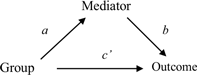
The ANCOVA approach for mediation (Valente & MacKinnon, Reference Valente and MacKinnon2017) was used to estimate the path effects and indirect effect of each scale measure considered as a potential mediator and PTSD symptoms at treatment end after adjusting for group assignment, PTSD symptoms at baseline, and the potential mediator measured at baseline. The stratification variables of veteran status and gender were included as potential confounders in all models. Individual mediation analyses were conducted with SAS Proc CAUSALMED in SAS V9.4, Cary, NC (Valeri & VanderWeele, Reference Valeri and VanderWeele2013; VanderWeele, Reference VanderWeele2014). Unstandardised coefficients, standard errors, and p-values are presented for path effects. The unstandardised coefficient and bias-corrected 95% bootstrap confidence interval with 1000 bootstrap replications are presented for the indirect effect. Additionally, the percentage of the total effect mediated is also reported. The percent mediated is the proportion of the total effect of the intervention, which is due to the mediation. The basic mediation model is depicted in Fig. 1.
The basic individual mediation model.

The total effect (c) is the sum of the direct effect (c’) and the indirect effect (a × b).
Multiple mediator models were fit in MPLUS V8.3 with path analysis where PTSD symptoms measured at treatment end (4 months) was the outcome and covariates in the outcome model included group assignment, veteran status, gender, baseline PTSD symptoms, and baseline values of potential mediators. Mediators significant in the individual mediation analysis were included in the multiple mediator model to determine if all were still significant mediators when examined jointly. The only covariates in each mediator model were group indicator and baseline values of the potential mediator. A separate multiple mediation model was fit for each outcome of PTSD Symptoms (CAPS, PCL) and for each mediator time point (mid-treatment, treatment end) for four separate models. The path diagrams are also presented.
Results
Mediators of CAPS and PCL at mid-treatment adjusting for baseline
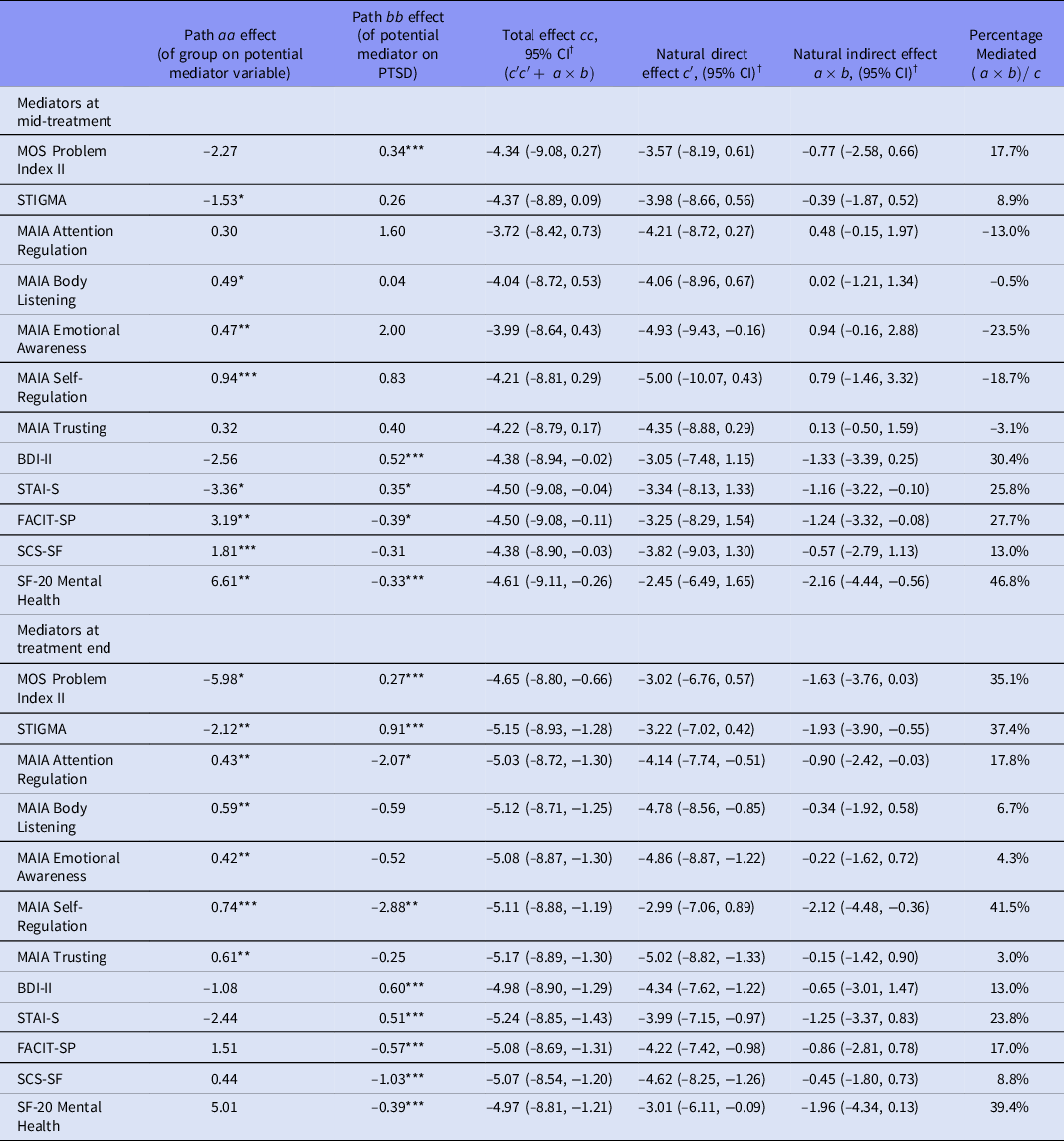
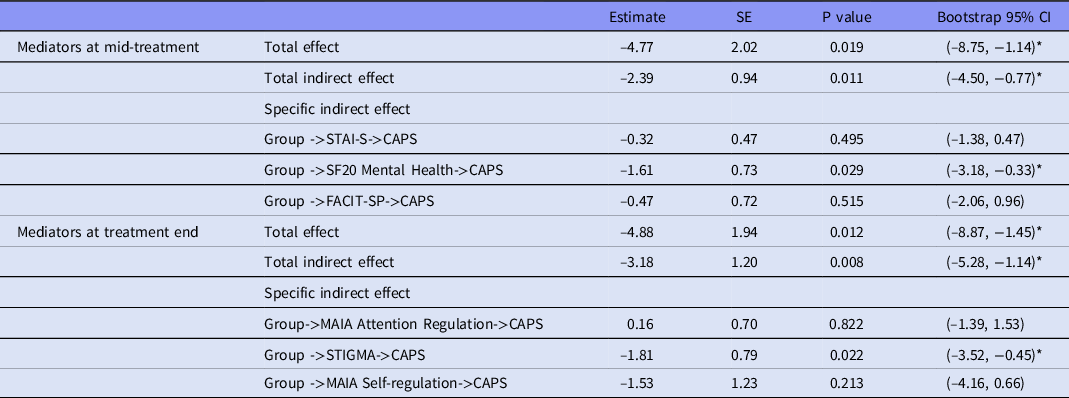
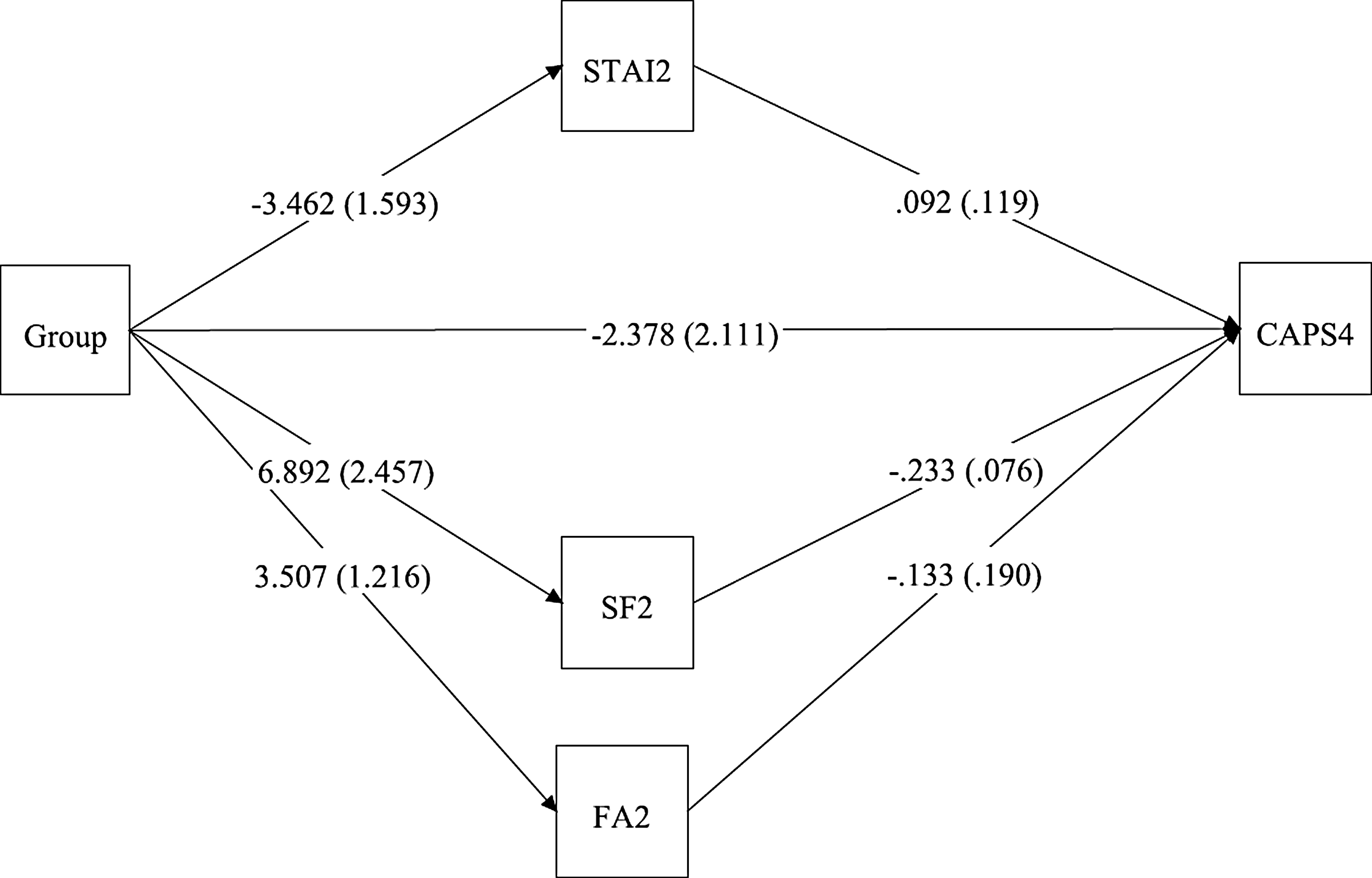
As depicted in Table 1, at mid-treatment, anxiety (STAI-S), spirituality (FACIT-SP), and overall mental health (SF-20 Mental Health) were found to be mediators of the group effect with statistically significant indirect effects (a × b). For example, from the individual mediation model examining anxiety at mid-treatment as a potential mediator of CAPS at treatment end, the total effect of −4.50 represents a significant total effect of the group on PTSD symptoms, assuming there is no unmeasured confounding. On average, participants randomised to the Yoga group have a 4.5-point lower PTSD CAPS score than participants randomised to the Wellness group. The indirect effect of −1.16 is the group effect on PTSD symptoms that is mediated by anxiety. Thus, 25.8% (–1.16/–4.50) of the total group effect on PTSD CAPS at treatment end is mediated by anxiety at mid-treatment when examined as an individual mediator. Similarly, spirituality and mental health at mid-treatment were found to mediate 27.7% and 46.8% of the total group effect when examined separately. However, these individual mediation models do not consider the other mediators, thus these percentages are not additive. Therefore, we next employed a multiple mediator model at mid-treatment, including STAI-S, FACIT-SP, and SF-20 Mental Health. From the multiple mediator model (Table 2), the total group effect was −4.77 and the total indirect effect was −2.39, thus 50.1% of the total effect is mediated by STAI-S, FACIT-SP, and SF-20 Mental Health at mid-treatment. However, only SF-20 Mental Health was found to be a statistically significant mediator of the intervention effect at treatment end as it mediated 33.8% (–1.61/–4.77) of the total effect, accounting for the other mediators in the model. The main paths diagram for CAPS at the treatment end is shown in Fig. 2.
CAPS at treatment end

* < 0.05, **< 0.01, ***< 0.001.
† Bootstrap bias corrected 95% confidence interval.
Multiple mediator model for CAPS at treatment end

* <0.05.
Multiple mediators at mid-treatment for the CAPS at the treatment end.

Note: Group is group indicator (HYP or WLP). 4 represents the measures at treatment end, and 2 represents the measures at mid-treatment. STAI, SF, and FA are mediators. STAI is STAI-S, SF is SF-20, and FA is FACIT-SP. Outcome model was controlled for group, vet status, sex, CAPS at baseline, and all baseline mediators. Mediator models were adjusted for group and baseline mediators.
For the outcome of PTSD symptoms as measured by PCL at treatment end, MAIA Emotional Awareness, spirituality, and overall mental health at mid-treatment had significant indirect effects from the individual mediator models (see Supplementary Table 1). Interestingly, the individual mediation model examining MAIA Emotional Awareness at mid-treatment as a potential mediator of PCL resulted in a significant indirect effect (1.33, 95% CI = [0.10, 3.92]) which was of opposite sign of the total effect, which indicates the presence of a suppressor effect. The intervention appeared to increase Emotional Awareness at mid-treatment, which in turn led to increased PTSD symptoms at the treatment end. Thus, MAIA Emotional Awareness was not considered further as a mediator for PCL improvement at the treatment end.
When examined jointly, like the outcome of CAPS, only SF-20 Mental Health at mid-treatment was found to be a significant mediator of the group effect on PTSD symptoms at treatment end as measured by the PCL. The percent mediated was even stronger than for the CAPS outcome (–2.41/–5.50 = 43.8%) (see Supplementary Table 2 and Supplementary Fig. 1).
Mediators of CAPS and PCL at treatment end adjusting for baseline
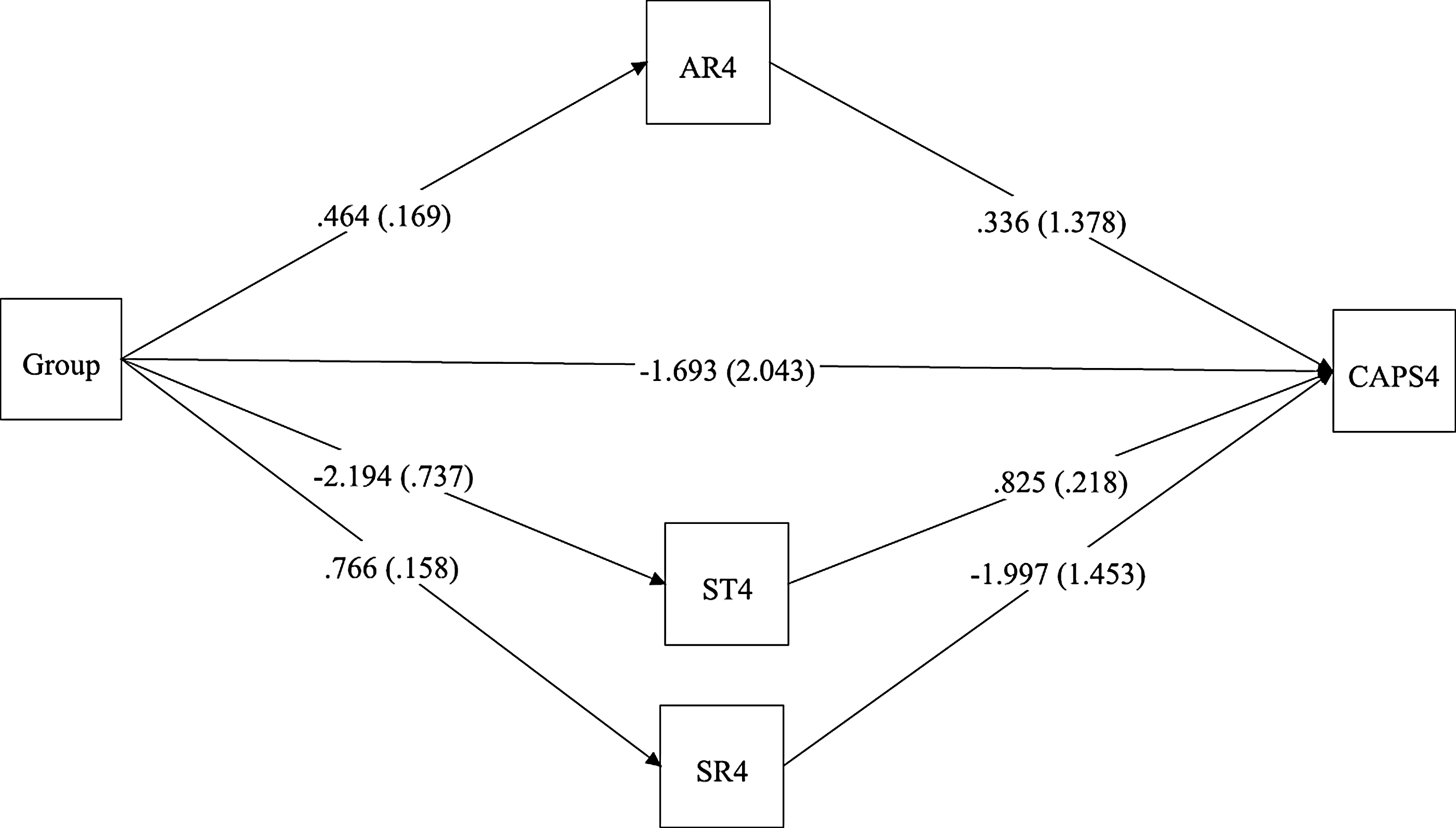
As summarised in Table 1, at treatment end, stigma (MHS), MAIA Attention Regulation, and MAIA Self-Regulation were found to be mediators of the group effect with statistically significant indirect effects (a × b). From the individual mediation model examining stigma at treatment end as a potential mediator of CAPS at treatment end, the total effect of the group on PTSD symptoms was −5.15. The Path a effect is −2.12, thus on average, yoga group participants reported 2 points lower stigma at treatment end than Wellness group participants after adjusting for baseline. The Path b effect is 0.91, thus for every one-point increase in stigma, CAPS at treatment end was approximately 0.91 points higher and the indirect effect is −1.93, thus 37.4% (–1.93/–5.15) of the group effect is mediated by stigma at treatment end. MAIA subscales of Attention Regulation and Self-Regulation measured at treatment end were also both significant mediators when examined individually, with an increase in these measures associated with a decrease in CAPS. These three mediators were then included in a multiple mediator model on CAPS at the treatment end to determine which were still significant when examined jointly. Main path results are provided in Fig. 3, and full parameter estimates are provided in Supplementary Table 3.
Multiple mediators at treatment end for the CAPS at the treatment end.

Note: Group is group indicator (HYP or WLP). 4 represents the measures at treatment end; AR, SR, and ST are mediators. AR is MAIA attention regulation; SR is MAIA self-regulation; and ST is STIGMA. Outcome model was controlled for group, vet status, sex, CAPS at baseline, and all baseline mediators. Mediator models were adjusted for group and baseline mediators.
In the multiple mediator model, the total effect of group on PTSD symptoms was estimated to be −4.88. Attention Regulation and Self-Regulation were no longer significant mediators. Only stigma significantly mediated the group effect on CAPS, with 37.1% (–1.81/–4.88) of the total effect of group on CAPS at the treatment end being mediated by stigma. For PCL at treatment end, results were very similar in that the measures of stigma, Attention Regulation, Trusting, and Self-Regulation at treatment end were statistically significant in individual mediation models, but when all were included in a multiple mediation model, only stigma remained a significant mediator of PTSD symptoms at treatment end with 33.6% (–1.91/–5.68) of the total effect of group on PCL at treatment end being mediated by stigma (Supplementary Table 2 and Supplementary Fig. 2).
Discussion
This study utilised mediation models to evaluate a group of variables as potential mediators of the effects of yoga on PTSD symptoms based on our RCT results and extant literature. We hypothesised that aspects of interoceptive awareness would mediate the effects of yoga on PTSD symptoms and explored additional variables including stigma, symptoms of depression and state anxiety, spirituality, self-compassion, mental well-being, stigma, and sleep. Our results lent some support to our hypothesis. Whether PTSD symptoms were measured by CAPS or PCL, the individual mediation results support that some aspects of interoceptive awareness at the treatment end mediate the effect the yoga intervention has on PTSD symptoms at the treatment end. From these individual mediation models, no aspects of interoceptive awareness measured at mid-treatment were found to mediate the effect of the yoga intervention on PTSD symptoms at the treatment end. In fact, emotional awareness at mid-treatment was found to suppress the effect of the yoga intervention on PTSD symptoms (as measured by CAPS) at treatment end. According to Pascoe and colleagues (Reference Pascoe, de Manincor, Hallgren, Baldwin, Tseberia and Parker2021), the Yerkes-Dodson law of optimal arousal suggests that high level of self-focused attention can have negative effects if the dose of an intervention is too high. Our intervention was 90 min weekly for 16 weeks which may have been too intense during the first 8 weeks for some participants. Emotional Awareness (MAIA), mental well-being (SF20-Mental Health), and stigma (Mental Illness Stigma) were individually found to mediate the effect of the yoga intervention on PTSD symptoms. Mid-treatment anxiety, spirituality, and mental well-being were found to mediate the effect of the intervention on PTSD symptoms (as measured by CAPS) at the treatment end when examined individually. When PTSD symptoms were measured by PCL, only anxiety and mental well-being at mid-treatment were found to be mediators.
When examining the multiple mediator models, results were consistent for both measures of PTSD symptoms (CAPS and PCL). Mental well-being (SF-20 Mental Health) at mid-treatment was found to be the strongest mediator of the yoga intervention on PTSD symptoms, whereas stigma (Mental Health Stigma) at the treatment end was the strongest mediator of the yoga intervention on PTSD symptoms. Measures of anxiety, interoceptive awareness, and spirituality were no longer found to be significant mediators when examined jointly in multiple mediator models.
The five SF-20 Mental Health items asked participants to rate how much of the time they were very nervous, calm and peaceful, downhearted and blue, happy, and so down in the dumps nothing could cheer you up. This could mean that yoga practice exerted a positive effect on both anxious and depressive mood that led to the mid-treatment improvement in PTSD symptoms, whereas the measures of either depression or anxiety alone did not have a mediating effect. Regarding the surprising finding of reduced stigma as a mediator of yoga’s effects on PTSD, a recent study (Jahn et al., 2020) found that internalised stigma was a mediator of recovery from serious mental illness. The yoga teachers in our study encouraged acceptance of each participant’s ability to engage in yoga practice to varying degrees from class to class. The lead teacher frequently reminded the assistant teachers to embody the acceptance of each class participant. It is possible that the teaching and embodying acceptance by the teachers and/or social support and acceptance by other class participants could have played a part in reducing stigma related to mental illness. In a qualitative study associated with our RCT, we noted that acceptance and commitment are aspects of the eight limbs of yoga that were intentionally integrated by the yoga teachers into the practice and may have contributed to reduced stigma (Schmid et al., Reference Schmid, Sternke, Do, Conner, Starnino and Davis2021). These findings warrant the investigation of mental well-being and mental illness stigma as potential mediators in future studies. In addition, it is possible that yoga interventions may be strengthened by more explicitly addressing mental well-being and stigma.
Caution must be used when interpreting the results of this study since the sample was comprised primarily of US veterans, the majority of whom were males diagnosed with combat-related PTSD. For example, it is possible that veterans are more susceptible to stigma due to values and beliefs held by military cultures and may not generalise to civilians (Nash et al., Reference Nash, Silva and Litz2009). Although our sample contained women, civilians, and those who experienced other index traumas, results may not fully generalise to these individuals. Results of this study are also potentially limited by potential self-report bias and demand characteristics that may have affected treatment responses.
Time-limited approaches to PTSD treatment may not be appropriate for veterans who have had PTSD for years or decades and may require long-term treatment models that encourage continuing to engage in efforts to manage symptoms. (see Kearney & Simpson, Reference Kearney and Simpson2015). Thus, approaches such as yoga that address domains of health beyond PTSD symptoms including quality of life could be advantageous. This work represents only the beginning of an important and much-needed area of research. Identifying the mechanisms by which yoga exerts its effects on PTSD symptoms is required to further develop and improve yoga interventions for PTSD as well as to more fully understand its similarities and differences compared to other CIH interventions for PTSD. Further, it would be useful to identify mechanisms related to reductions in each of the PTSD symptom clusters following yoga interventions for PTSD. Finally, Pascoe and colleagues (Reference Pascoe, de Manincor, Hallgren, Baldwin, Tseberia and Parker2021) suggest that future studies of yoga interventions for mental health conditions such as PTSD should explore the potential for synergistic mediation by multiple processes.
Supplementary material
To view supplementary material for this article, please visit https://doi.org/10.1017/neu.2023.5
Acknowledgements
We thank the many students who assisted in conducting the study and are grateful to all study participants for their valuable contributions. Views expressed in this article are those of the authors and do not necessarily represent the views of the Department of Veterans Affairs or the USA government.
Author’s contributions
LWD designed and conducted the study and was involved with the interpretation of the data as well as drafting and revising the manuscript. AAS was involved in the planning and design of the study, interpretation of data, and revision of the manuscript. JKD was involved in planning the statistical analysis, interpretating the data, and revising the manuscript as well as overseeing the statistical analyses and drafting the study results section of the manuscript. ZY conducted the statistical analysis and was involved with data interpretation, drafting the study results section of the manuscript and revision of the manuscript.
Financial support
This research was supported by a grant from Veterans Administration Rehabilitation Research and Development.
Conflict of interest
The authors state that they have no conflicts of interest in the current study.
Ethical standards
The authors state that all procedures contributing to this work comply with the ethical standards of the relevant national and institutional committees on human experimentation and with the Helsinki Declaration of 1975, as revised in 2008 (Williams, 2008).