Introduction
Major depressive disorder (MDD) is a common, recurrent, and potentially lethal mental illness affecting over 16 million Americans aged 18 years or older (Pratt and Brody, Reference Pratt and Brody2014). MDD is the leading cause of disability in the USA for people aged 15–44 years (Greenberg et al., Reference Greenberg, Fournier, Sisitsky, Pike and Kessler2015), with individual symptoms such as sad mood, sleep disturbance, anhedonia, impaired concentration, and suicidality being the leading contributors to functional impairments (Fried and Nesse, Reference Fried and Nesse2014). The risk of suicide is a particularly serious concern, with 50–75% of depressed patients endorsing suicidal ideation (SI) (Szanto et al., Reference Szanto, Mulsant, Houck, Dew and Reynolds2003; Claassen et al., Reference Claassen, Trivedi, Rush, Husain, Zisook, Young, Leuchter, Wisniewski, Balasubramani and Alpert2007), with 30% having made a suicide attempt (Trivedi et al., Reference Trivedi, Morris, Wisniewski, Nierenberg, Gaynes, Kurian, Warden, Stegman, Shores-Wilson and Rush2013).
Effective first-line treatments for MDD include cognitive behavior therapy (CBT) and approximately 20 antidepressant medications. Both demonstrate roughly equal levels of overall efficacy in clinical trials as determined by change in total score on a depression symptom severity rating scale (Weitz et al., Reference Weitz, Hollon, Twisk, van Straten, Huibers, David, DeRubeis, Dimidjian, Dunlop, Cristea, Faramarzi, Hegerl, Jarrett, Kheirkhah, Kennedy, Mergl, Miranda, Mohr, Rush, Segal, Siddique, Simons, Vittengl and Cuijpers2015). However, the scales used in these trials comprise numerous items, so the finding that total scores are similar across treatments may mask important variability in the effects of specific treatments on individual symptoms and the degree to which the symptoms persist at the end of treatment. These residual symptoms have clinical importance because they contribute to ongoing distress and impairment (Judd et al., Reference Judd, Paulus, Wells and Rapaport1996; Fried and Nesse, Reference Fried and Nesse2014), and their presence increases the risk for future recurrences of full major depressive episodes (Paykel et al., Reference Paykel, Ramana, Cooper, Hayhurst, Kerr and Barocka1995; Carney et al., Reference Carney, Segal, Edinger and Krystal2007; Taylor et al., Reference Taylor, Walters, Vittengl, Krebaum and Jarrett2010; Yang et al., Reference Yang, Chuzi, Sinicropi-Yao, Johnson, Chen, Clain, Baer, McGrath, Stewart, Fava and Papakostas2010; Kennedy et al., Reference Kennedy, Dunlop, Craighead, Nemeroff, Mayberg and Craighead2018). Pharmacotherapy and psychotherapy are believed to produce improvement via different neurobiological mechanisms (Dunlop and Mayberg, Reference Dunlop and Mayberg2014; Craighead et al., Reference Craighead, Johnson, Carey, Dunlop, Nathan and Gorman2015), raising the possibility that the persistent symptoms following treatment may vary depending on the intervention received.
Several studies of MDD that employed antidepressant medication have examined residual symptoms at the end of acute treatment. Although the goal of acute treatment for MDD is remission of the illness, the commonly employed definition of remission [a Hamilton Depression Rating Scale 17-item (HDRS-17) total score ⩽7] allows for some mild, ongoing symptoms (Hamilton, Reference Hamilton1967; Frank et al., Reference Frank, Prien, Jarrett, Keller, Kupfer, Lavori, Rush and Weissman1991). Indeed, up to 90% of remitted patients continue to experience at least one residual symptom, with two or three symptoms being the average (Nierenberg et al., Reference Nierenberg, Husain, Trivedi, Fava, Warden, Wisniewski, Miyahara and Rush2010; Conradi et al., Reference Conradi, Ormel and de Jonge2011). Among responders to treatment who do not meet the remission threshold, residual symptoms are even more numerous and limiting (Nierenberg et al., Reference Nierenberg, Keefe, Leslie, Alpert, Pava, Worthington, Rosenbaum and Fava1999; McClintock et al., Reference McClintock, Husain, Wisniewski, Nierenberg, Stewart, Trivedi, Cook, Morris, Warden and Rush2011; Romera et al., Reference Romera, Perez, Quail, Berggren, Lenox-Smith and Gilaberte2014). The most commonly reported residual symptoms among medication-treated MDD patients are insomnia or hypersomnia (Nierenberg et al., Reference Nierenberg, Keefe, Leslie, Alpert, Pava, Worthington, Rosenbaum and Fava1999, Reference Nierenberg, Husain, Trivedi, Fava, Warden, Wisniewski, Miyahara and Rush2010; Carney et al., Reference Carney, Segal, Edinger and Krystal2007; Romera et al., Reference Romera, Perez, Quail, Berggren, Lenox-Smith and Gilaberte2014), fatigue (Nierenberg et al., Reference Nierenberg, Keefe, Leslie, Alpert, Pava, Worthington, Rosenbaum and Fava1999, Reference Nierenberg, Husain, Trivedi, Fava, Warden, Wisniewski, Miyahara and Rush2010; Romera et al., Reference Romera, Perez, Quail, Berggren, Lenox-Smith and Gilaberte2014), sad mood (Nierenberg et al., Reference Nierenberg, Husain, Trivedi, Fava, Warden, Wisniewski, Miyahara and Rush2010; Romera et al., Reference Romera, Perez, Quail, Berggren, Lenox-Smith and Gilaberte2014), and cognitive impairments (Nierenberg et al., Reference Nierenberg, Husain, Trivedi, Fava, Warden, Wisniewski, Miyahara and Rush2010). In contrast, little work has examined residual symptom profiles among CBT-treated patients. Insomnia is perhaps the most common residual symptom after CBT (Carney et al., Reference Carney, Segal, Edinger and Krystal2007; Taylor et al., Reference Taylor, Walters, Vittengl, Krebaum and Jarrett2010), with other analyses finding anxiety, sad mood, fatigue, and low libido persist in 21–42% of CBT responders (Taylor et al., Reference Taylor, Walters, Vittengl, Krebaum and Jarrett2010). Similar residual symptom findings have been reported among primary care patients treated with combinations of psychotherapy and medication (Conradi et al., Reference Conradi, Ormel and de Jonge2011).
Direct comparisons of frequencies of residual symptoms in patients randomized to CBT or antidepressant medications are rare. In two analyses limited to examining post-treatment insomnia, one study of chronic depression found nefazodone specifically improved insomnia more than the cognitive behavioral analysis system of psychotherapy (Manber et al., Reference Manber, Rush, Thase, Amow, Klein, Trivedi, Korenstein, Markowitz, Dunner, Munsaka, Borian and Keller2003), whereas another study found no difference in residual insomnia symptoms between CBT and medication-treated patients (Carney et al., Reference Carney, Segal, Edinger and Krystal2007). Whether specific residual symptoms among non-remitters to monotherapy resolve with sequential addition of another treatment modality has not previously been examined.
Other than aspects of dosing or visit frequency, clinical decision-making in treating individuals with MDD is typically categorical, and often binary. A clinician must decide whether an individual patient has improved enough to continue with the treatment (response) or whether the degree of improvement has been inadequate (non-response), indicating the need for a change in treatment. Similarly, for specific symptoms (e.g. SI), a clinician must decide whether the intensity of the symptom (e.g. an individual's level of thinking about death/suicide) is something that can be closely monitored without a change in treatment, or whether it is concerning enough (i.e. crosses a threshold) to require an intervention.
Prior studies examining post-treatment symptom profiles have focused on the categorical outcomes of either treatment response or remission (Nierenberg et al., Reference Nierenberg, Keefe, Leslie, Alpert, Pava, Worthington, Rosenbaum and Fava1999, Reference Nierenberg, Husain, Trivedi, Fava, Warden, Wisniewski, Miyahara and Rush2010; Carney et al., Reference Carney, Segal, Edinger and Krystal2007; Taylor et al., Reference Taylor, Walters, Vittengl, Krebaum and Jarrett2010; McClintock et al., Reference McClintock, Husain, Wisniewski, Nierenberg, Stewart, Trivedi, Cook, Morris, Warden and Rush2011; Romera et al., Reference Romera, Perez, Quail, Berggren, Lenox-Smith and Gilaberte2014), or the entire treatment sample (Manber et al., Reference Manber, Rush, Thase, Amow, Klein, Trivedi, Korenstein, Markowitz, Dunner, Munsaka, Borian and Keller2003; Fournier et al., Reference Fournier, DeRubeis, Hollon, Gallop, Shelton and Amsterdam2013). Remarkably, there are almost no published data on the symptom profiles of non-responders at the end of treatment. This is an important population to study because the proportion of patients in clinical trials who do not respond is roughly 20–50% (Weitz et al., Reference Weitz, Hollon, Twisk, van Straten, Huibers, David, DeRubeis, Dimidjian, Dunlop, Cristea, Faramarzi, Hegerl, Jarrett, Kheirkhah, Kennedy, Mergl, Miranda, Mohr, Rush, Segal, Siddique, Simons, Vittengl and Cuijpers2015), and is likely higher in general clinical practice (Trivedi et al., Reference Trivedi, Rush, Wisniewski, Nierenberg, Warden, Ritz, Norquist, Howland, Lebowitz, McGrath, Shores-Wilson, Biggs, Balasubramani and Fava2006). Additionally, it is possible that treatments may have clinically important effects on specific symptoms, even in the absence of overall response.
This post-hoc exploratory analysis sought to compare the end-of-treatment symptom profiles after 12 weeks of treatment with CBT or an antidepressant medication, separately analyzing responders and non-responders. We also examined the effect of 12 additional weeks of combined treatment among non-remitting patients. We hypothesized that distinct residual symptom profiles would emerge between CBT- and medication-treated patients.
Methods
This study conducted a post-hoc analysis of the Predictors of Remission in Depression to Individual and Combined Treatment (PReDICT) trial. The design (Dunlop et al., Reference Dunlop, Binder, Cubells, Goodman, Kelley, Kinkead, Kutner, Nemeroff, Dewport, Owens, Pace, Ritchie, Rivera, Westen, Craighead and Mayberg2012) and the primary clinical results (Dunlop et al., Reference Dunlop, Kelley, Aponte-Rivera, Mletzko-Crowe, Kinkead, Ritchie, Nemeroff, Craighead and Mayberg2017) of PReDICT have been previously published and are briefly reviewed here. The Emory Institutional Review Board and Grady Hospital Research Oversight Committee approved the study.
PReDICT randomly assigned treatment-naïve adults aged 18–65 years with non-psychotic MDD to 12 weeks of phase 1 treatment with CBT (16 1-h individual sessions), escitalopram (10–20 mg/day), or duloxetine (30–60 mg/day) in a 1:1:1 manner. Non-remitters at the end of phase 1 were offered an additional 12-week phase 2 treatment in which they received combination therapy: the 16-session course of CBT was added to those who had initially received a medication, and escitalopram was provided to the patients who had not remitted with CBT. Eligible patients were required to have MDD as their primary psychiatric diagnosis and be at least moderately depressed as determined by a HDRS-17 total score ⩾18 at screening and ⩾15 at the randomization visit. Lifetime bipolar disorder, dementia, and psychotic disorders were all exclusionary, as were current substance abuse or dependence, obsessive compulsive disorder, or eating disorder. Post-randomization, patients returned for study visits at weeks 1–6, 8, 10, and 12. At each study visit, depressive symptoms were assessed by masked raters using the HDRS-17 and the Montgomery Asberg Depression Rating Scale (MADRS) (Montgomery and Åsberg, Reference Montgomery and Åsberg1979). Response was defined as a ⩾50% reduction in HDRS-17 score from baseline to week 12; non-response was <50% reduction. Remission was defined as a HDRS-17 total score ⩽7 at both weeks 10 and 12 of acute treatment; non-remitters were eligible to receive combination treatment in the second 12-week phase.
A structured interview guide for the MADRS was used in conducting all MADRS ratings (Williams and Kobak, Reference Williams and Kobak2008). The MADRS was used as the primary outcome for assessing differential effects of treatments on individual symptoms and for examining end-of-treatment symptom profiles for two reasons. First, the MADRS has a consistent 0–6 scale (where 0 reflects absence of the symptom, and 6 the most severe rating) for rating all 10 of its items, providing greater consistency and sensitivity for measuring change across items than the HDRS-17, which rates some items 0–2 and others 0–4. Second, using the MADRS provided a measure of symptom change and persistence symptoms that was independent from the HDRS-17 scale used to define trial eligibility and outcome.
Statistical analyses
The primarily analysis was conducted on the 251 completers of phase 1 of the PReDICT study. One of the responders did not complete the MADRS at the week 12 visit and was excluded from the analysis. To maximize power for the comparison between CBT and medication, and because no significant differences in response rate or MADRS change scores were found between escitalopram- and duloxetine-treated patients (Dunlop et al., Reference Dunlop, Kelley, Aponte-Rivera, Mletzko-Crowe, Kinkead, Ritchie, Nemeroff, Craighead and Mayberg2017), the two antidepressant arms were combined into one ‘medication-treatment’ group for the analyses. Comparison of residual symptoms was conducted separately for treatment responders and non-responders. Comparison of baseline characteristics between the CBT- and medication-treated patients were conducted using t tests and χ2 tests for continuous and categorical data, respectively.
To characterize the residual symptom profiles at the end of treatment, a symptom was defined as persisting if the week 12 MADRS-specific item score was ⩾2. This threshold was used because a score of 1 indicates infrequent and non-troubling symptoms, thus reflecting a symptom of doubtful clinical importance. To examine whether residual symptom scores were associated with the degree of improvement in symptoms, the per cent change in individual item scores for responders and non-responders to each treatment were also compared. To evaluate the impact of depression severity on the residual symptom profile, a secondary analysis compared patients with moderate (baseline HDRS-17 score of 15–19) v. severe (baseline HDRS-17 score ⩾20) depression. Finally, because antidepressants carry a Food and Drug Administration (FDA) label warning for increased SI for patients <25 years of age, we examined suicide item changes among this subset. χ2 tests were used to evaluate proportions of responders and non-responders to each treatment who had a residual threshold MADRS score for each item, with Bonferroni correction (p = 0.005) to control for the 10 individual item comparisons. When cell sizes were >0, odds ratios (ORs) were calculated; when cell sizes were 0 or had expected frequencies ⩽5, Fisher's exact test was used.
As secondary analyses, residual symptom and per cent change measures were also examined among the early-terminating patients, defined as those who completed at least one post-randomization MADRS rating but did not complete the 12-week phase 1 treatment. Other analyses of the entire sample examined which specific symptoms emerged or worsened during the course of treatment. We defined an emergent symptom as a MADRS item that was scored 0 at baseline, but had increased to a score of ⩾2 at their final visit. A worsening symptom was defined as a MADRS item that increased by ⩾2 points from baseline to endpoint regardless of baseline score. By these definitions, any emergent symptom was classified also as a worsening symptom.
Finally, we examined the residual symptom profiles of patients who did not remit to phase 1 treatment and subsequently completed phase 2 combination treatment. Residual symptom profiles at week 24 for these patients were evaluated in a similar manner as described above. Using week 12 scores as the baseline for these phase 2 analyses, worsening and emergent symptoms were also examined among these patients.
Results
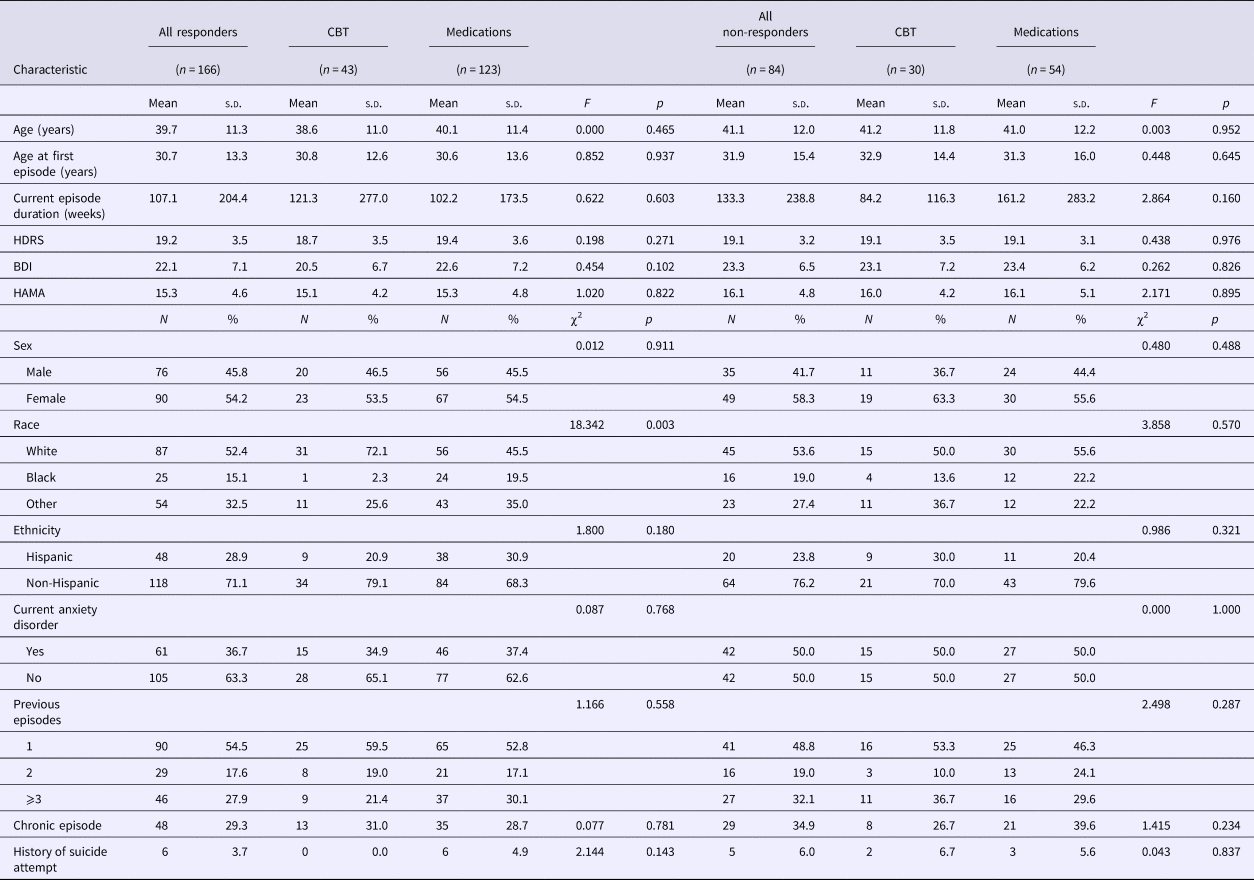
Of the 315 patients eligible for analysis, 65 (20.6%) terminated early and 250 (79.4%) completed phase 1, including 166 (66.4%) treatment responders and 84 (33.6%) non-responders. Table 1 shows the clinical and demographic features at baseline of the responders and non-responders in each treatment group. Among responders, only race significantly differed across the treatment groups, but stratifying analyses by race did not impact the results. Among the non-responders, there were no significant baseline clinical or demographic differences between treatments. No MADRS item scores at baseline significantly differed between treatments in either the responders or non-responders (all p values ⩾0.2; see online Supplementary Material). At baseline, the proportion of patients with a MADRS suicide item score ⩾2 did not significantly differ between treatment groups, both in the eventual responders (CBT: 11/43, 25.6%; medication: 28/123, 22.8%, p = 0.71) and non-responders (CBT: 6/30, 20.0%; medication: 12/54, 22.2%, p = 0.81).
Demographic and clinical characteristics of phase 1 treatment completers by response group

Mean number of residual symptoms among patients completing phase 1
There were no significant differences between treatments in the mean number of clinically significant residual symptoms among responders (CBT 2.02 ± 2.15; medications 2.22 ± 2.17, p = 0.610) or among non-responders (CBT 6.93 ± 1.91; medications 6.35 ± 1.77, p = 0.165). Figure 1 shows the overall number of residual symptoms at the end of phase 1 by response category.
Number of residual MADRS symptoms among completers at end of phase 1 treatment.

Significant persisting symptoms among responders
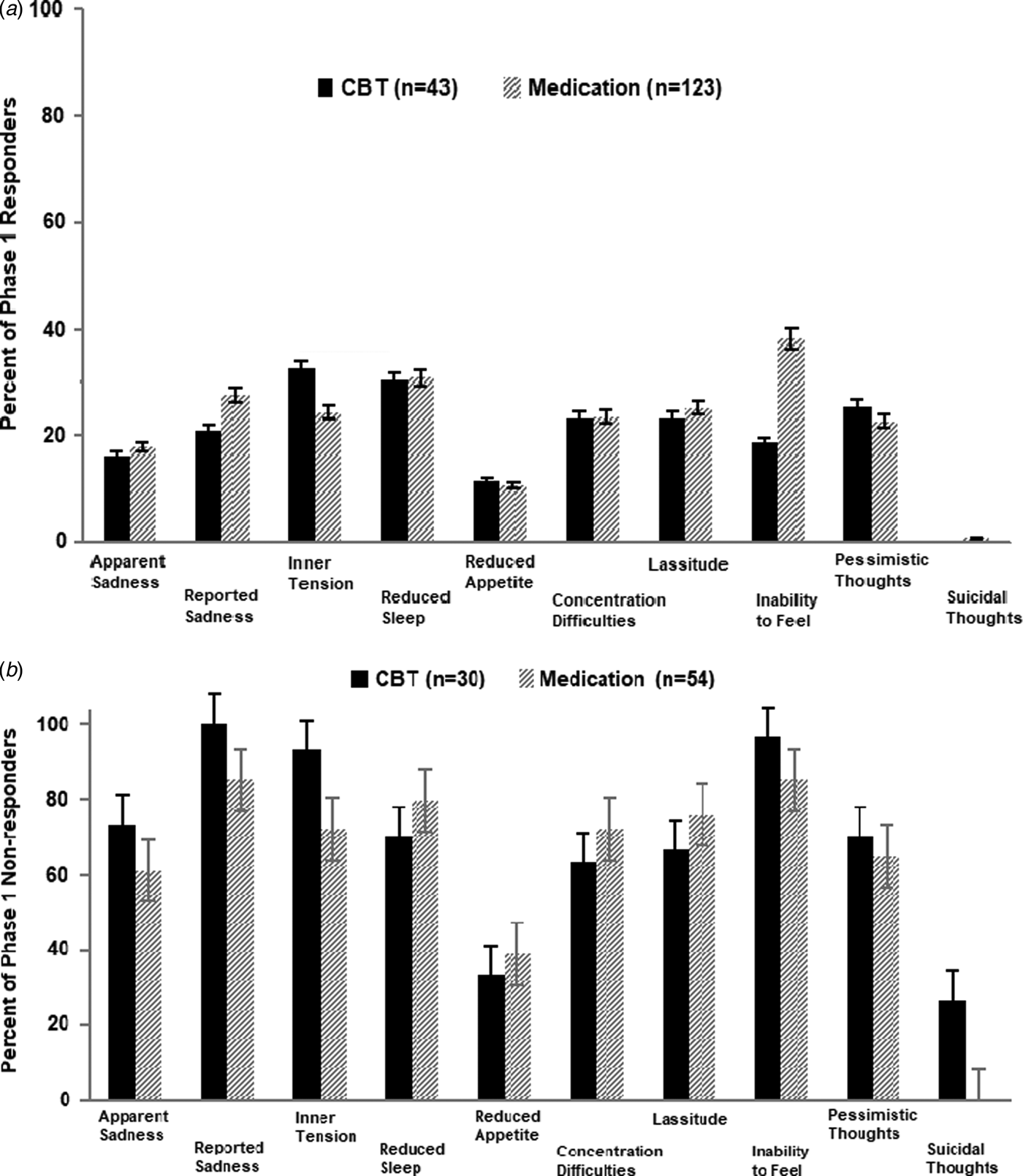
Figure 2a shows the proportion of responders who met the persisting symptom threshold for each MADRS item at week 12 for the two treatment groups. The only MADRS item to differ at a significance level of p < 0.05 was item 8 (inability to feel), which was present in more medication-treated than CBT-treated patients, though the difference did not survive Bonferroni correction (CBT: 8/43, 18.6%; medications: 47/123, 38.2%; OR 2.71, p = 0.02).
Proportion of phase 1 completers with each persisting MADRS symptom at end of treatment. (a) Phase 1 responders. (b) Phase 1 non-responders.

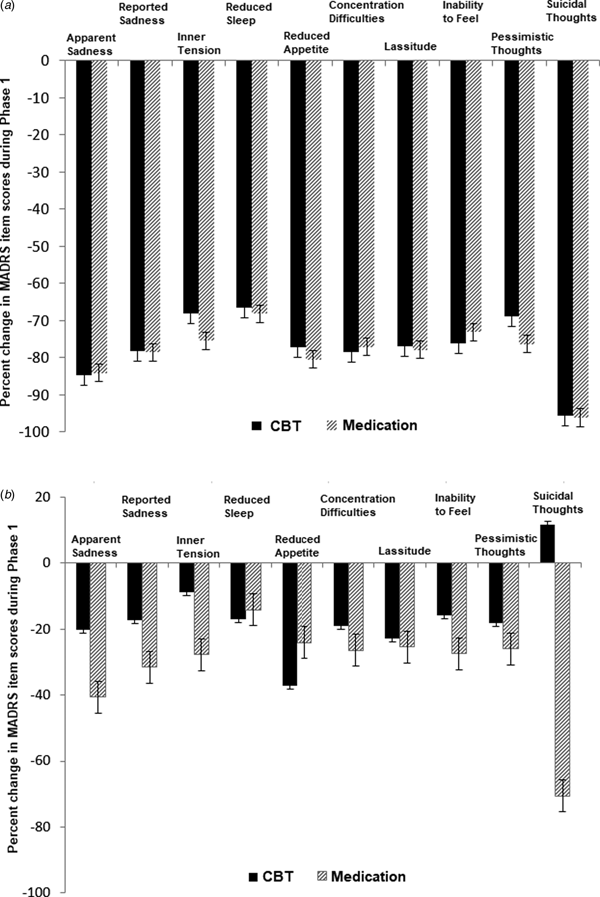
Figure 3a shows the per cent change in mean MADRS item scores from baseline to week 12 among responders. All items showed greater than a 65% decrease in mean score across both CBT- and medication-treatment groups. The item with the most significant symptom improvement was ‘suicidal thoughts’, demonstrating >95% mean reduction for both treatment groups. These results indicate that among patients who respond to treatment, whether psychotherapy or pharmacotherapy, the degree of improvement and persistence of individual depressive symptoms were similar between the two treatment modalities.
Per cent change in MADRS item scores from baseline to week 12 during phase 1 treatment. (a) Phase 1 responders. (b) Phase 1 non-responders.

Significant persisting symptoms among non-responders
The proportion of non-responders who met the persisting symptom thresholds for each item at week 12 for each treatment group is shown in Fig. 2b. A greater proportion of CBT non-responders continued to experience items 2 (reported sadness) (CBT: 30/30, 100%; medications: 46/54, 85.2%; χ2 = 4.912, p = 0.027), item 3 (inner tension) (CBT: 28/30, 93.3%; medications: 39/54, 72.2%; χ2 = 5.325, p = 0.021), and item 10 (suicidal thoughts) (CBT: 8/30, 26.7%; medications: 0/54, 0%; p = 0.001), though only the suicidal thoughts item survived Bonferroni correction for statistical significance.
The results of the persisting symptom analysis among non-responders are demonstrated by the analysis of per cent change in mean MADRS item scores, as shown in Fig. 3b. For item 10 (suicidal thoughts), CBT non-responders showed a 15.0% mean increase from baseline to week 12, whereas medication non-responders demonstrated a mean decrease of 70.3%.
Worsening and emergent symptoms among phase 1 completers
Phase 1 completers treated with CBT were more likely to experience worsening (an increase of ⩾2 points from baseline) for item 10 (suicidal thoughts) compared with those treated with medication (CBT 4/73, 5.5%; medication 0/177, 0.0%; p = 0.007), though this difference did not survive Bonferroni correction. Of the four CBT-treated patients who experienced worsening suicidal thoughts, all were treatment non-responders and the symptom was newly emergent for three of them. Patients who had a baseline score of 0 for an individual item were analyzed for the emergence of that symptom during treatment. A greater proportion of CBT-treated patients experienced emergent SI than medication-treated patients (CBT: 3/45, 6.7%; medications: 0/107, 0.0%; p = 0.025), though this did not survive Bonferroni correction.
Combining the completing and early terminating samples together, worsening of SI did not significantly differ between CBT- and medication-treated patients (4/105, 3.81 v. 3/210, 1.43%, respectively, p = 0.23). Among adults ⩾25 years of age, worsening SI occurred non-significantly more often among CBT-treated (4/99, 4.0%) than medication-treated (1/186, 0.5%) patients (p = 0.063), whereas among adults aged 18–25, worsening SI occurred in 2/24 (8.3%) of medication-treated patients and 0/6 (0%) of CBT-treated patients.
Impact of baseline depression severity on residual symptoms
At baseline, 110 of the phase 1 completers met the severe depression threshold of HDRS-17 ⩾20, and 140 were classified as moderate MDD. Patients with severe MDD experienced significantly more residual symptoms at week 12 than those with moderate MDD (severe: 4.37 ± 3.07; moderate: 3.07 ± 2.67; p = 0.001). Among the severely depressed patients, there were no individual MADRS items that significantly differed in frequency between the treatment groups at week 12 (all p values ⩾0.086). However, among the moderate MDD group, CBT-treated patients were more likely to experience clinically significant inner tension and suicidal thoughts at week 12 than medication-treated patients (inner tension: CBT: 26/46, 56.5%; medications 30/94, 31.9%; χ2 = 7.79; p = 0.005; suicidal thoughts: CBT: 6/46, 13.0%; medications: 0/94, 0.0%; p = 0.001).
Persisting, emergent, and worsening symptoms among early-terminating patients
Sixty-five patients (32 CBT and 33 medication) terminated treatment early during phase 1 and had MADRS data available for analysis. CBT patients were more likely to terminate early (p = 0.002), but the mean time to drop-out did not differ between treatment groups (CBT: 4.38 ± 2.80 weeks; medication: 4.88 ± 3.36 weeks; p = 0.515). The number of individual residual symptoms at final study visit among early terminating patients did not significantly differ between treatments (all p values ⩾0.1). Patients in both treatment arms showed significant reductions in mean total MADRS scores at the time of their termination from the study. CBT-treated patients improved significantly from baseline on all items except apparent sadness, reduced appetite, and pessimistic thoughts. For medication-treated patients, only the symptoms of reduced appetite and suicidal thoughts did not show significant improvement from baseline. The early terminating patients showed no difference between treatments in the frequency of any individual MADRS items that emerged (all p > 0.12) or worsened (all p > 0.14) prior to study exit.
Two early-terminating patients, both treated with medication, experienced ⩾2 point worsening of the suicidal thoughts item. Both patients were women <25 years of age. A third woman, aged 32 and receiving medication, had an impulsive, non-lethal suicide attempt by overdose on diphenhydramine, the only suicide attempt to occur during the study. She did not return for follow-up assessments and her last in-study MADRS score did not reflect an increase in SI, but she was included as a case of worsening SI for the analysis.
Effects of SI at baseline on clinical outcomes
Because SI emerged as the most relevant item in the overall analyses, we conducted additional analyses examining its impact on treatment outcome. There was no significant difference in the proportion of patients reporting a lifetime prior suicide attempt (CBT: 3/92, 3.3%; medication: 8/157, 5.1%, p = 0.46). The mean baseline MADRS item 10 (suicidal thoughts) scores did not significantly differ between the CBT and medication arms, either for responders (0.72 ± 1.03 and 0.69 ± 0.99, respectively, p = 0.87) or non-responders (0.67 ± 1.03 and 0.69 ± 0.99, respectively, p = 0.94). A baseline MADRS item 10 score ⩾2 was present in 57/250 (22.8%) of the completers and 23/65 (35.4%) of the early terminating patients, indicating that SI predicted treatment drop-out (χ2: 4.31, p = 0.038), with a frequency that did not significantly differ between treatment arms. Response rates at week 12 among patients with SI at baseline did not significantly differ from non-suicidal patients (39/57, 68.4% v. 127/193, 65.8%, respectively, p = 0.71); with similar response rates in the CBT-treated (11/17, 64.7%) and medication-treated (28/40, 70.0%) groups (p = 0.69).
Residual symptoms among phase 2 completers
Sixty-nine non-responders to phase 1 treatment (25 CBT and 44 medication) went on to complete the 12 weeks of combination treatment in phase 2. Individual MADRS residual symptoms at week 24 among patients who had CBT added to medication did not significantly differ from those who had medication added after CBT (all MADRS item p values ⩾0.05). Patients who received CBT in phase 1 were more likely to experience worsening of item 4 (reduced sleep) after addition of medication in phase 2 compared with those who added CBT after medication (CBT-Medication: 3/25, 12%; Medication-CBT: 0/44, 0%; p = 0.044), though this did not survive Bonferroni correction. Worsening of SI occurred in one patient, a 38-year-old woman initially treated with medication and had CBT added during phase 2.
Discussion
Residual symptoms present at the end of acute treatment for depression negatively impact patients’ long-term course, role functioning, and quality of life. The results demonstrated that across all treatments, responders demonstrated >95% reduction in SI. The analysis found an overall similar residual symptom profile between patients who respond to treatment with an antidepressant medication or CBT. Among the 84 patients categorized as non-responders, however, those who received CBT were significantly more likely to have persisting SI than those who had received antidepressant medication, even with the relatively small sample sizes. No other symptoms significantly differed between non-responders to the two treatments. These data suggest that antidepressant medications may specifically diminish thoughts of suicide, even in the absence of overall improvement.
To date, most interest in the effects of antidepressants on suicidality has focused on treatment-emergent SI. In 2007, the US FDA placed a boxed warning on the label of all antidepressants advising clinicians of the risk for induction of suicidal thoughts for youth and young adults under age 25. Subsequent pooled analyses and meta-analyses of clinical trials limited to adults have consistently found that SI emerging after initiating antidepressant medication in depressed adults occurs at an equal or lesser frequency than with placebo (Laughren, Reference Laughren2006; Beasley et al., Reference Beasley, Ball, Nilsson, Polzer, Tauscher-Wisniewski, Plewes and Acharya2007; Wightman et al., Reference Wightman, Foster, Krishen, Richard and Modell2010; Gibbons et al., Reference Gibbons, Hur, Brown, Davis and Mann2012; Sharma et al., Reference Sharma, Guski, Freund and Gotzsche2016). In the current analysis, there were no phase 1 completers, including non-responders, treated with medication who experienced worsening SI.
The efficacy of antidepressants for SI existing as part of MDD, which is a far more common problem among adults than treatment-emergent suicidal thoughts, has received relatively less attention. The current findings of SI-diminishing effects of antidepressant medications, even among non-responders, are consistent with the results from other clinical trials. Among patients who endorsed SI at baseline in the STAR-D trial, after 12–14 weeks of citalopram, SI was the least common persistent symptom, present in only 17.4% of responders and 2.4% of remitters (Nierenberg et al., Reference Nierenberg, Husain, Trivedi, Fava, Warden, Wisniewski, Miyahara and Rush2010; McClintock et al., Reference McClintock, Husain, Wisniewski, Nierenberg, Stewart, Trivedi, Cook, Morris, Warden and Rush2011). Similarly, among 203 remitters to 12 weeks of fluoxetine, only 2.5% had SI at the end of treatment (Iovieno et al., Reference Iovieno, van Nieuwenhuizen, Clain, Baer and Nierenberg2011). These studies indicate that for the great majority of adult patients, antidepressants reduce SI and the current analysis indicates they do so even among patients for whom overall response to medication is weak.
Although the sample was underpowered to identify a statistically significant moderating effect of age on SI, the data generally supported the FDA's boxed warning for SI on antidepressant labels. Among adults ⩾25 years of age, the frequency of treatment-worsening SI occurred in 4% of the CBT-treated v. 0.5% of the medication-treated patients, whereas for adults 18–25 years, SI worsened in none of six CBT-treated v. 8.3% of the 24 medication-treated patients.
The mechanisms underlying the finding that more non-responders in the CBT arm than the medication arm endorsed suicidal thoughts at the end of treatment is unclear. For some patients in the study, pre-treatment suicidal thoughts failed to improve with CBT, while for others suicidal thoughts may have emerged due to progression in the severity of the illness when CBT was inefficacious. It is also possible, but unverifiable from our data, that some patients had suicidal thoughts at baseline but had been reluctant to endorse these ideas due to stigma or other concerns. As they grew more comfortable with the process of the study and the repeated presentation of the structured symptom interviews, they may have become more willing to acknowledge thoughts of suicide. Furthermore, we cannot rule out the possibility of a differential willingness to endorse suicidal thoughts by treatment; specifically that CBT, by enabling a closer relationship of the therapist with the patient than may be achieved by the psychopharmacologist during the briefer medication-management visits, led CBT-treated patients to be more willing to acknowledge suicidal thoughts.
Thirteen patients (5.2%) of the analyzed sample met criteria for borderline personality disorder at baseline. None of these patients were among those with residual SI at the end of treatment, indicating that the differential effect of treatment on SI in non-responders was not due to this comorbidity.
The only prior study to compare symptom-level change scores among patients randomly assigned to CBT and antidepressant medications used a factor analysis of the HRSD-24 (Fournier et al., Reference Fournier, DeRubeis, Hollon, Gallop, Shelton and Amsterdam2013). Using the entire randomized sample without stratification by outcome, this analysis found only that hypersomnia improved significantly more with CBT than medication. Because the MADRS does not assess hypersomnia, we could not examine this effect in our analysis. The study by Fournier et al. did not evaluate SI as a single item; it was subsumed within a ‘cognitive/suicide symptoms’ factor, which also included the symptoms of guilt, helplessness, hopelessness, and worthlessness. A prior analysis of all participants (not stratified by treatment outcome) in the PReDICT study examined symptom change data using item response theory methodologies, which identified four symptom factors. In that analysis, SI loaded heavily on the ‘despair’ factor, which improved significantly more quickly in the medication arms than the CBT arm from weeks 1 to 8, but not at weeks 10 and 12 (Dunlop et al., Reference Dunlop, Cole, Nemeroff, Mayberg and Craighead2018). Taken together, these data indicate that identifying the differential effects of the treatments on SI may require evaluating SI as a single item, particularly in patients who show poor response to treatment.
Patients with severe MDD at baseline experienced significantly more total residual symptoms at week 12 than those with moderate depression, consistent with prior studies examining this relationship (Paykel et al., Reference Paykel, Ramana, Cooper, Hayhurst, Kerr and Barocka1995; Madhoo and Levine, Reference Madhoo and Levine2015). Combination treatment for non-responders during phase 2 resulted in no differences in the residual symptom profiles among completers, regardless of which monotherapy they received during phase 1.
There are limitations to this analysis. As part of the PReDICT trial design, the sample was limited to treatment-naïve adults with MDD as a primary disorder, and thus may not generalize to previously treated patients or to those with MDD that occurs in patients with clinically impactful comorbid disorders such as substance use disorders. In particular, patients with early onset of MDD may be under-represented in the sample due to the likelihood of their receiving treatment during adolescence or young adulthood, which would have excluded them from PReDICT. Similarly, only adults were studied, so the results cannot be considered to extend to children and adolescents, for whom antidepressants can increase the frequency of SI and behaviors compared with placebo (Sharma et al., Reference Sharma, Guski, Freund and Gotzsche2016). Finally, although the MADRS has items addressing eight of the nine MDD symptoms, it does not assess psychomotor disturbances, and does not assess for increases in appetite or sleep, so we could not determine whether the treatments differentially impacted these symptoms. Finally, despite the trial's overall size, the statistically significant finding of persisting SI in non-responders treated with CBT may possibly be a false-positive result, as only eight individuals were affected. Although the percentage change differences on the suicide item among non-responders support the results of the categorical analysis, replication of these finding will require larger datasets.
The findings of end-of-treatment symptomatic equivalence among responders in this analysis suggest that once the mechanisms of recovery from depression are engaged, the final symptom profile is not likely to differ meaningfully across treatments. However, when treatments are ineffective overall, patients may still experience limited benefits. In particular, antidepressant medications have specific effects to diminish suicidal thoughts, even in the absence of benefit for the whole depressive syndrome, particularly among adults ⩾25 years of age. These effects are similar to those observed with intravenous ketamine, which reduces SI independent of changes in mood severity (Wilkinson et al., Reference Wilkinson, Ballard, Bloch, Mathew, Murrough, Feder, Sos, Wang, Zarate and Sanacora2018), and similar to lithium, which reduces completed suicides and parasuicides among responders and non-responders treated for various affective disorders (Müller-Oerlinghausen et al., Reference Müller-Oerlinghausen, Müser-Causemann and Volk1992). Furthermore, among patients responding slowly or not responding to monotherapy CBT, close attention should be accorded to suicidal thoughts during treatment. Identification of such patients may warrant a switch to combination of CBT and medication, even before the completion of the typical course of CBT (12–16 sessions) (Dunlop, Reference Dunlop2016). For patients <25 years of age and treated with an antidepressant, close monitoring for worsening SI is warranted, consistent with the FDA-labeling for antidepressant medications.
Supplementary material
The supplementary material for this article can be found at https://doi.org/10.1017/S0033291718002568.
Financial support
This study was supported by NIH grants P50 MH077083; R01 MH080880; UL1 RR025008; M01 RR0039; and K23 MH086690. Forest Laboratories and Elli Lilly donated the study medications, escitalopram and duloxetine, respectively, and were otherwise uninvolved in the study design, data collection, data analysis, or interpretation of findings.
Conflict of interest
Dr Dunlop has received research support from Acadia, Assurex Health, Axsome, Janssen, GlaxoSmithKline, NIMH, Otsuka, Pfizer, and Takeda. Dr Nemeroff has received funding from NIH and the Stanley Medical Research Institute. In the past 3 years, he has served as a consultant to Xhale, Takeda, Taisho Pharmaceutical Inc., ITI, Bracket (Clintara), Total Pain Solutions (TPS), Gerson Lehrman Group (GLG) Healthcare & Biomedical Council, Fortress Biotech, Sunovion Pharmaceuticals Inc., Janssen Research & Development LLC, Magstim, Inc., Navitor Pharmaceuticals, Inc., Actify Neurotherapies, and served on the Board of Directors for the American Foundation for Suicide Prevention, Gratitude America, and the Anxiety Disorders Association of America. CBN is a stockholder in Xhale, Celgene, Seattle Genetics, Abbvie, OPKO Health, Inc., Bracket Intermediate Holding Corp., Antares, and serves on the Scientific Advisory Boards of the American Foundation for Suicide Prevention, Brain and Behavior Research Foundation (BBRF), Xhale, Anxiety Disorders Association of America, Skyland Trail, Bracket (Clintara), RiverMend Health LLC, and Laureate Institute for Brain Research, Inc. CBN reports income sources or equity of $10 000 or more from American Psychiatric Publishing, MagStim, Bracket (Clintara), ITI, CME Outfitters, and Takeda, and has patents on the method and devices for transdermal delivery of lithium (US 6375990B1) and the method of assessing antidepressant drug therapy via transport inhibition of monoamine neurotransmitters by ex vivo assay (US 7148027B2). Dr Craighead has received research support from NIH, is a board member of Hugarheill ehf (an Icelandic company dedicated to the prevention of depression), receives royalties from John Wiley & Sons, is supported by the Mary and John Brock Foundation and the Fuqua family foundations, is a member of the National Advisory Board of the George West Mental Health Foundation, is a member of the Scientific Advisory Boards of the Anxiety and Depression Association of America and the AIM for Mental Health. Dr Mayberg has served as a consultant for Eli Lilly and St. Jude Medical and receives intellectual property licensing fees from St. Jude Medical Neuromodulation.
Ethical standards
The authors assert that all procedures contributing to this work comply with the ethical standards of the relevant national and institutional committees on human experimentation and with the Helsinki Declaration of 1975, as revised in 2008.