Introduction
Togo is a primarily agricultural country, with rural dwellers estimated at 80% of the total population. Animal husbandry contributes only 5.4% to gross domestic product (Aklobessi and De Souza, Reference AKLOBESSI and DE SOUZA2007). In the 1970's, livestock development policies, with emphasis on short-cycle animals especially poultry, as key components were launched. However since then, short cycle production has been faced with many constraints, in particular poor husbandry techniques and animal health, thus limiting the socio-economic role of this activity for rural populations. With regard to poultry production, two major systems can be distinguished: extensive family-based or semi-intensive commercial systems.
In the extensive family-based system, back-yard chickens are reared. However, the income from this system is low and only allows subsistence. Although the production of village chickens and their preservation fore sake of biodiversity purposes are important activities, their commercial impact is decreasing every year in favour of semi-intensive commercial poultry production. As for commercial poultry production, the chicken population and the number of poultry farms and hens and cockerels of layer-type chickens have increased rapidly over the recent years. Between 2005 and 2010, the number of poultry farms increased from 259 to 349 (Dao, Reference DAO2010).
However, farming high productive chickens is dependent on adapted management practices such as feeding and disease control, and external inputs, especially day-old chicks and feedstuffs. Although the incorporation of local feedstuffs in chicken rations is almost 70%, the rations provided to animals are based on empirical formulations. The nutritive values of local feed ingredients are based on the values from developed countries, which may not be appropriate. Feeding chickens with rations incorporating large quantities of local feed ingredients as well as plant products with possible antimicrobial or prebiotic activity may improve their production performance. Therefore, it becomes necessary to build the capacity of those involved in poultry industry through extension activities as well as setting up of research facilities to improve chicken production and productivity under local conditions.
In this framework, a collaborative project between Catholic University of Leuven (KU Leuven, Belgium) and University of Lome (UL, Togo) was implemented during six years from June 2006 to May 2012. One of the objectives of the project was to investigate the use of feedstuffs available in Togo in formulating adequate poultry feed rations. The developmental aspect of the project provided insights and disseminated information on adapted methods through seminars and training.
Determination of nutritive values of local feed ingredients
The project assessed the nutritive values of local feedstuffs by determining their energy levels and percentages of crude proteins with a view to formulating adequate rations for chickens. In addition, effects of incorporating a large amount of local feedstuffs as well as plant products with possible antimicrobial or prebiotic activity on production performance and products’ quality were studied. More specifically, the activities of the project focused on i) laying hen feeding in Togo, ii) administration of L-carnitine in drinking water, iii) poultry feed conservation and storage, iv) macronutrients and production performance and v) incorporation of Moringa oleifera leaves in poultry feed.
laying hen feeding in Togo
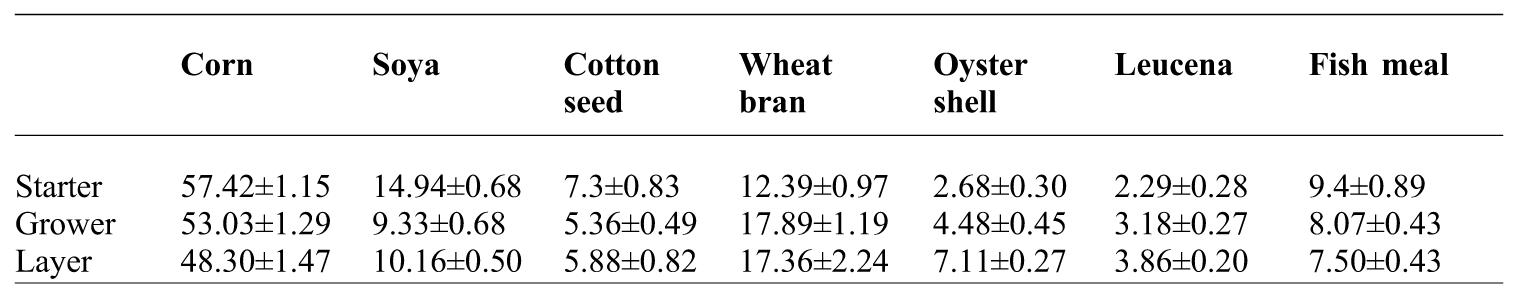
A survey was carried out between November 2006 and February 2007, involving 120 layer hen farmers to identify and inventory the different feedstuffs mostly used for poultry feed formulation and to determine their rates of incorporation in poultry feed rations in Togo. During the survey, samples of feed ingredients and chicken diets were collected. For each feed ingredient, three samples were analysed for crude protein (CP) and gross energy (GE). The survey indicated that 15 different feed ingredients were often used in the formulation of layer feed rations. Among these feedstuffs, corn was the most important (52.60±2.58%) followed by wheat bran (16.11±2.72%), roasted soya (11.40±1.91%), fish meal (8.29±1.64%) and cotton seed cake (7.57±1.58%). Rates of incorporation of these ingredients in the feed rations varied according to poultry farmer and the age of chickens (Table 1), as there were no established standard requirements for layer feed in Togo at that time.
Rates of feedstuff incorporation in layer-type chicken feed according to the chicken rearing phase in Togo.

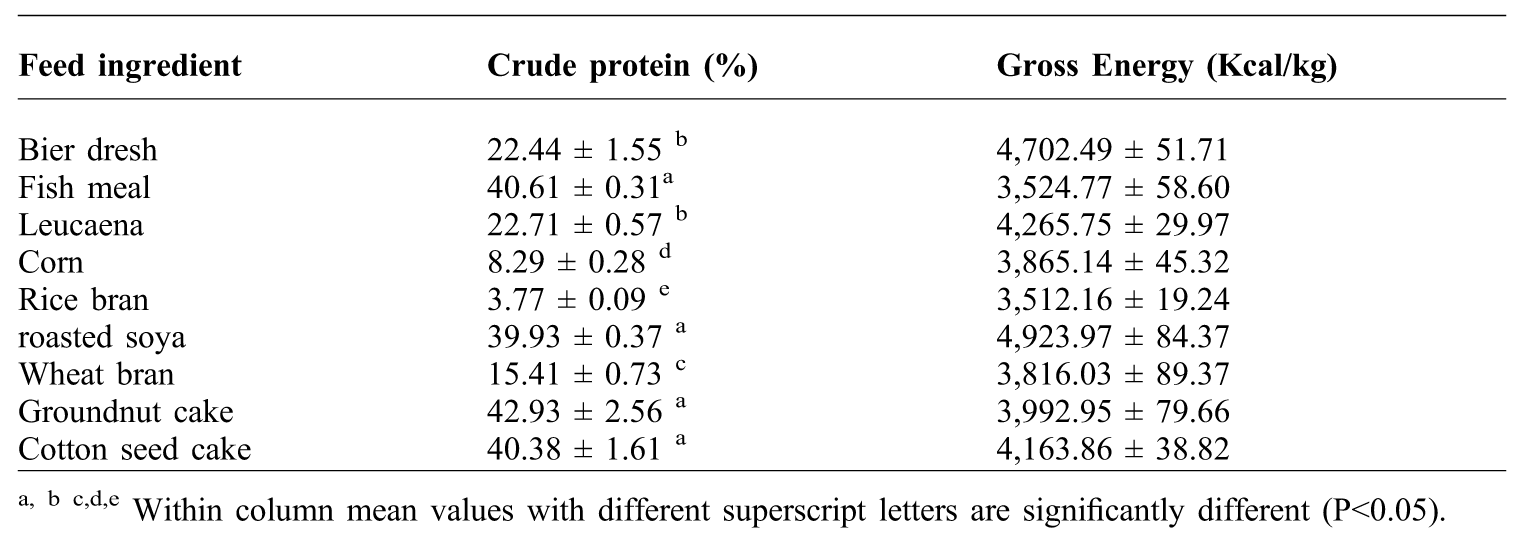
Gross energy and crude protein levels of local feed ingredients are shown in Table 2. With regard to crude protein levels, feed ingredients could be classified in three different groups namely ingredients with i) high protein levels (39 to 42% CP) such as fish meal, roasted soya, groundnut cake and cotton seed cake, ii) mid protein levels (18 to 25% CP) such as Leucaena and beer dresh and iii) low protein levels (less than 18%CP): rice bran, corn and wheat bran.
Crude protein and gross energy levels of local feed ingredients in Togo.
a, b c,d,e Within column mean values with different superscript letters are significantly different (P<0.05).
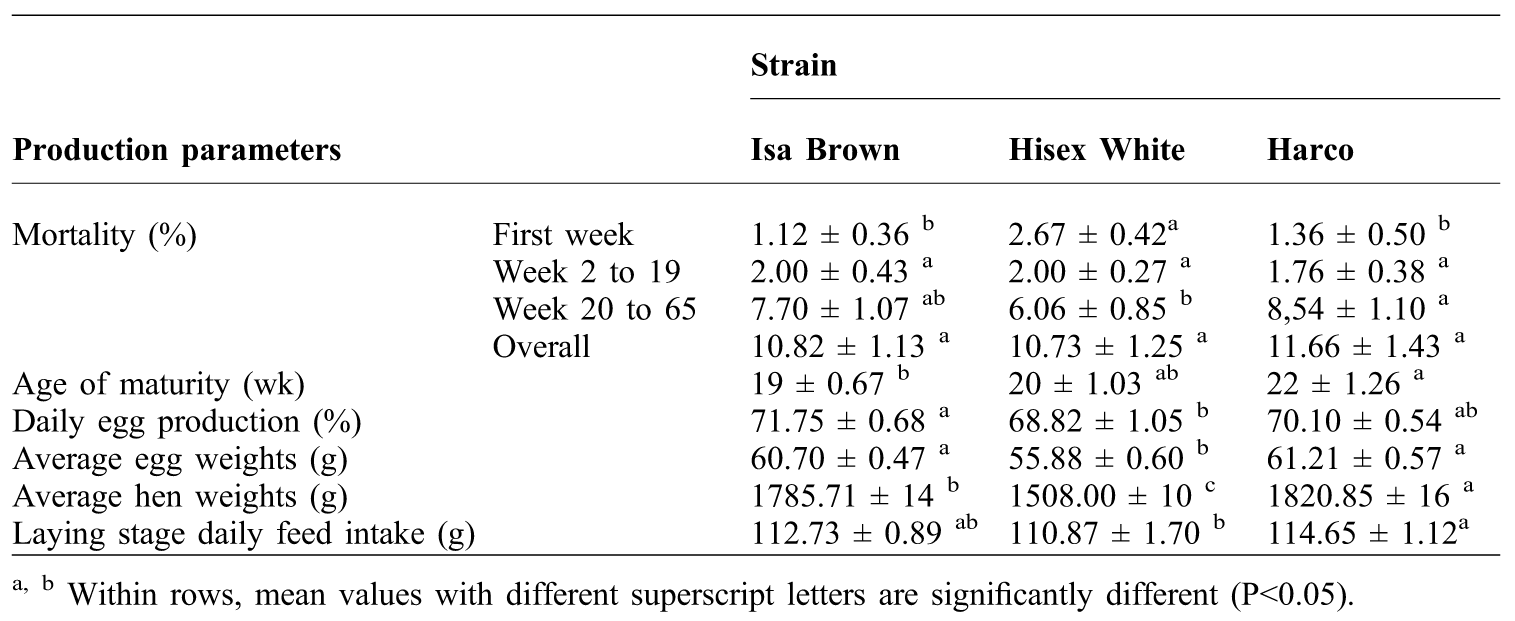
Overall morbidity rates as well as mortality rates from two to 19 weeks were comparable between strains (Table 3). However, mortality rates were in the following orders Hissex White > Isa Brown = Harco and Hissex White<Isa Brown = Harco (P<0.05), respectively during the first week and from 20 to 65 weeks. Harco hens started laying two or three weeks later than Isa Brown and Hissex White respectively. Average daily feed intake and egg production rate were lower in Hissex White layers compared to Isa Brown and Harco (P<0.05). These strain differences might be due to inadequate management practices for each breed.
Production parameters in layer strains reared commercially in Togo.
a, b Within rows, mean values with different superscript letters are significantly different (P<0.05).
effects of L-carnitine supplementation in drinking water on layer-type chick juvenile performance
L-carnitine is involved in fatty acid metabolism by transportation of long chain fatty acids into the mitochondrial matrix for ß-oxidation (Bremer, Reference BREMER1983). Because of rapid development, a high energy requirement, especially during hatching process, combined with a low ability of L-carnitine synthesis, in ovo supplementation of L-carnitine towards the beginning of hatching process may influence this process and therefore post-hatch performance. In young chicks, L-carnitine supplementation during the starter stage may lead to faster utilisation of yolk sac content and hence improvement of juvenile performance.
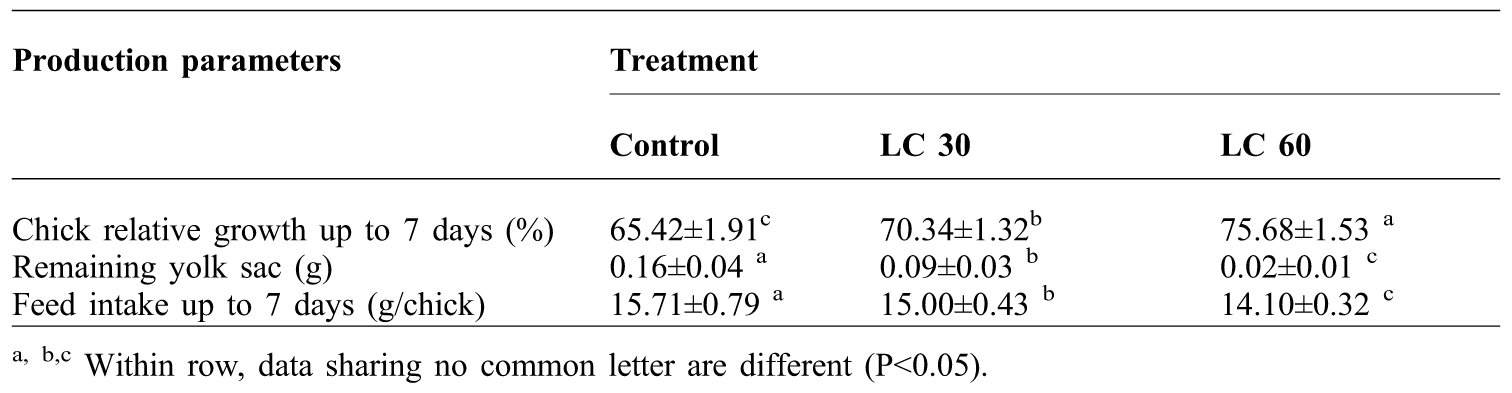
To evaluate possible dose effects of L-carnitine supplementation in drinking water on juvenile layer-type chick performance in Togo, Hisex Brown layer chicks were divided into three groups of 228 chicks each, namely 1) control group, 2) chicks with supplementation of 30 mg of L-carnitine per liter of drinking water (LC30) and 3) chicks with supplementation of 60 mg of L-carnitine per liter of drinking water (LC60) during the first 7 d post-hatch. Samples of chicks were used to collect blood and to weigh yolk sac at 1, 7 and 14 d of age. This study showed that yolk sac utilisation (0.16, 0.9 and 0.02 g, respectively for control, LC30 and LC60), morbidity (17.45%, 4.01% and 2.51%, respectively for control, LC30 and LC60) and serum concentration of triglyceride (480 mg/dL, 347 mg/dL and 229mg/dL, respectively for control, LC30 and LC60) decreased significantly with increasing dose of L-carnitine (P<0.05). The decrease in triglyceride concentration lasted up to 14 d of age not-withstanding the fact that L-carnitine supplementation covered only the first 7 d. Total serum protein levels were lower in L-carnitine supplemented chicks compared to control group (P<0.05) only during the period of administration. Moreover, up to seven days after hatch, chick relative growth increased, and remaining yolk sac and feed intake decreased with increasing dose of L-carnitine (Table 4; P<0.05).
Effects of L-carnitine supplementation in drinking water on layer-type chick juvenile production parameters in Togo.
a, b,c Within row, data sharing no common letter are different (P<0.05).
the use of an ICS-bag as storage tool of chicken feed in the tropics
It is well known that feed nutritive values decrease with storage time. This deterioration of feed nutritive values may be due to environmental conditions such as temperature, relative humidity and anaerobic conditions. Moreover, decrease in feed quality may negatively affect production parameters. In this project, the effect of feed storage conditions on broiler and layer chick juvenile growth was investigated. At day one and 14 of experiment, feeds were composed according to animals’ requirements and then crushed. They were divided in four groups. All the feeds were packed in Influenza Containing System (ICS) bag provided by Europe Compact s.a. (Belgium) as either: i) control feed which was used daily until 14 days, ii) stored feed in ambient condition for 14 days: after which the feed was used daily for 14 days, iii) stored feed in CO2-rich environmental condition for 14 days: after which the feed was used daily for 14 days and iv) conservation of feed in CO2-rich environmental condition, and used daily for 14 days. The ICS-bag was refilled with CO2 every time after opening it.
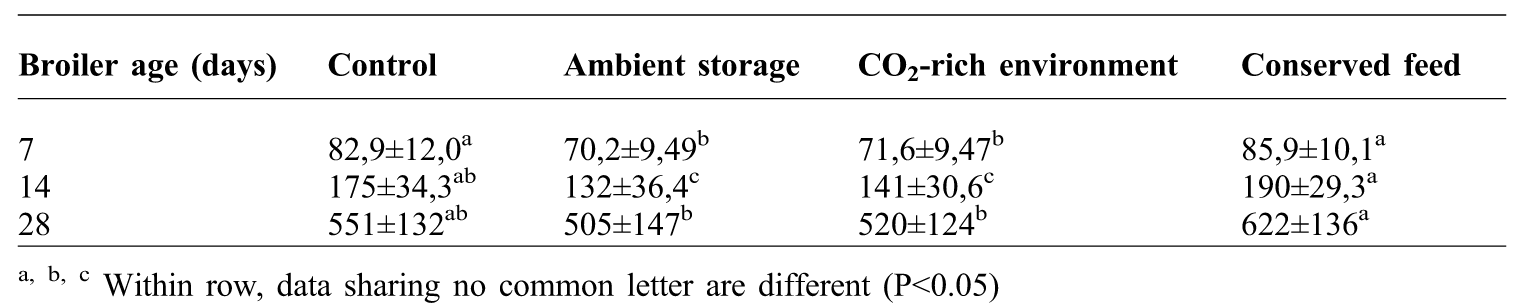
During the rearing period, several parameters were collected including body weight and feed intake during the first four weeks of rearing for broilers and feed intake and laying performance for eight weeks during the laying period for hens. The results show that preservation or conservation with CO2 significantly reduced the feed gross energy and crude protein losses seen with increasing storage time because the CO2 atmosphere counteracted oxidative reactions. These positive effects of CO2 on feed macronutrient levels resulted in improved production performances such as egg laying rate, growth rate and feed conversion ratio. Table 5 indicates that broiler fed conserved feed grew better.
Effects of feed storage conditions on broiler weight (g) in Togo.
a, b, c Within row, data sharing no common letter are different (P<0.05)
effects of low-protein or high energy levels diets on layer-type chick juvenile performance
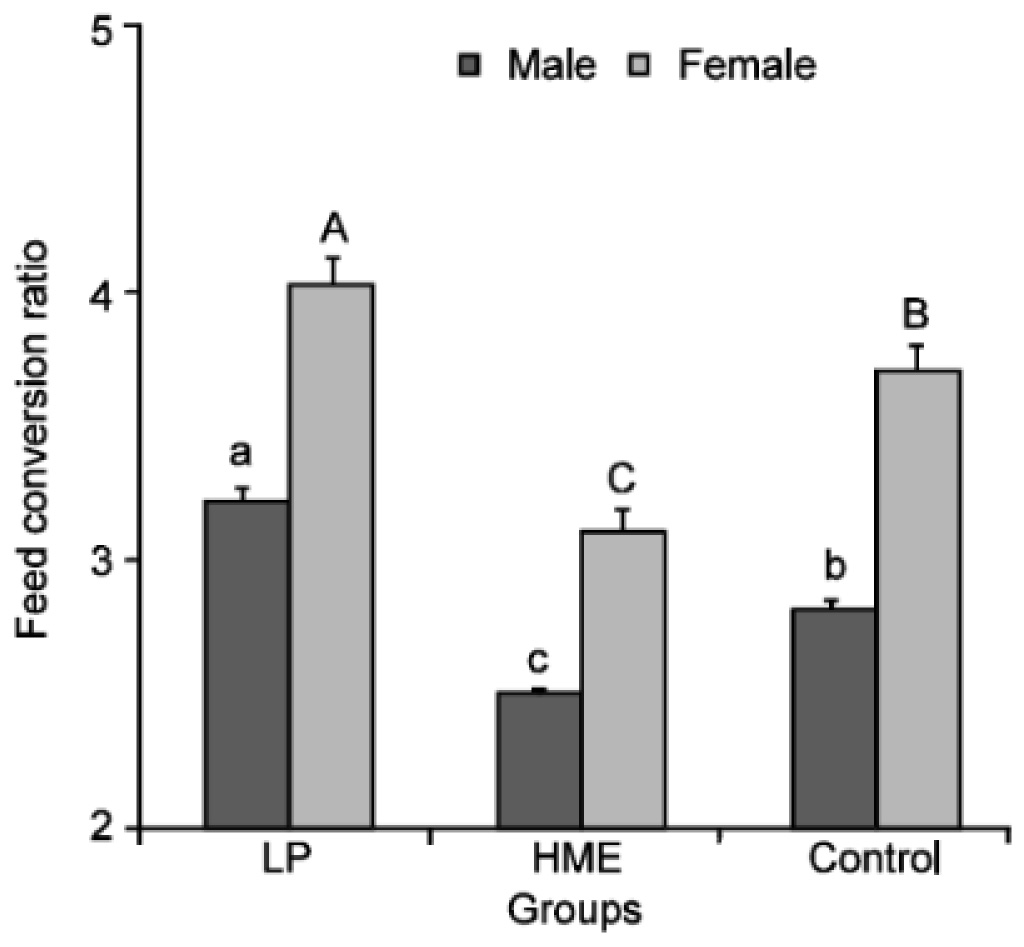
Energy and protein levels, feed composition and feed intake influences chicken production performances (Buyse et al., Reference BUYSE, DECUYPERE, BERGHAM, KUHN and VANDESANDE1992; Parsons et al., Reference PARSONS, KOELKEBECK, ZHANG, WANG and LEEPER1993; Schutte and De Jong, Reference SCHUTTE and DE JONG1994; Keshavarz and Nakajima, Reference KESHAVARZ and NAKAJIMA1995; Collin et al., Reference COLLIN, MALHEIROS, MORAS, VAN AS, DARRAS, TAOUIS, DECUYPERE and BUYSE2003; Camacho et al., Reference CAMACHO, SUAREZ, HERRERA and CUCA J.M.2004; Swennen et al., Reference SWENNEN, JANSSENS, COLLIN, LE BIHAN-DUVAL, VERBEKE, DECUYPERE and BUYSE2006). The effects of feed nutritive values on broiler performance are widely investigated, however the relationship between feed macronutrients’ levels and layer-type chicks (male and female) retains little attention. Additionally, as for all developmental stages, starter diet composition may affect layer-type chick juvenile growth as well as physiological parameters. This was investigated during the Togo programme. Results indicated that FCR (Figure 1), layer-type chick growth rate and liver weight at 56 d old were in following order HME > control > LP. With regard to chick sex, male chicks of HME and control diets grew better than female chicks from d 7 onwards. But, in LP group, the weights of male and female chicks were comparable up to 49 d-old. At 7 d post-hatch, total serum protein and triglyceride levels of control chicks (4.83 mg/dL and 355.95 mg/dL, respectively for protein and triglyceride) were higher than those of chicks of LP group (3.78 mg/dL and 248.25 mg/dL, respectively for protein and triglyceride) while the levels of HME group (4.17 mg/dL and 253.64 mg/dL, respectively for protein and triglyceride) were comparable to those of the two other groups. For total protein levels this trend lasted until 56 d of age.
Daily feed intake in chickens aged up to 56 days according to feed treatment and the sex of chick in Togo. A,B,C (P<0.05) between feed treatments for female chicks. a,b,c (P<0.05) between treatments for male chicks.
effects of incorporation of Moringa oleifera leaves in feed on production parameters and feed transit
During the last decade, intensive selection of chicken in order to improve production performances (meat or egg) results in less resistant animals to diseases. This high sensitivity to diseases leads to an excessive use of antibiotics resulting in the development of antibiotic-resistant bacterial strains. The programme was used to investigate the effect of possible prebiotic effects of Moringa leaves on chicken resistance to diseases on one hand and on other hand to evaluate the effect of incorporation of Moringa leaves in chicken feed on feed transit. Moringa oleifera is a perennial plant available all over the tropical zone and has been used traditionally as natural product. It is known to contain 23% of crude protein, 2870 kcal/kg of metabolisable energy and to possess 79.7% of digestibility (Becker, Reference BECKER1995). These leaves possess useful quantities of carotene, ascorbic acid, iron, methionine and cystine (Makkar and Becker, Reference MAKKAR and BECKER1996). Apart from these nutritional constituents, little is known about its anti-nutritional components like tannin, saponin, total phenols, total flavonoid and immunomodulator component such as polysaccharides. Several experiments were conducted in the framework of this study. These experiments concerned broiler and layer type chicks’ juvenile performance and a flock of layer chicken from hatch until 40 weeks of age. The latter experiment was designed for a total of 1,500 layer chicks. These animals were divided into three different groups of 500 chicks each: i) M0: feed without incorporation of Moringa leaves, ii) M1: feed with incorporation of 1% of Moringa leaves and iii) M2: feed with 2% Moringa leaves.
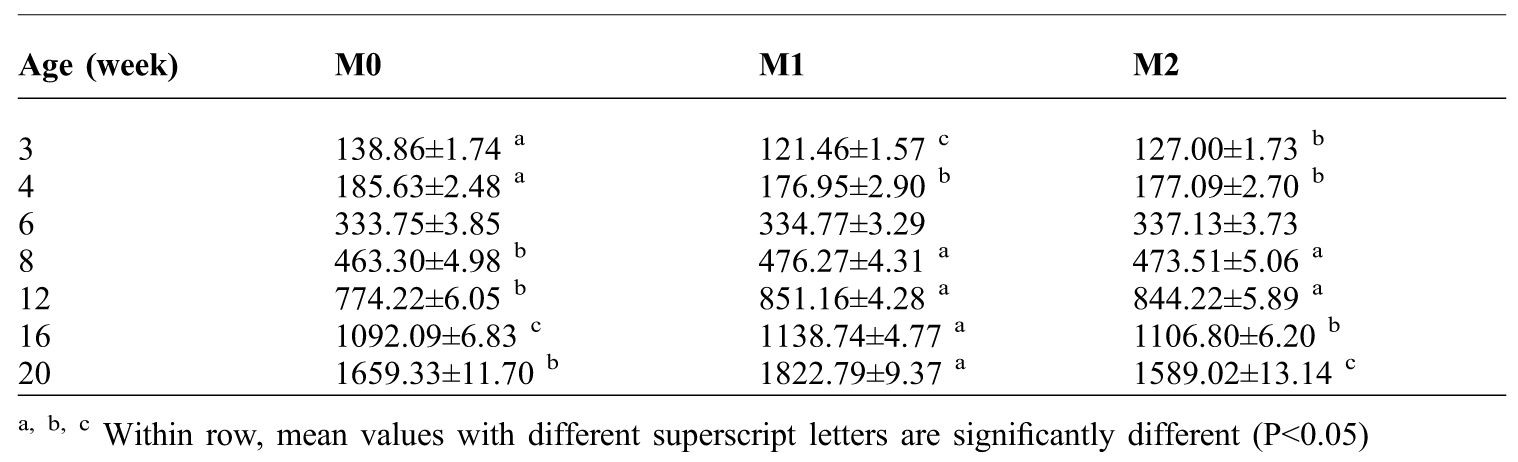
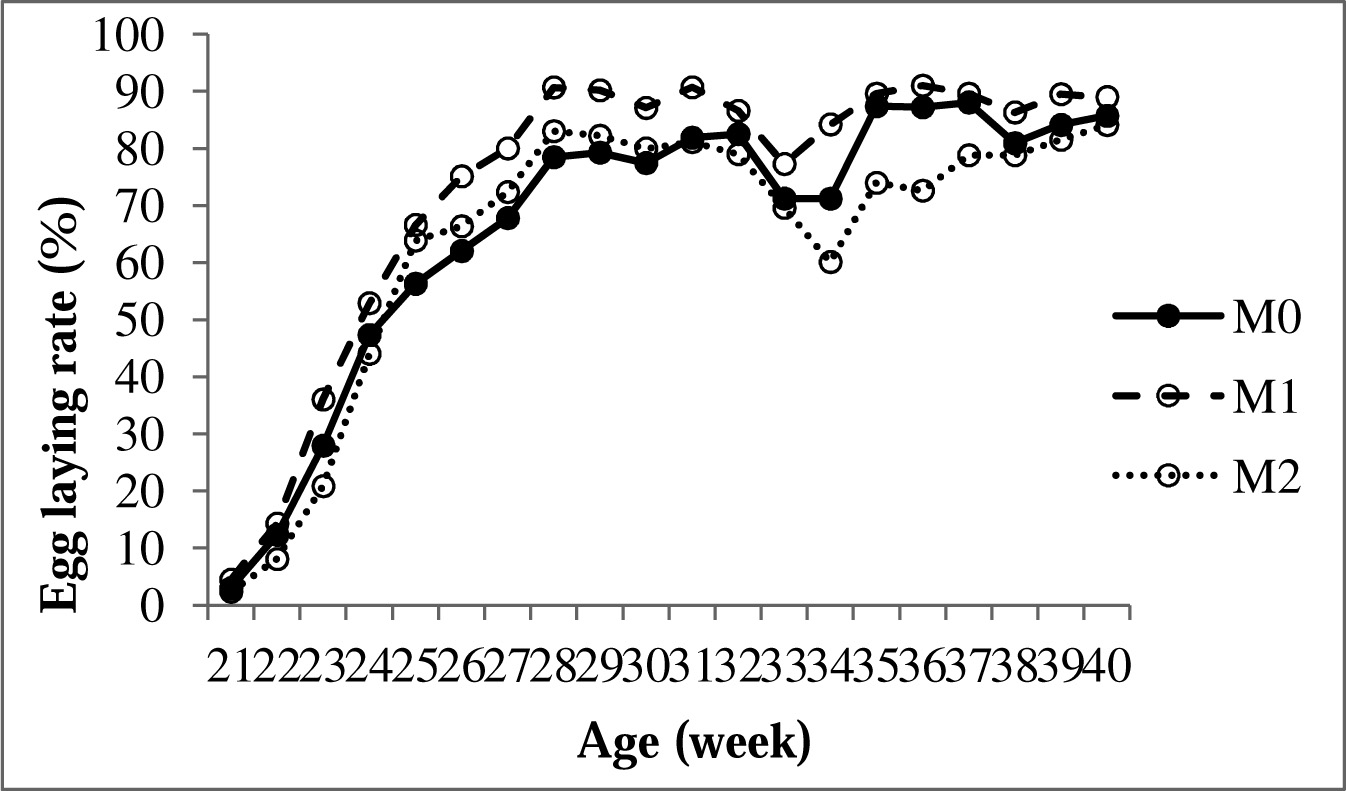
Although, blood parameters have yet to be published, the results indicated that supplementing feed with Moringa leaves had some advantages and disadvantages for layer chicken performances. Up to 20 weeks of age, layer weights at 20 weeks of age (Table 6; unpublished data) as well as egg production between 21 and 40 weeks of age (Figure 2; unpublished data) were in the following order: M1 > M0 > M2 indicating that incorporation of 1% of Moringa leave in layer chicken feed was beneficial whilst incorporation of 2% was detrimental. This contradictory result suggests some unknown anti-nutritional factors in Moringa which should be further investigated.
Changes in layer chicken weights with age according to Moringa treatments in Togo
a, b, c Within row, mean values with different superscript letters are significantly different (P<0.05)
Relationship between egg laying rate (%) and layer age (week) according to levels of Moringa leaves incorporation into layer feed in Togo.
Capacity building
Training of scientists as well as technicians with regard to poultry science and production management was part of the project activities. These activities were made possible by setting up a Laboratory of Poultry Science which was the first spin off of the project. In total, 19 scientists were trained in analysing and interpreting poultry production parameters and relating these to management practices; formulating feed rations according to the need of chickens and analysing and interpreting relationships between rations and poultry production parameters; interpreting the relationship between incubation conditions and embryonic or post-hatch performance parameters; and finally analysing and interpreting product quality (egg, meat). Different levels of training and education including Bachelor or Animal husbandry technician awards with poultry technicians (six students), bio-engineers (six students), Master of Science or ‘Diplôme d'Etude Approfondie (DEA)’ (four students) and three doctoral students were involved in the project activities. Except yet for the PhD's, all other students obtained their degrees at time of writing
Additionally extension activities were conducted. These activities focused on the development of strategies for increased chicken productivity resulting in a sustainable improvement of poultry production in Togo. These strategies were disseminated through seminars and training courses at different levels for the benefit of stakeholders. A Togolese Branch of World Poultry Science Association (WPSA) was established in 2007 in order to create an appropriate technical and scientific environment for improvements in poultry production. Through this channel and an existing organisations, training sessions, demonstration strategy and seminars were organised.
training sessions for poultry farmers, feed manufacturers on management practices
A programme of training sessions for those involved in poultry industry was established. This programme included different topics such as poultry feed and feed formulation rations, poultry care and management practices, artificial incubation, economic management, diseases: control and treatment and field application (practical work at poultry farm). From October 2008 to April 2012 twenty poultry farmers were trained.
Demonstration strategy
The Vlaamse Interuniversitaire Raad (VLIR) project established a unit for poultry production for demonstration. The capacity of this unit was 2000 layers, and all management practices fitted with local conditions in order to be put in practice by Togolese poultry farmers. Besides this unit, several strategies were run to promote poultry production in Togo and its neighboring countries (especially in Benin). These include providing day-old chicks of high quality to farmers, field applications in collaboration with farmers, etc. During intensive activity, the project covered the need of Togolese poultry farmers at almost 10% of layer day-old chicks and more than 70% of day-old cockerels. Day-old chicks were provided to a hatchery in Republic of Benin. This strategy enabled the collection of data from the farm as large scale experiments and was considered as a field experiment. Moreover, 5,500 layers chicks were used recently for field experiments in collaboration with two important poultry farms (AYODELE in Badja and FIAVE in Kpessi) and the VLIR project.
Several seminars were organised involving international speakers or companies, the first focussing on the importance of chicken feed additives, with 80 delegates. The most important communication during this seminar was the session topic ‘Improvement of chicken metabolic activities by using feed additives’. The second seminar was themed ‘Promoting of poultry industry in Sub-Saharan African countries: More than 100 people from Ghana, Benin, Belgium and The Netherlands were present. The main talks were evolution of poultry production in the world and implications for the African continent by Dr. P. Simons, double purpose chickens and longevity in laying hens: possibilities for improving poultry production by Prof. E. Decuypere, incubation aspects and chick quality by Dr. Tona, Poultry breeds and their various nutritional requirements for optimum production in the hot humid tropics by G. G. Anku, effect of delayed feed access on layer chick production parameters and blood metabolites by Dr. Tona and layer nutrition management by Prof. Decuypere. The third seminar was given by Prof. Decuypere (KULeuven) and Dr. Bruggeman both from Laboratory of Physiology and Immunology for Domestic Animals, Catholic University of Leuven discussed the effects of climatic conditions on chicken performance: thermoregulation in chickens. ‘Stop High Pathogenic Avian Influenza (HPAI) spread through adequate chicken containment’ was the title of the fourth seminar. It was attended by 65 participants from Benin (10) and Togo (55). Four communications were given including papers on the outbreak of avian influenza in togo: management and chickens containment, outbreak of avian influenza in europe: management and chickens containment, influenza containment system bag (I.C.S. Bag) and demonstration and scientific view of I.C.S. Bag.
Conclusions
The outcome of the current project provided basic information for poultry producers with the goal of alleviating poverty in Togo. Establishing and reinforcing research in poultry science and production and developing extension activities were cornerstones for the goals of the project. A collaborative project between universities and research and development institutions with regard to technology and knowledge transfer between developed and developing countries may avoid widening the gap in knowledge and research capabilities. This is crucial in globalisation of every aspect of farming and economics. Furthermore, promotion of the poultry industry in Togo should focus on proficient feed mill units, diet formulations, feed storage management, incorporation of plant products with possible antimicrobial or prebiotic activity in feed, providing information about management practices and training those involved in the sector in appropriate technologies.
Acknowledgments
This work was supported by Flemish Interuniversity Council (VLIR) (ZEIN 2006 PR 32). The authors thank KUL, RUG and UL for facilitating project activities implementation.