INTRODUCTION
Sympatric species of vertebrates usually have some degree of ecological similarities and phylogenetic relatedness. Both factors determine interspecific relationships of prey, competitors and parasites. Although related species usually share some species of parasites, the degree of similarities in parasite composition is not predictable. In some assemblages of host species, ‘phylogenetic’ factors can have a strong influence on parasitic similarities (Bush et al. Reference Bush, Aho and Kennedy1990; Cabaret, Reference Cabaret2003), particularly when a determined taxonomical group of parasites is considered (Hoberg et al. Reference Hoberg, Jones and Bray1999; Hoberg, Reference Hoberg2002; Huyse and Volckaert, Reference Huyse and Volckaert2005); in other cases, ecological factors may also have a substantial impact on parasite populations (Rohde, Reference Rohde1993) and communities (Muñoz et al. Reference Muñoz, Grutter and Cribb2007). However, phylogenetic and ecological factors together influence the structure and composition of parasite communities, and neither of them is more important than the other.
Parasitic similarities among host species can be associated with the degree of specificity that parasites exhibit with their hosts. For example, in complex environments, where host species participate at several trophic levels, parasites tend to be more generalist to hosts at the larval stage (George-Nascimento, Reference George-Nascimento1987; Marcogliese, Reference Marcogliese and Rohde2005). Generalist parasites, by using their intermediate hosts, may increase the opportunity to reach their definitive hosts in a system with a complex trophic web (Muñoz et al. Reference Muñoz, Grutter and Cribb2007). In those environments, composed of few species and limited distributions, the trophic webs are less complex, such that most parasites may be host specific (Lafferty et al. Reference Lafferty, Hechinger, Shaw, Whitney, Kuris, Collinge and Ray2006).
Host specificity is mainly a result of environmental restrictions due to the barriers of transmission of parasite larval stages from one host to another (Rohde, Reference Rohde1993). Experimental infections have shown that many species have a wider host range than in their natural environments (Poulin and Keeney, Reference Poulin and Keeney2007). In other cases, parasites are specific to one or a couple of (usually congeneric) host species, determined by particular physicochemical conditions in the host body. There are several indices of host specificity, although there are some limitations in their interpretation because host specificity should consider issues such as host range, frequency and abundance of parasites, host phylogeny (Rohde, Reference Rohde1993) as well as fecundity or body size. No single index proposed thus far considers all of these aspects, although the index of Poulin and Mouillot (Reference Poulin and Mouillot2005) includes host range and host phylogeny. Although these indices are limited, they can nevertheless serve as estimators of host specificity.
Biological traits of hosts acquired over an evolutionary period, can influence the distribution and load of parasite communities. If we consider a host assemblage in which there is a mix between ecological and phylogenetic relationships of the species, it is possible to make predictions about how similar and host specific their parasites might be. According to these characteristics, a fish assemblage of the intertidal zone is a suitable system to study because different species use the intertidal zone for different purposes, either as a nursing habitat or as a permanent residence (Horn et al. Reference Horn, Martin, Chotkowski, Horn, Martin and Chotkowski1999). Thus, 2 groups of fish can be categorized, resident and temporal. Resident fish live permanently in the intertidal zone and, consequently, both adults and juveniles can be found in this area at any time. Temporal fish live in the intertidal zone for a short period of their lives, some adult fish species only mate and lay eggs there and then leave, whereas others live in the intertidal zone when they are juveniles.
Being resident or temporal in the intertidal zone might have a strong impact on fish in terms of their parasite communities because temporal fish live in this zone for only a short time. They may have few or no parasite species in common with resident fish that normally spend their lives in the intertidal zone, interacting permanently with other organisms from which they get parasites. Apart from time, other ecological host characteristics are important; for example, body size and diet usually have significant influence on the parasite fauna of the hosts. Both body size and diet are different between resident and temporal fish (Varas and Ojeda, Reference Varas and Ojeda1990; Muñoz and Ojeda, Reference Muñoz and Ojeda1997, Reference Muñoz and Ojeda1998). Parasite load increases with host body size (Poulin, Reference Poulin2007a, Reference Poulinb), which is normally attributed to more resources for parasites. On the other hand, diet is associated with endoparasites because they can enter the host body by infected prey. Some types of prey can have more parasites than others, which may produce differences among groups of fish with different diets (Morand et al. Reference Morand, Cribb, Kulbicki, Rigby, Chauvet, Dufour, Faliex, Galzin, Lo, Lo Yat, Pichelin and Sasal2000). Moreover, resident fish may have specific parasites because they live permanently in the same habitat and have a known diet (Muñoz et al. Reference Muñoz, Valdebenito and George-Nascimento2002; Pardo-Gandarillas et al. Reference Pardo-Gandarillas, Garcias and George-Nascimento2004), so that some parasite species may have adapted to few fish species becoming specific to those hosts.
There is little parasitological information on intertidal fish in Chile. Some attempts have been made to understand the biology, taxonomy and ecology of parasite communities of these fish (Aldana et al. Reference Aldana, Pulgar, Ogalde and Ojeda2002; Díaz and George-Nascimento, Reference Díaz and George-Nascimento2002; Muñoz et al. Reference Muñoz, Garcías, Valdebenito and George-Nascimento2001, Reference Muñoz, Valdebenito and George-Nascimento2002; Pardo-Gandarillas et al. Reference Pardo-Gandarillas, Garcias and George-Nascimento2004). However, there are no parasitological studies that consider the biological history of intertidal fish and the specificity of parasites. Thus, in this study, the following predictions were tested: (i) that parasite communities should be abundant and richer in resident fishes, and more similar among resident fish or among temporary visitors than between them, and (ii) that host specificity should be higher in parasites in resident fish than temporal fish.
MATERIALS AND METHODS
The study area included rocky intertidal pools formed during low tide in 3 locations near one another on the central coast of Chile (33°S,71°W): Las Cruces (33°13′S), Isla Negra (33°25′S) and El Tabo (33°27′S). The sampling periods were between the spring and summer seasons of 2 consecutive years, with the aim of increasing the fish sample size and reducing the potential effects of season on the parasite species composition (between October 2006 and January 2007 and between October 2007 and January 2008). The capture of fish was carried out through hand nets and sometimes the use of an anaesthetic solution (BZ-20®). The fish caught were stored individually in plastic bags to prevent the loss of ectoparasites. In the laboratory, each fish specimen was identified using specific descriptions and keys (Mann, Reference Mann1954; Stephens and Springer, Reference Stephens and Springer1973; Chirichigno, Reference Chirichigno1974); 14 different fish species were identified using a morphological and morphometric approach. In total, 1097 specimens were collected. Ninety percent of the total fish sampled were frozen at −10°C, whereas the remaining 10% were dissected when fresh, in order to obtain parasites in good condition to facilitate their specific identification.
Fish were measured in body total length and weighed. Metazoan ecto- and endo-parasites were then collected from each fish specimen. The parasites were fixed in 10% formalin and identified taxonomically following the publications by Castro and Baeza (Reference Castro and Baeza1981, Reference Castro and Baeza1984) and Whittington and Horton (Reference Whittington and Horton1996) for ecto-parasites; Petrochenko (Reference Petrochenko1971), Bray (Reference Bray, Gibson, Jones and Bray2002), Gibson (Reference Gibson, Gibson, Jones and Bray2002), Muñoz et al. (Reference Munoz, González and George-Nascimento2004) and Cribb (Reference Cribb, Jones, Gibson and Bray2005) for endo-parasites.
We calculated the prevalence and average abundance of each parasite species per host species (Margolis et al. Reference Margolis, Esch, Holmes, Kuris and Schad1982). At the infra-community level, the total prevalence, average of species richness, total abundance and dominance of parasites were obtained (Díaz and George-Nascimento, Reference Díaz and George-Nascimento2002).
Total prevalence, average of total abundance and parasite species richness were correlated to host body size, in order to determine whether the latter variable influences the parasitological descriptors. To assess the effect of sample size of a particular host species on the parasitological descriptors, we also correlated these variables. Control for the host phylogeny was also applied for these correlations by computing the contrasts using CAIC 2.6.9 software (Purvis and Rambaut, Reference Purvis and Rambaut1994). The phylogenetic relationship among the fish species was obtained from publications on fish taxonomy (Stephens and Springer, Reference Stephens and Springer1973; Nelson, Reference Nelson1994).
To determine the similarity of parasite species in the 14 fish species, a matrix of similarity, according to the Morisita-Horn index, was obtained considering the prevalence and the abundance of each parasite species. This index varies between 1 and 0, indicating high and low similarity between communities, respectively (Odum, Reference Odum1995).
Two analyses of parasitic similarity among fish species were made; one was based on abundance and the other based on prevalence of each parasite species. Cluster analyses were performed using the simple link algorithm for the distance metrics by the coefficient of Bray-Curtis (McGarigal et al. Reference McGarigal, Cushman and Stafford2000). The prevalence was used as a percentage, while the abundance was transformed to log10 (x+1). Due to the low number of ecto-parasite species and the fact that several species were not shared, ecto- and endo-parasites were analysed together. In each cluster analysis (abundance and prevalence), we reshuffled the original data set 100 times, obtaining the corresponding pseudo-values of similarity, which were grouped in a frequency histogram. The observed values of overlap that exceeded the 95 percentile were considered as similar. Similarities obtained in this analysis were then represented in a dendrogram. Moreover, a Principal Component Analysis (PCA) was also applied for descriptors of parasite communities (richness, total abundance and dominance) in 10 fish species. Previously, descriptors were transformed to log10 (x+1). Fish without parasites were not considered because zero data cannot be used in the analysis. The scores of the PC axes were used to make comparisons among fish categories using an ANOVA to determine significant differences. To do this, all parasitized fish specimens of the 10 species were considered and then grouped into the 3 fish categories.
Only those fish species with sufficient sample size were considered in the cluster analysis because low sample sizes can give a parasite spectrum unrepresentative for a host species. Accumulation curves were applied to evaluate the host sample size necessary to have at least 90% of all the parasite species that are possible to find in a particular fish species.
The indices of host specificity for each parasite taxa from intertidal fish were calculated according to the formula originally proposed by Rohde (Reference Rohde1980), but using the corrected index (Rohde and Rohde, Reference Rohde and Rohde2008) to gather 2 values: one based on parasitic prevalence (SPRE) and the other based on parasite abundance (SABU). The values of this index fluctuated between 0 and 1, for low and high similarities, respectively. It is possible that a fish species might have a parasite with a high host specificity index, but that does not mean that that fish is the principal host for that parasite species. Thus, it was useful to consider the ranking 1 (RK1) for the maximum values (prevalence and abundance of parasites). Host species with the highest abundance or prevalence of a particular parasite species was ranked from a value 1 (RK1) to the lowest parasite load.
The host specificity index proposed by Poulin and Mouillot (Reference Poulin and Mouillot2003) was also considered. This index considers the phylogenetic hierarchies of hosts. We calculated the average specificity of STD and its variance VARSTD for each parasite species that was shared by at least 2 host species. The value of STD varies from 1 to 5, for the highest and lowest values, respectively. The value 1 indicates that a parasite species is shared by congeneric hosts. However, some parasite species were in 1 host species only. For these cases, the value for this index was 0. Information about the phylogeny of the hosts was obtained from the database Catalogue of Life: 2008 Annual Checklist (Bisby et al. Reference Bisby, Roskov, Orrell, Nicolson, Paglinawan, Bailly, Kirk, Bourgoin and van Hertum2008). Some of the parasite species of intertidal fish were shared with many other fish species, from other zones apart from the intertidal habitat. Thus, the host specificity indices (based on numbers and phylogeny) were calculated considering 56 other marine fish from Chile. The information about parasites and their hosts were obtained from parasitological checklists from Chile (Muñoz and Olmos, Reference Muñoz and Olmos2007, Reference Muñoz and Olmos2008).
RESULTS
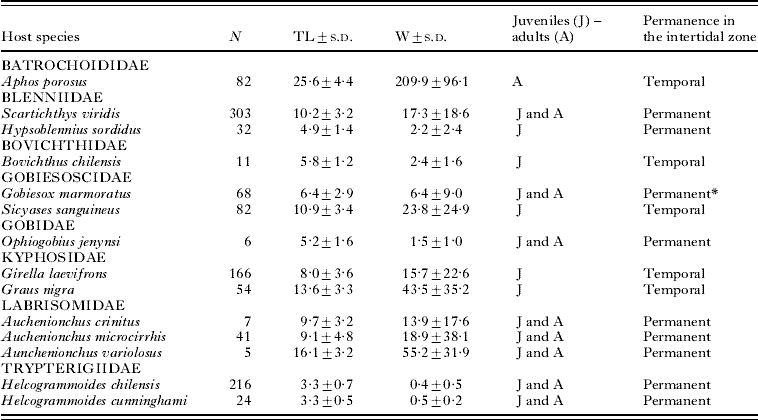
The most common fish species collected from the intertidal zone, and which thus had large sample sizes, were Scartichthys viridis (n=303), Helcogrammoides chilensis (n=216) and Girella laevifrons (n=166). The 11 other species were caught in smaller sample sizes (<100 specimens) (Table 1). The fish body sizes, whether measured in length or weight, were variable among species; the largest was Aphos porosus, and the smallest Helcogrammoides spp. (Table 1).
Fish species of an assemblage from the intertidal zone of central Chile
(Number of individuals collected (N), average of total body length (TL, cm) and weight (W, g) with their standard deviations (±s.d.), maturity stage and time permanence of fish in the intertidal zone.)

* Resident fish.
The temporal fish were represented by 4 species of 3 families: adults of the family Batrachoididae, juveniles of the families Bovichthidae and Kyphosidae (Table 1). Ten resident fish species of intertidal zone were obtained, which were represented by 4 families: Labrisomidae, Blenniidae, Gobiesocidae, Trypterigiidae and Gobiidae (Table 1). Particularly the categorization of Gobiesocidae species differed from the information found in the literature (Cancino and Castilla, Reference Cancino and Castilla1988; Varas and Ojeda, Reference Varas and Ojeda1990). In our sampling, Syciases sanguineus was always found as juveniles; adults were never found in the study area, apparently because they inhabit the subtidal zone (Cancino and Castilla, Reference Cancino and Castilla1988). Therefore, for this study, S. sanguineus was considered as a temporal fish. Gobiesox marmoratus had been categorized as a temporal fish, which has been common in spring and summer in the intertidal zone (Varas and Ojeda, Reference Varas and Ojeda1990). However, we found this fish throughout the year as juveniles and adults. Consequently, G. marmoratus was considered as a resident fish.
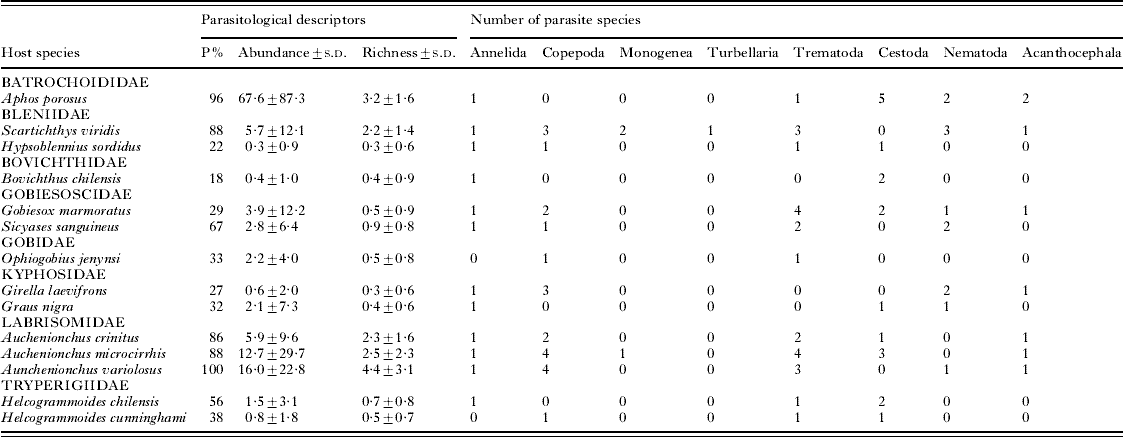
In total, 8950 parasites belonging to 40 taxa were collected. Some parasites were identified to species, others were un-described (half of the species may be new species) and a small number could not be identified. However, for convenience, the 40 taxa were referred to as species. Most parasites were trematodes, cestodes and copepods. The number of species per taxonomic group of parasite is shown in Table 2. The fish Ophiogobius jenynsi had only 2 parasite species, while A. microcirrhis and S. viridis had the greatest component community richness of parasites (Table 2).
Prevalence (P, %), average of infra-community abundance and richness±standard deviation (s.d.) and number of parasite species per taxonomic group in each host species

At the infra-community level, the total prevalence of parasites fluctuated between 100% for A. variolosus and 18·2% for Bovichthus chilensis; the average total abundance of parasites varied between 68 individuals per host for A. porosus and 0·3 for Hypsoblennius sordidus and the average of infra-community richness of parasites reached the maximum in A. variolosus with 4 species per host; the lowest value was 0·3 species per host for H. sordidus (Table 2).
Of the 40 parasite taxa, 57% were adults. Aphos porosus was the only species with a higher number of larval parasites (10 of 11 species), whereas most fish species had adult parasites. Since few metacercariae were detected in S. viridis only (n=5) at a low frequency, this stage was not considered in this study.
The prevalence, average abundance and richness of parasite infra-communities increased with the body weight of the host. Although the sample sizes collected by fish species were different (Table 1), the total prevalence, the average total abundance and parasite richness were not significantly associated with the sample size (n=14; prevalence: r=0·07, P=0·82; abundance: r=0·02, P=0·93; richness: r=0·14, P=0·63). These descriptors were not related to the body weight of fish species, and it was found to increase significantly for the average total abundance (r=0·73, P<0·01) and species richness (r=0·61, P=0·02), but not for the prevalence (r=0·51, P=0·06), with the host body weight. These relationships, between descriptors and fish body size, were similar when data were controlled for the fish phylogeny (n=11 contrasts, abundance: r=0·71, P=0,014, richness: r=0·64, P=0·033, and prevalence: r=0·32, P=0·350).
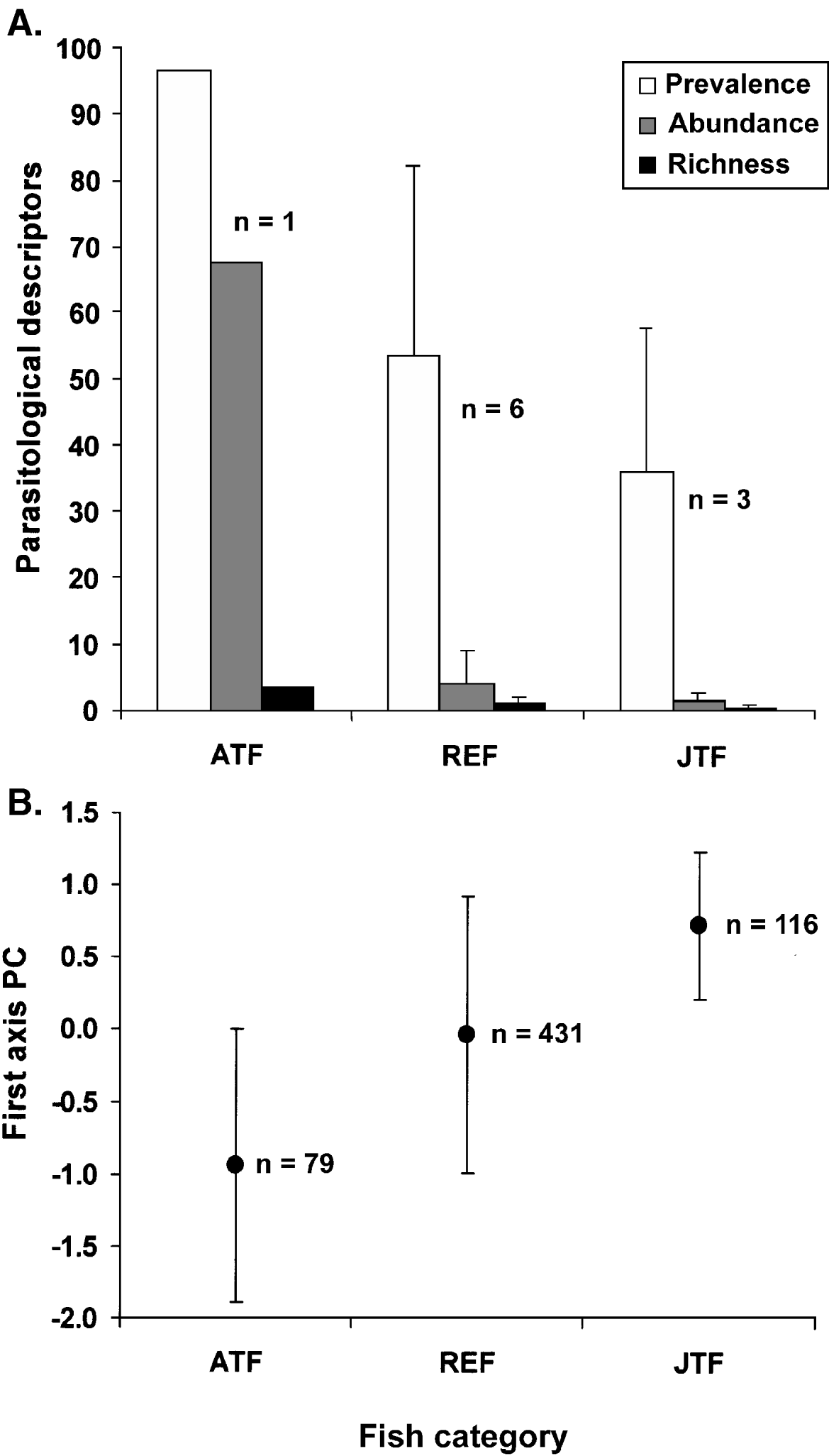
Three fish categories were obtained according to maturity and permanence in the intertidal zone: adult-temporal fish (A. porosus was the only species in this category), juvenile-temporal fish (G. laevifrons, G. nigra and S. sanguineus) and resident fish, including adults and juveniles (S. viridis, A. microcirrhis, G. marmoratus, H. sordidus and Helcogrammoides spp.) (Table 1). Aphos porosus had the largest parasite load (in prevalence, abundance, and richness) compared with the other 2 fish categories (Table 2), whereas juvenile-temporal fishes showed no differences in their parasite load compared with resident fish, although this was not tested statistically due to the low number of host species in each group (Fig. 1A).
(A) Prevalence, average and standard deviation for infracommunity abundance and richness of parasite for the 3 fish categories (n: indicates number of fish species). (B) Average and standard deviation of the first axis scores of the PC for the 3 fish categories (n: indicates number of fish individuals). ATF: adult temporal fish; RDF: resident fish, JTF: juvenile-temporal fishes.

The 3 infra-community descriptors (abundance, richness and dominance) were found to be important in the PCA, comprising the first PC axis. There were significant differences in the scores of the PCA among fish categories, the 3 groups differed from one other (F(2, 644)=82·3, P<0·001, Fig. 1B).
Comparison of component communities of parasites
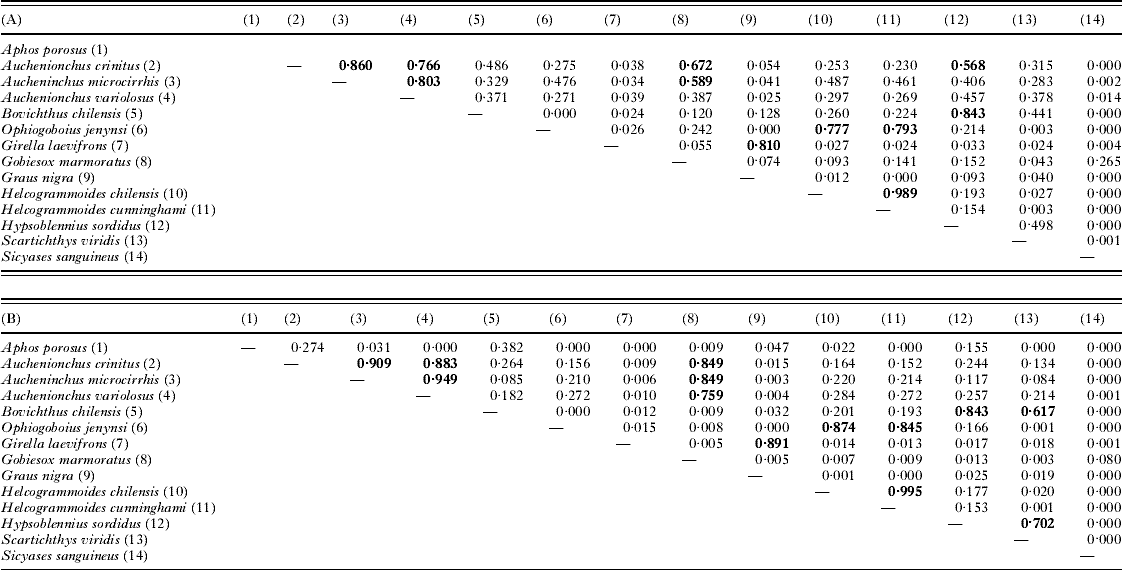
None of the parasite species from the fish assemblage were in all the fish species. The parasite species that was in many hosts was a copepod (Holobomolochus chilensis) and a leech (Piscicolidae gen. sp.) that were found in 11 and 9 host species, respectively. In general, there was little similarity in parasite community composition in the fish assemblage because few parasite species were shared among fish. In fact, no more than 11 pairs of species, from a total of 91 possible pairs, showed similar parasite communities (Table 3). The most significant parasitic similarity (>50%) occurred among the fish H. chilensis and H. sordidus (Table 3A), while the congeneric fish, such as 2 Helcogrammoides spp. and 3 Auchenionchus spp., had high similarity among parasite species (Table 3A, B).
Morisita-Horn index of similarity of parasite communities among 14 fish species. (A) Index based on abundance and (B) prevalence of parasites
(Bold values >0·50 (50% of similarity).)

Ten fish species were considered in the cluster analysis. They were selected according to accumulation curves of parasite species and host sample sizes. A representative sample size was considered when a certain sample had 90% of parasite species of the component community richness of a fish species. Only Helcogrammoides cuninghami, which had few parasite species, had a representative sample size with only 11 specimens. All other species needed larger sample sizes and, thus, 10 of them had a sufficient sample size to allow a comparison of parasite communities.
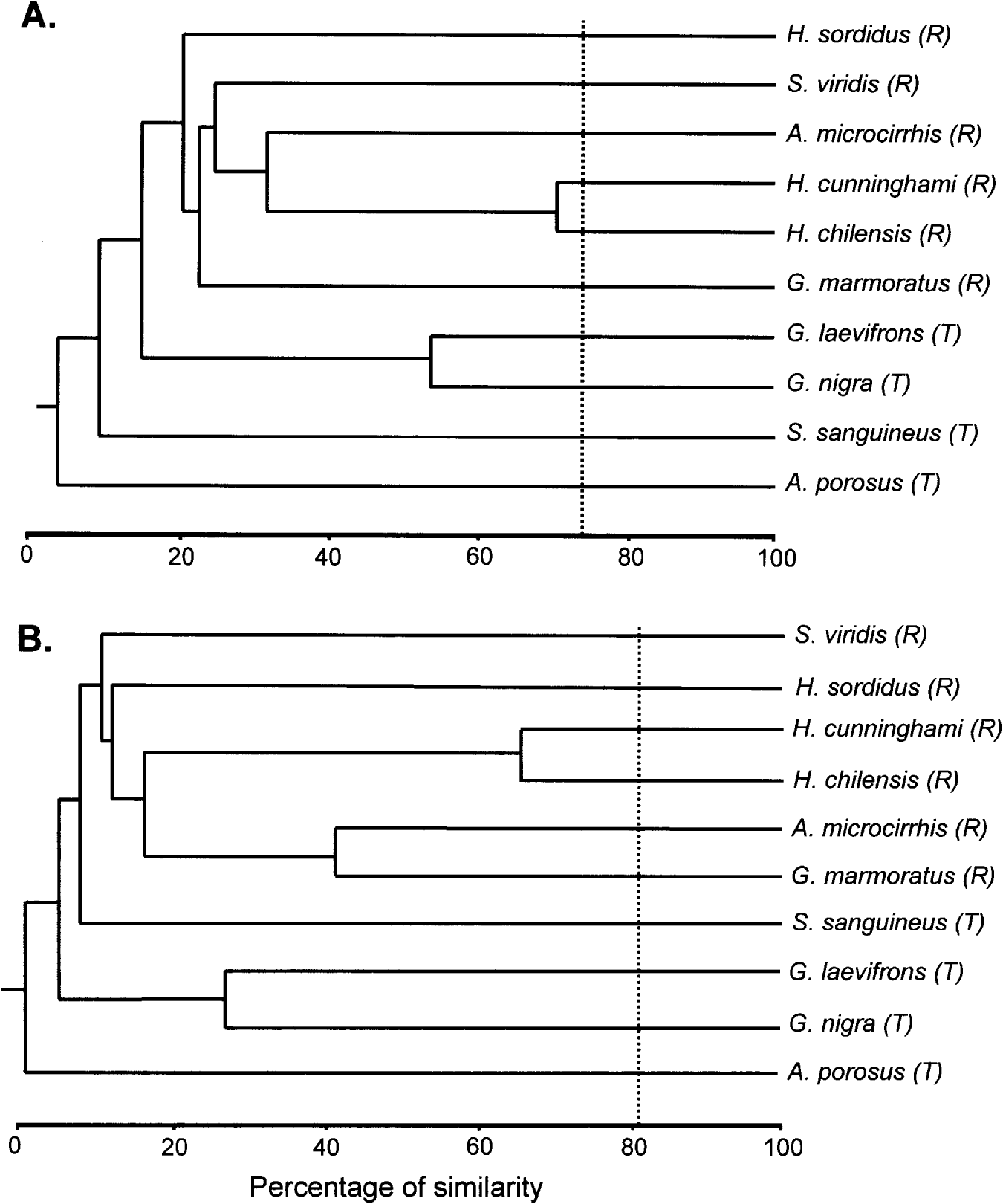
The cluster analysis, based on the similarity index (in percentage), fixed a critical value at 74·7% for the prevalence of parasites and 80·7% for parasite abundances (Fig. 2). Groups of fish with parasitic similarities higher than these values were considered as groups statistically different. However, no cluster among fish species was distinguished, indicating that host species differed greatly in their parasite communities. However, the parasites of temporal fish differed from those of resident fish; the parasite communities of temporal fish had less than 20% similarity based on abundance (Fig. 1A) and less than 15% based on prevalence (Fig. 1B) compared with resident fish.
Display of similarity among 10 fish species (R: resident, T: temporal) based on (A) abundance and (B) prevalence of each parasite species. Dotted line indicates the critical value in which parasite communities differ among species.

Indices of host specificity
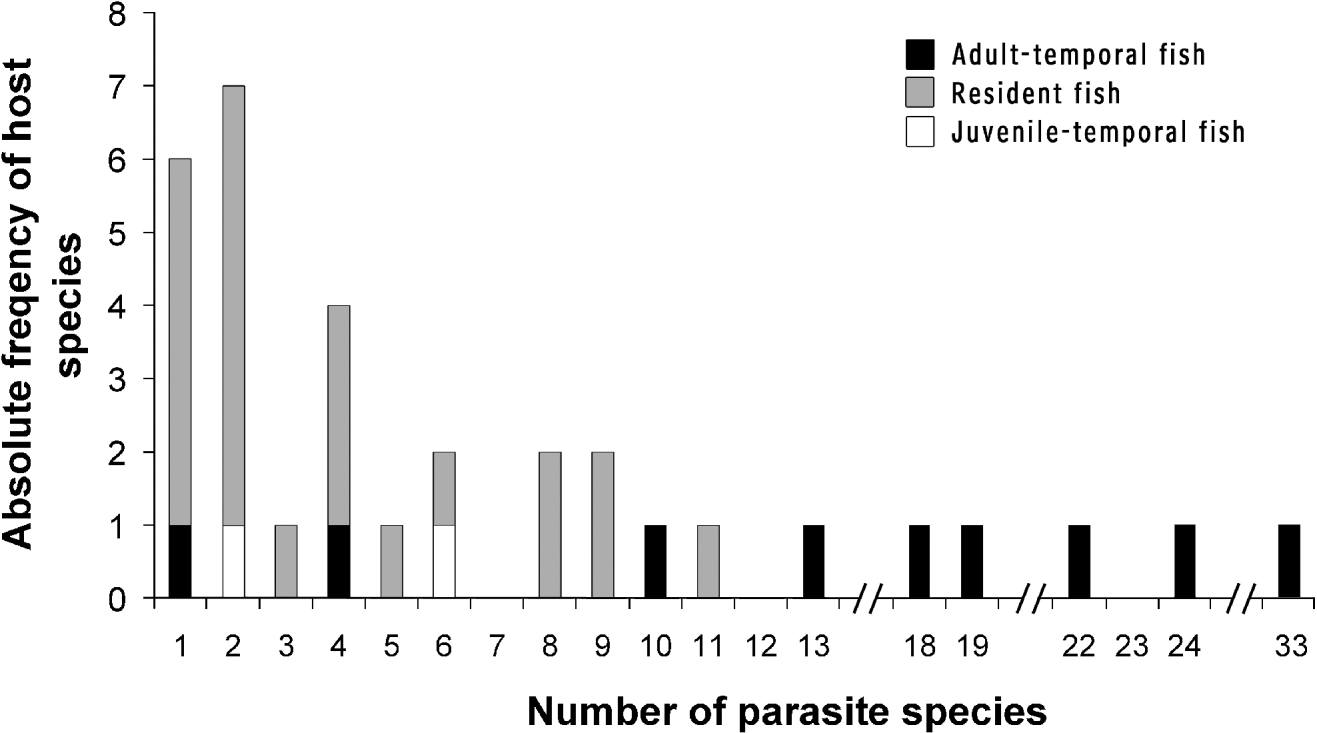
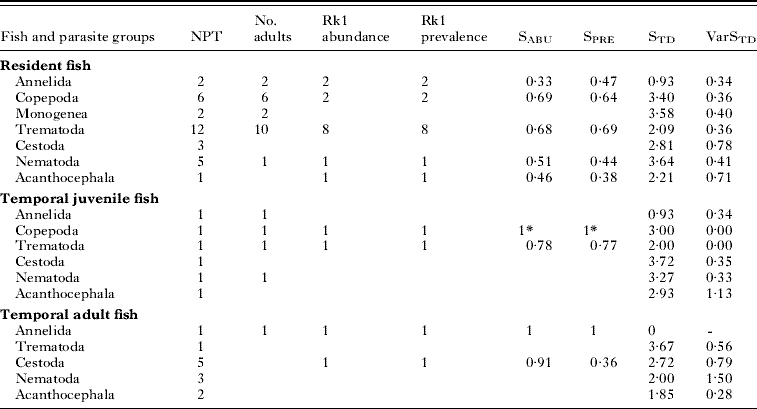
Eight parasite species were identified to the order or family level, such that they were not considered in the study, except for a tetraphyllidean cestode that had a specific morphotype. Six and 7 parasite species were in only 1 and 2 host species, respectively; 7 species from Aphos porosus were in at least 10 other host species (Fig. 3). The highest abundance and prevalence of parasites (as RK1) were found in 18 parasite species (Table 4). Most of them were parasites from resident fish, 1 from juvenile-temporal fish and 2 from adult-temporal fish (Table 4). The indices SAbu and SPre, were then calculated only for the parasites with RK1, because they had a high host specificity for parasites (Table 4). The adult-temporal fish, A. porosus, had 2 parasites, a leech (Annelida) and a tetraphyllidean larval cestode which were highly host specific, whereas other parasites had low host specificity, such as nematodes (SABU=0·49, SPRE=0·33), acanthocephalans (SABU=0·38, SPRE=0·34) and other cestodes (SABU=0·62, SPRE=0·58). Juvenile-temporal fish had few parasite species and only one of them was specific (Table 4). Resident fish had a higher number of host-specific parasites, such as annelids, copepods and trematodes (Table 4).
Number of host species (1–33) with parasite species. Parasites shared between the 3 fish groups are not highlighted.

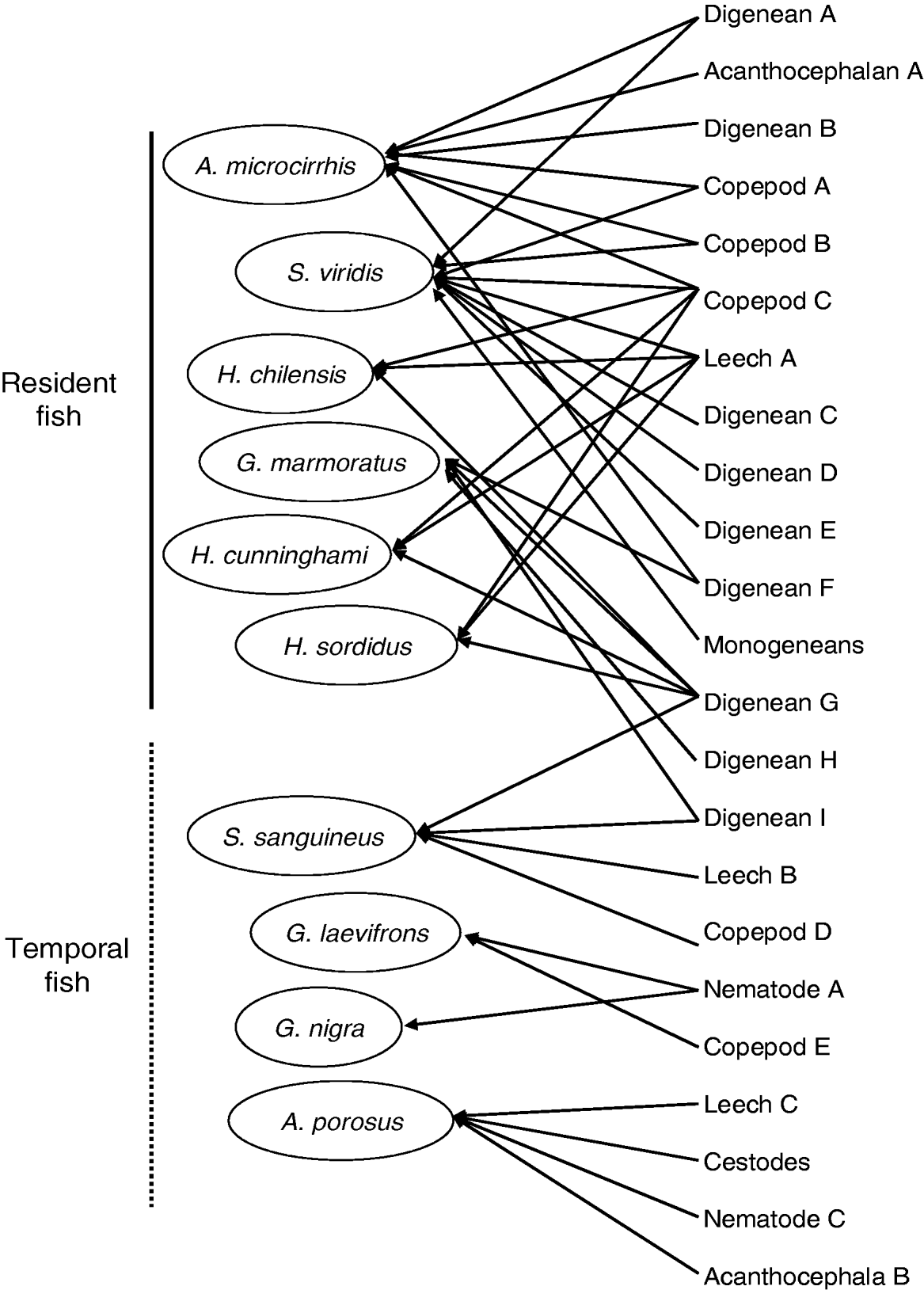
Diagram that represents the most common parasites in resident and temporal fishes from the intertidal zone of central Chile.

Host specificity of parasites of a fish assemblage of central Chile
(NPT: number of parasite species, number of species in adult state. RK1: ranking 1 for abundance and prevalence of parasites. Index based on abundance (SABU) and prevalence (SPRE) of parasites with RK1 only, index based on the host phylogeny, average (STD) and variance (VarSTD).)

* A parasitic copepod was recorded in 2 fish species, but 1 of them had numeric parasitic information.
Regarding host specificity based on host phylogeny, it was found that ~15% of parasite species were highly specific (STD=0), and most of them were trematodes (Table 4). Much of the parasite species were less specific to the hosts (STD>3) and were represented by monogeneans, copepods and cestodes (Table 4). The variance of the host specificity (VarSTD) ranged from 0 for those taxa parasites present in two hosts, irrespective of their phylogenetic distances (mostly copepods), to 1·5 for cestodes. However, when considering the variance of host specificity by taxonomic group, the lowest VarSTD occurred for annelid, copepods and trematodes, and a high VarSTD was obtained for nematodes and acanthocephalans (Table 4).
DISCUSSION
This study has confirmed the predictions that resident fish shared and had more parasite species than temporal fish and also that they have more host specific parasites. Congeneric fish had greater parasitic similarity (Auchenionchus and Helcogrammoides spp.). In fact, the temporal fish (Aphos pororsus, Girella laevifrons, Graus nigra and Sicyases sanguineus) differed greatly in their parasite communities and from those of resident fish.
The parasito-fauna of Aphos porosus, an adult-temporal fish, was different from all other species, because it is from and normally inhabits the benthic environment. It relocates to the intertidal zone in spring for breeding and laying eggs. The parasite species composition of this fish was similar to other benthic fish, whose parasites are mainly characterized by Cestoda (Trypanorhyncha and Pseudophyllidea) and nematodes (Anisakidae) (Cortés and Muñoz, Reference Cortés and Muñoz2008). In addition, A. porosus was also the only temporal fish at the adult stage and with the largest body size. These features are likely to contribute to the high prevalence and abundance of parasites, because, in general, both descriptors increase with large host bodies (Poulin, Reference Poulin1997), as was observed particularly for the fish assemblage examined here.
On the other hand, juvenile-temporal species had less parasite species richness and a smaller parasite abundance than the other two groups. In general, juvenile-temporal fish have low abundance and prevalence of parasites and are also highly variable in their parasite composition, even if the samples were from nearby locations (Muñoz et al. Reference Muñoz, Garcías, Valdebenito and George-Nascimento2001, Reference Muñoz, Valdebenito and George-Nascimento2002). Juvenile-temporal fish have shorter life spans than resident fish, despite the fact that their body sizes can be comparable. The development of the immune system of the fish should be important in relation to the acquisition of parasites, but a sufficient time in contact with parasites is also required to become infected. In addition, juvenile-temporal fish move to another habitat when they develop (usually migrating to the subtidal zone) (Mann, Reference Mann1954; Muñoz and Ojeda, Reference Muñoz and Ojeda1998), and this implies that numerous changes, such as changing interactions with other species and environmental conditions, contribute to their having different parasite communities. For example, temporal fish in the intertidal zone, Bovichthus chilensis, showed a low abundance and prevalence of parasites when juvenile, but had a different parasite richness and composition at the adult stage (Muñoz et al. Reference Muñoz, Valdebenito and George-Nascimento2002).
The fish species assemblage considered in this study showed similarities in diet among some species, but the diet was not related to fish category (as resident or temporal fish) (Muñoz and Ojeda, Reference Muñoz and Ojeda1997, Reference Muñoz and Ojeda1998). In any event, the differences in diets of these fish species were not sufficient to account for all differences in parasite infections. For example, Girella laevifrons and Scartichthys viridis are herbivorous fish (Muñoz and Ojeda, Reference Muñoz and Ojeda1997) and do not share any endo-parasites. However, congeneric species that have similar prey (Muñoz and Ojeda, Reference Muñoz and Ojeda1997) might have similar parasite communities, as was recorded in this study.
Despite the great diversity of species that live in the intertidal rocky shores of central Chile (Lancelotti and Vásquez, Reference Lancelotti and Vásquez2000), fish are the only vertebrates common in this environment. However, this situation can change during high tide when other vertebrates, such as predators from the subtidal zone, enter the intertidal zone (Gil and Schiel, Reference Gil and Schiel2006). Intertidal fish can be definitive hosts for at least 24 parasite species, which were found at the adult stage, from the 40 species found in this study. On the other hand, it is rare that resident fish species have larval parasites. Larval parasites that require birds or mammals as definitive hosts were not found in the fish examined here, such that these organisms are not involved in the life cycles of parasites of intertidal fish. The few larval parasites found involve other fish, condricthyes or teleosts, as definitive hosts. The parasite fauna of A. porosus, which had several larval parasites that mature in mammals, teleosts and condricthyes (Cortés and Muñoz, Reference Cortés and Muñoz2008), demonstrated that this species lives in a different habitat where it is within an intermediate trophic web.
The second prediction from this study was also that resident intertidal fish species were characterized as having more host specific parasites than temporal species. The host specificity of the parasites is likely to be the main factor determining differences of parasite communities among fish species, particularly given that there was no distinct clustering for 10 fish species examined, considering their abundance and prevalence, even though congeneric fish had a high similarity of parasites.
Generally, some host species are suitable for certain parasite species (Valtonen and Julkunen, Reference Valtonen and Julkunen1995). Host species that harbour the greatest abundance and frequency of parasite species can be considered as ‘better hosts’ (Krasnov et al. Reference Krasnov, Shenbrot, Khokhlova and Poulin2004). Indeed, half of all the parasite species found in this study had the highest prevalence and abundance (Rk1) for 18 parasite species, for 70 hosts. Only A. porosus, which harboured larval parasites, had low specificities in comparison to resident intertidal fishes.
With the exception of A. porosus, because it differs greatly from the other fish species in the parasite communities, we found 31 parasite species (3 were shared with A. porosus) from the other fish species of this study. Twenty-two parasite species were adults, and 18 were host specific, based on abundance and prevalence of parasites, and 12 of them were host specific mainly for resident fish. Annelida and Trematoda were host specific, according to abundance, prevalence and host phylogeny. From these results, we would argue that intertidal fish are characterized by a specific parasite fauna and that parasite life cycles may occur in the same environment, i.e. the intertidal rocky zone. Unfortunately, very little is known about the life cycles of parasites in coastal Chile (Muñoz and Olmos, Reference Muñoz and Olmos2008). However, the trophic habits of these fish indicate that they feed on the species of the same environment, such as amphipods, decapods and molluscs (Muñoz and Ojeda, Reference Muñoz and Ojeda1998), which supports the proposal that the cycles of the parasites of intertidal fish occur in the same location. Moreover, subtidal fish, which were very close to the intertidal zone, shared few parasite species (considered through calculations of host specificity indices), which suggests that between these two zones (intertidal and subtidal) there is a natural barrier for hosts and parasites that is probably related to waves and tidal ebbing and surging.
The host specificity of parasites based on host phylogeny (STD) was relatively high for some parasites. Host specificity can be explained through a number of processes, some of them discussed by Poulin (Reference Poulin and Keeney2007b). The co-speciation between host and parasites results in high host specificity (Sasal et al. Reference Sasal, Desdevises and Morand1998), that could have happened in trematodes for intertidal fish that were present in one host or congeneric host species. However, less specific parasites might result from host switching or accidental infections. On the one hand, parasite species (such as copepod and leech species in this study), with a wide host range (of different fish families) and relatively high abundance/prevalence in several hosts, have been involved in adaptation processes in these hosts, which possibly implies host-switching. On the other hand, parasite species with broad host ranges were highly abundant in 1 fish species in our study, but uncommon in others. This finding may indicate that such parasite species were acquired accidentally by some fish. However, an important point is that parasite fecundity and body sizes of few parasite species (Helicometrina nimia and Lecithaster sp.) differed among hosts in the present study. These two variables are important for studying parasite adaptation and also need to be considered when determining host specificity. Thus, the ‘real host specificity’ is usually disguised when ‘accidental hosts’ are taken into account if other biological variables of parasites are not considered. These two aspects may affect the interpretation and understanding of host specificity.
Intertidal fish live in an environment that is open and highly dynamic between the high and low tides (Horn et al. Reference Horn, Martin, Chotkowski, Horn, Martin and Chotkowski1999). Other fish species can be in the intertidal zone at high tide, but only smaller fish can live there for longer periods, particularly during low tide when rock pools are formed. Mobile larval stages of parasitic crustaceans and trematodes have short infective periods (e.g. Lowenberg and Rau, Reference Lowenberg and Rau1994). Thus, those fish species that often inhabit this environment are likely to become parasitized with these species. Consequently, the intertidal zone is a particular ecosystem with its own parasites and transmission paths to some specific hosts. In the present study, few parasites were common between resident and temporal fish species, which resulted in different networks, i.e. “actual association between host and parasite species of a given ecological system” (Poulin, Reference Poulin and Keeney2007). One network represents the intertidal zone and it is composed of resident fish, the other represents another environment (e.g., benthic or subtidal zones) and is composed of temporal fish (Fig. 4). Sicyases sanguineus, sometimes considered as an intertidal fish, has little interaction with parasites commonly found in the permanent intertidal fish; thus, this fish should belong to another system (e.g., subtidal according to Cancino and Castilla (Reference Cancino and Castilla1988)). In contrast, G. marmoratus, considered as a temporal fish (Varas and Ojeda, Reference Varas and Ojeda1990), has more connections with the network formed by resident fish and their parasites.
All the associations among the variables considered in the present study, including host specificity; similarity of parasite communities; and, category of fish species, support the proposal that some parasite and host species are adapted to the intertidal rocky zone. In particular, resident intertidal fish are characterized by having their own unique parasite fauna, indicating that the transmission of these parasites might be restricted to the intertidal zone.
This study was supported by FONDECYT grant no. 11060006 (to G.M.). We thank Dr Robert Poulin for his comments on an earlier draft. We are grateful to two anonymous reviewers and the editor for their valuable comments and corrections.