Introduction
It is known that ω-3 fatty acids have potential in the prevention and treatment of cardiovascular diseases, diabetes, and some types of cancer. The consumption of all meats types are decreasing with the exception of poultry meat, which has increased in consumption by 80% in the last three decades. The best way of increasing long chain ω-3 PUFA consumption would be to increase the long chain ω-3 PUFA content in the edible tissues of poultry aimed for usage in human diets (Grashorn, Reference GRASHORN2013; Stanaćev et al., Reference STANAĆEV, STANAĆEV, PUVAČA, MILIĆ and MILOŠEVIĆ2013).
These findings have stimulated interest in improving the ω-3 fatty acids content of poultry meat (Lopez-Ferrer et al., Reference LOPEZ-FERRER, BAUCELLS, BARROETA and GRASHORN1999). In an attempt to increase ω-3 fatty acid content in poultry tissue, the utilisation of linseed as a feed ingredient is a recent concept in broiler chicken nutrition (Gonzalez-Esquerra and Leeson, Reference GONZALEZ-ESQUERRA and LEESON2001). The concentration of α-linolenic acid (ALA) from linseed grain in the edible tissues of poultry (skin, dark and white meat) is readily increased by increasing the concentration of ALA in the chicken diet (Stanaćev et al., Reference STANAĆEV, STANAĆEV, PUVAČA, MILIĆ and MILOŠEVIĆ2013). The concentration of eicosapentaenoic acid (EPA) in both white and dark meat is also increased when the chicken diet is supplemented with EPA. The introduction of relatively high concentrations of docosahexaenoic acid (DHA) in chicken diets results in an increased concentration of DHA in the tissues (Ajuyah et al., Reference AJUYAH, HARDIN and SIM1993; Ljubojević et al., Reference LJUBOJEVIĆ, ĆIRKOVIĆ, ĐORĐEVIĆ, PUVAČA, TRBOVIĆ, VUKADINOV and PLAVŠA2013; Puvača et al., Reference PUVAČA, LUKAČ, LJUBOJEVIĆ, STANAĆEV, LEVIĆ, BEUKOVIĆ and KOSTADINOVIĆ2014). However, the decreased sensory quality of ω-3 fatty acid enriched poultry meat, caused by the absence of flavour and their reduced lipid stability, has caused some concern. The inclusion of linseed in animal diets, especially for poultry, is very often accompanied with depressed growth when it is used in amounts higher than 5 or 10%. The presence of anti-nutritional factors and the physical structure of the feed material are the main limiting factors (Puvača et al., Reference PUVAČA, STANAĆEV, GLAMOČIĆ, LEVIĆ, STANAĆEV, MILIĆ, VUKELIĆ and LJUBOJEVIĆ2012). Subsequently the application of processes of heat treatment such as extrusion is needed (Ivanov et al., Reference IVANOV, KOKIĆ, BRLEK, ČOLOVIĆ, LEVIĆ and SREDANOVIĆ2012; Puvača and Stanaćev, Reference PUVAČA and STANAĆEV2012).
The goal of regression analysis is to create a mathematical model that can be used to predict the values of a dependent variable based upon the values of an independent variable. In other words, to create a model which will predict the value of Y when X is known. Correlation analysis is often used with regression because it is used to measure the strength of association between the two variables X and Y (Keskin et al., Reference KESKIN, DASKIRAN and KOR2007). Apart from the importance of chicken carcass conformation prediction it is necessary to predict the required level of fatty acids in the chicken diet and the possibility of incorporation of fatty acids in edible tissues (Mendes, Reference MENDES2009).
The aim of this paper was to determine possible solutions for broiler meat enrichment using ω-3 fatty acids from linseed, and to give possible inclusion levels for fatty acids in the diets using regression analyses. In this paper, the potential of linseed as a source of ω-3 fatty acids for fatty acid tissue enrichment, and the specific problems associated with its utilisation in poultry diets is discussed.
Linseed as a source of ω-3 fatty acids
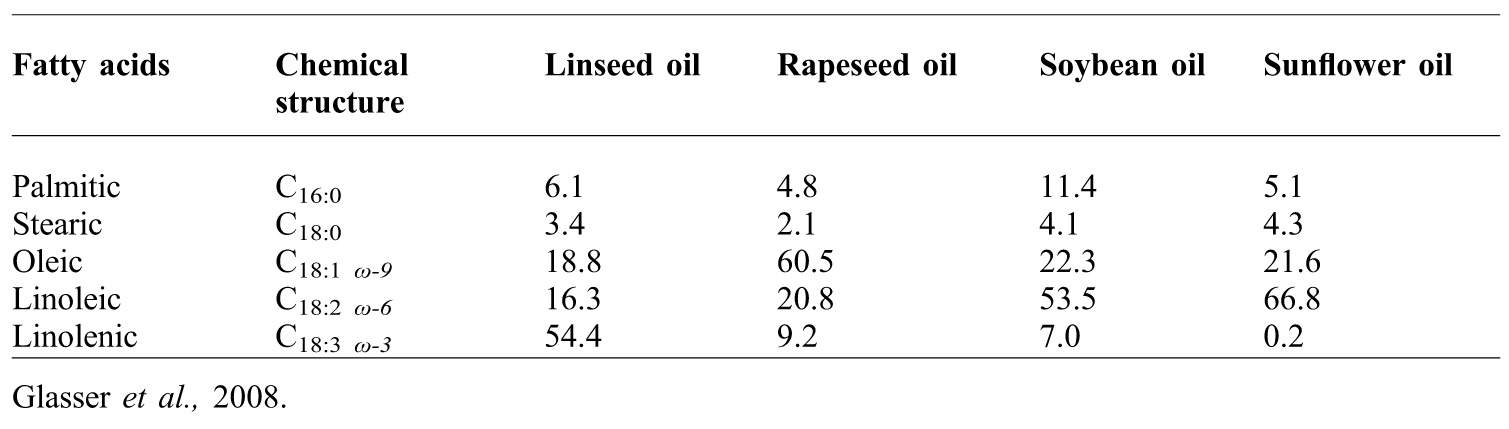
Linseed fatty acids are highly unsaturated. They are rich in linolenic acid (Table 1) which contains three double bonds, with its first double bond three carbons from the terminal end (ω-3) (Glasser et al., Reference GLASSER, FERLAY and CHILLIARD2008). The beneficial effects of consuming ω-3 fatty acids from linseed include reducing heart disease, reducing circulating cholesterol levels and suppressing inflammation in humans.
Alpha linolenic acid is found in seed oils such as linseed and rapeseed which represents the best source of ω-3 fatty acids. Dietary sources of both EPA and DHA are confined almost entirely to poultry products enriched with ω-3 fatty acids from linseed used in their nutrition. Adequate intakes of EPA and DHA may be achieved by consuming two portions of poultry meat each week. Enriching broiler chicken meat is one of the approaches used to incorporate ω-3 PUFA into standard foods in human nutrition.
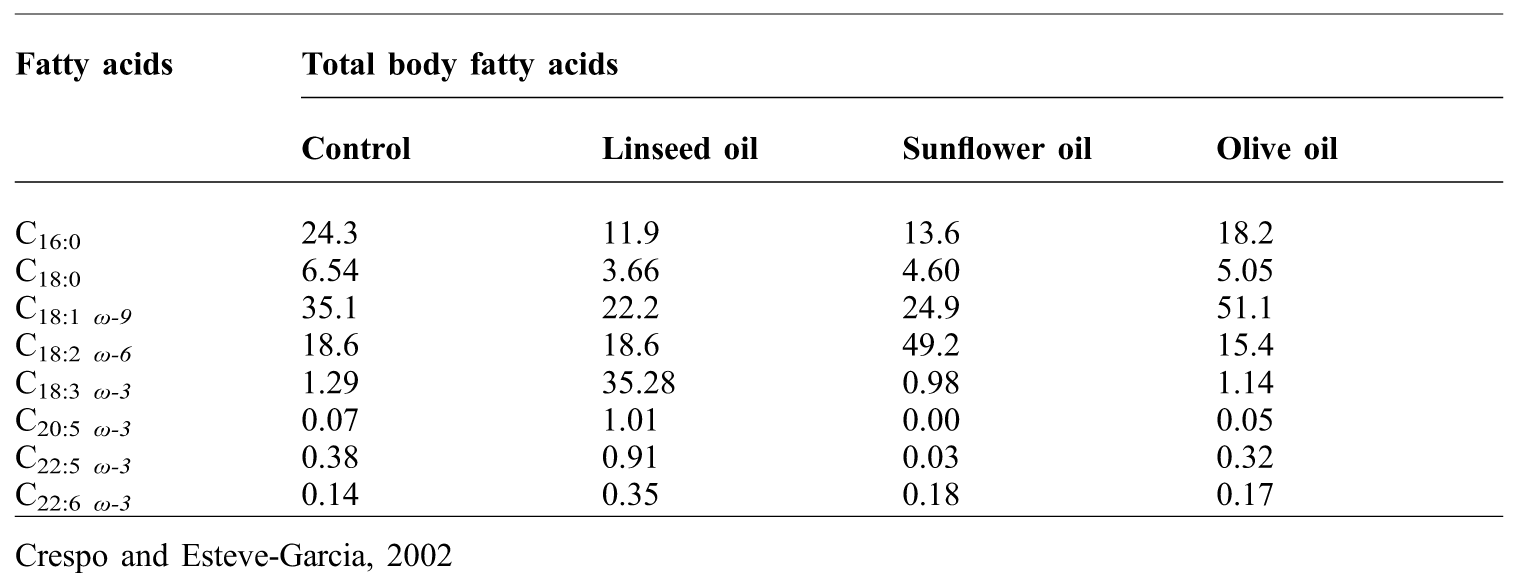
The other is to alter the fatty acid composition of foods that make a significant contribution to fat intake. In European diets, 26% of total fat intake comes from dairy products, and meat and meat products account for 21%. Enrichment of poultry diets with vegetable oils has been shown to have an impact on abdominal fat and the site of fatty acid deposition depending on the SFA, monounsaturated fatty acid (MUFA) and PUFA content of the oil (Crespo and Esteve-Garcia, Reference CRESPO and ESTEVE-GARCIA2002). In previous studies, broiler chickens were fed with basal diets of soybean meal and corn supplemented with olive oil, sunflower oil and linseed oil at 10% inclusion for 20 days before slaughter. As expected the fatty acid profile of the deposited fat in the broiler carcasses reflected the dietary fat source, with olive oil supplementation resulting in the highest proportion of C18:1, sunflower oil supplementation resulting in the highest proportion of linoleic fatty acid, while linseed oil resulted in the highest amount of ω-3 PUFAs and the most favourable ω-6/ω-3 ratio in the carcasses fat (Table 2), which was reported by Crespo and Esteve-Garcia (Reference CRESPO and ESTEVE-GARCIA2002). Diets rich in C18:1 tended to deposit C18:0 in carcass fat other than abdominal, breast or thigh, while the diets rich in PUFA favoured deposition of C18:0 into the abdominal, breast and thigh fat. Overall, there was a reduction in abdominal fat in broilers fed with linseed diets rich in ω-3 PUFA compared to those fed with diets rich in MUFA (Haak et al., Reference HAAK, DESMEET, FREMAUT, VANWALLEGHEM and RAES2008).
Fatty acid composition of selected oils.

Glasser et al., Reference GLASSER, FERLAY and CHILLIARD2008.
Effect of dietary oils on total body fatty acids in broiler chickens (g/100 g fat).
Crespo and Esteve-Garcia, Reference CRESPO and ESTEVE-GARCIA2002
Poultry meat and eggs enriched with ω-3 PUFAs
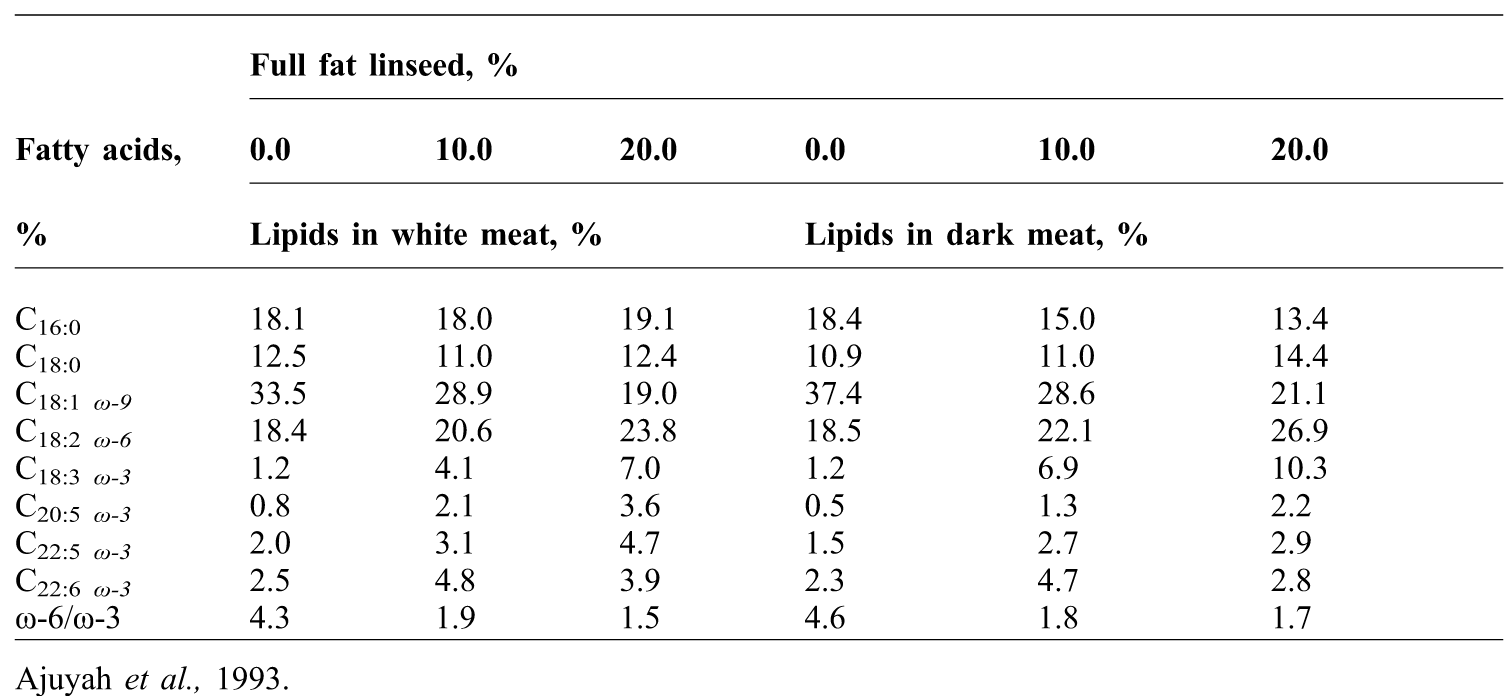
White meat is the most popular poultry meat, but although its lipids are rich in phospholipids, and in EPA and DHA, dark meat provides the richest source of all ω-3 fatty acids because of the higher lipid content of these tissues (Table 3) (Ajuyah et al., Reference AJUYAH, HARDIN and SIM1993).The fatty acid composition of poultry can be relatively easily modified by nutrition. It is possible to increase the proportion of ω-3 PUFA in both eggs and poultry meat (Mourot and Hermier, Reference MOUROT and HERMIER2001).
Much work has been done to enhance the ω-3 PUFA content of poultry meat by nutrition, and can result in nutritionally significant intakes of ω-3 PUFA in humans (Leskanich and Noble, Reference LESKANICH and NOBLE1997). It is relatively easy to measurably increase the ALA content of poultry meat by supplementing the diet with feeds rich in ALA. Such feeds typically include oilseeds such as linseed or rapeseed. As ALA is associated more with TAG rather than the phospholipids, most of the ALA that is found in edible tissues accumulates in the dark meat and skin (Ratnayake et al., Reference RATNAYAKE, ACKMAN and HULAN1998). The response of the ALA content of skinless white meat of broilers to increasing dietary ALA concentration is poor. However, strong relationships have been observed between dietary ALA levels and the ALA content of meat with skin, be it white or dark. The response of the ALA content of skinless dark meat to increasing dietary ALA content was intermediate. This is understandable, as it is the skin and to a lesser extent the dark meat that has the highest lipid content and the greater proportion of TAG in which ALA accumulates (Ratnayake et al., Reference RATNAYAKE, ACKMAN and HULAN1998).
Linseed is a popular choice as a source of ω-3 PUFA for animals but there have been reports that eggs from hens offered linseed have a fishy odour or taste, similar to that found in eggs from hens feed fish oil in the diet. Some researchers have proposed that the fishy odour arises from oxidation of the PUFA (Cherian et al., Reference CHERIAN, WOLFE and SIM1996; Van-Elswyk, Reference VAN-ELSWYK1997) but others suggested that it originates from lipid and non-lipid substances in the feed (Leskanich and Noble, Reference LESKANICH and NOBLE1997). An increase in the content of ω-3 PUFA in the egg may increase its susceptibility to lipid oxidation, although this is not considered to be a problem in shelled eggs (Marshall et al., Reference MARSHALL, SAMS and VAN-ELSWYK1994). In general, taints arising from linseed oil feeding have only been reported when the oil sources were included above certain levels in the diet (e.g. more than 5% linseed) (Surai and Sparks, Reference SURAI and SPARKS2001). Ayerza and Coates (Reference AYERZA and COATES2001) found that combining linseed with chia seed in the hens’ diet, but keeping the linseed content below 5% of the diet, successfully increased yolk ALA without any adverse effect on egg flavour or odour.
Effect of full fat linseed grain on the fatty acid composition of broilers meat.
Ajuyah et al., Reference AJUYAH, HARDIN and SIM1993.
Regression for predicting fatty acids content in chicken abdominal fat
Regression analysis is most often used for prediction. The goal in regression analysis is to create a mathematical model that can be used to predict the values of a dependent variable based upon the values of an independent variable. In other words, to create model which will predict the value of Y when the value of X is known.
Correlation analysis is often used in combination with regression because it is used to measure the strength of association between the two variables X and Y (Keskin et al., Reference KESKIN, DASKIRAN and KOR2007; Vidović, Reference VIDOVIĆ2013). As with all animal species, information on correlations between pre-slaughter and post-slaughter traits is important in poultry breeding. Knowing which pre-slaughter traits affect post-slaughter traits enables breeders to predict what kind of products will be obtained (Mendes, Reference MENDES2009; Vidović et al., Reference VIDOVIĆ, LUKAČ and STUPAR2013). Conformation of various body parts are the major determinants of the overall size and shape of a live chicken or carcass. According to Pinto et al. (Reference PINTO, DACKER, DE MELO, LEDUR and COUTINHO2006), body weight at various ages and carcass characteristics are examples of variables that can indicate the usefulness of the chicken for commercial purposes. Performance testing, which forms the basis for breeding work is difficult to conduct in the case of slaughter parameters. Selection for meat improvement requires reliable and easy to apply methods for estimating the performance and breeding value of poultry species. Body measurements and meatiness traits are intercorrelated (Isiguzar, Reference ISIGUZAR2003). However, the analysis of these traits should address interdependence among the predictors. The problem for analysis of body measurements and carcass weight data is the difficulty in interpreting the influence of the latter and determining the measurements which are most useful for predicting carcass weight (Keskin et al., Reference KESKIN, DASKIRAN and KOR2007). Hence, the use of a multivariate technique called factor analysis, which helps uncover the latent structure of a set of variables. Factor analysis reduces a large number of variables to a smaller number of factors for modelling purposes.
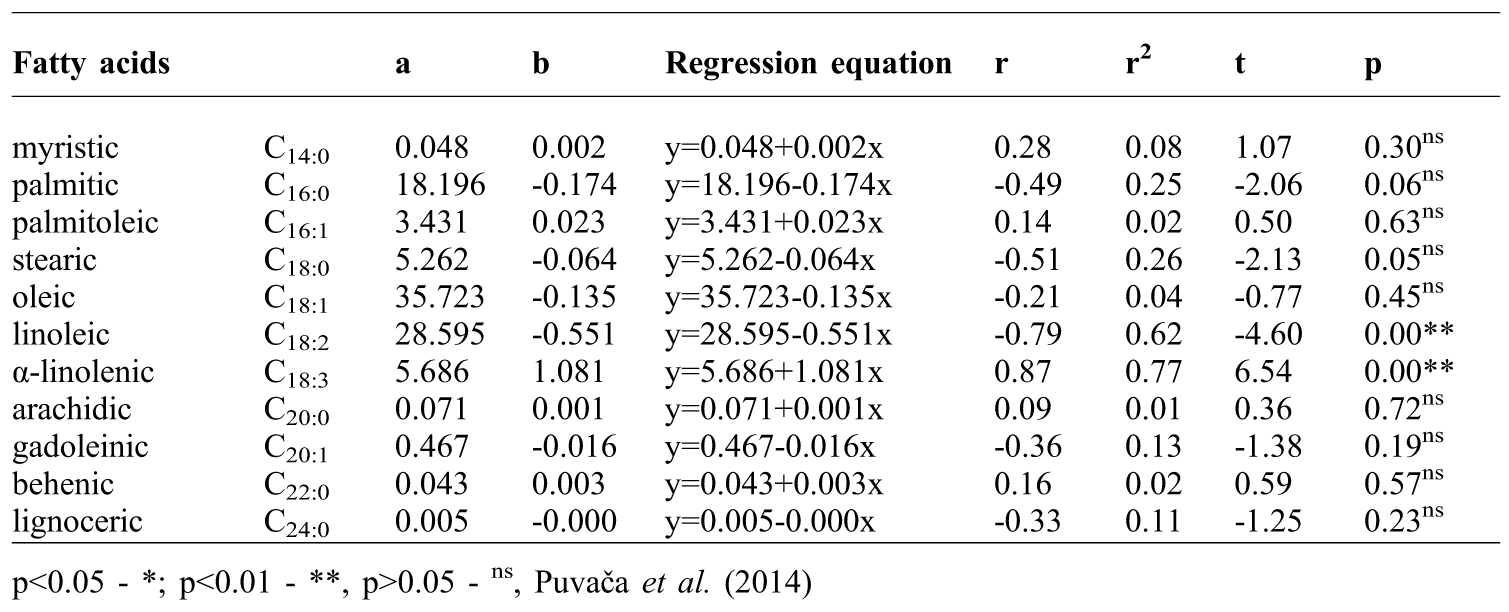
Due to the frequent occurrence of heart and coronary diseases, nutritionist have begun to take into account the intake of foods with balanced ratios of ω6/ω3 PUFAs. Apart from the importance of chicken carcass conformation prediction it is also necessary to predict the required level of fatty acids in the chicken diet and the possibility of the incorporation of fatty acids into edible tissues. Table 4 presents the calculation of linseed oil intake at a concentration of 4% on the possible content of the most important fatty acids in chicken abdominal fat.
Regression and correlation coefficient between added linseed oil and deposited fatty acids in adipose tissue lipids of chickens, %.
p<0.05 - *; p<0.01 - **, p>0.05 - ns, Puvača et al. (Reference PUVAČA, LUKAČ, LJUBOJEVIĆ, STANAĆEV, LEVIĆ, BEUKOVIĆ and KOSTADINOVIĆ2014)
Puvača et al. (Reference PUVAČA, STANAĆEV, STANAĆEV, ĐUKIĆ-STOJČIĆ, MILIĆ and BEUKOVIĆ2013) concluded that using both the regression and Pierson correlation coefficient recorded positive and negative correlations between linseed oil levels in the diet and the deposition of fatty acids in lipids of chicken adipose tissue. Recorded negative values of the regression (b) and correlation (r) coefficients illustrated that the introduction of linseed oil had a highly significant (P<0.01) influence on the reduction of linoleic acid content in chicken adipose tissue (b=-0.551, r=-0.79), while conversely, regression and correlation coefficients show a positive correlation between the level of linseed oil in the diet and the deposition of α-linolenic fatty acids in the tissues which amounted to b=1.081 and r=0.87, respectively (P<0.01).
Conclusions
It appears that by increasing the concentration of ω-3 PUFA in poultry diets there is an increase in the ω-3 PUFA content of poultry meat. Including feeds such as linseed and its oil in the diet increases the ALA, EPA and DHA content of edible tissues. It can be concluded that linseed represents a good source of ω-3 PUFAs for the enrichment of poultry meat and eggs, but further research in the nutrition and meat and egg quality are required. Additionally regression analysis has been shown to be an excellent tool for the prediction of the inclusion and deposition of fatty acids in the diet and edible tissues of chickens, although further research in this field of biometrics is necessary.
Acknowledgments
This paper is part of the projects III 46012 and TR 31033 funded by the Ministry of Science and Technology of the Republic of Serbia.