


Introduction
Non-leading Brazilian higher education institutions (HEIs) face significant challenges adapting to the growing digital landscape, particularly with the rise of distance learning (DL). The substantial increase in DL enrollments in Brazil (474% in the past decade) and the shift in total enrollments from 15% in 2013 to 49% in 2023 underscore this trend (INEP, 2022, 2024). This growth is accompanied by a 12% decrease in the number of professors in the private sector, indicating a shift toward digital learning options (INEP, 2022, 2024). While the financial significance of DL is evident, with the five largest private educational groups generating approximately USD 3.1 billion in annual net revenue in 2023 (Ânima – RI, 2023; Cogna RI, Reference Cogna2023; Cruzeiro do Sul – RI, 2023; Ser Educacional RI, 2023; Yduqs – RI, 2023), the economic difficulties faced by some significant DL providers highlight the challenges and opportunities of this evolving landscape (B3, 2023). The analysis of such information suggests that the digital era presents a considerable challenge and potential opportunities for growth and adaptation for traditional, non-leading Brazilian HEIs, mainly through the strategic adoption of DL.
The need for organizational change in response to digitalization is widely acknowledged, with warnings that failure to adapt could lead to significant negative consequences (BBC, 2015; Omniraza, 2023; WEF, 2020). However, not all change initiatives are successful, and the potential for negative impacts raises concerns about the future of some HEIs in the digital era, especially when considering the misalignment between the offerings of traditional institutions and the evolving demands of stakeholders. A study found that HEIs are challenged to improve their course design (Gupta & Yadav, Reference Gupta and Yadav2023). So, both in-person and remote education institutions face mounting pressure to improve their digital strategies and course design to meet these evolving demands. Even institutions specializing in distance education are not immune to the pressures of an increasingly competitive market, as new entrants, unconstrained by geographical limitations, intensify the rivalry.
To navigate these challenges, organizations increasingly focus on developing dynamic capabilities (DCs) that can enhance efficiency, drive innovation, and improve financial performance (Tian, Lo, & Zhai, Reference Tian, Lo and Zhai2021). Digital alignment, both strategically and operationally, has been shown to foster business model efficiency (Ciacci, Balzano, & Marzi, Reference Ciacci, Balzano and Marzi2024). DCs, part of a broader system encompassing resources and strategy, play a crucial role in determining a firm’s competitive advantage and facilitating innovation (Teece, Reference Teece2018; Zhou, Zhou, Feng, & Jiang, Reference Zhou, Zhou, Feng and Jiang2019). These capabilities can help firms create competitive advantages, and leveraging business information sources can further enhance them (George, Karna, & Sud, Reference George, Karna and Sud2022; Markovich, Raban, & Efrat, Reference Markovich, Raban and Efrat2022). However, a significant gap remains in understanding the obstacles hindering HEIs’ ability to adapt and leverage these capabilities for successful digital transformation.
This study aims to address a critical gap in the existing literature by investigating the barriers to strategic repositioning faced by non-leading Brazilian HEIs in the rapidly evolving digital landscape. While these institutions represent the vast majority of HEIs in Brazil, accounting for 87.7% of the 2,595 institutions, they generally lag behind their leading counterparts in both scientific and financial performance (INEP, 2022). The current situation for these non-leading HEIs is complex: they are confronted with intense competition from established DL providers, yet this evolving landscape may also present opportunities for strategic repositioning. To effectively navigate this complex terrain and capitalize on emerging opportunities, a deeper understanding of several key factors is needed. This includes exploring how to leverage the benefits of DCs when pursuing new opportunities (George et al., Reference George, Karna and Sud2022; Markovich et al., Reference Markovich, Raban and Efrat2022; Teece, Reference Teece2018), how to effectively meet the evolving demands of diverse stakeholders (Muñoz Miguel, Simón de Blas, Anguita Rodríguez, & García Sipols, Reference Muñoz Miguel, Simón de Blas, Anguita Rodríguez and García Sipols2023; Park & Kim, Reference Park and Kim2023; Ratten, Reference Ratten2017), and what obstacles hinder the implementation of necessary changes in content, pedagogical methods (Johnson, Reference Johnson2021; Ratten, Reference Ratten2023a), delivery formats, and assessment strategies (Tiberius, Hoffmeister, & Weyland, Reference Tiberius, Hoffmeister and Weyland2021). Therefore, this study seeks to answer the following research question: How should we use dynamic capabilities to reposition non-leading HEIs in the digital landscape?
By examining the literature and analyzing the experiences of HEIs, this research seeks to provide insights into how institutions can successfully navigate the digital era and ensure their long-term sustainability, providing a framework for overcoming the identified hurdles. The findings revealed barriers that may hinder the use of DCs in repositioning non-leading HEIs: (1) Uncertainty about the future; (2) Lack of strategic tools; (3) Lack of knowledge about costs; (4) Lack of knowledge about ‘how’ to implement changes; and (5) Lack of definition for meeting stakeholders.
The following section presents a literature review of the challenges experienced by top managers at HEIs. This review revealed the problems and trends in the area. The analysis of information extracted from the literature supported the definition of the research method (see specific section). The remaining sections present the study’s findings, discussion, and conclusion.
Literature review
This section begins with a review of DCs, laying the groundwork for a deeper exploration of their role in higher education. The analysis then delves into the complex interplay between institutional adaptation, evolving student needs, market demands, and the changing landscape of educational delivery, highlighting the importance of DCs for navigating this dynamic environment.
Dynamic capabilities
Researchers have operationalized DCs in various ways, leading to different approaches for understanding and measuring these organizational processes. While some studies have focused on broader conceptualizations, examining general features like reconfiguration, learning, and integration, others have adopted a more granular approach, investigating specific DCs such as those related to marketing, management, supply chains, and IT. This diversity in operationalization reflects the complexity of the DCs construct and its multifaceted nature. This evolution is presented below.
The DC offers a framework for understanding strategic change in volatile markets (Teece, Pisano, & Shuen, Reference Teece, Pisano and Shuen1997). It seeks to explain how firms achieve and sustain a competitive advantage by identifying the drivers of long-term success (Wilden, Devinney, & Dowling, Reference Wilden, Devinney and Dowling2016). DCs have been defined both as abilities (Teece et al., Reference Teece, Pisano and Shuen1997) and as processes, best practices, or routines (Eisenhardt & Martin, Reference Eisenhardt and Martin2000). Teece et al. (Reference Teece, Pisano and Shuen1997) initially defined DCs as the firm’s ability to integrate, build, and reconfigure internal and external competences to address rapidly changing environments. Following their work, some authors have considered DCs to be a capability, skill, or capacity (Winter, Reference Winter2003; Zahra, Sapienza, & Davidsson, Reference Zahra, Sapienza and Davidsson2006). Conversely, Eisenhardt & Martin (Reference Eisenhardt and Martin2000) link DCs to the firm’s processes that utilize resources; specifically, the processes to integrate, reconfigure, gain, and release resources to match and even create market change. In this view, DCs are seen as identifiable strategic routines, such as product development and strategic decision-making, through which firms achieve new resource configurations as markets emerge, collide, split, evolve, and disappear (Eisenhardt & Martin, Reference Eisenhardt and Martin2000).
DCs have often been operationalized as a set of distinct activity clusters to explain their workings. Barrales-Molina, Martínez-López, and Gázquez-Abad (Reference Barrales-Molina, Martínez-López and Gázquez-Abad2014) suggest these can be broadly categorized into generally accepted features of DC processes, such as reconfiguration, leveraging, learning, integration, coordination (Eisenhardt & Martin, Reference Eisenhardt and Martin2000; Teece et al., Reference Teece, Pisano and Shuen1997), environmental sensing and opportunity seizing (Teece et al., Reference Teece, Pisano and Shuen1997), and learning processes like experience accumulation, knowledge articulation, and knowledge codification (Zollo & Winter, Reference Zollo and Winter2002). A review of the literature reveals these components as some of the most common conceptualizations of DCs, leading to a quantitative trend of measuring DCs through their underlying processes (Barrales-Molina et al., Reference Barrales-Molina, Martínez-López and Gázquez-Abad2014; Eriksson, Reference Eriksson2014).
Some organizational processes and capabilities have been considered more specific, identifiable DCs, such as dynamic marketing capabilities (Peng & Lin, Reference Peng and Lin2017), dynamic managerial capabilities (Li & Liu, Reference Li and Liu2014), specific supply-chain capabilities (Lee & Rha, Reference Lee and Rha2016), and dynamic IT-enabled capabilities (Drnevich & Kriauciunas, Reference Drnevich and Kriauciunas2011). Eriksson (Reference Eriksson2014) argues that the former approach suggests DCs may be unique and therefore difficult to imitate (Teece et al., Reference Teece, Pisano and Shuen1997), while the latter implies commonalities among organizations, meaning only the resource and capability configurations DCs create can be unique (Eisenhardt & Martin, Reference Eisenhardt and Martin2000).
Some researchers have conducted studies combining universities and DCs. One study found that DCs enable public universities to adapt and thrive in rapidly changing business environments (Heaton, Teece, & Agronin, Reference Heaton, Teece and Agronin2023). Another study indicates that DCs in universities must precede value co-creation capabilities (Beier, Schmidt, & Froehlich, Reference Beier, Schmidt and Froehlich2023). In German higher education, DCs play a key role in advancing the third mission of institutions (Stolze & Sailer, Reference Stolze and Sailer2022).
The dropout issue
In the United Kingdom, some universities began to behave similarly to corporate businesses (Banwait & Hancock, Reference Banwait and Hancock2021). This stance aims to optimize the HEI financial results or mitigate the dropout. Several HEIs face problems related to student dropout (Wardley, Nadeau, & Bélanger, Reference Wardley, Nadeau and Bélanger2024). In Brazil, abandonment occurs in public and private institutions. Official data indicate that this dropout rate is 61% in private higher education and 50% in state higher education (INEP, 2021a, 2021b). In Australian electronic learning (EL), dropout rates may be related to students’ lack of engagement. This lack of engagement can be caused by technological hurdles, administrative negligence, piecemeal professional development initiatives, and policy ambiguities (Parida et al., Reference Parida, Dhakal, Dayaram, Mohammadi, Ayentimi, Amankwaa and D’Cruz2023).
Dropout may also be related to the deliveries of HEIs. These institutions suffer from gig workers’ rejection of traditional content. One study identified that advanced educational credentials are only of limited use to them. To meet their needs, gig workers gain the necessary qualifications, most notably through self-study, learning-by-doing, and trial-and-error processes (Herrmann, Zaal, Chappin, Schemmann, & Lühmann, Reference Herrmann, Zaal, Chappin, Schemmann and Lühmann2023). This misalignment seems a severe problem for HEIs since digital competence is positively associated with students’ professional adaptability (Zhou, Wang, Liu, Yang, & Jin, Reference Zhou, Wang, Liu, Yang and Jin2023). Industry-oriented capstone courses can improve students’ employability, especially general ability, behavior, and attitude (Chang, Shih, & Liao, Reference Chang, Shih and Liao2022). Well-designed courses could mitigate the dropout. However, some barriers make it challenging to adapt higher education curricula to employability, including weak connections between HEIs and workers, curricula with high theoretical content, and little attention to the soft skills used by the job market (Olo, Correia, & Rego, Reference Olo, Correia and Rego2022).
The repositioning alternative
Repositioning an HEI vis-à-vis its competitors can create a new future for the institution. The new position must consider the possible roles that an institution may have. One study classified the HEIs as Leaders and Challengers, Followers and Niches, and Cost Leaders (Kethüda, Reference Kethüda2023). Despite their differences, some institutions may compete for the same students. This competition may also involve other education service providers. In South Korea, the offer of remote courses faces problems related to the great competition between private educational services – for example, massive open online courses (MOOCs) or YouTube (Kang & Park, Reference Kang and Park2022).
In terms of building the thematic differences of an HEI in the digital world, not all HEIs that offer EL need to be seen as competitors. This assumption considers the gains in terms of creativity and complexity that Mexican and Spanish students experienced when participating in a remote program developed by institutions in both countries (Romero-Rodríguez, Ramirez-Montoya, Glasserman-Morales, & Ramos Navas-Parejo, Reference Romero-Rodríguez, Ramirez-Montoya, Glasserman-Morales and Ramos Navas-Parejo2023). To compete with traditional and new educational providers, institution managers should assess MOOC investments (e.g., develop their MOOC infrastructures or participate in existing MOOC platforms) and coordinate and integrate existing resources with developing new intrapreneurial capabilities (Guerrero, Heaton, & Urbano, Reference Guerrero, Heaton and Urbano2021).
Partnerships can reduce costs but also affect HEI’s image. Damage to the institutional image can be a problem since a good institutional image can mitigate problems between HEIs and companies or students (Collins, Şimşek, & Takır, Reference Collins, Şimşek and Takır2022; Manzoor, Ho, & Al Mahmud, Reference Manzoor, Ho and Al Mahmud2021; McNicholas & Marcella, Reference McNicholas and Marcella2022). On the other hand, good partnerships and a good institutional image can attract students from different regions. HEIs could use a good image to attract students. University website has been used to promote corporate image in different countries (Foroudi et al., Reference Foroudi, Nazarian, Ziyadin, Kitchen, Hafeez, Priporas and Pantano2020; Jain, Mogaji, Sharma, & Babbili, Reference Jain, Mogaji, Sharma and Babbili2022). The dissemination of an image needs to consider the demands of stakeholders: high school students, companies, and donors (Story, Reference Story2023). This understanding is essential, as some stakeholders may value an institution presenting ‘useful’ research results (Tucker, Waye, & Freeman, Reference Tucker, Waye and Freeman2019). Success in all these attempts can mitigate the problem of a lack of resources for EL verified in Pakistan (Qazi, Sharif, & Akhlaq, Reference Qazi, Sharif and Akhlaq2024).
The students’ demands
Entrepreneurial universities should consider societal perspectives on learning, education, and teaching about new business practices (Ratten, Reference Ratten2017). Innovative curricula must dialogue with the productive market and use active methodologies that encourage action, regardless of the student’s age. Institutions that do not reinvent themselves in this dialogue with society and the market may distance themselves from their students’ dreams (Fossatti et al., Reference Fossatti, Chiappetta Jabbour, Ratten, Pereira, Borchardt, Milan and Eberle2023). However, students at an institution differ from each other. So, a one-size-fits-all approach may benefit some students and inconvenience others (Salehudin & Alpert, Reference Salehudin and Alpert2022). Computer-supported collaborative learning seems to be a better fit for students who present a higher average age of the group, a higher level of university experience, and a high level of qualification to access the degree required by the university (Muñoz Miguel et al., Reference Muñoz Miguel, Simón de Blas, Anguita Rodríguez and García Sipols2023). The younger the farmers are, the more likely they are to use computer-based technology than older farmers, and the more acres a farmer owns, the more likely they are to use such resources (Ali, Murray, Momin, & Al-Anzi, Reference Ali, Murray, Momin and Al-Anzi2023). Three personality traits affect either perceived learning outcomes or students’ attitudes toward discussing their classmates’ work and being discussed by their peers: ‘proactive emphatic leader’, ‘speculative leader’, and ‘passive follower’ (Fandos-Herrera, Jiménez-Martínez, Orús, Pérez-Rueda, & Pina, Reference Fandos-Herrera, Jiménez-Martínez, Orús, Pérez-Rueda and Pina2023).
Different student profiles present different demands to the HEI. So, institutions should promote and create diverse learning modes that meet the needs of all students (Imran, Fatima, Elbayoumi Salem, & Allil, Reference Imran, Fatima, Elbayoumi Salem and Allil2023). Several studies investigated the students demands. Findings indicate that they demand reasonable educational service cost-effectiveness (Alcaide-Pulido, Gutiérrez-Villar, Carbonero-Ruz, & Alves, Reference Alcaide-Pulido, Gutiérrez-Villar, Carbonero-Ruz and Alves2022; Haverila, Haverila, McLaughlin, & Arora, Reference Haverila, Haverila, McLaughlin and Arora2021), employment opportunities or qualification for the work (Ashiru, Whitfield, & Warwick, Reference Ashiru, Whitfield and Warwick2022; Ishengoma & Vaaland, Reference Ishengoma and Vaaland2016; Sin, Tavares, & Amaral, Reference Sin, Tavares and Amaral2016), quality of education (Park & Kim, Reference Park and Kim2023), competent professors (Burga, Leblanc, & Rezania, Reference Burga, Leblanc and Rezania2017; Hernández-López, García-Almeida, Ballesteros-Rodríguez, & De Saá-Pérez, Reference Hernández-López, García-Almeida, Ballesteros-Rodríguez and De Saá-Pérez2016), and partnerships with companies (Le, Bui, Duong, & Chang, Reference Le, Bui, Duong and Chang2021). These demands may also vary among students of different courses (Nikitina, Licznerska, Ozoliņa-Ozola, & Lapina, Reference Nikitina, Licznerska, Ozoliņa-Ozola and Lapina2023) or among students with differing plans for life, for instance, entrepreneurship (Ibidunni, Mozie, & Ayeni, Reference Ibidunni, Mozie and Ayeni2020; Maheshwari, Reference Maheshwari2021), or employability (Jackson, Riebe, & Macau, Reference Jackson, Riebe and Macau2022; Ng, Chan, Wut, Lo, & Szeto, Reference Ng, Chan, Wut, Lo and Szeto2021). One study also identified a broad range of resources crucial for graduates, encompassing human, social, cultural, identity, and psychosocial dimensions and acquired through formal and informal experiences (Tomlinson, Reference Tomlinson2017).
The companies demands
Misalignments between business demand and HEI delivery can affect the institutional success. These misalignments may be related to location, the size of the employer (Edeigba, Reference Edeigba2022), or the skills provided by a HEI. The skills of a candidate demanded by the companies were classified into three levels: beginner, competent, and specialist (Doherty & Stephens, Reference Doherty and Stephens2021). In Hungary, HRM professionals demand the following competencies: communication, complex problem-solving, and digital skills (Bogdány, Cserháti, & Raffay-Danyi, Reference Bogdány, Cserháti and Raffay-Danyi2023). A survey of 211 Australian employers identified three key graduate profiles – Manager, People Person, and Business Analyst – reflecting current business needs and a balance of cognitive and affective competencies (Jackson & Chapman, Reference Jackson and Chapman2012). Employers seek new professionals with a blend of technical and general skills, hands-on experience, or business and programming knowledge to effectively solve problems within their specific company context (Hollister et al., Reference Hollister, Spears, Mardis, Lee, McClure and Liebman2017; McMurray, Dutton, McQuaid, & Richard, Reference McMurray, Dutton, McQuaid and Richard2016). Misalignments could be reduced if HEIs co-operate with companies to develop materials. In such cooperation, companies may have different roles: visitors, planners, and cooperators (Borglund, Prenkert, Frostenson, Helin, & Du Rietz, Reference Borglund, Prenkert, Frostenson, Helin and Du Rietz2019). However, companies may present different views of an educational entity’s proposal. Some HR professionals seem to value a candidate’s micro-credentials, while other recruiters question their practical transferability (Alasmari, Reference Alasmari2024).
Better alignment between companies and HEIs seems to require changes in contents and methods (Johnson, Reference Johnson2021; Ratten, Reference Ratten2023b), delivery formats, and evaluations (Tiberius et al., Reference Tiberius, Hoffmeister and Weyland2021). The transition to Industry 4.0 also appears to require valuing learning, understanding and leading innovation, experimentation at work, and company connections with education providers (Hearn, Williams, Rodrigues, & Laundon, Reference Hearn, Williams, Rodrigues and Laundon2023). However, the literature does not indicate how to break down the invisible walls that separate HEIs from companies or obtain approval from companies for curriculums (Fossatti et al., Reference Fossatti, Chiappetta Jabbour, Ratten, Pereira, Borchardt, Milan and Eberle2023).
The course redesign
HEI managers are challenged to enhance their course designs (Gupta & Yadav, Reference Gupta and Yadav2023). A good curriculum should allow students to apply their knowledge to real-world contexts (Johnson, Reference Johnson2021), prepare graduates to deal with unexpected scenarios (Ratten & Jones, Reference Ratten and Jones2021), favor the local application of knowledge (Petersen & Kruss, Reference Petersen and Kruss2021), or to improve business skills (Fitriani & Ajayi, Reference Fitriani and Ajayi2022). The development of the requalification courses demands attention to the specific demands of a given activity. For instance, the new knowledge required in the human resources area (van Beurden, Borghouts, van den Groenendaal, & Freese, Reference van Beurden, Borghouts, van den Groenendaal and Freese2024). A better understanding of the formats to meet demands can indicate how to use Education 4.0 in lifelong education for individuals (Mukul & Büyüközkan, Reference Mukul and Büyüközkan2023). This demand has yet to be explored by HEIs, so much so that important international organizations have warned educational institutions about the need to requalify people throughout their professional careers (Commission et al., 2019; UNESCO, 2022).
The digital scenario reveals new demands and opportunities. Performance expectation, satisfaction, social influence, facilitating conditions, and instructor competencies positively influence students’ continued intentions to use mobile learning (Alzaidi & Shehawy, Reference Alzaidi and Shehawy2022). So, students may be interested in virtual exchange to improve their understanding of the complexity of development policy in the real world (Sierra, Yassim, & Suárez-Collado, Reference Sierra, Yassim and Suárez-Collado2022), in online entrepreneurial education to improve their entrepreneurial mindset (Munawar, Yousaf, Ahmed, & Rehman, Reference Munawar, Yousaf, Ahmed and Rehman2023), or in online CV writing courses for LinkedIn (DeArmond, Rau, Buelow-Fischer, Desai, & Miller, Reference DeArmond, Rau, Buelow-Fischer, Desai and Miller2023).
However, the current HEIs offers seem to not meet such demands. A study analyzed the ranking of the best MBAs for entrepreneurship in the 2018 Financial Times. The results revealed a slight focus on the topic ‘entrepreneurship’ in the programs of these courses (Tiberius, Weyland, & Mahto, Reference Tiberius, Weyland and Mahto2023). Another gap appears to be student assessment (Ng, Ching, & Law, Reference Ng, Ching and Law2023). For example: how could we consider advances in artificial intelligence (Ali et al., Reference Ali, Murray, Momin and Al-Anzi2023) and generative AI (Dwivedi et al., Reference Dwivedi, Kshetri, Hughes, Slade, Jeyaraj, Kar and Wright2023; Lim, Gunasekara, Pallant, Pallant, & Pechenkina, Reference Lim, Gunasekara, Pallant, Pallant and Pechenkina2023)? Filling this gap could be based on dispersed assessment. This type of assessment encompasses different credit-generating tasks. These tasks are distributed throughout the teaching period to limit the additional burden on students and markers (Thompson, Yoon, & Booth, Reference Thompson, Yoon and Booth2023). So, the HEI offers also need to consider students’ perceptions of the workload that courses generate. In the Netherlands, students notice an increased workload in online classes (Banihashem, Noroozi, den Brok, Biemans, & Kerman, Reference Banihashem, Noroozi, den Brok, Biemans and Kerman2023).
The digital resources
Digital tools positively influence the learning process in engineering education (Ruiz de la Torre Acha, Rio Belver, Fernandez Aguirrebeña, & Merlo, Reference Ruiz de la Torre Acha, Rio Belver, Fernandez Aguirrebeña and Merlo2024). Therefore, universities must provide teachers with adequate resources (Ng et al., Reference Ng, Ching and Law2023) consider the personal skills necessary to use these resources (Directorate-General for Education, Youth, Sport and Culture (European Commission), 2019). For instance, the online courses must feature discussion forums, monitor student well-being and progress, and provide opportunities for face-to-face interactions (Efthymiou & Zarifis, Reference Efthymiou and Zarifis2021). These requirements demand specific resources and capabilities. Critical resources/capabilities for digital learning include technological tools and collaboration with other universities/companies. However, some resources may be expensive. So, course managers should assess MOOC investments – for example, develop their MOOC infrastructures or buy licenses in existing MOOC platforms (Guerrero et al., Reference Guerrero, Heaton and Urbano2021).
Beyond that, HEI managers must consider that many students attend classes using cell phones (Ironsi & Bensen Bostancı, Reference Ironsi and Bensen Bostancı2023; Sánchez-Rivas, Ramos Núñez, Ramos Navas-Parejo, & De La Cruz-Campos, Reference Sánchez-Rivas, Ramos Núñez, Ramos Navas-Parejo and De La Cruz-Campos2023; Yesildag & Bostan, Reference Yesildag and Bostan2023). Understanding how to satisfy these students can help to reduce the dropout. One study identified that task-technology fit, perceived ease of use, and perceived enjoyment positively affect mobile usage attitudes and intentions to adopt mobile learning in Malaysia and Saudi Arabia (Abdelwahed & Soomro, Reference Abdelwahed and Soomro2023). Due to the high diversity among the countries, some authors argue that future research could focus on analyzing the effects of blended learning in diverse nations and addressing issues such as access to technology and digital literacy (Imran et al., Reference Imran, Fatima, Elbayoumi Salem and Allil2023).
Game is a type of digital tool. Its use improves engagement (Lyons, Fox, & Stephens, Reference Lyons, Fox and Stephens2023; Pitic & Irimiaș, Reference Pitic and Irimiaș2023; Thomas & Baral, Reference Thomas and Baral2023) and facilitates knowledge transfer (Chen, Yen, Zhang, & Liu, Reference Chen, Yen, Zhang and Liu2023). It fosters higher-order learning in the context of entrepreneurial education (Lyons et al., Reference Lyons, Fox and Stephens2023) or the cultural heritage education (Camuñas-García, Cáceres-Reche, & Cambil-Hernández, Reference Camuñas-García, Cáceres-Reche and Cambil-Hernández2023). Games can also improve learning on sustainability in economics, business, and management (Sierra & Rodríguez-Conde, Reference Sierra and Rodríguez-Conde2023). An analysis of the gamified competition showed that four C2C e-commerce competencies are required: e-marketing strategy, live streaming, operational management, and strategic planning (Ho & Chen, Reference Ho and Chen2023). However, we still need to know which requirements allow us to structure the assembly of a game that improves engagement (Schöbel, Janson, & Leimeister, Reference Schöbel, Janson and Leimeister2023).
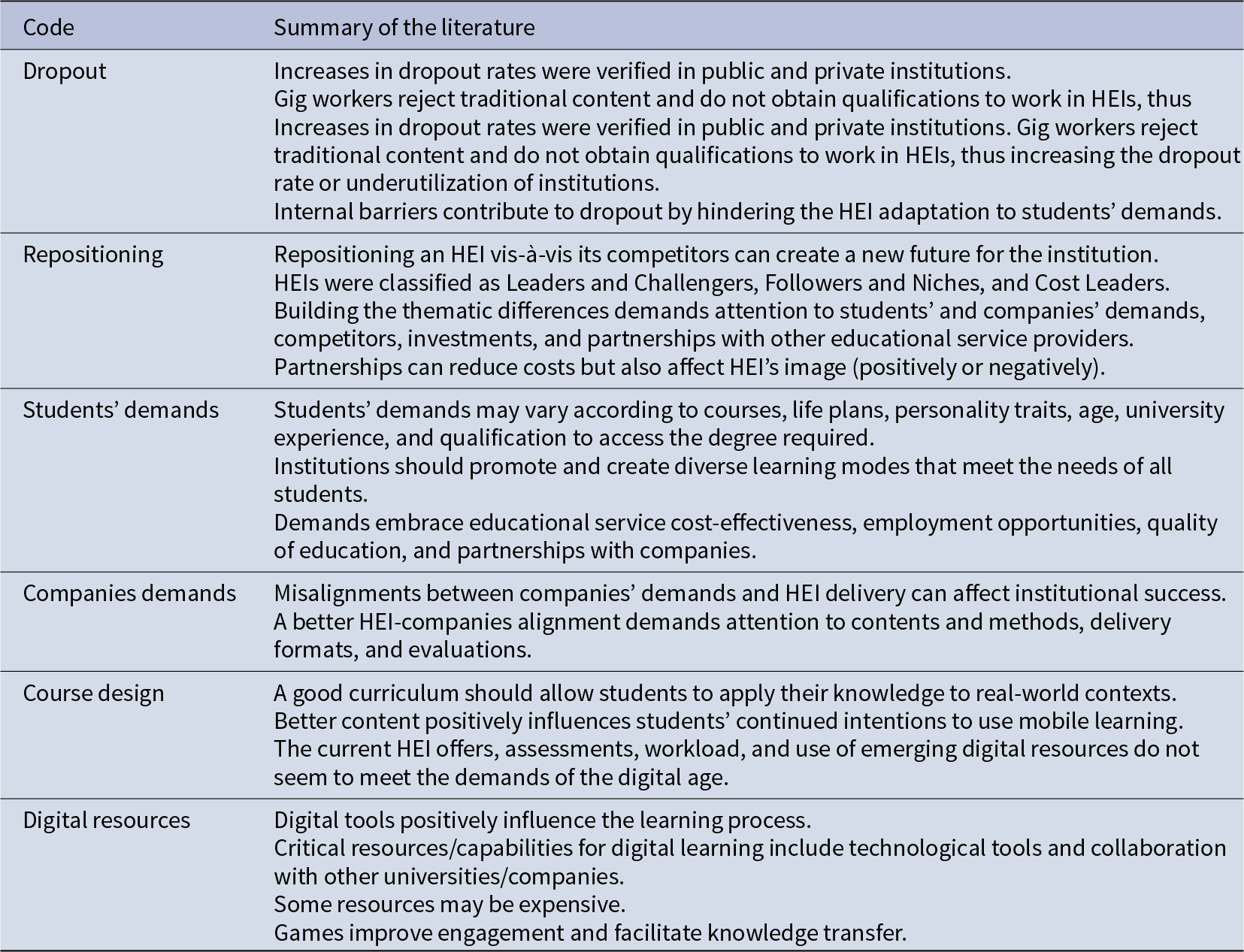
Table 1 summarizes the elements that may concern HEI managers.
What may concern HEI managers in the digital age?
Method
Research design
This study follows an interpretative and exploratory approach. The interpretive approach allows researchers to understand complex phenomena involving humans in rapidly changing environments (Creswell & Poth, Reference Creswell and Poth2016; Yin, Reference Yin2009). The changes promoted by digital resources in the education scenario constitute an example of rapid changes. Exploratory research allows researchers to understand complex phenomena that cannot be understood through quantitative methods (Malhotra, Reference Malhotra, Grover and Vriens2006). It is about understanding something to enable future quantitative investigations. Therefore, this study employs a qualitative research design with a case study approach. This design allows for an in-depth investigation of a program, event, activity, process, and individual (Creswell & Creswell, Reference Creswell and Creswell2017). Qualitative research also enables researchers to obtain detailed descriptions and insights into the challenges experienced by managers (Goodman, Reference Dent Goodman2011).
Data collection
Data were collected in a non-probabilistic and purposeful sample (based on predetermined criteria). The Brazilian scenario was selected due to the rapid growth of EL in the country (ABED, 2023; INEP, 2022). The option for HEIs aimed to investigate a group of institutions usually under-researched (despite the vast number of HEIs with such a profile worldwide). To select the HEIs, we initially excluded from the study the 10 best-performing universities in the Times Higher Education rankings (THE Ranking, 2022). The study chose not to include the 10 most sought-after HEIs in the country, 9 of which are public and 1 private. This decision was made because these institutions attract a large number of students due to factors such as their recognized quality of education, high investment of public resources, and prominence in the international scientific scene. This reality differs from that faced by most Brazilian institutions, especially those of intermediate size, which require greater attention and require more urgent analysis. Among the remaining institutions, we invited 20 HEIs (from the eleventh to the thirtieth positions on the Times Higher Education ranking). Six institutions agreed to participate in the study (three public and three private). Public and private HEIs were investigated to increase the information gathered and allow future compassions between findings on each group of institutions. The analysis of the profile of the selected HEIs revealed diversity in size, geographic location, teaching areas, and administrative organization, contributing to the richness and representativeness of the information sources investigated.
The study sought to understand the perspective of top managers on the challenges and opportunities of the digital age. The selection of these leaders, privileged by their strategic position in leading the digital transformation process, was based on the nature of the research question (Yin, Reference Yin2009) and the need to deepen the analysis of their institutions’ past, present, and future. Aiming to identify the factors that impact strategic decisions in this context, we investigated their knowledge, doubts, and constraints. The scarcity of research on the topic justified the choice of in-depth semi-structured interviews as the primary data collection instrument. To ensure the participation of managers, we used different interview formats, such as face-to-face, by telephone connection, and meeting applications (Google Meet, Microsoft Teams). This approach made it possible to collect valuable opinions and insights on digital transformation in Brazilian higher education.
The flexible structure of the semi-structured in-depth interviews allowed interviewees to feel at ease. This feeling contributed to these interviewees convincingly providing relevant information (Ritchie & O’Connor, Reference Ritchie, Spencer, O’Connor, Ritchie and Lewis2003). The socially constructed nature of the qualitative interview (Kvale, Reference Kvale1994) also allowed the development of social ties between the research team and the interviewees, facilitating the deepening of questions. The interaction between interviewees and interviewers can also be attributed to the interviewees’ familiarity with the topic. A copy of the literature review was sent 5 days before the interview to familiarize the interviewees with the study. Participants were also informed about the nature and purpose of the study. This information improved the interviewees’ understanding of the study.
The interviews were conducted between May and December 2023 and lasted between 70 and 120 min. At the interviewees’ request, none of the interviews were recorded. During the interviews, the researchers wrote down keywords and recorded notes (Yin, Reference Yin2009). To protect the privacy of informants, we use a code to identify them. Initially, the interviewees were asked generic questions about dropout, institutional repositioning, demands (of students and companies), course redesign, and digital resources. During the conversations, the interviewees were asked about the problems and solutions related to the EL expansion in educational scenarios. Once compiled, the interview results were sent to the informants (for analysis and to reduce interview bias). The managers requested minor changes to the findings, which were implemented by the researchers in the final document.
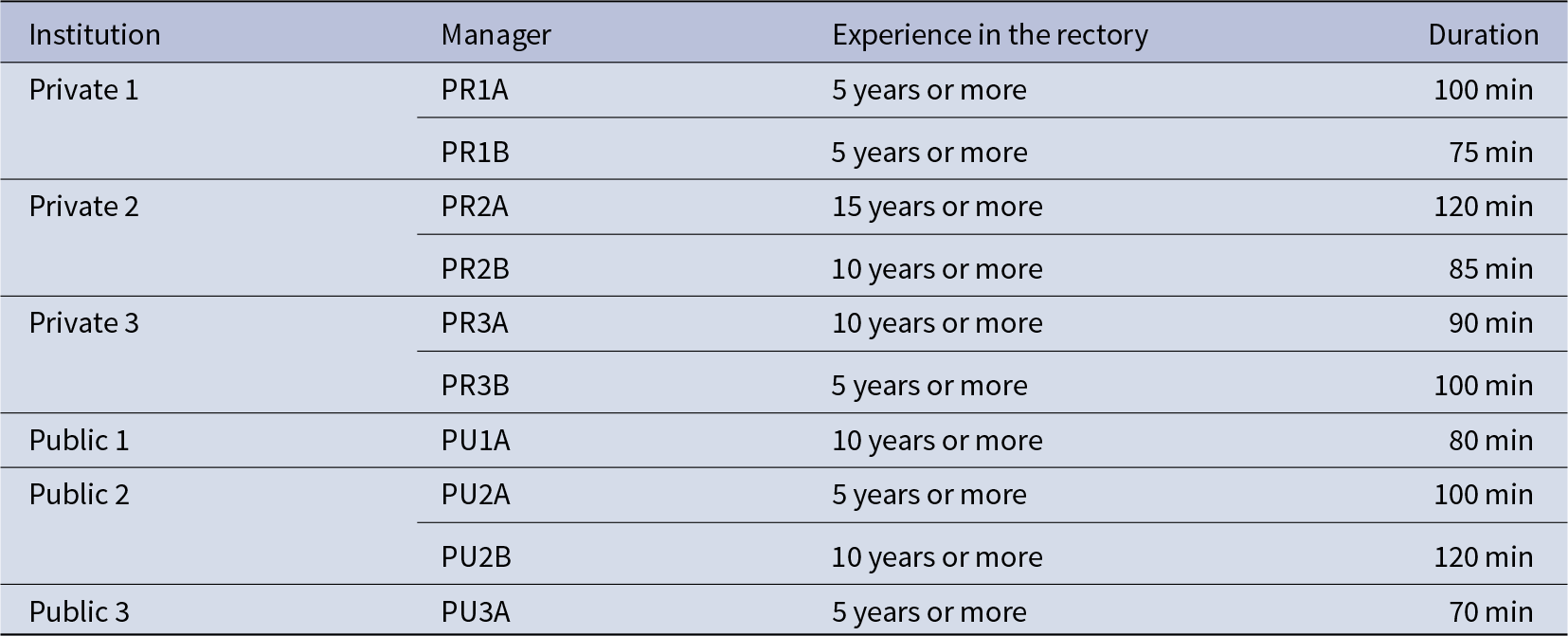
Table 2 presents the institution’s and managers’ profiles and interview details. Two managers were interviewed in four of the six institutions investigated, while only one manager was interviewed in the other two HEIs. In the second group of institutions, the HEI top manager defined the managers to be interviewed at each institution. Information that could facilitate their identification was removed from the final manuscript at the interviewees’ request.
Institutions and managers’ profiles and interviews details
Data analysis
This research uses a descriptive and exploratory nature as its analysis technique. The analysis and interpretation of the information collected adopted an inductive strategy. This approach constitutes a systematic method for revealing new concepts, identifying the concepts in the first data series, classifying them into themes in the second, and determining the aggregated dimensions in the third (Gioia, Corley, & Hamilton, Reference Gioia, Corley and Hamilton2013). Such an approach improves the rigor of analyzing the qualitative information collected (Rashid & Ratten, Reference Rashid and Ratten2020). The application of the process began with defining keywords extracted from the information collected. Secondly, theoretical concepts were represented, which led to aggregated codes. Repetitions of these analyses allowed the refinement of data analysis. The finding that new codes were no longer being revealed indicated the saturation of these data and determined the end of the analysis process.
Findings
The analysis of senior management perspectives revealed a complex set of challenges hindering HEIs’ ability to adapt to the digital era. These challenges fall into three main categories: course delivery, student engagement, and resource allocation. This section delves into each of these areas, highlighting the key concerns expressed by HEI leaders.
Course delivery
Future of HEIs
Managers attribute the growth of EL to the lower total cost incurred by the students (course, travel, food, etc.) and to the time spent going to an institution. Managers of public and private institutions declare a personal preference for face-to-face teaching. For these executives, the future requires attention to experience and coexistence. However, these managers also recognize that EL appears to be a path of no return. Institutional repositioning could guarantee a new future for HEIs. Such change seems mandatory since the traditional competitive advantage of geographic distance cannot guarantee a promising future for the institutions. As determined, this repositioning must consider the strengths and weaknesses of all HEIs worldwide (since these institutions can reach local students remotely). The managers also want to know: How can the strengths and weaknesses of HEIs be evaluated in the digital era? Some comments are reproduced below.
We are a private university that only offers in-person courses. To attend classes, a student who lives 30 kilometers away from the institution can spend the equivalent of the monthly tuition for a distance learning course on travel and food. On top of this amount, the student still has to pay the monthly tuition for the in-person course. (PR2A)
If your family didn’t have a lot of money, would you attend a public higher education institution whose total cost is higher than that of distance learning? (PU2B)
Coopetition
According to the interviewed managers, not all HEIs that offer EL need to be seen as competitors. This assumption considers the gains that Mexican and Spanish students experienced when participating in a remote program developed by institutions from both countries (Romero-Rodríguez et al., Reference Romero-Rodríguez, Ramirez-Montoya, Glasserman-Morales and Ramos Navas-Parejo2023). However, this is a single sample of cooperation. Participants were then asked about a possible cost-benefit in cooperation among HEIs. Answers revealed that these associations could improve EL and reduce costs incurred in acquiring solutions or developing materials or programs. It was also found that the association between institutions can be an exciting option for HEIs with less financial power. However, interviewees understand that the coopetition (cooperation + competition) resulting from this association may not work between institutions that compete for the same digital market. This possibility is more worrying when considering EL has no geographic limits. Conversations about this problem indicated that board members would like to know when coopetition is viable or how this partnership could be made possible.
Partnerships with other HEIs can reduce our costs in developing new materials. (PR1A)
We must know how sharing digital materials can impact an institution’s competitive advantage. (PR3A)
Students engagement
Dropout
Board members highlighted the lack of information about how HEIs have successfully addressed the school dropout problem. As not all HEIs are equal, these future studies need to cover HEIs classified as Leaders and Challengers, Followers and Niches, and Cost Leaders (Kethüda, Reference Kethüda2023). The existence of a list of good practices could guide decision-making. The EL demands self-discipline from students (a discipline that not all students have). The managers interviewed would like to understand better why students have not finished their remote courses before developing actions to meet the new demands.
We will never have good remote teaching without understanding why students drop out. (PR1A)
Gig workers
HEI managers highlighted that this group of workers appears to be expanding. Meeting the needs of gig workers could reduce dropouts and even attract new students to HEIs. When asked why HEIs still do not meet these demands, managers revealed some issues that prevent the definition of the most appropriate actions. For example: Considering how gig workers are currently training, should an HEI invest in developing courses for these workers?
We have doubts as to whether HEIs should explore courses for Gig Workers. (PU2A)
We could have a better future by meeting the demands of Gig Workers. (PR3A)
Companies
The managers interviewed understand that not all knowledge required by the market needs to be prioritized by HEIs in the digital scenario. Due to the global competition provided by digitization, HEIs could provide knowledge that serves the interests of some organizations. In their opinion, other knowledge can be provided by other HEIs. Success in selecting the knowledge to be provided can reveal a new future for HEIs: being excellent globally or in the country at something, but not everything! Further conversations about institutional positioning revealed two questions: How can HEIs be (re)positioned in the digital era?
In the digital world, should our institution be very good at everything or excellent in some areas? (P3B)
How can we position our institution in the global and digital scenario? (PR1A)
Resource allocation
Costs
Updating digital resources without increasing costs significantly is challenging. The interviewed managers do not know if the massive use of EL reduces costs or if its payback can occur quickly. Beyond that, investment errors can consume financial resources in solutions that will not meet students’ expectations or serve as a competitive advantage against competitors. To avoid such problems, interviewees would like to understand better how to structure a cost-effective EL-based course that allows an HEI to face the competition of different sizes and images in the market (including new entrants and more significant or renowned institutions). Another factor that must be considered is the number of students needed to cover the costs incurred. In paid HEI that serve students with low purchasing power, offering nonexpensive courses to many students is essential (to meet the institution’s financial targets).
Errors in decisions related to distance learning can cause severe financial issues! (PU1A)
We don’t know how to structure a distance learning course that is financially viable. (PR1B)
Investments
Searching for more significant cost reductions may lead to a HEI to contract ready-made materials. The interviewees declared they would like to know the problems and benefits verified in institutions that have acquired ready materials. They also suggested possible pros and contras related to such an option. On the one hand, the digital materials purchased may have higher quality than those developed by a single teacher. On the other hand, these materials may not suit local demands. The managers also fear a commoditization and homogenization of HEIs (due to the use of similar materials by many institutions). As ascertained, it is a difficult choice: incurring costs with developing your materials or using market materials to reduce costs.
Is it worth buying ready-made materials for distance learning? (PR2A)
How can students evaluate an institution’s course that uses the same digital materials as another institution? (PU3A)
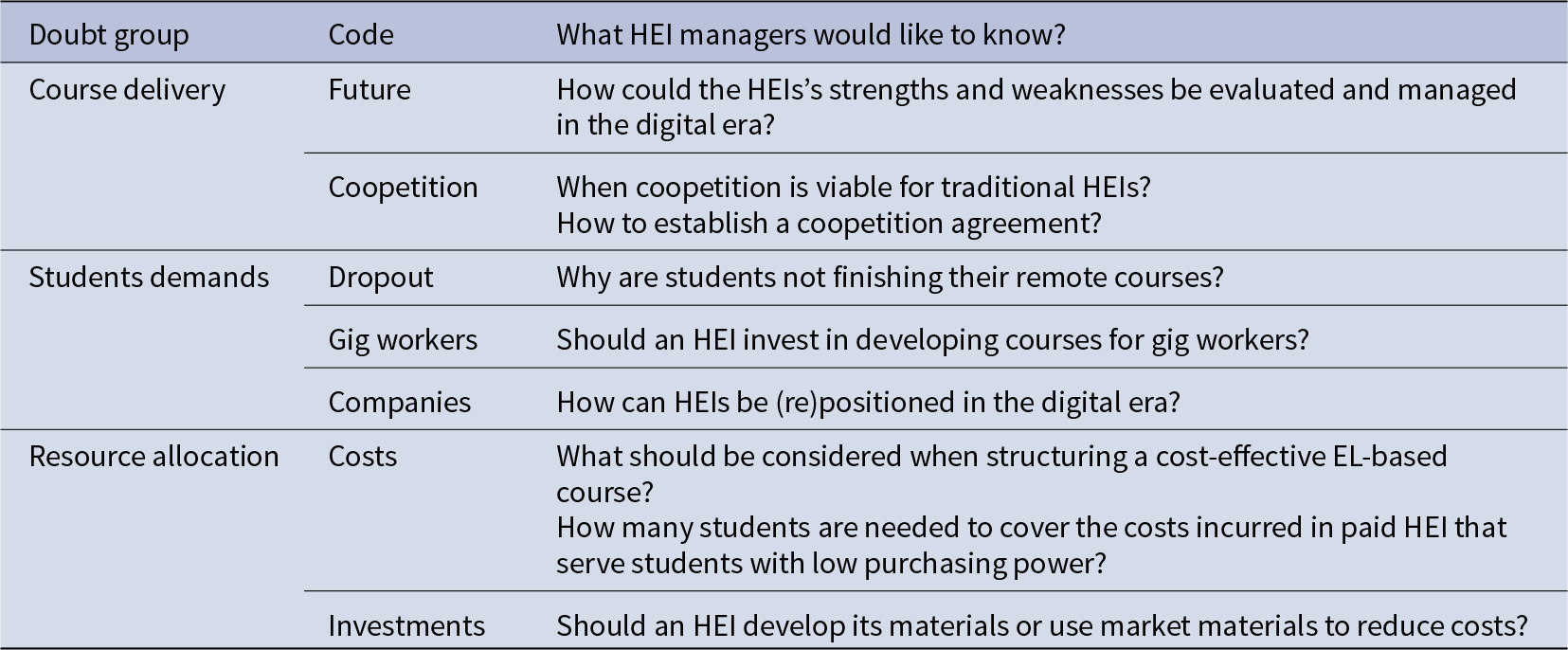
Table 3 summarizes the doubts indicated by the top managers.
Doubts that HEI managers expect research managers to answer
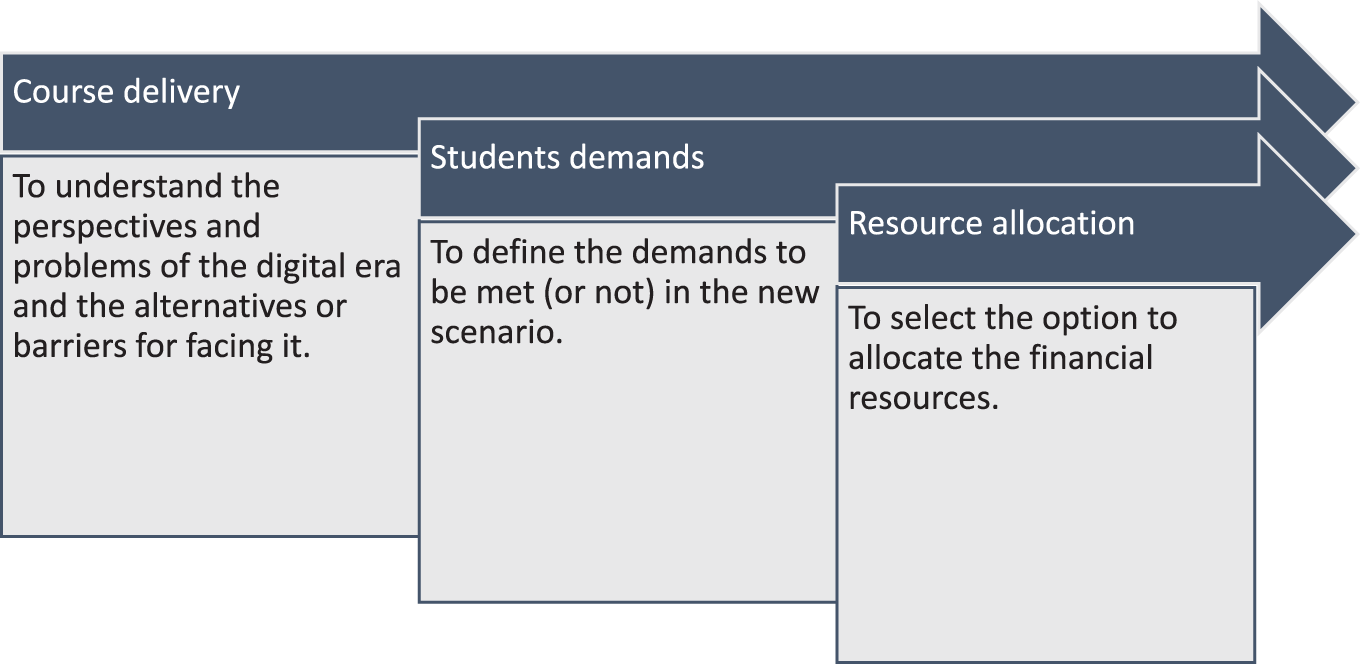
Discussion of the findings with the interviewees revealed a sequence of steps to be considered when promoting changes in HEIs. This sequence is presented in Figure 1.
Steps to be considered when promoting changes in HEIs.
Discussion
This study provides an understanding of the multifaceted challenges that negatively affect HEIs’ ability to adapt to the digital era through DCs. By examining these challenges through the lens of previous studies, this research offers insights into the knowledge gaps that can drive successful digital transformation in higher education.
Findings highlight the importance of a methodology to assess HEIs’ strengths and weaknesses in the digital landscape and to guide their strategic decisions. Such a methodology could reduce the impact of managers’ uncertainty about HEIs’ future in the digital scenario, allowing them to fully leverage the benefits of DCs, such as exploring new opportunities (George et al., Reference George, Karna and Sud2022; Teece, Reference Teece2018; Zhou et al., Reference Zhou, Zhou, Feng and Jiang2019), maintaining competitiveness, and improving financial performance (Tian et al., Reference Tian, Lo and Zhai2021).
Uncertainty about the costs and implications of digitalization in the HEIs business is another factor that impedes investment in the transition to digital education. This study reveals that this uncertainty directly affects investments in technologies such as digital games, limiting the exploitation of their benefits, such as increased student engagement (Lyons et al., Reference Lyons, Fox and Stephens2023; Pitic & Irimiaș, Reference Pitic and Irimiaș2023; Thomas & Baral, Reference Thomas and Baral2023) and improved educational service quality (Chen et al., Reference Chen, Yen, Zhang and Liu2023; Lyons et al., Reference Lyons, Fox and Stephens2023; Sierra & Rodríguez-Conde, Reference Sierra and Rodríguez-Conde2023).
This study also revealed uncertainties about ‘how’ to meet stakeholder demands. The literature presents the student’s needs in terms of teaching and market relations (e.g., Muñoz Miguel et al., Reference Muñoz Miguel, Simón de Blas, Anguita Rodríguez and García Sipols2023; Park & Kim, Reference Park and Kim2023; Ratten, Reference Ratten2017) and other demands (e.g., Ashiru et al., Reference Ashiru, Whitfield and Warwick2022; Jackson et al., Reference Jackson, Riebe and Macau2022; Ng et al., Reference Ng, Chan, Wut, Lo and Szeto2021). Regarding companies, there are studies on their evaluations of the quality of service provided by HEIs (Bogdány et al., Reference Bogdány, Cserháti and Raffay-Danyi2023; Doherty & Stephens, Reference Doherty and Stephens2021; Hollister et al., Reference Hollister, Spears, Mardis, Lee, McClure and Liebman2017). Although there is a good understanding of ‘what’ needs to be done to meet these demands, the question remains about ‘how’ to do it. This study highlights this gap, which prevents implementing changes in content, methods (Johnson, Reference Johnson2021; Ratten, Reference Ratten2023b), delivery formats, and assessments (Tiberius et al., Reference Tiberius, Hoffmeister and Weyland2021).
This study also indicates that the repositioning of HEIs through DCs seems to be hampered by doubts about the convenience of meeting the demands of students, ‘gig workers’, or companies. The combination of these doubts seems to impede better decision-making by institutions senior management, preventing HEIs from improving their relationships with companies (Collins et al., Reference Collins, Şimşek and Takır2022; Manzoor et al., Reference Manzoor, Ho and Al Mahmud2021; McNicholas & Marcella, Reference McNicholas and Marcella2022) or fully meeting the demands of stakeholders: students, companies, and donors (Story, Reference Story2023).
Conclusion
Contributions
This study deepens our understanding of the challenges that prevent HEIs from using DCs to reposition themselves in the digital market. The main barriers identified are:
1. Uncertainty about the future: The lack of clarity about the future of HEIs in the digital scenario generates hesitation in decision-making through DCs.
2. Lack of strategic tools: The absence of methodologies to assess strengths and weaknesses and guide strategic decisions makes it difficult to take advantage of DCs’ potential to innovate, compete, and achieve excellence.
3. Lack of knowledge about costs: Uncertainty about the impact on costs that digitalization can generate inhibits investments in technologies such as digital games, limiting the exploitation of benefits such as increased student engagement and improved teaching quality.
4. Lack of knowledge about ‘how’ to implement changes: Although the literature guides the needs of students and companies, there is still a gap in ‘how’ to develop concrete actions that impact content, methods, and delivery formats.
5. Lack of definition about meeting stakeholders: The hesitation in defining strategies to meet the needs of students and companies compromises decision-making, relationships with companies, and the ability to meet stakeholders.
Overcoming these barriers is crucial for HEIs to effectively implement DCs, transforming the challenges of the digital age into opportunities for growth, innovation, and relevance in the educational market. Thus, the main contributions of this study are:
• Identification of barriers: It mapped the main challenges that impede the strategic use of DCs.
• Proposition of knowledge gaps: It highlighted the need to develop tools and knowledge to guide decision-making and the implementation of changes.
• Indication of practical implications: It provides insights for HEIs to overcome barriers and use DCs to reposition themselves in the digital market.
This study contributes to advancing the debate on digital transformation in higher education by addressing the main barriers and knowledge gaps. It supports HEIs in becoming more agile, innovative, and competitive in the digital age.
Limitations
Although this study deepens our understanding of the challenges that prevent HEIs from using DCs to reposition themselves in the digital market, it presents some limitations that should be considered in future research.
• Qualitative approach: Although the research is rich in details and nuances, its qualitative nature may limit generalization. Future quantitative studies can complement the analysis and expand the sample to different contexts and realities.
• Focus on senior management of HEIs: The research focused on the perspective of key managers, failing to explore the views of other stakeholders such as professors, students, and companies. Future studies can broaden the scope of the investigation, including different actors and their perceptions of DCs and digital transformation.
• Specific context: The study was based on a particular context, which may limit the generalization of the results to other realities. Future research can explore the influence of factors such as the size of the HEI, the geographic location, and the management model on the use of DCs.
• Lack of analytical tools: The research identified the need for tools to assess strengths and weaknesses and guide strategic decisions but did not develop them. Future studies can focus on creating and validating such tools, helping HEIs to implement DCs.
Future studies
The analysis of these limitations indicates the need for future studies with the aim of:
• Developing quantitative studies: Investigating the relationship between DCs and HEI performance using statistical models and comparative analyses.
• Broadening the research perspective: Including other stakeholders, such as professors, students, and companies, to understand their perceptions about DCs and digital transformation.
• Analyzing different contexts: Exploring how contextual factors, such as HEI size, geographic location, and management model, influence the use of DCs.
• Creating and validating analytical tools: Developing tools to assess strengths and weaknesses, guide strategic decisions, and measure the impact of DCs on HEI performance.
• Investigate the role of leadership: Analyze how leadership in HEIs influences the implementation of DCs and digital transformation.
• Explore coopetition strategies: Investigate models of coopetition between HEIs for developing digital courses and programs.
• Analyze the impact of the student experience: Evaluate how DCs can personalize learning, increase engagement, and improve the student experience.
By addressing these suggestions, future research can deepen the understanding of the role of DCs in the digital transformation of HEIs, helping them to overcome the challenges and seize the opportunities of the digital era.



