




No CrossRef data available.
The contribution of peers to monthly variation in adolescent depressed mood: A short-term longitudinal study with time-varying predictors
Published online by Cambridge University Press: 10 February 2006
Abstract
This study examined peer predictors of variation and growth in depressed mood among high-risk adolescents, using child and parent reports of monthly symptoms. One hundred seventy-six parents and their 10- to 14-year-old children separately took part in a series of up to nine monthly interviews. Multilevel growth models examined both time-varying peer predictors of parent and child reports of the child's depressive symptoms, controlling for age, gender, and treatment status. Deviant peer affiliation significantly predicted elevated depressive symptoms in the monthly child-report of depressed mood, especially for younger adolescents. Children's level of delinquency was significantly related to parent-reported depressive symptoms, and to child-reported symptoms in older adolescents only. As expected, depressed mood was higher for girls and more prevalent among older adolescents. The results suggest that peer processes may be linked in time to the development of depression, especially among high-risk adolescents.
This project was supported by grants to the second author (T.J.D.) from the National Institute on Drug Abuse (DA 07031) and the National Institute of Mental Health (Development and Psychopathology Research Training Grant MH 20012), both at the National Institutes of Health. Thanks to Ann Simas for editing this manuscript.
Information
- Type
- Research Article
- Information
- Copyright
- © 2006 Cambridge University Press
In light of the number of children and adolescents who experience clinically significant depression, with the associated serious long-term implications for later functioning (e.g., Fergusson & Woodward, 2002; Lewinsohn, Rohde, Seeley, Klein, & Gotlib, 2003), the search for specific, modifiable risk factors has been central to research in development and psychopathology. In the effort to design effective prevention and intervention strategies, additional studies are needed that examine multivariate models of the developmental trajectories of depressive symptoms across adolescence. Although a number of studies have focused on individual or family predictors of depressive symptoms, research on peer-relational processes in the development of internalizing problems across childhood and adolescence received much less attention (Deater-Deckard, 2001). The limited body of research on peer processes in depression stands in stark contrast to the robust literature on peer processes predicting conduct problems in youth. Research on peer influences on the development of conduct problems in childhood and adolescence has documented the importance of developmental pathways from early peer rejection to increased affiliation with deviant peer groups in supporting the increase in children's conduct problems (including aggression, criminal behavior, and drug use) across early development (Dishion, 2000; Dishion, French, & Patterson, 1995). In light of the importance of interpersonal/interactional models of depression (see Joiner & Coyne, 1999), this gap in the corresponding literature related to depression in youth marks a serious oversight.
The role of peers in depressed mood or disorder may be especially salient in early adolescence. In early adolescence, children spend increasing amounts of time with peers, such that peer-group relations are likely to play an increasingly central role in shaping their affective experiences and social trajectories (e.g., Dishion, Nelson, & Bullock, in press; Larson & Richards, 1991; Paikoff & Brooks-Gunn, 1991). As such, it is important to develop a more complete understanding of peer processes in the development of depressive symptoms across adolescence. Further, the risk for depression specifically in girls appears to dramatically increase across the transition to adolescence, and the constellation of experiences associated with depression in girls may be different from that of boys (Nolen-Hoeksema & Girgus, 1994). To address these possibilities, the current study sought to examine peer predictors of individual trajectories of monthly change in depressive symptoms in a high-risk population of early adolescent girls and boys followed over the course of 9 months.
Two primary aspects of peer functioning have been examined in relation to depression in children and adolescents, including the general quality of peer relationships and involvement with deviant peers. First, the general quality of children's peer relationships has been the subject of a number of studies. For instance, across three samples, Patterson and Stoolmiller (1991) found that teacher reports of the quality of adolescents' peer relations were related to teacher, parent, and observer ratings of teens' depressed mood, controlling for co-occurring academic difficulties. Further, numerous studies have examined the sociometric status of children with elevated symptoms of depression, with studies generally finding higher rates of either peer neglect or peer rejection among children rated as showing higher levels of depressed mood (e.g., Boivin, Poulin, & Vitaro, 1994; Cole, 1991; Dumas, Neese, Prinz, & Blechman, 1996). Of note, Gazelle and Rudolph (2004) found that peer exclusion was related to the level of self-reported depressive symptoms in children followed from fifth through sixth grade, particularly for children high in teacher-rated social anxiety. Indeed, peer exclusion predicted significantly steeper growth in depressive symptoms across this time frame for boys who were high in social anxiety.
It is likely that bidirectional relations exist between depressed mood and peer-relational problems, as depressed children have been found to display maladaptive interpersonal behaviors with same-age children in a number of studies. Observational studies have found that children with elevated depressive symptoms tend to spend less time interacting with other children in unstructured situations, and tend to display more aversive and aggressive behavior when interacting with others (Altmann & Gotlib, 1988). They also display more dysregulated emotions during stressful peer interaction tasks (Rudolph, Hammen, & Burge, 1994). Behaviors like these may lead to an increased likelihood of peer rejection or neglect. This possibility has been supported in several observational studies, which found that depressed children elicit negative reactions from other children during dyadic interactions (Baker, Milich, & Manolis, 1996; Connolly, Geller, Marton, & Kutcher, 1992; Rudolph et al., 1994).
However, such findings also may reflect, in part, the influence of co-occurring conduct problems on peer relationships. Indeed, in recent analyses from the Child Development Project, Lansford et al. (2003) found that early peer rejection was not related to later depressive symptoms when children's concurrent levels of aggression were controlled, suggesting that the relation between peer rejection and later depressive symptoms may be due, in large part, to co-occurring externalizing problems. Kiesner (2002), on the other hand, did find unique covariation between peer relations and depression when controlling for such antisocial behavior. These results highlight the importance of controlling for potential confounds in studies examining the relation between peer problems and children's depressed mood.
The second aspect of peer functioning of particular relevance to adolescent social and emotional development is children's involvement with deviant peer groups. Most of the studies on peer rejection and neglect have focused on the early elementary school years. However, peer status may change over time, and in the face of isolation from the broader peer group, depressed children may gravitate toward deviant peer groups (Dishion, Patterson, Stoolmiller, & Skinner, 1991). This aspect of peer processes in the development of depression has been quite neglected.
It is possible that movement into deviant peer groups may alleviate children's sense of social isolation in the short term, but over time, may promote growth in depressive symptoms and increased engagement in antisocial behavior. In line with this possibility, Brendgen, Vitaro, and Bukowski (2000) found that adolescents who affiliated with deviant peers reported elevated levels of depression compared to adolescents with nondeviant friends. Further, although levels of self-reported depression were comparable among adolescents with deviant friends and those with no mutual friends, levels of self-reported loneliness were significantly different in these two groups, with deviant peer affiliation related to a decreased sense of social isolation.
Consistent with these findings, Beyers and Loeber (2003) examined interrelations between delinquency and depressed mood across adolescence using growth modeling analyses. Importantly, significant effects of peer delinquency were found on the initial level of depressed mood in early adolescence, controlling for children's concurrent engagement in delinquent behavior. Also of note, family predictors such as parent–adolescent communication did not significantly predict adolescent depressive symptoms after controlling for deviant peer affiliation, highlighting the importance of peer relational problems in adolescence. However, neither peer nor family variables predicted differences in the rate of change in depressive symptoms across adolescence. Such results suggest that deviant peer relations do not simply reflect the confounding effects of comorbid externalizing problems in teens, but rather may reflect an important developmental influence that has not yet received adequate attention. Because this sample only included adolescent males, and only examined self-reported depressive symptoms, studies are needed to assess whether similar results would be found in adolescent males and females and across independent raters of depressive symptoms. Similar results were also reported by Mrug, Hoza, and Bukowski (2004) in a sample of children followed from third to fifth grade. Children's self-reported friendship with highly aggressive children was associated with higher levels of depression across the 2 years, controlling for their initial level of depression.
One of the challenges in studying the link between involvement with deviant peers and depressed mood is multicollinearity. Some studies suggest that the covariation between deviant peer involvement and adolescent problem behavior is .6 to .7 (e.g., Dishion, French, et al., 1995). Thus, statistical analyses that attempt to control for the influence of adolescent problem behavior may actually mask the influence of peers. The net result of this statistical problem would be a pattern of mixed results. For example, Fergusson, Wanner, Vitaro, Horwood, and Swain-Campbell (2003) examined the link between peer deviance and depression in two samples, with the relation assessed between ages 16 and 18 in one sample and at age 13 in a second sample. In both samples, there was a significant concurrent association between self-reported depressive symptoms and association with deviant peers, and these relations remained significant controlling for a host of covariates, including child conduct problems and a variety of indices of impaired family functioning. However, when a large set of putative mediating variables were entered into the analyses, the association between depressed mood and peer deviance became nonsignificant. Although the authors argued that this latter finding suggests that the association between peer deviance and depression is primarily indirect, several of the mediating variables (especially life stress, social problems, and academic difficulties) reflect processes that are intimately related to depression, raising two issues. First, controlling for these variables may artificially reduce the remaining variance in depression that could be predicted, and second, the analytic technique employed could not rule out reverse causality. Thus, although these three studies provide some support for the relation between deviant peer affiliation and depressed mood across a wide age range, additional research on the relation between depression and peer deviance is warranted. One strategy for more systematically analyzing the covariation between problem behavior, peers, and depression is to study how these adjustment indices ebb and flow in unison over time.
Current Study
The goals of the current study are threefold. First, we sought to examine peer predictors of individual trajectories of growth in depressive symptoms in early adolescence using a much shorter time frame (nine monthly interviews collected over the course of 1 year) than has been employed in prior longitudinal studies. Studies employing growth-modeling techniques to examine trajectories of depressive symptoms in youth have tended to focus on individual and family predictors of change in children's depressed mood over the course of several yearly assessments. It is likely, however, that important processes of risk for depression change over shorter time frames than are typically examined in longitudinal studies. Peer processes in early adolescence, in particular, are likely to change dramatically within the course of a year. For instance, Bowker (2004) found that approximately half of reciprocated reports of “best-friend” nominations changed over the course of the school year in an early adolescent sample. Peer processes in high-risk youth with peer-relationship difficulties may be even less stable, and yearly assessment intervals may not be optimal for examining such dynamic risk factors for depression. However, there has been little systematic effort to examine trajectories of change in either depressive symptoms or peer processes over shorter assessment intervals. In attempting to extend this literature, we expected that peer-relationship problems and deviant peer affiliation would be related to the initial level and the rate of change in depressive symptoms over this time frame, controlling for children's own level of delinquent behavior.
Second, we examined potential differences in predictors of depressive symptom trajectories related to children's age and gender. In particular, we predicted that peer-relationship problems and deviant peer affiliation would be more closely related to depressive symptoms in older children. We also examined gender differences peer processes related to depressive symptoms to explore whether peer-relational problems or deviant peer affiliation may be more or less strongly related to depressed mood in boys versus girls.
Third, we examined differences in peer predictors across child versus parent reports of monthly depression symptoms. In general, studies have found modest relations between parent and child reports of children's depressive symptoms (e.g., Achenbach, McConaughy, & Howell, 1987). In light of this relatively poor agreement between parents and children, it is possible that the results of the analyses may be quite different, depending upon the identity of the informant. Parents and children may tend to perceive children's depressive symptoms differently, and parents and children may differ with respect to their views of salient risk factors. In particular, it is likely that parents may not have as much knowledge of children's peer relations, and so may not see a strong link between peer processes and depressed mood in their children. Consequently, we expected that peer predictors would be found in models based upon children's self-reported symptoms, but not necessarily in models based upon parental perceptions of children's symptoms.
Method
Sample and procedures
Participants in the current report were part of a larger longitudinal study following families of high-risk teens who took part in a substance use prevention project over the course of 3 years. The overall sample included 224 participants (111 boys, 113 girls) aged 10–14 at outset of study. Families were recruited through a number of sources, including newspaper ads, community flyers, school counselors, and other community professionals, with negligible differences found across families related to the source of recruitment (Dishion, Andrews, Kavanagh, & Soberman, 1996). In an initial telephone interview with potential participants, parents were asked to report on 10 areas of early adolescent risk: closeness to parents, academic engagement, emotional adjustment, experience seeking, involvement in prosocial activities, problem behaviors, the child's substance use, peer substance use, family substance use history, and stressful life events (Bry, McKeon, & Pardina, 1982). Parents who reported the current presence of at least four risk factors were invited to participate further in the study (for additional information, see Dishion & Andrews, 1995; Dishion et al., 1996).
Nearly two-thirds of the current families participated in a brief prevention program targeting early-adolescent substance use, presented in either a family- or teen-group format. Intervention effects were found for child substance use, in addition to parent–child interaction quality, family conflict, and teacher, parent, and child-reported disruptive behavior (see Dishion & Andrews, 1995; Dishion et al., 1996). There were no significant treatment effects on parent- or child-reported depressive symptoms at posttreatment, or on parent- or child-reported diagnoses or symptoms of depression over a 3-year follow-up period, and there was no difference in depressive symptoms depending on the whether treatment was presented in either the family or teen-group format. These results are not surprising, as the intervention did not specifically target depressive symptoms.
The current analyses focuses on data from a series of nine monthly phone interviews, administered separately to one parent and the target child, beginning 3 months after the termination of treatment. These interviews lasted approximately 5 min for the youth and 10–15 min for the parent. For these interviews, parents agreed to provide privacy for the youth while the youth answered questions. Further, all questions were asked in a manner requiring only a yes–no response, ensuring that parents would not know which items children were endorsing if they did overhear the child's interview.
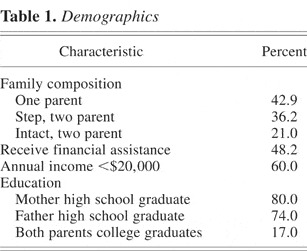
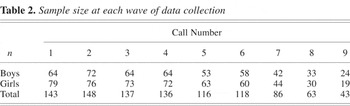
In light of the high-risk nature of the sample, with families typically experiencing multiple stressors, challenges were encountered in completing phone interviews (for discussion of difficulties encountered, see Dishion & Medici Skaggs, 2000). Families that completed at least two interviews were included in the current analyses. Out of the original sample of 224 families, 176 families participated in at least two of the nine monthly interviews (167 completed at least 3). These children included 90 boys and 86 girls between the ages of 10 and 14 (mean age = 12), enrolled in Grades 6 to 8 (mean grade level = 7). The sample was primarily Caucasian (95%), which is representative of the study community. Additional demographic information on these families is presented in Table 1.1
In line with suggestions from an anonymous reviewer, we examined potential differences in depressive symptoms in relation to family composition (i.e., one-parent vs. two-parent households). No differences were found in the mean level of depressive symptoms reported by parents or children in the monthly assessments. Further, we conducted a second set of growth modeling analyses including family composition as a covariate, and family composition did not enter as a significant predictor of depressive symptom parameters, either on its own or in interaction with any of the time-varying predictors. Other results remained significant, controlling for family composition. Because family composition was not of central interest in the current analyses, and no significant effects of family composition emerged in any analyses, we chose to present the original simplified models only. However, details of the models with family composition included are available from the first author upon request.
Demographics

Sample size at each wave of data collection

To examine variation in the significance of predictors across informants, results of the parent and child interviews were examined separately. Five parallel constructs were derived from the parent and child interviews, as described below. Similar constructs were derived from these interviews in a previous paper from this sample examining monthly bursts in adolescent substance use (Dishion & Medici Skaggs, 2000).
Child depressed mood
Parents and children responded to four items, indicating whether the youth had been bothered by any of the following feelings in the past month, for at least 1 day: (a) depression, sadness, being down; (b) irritability, grumpiness; (c) sleep problems; (d) nervousness, fearfulness, worry. For each monthly interview, the child depressed mood score consisted of the number of “yes” responses to these four items. The grand mean score for child-reported depressed mood was 1.40 (SD = 1.41), while the grand mean parent-report score was 1.23 (SD = 1.23). Overall, parent and child reports were moderately correlated (r = .26, p < .05). Validity of this symptom score is supported by significant relations between the monthly symptom reports and results of diagnostic interviews with children and parents conducted at 1-, 2-, and 3-year follow-up assessments. Fifty-nine of the children included in the current analyses (33.5%) received a major depressive disorder (MDD) diagnosis by parent or child report in at least one of these follow-up assessments. Within each wave of the monthly phone interviews, children who received an MDD diagnosis over the course of the next 3 years reported significantly higher monthly levels of depressed mood. Parents of children who were diagnosed later with MDD reported significantly higher depressed mood scores in six of the nine monthly interview waves. Adequate internal consistency was found across waves (child-report, α = .73; parent report, α = .65), and strong correlations were found across adjacent assessment waves (rs = .48–.78).
Deviant peer affiliation
Parents and children responded to two items related to deviant peer affiliation. First, parents and children indicated the number of new friends the youth had made over the past month of whom parents did not approve (“0,” “1,” or “2 or more”). Second, informants indicated whether the youth had spent time with friends who smoke, drink, or use marijuana over the past month (0 = no, 1 = yes). Because of the difference in the scale of these three items, responses were standardized and then averaged. Scores ranged from −.69 to 1.65 (child report, M = .02, SD = .64; parent report, M = .08, SD = .73). Child and parent reports on this scale were reliable across waves (child = .76, parent = .86), and child and parent reports of deviant peer affiliation were significantly correlated (r = .48, p < .05).
Peer relationship problems
Three items assessed parent and child reports of children's experiences of problems in their peer relationships in the previous month. First, respondents were asked whether children had been teased or ignored, gotten into arguments or fights, or had their feelings hurt by other youth that they liked. Second, respondents were asked whether children had been teased or ignored, gotten into arguments or fights, or had their feelings hurt by other kids who were not their friends. Third, respondents indicated whether children had been bothered by feeling withdrawn or isolated from their friends in the previous month. Scores ranged from 0 to 3 (child report, M = .61, SD = .79; parent report, M = 1.69, SD = .55). Adequate reliability in child and parental reports were found across assessment waves (child = .73, parent = .61), although child and parent reports were negatively correlated (r = −.24, p < .05), indicating poor agreement between parents and children on this scale.
Child delinquent behavior
Parent and child perceptions of the target child's engagement in delinquent behavior in the past month were assessed with nine items. Parents and children indicated whether the child had disobeyed parents, run away from home overnight, missed school without an excuse, engaged in physical fights with other children, lied, stolen, been suspended from school, destroyed other's property, or acted cruelly toward another person. Scores ranged from 0 to 9 (child report, M = 1.60, SD = 1.51; parent report, M = 1.79, SD = 1.68). Child and parent reports on this scale were highly reliable across waves (child = .81; parent = .83), and child and parent reports significantly correlated (r = .48, p < .05).
Treatment status
Because we were primarily interested in controlling for potential treatment effects rather than exploring possible differences across treatment modalities, treatment status was entered as a two-level variable.2
We analyzed treatment in several different ways, including whether youth were randomly assigned to the teen-group or parent condition. The results did not vary substantially depending on the way treatment was coded.
Analytical strategy
The goals of the central analyses were to examine between-group predictors (i.e., gender, initial age of child, and treatment status) of differences in the initial level and rate of change in depressive symptoms (i.e., intercepts and slopes) over the course of the nine monthly interviews, as well as in the time-varying effects of deviant peer involvement, peer relationship problems, and engagement in delinquent behavior. Multilevel growth model analyses were conducted with hierarchical linear modeling (HLM; Raudenbush & Bryk, 2002). HLM permits the modeling of time invariant and time-varying predictors of change in children's depressed mood over repeated measurement occasions (for discussion, see Singer & Willett, 2003). Further, as HLM models the individual growth trajectories shown by each participant, the number of observations need not be equal across persons and analyses easily accommodate missing data (see Raudenbush & Bryk, 2002). Thus, the inclusion of later waves of data collection in the monthly interviews is still advantageous, despite the relatively high rate of missing data (provided that the data is missing at random).
The basic equations comprising the multilevel growth models for the current analyses are presented in Appendix A. Growth models were examined separately for child and parent report of children's depressive symptoms. Briefly, the multilevel model consisted of two levels of analysis. The Level 1 model included the growth parameters (intercept and slope), the time-varying predictors, and a within person residual. In all analyses, time (i.e., month of interview) was coded so that the Level 1 intercept represents the initial level of depression at the first interview, and the Level 1 slope represents the linear rate of change across the monthly interviews. Although alternative formulations of these growth parameters are possible, we chose this arrangement because of its ease of interpretation and common use in the literature. The Level 2 model examined the effect of time-invariant (i.e., between groups) predictors on variation in intercepts, slopes, and time-varying predictors and included random effects for these parameters, which represent individual differences in the values of these parameters across adolescents.
Analyses of child and parent reports of children's depressed mood were conducted in two steps. In the first step, unconditional growth models were examined. These models contained intercept and slope parameters, in addition to the within-person residual and random effects for the intercept and slope parameters. The primary goal of this first step was to assess the nature of the developmental trajectories (i.e., linear vs. curvilinear) in the absence of other predictors and to examine whether significant within- and between-person variability existed to justify examining time-varying and time-invariant predictors. In the second step, time-invariant and time-varying predictors were added to the child- and parent-report models. The goals of this second set of analyses were to examine (a) whether the trajectories of change in depressed mood differed by gender, age, or treatment status; (b) whether concurrent peer deviance, peer relationship problems, or delinquent behavior predicted additional variation in depressed mood at each month; and (c) whether the effects of these time-varying predictors differed by child gender, age, or treatment status. HLM does not yield absolute model-fit indices, unlike latent growth modeling techniques implemented by structural equation modeling. Follow-up analyses were conducted to examine significant Level 2 effects in detail, as described by Curran, Bauer, and Willoughby (in press).
Results
Preliminary analyses of missing data
In light of the number of families with missing data, analyses were conducted first to examine whether the rate of missing data was related systematically to any of the variables of interest in the current study. Families completed an average of 5.60 phone calls (SD = 2.07). A series of correlations examined whether the number of calls completed with each family was related to parent or child report of children's depressed mood, delinquency, peer relational problems, deviant peer affiliation, or to children's age, gender, or treatment status. Only one correlation was significant, with parental reports of children's deviant peer involvement negatively related to the number of completed phone calls (r = −.28, p < .05). However, one significant correlation is approximately the number that would be expected by chance, so the missing data generally appeared to be missing at random.
Correlations among variables
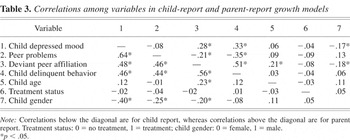
Table 3 presents the correlations among the variables included in the growth models, with separate correlations presented for child- and parent-report models. The correlations include all data available across the nine monthly interviews.
Correlations among variables in child-report and parent-report growth models

Moderate to large correlations in the predicted directions were found between children's self-reported depressive symptoms and the time-varying predictors (peer problems, deviant peer affiliation, and delinquent behavior), and depressed mood was also moderately related to female gender. Parent-reported depressive symptoms were moderately correlated with deviant peer affiliation, delinquent behavior, and female gender. Across both child and parent reports, the time-varying predictors were moderately correlated. Of note, treatment status was not significantly related to any of the predictor variables or to depressed mood by either child or parent report, suggesting that there were not pervasive effects of the substance use intervention that would substantially threaten the generalizability of the current study.
Unconditional growth models for children's depressive symptoms
Results of the unconditional growth model analyses were consistent for both the child-report and the parent-report models. In both cases, a linear-slope model was found to be the most parsimonious, and quadratic effect parameters were not statistically reliable. The child-report linear-slope model yielded a significant intercept parameter (γ00 = 1.33, p < .001), and a significant random intercept effect (δ0 = 1.05, p < .001) suggesting significant variation in initial values of depressive symptoms across youth. The model also contained a nonsignificant slope parameter (γ10 = .01, ns), highlighting that the trajectories of children's depressive symptoms were generally flat across the nine months. However, a significant random slope parameter was found (δ1 = .01, p < .01), indicating the presence of significant variability across youth that could be predictable.
The parent-report model with linear slope only also yielded a significant intercept parameter (γ00 = 1.25, p < .001), and a significant random intercept effect (δ0 = .72, p < .001) suggesting significant variation in initial values of depressive symptoms across youth. The model also contained a nonsignificant slope parameter (γ10 = −.01, ns), highlighting that the trajectories of children's depressive symptoms were generally flat across the 9 months. However, a significant random slope parameter was found (δ1 = .01, p < .01), indicating the presence of significant variability in slopes across youth that could be predictable.
Conditional growth models for children's depressive symptoms
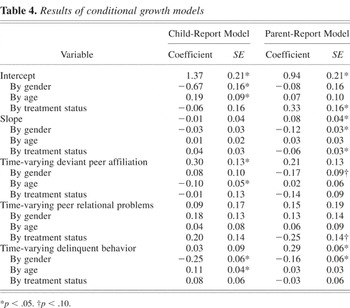
Table 4 presents the results of the child- and parent-report growth models that examined the 9-month trajectories of children's depressed mood.
Results of conditional growth models

In the child-report model, the initial level of depressed mood was significant, and was also significantly related to gender and age. Follow-up analyses for gender revealed that the initial level of depressed mood was significantly different from zero for both boys (simple intercept = .70, SE = .22, p < .05) and girls (simple intercept = 1.37, SE = .21, p < .05), although girls reported reliably higher initial levels of depressed mood than boys. For age, older adolescents reported higher levels of depressed mood than younger adolescents. However, no significant change over time was found in this model, and the rate of change in depressive symptoms was not related to gender, age, or treatment status. Concurrent engagement in delinquent behavior interacted with gender and age to predict the level of depression at each month. In follow-up analyses for gender, it was found that delinquent behavior by boys was significantly negatively related to depressed mood at age 10 (simple slope = −.22, SE = .11, p < .05), while the relation for girls at age 10 was not significant (simple slope =.03, SE = .09, ns). However, for boys and girls, the relation became more positive with advancing age, and a follow-up analysis for age revealed that the relation between delinquency and depression became significantly positive (p < .05) for youth over the age of 13.18 years. A significant effect of concurrent deviant peer affiliation was also found, controlling for children's own engagement in delinquent behavior. The effect of deviant peer affiliation, however, differed by age, with stronger effects among younger teens and diminishing with advancing age. Follow-up analyses revealed that the simple slope of the effect of deviant peer affiliation was only significant at the age of 10. Peer relationship difficulties did not covary with depressed mood within the conditional model. Overall, no effects of treatment status were observed in the child-report model. A significant random intercept effect was found (δ0 = .55, p < .01), suggesting substantial remaining individual differences in the initial level of depressed mood. No other significant random effects were observed.
In the parent-report model, the initial level of depressed mood was significant; and it was also significantly related to treatment status, with parents of children in the control group describing their children as significantly more depressed initially than children in the intervention group. Significant growth in depressive symptoms was found over the course of the monthly interviews, and the rate of growth was related to child gender, with girls showing greater growth than boys, and to treatment status (with control children showing greater growth). This significant growth contrasts the nonsignificant growth found in the unconditional model. It is worth highlighting that significant variability in growth was found in the unconditional model. The results of the conditional model demonstrate that this variability is related to children's gender and treatment status. Follow-up analyses revealed that girls exhibited significant growth in depressive symptoms (simple slope = .08, SE = .04, p < .05), while growth for boys was not significant (simple slope = −.04, SE = .09, ns). Follow-up analyses also demonstrated that although children in the treatment condition showed higher initial levels of depressive symptoms, they did not show significant growth over time (simple slope = .02, SE = .06, ns), unlike children in the control group (simple slope = .08, SE = .04, p < .05). Concurrent engagement in delinquent behavior was related to elevated depressive symptoms at each of the monthly assessments, and the strength of this effect was significantly related to child gender. Follow-up analyses revealed that the relation between delinquent behavior and depressive symptoms was significant for girls (simple slope = .29, SE = .06, p < .05), while the relation for boys was not significant (simple slope = .13, SE = .10, ns). A trend-level difference in the effect of concurrent deviant peer affiliation by gender was found (p = .08), with deviant peer affiliation more closely related to concurrent depressive symptoms in girls than boys. A trend-level difference was also found for the effect of concurrent peer relationship problems by treatment status (p = .08), with peer relationship problems more closely related to concurrent depression symptoms for children in the control versus treatment condition, although the relations were not significant for either group in follow-up analyses. No significant random effects were found in the conditional parent-report model.
Discussion
The overall goal of the present study was to examine peer predictors of depressive symptom trajectories across a series of brief monthly interviews in a sample of high-risk teens. There are a number of findings that converge well with other studies with larger sample sizes and that are epidemiologically informed. For example, we found that girls were more often depressed compared to boys, and that depressed mood tended to increase with age. Moreover, while there was substantial stability in the level of teens' depressed mood over the course of the monthly assessments, there was also substantial variability in the rates of change across individual teens, which enabled us to examine the role of peer relationship difficulties and deviant peer involvement as they covary over the course of the monthly assessments.
As predicted, children's concurrent engagement in delinquent behavior was related to monthly symptoms of depression, according to both child and parent report. The nature of the relation between of delinquent behavior and depression differed in the parent and child report models, and appeared to be related to both age and gender. By parental report, the relation between elevated depressive symptoms and engagement in delinquent behavior was only found for girls. By child report, the relation between depression and delinquency was mixed in 10-year-olds, with no relation found for 10-year-old girls, and a negative relation found for 10-year-old boys. With increased age, however, the relation between depression and delinquency became increasingly positive for both boys and girls.
What is especially interesting is the fact that involvement with deviant peers covaried with depressive symptoms in the child report model, even when controlling for delinquent behavior. That is, at each monthly assessment, boys and girls who reported feeling more depressed also reported hanging around with peers who were engaging in delinquent behaviors. This finding is consistent with recent results by Beyers and Loeber (2003), and Mrug, Hoza, and Bukowski (2004). Importantly, the results of the present study and those of Beyers and Loeber (2003) converge to suggest that the relation between depressed mood and association with delinquent peers does not appear to be due simply to the tendency for depressed mood and delinquent behavior problems to co-occur; rather, they appear to represent an important developmental pathway in need of further study. It is possible that depressed children may face heightened peer rejection or neglect, which leads to feelings of social isolation. Such children may ultimately seek to reduce their feelings of loneliness by adopting problem behaviors and moving a into deviant peer group. For example, Dishion, Capaldi, Spracklen, and Li (1995) found that boys defined sociometrically as “isolated” in the fourth grade were the most likely to initiate smoking in the transition into high school. Smoking is often seen as a powerful entrée into deviant peer groups, which often consist of other rejected children and frequently are organized around antisocial norms of behavior (Dishion, Capaldi, et al., 1995; Dishion et al., 1996). Gravitation into deviant peer groups may alleviate children's sense of social isolation in the short run, but may exacerbate depressive symptoms (e.g., Brendgen et al., 2000), and delinquent behavior in the long run.
An important next step in this line of research is to isolate the mechanism by which involvement with deviant peers might amplify depressed mood. One hypothesis comes to mind. In prior analyses of the friendship interactions of youth identified as comorbid for internalizing and externalizing disorders, we found that adolescents with comorbid problems engaged in much more intense and severe deviancy training compared to externalizing-only or internalizing-only youth. Perhaps the interpersonal transactions within the deviant peer group are more chaotic, deviant, and less rewarding to youth. The well-established link between lower rates of reinforcement for healthy behavior and depressed mood (for a review, see Jacobson, Martell, & Dimidjian, 2001) may therefore help to explain why deviant peer affiliation is associated with depressed mood.
The contrasting differences in the effects of children's age the strength of the associations between child-reported depression and deviant peer affiliation versus their own engagement in delinquent behavior is worth noting. Peer deviance was most closely linked with concurrent depressed mood in the youngest children in the sample, although the level of delinquent behavior shown by young girls was not related to their level of depression, while delinquency was negatively related to depressive symptoms for 10-year-old boys. In older adolescents, however, these findings were reversed, so that the level of peer deviance no longer predicted children's concurrent depression; instead, depression became more closely linked to their own engagement in delinquent acts for boys and girls. These results may suggest a developmental process wherein deviant peer processes may be particularly related to depressive symptoms in early adolescents, whether by depressed children gravitating into such groups in the face of rejection or neglect in the broader peer group, or through the interactional processes within deviant groups (including low rates of positive social reinforcement) fostering elevated depressive symptoms. In either case, the initial process of movement into these peer groups may be related to difficulties successfully relating to children in the broader peer group. Supporting this possibility, we found that although children's perceptions of problems in relating to peers were strongly correlated with their level of depressive symptoms, this association was not significant when deviant peer relations were controlled (along with the other predictors). Over time, affiliation with deviant peers may foster greater engagement in delinquent behavior, and this engagement in delinquent behavior may become more centrally related to continued problems with depression as these teens face mounting social and academic problems associated with engaging in delinquent and disruptive behavior. This latter process is consistent with Patterson and Stoolmiller's (1991) dual-failure model. Additional longitudinal research specifically focusing on changes in the peer relationships and level of delinquency in depressed children is needed to clarify these potentially important developmental pathways.
It is worth noting, however, that less pervasive influences of deviant peer involvement were found in parental reports of their children's depressive symptoms, although there was a trend for deviant peer involvement to be more closely related to parental reports of depressive symptoms in daughters versus sons. Such results are consistent with the notion that parents may not be as centrally aware of the level of deviance exhibited by children's peers, although parents may be somewhat more sensitive to deviance in their daughter's peer group. Such peer deviance may appear less normative or acceptable to parents of girls, and may therefore be more attended to by parents. However, it is also possible cognitive distortions related to depression may affect the adolescents' views of their peers' behaviors, thereby inflating children's negative reports of their peers' behavior problems. Future studies combining objective measures of peer deviance (such as observational measures of peer behavior, or direct report by peers) may help to disentangle these possibilities.
Limitations
Several study limitations should be noted, as they relate to the generalizability of the current results. First, a proportion of the families in the current sample had taken part in a family-oriented substance-use prevention program prior to beginning the current series of monthly interviews. Previous studies have documented the effects of the intervention on children's conduct problems and substance use, and on some indices of family functioning (Dishion & Andrews, 1995). The intervention did not specifically focus on depression, and results of the current study suggest that the effects of the intervention on depression were extremely limited. No intervention effects were found for children's self-reported depression with covariates controlled. Parents of children in the treatment group rated them as more depressed initially, but as showing less symptom growth than parents of children in the control group. A trend was also found for parents of treatment children to note a less positive relation between peer problems and depression. However, given that no such effects were found for children's self-report, the small parent-report findings may simply represent a halo effect for parents resulting from engagement in treatment. As such, we believe that results from the current sample have the potential to contribute to the literature on peer processes related to depressive symptoms, more generally, supporting and extending the small body of existing research particularly on deviant peer processes related to depression in youth.
Second, it is important to highlight that the current study addressed changes in depressed mood rather than clinical diagnoses of depression. Although the depressed mood measure used in the current study did predict later diagnoses of depression, it is not known whether the current results capture clinically significant variation in depressed mood over the course of the monthly interviews. Third, in light of the high-risk nature of the sample, there was a relatively high rate of missing data. However, as HLM models individual trajectories of change, it provides an effective way to examine data from longitudinal panel studies with missing data. Further, there did not appear to be systematic predictors of the rate of missing data across families, so it is unlikely that the rate of missing data substantially affected the current results.
Future directions
Despite these limitations, several strengths of the current study are worth highlighting. First, we examined separate models based on child and parent reports of adolescent depressed mood. This analytic strategy allowed us to examine the perceptions of the influences on depressed mood across independent raters. Results supported the notion that parents may not be as sensitive to the social context of their children's depressive symptoms, as peer predictors, particularly peer deviance, were more closely related to children's reports of depression symptoms. As noted, however, future research including objective indices of peer deviance would also help to rule out the potential effects depression-relevant cognitive distortions on children's reports of peer problems.
Second, the current study has a shorter time frame between assessments than is found in other papers that have examined growth models in children's depressive symptoms. This short time frame may be particularly important for studying peer processes related to depression, which may change substantially over relatively short intervals in adolescence. These dynamic processes may be more optimally studied with more closely spaced assessments than are typically employed in longitudinal studies. The current study attempted to capture these dynamic processes by modeling peer deviance and relationship problems as time-varying predictors of depression using a growth modeling framework. Although this modeling approach has advantages, it does not directly address the direction of these relations. Alternative analytic procedures including autoregressive modeling and dynamic factor analysis, among others, may help to examine the direction and dynamic nature of the relations between peer deviance, peer relationship problems, and depressed mood in greater detail in future studies.
Future research is also needed to examine the transactions across both family and peer systems related to the emergence of depression. In particular, the emergence of parallel findings regarding the relation between depressed mood and deviant peer affiliation across studies highlights the importance of studying the dynamics within peer interactions and the peer-family mesosystem that might account for this linkage. We have become interested in the concept of premature autonomy to explain escalating cycles of problem behavior that can occur among some adolescents. Simultaneous with the disengagement of involved parenting is the emergence of more intense peer affiliation. It appears that the youth who is left to raise himself also is quite disaffected, lacking in parent support and accumulating failure experiences and chaotic relationships with the peer group. Sorely needed is further research to examine the developmental processes related to early depressive symptoms that predict the later gravitation into deviant peer groups and the influence that such deviant peer groups may have on growth, not only in depressive symptoms, but also in comorbid conditions including conduct problems and substance use.
Implications for intervention
Results point to several important targets for prevention and intervention programs aimed at depressed mood in early adolescents. The bulk of the empirically tested programs for depression in children and adolescents have been based on cognitive–behavioral models originally formulated for treating depression in adults (for review, see Kaslow, McClure, & Connell, 2002). Such intervention programs focus heavily upon changing children's depression-relevant cognitions and often include components aimed at improving social skills. Results of the current study highlight the importance of attending more fully to the social context in which adolescent depressed mood develops and the potential benefit of better integrating peer-oriented treatment strategies into future prevention and intervention efforts. Intervention strategies also need to attend to concurrent behavior problems shown by depressed children, and intervention strategies with demonstrated effectiveness for targeting such problems, including parent management training, may need to be integrated into comprehensive treatments for depression in youth. Further, intervention services could be offered in a school-based context, similar to ecological treatment models currently being investigated for treating conduct problems and adolescent drug use (see Dishion & Kavanagh, 2003). Such studies have shown the value of targeting both peer and family influences within a brief and easily accessible school-based program, which could be extended to include treatment components specific to the emergence of depressed mood in adolescence.
Appendix A: Main Effects Multilevel Growth Model


The terms β0 and β1 represent the intercept and slope parameters, respectively, of the change in child depressive symptoms over the series of interviews; and β2, β3, and β4 represent the concurrent influence of deviant peer affiliation, peer relationship problems, and delinquent behavior at each of the monthly phone interviews, respectively. In the current analyses the intercept represents the level of depressive symptoms at the initial interview, whereas the slope represents the linear rate of change in depressive symptoms over the course of the nine monthly interviews (coded from 0 to 8 in these analyses). Here, γ00 and γ10 represent the average intercept and slope, respectively, when all other predictors in the model equal zero, and γ20, γ30, and γ40 represent the respective average concurrent effects of deviant peer affiliation, peer relationship problems, and engagement in delinquent behavior when all other predictors in the model equal zero. The time-varying covariates were centered about their grand mean values, so zero represents the mean level of these covariates in the sample. The time-invariant predictors were parameterized as follows: gender (0 = female, 1 = male), treatment status (0 = control, 1 = intervention), and initial age (0 = 10 to 4 = 14). As such, these average effect values reflect the initial level, rate of change, and concurrent variation in depressive symptoms for girls in the control group at age 10 with average levels of delinquent behavior, peer problems, and deviant peer involvement. In addition, γ01, γ02, and γ03 (and similarly through γ41, γ42, and γ43) represent the difference in the intercept, slope, and time-varying effects related to gender differences; treatment status differences, and age differences; δ0 to δ4 represent the random effects of intercept, slope, and time-varying predictors and index whether there are significant individual differences in these effects across youth, respectively; and ε is the within-person error term.
References
REFERENCES
Achenbach, T.,
McConaughy, S., &
Howell, C.
(1987).
Child/adolescent behavioral and emotional problems: Implications
of cross-informant correlations for situational specificity.
Psychological Bulletin,
101,
213–232.CrossRefGoogle Scholar
Altmann, E., &
Gotlib, I.
(1988).
The social behavior of depressed children: An observational
study.
Journal of Abnormal Child Psychology,
25,
29–44.CrossRefGoogle Scholar
Baker, M.,
Milich, R., &
Manolis, M.
(1996).
Peer interactions of dysphoric adolescents.
Journal of Abnormal Child Psychology,
24,
241–255.CrossRefGoogle Scholar
Beyers, J., &
Loeber, R.
(2003).
Untangling developmental relations between depressed mood and
delinquency in male adolescents.
Journal of Abnormal Child Psychology,
31,
247–266.CrossRefGoogle Scholar
Boivin, M.,
Poulin, F., &
Vitaro, F.
(1994).
Depressed mood and peer rejection in childhood.
Development and Psychopathology,
6,
483–498.CrossRefGoogle Scholar
Bowker, A.,
(2004).
Predicting friendship stability during early adolescence.
Journal of Early Adolescence,
24,
85–112.CrossRefGoogle Scholar
Brendgen, M.,
Vitaro, F., &
Bukowski, W.
(2000).
Deviant friends and early adolescents' emotional and behavioral
adjustment.
Journal of Research on Adolescence,
10,
173–189.CrossRefGoogle Scholar
Bry, B.,
McKeon, P., &
Pardina, R.
(1982).
Extent of drug use as a function of number of risk factors.
Journal of Abnormal Psychology,
91,
273–279.CrossRefGoogle Scholar
Cole, D.
(1991).
Preliminary support for a competency-based model of depression in
children.
Journal of Abnormal Psychology,
100,
181–190.CrossRefGoogle Scholar
Connolly, J.,
Geller, S.,
Marton, P., &
Kutcher, S.
(1992).
Peer responses to social interaction with depressed
adolescents.
Journal of Clinical Child Psychology,
21,
365–370.CrossRefGoogle Scholar
Curran, P.,
Bauer, D., &
Willoughby, M.
(in press).
Testing and probing interactions in hierarchical linear growth
models. In
C. S. Bergeman &
S. M. Boker (Eds.),
The Notre Dame Series on quantitative methodology: Vol. 1.
Methodological issues in aging research.
Mahwah, NJ:
Erlbaum.
Deater-Deckard, K.
(2001).
Annotation: Recent research examining the role of peer relationships
in the development of psychopathology.
Journal of Child Psychology, Psychiatry, and Allied
Disciplines,
42,
565–579.CrossRefGoogle Scholar
Dishion, T.
(2000).
Cross-setting consistency in early adolescent psychopathology:
Deviant friendships and problem behavior sequelae.
Journal of Personality,
68,
1109–1126.CrossRefGoogle Scholar
Dishion, T., &
Andrews, D.
(1995).
Preventing escalation in problem behaviors with high-risk young
adolescents: Immediate and 1-year outcomes.
Journal of Consulting and Clinical Psychology,
63,
344–359.Google Scholar
Dishion, T.,
Andrews, D.,
Kavanagh, K., &
Soberman, L.
(1996).
Preventive interventions for high-risk youth: The Adolescent
Transitions Program. In
R. Peters &
R. McMahon (Eds.),
Preventing childhood disorders, substance abuse, and
delinquency (pp.
184–214).
Thousand Oaks, CA:
Sage.
Dishion, T.,
Capaldi, D.,
Spracklen, K., &
Li, F.,
(1995).
Peer ecology of male adolescent drug use.
Development and Psychopathology,
7,
803–824.CrossRefGoogle Scholar
Dishion, T.,
French, D., &
Patterson, G.
(1995).
The development and ecology of antisocial behavior. In
D. Cicchetti &
D. Cohen (Eds.),
Developmental psychopathology: Vol. 2. Risk, disorder, and
adaptation (pp.
421–471).
New York:
Wiley.
Dishion, T., &
Kavanagh, K.
(2003).
Intervening in adolescent problem behavior: A family-centered
approach.
New York:
Guilford Press.
Dishion, T., &
Medici Skaggs, N.
(2000).
An ecological analysis of monthly “bursts” in early
adolescent substance use.
Applied Developmental Science,
4,
89–97.CrossRefGoogle Scholar
Dishion, T.,
Nelson, S., &
Bullock, B.
(in press).
Premature adolescent autonomy: Amplification of the risk trajectory
to young adult problem behavior.
Journal of Research in Adolescence.
Dishion, T.,
Patterson, G.,
Stoolmiller, M., &
Skinner, M.
(1991).
Family, school, and behavioral antecedents to early adolescent
involvement with antisocial peers.
Developmental Psychology,
27,
172–180.CrossRefGoogle Scholar
Dumas, J.,
Neese, D.,
Prinz, R., &
Blechman, E.
(1996).
Short-term stability of aggression, peer rejection, and depressive
symptoms in middle childhood.
Journal of Abnormal Child Psychology,
24,
105–119.CrossRefGoogle Scholar
Fergusson, D.,
Wanner, B.,
Vitaro, F.,
Horwood, L., &
Swain-Campbell, N.
(2003).
Deviant peer affiliations and depression: Confounding or
causation?
Journal of Abnormal Child Psychology,
31,
605–618.Google Scholar
Fergusson, D., &
Woodward, L.
(2002).
Mental health, educational, and social role outcomes of adolescents
with depression.
Archives of General Psychiatry,
59,
225–231.CrossRefGoogle Scholar
Gazelle, H., &
Rudolph, K.
(2004).
Moving toward and away from the world: Social approach and avoidance
trajectories in anxious solitary youth.
Child Development,
75,
829–849.CrossRefGoogle Scholar
Jacobson, N.,
Martell, C., &
Dimidjian, S.
(2001).
Behavioral activation treatment for depression: Returning to
contextual roots.
Clinical Psychology: Science and Practice,
8,
255–270.CrossRefGoogle Scholar
Joiner, T., &
Coyne, J.
(1999).
The interactional nature of depression.
Washington, DC:
American Psychological Association.CrossRef
Kaslow, N.,
McClure, E., &
Connell, A.
(2002).
Treatment of depression in children and adolescents. In
I. Gotlib &
C. Hammen (Eds.),
Handbook of depression and its treatment (pp.
441–464).
New York:
Guilford Press.
Kiesner, J.
(2002).
Depressive symptoms in early adolescence: Their relations with
classroom problem behavior and peer status.
Journal of Research on Adolescence,
12,
463–478.CrossRefGoogle Scholar
Lansford, J.,
Capanna, C.,
Dodge, K.,
Caprara, G.,
Bates, J.,
Pettit, G.,
et al.
(2003).
Peer rejection and internalizing problems of children in the United
States and Italy.
Unpublished manuscript.
Larson, R., &
Richards, M.
(1991).
Daily companionship in late childhood and early adolescence:
Changing developmental contexts.
Child Development,
62,
284–300.CrossRefGoogle Scholar
Lewinsohn, P.,
Rohde, P.,
Seeley, J.,
Klein, D., &
Gotlib, I.
(2003).
Psychosocial functioning of young adults who have experienced and
recovered from major depressive disorder during adolescence.
Journal of Abnormal Psychology,
112,
353–363.CrossRefGoogle Scholar
Mrug, S.,
Hoza, B., &
Bukowski, W.
(2004).
Choosing or being chosen by aggressive-disruptive peers: Do they
contribute to children's externalizing and internalizing
problems?
Journal of Abnormal Child Psychology,
32,
53–65.Google Scholar
Nolen-Hoeksema, S., &
Girgus, J. S.
(1994).
The emergence of gender differences in depression during
adolescence.
Psychological Bulletin,
115,
424–443.CrossRefGoogle Scholar
Paikoff, R., &
Brooks-Gunn, J.
(1991).
Do parent–child relationships change during puberty?
Psychological Bulletin,
110,
47–66.Google Scholar
Patterson, G. R., &
Stoolmiller, M.
(1991).
Replications of a dual failure model for boy's depressed
mood.
Journal of Consulting and Clinical Psychology,
59,
491–498.CrossRefGoogle Scholar
Raudenbush, S., &
Bryk, A.
(2002).
Hierarchical linear models: Applications and data analysis
methods
(Vol. 2).
Thousand Oaks, CA:
Sage.
Rudolph, K.,
Hammen, C., &
Burge, D.
(1994).
Interpersonal functioning and depressive symptoms in childhood:
Addressing the issues of specificity and comorbidity.
Journal of Abnormal Child Psychology,
22,
355–371.CrossRefGoogle Scholar
Singer, J., &
Willett, J.
(2003).
Applied longitudinal data analysis: Modeling change and event
occurrence.
New York:
Oxford University Press.CrossRef
Demographics
Sample size at each wave of data collection
Correlations among variables in child-report and parent-report growth models
Results of conditional growth models
 You have
Access
- 46
- Cited by