“Homegrown Hong Kong,” a local English-language newspaper said of Vitasoy in an article telling the “wholesome story” of the soy beverage.Footnote 1 Vitasoy has come to be identified with Hong Kong's period of economic growth, so much so that nostalgia for the product sells. In 2017, a Vitasoy Memories Contest on Facebook received numerous wistful entries describing childhood consumption of the bottled drink. One entry featuring Vitasoy bottles bathing in a metallic vat read, “I always look[ed] forward to getting a hot vitasoy from the store outside my school after school [was] out. The bottles were kept warm in these containers filled with warm/hot water. That's one of my favorite childhood memor[ies].”Footnote 2
Despite Hongkongers’ identification with the popular soy beverage today, Vitasoy had to earn acceptance among Chinese consumers when it was introduced in postwar Hong Kong. Marketed as an alternative to a Western product, the beverage attributed its primary nutritional content to an ingredient purportedly of Chinese origin. Yet, while Hong Kong had long traded in soybeans, soymilk was not popular in this city at the southern tip of China compared with the beverage's prevalence in the north. To win the hearts of local consumers, Vitasoy had to overcome the deep-seated cultural predispositions of Hongkongers, many of whom viewed soymilk as “cooling” and enervating.
Gareth Austin, Carlos Dávila, and Geoffrey Jones have called for an exploration of corporate strategies and structures in emerging markets as distinct from those found in developed economies.Footnote 3 The story of Vitasoy provides an alternative business history of the lesser known “local” businesses that flourished in the emerging market of Hong Kong in the aftermath of World War II. Vitasoy's business development draws our attention to the dynamics of a budding clientele in a developing economy. This “local” Hong Kong beverage stemmed from a notion emanating from outside East Asia that the soybean was to save the region from its alleged nutritional plight. As a beverage processed from soybeans, soymilk did not blossom into a single food phenomenon but took on specific forms in the foodways of Asian cities in response to the conditions of the host locations and business maneuvers of local merchants.Footnote 4 This transnational discourse took root in Hong Kong as Vitasoy's maker deployed bottling techniques and business practices acquired from its Western partners, developed its operations with local sensitivities, and marketed the beverage against the backdrop of the city's economic growth.
Focusing on the sale of a soy beverage in a single city with a predominantly Chinese population, this study links business practice and consumer choices with identity formation during a period of economic takeoff. Prior scholars locate the origins of consumerism in the age of industrialization and examined how consumption gives meaning to individuals and their roles in U.S. society.Footnote 5 Matthew McDonald and Stephen Wearing, for example, investigate Western consumption culture from a psychological perspective, highlighting in particular the association between self-identity and consumption.Footnote 6 Research on specific geographical areas reveals the role of consumption in shaping the history of particular locales, with scholars of milk consumption underscoring the impact of urbanization, technological improvements, and geopolitics.Footnote 7 In the case of China, Susan Glosser demonstrates how the consumption of milk symbolized an urban lifestyle of the new, trendy nuclear family, while others show that milk consumption is not novel in China.Footnote 8 The emergence of Chinese nutrition science framed soymilk as a social engineering enterprise in the first half of the twentieth century.Footnote 9 Such a development did not gain traction in Hong Kong in that period, although the discourse of modern nutritional science and the supposedly impoverished diet of the Chinese did circulate in the British colony. What was construed as a “national” solution found little “local” resonance in Hong Kong, where residents considered the beverage to be as foreign as the nutritious Western product for which it was to serve as a substitute.Footnote 10 Eventually, the earlier development in Republican China found fertile ground in postwar Hong Kong, not merely in reconstruction efforts but also in appealing to socioeconomically aspiring consumers of modernity in the context of the colony's economic takeoff.
Vitasoy's producer leveraged technological know-how and social transformations to render what began as an intellectual discourse into a commercially viable “local” product for its aspiring clientele in postwar Hong Kong.Footnote 11 In its projection of modernity and as part of the development discourse, Vitasoy does not fit neatly into the classification of Chinese or Western. The soybean's “Chinese” indigeneity notwithstanding, Vitasoy's emergence, like the introduction of other Western lifestyle consumables, resulted from and signaled the rise of a middle-class identity in Hong Kong. This consumption pattern manifested itself in a peculiar manner at a specific stage of socioeconomic development, problematizing the notion of being “Chinese” at any given time.Footnote 12 Embedded in global capitalism and a national discourse, Vitasoy's producer overcame initial obstacles to make the product a “local” beverage. Its commercial success was a spatiotemporally specific phenomenon that reflected the historical juncture at which Vitasoy crystallized an identity in postwar Hong Kong and blossomed into a local drink for Hongkongers.
Unfolding as Hong Kong's middle class emerged, Vitasoy's story lies at the intersections of modernity and locality, globalization and nationality, consumerism and economic development. Vitasoy won the approval of local consumers in post–World War II Hong Kong as its producer capitalized on the discourse of modern nutritional science, leveraged technological breakthroughs, and positioned the beverage to respond to a growing clientele experiencing economic growth and undergoing lifestyle transformation.
Positioning Soymilk in a Discourse of Salvation
At the beginning of the twentieth century, Chinese nutrition scientists found in the soybean the answer to the nation's nutritional and developmental problems.Footnote 13 In East and Southeast Asia, soymilk also attracted the attention of the colonial authorities and became embroiled in the operation of imperialistic forces through the discourse of diet and nutrition. The discourse of soy among Western and Western-trained medical professionals, which took on an evangelical tone, erupted outside China proper, finding an audience in the colonial ports of Southeast Asia.Footnote 14 In 1911, Gilbert Brooke, port health officer of Singapore, explained the virtues of soybeans, which he understood to be produced on a large scale in Manchuria and carried in large quantities to Singapore and Hong Kong. He proposed fostering among the “rice-eating races” “the simultaneous consumption of the soya bean as supplying in abundance those essential food elements that cannot in the least be derived from rice.” The use of the soybean should be “universal” in prisons and “native hospitals,” he advised. Among the food products of soybeans he listed was “Bean Milk,” a “valuable milk” that resembled cow's milk.Footnote 15
Medical and nutritional circles paid persistent attention to soy. The message delivered from the colonial pulpit in Singapore resonated with Chinese specialists trained in the Western sciences. In 1932, an English newspaper in Hong Kong reported that Dr. E. Tso of the Peking Union Medical College had lectured to a full house in Shanghai at a session of the Chinese Medical Conference explaining the virtues of soymilk in infant feeding.Footnote 16 Hong Kong played host to a similar scholarly discussion in 1940 when Professor Yan-tsi Chiu of Lingnan University addressed a group at the Café de Chine on the history of soymilk in China. He asserted that soymilk had been recognized as early as two thousand years ago by the Chinese philosopher Huainanzi. Children in north China consumed soymilk in place of cow's milk, and adults also drank it, he noted. Almond milk, he added, was more popular in south China, where it was consumed primarily by adults.Footnote 17 The persistent comparison of soymilk to cow's milk reveals a colonial mindset that understood Western consumption of the latter to be the norm in the pursuit of bodily health.
Influenced by the views of educated Chinese elites, select portions of the Chinese population did begin to appreciate cow's milk in the years leading up to World War II. In 1940, the Committee on Nutrition in the Colonial Empire produced a report concluding that the masses in Hong Kong recognized the nutritional value of milk.Footnote 18 However, ordinary Chinese people in the colony could ill afford this luxury product, not to mention its limited local production, which would in any case be commandeered as Britain went onto a war footing. The popularity of cow's milk and its derivative products in Hong Kong paled in comparison with that in prewar Shanghai.Footnote 19
Despite the discourse in Western and elite Chinese circles of the nutritional value of milk, and of soymilk as a substitute, Hong Kong consumers did not readily adapt to the use of soy as a protein source. In a report titled “Nutrition in Hong Kong” in 1939, the colony's governor spoke of the initial unpopularity of soybean products: “the Southern Chinese are rather inclined to look down upon [the] soya bean as a food for pigs.” It was soymilk that proved to be the winning recipe, as the beverage surmounted the initial dislike of soybean products.Footnote 20 Its nutritional value was recognized as early as 1941, when the Nutrition Research Committee confirmed that soymilk provided nourishment for older children and adults and that children over six months old could easily digest it. The committee noted the popularity of soymilk in government refugee camps and welfare centers.Footnote 21 Early reports mentioned soymilk's taste, which “differ[ed] somewhat from cow's milk,” but confirmed its popularity, if only in government welfare programs.Footnote 22
Vitasoy emerged in this period, with the manufacturer positioning its soymilk as a substitute for milk, or as “poor people's milk.” “Food for the Poor,” read the newspaper headline on March 11, 1940, when Hong Kong Soya Bean Products Co., Ltd. opened its Vitasoy factory on Hong Kong Island.Footnote 23 Addressing what the article labeled as “the nutrition problem,” the factory was to produce “a cheap supply of nutritious food at prices within the reach of the masses.” On hand at the opening ceremony were experts who demonstrated the manufacturing of “Vita” milk from soybeans, calcium, and cod-liver oil.
The company's founder, Lo Kwee-seong, was born in Guangdong. He spent his formative years in Malaya and Hong Kong, where he earned a degree in business and commerce from the University of Hong Kong.Footnote 24 While in business in Shanghai, he had learned the power of the soybean as a source of nutrition for the Chinese. At the company's opening ceremony, Lo claimed that the “soya bean needs no introduction” because “its food value had long been recognized by our great grandfathers, 5,000 years ago.” What “our fore-fathers guessed of its nutritional value has now been verified by the present-day chemists in . . . modern laboratories,” he continued, confirming the purported Chinese roots of the nutritious soybean. Yet it would require tremendous effort to activate the potential of this nonindigenous ingredient in Hong Kong. The British colony did indeed trade in soybeans but its residents needed some time to warm up to the beverage produced from them. Lo's company was to produce soymilk “cheaply and under hygienic conditions.” He considered it “a public service” to make soymilk available to “the poorer section of the community” in quantity and “at such low prices as to be within their means.”Footnote 25
The director of medical services, Dr. P. S. Selwyn-Clarke, echoed Lo's sentiments. As he continued to drive “the social progress” of the colony through his campaign against malnutrition and tuberculosis, what Selwyn-Clarke found wanting in Hong Kong were “cheap sources of supply of nutritious food which is within reach of the masses.”Footnote 26 The newly established soymilk factory worked in concert with the colonial authorities; Vitasoy earned the director's praise, as the company supplied Queen Mary Hospital and the tuberculosis clinic run by the Maryknoll Sisters in Kowloon City.Footnote 27 That Lo and Selwyn-Clarke explained the exigencies of Hong Kong in terms of “modernity” and “social progress” reflects the prevailing mentality of the Chinese elite and the colonial government, which considered the colonized subjects of Hong Kong as backward and in need of salvation.
This portrayal did not necessarily conflict with the self-image of Hong Kong Chinese at the time, who appeared eager to improve their physical well-being. A Chinese news article published in 1941 expounded on the virtues of Vitasoy, calling it “a tonic the benefits of which far exceed its costs.” The article detailed the production process of this soymilk, which it claimed was known colloquially as 豆腐漿, or doufujiang (literally, the serum of tofu). Elaborating on Vitasoy's fortifying potential for the masses, the article offered details in terms of Western nutritional sciences.Footnote 28 Its meticulous description indicates that the local Chinese (even the literate among them who represented the paper's readership) found not only the nutritional discourse novel but the product itself so foreign that it required an analogy to a local product to render it comprehensible.
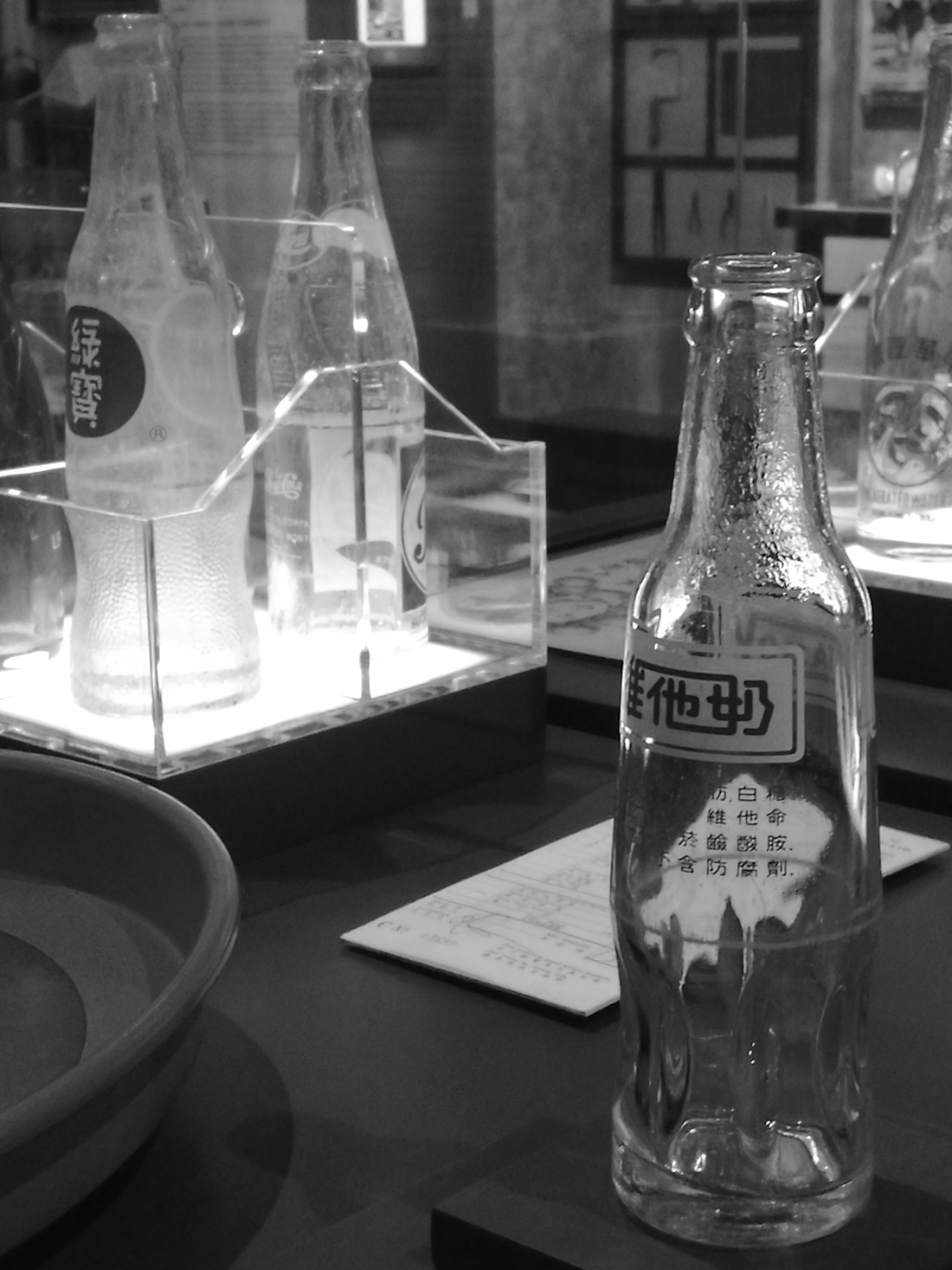
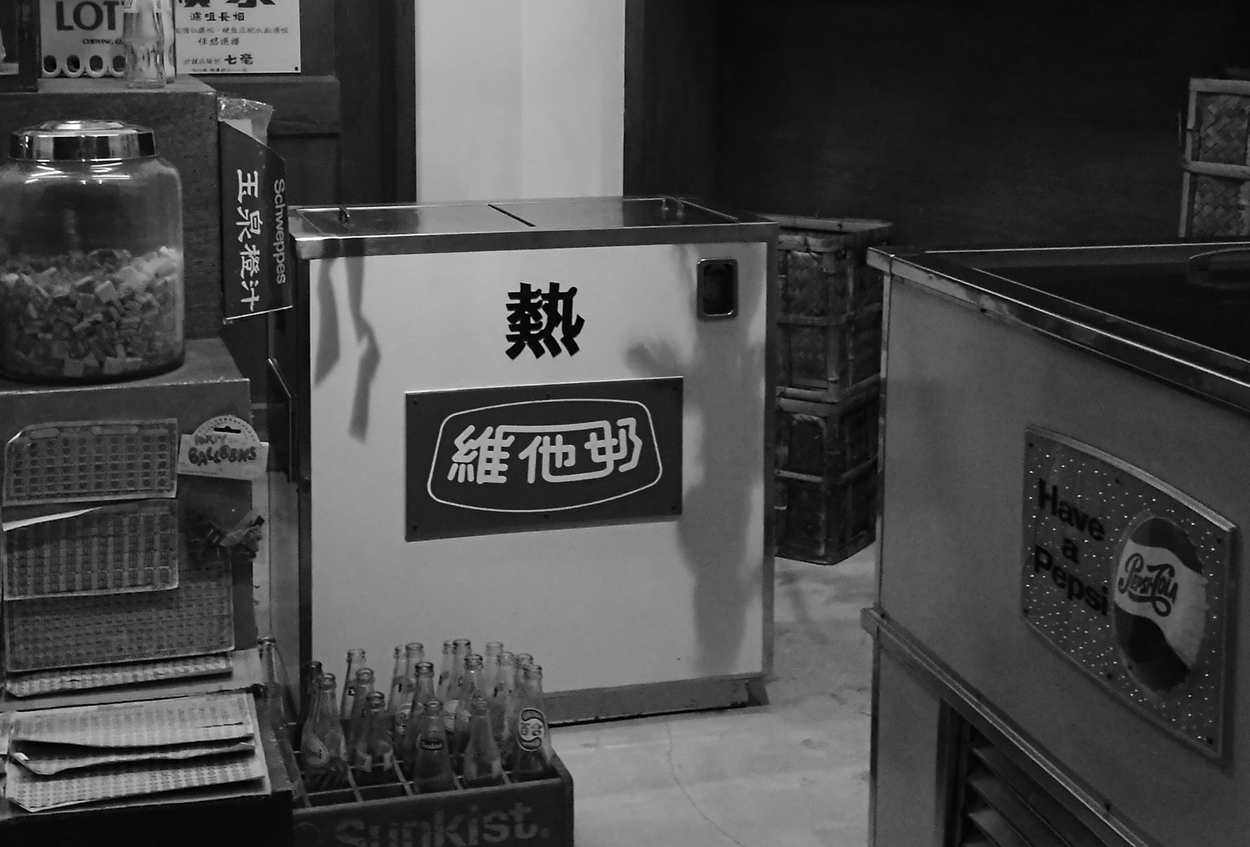
The news article referred to the product by its trademarked Chinese name, 維他奶, Wei-taa-naai in Cantonese, which combines the prefix “vita” (suggesting vitamins and nutritional elements defined by Western science) with the suffix naai, which denotes a milk product.Footnote 29 Its producer had chosen this name, a son of the company's founder explained, to convey the meaning of “Vita Milk” in English.Footnote 30 Lo and his company smartly branded Vitasoy in Chinese as a “milk” with Western nutritional benefits. In fact, its Chinese name conveyed no indication that the beverage was a soy-based product.Footnote 31 The brand's logo featured its name in Chinese not in traditional Chinese calligraphy but in a font suggesting electrical circuitry, another signal of modernity and scientific advances (see Figures 1 and 3).Footnote 32 Vitasoy was a novel product introduced in Hong Kong, where the general consumption of soymilk was so limited that its production process required explanation.Footnote 33
From the milk bottle to soft-drink packaging: a Vitasoy bottle (front) displayed alongside a Green Spot bottle, at “The History of Hong Kong Industry” exhibition, Hong Kong Museum of History. Photo by the author.

On March 9, 1940, Vitasoy's first advertisement billed the product—which could be delivered to customers’ doorsteps for eight cents a bottle—as “the most economical and nutritional new beverage,” quoting the American soybean expert Dr. Howard Hoover.Footnote 34 However, this sales method, which evidently mimicked the delivery of fresh milk, was foreign to Hong Kong residents except for Westerners and Chinese elites used to drinking milk. Consequently, the company's initial marketing and sales strategy did not realize its intention to popularize soymilk in Hong Kong. As Vitasoy's sales performance continued to disappoint, in October 1940 the manufacturer opened Vita Café (維他餐室) at 608 Nathan Road, Kowloon. The café, which carried Vitasoy and Chinese cakes and was equipped with a huge refrigerator, served as the company's retail store and sales headquarters in Kowloon. In June 1941, a branch opened on Pottinger Street on Hong Kong Island, but it had to close in December because of the Japanese occupation. The two cafés helped to boost Vitasoy's popularity among the public, and the revenue they provided served to sustain Vitasoy's business.Footnote 35
The subsequent suspension of that business, and more importantly the devastating conditions caused by wartime food shortages, accentuated the urgency of restoring Hong Kong to health. In January 1946, shortly after the British return to Hong Kong, Chinese residents, probably with speculators among them, flooded the entrances of Lane Crawford and Dairy Farm looking for dairy products.Footnote 36 The following year, the medical profession called for the introduction of milk to children's diets for reasons of health.Footnote 37 For a brief period, milk played a role in the colonial government's postwar attempt to fortify schoolchildren. The Education Department had considered congee (which the department described in its annual report as “a form of stew containing rice, vegetable and meat or fish”) as an alternative that would be more familiar to the local palate. The authorities ultimately concluded, however, that congee was impracticable “since not more than 3% of the schools had any facilities for cooking.” Instead, they issued bottled milk, along with a type of “vitamised biscuit,” to schoolchildren. The government arranged with Dairy Farm for the daily issue of fifteen thousand bottles of milk (reconstituted from powdered milk delivered to Hong Kong as postwar relief) free of charge to schoolchildren in 1947. In 1948, however, it had to discontinue the program for financial reasons.Footnote 38
This short-lived government campaign notwithstanding, milk still did not constitute a regular component of the diets of ordinary Chinese residents. According to one investigation, only one pupil out of sixty-five drank milk every day. Chinese dietary attitudes continued to privilege rice consumption as the standard of nutrition.Footnote 39 Furthermore, the cost of milk was beyond the reach of the average family.Footnote 40 By 1949, medical specialists had recognized the difficulty for ordinary Chinese of consuming milk daily, and they suggested soymilk as “an efficient substitute” to provide children with sufficient protein.Footnote 41 Accordingly, in an attempt that year to improve the health of children at school, the authorities distributed over three million bottles of “reconstituted [from milk powder] and soy bean milk” to 225 schools to be given to students aged eight and under.Footnote 42 The provision of soymilk alongside reconstituted milk made economic sense, as the price of fresh cow's milk was significantly higher than that of Vitasoy. In August 1946, when the government implemented price controls to combat the black market, milk cost fifty cents and sixty-five cents for eight ounces and ten ounces, respectively.Footnote 43 At the same time, a ten-ounce bottle of Vitasoy cost just thirty cents a bottle, or less than half the cost of milk.Footnote 44 Even civil servants considered milk expensive. Director of the Supplies and Distribution Department Arthur Clarke had not drunk fresh milk since before the war, consuming only powdered milk since the war's end. Not surprisingly, milk was far beyond the reach of ordinary residents.Footnote 45 By 1952, the price difference between milk and Vitasoy had widened even further, as Vitasoy had reduced its price from thirty cents to twenty cents.Footnote 46
The concerted efforts of the British colonial regime resonated with Hong Kong's postwar aspiration (and that of many other Asian cities in the period) to improve livelihoods as defined by Western, and increasingly global, notions of public health and nutrition. In their return to Hong Kong amid escalating calls for decolonization around the world, the British authorities attempted to earn the legitimacy to govern the colony with initiatives to improve the health of its residents as they crafted the Hong Kong body according to Western nutritional practices. Because of the price difference between cow's milk and soymilk, the issue took on a definite class dimension, one that followed the contours of a discourse on race, wherein the British colonizers, working with enlightened Westernized Chinese elites, became the redeemer of a malnourished Chinese population.
Fruitful Symbiosis: Business Practices and Technology to the Rescue
Against this backdrop, Vitasoy's producer reviewed its distribution practices after World War II. Previously, with the exception of Lo Kwee-seong, the Vitasoy board had thought that the beverage should be sold in the same way as milk (that is, via home delivery) lest the lower classes such as “coolies” become the major customers, thereby downgrading Vitasoy's social status and value. Lo had thought otherwise, insisting that the original objective of Vitasoy was to provide the masses with the best nutrition possible at the lowest price. Accordingly, he proposed that Vitasoy be carried by the same vendors as soft drinks. This move, which the board accepted following the war, redirected Vitasoy toward being a company supplying a Western novelty while insisting on its health properties. The move proved successful, earning the company approximately HK$31,000 in net profits in 1947.Footnote 47 Lo's proposal also sidestepped the positioning of Vitasoy as intended for a specific clientele; instead, the product was now defined by a particular sales channel and its associated offerings. The great majority of Hong Kong Chinese did indeed belong to the lower classes but socioeconomic changes were about to propel them into higher strata, putting dispensable consumable items within their reach.
The earlier bottling and packaging of Vitasoy were simple but failed to prolong its shelf life, as soymilk requires refrigeration to stay fresh. Its distribution was thus restricted to nearby dealers who had refrigeration facilities.Footnote 48 A significant advance in production came in 1950. After winning a contract to produce Green Spot (an orange-flavored carbonated drink), Hong Kong Soya Bean Products Co., Ltd. employed Green Spot's bottling technology to supply Vitasoy in wide-mouthed bottles. However, the initial effort to extend Vitasoy's shelf life to six months ended in failure. Green Spot's food expert explained to Lo that the pasteurizing temperature of milk was below the temperature needed to sterilize highly alkaline soymilk. With the expert's assistance, a research laboratory was set up in 1952 to determine the temperature needed to both sterilize soymilk and maintain its taste without refrigeration. Thereafter, the company adopted soft-drink manufacturing machines to produce and sterilize its soymilk. Its production facilities were also transformed from semi-automation to full automation, which increased production from 38 bottles per minute in 1950 to 120 in 1957 and then to 400 in 1962.Footnote 49 A Chinese newspaper featured the 1958 visit of three actresses to Vitasoy's automated facilities, which were said to be capable of producing up to 240 bottles per minute, or over 100,000 bottles a day.Footnote 50 The manufacture of soymilk now blended the features of milk and soft-drink production (Figure 1).
Vitasoy's success in this period stemmed from its ability to leverage differentiated access to new technologies. Not all technologies are created equal in terms of access and function. Industrial production had made refrigeration available to certain nations but only at the individual level; access to refrigeration remained privileged and followed the socioeconomic divide. Through sterilization and packaging, Vitasoy bridged that divide. By aggregating technological issues at the production level (sterilization to prolong shelf life and eliminate the need for refrigeration), Vitasoy overcame the limited access to another technology (refrigerators) at the individual level of Hong Kong households.
By leveraging the discourse of health and modernity, on the one hand, and taking advantage of a technological breakthrough, on the other, Vitasoy found a winning recipe for its beverage. Encouraged by Lo and others, the discourse that sprang forth from “modern” notions of health circulated along the Chinese interface with the West, a zone that encompassed Shanghai and Southeast Asia as well as Hong Kong. Although Chinese elites were instrumental in shaping modernity in an inter-Asian context, the discourse on soymilk did not bear fruit readily. Only with the arrival of another technology from the outside—sterilization and bottling know-how—did the discourse produce commercial results.
Beyond sterilization and bottling, working with Green Spot in 1950 and subsequently with Pepsi-Cola in 1957 provided Hong Kong Soya Bean Products Co., Ltd. with opportunities to upgrade its logistic facilities and improve its sales strategy. Sometime around 1948, Lo had purchased trucks and light-duty vehicles to speed up the delivery process to various sales points, although some salespersons still relied on bicycles. Bottling Green Spot prompted the company to purchase additional trucks to maintain the volume of Vitasoy distributed because it had agreed to deliver Vitasoy and Green Spot in the same trucks. Meanwhile, because of the embargo on China during the Korean War, the Coca-Cola Company rescaled its business in China and Hong Kong and “right-sized” its staff. Hong Kong Soya Bean Products Co., Ltd. absorbed some of Coca-Cola's ex-salespersons and learned from their district marketing strategies.Footnote 51
Bottling Pepsi-Cola also improved the efficiency of Vitasoy deliveries.Footnote 52 Pepsi-Cola was renowned for its high-speed “palletization” distribution system, which was four times faster than the old method of loading and unloading. Elaborating on the benefits of the “palletization system,” a newspaper article explained, “Ordinarily, it will take four persons and forty minutes to load and unload a beverage rack truck, whereas, using this system with the help of a Fork Lift, the entire operation takes only ten minutes and one person.” Adopting “the scientific distribution system” of Pepsi-Cola greatly enhanced Vitasoy's distribution capacity.Footnote 53
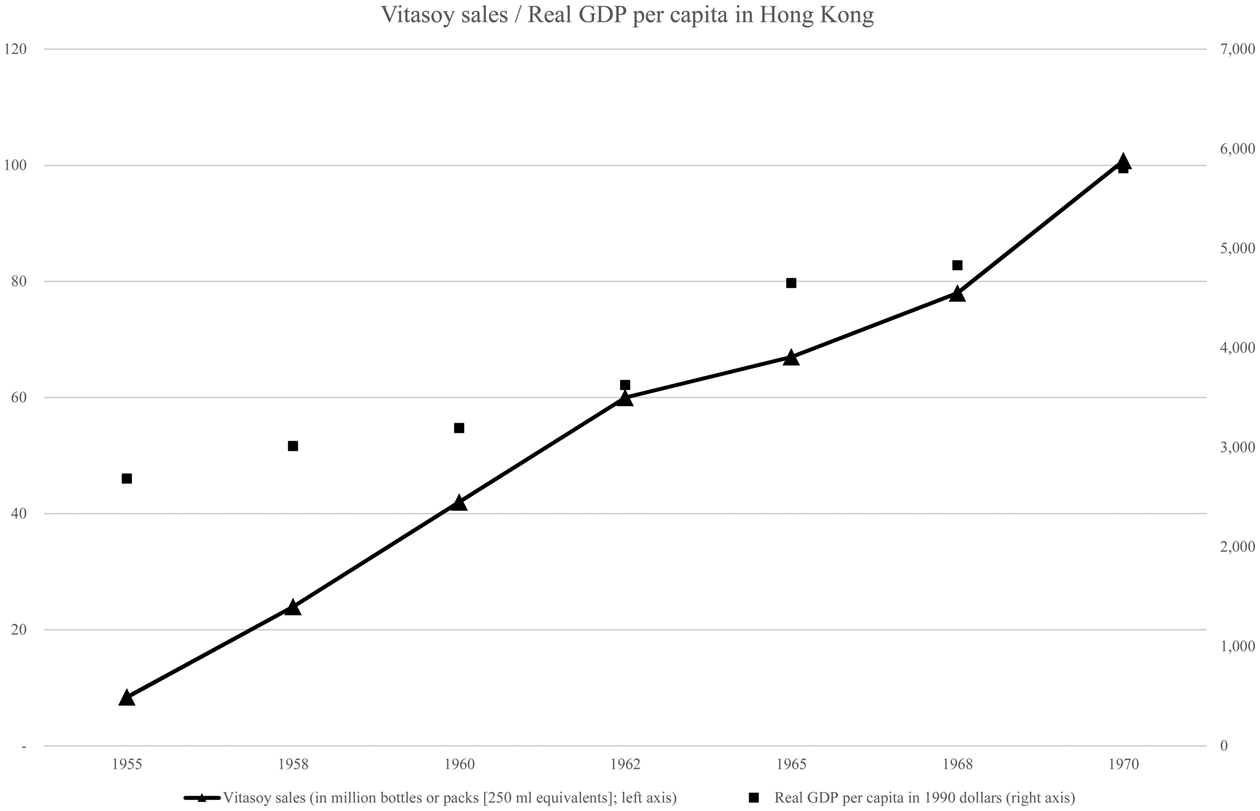
Working with Pepsi-Cola also allowed Vitasoy to refine its sales system. The company divided up sales districts to shorten the distance that each vehicle needed to travel. More crucially, Vitasoy received training from Pepsi-Cola salespersons, whom a local newspaper described as “the most regular, most dependable and courteous.”Footnote 54 A systematic sales strategy was established. The success of the beverage prompted the company in 1960 to establish a production branch, to be equipped with European machinery, which promised a three-fold increase in capacity.Footnote 55 Vitasoy's sales give credence to the success of this symbiotic relationship with the soft-drink business. By 1955, synergy with Green Spot had jumpstarted Vitasoy sales, which skyrocketed to 8.4 million bottles from less than a million in 1941. From 1955 to 1960, as the partnership with Pepsi-Cola kicked into high gear, Vitasoy sales expanded even further, registering a fivefold increase (Figure 2).
Vitasoy sales in conjunction with real GDP per capita growth in Hong Kong. Sources: William Shurtleff and Akiko Aoyagi, “K. S. Lo and Vitasoy in Hong Kong and North America: Work with Soyfoods” (unpublished manuscript chapter, Soyinfo Center, Lafayette, CA, 2004), https://www.soyinfocenter.com/HSS/ks_lo_and_vitasoy.php; Shurtleff and Aoyagi, The Soyfoods Industry and Market, Directory and Databook (Lafayette, CA, 1983), 53A; Jutta Bolt, Robert Inklaar, Herman de Jong, and Jan Luiten van Zanden, “Maddison Project Database, version 2018” (2018).

In addition to the technological breakthroughs that enabled and increased the production of Vitasoy, refinement of the company's logistics management also allowed the widespread distribution of the beverage. The refined distribution system expanded the circulation of Vitasoy, making it possible to consume “modernity” on an ever-increasing scale.Footnote 56 Just as important as consumer aspirations, “modernity” needed to be produced, as the transfer of technological know-how and business practices facilitated its physical manifestation on an expanding scale.
Public discourse in Hong Kong rarely contained an explicit expression of a “middle class” before the 1970s. Yet, the colony's robust economic growth, especially from the mid-1950s onwards, had indeed expanded the disposable income of the masses (Figure 2). Previous studies of this emerging middle class have focused on its budding political capacity, and studies connecting consumption to middle-class formation have analyzed the lifestyle changes that took place only in later periods.Footnote 57 The upsurge in Hongkongers’ consumption of modernity via Vitasoy calls our attention to articulation of their rising perceptions of prosperity, albeit in more measured consumption, even in the beginning stages of middle-class formation.
Beyond Hong Kong, the idea of producing soymilk to conform to notions of modern science circulated in other Asian cities under Western influence in different time periods. In 1960, Lo flew to Taiwan to explore the market opportunities there.Footnote 58 Decades before, a certain Dr. Miller, a “medical missionary in China,” had applied his “professional skill” to identifying “an indigenous food of low cost” to solve “the malnutrition he saw all around him.” Miller's efforts came full circle when his son, “intent on making his father's processing system as widely available as possible” to allow people to derive the greatest benefit, opened a soymilk plant in Indonesia in 1955.Footnote 59 Vitasoy's producer also became part of this effort as the company hosted interns dispatched by the Indonesian government to learn about soymilk production.Footnote 60
Circulating in this inter-Asian context was not merely the discourse of soymilk effecting the national redemption of malnourished Asian countries but, more potently, also the technological know-how of soymilk production and packaging. In Hong Kong, Vitasoy seized the opportunity at this critical juncture, playing a major role in delivering “bottled goodness” to fortify a “malnourished” and aspiring clientele. Originating in both a national and regional discourse, Vitasoy benefited from its partnership with soft-drink brands to produce a beverage that conformed to aspirations for a modern lifestyle and promised to deliver bodily health.
Applying Technology to Culturally and Economically Differentiated Bodies
The partnership with soft-drink producers provided a symbiotic opportunity for Vitasoy. Yet the successful adaptation of their technology required an understanding of local sensitivities. The adroit business maneuvers of Vitasoy's producer responded to Hong Kong's climatic conditions and cultural proclivities, as well as its stage of economic development. Through those maneuvers, the company was able to craft Vitasoy into a soymilk delivery and consumption experience that was distinct in the inter-Asian context.
In an early maneuver, Vitasoy's producer responded to the requirements of the Hong Kong regulatory authorities while at the same time adapting the beverage to local cultural particularities. A 1937 medical report stipulated the parameters for the proper pasteurization of milk.Footnote 61 In the same year, the Urban Council required that all dairies pasteurize their milk prior to its sale.Footnote 62 All milk was to be heated to between 145°C and 150°C, kept at that temperature for twenty minutes, and then cooled immediately to between 55°C and 60°C.Footnote 63 The sterilization of soymilk followed a different procedure. Professor Chiu Yan-tsi wrote in 1931 that soybean drinks, like any animal milk, would keep for two to three days and that their small-scale production posed no difficulty to preservation.Footnote 64 This did not apply to Vitasoy's producer, however, as it intended to produce soymilk on a large scale. In the 1940s, the company heated Vitasoy to remove the enzyme in the soybeans. In addition to prolonging its shelf life, this practice also rendered the soy beverage a “cooked” product (as opposed to a “raw” food, or 生冷食物).
In those early days of production, the general public harbored “a strong prejudice” against soymilk, which the Cantonese called hon-loeng (寒涼; “something that wears down body energy”).Footnote 65 That prejudice highlights the diverging notions of health even among communities within East Asia. While the northern Chinese had long incorporated soymilk into their diets, the southern Chinese conceptualized soy beverages differently in terms of their effect on bodily health. Such differences translated into initial resistance to Vitasoy in Hong Kong. Although the objective of pasteurizing milk by heating it was improved food safety, the process also allowed Vitasoy to overcome cultural resistance to and gain popularity for its novel product.
In later periods, Vitasoy's producer continued to demonstrate its business ingenuity in responding to regulatory demands in the face of material limitations in postwar Hong Kong. For the preservation of food and beverages, refrigeration is the ideal option, and yet few in Hong Kong could afford a refrigerator in the postwar period. The lack of refrigeration had resulted in Chinese consumers boiling milk to preserve it. For more than just technological reasons, ordinary Chinese people in Hong Kong were more likely to preserve milk by boiling it than to store it in a refrigerator. Boiling milk was such a well-instilled good habit among the Chinese that an unofficial member of the Sanitary Board had observed that they never “eat anything raw or drink any milk without boiling it.”Footnote 66 The Food Shops (Amendment) By-laws passed in 1954 mandated that all food shops selling or displaying food for sale must warehouse or store the foodstuffs in a refrigeration facility with a cold-storage chamber showing the temperature of the compartment.Footnote 67 This new rule meant that every retail store selling milk and/or Vitasoy had to purchase a refrigerator.
Refrigerators gradually came within the reach of storeowners. In 1950, the Bosco Corporation's refrigerator was advertised at a price of HK$850, a sum that exceeded the food and fuel expenditures of an average working-class person for an entire year.Footnote 68 Furthermore, Bosco's price was probably exceptionally low, as a GEC model was available in 1952 for HK$1,700.Footnote 69 Nonetheless, refrigerator prices subsequently fell, as the industry engaged in a price competition. By June 1959, a 5.5-cubic foot model was being advertised for HK$795 and a 7-cubic foot model for HK$980. A refrigerated soft-drink compartment with a capacity of 144 bottles retailed at $1,550.Footnote 70 The increasing demand for stores to sell food and drinks was probably behind such competition. The introduction of a new payment method also made it easier for stores to own cooling compartments. By 1955, the installment payment method had become an important way for British, French, American, East German, and Italian home appliance manufacturers to boost sales in Hong Kong.Footnote 71 By 1958, it was not uncommon to pay for a refrigerator in ten to twelve installments.Footnote 72 For those who still found purchasing unaffordable, they could rent a refrigerator for HK$30 per month.Footnote 73 Although refrigerators were no longer completely beyond reach for the average storeowner, their presence remained far from widespread.Footnote 74
Against this backdrop, a container innovation became a critical success factor in subverting the seasonality of Vitasoy sales. Its producer's profits had hitherto been heavily dependent on Vitasoy sales in the summer, which accounted for 80 percent of its annual turnover. The problem of seasonality also plagued the soft-drink industry. With the cooperation of a German machinery corporation, Lo Fong-seong, Lo Kwee-seong's brother, successfully designed in 1957 a container in which water could be heated and maintained at 62.8°C (Figure 3). Complementing the introduction of this new container, Vitasoy's producer advertised its revamped product offering as follows: “Hot Vitasoy is the single best beverage in the autumn and winter months. Increasing your body heat and moisturizing your skin.”Footnote 75 The new container, essentially an icebox that doubled as a heating unit, served as a Vitasoy distribution tool, boosting sales of the beverage during the cold season to 50 percent of its peak summer sales.Footnote 76 More than a primitive substitute for a refrigerator, the container warmed Vitasoy during the cooler months, thereby reinforcing the brand's effort to alleviate cultural biases stemming from soymilk's presumed “cooling” quality. What started out as a remedy for the inaccessibility of technology yielded a product distribution system that responded to local cultural peculiarities and, in the process, provided a tremendous counterbalance to business seasonality.
Vitasoy containers, in a re-created shop in the Hong Kong Museum of History. Photo by the author.

Vitasoy soon registered another meteoric rise in popularity, with annual sales increasing 324 percent from 1960 to 1970.Footnote 77 By 1968, 78 million bottles of Vitasoy were being sold per year, second only to Coca-Cola's 100 million. More than just a soy beverage, Vitasoy had established itself as a competitor to soft drinks. “Vitasoy has become the new soft-drink craze of the British Crown Colony,” noted Time magazine in 1968, a year in which the bottled soy beverage captured 25 percent of the Hong Kong soft-drink market.Footnote 78 Its rise unfolded as the economy of Hong Kong was experiencing tremendous growth. Between 1961 and 1970, GDP per capita in Hong Kong logged six years of double-digit growth, aggregating in an increase of over 70 percent in real terms during the decade.Footnote 79 Its genesis as “poor people's milk” notwithstanding, Vitasoy had become the beverage of choice for the upwardly mobile people of Hong Kong (Figure 2). As the Hong Kong economy took off, the city's residents began to develop the financial wherewithal to consume items that conveyed modernity and prosperity. Through product positioning and customer reception, what began as a cheaper version of cow's milk had morphed into a competitor for carbonated soft drinks.
By the late 1960s Vitasoy's producer, as well as the dairy companies that bottled the product, were finding bottling a cost burden. A new packaging format, the Tetra Pak carton, provided the answer in the mid-1970s. In the late 1950s, the Swedish company Tetra Pak had invented a fully automated packaging system that sealed milk in cardboard containers lined with sterilized polythene. The new technology could keep milk fresh in an ordinary refrigerator for three days.Footnote 80 By 1965, the technology had improved to the extent that milk contained in Tetra Pak cartons could stay fresh for up to six months without refrigeration.Footnote 81 This breakthrough in milk packaging promised to reduce transportation and pasteurization costs.Footnote 82 Not only did the new technology minimize the risk of contamination from bottles that may not have been thoroughly washed, but it also eliminated the cost of handling fragile glass bottles. Another important advance was that milk beverages could be offered in a format that allowed easy storage and stacking.
This change in packaging also responded to the market environment in Hong Kong. The first supermarket opened in the colony in November 1965, with more to follow in the remaining years of the 1960s.Footnote 83 Although the appearance of supermarkets did not change people's purchasing behavior overnight, their increasing popularity brought about changes in the packaging of beverages in the 1970s. Supermarkets aimed to keep the manual handling of merchandise to a minimal level, rendering it problematic to handle the distribution and sale of bottled drinks, which required the processing of a cash deposit.Footnote 84 Just as important as the shift in beverage packaging from reusable containers to disposable packages was to inventory control and sales efficiency, it also facilitated the changing lifestyle of the people of Hong Kong. In response to these changes, Vitasoy's producer faced a repackaging decision. Despite signs of an initial preference for reusable bottles, the board ultimately decided to adopt the paper carton package.Footnote 85
Local interest in the new packaging design accumulated sufficient momentum in Hong Kong for Tetra Pak to set up a temporary Far East office in the city in November 1973, promising to “contribute to the further development of the dairy industry in East Asia and to the efficient distribution of the important milk proteins in the area.”Footnote 86 Within three years of the office's establishment, Vitasoy's producer had adopted the Tetra Pak system to present the beverage in a “keep fresh package.”Footnote 87 This move reduced the company's transportation costs.Footnote 88 The producer of “the popular soyabean milk” adopted the new packaging, which it said was “ideally suited to local climatic and living conditions.”
By the mid-1970s, the company had firmly established Vitasoy as a local Hong Kong product, delivering this liquid form of soybeans, which, a local English newspaper claimed, had served as “the most important source of protein for the Chinese people for 3,000 years.” Its technologically advanced packaging was designed to keep “this highly nutritional and refreshing product . . . conveniently stored.”Footnote 89 In 1975, Vitasoy's producer launched a new advertising campaign with the slogan “Not just a simple soft drink” (點只汽水咁簡單). Instead of simply echoing the company's earlier strategy, this campaign targeted customers aged fifteen to twenty-four who had consumed the beverage because of their parents’ belief that it was a healthy beverage. The new campaign succeeded in consolidating a generation that had grown up with Vitasoy, cementing its image as a fashionable and healthy beverage.Footnote 90 Indeed, the beverage had achieved its local status not for its origin in an indigenous protein source but for its connotation of modernity. In the early days, Lo had invoked the “Chinese” origin of the soybean to render the beverage it produced less foreign to the ethnic majority in Hong Kong. More importantly, his company's ingenious marketing strategy and technological enhancements made Vitasoy a Hong Kong icon, a beverage that represented a material embodiment of Hong Kong's broader social and economic transformation during a period of robust development.
Conclusion
Vitasoy entered the scene in colonial Hong Kong as a means of national and bodily salvation, traditionalizing modern (read: Western) notions of science, medicine, and health. Rather than drawing a sharp distinction between “tradition” and “modernity,” Vitasoy's producer told a tale that appealed to one or the other at different stages of the beverage's development. Vitasoy constituted a form of liquid protein that nourished modernist notions of public health and nutrition, celebrated the Chinese origin of its primary ingredient, and assumed packaging deemed efficient by cutting-edge modern business know-how.Footnote 91 In the emerging market of Hong Kong, not only could notions of Western modernity readily become incorporated into the local repertoire, but what could be construed as “Chinese traditions” also varied according to the contours of regional differences. Mindful of this nuanced landscape, Vitasoy promised to deliver nutritional goodness, as calibrated by Western science, while adhering to what were considered longstanding practices of Chinese materiality in Hong Kong. The company availed itself of technological developments and solved the practical problems of preservation and cultural resistance. During Hong Kong's era of economic takeoff, this combination proved to be a powerful formula for selling the beverage to a growing Hong Kong clientele, who adopted the product as their own in their pursuit of physical, economic, and material well-being.
The story of Vitasoy follows the usual development of invented tradition while offering a local twist that underscores the geographical particularities of Hong Kong at a specific moment in the city's economic development.Footnote 92 The fabrication of soymilk as a “traditional” Chinese food product that promoted health did not constitute a claim of authenticity for the purpose of cultural preservation but an act of creative storytelling for the purpose of commercial marketing. Into this beverage initially made from traditionally Chinese ingredients, Vitasoy's producer infused meaning by drawing upon the search for modernity and material well-being in everyday life that blossomed in early twentieth-century China.Footnote 93 In particular, the soy beverage was intended to provide a solution to “the nutrition problem,” a problem that West-centric discourse had created for the “impoverished” East. In a bid to circumvent Western supremacy, a number of resourceful social reformers and scientists claimed to have found answers in Chinese history and traditions.Footnote 94 In the case of soymilk and Vitasoy, muted in references to “Chinese tradition” were regional differences and locational specificities with respect to ingredient supplies and consumption patterns. The soybean is not indigenous to Hong Kong, and although the city had long traded actively in the commodity and produced various food items from it (including soy sauce and tofu), the consumption of soymilk was far from widespread, as indicated by Vitasoy's initial difficulties in explaining the product to prospective customers.
The representation of Vitasoy as a modern beverage that energized a particular Chinese tradition calls for more nuanced analysis of what constitutes foreign and local in Chinese foodways. Its producer made Vitasoy a “local” product despite its foreignness to Hong Kong consumers on multiple levels: its purported function as a substitute for the cow's milk that constituted part of a healthy Western diet, its alien nature as a northern Chinese import, and its commercial presentation, which stemmed from the West. “Local” does not merely serve as a geographic marker but also denotes a specific temporal dimension, which, for Vitasoy, was the emergence of a modern Hong Kong middle class in the postwar period. The product's sales growth, while reflecting a desire for better bodily health, pivoted on technological and commercial enhancements in areas beyond nutritional discourse, underscoring the aspirations of a population with rising socioeconomic standing. From mimicking the packaging and delivery of milk, to following the practices of soft-drink operations, to expanding its distribution to supermarkets in the Tetra Pak format, Vitasoy readily adopted the imports of a modern lifestyle that increasingly resonated with its aspiring clientele. Through marketing and technological adaptations, Vitasoy's producer created a local beverage to respond to the sociocultural conditions of a growing clientele experiencing economic growth and undergoing lifestyle transformation, articulating for the emerging market of postwar Hong Kong a modernity that had its origin in Chinese national discourse but then blossomed into a celebration of a lifestyle that economic progress enabled.
Food and drink do not have to come from the same place as their consumers in order to be considered “local.” Conversely, “global” is but a cultural imaginary through which consumers enhance their prestige or sense of well-being through consumption.Footnote 95 Vitasoy was “local” not because the beverage, or its key ingredients, had come from Hong Kong. Its producer rendered global meanings into local significance, offering a “local” alternative to a “global” desirable initially beyond the reach of Hong Kong consumers. To the people of postwar Hong Kong, Vitasoy's producer provided a local articulation of global consumption that was economically affordable and within cultural proximity. In contrast to “culinary politics,” the consumption of this soy beverage was embedded not in a particular cooking style but in a specific historical context. Vitasoy's producer offered an item that appealed to a middle class in the making (at least in its own perception of itself). In addition to the influence of a global/Western discourse and soymilk's genesis in a project of national salvation, the making of Vitasoy into a local Hong Kong beverage needs to be contextualized in terms of technological availability, as well as handicap, alongside the economic trajectory the residents of Hong Kong experienced during a very particular historical period.
What makes Vitasoy a “local” beverage? Despite its leverage of discourses of Western origin, its producer has never touted the beverage as foreign. Nor does Vitasoy resonate with the population of Hong Kong, which is predominately Chinese, merely because its primary ingredient hails from China. Rather than offering “a taste of place,” or terroir, Vitasoy appeals with “a taste of home”—the home of an emerging modern middle class at the time of its introduction.Footnote 96 That specific taste emerged at a particular historical juncture, at a time when technological progress and socioeconomic conditions precipitated in a colonial city inhabited by Chinese residents a concoction that fused together a modernist notion of well-being and a purportedly national ingredient without the imposition of a hegemonic Chineseness. Modern Chineseness is not a predetermined identity but a complex system attuned to shifting local and external factors. More than political or national considerations, Vitasoy's producer engineered its acceptance as a local beverage in Hong Kong by engaging a series of interrelated cultural, economic, and technological elements. More than the potential of soymilk as an elixir of national salvation, Vitasoy embodies a signifier of progress and modernity accessible to the aspiring consumers of Hong Kong's emerging middle class.