Professionals working in arena of health care face a variety of challenges as their careers evolve and develop. Some of these challenges represent one time encounters with a new task or skill, while other challenges represent lifelong battles requiring continuous attention. In this review, we analyze the role of mentorship, learning curves, and balance in overcoming a variety of challenges that all such professionals are likely to encounter. These challenges can exist both in professional and personal life.
Part of the responsibility of being a professional is self-regulating the profession, taking measures to improve the state of the art in this profession, and in the process, “raising the bar”.Reference Jacobs1 John Mayer, the current President of The Society of Thoracic Surgeons, has emphasized the importance of professional responsibility and accountability.Reference Bonchek, Harley and Wilbur2, 3 These professional responsibilities of self-regulation, as well as maintenance and propagation of a body of knowledge, are fundamental. Sir William Osler stated, “You are in this profession as a calling, not as a business; as a calling which exacts from you at every turn self-sacrifice, devotion, love and tenderness to your fellow-men. Once you get down to a purely business level, your influence is gone and the true light of your life is dimmed. You must work in the missionary spirit, with a breadth of charity that raises you far above the petty jealousies of life.”
Mentorship
As any professional involved in health care matures, complex professional skills must be mastered, and new professional skills must be acquired. These skills are both technical and judgmental. In most circumstances, these skills must be learned. In 2007, despite the continued need for obtaining new knowledge and learning new skills, the professional and public tolerance for a “learning curve” is much less than in previous decades. Many examples exist of complex skills that professionals need to master. For cardiothoracic surgeons, one example of these professional challenges is re-operative cardiothoracic surgery. This task becomes exponentially more complex when the patient requiring re-operation has previously undergone an operation that the current surgeon has never performed or observed. Examples of operations rarely if ever performed today in congenital cardiac surgery include the Waterston shunt connecting the ascending aorta to the pulmonary artery,Reference Waterston4 and the classic atrio-pulmonary connection used to create the Fontan circulation.Reference Fontan and Baudet5 Similarly, the SenningReference Senning6 and MustardReference Mustard7 procedures for atrial venous redirection are rarely performed today other than as part of the double switch procedure. Most adult cardiac surgeons have not seen a Vineberg procedure,Reference Vineberg8 performed an off-bypass digital mitral commissurotomy,Reference Dogliotti, Actis-dato and Gentilli9 or inserted a Starr Edwards ball cage valve.Reference Starr and Edwards10 Re-operations can be challenging and treacherous for patients who previously have undergone aortic surgery involving prior Cabrol aorto-atrial shunts utilized to control inaccessible bleeding,Reference Blum, Panos, Lichtenstein and Salerno11 or even prior aortic reconstruction with the Cabrol technique for coronary arterial implantation.Reference Cabrol, Pavie and Gandjbakhch12 Most present-day general thoracic surgeons have not treated pulmonary tuberculosis with plastic ball plombage thoracoplastyReference Povah13 to obliterate the pleural space. Re-operation on all of these patients presents unique challenges. Certainly, patients who have undergone many of these treatments stemming from previous eras will require medical and surgical management as they age. In addition, as the population of people with congenital cardiac malformations also ages, the complex intracardiac anatomy may begin to co-exist with acquired coronary arterial disease, obesity, and/or acquired chronic obstructive pulmonary disease associated with chronic addiction to tobacco.
Re-operative surgical interventions, already potentially difficult, in these situations can become very complex and challenging.Reference Dobell and Jain14–Reference Dearani, Connolly, Martinez Richard, Fontanet and Webb19 These reoperative procedures often involve entering a space that has previously been entered via multiple sternotomies or thoracotomies. In congenital cardiac surgery especially, the surgeon is often faced with multiple redo sternotomies or thoracotomies.Reference Dearani, Connolly, Martinez Richard, Fontanet and Webb19 Surgeons usually encounter severe adhesions and scar tissue. They must be prepared for a variety of intraoperative surprises and potential unexpected disasters. Surgeons must be aware, at all times, of their surroundings.
This example of re-operative cardiothoracic surgery can be used to demonstrate multiple solutions applicable to any professional faced with the challenge of mastering complex new skills. Several potential solutions for this challenge of re-operative cardiothoracic surgery involving operations from earlier eras can be applied to the challenge of mastering new skills in all subspecialties, and all health care professions.
Mentorship is the key to success in these endeavours. The success of mentorship is two-sided, with responsibilities for both the mentor and the mentee. A student should not expect that a mentor will actively pursue someone in need of mentorship. The student must actively identify and seek out a mentor. The student must then work to become a desirable candidate for potential mentorship. The junior surgeon, as an example, will succeed mirroring the skills of the more senior surgeon. The student must simultaneously work to remain a desirable candidate for mentorship. This work must continue in order to maintain the relationship between the mentor and the student. The benefits of this relationship must be bidirectional. It is the responsibility of both the student and the mentor to assure this bidirectional exchange of benefit.
Learning from your own mistakes, and those of others, is essential. This task often requires open and honest discussion. Different skills may require different teachers who have the appropriate skill sets. If an appropriate mentor is not available at the home institution, the onus is on the mentee to travel to a place that has the appropriate staff to teach these new skills. One of the best measures of success is the ability of the surgeon to handle unforeseen problems in the operating room with skill, knowledge and professionalism. Flexibility is also a characteristic that will take a surgeon a long way. For example, an alternative strategy for cannulation might be required in cases where previous scar tissue could lead to excessive bleeding when opening the chest. Appropriate mentorship will allow the student to master a variety of approaches, and therefore obtain flexibility. The junior surgeon can learn and improve a variety of surgical techniques, but in the process, should try to provide direct and indirect benefits to the mentor whenever possible. The mentor has responsibilities as well, including a commitment to teach skills and transition responsibility to the mentee. This relationship requires time, patience, dedication, and to some degree selflessness. This mentorship will ultimately be the best tool for mastering complex professional skills and maturing through various learning curves.
In addition to learning the complex skills and nuances of cardiac surgery, and other similar medical skills, the mentorship relationship is also continually teaching and modelling at a broader, or “meta”, level some other very important, but frequently overlooked skills with respect to how to manage one’s self, one’s relationships, and one’s professional responsibilities, or in other words, one’s operating context.Reference Dickey, Ungerleider, Gravlee, Davis, Stammers and Ungerleider20–Reference Satir, Banmen, Gerber and Gomori23 These abilities to manage one’s self and one’s relationships, especially in times of complexity and stress, are some of the most important skills that the health care professional must learn, and yet they are frequently implicit in the process, and are not actively discussed between mentor and mentee in a way that makes them explicit. This type of transfer of knowledge is occasionally referred to as the hidden lesson, since the young learner will adopt ways of handling him or herself in a variety of situations that connect directly to how it was modelled for them, without questioning or even developing a conscious awareness of the origin of these attributes. This situation is unfortunate, because developing these skills of self-awareness and self-management are at the heart of professionalism, and are shown to impact on surgical outcomes.Reference Edmondson, Bohmer and Pisano24–Reference Losade and Heaphy27 The mentee must develop the attitudes and values, as well as the skills of self-awareness and self-management, which are the basis for effective communication and leadership. Making space to know and understand one’s self, while at the same time seeking to understand others and their perspectives, especially when there is a difference of opinion or a clash in values, is fundamental to creating an effective and cohesive cardiac surgical team.Reference Edmondson, Bohmer and Pisano24 Mentors in cardiac surgery would do well to identify and explicitly teach their mentees the relational skills and abilities inherent in learning the management of the triad of self, relationships with others, and professional responsibilities. Much is being written on this topic, and the Accreditation Council for Graduate Medical Education in the United States of America is now emphasizing its importance in the more defined and explicit surgical curriculum.Reference Dickey, Ungerleider, Gravlee, Davis, Stammers and Ungerleider20
Learning curves
Up to two decades ago, a learning curve was tolerated, and even expected, while professionals involved in healthcare developed the techniques that allowed for the treatment of previously untreatable diseases.Reference Bull, Yates, Sarkar, Deanfield and de Leval28 Outcomes have now improved to the point that this type of learning curve is no longer acceptable to the public. Still, professionals must learn to perform and develop independence and confidence. The responsibility to meet this challenge without a painful learning curve belongs to both the younger professionals, who must progress through the learning curve, and the more mature professionals who must create an appropriate environment for learning.
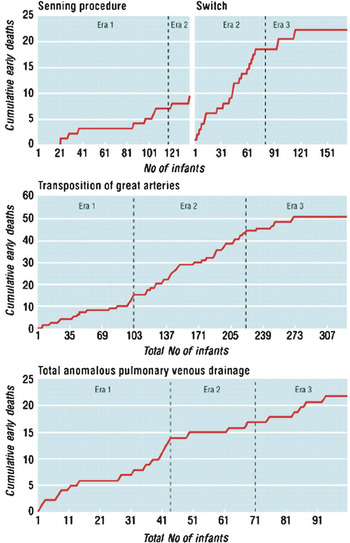
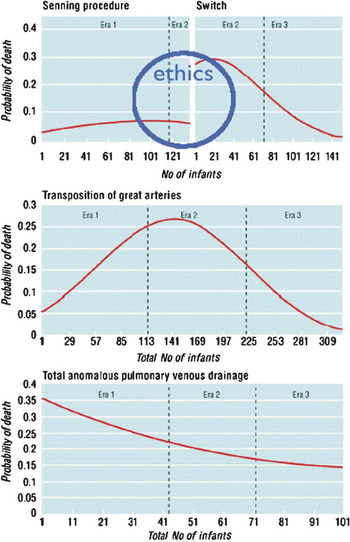
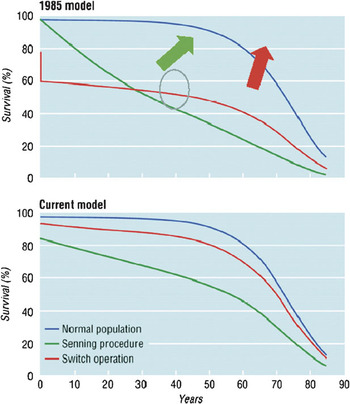
The phenomenon of learning curves for those caring for children with congenital cardiac malformations is well documented.Reference Bull, Yates, Sarkar, Deanfield and de Leval28 Through a series of nine graphs, we will demonstrate multiple facets of this concept. Each graph demonstrates a different part of the many different types of learning curves. In Figure 1, we show the outcomes of children treated for transposition and totally anomalous pulmonary venous connection from a retrospective study performed at The Great Ormond Street Hospital for Children. Era 1 is the time prior to the first arterial switch performed at Great Ormond Street. The atrial switch was the exclusive surgical procedure for transposed arterial trunks at that time. Era 2 is the time during the learning curve for the arterial switch, when both procedures were performed. Era 3 is after the last atrial switch procedure was performed as a primary treatment for transposition at Great Ormond Street. In this study, the control group was children who underwent repair of totally anomalous pulmonary venous connection. Figure 2 shows that, during these three time intervals, the probability of death continuously declined for neonates and infants with totally anomalous pulmonary venous connection. In the same time interval, however, the probability of death transiently increased for neonates and infants with transposition secondary to the institutional learning curve associated with the transition from the atrial to the arterial switch operation. Figure 3 reveals that, during the learning curve, a patient theoretically would have had to survive until adulthood to see any survival benefit from the arterial switch, while in the current era, the survival benefit begins at the time of the operation. In the present day, it is difficult to know whether such a learning curve would be tolerated. Survival was virtually assured with the standard procedure, with known long-term problems in adulthood that include atrial arrhythmias, tricuspid regurgitation, and right ventricular failure after the atrial switch. With the second newer operation, the known higher mortality at the time of the surgical procedure was accepted secondary to the potential long-term benefits with a morphologically left ventricle as the systemic pumping chamber, and with minimal atrial surgery. These concerns suggest that innovation may be suppressed by public opinion and low tolerance for learning curves, especially in the modern litiginous era.
This figure documents the outcomes of children treated for transposition and totally anomalous pulmonary venous connection from a retrospective study performed at The Great Ormond Street Hospital for Children. Era 1 is before the first arterial switch performed at Great Ormond Street. Era 2 is during the learning curve, when both the arterial switch and the Senning procedure were performed. Era 3 is after the last Senning procedure was performed as the primary procedure for transposition at Great Ormond Street. In this study, repair of totally anomalous pulmonary venous connection is used as a control. This figure is reproduced with permission from the British Medical Journal.

This figure shows that, during the three time intervals displayed in Figure 1, the probability of death continuously declined for neonates and infants with totally anomalous pulmonary venous connection. During these same time intervals, the probability of death transiently increased for neonates and infants with transposition secondary to the institutional learning curve associated with the transition form the Senning procedure to the arterial switch operation. This figure is reproduced with permission from the British Medical Journal.

This figure reveals that during the learning curve, a patient theoretically would have had to survive until adulthood to see any survival benefit from the arterial switch, while in the current era, the survival benefit is instantaneous. This figure is reproduced with permission from the British Medical Journal.

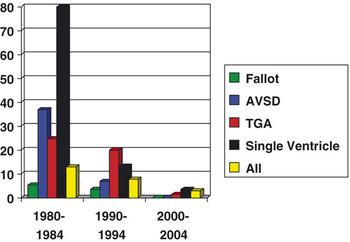
This phenomenon of learning curves can be seen in other examples as well. Figure 4 documents the career institutional learning curve for Harald L. Lindberg at Rikshospitalet of the University of Oslo in Norway. This graph documents operative mortality for patients undergoing surgery for tetralogy of Fallot, atrioventricular septal defect, transposition, and functionally univentricular heart in the first four years of the three consecutive decades of the 1980s, 1990s, and the current decade. Results in the modern era are outstanding, as are the results all three eras when compared to contemporaneous standards. Obviously, results have improved dramatically as techniques and technologies have evolved. Just as obvious is the fact that the outcomes and learning curve of the 1980s would be totally unacceptable in the current era.
This figure documents the career institutional learning curve for Harald L. Lindberg, MD, PhD at Rikshospitalet of the University of Oslo in Norway. This graph documents operative mortality for patients undergoing surgery for tetralogy of Fallot (TOF), atrioventricular septal defect (AVSD), transposition (TGA), and functionally univentricular heart (single ventricle) in the first 4 years of the three consecutive decades of the 1980s, 1990s, and the current decade.

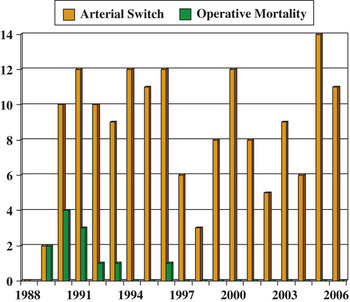
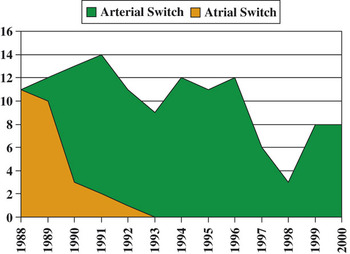
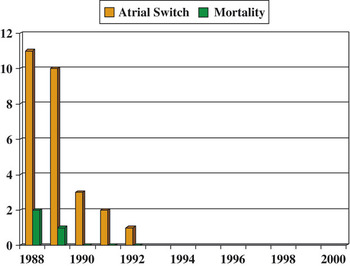
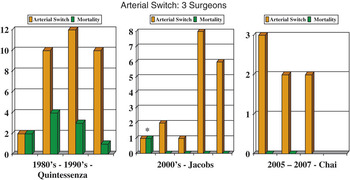
Figure 5 documents every arterial switch performed by Jim Quintessenza until January 1, 2007, with data shown inclusively from 1989 through 2006. Although an obvious institutional learning curve is demonstrated in the first five years of this study, results since that time have been excellent, with only one death amongst the last 127 operations performed, giving a mortality of 0.787%, and no deaths in the last 91 procedures. Figures 6 and 7 reveal that the institutional learning curve, experienced in the first 5 years as documented in Figure 5, occurred at a time when an institutional transition was occurring between the atrial and arterial switch operations, and at a time when the results with the atrial switch were excellent. Figures 8 and 9 demonstrate that, with appropriate mentorship, new surgeons can learn new operations without experiencing the same learning curve as their mentors. This concept applies to operations with both low and higher operative mortality.
This figure documents every arterial switch performed by Jim Quintessenza through January 1, 2007, with data from 1989 through 2006 inclusive. The x-axis is year and the y-axis is number of cases per year. Although an obvious institutional learning curve is demonstrated in the first five years of this study, results since that time have been excellent, with only one patient dying amongst the last 127 operations, and no deaths in the last 91.

This figure documents the number of atrial switches and arterial switches performed as the primary procedure for transposition at All Children’s Hospital from 1988 until 2000, inclusive. The x-axis is year and the y-axis is number of cases per year.

This figure documents the operative mortality for all patients treated with an atrial switch operation as the primary procedure for transposition after 1987 at The Congenital Heart Institute of Florida. The x-axis is year and the y-axis is number of cases per year.

This figure documents the outcomes of three surgeons at The Congenital Heart Institute of Florida during their initial learning curve for the arterial switch operation. The x-axis is year and the y-axis is number of cases per year. (*=Operative mortality occurred on postoperative day 111 secondary to renal failure.)

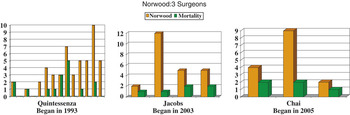
This figure documents the outcomes of three surgeons at The Congenital Heart Institute of Florida during their initial learning curve for the Norwood “Stage 1” operation. The x-axis is year and the y-axis is number of cases per year.

In addition to mentorship, the detailed tracking of outcomes is an essential tool for mastering any learning curve. It is crucial to utilize a detailed database to track outcomes, to learn, and to protect both yourself and your patients.29–Reference Jacobs, Wernovsky and Elliott35 It is our professional responsibility to engage in self-evaluation, in part employing “voluntary sharing of data for the expressed purpose of improved patient care”.Reference Mavroudis36, Reference Jacobs, Mavroudis and Jacobs37 For cardiac surgical subspecialties, the database now existing for the Society of Thoracic Surgeons “will play an increasingly important role in improving the quality of cardiothoracic surgery”.Reference Bonchek, Harley and Wilbur2 Evolving initiatives in the fields of paediatric cardiology, paediatric critical care, and paediatric cardiac anaesthesia will play similar roles.Reference Jacobs, Mavroudis and Jacobs38
Balance
Cardiothoracic surgeons are amongst the most challenged individuals when it comes to demands on their time. Satisfaction with their career has traditionally been thought to be high amongst cardiothoracic surgeons. In 2002, the report about the thoracic surgery workforce, prepared by the of the American Association for Thoracic Surgery and the Society of Thoracic Surgeons, showed that active thoracic surgeons who were self-designated as paediatric cardiac surgeons had the highest level of professional satisfaction, with fifty-one percent declaring themselves to be extremely satisfied, compared with thirty-nine percent of adult cardiac surgeons and thirty-seven percent of general thoracic surgeons.Reference Shemin, Dziuban and Kaiser39 In 2005, another survey, this time specifically focused specifically on congenital cardiac surgeons, reported that thirty-one percent of paediatric cardiac surgeons were extremely satisfied, and forty percent were very satisfied.Reference Jacobs, Mavroudis, Jacobs, Tchervenkov and Pelletier40 Despite this high satisfaction reported by congenital cardiac surgeons, forty-seven percent of those surveyed stated that “the demands of my profession have been difficult to balance with my relationship to my spouse and/or children and we find ourselves constantly challenged by this”, whilst an additional sixteen percent of those surveyed stated that “the demands of my profession have had serious consequences on my relationship with my spouse and/or children”.Reference Jacobs, Ungerleider and Tchervenkov41 The task of establishing an appropriate balance between professional and personal life can be extremely challenging.
No one can presume to be an expert when it comes to balancing the needs of home and work. This applies to the paediatric cardiac surgeon, the cardiologist, and general practitioners alike. The word “balance” has been defined as “…equipoise between contrasting, opposing or interacting elements”, making its achievement a difficult challenge for anyone. Moreover, “balance” for one person may be “unbalance” for another. Integration of the personal and professional aspects of life can be daunting, and may differ for men and women. Women face the challenges of advancing their career and achieving academic promotion whilst usually assuming the primary responsibility for life at home and child care. They are often asked to be the most academically productive during their most successful reproductive years. In addition, many academic institutions do not have family-friendly policies in keeping with other workplace environments. Men, nonetheless, may face similar challenges, and must fight the stereotypes associated with their gender. There is a negative perception associated with a “less academic” track, or part-time work, particularly for men. In the 21st century, childcare is generally shared between parents, yet paternity leave is uncommon, and discouraged in many institutions. Furthermore, men often consider it their responsibility to be the primary provider of income.
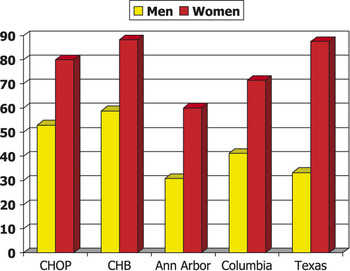
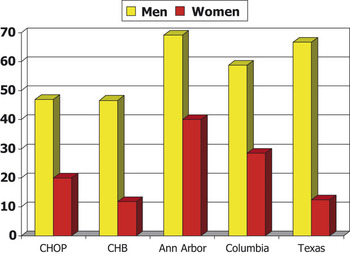
Despite the issues that face all academic physicians, women continue to be at a disadvantage with regard to mobility in their career. Female faculty at academic institutions progress more slowly and are less likely to be promoted than their male peers. A review of institutional databases of academic settings was recently performed to assess differences between the genders. On average, women continue to be paid 11% less than men, when adjusted for rank, track, specialty, years and administrative positions.Reference Wright, Schwindt and Bassford42 In addition, almost one-third of women report some type of discrimination, in contrast to only one-twentieth of men.Reference Wright, Schwindt and Bassford42 Women physicians with children have statistically fewer publications, and report less job satisfaction, than their male counterparts with children.Reference Carr, Ash and Friedman43 Original articles from six prominent medical journals published over the last four decades were recently categorized according to gender of the first and senior authors. The number of women authors was overwhelmingly in the minority.Reference Jagsi, Guancial and Worobey44 The proportion of women authors increased over the period studied, with the largest increase in the fields of paediatrics and obstetrics and gynaecology, and the smallest in surgery. Women, nonetheless, are more likely than men to pursue an academic medical career, albeit that the number which advances to become associate and full professors is significantly less than expected.Reference Nonnemaker45 This disparity for gender is also true for the specialty of paediatric cardiology. In Figure 10, we demonstrate the proportions of men as opposed to women at the ranks of instructor and assistant professor at five of the largest centres for paediatric cardiology in the United States of America. In each centre, the proportion of women faculty is higher. In Figure 11, we show the proportions of men and women at the rank of associate or full professor. Men are more strongly represented at these higher academic levels at all of these institutions. In fact, in several institutions there are no women at the rank of full professor in the specialty of paediatric cardiology. On average, women faculty tend to be younger, but this cannot account for all of the discrepancy. In many institutions, women, who have been in the field of paediatric cardiology for years, are not yet at the rank of associate professor.
This figure demonstrates the percentage of men and women at the ranks of instructor and assistant professor at five of the largest centres for paediatric cardiology in the United States of America. In each, the proportion of women faculty is higher when compared to men. CHOP is Children’s Hospital of Philadelphia. CHB is Children’s Hospital, Boston.

This figure shows the percentage of men and women at the rank of associate or full professor. Men are much more likely to be at a higher academic level at all of these institutions. In fact, in several institutions there are no women appointed as full professors in paediatric cardiology. CHOP is Children’s Hospital of Philadelphia. CHB is Children’s Hospital, Boston.

These issues of life at work and at home are not insoluble. There are several ways to help assure success at both academic and personal levels. As with the learning curve described for congenital cardiac surgeons, solutions generally involve alliances with appropriate people. Choosing appropriate mentors, with balanced views of life, is also a key to success in these endeavours. Success also depends on dedication to the chosen medical field of interest, and a commitment to the development of organizational skills to help prioritize the necessary tasks and goals. Academic institutions need to assure that advancement of careers is not achieved at the expense of family life. They need to make it a priority to have viable options available for academic physicians. When asked how this can be achieved, physicians report that a flexible work environment, without negative consequences, is the most important factor.Reference McGuire, Bergen and Polan46 Other areas that can improve the academic environment include departmental mentoring for career development, administrative secretarial support, and the potential for sabbatical time from clinical and administrative duties. Other studies suggest that junior faculty want to have better mentors, including advice on how to choose the appropriate academic track, heightened awareness of options such as maternity and paternity leave with added time, and equitable benefits and opportunities.Reference Fox, Schwartz and Hart47 Mentors play a fundamental role in helping junior faculty achieve academic success. In addition to finding opportunities for professional exposure, such as research projects and invited presentations, they can also help regarding when it is appropriate to say “no”. Writing a chapter for a book, or taking on an administrative role, can be complementary, and perhaps beneficial to advancement. But saying “yes” to these activities means saying “no” to something else, either in the professional or the personal sphere. Striking the appropriate balance can be difficult.
With regard to professional life, there are several ways that balance, or at least the perception of balance, can be achieved. Early in one’s career, it may be best to delay the academic track, or to work part-time while considering having a family. Many institutions have part-time policies, but they are typically not advertised for fear of mass exodus. It is important, therefore, to become a self-advocate in this regard. It is crucial to establish the policies and guidelines of the home institution. Many medical students are now choosing fields of interest primarily based on lifestyle, and the flexibility of working. Over the last decade, physicians who work part-time are becoming a significant portion of the workforce. Paediatricians make up the largest group who work part-time. Of these, almost nine-tenths are women.Reference Shrier, Shrier, Rich and Greenberg48 Women tend to work part-time because of issues with child care, while men tend to work part-time in order to make additional income to support a family.Reference Fox, Schwartz and Hart47 Part-time work has many potential advantages. The promotion “clock” can often be delayed, with additional time added prior to promotion. It also gives the advantage of maintaining skills, while still having non-traditional time to be at home. Part-time work, nonetheless, also has disadvantages. The slower pathway to promotion will result in some colleagues “passing you by”. As difficult as this may be, it is the price to be paid for spending more time at home. Moreover, part-time work usually results in significantly less pay for the amount of time spent. These are some of the sacrifices of such a decision. Despite these possible pitfalls, part-time work can help physicians through particularly vulnerable periods, such as the early infancy of their children, or caring for an ailing spouse or parent. Another option for physicians with significant family responsibilities is to be hired on an alternative academic track. Many universities have added new tracks to their academic system to lessen the burden. These tracks typically have fewer requirements for research, and more for clinical work and teaching. Often, this type of track is more conducive to part-time work, and more feasible for some physicians who cannot find the time to perform research, or write grants to fund studies. In many cases, collaborative research can still be done, but without the burden of obtaining grant support or achieving promotion based on the output of research.
Being promoted in an academic track may be quite important personally. In fact, in some institutions the job may depend on it. But children, and for that matter the spouse, family and friends, often do not understand all of the issues involved, and may only be concerned with lack of availability at home. Organization and prioritization are key factors to success. It is very difficult for the professional and his or her partner to have high-powered or time-consuming positions. Often, one parent has to step back while the other pursues career goals. This role can change at various times in the career, and the other partner can take a turn dedicating more time to home life. Other helpful hints that many of us have learned along the way include making it a priority to hire someone to clean the home, having a dedicated and comfortable situation for child-care, and making time for the important events in family life. All of these are assurances that the time spent at home is for being with the family. Make sure that the time available for vacations is taken, and do not wait until next year! Try to be home for dinner as much as possible. It is only during the time spent with the family that it is possible to learn what is happening in the lives of the spouse and children. Alliances should be made with stay-at-home parents. They are often willing to help out, and the favour can be returned at weekends. If the family contains more than one child, be sure to spend some time alone with each one. If all of the work cannot be finished during the normal workday, the hours after the bedtime of the children, or the early hours before school, may prove to be productive. If possible, analysis of data, or writing a manuscript, should be carried out at home. There are often less distractions, and much can be accomplished without having to travel to work. All of these options are available if the working environment is family-friendly and supportive. It is important, nonetheless, to demonstrate hard work, and dedication to the specialty. There is a fine line between being perceived as not professionally committed, and being able to spend a fulfilling amount of time at home. In the final analysis, it is also important to take time to exercise, to read, to enjoy the company of friends, and to explore new hobbies. Flexibility, time management, commitment to the task at hand, effort, and well though out choices, are all necessary in order to achieving meaningful balance amongst the triad of personnel needs, commitments to others including family and friends, and professional responsibilities.Reference Satir, Banmen, Gerber and Gomori23, Reference Dickey, Ungerleider, Coselli, Conklin and Sade49 It is necessary to establish goals, set priorities, define objectives, and leave some time for fun and games.
Conclusion
A variety of professional and personal challenges must be met by all those working in health care. The acquisition of learned skills, and the use of special tools, will facilitate the process of conquering these challenges. Choosing appropriate role models and mentors can help progression through any learning curve in a controlled and protected fashion. Professional and personal satisfaction are both necessities. Finding the satisfactory balance between work and home life is difficult, but possible with the right tools, organization skills, and support system at work and at home. The concepts of mentorship, learning curves and balance cannot be underappreciated.