Introduction
Diets for finishing beef cattle during winter in the UK and Ireland are often based on grass silage. However, breeding of grass varieties over recent decades has focused on increasing productivity of grass swards when high inputs of nitrogen (N) fertilizer have been applied, which has resulted in increased reliance on perennial ryegrass (Lolium perenne)-based swards. Native grass species such as tall fescue have been shown to be less productive, with less successful fermentation during ensiling when compared with newly sown perennial ryegrass-based swards (Opitz et al., Reference Opitz, Boberfeld, Sterzenbach, Daniel, Lüscher, Jeangros, Kessler, Huguenin, Lobsiger, Millar and Suter2004). With increasing fluctuations in world oil and inorganic N prices and a reduction in farm application of inorganic N over the last 20 years, grass varieties such as tall fescue may be of increasing interest, as there has been less intense selection for yield in response to high N fertilizer inputs. In addition, different grass species have been shown to have different concentrations of n-3 polyunsaturated fatty acids (PUFA) (Dewhurst et al., Reference Dewhurst, Scollan, Youell, Tweed and Humphreys2001; Elgersma et al., Reference Elgersma, Ellen, Dekker, van der Horst, Boer and Tamminga2003), which may alter the fatty acid (FA) profile of lean meat from beef animals offered silages harvested from different plant species. The first objective of the current study was to examine the performance of, and the quality of meat from, beef cattle offered fescue-based grass silage (FGS). In recent years, there has been more focus on identifying alternative feeds for finishing beef cattle of potentially lower cost and perceived environmental and nutritional benefits. Offering whole-crop cereal silage to finishing beef cattle during the winter has been shown to increase total dry matter (DM) intake compared with offering grass silage, but with mixed effects on animal performance (O'Kiely and Moloney, Reference O'Kiely and Moloney1995; Keady et al., Reference Keady, Lively, Kilpatrick and Moss2007; Dawson, Reference Dawson2012). Legumes with a high protein content, such as crimped lupin grain, have been shown to have a crude protein (CP) concentration of 447 g/kg DM (Fychan et al., Reference Fychan, Marley, Theobald, Roberts and Jones2009) and can reduce inorganic fertilizer costs through fixation of atmospheric N. Dawson (Reference Dawson2012) examined the value of lupins (Lupinus luteus L.)/triticale (triticosecale) silage (LTS) for beef cattle in comparison with perennial ryegrass silage (PRGS). However, there would appear to be no reports on the value of lupin/wheat (Triticum aestivum L.) (LWS) or pea (Pisum sativa)/oat (Avena sativa) silage (POS) for finishing beef cattle. Consequently, the current study was designed to examine the value of LWS, POS and LTS in the diet of finishing beef cattle. Unfortunately, the legume content of the legume/cereal silages was lower than anticipated.
Materials and methods
Treatments and design
Ten treatment diets were offered to 90 castrated male cattle (steers) which were crosses of the continental beef breeds in a five silages × two concentrate intakes factorial design experiment. The five silage treatments consisted of PRGS as the sole forage, tall FGS as the sole forage, a mixture of LTS and PRGS at a 50:50 ratio on a DM basis, a mixture of LWS and PRGS at a 50:50 ratio on a DM basis and a mixture of POS and PRGS at a 50:50 ratio on a DM basis. The silages were supplemented with 4 and 7 kg of concentrate/head/day.
Diets
A perennial ryegrass-based sward was harvested for silage (PRGS) on 14 May and 16 July as a primary growth and first regrowth, respectively, and allowed to wilt for 24 h. The sward had received 80 kg N on 21 March and after the primary growth was harvested on 14 May. A fescue/perennial ryegrass-based sward was established in September using a seed mixture consisting of 430, 220, 140, 70, 70 and 70 g/kg fresh weight of Barolex tall fescue (festuca arundinacea), Portrush (diploid perennial ryegrass), Foyle (tetraploid hybrid ryegrass), Ensign white clover (Trifolium repens), Comer timothy (Phelum pratense) and Barmoral cocksfoot (Dactylis glomerata), respectively. The fescue/perennial ryegrass-based sward (FGS) received 86 kg N, 37 kg potassium oxide (K2O) and 19 kg sulphur (S)/ha on 21 March and after the primary growth was harvested. It was harvested for silage (FGS) on the 22 May and 24 August as a primary growth and first regrowth, respectively, and allowed to wilt for 24 h. Both PRGS and FGS were harvested with a self-propelled precision-chop forage harvester (John Deere 6850, John Deere, Moline, Illinois, USA) and ensiled in trench silos following treatment with a bacterial inoculant (Ecosyl, Lactobacillus plantarum; Ecosyl Products Ltd., Middlesborough, UK) at a rate of 3 litres/t. The two crops of each silage were ensiled as two horizontal layers in the same silo so that the animals received the two crops simultaneously.
Lupin/triticale, lupin/wheat and pea/oat mixtures were sown at rates of 149, 174 and 186 kg/ha on 15 April, 16 April and 15 April, respectively, at a seed mixture of 51:49 legume:cereal and harvested on 28 September, 28 September and 29 August, respectively. Varieties sown for LTS, LWS and POS were Kruglik (spring yellow lupin), Logo (spring triticale), Kruglik (spring yellow lupin), Belvoir (spring wheat), Prophet (spring pea) and Firth (spring oat), respectively. Two days post sowing of the legume/cereal seed mixtures, fields received 55 kg N and 30 kg K2O/ha. Lupin/triticale, LW and PO all received a pre-emergent herbicide, Stomp at a rate of 4 litres/ha (BASF plc, Agricultural Products, Cheshire, UK) and butoxone (BASF plc) at a rate of 4.5 litres/ha. The time of harvesting for the legume/cereal whole-crop silages was based on pea and lupin pod maturity, gauged by degree of pod fill and texture and colour of pea and lupin grains. The legume/cereal whole crops were harvested directly using a self-propelled precision-chop forage harvester (John Deere, 6850) fitted with a crimper header (Kemper model Champion 4500, Stadtlohn, Germany) The legume/cereal whole crops were treated with an inoculant (Whole crop gold, Biotal Ltd, Cardiff, Wales) at a rate of 4 litres/t, and were then ensiled in trench silos, and were thoroughly compacted before being sealed with two layers of polythene sheeting weighted down by a complete covering of tyres.
The concentrate offered throughout the experiment contained 495, 200, 150, 100, 30 and 25 g/kg fresh weight of rolled barley, soyabean meal, sugar beet pulp, maize meal, molasses and minerals/vitamins, respectively. The fresh weights of the legume/cereal silages and PRGS were weighed and mixed manually, at a ratio of 50:50 on a DM basis, based on the daily DM concentrations of silages offered the previous week. The silages were then offered to the animals once daily, in quantities sufficient to allow a refusal of 50–100 g/kg intake. Concentrates were offered twice daily in the morning and evening on top of the silages.
Animals and management
The ten treatment diets were offered to 90 Charolais, Limousin and Belgian Blue cross steers which were sourced from nine suckler farms across Northern Ireland. They were initially 555 (s.d. 41) kg liveweight and 595 (s.d. 48) days of age. They were allocated to the ten dietary treatments, initially being balanced across treatments for genotype, and farm of origin. They were then allocated to the treatments at random within each of these categories. There were five Charolais, three Limousin and one Belgian Blue animal in each treatment (n = 9). Four weeks before the beginning of the experiment, the animals were housed in groups of four or five in slatted floor pens. During this 4-week pre-experimental period, they were given medium-quality grass silage, supplemented with 3 kg of concentrates/head/day, trained to use the calan electronically operated feeding doors in the pens and treated for internal and external parasites using ivermectin (1.0% w/v, Ivomec, MSD-Agvet, Hoddesdon, Hertfordshire, UK). At the beginning of the experiment, when the animals were allocated to the ten treatment diets, they were also allocated to pens within the house: the four heaviest animals in each treatment were penned together and the five lightest animals were penned together in a separate pen. The cattle in each treatment were randomized throughout the house. Thus, there were a total of 20 pens (two per treatment). The pens were 3.35 × 4.8 m and each pen had eight electronically operated feeding doors. The roof of the house was made of sheets of asbestos with ventilation at the ridge and the sides.
Measurements
A transect was determined diagonally across each field, from one corner to the opposite corner on the morning of harvest for each of the legume/cereal whole crops, in which quadrats were placed at regular intervals. In each quadrat (1 × 1 m), vegetative material was cut 40 mm above ground level with a reciprocating-knife bar mower. Species identification was then carried out on the vegetative material removed from each quadrat and divided into legumes, cereal plants and foreign species (i.e. species that were not sown). The total weight of each of the legume/cereal crops was recorded at harvesting.
The quantities of silage and concentrates offered were recorded daily throughout the experiment and refusals were removed and recorded twice per week. Silage DM concentration was determined daily by drying at 85 °C for 24 h, and the daily dried samples were bulked weekly for the determination of neutral detergent fibre (NDF), acid detergent fibre (ADF) and ash. Fresh silage was also dried at 60 °C for 24 h, for determination of starch and water-soluble carbohydrate concentrations once per fortnight. Fresh samples of silage were taken once per week throughout the study for determination of volatile-corrected oven DM concentration, pH, ammonia-N, volatile FA, alcohol and gross energy (GE) concentrations. Concentrates offered were sampled daily and bulked weekly for the determination of oven DM, N, GE, ADF, NDF and ash. Chemical analyses were undertaken as described by Kennedy et al. (Reference Kennedy, Dawson, Lively, Steen, Fearon, Moss and Kilpatrick2018).
Fifteen additional steers (three per silage treatment), of similar breed and live weight to the experimental animals and that had been given the diets for 20 days, were used to determine the apparent digestibilities of, and N retentions from, the total diets when the silages were offered ad libitum and supplemented with 4 kg of concentrates/head/day. The steers were housed in metabolism crates which were designed to facilitate the separate collection of faeces and urine. A 48 h period was allowed between recorded feed intake and the total collection of faeces and urine, which were collected daily for 6 days. Dry matter concentration of the silages was determined daily. Feed, faeces and urine samples were bulked for 3-day periods and analysed for DM, ash, N, ADF, NDF and GE concentrations. The concentrations of metabolizable energy (ME) in the total diets were estimated by assuming that methane energy was 0.08 of GE intake (Blaxter and Clapperton, Reference Blaxter and Clapperton1965). In addition, the apparent digestibilities of the five silages were determined using four castrated male sheep per silage, housed in metabolism crates and offered the silages as the sole diet at maintenance level of energy intake. A 48 h period was allowed between recorded feed intake and the total collection of faeces, which was collected daily for 6 days. Chemical composition of the silages, concentrates, faeces and urine was determined as described by Kennedy et al. (Reference Kennedy, Dawson, Lively, Steen, Fearon, Moss and Kilpatrick2018).
Steers were weighed on two consecutive days at the beginning and end of the experiment and at fortnightly intervals throughout the experiment. As liveweight gains were linear, they were calculated by linear regression using all of the weights recorded throughout the experiment. Animals were slaughtered at 109, 116, 123 and 137 days after the start of the experiment: 25 animals were slaughtered after 109 and 116 days and 20 animals were slaughtered after 123 and 137 days. On each of the four slaughter dates, two animals were slaughtered from each of the ten treatments. An additional five animals were selected for slaughter on each of the first two slaughter dates, one animal from each of the five silage treatments, irrespective of concentrate intake. On each of the four occasions, the animals were weighed on the day prior to slaughter and the two or three heaviest animals on each treatment were selected for slaughter the following day. On the day of slaughter, selected steers were taken from their pens in the morning, mixed on a lorry and taken to a commercial abattoir located 42 km from the Institute. Animals were stunned using a pneumatically operated captive bolt stunning system and bled immediately after stunning at an EU approved abattoir which had routine veterinary inspection provided by the Department of Agriculture for Northern Ireland. Carcass weight was recorded for each steer at slaughter. For the calculation of daily carcass gains, the initial carcass weight of each animal was predicted using the relationship between liveweight and carcass weight given by Keady and Kilpatrick (Reference Keady and Kilpatrick2005). Carcass conformation and fat classification were determined by visual assessment according to the European Carcass Classification Scheme as described by Kempster et al. (Reference Kempster, Cuthbertson, Harrington, Kempster, Cuthbertson and Harrington1982). All carcasses were changed from Achilles suspension at 45 min post mortem to suspension from the aitch bone (tenderstretch) and chilled under standard commercial conditions. The carcasses were placed in a chiller and subjected to a temperature of 12 °C for 10 h, after which the air temperature was reduced to 1 °C for 24 h. Subsequently, the carcasses were stored at 2–4 °C. At 48 h post mortem, the carcasses were quartered between the 10th and 11th ribs and the depth of subcutaneous fat over the longissimus dorsi muscle measured at points a quarter, half and three quarters of the way across the maximum width of the muscle on both sides of each carcass as described by Kempster et al. (Reference Kempster, Cook and Smith1980). The amount of marbling fat in the cut surface of the longissimus dorsi muscle was assessed using the eight-point scale of the United States Department of Agriculture photographic standards (Agricultural Research Council, 1965). The area of the longissimus dorsi muscle at the tenth rib on each side of the carcass was determined from a photograph using a computer image programme.
The fore-rib joint between the 6/7th and 10/11th rib from the left forequarter of each carcass was removed as described by Kempster et al. (Reference Kempster, Cook and Smith1980), without being trimmed. The joint was further dissected into separable lean, separable fat and bone using the method described by Cuthbertson et al. (Reference Cuthbertson, Harrington and Smith1972).
Instrumental assessment of meat quality
Meat quality assessment was undertaken on longissimus dorsi muscle obtained from the fore-rib joint. The pH, cooking loss, shear force values and CIELAB colour parameters (International Commission on Illumination, CIE; L, lightness; A [or a*], green–red and B [or b*], blue–yellow colour components) were determined as described by Kennedy et al. (Reference Kennedy, Dawson, Lively, Steen, Fearon, Moss and Kilpatrick2018).
Fatty acid analysis
Fatty acid analysis was undertaken on lean meat from the longissimus dorsi muscle obtained from the fore-rib joint, frozen at −20 °C, 4 days post mortem and thawed 1 day prior to FA analysis. The methods of FA analysis were as described by Kennedy et al. (Reference Kennedy, Dawson, Lively, Steen, Fearon, Moss and Kilpatrick2018).
Statistical analysis
Data on intake, performance, carcass and meat quality were recorded on an individual animal basis (n = 90) and all analyses were carried out on this basis, with pen being taken as a random effect. The data were analysed using a linear mixed model with a Genstat restricted maximum likelihood estimation procedure for the analysis of variance of unbalanced data (Payne et al., Reference Payne, Murray, Harding, Baird and Souter2009). The model fitted fixed effects for initial liveweight, genotype, farm of origin and the five silage × two concentrate intake factorial treatments.
The model used was as follows:
 $$Y_{ij}\, = \,M\, + \,{\rm L}{\rm W}_{ij}\, + \,G_r\, + \,F_s\, + \,S_t\, + \,C_u\, + \,{\rm S}{\rm C}_{tu}\, + \,P_i\, + \,E_{ij},$$
where Y ij is the response of the j th animal in the i th pen, M is the overall mean, LWij is the initial liveweight of the j th animal, G r is the effect of the r th genotype, F s is the effect of the s th farm of origin, S t is the effect of the t th silage, C u is the effect of the u th level of concentrates, SCtu is the interaction effect of the t th silage with the u th level of concentrates, P i is the effect of the i th pen and E ij is the random error associated with the j th animal in the i th pen. Individual treatment means were compared using Fisher's least significant difference test. There were no effects of initial liveweight, breed or farm of origin.
Results
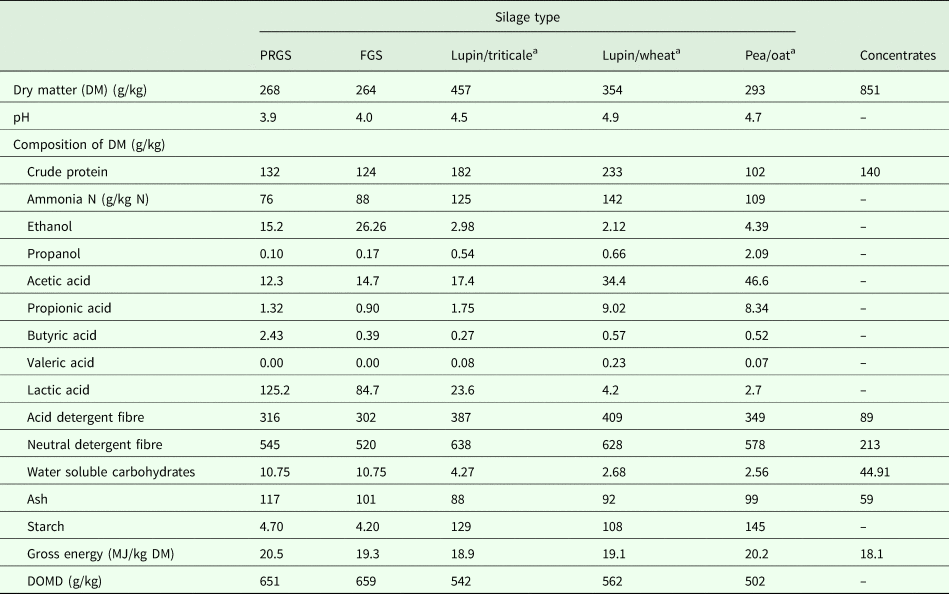
At harvest, the lupin/triticale, lupin/wheat and pea/oat crops contained 0.29, 0.47 and 0.16 legumes and 0.59, 0.49 and 0.58 cereals, respectively, the reminder being plant species that were not sown. The yields of the lupin/triticale, lupin/wheat and pea/oat crops were 7.7, 8.9 and 7.3 t DM/ha, respectively. The chemical composition of the silages and concentrates is presented in Table 1.
Chemical composition of the silages and concentrates as fed
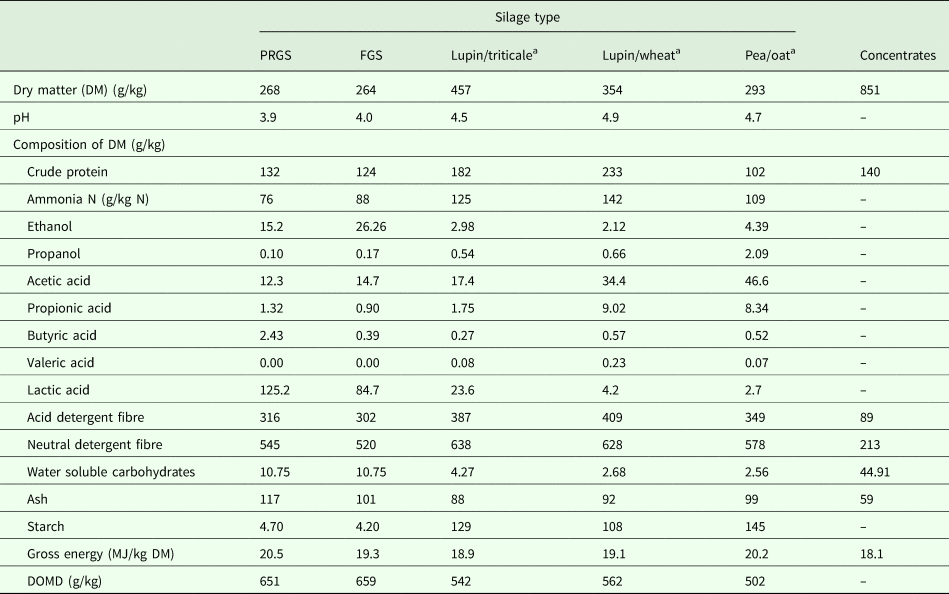
PRGS, perennial ryegrass-based grass silage; FGS, fescue/perennial ryegrass-based grass silage; DOMD, digestible organic matter in the DM determined in vivo with sheep fed at maintenance level of energy intake.
a Legume/cereal whole crop silages offered at a 50:50 DM ratio with PRGS.
Digestibilities
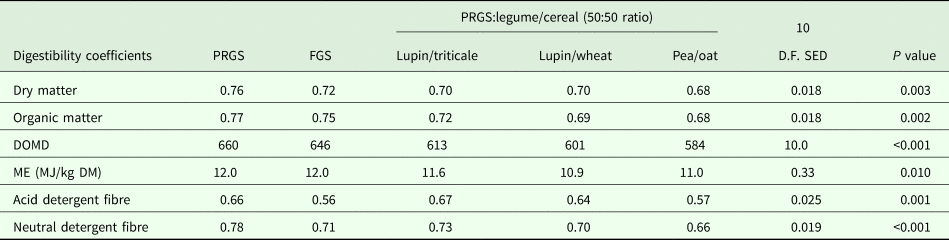
The effects of silage type on the digestibilities of the total diets are presented in Table 2. The PRGS had significantly higher (P < 0.001) DM, organic matter and NDF digestibilities, digestible organic matter in the dry matter (DOMD) and ME concentration than the legume/cereal whole crop silages. The FGS had similar organic matter digestibility, DOMD and ME concentration as the PRGS, but significantly lower DM (P < 0.01), ADF (P = 0.001) and NDF (P < 0.001) digestibilities. Within the legume/cereal silages, LTS had significantly higher organic matter (P < 0.01), ADF (P = 0.001) and NDF (P < 0.001) digestibilities and DOMD (P < 0.001) than POS.
Effects of silage type on digestibilities of the total diets (the silages were offered ad libitum and supplemented with 4 kg concentrates/head per day)
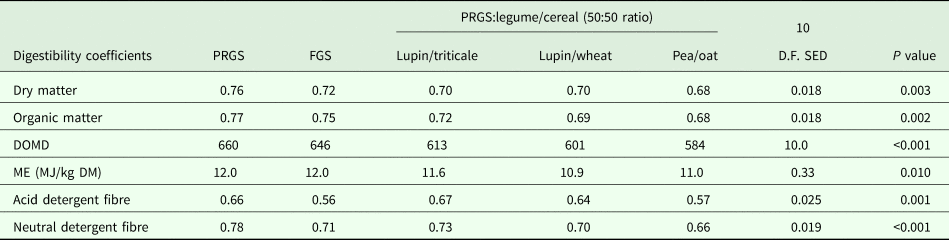
PRGS, perennial ryegrass-based grass silage; FGS, fescue/perennial ryegrass-based grass silage; DOMD, digestible organic matter in the dry matter (g/kg).
Dry matter intakes
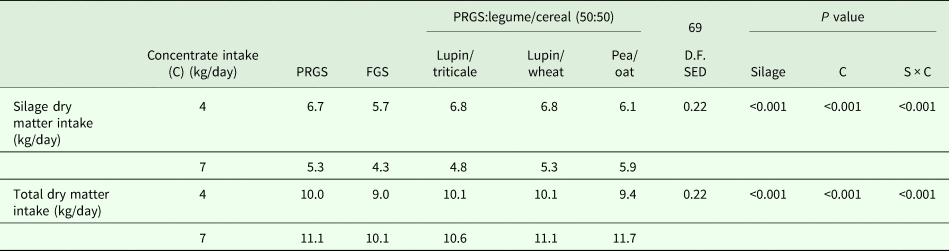
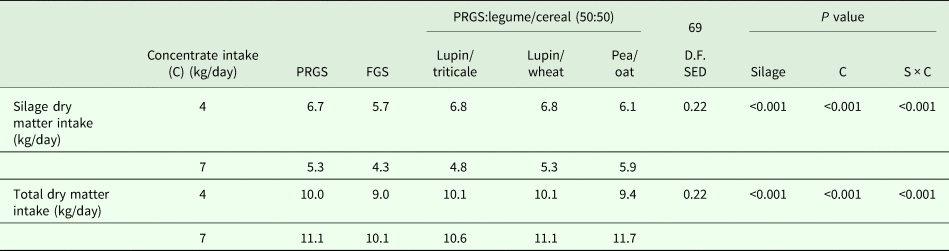
Both silage type and concentrate intake significantly affected (P < 0.001) silage and total DM intakes (Table 3), with FGS having the lowest intake and the other four silages having similar intakes. However, there was also a significant interaction (P < 0.001) between silage type and concentrate intake for silage and total DMI, because increasing the intake of concentrates from 4 to 7 kg/head/day reduced the DM intake of four of the silages by 1.4–2.0 kg/head/day, while it had very little effect on the intake of the POS.
Effects of silage type and concentrate intake on dry matter intake
PRGS, perennial ryegrass-based grass silage; FGS, fescue/perennial ryegrass-based grass silage.
Animal performance and carcass data
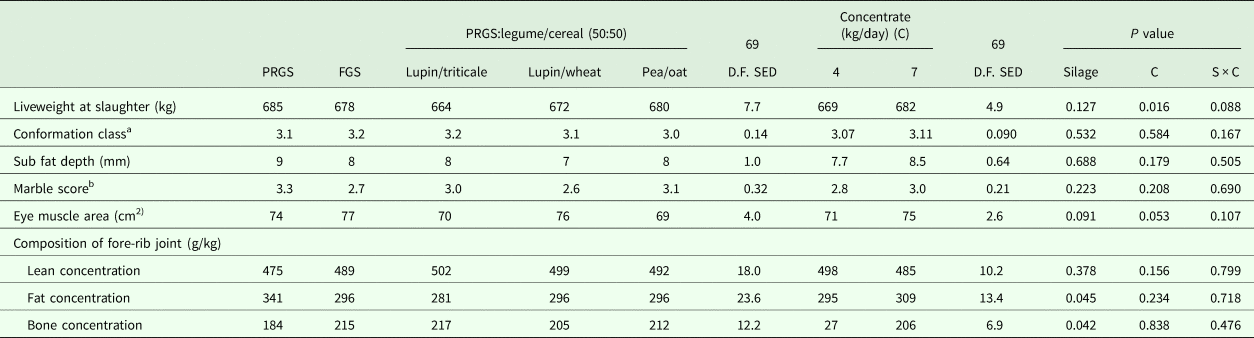
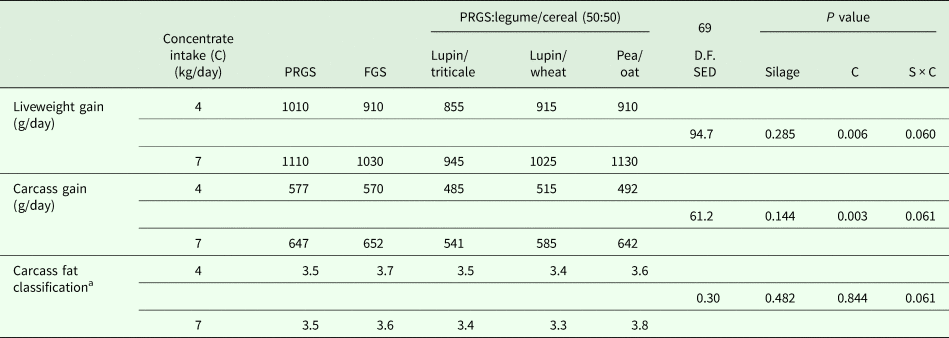
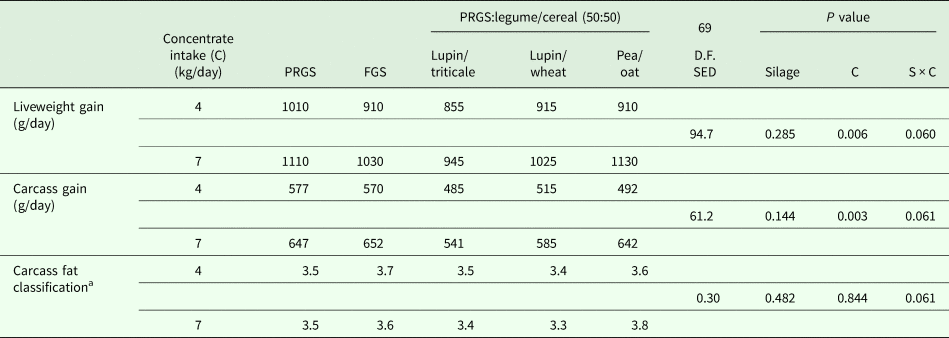
The effect of silage type and concentrate intake on animal performance and carcass characteristics is presented in Tables 4 and 5. Silage type had no significant effect on liveweight at slaughter, liveweight gain or carcass gain, but increasing concentrate intake from 4 to 7 kg/head/day increased all three of these parameters significantly (P < 0.05). Silage type did not significantly affect carcass conformation or fat classification, subcutaneous fat depth, longissimus dorsi area or the lean concentration in the fore-rib joint. However, animals given PRGS had a significantly higher (P < 0.05) fat concentration in the fore-rib joint than those given LTS and a significantly lower (P < 0.05) bone concentration than those given FGS, LTS and POS. The interactions between silage type and level of concentrate intake almost reached statistical significance (P = 0.06) for liveweight gain, carcass gain and carcass fat classification (Table 5). These were caused by greater responses in these parameters with the POS than with the other four silages when concentrate intake was increased from 4 to 7 kg/head/day. These effects are in close agreement with the values obtained for silage and total DM intake.
Effect of silage type and concentrate intake on liveweight at slaughter and carcass characteristics
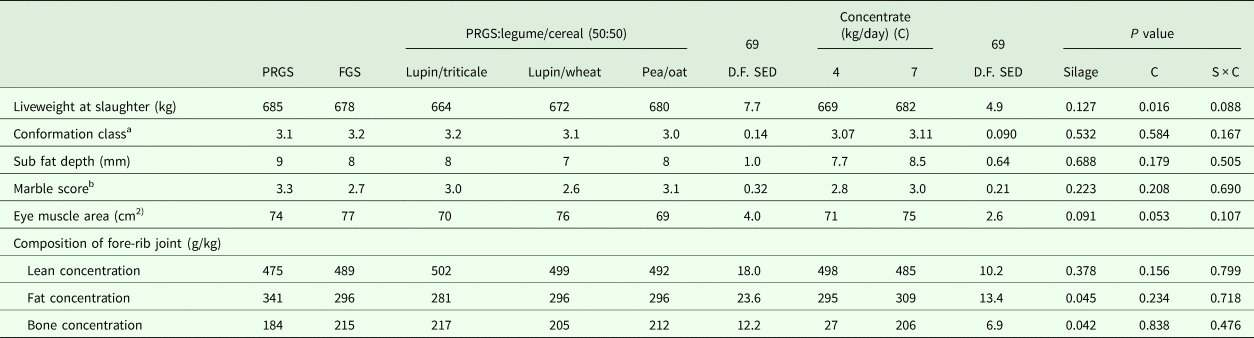
PRGS, perennial ryegrass-based grass silage; FGS, fescue/perennial ryegrass-based grass silage.
a Five-point scale, 1 = worst, 5 = best.
b Eight-point scale, 1 = least marbling, 8 = most marbling.
The effect of silage type and concentrate intake on animal performance and carcass fat classification
PRGS, perennial ryegrass-based grass silage; FGS, fescue/perennial ryegrass-based grass silage.
a Five-point scale, 1 = leanest, 5 = fattest.
Instrumental assessment of the quality of meat from the M. longissimus dorsi muscle
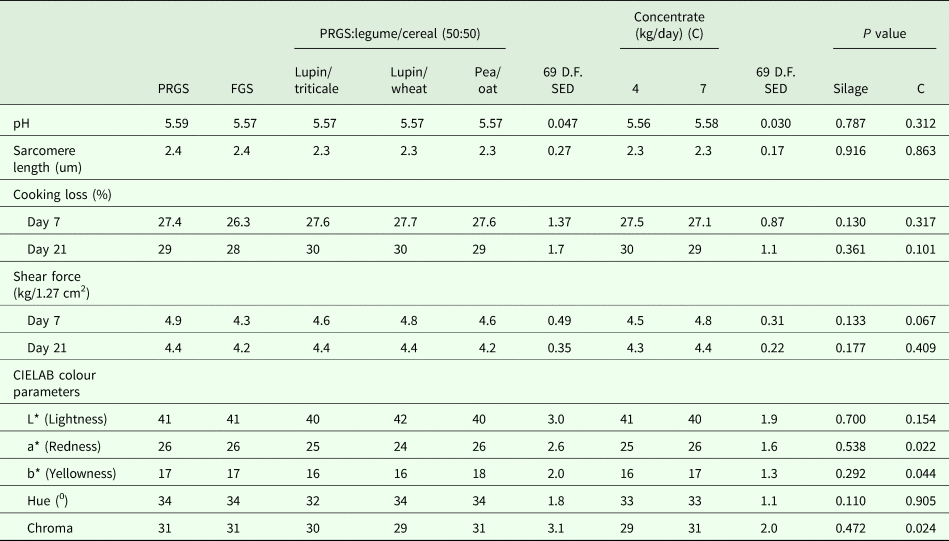
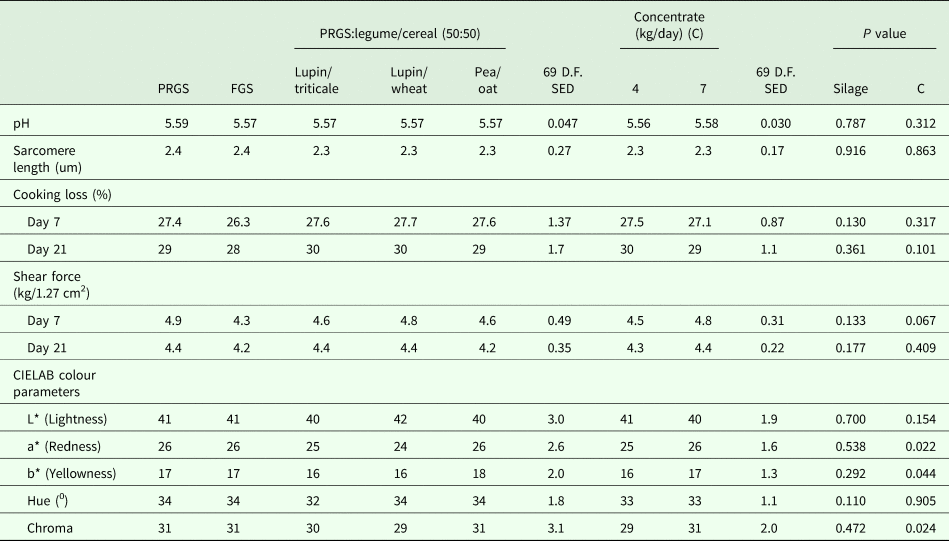
The effects of silage type and concentrate intake on meat quality are presented in Table 6. Silage type did not significantly affect pH, sarcomere length, cooking loss, Warner Bratzler shear force or colour of the meat. However, an increase in concentrate intake from 4 to 7 kg/head/day significantly increased (P < 0.05) the a*, b* and chroma colour values.
Effect of silage type and concentrate intake on the instrumental assessment of the quality of meat from the M. longissimus dorsi muscle
PRGS, perennial ryegrass-based grass silage; FGS, fescue/perennial ryegrass-based grass silage.
Fatty acid composition
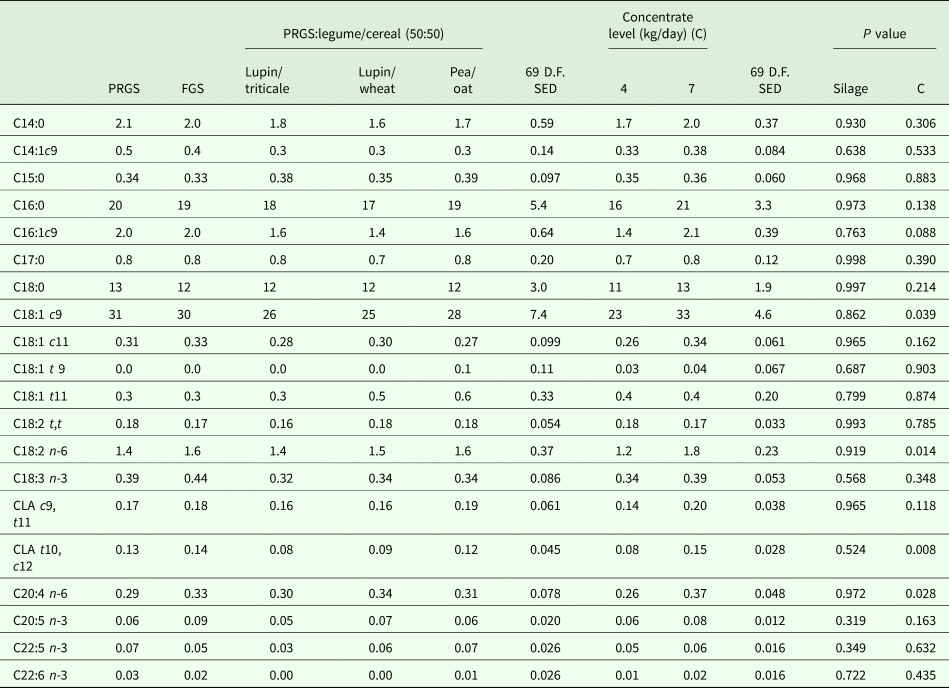
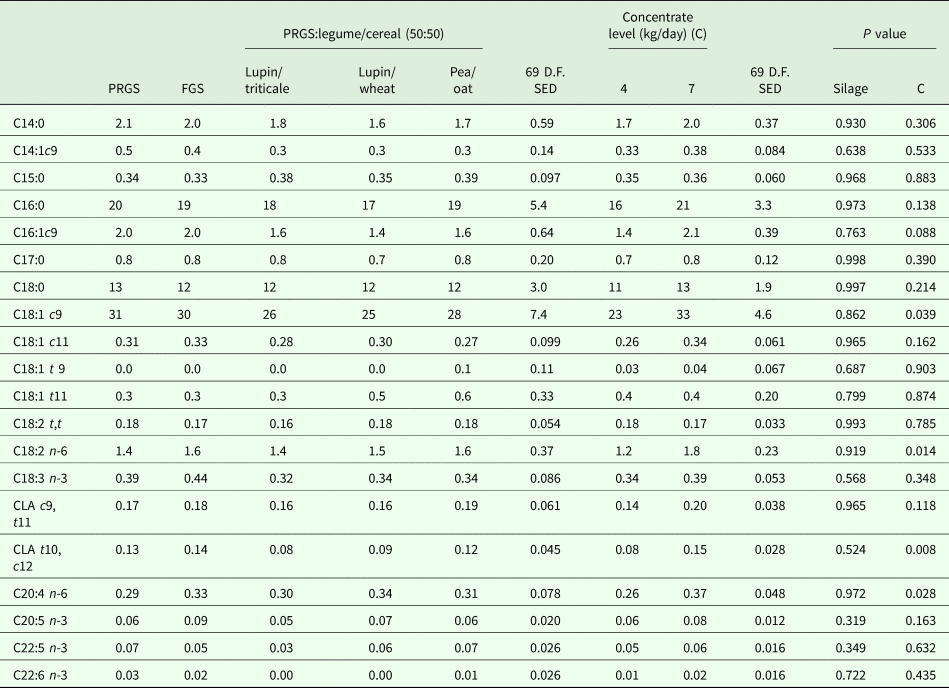
The effect of silage type and concentrate intake on FA composition of the longissimus dorsi muscle, expressed as g FA/g of lean tissue, are presented in Table 7. Silage type did not significantly affect the concentration of individual FA in the longissimus dorsi muscle. However, increasing concentrate intake from 4 to 7 kg/head per day increased the concentration of C18:1c9 (P < 0.05), C18:2 n-6 (P < 0.05), CLA t10,c12 (P < 0.01) and C20:4 n-6 (P < 0.05).
The effects of silage type and concentrate intake on fatty acid (FA) composition of the M. longissimus dorsi muscle (mg FA/g of tissue)
PRGS, perennial ryegrass-based grass silage; FGS, fescue/perennial ryegrass-based grass silage.
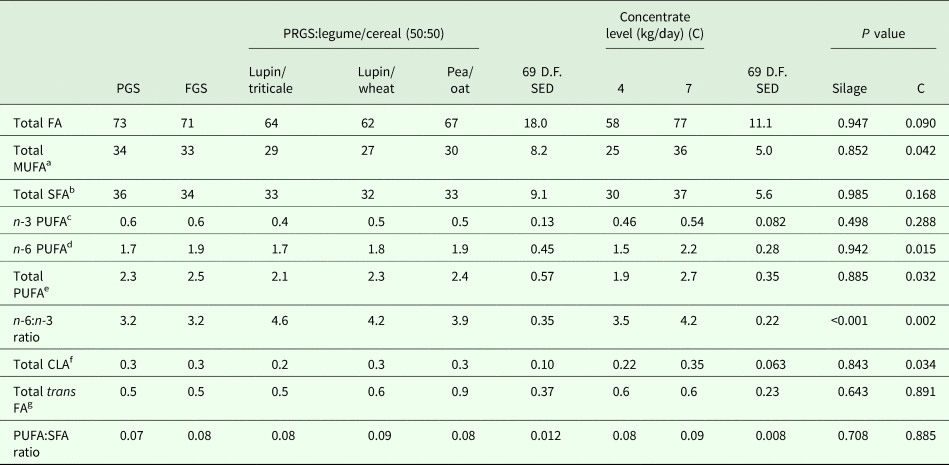
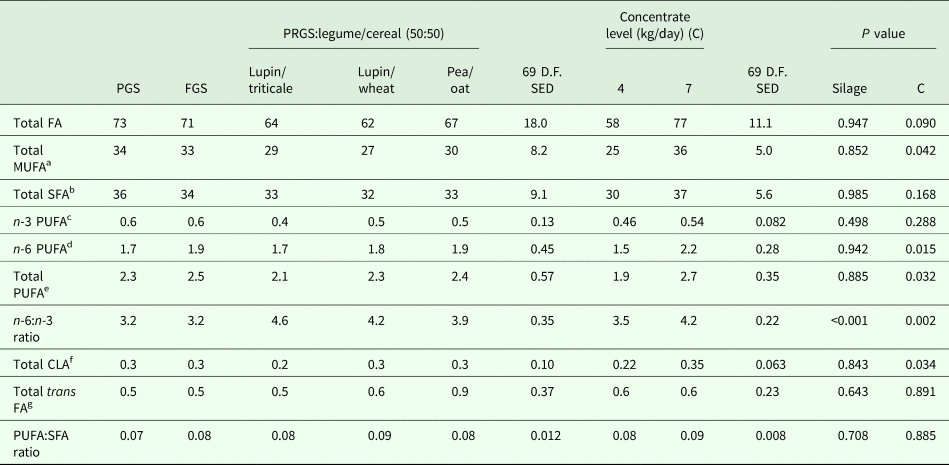
The effect of silage type and concentrate intake on FA groupings of the longissimus dorsi muscle, expressed as mg FA/g of tissue, is presented in Table 8. Meat from animals offered PRGS or FGS had a lower (P < 0.001) n-6:n-3 ratio of PUFA than animals offered LTS or LWS. Animals offered POS had a lower (P < 0.001) n-6:n-3 PUFA ratio than animals offered LTS. Increasing concentrate intake from 4 to 7 kg/head/day increased the concentration of total MUFA (P < 0.05), n-6 PUFA (P < 0.05), total PUFA (P < 0.05), n-6:n-3 ratio of PUFA (P < 0.01) and total conjugated linoleic acid (CLA).
Effect of silage type and concentrate intake on fatty acid (FA) groupings from the M. longissimus dorsi muscle (mg FA/g of tissue)
PRGS, perennial ryegrass-based grass silage; FGS, fescue/perennial ryegrass-based grass silage.
a Monounsaturated fatty acids (C14:1c9; C16:1c9; C18:1c9; C18:1c11).
b Saturated fatty acids (C10:0; C12:0; C14:0; C15:0; C16:0; C17:0; C18:0).
c n-3 (C18:3n-3; C20:5n-3; C22:5n-3, C22:6n-3).
d n-6 (C18:2n-6; C20:4n-6).
e Polyunsaturated fatty acids (C18:2 n-6; C18:3 n-3; C20:4 n-6; C20:5 n-3; C22:5 n-3; C22:6 n-3).
f Conjugated linoleic acid (C18:2 c9 t11; C18:2 t10 c12).
g trans-FA (C18:1t9; C18:1t11; C18:2t,t).
Discussion
Crop yields and silage quality
The yields of the legume/cereal crops were considerably lower than the yields of 10.4–13.0 t DM/ha recorded for whole-crop winter wheat (O'Kiely and Moloney, Reference O'Kiely and Moloney2002; Keady, Reference Keady, Park and Stronge2005; Walsh et al., Reference Walsh, O'Kiely, Moloney and Boland2008a). However, Dawson (Reference Dawson2012) recorded a similar yield to those in the present study for a crop of spring lupin/triticale (7.5 t DM/ha). There would appear to be no other reports in the literature for yields of lupin/wheat or pea/oat. However, low yields have also been recorded for white lupin whole crop (6.1 t DM/ha; Fraser et al., Reference Fraser, Fychan and Jones2005), field peas (5.6 t DM/ha; Fraser et al., Reference Fraser, Fychan and Jones2001) and beans (7.8 t DM/ha; Fraser et al., Reference Fraser, Fychan and Jones2001) when sown as the sole forage. The lower than expected proportion of legumes in the lupin/triticale and pea/oat crops may have contributed to the low yields of these crops, as there would have been less fixation of atmospheric N by the legumes.
Both PRGS and FGS were preserved well, as indicated by their low pH values, high lactic acid concentrations and low ammonia-N and butyric acid concentrations and their digestibilities were similar to the average digestibilities of grass silages made on commercial beef farms in Northern Ireland (F. O. Lively, personal communication). The legume/cereal silages were not as well preserved as the grass silages, as indicated by their higher ammonia-N and very low lactic acid concentrations, especially for LWS and POS. However, they also had very low butyric acid concentrations and high acetic acid concentrations, indicating that they had undergone a more heterofermentative bacterial fermentation. Dawson (Reference Dawson2012) also recorded high acetic, low butyric and very low lactic acid concentrations in LTS. The LTS and LWS had high CP concentrations compared with those recorded by Dawson (Reference Dawson2012) (120 g CP/kg DM), which reflects the higher legume concentration in the silages in the current study. The results of the current study and those of Dawson (Reference Dawson2012) indicate that the CP concentration of legume/cereal crops may also increase as the crop matures, as the crops harvested after 120–136 days from sowing had much lower CP concentrations than those harvested 166 days after sowing. The legume/cereal silages produced in the current study had very low digestibilities, especially the POS. Dawson (Reference Dawson2012) reported a somewhat higher DOMD value of 604 g/kg DM for LTS. However, there would appear to be no other reports in the literature on the digestibility of legume/cereal silages.
Digestibilities and dry matter intakes
The difference in digestibilities between the grass silages and the legume/cereal silages was much lower when the silages were offered to cattle and supplemented with 4 kg of concentrates/head/day than when they were offered to sheep as the sole diet. This is in agreement with the widespread finding that the digestibility of low digestibility forage increases to a greater extent when the forages are supplemented with concentrates than the digestibility of high digestibility forages (Steen et al., Reference Steen, Kilpatrick and Porter2002).
From a study of over 100 silages, Steen et al. (Reference Steen, Gordon, Dawson, Park, Mayne, Agnew, Kilpatrick and Porter1998) found that silage DM concentration, digestibility, protein concentration and fibre fractions within the silage were the major factors affecting silage DMI by beef cattle. Of the two grass silages, animals offered solely PRGS had a 1.0 kg/head/day higher silage intake than those offered FGS at both concentrate intakes. This can be attributed to a higher DM digestibility and fibre digestibilities of the total PRGS diet compared with the total FGS diet. Total DMI for animals offered PRGS and 4 kg concentrates/head/day was similar to the results of previous research studies for PRGS (Steen et al., Reference Steen, Kilpatrick and Porter2002; Keady et al., Reference Keady, Lively, Kilpatrick and Moss2007; Walsh et al., Reference Walsh, O'Kiely, Moloney and Boland2008a). Both PRGS and FGS had similar concentrate substitution rates of 0.54 and 0.55 kg silage DM per kg increase in concentrate DMI, respectively, similar to values reported by Keady and Gordon (Reference Keady and Gordon2006), Keane et al. (Reference Keane, Drennan and Moloney2006) and Keady et al. (Reference Keady, Lively, Kilpatrick and Moss2007). Keady et al. (Reference Keady, Lively, Kilpatrick and Moss2007) recorded an increase in silage and total DMI when whole crop wheat silage was included in the diet with grass silage, compared with offering PRGS as the sole forage. In contrast, in the current study, no differences in silage or total DMI were recorded with the inclusion of LWS in the diet compared with medium-quality PRGS as the sole forage, when either 4 or 7 kg concentrates/head/day were offered. In fact, when averaged over the two inputs of concentrates, the silage and total DMI were almost identical for PRGS offered as the sole forage and for 50:50 mixtures of PRGS with LTS, LWS and POS being approximately 6 kg/head/day for all four diets. This may have been at least partly due to the low concentration of legumes in the total diets, as the inclusion of legumes in the diet usually increases DMI, even when they have a lower digestibility (Dewhurst et al., Reference Dewhurst, Fisher, Tweed and Wilkins2003). There is also some evidence to suggest that there is a synergistic effect when a mixture of grass silage and whole-crop cereal silage are offered together, relative to when either of the silages are offered alone (O'Kiely and Moloney, Reference O'Kiely and Moloney2002). The high concentrate intake in the present study may have contributed to the lack of a response in intake when legume/cereal silages were included in the diet rather than PRGS as the sole forage.
When concentrate intake was increased from 4 to 7 kg/head/day, total DMI was increased by 0.42 and 0.49 kg/kg increase in concentrate DM intake for the grass silages (PRGS and FGS) and legume/cereal whole crop silages:PRGS (50:50 ratio on a DM basis), respectively. Keady and Gordon (Reference Keady and Gordon2006) observed a similar increase in total DMI of 0.44 kg/kg increase in concentrate DM intake for a grass silage of similar digestibility to that used in the present study, while Drennan and Keane (Reference Drennan and Keane1987) and Steen et al. (Reference Steen, Kilpatrick and Porter2002) obtained similar responses in total DMI to an increase in concentrate intake. There is no obvious reason for the lack of an effect on the intake of POS when the level of concentrate supplementation was increased from 4 to 7 kg/head/day.
Animal performance
In the current study, liveweight gains were modest for cattle receiving a diet containing 0.45 concentrates. This may have been partly due to their high level of performance from birth until the beginning of the experiment (0.87 kg/day) and to the low digestibility of the silages offered during the experiment. Silage type had no significant effect on animal performance or carcass characteristics. This is in close agreement with the findings of Keady et al. (Reference Keady, Lively, Kilpatrick and Moss2007), while Walsh et al. (Reference Walsh, O'Kiely, Moloney and Boland2008b) found that whole-crop wheat sustained a much higher level of performance than a poor-quality grass silage. The absence of a difference in carcass gain between the animals given PRGS and FGS in the current study is surprising, in view of the fact that the DMI of those given FGS was 1.0 kg/head/day lower than those given PRGS. Although silage type had no significant effect on daily carcass gain, there was a tendency (P = 0.14) for the animals offered the legume/cereal silages to have lower carcass gains (70 g/day or 11%) than those offered the grass silages as the sole forage. This is in agreement with the results of Dawson (Reference Dawson2012), who recorded a reduction of 16% in daily carcass gain when 0.40 of PRGS in the diet of beef cattle was replaced with LTS. As legume-based diets usually sustain higher levels of animal performance than grass-based diets (Steen and McIlmoyle, Reference Steen and McIlmoyle1982; Dewhurst et al., Reference Dewhurst, Fisher, Tweed and Wilkins2003), the absence of any beneficial effect of offering the legume/cereal silages in the current study may be attributable to the fact that <0.50 of the legume/cereal crop was legume, the silage offered was only 0.50 legume/cereal silage and the silages were supplemented with a relatively high input of concentrates. The combined effects of these three factors resulted in the total diets containing only 0.08, 0.13 and 0.05 legumes for the LTS, LWS and POS diets, respectively.
In the current study, when concentrate intake was increased from 4 to 7 kg/head/day, liveweight gain and carcass gains were increased by 130 and 87 g/head/day, respectively. These responses are within the normal range of responses when medium-quality grass silages have been supplemented with similar inputs of concentrates (Drennan and Keane, Reference Drennan and Keane1987; Steen et al., Reference Steen, Kilpatrick and Porter2002; Dawson, Reference Dawson2012).
Meat quality
Tenderness, colour and flavour are the major factors affecting meat quality (Farmer et al., Reference Farmer, Moss, Gault, Tolland and Tollerton2005). In the current study, silage type had no significant effect on instrumental assessment of meat quality or on the colour of the meat. This is in agreement with the findings of Dawson (Reference Dawson2012), who examined the effects of replacing 0.40 of grass silage with LTS. Keady et al. (Reference Keady, Lively, Kilpatrick and Moss2007) also obtained no significant effect on the instrumental assessment of meat quality when whole-crop wheat was included with grass silage (40:60 ratio on a DM basis) in the diet of finishing beef cattle. Furthermore, Lively et al. (Reference Lively, Keady, Moss, Patterson and Gordon2005) found that treatment differences in shear force values when carcasses were suspended from the Achilles tendon were eliminated when they were suspended from the aitch bone (tenderstretch method), which was used in the current study. In a review of the effects of including legumes in the diet, Dewhurst et al. (Reference Dewhurst, Delaby, Moloney, Boland and Lewis2009) found that there was little evidence that forage type influences meat quality in terms of tenderness when other confounding factors are eliminated.
Fatty acids
Total FA concentration in the current study (67 mg/g of longissimus dorsi muscle) was higher than in previous studies (Steen et al., Reference Steen, Kilpatrick and Porter2002, Reference Steen, Lavery, Kilpatrick and Porter2003; Steen and Porter, Reference Steen and Porter2003; French et al., Reference French, O'Riordan, Monahan, Caffrey and Moloney2003; Scollan et al., Reference Scollan, Hocquette, Nuernberg, Dannenberger, Richardson and Moloney2006), in which values of 20–50 mg FA/g of longissimus dorsi muscle have been recorded. This is likely to have been due to the high lifetime growth rates of the animals, the heavy slaughter weights and hence the high fat classification, as Scollan et al. (Reference Scollan, Hocquette, Nuernberg, Dannenberger, Richardson and Moloney2006) have shown a positive relationship between carcass weight and fat classification and the FA concentration in muscle.
Previous studies have shown that the replacement of grass silage by legume forage (red clover silage) increased the concentration of C18:3 n-3 and lowered the n-6:n-3 ratio of PUFA in lean beef (Scollan et al., Reference Scollan, Hocquette, Nuernberg, Dannenberger, Richardson and Moloney2006). The higher n-6:n-3 ratio for the animals offered the legume/cereal silages than for those offered the grass silages as the sole forage is likely to have been due to the inclusion of a whole-crop cereal in the diet, which had good establishment rates in comparison to the legume crops. Both wheat and triticale can be harvested as grain crops and are often used in concentrate ratios which have been shown to increase n-6:n-3 ratio of FA in lean beef (Steen et al., Reference Steen, Kilpatrick and Porter2002, Reference Steen, Lavery, Kilpatrick and Porter2003). The low inclusion rates of legumes in the diets containing the legume/whole-crop cereal silages is likely to have been a further factor contributing to the high n-6:n-3 ratio of FA for these diets.
In the current study, concentrate intake had a greater effect on FA composition of lean meat than forage type. The higher concentration of n-6 PUFA and n-6:n-3 ratio of PUFA with the higher intake of concentrates are in agreement with previous findings (Steen et al., Reference Steen, Kilpatrick and Porter2002, Reference Steen, Lavery, Kilpatrick and Porter2003). However, the higher concentration of CLA in the animals with the higher intake of concentrates is contrary to previous findings. For example, Steen and Porter (Reference Steen and Porter2003) obtained a 3.5-fold increase in the concentration of CLA when cattle were finished at pasture rather than on a high-concentrate diet, while Enser et al. (Reference Enser, Richardson, Nute, Fisher, Scollan and Wood2001), Scollan et al. (Reference Scollan, Choi, Kurt, Fisher, Enser and Wood2001) and French et al. (Reference French, O'Riordan, Monahan, Caffrey and Moloney2003) also obtained significant increases in CLA concentration when finishing cattle were offered fresh grass or grass silage rather than high-concentrate diets. However, in the present study, animals were slaughtered after a constant time on the treatments rather than at constant liveweight or constant fatness; consequently, those with the higher intake of concentrates were fatter at slaughter than those with the lower concentrate intake. Although the effect was not statistically significant, animals given 7 kg concentrates/head/day had 32% more total FA in the longissimus dorsi muscle than those given 4 kg of concentrates/head/day. Consequently, when the concentrations of individual FA or groups of FA were expressed as mg/g of total FA, the significant differences in the concentrations of total PUFA, n-6 PUFA, n-6:n-3 ratio of PUFA and total CLA due to the difference in concentrate intake were eliminated.
Conclusions
Offering legume/cereal whole crop silages (LTS, LWS and POS) in combination with medium-quality grass silage at a ratio of 0.50 grass silage:0.50 legume/cereal silage has no beneficial effect on the performance of finishing beef cattle, or on carcass characteristics, the instrumental assessment of meat quality or the FA composition of lean beef. The rationale for considering the use of legume/cereal silages as a partial replacement for grass silage was to reduce the winter feed costs of beef cattle. Although N fertilizer inputs were reduced compared with those for a two-cut grass silage system, when the costs of establishment and the low yields are considered, the total costs per tonne of digestible DM would probably be greater for legume/cereal silage than for medium-quality grass silage. Taken in conjunction with the lack of any improvement in animal performance, the results of the current study do not justify the inclusion of spring sown legume/cereal silage in the diets of beef cattle.
Financial support
The authors acknowledge the Department of Agriculture, Environment and Rural Affairs (DAERA); Agriculture and Horticulture Development Board (AHDB) and AgriSearch for funding this project.
Conflict of interest
None.
Ethical standards
This experiment was carried out at the Agri-food and Biosciences Institute (AFBI), Hillsborough, Co. Down, Northern Ireland, with the approval of the AFBI Hillsborough Ethical Review Committee, and the work was conducted in accordance with the requirements of the UK Animals (Scientific Procedures) Act 1986.