Anxiety is the most prevalent psychiatric disorder among children and adolescents, affecting up to one in five youth (Beesdo, Knappe, & Pine, Reference Beesdo, Knappe and Pine2009). These youth are known to have more difficulty coping with challenging events and negative or potentially threatening information, such as negative social evaluation, leading to poorer psychosocial functioning and distressing levels of emotional reactivity (see reviews by Asselmann & Beesdo-Baum, Reference Asselmann and Beesdo-Baum2015; Beesdo et al., Reference Beesdo, Knappe and Pine2009). Furthermore, studies have shown that the excessive emotional reactivity that is found in children with anxiety may be a consequence of neural hypersensitivity to a variety of negative stimuli, including social evaluation and negative facial expressions (see reviews by Beesdo et al., Reference Beesdo, Knappe and Pine2009; Strawn et al., Reference Strawn, Dominick, Patino, Doyle, Picard and Phan2014). Unfortunately, homotypic and heterotypic continuity of psychiatric disorders is common throughout the lifespan for youth with anxiety (Costello, Copeland, & Angold, Reference Costello, Copeland and Angold2011) even following anxiety treatment (Kendall, Safford, Flannery-Schroeder, & Webb, Reference Kendall, Safford, Flannery-Schroeder and Webb2004). Specifically, the occurrence of childhood clinical anxiety is highly predictive of the reoccurrence of anxiety and onset of depression during adolescence (Bittner et al., Reference Bittner, Egger, Erkanli, Jane Costello, Foley and Angold2007; Costello et al., Reference Costello, Copeland and Angold2011).
This is a major concern for the continued development of youth with a history of anxiety because adolescence is already known to be a risk period for depression and anxiety (Birmaher et al., Reference Birmaher, Ryan, Williamson, Brent, Kaufman, Dahl and Nelson1996; Hankin, Reference Hankin2006; Hofmann, Sawyer, Fang, & Asnaani, Reference Hofmann, Sawyer, Fang and Asnaani2012; Yap, Allen, & Sheeber, Reference Yap, Allen and Sheeber2007), and youth experience increases in emotional lability as they begin facing many new social challenges, such as navigating more complex peer and romantic relationships and more conflictual relationships with parents (Laursen & Collins, Reference Laursen, Collins, Steinberg and Steinberg2009; Parker, Rubin, Erath, Wojslawowicz, & Buskirk, Reference Parker, Rubin, Erath, Wojslawowicz, Buskirk, Cicchetti and Cohen2006; Rudolph & Hammen, Reference Rudolph and Hammen1999). Adolescents also experience an increased awareness of social evaluation and heightened self-consciousness (Rankin, Lane, Gibbons, & Gerrard, Reference Rankin, Lane, Gibbons and Gerrard2004). Therefore, it remains important to better understand how positive environmental factors, such as parental warmth, may help bolster resilience against this heightened risk for future disorder in youth with histories of anxiety.
Despite an emphasis on peer influence during adolescence, parents remain an integral part of adolescents’ social environments and play an important role in youths’ emotional development (see reviews by Baumrind, Reference Baumrind, Cowan and Hetherington1991; Yap, Pilkington, Ryan, & Jorm, Reference Yap, Pilkington, Ryan and Jorm2014). Gottman, Katz, and Hooven (Reference Gottman, Katz and Hooven1996) theorized that beginning in childhood, youth learn how to effectively regulate their emotions in response to stressful events through warm, responsive, and communicative parenting behavior. Accordingly, warm, positive parenting has been associated with lower levels of child anxiety and depressive symptoms (Bayer, Sanson, & Hemphill, Reference Bayer, Sanson and Hemphill2006; Schwartz et al., Reference Schwartz, Byrne, Simmons, Whittle, Dudgeon, Yap and Allen2014; Schwartz et al., Reference Schwartz, Simmons, Whittle, Byrne, Yap, Sheeber and Allen2017; Yap & Jorm, Reference Yap and Jorm2015), and further, adolescents’ affective responses to stress or negative situations have been found to mediate this relationship (Schwartz et al., Reference Schwartz, Simmons, Whittle, Byrne, Yap, Sheeber and Allen2017; Valiente, Lemery-Chalfant, & Swanson, Reference Valiente, Lemery-Chalfant and Swanson2009; Yap, Allen, & Ladouceur, Reference Yap, Allen and Ladouceur2008; Yap, Schwartz, Byrne, Simmons, & Allen, Reference Yap, Schwartz, Byrne, Simmons and Allen2010). Given that youth with a history of childhood anxiety have a propensity towards emotional overreactivity in response to challenging situations and socially evaluative contexts (Silk, Davis, McMakin, Dahl, & Forbes, Reference Silk, Davis, McMakin, Dahl and Forbes2012), the effects of parental warmth are likely of particular importance to whether these youth will develop anxiety and/or depressive symptoms during the adolescent years. However, the relationship between parenting and clinical child anxiety is not straight-forward, as parents of youth with clinical anxiety can become overprotective and overinvolved, which inhibits opportunities for these youth to gain autonomy in coping with challenging situations (Ollendick & Grills, Reference Ollendick and Grills2016).
To this end, previous research on childhood clinical anxiety has found that parenting behaviors are important factors to consider when investigating the maintenance of anxiety in youth (Fisak & Grills-Taquechel, Reference Fisak and Grills-Taquechel2007). For example, it is suggested that parents may play a role in transmitting their own cognitions and expectations to their youth, which consequently either support or discourage threat interpretation biases and anxious behavior, such as avoidance and fear reactivity, in their children (Barrett, Rapee, Dadds, & Ryan, Reference Barrett, Rapee, Dadds and Ryan1996; Dadds, Barrett, Rapee, & Ryan, Reference Dadds, Barrett, Rapee and Ryan1996; Fliek, Roelofs, van Breukelen, & Muris, Reference Fliek, Roelofs, van Breukelen and Muris2019; Silk et al., Reference Silk, Sheeber, Tan, Ladouceur, Forbes, McMakin and Ryan2013). In contrast, supportive and positive parenting behaviors that encourage youth to face fearful or challenging situations have been found to associated with better response to cognitive behavioral therapy treatment in youth with anxiety (Silk et al., Reference Silk, Sheeber, Tan, Ladouceur, Forbes, McMakin and Ryan2013). Much of the research on the effects of parenting on anxiety and depressive symptoms in youth following anxiety treatment has been completed in studies that assess the enhancing effects of parental involvement in child anxiety therapy treatment protocols (Breinholst, Esbjørn, Reinholdt-Dunne, & Stallard, Reference Breinholst, Esbjørn, Reinholdt-Dunne and Stallard2012). Although the results of these have been mixed, there are several studies that have shown that bolstering parenting behaviors that increase parental warmth, increase child autonomy, and enhance parent–child communication during treatment helps to mitigate youths’ risk for the reoccurrence of anxiety and depressive symptoms at long-term follow-up (Barrett, Dadds, & Rapee, Reference Barrett, Dadds and Rapee1996; Cobham, Dadds, Spence, & McDermott, Reference Cobham, Dadds, Spence and McDermott2010).
According to the parental acceptance–rejection theory, individuals who experience low levels of parental warmth are more emotionally labile when faced with stressful events and are more likely to perceive threat within interpersonal contexts (i.e., social threat) than are those who experience high levels of warmth and acceptance (Rohner, Reference Rohner2004). This suggests that high levels of warmth and acceptance from parents may help buffer or protect adolescents with histories of anxiety after treatment from maintaining a trajectory of increased sensitivity to social evaluative threat, including critical or rejection feedback from parents and peers. The perception that one's parents are approachable, safe, and helpful during times of need may also help these youth continue to develop their own capacity and self-efficacy to regulate negative emotion when facing stressful situations. Given that depression, similar to and highly comorbid with anxiety, is also characterized by problems with high negative emotionality, dysregulation, and interpersonal sensitivity (Hankin, Reference Hankin2006), parental warmth following treatment may also be a protective factor against the development of depressive symptoms in these at-risk adolescents.
Developmental models posit that parents continue to influence the development of emotion processing and regulation and associated neural circuitry throughout adolescence because this neural circuitry is still developing and is therefore sensitive to environmental input (Morris, Silk, Steinberg, Myers, & Robinson, Reference Morris, Silk, Steinberg, Myers and Robinson2007). This suggests that altered activation in such neural circuitry may an important role in linking between parenting and internalizing problems later. Specifically, two key neural networks (i.e., the affective-salience network and the emotion-regulatory network) are found to play a key role in emotion processing and regulation (Casey, Jones, & Hare, Reference Casey, Jones and Hare2008; Phillips, Drevets, Rauch, & Lane, Reference Phillips, Drevets, Rauch and Lane2003; Phillips, Ladouceur, & Drevets, Reference Phillips, Ladouceur and Drevets2008). Within the affective-salience network, regions including the amygdala, anterior insula, and subgenual cingulate (sgACC), have been implicated in identifying, appraising, and experiencing emotion in response to negative events (Baird et al., Reference Baird, Gruber, Fein, Maas, Steingard, Renshaw and Yurgelun-Todd1999; Casey et al., Reference Casey, Jones and Hare2008; Guyer et al., Reference Guyer, Lau, McClure-Tone, Parrish, Shiffrin, Reynolds and Nelson2008; Masten et al., Reference Masten, Eisenberger, Borofsky, McNealy, Pfeifer and Dapretto2011; Mayberg et al., Reference Mayberg, Liotti, Brannan, McGinnis, Mahurin, Jerabek and Fox1999; Morris et al., Reference Morris, Frith, Perrett, Rowland, Young, Calder and Dolan1996; Phan, Wager, Taylor, & Liberzon, Reference Phan, Wager, Taylor and Liberzon2002; Phillips et al., Reference Phillips, Drevets, Rauch and Lane2003; Rudolph, Miernicki, Troop-Gordon, Davis, & Telzer, Reference Rudolph, Miernicki, Troop-Gordon, Davis and Telzer2016; Silk et al., Reference Silk, Siegle, Lee, Nelson, Stroud and Dahl2014). Within the emotion-regulatory network, regions including the anterior and posterior dorsolateral and ventrolateral regions (DLPFC; VLPFC), as well as dorsal and rostral regions of the anterior cingulate (ACC) are thought to support the cognitive processes that are involved in down-regulating negative emotion (Casey et al., Reference Casey, Jones and Hare2008; Goldin, McRae, Ramel, & Gross, Reference Goldin, McRae, Ramel and Gross2008; Nelson & Guyer, Reference Nelson and Guyer2011; Ochsner & Gross, Reference Ochsner and Gross2005, Reference Ochsner and Gross2008; Phan et al., Reference Phan, Wager, Taylor and Liberzon2002; Phillips et al., Reference Phillips, Drevets, Rauch and Lane2003; Phillips et al., Reference Phillips, Ladouceur and Drevets2008). For example, when asked to actively reappraise sadness or ignore negatively salient stimuli, both adults and adolescents typically exhibit greater activation in these regulatory regions (Fales et al., Reference Fales, Barch, Rundle, Mintun, Snyder, Cohen and Sheline2008; Goldin et al., Reference Goldin, McRae, Ramel and Gross2008; Lévesque et al., Reference Lévesque, Eugène, Joanette, Paquette, Mensour, Beaudoin and Beauregard2003; Lévesque et al., Reference Lévesque, Joanette, Mensour, Beaudoin, Leroux, Bourgouin and Beauregard2004; Price, Paul, Schneider, & Siegle, Reference Price, Paul, Schneider and Siegle2013; Silvers et al., Reference Silvers, Insel, Powers, Franz, Helion, Martin and Ochsner2016), supporting this network's engagement in regulation processes. Therefore, it may be that the effects of parenting on adolescent emotion processing and regulation that have been found in behavioral research may be at least partially attributed to the parental influence on adolescents’ brain function within these two important neural networks.
The purpose of the current study was to examine the extent to which adolescents’ perceptions of parenting behavior, specifically warmth, predicted the function of brain regions within the affective-salience and emotion-regulation neural networks 2 years later in a sample of adolescents with a history of clinical anxiety. We further tested whether the neural function in these brain regions mediated the links between parental warmth and adolescents’ levels of anxiety and depressive symptoms 2 years later. Importantly, all of the assessments included in this study were measured after the adolescents underwent psychotherapy treatment for their anxiety. Adolescents reported on their perceptions of parental warmth within several weeks of completing a 16-week psychotherapy protocol, and their neural function and internalizing symptomatology were measured 2 years later. Therefore, this study is unique in that the results may shed light on the importance of parental warmth for reducing the reoccurrence of internalizing symptoms in a group of adolescents who have an increased risk for future internalizing disorders. Moreover, our longitudinal assessment of adolescents’ neural functioning and internalizing symptoms occurred when they were approximately 13 years old, so they were subsequently entering a highly transitional period that is marked by high risk for the development of depression.
The current study also specifically assessed adolescents’ neural functioning while they were listening to and processing salient, negative feedback from their parent (i.e., criticism). We chose to use real-world parental criticism as a highly salient task stimulus, given that one of the most salient contexts for adolescents is the social domain and adolescents have shown a heightened neural sensitivity to social evaluation (Nelson, Leibenluft, McClure, & Pine, Reference Nelson, Leibenluft, McClure and Pine2005; Silk et al., Reference Silk, Davis, McMakin, Dahl and Forbes2012; Sontag, Graber, & Clemans, Reference Sontag, Graber and Clemans2011). Further, higher levels of neural response to social threat stimuli (e.g., peer rejection and maternal criticism) have been related to the occurrence of anxiety and depression in adolescents (Guyer et al., Reference Guyer, Lau, McClure-Tone, Parrish, Shiffrin, Reynolds and Nelson2008; Masten et al., Reference Masten, Eisenberger, Borofsky, McNealy, Pfeifer and Dapretto2011; Rudolph et al., Reference Rudolph, Miernicki, Troop-Gordon, Davis and Telzer2016; Silk et al., Reference Silk, Lee, Elliott, Hooley, Dahl, Barber and Siegle2017; Silk et al., Reference Silk, Siegle, Lee, Nelson, Stroud and Dahl2014). Specifically, parental criticism has been shown to effectively elicit activation in the affective-salience (e.g., insula and amygdala) and emotion-regulation (e.g., DLPFC and caudal ACC) networks (Aupperle et al., Reference Aupperle, Morris, Silk, Criss, Judah, Eagleton and Alvarez2016; Hooley et al., Reference Hooley, Gruber, Parker, Guillaumot, Rogowska and Yurgelun-Todd2009; Lee, Siegle, Dahl, Hooley, & Silk, Reference Lee, Siegle, Dahl, Hooley and Silk2014), while higher levels of amygdala activation to criticism has been found in adults and adolescents with depression relative to healthy individuals (Aupperle et al., Reference Aupperle, Morris, Silk, Criss, Judah, Eagleton and Alvarez2016; Hooley et al., Reference Hooley, Gruber, Parker, Guillaumot, Rogowska and Yurgelun-Todd2009; Hooley, Gruber, Scott, Hiller, & Yurgelun-Todd, Reference Hooley, Gruber, Scott, Hiller and Yurgelun-Todd2005; Silk et al., Reference Silk, Lee, Elliott, Hooley, Dahl, Barber and Siegle2017).
Few studies have reported links between parenting and adolescent neural response to negative or socially threatening stimuli in regions of the affective-salience and/or emotion-regulation networks (Butterfield et al., Reference Butterfield, Siegle, Lee, Ladouceur, Forbes, Dahl and Silk2019; Guyer et al., Reference Guyer, Jarcho, Pérez-Edgar, Degnan, Pine, Fox and Nelson2015; Romund et al., Reference Romund, Raufelder, Flemming, Lorenz, Pelz, Gleich and Beck2016). Existing results show that warm and supportive parenting behaviors are associated with lower levels of adolescent neural response in the amygdala, anterior insula, and perigenual cingulate in response to negatively valenced facial expressions, simulated peer rejection, and threat words (Butterfield et al., Reference Butterfield, Siegle, Lee, Ladouceur, Forbes, Dahl and Silk2019; Guyer et al., Reference Guyer, Jarcho, Pérez-Edgar, Degnan, Pine, Fox and Nelson2015; Romund et al., Reference Romund, Raufelder, Flemming, Lorenz, Pelz, Gleich and Beck2016), whereas adolescents with mothers who reported higher levels of harsh and punitive parenting behaviors showed a reduced VLPFC response to peer rejection (Guyer et al., Reference Guyer, Jarcho, Pérez-Edgar, Degnan, Pine, Fox and Nelson2015). The results of one study showed that positive parenting behaviors were inversely related to neural activation in the insula and cingulate (i.e., greater activation) in clinically anxious youth compared with healthy controls and that these mediated associations with lower levels of avoidant coping in the real world (Butterfield et al., Reference Butterfield, Siegle, Lee, Ladouceur, Forbes, Dahl and Silk2019). These studies suggest that warmer and more positive parenting is associated with lower activation in affective-salience regions in response to negatively valenced stimuli in healthy youth, while harsher parenting may be associated with lower activation in emotion-regulation regions. In addition, a study that investigated the association between parental warmth and concurrent brain activation in healthy adolescents by using parental criticism stimuli (as in the current study) found that more warmth was related to less activation in response to criticism within the regions that are involved in social-cognitive processing (e.g., temporal parietal junction and precuneus), but no significant findings emerged within the affective-salience or regulatory neural regions (Lee et al., Reference Lee, Siegle, Dahl, Hooley and Silk2014).
Based on the theory that individuals with low levels of parental warmth are more likely to perceive threat within interpersonal contexts (i.e., social threat; Rohner, Reference Rohner2004), it follows that adolescents who perceive greater levels of warmth from their parent, as indexed by perceptions of parenting behaviors that convey acceptance, love, approachability, and attention, will perceive parental critical feedback as less salient and/or threatening and perhaps be more equipped to regulate subsequent negative affect. As such, these youth would likely exhibit lower levels of depressive and anxiety symptoms compared with those who perceive less warmth from their parents. The present study seeks to test this neurodevelopmental model of resilience in which warm parenting may be an important protective factor against continued problems with internalizing disorders in at-risk adolescents. To do this, we investigated how parental warmth may help to buffer the occurrence of future symptoms of anxiety and depression via the indirect effects of brain function in response to critical parental feedback in high-risk youth as they age into mid-adolescence. Accordingly, we hypothesized that in response to parental criticism, adolescents who perceived their parent as being warm would exhibit (a) less activation in the affective-salience regions (i.e., amygdala, insula, and sgACC) and (b) more activation in the emotion-regulatory regions (i.e., VLPFC, DLPFC, and ACC) of the brain 2 years later. We next explored to what extent levels of anxiety and depression at the time of the scan could be explained by the association between maternal warmth and neural activation. We hypothesized that lower neural activation in the affective-salience regions and greater activation in emotion-regulation regions would mediate the relationship between higher levels of parental warmth and lower levels of internalizing symptoms 2 years later.
Method
Participants
The participants were 30 adolescents with a history of anxiety disorder and their primary caregivers, including 29 birth mothers and one father. Data were collected as part of the Child Anxiety Treatment Study (CATS) and the subsequent longitudinal Child Anxiety Treatment Study—Depression Follow-up (CATS-D) study. CATS was a randomized treatment study that assessed the predictors and correlates of treatment response to cognitive behavioral therapy (CBT) and child centered therapy (CCT) in anxious youth (see Silk et al., Reference Silk, Tan, Ladouceur, Meller, Siegle, McMakin and Mannarino2016 for treatment descriptions). The participants were recruited from the community through local media advertisements, referrals from pediatricians, school counselors, university mental health clinics, and other university research studies (Silk et al., Reference Silk, Tan, Ladouceur, Meller, Siegle, McMakin and Mannarino2016). At the original CATS assessment, 9- to-14-year-old anxious youth were required to meet the DSM-IV criteria (American Psychiatric Association, Reference American Psychiatric Association2000) for current generalized anxiety disorder, separation anxiety disorder, and/or social anxiety disorder. Youth were excluded if they received a primary diagnosis of major depressive disorder, obsessive–compulsive disorder, pos-traumatic stress disorder, conduct disorder, substance abuse or dependence, or ADHD combined type or predominantly hyperactive-impulsive type. The exclusion criteria also included an IQ below 70 as assessed by the Wechsler Abbreviated Scale of Intelligence (American Psychiatric Association, Reference American Psychiatric Association2000) or lifetime diagnoses of autism spectrum disorder, bipolar disorder, psychotic depression, schizophrenia, or schizoaffective disorder. Additionally, adolescents with metal braces or other metal objects in their body were excluded due to functional magnetic resonance imaging (fMRI) contraindications. The study was approved by the University Institutional Review Board, and written informed consent and assent were obtained from participating primary caregivers and youth, respectively.
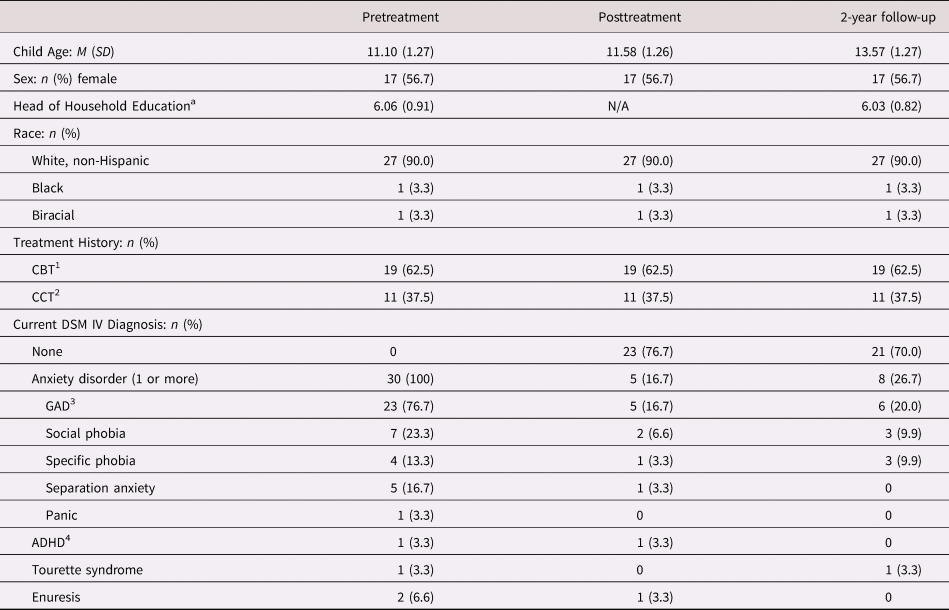
A subset of participants from the CATS study was enrolled in the CATS-D follow-up study, which is the focus of the present investigation. The CATS-D study involved annual psychiatric assessments following the conclusion of treatment and an fMRI assessment 2 years after treatment. The present study included the youth who provided questionnaire data on parental warmth at posttreatment and completed the 2-year posttreatment fMRI scan as part of the CATS-D follow-up study (n = 32). Two of the participants were removed from the analyses due to excessive movement during the fMRI scan. The final sample of 30 participants (56.7% female) were predominantly European American (93.2%). Prior to anxiety treatment, all of the participants met the DSM-IV criteria for at least one primary anxiety diagnosis. Following treatment (i.e., at the posttreatment visit/Time 1), the participants were an average of 11.58 years old (SD = 1.26 years), and 76.7% (n = 23) no longer met the diagnostic criteria for any clinical diagnosis, 16.7% (n = 5) continued to meet the criteria for at least one anxiety disorder, 3.3% (n = 1) met the criteria for ADHD (nonattentive subtype), and 3.3% (n = 1) met the criteria for Enuresis. At the 2-year follow-up (i.e., Time 2), the participants were on average 13.58 years old (SD = 1.27 years), and 70.0% (n = 21) of them no longer met the diagnostic criteria for any clinical diagnosis. The remaining participants (n = 9) had at least one anxiety diagnosis (n = 8) or Tourette syndrome (n = 1). None of the participants met the criteria for a comorbid diagnosis of depression. Only one participant reported taking a psychotropic medication at the 2-year follow-up. See Table 1 for complete demographics and clinical characteristics.
Participant characteristics at pretreatment, posttreatment, and 2-year follow-up (n = 30)

Note: aEducation levels (4 = high school graduate, 5 = some college, 6 = college degree, 7 = graduate degree; range = 4–7, N/A = not assessed); 1CBT = cognitive behavioral therapy; 2CCT = child-centered therapy; 3GAD = generalized anxiety disorder; 4ADHD = attention–deficit/hyperactivity disorder.
Procedure
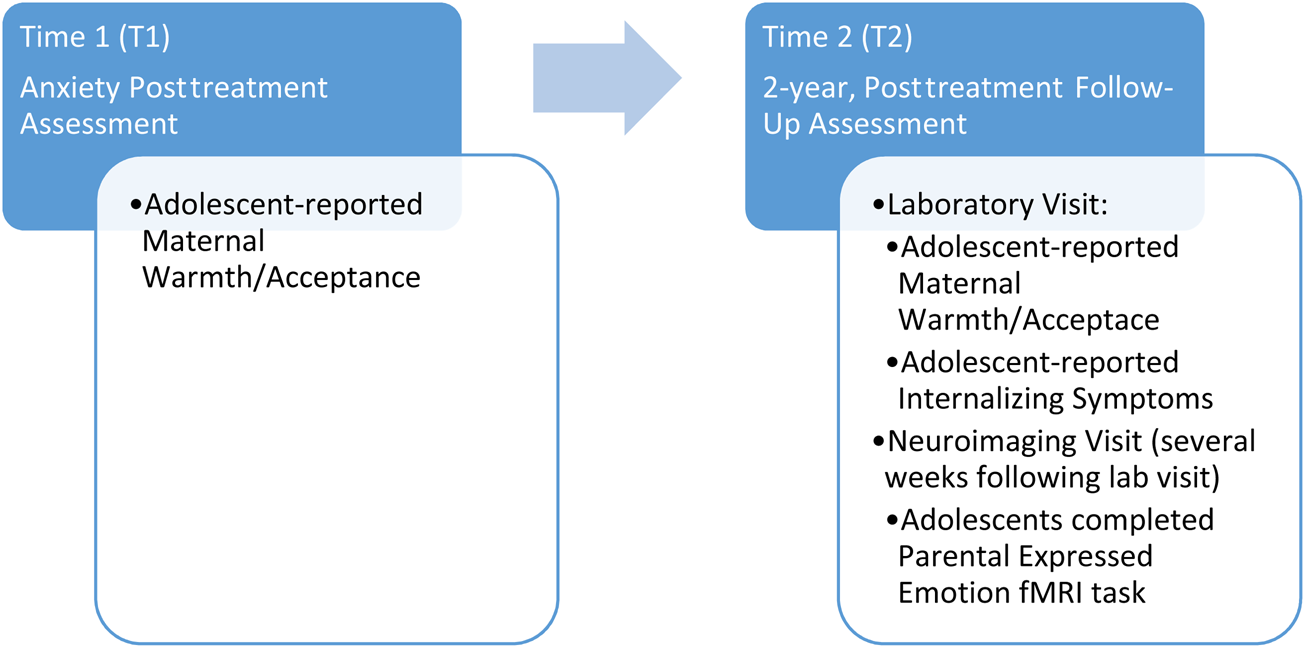
After qualifying for the CATS study, the participants were randomized to participate in either a 16-week cognitive behavioral therapy (CBT; n = 19) or child-centered therapy (CCT; n = 11) treatment. The participants that were randomized to the CBT treatment protocol engaged in anxiety-management skill training, progressive muscle relaxation training, and anxiety-exposure sessions (Kendall & Hedtke, Reference Kendall and Hedtke2006). The participants that were randomized to the CCT treatment protocol engaged in a nondirective therapy in which the therapist engaged in active listening, reflection, empathy, and encouragement to talk about feelings (CCT; Cohen, Deblinger, Mannarino, & Steer, Reference Cohen, Deblinger, Mannarino and Steer2004; Cohen, Mannarino, & Knudsen, Reference Cohen, Mannarino and Knudsen2005). Both treatment types included two parent sessions and parental consultation throughout the treatment period. Full details on treatment protocol and outcomes can be found in Silk et al. (Reference Silk, Tan, Ladouceur, Meller, Siegle, McMakin and Mannarino2016). The current study used data that were collected during posttreatment (Time 1) and the 2-year follow-up (Time 2) assessments (collected through the CATS-D follow-up study). At the posttreatment visit, the primary caregivers and adolescents completed questionnaires on internalizing symptoms and on the caregiver's parenting behaviors. Two years later, youth repeated the same protocol of clinical interviews and questionnaire assessments during a laboratory visit, and they completed an fMRI assessment during a second visit approximately 2 to 3 weeks later (see Figure 1 for the flow chart of assessments).
Flow of data collection for variables of interest that were used in the current study.

Measures
Kiddie Schedule for Affective Disorders and Schizophrenia—Present and Lifetime Version (KSADS-PL)
The KSADS-PL (Kaufman et al., Reference Kaufman, Birmaher, Brent, Rao, Flynn, Moreci and Ryan1997) was completed at intake to confirm the diagnosis for CATS study eligibility and was repeated at follow-up assessments. Trained Master's-degree-level independent evaluators interviewed the parents and youth separately. Based on 20% of interviews, inter-rater reliability was high (κ = .89) for anxiety diagnoses.
Screen for Child Anxiety-Related Emotional Disorders (SCARED-C)
Adolescents reported on their level of anxiety symptoms by completing the SCARED-C (Birmaher et al., Reference Birmaher, Khetarpal, Brent, Cully, Balach, Kaufman and Neer1997) at posttreatment and at 2-year follow-up. This is a 41-item questionnaire for use in 8- to 18-year-olds. Using the 2-year follow-up assessment, high internal consistency (α = .92) was established in the current sample.
Mood and Feelings Questionnaire (MFQ-C), Child-Report
The Mood and Feelings Questionnaire (MFQ; Costello & Angold, Reference Costello and Angold1988) is a 33-item self-report questionnaire for assessing depressive symptoms in youth 8 to 18 years of age. Participants are asked to rate how true each item is of their mood and behavior within the past 2 weeks on a 3-point Likert-type scale (0 = “not true,” 1 = “sometimes,” 2 = “true”). Sample items include “I felt miserable or unhappy”; “I cried a lot”; and “I slept a lot more than usual.” Higher total scores reflect greater symptomatology.
The MFQ was administered at various points throughout the larger study. Adolescent-reported total scores at the posttreatment follow-up (T1) were used as a covariate in the analyses. Total scores from the 2-year follow-up assessment (T2) were used as an outcome measure. Using the 2-year follow-up assessment, high internal consistency (α = .96) was established in the current sample.
Child Report on Parental Behavior Inventory (CRPBI)
Adolescents completed the short version of the CRPBI (Schaefer, Reference Schaefer1965; Schludermann & Schludermann, Reference Schludermann and Schludermann1970), which includes 30-items that measured perceptions of their mother's behaviors on three constructs: acceptance, psychological control, and behavioral control. The present study focused on the 10-item parental warmth/acceptance subscale scores. For the current study, the subscale scores that were collected at posttreatment were used as the primary predictor and the scores that were collected at the 2-year follow-up were used as a covariate. This subscale indicates adolescent's perceptions of parenting behaviors that convey acceptance, love, approachability, and attention. The items include “My parent ‘makes me feel better after talking over my worries with her’; ‘gives me a lot of care and attention’; ‘believes in showing her love for me’; ‘smiles at me very often’; ‘is able to make me feel better when I am upset’; ‘enjoys doing things with me’; ‘cheers me up when I am sad’; ‘makes me feel like the most important person in their life’; ‘often praises me’; ‘is easy to talk to’.” Statements are rated as “not like”, “somewhat like”, or “a lot like” on a 3-point Likert-type scale (scale range = 10.00–30.00). The scale demonstrated high internal consistency (α = .78) for the current sample.
Functional Magnetic Resonance Imaging (fMRI) Assessment
Parental Expressed Emotion task
Functional images were collected by using an adaptation of the Parental Expressed Emotion neuroimaging paradigm (Hooley et al., Reference Hooley, Gruber, Parker, Guillaumot, Rogowska and Yurgelun-Todd2009; Hooley et al., Reference Hooley, Gruber, Scott, Hiller and Yurgelun-Todd2005; Lee et al., Reference Lee, Siegle, Dahl, Hooley and Silk2014). On the first visit of the 2-year follow-up assessment, the parents were asked to create and record two 30-s clips describing aspects of their adolescents’ behavior that bothered them (i.e., criticism), two 30-s clips describing aspects of their adolescents’ behavior that they especially liked (i.e., praise), and two 30-s neutral clips (i.e., neutral). The current study focused on the criticism condition and uses the neutral condition for comparison. Each criticism statement began with a scripted introduction (i.e.; “[Child's Name], one thing that bothers me about you is … .”). The neutral condition included parents’ statements about the weather or a trivial event that they felt the child would not be very interested in.
At the second visit of the 2-year follow-up assessment, youth underwent an fMRI assessment at a university brain imaging center. The participants were oriented to the scanner noises, trained to minimize head movement, and given time to practice the paradigms and become familiar with the scanner environment in an MRI simulator. During the fMRI scan, the participants completed a 7-min structural scan, followed by the Parental Expressed Emotion fMRI paradigm. During the fMRI assessment, the parent-recorded clips were played over scanner-safe headphones in a block design. There was a run for each statement condition (praise, criticism, and neutral). Each run began with a 30.06-s rest period, followed by one 30.06-s statement presentation (a 30-s audio clip with 0.06 s additional duration to match with our 1.67-second TR), a second rest period, the second statement presentation (same-condition), and a third rest period. Each run of the task followed this procedure, and each lasted150.3 s. The neutral run began the task for all of the participants, followed by either the praise or criticism runs, which were counterbalanced across the sample. Following the fMRI assessment, the participants were asked to rate their subjective emotions regarding the recorded comments outside of the scanner. Using a postassessment valence and arousal form, they rated on a scale of 1 (not at all) to 10 (very) how positive and negative each comment was and how good and upset each comment made them feel.
fMRI Data Acquisition
The data were collected on a 3T Siemens Trio scanner. Each volume consisted of 32 interleaved slices (3.2 mm). The volumes were acquired parallel to the posterior-anterior commissure line by using a T2*-weighted echo planar imaging pulse sequence with 1,670 ms repetition time (TR), 29 ms echo time (TE), 75° flip angle, 3.2 × 3.2 × 3.2-mm voxels, 205-mm × 205-mm field of view (FOV). Scanning began at the first rest-period onset, and 18 scans were acquired per 30.06 second trial including both rest and stimulus types. The three conditions (criticism, praise, and neutral) were acquired during individual scan runs that lasted 2.5 minutes each. A total of 270 volumes were acquired for the complete task (90 volumes per run). A total of 176 high-resolution, T1-weighted MPRAGE images were also acquired (TR = 2,100 ms, TE = 3.31 ms, FOV = 256-mm × 256-mm, voxel size = 1.0 × 1.0 × 1.0 mm, flip angle = 8°, and slice thickness = 1 mm) for the coregistration preprocessing procedures.
fMRI Data Analysis
The images were preprocessed by using SPM12 (http://www.fil.ion.ucl.ac.uk/spm). The volumes were reoriented to the AC and corrected for slice timing. Next, the images were realigned to correct for head motion, segmented, and coregistered to a mean functional image. The realigned images were spatially normalized to a standard MNI template (Montreal Neurological Institute template) using a 12-parameter affine model. The normalized images were smoothed with a 6-mm full-width at half-maximum Gaussian filter. The voxels were resampled during preprocessing to be 2 mm3. If the participants exhibited absolute motion greater than 2 mm/2° and global intensities more than 3 SD from the mean for more than 25% of the volumes per run (i.e., either during the criticism or neutral runs), they were excluded (n = 2) from the analyses. For all of the included participants, voxel-wise despiking was completed with interpolation by using the ArtRepair toolbox. The repaired volumes were used for the first-level analysis. The six motion parameters were included as regressors in the design of the first-level general linear model to correct for slow-drift motion.
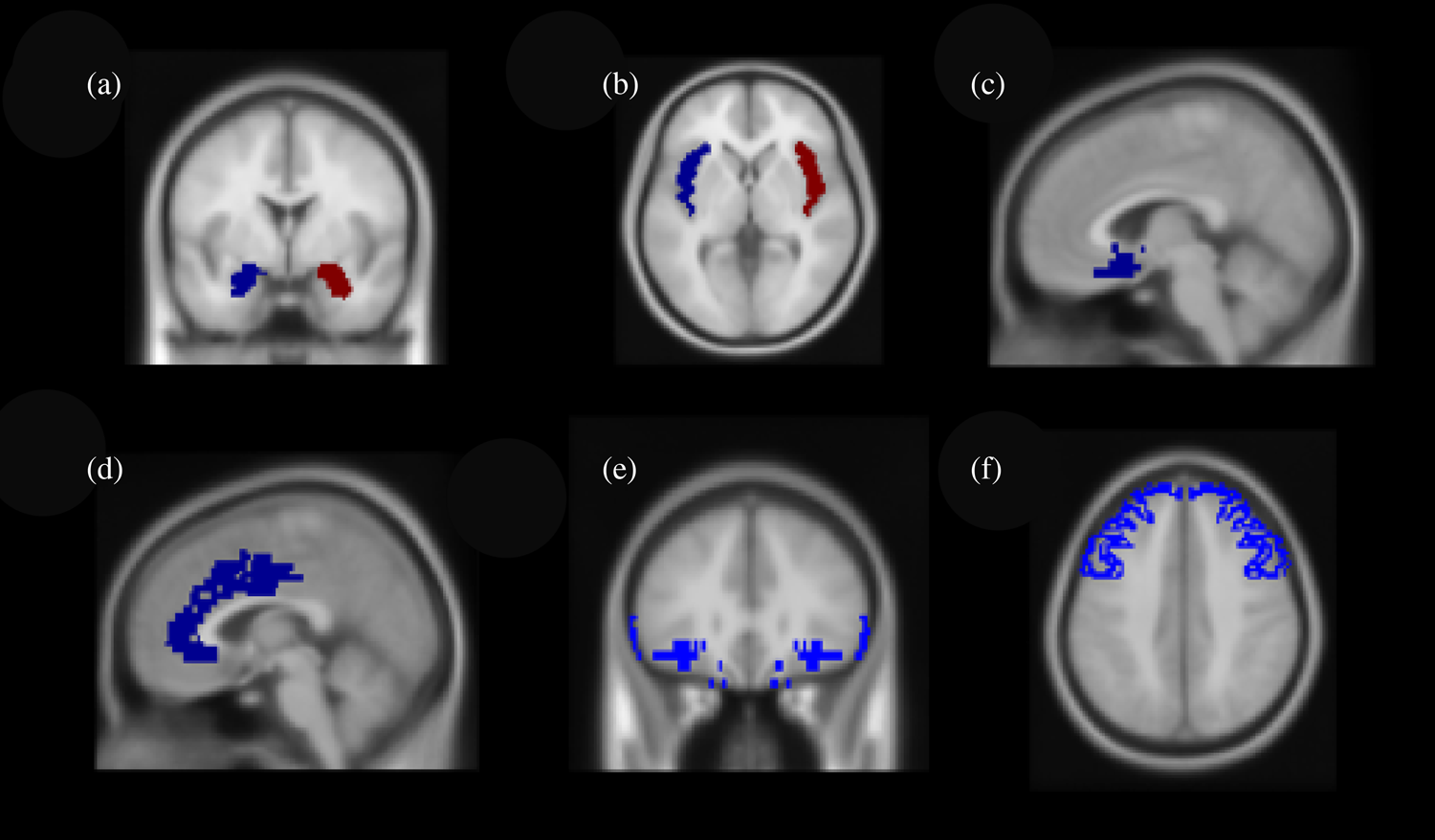
The conditions from each run, including criticism, praise, neutral, and rest and the six motion parameters were included as regressors in the first-level model design. Contrasts were created in the first-level statistical parametric mapping designs. The current analyses included data using the Criticism–Neutral contrast of interest. A priori regions-of-interest (ROI) were anatomically predefined by either Brodmann areas or the automated anatomical labeling atlas by using the WFU PickAtlas Tool (v3.0.5). The ROIs included the bilateral amygdala (AAL), bilateral anterior insula (AAL), sgACC (BA25), ACC (BA24/BA32), bilateral VLPFC (BA45/47), and bilateral DLPFC (BA8/BA9/BA46). Using individual masks of each a priori ROI (see Figure 2), the parameter estimates (beta weights) for the Criticism–Neutral contrast were extracted by using Marsbar. Given the current study's emphasis on threat circuitry, we focused on neural response to criticism because adding ROIs implicated in neural response to reward would have increased the number of analyses, thereby inflating the probability of Type 1 error. The results of neural response to parental praise are provided elsewhere (see Sequeira, Butterfield, Silk, Forbes, & Ladouceur, Reference Sequeira, Butterfield, Silk, Forbes and Ladouceur2019).
Masks of anatomically defined regions of interest: (a) amygdala, (b) insula, (c) subgenual cingulate, (d) anterior cingulate, (e) ventrolateral prefrontal cortex, and (f) dorsolateral prefrontal cortex. All regions of interests were bilateral.

Statistical Analyses
All of the statistical analyses for the study were processed by using the Statistical Package for the Social Sciences (SPSS). The preliminary analyses assessed the bivariate correlations between the sample characteristics and the variables of interest. Hypothesis testing was conducted by using multiple regression models for each a priori ROI (n tests = 12). Benjamini–Hochberg procedures (Benjamini & Hochberg, Reference Benjamini and Hochberg1995) were used to account for multiple comparisons with a false discovery rate (FDR) of 0.05. To adjust for changes in parental warmth between assessments, we covaried for parental warmth at Time 2. Next, we tested whether adolescents’ neural activation to criticism mediated the associations that were found between parental warmth and adolescents’ anxiety and depressive symptoms at Time 2 (in separate models). The PROCESS macro for SPSS was used to test for indirect effects via Bootstrapping methods (5,000 iterations), controlling for parental warmth reported at Time 2 and adolescents’ symptom levels reported at Time 1. Due to 1 or 2 outlying data points for the independent variable of interest and several of the ROI variables, sensitivity analyses were completed with extreme values that were Winsorized to their respective thresholds (i.e., 1st/3rd quartiles±1.5 × the interquartile range). The results of the main analyses and of the sensitivity analyses were maintained when the Winsorized data was used, suggesting that the effects are not due to outlier values. Therefore, we present results of the original data.
Results
Preliminary Results
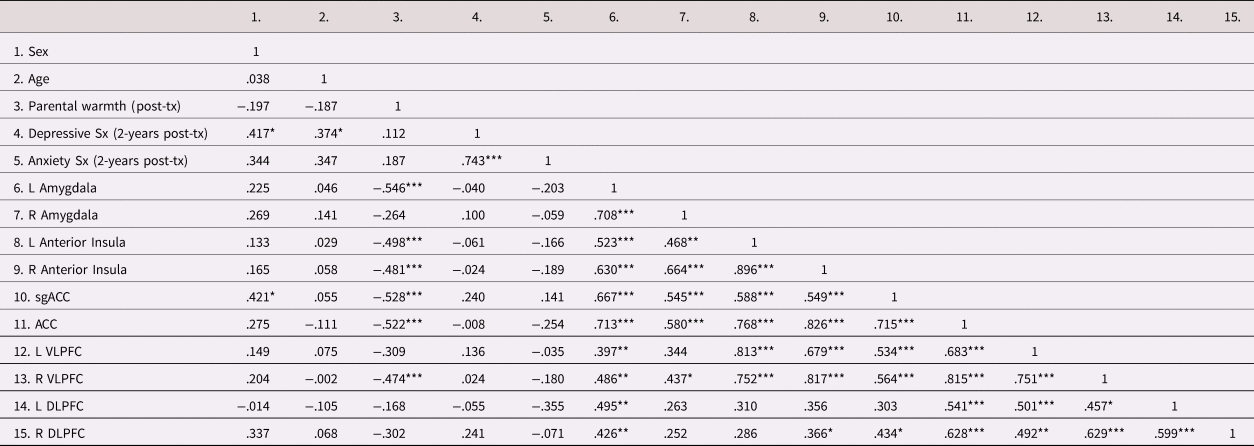
The bivariate correlations between the variables of interest are shown in Table 2. Of note, girls were more likely to report higher levels of depressive and anxiety symptoms at Time 2, t = 2.426, p = .02; t = 2.035, p = .05, respectively. Older youth also reported higher depressive and anxiety symptom levels, r= .374, p = 04; r = .347, p = 06, respectively. Levels of anxiety symptoms were highly correlated across the two points, r = .797, p = .001, whereas depressive symptoms across time were only modestly correlated, r = .239, p = .204. Anxiety level at posttreatment was highly predictive of depressive symptoms at the 2-year follow-up, r = .573, p = .001. Levels of anxiety and depressive symptoms at Time 2 were highly correlated, r = .743, p < .001. Adolescents’ reports of anxiety symptom levels at Time 1, range = 0–50; M = 16.05, SD = 13.48, were not significantly associated with concurrent reports of parental warmth (i.e., at Time 1), r = .072, p = .704, so they were not included as covariates in the analyses that were run for assessing the relationships between parenting and neural response to criticism.
Correlation matrix of all of the variables of interest (n = 30)

Note: Sx = symptoms, Tx = treatment, L = left, R = right; sgACC = subgenual cingulate cortex, ACC = anterior cingulate, VLPFC = ventrolateral prefrontal cortex, DLPFC = dorsolateral prefrontal cortex; *p < .05 **p < .01 ***p < .005.
A paired-samples t test showed that the levels of maternal warmth that were reported by adolescents at posttreatment (M = 25.87, SD = 4.42) and at the 2-year follow-up (M = 24.63, SD = 4.16) did not differ significantly, t (29) = 1.11, p = .290. However, levels of warmth were not significantly correlated across the two measurement points, r = −0.067, p = .727. In order to probe the low correlation, outliers in change scores of maternal warmth from Time 1 to Time 2 were identified by using the±1.5 × the interquartile range method, which showed that this low correlation may be driven by two participants who reported extreme change. Although these change scores are technically outliers, we believe that for some adolescents such major changes in perceptions of parenting are possible. Therefore, the low correlation seems to suggest that perceptions of parental warmth in our sample were not stable for a small portion of adolescents. Therefore, we included parental warmth at Time 2 as a covariate to control for changes in adolescents’ perceptions of parental warmth in our final analyses. Similar to reports across the full sample (Silk et al., Reference Silk, Price, Rosen, Ryan, Forbes, Siegle and Ladouceur2019), levels of anxiety and depressive symptoms at Time 2 were significantly higher in adolescents who received child-centered therapy (anxiety: M = 24.82, SD = 12.02; depression: M = 14.36, SD = 9.28) compared with those who received cognitive behavioral therapy (anxiety: M = 13.68, SD = 9.25; depression: M = 7.42, SD = 8.22); t = 2.847, p = .008; t = 2.128, p = .04, respectively. No significant differences between treatment type groups were found for the other study variables. Therefore, treatment type was added as a covariate in the final models for assessing indirect effects of parenting on adolescents’ internalizing symptoms at Time 2 via the brain functioning that is involved in emotion processing.
Adolescents’ Ratings of Parents’ Comments
One participant did not complete the postscan ratings after their scan, and one additional participant did not complete the ratings for the neutral statements, so the behavioral results are based on participants with full data available. A paired-samples t test of adolescents’ postscan ratings showed that parents’ critical statements were both more negative and upsetting (M = 5.21, SD = 1.33; M = 4.60, SD = 1.97, respectively) to participants than parents’ neutral statements were (M = 2.30, SD = 1.47; M = 2.07, SD = 1.68, respectively); t (27) = 5.786, p <.001. Adolescent-reported parental warmth was not correlated with their ratings of perceived negativity or upset feelings in response to hearing their parents’ critical statements at either Time 1 or Time 2, r range = .119–.142, ps > .40. Higher postscan ratings of perceived negativity were significantly positively associated with neural response to criticism in the sgACC, r = .385, p = .04.
Parenting and Adolescents’ Neural Response to Parental Criticism 2 Years Later
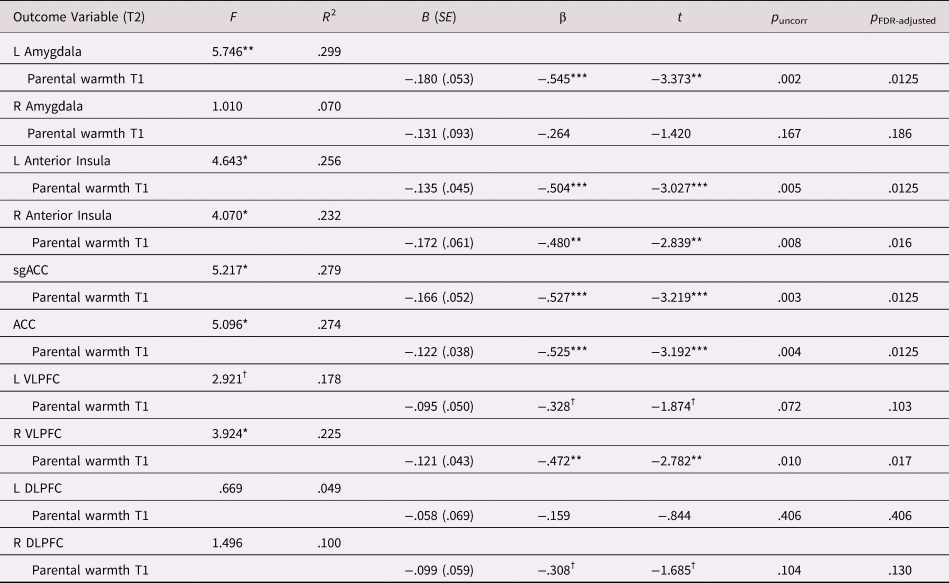
Adolescent-reported parental warmth at Time 1 predicted neural activation to parental criticism in several affective-salience network regions at Time 2, controlling for levels of parental warmth at Time 2.Footnote 1 Specifically, greater levels of parental warmth predicted lower activation in the left amygdala, β = −0.545, p uncorr = .002; bilateral insula, Left: β = −0.504, p uncorr = .005; Right: β = −0.480, p uncorr = .008; and sgACC, β = −0.527, p uncorr = .003 (Figure 3). Parental warmth did not predict activation in the right amygdala, β = −0.264, p uncorr = .167. All of the significant results survived correction for multiple comparisons, and all of the values for p FDR < .05 (Table 3). No significant Warmth × Sex interaction effects were found in the models, so they were not considered further. The sensitivity analyses showed that after accounting for the main effects of adolescent sex and age at the time of the scan in the models, parental warmth at Time 1 continued to predict neural response to criticism within the left amygdala, β = −0.527, p uncorr = .005; bilateral insula, Left: β = −0.518, p uncorr = .008; Right: β = −0.468, p uncorr = .017; and sgACC, β = −0.428, p uncorr = .010 (all of the values for p FDR < .05).
Associations between parental warmth at posttreatment (i.e., Time 1) and neural response to parental criticism (versus neutral) 2 years later in the (a) left amygdala, (b) subgenual cingulate (sgACC), (c) left insula, (d) right insula, (e) ACC (incl. dorsal and perigenual regions), and (f) right ventrolateral prefrontal cortex (VLPFC). R-square controls for parental warmth reported at Time 2.

Associations between adolescent-reported parental warmth and neural response to criticism at 2-year follow-up, controlling for concurrent (T2) levels of parental warmth (n = 30)

Note: L = left, R = right, sgACC = subgenual cingulate, ACC = anterior cingulate, VLPFC = ventrolateral prefrontal cortex, and DLPFC = dorsolateral prefrontal cortex. All of the analyses were conducted with extracted mean BOLD response across each anatomically defined ROI; †p uncorr ≤ .10 *p uncorr ≤ .05 **p uncorr ≤ .01 ***p uncorr ≤ .005.
Because puberty is important to brain function and a significant developmental consideration during adolescence (Nelson et al., Reference Nelson, Leibenluft, McClure and Pine2005), the analyses were rerun replacing the covariate of adolescent age with adolescent-reported pubertal status at the time of the scan, measured by the Pubertal Development Scale (PDS; Petersen, Crockett, Richards, & Boxer, Reference Petersen, Crockett, Richards and Boxer1988; Shirtcliff, Dahl, & Pollak, Reference Shirtcliff, Dahl and Pollak2009). Adolescent age and pubertal status were significantly correlated, r = .559, p = .001. The results were replicated, showing that parental warmth at Time 1 continued to predict neural response in the left amygdala, bilateral insula, and sgACC (all of the values for p FDR < .05).
Adolescent-reported parental warmth at Time 1 also significantly predicted neural activation in response to parental criticism in several emotion-regulatory network regions at Time 2, controlling for levels of parental warmth at Time 2. Specifically, higher levels of parental warmth predicted lower activation in the ACC, β = −0.525, p uncorr = .004, and right VLPFC, β = −0.472, p uncorr = .010 (Figure 3). Parental warmth did not predict activation in the left VLPFC, β = −0.328, p uncorr = .072, or bilateral DLPFC, Left: β = −0.159, p uncorr = .406; Right: β = −0.308, p uncorr = .104. The significant results survived correction for multiple comparisons (all of the values for p FDR < .05; Table 3). No significant Warmth × Sex interaction effects were found in the models, so they were not considered further. The sensitivity analyses showed that after accounting for the main effects of sex and age at the time of the scan, parental warmth at Time 1 continued to predict neural response to criticism within the ACC, β = −0.532, p uncorr = .004, and the right VLPFC, β = −0.463, p uncorr = .018 (all of the values for p FDR < .05). The results were replicated when pubertal status rather than age was used as a covariate (all of the values for p FDR < .05).
Indirect Effects on Adolescent Internalizing Symptoms
Anxiety symptoms
Controlling for adolescent anxiety symptoms at Time 1, parental warmth at Time 2, and treatment type, indirect effects of adolescents’ neural response in the sgACC to parental criticism at Time 2 were found to account for the link between parental warmth at Time 1 and adolescents’ anxiety symptoms at Time 2.Footnote 1 Greater parental warmth at Time 1 predicted lower anxiety symptoms at Time 2 as a function of lower sgACC activation in response to criticism, Indirect Effect = −.553, SE = .24; β = −.212, 95% CI [−1.106, −.117]. No further evidence of indirect effects was found in the models that used other ROIs as mediators. The sensitivity analyses showed that the results were maintained after accounting for age and sex in the model, B = −448, SE = .27; β = −.172, 95% CI [−.1.079, −.036]. The results were replicated using pubertal status as a covariate in place of age, and they remained significant in the analysis of the Winsorized data.
Depressive Symptoms
Controlling for adolescent depressive symptoms at Time 1, parental warmth at Time 2, and treatment type, indirect effects were again found only through neural activation in the sgACC. Greater parental warmth at Time 1 predicted lower depressive symptoms at Time 2 as a function of lower sgACC activation in response to criticism, Indirect Effect = −.413, SE = .23; β = −.200, 95% CI [−.927, −.009]. However, the sensitivity analyses showed that after accounting for age (or pubertal status) and sex in the model, the indirect effect decreased, B = −293, SE = .21; β = −.142, 95% CI [−.717, .124], and was no longer significant. This was primarily due to the effects of sex in the model. Again, the results were replicated when the analysis was rerun with the Winsorized data.
Discussion
The purpose of the current study was to examine whether adolescent's perceived maternal warmth following anxiety treatment was associated with their neural response to personalized parental criticism 2 years later. Another objective was to explore the extent to which these associations accounted for adolescents’ anxiety and depressive symptoms at the time of their scan. Findings from the present study show that adolescents who perceived their mothers to be higher in warmth, including acceptance, love, approachability, and attention, tend to show lower levels of neural activation in the left amygdala, bilateral insula, sgACC, ACC, and right VLPFC in response to personally relevant criticism from their parents 2 years later. In addition, the results indicated that higher maternal warmth was related to adolescents’ lower internalizing symptoms 2 years later through the indirect effects of lower neural activation in the sgACC. These findings provide evidence that parenting may continue to play an important role in shaping the neural processes that support emotion processing and regulation during adolescence and that these neural processes may be indirectly associated with how parenting relates to internalizing psychopathology in adolescent children (see reviews by Morris et al., Reference Morris, Silk, Steinberg, Myers and Robinson2007; Tan, Oppenheimer, Ladouceur, Butterfield, & Silk, Reference Tan, Oppenheimer, Ladouceur, Butterfield and Silk2019) even following treatment for anxiety. Notably, the behavioral results showed that levels of maternal warmth were not associated with the degree of negativity that the adolescents perceived in the critical statements. This suggests that adolescents’ neural response to criticism was not necessarily due to differences between the harshness of statements, at least from the participants’ perspectives.
As hypothesized, we found that higher adolescent-reported parental warmth is associated with reduced left amygdala, bilateral insula, and sgACC activation in response to parental criticism 2 years later. These brain regions are considered to be part of an affective-salience network that has been shown to underlie the processes that are involved in identifying, appraising, and perceiving cues as salient (Phillips et al., Reference Phillips, Drevets, Rauch and Lane2003). Our findings are consistent with previous results showing that heathy adolescents with warmer and more supportive parents exhibit reduced hemodynamic response in the amygdala and insula to challenging stimuli such as negative facial affect, threat words, and peer social rejection cues (Butterfield et al., Reference Butterfield, Siegle, Lee, Ladouceur, Forbes, Dahl and Silk2019; Guyer et al., Reference Guyer, Jarcho, Pérez-Edgar, Degnan, Pine, Fox and Nelson2015; Romund et al., Reference Romund, Raufelder, Flemming, Lorenz, Pelz, Gleich and Beck2016). However, it should be acknowledged that adolescents’ neurobiological response and associated emotional arousal to negative stimuli may be influenced by genetic factors that are transmitted from parents. Therefore, genetic factors may be accounting for the observed association. For example, parents who are higher in positive affect, and subsequently display more warmth, may have passed along a different biological proclivity in emotional responses to their children in ways that contributed to their emotional arousal response patterns.
We also hypothesized that higher parental warmth would be related to greater recruitment of regulatory brain regions, which are posited to dampen affective-salience network reactivity (Casey et al., Reference Casey, Jones and Hare2008; Phillips et al., Reference Phillips, Drevets, Rauch and Lane2003). Instead, the findings showed that adolescents who reported higher levels of parental warmth and acceptance exhibited reduced activation in the ACC and right VLPFC in response to parental criticism. Because projections between the affective-salience and emotion-regulation networks are bidirectional (Casey et al., Reference Casey, Jones and Hare2008), it is possible that the lower activation of the regulatory regions in adolescents with warmer parents indicates a reduced need to regulate or dampen affective-salience region activation, as these were the adolescents who did not show engagement of the affective-salience network. Another possible interpretation may be drawn from literature on the neural substrates of social pain (i.e., painful feelings of rejection or experience of “hurt” feelings following negative social interactions or feedback; Eisenberger, Reference Eisenberger2012). For example, Eisenberger et al. (Reference Eisenberger2012) showed that greater dACC activation (in addition to insula and sgACC activation) is associated with the experience of pain, distress, and disconnectedness following social exclusion experiences (Eisenberger, Reference Eisenberger2012). Therefore, the lower ACC activation (inclusive of the dACC) in response to parental criticism may indicate that adolescents with greater parental warmth may be experiencing lower levels of distress following instances of social threat.
Notably, the results of a previous study reported a different association between positive parenting and neural response to negative stimuli in the same sample of clinically anxious adolescents as was examined in the current study (Butterfield et al., Reference Butterfield, Siegle, Lee, Ladouceur, Forbes, Dahl and Silk2019). That study found that prior to anxiety treatment, adolescents exhibited greater insula and pgACC activation to negatively valenced stimuli (i.e., physical threat words) if their parent tended to promote positive coping strategies, which in turn was associated with lower avoidant coping use in adolescents (Butterfield et al., Reference Butterfield, Siegle, Lee, Ladouceur, Forbes, Dahl and Silk2019). However, we now find that following a 16-session psychotherapy treatment protocol for anxiety, parental warmth (assessed at posttreatment) is related to lower neural activation in overlapping brain regions 2 years later. The contrasting results of these two studies within the same sample may be due to differences in adolescents’ development (i.e., the sample was older in the current study). Other considerations include differences in study methodology such as major differences in parenting constructs (observed coping socialization practices versus adolescent-reported warmth), fMRI processing streams, task stimuli (physical threat words versus recorded, personalized parental criticism), study designs (correlational versus longitudinal), analytical strategies, and the possible effects of treatment on neural functioning. Therefore, it is difficult to attribute the differences in findings to one specific cause and future research is warranted—particularly with larger samples to assess changes in adolescent neural function as it relates to parenting by using longitudinal, repeated assessments of the same parenting constructs and fMRI tasks. Nevertheless, the results of the current study offer an important addition to the field of developmental psychopathology by providing support that parenting has important and lasting effects on adolescents’ neural substrates of emotion processing. Furthermore, our findings also suggest that adolescents’ neural function in emotion processing regions mediate the longitudinal influence of parenting on adolescents’ internalizing symptoms following anxiety treatment in a sample of youth at high risk for anxiety remission and future depression.
Overall, the patterns of results in the current study support the theory that is posited by Rohner (Reference Rohner2004), which suggests that adolescents who perceive their parents as being warmer may be less emotionally labile when processing critical feedback. Consistent with this theory, it may be that adolescents who perceive their parents as being warmer and more accepting would also feel safer within the context of the relationship and have less neural reactivity in response to critical feedback from them. Of note, we found these effects in a sample of youth whose perceptions of maternal warmth were generally quite high. Therefore, our results may be somewhat conservative estimates of the effects of maternal warmth on neural response to criticism. Our findings further show that greater parental warmth predicts lower depressive and anxiety symptoms in adolescents 2 years later as a function of parental influence on sgACC activation. This suggests that adolescents who perceive their parents to be warmer may be less reactive to critical feedback and that this dampened neural reactivity has important clinical implications. Prior studies have shown that greater sgACC activation during cognitive and affective neuroimaging tasks is associated with elevated depressive and anxiety symptoms in adults and adolescents (Campbell-Sills et al., Reference Campbell-Sills, Simmons, Lovero, Rochlin, Paulus and Stein2011; Hamilton, Farmer, Fogelman, & Gotlib, Reference Hamilton, Farmer, Fogelman and Gotlib2015; Masten et al., Reference Masten, Eisenberger, Borofsky, McNealy, Pfeifer and Dapretto2011; Simpson, Drevets, Snyder, Gusnard, & Raichle, Reference Simpson, Drevets, Snyder, Gusnard and Raichle2001; Yang et al., Reference Yang, Simmons, Matthews, Tapert, Frank, Bischoff-Grethe and Paulus2009). Therefore, the sgACC has been a target of deep brain stimulation treatment for depression and is considered to play a critical role in depression (Holtzheimer et al., Reference Holtzheimer, Kelley, Gross, Filkowski, Garlow, Barrocas and Chismar2012; Mayberg et al., Reference Mayberg, Lozano, Voon, McNeely, Seminowicz, Hamani and Kennedy2005). Our findings indicate that parents’ effects on the adolescents’ neural processing of critical evaluation from them, particularly within the sgACC, may play a role in helping to minimize the risk for depression and anxiety in their adolescent children. These are exciting findings given that the population of adolescents that is represented in our sample is at increased risk for future adolescent and young-adult psychopathology (Costello et al., Reference Costello, Copeland and Angold2011). However, these findings should be interpreted with caution, as internalizing symptoms were reported several weeks prior to the fMRI scan, our sample size was limited, and the indirect effect predicting depressive symptoms was no longer statistically significant after covarying for age and sex.
The current study has several strengths including its prospective longitudinal design, use of a personalized, ecologically valid neuroimaging task, and the investigation of parental influences on the neural substrates of emotion processing in a clinical sample of adolescents at high-risk for lifetime anxiety and depression. Despite these strengths, there were some limitations. Although the study focused on the neural systems that support emotion processing and regulation, we recognize that the task does not include explicit emotion regulation (e.g., reappraisal of parental criticism), which potentially limits the interpretation of findings to activity within the regulatory neural network. In addition, the sample size was relatively small, which hindered our ability to capture small to moderate effects in this study. For example, although we were not able to detect significant interactions between sex and parenting in the current study, there are recent findings showing that negative parenting may be associated with higher depressive symptoms in adolescent girls (but not boys) as a function of neural activation in the anterior insula and ACC (Chaplin et al., Reference Chaplin, Poon, Thompson, Hansen, Dziura, Turpyn and Ansell2019). Therefore, more studies with larger samples are needed to more effectively examine the effects of this potentially important moderator. Also, the effects of race and socioeconomic status were not explored in the study due to the ethnically homogeneous and mostly college-educated sample, which should be addressed in future research. In addition, several adolescents reported extreme changes in maternal warmth across the two study measurement points. Although we controlled for maternal warmth at Time 2 in the analyses, we acknowledge that the predictive value of parenting may be limited for youth whose perceptions shift dramatically across time. Future work should also consider the potential influence of paternal warmth and/or differences in adolescents’ neural response to hearing criticism from their fathers, as the current study assessed maternal warmth and neural response to mothers’ recordings of criticism, with the exception of one participant who heard their father's criticism. Finally, future research should include a comparison group of untreated anxious youth to investigate the possible effects of therapy on the association between parental warmth and adolescent neural processing of social threat.
Despite these limitations, our results support theories that youth may learn how to adaptively process negative interpersonal feedback as a function of warm and responsive parenting behavior (Gottman, Katz, & Hooven, Reference Gottman, Katz and Hooven1996; Morris et al., Reference Morris, Silk, Steinberg, Myers and Robinson2007; Rohner, Reference Rohner2004). These findings may have implications that could inform early intervention approaches. For example, social learning that is shaped by parents’ feedback could interact with how adolescents process negative evaluative feedback from peers—which becomes more salient across child and early adolescent development. Although speculative, these results could have important implications for adolescent trajectories, given the increase of novel peer-related social challenges occurring—an important direction for future research. Furthermore, the present study expands a limited yet growing area of research that is investigating how parental factors continue to affect the functioning of neural networks that support emotion processing and regulation throughout adolescence and their relevance to inform intervention strategies for youth at high risk for lifetime anxiety and depression. Our results support the ongoing importance of parental factors, such as warmth, as being important to the psychological well-being of their adolescent children even following treatment for anxiety. Therefore, despite mixed results on the benefits of integrating parents into child and adolescent anxiety treatment (Breinholst et al., Reference Breinholst, Esbjørn, Reinholdt-Dunne and Stallard2012), child anxiety interventions that include a focus on increasing parental warmth, acceptance, and approachability seem to be a promising approach to protecting adolescents against the risk of future anxiety relapse and depression onset. However, it is important to note that for youth with clinical anxiety, such parental warmth and acceptance may be most beneficial to adolescent development when it is provided in conjunction with enhanced parent–child communication and increased child autonomy granting behaviors, which should be addressed in future research.
Financial Support
This work was supported by National Institutes of Health (P50 MH080215 and MH091327).