Introduction
Depression is the second most prevalent mental health disorder among older adults after anxiety disorders. It affects 7% of the general older population globally (World Health Organization, 2017) and 5.6% of US older adults (Reynolds et al., Reference Reynolds, Pietrzak, El-Gabalawy, Mackenzie and Sareen2015). Suicide rates also increase between ages of 60 and 90 in both men and women around the world (Shah et al., Reference Shah, Bhat, Zarate-Escudero, Deleo and Erlangsen2016). A large body of literature shows increased association of late life depression with increased morbidity and mortality in this age group. Depression is found to be associated with increased number of deaths (Saeed Mirza et al., Reference Saeed Mirza, Ikram, Freak-Poli, Hofman, Rizopoulos and Tiemeier2018), an increased incidence of cardiovascular diseases (Van Marwijk et al., Reference Van Marwijk, Van Der Kooy, Stehouwer, Beekman and Van Hout2015; Zhang et al., Reference Zhang, Chen and Ma2018), frailty syndrome (Fried et al., Reference Fried2001), and cognitive decline among older adults. Depression has been demonstrated to have significant deleterious effects on the social functioning of patients (Brenes, Reference Brenes2007). It impairs multiple domains of the health-related quality of life more than other chronic ailments like diabetes, hypertension, or chronic lung disease do (Jia et al., Reference Jia, Zack, Thompson, Crosby and Gottesman2015). This suffering of the patients translates to worsening of societal costs associated with family burden and work loss (Wells et al., Reference Wells1989). Evidence for depression as a risk factor for physical and cognitive decline that results in lower quality of life and function among older adults underlines the importance of early recognition and prompt treatment of this serious condition.
The most common modalities currently used for treatment of late life depression include pharmacotherapy, psychotherapy, and electroconvulsive therapy (ECT) (Alexopoulos, Reference Alexopoulos2019). Pharmacotherapy mostly consists of antidepressants targeting the monoaminergic system. Clinical trials have found antidepressants to be superior to placebo in older adults, but the response rate varies widely from 45% to 80% based on age range and length of trials evaluated in these studies (Lindblad et al., Reference Lindblad, Clarke and Lu2019; Nelson et al., Reference Nelson, Delucchi and Schneider2008). The rate of response decreases with age, being 54% at age 54 years and 42% at age 73 years (Tedeschini et al., Reference Tedeschini, Levkovitz, Iovieno, Ameral, Nelson and Papakostas2011). Not only is there just a modest initial benefit from antidepressants, more than half of the patients relapse within 2 years (Deng et al., Reference Deng, Mcquoid, Potter, Steffens and Albert2018). Furthermore, antidepressants are not found to be effective in depression associated with dementia (Nelson and Devanand, Reference Nelson and Devanand2011). Most recent Beers criteria caution users against side effects from antidepressants in older adults. In addition to their common gastrointestinal side effects, most antidepressants are associated with increased risk for falls and fractures in older adults. Anticholinergic side effects of tricyclic antidepressants and paroxetine are tolerated poorly in older adults.
Psychotherapy, although generally found useful, has shown some conflicting results. While some studies have found it to be as helpful as antidepressants in late life depression (Krause et al., Reference Krause, Gutsmiedl, Bighelli, Schneider-Thoma, Chaimani and Leucht2019; Pinquart et al., Reference Pinquart, Duberstein and Lyness2006), other studies have failed to find a significant response (Wilson et al., Reference Wilson, Mottram and Vassilas2008), although there seems to be a consensus on benefit of cognitive behavioral therapy in this population (Raue et al., Reference Raue, Mcgovern, Kiosses and Sirey2017; Wilson et al., Reference Wilson, Mottram and Vassilas2008). Psychotherapy is also generally underutilized by older adults due to perceived stigma and hesitation to talk about mental illness among older adults, lack of professionals trained to deliver psychotherapy in this age group and poor Medicare reimbursement (Arean et al., Reference Arean, Raue, Sirey and Snowden2012).
ECT is currently the most effective treatment for depression and suicidality among older adults. Studies show that the use of ECT results in a faster and better remission response compared with antidepressants in the older adult population (Rhebergen et al., Reference Rhebergen2015; Spaans et al., Reference Spaans2015). It is safe and well tolerated with generally only transient adverse effects (Geduldig and Kellner, Reference Geduldig and Kellner2016). However, sustaining an antidepressant response post-ECT and preventing relapse into depression is a challenge with ECT, with unclear guidelines for maintenance ECT among older adults (Jelovac et al., Reference Jelovac, Kolshus and Mcloughlin2013). In addition to these popularly used clinical approaches, there are few novel strategies such as transcranial magnetic stimulation, anti-inflammatory agents, computerized cognitive remediation that show some efficacy, but are not yet used readily in clinical practice due to limited data and cost issues (Spaans et al., Reference Spaans2015). Given the limitations of aforementioned treatment modalities, there is clearly a need for more efficacious treatments for late life depression.
Ketamine has recently emerged as a novel, rapid acting option for treatment-resistant depression in adults. Ketamine is an N-methyl-d-aspartate receptor (NMDAR) antagonist, which has been used primarily as an anesthetic since 1960s (Domino, Reference Domino2010). In 1990s, preclinical studies demonstrated the role of NMDAR antagonists in the treatment of depression (Skolnick et al., Reference Skolnick, Layer, Popik, Nowak, Paul and Trullas1996), which was later confirmed in a pilot clinical study. Berman et al. administered subanesthetic doses of ketamine (0.5 mg/kg) versus placebo to seven study participants which resulted in robust decreases in Hamilton Depression Rating Scale scores within 4 h of the infusion in all participants (Berman et al., Reference Berman2000). The effect was sustained for 3 days followed by diminution of the effects and relapse of symptoms. This rapid onset antidepressant effect of ketamine compared with conventional antidepressants attracted considerable interest and these findings have since been reliably replicated in multiple different studies, using different protocols and routes of administration of ketamine (Abdallah et al., Reference Abdallah, Averill and Krystal2015; Newport et al., Reference Newport, Carpenter, Mcdonald, Potash, Tohen and Nemeroff2015). Ketamine is shown to be helpful in the treatment of both unipolar and bipolar depression, although a shorter sustenance of response is seen in bipolar depression (Newport et al., Reference Newport, Carpenter, Mcdonald, Potash, Tohen and Nemeroff2015). It has also been shown to be beneficial in monotherapy (Chen et al., Reference Chen2018; Lai et al., Reference Lai2014; Vidal et al., Reference Vidal2018), as well as in combination with other antidepressants (Daly et al., Reference Daly2018; Reference Daly2019), mood stabilizers (Diazgranados et al., Reference Diazgranados2010; Zarate et al., Reference Zarate2012) and ECT (Abdallah et al., Reference Abdallah, Fasula, Kelmendi, Sanacora and Ostroff2012; Jarventausta et al., Reference Jarventausta2013; Trevithick et al., Reference Trevithick2015; Yoosefi et al., Reference Yoosefi2014). In addition to the most commonly used intravenous (IV) route, other routes have been tried in different trials: oral (De Gioannis and De Leo, Reference De Gioannis and De Leo2014; Hartberg et al., Reference Hartberg, Garrett-Walcott and De Gioannis2018; Paslakis et al., Reference Paslakis, Gilles, Meyer-Lindenberg and Deuschle2010), intranasal (Daly et al., Reference Daly2018; Reference Daly2019; Fedgchin et al., Reference Fedgchin2019), subcutaneous (George et al., Reference George2017; Loo et al., Reference Loo2016), intramuscular (Chilukuri et al., Reference Chilukuri, Reddy, Pathapati, Manu, Jollu and Shaik2014; Grott Zanicotti et al., Reference Grott Zanicotti, Perez and Glue2013; Loo et al., Reference Loo2016), sublingual (Lara et al., Reference Lara, Bisol and Munari2013). While oral, intranasal, and sublingual routes offer the ease of administration over IV, intramuscular or the subcutaneous routes, intramuscular and IV routes have the advantage of higher bioavailability compared with other routes as noted later.
Ketamine molecule is a lipid-soluble molecule that rapidly crosses blood brain barrier (Peltoniemi et al., Reference Peltoniemi, Hagelberg, Olkkola and Saari2016). It has poor oral bioavailability (8%–24%) due to extensive first pass metabolism, but has much better bioavailability when administered via intramuscular and IV (≈90%) (Mathews and Zarate, Reference Mathews and Zarate2013), intranasal (25%–50%) (Mathew et al., Reference Mathew2012), and sublingual or rectal (≈30%) (Yanagihara et al., Reference Yanagihara2003) routes. It undergoes extensive oxidative metabolism specially involving the CYP 3A4 and 2B6 and 2C9 (Dinis-Oliveira, Reference Dinis-Oliveira2017) where it is demethylated into norketamine, a major active metabolite in humans. Elimination half-life of ketamine is 2–4 h after administration via IV route, thus abating its effects and side effects within a few hours (Dinis-Oliveira, Reference Dinis-Oliveira2017). Metabolites are excreted in bile and urine. Ketamine has two enantiomers, the S (+)-ketamine and R (−)-ketamine. S-ketamine has higher affinity for NMDAR and thus greater potency as an analgesic and anesthetic compared with R-ketamine (Andrade, Reference Andrade2017). There is mixed data on likelihood of psychotomimetic effects from the two enantiomers. While some studies show lower psychotomimetic effects from S-ketamine, this evidence is not convincing (Himmelseher and Pfenninger, Reference Himmelseher and Pfenninger1998; Kohrs and Durieux, Reference Kohrs and Durieux1998). Although there is no human study comparing antidepressant effects of the two enantiomers, there has been growing interest in S-ketamine due to aforementioned favorable properties. The 28 mg S-ketamine (esketamine) nasal spray was approved in March 2019 by US Food and Drug Administration for use in treatment resistant depression in conjunction with an antidepressant (Food and Drug Administration, 2019). Ketamine’s mechanism of action as a rapid antidepressant is not yet entirely known but hypotheses related to both NMDAR inhibition-dependent and NMDAR inhibition-independent mechanisms have been proposed (Zanos and Gould, Reference Zanos and Gould2018). These mechanisms are not mutually exclusive and may act in conjunction to increase synaptic strength and plasticity that is needed for antidepressant response (for a detailed review of ketamine’s mechanism of action, please refer to a recent review by Zanos and Gould (Reference Zanos and Gould2018).
Side effects are an important consideration in the use of ketamine, particularly in older patients. A recent systematic review found that the most common acute side effects after administration of ketamine for the treatment of depression are headache, dizziness, dissociation, elevated blood pressure, and blurred vision (Short et al., Reference Short, Fong, Galvez, Shelker and Loo2018). Psychiatric symptoms, particularly anxiety, are often reported. Three completed suicides were reported in the original esketamine trials, and although a few suicide attempts were thought to be related to esketamine, the causality was not established (Fda. Gov). Short-term memory loss is reported with doses as low as 0.1–0.2 mg/kg (Hartvig et al., Reference Hartvig1995), but data on long-term memory loss are lacking. A large number of studies have reported cystitis and bladder dysfunction related with ketamine, with an increase in urinary frequency, urgency, dysuria, urge incontinence, and occasionally painful hematuria (Chen et al., Reference Chen, Lee, Chen and Lin2011; Kalsi et al., Reference Kalsi, Wood and Dargan2011). Acute side effects were reported to resolve mostly spontaneously, shortly after drug administration. Although that is reassuring, there is a dearth of long-term safety data. With repeated and multiple dosing schedules being used for treatment of depression, cumulative and long-term safety data are needed. In addition to its adverse effects, ketamine also has rewarding and reinforcing properties (Winger et al., Reference Winger, Hursh, Casey and Woods2002) making it a drug of abuse (Liu et al., Reference Liu, Lin, Wu and Zhou2016), which needs to be considered when using ketamine for its therapeutic benefits.
Most of the current knowledge about use of ketamine for treatment-resistant depression in older adults comes from either extrapolation of data from adult population or from case reports, neither of which is ideal in drawing conclusions about the use of ketamine in the older adult population. This systematic review evaluates randomized controlled trials (RCTs) completed in the older adult population with depression to appraise the efficacy and tolerability of ketamine specifically in this population.
Methods
The authors followed the Preferred Reporting Items for Systematic Reviews and Meta-Analyses (PRISMA) standards of quality for reporting systematic reviews (Moher et al., Reference Moher, Liberati, Tetzlaff and Altman2009).
On November 09, 2019, the authors conducted a comprehensive search of multiple databases: PubMed (through November 09, 2019), MEDLINE (Ovid ALL 1946 to November 08, 2019), Embase (Ovid 1974 to 2019 November 08), PsycINFO (Ovid 1806 to October Week 4 2019), Web of Science Core Collection (through November 09, 2019), and Cochrane Central Register of Controlled Trials (Issue 11 of 12, November 2019). The search strategy was filtered for human studies in PubMed, MEDLINE, and Embase using controlled vocabulary terms in the search strategy. On December 13, 2019, an updated search was completed. The search repeated the controlled vocabulary terms and free text terms.
To formulate the search, we began with the Yale MeSH Analyzer (Grossetta Nardini and Wang, Reference Grossetta Nardini and Wang2019) using key articles to produce relevant controlled vocabulary and keyword terms for the concepts of interest (ketamine, elderly, and depression). In each database, we ran scoping searches and used an iterative process to translate and refine the searches.
Ovid MEDLINE search strategy
-
1. Depression/ or Depressive Disorder/ or Depressive Disorder, Major/ or Depressive Disorder, Treatment-Resistant/ or (depress*).tw,kw.
-
2. exp Ketamine/ or (anesject or brevinaze or calipsol or calypso* or ci 581 or ci581 or esketamine or etamine or imalgene or inducmina or ivanes or kalipsol or kanox or keiran or keta or ketacor or ketalar or ketalin or ketamine or ketanest or ketaset or ketava or ketaved or ketazol or ketina or ketmin or narkamon or velonarcon or vetalar).tw,kw.
-
3. exp aged/ or exp geriatrics/ or exp geriatric nursing/ or (aged or centarian* or centenarian* or elder* or eldest or frail* or geriatri* or late life or late onset or nonagenarian* or octagenarian* or octogenarian* or (old* adj (adult* or age* or female* or male* or man or men or patient* or patient* or people or person* or population or subject* or woman or women)) or oldest or senior* or senium or septuagenarian* or supercentenarian* or very old*).tw,kw.
-
4. 1 and 2 and 3
-
5. 4 not (Animals/ not (Animals/ and Humans/))
Additional articles were identified by examining other systematic reviews, reference lists, bibliographies, and preidentified websites such as research grant databases (NIH reporter), patent searches (USPTO search), conference abstracts (Web of Science), and publicly available internet searches (Google Scholar).
The following inclusion and exclusion criteria were used to screen studies to be included in the review:
Inclusion criteria: (1) Age 60 years and older; (2) both male and female genders; (3) patients with depression; (4) studies with at least one of the treatment arms being ketamine administration (all routes of administration); (5) ketamine efficacy studies to treat depression; (6) articles in English only (or those available as translated to English); (7) humans only.
Exclusion criteria: (1) Population younger than 60 years old; (2) diagnosis other than depression (unipolar or bipolar); (3) studies without any ketamine treatment arm; (4) studies other than efficacy studies, e.g., epidemiological studies, surveys, tolerability studies.
Results
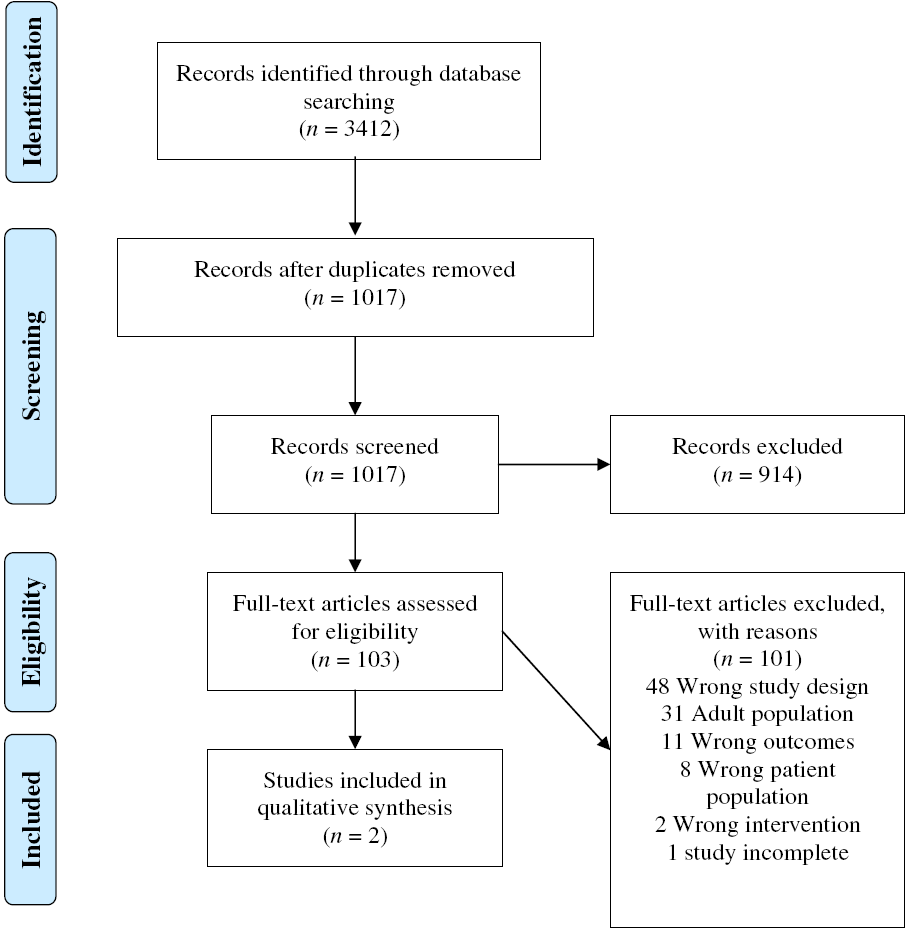
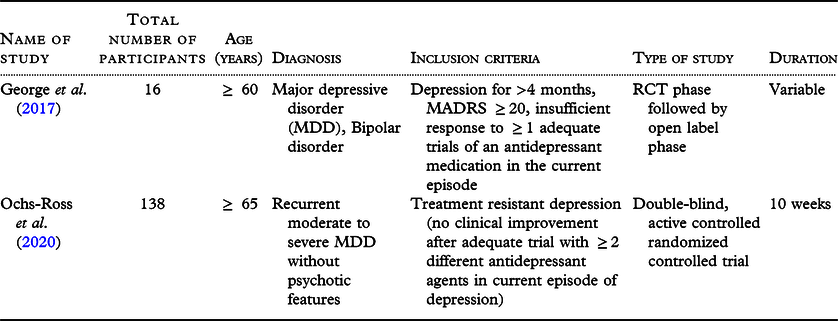
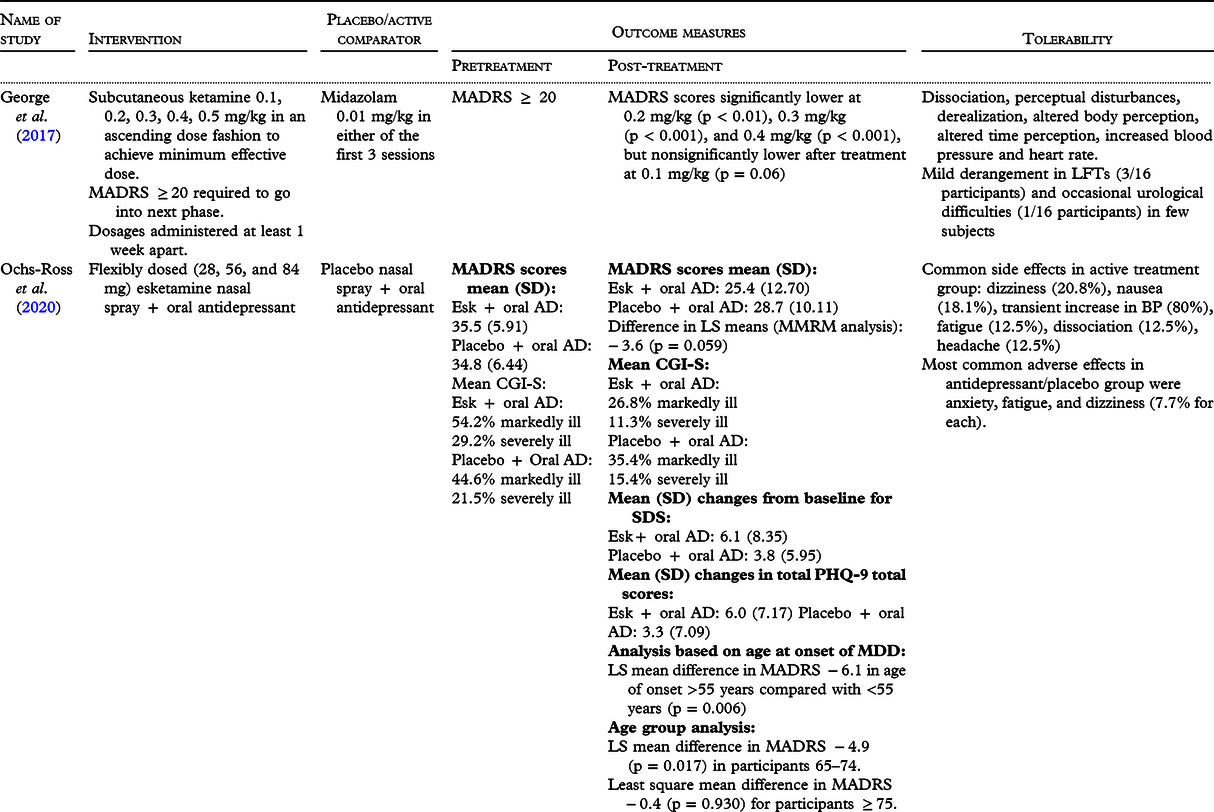
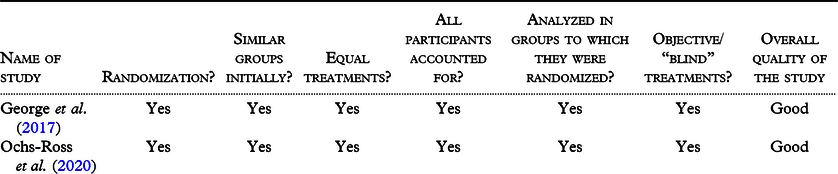
A total of 1699 citations were retrieved and pooled in EndNote and deduplicated to 1005. This set was uploaded to Covidence for screening. Two screeners (AG and RM) independently evaluated the titles, abstracts, and full-text of the eligible studies. A third reviewer (RT) helped mediate consensus to resolve conflicts. The search update retrieved with a total of 1713 citations. After deduplication in EndNote, another 12 citations were uploaded into Covidence for screening. References were again screened and selected as described. Of the 3412 titles and abstracts screened, 102 met criteria for full-text review. Of these, two studies met inclusion criteria. A PRISMA flowchart is presented in Figure 1. The summary of the included studies is highlighted in Table 1. Table 2 provides a summary of the results of the included trials. The quality of the studies was assessed using the Jadad scoring system (Table 3) (Jadad et al., Reference Jadad1996).
PRISMA flow diagram.

Summary of the included trials

MADRS = Montgomery–Asberg Depression Rating Scale.
Summary of the results of the included trials

Quality of reviewed trials

Pilot RCT of titrated subcutaneous ketamine in older patients with treatment-resistant depression
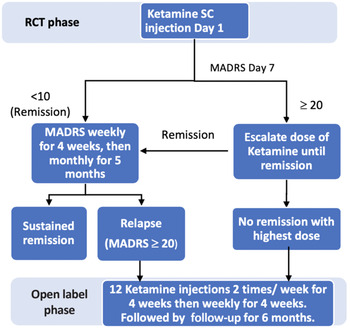
George et al. conducted a randomized, double blind, cross-over, active controlled trial of subcutaneous ketamine in participants over the age of 60 years (George et al., Reference George2017). Subjects were included if diagnosed with major depressive disorder or bipolar disorder with depression lasting >4 months in current depressive episode as measured by Montgomery–Asberg Depression Rating Scale (MADRS) score of ≥20 and insufficient therapeutic response to ≥1 antidepressant trials. Exclusion criteria were high suicide risk necessitating urgent management, pregnancy, psychosis, drug abuse/dependence in the last 6 months, known hypersensitivity or medical contraindication to ketamine, and a history of ketamine abuse. Medical fitness to receive ketamine was evaluated by a physician prior to enrollment. Participants were allowed to remain on psychotropic medications, with no changes in medications permitted in the 4 weeks before and during the trial. The study was conducted in two phases (Fig. 2).
Study design for George et al trial.

RCT phase
Subcutaneous doses of ketamine were given in an ascending dose design (0.1, 0.2, 0.3, 0.4, and 0.5 mg/kg) in separate treatment sessions at least a week apart. Treatment was started with lowest dose of ketamine on day 1. The subject was assessed on day 7 and if MADRS score was still ≥20, they were given the next dose up. This was repeated until the subject was in remission (MADRS <10), or received the highest dose of 0.5 mg/kg. If a subject did not remit with the highest dose of ketamine, they entered the open label phase. If the subject attained remission (MADRS <10) at any given dose, they exited the RCT phase and were followed up with weekly MADRS scores weekly for 4 weeks, then monthly for 5 months to ensure continued remission. If the subject relapsed at any time during this monitoring, they also entered the open label phase. A single dose of active control treatment, midazolam 0.01 mg/kg was randomly inserted within the first 3 treatment sessions to optimize blinding due to similar side effect profiles of ketamine and midazolam. Participants were aware of use of midazolam in one of the treatment sessions, but did not know it would be used within first 3 sessions. They were not aware of ascending dose design either.
Open label phase
RCT phase was followed by open label phase in which repeated treatments were offered to subjects who either relapsed after initial remission or those who never remitted even at the highest ketamine dose. Subjects were administered 12 subcutaneous ketamine injections twice weekly for first 4 weeks, followed by weekly for next 4 weeks. It was given either at the dose that a subject attained remission (if they had relapsed) or at the highest dose of 0.5 mg/kg to subjects who never attained remission. Mood was rated using the MADRS before each treatment and after the completed course of treatment. Participants in remission were further followed up for 6 months after the completed course using the same schedule as after the RCT phase. This phase was designed with an aim to examine if repeated treatments would be able to bring remission to subjects who did not remit after a single treatment or if they would help sustain remission in those who relapsed after an initial remission to single treatment.
Outcome measures
MADRS, the primary outcome measure, was rated pretreatment, 4 h after treatment, and on days 2, 4, and 7 by a blinded rater. Response was defined as a decrease in MADRS score ≥50% of pretreatment score and remission was defined as MADRS <10 on day 7 of treatment with any dose. Safety parameters (pulse, blood pressure) and a side effects checklist (numbness, dizziness, headache, and nausea) were assessed at multiple times before, during, and after treatment. Clinician Administered Dissociative Symptoms Scale (CADSS) and orientation (nine items) were assessed 1 h after treatment. A urinary problems checklist was administered at each session before treatment. Liver function tests and a battery of neuropsychological tests were done before the treatment course and 3–5 days after the last treatment to assess for any cumulative hepatic or cognitive adverse effects over the course.
Results
A total of 16 subjects with highly treatment-resistant depression were enrolled and were entered into the intention to treat analysis. Majority of subjects had concurrent anxiety disorder and/or medical comorbidities such as Parkinson’s disease, chronic pain, multiple sclerosis, recent bowel surgery, and were representative of “real world” scenario. A total of 14 subjects completed the trial, whereas 1 subject withdrew after 0.3 mg/kg dose due to family illness and another subject withdrew after 0.2 mg/kg dose due to unrelated physical illness in the RCT phase. A total of seven participants achieved remission in the RCT phase (ketamine doses 0.1 mg/kg: N = 1; 0.3 mg/kg: N = 1; 0.4 mg/kg: N = 3; and 0.5 mg/kg: N = 2). Of these, five subjects relapsed and were allocated to open label repeated treatments. All of these subjects remitted in open label phase and were followed up for another 6 months during which four relapsed and one stayed in remission, although the time to relapse after repeated treatments was longer than with a single treatment. A total of seven participants did not remit at the highest ketamine dose of 0.5 mg/kg during the RCT phase and were allocated to open label repeated treatments. Of these, two remitted, two responded, one did not remit, one withdrew due to lack of response, and one withdrew due to scheduling difficulties. In the next 6 months of follow-up phase, one was lost to follow up and among the rest, all but one relapsed.
Total of 80 treatment sessions were completed in 16 participants (including ketamine and midazolam). No significant order effect or carryover effect was found. MADRS scores across time points reflected an improvement in depression followed by attenuation of improvement. There was an overall main effect of dose (post hoc tests showed MADRS scores were significantly lower at 0.2, 0.3, and 0.4 mg/kg, but nonsignificantly lower after treatment at 0.1 mg/kg compared with midazolam) but dose by time interaction was not significant.
Adverse effects
Commonly reported adverse effects in this study were mild perceptual disturbance, derealization, altered body perception, and altered time perception. Dissociative symptoms were dose related, peaked 10–15 minutes after injection, and resolved spontaneously by 40 minutes in all sessions. Transient increase in both systolic and diastolic blood pressure was noted with maximum changes occurring 4 h after treatment (baseline: 94.9 mm Hg [standard deviation: 12.7]; 4 h: 96.2 mm Hg [standard deviation: 12.1]). Heart rate never exceeded 131.5% of baseline at any time and returned to baseline in 4 h. There was no cumulative increase in these measures with repeated treatments in the open label phase. Other hemodynamic side effects (palpitations, flushing, dizziness, fatigue/sleepiness/poor concentration/spaced out, paresthesia) were experienced but spontaneously resolved in 30 min to 1 h. Liver function tests were mostly normal except slight elevation in aspartate transaminase (AST), alanine aminotransferase (ALT), or gamma-glutamyl transferase (GGT) in three subjects. Slight increase in urinary frequency was reported in one subject often in open label phase. No decline in neuropsychological test scores was observed in any participants.
Efficacy and safety of esketamine nasal spray plus an oral antidepressant in elder patients with treatment-resistant depression – TRANSFORM-3
Ochs-Ross et al. conducted a multiphasic, randomized, double-blind, multicenter study with subjects of ≥65 years old with treatment resistant depression without psychosis (Ochs-Ross et al., Reference Ochs-Ross2020). The first 4-week phase was a screening/observation phase assessing response to current antidepressant therapy. The second phase was 4 weeks of double-blind induction in which the participants were given either a flexibly dosed esketamine nasal spray or placebo plus a newly initiated oral antidepressant. The oral antidepressant was either a Selective Serotonin Reuptake Inhibitor (SSRI) or Serotonin Norepinephrine Reuptake Inhibitor (SNRI) (duloxetine, escitalopram, sertraline, and venlafaxine) selected by investigators based on the participants past treatment history. Esketamine dose was administered twice a week, starting at 28 mg on day 1, but could be increased to 56 mg on day 4, and to 84 mg on days 8, 11 or 15 based on efficacy and tolerability. There was no dose increase permitted beyond day 15, but it could be reduced by 28 mg on days 18, 22, and 25 if not tolerated at the higher dose. The third phase was 2 weeks of post-treatment follow-up to assess for safety and tolerability. There was an option to enter a long-term open label safety study after the second phase, if the subject wanted to do so.
Outcome measures
The primary efficacy endpoint was measured by a change in MADRS scores from baseline to endpoint. Additional efficacy endpoints were rates of response (≥50% reduction in MADRS scores from baseline) and rates of remission (MADRS ≤12) at day 28, change from baseline to endpoint in severity of depressive illness Clinical Global Impression−Severity (CGI-S), Patient Health Questionnaire 9-Item (PHQ-9), and function assessed by the Sheehan Disability Scale (SDS). Treatment-emergent adverse events (TEAEs) and other safety assessments (hematology and serum chemistry, urinalysis, physical examination, electrocardiogram, suicidal ideation, and behavior based on Columbia Suicide Severity Rating Scale C-SSRS) were monitored throughout the study. Vital signs and dissociative symptoms (using the Clinician-Administered Dissociative States Scale [CADSS], and the 4-item positive symptom subscale of the Brief Psychiatric Rating Scale [BPRS]) were assessed on dosing days at baseline and at 40 min, 1 h (vital signs only), and 1.5 h after dosing. Computerized cognitive battery (Cogstate) was used to assess multiple cognitive domains, and the Hopkins Verbal Learning Test-Revised (HVLT-R) was used to measure verbal learning and memory.
Results
A total of 302 individuals were screened of which a total of 138 individuals were randomized and a total of 122 completed the double-blind phase of the study. Participants in both treatment arms were similar in their demographics and baseline scores. Seventy eight percent of the participants in the esketamine/antidepressant group and 82% in the placebo/antidepressant group received treatment on all eight dosing days. Sixteen participants withdrew before finishing the double-blind phase, of which six were due to TEAEs, four in the esketamine/antidepressant group, and two in the placebo/antidepressant group.
The primary outcome measure, a change in MADRS scores from baseline to day 28, did not reach statistical significance. The median unbiased estimate of the difference (95% CI) between the esketamine/antidepressant and the antidepressant/placebo group was 3.6, two-sided p = 0.059. Response rates (≥50% reduction from baseline in the MADRS total score) were 27% in the esketamine/antidepressant group and 13.3% in the placebo/antidepressant group. The number needed to treat (NNT) for response was 8. The remission rates (MADRS ≤12) were 17.5% in the esketamine/antidepressant group and 6.7% in the placebo/antidepressant group. The NNT for remission was 10. The odds ratio of an improved CGI-S and thus decreased severity of illness in the esketamine/antidepressant was 5.3 times than that of those in the placebo/antidepressant group. Analysis based on age groups showed greater and faster improvement in 65–74-year age group compared with ≥75-year age group. The analysis based on age at depression onset showed greater improvement in subjects with an earlier age of onset.
One hundred and eleven participants chose to participate in the long-term open-label safety and efficacy study. Of these, 88 were nonresponders and they entered a second 4-week induction period, whereas 23 of these who were responders entered the maintenance phase. The MADRS total scores continued decreasing in 93% of participants who completed the second induction phase with 69.5% responders and 46.3% remitters, respectively.
Adverse effects
TEAEs occurred in 70.8% of the participants in the esketamine/antidepressant group and in 60% of the patients in the placebo/antidepressant group, leading to discontinuation of treatment in 5.6% and 3.1% of participants from both groups, respectively. The most common adverse events in the active treatment group were dizziness, nausea, brief increase in blood pressure, headache, fatigue, and dissociation. Most side effects were mild to moderate in severity and resolved on the day of the treatment itself and most patients were considered ready for discharge at 1.5 h after dosing. Increases in blood pressure occurred in both groups were not severe (systolic blood pressure) change of 16 mm Hg in active versus 11 mm Hg in placebo group, diastolic blood pressure 9.5 mmHg, and 6.8 mm Hg in active versus placebo group, respectively). Blood pressure peaked at 40 min after dosing and returned to normal by 1.5 h after dose in the esketamine/antidepressant group. Eight participants in the esketamine/antidepressant group and nine in the placebo/antidepressant group developed suicidal ideation when they did not have them at baseline, but no suicidal behaviors were noted. The dissociative symptoms associated with esketamine began soon after receiving the nasal spray and usually went away by about 1.5 h after administration. Cognitive function in the participants showed either some improvement or baseline results at the end of the induction phase.
Discussion
To the best of our knowledge, this is the first systematic review of RCTs using ketamine for the treatment of depression among older adults. This review included two RCTs that evaluated the efficacy and safety of ketamine in the older adult population. Both the studies were deemed to be of good quality based on the Jadad scoring system. Both studies enrolled participants with common psychiatric and medical comorbidities as would be encountered in real-life scenarios. The study designs also simulated dose escalation and augmentation strategies that are used in clinical practice. In the George et al. study, the study participants were blinded and the rater used midazolam as an active control to ketamine, whereas Ochs-Ross et al. used a placebo nasal spray to ensure blinding. Neither of the trials used the traditional IV route of administration for ketamine. George et al. administered ketamine subcutaneously, whereas Ochs-Ross et al. used the FDA-approved nasal spray, esketamine. The change in MADRS scores from baseline to end of study was the primary outcome measure in both the studies.
The trial by George et al. was a small trial with 16 study participants. They showed a 68.8% remission rate after treatment with ketamine at least at one point during the trial. Higher doses (0.3–0.5 mg/kg) fared significantly better than the lower doses compared with the active control in reducing MADRS scores, although two subjects did remit at 0.1 mg/kg dose. Although half of the subjects showed remission lasting more than 7 days after treatment, MADRS scores reflected initial improvement in depression followed by attenuation of this improvement similar to other ketamine trials. Repeated treatments helped in sustaining remission than single treatment as evidenced by the longer time to relapse in the open label phase. The investigators noted that nonremitters tended to be more treatment resistant at baseline. Limitations of this study include the small sample size and the lack of participants in the “old-old cohort” (age over 80 years), thus the findings may not be generalizable to all older adults. The authors have also noted that they had a lower number of patients who were ECT resistant and hence the remission rate was higher than previous trials where ECT-resistant patients had a poor response to ketamine infusions. The failure of ECT trials may predict a poorer response to ketamine among older adults. The study also excluded acutely suicidal subjects and hence the results may not be generalizable to patients with depression who are suicidal.
In contrast to the aforementioned trial, Ochs-Ross et al.’s TRASFORM-3 study was a negative study and failed to show a significant improvement in their primary outcome measure. The investigators hypothesized a 6.5-point difference between the treatment groups on the primary outcome measure and accordingly had a larger sample size of 138 participants, but only found a 3.6-point difference at the end of the study. It is noteworthy that despite the failure to meet significance on the primary outcome measure, there were decreases in the MADRS scores commensurate with what has been considered clinically meaningful in past antidepressant trials (2–3 points). In addition to the optimistic assumption of a 6.5-point decrease in MADRS scores, other purported reasons for failure to meet significance on primary outcome measure could be the shorter treatment phase of 4 weeks and lower dosage compared with other positive esketamine trials. While most esketamine trials with younger subjects start dosing at 56 mg, this study started dosing at 28 mg to decrease risks for side effects in older population. Given the trial was only 4 weeks, the subjects had shorter time on the higher doses of medication. However, additional endpoints in the study did show improvement with esketamine. The antidepressant/esketamine group showed a higher response (27%) and remission rate (13.3%) compared with antidepressant/placebo group (17.5% and 6.7%, respectively). The odds ratio of decreased severity of illness in the esketamine/antidepressant group was 5.3 times than that of those in the placebo/antidepressant group. The prespecified analyses by age groups showed statistically significant improvements in MADRS score in the esketamine/antidepressant group versus placebo/antidepressant group in participants in 65–74-year age group compared with participants who were in the >75 years in age group. The lack of response in participants of >75-year age group may have been because there were a smaller number of participants in that age range (n = 21). Another explanation could be that older-old adults with depression may have white matter hyperintensities in the brain that may be associated with greater neurological impairment and poorer response to antidepressant treatment, all of which are linked to cerebrovascular factors as well the deficits in executive functioning. The same improvement was noted in participants who had onset of MDD <55 years in age compared with participants who had onset >55 years in age. Other endpoints (CGI-S, PHQ-9) and SDS showed changes that were similar with those found in participants <65 years in age. The response and remission rates were lower than those in adults <65 years, but the results were still comparable. The open label phase further showed a significant number of responders (69.5%) and remitters (46.3%). This study also excluded subjects with suicidal ideation with intent to act within the last 6 months and so the results are not generalizable depressed and suicidal patients.
The short-term safety data from both the studies reflected similar adverse effect profile as in younger patients with most common adverse effects being transient elevation in blood pressure, nausea, fatigue, headache, and dissociation. These acute effects spontaneously resolved within hours and no cumulative adverse effects were seen with multiple treatments. Subjects could be safely discharged a few hours after treatment in both trials. Urological issues (of concern with ketamine) were only observed in one patient in George et al. trial. There was modest elevation of liver enzymes in three patients in the same trial and hence monitoring of liver function tests is recommended. There were no cognitive changes noted in any participants in either trial.
Conclusions
The current evidence for use of ketamine among older adults with depression indicates some benefits with one positive and one negative trial. Although one of the trials did not achieve significance on primary outcome measure, it still showed benefit of ketamine in reducing depressive symptoms. Both studies show longer sustenance of antidepressant effects at higher doses and with repeated treatments. One of the studies showed better ketamine efficacy in younger old subjects (65–74 years) compared with older old (≥75 years) subjects. Decrease in suicidality, one of the most attractive purported benefits of Ketamine, cannot be inferred from either trials in older adults as both the trials excluded subjects with high suicide risk. Ketamine was well tolerated in both studies with adverse effects being mild and transient. Additionally, there were no negative cognitive effects of ketamine noted among any of the study participants.
Based on the limited current evidence, it is our opinion that ketamine shows some benefit in relieving depressive symptoms in older adults. However, there is dearth of RCTs and we need more well designed studies to arrive at a reliable conclusion regarding ketamine’s benefit in treating depression among older adults. Additional research is needed to study the long-term effects of ketamine use and its benefits among the “oldest old” adults. Effects of ketamine specifically on suicidality in older adults also need further investigation.
Conflict of interest
None.
Description of authors’ roles
AG and RRT were primarily and equally involved in the research, analysis, and completion of the manuscript. RD helped with screening studies and writing the manuscript. PP, GB, and SAF helped with writing the manuscript. MF set up the search strategy and helped with writing the manuscript.