




No CrossRef data available.
Article contents
Microphallids in Gammarus insensibilis Stock, 1966 from a Black Sea lagoon: host response to infection
Published online by Cambridge University Press: 11 May 2005
Abstract
We examined the patterns of parasite melanization in Gammarus insensibilis using data on microphallids from Pomorie Lagoon (Black Sea) in the light of 3 predictions associated with host survival: (i) hosts invest more in defence in an environment where the likelihood for infection is higher; (ii) multiple immune challenges exhaust host reserves and result in decreased melanization rates in older hosts; (iii) host immune response is directed against the cerebral metacercariae of Microphallus papillorobustus that alter amphipod behaviour and are most detrimental to the host. G. insensibilis was capable of melanizing the metacercariae of all four species of trematodes found to be hosted by the amphipods. The frequency of melanization and mean abundance of melanized metacercariae were substantially higher than those observed in the same amphipod-gammarid system on the French Mediterranean coast. However, the rate of melanization was low and showed a significant decrease with amphipod size. Although the 4 species were differentially melanized, the host response was largely directed against Microphallus hoffmanni and M. subdolum. We suggest that (i) the lower melanization efficiency with age is due to the mode of infection, probably leading to loss of haemolymph and monopolization of the defence resources for wound healing and (ii) in the French system, host response focuses on the most prevalent and abundant species.
Information
- Type
- Research Article
- Information
- Copyright
- © 2005 Cambridge University Press
INTRODUCTION
Studies of immune defence in arthropods from diverse orders have shown that although lacking an adaptive immune response they exhibit both efficient and rapid defence processes such as maintenance of exoskeleton integrity, foreign agent recognition, inactivation and elimination (Thörnqvist and Söderhäll, 1997). The latter two steps of the cellular defence reaction are associated with the activation of the phenoloxidase (PO) cascade involved in the melanization pathway. PO has the ability to adhere to surfaces such as microorganisms, fungi or parasites, and this leads to the formation of melanin on the surface of the pathogen (Thörnqvist and Söderhäll, 1997; Cerenius and Söderhäll, 2004). Although studies on defence reactions against bacteria and fungi have frequently recorded melanotic encapsulation in crustaceans in aquaculture conditions (see Edgerton et al. 2002 for a review), virtually no data exist on crustacean populations in the wild and this is particularly true for metazoan parasites.
Recently, Thomas, Guldner and Renaud (2000) used field data on 4 microphallid species parasitizing Gammarus aequicauda in a lagoon in Southern France to test the hypothesis that the host immune response (i.e. encapsulation followed by melanization) varies according to the levels of parasite pathogenicity. They found that the cellular defence reaction of the host is specifically directed against the cerebral metacercariae of Microphallus papillorobustus (Rankin, 1940), and suggested that this is due to the fact that this species is “the most detrimental for the host”. M. papillorobustus is a manipulative species causing behavioural alterations if encysted in the cerebroid ganglia of the gammarids which makes them easy prey for the final bird hosts, thus reducing host survival (Helluy, 1983, 1984).
However, in a study on virtually the same microphallid species complex in Gammarus insensibilis originating from a Black Sea lagoon (see Kostadinova and Mavrodieva, 2005) we have revealed patterns of infection and interspecific associations largely departing from those observed by Thomas and colleagues in the gammarid samples from Thau lagoon in France (e.g. Thomas et al. 1995, 1998a,b). In contrast to the supposition for a differential melanization of the manipulative M. papillorobustus, we have found melanized metacercariae of all 4 microphallid species. The substantially higher infection rates recorded in our study, along with the discovery of another microphallid species encysting in the gammarid brain, raises, the question of whether differences in local conditions and/or site selection within the host might influence host response to infection in this host-parasite system.
Here, using the same sample studied by Kostadinova and Mavrodieva (2005), we examine the patterns of parasite encapsulation and melanization in G. insensibilis focusing on 2 possible scenarios within the context of the host fitness/survival theme. The first is related to the specific characteristics of the infection site raising the question of whether hosts invest more in defence in an environment where the likelihood of being infected is distinctly higher. However, multiple immune challenges may exhaust host reserves so that other traits are affected and this may result in reduced PO activity in different body compartments (e.g. Siva-Jothy et al. 2001). Along this second line we attempted to test the assumption of a detectable decrease in melanization rates with host size (age) focusing on susceptible hosts. Finally, we explored the evidence for a differential vs generalized melanization pattern in the studied system testing the hypothesis that the host immune response is directed against the cerebral metacercariae of Microphallus papillorobustus that alter amphipod behaviour and are most detrimental to the host.
MATERIALS AND METHODS
A large sample of G. insensibilis (n=427) was collected with a fine mesh net along a transect on the southern shore of the Pomorie Lagoon (Bulgarian Black Sea Coast, 42 ° 35′ N, 27 ° 38′ E) on 26 May 2000. Amphipods were fixed in 4% borax-buffered formaldehyde in sea water. In the laboratory the amphipods were measured (length from rostrum to telson) and dissected under a stereoscopic microscope. The sample was stratified by size into 8 size classes with a step of 1 mm (see Kostadinova and Mavrodieva, 2005 for details). All microphallid metacercariae were identified and counted. Biovolume was estimated using the data for the size of M. papillorobustus given by Thomas et al. (1998a) and the minima for the diameter ranges provided by Kostadinova and Gibson (1994) for Maritrema subdolum Jägerskiöld, 1909, Microphallus hoffmanni Rebecq, 1964, and Levinseniella propinqua Jägerskiöld, 1907.
Prevalence and abundance are used as defined in Bush et al. (1997). Two additional parameters related to the susceptible fraction of the population under study were estimated and used in statistical analyses: (i) frequency of melanization (FM %), calculated as the no. of hosts possessing melanized metacercariae/no. of infected hosts∗100; and (ii) melanization rate (MR %) calculated as no. of melanized metacercariae/no. of all metacercariae∗100. Other specific terms, e.g. relative abundance and biovolume, used to standardize summed data for comparisons are defined in the text. For comparisons with the system studied by Thomas et al. (2000) sample infection/melanization parameters were calculated from the data for their random sample ‘S1’.
No successful normalization of the data was achieved due to the overall low levels of melanization, and therefore only nonparametric tests (Spearman rank correlations (rs), Mann-Whitney test and ANOVA applied to ranked data) were chosen for statistical comparisons using a Bonferroni correction in post hoc tests. Frequencies of melanization were compared with Fisher's exact test. All analyses were carried out using SPSS ®11.0 (SPSS Inc., Norušis, 2002) and the programme Quantitative Parasitology (QP1.0, Rózsa, Reiczigel and Majoros, 2000).
RESULTS
Overall levels of melanization of microphallid metacercariae in G. insensibilis
A total of 1374 melanized metacercariae (8·16% of all larvae recovered) of all 4 species were counted in virtually all gammarids of the sample (overall frequency of melanization 99·3%). The frequency of melanization of M. hoffmanni and M. subdolum was significantly higher than that of both M. papillorobustus and L. propinqua (see Fig. 1) and the former two species also represented a substantial part (>90%) of all melanized metacercariae (see Table 1 and Fig. 1). The 4 microphallid species differed significantly regarding the distributions of both the abundance of melanized metacercariae (F3,1704=140·8, P<0·0001) and melanization rates (F3,1409=80·7, P<0·0001). M. hoffmanni and M. subdolum exhibited higher melanization rates and abundance of melanized larvae than M. papillorobustus and L. propinqua (Table 1). Strikingly, the rate of melanization of M. hoffmanni was considerably higher than in any of the other microphallid species.

Fig. 1. Frequency of melanization (FM %) and relative abundance of melanized metacercariae (RAM, as % of total no. of melanized larvae) of the 4 microphallids infecting G. insensibilis at Pomorie lagoon. Cephalic infections with M. papillorobustus and L. propinqua shown separately. 1, M. papillorobustus; 2, cephalic M. papillorobustus; 3, L. propinqua, 4, cephalic L. propinqua; 5, M. hoffmanni; 6, M. subdolum.

These data suggest a somewhat differential melanization of the metacercariae of the 4 species in contrast to our initial expectation of a generalised host response (i.e. irrespective of species) based on the overall strong positive correlation between the total number of melanized larvae and the overall parasite load (Table 2). Assuming that if host defence reactions are specifically targeted at any of the species, the association of the abundance of melanized metacercariae with the species' parasite load would be stronger, we examined the association of the numbers of melanized metacercariae of each species with the numbers of conspecific larvae and the total parasite load considering infected individuals only in each run. Surprisingly, with the exception of M. papillorobustus which showed no significant correlation with both measures, we found this to be the case. There was no correlation between numbers of melanized metacercariae of each species and the number of heterospecific larvae either (see Table 2). However, the abundance of melanized metacercariae and melanization rates of Microphallus spp. and M. subdolum were significantly correlated (range for rs=0·124–0·206 and 0·151–0·290, respectively).

Variation in melanization patterns with host size
Overall frequency and abundance of melanization showed no significant differences between the 8 size classes (Table 3). However, the total melanization rate exhibited a gradual decrease towards large size classes (F7,416=3·22, P=0·0025) in contrast to the increase in the overall parasite load which was strongly positively correlated with amphipod size (rs=0·515, P<0·001, see Fig. 2). Melanization rates of Microphallus spp. and M. subdolum generally followed this pattern (Table 3) but only proportions of melanized M. hoffmanni differed significantly between size classes (F7,396=2·76, P=0·0084).

Fig. 2. Variations in overall melanization rate (MR) and parasite load (measured as mean abundance, MA) with amphipod size.

Although there were no significant differences between the 4 microphallid species with respect to melanization frequency in size classes 1 and 8, both frequency of melanization and relative abundance of melanized metacercariae in the amphipods of different size groups followed the pattern observed in the aggregated sample. Thus significantly higher proportions of amphipods harboured melanized metacercariae of M. subdolum and M. hoffmanni (size class 2–7, all P<0·0083) and these collectively represented the majority of the melanized larvae in each size class (87–97%, see Fig. 3).

Fig. 3. Structure of melanization in the 8 size classes of G. insensibilis from Pomorie lagoon. Relative abundance is calculated as no. of melanized metacercariae of each species/total no. of melanized larvae in each size class ∗100.
Melanization of cephalic vs corporal metacercariae
Melanized metacercariae of M. papillorobustus and L. propinqua were found in both the cephalic and corporal segments of the amphipods. These, however, represented a rather small fraction of the total number of melanized larvae and there were very few cephalic metacercariae that were melanized (see Fig. 1). The 2 species showed no significant differences with respect to the frequency and rate of melanization of the cephalic larvae. Although significantly more corporal metacercariae of M. papillorobustus were melanized (Mann-Whitney test, Z=2·462, P=0·0138; mean±S.D. 0·20±0·6 vs 0·04±0·2) which is related to the overall higher parasite load of corporal larvae of this species in the sample, both the frequency of melanization (14·9 vs 6·5%) and melanization rates (mean±S.D. 4·8±14·8% vs 5·2±20·7%) did not differ in relation to the site of encystment (all P>0·05). There were no significant differences between the cephalic and corporal metacercariae of L. propinqua with respect to these 3 measures either (all P>0·05; mean no. of melanized larvae±S.D. 0·007±0·08 vs 0·028±0·27; frequency of melanization 2·2 vs 7·0%; mean melanization rate±S.D. 2·2±14·8% vs 5·3±21·0).
A comparison of the frequency of melanization and the distributions of melanization rates of the cephalic (M. papillorobustus and L. propinqua combined) vs corporal metacercariae (all species combined) showed substantially higher levels of both parameters for the corporal infections (frequency of melanization 68·2 vs 6·3%, P<0·0001; melanization rates, M-W Z=13·07, P<0·0001, mean±S.D. 10·5±12·6% vs 4·2±17·6%).
DISCUSSION
Microphallid trematodes are a troublesome system for a study of patterns of host-parasite interactions since they often co-occur in the intermediate host and are transferred to the final hosts (birds and mammals) in packets. Furthermore, geographical variation in crustacean-microphallid associations apparently exists (e.g. Helluy, 1983; Mouritsen and Jensen, 1997; Zander et al. 2002) and our new data (see Kostadinova and Mavrodieva, 2005) provide yet another example of the effect of environmental conditions on microphallid infections in amphipod hosts. Our study on the host defensive melanization response to multispecies infections is the first to supply data on virtually the same host-parasite system as that studied by Thomas et al. (2000), and thus provides a unique opportunity for a comparative assessment of the interactions (if any) between local conditions and the manifestation of the amphipod's capacity to defend itself in a natural setting.
Immune defence is regarded as a subcomponent of survival, since its primary function is to ensure survival in an environment rich in parasites (Rigby and Moret, 2000). Immune responses in arthropods have been measured typically by means of intensity and rates of melanotic encapsulation (König and Schmid-Hempel, 1995), activity of the phenoloxidase cascade (Siva-Jothy et al. 2001; Rolff and Siva-Jothy, 2002; Rigaud and Moret, 2003) or the inducible production of antibacterial peptides (Moret and Schmid-Hempel, 2000). It is assumed that these measures reflect the ability of the host to control or eliminate an infection and so their links to fitness are highly plausible (see Schmid-Hempel and Ebert, 2003 for a recent review). For technical reasons we used the first measure as it appears better suited for screening large samples of natural populations.
The main finding of our study is that G. insensibilis exhibited the ability to melanize the metacercariae of all four microphallid species infecting this host at Pomorie lagoon. Both the overall frequency of melanization and the mean abundance of melanized metacercariae in the sample from Pomorie lagoon showed substantially higher values than those observed in ‘Sample 1’ at Thau (99·3% vs 35·6% and 3·22 vs 0·11, respectively). We believe that these differences are directly related to the significantly higher infection rates of microphallids in Pomorie lagoon. Our observations therefore indicate that amphipods invest more in defence and this can be attributed to the specific characteristics of this environment favouring microphallid infection. However, although the overall frequency of melanization approached the maximum, the total rate of melanization was rather low and this pattern was replicated in the sample stratified by size. Thus, although more than half of each size-class sample harboured melanized metacercariae, their abundance was rather low and they represented a very small proportion of the total. Furthermore, the overall rate of melanization showed a significant decrease with amphipod size and the associated higher parasite load in the absence of substantial differences in abundance of melanized metacercariae across size groups. These results illustrate an overall successful parasitism of microphallid larvae in their intermediate host at Pomorie lagoon.
Although studies on invertebrate host immune response against metazoan parasites are in their infancy, evidence is accumulating that these parasites may circumvent their hosts' immune defence (Rigaud and Moret, 2003 and references therein). Thus, infection of Gammarus pulex with acanthocephalans was found to be associated with lower levels of PO-enzyme activity (Plaistow et al. 2003; Rigaud and Moret, 2003). Inferring from these studies it appears plausible that microphallids also evade their host response through a similar mechanism of immunosuppression. However, the different mode of infection in amphipod-microphallid systems rather suggests a different effect on host defensive response. Microphallid cercariae infect amphipods by direct penetration of the cuticle thus inducing an immediate clotting and melanization response at the penetration holes, sometimes trapping penetrating cercariae (Jensen et al. 1998). In invertebrates, wounding induces an immune response, similar to that used to encapsulate parasites and pathogens and a recent study on G. pulex revealed a negative correlation between wounding abundance and PO activity (see Plaistow et al. 2003 and references therein).
The massive invasion by cercariae during a short period, possibly a common infection pattern in microphallids (Ginetsinskaya, 1988; see Fredensborg et al. 2004 for a discussion), therefore may result in significant loss of haemolymph (thus lowering PO activity levels) and/or monopolization of the defence resources for wound healing (Siva-Jothy et al. 2001). Both outcomes would lower melanization efficiency and favour successful parasitism of the metacercariae already established in the host. The overall low levels coupled with the contrasted rates of melanization in the youngest vs oldest individuals observed in our sample, tend to support this suggestion.
Thomas et al. (2000) found that only metacercariae of M. papillorobustus were melanized in samples of G. aequicauda collected ‘during spring 1999’ and ‘one month later’ in ‘Palavas les Flots’, Southern France (coordinates point to Thau lagoon) and speculated that the cellular defence reaction of the host is specifically targeted against cerebral metacercariae of M. papillorobustus since this species is ‘the most detrimental for the host’. We found no supportive evidence that host immune reaction towards the larvae of any of the two species encysted in the brain of G. insensibilis, i.e. M. papillorobustus and L. propinqua, is stronger. Specifically, few cephalic larvae were melanized and no significant differences with respect to location were detected in the frequencies and rates of melanization of both species. The brain, however, is a ‘privileged’ site with respect to evading host immune response in vertebrates and data on host-parasitoid systems suggest that this may well be true for invertebrates (see Eslin and Prévost, 2000). Our comparisons of the frequency of melanization and melanization rates of the combined cephalic vs corporal infections support this assumption since both parameters showed substantially higher levels for corporal infections. We conclude therefore, that the larvae of the two species encysting in the host's brain have better chances of escaping from immune recognition.
Apparently, the amphipod-microphallid relationship is far more complex in the Pomorie lagoon and this can to a degree be related to the substantially higher infection rates in this locality (see Kostadinova and Mavrodieva, 2005). Thus the overall mean intensity of the microphallids is about 5 times higher than that recorded by Thomas et al. (2000) (39·7 vs 7·04) and so is the mean intensity of melanized metacercariae (3·24 vs 0·66). Furthermore, there are considerable differences in the structure of microphallid communities in the amphipod hosts under comparison (see Table 4). Thus the relative abundances of M. subdolum and M. hoffmanni are substantially higher in the sample from Pomorie lagoon whereas the opposite is observed for M. papillorobustus. Half of all metacercariae of this species recovered in gammarids from Thau lagoon were located in hosts brain (vs 2·2% in our sample) and these were all melanized (vs 1·2% in our sample). Finally, the fact that no melanized larvae of the 3 species co-occurring with M. papillorobustus have been recorded by Thomas et al. (2000) may simply reflect the fact that they were virtually absent in their sample (i.e. a total of 9 L. tridigitata, 41 M. subdolum and 54 M. hoffmanni metacercariae have been recovered in 500 gammarids, see prevalence range in Table 4). All above comparisons suggest that host melanization response in the amphipod sample from Thau lagoon has, in fact, been aimed at the most prevalent and abundant microphallid species. Our analyses clearly indicate that at high levels of multispecies infections the larvae located in the haemocoel are more prone to host immune response.

Another distinctive feature of the host-parasite system studied by us is the differential melanization of the microphallids. Not only the 4 microphallid species infecting G. insensibilis at Pomorie lagoon exhibited differing infection parameters (Kostadinova and Mavrodieva, 2005) but they were also melanized at different rates. The stronger association between the numbers of melanized metacercariae and conspecific parasite load, support this conclusion. Surprisingly, the specific melanization patterns confirmed neither the predictions of the previous study (Thomas et al. 2000) nor our initial expectations, based on the overall infection parameters and high levels of association between the microphallid species infecting G. insensibilis. In particular, host defensive response was largely directed against the larvae of M. hoffmanni and M. subdolum, and to a lesser extent against M. papillorobustus. The differing position of the 2 Microphallus spp. in this host-parasite relationship and specifically the leading position of M. hoffmanni with respect to levels of melanization, appears most puzzling. Both species show similar, and distinctly lower than those of M. subdolum, infection parameters and this precludes considering the difference as an effect of the latter. Two possible explanations can be suggested for the observed differential pattern of melanization: (i) M. hoffmanni is less adapted to avoid/suppress its host immune response; and (ii) M. hoffmanni is more harmful for its host. Although M. hoffmanni has been relatively recently ‘discovered’ and the data on its geographical distribution are scarce (see Kostadinova and Gibson, 1994) it may appear a good candidate for maladaptation. In contrast to the other 2 abundant parasites in G. insensibilis, M. subdolum and M. papillorobustus, whose populations are sustained by the local gull populations and therefore infect amphipods in several multiple waves during the year, the transmission of M. hoffmanni only occurs during late Autumn – early Spring and is probably related to overwintering bird populations from Northern Europe (most likely Anatidae but also Podiceps nigricollis, see Kostadinova and Gibson, 1994). A single infection wave with rare parasite genotypes might initiate mounting an immune response in the local amphipod population. Another possibly more parsimonious explanation is that although not numerically dominant, the metacercariae of M. hoffmanni occupy substantially more space in individual amphipods than the other microphallids. An approximate (using minima for the cyst size measurements) estimation of the biovolume of M. hoffmanni shows that it represents at least half of the total parasite biovolume in our sample (see Table 4 for a comparison with the remaining species). We assume that the physical effect of the metacercariae (e.g. haemolymph flow obstruction, organ displacement, etc.) of this species is stronger and the host perceives it as most harmful. A larger biovolume is also associated with a higher contact surface for PO adhesion.
In conclusion, our correlative study suggests that (i) amphipods invest more in defensive melanization in an environment where the likelihood to become infected is higher; (ii) host immune response is differential rather than generalized but not exclusively focused on the cerebral metacercariae of the manipulative species, M. papillorobustus; (iii) multiple waves of multiple parasites seem to exhaust hosts immune reserves and this favours successful parasitism.
This work was partially supported by grant HPMD-CT-2000-00037 (20001958 to A.K.). We are grateful to Professor Robert Poulin (University of Otago, Dunedin, NZ) for his comments on an earlier version of the manuscript. We are indebted to Dr Frederic Thomas (CEPM/UMR, Montpellier, France), Professor John Barrett (University of Aberystwyth, UK), Dr David Gibson (The Natural History Museum, London, UK) and Professor Robert Poulin for help with the literature.
References
REFERENCES
Bush, A. O.,
Laferty, K. D.,
Lotz, J. M. and
Shostack, A. W. (
1997).
Parasitology meets ecology on its own terms: Margolis et al. revisited.
Journal of Parasitology
83,
575–583.CrossRefGoogle Scholar
Cerenius, L. and
Söderhäll, K. (
2004).
The prophenoloxidase-activating system in invertebrates.
Immunological Reviews
198,
116–126.CrossRefGoogle Scholar
Edgerton, B. F.,
Evans, L. H.,
Stephens, F. J. and
Overstreet, R. M. (
2002).
Synopsis of freshwater crayfish diseases and commensal organisms.
Aquaculture
206,
57–135.CrossRefGoogle Scholar
Eslin, P. and
Prévost, G. (
2000).
Racing against host's immunity defences: a likely strategy for passive evasion of encapsulation in Asobara tabida parasitoids.
Journal of Insect Physiology
46,
1161–1167.CrossRefGoogle Scholar
Fredensborg, B. L.,
Mouritsen, K. N. and
Poulin, R. (
2004).
Intensity-dependent mortality of Paracalliope novizealandiae (Amphipoda: Crustacea) infected by a trematode: experimental infections and field observations.
Journal of Experimental Marine Biology and Ecology
311,
253–265.CrossRefGoogle Scholar
Ginetsinskaya, T. A. (
1988).
Trematodes, their Life Cycles, Biology and Evolution.
Amerind Publishing Co.,
New Delhi.
Helluy, S. (
1983).
Relations hôtes-parasite du trématode Microphallus papillorobustus (Rankin, 1940). II-Modifications du comportement des Gammarus hôtes intermédiaires et localisation des métacercaires.
Annales de Parasitologie Humaine et Comparée
58,
1–17.CrossRefGoogle Scholar
Helluy, S. (
1984).
Relations hôtes-parasites du trématode Microphallus papillorobustus (Rankin, 1940). III-Facteurs impliqués dans les modifications du comportement des Gammarus hôtes intermédiaires et tests de prédation.
Annales de Parasitologie Humaine et Comparée
59,
41–56.CrossRefGoogle Scholar
Jensen, T.,
Jensen, K. T. and
Mouritsen, K. N. (
1998).
The influence of the trematode Microphallus claviformis on two congeneric intermediate host species (Corophium): infection characteristics and host survival.
Journal of Experimental Marine Biology and Ecology
227,
35–48.CrossRefGoogle Scholar
Kostadinova, A. and
Gibson, D. I. (
1994).
Microphallid trematodes in the amphipod Gammarus subtypicus Stock, 1966 from a Black Sea lagoon.
Journal of Natural History
28,
37–45.CrossRefGoogle Scholar
Kostadinova, A. and
Mavrodieva, R. S. (
2005).
Microphallids in Gammarus insensibilis Stock, 1966 from a Black Sea lagoon: manipulation hypothesis going East?
Parasitology
131, (this issue).Google Scholar
König, C. and
Schmid-Hempel, P. (
1995).
Foraging activity and immunocompetence in workers of the bumble bee, Bombus terrestris L.
Proceedings of the Royal Society of London, B
260,
225–227.CrossRefGoogle Scholar
Moret, Y. and
Schmid-Hempel, P. (
2000).
Survival for immunity: the price of immune system activation for bumble bee workers.
Science
290,
1166–1168.CrossRefGoogle Scholar
Mouritsen, K. N. and
Jensen, K. T. (
1997).
Parasite transmission between soft-bottom invertebrates: temperature mediated infection rates and mortality in Corophium volutator.
Marine Ecology Progress Series
151,
123–134.CrossRefGoogle Scholar
Norušis, M. J. (
2002).
SPSS®11.0 Guide to Data Analysis.
Prentice Hall Inc.,
New Jersey.
Plaistow, S. J.,
Outreman, Y.,
Moret, Y. and
Rigaud, T. (
2003).
Variation in the risk of being wounded: and overlooked factor in studies of invertebrate immune function?
Ecology Letters
6
489–494.Google Scholar
Rigaud, T. and
Moret, Y. (
2003).
Differential phenoloxidase activity between native and invasive gammarids infected by local acanthocephalans: differential immunosuppression?
Parasitology
127,
571–577.Google Scholar
Rigby, M. C. and
Moret, Y. (
2000).
Life-history trade-offs with immune defenses. In
Evolutionary Biology of Host-Parasite Relationships: Theory Meets Reality
(ed. Poulin, R., Morand, S. & Skorping, A.)
Elsevier, Amsterdam.
Rolff, J. and
Siva-Jothy, M. T. (
2002).
Copulation corrupts immunity: a mechanism for a cost of mating in insects.
Proceedings of the National Academy of Sciences, USA
99,
9916–9918.CrossRefGoogle Scholar
Rózsa, L.,
Reiczigel, J. and
Majoros, G. (
2000).
Quantifying parasites in samples of hosts.
Journal of Parasitology
86,
226–232.Google Scholar
Schmid-Hempel, P. and
Ebert, D. (
2003).
On the evolutionary ecology of specific immune defence.
Trends in Ecology and Evolution
18,
27–32.CrossRefGoogle Scholar
Siva-Jothy, M. T.,
Tsubaki, Y.,
Hooper, R. E. and
Plaistow, S. J. (
2001).
Investment in immune function under chronic and acute immune challenge in an insect.
Physiological Entomology
26,
1–5.Google Scholar
Thomas, F.,
Renaud, F.,
Rousset, F.,
Cézilly, F. and
De Meeûs, T. (
1995).
Differential mortality of two closely related species induced by one parasite.
Proceedings of the Royal Society of London, B
260,
349–352.CrossRefGoogle Scholar
Thomas, F.,
Poulin, R. and
Renaud, F. (
1998 a).
Nonmanipulative parasites in manipulated hosts: ‘Hitch-hikers’ or simply ‘lucky passengers’?
Journal of Parasitology
84,
1059–1061.Google Scholar
Thomas, F.,
Villa, M.,
Montoliu, I.,
Santalla, F.,
Cézilly, F. and
Renaud, F. (
1998 b).
Analyses of a debilitating parasite (Microphallus papilorobustus, Trematoda) and its “hitch-hiker” parasite (Maritrema subdolum, Trematoda) on survival of their intermediate host (Gammarus insensibilis, Amphipoda).
Journal of the Helminthological Society of Washington
65,
1–5.Google Scholar
Thomas, F.,
Guldner, E. and
Renaud, F. (
2000).
Differential parasite (Trematoda) encapsulation in Gammarus aequicauda (Amphipoda).
Journal of Parasitology
86,
650–654.CrossRefGoogle Scholar
Thörnqvist, P.-O. and
Söderhäll, K. (
1997).
Crustacean immune reactions, a short review. In
Diseases in Asian Aquaculture III.
Fish Health Section, Asian Fisheries Society,
Philippines.
Zander, C. D.,
Koçoglu, Ö.,
Skroblies, M. and
Strohbach, U. (
2002).
Parasite populations and communities from the shallow littoral of the Orther Bight (Fehmarn, SW Baltic Sea).
Parasitology Research
88,
734–744.CrossRefGoogle Scholar

Fig. 1. Frequency of melanization (FM %) and relative abundance of melanized metacercariae (RAM, as % of total no. of melanized larvae) of the 4 microphallids infecting G. insensibilis at Pomorie lagoon. Cephalic infections with M. papillorobustus and L. propinqua shown separately. 1, M. papillorobustus; 2, cephalic M. papillorobustus; 3, L. propinqua, 4, cephalic L. propinqua; 5, M. hoffmanni; 6, M. subdolum.

Table 1. Summed comparative data on host defence melanization against the 4 microphallid species infecting G. insensibilis (n=427) at Pomorie lagoon

Table 2. Correlations between numbers of melanized metacercariae and total, conspecific and heterospecific parasite load for the 4 microphallid species infecting G. insensibilis at Pomorie lagoon

Fig. 2. Variations in overall melanization rate (MR) and parasite load (measured as mean abundance, MA) with amphipod size.
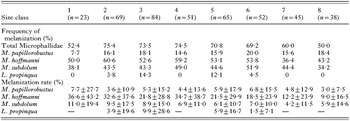
Table 3. Frequency of melanization and melanization rates (mean±S.D.) of the 4 microphallid species in the sample of G. insensibilis stratified by size

Fig. 3. Structure of melanization in the 8 size classes of G. insensibilis from Pomorie lagoon. Relative abundance is calculated as no. of melanized metacercariae of each species/total no. of melanized larvae in each size class ∗100.
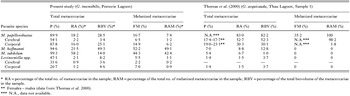
Table 4. Summed comparative data on microphallid communities and melanization response of amphipods from Pomorie and Thau lagoon
 You have
Access
- 11
- Cited by