What’s known on this subject
Prenatal diagnosis of critical CHD is the standard of care in developed countries.
This strategy has a significant impact on in-hospital outcomes after surgery for neonates with CHD.
What the study adds
Prenatal diagnosis and planned peri-partum care have a significant impact on pre-operative clinical status in neonates with critical CHD in low-resource settings.
CHD is one of the most common forms of congenital anomalies in infants with a reported prevalence of 8 per 1000 live births.Reference Van Der Linde, Konings and Slager1, Reference Saxena, Mehta and Sharma2 Critical CHD is defined as one that requires surgery or intervention to prevent significant morbidity or mortality within the first year of life.Reference Liske, Greely and Law3 According to the Global Burden of Disease Study, CHD is now the fifth leading cause of infant deaths globally and the second leading cause in high and mid socio-demographic index regions.Reference Fadel, Rasaily and Aswathi4, Reference Murray, Vos and Lozano5 In India, it is estimated that 200,000–250,000 infants are born every year with CHD; of these approximately 100,000 are likely to require surgical intervention in the first year of life.Reference Kumar and Shrivastava6
Despite improvements in paediatric cardiac care and decrease in in-hospital mortality after surgery for CHD, neonates with critical CHD still pose a high-risk group for adverse outcomes.Reference Gilboa, Salemi, Nembhard, Fixler and Correa7 In neonates with critical CHD, life-threatening haemodynamic instability and hypoxia can occur very early resulting in clinical decompensation before definitive treatment can be instituted.Reference Schultz, Localio, Clark, Ravishankar, Videon and Kimmel8 Studies from high-income countries have reported that one in three infants with a potentially life-threatening CHD was discharged from the hospital after birth without a diagnosis.Reference Wren, Reinhardt and Khawaja9 Low-middle-income countries have limitations in the health care system resulting in delayed diagnosis, delayed institution of life-saving medications, and suboptimal transport.Reference Murray, Vos and Lozano5 A recent study from our institution found that 40% of neonates with critical CHD had significant end-organ injury on arrival in a cardiac facility after transport.Reference Karmegaraj, Kappanayil, Sudhakar and Kumar10 Other studies from low-middle-income countries have identified a clear association between pre-operative clinical status and peri-operative outcome in infants undergoing heart surgery.Reference Reddy, Kappanayil and Balachandran11, Reference Bakshi, Vaidyanathan and Sundaram12
Prenatal screening of the heart is an integral component of routine antenatal evaluations in high-income countries and recent population-based studies report enhanced pick-up rates for critical CHD during antenatal scans.Reference Hunter, Heads, Wyllie and Robson13, Reference Lytzen, Vejlstrup and Bjerre14 Several studies from high-income countries have shown the beneficial impact of prenatal diagnosis of critical CHDs in improving peri-operative outcomes.Reference Simpson15–Reference Khoshnood, Lelong and Houyel22 However, in low-middle-income countries, prenatal diagnosis of CHD is limited due to lack of awareness, trained personnel, and lack of implementation of standard protocols in the conduct of mid-trimester anomaly scans.Reference Bah, Sapian, Jamil, Alias and Zahari23 Prenatal diagnosis and planned peri-partum care of neonates with critical CHD might potentially emerge as complementary strategy to improving early postnatal diagnosis, stabilization, and transport.Reference Eckersley, Sadler, Parry, Finucane and Gentles24 There are possible benefits for the health care system as well as individual families with respect to cost savings through this strategy. However, despite these potential benefits, prenatal diagnosis for care of critical neonatal CHD is largely an unexplored concept in most low-middle-income countries.
This study describes the impact prenatal diagnosis and planned peri-partum care on the pre-operative clinical status of neonates with critical forms of CHD in Kerala, South India.
Methods
Study setting
This was a prospective study conducted in a tertiary care private university hospital in Kochi catering to a population of 30 million in the state of Kerala in South India. Around 4000 of the total 500,000 babies born in Kerala every year are estimated to have CHDs, of which about 1500 expected to require an intervention in the first few months of life. There are seven centres in the state that offers tertiary paediatric cardiac care services, three in government and the rest in private sector. Our centre performs around 700 paediatric cardiac surgeries (70% are infants and 25% in neonates) annually. A large number of our patients (around 80%) receive financial support through government, non-government organizations, hospital charity services, or private funding systems. A dedicated fetal cardiology division was added to the existing paediatric cardiac services in 2008. A system for prenatal referral of suspected cases, fetal diagnosis, family-centred counselling, and planned peri-partum care was established for 10 years at the time of initiation of this study.
Inclusion criteria
All neonates (<28 days of age) with critical CHD admitted in our paediatric cardiac ICU during the period January 2017–June 2018 and requiring a cardiac intervention in the neonatal period were included in the study. These were divided into two groups based on the timing of diagnosis of CHD (1) prenatal diagnosis (2) diagnosis after birth. Our policy was to offer planned delivery for all prenatally diagnosed critical CHD in our centre. Postnatal cases were included from the point of time of admission to our ICU after transport from the referring hospital. Patients with extracardiac or genetic syndromes were not excluded if there was an intention to treat.
Pre-term infants (<35 weeks), age >28 days and neonates with no intention to treat were excluded from the study. Neonates with stable CHDs not warranting neonatal intervention and those conditions needing only medical management (arrhythmias, myocarditis, etc.) were also excluded.
Study protocol
For prenatal cases, a database was created to include all demographic and clinical data, cardiac diagnosis, extracardiac anomalies, counselling, and details of peri-partum care. For postnatal group, the patients were admitted initially in other hospitals and were transported to our centre after suspicion of critical CHD. The clinical status on admission to the referring hospital and the details of stabilisation measures undertaken were not available in all cases. We recorded the mode of transport (monitored/unmonitored) and the transport distance in these cases.
Demographic details recorded included gestational age at delivery, mode and site of delivery, birth weight, age, and weight at admission and gender. The exact cardiac diagnosis was ascertained by echocardiography and was recorded. For neonates undergoing surgical repair, the cardiac diagnosis was further subcategorized based on the RACHS-1 risk stratification system.Reference Jenkins25
Pre-operative status of both study groups was evaluated using the following scoring systems. This assessment was done after admission of the neonate in our paediatric cardiac ICU in both study groups.
California modification of transport risk index of physiological stability (Ca-TRIPS) score: This includes parameters like responsiveness (scale 0–14), temperature (scale 0–6), respiratory status (scale 0–21), systolic blood pressure (scale 0–21), and use of inotropic drugs on arrival (scale 0–5). Higher scores were associated with a higher risk of adverse outcomes.Reference Gould, Danielsen, Bollman, Hackel and Murphy26
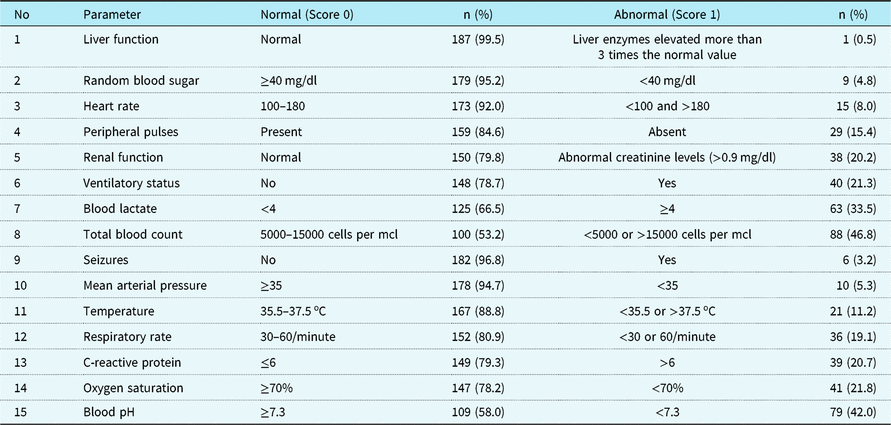
Pre-operative assessment of cardiac and haemodynamic status (PRACHS) score: We designed a comprehensive scoring system including 15 different clinical and laboratory parameters as detailed in Table 1. We assumed standard reference ranges of normal for each of these parameters and assigned a score of 0 if the parameter was normal and score 1 if the value was abnormal.
Pre-operative assessment of cardiac and haemodynamic status (PRACHS) scorex

Validation of the pre-operative status assessment score (PRACHS) using the Guttman split-half method. The split-half coefficient for the analysis was 0.72
The peri-operative outcomes for both groups were collected from a dedicated surgical database which was created as a part of the International Quality Improvement Collaborative project.Reference Jenkins, Casteneda and Cherian27 A comprehensive cost analysis and comparison between the study groups were not attempted in this study.
Outcome variables
The following outcome variables were included and compared between the two groups.
Pre-operative clinical status using the scoring systems described above.
Age at cardiac procedure (surgery or catheter-based).
Post-operative outcomes including mortality, duration of ventilation, ICU, and hospital stay.
The study protocol was approved by the Institutional Ethics Committee.
Statistical analysis
Normally distributed variables are presented as mean (standard deviation, SD) and non-normally distributed data are presented as median (range). Independent samples t-test and Mann–Whitney U-test were used to compare normally and non-normally distributed continuous variables, respectively, between the prenatal and postnatal groups. Fisher’s exact test and χ-square analysis were used to compare the categorical variables. Guttman split-half method was used to validate the variables included in the pre-operative status assessment score (Table 1). Statistical analysis was done using IBM SPSS Statistics 20 Windows (SPSS Inc., Chicago, USA).
Results
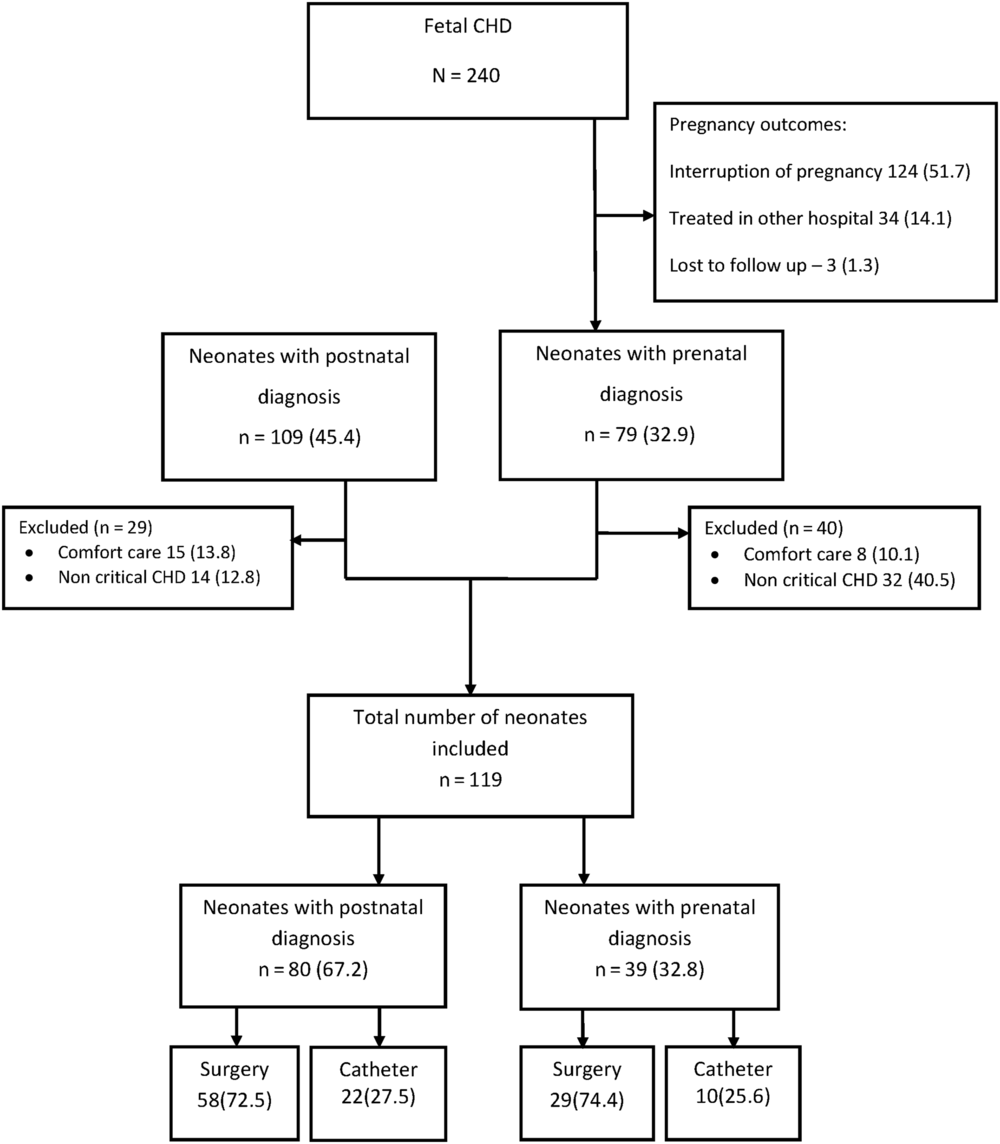
During the study period, 240 fetuses of the total 626 pregnant women referred for fetal echocardiography were diagnosed as have CHD. Of these, 79 (33%) underwent a planned delivery in our centre. Other pregnancy outcomes included interruption of pregnancy (124; 51.7%), delivered and treated in other hospitals (34; 14.2%), and lost to follow-up (3; 1.1%). The mean gestational age at diagnosis of CHD of fetuses included in the study was 30.4 (5.5) weeks. During the same period, a total of 109 neonates were transported from other centres to our ICU after diagnosis of CHD after birth. After excluding patients with no intention to treat or medically managed non-critical CHDs, we included a total of 119 infants with critical CHD, including 39 (32.8%) with prenatal diagnosis and the remaining 80 (67.2%) diagnosed after birth. Of the 39 prenatally diagnosed cases, 33 neonates (85%) were delivered in our centre; 6 infants (15%) were delivered elsewhere due to emergency obstetric indications and transported to our centre after initiation of appropriate medical management. The mean gestational age at birth was 38.2 (1.7) weeks. The mean birth weight was 2.8 (0.6) kg and the mean weight at admission was 2.76 (0.6) kg. Sixty-six (59%) of the patients were male. Half of the neonates were delivered vaginally while the rest required caesarian section, based on obstetric indications. The age at admission was significantly lower in the prenatal group (median 1 (1–264) versus 72 (4–721) hours; p < 0.001). In patients with intention to treat, extracardiac (n = 1) and genetic abnormalities (n = 2) were present in three patients (2.5%), all in the postnatal group. Figure 1 depicts the flow chart of the study patients.
Flow chart of study patients.

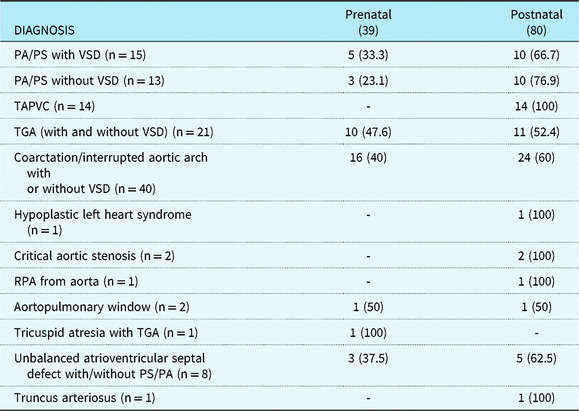
The most common cardiac diagnosis included critical left heart obstructive lesions (n = 40; 35.7%), critical right heart obstructions (n = 27; 24.1%), transposition of great arteries (n = 21; 18.8%), total anomalous pulmonary venous connection (n = 12; 10.7%), isomerism syndromes (n = 8; 7.1%), and large left-to-right shunt lesions (n = 4; 3.6%). Total anomalous pulmonary venous connection was found only in the postnatal group, while transposition of great arteries and left heart obstructions were evenly distributed in both groups. The cardiac diagnoses of the six prenatally diagnosed cases delivered in outside hospitals included left heart obstructions,Reference Fadel, Rasaily and Aswathi4 pulmonary atresia with ventricular septal defectReference Van Der Linde, Konings and Slager1 and transposition of great arteries with unrestrictive atrial septal defect.Reference Van Der Linde, Konings and Slager1 Majority of the patients were either in the RACHS 3 (n = 37; 46.3%) or 4 (n = 41; 51.3%) categories. Table 2 summarises the cardiac diagnosis of the study patients.
List of cardiac diagnosis of patients included in the study

PA = Pulmonary atresia; PS = Pulmonic stenosis; RPA = right pulmonary artery; TAPVC = Total anomalous pulmonary venous connection; TGA = Transposition of great arteries; VSD = Ventricular septal defect
Comparison of the pre-operative clinical status
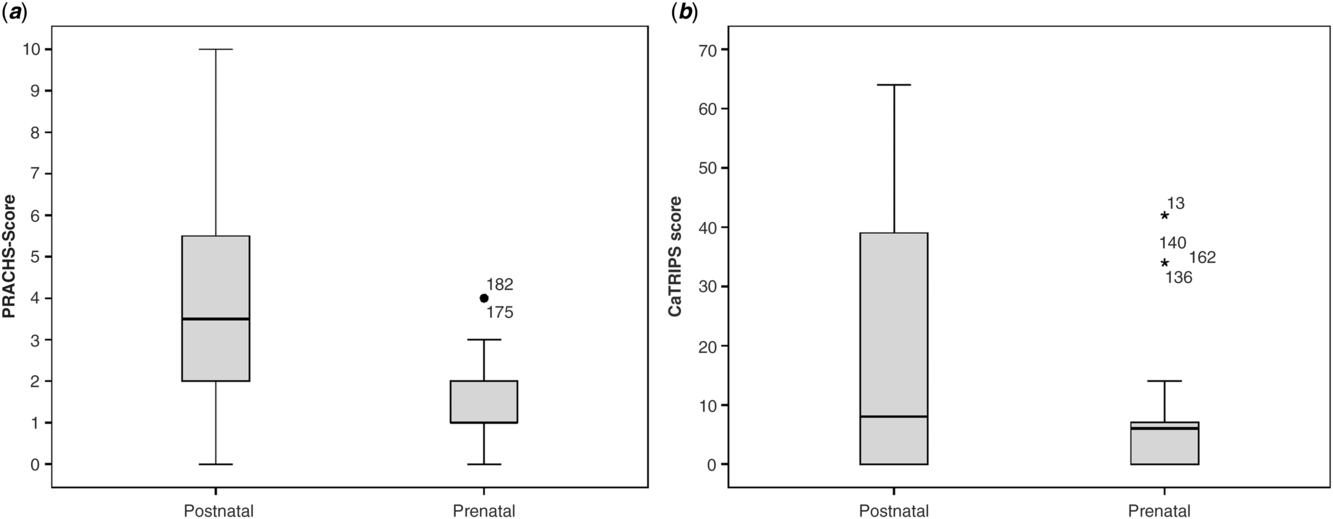
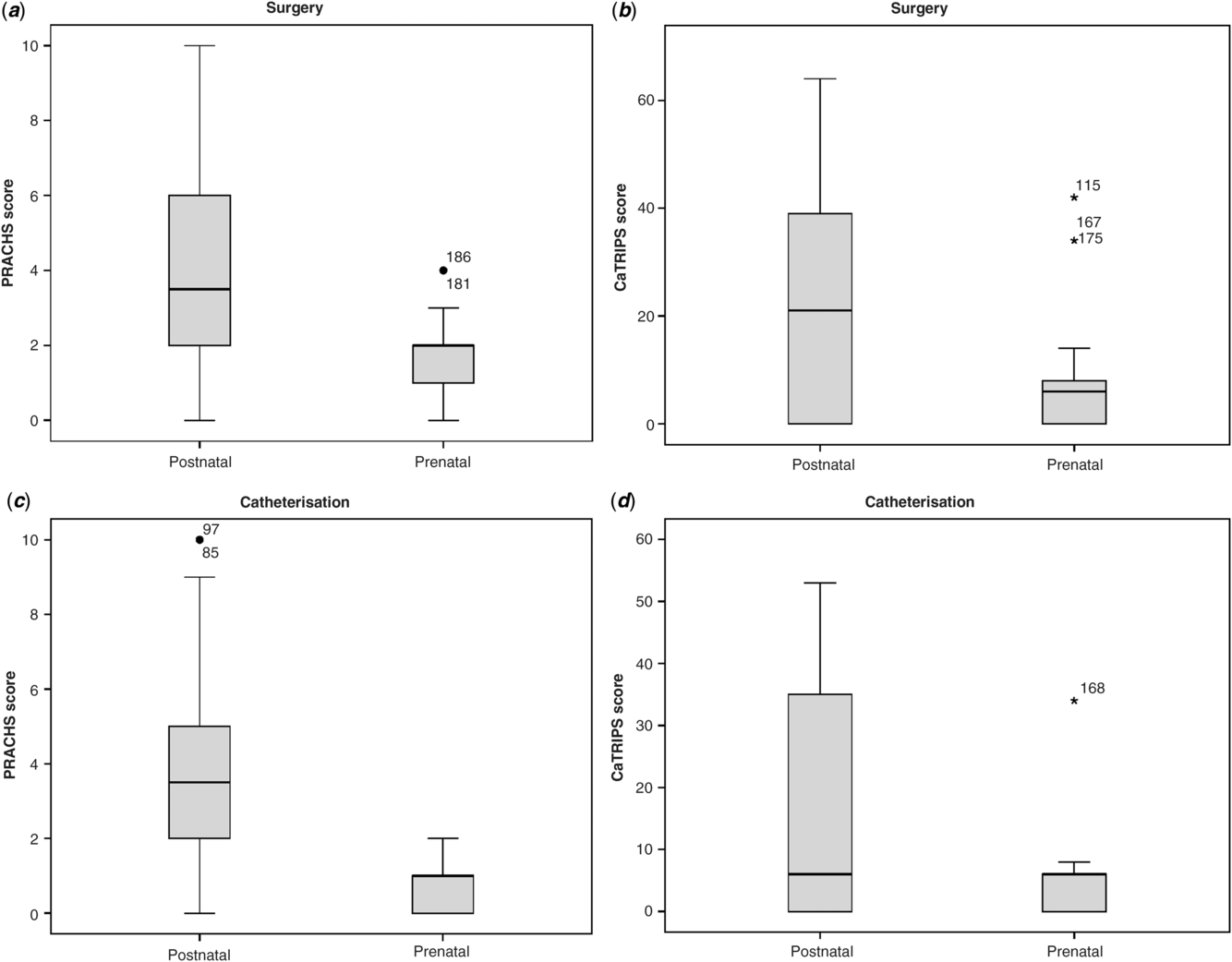
There was a significant difference in the pre-operative clinical status at admission between the two groups. The transport risk index score (Ca-TRIPS) was significantly lower for the prenatal group (median 6 (0–42) versus 8 (0–64); p < 0.001) (Fig 2b). The pre-operative status assessment score (PRACHS) was also significantly lower in the prenatal group compared to the neonates diagnosed after birth (median 1(0–4) versus 3 (0–10); p < 0.001) (Fig 2a). Both the pre-operative scores were significantly better in the prenatal group in patients who underwent surgical procedures (Fig 3a), while for patients undergoing catheter-based interventions, the pre-operative status assessment score was significantly lower in the prenatal group (Fig 3b).
Comparison of the pre-operative assessment of cardiac and hemodynamic status (PRACHS) score (a) and California modification of transport risk index of physiological stability (Ca-TRIPS score) (b) between the prenatal and postnatal groups.

Comparison of California modification of transport risk index of physiological stability (Ca-TRIPS) score and pre-operative assessment of cardiac and haemodynamic status (PRACHS) score in patients undergoing surgery (a,b) and catheter-based interventions (c,d).

Details of in-hospital care
Of the total 119 infants included in the study, 80 (67%) underwent surgical procedures while 32 (27%) needed cardiac catheterization procedures. The age at cardiac procedure was significantly lower in the prenatal group (median 5 (1–26) versus 7 (1–43) days; p = 0.02).
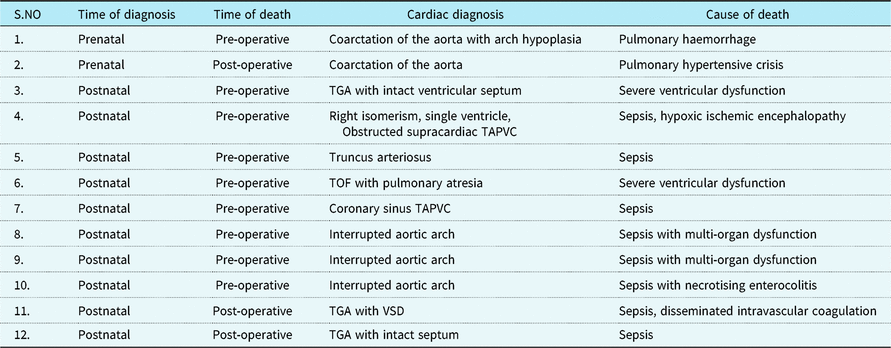
In patients with intention to treat, 12 patients died during the hospital stay (10%). The overall mortality was higher in the postnatal group, though the difference was not statistically significant (10 (12.5%) versus 2 (5.1%); p = 0.33). Of these, nine patients (7.5%) died in the pre-operative period, eight of which were in the postnatal group (10% versus 2.6% in prenatal group; p = 0.2). Seven (6%) patients in the postnatal group died because of suboptimal pre-operative status precluding the feasibility of surgery or catheter-based intervention. Post-operative deaths occurred in three patients (2.5%), one in the prenatal and two in the postnatal group. Table 3 summarises the details of all mortality in patients included in the study.
Details of mortality and cause of death

TOF = Tetralogy of Fallot; TAPVC = Total anomalous pulmonary venous connection; TGA = Transposition of great arteries; VSD = Ventricular septal defect
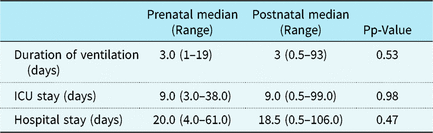
There was no significant difference in the duration of the post-operative ventilation duration, ICU, or hospital stay between the two groups (Table 4).
Comparison of post-procedure ICU and hospital stay between study groups

ICU = Intensive care unit
Details of patients with no intention to treat/medically treated patients
A total of 69 patients were excluded from the study analysis either due to the fact that there was no intention to treat (n = 23) or non-critical CHDs not requiring a neonatal cardiac intervention or conditions which needed only medical management (n = 46). The reasons for parents opting for comfort care with no intention to treat included very complex CHD (n = 13) and associated extracardiac or genetic abnormalities (n = 10). Supplementary Tables S1 and S2 summarises details of patients who received comfort care or medical management, respectively. Supplementary Table S3 summarises the details of genetic syndromes and extracardiac anomalies.
Discussion
The concept of prenatal diagnosis of critical CHDs and planned perinatal care is well established in most developed countries.Reference Lytzen, Vejlstrup and Bjerre14–Reference Carvalho16 However, this concept is still unexplored in low-middle-income countries where neonates with critical CHD are often diagnosed after birth after a considerable delay. The consequences of delayed diagnosis and timely institution of life-saving drugs along with the challenges in safe transport of these critically sick neonates to tertiary cardiac centres result in significant pre-operative mortality and morbidity for these patients. This prospective study from Kerala, India demonstrates the feasibility of planned peri-partum care through prenatal diagnosis for neonates with critical CHDs in low-middle-income country settings. Prenatally diagnosed cases demonstrated significantly better pre-operative status assessed using two different scoring systems (Figs 2 and 3). The improved pre-operative condition resulted in an earlier age of cardiac procedure in the prenatal group. Pre-operative mortality was higher in the postnatal group, though the difference was not statistically significant. In seven patients, suboptimal pre-operative clinical status precluded feasibility of surgery or catheter-based intervention and resulted in higher pre-operative mortality in the postnatal group (Table 3). Despite a significant difference in the pre-operative status in the prenatal group, there was no difference in post-operative duration of ventilation, ICU, and hospital stay between the study groups in this study (Table 4). The complexity of the critical CHDs included in the two groups were similar; in patients with intention to treat, the prevalence of very complex CHDs like hypoplastic left heart syndrome was very low (Table 2). Prevalence of extracardiac and/or genetic anomalies in patients with intention to treat was very low; most patients with these co-morbidities opted for comfort care (supplementary Tables S1 and S3).
Several studies have reported the beneficial impact of prenatal diagnosis and planned peri-partum care on peri-operative outcomes.Reference Holland, Myers and Woods17–Reference Khoshnood, Lelong and Houyel22 In fact, in most high-income countries, this has become the standard of care and prenatal screening of the fetal heart has been made a mandatory component of prenatal ultrasound protocols.Reference Carvalho, Allan and Chaoui28 In developed countries, newborn cardiac screening using early physical examination and pulse oximetry screening are relatively well established, in contrast to low-middle-income countries.Reference Mahle, Newburger and Matherne29 Furthermore, rapid transfer of affected infants to cardiac centres is well established in developed countries, which is not the case in low-middle-income countries.Reference Carvalho16, Reference Anagnostou, Messenger, Yates and Kelsall30 In the South Indian state of Kerala where this study was conducted, it is estimated that 1500 babies are born with critical CHD needing intervention in the first year of life; 25% of infant deaths in Kerala are directly attributable to CHD.31 We identified the critical challenges (early diagnosis, referral and safe transport to tertiary centres) involved in neonatal cardiac surgery outcomes and the potential avenues to improve our outcomes through introspection of our own institutional data.Reference Reddy, Kappanayil and Balachandran11, Reference Bakshi, Vaidyanathan and Sundaram12 We added the fetal cardiology service to the existing paediatric cardiac programme as an alternative strategy to overcome the challenges of early diagnosis and safe transport. Through a decade long effort, we successfully improved awareness about prenatal diagnosis and created a system for referral and in utero transport for critical CHDs through our training and capacity building programs. Most infants in the prenatally diagnosed group had planned delivery in our centre; six patients (15%) had to be delivered in local hospitals due to emergency obstetric indications. Four out these six babies had critical duct-dependent left heart obstructions which would have otherwise got easily missed in postnatal evaluation. The information provided by the prenatal diagnosis enabled prompt initiation of emergency medications like prostaglandin infusion by the local neonatologist prior to transport to our centre.
We reported the preliminary results of the strategy of prenatal diagnosis and planned peri-partum care in a cohort of 33 neonates with 100% survival outcomes after neonatal cardiac surgery.Reference Changlani, Jose, Sudhakar, Rojal, Kunjikutty and Vaidyanathan32The results of the present study suggest that prenatal diagnosis of critical CHDs may potentially offer a complimentary strategy to scaling up existing tertiary care facilities for achieving improved outcomes for CHD in low-middle-income countries.Reference Musa, Hjortdal and Zheleva33 The improved pre-operative status can potentially translate into a better long-term neurodevelopmental outcome due to less brain hypoxia and this needs to be determined by prospective studies, especially in low-middle-income countries.Reference Solomon, Sasi, Sudhakar, Kumar and Vaidyanathan34 Finally, our study could not address the important issue of economic impact of the strategy of prenatal diagnosis on costs of neonatal cardiac care. A prospective study is needed, especially in the setting of low-middle-income countries, to study the economic impact of prenatal diagnosis on families and health care systems.
The limitations of the study are the possibility of referral bias and the impact of the institutional expertise on the post-operative outcomes. The pre-operative status of babies diagnosed after birth were evaluated only after admission into our ICU. It is quite possible that some of the babies in the postnatally diagnosed group might have been stabilised in the referring hospital and may have arrived in a better condition than their initial presentation. The lack of difference in post-operative mortality and morbidity measures might reflect institutional bias and expertise.
In conclusion, prenatal diagnosis and planned peri-partum care had a significant impact on the pre-operative clinical status in neonates with critical forms of CHD in a low-resource setting. Future studies should address the potential health economic benefits of this strategy, especially in the setting of low-middle-income countries.
Acknowledgements
The authors would like to acknowledge the contribution of Dr John Simpson MD, FRCP, Professor of Paediatric and Fetal Cardiology, Evelina London Children’s Hospital, London, United Kingdom and Ms Bistra Zheleva MBA, Vice President, Global Strategy and Advocacy, Children’s HeartLink, USA for critically reviewing the manuscript.
Financial Support
The authors have no financial relationships relevant to this article to disclose.
Conflicts of Interest
The authors have no conflicts of interest relevant to this article to disclose.
Contributors’ Statement
Aparna Vijayaraghavan conceptualised and designed the study, collected and analysed the data, drafted the initial manuscript and revised the manuscript. Abish Sudhakar and Karimassery Ramiayar Sundaram designed the data collection instruments, collected data, carried out the initial analyses, and reviewed and revised the manuscript.
Raman Krishna Kumar conceptualised the study and critically reviewed and edited the manuscript for important intellectual content.
Balu Vaidyanathan conceptualised and designed the study, carried out the data analysis, drafted and edited initial manuscript, reviewed and revised the final manuscript and shall act as the guarantor and corresponding author for the manuscript. All authors approved the final manuscript as submitted and agree to be accountable for all aspects of the work.
Supplementary Material
To view supplementary material for this article, please visit https://doi.org/10.1017/S104795111900252X