INTRODUCTION
During the last decades, the Mediterranean rocky benthic communities, up to 30–40 m depth, have shown significant changes in their structure and taxa composition, deeply modified by natural factors (including global warming) and human activities (Bianchi & Morri, Reference Bianchi and Morri2000; Coll et al., Reference Coll, Piroddi, Steenbeek, Kaschner, Ben Rais Lasram, Aguzzi, Ballesteros, Bianchi, Corbera, Dailianis, Danovaro, Estrada, Froglia, Galil, Gasol, Gertwagen, Gil, Guilhaumon, Kesner-Reyes, Kitsos, Koukouras, Lampadariou, Laxamana, López-Fé de la Cuadra, Lotze, Martin, Mouillot, Oro, Raicevich, Rius-Barile, Saiz-Salinas, San Vicente, Somot, Templado, Turon, Vafidis, Villanueva and Voultsiadou2010; Claudet & Fraschetti, Reference Claudet and Fraschetti2010; Sala et al., Reference Sala, Ballesteros, Panagiotis, Di Franco, Ferretti, Foley, Fraschetti, Friedlander, Garrabou, Guclusoy, Guidetti, Halpern, Hereu, Karamanlidis, Kizilkaya, Macpherson, Mangialajo, Mariani, Micheli, Pais, Riser, Rosenberg, Sales, Selkoe, Starr, Tomas and Zabala2012). The complete loss or sharp reduction of some sessile keystone benthic species among macroalgae, sponges, alcyonaceans and bryozoans, as well as the emergence of others once considered rare, often resulted in a significant reduction of the habitat complexity (Garrabou et al., Reference Garrabou, Riera and Zabala1998, Reference Garrabou, Ballesteros and Zabala2002; Airoldi & Beck, Reference Airoldi and Beck2007).
In spite of this wide amount of evidence, the magnitude of these changes is difficult to evaluate: in fact, a pluri-decennial knowledge is required to characterize communities with long-living species, often showing low population dynamics and a limited larval dispersal ability. Unfortunately, long-term archives of data are generally rarely available.
The Ligurian Sea represents an optimal field laboratory for the study and monitoring of the changes occurring in the marine communities both because of its location (in the northernmost part of the western Mediterranean basin) and because of the long tradition of marine studies conducted in this area: in fact, long-term data records are available for some taxa. Mangialajo et al. (Reference Mangialajo, Barberis and Cattaneo-Vietti2003, Reference Mangialajo, Barberis and Cattaneo-Vietti2004), for example, showed that the floristic component of the Ligurian Sea changed considerably over the past 100 years, with the disappearance of some boreal species and the rise of more thermophilic ones. Puce et al. (Reference Puce, Bavestrello, Di Camillo and Boero2009), comparing the Portofino Promontory hydrozoan community after a 24-year interval, put in evidence that some species, present in the 1980s (Boero & Fresi, Reference Boero and Fresi1986), completely disappeared in 2004, and others, with a more southern affinity, rarely recorded before from the area, turned abundant after about two decades.
In addition to these long-term changes, the benthic communities of the Ligurian Sea have undergone, in the last two decades, numerous dramatic events. In particular, in 1999 (Cerrano et al., Reference Cerrano, Bavestrello, Bianchi, Cattaneo-Vietti, Bava, Morganti, Morri, Picco, Sara, Schiaparelli, Siccardi and Sponga2000; Franci et al., Reference Franci, Schiaparelli, Cattaneo-Vietti and Albertelli2003) and 2003 (Schiaparelli et al., Reference Schiaparelli, Castellano, Povero, Sartoni and Cattaneo-Vietti2007; Garrabou et al., Reference Garrabou, Coma, Benssousan, Bally, Chevaldonne, Cigliano, Diaz, Harmelin, Gambi, Kersting, Ledoux, Lejeusne, Linares, Marschal, Perez, Ribes, Romano, Serrano, Teixido, Torrents, Zabala, Zuberer and Cerrano2009), mass mortality events were recorded, due to anomalous deep thermoclines, which led to substantial structural changes in the benthic communities, mainly related to sponges and alcyonaceans (Cerrano et al., Reference Cerrano, Bavestrello, Bianchi, Cattaneo-Vietti, Bava, Morganti, Morri, Picco, Sara, Schiaparelli, Siccardi and Sponga2000).
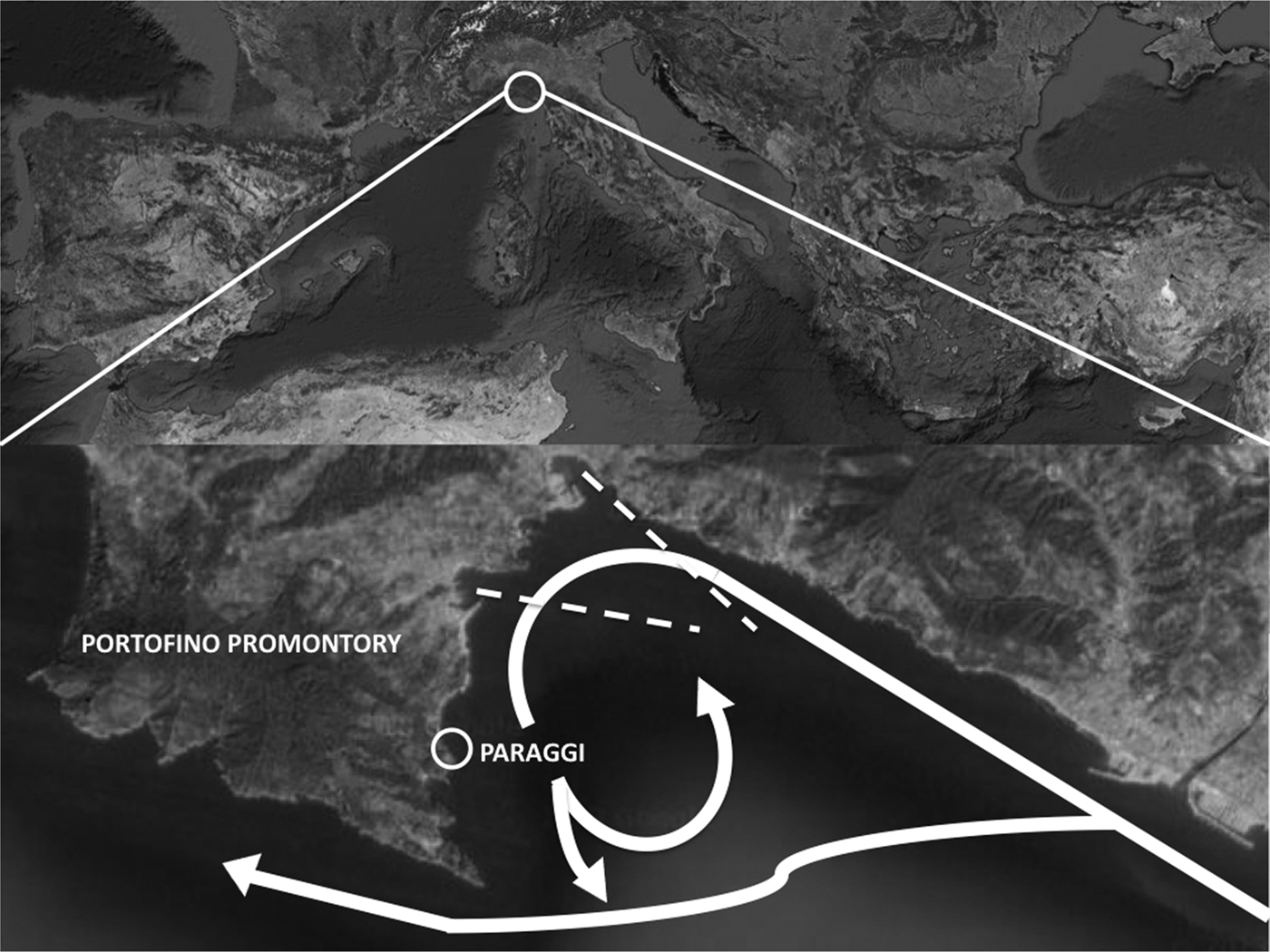
During 1987/88, an annual monthly set of macro-photographs was taken on the Paraggi rocky cliff (Tigullio Gulf, Portofino Promontory, Ligurian Sea) (Figure 1) to analyse the structure of the benthic community present at 15–20 m depth, in terms of per cent surface coverage of the main macroalgae and sessile animal species. Twenty-five years later (2012/13), we repeated the study in the same location and using the same sampling methodology. This offered a unique opportunity to analyse pluri-decennial changes in coverage and diversity in a Mediterranean hard bottom community.
Map of the sampling site, Paraggi Cliff, located in the Tigullio Gulf (Ligurian Sea). White arrows indicate the surface circulation in the study area, while dashed lines indicate the urban sewage area.

MATERIALS AND METHODS
Study site and data collection
The studied rocky cliff is characterized by a slight turbidity and the presence of a unidirectional current flow. It faces north-east and endures the influence of the nearby town of St Margherita Ligure, mainly because of a gyre that holds in-shore the urban wastes and the flow of the nearby river Entella (Ruggieri et al., Reference Ruggieri, Castellano, Misic, Gasparini, Cattaneo-Vietti and Povero2006) (Figure 1). The considered site was included in the Portofino Marine Protected Area in 1999.
The investigated benthic community, located on a vertical rocky cliff between 15 and 20 m depth, has been studied through the analysis of 5.6 m−2 of substratum, subdivided in 16 contiguous (4 lines × 4 columns) rectangular frames (each 50 × 70 cm = 0.35 m2) delimited by cables and fixed to the cliff with iron rivets. At the beginning of the observations (November 1987) we have calculated, through the species accumulation curve (Weinberg, Reference Weinberg1978), a minimum area of 4.5 m−2 as representative of the community. The contiguity of the frames was chosen following the Sarà's results (Reference Sarà and Fry1970), which demonstrated the capacity of incrusting sponges to shift, on a monthly scale, their position. One picture per frame was taken monthly, from November 1987 to October 1988 using a Nikonos V camera (35 mm lens). Exactly the same frames were photographed 25 years after, from November 2012 to October 2013 using a Nikon D7000 camera (17 mm lens). Due to bad weather conditions, 2 months in the first period (May and September) and 2 in the second one (March and August) were not monitored.
The percentage coverage of the macrobenthic components was calculated, outlining the surfaces corresponding to each target group, for each sampled month for each frame, using the Software package ImageJ64. Data were then presented as the total or monthly mean percentage coverage ± SE.
Statistical analyses
Statistical analyses were carried to test whether there was a significant difference both among the annual and the monthly percentage coverage between the two considered periods (1987/88 and 2012/13) for the target benthic groups independently.
Data, square root transformed were checked with the Shapiro–Wilk's test to verify the normal distribution; when verified, a paired Student's t-test (with N = 128) was applied to test for differences in the annual coverage of major groups or single species, otherwise a non-parametric Kruskal–Wallis test was performed.
To test for differences between the coverage of the macro groups of algae and sponges, as well as of single species, in the two monitored periods at different months, a distance-based permutational multivariate analysis of variance (PERMANOVA) was used. The design included two fixed and orthogonal factors: period (2 levels: 1987/88 vs 2012/13) and month (10 levels), with N = 16 for combination of factors (a total of 160 frames per period, 10 month per each period, 16 replicate frames per month). The analysis was based on Bray–Curtis similarity on previously square root transformed data. Pairwise comparisons were also carried out.
To identify the taxa explaining the differences between the two considered periods or between the months in the two considered periods, SIMPER analyses were carried out on square-root transformed data (entire annual data set or monthly data set, respectively) using Bray–Curtis similarity with a 90% cut-off for low contributions.
Analyses were performed using PAST for Windows version 1.91 (Hammer et al., Reference Hammer, Harper and Ryan2001).
RESULTS
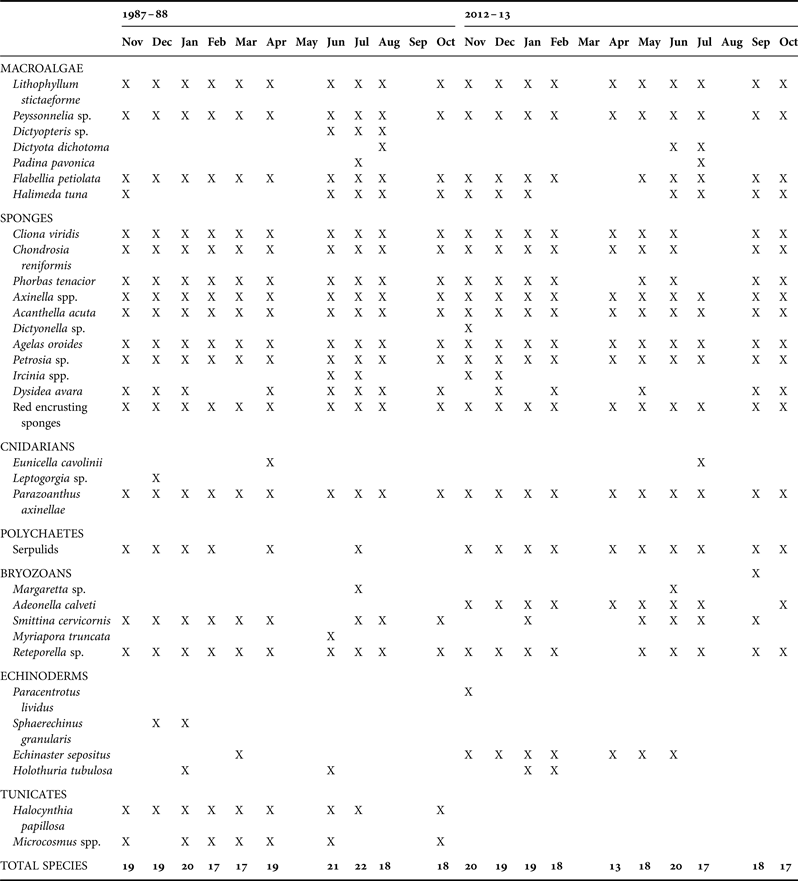
The studied community was dominated by sciaphilous macroalgae (excluding the turf coverage accounting for more than 70% in both periods), while the main animal components were sponges and anthozoans. Bryozoans, serpulids and tunicates, although widely present, had a negligible coverage (Figure 2, Table 1).
Percentage composition of the main benthic taxa in the two considered periods.
List of the recorded species (or group of species) in the two considered periods.
The algal assemblage can be referred to the Lithophyllo–Halimedetum tuna association (Giaccone, 1965), with Lithophyllum stictaeforme Hauck, 1877 and Halimeda tuna Lamouroux, 1816, as the most characteristic species, but including also Peyssonnelia sp., Flabellia petiolata (Turra, 1760), Dictyopteris sp. and Dictyota dichotoma (Hudson, 1762).
Significant modifications in the structure and species composition of the studied community were identified over the monitored period, with different annual and monthly trends for the main benthic groups.
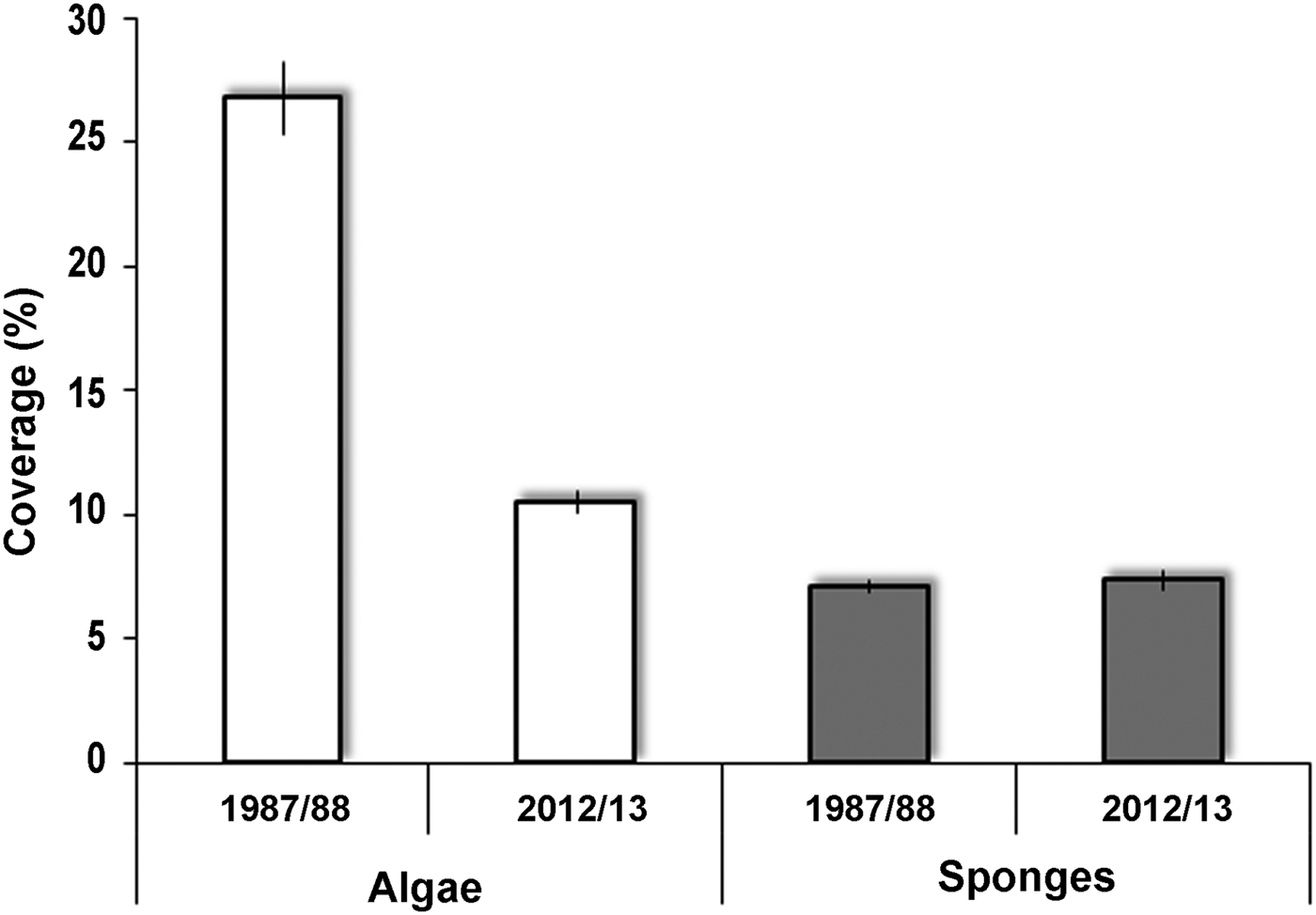
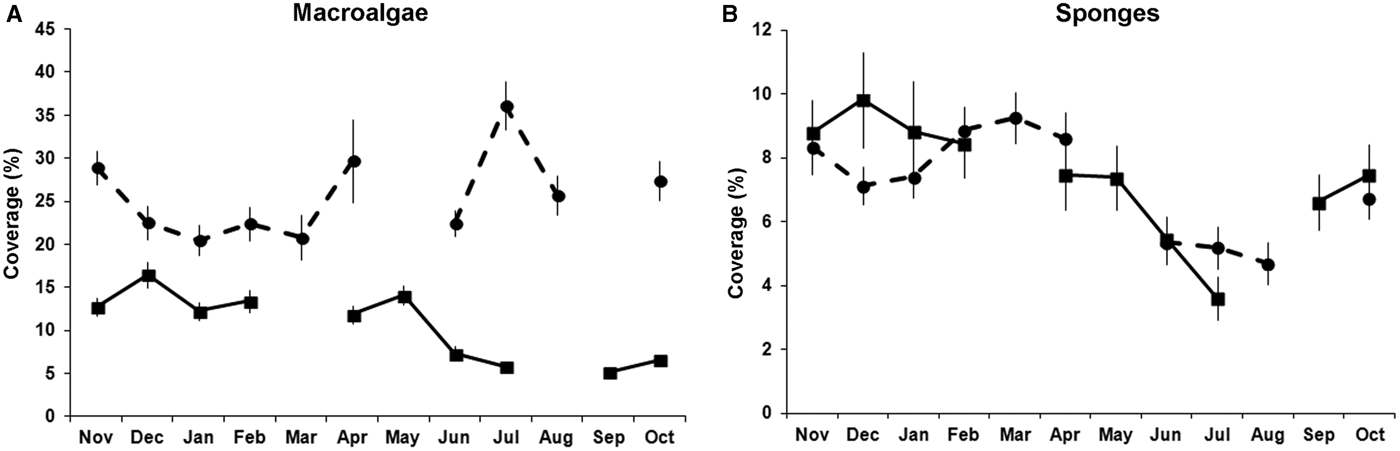
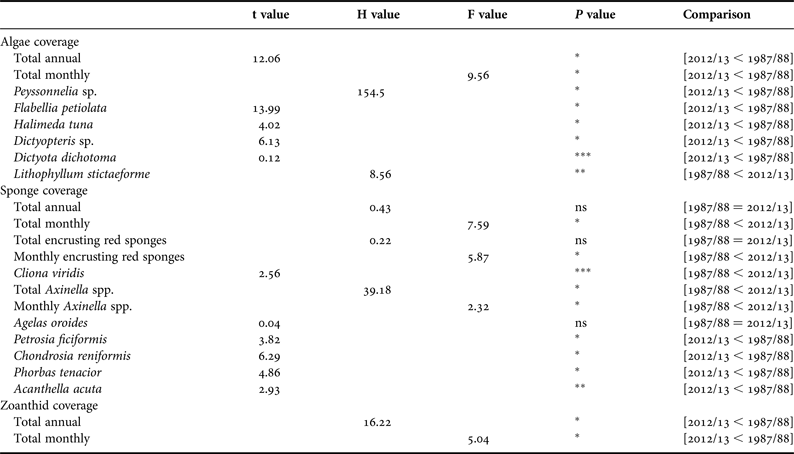
The total algal coverage showed a significant decrease, from 27 ± 1.5% during 1987/88 to 10.6 ± 0.4%, after 25 years, corresponding to a ~58% decline (Figure 3, Table 2). On a monthly basis, the 2012/13 coverage trend was significantly lower than the 1987/88 one throughout the entire monitored year (Figure 4A, Table 2). In the trend of 1987/88, an evident peak of total algal coverage (on average 36 ± 2.8%) was recorded in July (Figure 4A), mainly due to Dictyopteris sp. (21.2%) and Peyssonnelia sp. (18.2%), while the maximal algal coverage in the 2012/13 trend occurred in December (on average 16.5 ± 1.5%) (Figure 4A), mainly due to Peyssonnelia sp. (13.2%) and L. stictaeforme (7.8%). The SIMPER analysis revealed also that Peyssonnelia sp., F. petiolata and L. stictaeforme mainly contributed to the overall dissimilarity (33.5%) between the macroalgal assemblages in the two considered periods (with 14.1, 7.1 and 6.5%, respectively). In terms of coverage, the assemblage of 2012/13, with respect to that of 1987/88, suffered a significant decline of the erect species such as Peyssonnelia sp., F. petiolata, H. tuna, Dictyopteris sp. and D. dichotoma, as well as a significant increase of the encrusting species L. stictaeforme (Figure 5A, Table 2). In particular, the erect species Peyssonnelia sp., contributing to 70% of the macroalgal assemblage in the former period, decreased to 50% in 2012/13, while L. stictaeforme increased from 15% in 1987/88 to almost 50% in 2012/13 (Figure 5A, Table 2).
Average annual coverage (%) of algae and sponges in the two examined periods.
Annual trends in the two studied periods of the total algal (A) and total sponge (B) percentage coverage. Dashed lines, 1987/88; continuous line, 2012/13.
Percentage composition of the algal assemblage (A) and sponge assemblage (B) in the two studied periods.
Results of the paired t-tests (t value), Kruskal–Wallis (H value) or PERMANOVA (F values) for the comparison, in terms of total or monthly coverage of the taxa between the two monitored periods.
*P < 0.001; **P < 0.01; ***P < 0.05; ns, not significant.
The sponge assemblage included nine species or group of species, namely Cliona viridis (Schmidt, 1862), Axinella spp. (including Axinella verrucosa (Esper, 1794), Axinella damicornis (Esper, 1794), and Axinella polypoides Schmidt, 1862), Agelas oroides (Schmidt, 1864), Petrosia ficiformis (Poiret, 1789), Chondrosia reniformis Nardo, 1847, Phorbas tenacior (Topsent, 1925), Acanthella acuta Schmidt, 1862, Ircinia sp., Dysidea avara (Schmidt, 1862) and the encrusting red sponges cluster (including, among others, Spirastrella cunctatrix Schmidt, 1868 and Crambe crambe (Schmidt, 1862)).
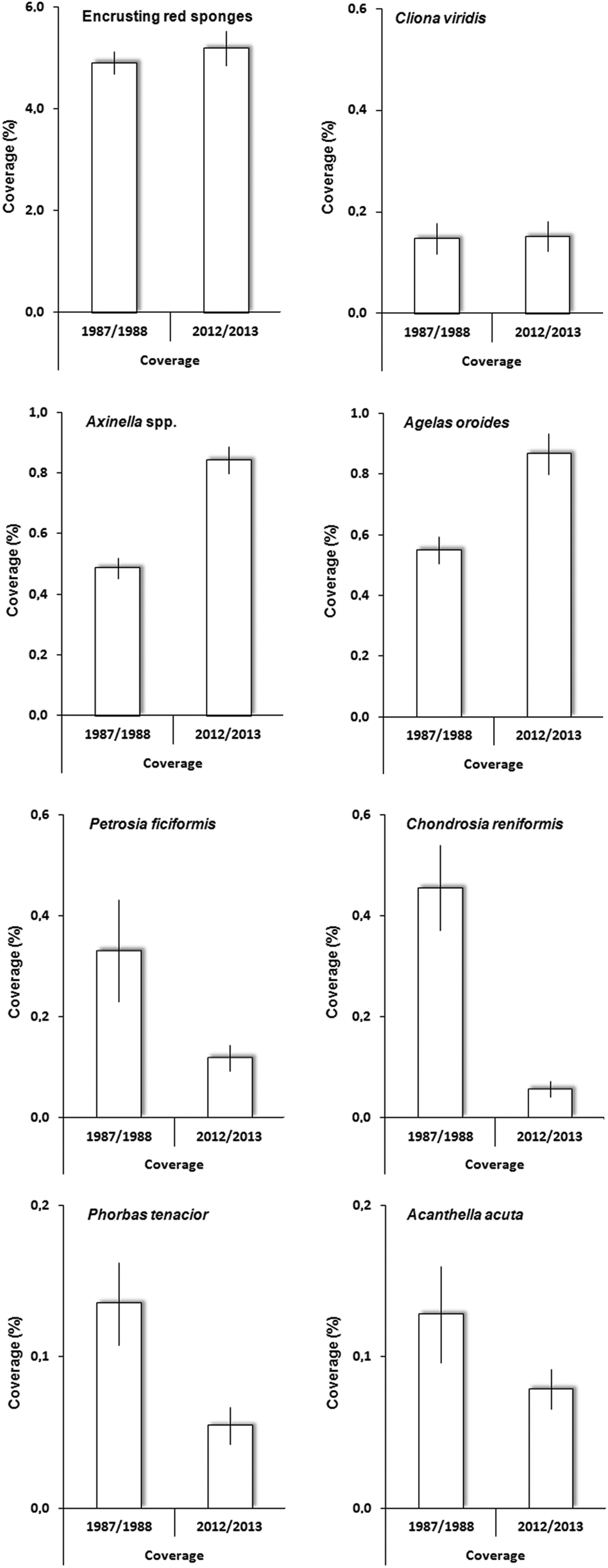
Considering the annual average, the total sponge coverage did not show any significant difference in the two considered periods (Figure 3, Table 2). On a monthly basis, however, the 2012/13 coverage trend showed significant differences from the 1987/88 one (Figure 4B, Table 2). Both sponge annual cycles showed a peak in percentage coverage in the winter period (on average 9.8 ± 1.5% and 9.2 ± 0.8% in December 1987/88 and March 2012/13, respectively) followed by a minimum in the summer period (on average 4.7 ± 0.7% and 3.6 ± 0.7% in August 1987/88 and July 2012/13, respectively). In both summer and winter peaks, the major contribution is that of red encrusting sponges (between 7.4 and 12.1%). The SIMPER analysis revealed also that the red encrusting species, accounting for more than 70% of the sponge coverage in both periods (Figure 5B, Table 2), dominated the sponge assemblage (8.7%) and gave the major contribution to the overall dissimilarity (33.8%) of the sponge assemblages in the two considered years. Similarly, C. viridis showed low or no significant differences in terms of coverage (Figure 6, Table 2).
Average annual coverage of the most common species of sponges in the two examined periods.
Other species experienced significant coverage changes in the monitored 25-year span of time: in particular, the Axinella spp. group increased significantly (Figure 6, Table 2). Agelas oroides, while its trend is not significant, showed a similar increase (Figure 6, Table 2). On the contrary, another group of sponges, namely P. ficiformis, C. reniformis, P. tenacior and A. acuta, significantly decreased in the considered period (Figure 6, Table 2). Two other species, Ircinia sp. and D. avara, already rare in 1987/88, almost disappeared in 2012/13.
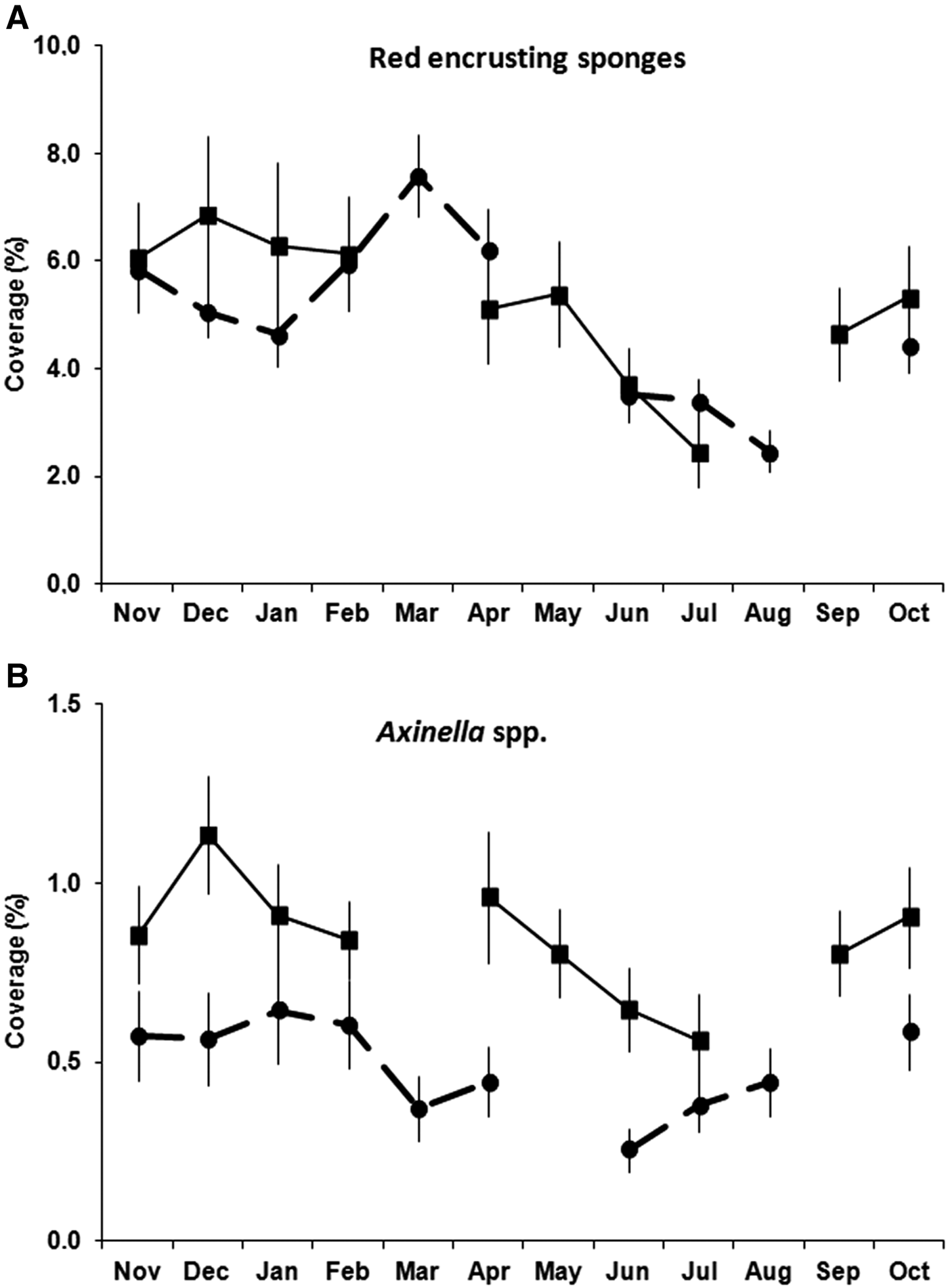
For the two most abundant sponge groups (red encrusting sponges and Axinella spp.), the monthly trend of percentage coverage is shown (Figure 7A, B, respectively). In both cases, the 1987/88 trend of coverage is significantly lower than in 2012/13 (Table 2). Both sponge groups showed clear annual cycles, with marked summer minima in both the studied periods (Figure 7A, B, respectively) (Table 2).
Annual trends of coverage in the two studied periods for red encrusting sponges (A) and Axinella spp. (B). Dashed lines, 1987/88; continuous lines, 2012/13.
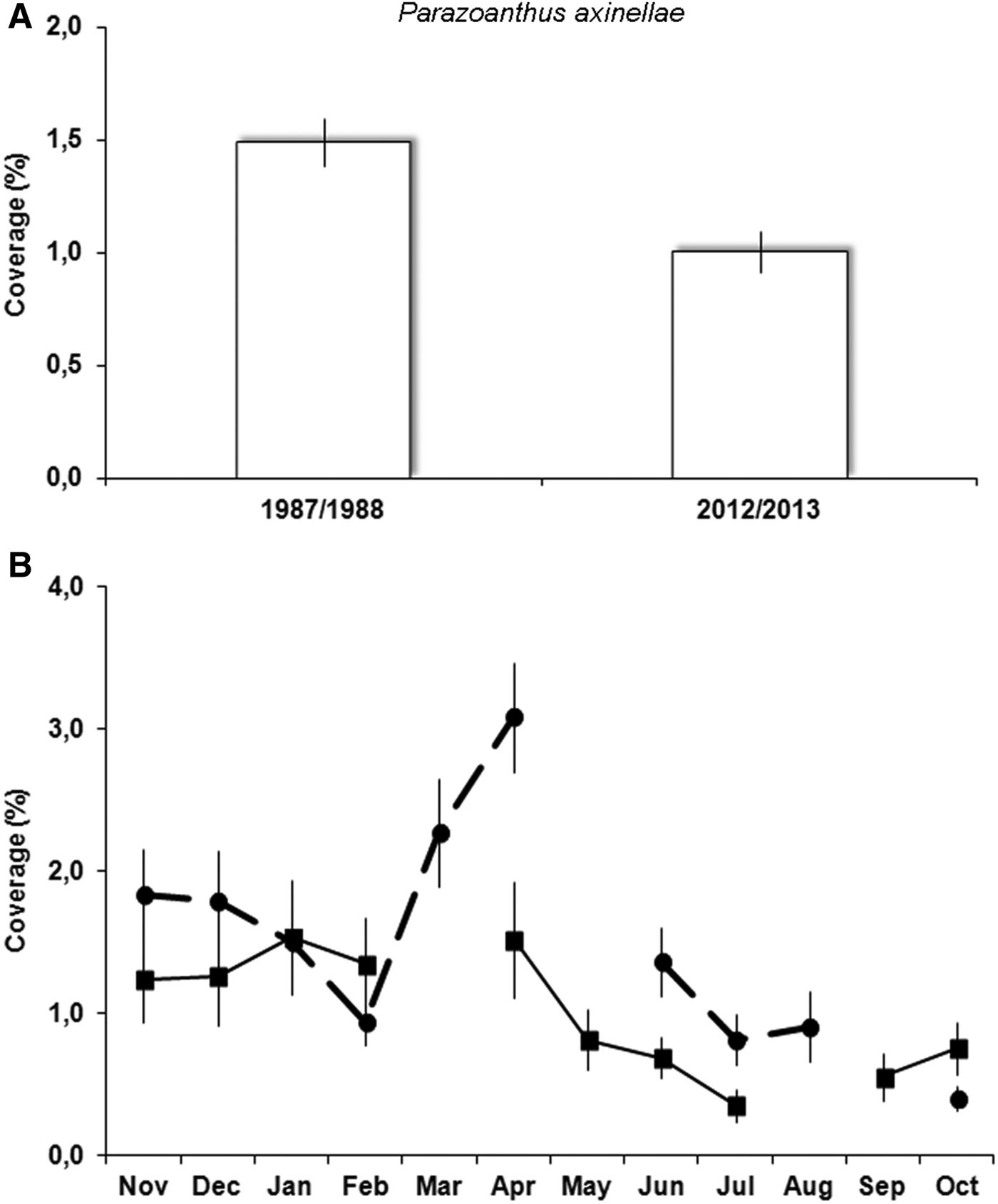
Finally, the anthozoan assemblage accounted for two gorgonians (Eunicella cavolinii (Koch, 1887) and Leptogorgia sarmentosa (Esper, 1789)) and the zoanthid Parazoanthus axinellae (Schmidt, 1862). The two gorgonians, already rare in 1987/88, completely disappeared in 2012/13. An evaluation was instead performed for the zoanthid, sometimes associated to Axinella spp., but generally settled directly on the substratum. The total coverage of P. axinellae showed a significant decrease between the two periods (Figure 8A, Table 2), moreover, the 2012/13 monthly trend was significantly lower than that in 1987/88 (Figure 8B, Table 2).
Average annual coverage (A) and annual trends (B) (%) of Parazoanthus axinellae in the two examined periods.
DISCUSSION
The objective of this work was to assess the degree of qualitative and quantitative changes of a Mediterranean hard bottom community inside a sciaphilic algal Lithophyllo–Halimedetum tunae association, by analysing photographs taken at a temporal distance of 25 years. During this span of time, the Ligurian Sea has suffered major changes in the structure of benthic communities and fish populations due to severe urbanization of the coastline, pollution, fishing impact and phenomena linked to global warming (Schiaparelli et al., Reference Schiaparelli, Castellano, Povero, Sartoni and Cattaneo-Vietti2007; Puce et al., Reference Puce, Bavestrello, Di Camillo and Boero2009; Cattaneo-Vietti et al., Reference Cattaneo-Vietti, Albertelli, Aliani, Bava, Bavestrello, Benedetti Cecchi, Bianchi, Bozzo, Capello, Castellano, Cerrano, Chiantore, Corradi, Cocito, Cutroneo, Diviacco, Fabiano, Faimali, Ferrari, Gasparini, Locritani, Mangialajo, Marin, Moreno, Morri, Orsi Relini, Pane, Paoli, Petrillo, Povero, Pronzato, Relini, Santangelo, Tucci, Tunesi, Vacchi, Vassallo, Vezzulli and Wurtz2010, Reference Cattaneo-Vietti, Cappanera, Castellano and Povero2014; Parravicini et al., Reference Parravicini, Micheli, Montefalcone, Morri, Villa, Castellano, Povero and Bianchi2013; Bo et al., Reference Bo, Bava, Canese, Angiolillo, Cattaneo-Vietti and Bavestrello2014). In particular, a series of trans-phyletic mass mortalities events strongly affected the sponge assemblages in the whole Ligurian–Provencal basin (Cerrano et al., Reference Cerrano, Bavestrello, Bianchi, Cattaneo-Vietti, Bava, Morganti, Morri, Picco, Sara, Schiaparelli, Siccardi and Sponga2000; Garrabou et al., Reference Garrabou, Coma, Benssousan, Bally, Chevaldonne, Cigliano, Diaz, Harmelin, Gambi, Kersting, Ledoux, Lejeusne, Linares, Marschal, Perez, Ribes, Romano, Serrano, Teixido, Torrents, Zabala, Zuberer and Cerrano2009). The earliest diseases, involving mainly horny sponges, appeared in 1992 (Gaino et al., Reference Gaino, Pronzato, Corriero and Buffa1992) when a very common species, Spongia officinalis Linnaeus, 1759, was seriously affected in the Portofino Promontory waters.
The comparison of the images taken in the two periods on the Paraggi rocky cliff indicates that the macroalgal association deeply changed in 25 years: the frondose macroalgae, mainly Peyssonnelia sp., a typical foliose Mediterranean red alga of shadow habitats, almost disappeared, while sediments or algal turf slightly increased (Figure 9). This type of depletion was already recorded in other zones of the Portofino MPA: the dense canopies of the brown algae Dictyopteris polypodioides (de Candolle, 1805) and Sargassum vulgare (Agardh, 1820), in fact, with fronds up to 30 cm long largely present in 1993, virtually disappeared after two decades (Parravicini et al., Reference Parravicini, Micheli, Montefalcone, Morri, Villa, Castellano, Povero and Bianchi2013).
Comparison of the same frame for the month of November 1987/88 and 2012/2013. Pf, Petrosia ficiformis; A, Axinella spp.; Ao, Agelas oroides; re, red encrusting sponges.
Differently from macroalgae, sponges maintained, in the same span of time, an overall percentage coverage very similar to that recorded 25 years before. A recent analysis of sponge population dynamics in all marine habitats can be found in a review by Wulff (Reference Wulff2012). In particular, persistence or increase of sponge assemblages were already observed in other Mediterranean localities (Bianchi et al., Reference Bianchi, Corsini-Foka, Morri and Zenetos2014): in the Aegean Isle of Kos, for example, an increase, by one order of magnitude, of the overall abundance of the horny sponge Ircinia retidermata Pulitzer-Finali & Pronzato, 1981 was estimated.
Differently from the eastern Mediterranean Sea, where the sponge abundance increase was correlated to a significant decrease of the frondose macroalgae (Bianchi et al., Reference Bianchi, Corsini-Foka, Morri and Zenetos2014), in the site of Paraggi, sponges remained almost constant in terms of total coverage, in spite of the availability of free substratum given by the algal decrease. The stability of the sponge assemblage along the Portofino Promontory was put in evidence also by Pansini & Pronzato (Reference Pansini, Pronzato, Rützler, MacIntyre and Smith1990) on an 8-year span of time. Moreover, a significant stability of the sponge assemblage along a millennial span of time was recorded by Bertolino et al. (Reference Bertolino, Calcinai, Cattaneo-Vietti, Cerrano, Lafratta, Pansini, Pica and Bavestrello2014) studying the Ligurian coralligenous concretions. In these regards, it is important to consider that, even if impossible to evaluate in this study, changes in the sponge populations could be represented also by changes in volume and biomass, which are not necessarily represented also by change in per cent coverage.
In spite of this global stability, sponge species have shown different behaviours and trends during the monitored span of time. In general, it seems that the massive sponges were the ones that suffered major losses in terms of coverage. The most abundant species remained those belonging to the group of the red encrusting sponges, accounting for more than 70% of the total coverage. These data could be slightly overestimated due to the colour of these sponges particularly evident in the images as well as for their incrusting habitat easier to estimate than massive or arborescent species. The encrusting sponges mainly include S. cunctatrix, a species hence probably very tolerant to the water warming recorded in recent decades. Cerrano et al. (Reference Cerrano, Totti, Sponga and Bavestrello2006) evidenced a substantial increase of this species, on the substratum left free due to a disease that hit the zoanthid P. axinellae. This diminishing has been observed also in this study.
A situation of virtual stability was observed, instead, for the most common boring species, C. viridis, present in ‘beta’ stage in the Ligurian coralligenous assemblage (Bavestrello et al., Reference Bavestrello, Calcinai, Cerrano, Pansini and Sarà1996). Also A. oroides and Axinella spp. appear not to have suffered in the 25-year span of time: this situation is supportive of a positive response to the water warming events of the recent decades.
The most common sponge species present in the studied frames (namely red encrusting sponges and Axinella spp.) showed typical annual cycles, characterized by a sharp summer decrease in coverage. One possible interpretation could be related to a bias given by an apparent algal overlapping, showing the highest abundance during summer months, thus potentially preventing a correct measurement of the sponges underneath. Nevertheless, this phenomenon was recorded not only during 1987/88, when algal coverage was most abundant, but also during 2012/13, when frondose macroalgae were almost absent, supporting the true existence of seasonal cycles in shallow water sponge species. Despite Pansini & Pronzato (Reference Pansini, Pronzato, Rützler, MacIntyre and Smith1990), monitoring 13 sponge species along the Portofino Promontory, put in evidence long lifespans, but no clear seasonal patterns, annual cyclic changes in size of sponges from several zones of the Mediterranean Sea have been recently evidenced: Corticium candelabrum Schmidt, 1862 and C. crambe specimens, studied from the Catalan coasts, have shown growth in summer and size reduction in winter (Turon et al., Reference Turon, Tarjuelo and Uriz1998; De Caralt et al., Reference De Caralt, Uriz and Wijffels2008). Similar trends were observed in the North Adriatic Sea for C. reniformis and Tedania anhelans (Vio in Olivi, 1792) (Di Camillo et al., Reference Di Camillo, Coppari, Bartolucci, Bo, Betti, Bertolino, Calcinai, Cerrano, De Grandis and Bavestrello2012). Nevertheless, in the Paraggi case, the coverage variation seems to be related to a strong recruitment in autumn-winter, followed by a loss of recruits during summer.
Overall, after 25 years, the structure of this benthic community was greatly changed and impoverished even though sponges seem more tolerant than macroalgae to environmental changes. It is possible to hypothesize that various factors have concurred to define this situation: we have, in fact, studied only the two extremes of this period and it is probable that multiple losses and gains occurred during this long span of time. Certainly, global warming has severely affected Mediterranean shallow water communities, causing the disappearance of some species or changes in the annual cycles and variations in the distribution of others.
Probably, in a highly urbanized area such as the Tigullio Gulf, warming acts synergistically with other human pressures. Parravicini et al. (Reference Parravicini, Micheli, Montefalcone, Morri, Villa, Castellano, Povero and Bianchi2013) stated that the shift from an algal canopy to an algal turf that occurred in this area was driven by an increase in organic pollution. The local current regimes (Ruggieri et al., Reference Ruggieri, Castellano, Misic, Gasparini, Cattaneo-Vietti and Povero2006) partially drive the sewage outflows of the coastal towns of the Tigullio Gulf towards the Paraggi cliff, increasing organic load and turbidity. This has a strong influence on the algal community, while a slight increase of the organic suspension may have scarce effects or could also enhance the trophic availability for suspension feeders as sponges (Wilkinson, Reference Wilkinson1987; Hodgson, Reference Hodgson1999). On the contrary, heavy organic pollution may have dramatically negative effects on the sponge communities, occasionally leading to mass mortalities (Chaves-Fonnegra et al., Reference Chaves-Fonnegra, Zea and Gómez2007; Stevely et al., Reference Stevely, Sweat, Bert, Sim-Smith and Kelly2011; Wulff, Reference Wulff2006, Reference Wulff2013). Regarding the study case presented here, the Portofino MPA was established in 1999 to preserve the natural environment and is included in a moderate urbanized context, which inevitably determines small- and medium-scale disturbances. Fifteen years of protection, in areas close to urban centres, are useless if the causes of the disturbance are not removed or mitigated.
ACKNOWLEDGEMENTS
The authors thank the anonymous referees for their useful comments and suggestions. We are indebted to the MPA of Portofino for the permissions and support.
FINANCIAL SUPPORT
This paper was financially supported by Cofin Prin and RITMARE project of Italian Ministry of Education.