Introduction
Undernutrition is a significant problem among older adults (40%–80%) whether they live in long-term or continuing care, are admitted to acute care, or are living in the community receiving meal assistance (Keller, Reference Keller2000; Shatenstein, Kergoat, & Nadon, Reference Shatenstein, Kergoat and Nadon2001). Undernutrition impairs functional ability, immune function, and quality of life, and it also markedly increases the costs of care (Allard et al., Reference Allard, Aghdassi, McArthur, McGeer, Simor and Abdolell2004; Morley, Reference Morley1997). Degenerative diseases, such as dementia, stroke, and Parkinson’s disease, can lead to swallowing difficulties (dysphagia) which are common in persons in long-term and continuing care: the reported prevalence is between 31 per cent and 68 per cent (Crogan & Pasvogel, Reference Crogan and Pasvogel2003). These disorders, and the use of pureed or minced diets and food supplements to promote safe food intake, have been implicated in the high prevalence of undernutrition among those with swallowing disorders (Holmes, Reference Holmes2008). An estimated 30 per cent (22,600) of the 76,000 residents in Ontario’s 622 long-term care homes and 15 per cent (3,500) of the 23,600 complex continuing care patients in Ontario’s 134 hospitals are estimated to require pureed or minced food (Canadian Institute for Health Information, 2007; Information Services Group Health Data Branch, 2008).
Although conventional pureed foods may improve ability to swallow, typical in-house prepared food is often unappealing due to its appearance, consistency, flavour, and nutritional value (Bannerman & McDermott, Reference Bannerman and McDermott2011; Johnson & Soucy, Reference Johnson and Soucy1995; Wright, Cotter, Hickson, & Frost, Reference Wright, Cotter, Hickson and Frost2005). In-house pureed products are normally prepared using standardized recipes which are often altered to suit the facility’s needs, making it difficult to obtain the full nutritional value of these foods (Ilhamto, Reference Ilhamto2011; Keller, Chambers, Niezgoda, & Duizer, Reference Keller, Chambers, Niezgoda and Duizer2012). To potentially enhance health, improve quality of life, and offer a better choice in food products to individuals on pureed diets, commercial bulk modified-texture food (cMTF) technology has been developed (Landry, Reference Landry2009). “Ready-to-Use” individually portioned products may go one step further and potentially have greater appeal if they preserve flavour, enhance colour, improve texture, are easier to use, and reform the food to provide a more appetizing appearance. Comparisons of the nutritional and sensory properties of various commercial brands and standardized in-house products are needed (Keller et al., Reference Keller, Chambers, Niezgoda and Duizer2012).
Published literature that evaluates the impact of MTF in persons with dysphagia residing in long-term care facilities is sparse. An efficacy study undertaken at Sainte-Anne’s Hospital tested an in-house prepared and reformed MTF on 17 older adults living in a long-term care facility (Germain, Dufresne, & Gray-Donald, Reference Germain, Dufresne and Gray-Donald2006). Weight and micronutrient intake significantly increased in the group receiving the reformed MTF over a period of 12 weeks (Germain, Dufresne, & Gray-Donald, Reference Germain, Dufresne and Gray-Donald2006). However, all of the participants were undernourished at the outset of the study. Amunrud, Mitchell, and Sun (Reference Amunrud, Mitchell and Sun1999) evaluated and compared commercially prepared MTF and in-house prepared puree food with 29 residents of a long-term care facility. Dietary intake, weight, decubitus ulcers, and acceptability of the food were assessed over a 28-day intervention period. Study participants had a higher intake of commercially prepared MTF versus in-house prepared pureed food. However, no significant difference between the groups was found for weight or decubitus ulcer development. A sensory evaluation showed mixed results with meat items (Amunrud et al., Reference Amunrud, Mitchell and Sun1999). Both studies had small numbers of participants, which limits the ability to generalize these results. Furthermore, short intervention periods may not have provided sufficient time for the intervention to have a discernible effect on body weight. Other clinically relevant outcomes such as acute care admissions, infections, and falls were also not considered.
In this study, we evaluated the effectiveness of a mixed menu of bulk and ready-to-use commercial modified-texture food product (rMTF) (provided by HFS Healthcare Food Services, Ottawa, Ontario). All consumers of pureed/minced food were eligible for inclusion regardless of nutritional status. Participants were evaluated by their clinical dietitians prior to starting a six-month trial on the rMTF. A realistic six-month weight goal of maintain, gain, or lose weight was set. The primary outcome was the achievement of this goal after six months on rMTF as per the dietitian’s follow-up assessment. Study participants had long lengths of stay and were well-known to the clinical dietitians. In addition, the impact of the rMTF on the amount of main-plate food consumption (gram weight), daily nutritional supplementation use, falls, antibiotic prescriptions, and hospital admissions was assessed. The study took advantage of an organization-wide decision to switch some menu items from cMTF to a ready-to-use, individualized-portion brand of modified-texture food (rMTF) for all patients and residents requiring this texture. Identification of appropriateness of this texture was determined by a collaborative decision between the speech language pathologist and the registered dietitian assigned to the patient/resident. These ready-to-use products were reported by the manufacturer to be energy enhanced, higher in fat, and reformed.
Data collection was conducted in uncontrolled clinical settings. Front-line registered and unregulated nursing staff were responsible for weight measuring, meal helpers provided feeding support, and food services staff was responsible for meal plate delivery and retrieval. The study, which utilized a clinical setting to collect data is an excellent example of practical clinical intervention research; as such, it identifies issues that need to be addressed in conducting future modified-texture food intervention research.
Methods
This study was approved by the Bruyère Continuing Care Research Ethics Board. The clinical dietitians spoke to all patients/resident on MTF and obtained consent for a trained study research assistant (RA) to meet with the individual or proxy. The RA met with the participant, explained the study and obtained consent.
The study was conducted in Saint-Vincent Hospital (SV) and the Élisabeth Bruyère Residence (EBR), two Bruyère Continuing Care programs in Ottawa, Ontario, that provide continuing care to adults affected by loss of autonomy or by chronic illness. SV is a 348-bed facility employing 412 staff, with patients that, in Ontario, are categorized as complex continuing care and require more than three hours of direct nursing care per day. EBR has 71 beds and employs 67 staff with residents that, in Ontario, are categorized as long-term care and require between one and a half to three hours of nursing care per day. The average age of patients and residents at SV and EBR is 67 and 82 years respectively.
An operational decision was made by senior management and the Food Services Department at Bruyère Continuing Care to replace a number of standard cMTF menu items with reformed commercial products (rMTF) on April 1, 2010, for all patients/residents on pureed or minced diets at SV and EBR. This provided the opportunity for a natural experiment to study the effect of this change on weight, weight goals, and main-plate food consumption. The three-month control period began on January 1, 2010. Approximately 15 per cent (69/450) of patients and residents across the two sites were receiving pureed or minced diets at this time, according to the meal planning software used by the patient menu coordinator in the Food Services Department (Computrition, 2011). All consenting individuals (n = 67) assigned a solid-food diet comprised entirely of pureed or minced texture foods in the month of January 2010 were eligible for the study, regardless of functional ability, disease status, nutritional status, or dysphagia severity. Patients requiring full or partial enteral nutrition support via tube were excluded. All individuals who were admitted to Bruyère Continuing Care after the start date and assigned a pureed or minced diet were not included in the study but did receive rMTF.
Design
We conducted a prospective interrupted time-series study over a nine-month period with participants acting as their own controls. This design was considered ethical and appropriate considering the management decision to move to the rMTF. This was an effectiveness study which considered the impact of the intervention on all residents and patients, not only those most likely to be compliant and thereby experience improved health on the rMTF. Furthermore, this study identifies the complexity of studying food intake and its impact on outcomes in this special group, which is highly vulnerable to malnutrition.
Control and Intervention
Prior to the study, a single commercial producer of MTF (HFS Healthcare Food Services, Ottawa, Ontario) provided 95 per cent (51 food items) of the cMTF for the organization’s 21-day MTF menu cycle. The remaining five per cent was provided by alternate manufacturers or prepared in-house. cMTF was manufactured without nutrient enhancement: the food was mechanically degraded, water or other fluid was added to increase smoothness, and the food was packaged in bulk in sealed bags or containers. The pre-cooked food was shipped frozen or chilled and stored in refrigerators until plated. A standardized protocol for bulk food portioning was used by the food services staff to plate the cMTF with a standard-size scoop. Specialized carts stored and re-thermalized the plated food, which was then shipped to locations on the clinical units prior to the meal. Meals were planned based on an individual’s nutrient needs, preferences, and dietary restrictions. During the three-month control period, all study participants received cMTF.
On April 1, 2010, Bruyère Continuing Care switched 39 per cent of menu items from cMTF to the ready-to-use modified-texture food products (rMTF), which included 21 new product items from the lunch and dinner menus provided by the same manufacturer as that of the cMTF (HFS, Healthcare Food Services, Ottawa, Ontario). Sixty-one per cent (33/54) of cMTF items remained on the menu to ensure adequate menu variety for all individuals during the 21-day menu cycle. The original pureed potato was used during both periods. rMTF products were identified by the manufacturer as easier to chew and swallow and were produced using a technology that reduced dilution of nutrients and preserved the flavour of the original food, providing equal or enhanced nutrient value when compared with the standard pureed/minced menu foods. Other than nutrient profile, it is unclear how the manufacturer determined that these foods were easier to chew and swallow and that sensory appeal was improved. The rMTF manufacturer precooked the food, froze it in standard individual-serving size portions, and then shipped it frozen. Meat portions were formed into puck shapes and vegetables into florets. SV and EBR food service staff was trained on plating procedures and proper re-thermalization to keep the appearance and integrity of the rMTF product items. Food service staff continued to plate the food individually as per patient and resident requirements. Patients, residents, and families could choose from the entire product line of rMTF, including foods such as cake, which were previously not available in the cMTF food line.
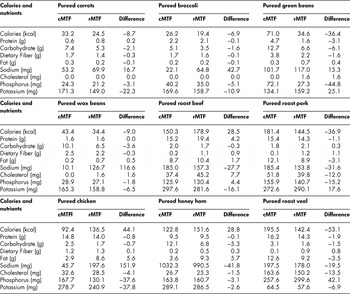
Serving sizes of rMTF were generally 20 grams less than the cMTF. Percentage difference of calories and nutrients on serving size portions of cMTF and rMTF were compared for nine pureed menu items using manufacturers’ nutrient profiles (see Appendix A) .
Primary Outcomes
Weight Goal and Weight Measurements
This was an effectiveness study conducted with participants of varying nutritional states. As part of regular clinical practice, all participants were followed and had realistic weight goals set by their assigned clinical dietitians during the course of their stay. Seven dietitians were identified as being clinically responsible for the diet management of participants requiring dysphagic food products across the two sites. From consultation with this group, we identified that realistic weight goal setting was determined by (a) the individual’s Ideal Body Weight (IBW), (b) their usual body weight (over the past few years), (c) medical history, (d) medications, (e) eating patterns, (f) supplement use, (g) appetite, (h) staff support, (i) physical condition, (j) family support mechanisms, (k) amputations, and (l) edema. The IBW was normally calculated using a healthy body mass index from 18.5 to 24.9 for individuals less than 65 years of age, and from 24 to 29 for individuals 65 years and older as a basis (Pai & Paloucek, Reference Pai and Paloucek2000).
A three-month control period prior to the start of rMTF was determined by the dietitians to be adequate time to provide a baseline overview of the study participants by which to set weight goals that would be evaluated after receiving rMTF for six months. It was determined that the goal-setting dietitian would use the last recorded weight taken at the end of the control period for goal setting. Realistic weight goal categories were set as (a) maintain weight (within 10% of control weight), (b) gain weight (≥ 10% gain from control weight), or (c) lose weight (≥ 10% loss from control weight). The clinical dietitians were instructed to set goals without expectations of rMTF and to use their knowledge of the participant’s weight, dietary history, and medical condition as key elements in determining realistic achievable goals. Every attempt was made to get the same dietitian who had set the participant’s weight goal at the end of the control period to evaluate the achievement of this goal at the end of the six-month intervention period. However, due to scheduling and resource issues, one of the dietitians was unable to complete the evaluation.
Body weight is a key indicator that all clinicians use to define “nutritional status” among frail older persons (Chen, Schilling, & Lyder, Reference Chen, Schilling and Lyder2001; Green & Watson, Reference Green and Watson2006; Salva et al., Reference Salva, Corman, Andrieu, Salas, Porras and Vellas2004). Weight change over a six-month period of time is used by the inter Residential Assessment Instrument (InterRAI)-Minimum Data Set to track quality of care and co-morbidity of residents (Keller & Hirdes, Reference Keller and Hirdes2000). Weight is also considered a key indicator for interprofessional management of undernutrition among older adults (Reuben, Reference Reuben2007). Due to the change in portion size (decrease of 20 g on average) and also the increase in calories per gram (approximately 33% primarily as fat) of rMTF, it was unclear what effect the substitution of a little over one third of the MTF menu items would have on participants’ body weight.
Body weight, in kilograms, was measured once every month throughout the nine-month study using a standardized weight-measuring protocol developed by the clinical programs at Bruyère Continuing Care (Niezgoda, Reference Niezgoda, Trainor, Chambers, Keller and Caissie2011). This protocol applies best-practice standards and is used as a performance improvement indicator within the organization. One year prior to the start of this study, registered and unregulated nursing staff were provided with 15-minute group education sessions. These sessions were run by the research team and held during weekly clinical unit staff meetings. Sessions covered the importance of monthly weights and accurate weight measuring and documentation. Attendance data were not collected by the research staff. One-on-one follow-up with nurse educators during the course of the study to reinforce weight measuring also occurred.
Monthly weight data were collected by nursing staff at the same time of the month, same time of day, and using the same type of scale on each study participant. Nurses were instructed to zero the scale before use and weigh participants without shoes, wearing light clothing, after toileting and wearing a clean continence pad (if appropriate). Participant status at the time of weighing was recorded: status notes indicated if the participant was able to move, if swelling were present, and whether or not the participant had a prosthesis, cast, amputation, or diarrhea (duration of diarrhea was not recorded). Data were collected on a standardized weight form, which was faxed to the research team and entered into a database. A weight report graph, which monitored weight over time, was provided monthly to the clinical units and flagged clinically important weight loss or gain for each individual participant.
Secondary Outcomes
Food Intake
The Comstock Method of visual estimation of food waste (Comstock, St Pierre, & Mackiernan, Reference Comstock, St Pierre and Mackiernan1981) was chosen as the preferred method to determine the average percentage of lunch or dinner (main plate only) consumption of cMTF (during the three-month control period) and rMTF (during the six-month intervention period). This method is correlated with actual food intake (Comstock et al., Reference Comstock, St Pierre and Mackiernan1981; Shatenstein, Claveau, & Ferland, Reference Shatenstein, Claveau and Ferland2002) and allows for auditing of meals on multiple individuals at a given point in time. An observer rates the percentage of each food item remaining on the main plate: full serving left (100%), almost a full serving (90%) left (one bite taken), three quarters left (75%), one half left (50%), one quarter left (25%), or none left (0%). Pretesting by the research coordinator (Helen Niezgoda) for use in this study was done on 20 main plates.
One member of the research team was designated as the official meal tray observer (Niezgoda). Standard servings of each item on the main meal plates were individually plated, weighed, and placed near the observation site for the observer to refer to as a “Reference Plate Standard Serving” when making the visual estimations. Two training sessions, each using 20 meal trays, were conducted prior to the start of the study. Training involved the official meal tray observer and an additional research team member separately estimating 40 main plates, completing the food waste estimation form, and comparing results.
The two observers had 90 per cent agreement at the end of the two training sessions. When variation in scoring between the observers occurred, both reviewed the main plate together to identify why scoring differed. Scores varied when food was thoroughly mixed together, making it difficult to differentiate between food items and when large amounts of sauce or gravy had been poured over items on the main plate. This resulted in a colour change of the food items making it difficult to differentiate between items. No standardized approach could be identified to deal with these issues and was therefore accepted as a limitation of the main-plate estimation process. The research team spent additional time becoming familiar with the food services belt line and tray delivery process, the food scales, and weighing of main-plate reference food items. We developed a system based on previous work done by Simmons (Simmons & Reuben, Reference Simmons and Reuben2000) to photograph each main plate at the time of the visual audit to provide a permanent record for future reliability testing. Main-plate item reference photography and visual estimations audits were completed in the Food Service Department of SV Hospital where all meal trays from both facilities were returned for washing.
The rMTF food items added to the menu were not part of the breakfast menu. Therefore, the breakfast meal was excluded from the main-plate audits. Four and six non-consecutive lunch or dinner estimations of food waste for each study participant were conducted during the control and intervention periods respectively. Each item available on the main-plate menu on the day of the food audit was weighed, photographed, and used as a visual reference during the visual estimation. Using a labeling tracking system, meal trays were tracked from the food service belt line assembly to return for cleaning. Main meal plates were collected prior to collection by the dishwashing staff. Each participant’s main plate was photographed and the visual estimation of plate waste was completed in the Food Services Department.
To determine the grams consumed of a food item at a particular meal, the percent intake of that item, as determined by the visual audit, was multiplied by the mean reference weight for that food item. For example, the mean reference weight for a full serving of carrots was 70 g. If the participant ate only 50 per cent of the serving, the resulting grams consumed would be 35. The total intake per main plate of food weight (g), caloric (kcal), protein (g), carbohydrates (g), fiber (g), fat (g), and sodium (mg) content was calculated by adding the intake of the vegetables, starch, and main course. For missing or unreturned main plates, the nutrient content was deemed unavailable and was not counted as part of that participant’s mean nutrient intake. Unconsumed meals (all food remaining on the main plate) equated to a nutrient intake of zero and did count towards the mean intake for that participant. Adjustments were made for participants who initially ordered less or more than a standard portion (a half or double portion).
Co-Morbidity
All study participants completing the study (n = 42) were compared across the cMTF and rMTF periods for each of the following: (a) new monthly antibiotic prescriptions according to the Bruyère Continuing Care Meditech version 5.55; (b) episodes of falls according to incident reports that nursing staff reported to the Bruyère Continuing Care Quality, Utilization & Risk Management Department; and (c) the total number of acute care hospitalizations according to the electronic discharge information database of the Health Records Department. Date of discharge, place of discharge, and reason for discharge were abstracted from the Health Records database.
Oral Supplements
Oral supplement information was obtained from the Food Services Department’s Nourishment Label Report, which is generated for all individuals receiving supplements or puddings. Snacks such as gelatin, yogurt, milk, applesauce, regular pudding, juice, fruit spreads, prunes, or any other regular snack were not included in this count. Due to a lack of study staff time, it was not possible to monitor consumption either of these supplements or of the oral supplement use according to the Nutrition Medication Pass (Medpass) program (Welch, Porter, & Endres, Reference Welch, Porter and Endres2003). Both of these deficiencies were identified as limitations of the study.
Statistical Analysis
Descriptive statistics were used to outline the characteristics of participants who completed the study (n = 42). The reasons for the withdrawal of participants who did not complete the study were obtained from the interRai 2.0 Minimum Data Set, Ontario’s main clinical performance monitoring tool (Hirdes & Carpenter, Reference Hirdes and Carpenter1997; Keller & Hirdes, Reference Keller and Hirdes2000; Poss et al., Reference Poss, Jutan, Hirdes, Fries, Morris and Teare2008). A two-sided paired z-test with α = 0.05 and n = 42 was used to compare Changes in Health, End-stage disease, and Signs and Symptoms (CHESS), Cognitive Performance Scale (CPS), and Activities of Daily Living (ADL) score at month 1 of the control period with the last month of the intervention period in PASW SPSS (v. 18. for Windows).
Weight Goals
Fisher’s exact test analysis was used to determine if the achievement of weight goals depended on any participant characteristics, as our sample size was too small to use a chi-square test. Each characteristic was divided into dichotomous categories for the Fisher’s exact test.
Weights
Weights were measured monthly from January 2010 to September 2010. A repeated measures analysis, using SAS version 9.2 mixed-model procedure with α = 0.05, was used to determine changes in the variation of body weight from the control period to the intervention period. As some weights were missing, the Mianalyze procedure in SAS was used to obtain a distribution of the model coefficients; n = 35 was used in this analysis.
An odds ratio for the proportion of 10 per cent weight gain and weight loss between the cMTF and rMTF periods was also calculated. This provided the likelihood of gaining or losing weight during the control and intervention periods.
Food Intake
With the PASW (Productive Analytics Software) statistical software SPSS (version 18 for Windows), a 2-tailed paired observation t-test with α = 0.05 was used to compare the mean food intake of the main plate (vegetable, starch, and main course) during the intervention period with the mean intake of the main plate (vegetable, starch, and main course) during the control period. Participants’ food intake was estimated at 10 meals, four (two lunch and two dinnner) during the control period and six (three lunch and three dinner) during the intervention period.
Morbidities
The control period (months 1–3) was compared to the rMTF intervention period which was divided into months 4–6 and 7–9 to provide greater precision for determining differences in episodes of falls, antibiotic prescriptions, acute care admissions with subsequent re-admission, and oral supplements. The comparisons were conducted using a paired z-test to determine if rMTF consumption was associated with these outcomes.
Results
Thirteen per cent (48/361) of patients in complex continuing care and 29 per cent (21/73) in long-term care required MTF diets due to varying degrees of dysphagia that had been caused by a cerebrovascular accident, Parkinson’s disease, or dementia according to participants’ health records at the start of the study. All 69 participants were approached for participation in the study; two did not consent to participate. Of the 67 participants that entered the control period, 73 per cent (49/67) required extensive or total assistance during mealtime either by an assigned staff member or by a trained meal helper. Assistance comprised tray setup, positioning, utensil-to-mouth feeding, and cleanup. Baseline interRai Minimum Data Set-Cognitive Performance Score (CPS) (Lee, Reference Lee2009) identified moderate to severe cognitive impairment in 78 per cent (52/67) of study participants. Eighty-eight per cent (59/67) scored two or less on the interRai Minimum Data Set–CHESS score (Etland, Reference Etland2008; Hirdes, Frijters, & Teare, Reference Hirdes, Frijters and Teare2003), indicating a stable health status at the beginning of the control period.
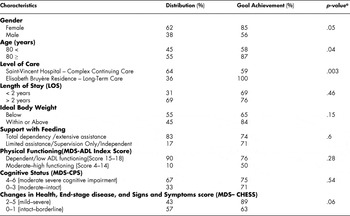
Sixty-three per cent (42/67) of participants completed the nine-month study (see Table 1). A 50 per cent mortality rate occurred over the nine-month period for participants who had an MDS–CHESS score of three or greater at the beginning of the control period. Thirty-seven per cent (25/67) of initial participants withdrew during the study as a result of (a) mortality, 44 per cent (11/25); (b) transfer to other long-term care facilities or discharge, 24 per cent (6/25); or (c) change in diet to soft or enteral tube feeding, 32 per cent (8/25). The 11 deaths that occurred during the study all took place at the study site and did not involve an acute-care admission.
Characteristics of participants (n = 42) completing six months on a mixed menu of bulk and ready-to-use modified-texture food (MTF) and the association with weight goal achievement

a Fisher’s exact test: one-tailed comparing attainment of goal by characteristic
Weight Goals
Eight participants (8/67, 12%) died or were transferred during the three-month control period. Weight goals were set by clinical dietitians at the end of the control period for the remaining 59 participants. Seventy-one per cent (42/59) of this group completed six months on the rMTF.
Of the 42 participants who completed six months on rMTF, 55 per cent (22/42) were identified to be underweight at the time of weight goal setting by the clinical dietitians. Ten (45%) had a six-month weight goal set at “gain weight”. The remaining participants who were underweight (12/22) had a six-month weight goal set at “maintain weight” due to factors such as (a) medical history, (b) medications, (c) eating patterns, (d) supplement use, (e) appetite, (f) staff support, (g) physical condition, and (h) family support mechanisms, which the clinical dietitians felt made it unlikely that participants would be able to gain weight.
Weight goal achievement – “maintain, gain, or lose” at the end of the intervention period – was achieved by 74 per cent of participants (see Table 2). Only 20 per cent (2/10) of participants with weight goals set at “gain” achieved their goal. One participant gained 13 per cent and another 32 per cent at the end of the six-month intervention period. Maintaining weight throughout the six-month intervention period was the goal set for 69 per cent (29/42) of participants, and 97 per cent achieved this goal at the end of the six-month intervention. Female gender, age greater than 80, and level of care were significantly associated with the achievement of weight goals (p < .05) (Table 1). Support with feeding was not found to be associated with goal achievement. Although not significant, participants with increasing morbidity (as indicated by higher MDS–CHESS scores) met their weight goals as well as or better than those with lower scores (Table 1).
Dietitians’ goal setting and proportion of participants (n = 42) achieving prescribed weight goals

Secondary Outcomes
The result of the repeated measures ANOVA showed no significant changes in weight from the control period to the intervention period (p = .959). The following covariates did not significantly (p > .05) impact the participant’s weight: MDS–CHESS score, feeding status, gender, or location (complex continuing care vs. long-term care). As for the interactions between the effects, only the interaction between type of food and location was significant (p = .01), indicating that weight change over time was confounded by complexity of care.
A 10 per cent weight loss or more from the baseline weight occurred in 21 per cent (9/42) of participants at the end of the control period and 7 per cent (3/42) at the end of the intervention. Weight gain (10% weight gain or more from baseline weight) occurred in five per cent (2/42) and 19 per cent (8/42) of participants during the control and intervention periods respectively. Although not significant, participants did have a trend towards weight gain while on rMTF (OR 3.5, p = .16) and a trend towards weight loss on cMTF (OR = 4.3, p = .11). It should also be noted that there was a low likelihood of a participant’s having another 10 per cent weight loss/gain during the intervention after losing or gaining 10 per cent during the control period.
Lunch or dinner main-plate estimations were completed on 10 separate non-consecutive days across the nine-month study for each participant. In total, 599 main meal plate estimations were completed. Eighty-one per cent of participants (34/42) had at least one or more of their meals not audited because of missing main plates. Limited research staff resources did not allow for the retrieval of main plates from participants’ rooms after tray collection was completed by Food Services. A two-sided t-test showed a non-significant decrease in total grams of main-plate food consumed during the six-month intervention period when compared with the control period (p = .11); however, portion sizes did differ on average by 20 g between the cMTF and rMTF.
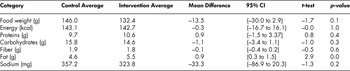
As Table 3 indicates, no significant differences were observed in gram weight of portions consumed for individual menu items (vegetable, starch, and main course) or consumption of energy (kcal), protein (g), carbohydrates (g), and fiber (g). Fat consumption significantly differed (p = .01); it was the lowest at the end of the three-month control period (4.1 g) and highest at the end of the six-month intervention period (6.1 g).
Difference in control and intervention period main plate food component intake (n = 40)Footnote *

* No data was obtained on main-plate food intake on two participants during both the control and intervention periods primarily due to extended time needed for feeding assistance which resulted in missing main plates.
Morbidities
There were no significant differences between the number of falls between the control and intervention periods (p > .05). Twenty-six per cent (11/42) of study participants experienced one or more falls during the nine-month study. Eighty-two per cent (9/11) were repeat fallers, having a six-month or greater history of falls. All falls were reported as minor, and none required an acute-care admission. There were no significant differences between the number of antibiotics given for new infections between the control and intervention periods (p > .05), and no acute-care admissions with subsequent re-admissions occurred during the control or intervention periods. There were no significant changes in prescribed daily supplement dose between the control and the intervention period (p > .05). Of the 42 participants who completed the study, 52 per cent (22/42) began the intervention period requiring daily supplements. Ten per cent (2/22) had discontinued all supplement use by the end of six months on rMTF.
Discussion
Results of this practical study have shown that 74 per cent (31/42) of study participants on a mixed menu of bulk and ready-to-use modified-texture food (rMTF) met their realistic weight goals. Ninety per cent (28/31) of this group met their goal of “maintain weight” which is considered a success in this highly vulnerable population that typically loses weight over time (Allard et al., Reference Allard, Aghdassi, McArthur, McGeer, Simor and Abdolell2004; Keller, Reference Keller1993). The achievement of these goals was not reflected in a significant increase in main-plate food intake (grams or calories). Change in body weight and morbidity were also not significantly different between the intervention and control periods. In our review of MTF publications (Keller et al., Reference Keller, Chambers, Niezgoda and Duizer2012), we found few studies that assessed the impact of introducing multiple commercially produced MTF food items in long-term care facilities (Amunrud et al., Reference Amunrud, Mitchell and Sun1999; Germain et al., Reference Germain, Dufresne and Gray-Donald2006; Keller et al., Reference Keller, Chambers, Niezgoda and Duizer2012). As a result, we focus the discussion on the operational and methodological issues of this effectiveness study to guide future research in this complex setting, while discussing the strengths and limitations of this work.
Study Design and Primary Outcome
This study came about because of a managerial decision to introduce ready-to-use modified-texture food into the menu for patients/residents in two jointly operated facilities. A time-series design was chosen as a result of the occurrence of this “natural intervention”, and an effectiveness approach was the focus rather than intervention efficacy. These decisions automatically affect the interpretation of study findings, and it cannot be stated with certainty that weight goal attainment (primary outcome) was a direct result of the rMTF food products. Furthermore, a potentially greater difference in weight and main-plate food intake may have been identified if a randomized control group were used. However, this study design is realistic and appropriate considering the alternatives.
The number of individuals who consume MTF and who are available to participate in a study such as ours in any one facility is limited. Conducting sufficiently powered randomized studies to demonstrate the effect of an intervention is therefore challenging. Inclusion of additional sites to boost sample size poses problems concerning standardization of operating procedures, variation in MTF products used, staffing requirements, and cost. In addition, providing intervention food to some individuals and not to others in the same facility could be seen as unethical if the food were truly superior; it would also be logistically challenging and would pose a potential risk for contamination of the control group either through use of intervention food or changes in feeding practice. However, the time-series design did provide for within-subject control and when considering the various factors (e.g., food preferences, feeding assistance) that impact food intake; this is considered to be a design strength. Furthermore, the nine-month study length with a six-month intervention period was a significant improvement from prior work in this area (Amunrud et al., Reference Amunrud, Mitchell and Sun1999; Germain et al., Reference Germain, Dufresne and Gray-Donald2006), especially considering that the primary outcome can require a significant amount of time to demonstrate change.
Participant Identification
In this effectiveness study, all patients/residents requiring MTF were eligible for participation, regardless of nutritional and health status. This resulted in 97 per cent (67/69) of the MTF consumers being recruited to the study, making this the largest study to date comparing MTF food products in this subpopulation. A greater proportion of long-term care residents (29%) required MTF as compared to complex continuing care (12%); however, the size of the facilities was quite different. Focusing specifically on long-term care settings in the future may be worthwhile to ensure a sufficient sample size. Dropouts were primarily due to transfer or death resulting in a loss of 37 per cent of the original sample. This provides useful information to help identify the sample size requirements needed for future work. Furthermore, of the 10 participants who died during the course of the study, all had a MDS–CHESS score greater than or equal to three at baseline, indicating that this measure could be used to identify eligible participants in the future who could potentially survive a nine-month study.
Seventy-four per cent of participants met their weight goal after six months on rMTF; however, only 20 per cent (2/10) of participants who needed to gain weight actually did. The inclusion of participants with weight goals across the three categories (“maintain, gain, or lose”) provided a more relevant outcome measure than considering only absolute weight change. In efficacy studies, inclusion of only underweight participants more readily shows the benefit of a superior food product on average body weight change (Germain et al., Reference Germain, Dufresne and Gray-Donald2006). With the introduction of an rMTF in practice, it cannot be anticipated that all residents will gain weight but that their individual weight goals could be met. It should be noted that the results of this study show that older residents, those in long-term care, and those with an MDS–CHESS score greater than 2 were more likely to meet their weight goal (Table 2), indicating their capacity to improve regardless of these factors. Thus, weight maintenance is a plausible goal for even these most vulnerable residents/patients.
MTF and Assessing Food Intake
A number of issues associated with the use of MTF were highlighted in this study and have been documented in the literature. Keller et al. (Reference Keller, Chambers, Niezgoda and Duizer2012) identified a lack of standardization in in-house production, inappropriate prescription, inferior nutrient quality, the confounding effect of feeding assistance, and the stigma associated with use as some of the key issues needing to be addressed in future research on MTF. Main-plate food intake by gram weight was found to not differ significantly between the control and intervention periods, although there was a trajectory towards decreased main-plate food intake over time. The variability in main-plate food intake over time – within and between individuals, as demonstrated in this work – indicates that a number of factors, in addition to food provided, needs to be considered as part of the intervention.
One of the limitations found with the use of “ready to use” MTF in this effectiveness study was the limited number of product items available. This resulted in the need to use varied commercially prepared products to ensure compliance with government regulatory specifications on menu selection. Not all menu items were substituted with rMTF during the intervention which makes it challenging to identify a benefit of these products in terms of health outcomes. No one commercial producer currently provides an entire product line of ready-to-use modified-texture food to meet these needs, making it difficult to conduct a study to differentiate the exact impact of any one commercial product line.
Use of ready-to-use products resulted automatically in a smaller portion (on average 20 grams less) being provided and therefore available for consumption. It is unclear if the decreased food consumption over time by gram weight (see Table 3), although not significant, is due to the decreased portion size of these items or decreased food intake overall. The latter is suspected because (a) the trajectory towards decreased intake started before the intervention, (b) there was no difference by food item (starch, main course, vegetable) in portion consumed, and (c) ready-to-use products made up only 47 per cent of audited food items. The slow trajectory towards decreased food intake, especially as the majority of these participants required feeding assistance and their functional impairment increased over time, indicates that there may be a value in nutritionally enhancing products. Ready-to-use products were nutritionally enhanced with calories (approximately 30% greater per 100 gm of food) primarily through added fat; even with less than 50 per cent of rMTF products making up the intervention menus, weight goals were met. A comparison by Landry (Reference Landry2009) of five commercial MTF brands and in-house prepared product examined the calories, grams of protein, carbohydrates, and fat found in a theoretical sample meal of similar food items. Protein content varied by as much as 40 per cent across commercial brands (Landry).
Participant caloric requirements were not established either for the control or for the intervention periods, and this was a limitation of the study. Collection of such data in future work would assist in interpreting weight goal achievement.
Various methods were proposed to measure food intake, including plate weight pre- and post-consumption, direct visual observation post-consumption, and estimation of consumption using photographs of plate waste (Bannerman & McDermott, Reference Bannerman and McDermott2011; Comstock et al., Reference Comstock, St Pierre and Mackiernan1981; Dhingra, Sazawa, Menon, Dhingra, & Black, Reference Dhingra, Sazawa, Menon, Dhingra and Black2007). Direct visual observation post-consumption when meal plates were returned to the kitchen was used in this study to allow for a larger sample size (599 main meal plates were audited) despite limited resources for estimating food intake. This trade-off was considered acceptable, especially as only MTF on the plate was the focus of this intervention, rather than estimation of total food intake. Direct visual observation did not demonstrate a significant change in meal intake by gram weight in this study. The significant increase in fat intake observed during the intervention period, given that calorie consumption did not significantly increase, may be an artifact of the visual estimation method as well as the many assumptions used to derive macro and micronutrient intake. However, calories were increased on average by only 33 per cent in rMTF, whereas fat was increased on average by 168 per cent, primarily in the meat products. This greater change in macronutrient composition may explain the significant difference found.
Due to challenges such as misplaced main meal plates on the clinical units and food services staff removing main plates prior to the estimation procedure being completed, 12 per cent of audit data were lost. Missing data resulted in only 81 per cent (34/42) of participants’ data being usable in the comparison of food intake between the control and intervention periods. The loss in data likely influenced our null finding.
A common issue that also affected visual estimation of food waste was the mixing of food on the main plate, which is especially prone to happen with MTF. Gravy and sauces are used liberally to enhance taste and swallowing, making it challenging to estimate portions consumed. Any method of food intake estimation would be affected by these limitations, making it a challenge in this population. In addition to challenges in estimating food waste of MTF food, we now believe that estimation of four meals during the control and six meals during intervention may have been too few to demonstrate measurable change in food intake. In future work, if possible, all food consumed and oral nutritional supplements and snacks should be assessed to ensure that intervention foods do not displace other food intake.
Measuring Body Weight
The use of weight as a clinical indicator for undernutrition is well-documented (Chen et al., Reference Chen, Schilling and Lyder2001; Green et al., Reference Green and Watson2006; Salva et al., Reference Salva, Corman, Andrieu, Salas, Porras and Vellas2004). While weight is an important clinical indicator of nutritional status, its measurement in routine clinical practice is not consistently accurate. Simmons, Peterson, and You (Reference Simmons, Peterson and You2009) compared monthly weight data collected using a standardized weight protocol by clinical staff with data collected by research staff . The protocol did improve the detection of weight loss; however, staff consistently documented higher weight values than did research staff. The use of clinical staff in weight measuring posed a concern for data consistency and quality in our study. However, the nature of the study, participant burden, the need to use clinical staff to assist in transferring and repositioning of participants for re-weighing (staff workload burden) and the lack of study personnel, resulted in the necessity to use a practical approach for obtaining weight measurements. A standardized weight measuring protocol was implemented which did increase reporting and consistency in documentation of weight measurements (Niezgoda, Reference Niezgoda, Trainor, Chambers, Keller and Caissie2011). However, future consideration should be given to improving the accuracy of weight measuring by having research staff review monthly weights and re-weigh participants who demonstrate a change in weight. There is the potential that our result of no significant weight change over time is due to the use of clinical staff in weighing participants which resulted in 14 per cent (52/378) missing monthly weight data.
Confounders
Almost three quarters of participants in this study required feeding assistance. Ninety per cent of participants who had a weight goal set at “gain weight” required some form of assistance. Bannerman & McDermott (Reference Bannerman and McDermott2011) compared the nutrient and fluid intake of 15 residents in a long-term care home consuming MTF with a comparable group on standard diets. Dietary and fluid intakes were found to be significantly less for those individuals on MTF, which was partially attributed to a lack of sufficiently trained staff to provide assistance during mealtime (Bannerman & McDermott, Reference Bannerman and McDermott2011). These findings are consistent with work done by Wright et al. (Reference Wright, Cotter, Hickson and Frost2005) who found that nutritional intake improved by targeting feeding assistance to older adults with dysphagia in hospitals. Feeding assistance is an important confounder to consider in any future intervention study on MTF as with limited time to provide assistance, only partial completion of the main plate often occurs (Keller et al., Reference Keller, Chambers, Niezgoda and Duizer2012).
Elements of food and mealtime satisfaction, quality of social interaction during mealtime, the role of meal helpers, and the environment where meals occur all contribute to the amount of food consumed and subsequently to undernutrition (Keller, Reference Keller1993; Steele, Greenwood, Ens, Robertson, & Seidman-Carlson, Reference Steele, Greenwood, Ens, Robertson and Seidman-Carlson1997). In this study, 73 per cent of participants required full or extensive help with feeding because many participants remained in their rooms and in bed during mealtime. Three quarters of the participants were significantly cognitively impaired. The training of meal helpers and the amount of time they provided to those participants who needed full assistance with feeding likely affected food intake and must be considered further. Food satisfaction was not assessed, and this is an important consideration in both cognitively well and impaired participants for future studies (Simmons, Cleeton, & Porchak, Reference Simmons, Cleeton and Porchak2009). This consideration is especially essential when evaluating the benefit of an MTF which has been enhanced for visual appeal and taste, as well as for nutrition.
Supplements can account for up to one third of caloric intake (Wright, Cotter, & Hickson, Reference Wright, Cotter and Hickson2008) and could have accounted for the lack of difference in weight for the two periods, especially as supplement prescription was reduced during the intervention period. Supplement intake was collected only “as prescribed” and not as “consumed”, which is a significant limitation of this work. Future research should attempt to measure all food intake, including between-meal supplements and snacks as they likely influence food intake at meals (Parrott, Young, & Greenwood, Reference Parrott, Young and Greenwood2006; Persson, Hytter-Landahl, Brismar, & Cederholm, Reference Persson, Hytter-Landahl, Brismar and Cederholm2007). Time provided for feeding assistance was not investigated in this study but should also be considered in future work (Parrott, Young, & Greenwood, Reference Parrott, Young and Greenwood2006; Persson, Hytter-Landahl, Brismar, & Cederholm, Reference Persson, Hytter-Landahl, Brismar and Cederholm2007; Simmons & Schnelle, 2006).
Conclusion
Research to assess the impact of MTF on nutritional status and co-morbidities of persons with dysphagia is both challenging and needed. This study showed that a menu consisting of “ready to use” MTF mixed with bulk commercial MTC products was successful in achieving participants’ weight goals after six months on the new menu. However, further work is needed to ascertain the impact of MTF on food satisfaction and nutritional intake. Moreover, additional research on the mealtime experience would help to better understand how food intake could be improved while improving quality of life. The completion of this effectiveness study using an interrupted time-series design helped to illustrate several considerations that are required in conducting nutrition interventions in this subpopulation.
Portion serving size comparison of commercial bulk pureed food (cMTF) and ready to use (rMTF)Footnote * on nine menu times by calories and nutrient content

* Information on calories and nutrients provided by HFS - Healthcare Food Services Health (2009-2010)