Stephen C. Carlson's The Gospel Hoax sets out to validate the long-standing suspicion that Professor Morton Smith, late of Columbia University, forged his famous discovery of aletter of Clement of Alexandria, which quotes from a longer(“secret”) Gospel of Mark.1
Stephen C. Carlson, The Gospel Hoax: Morton Smith's Invention of Secret Mark (Waco, Tex.: Baylor University Press, 2005). Smith translated the word

“secret” rather than “mystic.” Neither is satisfactory, so I use his alternative designation “the longer Gospel of Mark.” All biblical quotations are from the RSV.
Quentin Quesnell, “The Mar Saba Clementine: A Question of Evidence,” Catholic Biblical Quarterly [CBQ] 37 (1975) 48–67, at 55, 58.
Smith's incensed reply to Quesnell's article appeared the following year in the same journal. He found Quesnell's hypothesis of a modern mystifier completely implausible and objected to Quesnell's insinuations.3
Morton Smith, “On the Authenticity of the Mar Saba Letter of Clement,” CBQ 38 (1976)196–99.
Smith's report is cited in Quesnell, “Question of Evidence,” 49 n. 4; idem, “A Reply to Morton Smith,” CBQ 38 (1976) 200; and Smith, “Authenticity,” 196. The three Western scholars who located the manuscript and brought it to Jerusalem are Guy Stroumsa, David Flusser, and Shlomo Pines. See Guy G. Stroumsa, “Comments on Charles Hedrick's Article: A Testimony,” Journal of Early Christian Studies 11 (2003) 147–53.
Thomas J. Talley, “Liturgical Time in the Ancient Church: The State of Research,” Studia Liturgica 14 (1982) 34–51, at 45; trans. of “Le Temps Liturgique dans l’Église ancienne,” La Maison-Dieu 147 (1981) 29–60. On the issue of the manuscript's present location, see Charles W. Hedrick and Nikolaos Olympiou, “Secret Mark: New Photographs, New Witnesses,” The Fourth R 13 (2000) 3–11, 14–16; John Dart, Decoding Mark (Harrisburg, Pa.: Trinity Press International, 2003) 137–40.
Unconstrained by physical evidence and legal consequences, the folklore of forgery entered the secondary literature shortly after Smith's death in 1991, when Jacob Neusner set out to demolish Smith's reputation in retaliation for Smith's public denunciation of his error-ridden scholarship at the SBL meeting in 1984. Dubbing Smith's discovery “the forgery of the century,” Neusner asserted that Smith created the “secret” gospel to prove that Jesus was a homosexual.6
Jacob Neusner, Are There Really Tannaitic Parallels to the Gospels? A Refutation of Morton Smith (South Florida Studies in the History of Judaism 80; Atlanta: Scholars Press, 1993) 27–31, at 28; this was republished several times. For a fuller overview of the controversy sparked by Quesnell, see Scott G. Brown, Mark's Other Gospel: Rethinking Morton Smith's Controversial Discovery (Studies in Christianity and Judaism 15; Waterloo, Ont.: Wilfrid Laurier University Press, 2005) 34–48.
Donald Harman Akenson, Saint Saul: A Skeleton Key to the Historical Jesus (Oxford and New York: Oxford University Press, 2000)85–89;Bart D. Ehrman, “The Forgery of an Ancient Discovery? Morton Smith and the Secret Gospel of Mark,” in his Lost Christianities: The Battles for Scripture and the Faiths We Never Knew (New York: Oxford University Press, 2003) 67–89; Robert M. Price, “Second Thoughts on the Secret Gospel,” Bulletin for Biblical Research 14 (2004) 127–32.
The quoted words are from Larry W. Hurtado's endorsement on the back cover.
On motive, see Brown, Mark's Other Gospel, 49–54; idem, “The Question of Motive in the Case against Morton Smith,” JBL 125 (2006) 351–83. With respect to ability, Carlson conveniently ignored the problem, demonstrated in chapters 4–8 of Mark's Other Gospel, that Smith's comprehension of the Letter to Theodore and of its gospel excerpts was far too inadequate for him to be the author.
Carlson offers five items into evidence, so to speak. First, he claims to have uncovered another manuscript from Mar Saba in the same handwriting as Clement's letter “to Theodore” (hereafter Letter to Theodore) and that Smith intentionally assigned this second manuscript to a fictitious contemporary who “bears an uncanny resemblance to Morton Smith himself.”10
Carlson, Gospel Hoax, 43.
Ibid., xviii, 85.
This a priori case sounds impressive. How well does it stand up to scrutiny?
Exhibit One: The Writing of M. Madiotes
Argument: Carlson's first argument concerns the manuscript that Smith catalogued as item number 22 during his stay at Mar Saba in 1958. A reproduction of the first page (recto) of this manuscript appears in both The Secret Gospel and the journal Archaeology as anillustration of how monks sometimes pasted together loose pages of old manuscripts in order to fortify the bindings of books.
12Morton Smith, The Secret Gospel: The Discovery and Interpretation of the Secret Gospel According to Mark (New York: Harper & Row, 1973; repr., Clearlake, Calif.: Dawn Horse, 1982) 37 (rev. ed.; Middletown, Calif.: Dawn Horse, 2005) 35; idem, “Monasteries and Their Manuscripts,” Archaeology 13 (1960) 177.
Morton Smith, “

” (trans. Archimandrite Constantine Michaelides),

52 (1960) 110–25, 245–56, at 119–20.

), whose surname must be fictitious because it does not appear in the online Greek phonebook.
14Figure 1 is derived from the 1984 reprint of the 1982 Dawn Horse Press edition of Smith, Secret Gospel. This reproduction of Smith's photograph of MS 22 reveals a few more letters than the 1973 Harper & Row edition, which is cropped at the right edge of the omicron in

, thus showing most of the incorrect circumflex accent but none of the nu or the beta. The 1960 reproduction in Archaeology is cropped slightly past the beginning of the omicron, thus mostly concealing the circumflex accent. Carlson's reproduction (his figure 5) is cropped in the same place.

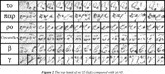
Figure 1 The top hand of the first page (recto) of MS 22.
This odd attribution is a deliberate clue. The name Madiotes is a pseudonym meaning “baldy” and “swindler,” derived from the verb

. A balding Morton Smith invented Madiotes, added his handwriting to MS 22, assigned this hand to the twentieth century, and included a picture featuring this writing in both Archaeology and The Secret Gospel as a clue that he was swindling people with a twentieth-century forgery.
15Carlson, Gospel Hoax, 42–44. The verb to swindle implies defrauding people of their money, which, as Carlson notes, is not the objective of a hoax (15–16). So this supposed meaning of Madiotes is inconsistent with Carlson's hoax hypothesis.
The quoted words are from Mark Goodacre's endorsement on the back cover.
Assessment: The possibility that a twentieth-century individual wrote the Letter to Theodore using an eighteenth-century hand would be damning evidence of forgery, so I examined this claim in detail when the editors of The Expository Times invited Carlson and me to reply to each other's books on longer Mark.17
Scott G. Brown, “Reply to Stephen Carlson,” Expository Times 117 (2006) 144–49. This paper includes a discussion of the general principles of handwriting identification.
Ordway Hilton, Scientific Examination of Questioned Documents (rev. ed.; CRC Series in Forensic and Police Science; Boca Raton, Fla.: CRC, 1993) 161.

The top hand of MS 22 (left) compared with MS 65.
The top line of figure 2 compares the form of the definite article

in MS 22 with the first twelve instances of
in MS 65.
19The images of MS 65 in this article were scanned from the color photographs taken by Kallistos Dourvas (courtesy of Charles W. Hedrick).

(with or without an accent) in the letter but not for the example of

in MS 22.
The second line compares the first three letters of the word

in MS 22 with all seven places in MS 65 where these three letters occur together. Two differences readily appear here. First, although both writers use an unusual form of cursive pi(i.e.,

), the latter writes it differently when it precedes alpha. In these cases, rather than connecting to the next letter at the baseline, the stroke loops backward over the top of the pi in order to form the horizontal bar before continuing to the next letter. This form of cursive pi also occurs before epsilon, eta (without an accent), lambda, nu, rho, tau, and a space. The form used in MS 22 does appear in MS 65, but only before eta (with acute accent), iota, omega, and the omicron-upsilon ligature (

). In the 112 instances of pi, no exceptions to these habits occur. Second, when alpha precedes rho in MS 65, the letters are connected, and the top of the rho is shaped like a loop. The first hand in MS 22 did not connect these letters, and the top of his rho is circular.
The third line of figure 2 compares the way both documents combine rho with omicron. Again, the unconnected form of rho usedinMS 22 does appearin the Letter to Theodore (examples occur under

in figure 2), but only before certain letters: gamma, theta, kappa, nu, pi, tau, chi, a space, and, occasionally, alpha, epsilon, eta, and omega. It never appears before an omicron. Instead, in these twenty-five instances, the tail of the rho always curves up to the right to connect with the omicron (a common ligature). The fourth line illustrates the shape and position of circumflex accents in both writings. Those in MS 65 are wavy (tilde), and the start of the stroke is normally aligned vertically with the left edge or the center of a wide vowel, but the stroke often continues past the right edge. The circumflex accent visible in the published photograph of MS 22 is straight, and the stroke begins before the left edge of the vowel and ends nearly in line with the right edge. Lines five and six compare the individual letters beta and gamma. Unlike the beta in MS 22, the upper loops of the fourteen betas in MS 65 vertically overlap the bottom loops, which are not tight against the “back” of the letter, as they are in MS 22. The downward stroke of the gammas in MS 65 is noticeably straight, resulting in a letter that resembles an elongated v, unlike the downward stroke of the gammas in MS 22, which bends sharply to the left, resulting in a letter that resembles a y. These side-by-side comparisons demonstrate how very different these two writings are.
Of equal significance is the lack of accentsin MS 22 on the words

, and

and the incorrect accent on

.
20The words tou and sou on the second line of figure 1 use a ligature to represent omicron and upsilon (

).

(meaning “the present,” or simply “this”) should both have grave accents. If

representsthe definite article, then

and

should have circumflex accents. If instead

represents the last three letters of the last word on the previous line, accents might not be required. Whatever the case, any competent scribe would have put an accent over

, and no competent scribe would have put a circumflex accent over a short vowel. As William Wallace put it, “A short vowel circumflexed is, like metal on metal or colour on colour in heraldry, pour enquérir.”
21William Wallace, “An Index of Greek Ligatures and Contractions,” Journal of Hellenic Studies 43 (1923) 184.
See Morton Smith, Clement of Alexandria and a Secret Gospel of Mark (Cambridge, Mass.: Harvard University Press, 1973) 2.
Carlson has simply mistaken two different writers for one. On its own, this conclusion eliminates his basis both for treating the photograph of MS 22 as a deliberate clue and for attributing MS 65 to a twentieth-century individual who “uncannily resembles Smith himself.”23
Carlson, Gospel Hoax, 47.
Exhibit Two: Anomalous Letterforms Attributable to Smith
Argument: Carlson turns to paleography for additional circumstantial evidence, arguing that MS 65 contains four paleographical anomalies that agree with Smith's Greek handwriting. These anomalies are established by comparing MS 65 with a few manuscripts written at Mar Saba in the eighteenth century, whereas Smith's writing habits are establishedfrom annotations that he wrotein the margins of books that he owned (the Jewish Theological Seminary in New York City now houses his personal library). Carlson notes that the writer of MS 65 joined the left “leg” of his lambdas near to the bottom of the right leg and that he formed some of his lambdas in only one stroke. Smith also wrote lambdas in both ways. Carlson also notes that both Smith and the writer ofMS 65 used a one-stroke short tau, where the horizontal line curves back and then turns down at the midpoint. And Carlson notes that the thetas in MS 65 appear “very similar” to the thetas that appear in Smith's marginal annotations, “including a leading horizontal stroke at midline.”24
Ibid., 46–47.
Assessment: Four fundamentalproblemsin Carlson's approach undermine his paleographical argument. First, his determination of anomalous letterforms presumes that authentic manuscripts written at Mar Saba in the eighteenth century should share the same traits. That premise is erroneous. After the twelfth century, Greek handwriting became less standardized and more individualistic, with the result that we can more easily identify individual scribes. By the fifteenth century, “the varieties ofstyle are numerous and overlapping, and thereis no clear distinction between styles thought suitable for copying Biblical and patristic texts and those for secular manuscripts; still less are there any differences according to where in the by-now-shrunken Byzantine empire a manuscript was written.”25
Ruth Barbour, Greek Literary Hands A.D. 400–1600 (Oxford: Clarendon, 1981) xxii, xxiii.
All three comparison manuscripts in Carlson's figure 2 render pi differently. Figures 2b and 2c render epsilon differently than 2a. Figures 2a and 2c render gamma, theta, initial kappa, and terminal sigma differently from each other (those letters are not displayed in 2b). And six different forms of theta appear in figure 7. These differences among the eighteenth-century writers of Mar Saba could easily have been multiplied had Carlson offered more than four lines of text from three Mar Saba manuscripts as samples. It is highly tendentious to label commonplace differences anomalous only when they occur in MS 65 and agree with Smith's handwriting.
Aristarchos Peristeris, “Literary and Scribal Activities at the Monastery of St. Sabas,” in The Sabaite Heritage in the Orthodox Church from the Fifth Century to the Present (ed. Joseph Patrich;Leuven: Peeters, 2001) 171.
Smith, Clement, 2–3.
Ibid., 285–90.
Second, Carlson's neglect of the phenomenon of natural variation in handwriting renders his handwriting comparison dubious. People are not machines, so they never write a letter exactly the same way twice.30
See, for example, Wilson R. Harrison, Suspect Documents: Their Scientific Examination (Chicago: Nelson-Hall, 1981) 297–305; Hilton, Questioned Documents, 158–60.
On the question of quantity of samples, see Roy A. Huber and A. M. Headrick, Handwriting Identification: Facts and Fundamentals (Boca Raton, Fla.: CRC, 1999) 249–50.
Third, Carlson's premise that a modern forger would “lapse” into his or her own writing habits when forging an eighteenth-century manuscript disregards an important distinction between publicly and privately executed forgeries.32
Carlson, Gospel Hoax, 46.
James V. P. Conway, Evidential Documents (Police Science Series; Springfield, Ill.: Charles C. Thomas, 1959) 24–27.
David Ellen, Scientific Examination of Documents: Methods and Techniques (Boca Raton, Fla.: CRC Press, 2006) 50.
Conway, Evidential Documents, 27. He was describing publicly executed forgeries, but the same pattern should apply to lapses that result from mental fatigue.
Fourth, Carlson never addresses the question of whether the similarities he adduced between Smith's writing and MS 65 are probative. The handwriting of any two individuals using the same alphabet should contain similarities, including some striking ones. How do we know that these four alleged similarities are not simply coincidental? Ordway Hilton discussed this issue in connection with forged signatures:
Identification of the forger by means of his writing alone is the exception rather than the rule. Seldom do enough of the forger's own writing habits remain to serve as the basis for an identification. In rather rare instances, however, the forger may be identified by a number of his small but highly individual habits that occur in the simulated signature. Nevertheless, it must be understood that positive proof of his identity can never be based upon merely one or two similarities between his and the disputed writing.36
Hilton, Questioned Documents, 200.
When dealing with the possibility of a simulated forgery, then, the discovery of “a number of [the suspect's] small but highly individual habits” can at best con stitute evidence supporting the identification, but only if these habits are “highly individual,” which is to say, quite unlikely to occur in the writings of most other individuals. Accordingly, the only similarities between Smith's Greek handwritingand MS 65 that might be probative are the ones that are highly unusual, both for the eighteenth century and the twentieth.
From the preceding theoretical considerations we may distill four criteria that every alleged paleographical similarity must meetin order to have value as evidence against Smith. The letterforms in question must 1) represent Smith's normal ways of writing those letters; 2) be “highly individual” in relation to twentieth-century Greek writing; 3) be equally unusual for the eighteenth century; and 4) make sense as lapses or deliberate substitutions. Put differently, if these letterforms are easy to reproduce or appear consistently in MS 65, then the similarity to Smith's writing is probably coincidental. If they are normal for the eighteenth century, then there is no basis for treating them as suspicious. If they are commonplace in twentieth-century Greek handwriting, then there is no basis for ascribing them specifically to Smith. And if Smith normally wrote these letterforms in a different way, then Carlson's examples of Smith's Greek handwriting are unrepresentative, and there is no way to explain why forms that are atypical for Smith's writing would appear with any regularity in MS 65.

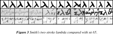
Smith's two-stroke lambda compared with MS 65.
We begin our reassessment of Carlson's paleographical evidence with the two-stroke lambda. The top line of figure 3 reproduces the first fourteen lambdas in Smith's book Tannaitic Parallels to the Gospels, where he added the Greek text by hand. The lambdas in the second line come from annotations in Smith's books and a letter he wrote in 1955. The third line, as best as I can determine using photographs, reproduces eight two-stroke lambdas from MS 65.37
First row: Morton Smith, Tannaitic Parallels to the Gospels (Journal of Biblical Literature Monograph Series[JBLMS]6;Philadelphia:Society of Biblical Literature, 1951). Second row:images one through four are from Smith's copy of Clemens Alexandrinus (ed. Otto Stählin; Griechischen christlichen Schriftsteller der ersten drei Jahrhunderte, Band [12], 15, 17, 39; Leipzig: J. C. Hinrichs, 1905–1936) 1:xvi; 4:318 (courtesy of the Library of the Jewish Theological Seminary; call number BR60.G7C6 1905 in the Morton Smith collection); images five and six are from Smith, letter to Erwin R. Goodenough, 3 January 1955, Goodenough Papers, Manuscripts and Archives, Yale University Library (courtesy of Allan Pantuck). Images seven and eight are from my photocopy of notes Smith wrote on the verso of the half-title page (ii) of his copy of Alv Kragerud, Der Lieblingsjünger im Johannesevangelium. Ein exegetischer Versuch (Oslo: Osloer Universitätsverlag, 1959) (courtesy of The Library of The Jewish Theological Seminary; call number BS2615.2.K73 1959).
Curiously, afterthe first chapter, approximately 60 percent of the lambdasin Tannaitic Parallels are formed with the left leg intersecting the middle or higher on the right leg. This difference within Tannaitic Parallels illustrates the importance of using multiple, extended samples when establishing normal writing behavior.

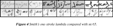
Smith's one-stroke lambda compared with MS 65.
Figure 4 compares Smith's one-stroke lambda with (what appear to me to be) eight one-stroke lambdas from MS 65.39
First row: images one through three are from Smith's copy of Stählin, Clemens, 1:xvi; 3:178;images four through six are from Smith, letter to Goodenough; images seven and eight are from the first and second of three pages of handwritten notes that Smith made while reading C. H. Turner,“Marcan Usage: Notes, Critical and Exegetical, on the Second Gospel,” Journal of Theological Studies [JTS] 25 (1924) 377–86; JTS 26 (1925) 12–20, 145–56, 225–40; JTS 27 (1926) 58–62; JTS 28 (1927) 9–30, 349–62; JTS 29 (1928) 275–89, 346–61. On 9 March 2006 I found these loose pages at the Jewish Theological Seminary inside Smith's copy of John Charles Doudna, The Greek of the Gospel of Mark (JBLMS 12; Philadelphia: Society of Biblical Literature and Exegesis, 1961) (call number BS2585.5.D6 1961). On pp. 2–3 of these notes, Smith refers to “Richardson's baptismal reading” of the longer gospel, which is the interpretation that Cyril C. Richardson proposed to Smith in a letter in mid-January 1961 (see Smith, Secret Gospel, 64–65; cf. 30). These notes became the basis for Smith, Clement, 134, and include most of the Greek phrases from the Letter to Theodore that appear on that page. I made photocopies for myself and left the originals with the archivist.
The only thing that is distinctive about the lambdas in MS 65 is the writer's preference for a low left leg. The majority of Greek writers in the eighteenth century preferred a high left leg, but there was also a minority who preferred the middle or a low left leg or showed no evident preference at all. This fact adequately explains why all of Carlson's examples from Mar Saba purportedly have a high left leg.
With respect to the small tau, Smith wrote it in both one and two strokes (the latter appears in Tannaitic Parallels). The single-stroke form used by Smith and MS 65 has been in common use in Greek handwriting for centuries and is anything but distinctive, let alone anomalous. Since this is the regular form of small tau in the letter, and its use is restricted to the article

(with one exception noted by Carlson),
40Carlson, Gospel Hoax, 29.

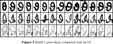
Figure 5 Smith's open theta compared with MS 65.
The top line in figure 5 reproduces the first fourteen thetas in Tannaitic Parallels. The second line reproduces the first fourteen thetas that Smith wrote while making notes on C. H. Turner's study “Marcan Usage.”
41See above, n. 39.

) that has been the standard form in Greek handwriting for many centuries. This “open theta” (also called script theta and curly theta) is common in printed books and is a familiar symbol in mathematics.
Again, what is most noticeable about Smith's open theta is the variation, which is even wider for this letter than it is for lambda, perhaps because open theta is more elaborate. Smith learned Greek as an adult and apparently wrote this letter too infrequently to develop a regular form. The more limited variation in MS 65, however, centers around a master pattern. The thetas in MS 65 are almost always completed with the stroke crossing the oval, and the top halves of the letter are generally (but not always) much larger, more open, and more rounded than the bottom halves, which appear tight and angular. The letter slants to the right. Smith, by contrast, had much less of a tendency to finish the stroke by crossing the oval and a greater tendency to write without a slant (a general difference between his Greek writing and MS 65).
The one aspect of this letterform that Carlson identified as a suspicious parallel between Smith and MS 65 is the “leading horizontal stroke at midline” (e.g.,

). Forms of open theta without a leading stroke (

) or with a stroke that curves upward on an angle from below midline (

) appear in the eighteenth-century Mar Saba manuscripts that Carlson presented as comparisons. He describes this difference imprecisely, however, for as the extended comparisons in figure 5 reveal, both Smith's writing and that of MS 65 exhibit no fixed angle or length of leading stroke. The variability in the way they render this feature is common in informal Greek handwriting.MS 65is basically an informal documentary hand. Although the distinction is not clear-cut, it is the more formal and aesthetic book hands, like the ones in Carlson's figures 2b and 2c, that attempt to keep this feature of the letter consistent and, in some cases, ornate. If there is anything unusual here, it is the fact that Smith's leading stroke frequently descends on an angle.
Given the wide variation in the way Smith wrote this letterform, it is easy to find the occasional “match” between one of his thetas and one in MS 65, but to present such random similarities as evidence of common authorship is highly dubious. For in handwriting identification, what matters is agreement in the master pattern and in the range of natural variation, which we clearly do not have here.
None of Carlson's four alleged similarities between Smith's writing and MS 65 satisfy more than one of the four criteria for evidence of common authorship. It is hard to imagine a less compelling paleographical argument tying this manuscript to Morton Smith.
Later in his book Carlson mentions in passing the existence of “modern letter forms” in MS 65.42
Carlson, Gospel Hoax, 71.
Exhibit Three: The Allusion to Morton Salt
Argument: We return to Carlson's exposé of deliberate clues left by Morton Smith. Carlson detects an intentional anachronism in the Letter to Theodore 1.11–15, which reads, “Now of the things they [the Carpocratians] keep saying about the divinely inspired Gospel according to Mark, some are altogether falsifications, and others, even if they do contain some true elements, nevertheless are not reported truly. For the true things, being mixed with inventions, are falsified, so that, as the saying goes, even the salt loses its savor.” The problem with this statement, as Carlson sees it, is that “it presupposes salt technology that did not exist in Clement's place and time”:
The imagery in Theodore involves mixing an adulterant with salt and spoiling its taste. For salt to be mixed with such an adulterant, it would have to be loose and free-flowing, but free-flowing salt is a modern invention. Pure salt draws moisture from the air, forming clumps, and often requires a mallet to be broken apart for domestic use. In 1910, however, a chemist at the Morton Salt Company discovered that salt's tendency to form clumps in humidity can be prevented by adding a small amount of an anti-caking agent to uniform-sized salt crystals obtained from vacuum-pan evaporation.43
Ibid., 60
Carlson explains that for “the modern reader of Theodore … the salt allusion is natural: free-flowing salt was and continues to be mixed with other ingredients perceived as affecting its taste. This was particularly true starting in the 1930s when Morton Salt added another ingredient to their table salt, harsh-tasting potassium iodide for the prevention of endemic goiter.”44
Ibid., 61. The addition of iodine was made in 1924, not “the 1930s” (or “the mid-twentieth-century,” as Carlson states on p. 71), and the anti-caking agent was invented in 1911, not 1910, which is the year Morton Salt incorporated. See Mark Kurlansky, Salt: A World History (New York: Walker, 2002) 427; Pierre Laszlo, Salt: Grain of Life (New York: Columbia University Press, 2001)140;and Morton Salt, “History,” http://www.mortonsalt.com/consumer/about_us/history/index.htm. It is worth clarifying that the vacuum-pan evaporation process was not invented by the chemist at Morton Salt; it was already used for sugar in the early 1800s and was adapted to salt in 1887 at Silver Springs, New York, by Joseph Duncan of the Worcester Salt company. See Kurlansky, Salt, 328–29; Garnett Laidlaw Eskew, Salt, the Fifth Element: The Story of a Basic American Industry (Chicago: J. G. Ferguson, 1948) 151, 169–70.
Carlson, Gospel Hoax, 61.
Assessment: This argument is one long sequence of mistakes, beginning with Carlson's initial premise that “the imagery in Theodore involves mixing an adulterant with salt and spoiling its taste.”46
Ibid., 60 (see also 59).
But that is not what the author wrote. The syntax of the sentence precludes the dependent clause containing the salt saying from reiterating the independent clause in the form of an analogy. Instead, the conjunction

indicates that the dependent clause conveys a consequence or result of the independent clause.
47The sentence in question (Letter to Theodore 1.13–15) reads,

.” When

introduces a dependent clause with the subject in the accusative and the verb in the infinitive, BDAG [Bauer, W., F. W. Danker, W. F. Arndt, and F. W. Gingrich, Greek-English Lexicon of the New Testament and Other Early Christian Literature (3d ed.; Chicago, 1999)] gives the translation “of the actual result so that” (s.v.

, 2aβ).

) indicates that the salt saying is being employed in its conventional sense, which is unlikely to have anything to do with how salt loses its savor. The proverbial meaning of the expression “even the salt loses its savor” is evident from its connection with two sayings of Jesus, specifically, “Salt is good; but if the salt has lost its saltness, how will you season it?” (Mark 9:50//Luke 14:34) and “You are the salt of the earth; but if salt has lost its taste, how shall its saltness be restored? It is no longer good for anything except to be thrown out and trodden under foot by men” (Matt 5:13// Luke 14:35). In both cases, salt signifies goodness or a good influence, whereas the loss of its taste signifies uselessness.
48On the goodness of salt, see Origen Contra Celsum 8.70; Jerome Adversus Luciferianos 5. Numerous examples of how salt was used as a symbol of goodness and value are offered in Pliny Naturalis historia 31.41. On “the fate of savorless salt” as indicating “utter uselessness,” see James E. Latham, The Religious Symbolism of Salt (Théologie historique 64; Paris: Beauchesne, 1982)216–17.

) indicates that this loss is surprising.
None of the words coordinating the salt saying with the preceding clause make sense within an interpretation that supposes that the dependent clause reiterates the independent clause in the form of an analogy. That fact is readily illustrated by adding into the sentence the words that Carlson assumes to be implicit:
For the true things, being mixed with inventions, are falsified, with the result that, as the saying goes, even the salt, being mixed with adulterants, loses its savor.
Clearly the comparison that Carlson imagines must be expressed differently:
For the true things, being mixed with inventions, are falsified, just as salt, being mixed with adulterants, loses its savor.
Carlson's theory requires not only a thorough revision of the coordinating words but also a strictly literal reading of the word salt, despite its connection with the metaphorical sayings in the gospels. What Carlson offers us, then, is not a “damning” anachronism, but unseasoned exegesis.
In order to appreciate the actual metaphorical comparison expressed through the salt saying, we must interpret this saying as a corollary of the mixing of “true things” with “inventions.” The true things in question are the passages from the longer Gospel of Mark that Theodore wrote to Clement about. Clement is explaining to Theodore that these passages have been falsified by the “inventions” and “shameless lies” that Carpocrates added to his copy of this gospel, such as the words “naked man with naked man” and “the many other things about which [Theodore] wrote” (Letter to Theodore 1.13–14; 2.8–9; 3.13, 17). The additions “polluted” the longer text of the Carpocratians, with the result that “the spotless and holy words” inspired by God have been nullified. What is implicit within this sentence may be rendered so:
For the true things which the Carpocratians say about the longer text, being mixed with inventions, are falsified, with the result that, as the saying goes, even the “salt” [the goodness and value of the longer gospel] loses its savor [is lost].
This statement does not imply Carlson's notion of salt being mixed with other substances, and the sentence would make little sense if it appeared there.
The problems with Carlson's exposition of an anachronism alluding to “the iodization of table salt by the Morton Salt Company” extend beyond the syntax of the sentence to the literal sense and proverbial point of the expression “even the salt loses its savor.”
49Carlson, Gospel Hoax, 79, 71.

) means either to become insipid (without taste) or to become foolish (without wisdom).
50For a discussion of this verb, see Latham, Religious Symbolism of Salt, 195–202.
Carlson, Gospel Hoax, 61. Every scientific study of the effect of iodine on salt has concluded that there is no discernable effect on taste. For summaries of these studies, see Clive E. West and Richard J. H. M. Merx, “Effect of Iodized Salt on the Colour and Taste of Food,” Report of a Study Carried Out at the Request of Unicef, New York under Contract No. PD/95/009 (June 1995), http://www.micronutrient.org/Salt_CD/4.0_useful/4.1_fulltext/pdfs/4.1.4.pdf; and Ray J. Winger et al., “Technological Issues with Iodine Fortification of Foods,” Final Report for New Zealand Food Safety Authority(May 2005), http://www.nzfsa.govt.nz/science/research-projects/iodine-fort/iodine-fort-foods.pdf (pp. 5–6). Carlson addresses this fact in an endnote, explaining that larger amounts of potassium iodide were originally necessary because the compound was unstable. When dextrose was added to stabilize the compound, smaller amounts of potassium iodide could be used (Gospel Hoax, 123 n. 48). Carlson cited the above paper by West and Merx as evidence that “people now are not usually able” (emphasis added) to taste the difference, but that study offers no support whatsoever for the contentions that most people once could—and gourmands still can—distinguish a difference in taste, and actually undermines Carlson's explanation of why this was once possible. With one exception, this study found no effect of iodine on the taste of food: “The only exception was an effect on the flavour of tomato juice with the highest concentration of iodine-iodide mixture (200 mg mixture/kg can content). However, the concentration of iodine/iodide reached in the cans was more than 100 times that which would be added normally to tomato juice. Thus a large excess of iodine/iodide is required before changes in taste can be detected” (p. 4). This paper's own experiment to determine the effect on food quality of salt with iodine levels of 400 ppm concluded that this level of iodine, which is “four times higher than the maximum level recommended by UNICEF/WHO/ICCIDD,” “does not effect [sic] the flavour and general appearance of boiled potatoes and boiled rice” (pp. 10, 11). These conclusions do not bode well for the notion that iodized salt tasted unpleasant prior to the addition of stabilizing chemicals, considering that the level of iodine was 200 ppm when iodized salt was introduced in the United States. Moreover, by 1936, three years before Edwin B. Hart discovered a means of stabilizing the compound, the iodine content of most American brands of iodized salt was 100 ppm, a level that is known to have no discernible effect on the taste of salt. See O. P. Kimball, “History of the Prevention of Endemic Goitre,” Bulletin of the World Health Organization 9 (1953) 241–48. So even if it were true that iodized salt once tasted unpleasant, few people would have remembered that taste by the late 1950s. The issue is moot, however, since the verb

denotes a lack of salt's distinctive taste, not the addition of another taste.
For the true things, being mixed with inventions, are falsified, with the result that, as the saying goes, even the salt, being mixed with adulterants, tastes less pleasant.
Carlson's theory requires this nonsensical revision of the salt metaphor because the table salt produced by Morton Salt, and other salt companies, is a highly refined form of a stable chemical compound, sodium chloride. Pure salt cannot lose its savor. The imagery in the letter presupposes an impure form of salt that can lose its sodium chloride without the compound disappearing altogether. Many of the salts used in antiquity were of this sort. As Pliny noted, the salt in these impure compounds was occasionally dissolved away by water, leaving “salt” that lacked its distinctive savor: “The drier the salt, the stronger it is in taste; but the most agreeable of all, and the whitest known, is that of Tarentum. In addition to these particulars, we would remark also, that the whiter saltis, the more friableitis. Rain water deadens every kind of salt, but dew-water makes it more delicate in flavour” (Naturalis historia 31.41).52
The Natural History of Pliny (trans. John Bostock and Henry T. Riley; Bohn's Classical Library; London: H. G. Bohn, 1856) 5:504. Robert P. Multhauf explains the different effect of dew-water on salt by noting that “the gentle moistening of mist and dew would dissolve and wash away the chlorides of calcium and magnesium, while leaving the sodium chloride largely unaffected due to its non-hygroscopicity and consequent resistance to dissolution” (Neptune's Gift: A History of Common Salt [Baltimore: Johns Hopkins University Press, 1978] 125, 128–29).
Eugene P. Deatrick, “Salt, Soil, Savior,” Biblical Archaeologist 25 (1962) 42.
In addition to these exegetical errors, Carlson has erred in supposing that salt needs to be processed and “free flowing”in orderforits taste to be modified through interaction with other substances. When theological dictionaries explain how salt can lose its savor, they often note that “the complex salts of Palestine … can lose savor through physical disintegration or through mixture with gypsum.”54
Deatrick, “Salt, Soil, Savior,” 44. Likewise, The New Westminster Dictionary of the Bible (ed. Henry Snyder Gehman; Philadelphia: Westminster, 1970) 820; Norman Hillyer, “

” in The New International Dictionary of New Testament Theology (ed. Colin Brown; Exeter: Paternoster, 1978) 3:446.
Deatrick, “Salt, Soil, Savior,” 43. The quotation is from Friedrich Hauck, “

,” Theological Dictionary of the New Testament 1 (1969) 229.
Exhibit Four: The Confession Hidden in the Ellipsis
Argument: Having misinterpreted the words “even the salt loses its savor” as a deliberate anachronism, Carlson proceeds to argue that Smith covertly embedded his surname in the section of his commentary that discusses this metaphor as part of his supposed confession of authorship. No, the word Smith does not actually appear here. But another word containing the word smith, at least when translated into English (“every goldsmith [

] is put to shame by his idols”), would have appeared in the ellipsis of a sentence that Smith quoted from the Septuagint translation of Jeremiah:
Mt. 5.13,

= Lk. 14.34. The a;text here is closer to Lk., which differs from Mt. by beginning

. Behind the choice of this proverb probably lies not only recollection of the context of these Gospel passages (and Mk. 9.50), which declare corrupted Christians fit only to be cast out, but also recollection of Jeremiah 28.17 (LXX) (= 10.14 Heb.)

(and ff), which made the verse particularly appropriate for use against gnostics who had corrupted the Scriptures. This sort of multiple biblical allusion is typical of Clement and would be very difficult for a forger to imitate. In III.183.23ff Clement identifies as “the salt of the earth” those “more elect than the elect,” “who hide away, in the depth of thought, the mysteries not to be uttered.”
56Smith, Clement, 18–19
Carlson finds Smith's suggestion of an allusion to Jeremiah very suspicious. Translating the sentence from Jeremiah as “every person is made dull from knowledge … because they have cast false things, there is no breath in them,” he notes that “the linkage to Matthew 5:13's use of ‘cast out’ works only in English, not in Greek…. The only verbal commonality in the Greek lies in different forms of the verb

…. Such an allusion based on casting out could only be ‘typical of Clement’ if Clement knew English.”
57Carlson, Gospel Hoax, 62.
For Carlson, Smith's confusion is unthinkable “in light of his otherwise superlative exegetical ability,” so it must be a deliberate hint that the allusion to Jeremiah is about something else. Carlson finds the clue to Smith's intention in Smith's next sentence, which notes that for Clement, “the salt of the earth” signifies the true gnostics who hide away mysteriesin the depth of thought. In Carlson's words, “The connection between Morton Smith and Morton Salt signifies that this comment applies to himself—that he has hidden away a mystery not to be uttered. Smith's use of an ellipsis in the Jeremiah 28:17 passage is the ‘unuttered mystery’ to which he then refers.” The statement about goldsmithsin the ellipsis thusindicates thatlonger Mark is “a graven image that will confound its own smith: Morton Smith.”58
Ibid., 62–63.
Assessment: Carlson's rationale for taking the ellipsis as a cleverly concealed mystery hinges upon the letter's allusion to Morton Salt, which does not exist, and the premise that Smith's inference of an allusion to Jeremiah is based on Smith's association of two words that can be rendered as homonyms in English but have no connection in Greek. I concur that such an association would be a “howler.”
59Ibid., 75.

in the saying: “But if salt has lost its taste, how shall its saltness be restored?” and the passage in Jeremiah is not enough to justify Smith's claim of an allusion, so Smith must have implied that the passage in Jeremiah in some way parallels the idea of “corrupted Christians fit only to be cast out.” Since the only commonality Carlson could perceive between Matt 5:13b and the quotation from Jeremiah was the verb “cast” in his own English translation, Carlson deduced that Smith made an unthinkable exegetical error.
Apparently Carlson did not consider the possibility that the parallelism with Matt 5:13b exists not in the words Smith quoted from Jeremiah but in the continuation of this verse indicated by “(and ff)” at the end of Smith's quotation. Smith would not have added “ff” unless the words following the quoted words were relevant to the point he was trying to make, and indeed the next sentence in Jeremiah parallels the concepts of worthlessness and destruction in Matt 5:13b:
They [the lifeless idols] are worthless, objects of ridicule; at the time of their visitation they shall perish. (Jer 28:18 LXX; trans. mine)
It [the savorless salt] is no longer good for anything except to be thrown out and trodden under foot by men. (Matt 5:13b)
In other words, the parallelism Smith perceived involved not only the context of the Greek words that he quoted from Matthew and Luke but also the context of the Greek words that he quoted from Jeremiah. It had nothing to do with the English word “cast.” The ellipsis in Smith's quotation is a straightforward indication that the omitted words were not relevant to his point.
Although the allusion to Jeremiah that Smith proposed is not particularly convincing, it is not nearly so incredible as the mystery Carlson read into this allusion based on his own English translation of Jer 28:17 and neglect of Smith's appeal to the larger context. Carlson's highly unorthodox approach to interrogating texts has elicited another false confession.
Preamble to Exhibit Five: The Life Setting of the Gospel Excerpts
Argument: Carlson's last argument connecting the Letter to Theodore with Morton Smith is the most complicated. Essentially, he tries to show that the reference to the mystery of the kingdom of God in the letter's gospel quotation connotes a forbidden sexual encounter (homosexuality) using a twentieth-century euphemism and that Smith made this association in his writings prior to his discovery of the text. Instead of summarizing this lengthy argument at the outset, I shall critique it step by step. This topic requires familiarity with the gospel quotation, so I shall begin by reproducing Smith's English translation, using the standard versification:
Longer Gospel of Mark (LGM) 1: (After Mark 10:34.) 1 And they come into Bethany. And a certain woman whose brother had died was there. 2 And, coming, she prostrated herself before Jesus and says to him, “Son of David, have mercy on me.” 3 But the disciples rebuked her. 4 And Jesus, being angered, went off with her into the garden where the tomb was, 5 and straightway a great cry was heard from the tomb. 6 And going near Jesus rolled away the stone from the door of the tomb. 7 And straightway, going in where the youth was, he stretched forth his hand and raised him, seizing his hand. 8 But the youth, looking upon him, loved him and began to beseech him that he might be with him. 9 And going out of the tomb they came into the house of the youth, for he was rich. 10 And after six days Jesus told him what to do 11 and in the evening the youth comes to him, wearing a linen cloth over his naked body. 12 And he remained with him that night, for Jesus taught him the mystery of the kingdom of God. 13 And thence, arising, he returned to the other side of the Jordan.
LGM 2: (Within Mark 10:46.) 10:46a And he comes into Jericho. 1 And the sister of the youth whom Jesus loved and his mother and Salome were there, 2 and Jesus did not receive them.
Assessment: Carlson's attempt to prove that these verses anachronistically depict a modern homosexual encounter begins with an attempt to prove that the sentence “and he remained with him that night, for Jesus was teaching him the mystery of the kingdom of God” is a creation by the author of “secret” Mark: “The latter part of this sentence is a close parallel to Mark 4:11 but the main clause does not parallel the gospels but rather is crafted by the author of Secret Mark. Both its climactic location [within the pericope] and its composed, unparalleled nature indicate that it was carefully constructed by its author.”60
Ibid., 66.
For example, the climatic pronouncement “Render to Caesar the things that are Caesar's, and to God the things that are God's” (Mark 12:17) is likely an authentic saying of Jesus. Similarly, the climactic sentence “And he rose, and immediately took up the pallet and went out before them all” (Mark 2:12) is paralleled in a different healing story in John 5:9 (“And at once the man was healed, and he took up his pallet and walked”) and may derive from oral tradition.
Having reasoned that the clause “and he remained with him that night” is an important sentence created by the author of longer Mark, Carlson attempts to prove that this sentence does not mean what it says. The obvious meaning, which is that the young man stayed with Jesus after sunset because Jesus was teaching him, is rejected by Carlson because it is too “bland” to fit the “compositional importance” of the sentence and would simply repeat information the reader already knows about Jesus’ “lodging arrangement.”62
Carlson, Gospel Hoax, 66.
Smith (Clement, 114, 115) found this detail peculiar. He reasoned that the young man's house was a villa and argued that Jesus and his disciples stayed in their own wing. These inferences are hard to justify on the basis of the text, yet since Carlson believes that Smith composed this text himself, Smith's conception that Jesus and his disciples lodged together in another wing of the house is incompatible with Carlson's inference that “and he remained with him that night” conveys nothing new.
Carlson's argument that this clause cannot mean something as banal as it appears to mean is disproved by a parallel to this statement in John 1:39: “They [two disciples of John] came and saw where he [Jesus] was staying; and they stayed with him that day, for it was about the tenth hour.” As Raymond E. Brown pointed out, the verbal parallels with LGM 1:12 are strong:

. (John 1:39b)

. (LGM 1:12a)
In his 1966 commentary on the Gospel of John, Brown reasoned that the phrase “they remained with him that day” probably means that the disciples stayed with Jesus overnight, because the tenth hour, according to the Jewish reckoning of time, is about fourin the afternoon(a new day begins at sunset).
64Raymond E. Brown, “The Relation of ‘the Secret Gospel of Mark’ to the Fourth Gospel,” CBQ 36 (1974) 479; idem, The Gospel According to John (2 vols.; 2d ed.; Anchor Bible 29;Garden City, N.Y.: Doubleday, 1982) 1:75. For additional discussion of John 1:39, see Andreas J. Köstenberger, John (Baker Exegetical Commentary on the New Testament; Grand Rapids: Baker Academic, 2004) 74–76.
Carlson, Gospel Hoax, 125 n. 3.

merely reflects the different number of the subject. Moreover, there is a remarkable agreement between these two incidents: They take place in an otherwise unattested “Bethany” on the east side of the Jordan River (John 1:28; LGM 1:1).
66See Scott G. Brown, “Bethany Beyond the Jordan: John 1:28 and the Longer Gospel of Mark,” Revue Biblique 110 (2003) 497–516; idem, “The Secret Gospel of Mark: Is It Real? And Does It Identify ‘Bethany beyond the Jordan’?” Biblical Archaeology Review 31 (2005) 44–49, 60–61;idem, Mark's Other Gospel, 90–92.
Other similarities between LGM 1:8–13 and John 1:35–40 are worth noting at this point. In both passages admirers of Jesus look intently at him, and men who have just met him express their desire to become disciples by indicating that they want to be with him. In the Fourth Gospel, John the Baptist, “looking upon Jesus” (

), says, “Behold, the Lamb of God!” Hearing this, two of his disciples start to follow Jesus, the way disciples follow their teacher. When Jesus asks, “What do you seek?” they phrase their request to become his disciples as, “‘Rabbi’ (which means Teacher), ‘where are you staying?’” Jesus replies, “Come and see.” In other words, they express a desire to be with him, and Jesus consents. In longer Mark, as soon as Jesus raises the young man, the latter, “looking upon him [

] loved him and began to beseech him that he might be with him.” They then go to his house. That this request to “be with him” is a request to be a disciple is evident from the larger context. Mark used the words “began to beseech him that he might be with him” (5:18; exactly in D) to describe the way the man formerly possessed by Legion implored Jesus to let him join his group. Jesus declined but commissioned him to preach on his own. Mark likewise used the expression “to be with him” (3:14) to denote Jesus’ closest disciples: “And he appointed twelve, to be with him, and to be sent out to preach.” So although these two accounts of men staying with Jesus in Bethany differ in many respects, they are different versions of the same story, much as LGM 1:1–7 and John 10:40–11:46 are different versions of the same raising miracle.
This parallel story in the Gospel of John proves that a gospel pericope can end with a banal description of Jesus staying overnight with an anonymous disciple without this comment requiring “anidiomatic meaning that goes beyond merelodg-ing.”
67Carlson, Gospel Hoax, 66.

(“remained”) must have the theological overtones of “abiding in” Christ and his teachings that it later acquires in the course of John's narrative.
68Consider, for example, D. Moody Smith, John (Abingdon New Testament Commentaries; Nashville: Abingdon, 1999) 72: “The time of day, the tenth hour … is a superficial explanation of their reason for staying, but probably not the real and profound one. They want to abide with Jesus (cf. 15:1–11). Their abiding will be the fulfillment of their quest, but not, ultimately, until Jesus is glorified.”
What Carlson wants to suggest, of course, is that “remained with him that night” must be a euphemism for sexual intercourse, specifically, the twentieth-century euphemism “spent the night together” or “spent the night with him.” The longer gospel's own explanation for why the young man stayed with Jesus that night poses a problem for this thesis becauseit confines their activity toinstruction and specifies the subject matter as the same eschatological mystery that is concealed within the parables of Mark 4. Carlson solves this problem by rewriting the sentence: “The clause's bland recital of their lodging arrangement thus conveys almost no additional information and belongs more to the background, forinstance, with somethinglike: ‘Jesus taught him the mystery of the kingdom of God, for he spent that night with him.’”69
Carlson, Gospel Hoax, 66.
Longer Mark's incident of nocturnal instruction makes sense within the larger context of Mark's gospel as an incident of private discipleship instruction. In Mark 4:10–12, Jesus revealed to “those who were about him with the twelve” that a particular mystery concerning the coming reign of God has been reserved for them. “Those outside” are prevented from understanding this mystery by the fact that, to them, “everything occurs in parables” (i.e., riddles), with the result that they do not understand what they see and hear and accordingly do not repent and receive forgiveness. Both the insiders and the outsiders “see” and “hear” the parabolic deeds and words of Jesus, but only the insiders receive private explanations relating to this mystery. Since this mystery “has been given” to the larger group of Jesus’ disciples, and Jesus granted the young man's request to “be with him,” the young man likewise receives private instruction in the mystery of the kingdom of God. As with the parable discourse, the author does not directly disclose the content of this mystery to the reader but does supply enough clues to allow the reader to perceive its meaning.70
For my views on that subject, see Brown, Mark's Other Gospel, 205–14.
There are two more steps in Carlson's argument for reading “remained with him that night” as a euphemism for sexual intercourse. First, he notes that longer Mark “contains explicit statements of love between the two males plus Jesus’ rejection of three different women”; these details establish “an exclusive sexual preference” for Jesus.71
Carlson, Gospel Hoax, 68.
Jesus’love for the young manis conveyed as an afterthoughtin LGM 2:1, where the sister is described as “the sister of the youth whom Jesus loved.” What is the nature of this love? Some scholars, including Smith, suppose that this rich young man is the same man who asked Jesus what he must do to inherit eternal life. Of him, the narrator reported, “And Jesus looking upon him loved him, and said to him, ‘You lack one thing; go, sell what you have, and give to the poor’” (Mark 10:21). I doubt that these men are the same individual.72
Smith, Clement, 171–72 and the annotation at the bottom of p. 169 in his personal copy of this book, which resides in the rare book room of the library of the Jewish Theological Seminary. Brown, Mark's Other Gospel, 102.
Carlson'sinference that LGM 2 helps establish Jesus’ exclusive sexualpreference is even more arbitrary and implausible. A variety of motives could explain Jesus’ refusal to meet with these three women. One very plausible explanation emerges from Jesus’ actions earlierin this narrative. At Mark 3:19b–21, 31–35, Jesus’ mother and brothers resolved to take control of him, but when they arrived at his home, Jesus refused to receive them, explaining to those around him that his true family consists of those who do the will of God. Given this precedent, the reader may infer that the same thing is happening in LGM 2. The young man's mother and sister intend to assert control over the son (it is unclear whether Salome is related to them), but Jesus anticipates theirintentions and refuses to give them an audience. This action says no more about Jesus’ sexual orientation than did his rudeness to the Syrophoenician woman (Mark 7:24–30). Carlson's presumption that Jesus rejects the women because they are women disregards the fact that homosexuality is a sexual orientation, not a generalized aversion to the opposite sex. Indeed, gay men often have enviably close friendships with women. The only way homosexuality could explain Jesus’ rudeness in LGM 2 is if we presume, on the one hand, that the three women intended to seduce Jesus, and, on the other, that the immorality of having sex with a disciple's mother and her daughter and a third woman is not a sufficient reason for him to snub them. Why would we assume this?
Other explanations of LGM 2:2 are possible as well. Some scholars have interpreted Jesus’ rudeness in terms of male chauvinism. Cyril C. Richardson, for instance, suggested that this verse “perhaps … reflects an Encratite group which did reject women.”
73Cyril C. Richardson, review of Clement of Alexandria and a Secret Gospel of Mark, in Theological Studies 35 (1974) 571–75, at 575.
Smith, Clement, 121–22.

(“received”).
75This suggestion appears three times in comments Smith wrote in 1989 while critiquing an early draft of John Dart's book Decoding Mark (Harrisburg, Pa.: Trinity Press International, 2003), which Dart retained and allowed me to examine.
Carlson's argument for reading “and he remained with him that night” as a twentieth-century euphemism concludes with an attempt to demonstrate that ancient readers would have detected nothing sexual in this statement because 1) it has no euphemistic meaning in Greek and 2) homosexual relationships in the Roman world normally occurred between persons of unequal status, whereas the twenty-something rich man and the thirty-something messiah were social equals. Only modern readers, who are familiar with the English euphemism “spent the night together” and with homosexual relationships between social peers, could see the sexual import of this encounter.76
Carlson, Gospel Hoax, 66–67, 68–69.
This argument actually undermines Carlson's thesis, because it takes no account of the fact that the social world in which the nocturnal instruction occurs is first-century Palestine. If the sentence

is not a euphemism in Greek and would imply nothing sexual within the social world represented in this text, then there can be no justification for rendering this sentence as a sexual euphemism. It helps little to complain that Smith's translation is “wooden” and to point out that Smith advocated “idiomatic renderings.”
77Ibid., 67.
What Smith advocated is idiomatic parity: if a phrase has an idiomatic meaning within the vernacular employed by the author, then it should receive a comparable idiomatic rendering in translation.
78Morton Smith, “Notes on Goodspeed's ‘Problems of New Testament Translation,’” JBL 64 (1945) 501–14, esp. 511–13.

do not constitute a sexual euphemism in koine Greek that the unidiomatic translation “remained with him that night” is appropriate in LGM 1:12.
Ultimately, this compendium ofargumentsis meant to prove that LGM 1 reflects a particular life setting within 1950s America:
The description in Secret Mark of the young man's clothing (“wearing a linen cloth over his naked body”) uses the same language found in Mark 14:51–52 to describe the youth who fled from Gethsemane when Jesus was arrested, a textual link that implies that both young men came to Jesus seeking the same thing (an inference Smith drew in Clement 177; Secret Gospel 81). The sexually charged climax of Secret Mark means that what these young men were seeking was, to use the words of the New York statute, “a crime against nature or other lewdness.” In other words, Secret Mark easily conjures up to the twentieth-century reader the image that Jesus was arrested for soliciting a homoerotic encounter in a public garden. An ancient reader of Secret Mark, on the other hand, would not have recognized the public solicitation offence because it did not exist in Clement's day.79
Carlson, Gospel Hoax, 70.
Since none of Carlson's arguments in support of reading LGM 1 as a “sexually charged” homosexual encounter bears scrutiny, this attempt to assign longer Mark to “a specific moment within a changing twentieth-century legal landscape that peaked in the 1950s” cannot be any more compelling.80
Ibid., 70–71.
The only support that Carlson can muster for this implausible reading of Mark 14:51–52 is Smith's “inference” “that both young men came to Jesus seeking the same thing (Clement 177; Secret Gospel 81).” This comment appears to imply that Smith read 14:51–52 as intimating a homosexual encounter. What Smith actually stated in those two books is that “this youth, too, had come to be baptized”: “The business in hand was a baptism; the youth wore the required costume. The time—night—agrees with the storyin the secret gospel;the place—beside a stream in a lonely garden—is suitable.”81
Cf. Morton Smith, Jesus the Magician (San Francisco: Harper & Row, 1978) 138. In this book Smith refrained from describing this hypothetical ritual as a baptism; he suggested, more cautiously, that “it is … possible that ‘the mystery of the kingdom’ was a magical rite, by which initiates were made to believe that they had entered the kingdom and so escaped from the realm of Mosaic Law” (135).
Smith noted in the margin on p. 244 of his personal copy of Clement that the women who experienced the first resurrection appearances must have been initiated into this mystery because “these resurrection visions were reflexes of the initiation experience.”
Smith, Clement, 251; Secret Gospel, 114.
The fullest statement is Morton Smith, “Under the Sheet,” The New York Review of Books 26 (8 February 1979), http://www.nybooks.com/articles/7916. The same argument, in a truncated form, appears in Smith, response to Reginald Fuller, in Longer Mark: Forgery, Interpolation, or Old Tradition? (ed. Wilhelm H. Wuellner; Protocol of the Eighteenth Colloquy: 7 December 1975;Berkeley: Center for Hermeneutical Studies in Hellenistic and Modern Culture, 1976) 13–14; and Morton Smith, “Clement of Alexandria and Secret Mark: The Score at the End of the First Decade,” Harvard Theological Review [HTR] 75 (1982) 458 n. 19.
Exhibit Five: Smith's Seal of Authorship
Argument: Unfortunately for Carlson, the last of his arguments connecting the Letter to Theodore to Morton Smith flows from the previous one. Carlson claims that Smith placed his own seal of authorship (sphragis) on the Letter to Theodore:
The sexual innuendo that made Secret Mark such an interesting and poten tially momentous find is now part of what identifies it as a modern fake, but it also does more than that—it is also Morton Smith's own sphragis that declares his authorship by alluding to his previous works. The climax of the nocturnal initiation of Secret Mark contains a juxtaposition of Mark 4:11 and a sexual practice forbidden in Jewish law (Lev 18:22, 20:13) and is embedded in a letter by Clement of Alexandria exhorting secrecy. These elements had already been connected to each other in Smith's publications before the summer of 1958.85
Carlson, Gospel Hoax, 71.
The statements in question appear in Smith's 1951 book Tannaitic Parallels to the Gospels, which is a revised form of his 1948 dissertation, and a paper titled “The Image of God,” which was published “in March of 1958, … right before he returned to Mar Saba.”
86Ibid., 72.

ag. 2.1 and its parallels.
Why is this significant? According to Carlson, t.
ag. 2.1 mentions “forbidden sexual relationships,” which is what “the mystery of the kingdom of God” denotes in longer Mark. This connection proves that Smith knew about the sexual nature of the mystery of the kingdom of God and linked it with Clement's secrecy before he discovered this text.
87Ibid.
Assessment: Clearly the key to this argument is the claim that both t.
ag. 2.1 and LGM 1:12 are about forbidden sexual relations and that Smithintended to draw this connection in his dissertation; otherwise, the former passage just happens to be something Smith mentioned once in the same context as Mark 4:11–12, and again, some years later, in the same context in which he mentioned Clement's reluctance to put secret teachings in writing. I have argued at length elsewhere that LGM 1:12 is not about gay sex.
88Brown, “Question of Motive,” 353–73.
ag. 2.1 and Mark 4:11–12 in Smith's dissertation has nothing to do with forbidden sexual relationships and that Smith's interpretation of Mark 4:11–12 was in no sense sexual prior to 1958.
Let us look at the passage from Smith's dissertation:
Further I think the passage in Sifre on Deut. to have been based on the fact that an important part of primitive Christianity was a secret doctrine which was revealed only to trusted members. Such a doctrine is suggested by the words put in the mouth of Jesus, speaking to his disciples: “To you is given the mystery of the kingdom of God, but to those outside all things are in parables, that they may surely see and not perceive,” etc. And Paul himself wrote in 1 Cor. 2.1–6 “And I, coming to you, brethren, came not proclaiming the testimony of God in lofty words or wisdom … that your faith might not be in the wisdom of men, but in the power of God. But we speak wisdom among the perfect, and a wisdom not of this age … but we speak the wisdom of God in a mystery.” A similar distinction was recognized by the Tannaïm between material suitable for public teaching and that reserved for secret teaching, as we learn from Hagigah T 2.1 (233): “The (passages of the Old Testament dealing with) forbidden sexual relationships are not to be expounded to three (at a time,) but may be expounded to two; and the account of creation not to two, but it may be expounded to a single hearer; and (Ezekiel's vision of) the chariot may not be expounded to a single hearer unless he be learned in the Law and of good understanding.”89
Smith, Tannaitic Parallels, 155–56.
As Smith explicitlyindicated, the point atissuein this paragraphis the fact that both the Christians and the Tannaim drew a distinction between exoteric and esoteric teaching. What those subjects consisted of does not matter here. Smith was simply describing “parallels with a fixed difference,” as the title of this chapter of his book indicates. Carlson's quotation of this paragraph ends before the reference to the account of creation and the vision of the chariot (i.e., the throne of God), which would have put the reference to the Leviticallaws about “forbidden sexualrelationships” (incest, intercourse during menstruation, adultery, male homosexuality, and bestiality) in a different light. As Joachim Jeremias explained, these passages from the Jewish scriptures concern “the deepest secrets of the divine being,” such as “theosophy and cosmogony,” which must be apprehended with “great respect.”
90Joachim Jeremias, Jerusalem in the Time of Jesus: An Investigation into Economic and Social Conditions during the New Testament Period (trans. F. H. and C. H. Cave; Philadelphia: Fortress, 1969; repr. London: SCM, 1976; trans. of Jerusalem zur Zeit Jesu. Kulturgeschichtliche Untersuchung zur neutestamentlichen Zeitgeschichte [Leipzig: E. Pfeiffer, 1923]) 237–38.
ag. 2.1 as evidence of the esotericism of the scribes and cited 1 Cor 2:6–3:2, the concept of “those outside” (

) and “the mystery of the kingdom of God” from Mark 4:11–12, and other New Testament passages as points of comparison.
91Joachim Jeremias, Die Abendmahlsworte Jesu (Göttingen: Vandenhoeck & Ruprecht, 1935)51, 53–54.
Carlson's attempt to associate Smith's reference to “the mystery of the kingdom of God” in Tannaitic Parallels with forbidden sexual relations makes nonsense of the fact that in the same book Smith associated possession of this mystery with increased virtue. Smith cited Mark 4:11–12 as an example of “the rather interesting theory, not found in all systems of moral theology, that God helps the good to become better and the bad worse. The latter element of this theory is expressed in the Gospels … by … [the words] ‘To those who are outside all things are in parables, in order that they may surely look and not see, and may surely hear and not understand, lest they should turn back and be forgiven,’ and ‘in [Tannaitic literature] … by the rule ‘That the virtuous are caused to perform acts of virtue, and sinners acts of sin.’” 92
Smith, Tannaitic Parallels, 136.
When Smith wrote Tannaitic Parallels, he viewed the whole of Mark 4:11–12 as a Christian invention, as the words Carlson quoted suggest: “Such a doctrine is suggested by the words put in the mouth of Jesus, speaking to his disciples: ‘To you is given the mystery of the kingdom of God, but to those outside.…”93
Ibid., 156 (emphasis added).
Mk. 4.11–12 is probably an answer to Jewish polemic. The Jews are saying, “Jesus was not the Messiah, because if he had been he would have been recognized by our scholars. He was heard and rejected.” The Christian answer is, “They never heard his true teaching. He revealed the mysteries [sic, pl.]of the Kingdom only to his disciples; for outsiders he had only parables. Thus he fulfilled God's command [in Isa 6:9–10] to prevent the Jews from believing.”94
Morton Smith, “Comments on Taylor's Commentary on Mark,” HTR 48 (1955) 29–30.
In both this article and Tannaitic Parallels, Smith interpreted Mark 4:11 in light of 4:12. He was highly critical of “T[aylor]'s attempt to escape the obvious meaning” of this saying by proposing that “the ‘parables’ originally meant riddles and the statement as a whole meant, ‘In spite of all I do to make myself clear, it's Greek to them.’”95
Ibid., 31, 30.
Compare his remarksin Morton Smith, “Aramaic Studies and the Study of the New Testament,” Journal of Bible and Religion 26 (1958) 312 n. 24: “The efforts of [C.] Torrey and [M.] Black to get rid of hina in Mk. 4.11 f. are obviously worthless apologetics; let them serve as examples of many similar attempts.”
See Smith, Secret Gospel, 64–69.
Smith, Clement, 178.
The fact that prior to 1958 Smith associated possession of the mystery of the kingdom of God with moral improvement and viewed Mark 4:11–12 as a polemical Christian invention intended to defend Jesus’ messiahship negates Carlson's simplistic position that Smith “connected” the mystery of the kingdom of God with forbidden sexual relations because the two ideas appear in the same paragraph. Like Jeremias before him, Smith cited Mark 4:11–12 as a salient example of “the fact that an important part of primitive Christianity was a secret doctrine which was revealed only to trusted members.”
As for Smith's mentioning of t.
ag. 2.1 and Clement's Stromateis in two consecutive footnotes in an article published a few months before he returned to Mar Saba, it is hard to see any veiled significance to this fact. The proximity of this publication to Smith's stay in Mar Saba is coincidental. Carlson's statement that “Smith revisited this Talmudic passage right before he returned to Mar Saba”
99Carlson, Gospel Hoax, 72.
Morton Smith, “The Image of God: Notes on the Hellenization of Judaism, with Especial Reference to Goodenough's Work on Jewish Symbols,” in Studies in Historical Method, Ancient Israel, Ancient Judaism (vol. 1 of Studies in the Cult of Yahweh; ed. Shaye J. D. Cohen; Leiden: Brill, 1996) 116–49. Originally published in Bulletin of the John Rylands Library 40(1958)473–512. Apart from postpublication additions by Smith that appear in brackets in Cohen's reprint of this article, the most recent publications cited by Smith are items from 1956; see nn. 37, 119, 164, 169.
agigah and Clement is no more suspicious than the timing of the article's publication. Again, Smith was discussing secret doctrines, and Clementis the most obvious Christian example of the widespread philosophical attitude that the most profound doctrines should not be put in writing:
101Smith, “Image of God,” 144–45.
It is upon the tree of life that God rests when he comes to the Garden of Eden—on this rabbinic, pseudepigraphic, Christian and magical texts agree. This legend, plus the fact that the tree of life is the symbol of the saint, enables us to understand the cryptic saying of Resh Laqish, “The patriarchs, they are the throne of God.” We should not expect this doctrine to be developed in the preserved rabbinic material, since the teaching about the throne of God is specified as that to be kept most secret of all,* and quite possibly was not committed to writing.** However, the saying has an almost exact parallel in the common Christian expression, theophoroi pateres, of which the active and passive senses are not to be separated.
The relevant footnotes read:
* Hagigah 2.1 and parallels.
** Cf. Clement of Alexandria, Strom. 1.1.13–14 etc.
Notice that, contrary to Carlson's introduction to this passage, Smith did not link Clement with both Mark 4:11 and t.
ag. 2.1 in this passage.
102Carlson wrote: “If Smith's linkage of Mark 4:11 with forbidden sexual relationships in T. Hag. 2.1 in 1951 and Secret Mark's coupling of Mark 4:11 with a forbidden sexual relationship are to be considered merely a lucky coincidence, Smith's prior knowledge of linking [sic] Clement of Alexandria to these [i.e., both] passages would be harder to explain away, since Smith barely mentioned Clement before 1958. However, in an article published in March of 1958, Smith revisited this Talmudic passage right before he returned to Mar Saba” (Gospel Hoax, 72).
ag. 2.1, since the only part of that passage that concerned him was its reference to secrecy in connection with Ezekiel's vision of the throne of God. Indeed, the throne imagery and its connection with Tannaitic esotericism is the only real overlap between the paragraph from Tannaitic Parallels and the paragraph from “The Image of God.”
Carlson's discovery that Smith possessed “the crucial linkage between Mark's mystery of the kingdom of God, forbidden sexual practices, and Clement of Alexandria's discussion of secrecy” before going to Mar Saba in 1958 is yet another figment of his imagination.103
Ibid., 72.
Carlson's reference to “a letter by Clement of Alexandria exhorting secrecy” (Ibid., 71) repeats a pervasive misconception about the Letter to Theodore 2.10–12 that I had corrected in Mark's Other Gospel, 30.
Conclusion
According to The Gospel Hoax, Morton Smith invented “secret” Mark as a hoax in the 1950s in order to suggest that the authorities who were clamping down on gay sex in public parks were “crucifying Jesus Christ all over again” but then spent years researching his own hoax and developing a different, scholarly interpretation so that he could distract people from its true meaning and thereby successfully dupe his colleagues, using this text as a private test of their competence.105
Carlson, Gospel Hoax, 85, 80–81, 78.
Ibid., 11–12.
On the element of freedom from the law, see Morton Smith, “Jesus’ Attitude towards the Law,” in Papers of the Fourth World Congress of Jewish Studies (ed. World Congress of Jewish Studies; Jerusalem: World Union of Jewish Studies, 1967) 1:241–44; idem, “The Reason for the Persecution of Paul and the Obscurity of Acts,” in Studies in Mysticism and Religion Presented to G. G. Scholem on His Seventieth Birthday (ed. E. E. Urbach, R. J. Zwi Werblowsky, and C. Wirszubski;Jerusalem: Magnes, 1967) 261–68; idem, “Early Christianity and Judaism,” in Great Confrontations in Jewish History: The J. M. Goodstein Lecture Series on Judaica, 1975 (ed. Stanley Wagner and Allen Breck; Denver: University of Denver, Dept. of History, 1977) 41–61, esp. 47–53. On the element of ascent to the heavens, see Morton Smith, “The Origin and History of the Transfiguration Story,” Union Seminary Quarterly Review 36 (1980) 39–44; idem, “Ascent to the Heavens and the Beginning of Christianity,” Eranos 50 (1981) 403–29; idem, “Two Ascended to Heaven—Jesus and the Author of 4Q491,” in Jesus and the Dead Sea Scrolls (ed. J. H. Charlesworth; New York: Doubleday, 1992) 290–301. On the significance of the linen sheet, see Morton Smith, “In Quest of Jesus,” a reply to “The Quest for the Magical Jesus” by Frank Kermode, The New York Review of Books 25 (21 December 1978); idem, “Under the Sheet.” Many of these papers are among Smith's best works and therefore were reprinted in idem, New Testament, Early Christianity, and Magic (vol. 2 of Studies in the Cult of Yahweh; ed. Shaye J. D. Cohen; Leiden: Brill, 1996). Several are discussed in my paper “Question of Motive.”