1 Introduction
One of the fundamental functions of a political party is to select candidates to win elections (Ranny, Reference Ranney, Butler, Penniman and Ranney1981; Schattschneider, Reference Schattschneider1942). A party's candidate selection method (CSM) not only affects its prospects for winning elections but also shapes its internal power structure (Gallagher and Marsh, Reference Gallagher and Marsh1988). Given the recent increase in scholarly attention to the determinants of CSMs as well as the impact of different types of CSMs on electoral outcomes and political representation, Hazan and Rahat (Reference Hazan and Rahat2010) emphasize the importance of building a common framework for cross-national comparison of CSMs. Yet, except for a handful large-N studies, relatively few studies have been conducted on descriptive analyses of parties’ choices of CSMs, and even fewer have undertaken such comparative analyses across different national electoral systems (Hazan and Voerman, Reference Hazan and Voerman2006). Given that in the field there are very few previous comparative analyses of how national electoral reforms affect CSM choices, this article attempts to contribute to a deeper understanding of the factors affecting the choices of CSMs by drawing on the recent cases of Taiwan and Japan.
The electoral reforms for the Taiwanese Legislative Yuan (LY) and the Japanese House of Representatives (HR) that occurred in the mid-2000s and mid-1990s, respectively, provide us with a valuable opportunity to compare how similar electoral reforms affect party activities in different environments. The single non-transferable vote (SNTV) systems in both countries were discarded in favour of the mixed-member majoritarian (MMM) system, under which single-member districts (SMDs) are used in tandem with proportional party lists. The new electoral rules, under which the majority of the seats are determined using SMDs (i.e., 73 out of the total 113 seats in the Taiwanese Legislative Yuan and 300 out of the total 480 seats in the Japanese HR), changed the parameters for intra- and inter-party competition in both Taiwan and Japan, creating incentives major parties in both countries to modify their CSMs in order to maximize their electoral prospects under the new electoral systems.
Based on the assumption that a party's CSM reflects its strategy to win elections, this article offers a rationale that helps explain why and how the major parties in Taiwan and Japan adjusted their CSMs to meet the challenges posed by the new electoral frameworks in the respective countries. In Taiwan, polling primaries have by now become the default system that the two major parties, the Kuomintang (KMT) and the Democratic Progressive Party (DPP), use to nominate their candidates for the Legislative Yuan elections. In Japan, ‘kobo’ (open recruitment) became a common practice when searching for new blood not just for the two major parties, the Democratic Party of Japan (DPJ) and the Liberal Democratic Party (LDP), but also for some other smaller or newer parties, such as the Japan Restoration Party.
We argue that the two completely different innovations of CSM in fact emerged under the same condition: the increasing importance of party nomination after the national electoral reforms. Specifically, the dominance of SMDs under the new electoral rules in both Taiwan and Japan facilitated two-party competition and in turn strengthened the role of parties in elections. Despite the obvious differences between polling primaries and kobo, both can be seen as the parties’ strategies for maximizing their odds of winning under the SMD rule. Additionally, both innovations opened up the parties’ candidate selection processes without substantial intra-party democratization – polling primary focused on expanding selectorate while kobo helped expand the candidate pool.
In short, using the polling primary and kobo as examples, this article explores the link between electoral reforms and innovations of CSMs from a viewpoint of party strategy. The rest of the paper proceeds as follows. Section 2 locates our argument in the context of existing studies on determinants of CSM reforms. Sections 3 and 4 illustrate the recent development of polling primary and kobo, explain how they operate, and analyze the rationales behind them in the respective countries. Section 5 concludes by presenting our findings and discussing implications for future research.
2 Electoral systems and candidate selection methods
Barnea and Rahat (Reference Barnea and Rahat2007) list the three levels at which various factors may influence the promotion of reforms in CSMs: the political-system level, the party-system level, and the intra-party level. The general cultural, social, and political environment at the political-system level defines the nature of (or the acceptable scope for) CSM reforms when they take place. At the party-system level, competition between political parties affects the timing of reform initiation. At the intra-party level, competition among factions or party leaders determines the outcomes of reform initiatives. Although the framework of Barnea and Rahat provides us with very useful tools for analyzing CSM reforms in general and for comparing the cases from Taiwan and Japan in particular, it does not encompass the possible impact electoral systems may have on choices of CSM. In other words, Barnea and Rahat do not incorporate institutional factors in their analysis. This may be due to the fact that their framework is built upon cases from a single country, Israel, in which the electoral system and other institutions remain constant over time. To further elaborate their framework for a comparative purpose, it is necessary to bring in electoral systems as a major institutional factor for explaining cross-national variation of CSM reforms.
One might question whether electoral systems really matter when we talk about choices of CSM. A number of scholars have addressed the question of linkage between electoral systems and CSMs in their recent comparative analyses, yet the conclusions have been indecisive. Some argue that electoral institutions have substantial impacts on choices of CSMs, particularly in terms of ballot structure and district magnitude (Norris, Reference Norris1997; Kasapovic, Reference Kasapovic2001). Others, in their large-N studies, suggest that the link between electoral systems and candidate selection processes, if any, is weak (Lundell, Reference Lundell2004; Shomer, Reference Shomer2012). As posited by Gallagher and Marsh (Reference Gallagher and Marsh1988), electoral systems alone probably do not fully determine the choice of CSM. We should also note that electoral systems are a country-level factor that may not be suited to explaining domestic cross-party variations in CSMs (Hazan and Voreman, Reference Hazan and Voerman2006).
It is important to note that in the existing literature, particularly in those large-N studies, the key measure for choices of CSMs (i.e., the dependent variable) often captures the degree of centralization/decentralization of power allocation within the CSMs. While such measurement focuses on who makes decisions in the selection process (or the extent to which the party elites control the selection process), it ignores other dimensions of CSMs that electoral systems may affect directly. As diverse electoral systems provide different incentive structures under which parties may have varied strategies to win elections, we should not overlook the impact electoral incentives have on the choices of CSMs.
In both Taiwan and Japan, the introduction of SMDs has been critical in determining the rationale of CSM reforms. Under the previous SNTV rule, intra-party competition in the general election was often more intense than inter-party competition because a single party had to nominate multiple candidates in the same medium- to large-sized district (Cox and Rosenbluth, Reference Cox and Rosenbluth1993; Cox and Thies, Reference Cox and Thies1998). Parties had to find the ‘right number’, normally more than one, of candidates to nominate in a district, depending on its district-level strength and possible coordination among its candidates (Cox and Niou, Reference Cox and Niou1994; Browne and Patterson, Reference Browne and Patterson1999). In contrast, under the new electoral system composed mainly of SMDs, it makes no sense for a party to nominate multiple candidates in a district. Parties need to narrow the pool to one ‘right candidate’ who can win a plurality in the district. Given the different natures of different electoral rules, it is intuitive that parties need to adjust their CSMs according to the changes in electoral rules in order to win elections. Yet such adjustments may not have any impact on the centralization/decentralization dimension of the selection process. We may be digging in the wrong place when we limit our attention to whether electoral systems affect this dimension.
Unlike the SNTV system, which induces both intra- and inter- party competitions at the same time, the SMD system facilitates inter-party competition, particularly between the two major parties (Duverger, Reference Duverger1954). The transition from the former to the latter may strengthen the role of parties and weaken the role of individual candidates in elections, and in turn change the way that major parties select their candidates+ (Wu and Fell, Reference Wu and Fell2003; Krauss and Pekkanen, Reference Krauss and Pekkanen2004). To win elections under the new electoral rules, we argue, the major parties in Taiwan and Japan had strong incentives to adopt CSM reforms.
Yet major parties in Taiwan and Japan adopted different CSM reforms while the two countries experienced very similar electoral reforms. This difference not only reflects different historical backgrounds and structures of party organizations between the two countries but also highlights the different incentives associated with each electoral reform. The DPP and the KMT in Taiwan ended up using public opinion polls to choose candidates, while the DPJ and the LDP in Japan opened up the entry for nomination consideration by adopting kobo. According to Hazan and Rahat (Reference Hazan and Rahat2010), polling primary and kobo opened up nomination processes in terms of the selectorate and the candidacy requirements, respectively. In other words, to cope with the new electoral rules, major parties in Taiwan expanded their selectorates while their counterparts in Japan loosened their candidate requirements. Interestingly, however, neither of these CSMs resulted in intra-party democratization in the form of expanded participation of party members in nomination decision making, and in neither country did the impetus for CSM reform come from rank-and-file party members seeking intra-party democratization. In Taiwan, major parties institutionalized polling primaries so they could nominate the most electable candidates and outsource the task of conflict resolution to the general public. In Japan, the DPJ used kobo to fill vacant districts, whereas the LDP adopted it to improve its public image.
At the party-system level, the fact that the reforms were first initiated by the opposition parties in both countries (by the DPP in Taiwan and by the DPJ in Japan) clearly shows that party competition mattered. Political parties are always receptive to innovative institutions or strategies that are likely to enhance or maintain their electoral competitiveness. This is especially the case for major opposition parties, because they need to expand their electoral support in order to take power. In Taiwan, the long-time opposition party, the DPP, was the first to integrate polling in its candidate selection process. The KMT quickly learned from its counterpart and adopted polling for candidate selection in hope of maintaining its competitiveness. In Japan, the (then) long-time opposition party, the DPJ, was the pioneer that first widely adopted the kobo system for selecting candidates. The LDP followed suit by adopting the same system broadly after losing its power in 2009. As posited by Hazan and Voerman (Reference Hazan and Voerman2006), parties may mimic the selection mechanisms adopted by their rivals that scored recent victory, hoping to at least offset the advantages the new CSMs gave their rivals. Thus, parties in a country may converge to the same CSM, contrary to some prevalent predictions that variations of CSMs within a country may persist.
At the intra-party level, a decrease in the number of legislative seats in Taiwan intensified the competition among candidates and increased the need for conflict resolution, which provided the party headquarters with justification to enforce a uniform CSM in a more structured manner than before. In Japan, a considerable number of SMDs under the new electoral rule resulted in a shortage of candidates and in turn induced the DPJ to reform its CSM in order to compete nationwide. Essentially the same thing happened to the LDP after it lost power in the 2009 HR election. In other words, the polling primary was an efficient way to resolve intra-party conflicts among over-crowded aspirants and to make sure that the party nominated the most electable candidate (i.e., the ‘right’ candidate) in the district. Kobo was a way to introduce new aspirants as a solution for the dearth of candidate pool so that the party could compete in every SMD. Both institutions can be regarded as by-products of the new electoral reforms. The new CSMs may not have been the creation of the electoral reforms, but the latter at least facilitated the institutionalization of both innovations, partly as the winning strategies of the parties.
One should note that in reality this meant, from a viewpoint of party control, that the political parties forfeited some power to the general public by adopting either polling primaries or kobo. To win elections under the new electoral rules, political parties were in fact willing to delegate part of their power to control nominations to the general public in order to solve the most difficult tasks in their processes of candidate selection: polling primaries used the general public to make the final call when making the final decision was costly, and the kobo system used the general public to search for candidates when expanding the candidate pool was costly.
In the following section, we examine the CSM reforms in both countries in detail. For each country, after summarizing the general historical developments of CSM, we discuss the most recent use of polling primaries and kobo up to 2012, focusing on candidate selection for SMDs.
3 Candidate election in Taiwan
History of Candidate Selection by the KMT and the DPP
The KMT, as the ruling party, began to implement local elections in Taiwan in the early 1950s, thereby providing opportunities for candidate nomination within the KMT. Ample studies highlight that the KMT's main intention in implementing local elections was to strengthen its grassroots support on the island. These local elections were also meant to highlight the sharp contrast between the KMT's Taiwan and the Chinese Communist Party's (CCP's) China. In this way, the KMT regime was able, to some extent, to create a democratic image, which helped it garner international support. But in fact, due to enduring confrontations with the CCP, the KMT still had to maintain an authoritarian political system and a centralized party structure. Therefore, having some process of candidate selection did not signify meaningful democracy. Candidate nomination within the KMT was no more than a competition for power among party leaders. Candidates were chosen based on their loyalty to the party (or said party leaders).
In addition to conducting local elections, the KMT regime made a limited portion of legislative seats electable in the late 1960s. Again, the nomination of legislative candidates revealed a pattern similar to that of local elections. Most of the time, party leaders chose candidates for legislative elections. The KMT party bylaws laid out the basic format regarding the selection process for legislative candidates: the local and central party organizations were to share the authority for nomination, i.e., three levels of party organizations (the local party branches, the provincial party headquarters, and the central party headquarters) were supposed to work together to choose legislative candidates. However, these ‘rules’ on paper did not carry significant weight in practice. More often than not, legislative candidates were chosen by the higher levels of party organizations – the provincial or central party headquarters – rather than by local party branches. The central party headquarters would provide a candidate list to the local party branches before elections took place. It was not unusual to find task forces in the central party headquarters formed to take charge of candidate nomination. The members of these task forces were appointed either by the party leader or by the party's most powerful organization, the Central Standing Committee. Regardless of any opinions or reviews, the local party branches submitted, the central headquarters had the final say on the candidate lists. This pattern did not change until the late 1980s, when the KMT adopted the party primary.
This new method of candidate selection, adopted in 1989, was notable in terms of intra-party democracy. The party members were invited to participate formally in the process of candidate selection for the first time. The local party members cast their votes in the primary; the final results would then be determined by the central party headquarters. Even though the central party headquarters continued to retain the final say, the decisions of the party headquarters, overall, did echo the results from the party member primaries. There was a shift of power from the centre to the local party organizations, and the former did not monopolize the power associated with candidate nomination any longer. Local party members and local party officials were asked to participate more actively.
The balance of power shifted again in 2001, when ordinary citizens (non-party members) were invited into the process of candidate selection by telephone polls (i.e., a polling primary). That year, both the party member primary and the polling primary were given an equal say (i.e., 50% for each part) in KMT candidate selection. It was the first time that citizens played a significant role in the process of KMT candidate nomination. The importance of polling primaries continued to increase in 2004. That year, the results of polls accounted for 70% of the final outcome, compared to 30% contributed by party member primaries. This format remained in effect in both the 2008 and 2012 elections.Footnote 1
In contrast to the KMT's long history of candidate nomination, the DPP had not engaged in candidate nomination until the party's formal establishment in 1986. The DPP's leadership has not generally comprised a unified group, but rather has consisted of various anti-KMT individuals and factions, which used to occupy offices in the local representative bodies. This unique pre-party history gave the DPP a decentralized structure of power distribution, and the decentralized pattern extended to the process of candidate selection as well. Negotiations and compromises became the major mode of identifying legislative candidates. If the party leaders were unable to reach consensus, the rules dictated that party members cast votes to finalize the candidacy. In practice, however, the leadership of the DPP always tried to reach consensus through compromise, and DPP party member votes were rarely seen in the 1980s.
The DPP's method of candidate nomination took a different turn in the 1990s. The party retained previous processes of leaders reaching consensus through compromise, but added an optional review processes to be conducted by local party officials as an alternative to the party member vote in case the consensus building failed. The introduction of voting by party cadres signalled an increasing importance of local party branches and a de-emphasis on party members in the nomination process. One reason for this was to address an increasing tendency for aspirants to register large numbers of new party members as their supporters. The aspirant would typically pay the party dues for and control the votes of these ‘head voters’, and many DPP leaders and supporters saw this as a growing form of corruption or vote buying (Wang Reference Wang2006). In fact, the problem was so rampant that the KMT was not immune to the ‘head voters’ issue either.
The importance of local party officials had diminished by the early 2000s as the DPP started to emphasize the need for citizen participation in the process of candidate nomination. The DPP began using polls to choose candidates for the Legislative Yuan elections in 1998, with the polls dictating 50% of the final candidate selection outcome. The other 50% of the score would be determined by the votes of the party membership. From then on, opinion polls became the predominant method of candidate selection. In 2001, the party member vote was weighted to amount to only 30%, while the citizen opinion polls were made to count for 70% of the final tallies. The proportion represented by the polls was increased to 100% in 2012 so that the outcome was to be determined entirely by the opinion polls.Footnote 2
In sum, the candidate nomination schemes evolved along the trajectory of democratization in Taiwan. Top party leaders played decisive roles in the process of candidate nomination in early periods. Then, as the KMT regime began to initiate political liberalization in the 1970s, local party branches and members were allowed to participate in candidate selection. The extension of participation to party members resulted from the KMT's need to increase its social support at that time; it was also part of the KMT's response to increasing challenges posed by the opposition DPP. The DPP started out with more decentralized candidate selection methods than those of the KMT and paved the way for polls-only candidate selection. The more citizens participated in the nomination process, the more legitimacy the results carried, and thus the harder it became for party headquarters to ignore the results. Thus, the power of candidate nomination in Taiwan has come to reside more often at the local level than at the central level.
We should not overlook the fact that the final step towards the dominance of polls took place in the context of the 2005 electoral reform and its implementation. A constitutional amendment in 2005 cut down the number of seats in the Legislative Yuan from 225 to 113, making protection of incumbents impossible for either party. Seventy-three out of 113 seats were to be elected using the first-past-the-post system in the SMDs, where party labels, i.e., the official party nomination, counted more than ever. This process gave party leaders the power to impose whatever candidate selection methods they deemed best. To party leaders, polling primaries seemed to be the best way to measure candidates’ electability and also allowed them to relegate the difficult task of conflict resolution to outside polls. Additionally, the polling primary was relatively fairer as it was free from any manipulation by ‘head voters’, which had been one of the major problems in party member primary.
The various factors described above compounded to support the enhanced use of polling primaries by both parties after 2005. The electoral reforms were first implemented for the 2008 elections; the elections were fought under the SMD system for the second time in 2012. In short, the introduction of SMDs completed the dominance of polls as a method for choosing candidates.
Polling primary in 2012
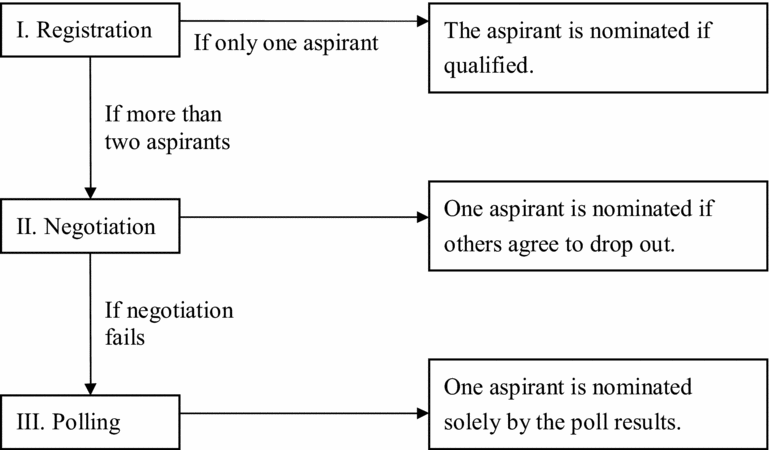
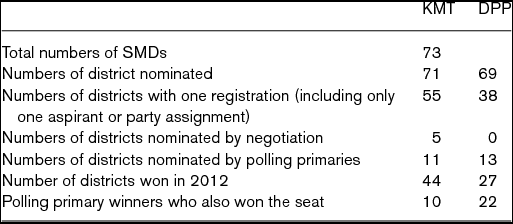
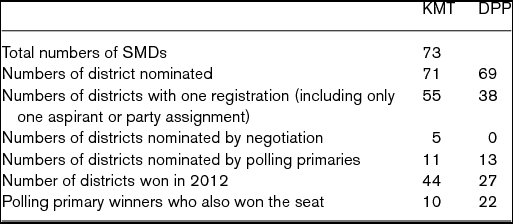
This section elaborates the CSMs adopted by the KMT and the DPP in the 2012 Legislative elections. Both parties used a three-phased nomination procedure – registration, negotiation, and polling primary, as specified in Figure 1.Footnote 3
KMT and DPP's CSMs in 2012 legislative election

The candidate selection processes of both parties started with the registration of aspirants. It is important to note that in Taiwan, incumbents did not automatically get nominated. All aspirants, including incumbents, had to register for nomination. While the KMT opened all 73 SMDs for registration, the DPP did not. The DPP classified some districts in which it had received less than 42.5% of the party-list vote in the 2008 legislative elections as ‘difficult districts’, and the party headquarters held full authority to choose candidates for these districts. The major reason for doing so was to make sure that the KMT could not manipulate the DPP nomination process. Because quality DPP aspirants lacked incentives to run for those ‘difficult districts’ where the KMT enjoyed favourable margins, there was a possibility that the KMT would send in their aspirants to seek DPP nominations. Before the election, former DPP Deputy Secretary General Hung Yao-fu stated that:
We hope to place candidates for those difficult districts in a strategic way. As almost all districts can be regarded as a one-on-one battle under the SMD rule, we would like to send in specific candidates to fight against the KMT's nominees in those difficult districts based on pair-wise comparisons.Footnote 4
Even if only one aspirant registered for nomination, the person did not automatically become a nominee unless he or she was an incumbent. Rather, parties would assess the electability of any unopposed aspirant by internal polls. The KMT even specified that any unopposed aspirant needed to pass the 30% threshold of support in order to qualify for nomination. The DPP headquarters also stated that the party could reject weak aspirants and had the right to choose stronger alternatives if available.
If more than two aspirants registered for nomination, the procedure proceeded to the second phase, negotiation, which could be a time-consuming mechanism that involved closed-door bargaining. However, the process was handled so that the conflicts were solved within the party and heated intra-party confrontation was avoided down the line. During the negotiation period, parties sometimes used non-binding polls to see who had a better chance of winning and to persuade runners-up to drop out of the races. Additionally, the party headquarters would send senior party officials (normally assigned by the party leader) to mediate the negotiation process. In some cases, the negotiation process was completed smoothly and the party successfully nominated a candidate without further intensifying intra-party competition. A good example was the KMT case of Lee Hung-chun vs. Hsu Bing-kuan in the 4th district of New Taipei City. Lee, a professor of engineering and a Ph.D. from Nihon University, was an incumbent who had served as a legislator for three terms prior to the 2012 election. Hsu, former mayor of the Hsin-chuan area (one of the largest municipalities within the New Taipei City metropolitan area) and former speaker of Taipei County Assembly, had significant grassroots support and intended to expend his political career from the local to the national level. It was expected to become a very competitive race when both of them registered. Yet, because Lee and Hsu had known each other for more than 30 years and were very close friends, Lee attempted to withdraw at the beginning of the negotiation process and support Hsu to represent the KMT in the general election. However, the KMT leadership strongly preferred Lee to Hsu due to the many important positions Lee held in the legislature. Given the fact that Lee still enjoyed strong popularity in the 4th district, in the end Hsu agreed to withdraw and wait for future opportunities.Footnote 5
Such a peaceful settlement, however, was not always achievable. Quite often, multiple contenders for the same slot all refused to step down, sending the negotiation process into chaos. For example, in the 2nd district of New Taipei City in 2012, the DPP incumbent Lin Shu-fen was challenged by former Legislator Huang Chien-hue, who also competed against Lin for the DPP 2008 legislative nomination. Huang eventually dropped out in the 2008 DPP primary due to an accusation that he installed thousands of ‘ghost’ telephone numbers within the district to manipulate polling results. Being supported by one of the DPP major factions, Huang returned to challenge Lin and to seek the party's legislative nomination again. Soon after the registration deadline, the DPP headquarters sent a senior party leader, Yu Shyi-Kun (former Premier in the DPP government), to initiate the formal negotiation process. However, the negotiation broke down quickly as Huang had strong factional support and showed no sign of withdrawal. According to Lin, the negotiation process was perfunctory. Lin commented:
He (Mr. Yu) asked Huang Chien-hui (the opponent), ‘Would it be possible for you to not run?’ Huang said ‘No’. Then, he asked me the same, and I said ‘That's impossible for me, too.’ That's the end of the negotiation process.Footnote 6
Although Lin seemed to be a very strong DPP incumbent candidate prior to the election, the presence of a quality contender who insisted on challenging her made a polling primary unavoidable. Furthermore, the negotiation process, at least in this case, seemed to be a ceremonial phrase and did nothing to resolve the intra-party conflict. As both parties set up no official rules for the negotiation phase, the success of negotiation seemed to depend on ad hoc factors. In fact, no candidate obtained the DPP nomination through negotiation.
If the negotiation phase did not work, both parties’ CSMs moved on to the third phase, the polling primary. Obviously, the two major parties did not have equal strength in every district. It was predictable that intra-party competition for nomination would be intense in the districts where one party consistently enjoyed a favourable margin. That is, in a district where the party was strong, the intra-party competition tended to be more severe than the inter-party competition, because one could expect to win easily in the general election once he/she passed the hurdle of primary. Given the fact that the two major parties had incentive to delegate power to the general public to resolve their intra-party conflict, the polling primary became the dominant tool for mediation in both parties when multiple contenders sought nomination in the 2012 elections. We illustrate some operational details for comparison below.
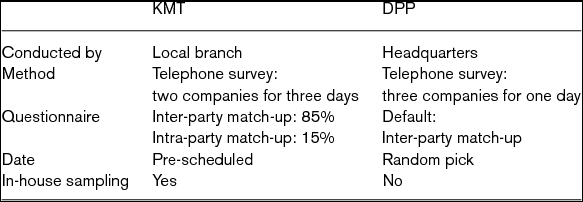
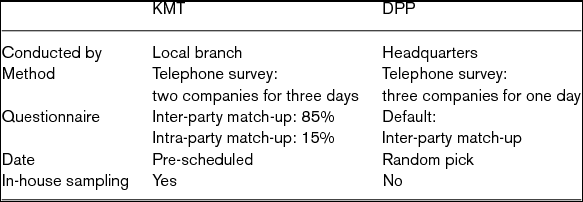
KMT: The typical KMT questionnaire used in the polling primary included two sections: one for testing intra-party support and one for testing inter-party viability. In the first part, potential candidates had to compete among themselves for the best supporting rate. This part accounted for 15% of a candidate's total score. In the second part, each KMT candidate was matched up against the corresponding DPP nominee in order to see who had the best odds of winning in the general election. This part accounted for the remaining 85% of the total score. Candidates negotiated to determine the date of the polling primary. On the day of polling, two companies, pre-selected by candidates, conducted telephone surveys (1,067 interviews per company on average) using random samples of telephone numbers drawn from the district. In-house sampling (i.e., sampling within the household) was implemented for every call made.
DPP: The standard DPP questionnaire used in the polling primary compared inter-party strength of the aspirants. If the KMT candidate had not been determined yet, or if the DPP contenders agreed to it, the DPP headquarters accepted the use of other methods of comparison (e.g., intra-party support). The only thing about polling primaries that the headquarters insisted on controlling was the polling date. In order to test contenders’ ability to mobilize voters, the headquarters withheld the announcement of the polling date until the morning of each primary. The DPP headquarters designated a period for the Legislative Yuan primaries, and every morning during the primary period, a district was randomly selected for the primary. The contenders were informed of this selection at around 10:00am. Because the DPP survey did not adopt in-house sampling, whether the supporters were home to answer the phone became an important factor in shaping the results. Thus, once the primary was announced for a district, it was crucial for the contenders to mobilize their supporters to stay home after 6:00pm to wait for possible phone calls. Each primary was held within a single day (from 6:00pm to 10:00pm), with three companies conducting the telephone surveys. Each company continued until it had finished about 1,200 interviews. The DPP believed that this method was the best way to test which contender had the best campaign organization to mobilize supporters on the day of the election.Footnote 7
The two parties adopted very similar procedures for conducting the polling primary (Table 1). The most significant difference between the two was the use of in-house sampling. While the DPP focused on contenders’ ability to mobilize voters and thus welcomed contenders’ attempts to communicate with potential recipients of the polling calls, the KMT cared more about accurate representation of voters in the survey sample and tried to avoid possible manipulation.
Key features of polling primary
To summaries, the polling primary was the default system in the 2012 election. Direct recruitment and negotiation worked when there was no meaningful intra-party competition. Competition arose when the party had a significant chance of winning in the district. The driving forces underpinning the adoption of the polling primary were twofold.
First, the public opinion poll was an efficient way to help find electable candidates. The DPP legislator Kao Chi-peng cited the comment of former President Chen Shui-bian in an interview, ‘A candidate with a high mark in opinion poll rarely loses the election.’Footnote 8 To party leaders, opinion polls became the most reliable source in predicting the electability of candidates. Specifically, under the SMD rule, each candidate needed to obtain plurality (or normally majority in a two-way competition) to win the district. Both major parties wanted to nominate a person who could appeal to the ‘centre’ of the political spectrum and garner the majority of popular support. Opinion polls not only gave the best assessment on the general popularity of each aspirant, but also told the party who was the ‘right’ person in any one-on-one set-up. As Dr Hsieh Shiang-ching, a former senior analyst of the KMT think tank, put it:
Both sides (parties) end up using the same methods, because the premise is that two parties are competing, and both parties need to nominate . . . Polling primary includes two parts: first, comparing people who registered in the party to each other. . . Ah, the other one is, if the DPP has already nominated someone, the questionnaire will ask like ‘If these two people, [DPP nominee and KMT's possible candidate], run at the same time, who would you vote for?’Footnote 9
Second, parties looked for a way to resolve their intra-party conflicts with the lowest cost. Delegating power to the general public to make the final call seemed to be an acceptable solution. Hung Yao-fu said in the interview: ‘We just need a quick and fair rule to decide our candidates . . . and we do not want to see heated intra-party competition for nomination.’Footnote 10 Dr Hsieh also commented:
In a real primary, competition is always intense as party cadres are divided and party members are highly mobilized . . . It is extremely difficult to reunite party support for the general election if significant divisions have been created by a highly intensified primary.Footnote 11
Thus, the polling primary became an ideal option as it allowed parties to prevent active mobilization of supporters by the aspirants. Now the aspirants could only ask supporters to stay home and answer the call if they were selected for the poll. According to KMT Vice Chairman John Chiang, who was an incumbent legislator in 2012 but defeated in the polling primary by 0.57 percentage points, ‘Unless people can figure out how to fix the problem of ‘head voters’, polling primary so far is the fairest and most acceptable way to determine nomination.’Footnote 12
3 Candidate selection in Japan
History of candidate selection
The Liberal Democratic Party (LDP, 1955–), the long-time ruling party in post-war Japan, used to have each of its ‘habatsu’ (factions) recruit candidates under the single non-transferable vote, multi-member district (SNTV/MMD) system. The supply of candidates came mainly from prefectural assemblies, local chief executive posts, bureaucrats in the national government, and the sons and daughters of influential local figures and politicians. In the early 1990s, the prevalence and evils of ‘seshu’ (hereditary succession of electoral turf through bonds of kinship) within the LDP became well known, with most people outside the inner circle seeing little opportunity to enter politics. However, with the implementation of the SMD portion of the 1994 electoral reform for the 1996 HR election and the eventual takeover of power by the Democratic Party of Japan (DPJ, 1998–) in 2009, the kobo system became an established entrée into national politics. Kobo is a supposedly competitive selection mechanism used by political parties to recruit quality candidates openly from the general public. We discuss its historical development below.
In its early days, the kobo system was tested predominately by the opposition parties. The Socialist Party of Japan (SPJ, 1945–1996), then suffering from a shortage of qualified candidates, was the first of the major national parties to use kobo to recruit candidates for elected positions in 1990, although their use of the mechanism was limited to the local city/ward levels. It is widely recognized that the first political party to adopt kobo for national elections was the Japan New Party (Nihon Shinto, 1992–1994). In the 1993 HR election, it fielded three candidates whom it had recruited through kobo, and one of them, Yukio Edano, who later became a leading figure in the DPJ, won a seat. After the 1994 reform, which introduced the SMD combined with proportional representation through party lists, it became imperative for any opposition party vying for power to field candidates in most of the 300 SMDs. The New Frontier Party (Shinshinto, 1994–1997) used the kobo system extensively and fielded candidates in as many as 235 districts in the first election under SMD in 1996. It was the first time the largest opposition party had fielded candidates for a majority of the HR seats since the SPJ did so in the 1958 general election.
The kobo system, which was given a boost by the introduction of SMDs, was first made visible nationally and was established by the DPJ. As an opposition party aspiring to a position of power between the 2000 and 2009 HR elections, the DPJ had to overcome a serious shortage of candidates by repeatedly conducting kobo on a massive scale every few years. As will be discussed further below, DPJ kobo has been managed directly by the DPJ national headquarters. There is consensus that the DPJ was able to seize the opportunity to take power in 2009 only because it had prepared by fielding candidates in most of the 300 SMDs with the help of the kobo system. However, between 2009 and 2012, motivation for the DPJ to utilize kobo largely receded due, first, to the disappearance of empty districts, and, then, to the unpopularity of the DPJ. Interestingly, it was under the LDP, an opposition party between 2009 and 2012, that the kobo system further developed in a decentralized and diverse manner, reflecting the structural character of the LDP, which featured entrenched local organizations and support networks.Footnote 13
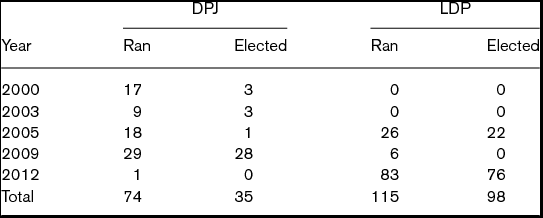
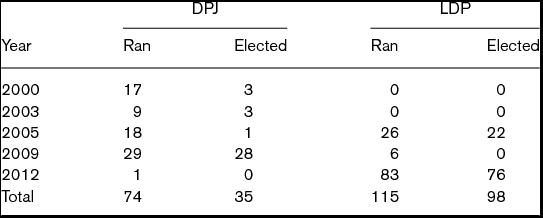
Early on, the introduction of SMDs gave even the LDP, the ruling party at the time, a motivation to adopt kobo by generating some empty districts. In 1994, the LDP national headquarters permitted ‘kenrens’ (prefecture branches) to use kobo in SMDs without incumbents, hoping that kobo would make the party appear more open and fair to voters. It was the very first time the LDP adopted kobo in selecting HR candidates since its establishment in 1955. Several kenrens responded by selecting candidates through kobo. Devastating defeat in the 2003 House of Councillors elections led the LDP national headquarters to institutionalize the kobo system. Behind this decision was the understanding that qualified potential candidates had been drawn to DPJ's kobo while the LDP kept the door closed to fresh blood (Seko, Reference Seko2006). When the LDP posted a last-minute national kobo in August 2005 for the coming HR election (following the rejection of the postal privatization bills), 868 applications were filed in just four days. In the 2005 election, the LDP fielded 24 kobo-recruited candidates in SMDs, out of whom 12 won seats in SMDs and nine won seats under proportional representation. Although the LPD's use of kobo waned after it won big in the 2005 election, kobo regained its significance once the LDP fell from power in 2009. Now less attractive as the opposition party, the LDP was no longer able to recruit enough quality candidates through the traditional channels. Kobo thus came to be widely used by the LDP kenrens.
In the following subsections, we summaries the forms of CSM used by the two major Japanese parties up to 2012, focusing on the different features kobo came to incorporate under each party.
Top-down kobo by the DPJ
Within the DPJ, the kenrens normally chose one candidate for each district and asked the national headquarters to endorse their choice. When the kenrens failed to field or agree on candidates, the headquarters took over the candidate selection process and initiated the kobo process. Incumbents were given priority over others and were automatically re-nominated in most cases. Candidates who had lost two elections in a row were not nominated for a third time. We now turn to the typical DPJ kobo process used between 1999 and 2009, when the party was in opposition.
Because the DPJ, as a relatively new party, had weak local organizations, kobo recruitment for national elections had to be conducted directly by the national headquarters. The party tried to use kobo as an opportunity to enhance its publicity and to appeal to its constituencies. The first step of the kobo process was thus to put large ads in major newspapers, spending about 50 to 100 million JPY each time. Applicants had to clear two hurdles in order to become official DPJ nominees: first, passing a paper screening, and, second, obtaining the district nomination. The first round took place at the national headquarters. The applicants submitted curricula vitae and essays, which were examined by five to six DPJ officials. According to one party official, applicants’ ‘passion for politics’ was more highly valued than their policy expertise.Footnote 14 Those who passed the initial document screening advanced to the second round, which involved in-person interview sessions. Two MPs, the chair, and the vice-chair of the election campaign committee of the party joined at this stage. They interviewed each applicant for about 20 minutes on what he or she wanted to do as an MP and in which district he or she wished to run. Interviewers again paid less attention to applicants’ policy expertise than their personalities in an attempt to predict whether the applicants would endure the sometimes-irrational hardships of electoral campaigns, get along with the local party staff, and pursue a political career for an extended period of time. The total number of applicants increased from 564 in 1999 to nearly 2,000 in 2009 just after the DPJ took over power. Overall, the odds of passing the paper screening and the interview to advance to the next stage were about one in nine.
These kobo-qualified ‘finalists’ were eligible to advance to the next stage, seeking district nomination. The headquarters acted as an intermediary by matching some of the finalists with local chapters of ‘empty’ districts. The applicants’ local credentials in the district or prefecture counted more than any other factors. With an informal nomination by the kenren and the district chapter, and a formal endorsement by the headquarters, an applicant finally became an officially nominated candidate of the party. Finding a district in which to run was often the toughest hurdle for an applicant. In the past, less than half of the kobo-qualified finalists eventually became official party candidates. When the DPJ was an opposition party, it had many districts with no official candidates. Many of those ‘empty’ districts, however, either were solidly LDP and offered little prospect for a DPJ candidate to win or were projected to go to an informal local favourite son of the local chapter, leaving little room for a kobo parachute candidate to maneuver. An MP who was one of the early kobo competitors described his experience as follows:
After I passed the kobo, the national headquarters gave me a list of ‘empty’ districts where official candidates had not been assigned. I kept working for a company while travelling across Japan on my own expense every weekend, looking for a district to run in. A few times, I found the district marked as ‘empty’ on the list already embracing a local favourite.Footnote 15
On average, only about 2% of the initial applicants were formally nominated by the DPJ. In essence, DPJ kobo was used to fill the empty districts, and it rarely functioned as a tool of conflict resolution. The party opened up entry to the candidate selection processes, but the selection criteria seemed arbitrary, the participation in the decision making was strictly limited to a small number of leaders, and much of the process remained informal and non-transparent. Under this top-down kobo system, the national party headquarters retained the final say, and it even managed to tighten its control over the nomination process by sometimes using kobo candidates to subvert local choice. At the same time, kobo exacerbated the party's weakness and made it harder for the leaders to maintain cohesion among MPs. Being composed of a hodgepodge of groups with different backgrounds and support bases, the DPJ could not use policy orientation as criterion in the screening process. This limitation led to selection based more on personality and curriculum vitae than policy preference. English proficiency, experiences living abroad, youth, and good looks were often the signals the party had to rely on. The DPJ kobo produced a generation of ‘young, good-looking elites’ who may have been more appealing than the older cohort but lacked strong party loyalty and policy coherence.
Bottom-up kobo by the LDP
The LDP candidate selection process for SMDs was, in general, ‘bottom-up’ in terms of the relationship between the national headquarters and the kenrens. The kenrens always played a major role in candidate selection, although the headquarters had the final say. While the headquarters were supposed to take charge of candidate selection when a kenren could not find or agree on a candidate, this did not happen very often in practice. The kenrens would even take an extra step to demonstrate their commitment to self-governance when the national headquarters attempted to intervene, for example by designating a district for electoral cooperation with an allied party.
The most prominent principle in LDP candidate selection was the protection of incumbents. Even unsuccessful candidates in the previous election automatically qualified for re-nomination as long as they were under 65 years old and their ‘sekihairitsu’ (narrow loss ratio)Footnote 16 was over 70%. The kobo system was implemented widely after the party lost dramatically in the 2009 HR election; the headquarters then instructed the kenrens to make kobo the default CSM for choosing new candidates for empty districts. The LDP once attempted to ban ‘seshu’, but the party ended up allowing it as long as the candidate sought nomination through the kobo system. For the 2012 HR election, the LDP had nominated 288 candidates running in SMDs, 114 of whom were newly endorsed candidates. Kobo was used to choose 85 of them. Despite being selected through the kobo processes, many were from traditional pools of recruitment: 23 former local politicians, 14 former national bureaucrats, ten seshu candidates, and nine close relatives of politicians.
In preparation for the 2012 HR elections, kobo was conducted with considerable variations in applicant eligibility criteria and requirements across prefectures and districts. In most cases, applicants were expected to have some connection to the prefecture to which the district belonged. An ad hoc committee with fewer than 20 members, at either the kenren or the district level, was usually set up for each kobo selection, and the committee members gave scores to each finalist. It was common to invite ‘externals’, such as prominent intellectuals or key local figures, to the committee in hopes of adding transparency and a sense of fairness to the selection process and decision. Applicants’ personal information was never disclosed in detail, except for those who were ultimately chosen as the party's official candidates. It was therefore difficult for the public to know exactly from what pool of applicants and by what criteria the party chose the nominee. According to an MP chairing the election campaign committee at the headquarters, the party checked the applicant's education and career records, aspirations, policy orientations, and financial resources.Footnote 17 The headquarters preferred candidates under 55 years old so that, if elected, they could remain active in Parliament for at least two decades. As an attempt to boost party cohesion, many kenrens listed ‘commitment to the LDP’ as a condition of application, while some even asked applicants to fill out a policy questionnaire.
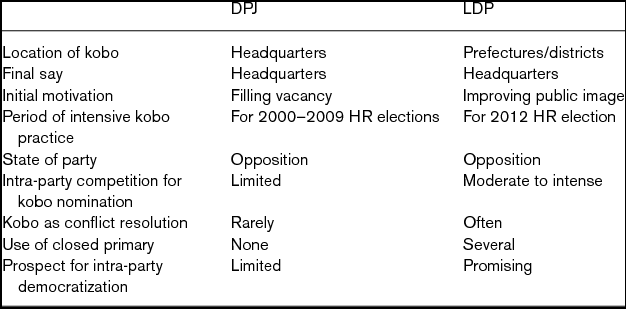
It often took longer than planned for the LDP kenrens or district chapters to nominate candidates. Sometimes the kobo process ended up not nominating anyone. This happened when there was no qualified applicant, or when the intra-party competition was too complicated or fierce to mediate through kobo. The fact, for example, that many kenrens required kobo applicants to sign an oath not to run in the general election in that district if they lost in the kobo selection implies that intense intra-party competition often existed. In a sense, it shows that LDP kobo functioned to some extent as a tool of conflict resolution. Although the national headquarters retained the final say on party nominations, having kobo institutionalized at the district level made it harder than it was before for the headquarters to reject the local decisions. In that sense, LDP kobo decentralized the effective location of nomination power to some extent. Table 2 compares the key features of kobo under the DPJ and the LDP.
Key features of kobo in Japan
Party membership primaries in Japan
While it is true that kobo opened the door to new blood in politics, kobo decision making within the party headquarters or closed district selection committees lacked transparency and open participation. Party leaders dictated the composition of the committee, the scores given to each competitor by the committee members were not made public, and the process the committee members used to reach their final decision remained unrevealed. Accordingly, there has been a constant call to adopt a party member primary for candidate selection in both parties, especially from within the LDP. Some incumbent MPs from both parties even argued that a proper primary election would ensure newcomers’ right to challenge incumbents. Primary elections to choose HR candidates, however, have not been conducted very frequently.
The DPJ has little experience with district-level primaries, as the national headquarters always took charge in the kobo process. The LDP has tried primaries in some districts. Often, however, these LDP primaries ended up not creating opportunities for newcomers but rather entrenched the status quo. This is because both incumbents and those who lost in previous elections have cultivated support within the party membership, while outsiders normally have not. Also, some LDP experience proved that fiercely competitive primaries could worsen intra-party conflict and division, which in turn would hurt the party's performance in the general election. For the 2012 HR election, only a few LDP kenrens held primaries to choose HR candidates, and, in some of those cases, the kenrens avoided letting the primary outcome dictate the final decision. In one case, a kenren institutionalized primaries for kobo, but circumvented the actual holding of a primary by declaring that it had already picked the most electable candidate. These cases show both the party leaders’ willingness to take advantage of the democratic and transparent image of primaries but also their anxiety about ceding their control over nomination.
In sum, kobo developed in different ways within the DPJ and the LDP, and this was natural considering the qualitatively different and quantitatively uneven organizational structures of the two parties. The DPJ used top-down kobo mostly to fill candidacy slots in the ‘empty’ SMDs because in many districts it did not have local chapters strong enough to recruit candidates on their own. With entrenched local party organizations and many local aspirants, the LDP had to go bottom-up in selecting candidates. In this context, kobo often turned out to be a useful tool to mediate intra-party competition.
Following its recent defeat in the 2012 election, the DPJ may have ceased to be one of the two major parties in Japan. Some DPJ officials have stated that, given the party's unpopularity, holding kobo to fill vacancies would no longer attract enough quality candidates. The top leaders will decide whether the centralized kobo system will stay in place. Meanwhile, the decentralized kobo system may establish itself within the LDP structure, regardless of the recent or future electoral outcomes. The fact that the LDP kobo processes are bottom-up and diverse provides a great opportunity to observe how the choice of candidate selection method may be affected by different factors. Whether we will observe some nationwide convergence in kobo methods across the LDP prefectural branches remains to be seen.
3 Discussion and conclusion
Based on the cases of Taiwan and Japan in this article, we argue that changes in electoral systems may lead to changes in parties’ strategies for winning elections. Why and how a party adopts CSM reforms reflects its rationale for maximizing its prospects of winning under the new electoral rules. With the installation of a new electoral regime (the MMM system mainly consisting of SMDs), party nomination became more important than ever. Under SNTV in Japan, although the party headquarters had the power to nominate candidates, an aspirant could run in an election as a conservative independent and join the LDP once elected. He or she could even run as an independent while retaining his or her party membership. The opportunity to run in an election was widely open. This is no longer the case. In an SMD, one cannot run in an election as an independent without giving up his or her LDP membership. The case from Taiwan illustrates a very similar pattern of changes in CSMs following the transition of its electoral system from SNTV to MMM. There is no doubt that the importance of party label increased with the adoption of the current electoral systems in both Taiwan and Japan.
It is important to note that, in both Taiwan and Japan, CSMs were opened up but not democratized. Party leaders’ objectives, such as picking the most popular candidates, outsourcing conflict resolution, and filling vacancies, determined the direction of reform. The reforms were not promoted by rank-and-file party members seeking more participation in decision making. In both countries, the then-opposition parties led the reform efforts, but the other major parties ended up following suit. In both countries, the reforms were initiated by the party headquarters, but the impact the CSM reforms had on the headquarters’ control over nomination varied. In Taiwan, the new CSM did not promote decentralization of party control over nomination, but the headquarters control over nomination outcomes did weaken as a result of using opinion polls. In Japan, kobo was conducted at different locations within party structures between the DPJ and the LDP, reflecting the difference in the strength of their respective party organizations. The centralized kobo system adopted by the DPJ, which had weak local organizations, helped increase the headquarters’ control over nomination, but the CSM turned out to be only temporarily effective as a means for recruitment for a party in the making, and it worked only when the party was popular. In contrast, the decentralized kobo system adopted by the LDP, with stronger local organizations and greater human supply, led to weakened control by the national headquarters over nomination in some cases, and started to offer some element of conflict resolution over time. This suggests that it may lead to intra-party democratization in the future.
To some extent, both polling primaries and kobo are reflections of a compromise between controlling nominations and winning elections. Political parties would want to monopolize the power to select candidates if possible. However, in an open and competitive electoral market, parties’ favourite candidates may not necessarily be poised to win elections. It is necessary for political parties to evaluate the electability of their candidates. In Japan, the kobo system can help a political party, particularly the major opposition party, recruit relatively electable candidates and expand its territory in a quick and efficient way. In the recruiting process for kobo, each party also examines aspirants’ policy preferences and makes sure that the selected aspirants are suitable to represent the party. In Taiwan, polling primary takes place only if there is no clear front-runner in the intra-party competition. Such intense competition normally happens in the districts where the party has a strong base. Thus, the purpose of the polling primary is to offer a quick and fair solution to candidate selection without prolonging potential intra-party conflicts. Both innovations can be regarded as strategies to win elections under the new electoral rules. Political parties forfeit their control over nomination only when they face some difficulty in the candidate selection process.
These new CSMs may not be problem-free. For example, the Taiwanese polling primary could ruin candidates’ party allegiance. It also destroys party organizations by making dues-paying membership virtually meaningless in terms of having a say in candidate selection. The KMT has already declared its intention to revisit its full dependence on public polls, and the DPP might follow suit as well. The Japanese kobo system opens the door to newcomers only when the party is out of power and has lots of vacancies. Incumbents are still heavily protected, and the composition of the ruling party necessarily ossifies. Non-transparent decision making has already allowed old blood to creep back in under the guise of kobo. Whether the polling primary and kobo helped recruit different kinds of candidates or those with better electability, whether these tools have reduced the incumbency advantage, and whether changes in CSM have changed voting behaviour of parliamentary members and thus changed the party system, all remain to be tested.
Do the experiences of CSM reforms in Taiwan and Japan travel to other countries, including their neighbouring countries – for example, the Philippines and South Korea – that have similar electoral systems? The organizational strength or weakness of the parties may play a critical role. At a first glance, the implementation of kobo and polling primary does signal some decline in the party control over nominations. This is because the involvement of the general public makes outcomes of candidate selection less manipulable by the party leaders. However, the implementation of both new institutions demands considerable organizational capacity of political parties. In fact, major parties in Taiwan and Japan continue today to provide the necessary resources for campaigns, such as policy manifestos, popular mobilization, and campaign funding. Parties still matter a lot after both CSM reforms. Based on the recognition that it takes a certain level of organizational power to implement the new CSMs, it is doubtful that a significant spillover of such CSM reforms into other neighbouring counties with the similar electoral systems will easily happen. In the Philippines, the power of candidate selection has been dominated by top party bosses. The presidents of the Philippines, with their comprehensive resources and influence, have the utmost say in nominating candidates for parliamentary and local elections. Political parties in the Philippines may be either too personality driven or not organized enough (Roces, Reference Roces2000) to implement kobo or polling primaries.
Seemingly, the story in South Korea is a little different. Prior to the 2000s, top party bosses in South Korea had dominated the candidate nomination process in most elections (Kim, Reference Kim2000; Ahn, Reference Ahn2003). Yet, since the 2002 presidential and local elections, major parties in the country started to use both open and closed primary systems to nominate their candidates. In the following elections (i.e., the 2006 and 2010 local elections, the 2007 and 2012 presidential elections, and the 2012 legislative elections), public opinion poll was adopted by major parties as part of their various CSMs. Therefore, it is often argued that the usage of the single-member district system with plurality rule at all levels of Korean elections has given the major parties an incentive to expand their selectorate in order to field competitive candidates who could gain the votes of the largest portion of the electorate. However, in reality, the use of public opinion polls in selecting candidates for legislative elections has remained relatively limited, and the local party organizations and their leaders still enjoy great control over candidate selection procedures (Chung and Go, Reference Chung and Gyu Go2013).
It is also important to note that the electoral system is just one of the many factors that may shape choices of CSM. According to Barnea and Rehat (Reference Barnea and Rahat2007), other factors that are at work at the political-system, party-system, and intra-party system levels may also trigger or hinder an emergence of a CSM reform. For example, kobo and polling primaries require a society with rapid and open communication to enhance the publicity of candidate selection processes. In countries where these conditions are lacking, those CSMs may not be an option. Still, the uniqueness of kobo and the polling primary does not undermine the general implication they posit. The study of these two CSMs shows that political parties have to adjust the way they nominate candidates according to the changing environments. Yet, there is no one-fits-all solution.
Finally, while we focused on providing the rationale of CSM reforms and offered a linkage between electoral systems and CSMs in this article, we acknowledge the importance of exploring the impact CSM reforms could have on candidates’ electoral and legislative behaviours. For example, anecdotal evidence suggests that in Japan, many of the Diet members recruited through kobo proved to be unreliable ‘amateurs’, although they often showed a steep learning curve in comprehending the complexity of legislative politics. In Taiwan, polling primaries made potential aspirants (including incumbent candidates) seek media coverage and care more about their public images than anything else. Although important, they are beyond the scope of this article and are left to be addressed in future studies.
About the authors
Ching-Hsin Yu is Research Fellow at the Election Study Center of National Chengchi University, Taiwan. He earned his Ph. D. from the Pennsylvania State University in the US in 1995. His research interests include the theories of parties and party system, electoral system, voting behaviour, and democratization.
Eric Chen-hua Yu is Assistant Research Fellow at the Election Study Center and jointly appointed as Assistant Professor at Department of Political Science, National Chengchi University, Taiwan. He has been a research fellow and program manager at Stanford's Freeman Spogli Institute for International Studies (FSI) between 2006 and 2009. His research interests include public opinion, electoral politics, quantitative methods, and American politics. Yu earned his Ph.D. in political science from Columbia University in 2006.
Kaori Shoji is Professor at Department of Political Studies, Gakushuin University, Japan. She earned her Ph.D at Columbia University in the US in 2013. Her research interests include current US politics, American political development, Japanese politics, comparative studies, party organizations, candidate selection methods, and interest groups.
CSMs in 2012 legislative elections, KMT vs. DPP
Numbers of kobo candidates who ran and won in HR elections