




No CrossRef data available.
Article contents
- Abstract
- THE INCIDENCE AND IMPACT OF BOVINE TB ON CATTLE
- THE IMPACT OF BOVINE TUBERCULOSIS ON HUMANS
- PUBLIC VERSUS PRIVATE SOLUTIONS
- “TB OR NOT TB”
- THE ERADICATION PROGRAM IN PRACTICE
- STATE AND LOCAL CONTROL EFFORTS
- COOPERATIVE STATE-FEDERAL PROGRAM
- COSTS AND BENEFITS OF THE ERADICATION CAMPAIGN
- CONCLUSION
- Appendix
- References
An Impossible Undertaking: The Eradication of Bovine Tuberculosis in the United States
Published online by Cambridge University Press: 01 September 2004
Article contents
- Abstract
- THE INCIDENCE AND IMPACT OF BOVINE TB ON CATTLE
- THE IMPACT OF BOVINE TUBERCULOSIS ON HUMANS
- PUBLIC VERSUS PRIVATE SOLUTIONS
- “TB OR NOT TB”
- THE ERADICATION PROGRAM IN PRACTICE
- STATE AND LOCAL CONTROL EFFORTS
- COOPERATIVE STATE-FEDERAL PROGRAM
- COSTS AND BENEFITS OF THE ERADICATION CAMPAIGN
- CONCLUSION
- Appendix
- References
Abstract
In 1917, after scientific breakthroughs allowed for the early detection of bovine tuberculosis, the USDA began a campaign to eradicate the disease. Agents inspected nearly every cattle farm in the country and condemned roughly 4 million reactors to slaughter without full compensation. This article analyzes how the eradication program functioned, how incentives were aligned to ensure widespread participation without excessive moral hazard problems, and why the United States led most European nations in controlling the disease. The U.S. campaign was a spectacular success, reducing human suffering and death and yielding benefits in the farm sector alone that exceeded ten times the cost.
Information
- Type
- ARTICLES
- Information
- Copyright
- © 2004 The Economic History Association
At the dawn of the twentieth century tuberculosis (TB) was the leading cause of death in the United States, taking roughly 148,000 human lives in 1900. At that time tuberculosis caused about one out of every nine deaths.1
U.S. Bureau of the Census, “Tuberculosis,” table 17, p. 516, and Mortality, pp. 16, 27.
Fisher, “Cost,” p. 34. By both his and our reckoning, Fisher's estimates represent an honest attempt at a lower-bound assessment of the cost of tuberculosis. Most notably, his procedure gives zero value to the pain and suffering of the victims and of their friends and families. Fisher calculated that the cost per tuberculosis death was roughly $8,000 in 1908 dollars. This figure is remarkably close to the $8,430 lower-bound estimate of the value of life (actually $30,305 in 1967 purchasing power) reported by Kim and Fishback, “Institutional,” p. 811.
Although the precise fraction is unknown, it is probable that 10 percent or more of these TB sufferers had contracted the bovine form of the disease, most likely from cattle, cattle products, or swine infected by cattle. Beginning in the second half of the nineteenth century, a series of discoveries by the leading proponents of the “Germ Theory of Disease” greatly advanced the scientific understanding of tuberculosis (see the timeline presented in Table 1). The single most important step was Robert Koch's discovery of the tubercle bacillus in 1882. By the end of the first decade of the twentieth century there was a consensus that the bovine form of tuberculosis was distinct from the human form, mounting evidence that the bovine form could be passed between animals and humans, and that in humans the bovine type could produce symptoms clinically indistinguishable from the human strain.3
Some basic terminology needs clarification. The formal name of the bovine strain of tuberculosis is Mycobacterium bovis, which is often summarized as M. bovis. The corresponding terminology for the human strain of tuberculosis is Mycobacterium tuberculosis and M. tuberculosis. The bovine strain can be passed from cattle to humans and vice versa (as well as to a number of other animals). There are other strains of tuberculosis, but they were of relatively minor significance to human health and thus do not figure prominently in our analysis. A second terminology note: a contagious disease is generally defined as one that spreads from organism to organism whereas an infectious illness spreads and grows within an organism's body.
Howard R. Smith, head of the private body leading the anti-TB campaign, noted that in 1917 Henry Wallace responded to his request for support: “‘Smith, don't you think this is an impossible undertaking?”’ Smith, Conquest, p. 12. This book has no printed page numbers; we begin our pagination at the start of Smith's text.

The eradication campaign was a massive endeavor that touched farms in virtually every county as the federal government, in cooperation with state and local governments, systematically tested and retested cattle, destroying those that reacted positively. Between 1917 and 1940 veterinarians administered roughly 232 million tuberculin tests and ordered the destruction of about 3.8 million cattle (from a population that averaged 66.4 million animals over this period). The vast majority of condemned animals were valuable dairy cows or breeding stock. Closely coupled with the testing program was the highly controversial drive to mandate milk pasteurization. Commercially pasteurized milk, which was virtually nonexistent in 1900, composed about 98 percent of the milk supply in major cities in 1936.5
Fuchs and Frank, “Milk,” p. 29.
The early cooperative state-federal TB testing program was voluntary, but it evolved into a compulsory system that forced the latecomers to join up. Until the development of the tuberculin test in the early 1890s, veterinarians could only identify about one-in-ten infected live animals and even postmortem visual inspections in slaughterhouses probably failed to reveal one-half of tuberculous carcasses. The disease's deceiving appearances created confusion and contributed to farmer resistance. Some of the world's most prominent TB researchers argued that the destruction of whole herds, including prized purebreds, was often arbitrary and inefficient, and many farmers complained that the program's administration was heavy handed. There are few instances where the police power of the United States government was so ruthlessly exercised in peacetime. However, despite protests and attempts by farmers and private veterinarians to dope the tests, the overwhelming majority of farmers freely participated.
The program was an enormous success. By 1941 every county in the United States was officially accredited free of bovine tuberculosis (that is, with an infection rate below 0.5 percent). Although the costs of the eradication program were huge, the savings to farmers and meat packers alone (resulting from increases in animal productivity and a decline in the number of condemned carcasses at slaughterhouses) exceeded the costs by at least a ratio of ten-to-one. However the real savings were not to be found in the farm sector. The spillover effect on human health was the main story. By 1940, before effective chemotherapy was available, new cases of bovine-type TB in humans had become a rarity. By our reckoning (see the Appendix), the eradication program, coupled with the spread of milk pasteurization, prevented at least 25,000 TB deaths per year in the United States in the period immediately preceding World War II. Although unprecedented, the U.S. program did create a model for others to follow. Advanced countries had access to the same information available in the United States, but with the exception of Canada, almost all opted for less draconian but largely ineffectual measures.6
Among European nations, the Scandinavian countries (and in particular Finland) were the most aggressive in addressing the problem prior to World War II. Myers and Steele, Bovine, pp. 256–60.
THE INCIDENCE AND IMPACT OF BOVINE TB ON CATTLE
Bovine tuberculosis was an insidious disease because apparently healthy animals could be both infected and contagious. Indeed “[m]ost M. bovis infected cattle appear normal.”7
National Research Council, Livestock, p. 13
The estimate of a 10-percent reduction in milk productivity appears both in early sources such as Melvin, “Economic,” p. 103, and in the recent literature including National Research Council, Livestock, p. 56; Faulder, “Bovine,” p. 14 states “the producing life of a dairy animal infected with tuberculosis is often cut in half.”
Kiernan and Wight, “Tuberculosis,” pp. 1–18.
Rates of TB infection tended to be higher among closely confined cattle than in free-range-raised animals. The prevalence of the disease also increased with the animal's age. Older stock obviously had a longer period of exposure to contract the bacteria and more time to develop full-blown, highly contagious cases. As a result, bovine TB was much more common in the proximity of major cities, in dairy herds and purebred stock, and more generally, in the “advanced” agricultural regions of the country. Contemporaries noted the irony that attempts to improve the local livestock by importing purebred cattle were often responsible for increasing the incidence of the disease. The relative backwardness of the cattle industry in the Southern states helps explain that region's relatively low bovine tuberculosis rates.10
Myers, Man's Greatest, pp. 264, 267–68, 309, 323.
The inability to detect the disease in its early (but contagious) stages made its control nigh impossible before the modern era. In 1890 Robert Koch developed tuberculin, which made it possible to detect TB in animals without visible symptoms.11
Myers, Man's Greatest, p. 115; and U.S. BAI, Special Report 1916, pp. 416–17.
Dormandy, White Death, pp. 330–31; and Dubos and Dubos, White Plague, p. 260.
The earliest form of the tuberculin test involved injecting the substance beneath the animal's skin (the subcutaneous test) and checking for signs of a fever. This was a very costly procedure in terms of the veterinarian's time and the large quantity of expensive tuberculin administered. To obtain an accurate result the veterinarian had to take the animal's temperature, typically three to four times at two hour intervals, prior to the injection to establish a baseline reading. Then, beginning about six hours after the injection, the veterinarian again took temperature readings every two to three hours, continuing the process for up to 24 hours after the injection was given. Surviving test charts show that to test a herd of about a dozen animals, the veterinarian had to be on site for about 36 hours inspecting each animal from 10 to 15 times. A far simpler and cheaper approach, suited to mass testing, became the standard practice in 1920. Employing the new (intradermic) process, the tester injected a few drops of tuberculin into the skin of the subject animal—usually in a flap in the tail—and then returned to re-examine the animal visually two to three days later. This procedure represented an important technological advance that allowed one tester to do the work of five or six using the older method. According to William W. Wright of the Illinois Division of Animal Industry, “It is a big week's work, under the present system, for one man to make more than three tests a week and oftentimes only two tests are made. With the intradermal method a man could … go over two or three herds and possibly more in one day.”13
William W. Wright to J. R. Mohler (Chief of the BAI), 20 January 1920, National Archives, Records of the BAI, Central Correspondence.
U.S. BAI, Special Report 1916, pp. 417–18; Smith, Conquest, pp. 7–9; Houck, Bureau, pp. 364–66; Myers, Man's Greatest, p. 125. The USDA also experimented with a third testing method using eye drops that produced a milky discharge in infected stock. Note that the proportion of false positives (or more precisely the probability that a positive test has identified an uninfected animal) depends on the prevalence of the disease. As the disease becomes less common, a positive result under a given test procedure is more likely to be false. National Research Council, Livestock, pp. 17–19. According to this source, the probability that an uninfected animal would test positive was less than 2 percent.
Based on a sampling of tuberculin tests and slaughterhouse inspections, the prevailing wisdom circa 1915 was that 10 percent of the nation's dairy cattle and 1 to 2 percent of all range cattle were infected with bovine TB.15
Mitchell, “Animal,” p. 168; and U.S. BAI, Special Report 1916, p. 409.
In addition, according to U.S. BAI, Annual Report 1922, p. 142, “probably 90 per cent of all tuberculosis in swine is from cattle sources.” This fraction declined as bovine TB was brought under control.
U.S. BAI, Special Report 1912, p. 417; Orland, “Cow's Milk,” p. 11; and Myers, Man's Greatest, p. 222.
Melvin, “Economic,” pp. 101–02. Given the number of cattle slaughtered in 1960, and assuming the rate of condemnation remained constant, these ratios imply that by that date about 92,000 carcasses would have been sent to the rendering tanks or sterilized; in fact only 282 carcasses met this end. But without the eradication program the infection and condemnation rates would have soared, and it is reasonable to assume that there would have been a minimum of several hundred thousand condemnations in 1960. If the USDA tightened its inspection standards, the number would have been even higher. As a crude indication of how fast the disease could spread, bovine tuberculosis probably did not enter Sweden and Finland until the 1840s and by the end of the nineteenth century it is likely that 25 percent of their cattle were infected. Myers and Steele, Bovine, pp. 256–57, 280–81.
THE IMPACT OF BOVINE TUBERCULOSIS ON HUMANS
Although there was a growing consensus about the incidence of bovine TB infections in cattle by the first decade of the twentieth century, the incidence and impact of the disease on humans was still hotly debated. Researchers had long speculated that humans contracted tuberculosis from cattle, but the quest to understand the linkage was a slow process with many heresies and trips down blind alleys. In 1898 Theobald Smith showed that there were small but identifiable differences in strains obtained between the bovine and human forms. In 1901 Robert Koch seriously misinterpreted Smith's findings and proclaimed that bovine tuberculosis posed little threat to humans and, indeed, that exposure provided children with immunity against the human form. Prominent researchers challenged Koch's views. As an example, M. P. Ravenel isolated the bovine microorganism from a child with tuberculous meningitis in 1902 and found the microbe in a child's mesenteric lymph nodes in 1905. In spite of these and other findings, Koch adhered to his dangerous and erroneous beliefs for more than a decade, thereby lending support to special interests groups opposed to identifying and regulating tuberculous cattle. The controversy, unfortunately, continued to echo in public debates about TB control long after the scientific arguments were largely settled.19
Myers, Man's Greatest, pp. 106–09, 200, 211–19, 226; Myers and Steele, Bovine, p. 57; and Dankner et al., “Mycobacterium,” pp. 20–24.
There remains considerable controversy about how widespread bovine tuberculosis was in humans before the age of animal control measures and milk pasteurization. As an indication of the lack of precision in estimating the overall incidence of the bovine strain, the Centers for Disease Control's recent summary evaluation is that between 1900 and 1930, “M. bovis was isolated from 6 percent–30 percent of human tuberculosis patients in the United States and the United Kingdom.”20
It is very likely that the CDC's estimates refer to specific case studies rather than overall averages for the two countries. Yoxheimer and Tavris, “Bovine,” pp. 201–13; Wight et al., “Tuberculosis,” pp. 237–49, especially, p. 242; Myers, Tuberculosis, p. 235; Grange and Collins, “Bovine,” p. 227; Harvey and Hill, Milk, p. 26; Roadhouse and Henderson, Milk, pp. 65–66; and Myers, Man's Greatest, pp. 219–29.
Price, “Bovine,” p. 421; and Dormandy, White Death, p. 329.
In sharp contrast with the contemporary accounts, the recent medical literature commonly asserts that the bovine share of human deaths or infections was in the 20–30 percent range before 1917. (The Appendix reviews the modern literature on this issue.) In spite of the disagreement as to the extent of the disease, there is a consensus that bovine-type infections were far more common in nonpulmonary cases and in children, especially infants, due to the consumption of untreated milk and lower resistance to the disease.22
Both recent and historical studies suggest that roughly 50 percent of adult bovine TB sufferers exhibited nonpulmonary infections (meaning that at least 50 percent also had pulmonary symptoms because many patients had both) whereas about 10 to 15 percent of M. tuberculosis cases show nonpulmonary manifestations. In young children about 90 percent of bovine infections were nonpulmonary.
PUBLIC VERSUS PRIVATE SOLUTIONS
Before examining public health interventions, it is important to understand why private initiatives were failing to prevent the spread of the disease. Free-rider problems, asymmetric information, and the difficulties of observing and documenting the spread of the microorganism short-circuited private initiatives. This is a difficult issue that we analyze more thoroughly elsewhere.23
Olmstead and Rhode, “Tuberculous Cattle Trust.”
Health-conscious consumers should have been willing to pay a higher price for TB-free meat and milk. However, few possessed the expertise or equipment required to identify the tuberculosis bacteria in their food supplies. Given this situation, one might ask why an independent monitoring agency issuing a label akin to the Good Housekeeping Seal of Approval did not emerge to cater to this market. In fact, such private agencies did arise as part of the certified dairy movement that began in 1892. Across the country, certified dairies, operating under the aegis of local physicians, “guaranteed” that their premises were clean and their herds were TB-free. The problem was that inspections were infrequent and lax. Confidence in the program was damaged when muckraking reporters exposed unsanitary conditions and tuberculous cattle at prominent certified dairies. Moreover, certified milk was very expensive and consequently never captured more than 2 percent of the market. Consumers could boil their milk on their own, but this was costly, time-consuming, and not foolproof unless done properly. Boiling also adversely affected the milk's taste.24
Commercial pasteurization provided a cheaper collective alternative, but during the early years of the eradication movement, pasteurization was still unreliable.
Individual cattle owners also had strong private incentives to reduce the exposure of their herds to tuberculous animals, and many went to great lengths to do so. But several forces worked against achieving the socially optimal level of disease prevention. Owners had little incentive to prevent their animals from infecting other herds because it was difficult for other farmers to demonstrate the source of the infection and collect on damages. Animals carrying the disease need not at first be contagious or less productive, encouraging owners to take the risk of delaying culling apparently healthy reactors. And when an owner chose to cull his herd, he could reduce his losses by selling the infected or suspicious stock to others.
A crucial difficulty arose from the nature of the tuberculin test. The use of tuberculin typically created immunity in the subject animal to further reactions for a period of six weeks or more. A livestock owner could test his herd privately and then sell reactors to unknowing buyers who could not check the animals themselves in due time. “Plugging the test” by prior exposure of the animal to tuberculin, represented a growing problem over the 1900s and 1910s.25
Smith, Conquest, pp. 18–20; and Olmstead and Rhode, “Tuberculous Cattle Trust.”
Indeed, a group of cattle dealers emerged who specialized in the interstate shipment of “plugged” animals. Working in league with corrupt veterinarians, these dealers created false paper trails as to the cattle's past owners and supplied fraudulent tuberculin test results to buyers. These practices undermined the value of the “Good Housekeeping Seal” provided by tuberculin testing certificates. During the 1910s and 1920s, the USDA and state officials investigated thousands of suspect dealers. The most notorious was James Dorsey of Gilberts, Illinois, who was one of the largest dairy cattle dealers in the country. In 1914 the USDA credited Dorsey with creating over 10,000 new foci of the disease.26
Olmstead and Rhode, “Tuberculous Cattle Trust.”
A cattle owner could reduce the likelihood of exposure by maintaining a physically isolated closed herd—by literally and figuratively erecting a fence around his animals. Besides the out-of-pocket costs of maintaining barriers, this approach also denied farmers the advantages of specialization and limited their ability to replace animals. It closed several of the main avenues for dairy improvement in the early twentieth century: engaging the services of a prize bull, competing in livestock contests at local fairs, and participating in cooperative creameries (which returned the pooled skim milk to feed to calves). Given the benefits from trading in livestock and the contagious nature of the disease, it was more efficient to build a “fence” around the entire country than to create barriers around each and every farm.
The problems of achieving private solutions to the growing threat of bovine TB generated demands for governmental intervention. An analysis of the costs and benefits of government efforts requires that we have a better grasp of how policy options (such as eradication and quarantines) relate to the initial extent and the dynamics of infection. Modeling the problem suggests that the payoffs to control efforts were especially high in the American setting where the initial extent of the disease was still relatively low.
“TB OR NOT TB”
The spread of a contagious disease such as TB in an animal population can be analyzed using a logistic model. At a given time, a fraction, F(t), of the animal population is infected; another fraction, S – F(t), is susceptible to the disease but as yet uninfected; and the remainder, R = 1 – S, is resistant to the disease. In the standard logistic model, the disease spreads as the infected population comes into contact (randomly) with the susceptible but uninfected population. The extent of new infections, f(t)—that is, the change in F(t)—can be expressed as

where d, the diffusion rate, reflects the contact rate between the animals and the contagiousness of the disease on contact. Note that the chance that a susceptible but uninfected animal will become infected rises as the fraction of animals that are infected, F, increases.
27This setup ignores the mortality effects of the disease, which in an extreme case, may wipe out the entire susceptible population.

where F(0) is the initial extent of infection.
Suppose the uninfected cattle produce a value of VU per period whereas the infected cattle produce VI < VU. In period t, the value of output will be VU – F(t)(VU – VI). Given a constant interest rate, r, the present value at time 0, PV(0), of the total herd subject to a disease spreading according to equation 2 is

Control measures, by altering S, d, and F(0), influence the extent and spread of the disease. Using vaccines could reduce S, the susceptible fraction of the population, by increasing the fraction that was resistant—unfortunately, the bacillus Calmette-Guérin (BCG) vaccine developed for bovine TB proved ineffectual.28
The BCG vaccine used a live attenuated strain of M. bovis to promote immunity. The vaccine offered valuable partial protection for humans, but did “not provide a useful or cost-effective level of protection in cattle.” National Research Council, Livestock, p. 32.
National Research Council, Livestock, p. 16, noted there is considerable genetic variability, even within a single herd, in the susceptibility of the cattle to the disease. Salmon, “Tuberculosis,” p. 15, observed that the disease would “spread through the cows of a herd until 50 to 80 per cent of the animals were effected.”
A final set of control measures involved eradicating the infected population—intervening directly to reduce F(0). This was at the heart of the test-and-slaughter program enacted by the USDA. The obvious difficulty in this approach was the loss suffered by farmers due to the destruction of their infected stock. If the test yielded no false negatives, this approach could eliminate the disease from the population. Even if the eradication campaign was not absolutely effective, it could reduce the fraction infected, F(0), to such low levels that the rate of new infections remained low. The disease could be held in check as long as the death rate from eradication equaled the rate of new infection.30
The logistic model presented does not fully capture the spatial aspects of the contagious process. Given that contact was more likely to occur between cattle locally, it was more beneficial to concentrate resources to eliminate the disease from a single area than to get the job half done in two areas.
One can show analytically that ∂PV(0)/∂F(0) < 0 and ∂2PV(0)/∂2F(0)>0. That is, the present value of the herd decreases as the initial level of infection rises, but does so at a decreasing rate. This implies that the marginal benefit of reducing F(0) through the test-and-slaughter program is positive and rising as the level of infection falls.31
The rising marginal benefits (to an eradication program as the prevalence of the disease falls) also imply it is optimal to push for total eradication unless the marginal cost of reducing F(0) rises even faster. One can also show ∂PV(0)/∂d < 0, hence it is advantageous to slow the spread of the disease (e.g., via quarantines). But note ∂2PV(0)/∂F(0)∂d and ∂2PV(0)/∂2d are more difficult to sign analytically. This means that it is less clear how the marginal benefits change with the changing intensity of quarantine.
This result highlights a key difference between the United States and Europe. In the early twentieth century the extent of infection in the United States was sufficiently low (roughly 5 percent) that TB could be reduced to background levels (below 0.5 percent) at relatively low cost. In Europe, achieving such low levels would have involved the slaughter of a far larger fraction of their livestock, resulting in a period of shortage. Reducing the fraction infected by 4.5 percentage points, as in the United States, would have had relatively little impact in Europe on either the extent of infection or the rate of new infections.32
Offsetting this is the likelihood that the cost of finding a given fraction of infected animals depended on the extent of the disease. The fact that the tests were imperfect and that the proportion of false-positives in total test results rose as the prevalence of the disease declined, suggests the marginal costs were likely increasing. But undoubtedly it remained more expensive to control the disease where it was more fully established.
THE ERADICATION PROGRAM IN PRACTICE
The bovine TB eradication program of the U.S. Bureau of Animal Industry represented a new effort, requiring an innovative institutional design. Although Bernhard Bang of Denmark and other leading veterinarians had long discussed the desirability of eradicating tuberculous animals, almost all European states had opted for less aggressive control programs emphasizing the segregation of infected animals and the exclusion from the food supply of the meat and milk from animals with the full-blown disease. Many authorities argued that the disease was so prevalent that killing all infected animals would cause unacceptable food shortages—better impure food than insufficient food. Even Bang admitted in 1896 that “In most European states a compulsory and quick butchering of all these animals is out of the question, the number of the reacting animals is so very large.”33
Cited in Myers, Man's Greatest, pp. 245–46.
Bang espoused a less radical approach involving eliminating sick animals, periodically testing the entire herd and isolating nonreactors into what became known as “Bang” herds. Germany followed an even less aggressive approach developed by Robert Von Ostertag that did not employ the tuberculin test at all. Only animals with open lesions were destroyed and visibly infected animals were tracked. The Manchester plan, prevalent in England, called for periodic testing of milk for tubercle bacilli; when discovered, authorities traced the milk back to the dairy and tested the individual animals.34
Myers, Man's Greatest, p. 265.
In 1884, Congress established the Bureau of Animal Industry (BAI) within the USDA and gave the Secretary of Agriculture the power to condemn animals capable of spreading disease across state lines. The BAI developed programs to combat hog cholera, pleuropneumonia, foot-and-mouth disease, and Texas tick fever. But given the differing biological natures of these threats, none provided an off-the-shelf model for the anti-TB campaign. Unlike pleuropneumonia or foot-and-mouth disease, bovine tuberculosis was already well established throughout America's cattle herds. A nationwide effort would be required. Unlike Texas tick fever, the disease could not be controlled by attacking its vector. Eliminating the disease required eliminating the diseased animals. The disease, however, was not so contagious that control required the total depopulation and disposal of the carcasses of both infected and exposed animals as with foot-and-mouth disease (or mad cow disease). Instead, except in highly advanced cases of TB, after the lesions were removed, the effected animal's flesh would enter the meat supply. As it evolved, the BAI's test-and-slaughter TB eradication campaign became the model for other countries and for its own antibrucellosis program.
In designing the eradication program, BAI officials carefully considered both the nature of the disease and incentives facing farmers in order to gain “the assistance and hearty cooperation of the owners.”35
Kiernan and Ernst, “Toll,” p. 282.
Livestock sanitary officials generally supported paying indemnities, but only with limits. At its 1921 Annual Meeting, the board of the U.S. Sanitary Live Stock Commission resolved “no practice should be followed which places any premium on diseased animals.” Proceedings 1921, p. 106. The example of Massachusetts in the mid-1890s re-enforced the opposition to overly generous indemnities. The state policy of full compensation likely encouraged many farmers to report low-value animals as reactors. For a sophisticated analysis of the pros and cons of indemnity, see Hills and Rich, “Bovine,” pp. 65–66.
After the progress of the eradication campaign created a large “TB-free” region, the threat of quarantining livestock products from untested areas (as well as potential competition of products bearing “TB-free” labels) induced laggard states such as California to accelerate their efforts. McDonald, “Tuberculosis,” p. 22.
Of course, in designing the program it was not sufficient to consider the operation of individual incentives alone. As repeated experimental evidence reveals, many people are willing to contribute more to public good provision—here, suffer a loss of their own diseased cattle to reduce the aggregate level of infection—than pure self-interest would dictate.38
Dawes and Thaler, “Cooperation,” pp. 188–90; and Fehr and Schmidt, “Theory of Fairness,” pp. 838–39.
STATE AND LOCAL CONTROL EFFORTS
Despite the common perception of the late nineteenth century as a period of laissez faire, virtually every American state government had laws regulating infectious and contagious animals.39
See Novak, People's Welfare, ch. 6.
Houck, Bureau, pp. 350–51.
The most vigorous early campaign began in Massachusetts. In 1894 the state enacted a strict, compulsory anti-TB program with quarantines and comprehensive testing. In 1896 and 1897 the state spent $550,000, largely to compensate owners for the full value of their infected animals (up to a limit of $60 per head). Over 11,000 reactors had been identified, slaughtered, and tanked. Because of high costs and opposition from cattle and dairy interests, the state shifted to a voluntary program emphasizing visual inspections as opposed to tuberculin testing in 1897/98. The Massachusetts program, for all its problems, provided valuable lessons for the future federal campaign. In particular, moral-hazard issues proved decisive. Michael Teller suggested that the roughly 50 percent reaction rate in Massachusetts was “inflated by farmers who took the opportunity to get rid of sick or unproductive cows at public expense.”41
Teller, Tuberculosis, pp. 19–20; Myers, Man's Greatest, pp. 272–74, 283; and Reynolds, “Problem,” pp. 454–56.
Pennsylvania adopted a less aggressive plan in 1896. Visibly ill animals were destroyed with the owner keeping the salvage value and receiving a partial indemnity (limited to $25 for grades and $50 for purebreds). The state also provided voluntary, free tuberculin testing. Owners of reactors could choose either slaughter with partial compensation or isolation of reactors and selling their milk only if heated to 185 degrees F. for 10 minutes. The latter choice essentially mirrored Bang's approach. Given the complications of keeping segregated herds and the low price received for sterilized milk, most Pennsylvania cattle owners opted for the slaughter with indemnity approach. By 1900 many states in the Northeast and Midwest had programs employing a variety of policy options.42
Pearson and Ravenel, “Tuberculosis,” pp. 167–200; Reynolds, “Problem,” pp. 451–58; Lampard, Rise, pp. 188–89; Myers, Man's Greatest, pp. 278–79; and Salmon, Legislation.
In addition, as part of the pure milk movement, most major cities and eventually hundreds of smaller towns issued regulations requiring tuberculin testing of cows supplying urban markets. Many were paper measures because few cities allocated sufficient resources to enforce the new rules vigorously. These municipal regulations faced a maelstrom of political opposition and numerous legal challenges from dairy interests. But the higher courts, beginning with the Minnesota Supreme Court in 1896 and including the U.S. Supreme Court in 1913, almost universally upheld the constitutionality of these public health measures.43
Tobey, Legal, p. 76; and Adams v. Milwaukee, 228 U.S. 572, 57 L. Ed 971, 33 S. Ct. 610 (1913).
In 1900, 17 states required tuberculin testing of cattle imported from other states for breeding and dairy purposes. The number increased to 34 states one decade later, and by 1917 such restrictions were virtually universal.44
Myers, Man's Greatest, p. 267; and Hickman, “Eradication,” p. 231.
Duckworth, “Tuberculosis,” p. 227.
For all their problems in handling interstate externalities, the early state and municipal programs did provide a rigorous proving ground. Many features of the post-1917 cooperative state-federal program, most specifically the partial compensation scheme, evolved directly out of the experiences of the state programs. The state-level experiments were valuable because as J. A. Kiernan observed, the program designers could not simply “figure this out on paper.”46
Kiernan was the head of the federal TB Eradication Bureau. U.S. House. Committee on Agriculture, Tuberculosis in Livestock, p. 10.
COOPERATIVE STATE-FEDERAL PROGRAM
The federal government's active involvement in TB eradication began in 1906 with its campaign to improve the quality of milk in Washington, D.C. BAI officials provided tuberculin testing to all area cattle growers who requested the service. The initial results were disturbing—18 percent of the tested animals reacted. In late 1909 the Commissioners of the District of Columbia made tuberculin testing mandatory for all of the roughly 2,000 cattle in the District and for any animals intended for importation. (Thus, the program extended beyond the boundaries of the District, with tests conducted on about 6,000 cattle in Maryland and Virginia each year.) The Commissioners also established a relatively generous compensation scheme to reimburse owners of slaughtered reactors. These efforts yielded quick results, including a double-digit percentage point decline in the fraction of tested animals reacting between 1910 and 1911. By 1919 only 0.63 percent of the cattle in the District reacted to the test. This experience convinced BAI officials that bovine TB could be eradicated nationwide.47
Hickman, “Eradication,” pp. 231–42.
The cooperative state-federal program got off to a modest start, when in March 1917 Congress appropriated $75,000 for bovine TB eradication. In December 1917 the BAI approved a national plan advanced by the U.S. Live Stock Sanitary Association and various purebred cattle-breeder associations to provide voluntary testing for cattle herds. The initial focus was on purebred animals, “the foundation of our breeding stock.” The authorities assembled lists of targeted purebred herds to be tested, culled of reactors, and then retested. Those herds that passed were certified as “Tuberculosis-Free Accredited Herds,” an accreditation that allowed owners to ship their animals across state boundaries for one year without further testing.48
Kiernan, “Accredited-Herd,” pp. 215–20.
In October 1918 President Wilson signed legislation increasing anti-TB appropriations to $500,000 and authorizing the first federal indemnities.49
Myers, Man's Greatest, p. 295.
To provide an example, assume that a purebred cow was appraised at $200 and had a salvage value of $50. In this case the federal government would match a state's payment up to the $50 limit. The state could pay more than $50. These limits changed as livestock prices increased and declined. The federal limits were raised to $70 for purebreds and $35 for grade animals in 1929 and then returned to their former levels in 1932. The limits for grade animals were reduced to $20 in 1935 and then raised back to $25 the next year.
States began authorizing increased appropriations, with New York and Illinois leading the way. Most of the states in the North Central region soon followed. The voluntary program with indemnities proved highly popular. By 1922 all but six states were participating. Over 16,000 herds with 364,000 animals had achieved accredited herd status, and 162,000 herds with 1.5 million animals had passed one test. As of August 1922 almost 65,000 farmers, with 500,000 cattle, were on the waiting list for testing.51
Larson et al., “Dairy,” p. 341.
State spending increased from about $2 million in 1918 to $13 million by 1927. It is important to realize that there were intense debates in state legislatures across the country over the precise details of the state programs and that, except during a brief period in the mid-1930s, the states and counties largely carried the ball. In the late 1920s and early 1930s, state and local governments were spending more than twice the federal appropriation of about $6 million. By the mid-1930s, the state expenditures decreased and emergency federal funds came online, causing the contribution ratio to reverse. At the peak in FY 1935, the federal government contributed about $18 million to the program whereas states furnished only $9 million. When the program entered the maintenance phase in the 1940s (involving total spending of about $5–6 million per year) the ratio returned to roughly two state dollars for every one federal dollar.
In the spring of 1922 the BAI and state livestock sanitary officials began to shift their clean-up efforts from individual herds to entire areas (such as counties). Under the area plan all of the cattle in an area were tested during a relatively short period of time. The BAI officials argued that the systematic eradication of the disease in an entire area was advantageous because it reduced the chances of re-infection and was “much more economical than the promiscuous testing of herds under the accredited plan.”52
U.S. House, Agricultural, 1925, p. 136, and Agricultural, 1927, p. 147.
Smith, Conquest, p. 28; and Kiernan, “Bovine,” p. 182. Some states such as New York and California required the signatures of at least 90 percent of cattle owners in an area to initiate the program.
Federal legislation left the states considerable flexibility in fine-tuning their eradication policies and indemnity plans. Most states adopted schedules paralleling the federal plan, with similar payment shares and limits.54
U.S. House, Agricultural, 1930, pp. 107–08; U.S. Congress, Congressional Record, p. 5505.
The level of state effort, as reflected in the generosity of a state's indemnities, had a measurable impact on the early progress of the eradication effort. One way to examine this issue is to explore the state-level relationship between the percentage of farmers' losses (as a share of appraised value) and the fraction of testing and eradication completed before 1930 (of the total performed by 1949). Table 2 reports the results of ordinary-least-squares regressions explaining state-level variation in the fraction of tests conducted and in the percent of reactors found in the early phase of the program.55
The data in the regressions are from U.S. House, Agricultural, 1921, pp. 255–57; Congressional Record, p. 5505; U.S. House, Agricultural, 1930, pp. 107–08; U.S. BAI, Annual Reports, 1918–42; U.S. Bureau of the Census, Fourteenth Census, pp. 565–73, and Fifteenth Census, pp. 647–52.
The share reacting serves as a proxy for the proportion of animals infected with TB, but it is not perfect. Given the same initial rate of infection, a state with a swifter effective eradication campaign will have a lower cumulative share reacting because the disease will have less chance to spread. Also note that the share of the cumulative number of reactors found by FY1930 of the total found by FY1949 is uniformly greater than the share of cumulative tests conducted by FY1930 of the total conducted by FY1949, which makes sense because testing continued even after most reactors were destroyed. As an alternative, we constructed an estimate of the state-level infection rate in 1918 by back-projecting from the date when the state first achieved modified-accredited status (0.5 percent) assuming a 5-percent gross infection rate and destruction of all reactors. (No further account was taken of mortality or interstate movements.) The finding of generally similar patterns for the two proxies adds to our confidence in the results.


There were also strong, statistically significant, negative effects of the infection rate, as measured by either the estimated infection rate in 1918 or the actual share of tested animals reacting positive over the 1918–1949 period, on both the share of reactors found and tests completed. Thus, where the problem was more serious less progress was made in the early years. These results are consistent with the predictions of the theoretical model analyzed above. The percentage of dairy animals in the value of all cattle had a positive, significant effect on the percent of reactors discovered early, but little effect on the percentage of animals tested. The value per head of dairy cattle had a positive effect in all of the regressions, suggesting that where animals were more valuable there was greater effort to eradicate the disease.57
One caveat considering these results is that even within a given payment structure, local authorities could alter the program's cost to the farmer through decisions regarding the appraised value, the assessment of whether the animal was purebred or grade, and through efforts to improve the salvage market. The dollar value caps on federal indemnities limited but did not completely remove the ability of local authorities to game the system to benefit their neighbors. The salvage value generally depended on the market value of the animal's beef and hide. State authorities and meat packers often claimed to be working hard to keep salvage values up. The evidence indicates that state officials were setting the key program values with a keen eye to changing market conditions. Over the 1919–1949 period, the correlation coefficient of the average value per head with the average appraisal value was 0.946 and with the average salvage value was 0.987. Myers, Man's Greatest, p. 318, noted that the Institute of American Meat Packers urged the payment of equal prices for reactors and untested animals of the same quality. Brown, “Salvage,” pp. 130–31. The appraisal value went beyond the beef value to encompass the animal's dairy and breeding value. Under standard practice, a team including one state and one federal official, “considering the market value of the animal and by keeping within the maximums allowed,” determined the appraisal value. U.S. House, Agricultural, 1927, p. 168. In case of disagreement the two men would appoint a third man to break the tie.
How well did the appraisal and salvage values reflect the reactor's true market value? We know that in almost every state, average appraisal values were well in excess of the average value of cattle—the typical 1929 ratio of appraisal value to average prices was 1.76. This is not entirely surprising given that cattle with valuable attributes—dairy stock, older animals, and purebreds—were more likely to be tuberculous. The reported average salvage value equaled 58 percent of the price of all cattle and 42 percent of the average value of dairy cattle. (These figures are based on unweighted state averages.)
We would like to thank Gary Libecap for suggesting we examine these effects. For a general discussion of how the presence of heterogeneous parties impedes private and political action, see Libecap, Contracting, pp. 19–26.
The payment structure of the program took a crucial turn under the Jones-Connally Cattle Act of 1934. This legislation dropped the requirement that states provide matching funds and released emergency federal money “to extend the work to sections of the country where no local funds are available.”59
U.S. House, Agricultural, 1939, pp. 242–45.
Brucellosis (also known as Bang's disease and contagious abortion) caused abortions in livestock and undulant fever in humans.
Figure 1 charts the number and percentage of all cattle tuberculin-tested annually between 1917 and 1953. The series indicate the program's rapid growth during the late 1910s and throughout the 1920s. Between fiscal years 1919 and 1929, the number of tests increased at a rate of over 35 percent per year. The Jones-Connally Act boosted the effort. At the campaign's peak in 1935/36, the BAI hired an additional 900 veterinarians and 500 assistants as temporary employees to help test nearly 25 million cattle per year, or roughly one-third of the nation's 68 million cattle. After this “big push,” tuberculin testing slowed to the 8–12 million level, or about one-tenth of the nation's bovines. Figure 1 also illustrates the breakdown between the accredited herd and area plans. In the figure the difference between the total number of cattle tested and the number tested in the accredited herd plan represents the number tested in the area plan. In its first year of operation (FY1922) the area plan was about four-tenths of the size of the accredited herd plan. By FY1923, the area plan tested more cattle than the herd plan and continued to grow much faster. By the mid-1930s, it was ten times larger.

TUBERCULIN TESTS GIVEN ANNUALLY, 1917–1953
Another way to measure the spread of the eradication effort is to examine the number of U.S. counties engaged in the program and the number certified as modified accredited areas (see Figure 2). In July 1923, 17 counties spread across Indiana, Michigan, North Carolina, and Tennessee were in the first cohort of “modified accredited areas.” By July 1927, 347 counties (or 11 percent of the approximately 3,070 counties in the continental United States) qualified. By 1933 the share exceeded 50 percent. The Jones-Connally Act triggered a major jump in participation. When California's Merced and Kings counties were finally certified in 1940, bovine tuberculosis had been brought under control across the continental United States.61
As Smith (Conquest, p. 29) notes, the program's progress nationally created market pressures for its adoption throughout the Midwest. After a large fraction of their stock proved to be reactors, eastern dairymen began to demand replacements from the more western states. Given eastern regulations aimed at preventing the re-introduction of the disease, the purchases were concentrated in clean areas, leading to premiums for dairy cows from accredited counties.

U.S. COUNTIES INVOLVED IN TB ERADICATION AREA PLAN
Progress in reducing the disease among cattle was highly uneven across the country. BAI county-level maps show that in 1924 parts of the Northeast and Midwest suffered infection rates exceeding 15 percent, whereas the Southeast was relatively free from the disease.62
Maps for the 1924–1941 period are reproduced in Myers, Man's Greatest, pp. 322–33.
Indeed, the entire campaign required only 24 years.63
Wight et al., “Tuberculosis,” p. 245. A 12-year gap was on par with the lag in the diffusion of the mechanical cotton harvester between California and the lagging Southeastern states. Musoke and Olmstead, “Rise,” p. 405.
Wight et al., “Tuberculosis,” p. 237.

EXTENT OF TB INFECTION AMONG CATTLE, 1917–1942
Bovine tuberculosis was not truly eradicated in the United States. Given the precision of the tests, pushing the reaction rate below 0.5 percent would have been increasingly expensive. (As noted, the proportion of positive results that were false rose as the actual prevalence of the disease fell.) Enforcement efforts flagged after the beginning of the Second World War, and localized outbreaks of the disease cropped up periodically over the postwar years. The most notable example occurred in Michigan in the early 1950s.65
U.S Agricultural Research Service, “Why Tuberculosis,” pp. 1–3; and Smith, Conquest, p. 48.
National Research Council, Livestock, pp. 36–39. In recent years when meat inspectors discover tuberculous animals, the authorities “depopulate” the entire herd.
The bovine tuberculosis eradication campaign led to a trend reversal in the proportion of infected animals condemned at the slaughterhouse. Figure 4 graphs the share of cattle and swine slaughtered at meatpacking plants under federal inspection retained due to evidence of tuberculosis infection.67
Circa 1908, federal officials inspected about one-half of the meat slaughtered in the U.S., by the 1920s, the fraction had increased to two-thirds.

PERCENTAGE OF CATTLE AND SWINE SLAUGHTERED UNDER FEDERAL MEAT INSPECTION RETAINED DUE TO TUBERCULOSIS
Prominent meat packers, the veterinary and public health communities, the Farm Bureau, and the Grange enthusiastically promoted the campaign. But support was far from universal. The Farmers' Union, the American Medical Liberty League, and numerous farmers mounted stiff opposition. The most publicized grassroots protest occurred in March 1931 when up to 1,000 farmers harassed state veterinarians and their armed guards on a farm in Cedar County, Iowa. But the “Iowa Cow War” was an exception to a generally orderly pattern of cooperation. The supreme courts of several states upheld the eradication programs, ruling that cattle infected with contagious diseases could be summarily destroyed without compensation. The courts reasoned that this destruction was not a taking of private property for public use, as requisitioning cattle for the military would be, but rather the abatement of a public nuisance, akin to destroying a burning building to put out a fire.68
Tobey, Legal, pp. 77–81; also see Lawton v. Steele, 152 U.S. 136, 38 L. Ed. 338, 14 S. Ct. 4999 (1894); and Olmstead and Rhode, “Opposition.”
COSTS AND BENEFITS OF THE ERADICATION CAMPAIGN
Before the anti-TB campaign began to check the spread of bovine tuberculosis, the disease represented, in the words of Secretary of Agriculture, D. F. Houston, “the greatest problem confronting the live-stock industry of the country.”69
Houston, “Report,” p. 25.
At the onset of the federal eradication program, the USDA estimated that the annual cost of bovine tuberculosis to the livestock sector was at least $40 million.70
Kiernan and Wight, “Tuberculosis,” p. 2. Our evaluation of the detailed components of the USDA loss estimates (including the probable losses due to reductions in milk production and breeding values) indicated that the USDA figures appear reasonably well grounded and are likely lower-bound estimates of the costs.
Kiernan and Ernst, “Toll,” pp. 280–81. They also estimated that at this time the premium paid for nonreacting cattle (relative to untested stock) was $10 for grade animals and $25 for purebreds (pp. 284–85).
Although there have been a number of attempts to compare the costs and benefits of the program, none that we know of meets conventional standards of economic analysis. Typically, the costs of the programs are measured as the cumulative undiscounted sum of nominal government expenditures. (For the 1917–1962 period, this sum totals about $420 million.) Besides problems with the treatment of interest rates and inflation, this approach completely ignores the substantial costs that farmers bore through uncompensated losses for slaughtered reactors.
We can get closer to the mark if we estimate the net losses to farmers, deflate the annual combined public and private costs to reflect changes in the price level, discount using a constant 3 percent real interest rate, and cumulate back to a specific reference year, say 1918.72
To estimate the net losses to farmers, we use the difference between the appraised value and the sum of the salvage value and the government indemnities.
The benefits of the program to the livestock sector may be measured in two ways. We begin by accepting the BAI conservative 1918 estimate that the disease cost the U.S. animal industry $40 million per year. Assuming the losses declined proportionally with the infection rate in the cattle population, the present value (in discounted 1918 dollars) of benefits from reducing the prevalence of bovine TB over the 1918–1962 period was $1.28 billion. The estimated benefits according to this first approach would be equivalent to a perpetuity paying $38.4 million 1918 dollars per year. In our second and preferred approach, we credit the eradication program with preventing an increase in the infection rate. Assuming an annual diffusion rate of 5 percent in the absence of the program, the TB eradication campaign saved an additional $1.9 billion over the 1918–1962 period. Thus, the combined discounted real benefits were roughly $3.2 billion, equivalent to a perpetuity paying $98.7 million per year. As a result, for the livestock sector alone the annual benefits were approximately 12 times the annual costs.
Although the net benefits of the eradication program in the livestock sector were impressive, they represent only part of the story, because the most important benefits were from alleviating human suffering and saving lives. To evaluate the effects of the eradication campaign on human health, it is desirable to include the effects of milk pasteurization. Tuberculin testing and pasteurization were twin approaches to reducing human infection by bovine tuberculosis through milk. Tuberculin testing attempted to prevent the entry of tubercle bacteria into the milk supply, whereas pasteurization sought to destroy those harmful bacteria that did enter before the milk was consumed. It is difficult to evaluate their effects separately, but we know jointly they led to “almost eliminating human disease due to M. bovis by the 1940s.”73
National Research Council, Livestock, p. 9.
Mohler, “Infectious,” p. 376.
Finally we can offer a provisional estimate of the value of the saving of human lives by the effective elimination of bovine tuberculosis in the United States. In the Appendix, we develop estimates of the reduction of deaths in the United States in 1940 due to the campaign against bovine TB. Assuming that 10 percent of TB cases in 1900 were due to the bovine form of the disease, then in the absence of the pasteurization and eradication efforts, roughly 25,600 more deaths would have occurred in 1940. Now consider estimates of the value of life at the start of the campaign. Taking Irving Fisher's value of $8,000 per TB death (and converting it from 1906 to 1918 purchasing power) implies the value of preventing 25,600 deaths totaled $327 million, several times larger than the annual savings to the livestock industry. We realize that such estimates are inherently problematic, but it is clear that the benefits of the clean milk campaign were huge and primarily outside the agricultural sector.75
The estimate that about 25,000 lives were being saved a year around 1940 rests on the plausible assumption that the initial infection rate in humans was 10 percent of all tuberculosis cases and on the unlikely assumption that the disease would not have spread in animals. Allowing for the doubling of the disease in the cattle population would generate an estimate of about 50,000 lives saved per year around 1940. Using alternative assumptions discussed in Part B of the Appendix would generate results ranging from 12,800 lives saved a year (assuming an initial bovine infection rate in humans of 5 percent and no spread of the disease in the cattle population) to about 100,000 lives saved a year (assuming an initial infection rate of 20 percent and a doubling of the infection rate in cattle).
CONCLUSION
In 1941 Hoard's Dairyman boasted: “That bovine tuberculosis is well nigh exterminated from its cattle should be a source of great satisfaction to the people of this nation. It shows the strength of a democracy when an important work for the benefit of all people is to be done. No other nation in the world has accomplished such a gigantic undertaking.”76
“Milestone,” p. 1.
The American eradication campaign may represent a variant of Amartya Sen's argument that democracies, in spite of the apparent clumsiness of the political process, historically have responded much more effectively than dictatorships to ward off the impact of famines. Sen, Development, pp. 16, 51–53, 155–217.
Our treatment of the eradication program emphasizing its efficiency and public health benefits is in sharp contrast with much of the literature on the origins of meat inspection that emphasizes the rent seeking of special interest groups. See Libecap, “Chicago,” pp. 242–62; and Law and Libecap, “Corruption,” pp. 1–38. There is little evidence that the BAI officials in charge of the eradication program were trying to maximize their narrow self interests or attempting to monopolize power. We deal more extensively with these issues in Olmstead and Rhode, “Tuberculous Cattle Trust.”
In the United States, enthusiasm for the eradication program transcended traditional political boundaries. The federal initiatives began under Theodore Roosevelt's watch, and thrived under the Wilson, Harding, Coolidge, Hoover, and Franklin Roosevelt presidencies.78
For example, in 1928 Calvin Coolidge requested a supplemental appropriation to fund fully paying the increased indemnities. U.S. House, Communication, pp. 1–2. And as early as 1917, Herbert Hoover was behind the program and was “very strongly in favor of eradicating tuberculosis immediately in the dairy district.” U.S. House, Tuberculosis Among Live Stock, p. 17; and M. L. Requa to J. R. Mohler, October 1917, Records of the BAI, Central Correspondence, National Archives.
Tobey, Legal, pp. 81–82.
The campaign to eradicate bovine TB also highlights the importance of both biological learning and quality change in the period before 1940. The standard treatment of the sources of productivity growth in pre-1940 U.S. agriculture emphasizes the importance of mechanical innovations to the virtual exclusion of biological (that is, nonmechanical) technological changes. Most historical analysis of productivity has focused on quantities—for the animal sector, as an example, the pounds of milk per cow, the size of slaughtered animals, feed-output conversion ratios, etc. and has largely ignored the changes in quality. A fixation on the milk-to-cow output ratio has supported the claim that the biological revolution in milk production was largely a post–World War II phenomenon. The reality is that the milk sold in 1900 was responsible for hundreds of thousands of deaths in the United States, whereas the milk sold in 1940 was of a similar hygienic quality to the milk sold today. This illustrates the problem of limiting the analysis of agricultural regulations and technological changes to their effects within the agricultural sector. Although the rate of return of the eradication campaign to the farm sector alone more than justified the effort, the spillovers effecting human health were the dominant story. The existence of quality changes and spillovers implies that conventional measures understate the rate of technological change in the farm sector. This observation for the dairy industry, coupled with our findings on the importance of biological innovations for the production of a number of other agricultural commodities, suggests that the standard paradigm on the nature of productivity growth should be scrapped.80
Olmstead and Rhode, “Red Queen,” pp. 929–66.
A more balanced approach for the pre-1940 dairy industry would emphasize the technological spin-offs following the development of the “Germ Theory of Disease” that made it possible to detect animals infected with TB by the 1890s. Various state initiatives and the federal pilot project in Washington, D.C. demonstrated that with stringent measures the disease could be eradicated. Success required the unflinching use of the state's police power and enormous costs. Perhaps most importantly, success required a great deal of common sense to develop incentive-compatible rules of the game and an effective bureaucracy that could gain the respect and confidence of local farmers and officials. While most of the world waited, the United States (along with Canada) led the way. The results were undeniable. The state-federal program dramatically slashed the bovine infection rate with an immediate spillover on human health. In contrast to the more cautious policies followed in Europe, the aggressive U.S. campaign to improve milk sanitation spared hundreds of thousands of Americans from contracting tuberculosis over the period of 1917 to 1950.
Appendix
REVIEW OF THE LITERATURE
Our discussion in the text of the incidence of the bovine form of the disease concentrates on the contemporary estimates and on the informed estimates of historians such as Thomas Dormandy. Most of these estimates hover in the 8 to 15 percent range. The more recent medical literature generally asserts a much higher fraction of human TB infections or deaths to bovine related infections during the period near the beginning of the eradication program. Accepting the more modern estimates would imply a higher payoff, as measured in lives saved, to the milk improvement programs. The medical literature fails to reference the more traditional historical literature and historians appear to largely ignore the modern medical literature. This appendix reviews the recent literature and summarizes current medical opinion based on telephone interviews with leading experts.
Lewis S. Forbes notes that “In the early days, 20% of cases were due to the bovine bacillus, but from 1947–57, there were only 12 episodes involving humans with identified bovine TB …” in the United States.81
Forbes, “Programme,” pp. 429–35, especially p. 431.
Pritchard, “Century,” pp. 357–99, especially p. 371.
Sommers, “Disease,” p. 388.
Dankner et al., “Mycobacterium,” pp. 21–22.
Schwabe, Cattle, p. 190; and Veterinary, p. 48.
Sjogren and Sutherland, “Studies,” pp. 113–27; Myers and Steele, Bovine, p. 264; and telephone interviews with Steele, 1 August 2002 and with Dankner, 9 August 2002. Steele's presumption was that Top's claim was based on clinical tests, but we were not able to find any evidence to substantiate or refute Top's claim in the published records and reports of the occupation forces.
Both recent and historical studies suggest that roughly 50 percent of adult bovine TB sufferers exhibit extra pulmonary infections (meaning that 50 percent also had pulmonary symptoms) whereas about 10 to 15 percent of M. tuberculosis cases show extra pulmonary manifestations. In young children about 90 percent of bovine infections are extra pulmonary.87
Dankner et al., “Mycobacterium,” pp. 11–37. Telephone interview with Dankner, 9 August 2002.
ESTIMATED SAVINGS IN HUMAN LIVES
We now estimate the savings in human lives resulting from the anti-bovine TB campaign. Three sets of estimates are presented, based on the assumptions that the bovine form initially accounted for 5, 10, or 20 percent of the TB deaths. We consider the 10-percent figure the best benchmark. All of the calculations assume that the eradication and pasteurization efforts reduced the actual bovine rate to virtually zero by 1940. The measured death rate due to TB was 194.4 per 100,000 population in the United States in 1900.88
U.S. Bureau of the Census, Mortality, pp. 16, 27.
There were two potentially offsetting forces: the possible decline of the bovine TB death rate in line with what was occurring with the nonbovine form; and the likely increase due to the continued spread of the disease among animals in the absence of the eradication efforts. We know the total TB rate fell from 194.4 deaths per 100,000 in 1900 to 45.9 in 1940. However, it was unlikely that the bovine rate would have fallen in line with the nonbovine rate, because bovine TB largely attacked a different population (the young) and had an entirely different means of transmission. In fact, between 1900 and 1915, while the death rate from pulmonary TB (which was most associated with M. tuberculosis) declined by 32 percent, the death rate from nonpulmonary TB (highly associated with M. bovis) actually rose by 4 percent.89
Smith, Conquest, p. 33; and Grove and Hetzel, Vital Statistics, pp. 559–603.
We would like to thank seminar participants at the Universities of Virginia; Virginia Tech; Zaragoza; the Triangle Economic History Workshop; the UC Davis Agricultural History Center Workshop on “Agricultural Productivity Change over the Centuries”; the NBER, DAE Program, March 2003; the Institute of Agricultural Economics, Swiss Federal Institute of Technology, Zurich, Switzerland; and the Second International Conference on Economics and Human Biology, Munich, Germany. We would also like to thank Julian Alston, John Brown, Wayne M. Dankner, Susana Iranzo, Don Klingborg, Gary Libecap, Peter H. Lindert, Shelagh Mackay, Barbara Orland, Dolores Rhode, Edward Rhode, Calvin Schwabe, Joseph D. Schwarz, James Steele, Daniel Sumner, and Janine L. F. Wilson for insights, comments, and assistance. Work on this article was facilitated by a fellowship granted by the Internantional Centre for Economic Research in Turin, Italy. This article is much improved thanks to the comments of the editor of this JOURNAL and the referees.
References
Brown Everrett C.
1923
“Salvage of Reactors from the Standpoint of the Packers and the Owners.”
In Proceedings of the 27th Annual Meeting of the U.S. Live Stock Sanitary Commissioners, 1923.
Chicago:
The Commission,
Dankner Wayne M.,
Norman J. Waecker,
Mitchell A. Essey,
Kathleen Moser,
Muriel Thompson, and
Charles E. Davis.
1993
“Mycobacterium Bovis Infections in San Diego: A Clinicoepidemiologic Study of 73 Patients and a Historical Review of a Forgotten Pathogen.”
Medicine
72,
no. 1:
11–
37.Google Scholar
Dawes Robyn M. and
Richard H. Thaler.
1988
“Cooperation.”
Journal of Economic Perspectives
2,
no. 3 (Summer):
187–
97.Google Scholar
Dormandy Thomas.
1999
The White Death: A History of Tuberculosis.
London:
Hambledon,
Dubos René, and
Jean Dubos.
1952
The White Plague: Tuberculosis, Man, and Society.
Boston:
Little-Brown,
Duckworth C. U.
1938
“Tuberculosis Eradication in the State of California.”
In Proceedings of the Forty-Second Annual Meeting of the United States Live Stock Sanitary Association.
n.p. The Association,Google Scholar
Faulder E. T.
1928
“Bovine Tuberculosis: Its History, Control and Eradication.”
New York State Department of Agriculture and Markets Bulletin,
no. 218Google Scholar
Fehr Ernst, and
Klaus M. Schmidt.
1999
“A Theory of Fairness, Competition and Cooperation.”
Quarterly Journal of Economics
114,
no. 3 (august):
817–
68.Google Scholar
Fisher Irving.
1908
“The Cost of Tuberculosis in the United States and its Reduction.”
In Transactions of the Sixth International Congress on Tuberculosis.
Vol. 3. Proceedings of Section V: Hygienic, Social, Industrial, and Economic Aspects of Tuberculosis.
Philadelphia:
William F. Fell,
Forbes Lewis S.
1964
“The Programme for the Eradication of Tuberculosis in the United States of America and Some Possible Applications in Africa.”
Bulletin of Epizootic Diseases of Africa
12
429–
35.Google Scholar
Fuchs A. W., and
L. C. Frank.
1939
“Milk Supplies and Their Control in American Urban Communities of Over 1,000 Population in 1936.”
Public Health Bulletin,
no. 245Google Scholar
Grange J. M., and
C. H. Collins.
1987
“Bovine Tubercle Bacilli and Disease in Animals and Man.”
Epidemiology and Infection
92
221–
34.Google Scholar
Grove Robert D., and
Alice M. Hetzel.
1968
Vital Statistics: Rates in the United States 1940–1960.
Washington, DC:
GPO,
Harvey William Clunie, and
Harry Hill.
1936
Milk: Production and Control.
London:
H. K. Lewis,
Hickman W.
1911
“The Eradication of Cattle Tuberculosis in the District of Columbia.”
In Yearbook 1910,
U.S. Dept. of Agriculture.
Washington, DC:
GPO,
Hills L., and
F. A. Rich.
1894
“Bovine Tuberculosis.”
Vermont Agricultural Experiment Station Bulletin,
no. 42
(July).Google Scholar
Houck Ulysses Grant.
1924
The Bureau of Animal Industry of the United States Department of Agriculture: Its Establishment, Achievements and Current Activities.
Washington, DC.
author,
Houston D. F.
1917
“Report of the Secretary of Agriculture.”
In Yearbook 1916,
U.S. Dept. of Agriculture.
Washington, DC:
GPO,
Kiernan John A.
1927
“Bovine Tuberculosis Being Suppressed.”
In Yearbook 1926,
U.S. Dept. of Agriculture.
Washington, DC:
GPO,
Kiernan John A.
1919
“The Accredited-Herd Plan in Tuberculosis Eradication.”
In Yearbook 1918,
U.S. Dept. of Agriculture.
Washington, DC:
GPO,
Kiernan John A., and
L. B. Ernst.
1920
“The Toll of Tuberculosis in Live Stock.”
In Yearbook 1919,
U.S. Dept. of Agriculture.
Washington, DC:
GPO,
Kiernan John A., and
Alexander E. Wight.
1919
“Tuberculosis in Livestock: Detection, Control, and Eradication.”
Farmers Bulletin,
no. 1069Google Scholar
Kim Seung-Wook, and
Price V. Fishback.
1993
“Institutional Change, Compensating Differentials, and Accident Risk in American Railroading, 1892–1945.”
This JOURNAL
53,
no. 4
796–
823.Google Scholar
Lampard Eric E.
1963
The Rise of the Dairy Industry in Wisconsin.
Madison:
State Historical Society of Wisconsin,
Larson C. W.,
I. M. Davis,
C. A. Juve,
O. C. Stine,
A. E. Wight,
A. J. Pistor, and
C. F. Langworthy.
1923
“The Dairy Industry.”
In Yearbook 1922,
U.S. Dept. of Agriculture.
Washington, DC:
GPO,
Law Marc T., and
Gary D. Libecap.
“Corruption and Reform? The Emergence of the 1906 Pure Food and Drug Act and the 1906 Meat Inspection Act.”
ICER Working Paper Series, Working Paper No. 20/2003.
Libecap Gary D.
1989
Contracting for Property Rights.
New York:
Cambridge University Press,
Libecap Gary D.
1992
“The Rise of the Chicago Packers and the Origins of Meat Inspection and Antitrust.”
Economic Inquiry
30
(April):
242–
62.Google Scholar
McDonald M. E.
1933
“Tuberculosis Control in California.”
U.S. Department of Agriculture Monthly Bulletin
22,
no. 1
22–
27.Google Scholar
Melvin A. D.
1910
“The Economic Importance of Tuberculosis of Food-Producing Animals.”
In Twenty-Fifth Annual Report of the Bureau of Animal Industry for the Year 1908.
Washington, DC:
GPO,
1941
“A Milestone in the Conquest of Tuberculosis.”
Hoard's Dairyman
86,
no. 12 (25 June).
Mitchell Edward B.
1916
“Animal Diseases and Our Food Supply.”
In Yearbook 1915,
U.S. Dept. of Agriculture.
Washington, DC:
GPO,
Mohler John R.
1942
“Infectious Diseases of Cattle.”
In Special Report on Diseases of Cattle.
Rev. ed., by V. T. Atkinson,
Dickson W. H.
Harbaugh James Law,
John R. Mohler,
A. J. Murray,
Leonard Pearson,
B. H. Ransom, and
M. R. Trumbower,
315–
447.
Washington, DC:
GPO,
Musoke Moses S., and
Alan L. Olmstead.
1982
“The Rise of the Cotton Industry in California: A Comparative Perspective.”
This JOURNAL
42,
no. 2
385–
412.Google Scholar
Myers J. Arthur.
1940
Man's Greatest Victory Over Tuberculosis.
Springfield, IL:
Charles C. Thomas,
Myers J. Arthur.
1970
Tuberculosis: A Half Century of Study and Conquest.
St. Louis, MO:
Warren H. Green,
Myers, J. Arthur, and
James H. Steele.
1969
Bovine Tuberculosis Control in Man and Animals.
St. Louis, MO:
W. H. Green,
National Archives.
Records of the BAI, Central Correspondence, 1913–1953. RG 17. Entry 3, Box 337.
1994
National Research Council (U.S.). Committee on Bovine Tuberculosis.
Livestock Disease Eradication: Evaluation of the Cooperative State-Federal Bovine Tuberculosis Eradication Program.
Washington, DC:
National Academy Press,
Novak William J.
1996
The People's Welfare: Law and Regulation in Nineteenth-Century America.
Chapel Hill:
University of North Carolina Press,
Olmstead Alan L., and
Paul W. Rhode.
2002
“The Red Queen and the Hard Reds: Productivity Growth in American Wheat, 1800–1940.”
This JOURNAL
62,
no. 4
929–
66.Google Scholar
Olmstead Alan L., and
Paul W. Rhode.
“The ‘Tuberculous Cattle Trust’: Disease Contagion in an Era of Regulatory Uncertainty.”
This JOURNAL, forthcoming.
Olmstead Alan L., and
Paul W. Rhode.
2004
“Opposition to New Technology: Farmer Resistance to the Tuberculin-Testing Program to Eradicate Bovine Tuberculosis in the United States, 1893–1941.”
IGA working paper,Google Scholar
Orland Barbara.
2003
“Cow's Milk and Human Disease: Bovine Tuberculosis and the Difficulties Involved in Combating Animal Diseases.”
Food & History
1,
no 1
179–
202.Google Scholar
Pearson Leonard, and
M. P. Ravenel.
1901
“Tuberculosis of Cattle.”
Pennsylvania Department of Agriculture Bulletin,
no. 75Google Scholar
Price R. M.
1936
“The Bovine Tubercle Bacillus in Human Tuberculosis.”
American Journal of the Medical Sciences, 2nd Series
192
411–
27.Google Scholar
Pritchard D. G.
1988
“A Century of Bovine Tuberculosis 1888–1988: Conquest and Controversy.”
Journal of Comparative Pathology
99
357–
99.Google Scholar
1921
Proceedings of the 25th Annual Meeting of U.S. Sanitary Live Stock Commissioners, 1921.
Chicago:
The Commission,
Reynolds M. H.
1909
“The Problem of Bovine Tuberculosis Control.”
American Veterinary Review
33
449–
81.Google Scholar
Roadhouse Chester Linwood, and
James Lloyd Henderson.
1950
The Milk Market. 2nd ed.
New York:
McGraw-Hill,
Salmon D. E.
1901
“Legislation with Reference to Bovine Tuberculosis.”
U.S. Bureau of Animal Industry Bulletin,
no. 28Google Scholar
Salmon D. E.
1906
“Tuberculosis of the Food-Producing Animals.”
U.S. Bureau of Animal Industry Bulletin,
no. 38Google Scholar
Schwabe Calvin W.
1978
Cattle, Priests, and Progress in Medicine.
Minneapolis:
University of Minnesota Press,
Schwabe Calvin W.
1969
Veterinary Medicine and Human Health. 2nd ed.
Baltimore:
Williams & Wilkins,
Sen Amartya.
1999
Development as Freedom.
New York:
Random House,
Sjogren Ingela, and
Ian Sutherland.
1974
“Studies of Tuberculosis in Man in Relation to Infection in Cattle.”
Tubercle
56
113–
27.Google Scholar
Smith Howard R.
1958
The Conquest of Bovine Tuberculosis in the United States.
Somerset, MI:
author,
Sommers Herbert M.
1979
“Disease Due to Mycobacteria Other Than Mycobacterium Tuberculosis.”
In Tuberculosis,
edited by Guy P. Youmans,
386–
403.
Philadelphia:
W. B. Saunders,
Teller Michael E.
1988
The Tuberculosis Movement: A Public Health Campaign in the Progressive Era.
New York:
Greenwood Press,
Tobey James A.
1947
Legal Aspects of Milk Sanitation. 2nd ed.
Washington, DC:
Milk Industry Foundation,
1961
U.S. Agricultural Research Service. Animal Health Division.
Cooperative State-Federal Tuberculosis Eradication Program: Statistical Tables for Fiscal Year 1960.
Washington, DC:
GPO,
1960
U.S. Agricultural Research Service. Animal Health Division.
“Why Tuberculosis in Livestock is Increasing.”
ARS,
no. 91–21
(May).
1919–55
U.S. Bureau of Animal Industry.
Annual Reports,
1918–54.
Washington, DC:
GPO,
1912
U.S. Bureau of Animal Industry.
Special Report on Diseases of Cattle, 1912.
Washington, DC:
GPO,
1916
U.S. Bureau of Animal Industry.
Special Report on Diseases of Cattle, 1916.
Washington, DC:
GPO,
1928
U.S. Bureau of the Census.
Fourteenth Census of the United States: 1920 Agriculture
Vol. 5 General Report.
Washington, DC:
GPO,
1932
U.S. Bureau of the Census.
Fifteenth Census of the United States: 1930 Agriculture
Vol. 4 General Report Statistics by Subjects.
Washington, DC:
GPO,
1909
U.S. Bureau of the Census.
“Tuberculosis in the United States.”
In Mortality Statistics 1907.
Washington, DC:
GPO,
1923
U.S. Bureau of the Census.
Mortality Rates 1910–1920 with Population of the Federal Censuses of 1910 and 1920 and Intercensal Estimates of Population.
Washington, DC:
GPO,
1928
U.S. Congress.
Congressional Record,
70th Cong., 1st Sess.,
1919
U.S. House.
Agricultural Appropriation Bill, 1921,
66th Cong., 2nd Sess.,
1924
U.S. House.
Agricultural Appropriation Bill, 1925,
68th Cong., 1st Sess.,
H. Rpt. 223.
1926
U.S. House.
Agricultural Appropriation Bill, 1927,
69th Cong., 1st Sess.,
1928
U.S. House.
Agricultural Appropriation Bill, 1930,
70th Cong., 2nd Sess.,
H. Rpt. 1956.
1938
U.S. House.
Agricultural Department Appropriation Bill for 1939,
75th Cong., 3rd Sess.,
1928
U.S. House.
Communication from the President of the United States Transmitting Supplemental Estimate of Appropriation for the Department of Agriculture Amounting to $500,000 for the Fiscal Year 1930 for an Additional Amount for the Eradication of Tuberculosis in Animals,
70th Cong., 2nd Sess.,
H. Doc. 476.
1918
U.S. House. Committee on Agriculture.
Tuberculosis Among Live Stock: Hearings before the House Conferees on the Agricultural Appropriation Bill,
65th Cong., 2nd Sess.,
1918
U.S. House. Committee on Agriculture.
Tuberculosis in Livestock, Hearings on H.R. 6188, a bill making appropriation for the control and eradication of tuberculosis in live stock,
65th Cong., 2nd Sess.,
Wight Alexander E.
1936
“Tuberculosis in Live Stock: Detection, Control, and Eradication.”
Farmers Bulletin,
rev. no. 1069Google Scholar
Wight Alexander E.,
Elmer Lash,
H. M. O'Rear, and
A. B. Crawford.
1942
“Tuberculosis and Its Eradication.”
In Yearbook 1942,
U.S. Dept. of Agriculture.
Washington, DC:
GPO,
Yoxheimer R., and
D. Tavris.
1990
“Bovine Tuberculosis—Pennsylvania.”
Mortality and Morbidity Weekly Report
39,
no. 12
201–
03.Google Scholar
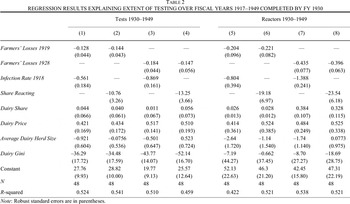
REGRESSION RESULTS EXPLAINING EXTENT OF TESTING OVER FISCAL YEARS 1917–1949 COMPLETED BY FY 1930
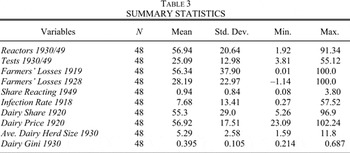
SUMMARY STATISTICS
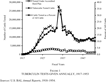
TUBERCULIN TESTS GIVEN ANNUALLY, 1917–1953
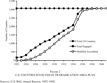
U.S. COUNTIES INVOLVED IN TB ERADICATION AREA PLAN
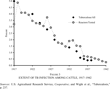
EXTENT OF TB INFECTION AMONG CATTLE, 1917–1942
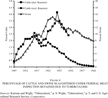
PERCENTAGE OF CATTLE AND SWINE SLAUGHTERED UNDER FEDERAL MEAT INSPECTION RETAINED DUE TO TUBERCULOSIS
 You have
Access
- 97
- Cited by