


INTRODUCTION
How did Western colonial rule impact the development of political institutions in Africa? The imprint is unmistakable at the international and national levels. Europeans imposed a state system with fixed boundaries and introduced Western-style elections, both of which largely survive today (Herbst Reference Herbst2000; Lee and Paine Reference Lee and Paine2024; Michalopoulos and Papaioannou Reference Michalopoulos and Papaioannou2016; Paine, Qiu, and Ricart-Huguet Reference Paine, Qiu and Ricart-Huguet2025). However, these higher-level institutions often had limited reach during and after the colonial period. Instead, throughout much of the colonial period, subnational institutions formed the backbone of European administration. Rural African elites usually exercised some degree of autonomy under colonial systems of “indirect rule,” and traditional chiefs from this era remain influential in African politics to this day (Archibong Reference Archibong2018; Baldwin Reference Baldwin2015; Baldwin and Ricart-Huguet Reference Baldwin and Ricart-Huguet2023; Brierley and Ofosu Reference Brierley and Ofosu2023; de Kadt and Larreguy Reference de Kadt and Larreguy2018; Henn Reference Henn2023; Nathan Reference Nathan2023; Wilfahrt Reference Wilfahrt2022). These observations raise crucial questions. To what extent did incorporation into the colonial state transform precolonial institutions? How did this process vary based on the structure of precolonial institutions? And what legacies did this leave for the postcolonial state?
We explain why it was often optimal for colonizers to delegate authority to traditionally legitimate institutions, even in historically decentralized areas. Despite military superiority, colonizers could not rule on the cheap while unilaterally overriding prior institutions. Any indirect-rule agents who lack traditional legitimacy usually struggle to maintain order and generate revenue. This is particularly true when rapid socioeconomic changes occur. Widespread dissatisfaction among colonial subjects creates pressure for colonizers to incorporate traditionally legitimate institutions. In most parts of Africa, the traditional decision-making powers of rulers were substantially constrained, often by some form of council. Empirically, we substantiate this new perspective by analyzing original data for a comprehensive sample of subnational political institutions across British Africa, often considered the quintessential example of indirect rule. We demonstrate that subnational councils were widespread, exhibited strong correlations with precolonial institutions and patterns of socioeconomic development, and exerted meaningful decision-making powers.
Our findings build upon and revise a rich literature on the theory and practice of indirect rule. The main focus is on patterns of delegation and institution building from the perspective of the colonizers, whereas the structure of indigenous local institutions plays a lesser role. The most common comparison is between British indirect rule and French direct rule; this literature includes historical evidence on distinct governance patterns and more recent social-scientific studies that analyze long-term consequences (Crowder and Ikime Reference Crowder, Ikime, Crowder and Ikime1970; Lee and Schultz Reference Lee and Schultz2012; Letsa and Wilfahrt Reference Letsa and Wilfahrt2020; McCauley and Posner Reference McCauley and Posner2015). Yet all empires exhibited extreme intraimperial diversity in the forms of local institutions. Existing studies capture one crucial dimension: within the British empire, governance tended to be more indirect in areas with more hierarchically organized states (Gerring et al. Reference Gerring, Ziblatt, van Gorp and Arevalo2011; Müller-Crepon Reference Müller-Crepon2020). But rulers varied not only in the size and centralization of their domains, but also the constraints on their authority. In precolonial Africa, institutional constraints were the norm and unchecked authority was the exception. How did historical forms of executive constraints such as councils influence decisions about the structure of colonial institutions under indirect rule?
The main answer in existing work is that historical systems of executive constraints did not matter during the colonial period. Mamdani (Reference Mamdani1996) provides the most widely cited characterization of local institutions under British colonial rule. He argues that in legally bifurcated states, which prioritized the rights of white settlers, rural African chiefs who governed under practices of indirect rule lacked any institutional constraints on their authority over their subjects. This system of “decentralized despotism” (8) was a creation of British rule (39). For chiefs under this system, “there is no question of any internal check and balance on the exercise of authority, let alone a check that is popular and democratic. The chief is answerable only to a higher administrative authority” (54).
The idea that the British were routinely able to install institutions of their own choosing builds on earlier theories by Ranger (Reference Ranger, Hobsbawm and Ranger1983) about the “invention of tradition” in the British empire and also relates to studies of particular regions, such as Eastern Nigeria (Afigbo Reference Afigbo1972), Northern Ghana (Nathan Reference Nathan2023), Kenya (Tignor Reference Tignor1971), Eastern Uganda (Roberts Reference Roberts1962), and Zambia (Posner Reference Posner2005). This research yields valuable insights into the local realities of colonial rule in these regions. Nonetheless, even when considered collectively, these works do not analyze a representative sample of British Africa. Instead, they focus disproportionately on regions with decentralized precolonial institutions in the early colonial period, before substantial socioeconomic changes. Even Mamdani (Reference Mamdani1996), cited over 12,000 times by scholars examining varied times and places, primarily analyzes atypical settler colonies such as South Africa (Spear Reference Spear2003, 9).Footnote 1 Related scholarship, which focuses specifically on African councils, does not analyze the colonial period; instead, this work focuses on the precolonial period (Ahmed and Stasavage Reference Ahmed and Stasavage2020; Baldwin Reference Baldwin2015; Stasavage Reference Stasavage2020), the present day (Baldwin and Holzinger Reference Baldwin and Holzinger2019; Baldwin, Muyengwa, and Mvukiyehe Reference Baldwin, Muyengwa and Mvukiyehe2022), or both (Neupert-Wentz and Müller-Crepon Reference Neupert-Wentz and Müller-Crepon2024).
Thus, the literature on indirect rule in British colonial Africa is incomplete in at least three ways. First, the cases examined do not comprise a systematic sample. Second, existing studies provide little insight into either the structure of local institutions or the constraints on power embedded within them. Third, existing work does not consider how the sizable socioeconomic changes that occurred during colonial rule affected reforms to local governance institutions.
Our theory addresses how rulers choose agents to govern foreign territories, given fundamental goals such as keeping the peace and extracting resources. When metropolitan agents are prohibitively expensive, the ruler needs to decide what type of indigenous agent to appoint in each locality. Agents with traditional sources of legitimacy can more effectively carry out the ruler’s directives, but appointed nontraditional agents should exhibit greater loyalty to the foreign power. We explain why colonizers will usually choose to delegate authority to traditionally legitimate institutions. Applied to our context of British Africa, this framework recovers the standard expectation that the British should delegate authority to rulers of precolonial states, where present. However, unlike related theories, we additionally anticipate that councils should accompany and constrain precolonial rulers wherever such institutions had a historical basis.
The key implication that departs from existing research applies to historically decentralized areas. Even if appointed agents who lacked traditional sources of legitimacy were chosen in the low-information environment of the early colonial period, socioeconomic changes and rising African discontent should challenge the favored status of invented chiefs. The appointment of colonial agents is a dynamic, not static, choice. In reaction to pressure, we expect British officials to reintroduce constraining institutions such as councils, which pervaded decentralized areas prior to colonialism. Smaller-scale institutions could be repurposed to achieve British objectives of effective governance by scaling them up into more highly aggregated units, governed by a council comprised of traditionally legitimate members.
We assess these theoretical expectations by analyzing a systematic sample of over 450 subnational governance units across British colonial Africa. This case not only is canonical in widespread debates about indirect rule, but also exhibits the type of precolonial variation needed to assess our hypotheses while offering sufficiently detailed and disaggregated data. The local governance units, known at the time as Native Authorities (NAs), were the primary governing institution of British rule in rural areas, where the majority of the population lived. Each NA consisted of chiefs and/or councils that exercised jurisdiction over a specified subnational territory. The jurisdiction of some NAs coincided with a single precolonial state, whereas other NAs combined multiple, smaller political communities. NAs provided government services, such as a court system, land allocation, and the regulation of local markets. They built and maintained local infrastructure such as roads. They also provided local education and health care, which they financed through the management of Native Treasuries (NTs) empowered to collect local taxes.
Our main data source for colonial institutions is a comprehensive survey of District Officers conducted in the late 1940s. The responses to this survey, now held in the British National Archives, formed the empirical basis for Lord Hailey’s Native Administration in the British African Territories (Hailey Reference Hailey1950a; Reference Hailey1950b; Reference Hailey1951a; Reference Hailey1951b; Reference Hailey1953); a five-volume comparative study of local government institutions in British African colonies. Our sample includes units from the 11 colonies for which the Hailey surveys and other sources provide quantifiable information on the structure of local institutions and other contextual information, yielding 458 subnational governance units in total. Collectively, the sample covers almost every British colony in Africa. We discuss areas excluded from Native Administration in Appendix D of the Supplementary Material, focusing on areas dominated by white settlement.
We coded numerous new variables that capture colonial-era institutions and conditions. Our main outcome variable is a cross section of indirect-rule institutions measured at the time of the Hailey surveys—whether each NA consisted of a solo chief, a chief and council, or a council only. Additionally, we incorporated numerous sources to codify the year in which councils were introduced in each locality. We also used these sources to quantify many other aspects of NA institutions, including council membership and public spending; and we compiled qualitative observations about the process of scaling up local councils.
We additionally coded a new variable for precolonial institutions, drawing from sources that describe African structures immediately prior to European colonial expansion in the late nineteenth century. The basis of our originally compiled data is 38 volumes of the Ethnographic Survey of Africa (edited by Daryll Forde), which cover close to 200 African societies. To cross-check, we also consulted dozens of historical and ethnographic monographs and articles. We constructed a three-valued variable for precolonial political institutions: state with an authoritarian ruler, state with a constrained ruler, or decentralized political institutions. We thus assess not only whether a state existed at all on the eve of colonialism, but also information about executive constraints.
Supporting our theory, but in contrast to existing claims, we find that local councils were a common component of colonial indirect-rule institutions and their presence overwhelmingly reflected precolonial precedents. In areas where precolonial councils constrained rulers, the NAs contained councils. This includes historically decentralized areas as well as centralized areas with traditional constraints on rulers. NAs comprised of solo chiefs—in the “decentralized despotism” mold of Mamdani (Reference Mamdani1996)—were comparatively rare and largely confined to the emirates of Northern Nigeria, where precolonial rulers had previously governed without meaningful constraints. Ironically, the region commonly cited as paradigmatic of British indirect rule was in fact exceptional, which is possible to show with our more systematic sample.
In many cases, the indirect-rule institutions in place by the late 1940s reflected departures from earlier colonial practices, as anticipated by our theoretical framework that situates agent selection as a dynamic rather than static choice. Often, in areas with historically decentralized institutions, British colonial officials initially attempted to govern through indigenous agents who lacked traditional sources of legitimacy, like the Warrant Chiefs of Eastern Nigeria. But these appointed agents struggled to maintain order and collect taxes amid socioeconomic changes during the turbulent interwar decades. Reforms throughout the empire during the 1930s and 1940s resurrected systems of councils, which were comprised of traditionally legitimate members while also incorporating some newer voices. Following the reforms, the greater scale of authority constituted the main departure from precolonial precedents, as the British required larger fiscal units to achieve their understanding of effective administration. The two main exceptions—in which reforms to introduce councils were nonexistent, limited, or severely delayed—were areas with authoritarian precolonial states or peripheral colonial areas that experienced marginal socioeconomic changes.
We establish these findings through a multi-method approach. Quantitatively, we regress indirect-rule institutions on precolonial institutions and measures of socioeconomic development. We consider a battery of different estimation techniques to account for substantive confounders, spatial dependence, dynamic spatial lags, and alternative methods of clustering. These tests leverage the maps we digitized of local government areas across our entire sample. Qualitatively, we present case studies on four major colonies: Nigeria, Kenya, Gold Coast, and Uganda.
Our findings have important implications for ongoing debates about African institutions and the legacies of colonialism. The prior absence of more systematic data obscured the relationship between precolonial institutions and African local governments under indirect rule. In fact, given the heterogeneity inherent in colonial practices, systematic data such as ours are needed simply to describe the institutional structures under indirect rule—in particular, the previously overlooked role of councils. Our empirical approach thus follows the general shift in studies of colonialism toward measuring institutions and outcomes at a more disaggregated scale than the national level (Boone Reference Boone2024). Examples of more fine-grained units in existing work on Africa are ethnic groups (Michalopoulos and Papaioannou Reference Michalopoulos and Papaioannou2013; Reference Michalopoulos and Papaioannou2015; Moscona, Nunn, and Robinson Reference Moscona, Nunn and Robinson2017), precolonial African states (Butcher and Griffiths Reference Butcher and Griffiths2025; Müller-Crepon Reference Müller-Crepon2020; Paine, Qiu, and Ricart-Huguet Reference Paine, Qiu and Ricart-Huguet2025; Wilfahrt Reference Wilfahrt2026), and colonial districts or other disaggregated colonial units (Acemoglu, Reed, and Robinson Reference Acemoglu, Reed and Robinson2014; Bolt and Gardner Reference Bolt and Gardner2020b; Huillery Reference Huillery2009; Ricart-Huguet Reference Ricart-Huguet2022).
Moreover, our analysis challenges long-standing arguments that simultaneously disregard African agency in the design of indirect-rule institutions while overstating the ability of British administrators to unilaterally and permanently wipe away existing institutions by installing authoritarian chiefs. We instead explain why African demands for local institutional constraints shaped the imperial response. British officials were not benevolent, but instead confronted basic strategic incentives to respond to pressures that impacted their achievement of core goals: maintaining peace and collecting revenue. Consequently, African-dominated councils became widespread at the subnational level and these institutions affected policy. Collectively, this evidence suggests that attributes of colonialism above the subnational level may provide a more compelling explanation for the difficulty of establishing durable executive constraints in postcolonial Africa. We return to this question about legacies in the conclusion.
THEORY: CHOOSING AGENTS UNDER INDIRECT RULE
Colonial governments in Africa were not the first to confront the challenges of remote administration in foreign territories. Throughout history, colonizers have sought to achieve the overarching aims of maintaining order and collecting revenue.Footnote 2 A key component of their choices is what type of agent to appoint, as different types of agents vary in their loyalty, effectiveness, and cost. The headline implication of our theory is that when cost is a binding constraint, colonizers usually face strong incentives to delegate to traditionally legitimate institutions. This implication largely aligns with existing theories for localities with a clear centralized ruler (e.g., Kabaka of Buganda), although we also offer implications for including councils (not just chiefs) as part of the bundle of traditional institutions. In a starker contrast to existing work, we also explain why colonizers will usually pivot toward traditional legitimacy even in historically decentralized areas, where institutions were typically based on extensive constraints on rulers. Installed agents like Warrant Chiefs can be expedient in circumstances of low information about local conditions and military repression. However, as societal pressures rise and colonizers gain information, traditionally legitimate institutions become more attractive, assuming councils can be scaled up to achieve fiscal efficiency. This calculus reflects the dynamic rather than static choice of colonial agents. Table 1 summarizes our main theoretical expectations.
Optimal Choice of Colonial Agents

Table 1. Long description
The table consists of five columns: Agent, Loyalty, Effectiveness, Cost, and Conditions for optimal choice.
* Traditional Agent: Unfavorable for Loyalty; Favorable for Effectiveness; Favorable for Cost. Optimal conditions include precolonial states and decentralized areas following socioeconomic changes.
* Installed Agent: Favorable for Loyalty; Unfavorable for Effectiveness; Favorable for Cost. Optimal conditions include illegible decentralized areas and disloyal kings.
* Direct rule Agent: Favorable for Loyalty; Favorable for Effectiveness; Unfavorable for Cost. Optimal conditions include European settlement and minerals.
A checkmark symbol denotes a dimension on which the specified agent is relatively favorable, while an X symbol denotes relatively unfavorable.
Note: ✓ denotes a dimension on which the specified agent is relatively favorable and ✗ denotes relatively unfavorable.
Tradeoffs in Type of Agent
Colonizers can choose to delegate substantial local authority to indigenous actors, a practice known as indirect rule. Within this broad mantle, colonizers decide between two ideal types of agent: traditional elites with preestablished local legitimacy and installed agents who lack this basis. Whereas traditionally legitimate agents tend to be more effective, they are also less beholden to the colonial administration—and therefore less inherently loyal.
Traditionally legitimate elites tend to have better information about their population, which can help to uncover plots of revolt before they manifest. Such actors also tend to be better at inducing the quasi-voluntary compliance needed to effectively collect direct taxes (Levi Reference Levi1989). However, these same sources of local legitimacy can also be used against the colonizer. Local elites are better positioned to themselves rebel or otherwise conspire against the colonizer (Finer Reference Finer1997, 66–70). Even after consolidating foreign rule, they can leverage various “weapons of the weak” that undermine colonial control (Abernethy Reference Abernethy2000; Scott Reference Scott1987).
The other ideal type of indirect-rule agent is an installed indigenous agent who lacks traditional legitimacy. One example is appointing an agent based in a nearby area, a common practice in French Africa. Another example is inflating the powers of an individual who traditionally lacked such powers, such as Warrant Chiefs in Southern Nigeria. Installed agents entail the converse pros and cons of traditionally legitimate agents. On the one hand, installed agents derive their elevated status from colonial control, which increases their loyalty toward colonial officials. On the other hand, the local population is more likely to resist foreign impositions. This lessens the effectiveness of appointed agents by reducing their ability to prevent revolts or extract direct taxes.
Alternatively, colonizers can eschew indigenous agents entirely and govern the territory more directly through official metropolitan agents or unofficial settlers. The main drawback of metropolitan agents is their high expense. Governing through European settlers entailed a somewhat different tradeoff (Lee and Paine Reference Lee and Paine2024), but possibilities for European settlement were geographically circumscribed in Africa (Acemoglu, Johnson, and Robinson Reference Acemoglu, Johnson and Robinson2001; Paine Reference Paine2019) and few areas had the scope of known mineral wealth present in other historical settings like Spanish America (Engerman and Sokoloff Reference Engerman and Sokoloff2011; Garfias and Sellars Reference Garfias and Sellars2026). Given the prohibitive costs of constructing a Weberian-style bureaucratic state, we focus primarily on choosing between the types of indirect-rule agents. In Appendix D of the Supplementary Material, we discuss more direct rule in areas with either substantial European settlement or extensive corporate presence, both among colonies within our statistical sample (Kenya Highlands, Northern Rhodesia Copperbelt, and parts of Bechuanaland) and outside (South Africa and Southern Rhodesia).
Another dimension we exclude from our theory is metropolitan ideology, in particular the inherent desire of metropolitan officials to effect transformation in their colonies. This is often cited as a key difference between British and French rule in Africa (Crowder and Ikime Reference Crowder, Ikime, Crowder and Ikime1970; Müller-Crepon Reference Müller-Crepon2020). In the concluding section, we engage with this consideration while also suggesting why local realities mattered independently of metropolitan ideology.
Optimal Choice of Agent
Given the tradeoff between loyalty and effectiveness, how does a colonizer choose between traditionally legitimate and installed agents? One key factor is the degree of centralization in precolonial institutions, as studied in existing work (Gerring et al. Reference Gerring, Ziblatt, van Gorp and Arevalo2011; Müller-Crepon Reference Müller-Crepon2020). Effective local administration requires economies of scale. This leads colonial officials to prioritize elites whose scope of authority extends beyond a small locality (e.g., only a single or small cluster of villages). If the colonizer secures basic promises of allegiance from local elites with a centralized basis, aspects of traditional administration can be repurposed under foreign rule. Furthermore, colonizers often have more hierarchical political institutions at home. Therefore, they better understand how to delegate authority to elites who themselves command allegiance under hierarchical political institutions. For these reasons, we concur with much existing work by anticipating that in areas with centralized political institutions, colonizers would delegate to traditional elites. Exceptions should be confined to places that exhibited especially strong resistance to the colonial imposition; thus, the disadvantage of proven disloyalty would outweigh the advantage of greater effectiveness.
Historically decentralized areas pose greater administrative challenges. Existing work posits that colonizers necessarily install nontraditional agents like Warrant Chiefs; if no king could be found, they would make one. This implication is logical in the low-information environment of early colonialism, when traditional societal structures were illegible to the colonizers. Misunderstandings of traditional sources of authority and constraints in African societies would lead to the installation of nontraditional agents as the default choice. Even when the local population disapproved of this choice, military repression campaigns to install early administrations would discourage movements against colonially chosen agents.
However, nontraditional agents are an expedient choice under narrower conditions than implied by existing theories. Over the longer term, we anticipate that various types of pressures would reopen the choice of loyal-but-ineffective agents. Installed agents may prove hopelessly ineffective as the local population turns against invented despots who lack local accountability. Moreover, socioeconomic conditions change over time. Revolts and other forms of agitation by colonial subjects create pressure on colonizers to pivot to another type of agent.
In decentralized areas, the scope of choice over colonial agents was broader than existing work—or early colonial officials—realized. Institutions that replicate certain aspects of traditionally legitimate institutions could constitute a viable alternative to installed agents. Many historically decentralized areas had complex institutions that empower disparate members of society through village councils, age grades, purchased titles, and secret societies (McIntosh Reference McIntosh and McIntosh1999). Foreign institutions often create prohibitive transaction costs for colonizers with limited knowledge of newly conquered territory. However, after gaining experience and learning over time, the colonizers can seek to restructure earlier institutions in ways to achieve economies of scale. For example, they can scale up councils to encompass larger areas than single villages, therefore achieving aims of fiscal efficiency. The drawbacks of autocratic installed agents increase the relative attraction of delegating authority to agents with stronger local accountability.
Socioeconomic changes reinforce the desire to reform earlier local institutions. Incorporation into a larger political structure through territorial expansion or constructing an empire inevitably yields changes. For example, traditional indigenous agents lose some powers while gaining others, and they will strategically manipulate indigenous institutions to align with the new principal–agent relationship created by the ruling power. The promotion of new modes of economic output such as cash crops and cultural influence from the metropole (e.g., religious missionaries) will also create new elites (Pengl, Roessler, and Rueda Reference Pengl, Roessler and Rueda2022). These new voices create novel demands for incorporation into local institutions. Local governance through expanded councils is better able to accommodate such demands than autocratic governance through installed agents. For similar reasons that institutions of accountability are lauded for promoting better governance in Western societies, locally accountable agents can serve colonizers’ goals of minimizing revolts and collecting revenue.
In sum, we explain why colonizers will often choose to delegate governance to traditionally legitimate agents. This implication includes, but is not limited to, areas with centralized precolonial states. In historically decentralized areas, colonizers should delegate to agents with traditional sources of legitimacy (including scaled-up councils) when their advantages in effectiveness are accentuated relative to the alternative of installed agents. Scope conditions that favor traditionally legitimate agents include prior governance failures by autocratic installed agents and socioeconomic transformation, each of which would prompt colonizers to learn more about sources of authority in precolonial institutions amid heightened pressure from local actors.
HISTORICAL BACKGROUND: APPLYING THE THEORY TO BRITISH AFRICA
Matching the implications of our theory to historical realities within British Africa yields expectations for which types of indirect-rule institutions colonizers would construct. Areas with precolonial states supplied effective rulers whom colonizers could repurpose. In historically decentralized areas, by contrast, the conditions that would favor delegation to agents with traditional legitimacy did not emerge until the interwar period. Autocratic installed agents proved to be ineffective, socioeconomic changes created new pressures, and the colonizers gained information about precolonial constraining institutions such as councils.
Two key attributes of precolonial Africa structured the subsequent choices made during the colonial period. First, although some larger and more centralized states emerged, most African political units (which numbered in the thousands) were small scale (Henn and Robinson Reference Henn and Robinson2025). Second, institutionally constrained rulers were the rule rather than exception. The ease of exit in regions with low population density and readily available land made it difficult to concentrate autocratic powers (Herbst Reference Herbst2000; Stasavage Reference Stasavage2020). Many African societies jealously guarded the internal autonomy of their local community (Vansina Reference Vansina1990, 119), which often resulted in small-scale political units with significant institutional checks on unilateral authority.
The high costs of employing metropolitan officials prompted London to rely primarily on African agents (Bolt and Gardner Reference Bolt and Gardner2020b; Gardner Reference Gardner2012; Kirk-Greene Reference Kirk-Greene1980). This resulted in the creation of a Native Administration system headed by local Native Authorities—which could be comprised of a chief (which is how the colonizers referred to rulers), a council, or both—who oversaw Native Treasuries and Native Courts. British officials could more easily identify agents with suitable authority in regions with a history of political centralization. In Buganda, for example, the Uganda Agreement of 1900 delegated a high degree of authority to the Kabaka (chief) and his council, the Lukiiko (Low and Pratt Reference Low and Pratt1960). In Northern Nigeria, under the rule of Frederick Lugard, the paradigmatic institutions of Native Administration were formalized between 1914 and 1917 to delegate authority to the emirs (chiefs) of the former Sokoto Caliphate. Similar reforms empowered the leading Yoruba chiefs in Western Nigeria.
By contrast, in areas of small-scale and decentralized precolonial polities, early British officials often misunderstood authority structures that lacked an easily identifiable head. In areas such as Southern Nigeria, the British engaged in extensive repression and military pacification to establish control. British administrators were rotated frequently and usually lacked a deep familiarity with their posted area and its political history. This impeded their ability to make informed decisions when constructing a new administrative apparatus, which often entailed on-the-spot decisions. Thus, in the early years, it was expedient to install chiefs as executive agents of the regime, many of whom lacked sources of traditional legitimacy. Empowered by the British administration and lacking indigenous institutions to check their power, Warrant Chiefs in Southern Nigeria, headmen in Kenya, and similar agents elsewhere often developed autocratic powers which they wielded in a corrupt and repressive manner (Afigbo Reference Afigbo1972; Tignor Reference Tignor1971).
However, several shocks during the interwar period heightened the tradeoff between loyalty and effectiveness by revealing inadequacies with the status quo. In many areas, installed agents—whatever their loyalty to the British administration—proved ineffective at collecting taxes and maintaining order. In Southern Nigeria, riots occurred in Warri in 1927–28, followed by the Aba Women’s War farther east in 1929. These revolts responded to the initial attempts to collect direct taxes in each area and the unpopularity of the Warrant Chiefs who sought to collect them (Ikime Reference Ikime1966; Reference Ikime1968, 436–8; Afigbo Reference Afigbo1972, 207–48). Similarly, in Kenya, nationalist agitation and protests in the 1920s signaled discontent with local headmen (Schilling Reference Schilling1976, 221). In the Kumasi Division of Ashanti (Ghana), there was no realistic threat of a revolt, but the British needed a way to induce tax compliance. The British had previously deposed the traditional leader (Asantehene) and subsequently realized that “people would not pay tax to support a stool [i.e., ruler] which, traditionally, had no claim upon their allegiance …[which] helped to persuade the Government to restore the Ashanti Confederacy” (Tordoff Reference Tordoff1965, 147).
Elsewhere, officials complained about fiscal ineffectiveness stemming from inadequate economies of scale in areas with small-scale indigenous authority. Colonial officials in Northern Rhodesia (Zambia) lamented that the Native Authorities “controlled so few people that they were unable to support independent treasuries and could never become effective units of local government.”Footnote 3 Administrators in the Gold Coast were even blunter about their desire for larger units: “The presence of these little petty kingdoms …all fiercely jealous of their semi-independence but all within the same economic entity, has militated greatly against progressive and satisfactory Native Administration.”Footnote 4
Fiscal effectiveness was important at a time when colonial administrations were increasingly turning to local governments—including Native Authorities—to address growing demands for social services among the African population. These demands reflected the economic instability of the interwar period. Early colonial administrations generated revenue streams primarily by building infrastructure to promote export production of a small number of primary commodities. In many colonies, this fostered economic growth and expanded the taxable surplus. However, this growth was highly vulnerable to shifts in global prices, and several prolonged bouts of contraction occurred during the interwar period (Broadberry and Gardner Reference Broadberry and Gardner2022). The impact of these economic upheavals on living standards led to growing political activism among African producers (Southall Reference Southall1975). They demanded increased provision of public services, which the colonial governments had few resources to meet and for which they turned to local government.
Applying our general theoretical framework, these are precisely the conditions under which we would expect the delegation of authority to traditionally legitimate agents. Some areas had preexisting autocratic rule, which we expect to persist under foreign rule. But much of precolonial Africa was governed through constraining institutions such as councils. Despite earlier colonial practices of installing nontraditional chiefs, the twin stimuli of anti-tax revolts and socioeconomic changes should prompt reforms that promote institutions with a greater degree of traditional legitimacy, even if scaled up from their precolonial predecessors, and open space for the voices of new elites emerging from processes of economic change.
Three main hypotheses follow. First, decentralized areas as well as areas with constrained precolonial states should more frequently include councils as part of their Native Authority than areas with authoritarian precolonial states. Second, areas with any type of precolonial state should more often have a chief as part of their Native Authority than historically decentralized areas, which could be governed by a council without a named ruler. Third, the extent of reforms toward empowering councils in decentralized areas should be greater where socioeconomic changes were more extensive. In the remainder of the article, we assess these hypotheses and theoretical corollaries using originally compiled data on precolonial and colonial institutions in British Africa.
DATA
Unit of Analysis: Native Treasuries and Digitized Maps
The British administrative scheme featured, in descending order of size: provinces, divisions/districts, Native Treasuries (NTs), and Native Authorities (NAs). In our main dataset, the unit of analysis is the NT. Our statistical sample consists of 458 NTs across British Africa, including 201 in Nigeria, 87 in the Gold Coast (Ghana), 52 in Tanganyika (Tanzania), 42 in Northern Rhodesia (Zambia), 25 in Kenya, 16 in Nyasaland (Malawi), 12 in Uganda, 12 in the Gambia, 9 in Bechuanaland (Botswana), and 1 in each of Lesotho and Swaziland (Eswatini).
Although we measure colonial institutions for each Native Authority, we use Native Treasuries as the unit of analysis. Fiscal authority, a key component of the decision-making powers of NAs, was exercised through NTs. NTs were thus the fiscal units to which British assessments about the scale of effective authority applied. In practice, the distinction makes little difference for our main outcome variable because NTs containing multiple NAs exhibited limited institutional variance (we later provide details).
We sourced and digitized a comprehensive set of maps of NTs for essentially our entire sample.Footnote 5 We compiled these maps from the colonial archives and other available sources; only for the small colony of the Gambia were we unable to uncover a disaggregated source map. In some colonies (e.g., Kenya and Uganda), almost every NT area was synonymous with a district, and thus these maps align with ones digitized in prior work (Müller-Crepon Reference Müller-Crepon2020; Ricart-Huguet Reference Ricart-Huguet2022). But in the two colonies with the largest number of NTs, Nigeria and the Gold Coast, most districts contained numerous NTs. Using varied source maps, we constructed a one-to-one mapping between NTs and polygons that we digitized using our more detailed colonial maps. For some NTs in these two colonies, the historical maps did not provide a corresponding delineated area. In such cases, we created a proxy by digitizing a small radius around a point corresponding to the location of the NT, which we identified by locating the main town associated with the NT in the source maps and cross-checking it with Google Maps. Thus, building on the pioneering efforts of Bolt and Gardner (Reference Bolt and Gardner2020a; Reference Bolt and Gardner2020b), we constructed a comprehensive set of maps of British administrative units at a finer level of detail than in existing work. The spatial data enable us to measure socioeconomic conditions for each NT and assess spatial dependence across units.
Precolonial Institutions
We constructed a new, disaggregated measure of precolonial political institutions.Footnote 6 This measure improves substantially upon existing ethnic-group level measures of historical institutions, as we discuss in Appendix A.2 of the Supplementary Material. To distinguish between states and decentralized areas, we extended a recent dataset of precolonial African states from Paine, Qiu, and Ricart-Huguet (Reference Paine, Qiu and Ricart-Huguet2024; Reference Paine, Qiu and Ricart-Huguet2025), yielding a list of 58 states. Our main innovation was the next step: measuring whether institutional constraints were present for each state. Based on extensive historical and anthropological sources, we coded a binary variable for whether a council imposed effective institutional constraints on the ruler around the eve of colonization. To determine this, we sought to answer the following types of questions using our sources, with affirmative answers indicating an effective council. Did the ruler regularly consult a council? Did a council regularly influence policy decisions? Was the ruler unable to regularly override the desires of the council? The scholarly literature suggests many ways in which rulers could be constrained and made accountable, but we chose this definition because it is concrete and relatively straightforward to measure. We consulted the dozens of relevant volumes of the Ethnographic Survey of Africa (edited by Daryll Forde), which we cross-checked using scores of additional books and articles about individual cases. Finally, we matched each precolonial state to an NT, which was straightforward because of the high overlap in names.
Overall, we score precolonial institutions within each NT area as either (a) state with an authoritarian ruler, (b) state with a ruler constrained by an influential council, or (c) decentralized. The latter category encompasses NTs without a corresponding precolonial state. Although we do not directly measure institutions in areas with decentralized institutions, extensive anthropological and historical evidence catalogs the prevalence of political constraints on rulers and of village governance entirely through councils (later we provide examples from specific cases). Thus, we treat decentralized institutions as synonymous with constrained leaders. On this dimension, these areas resembled states with constrained rulers.
Colonial Native Authority Institutions
We compiled numerous new variables that capture colonial-era institutions and conditions. Our primary sources are the five volumes of Lord Hailey’s Native Administration in the British African Territories (Hailey, Reference Hailey1950a; Reference Hailey1950b; Reference Hailey1951a; Reference Hailey1951b; Reference Hailey1953) and the comprehensive surveys of District Officers that Hailey used to construct these volumes, which we accessed from the U.K. National Archives in London.Footnote 7 The Hailey surveys constituted the first attempt to systematically characterize Native Administration in British Africa. This enabled us to develop appropriately local measures of indirect-rule institutions in the 1940s, reflecting reforms which took place over the course of the previous decade.
We classify the following institutional structures, which differ in whether a chief and/or council was legally recognized in the colonial Gazettes as part of the Native Authority.Footnote 8
-
Solo chief (equivalently, Sole NA). Example: Emir of Kano in Northern Nigeria. He had an advisory council, but this body was not legally recognized as having powers as part of the NA.
-
Chief and council. Example: Ada Manche and the State Council in the Gold Coast.
-
Council only. Example: the Ndoki Clan Council in Eastern Nigeria. For this and the preceding two types, we code subnational institutions based on the structure of the Superior NA, although many encompassed lower-level Subordinate NAs that lacked the full powers of Superior NAs.
-
Federal council. These consisted of a higher-level NA council that controlled the NT and multiple lower-level NAs (typically chiefs, who retained various powers delegated to authorities at a more local level). Examples: Local Native Councils (LNCs) in Kenya, federal councils of chiefs in Tanganyika and Nyasaland, and District Councils in Eastern Uganda. For our main analysis, we group federal-council NAs with council-only NAs. Such cases are coded solely based on the higher-level council because this body coincided with the NT, our unit of analysis. However, we also present a robustness check (Table B.7 in the Supplementary Material) in which we reclassify these cases as chief-and-council NAs, which reflects the institutions for the lower-level NAs as well.
For NTs that encompassed multiple NAs, we compute the fraction of NAs with each type (e.g., an NT encompassing two NAs with solo chiefs and two with chief-and-council NAs would be 0.5 on each of these variables and 0 on council only). Although many NTs contained multiple NAs, institutional variance within NTs was minimal: in 443 of 458 NTs (97%), the NT is coded as entirely solo chief, chief and council, or council only.
We additionally compiled information about the membership of councils, the creation of finance committees that enabled Africans to participate in the budgeting process, and the composition of expenditures by NTs.Footnote 9
Socioeconomic Variables
Socioeconomic changes play an important role in our theory, as we anticipate that colonial officials would target more developed areas when they implemented reforms to improve the fiscal efficiency of local governance units. We operationalize socioeconomic changes with the following variables, which (if not otherwise specified) are measured around mid-century.Footnote 10
Cash crops, where present, were typically the main source of economic value and export revenue (Frankema and Booth Reference Frankema and Booth2020; Pengl, Roessler, and Rueda Reference Pengl, Roessler and Rueda2022). Early British administrators sought to raise revenue and targeted long-standing cash-crop products while additionally trying to develop new ones. Thus, the value of cash crop production within each NT area directly measures an important component of the area’s development. Colonial railways were among the most significant colonial investments. They were deliberately constructed to connect areas of high economic value and, in turn, spurred significant socioeconomic change (Jedwab, Kerby, and Moradi Reference Jedwab, Kerby and Moradi2017). We capture this effect by measuring the distance between the centroid of each NT polygon and the nearest railway. We also control for distance from the capital and distance from the coast. These are, however, less direct measures of social economic development and potential because the capital was not always the only (or even main) economic center, and the relative distance from the coast was less important within inland colonies. Population density could have influenced the type of colonial institutions (Acemoglu, Johnson, and Robinson Reference Acemoglu, Johnson and Robinson2002; Engerman and Sokoloff Reference Engerman and Sokoloff2011) and the difficulty of constructing effective state institutions (Herbst Reference Herbst2000). Absolute population size, although less obviously important, could have affected prospects for constructing economies of scale.
European special interests also affected local economies and governance. The presence of Christian missions could reflect existing patterns of socioeconomic development and stimulate further change (Jedwab, Meier zu Selhausen, and Moradi Reference Jedwab, Meier zu Selhausen and Moradi2022), particularly in the case of missions founded earlier in the colonial period. We capture early missionary presence with a binary indicator for whether the NT area encompassed a mission site as of 1914. European settlers, where present, were another influential special-interest group, and we capture their presence with the percentage of European-alienated land. However, as we discuss in Appendix D of the Supplementary Material, the areas with the highest levels of alienated land were excluded from Native Administration entirely, which creates issues of sample selection for interpreting the coefficient estimates for this variable.
Panel Data on the Introduction of Councils
Our theory anticipates changes over time in the composition of indirect-rule institutions. We constructed a secondary dataset consisting of annual observations for the introduction and presence of NA councils between the 1920s and 1940s, using the somewhat more highly aggregated unit of the district (
$ N $
 = 238). We used the Hailey volumes and surveys as well as numerous additional colony-specific sources to fill in dates as precisely as possible, for which we provide extensive details in Appendix C of the Supplementary Material.
VARIANCE IN NATIVE AUTHORITY INSTITUTIONS
Overview of Patterns
By the time of the Hailey surveys in the late 1940s, solo-chief NAs were rare—only 17% of all NAs, as shown in Table 2. The remaining NAs included councils, either chief and council (36%) or council only (47%). This observation contrasts starkly with the standard portrayal of “decentralized despotism” and unchecked chiefs everywhere, and also underscores the extreme heterogeneity in indirect-rule institutions. NAs without a council (solo-chief NAs) pervaded NT areas that encompassed authoritarian precolonial states (90%), but were rare in areas with a constrained precolonial state (9%) or historically decentralized institutions (12%). NAs without a chief (council-only NAs) were common in historically decentralized areas (58%), but completely absent from areas containing a precolonial state—all of which contained a chief as part of their NA. As a corollary of these two patterns, NT areas with constrained precolonial states usually preserved both the chief and the council elements of their precolonial institutions, as 91% had chief-and-council NAs.
Cross Tabulations: Indirect-Rule Institutions

Table 2. Long description
The table consists of five columns and five rows.
Column headers from left to right are: Precolonial forward slash colonial, Solo chief, Chief and council, Council only, and Totals.
Row 1: Authoritarian state. Solo chief 90 percent, Chief and council 10 percent, Council only 0 percent, Totals 7 percent.
Row 2: Constrained state. Solo chief 9 percent, Chief and council 91 percent, Council only 0 percent, Totals 12 percent.
Row 3: Decentralized. Solo chief 13 percent, Chief and council 30 percent, Council only 58 percent, Totals 81 percent.
Row 4: Totals. Solo chief 17 percent, Chief and council 36 percent, Council only 47 percent, Totals N equals 458.
The data indicates a strong correlation between authoritarian states and solo chief institutions, constrained states and chief and council institutions, and decentralized states and council only institutions.
Note: The sample is our main dataset, a cross section of Native Treasuries in the late 1940s. Tables A.2 and A.3 in the Supplementary Material provide more detailed summary statistics.
Figure 1 depicts precolonial and colonial institutions for four colonies—Nigeria, Kenya, Gold Coast, and Uganda—which, collectively, exhibited substantial variation on the main variables. These are the main cases for which we provide supporting qualitative evidence, although we present maps and discuss the remaining colonies in Appendix C.6 of the Supplementary Material.
Maps of Precolonial and Colonial Institutions
Note: The units in this and the following figures with maps are Native Treasury areas (Figure C.3 in the Supplementary Material presents maps for the other colonies in our statistical sample). For all precolonial units and almost all colonial units, the institutional variable is binary. A small number of NTs, though, contained multiple NAs that varied in their institutional type. In such cases, for the colonial maps, the darkest blue indicates that more than half of the NAs were solo chiefs; and, if half or more had councils, the shade of blue indicates whether chief-and-council or council-only NAs were more prevalent.

Figure 1. Long description
A multi-panel set of geographical maps divided into four sections: a Nigeria, b Kenya, c Gold Coast, and d Uganda. Each section contains two maps: Precolonial on the left and Colonial on the right. The maps use shades of blue to represent institutional types: light blue for Decentralized or Council-only N A, medium blue for Constrained state or Chief-and-council N A, and dark blue for Authoritarian state or Chief-only N A. White indicates No Native Administration.
* Panel a Nigeria: The Precolonial map shows a high density of dark blue (Authoritarian) in the North and light blue in the South. The Colonial map shows an expansion of dark blue across the North and Central regions, with medium blue appearing in the Southwest.
* Panel b Kenya: The Precolonial map is almost entirely light blue (Decentralized). The Colonial map shows a significant shift to dark blue (Authoritarian) in a vertical band through the Central and Eastern regions, while the West remains light blue.
* Panel c Gold Coast: The Precolonial map shows a mix of medium blue in the Central-South and light blue elsewhere. The Colonial map shows a consolidation of medium blue (Constrained state) across nearly the entire territory.
* Panel d Uganda: The Precolonial map features a large medium blue area in the South-Central region with light blue in the North. The Colonial map maintains a similar distribution but with more defined medium blue boundaries in the South and Southwest.
Nigeria exhibits the greatest amount of within-colony variation. As the map shows, the authoritarian precolonial states in the North all had solo-chief NAs, the constrained states in the West all had chief-and-council NAs, and council-only NAs were nearly universal among the decentralized areas in the East. In Kenya, the predominant pattern is council-only NAs in historically decentralized areas. In the Gold Coast, chief-and-council NAs were nearly universal amid a precolonial landscape comprised of constrained states of varying sizes as well as decentralized areas. In Uganda, the southwestern areas with precolonial states preserved chiefs in their Native Administration, although formerly authoritarian rulers were recognized alongside their councils under British rule. This contrasted with council-only NAs in the decentralized East and North.
The presence of NA councils by the late 1940s reflected changes over time, as summarized in Figure 2. Early British administration in Africa was characterized by the persistence of chiefs in areas of precolonial states and the installation of chiefs elsewhere. However, revolts and socioeconomic changes made installed chiefs increasingly untenable, and the British drew from precolonial precedents when reforming governance institutions. Over time, the prevalence of councils diverged between areas that traditionally had constraints on rulers and those that did not (see also Table C.1 in the Supplementary Material).
Councils in Native Authorities over Time
Note: The sample is our secondary dataset, an annual panel of colonial districts. The lines are averages for each category of precolonial institutions for every year between 1923 (one year before reforms became widespread, starting in Kenya) and 1949 (Hailey surveys). Years during WWII are shaded gray. Appendix C of the Supplementary Material details the data and Table C.1 in the Supplementary Material summarizes changes over time for individual regions and colonies.

Figure 2. Long description
The Y-axis is labeled Fraction of districts with a Native Authority council, ranging from 0 to 1. The X-axis represents years from 1923 to 1949. A gray shaded vertical region covers the years of W W I I, roughly 1939 to 1945.
* Authoritarian state: Represented by a flat black horizontal line at approximately 0.18, showing no change over the entire period.
* Constrained state: Represented by a red line. It starts at approximately 0.6 in 1923, remains flat until the mid-1930s, then rises to approximately 0.68. It remains flat through the W W I I period and then rises sharply after 1945, ending at approximately 0.9 in 1949.
* Decentralized: Represented by a blue line. It starts at the lowest point, approximately 0.05 in 1923, and shows a steady, staggered upward trend. It crosses the Authoritarian line around 1925 and continues to rise, reaching approximately 0.65 by the start of the gray shaded W W I I period. It continues a slow upward trend during the war and ends at approximately 0.82 in 1949.
Regression Models
Using our main dataset of NTs, we confirm a robust correlation between precolonial institutions and NA institutions using regression models that account for various confounders. In Table 3, the DV in Columns 1–3 is solo-chief NAs, and in Columns 4–6 is chief-and-council NAs. We do not run models using council-only NAs as the DV because, as shown in the cross-tabulations, such institutions were exclusive to decentralized areas (hence creating collinearity with the intercept term in the model). Using OLS, we estimate

Correlates of Native Authority Institutions

Table 3. Long description
A statistical table with two main dependent variables: Solo-chief N A (Models 1 to 3) and Chief-and-council N A (Models 4 to 6).
Key independent variables and their coefficients include:
* Decentralized: Negative coefficients across all models, ranging from -0.313 to -0.813, all significant at p < 0.01.
* Constrained state: Negative coefficients for Solo-chief N A models (-0.812, -0.718, -0.646), all significant at p < 0.01.
* Authoritarian state: Negative coefficients for Chief-and-council N A models (-0.812, -0.375, -0.534), all significant at p < 0.01.
* Population: 0.0495 for Model 3 and -0.0680 for Model 6, both significant at p < 0.01.
* Mission in 1914: -0.162 for Model 3 and 0.220 for Model 6, both significant at p < 0.01.
* Intercept: Positive values across all models, ranging from 0.351 to 1.195.
Summary statistics at the bottom:
* Native Treasuries: 458 for most models, 446 for Models 3 and 6.
* Provinces (clusters): 60 for most models, 59 for Models 3 and 6.
* R-squared: Ranges from 0.195 (Model 4) to 0.568 (Model 5).
* Colony F E: Included in Models 2 and 5.
Standard errors are provided in parentheses and Conley standard errors in brackets below the coefficients.
Note: The sample is our main dataset, a cross section of Native Treasuries in the late 1940s. All models are estimated using OLS. The precolonial variables are binary. Every socioeconomic development variable is logged except the binary indicator for any Christian mission in 1914. Province-clustered standard error estimates for all variables are reported in parentheses. Conley standard error estimates for the precolonial variables are in brackets; the distance cutoff is 1
$ {}^{{}^{\circ}} $
 lat × 1
$ {}^{{}^{\circ}} $
 long, or approximately 70 sq.mi. at the equator. All NTs in the Gambia are dropped in the models with covariates, and the Gambia, Swaziland, and Lesotho are dropped in the calculation of Conley standard errors. ***
$ p<0.01 $
 , **
$ p<0.05 $
 , *
$ p<0.1 $
 .
In Columns 1–3, the omitted reference category for Precolonial Institutions is authoritarian state, which reflects our theoretical expectation that solo-chief NAs would be less prevalent in NT areas with either type of precolonial constraints. In Columns 4–6, the omitted reference category for Precolonial Institutions is constrained state, which reflects our theoretical expectation that chief-and-council NAs would be less prevalent elsewhere.
Columns 1 and 4 are the baseline specifications that contain the precolonial variables only. We add different covariates,
$ {X}_i $
 , in the subsequent models. In Columns 2 and 5, we control for colony fixed effects to account for idiosyncratic differences in the implementation of Native Administration ordinances across colonies. In Columns 3 and 6, we add the socioeconomic variables. We adopt a conservative approach in all models by estimating standard errors at the province level (
$ N $
 = 60). We separately estimate Conley standard errors. Both procedures address concerns about spatial autocorrelation, which we discuss in more depth later.
The regressions confirm that the discrepancies previewed in the cross-tabulations remain large in magnitude and statistically significant when accounting for possible confounders. Columns 1–3 are the most important specifications for our thesis, as they demonstrate that areas with precolonial constraints were much less likely than areas with authoritarian states to have unconstrained solo chiefs. Thus, precolonial constraints were usually replicated with some form of empowered council under British Native Administration. Columns 4–6 demonstrate that areas with constrained precolonial states were unique, but for heterogeneous reasons: more likely than areas of authoritarian precolonial states to have councils as part of their NA, and more likely than historically decentralized areas to have chiefs as part of their NA.
Additional Robustness Checks
Appendix B.1 of the Supplementary Material presents various robustness checks for Table 3: estimating the coefficients with logit models, using provinces as the unit of analysis, clustering standard errors by ethnic group, changing which precolonial state is the omitted reference category, measuring council-only NAs with alternative criteria, and assessing sensitivity to unobserved confounders. We also confirm in a regression model the pattern suggested in Figure 2. Decentralized areas became significantly distinguished from authoritarian states in the prevalence of NA councils starting in the early 1930s, as reforms became widespread. The time trend is also positive, but flatter, for areas with constrained states, which more frequently had councils at the beginning of the interwar period.
Spatial Autocorrelation
As shown in the maps, precolonial institutions exhibited high spatial autocorrelation. If our theory is correct, we would therefore also anticipate high spatial autocorrelation in colonial institutions. Nonetheless, introducing a colonial council to one local governance unit could spill over to influence prospects for introducing councils in neighboring governance units. This indirect effect, as opposed to the direct effect of precolonial institutions that we attempt to estimate, creates a specific confounding concern.
Our main models partially address the nonindependence of NT units by clustering standard errors at the higher level of the province, and we also estimate Conley standard errors. Here, we directly account for nonindependent observations by estimating spatial autoregressive models. In Panels A and B of Table 4, we show that adding a spatial lag to the cross-sectional models attenuates somewhat the estimates for the main coefficients, but they remain large in magnitude and statistically significant. In Panel C, we incorporate a dynamic component into the spatial models by using our annual panel data on the introduction of councils, which enables us to include a longitudinal lag for institutions in neighboring areas. Decentralized areas and constrained states each continue to be distinguished from authoritarian states when accounting for these additional sources of confounding.
Spatial Autoregressive Models

Table 4. Long description
The table presents regression results for three dependent variables: Solo-chief N A (columns 1 to 3), Chief-and-council N A (columns 4 to 6), and Council in N A panel (columns 7 to 9).
Key independent variables and their coefficients include:
* Decentralized: Negative coefficients ranging from -0.284 to -0.503 in columns 1 to 6; positive coefficients from 0.392 to 0.417 in columns 7 to 9. All are significant at p < 0.01.
* Constrained state: Negative coefficients from -0.388 to -0.436 in columns 1 to 3; positive coefficients from 0.256 to 0.563 in columns 7 to 9.
* Authoritarian state: Negative coefficients from -0.351 to -0.618 in columns 4 to 6.
* Population: 0.024 in column 3; -0.067 in column 6; 0.054 in column 9.
* Population density: -0.012 in column 3; 0.004 in column 6; -0.040 in column 9.
* Value of cash crops: -0.010 in column 3; 0.006 in column 6; 0.010 in column 9.
* % alienated land: -0.012 in column 3; 0.073 in column 6; 0.040 in column 9.
* Distance from railway: 0.017 in column 3; 0.065 in column 6; -0.066 in column 9.
* Distance from capital: 0.010 in column 3; -0.059 in column 6; 0.046 in column 9.
* Distance from coast: -0.010 in column 3; 0.044 in column 6; -0.060 in column 9.
* Mission in 1914: -0.118 in column 3; 0.155 in column 6; 0.082 in column 9.
Model diagnostics at the bottom indicate the number of Native Treasuries is 446 for columns 1 to 6, while columns 7 to 9 include 6,426 district-years and 238 districts. Checkmarks indicate the inclusion of L D V, Colony F E, Covariates, Error lag, and Year F E across various models. Standard errors are provided in parentheses below coefficients.
Note: Columns 1–6 use our main dataset (cross section of Native Treasuries) and replicate the respective columns from Table 3. Here, we estimate spatial autoregressive models, with the spatial lag of the dependent variable specified using a spatial weighting matrix that assigns an identical positive weight for any NTs that shared a common border, and 0 otherwise; and the weights sum to 1. We estimate these models using maximum likelihood and present heteroskedasticity-robust standard error estimates in parentheses. Columns 7–9 use our secondary dataset, an annual panel of districts between 1923 and 1949. The DV equals 1 in any year including and after the first in which a Native Authority within the district had a legally recognized council, and 0 otherwise. These are GLS random effects models with spatial lags for the dependent variable and error term, plus year fixed effects. ***
$ p<0.01 $
 , **
$ p<0.05 $
 , *
$ p<0.1 $
 .
Decentralized Areas
Case evidence from Nigeria, Kenya, the Gold Coast, and Uganda provides additional confirmation for our hypotheses. These are the four largest colonies in our sample by populationFootnote 11 and, collectively, exhibited substantial variation on both precolonial and colonial institutions. The following also provides process-tracing evidence on the dynamics of institution building throughout the colonial period and the emphasis the British placed on identifying traditionally legitimate institutions while simultaneously scaling up fiscal authority.
Political organization in precolonial Southern Nigeria, east of Yorubaland, was characterized by hundreds of independent villages in densely populated areas, in which authority was concentrated in village elders who did not hold hereditary positions. The decentralized institutions among the Igbo and neighboring groups were initially illegible to the British, who granted warrants for individuals to serve on the Native Courts. Many of these Warrant Chiefs were arbitrarily selected, and even those with some traditional standing gained powers well beyond what existing customs permitted (Afigbo Reference Afigbo1972). In response to the anti-tax revolts in Warri and Aba in the late 1920s, mentioned earlier in the historical background, the British collected over three hundred Intelligence Reports to learn about traditional institutions throughout Eastern Nigeria and adjacent areas. Colonial reports noted that the Warrant Chiefs, or Native Courts, would not provide a suitable basis for constructing better NAs: “Attempts have been made to utilise in part the machinery of Native Courts already in existence, but these, being very largely alien institutions unsupported by native custom, have been found unsuitable as a foundation on which true Native Administrations can be built.”Footnote 12
Instead, new NAs were deliberately built up from the village level. By the mid-1930s, the scores of NTs corresponded with new clan and district councils (Hailey Reference Hailey1951a, 159–60; Ikime Reference Ikime1969, 220–63). British administrators were often surprised at the resiliency of precolonial institutions, despite decades of colonial rule. In Warri, for example, the local African response to the governance void created by the anti-tax riots was that “village councils composed of Ekpako [village elders] and titled men were ruling the towns. It thus became clear that the operation of the Native court [Warrant Chief] system had not succeeded in destroying the indigenous political institutions. …The ease with which they revived showed a resilience which is not often credited to them” (Ikime Reference Ikime1969, 227). Councils of village elders successfully collected the taxes with which they were tasked (229, 241), which met the aims of the British administration. Beyond Warri, British administrators were pleased that “[a]t the present stage the newly-organised councils are beginning to find their feet and to gain confidence, and it is a significant fact that in areas where, in the past, tax could only be collected with difficulty under direct European supervision, it has this year been collected in full by the Councils without any extraneous aid.”Footnote 13
Following the reforms, the main break from precolonial precedents was the much greater scale of authority than traditional village councils had wielded, as the new NA and Treasury institutions scaled up from village councils to higher-level councils for the clan or division. The British explicitly encouraged scaling up for purposes of administrative efficiency, noting the “marked tendency towards a reduction of the numbers of representatives composing these administrative and judicial bodies, and an amalgamation of the small units into larger ones which can be given a higher degree of responsibility.”Footnote 14
In Kenya, the predominant form of traditional institutions among major groups such as the Kikuyu and Kamba was age grades, which consisted of relatively small lineage groups who rotated power within the group. Headmen initially appointed by the British, who were not subject to traditional constraints, often governed in an authoritarian manner (Tignor Reference Tignor1971). But protests in the early 1920s prompted reforms. Starting in 1924, the British began supplanting the executive powers of the headmen by introducing LNCs. Scaled up to the district level, LNCs administered much larger jurisdictions than those of headmen; each district, on average, encompassed over 15 headmen. They were intended to be what Schilling (Reference Schilling1976, 221) describes as “safety valve, an acceptable framework for African political expression.” LNCs had expanded powers and responsibilities (e.g., setting local rates) and incorporated a range of voices beyond the headmen, particularly those of mission-educated Africans and local businessmen.Footnote 15
Many local leaders in Eastern Uganda were vassals to the neighboring states of Buganda and Bunyoro before the onset of British colonialism. The process of scaling up smaller traditional political institutions began shortly after the turn of the century, when agents from the neighboring state of Buganda implemented reforms in Busoga and neighboring areas. “The larger of the Soga kingdoms became saza (counties) on the Ganda model, while smaller ones were amalgamated as gombolola (sub-counties) …Following modern Ganda practice, a muruka (parish) unit with a chief was introduced between the sub-county and the village levels” (Fallers Reference Fallers and Richards1960, 84–5; see also Roberts Reference Roberts1962, 450). In 1919, a Native Administration headquarters was created for all of Busoga, which consisted of a council headed by a Soga king who served as President, a nonhereditary position (Fallers Reference Fallers and Richards1960, 84; Hailey Reference Hailey1950a, 28). During the 1930s, the colonial administration embarked on a process of reorganization aimed at amalgamating smaller chieftaincies.Footnote 16 In 1936, the new scaled-up councils gained a firmer legal footing with the introduction of a tiered system of councils building up to the county level from the lower-levels gombolola and muruka units.
Constrained States
Many areas governed by more centralized states had a tradition of constrained rulers. In the major precolonial states in Yorubaland (Western Nigeria), obas (rulers) claimed divine powers. However, in practice, each oba consulted with a council of elders on all important decisions. Early British rule broke this relationship. When Native Administration was formally introduced to Western Nigeria in 1917, the major Yoruba rulers were named as first- or second-class chiefs but their traditional councils were disregarded, at least in the British Gazettes. Footnote 17 The most notorious case was the Alafin of Oyo, whose powers were inflated well beyond traditional limits with British support (Atanda Reference Atanda1973).
By the time of the Hailey surveys, though, a council was recognized as part of the NA in every major Yoruba state. The pivot away from authoritarian chiefs began in tandem with the reforms in the 1930s to supplant the Warrant Chiefs. The shift toward councils reflected the new British emphasis that “the doctrine that the jurisdiction of any Native Authority must be based on the consent of the people over whom such authority would be exercised,” as they feared a repeat of the anti-tax revolts in Warri and Aba in the late 1920s (Atanda Reference Atanda1973, 249). “[B]ecause the people became dissatisfied with the new order, they evinced a desire to return to a system which had operated successfully under different conditions, i.e., the pre-colonial system” (Ikime Reference Ikime1968, 436–8). Moreover, the centralized Yoruba states differed from the decentralized parts of Western Nigeria, many of which had council-only NAs.Footnote 18
In the precolonial Gold Coast, a large number of Akan states consisted of a hereditary Omanhene (ruler) who controlled the state administration alongside his Council of Elders; and, for some decisions, a broader State Council (Manoukian Reference Manoukian1950, 35). The largest state was the Asante Empire, which the British originally dissolved. The subsequent restoration of the Asante Confederacy in 1935, consisting of the Asantehene (ruler) and his council, reflected the inability to find a satisfactory alternative form of Native Administration (Tordoff Reference Tordoff1965). Farther south, the British complained about the fiscal ineffectiveness of smaller Akan states (e.g., Fanti) and engaged in an extensive process of scaling up these units.Footnote 19
Authoritarian States
The structure of NAs in Northern Nigeria was more authoritarian throughout the colonial period, but this reflected precolonial precedents. The Sokoto Caliphate originated in the early nineteenth century when jihadist cavalrymen conquered long-standing Hausa states. They subsequently formed roughly two dozen emirates, each of which had substantial local autonomy but was tied to the center at Sokoto through annual tribute and claims of legitimacy. Hereditary emirs faced few constraints; councils existed, but tended to have little influence. Under British rule, the emirs of leading Sokoto emirates (including Sokoto, Gwandu, and Kano) became first-class chiefs, and every emir was recognized at least as a second-class chief. Throughout the colonial period, these solo-chief NAs had councils which were advisory rather than legally recognized.Footnote 20
Even in Northern Nigeria, though, NA institutions were not uniformly authoritarian. The Sokoto Caliphate shaped British territorial claims, patterns of conquest, and the organization of provinces. Nonetheless, many parts of Northern Nigeria were decentralized. The Sokoto emirs confronted hostile enclaves populated mostly by non-Muslims concentrated in mountainous regions like the Jos Plateau. Despite persistent warfare and slave raiding, certain areas successfully resisted control by any emirate. Externally, the limits of Sokoto expansion were shaped not only by other states (e.g., Bornu in the northeast and Borguland in the southwest), but also by smaller states and decentralized peoples like the Tiv.
NAs in the historically decentralized parts of Northern Nigeria experienced substantial changes in the 1930s—like their counterparts in Southern Nigeria, but unlike the Sokoto emirs who retained their positions as solo chief NAs. In the assessment of British administrators, the emirate system worked in areas that historically had such institutions but failed in what they called the “pagan” areas. “The objective during the latter months of [1933] was therefore to endeavour to penetrate this veneer and discover the true forms of government among the numerous pagan tribes.”Footnote 21 For example, the Tiv were organized by small-scale units, such as descent groups and lineages. British administrators initially misunderstood traditional institutions and tried various schemes over time to impose authority and collect taxes. They eventually recognized councils throughout the roughly three dozen localities and created a scaled-up Native Authority council populated by local clan fathers (Dorward Reference Dorward1969). Following reforms throughout the historically decentralized areas of Northern Nigeria in the 1930s, two-thirds of NT areas contained at least one NA with a council (Figure 3).Footnote 22
Councils in Decentralized Parts of Northern Nigeria

Figure 3. Long description
A map of Nigeria is divided into internal administrative boundaries. A legend in the bottom-right corner defines five categories.
* Precolonial state: Represented by white or very pale off-white, this covers the vast majority of the map area.
* All N A s had councils: Light blue, appearing in small clusters in the Northwest and Central regions.
* Greater than or equal to 50 percent N A s had councils: Pale teal, located in small pockets in the Northeast and Central-South regions.
* Less than 50 percent N A s had councils: Medium blue, found in a few isolated areas in the Central and Southwest regions.
* No N A s had councils: Dark navy blue, concentrated in several distinct patches along the Northern border, the Eastern border, and a cluster in the Southwest.
The distribution shows that while most of the country is categorized as precolonial states, the presence and density of N A councils vary significantly in small, non-contiguous pockets across the Northern and Central territories.
Authoritarian states also existed in southern Uganda. Here, though, institutional reforms placed greater constraints on the precolonial ruler. The Uganda Agreement of 1900 enshrined Buganda’s position at the core of the nascent British protectorate. British administrators concluded this agreement not with the Kabaka (ruler), but instead with the county chiefs, the highest level of territorial organization beneath the Kabaka. The temporary weakness of the incumbent Kabaka—a small child who had taken the throne following the British deposition of his father in 1897—enabled the county chiefs to elevate their prerogatives by empowering the indigenous council, the Lukiiko (Low and Pratt Reference Low and Pratt1960, 73–4). This reversed trends during the nineteenth century whereby successive kabakas had amassed substantial authoritarian powers and gained the right to unilaterally appoint most county chiefs. Consequently, Buganda was an authoritarian state prior to colonization but became a chief and council under Native Administration. “[T]he Agreement quite clearly deprived the Kabaka of his single-handed legislative and judicial functions,” which he had enjoyed prior to the colonial imposition. Instead, “by the Agreement the Lukiiko became none the less quite unmistakably a ‘council’; that is, it became a legislating institution, and not just a gathering of chiefs …” (Low and Pratt Reference Low and Pratt1960, 130–1). Its members consisted primarily of important land chiefs who held their positions independent of the Kabaka (135), which weakened the Kabaka’s powers relative to the precolonial era (145).
Independence and Relevance of Councils
Local councils not only existed within NAs, but (1) exercised independent decision-making powers and (2) exhibited differential patterns of spending behavior. Collectively, this evidence supports our contention that NA councils exerted meaningful constraints on authority and promoted a form of local accountability.
First, the overwhelming majority of councils consisted primarily of traditional elites or popularly selected members. These individuals were less beholden to the colonial administration than individuals who were selected by the NA chief—who were prevalent only in areas of authoritarian precolonial states—or selected by British administrators (which was uncommon anywhere).Footnote 23
Second, NTs with NA councils spent more on public goods and less on administration, which encompassed salaries for members of the NA. In Panel A of Table 5, the fraction of expenditures on administration is the dependent variable in the first three columns, and the fraction of total expenditures on public goods (education, medical care, and roads) is the dependent variable in the last three. The sequence of columns for each outcome mirrors those in the previous tables, although now Solo-Chief NA is the main explanatory variable. The baseline specifications show that solo-chief NAs correspond with an increase of 18.5% in the fraction of expenditures on administration, from a base level of 21.0%. Conversely, solo-chief NAs correspond with a decrease of 7.0% in the fraction of expenditures on public goods, from a base level of 34.4%.
Public Expenditures and Finance Committees

Table 5. Long description
The table is divided into two sections.
Panel A. Public expenditures.
This panel has six columns. Columns 1 through 3 use the dependent variable Administration percentage. Columns 4 through 6 use the dependent variable Public goods percentage.
- Solo-chief N A: In columns 1, 2, and 3, the coefficients are 0.185, 0.138, and 0.0967 respectively, all positive and statistically significant. In columns 4, 5, and 6, the coefficients are minus 0.0702, minus 0.0482, and minus 0.0593 respectively, all negative and statistically significant.
- Intercept: Values range from minus 0.0457 to 0.409.
- Native Treasuries: 309 for all columns.
- Provinces clusters: 42 for all columns.
- R-squared: Values range from 0.051 to 0.622.
- Colony F E: Checked for columns 2 and 5.
- Covariates: Checked for columns 3 and 6.
Panel B. Finance committees.
This panel has three columns using the dependent variable Finance committee.
- Solo-chief N A: The coefficients are minus 0.595, minus 0.537, and minus 0.325, all negative and statistically significant at the p less than 0.01 level.
- Intercept: Values are 0.648, 1.000, and 1.306.
- Native Treasuries: 399 for all columns.
- Provinces clusters: 55 for all columns.
- R-squared: Values are 0.211, 0.579, and 0.500.
- Colony F E: Checked for column 2.
- Covariates: Checked for column 3.
Note: The sample is our main dataset, a cross section of Native Treasuries in the late 1940s. Models are estimated using OLS with province-clustered robust standard errors. Covariates are the same as in the preceding regression tables. ***
$ p<0.01 $
 , **
$ p<0.05 $
 , *
$ p<0.1 $
 .
The reforms that implemented councils across most of British Africa also created finance committees, which enabled African counselors to influence the budget process. In Panel B, we demonstrate that NA councils were strongly correlated with the existence of finance committees. As shown in column 1, the baseline prevalence of finance committees was 64.8% in NAs organized as either chief-and-council or council-only. By contrast, solo-chief NAs reduce this frequency to 5.3%.
VARIATION IN COLONIAL DEVELOPMENT
The degree of socioeconomic changes under colonialism varied greatly throughout British Africa. The development of railways, the promotion of cash crops, and the spread of Christian missionaries each transformed local economies, as shown in existing research. We demonstrate that these changes affected local government institutions as well. Commercial expansion and education constituted channels of social mobility that created new elites eager to play a role in local governance. And colonial administrations increasingly turned to local governments to solve fiscal dilemmas as demands for the expansion of social services like education and healthcare outstripped central government resources.
In our theory, we posit that areas with greater socioeconomic change, captured mainly by developments in railways, cash crops, missionaries, and population density, would experience more substantial political reforms in the 1930s and 1940s. In Table 6, we provide multiple pieces of supporting evidence. The sample is restricted to historically decentralized areas to focus solely on places where it was more difficult for colonial administrators to construct what they perceived as an effective form of local governance. There is substantial within-colony variation on the socioeconomic variables, which makes it possible to control for colony fixed effects in all specifications without eliminating the main variation of interest.
Socioeconomic Development

Table 6. Long description
Panel A presents cross-sectional data for eight models. The dependent variables are Solo-chief N A (models 1 to 4) and African counselors (models 5 to 8). Key findings include:
* Distance from railway: 0.0538 (model 1) and minus 0.0532 (model 5).
* Value of cash crops: minus 0.0199 (model 2) and 0.0235 (model 6).
* Mission in 1914: minus 0.144 (model 3) and 0.175 (model 7).
* Population density: minus 0.0652 (model 4) and 0.0857 (model 8).
All models in Panel A include 360 Native Treasuries, 50 province clusters, and Colony F E controls. R-squared values range from 0.230 to 0.255.
Panel B presents panel data for four models where the dependent variable is the Onset of council in N A. Key findings include:
* Distance from railway: minus 0.0179 (model 1).
* Value of cash crops: 0.00581 (model 2).
* Mission in 1914: 0.0389 (model 3).
* Population density: 0.0167 (model 4).
All models in Panel B include 2,575 district-years, 188 districts, 47 province clusters, Colony F E, and cubic polynomials. R-squared values range from 0.047 to 0.051. Standard errors are provided in parentheses below each coefficient.
Note: (Panel A) The sample is our main dataset, a cross section of Native Treasuries in the late 1940s; although the present sample includes only Native Treasury areas with decentralized precolonial institutions. The models are estimated using OLS with province-clustered standard errors and controlling for colony FE. The African counselors DV indicates whether either elites or popularly selected members comprised a plurality on an NA council. If we lacked information about the composition of the council, we set this variable to 0. (Panel B) This is our secondary dataset, an annual panel of districts between 1923 and 1949; although the present sample includes only districts that exclusively contained Native Treasury areas with decentralized precolonial institutions. The sample in Panel B encompasses units from fewer provinces than in Panel A because in three provinces, the only NTs with decentralized institutions were located within districts that contained another Native Treasury area which included a precolonial state. All models are estimated using OLS with province-clustered standard errors and controlling for colony FE. The DV equals 0 if no NAs within the district included a council, 1 in the first year that any NA within the district gained a council, and is set to missing in years after the first. Every model controls for cubic polynomials to mimic survival models. ***
$ p<0.01 $
 , **
$ p<0.05 $
 , *
$ p<0.1 $
 .
In Panel A, we show that across our main socioeconomic indicators, decentralized areas with higher levels of development were less likely to have a solo-chief NA and more likely to have either elites or popularly-selected members comprise a plurality on an NA council. In Panel B, we analyze our panel data that measures the year in which a council was introduced to the NA. These coefficient estimates demonstrate that councils tended to be introduced later (if at all) in economically peripheral areas.Footnote 24
The peripheral areas of Kenya, the Gold Coast, and Uganda underscore the variance that yields these regression estimates. The maps in Figure 4 highlight key development indicators and the timing of council creation.Footnote 25
Variance in Socioeconomic Development

Figure 4. Long description
The three maps illustrate socioeconomic variables across Kenya, Gold Coast, and Uganda. A shared legend indicates three shades of blue for councils introduced before the 1930s, in the 1930s, and in the 1940s. Diagonal white hatching indicates missionary presence in 1914. Tan and white areas represent no native administration for settlers or others. Symbols include black lines with cross-hatches for railways, green dots for cash crops, yellow dots for minerals, and red dots for major cities.
In the top-left panel, Kenya shows councils introduced before the 1930s concentrated in the Southwest, where the railway line runs from the coast Northwest toward Lake Victoria. Cash crops are densely clustered along this railway corridor. Missionary presence is widespread in the South and East.
In the top-right panel, Gold Coast (modern Ghana) shows councils introduced before the 1930s in the South and Central regions. The railway network forms a triangular shape in the South, connecting major cities and areas with high concentrations of cash crops and missionary presence. The North is dominated by councils introduced in the 1930s.
In the bottom-left panel, Uganda shows councils introduced before the 1930s in the South and West, particularly around Lake Victoria. The railway enters from the East and terminates near the center. Cash crops are heavily concentrated in the South-Central region near the lake. Missionary presence is indicated in the North and Southwest.
In Kenya, LNCs with a majority of popularly selected members were universal within the four core provinces (Coast, Central, Rift Valley, and Nyanza), but absent from the peripheral pastoral areas of the Northern and Masai provinces where councils were introduced later if at all. Kenya’s railway was built to link Mombasa on the coast to Lake Victoria at the border with Uganda, prompting the creation of Nairobi and attracting white settlement in the fertile Kenya Highlands area between Nairobi and Lake Victoria. Areas alongside the railway became sites of major cash crop production, such as coffee and tea (Jedwab, Kerby, and Moradi Reference Jedwab, Kerby and Moradi2017). The main rail lines ran through the four core provinces, but not the Masai or Northern areas.Footnote 26 Colonial administrators were skeptical of introducing NTs in the peripheral areas. For example, the 1928 Native Affairs Report said of the Northern Frontier Province, “there are no councils in this Province, and owing to widely scattered groups of diverse tribes inhabiting it, it is doubtful if it will be possible to establish any for many years to come.” Three NTs were introduced in the 1940s, but their councils were “experimental” rather than formally constituted and their expenditures were minuscule (Hailey Reference Hailey1950a, 165).Footnote 27 Other areas were so sparsely populated that the British never established NTs (see Appendix D.1 of the Supplementary Material). The two Masai districts had LNCs, but these were introduced later than in the core areas of the colony and the District Officer chose all the Masai counselors.Footnote 28
Early governance patterns in the Northern Territories of the Gold Coast resembled those in Eastern Nigeria and Kenya. The British did not understand precolonial institutions and installed chiefs as executive agents of the regime.Footnote 29 Chiefs were “vested with powers which they had never previously held and which had no relation to the native political system” (Manoukian Reference Manoukian1952, 64). The British presence anywhere in the Northern Territories remained scant throughout the colonial period (Nathan Reference Nathan2023). The North was located far from the railway, produced few cash crops, and had minimal missionary presence. Reforms in the 1930s regularized the NA system in the North and reconstituted almost all the NAs as chief-and-council, with traditional elites constituting the main elements of the councils. However, these reforms to introduce councils were only partial; the invented chiefs retained their positions, in contrast to wholesale replacement of the original systems in Eastern Nigeria and the core parts of Kenya.
In Uganda, differential patterns of colonial development explain why scaled-up councils were created sooner and more effectively in the East than in the North. The onset of cotton production after the turn of the century firmly incorporated the East, and in particular Busoga, into the colonial economy (Nayenga Reference Nayenga1981, 176).Footnote 30 These exports were facilitated by Busoga’s proximity to the railway, which stretched from the Mombasa coast in Kenya to Lake Victoria and was augmented in 1910–12 to link Busoga to Buganda and other parts of the colony (186).
By contrast, Uganda’s Northern Province was peripheral to the colonial economy (see Appendix C.5 of the Supplementary Material). The area was barely administered until after World War I, and early governance strategies were based on scant knowledge of the area. In the mid-1930s in the Acholi district, the British attempted to use hereditary clan heads as the basis for administration. However, traditional institutions did not enable a sufficient scale of administration: “the clan heads were so numerous that their salaries made an unreasonable charge on the funds available, and an effort to amalgamate the clans still left the District with some 50 divisions” (Hailey Reference Hailey1950a, 61). Only in the 1940s did the British began to implement a system of district councils modeled on those created earlier in the Eastern Province, with the delay occurring because of lesser prior development (Hailey Reference Hailey1950a, 63).
CONCLUSION: VARIETIES OF IMPERIAL RULE
British indirect rule in Africa was not a straightforward story of either continuity or change. Like all imperial rulers, the British considered the loyalty and effectiveness of different possible agents. In areas with precolonial states, the straightforward choice was to delegate authority to traditional institutions. In historically decentralized areas, chiefs installed early in the colonial era were loyal but largely ineffective at keeping the peace and collecting revenue, especially amid socioeconomic changes during the interwar period. British officials responded to African pressure by creating new systems of councils that attempted to scale up mechanisms of constraining precolonial rulers.
The result was indirect-rule institutions that did not resemble the image of “decentralized despotism” often cited in the literature. British indirect rule did not prescribe a particular set of political institutions. We cannot understand the array of chiefs and councils that comprised the executive agents of Native Administration without recognizing how diverse precolonial institutions and variation in socioeconomic development shaped colonial patterns. In neither the precolonial nor the colonial era was it generally true that “the person of the chief signifies power that is total and absolute, unchecked and unrestrained” (Mamdani Reference Mamdani1996, 54).
The empirical basis of our conclusions is original data on precolonial and colonial institutions in local governance units across British Africa. We conclude by situating these cases in a broader comparative perspective, which promotes a better understanding of the scope conditions as well as provides implications for future research. We have focused on areas in which the costs of more direct governance were prohibitively high and the British chose to implement Native Administration institutions. Circumstances differed, though, in areas of British Africa where white settlers became paramount—southern Africa, western Kenya, and the Rhodesian Copperbelt (Appendix D of the Supplementary Material provides details). Although local governance institutions were undoubtedly more direct in these areas, even the settler-dominated cases exhibit some parallels to our main cases. The settlers in southern Africa did not seek to transform political institutions outside their strongholds, and the limited authority that Europeans delegated to Africans was typically through councils rather than chiefs. This pattern changed only with the rise of hardline white supremacist governments after World War II. In the face of major latent or realized mass mobilization by the large African majority, the new regimes transformed relations in the countryside by propping up chiefs—in the style of decentralized despotism—to serve as buffers and undercut broader African political movements. But these were highly atypical conditions that do not generalize.
Beyond British Africa, our findings offer suggestions for the broad literatures on imperial governance, state building, and colonial legacies. Scholars often contrast the British indirect-rule system enacted in Africa, India, and Malaysia with more direct forms of rule in French Africa, Spanish America, Portuguese America and Africa, and the Soviet Union. Some differences are easily apparent, such as the French propensity to break up larger kingdoms (Crowder Reference Crowder1968; Müller-Crepon Reference Müller-Crepon2020), the decimation of indigenous populations in the Americas and their near-replacement by Europeans and mixed-raced persons, and the forced imposition of collective agriculture in Russia and dependencies. But these other empires exhibited substantial variation as well. The French, despite stated ideals about association and assimilation, often made concessions to accommodate indigenous institutions, either at the more local level in places like Senegal (Boone Reference Boone2003) or at higher levels in places like Morocco (Bidwell Reference Bidwell1973). Like the shortcomings we highlighted up front about existing work on British Africa, valuable observations about individual cases do not yield a general conclusion; instead, the interpretation depends on the sample one uses. Compiling more detailed information on local governance institutions is essential to understanding how the interaction between metropolitan goals and indigenous institutions shaped patterns of colonial governance beyond British Africa.
Finally, our approach suggests new directions for understanding colonial legacies. Small-scale direct democracies were common before the Western invasion. But it was difficult to scale up village councils and age grades even to local governance units, let alone the national level. In Nigeria, for example, the methods of accountability differed across and within the Yoruba, Tiv, and Igbo. These societies were also merged with those in Northern Nigeria governed by autocratic emirs. The challenge of forging a social contract over new national institutions created opportunities for postcolonial rulers, unconstrained by local traditions, to abandon executive constraints. Mechanisms of centralized—not decentralized—despotism may therefore offer greater explanatory power for postcolonial authoritarian regimes in Africa. This is an important consideration for future research.
SUPPLEMENTARY MATERIAL
The supplementary material for this article can be found at https://doi.org/10.1017/S000305542610183X.
DATA AVAILABILITY STATEMENT
Research documentation and data that support the findings of this study are openly available at the American Political Science Review Dataverse: https://doi.org/10.7910/DVN/4WQMIC.
ACKNOWLEDGEMENTS
For helpful discussions and feedback, we thank participants at the following seminars and conferences: Powellfest (2021), Joint CEPR and Seventh Banco de España Economic History Seminar (2021), Economic History Seminar at the University of Groningen (2021), Comparative Politics workshop at the University of Chicago (2021), The Nature of Political Power in Igboland at the University of Nigeria (2022), Economic History Seminar at the University Carlos III of Madrid (2022), Firms, Organizations, and Institutions in Economic History at Yale University (2022), CAGE 2022 Economic History Workshop at Warwick University (2022), Economic History Association Meeting (2022), State Capacity in Comparative and International Perspective Conference at Yale University (2022), Economic and Social History Seminar at Nuffield College, Oxford (2023), Political Economy and Long-Run Development Workshop at Wageningen University (2024), Oxford Seminar in Economic and Social History (2025), Joint Economics and Centre for Economics, Policy and History (CEPH) Seminar at Trinity College Dublin (2025), and the Queens University Centre for Economic History Seminar Series (2025). We also thank individuals who provided valuable feedback, including James Fenske, Anne Meng, Carl Müller-Crepon, Nahomi Ichino, Joan Ricart-Huguet, Emily Sellars, and our editor Pablo Beramendi and two anonymous referees.
DEDICATION
We dedicate this article to our coauthor Jennifer Köhler, who passed away in November 2022. Jennifer initially brought the team together after visiting the University of Chicago while completing her Ph.D. Without her initial inspiration, this project would not have existed.
FUNDING STATEMENT
Research on the Native Authority boundaries was supported by a grant from the Economic and Social Research Council in the United Kingdom (ESRC ES/R005753/1, “Spatial inequalities in African Political Economy,” on which Leigh Gardner was a coinvestigator).
CONFLICT OF INTEREST
The authors declare no ethical issues or conflicts of interest in this research.
ETHICAL STANDARDS
The authors affirm this research did not involve human participants.

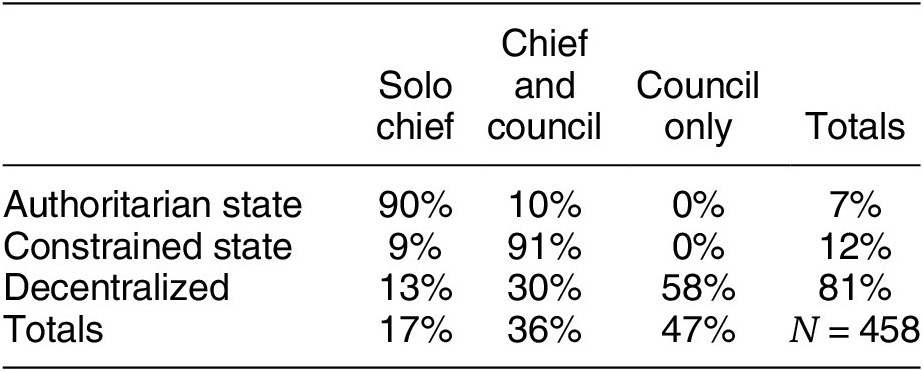

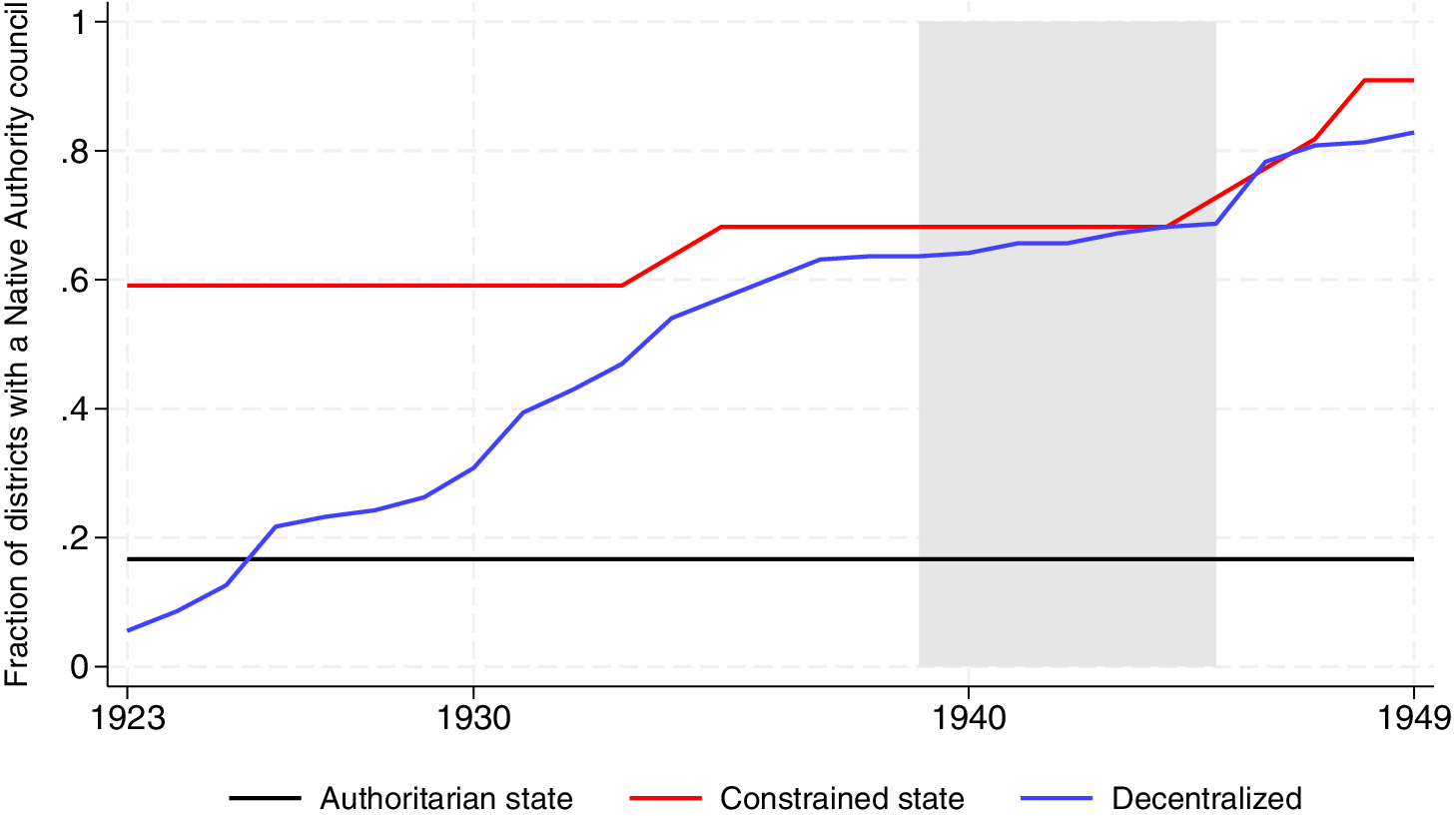


 Open access


Comments
No Comments have been published for this article.