Introduction
There is evidence that the psychosis phenotype is expressed along a continuum, ranging from mild, subclinical psychotic experiences (PE) to full-blown psychotic disorder, also referred to as the ‘extended psychosis phenotype’ (Johns & van Os, Reference Johns and van Os2001; van Os et al. Reference van Os, Linscott, Myin-Germeys, Delespaul and Krabbendam2009; van Os & Linscott, Reference van Os and Linscott2012). The prevalence of PE of 5.8–7.2% in the general population (Linscott & van Os, Reference Linscott and van Os2013; McGrath et al. Reference McGrath, Saha, Al-Hamzawi, Alonso, Bromet, Bruffaerts, Caldas-de-Almeida, Chiu, de Jonge, Fayyad, Florescu, Gureje, Haro, Hu, Kovess-Masfety, Lepine, Lim, Mora, Navarro-Mateu, Ochoa, Sampson, Scott, Viana and Kessler2015) is much higher than the lifetime prevalence of 0.4–0.7% for psychotic disorder in the schizophrenia spectrum (Saha et al. Reference Saha, Chant, Welham and McGrath2005; McGrath et al. Reference McGrath, Saha, Chant and Welham2008). Even though a large percentage of PE are not associated with distress and most are transitory in nature (Hanssen et al. Reference Hanssen, Bak, Bijl, Vollebergh and van Os2005; Linscott & van Os, Reference Linscott and van Os2013), PE do predict transition to clinical psychotic disorder and hospital admission for psychosis, especially when PE are more severe in terms of frequency, number and persistence over time (van Os et al. Reference van Os, Linscott, Myin-Germeys, Delespaul and Krabbendam2009; Kaymaz et al. Reference Kaymaz, Drukker, Lieb, Wittchen, Werbeloff, Weiser, Lataster and van Os2012; van Os & Linscott, Reference van Os and Linscott2012). Furthermore, PE have been found to be associated with (childhood) traumatic experiences, neuroticism, substance use and/or dependence, as well as global, cognitive, social and role impairment and are often reported by individuals with non-psychotic illness (Degenhardt & Hall, Reference Degenhardt and Hall2001; Johns et al. Reference Johns, Cannon, Singleton, Murray, Farrell, Brugha, Bebbington, Jenkins and Meltzer2004; Rossler et al. Reference Rossler, Riecher-Rossler, Angst, Murray, Gamma, Eich, van Os and Gross2007; Varghese et al. Reference Varghese, Scott, Welham, Bor, Najman, O'Callaghan, Williams and McGrath2011; Werbeloff et al. Reference Werbeloff, Drukker, Dohrenwend, Levav, Yoffe, van Os, Davidson and Weiser2012; McGrath et al. Reference McGrath, Saha, Lim, Aguilar-Gaxiola, Alonso, Andrade, Bromet, Bruffaerts, Caldas de Almeida, Cardoso, de Girolamo, Fayyad, Florescu, Gureje, Haro, Kawakami, Koenen, Kovess-Masfety, Lee, Lepine, McLaughlin, Medina-Mora, Navarro-Mateu, Ojagbemi, Posada-Villa, Sampson, Scott, Tachimori, Ten Have, Kendler and Kessler2017; Navarro-Mateu et al. Reference Navarro-Mateu, Alonso, Lim, Saha, Aguilar-Gaxiola, Al-Hamzawi, Andrade, Bromet, Bruffaerts, Chatterji, Degenhardt, de Girolamo, de Jonge, Fayyad, Florescu, Gureje, Haro, Hu, Karam, Kovess-Masfety, Lee, Medina-Mora, Ojagbemi, Pennell, Piazza, Posada-Villa, Scott, Stagnaro, Xavier, Kendler, Kessler and McGrath2017). Furthermore, the associations between PE and other mental disorders have been found to be bidirectional in nature (McGrath et al. Reference McGrath, Saha, Al-Hamzawi, Andrade, Benjet, Bromet, Browne, Caldas de Almeida, Chiu, Demyttenaere, Fayyad, Florescu, de Girolamo, Gureje, Haro, Ten Have, Hu, Kovess-Masfety, Lim, Navarro-Mateu, Sampson, Posada-Villa, Kendler and Kessler2016).
Although general population studies consistently report that PE are relatively common, there are substantial differences in reported prevalence rates. In their systematic reviews of prevalence and incidence of PE, Linscott & Van Os (Reference Linscott and van Os2010, Reference Linscott and van Os2013) reported that PE were most prevalent in studies using self-reports of participants, with rates were more than three times larger than in studies using interview-based assessments. Two studies in which self-reports were followed by clinical reassessment reported that ~40% of self-reported psychotic experiences (SRPE) were confirmed by clinical interview (Kelleher et al. Reference Kelleher, Harley, Murtagh and Cannon2011; van Nierop et al. Reference van Nierop, van Os, Gunther, Myin-Germeys, de Graaf, ten Have, van Dorsselaer, Bak and van Winkel2012).
Little is known about the progression of PE over time and the characteristics of individuals who report SRPE that cannot be confirmed by clinical interview, also referred to as ‘false-positive’ (FP) SRPE. Only one prospective population-based study examined the risk for future psychotic disorder in those with FP SRPE and validated PE (Bak et al. Reference Bak, Delespaul, Hanssen, de Graaf, Vollebergh and van Os2003). Both types of PE were associated with the risk for psychotic disorder at 3-year follow-up, with greater risk for those with confirmed PE than those with FP SRPE. More recently, van Nierop et al. (Reference van Nierop, van Os, Gunther, Myin-Germeys, de Graaf, ten Have, van Dorsselaer, Bak and van Winkel2012) specifically compared cross-sectional psychopathological and psychosocial characteristics of groups with FP SRPE, clinically validated PE and controls without SRPE. Their results showed that, compared with individuals reporting no PE, those with at least one FP SRPE were more likely to have a lifetime mood, anxiety or substance use disorder, reported higher levels of neuroticism, were more likely to be characterised by psychosocial risk indicators including childhood adversity, bullying, recent negative life events as well as cannabis use. This group was also characterised by worse social, physical and mental functioning, assessed over the last month. However, when those with FP SRPE were compared with those with validated SRPE, associations with psychopathology, social functioning, psychosocial factors as well as help seeking in general and specifically for SRPE were generally less strong.
This evidence may suggest that FP SRPE are not ‘truly’ FP but represent the mildest expression of psychosis proneness along the extended psychosis continuum (van Nierop et al. Reference van Nierop, van Os, Gunther, Myin-Germeys, de Graaf, ten Have, van Dorsselaer, Bak and van Winkel2012). However, further investigation of the characteristics, course and outcomes of FP SRPE as well as examination of the impact of psychopathological and psychosocial factors on the outcomes of persistence and progression to validated PE is needed before such conclusion can be substantiated. Additionally, further examination of the impact of FP SRPE on later psychological and psychosocial functioning is necessary to determine the clinical relevance of FP SRPE in terms of the development of functional impairment and need for care.
In the present study, we therefore aimed to prospectively examine the development and clinical significance of FP SRPE at baseline over a 3-year follow-up period. We examined (1) rates of remission, persistence of FP SRPE and transition to validated PE; (2) if individuals with baseline FP SRPE were more likely to report new PE, both self-reported as well as clinically validated PE, than individuals without FP SRPE; and (3) the predictive value of FP SRPE on current mental, social, general functioning, the occurrence of recent mood, anxiety and substance disorders as well as need for care. Furthermore, we aimed to examine (4) which psychopathological and psychosocial characteristics measured at baseline were predictive of persistence of FP SRPE and transition to validated PE; and (5) if those with persistent FP SRPE and those who made the transition to validated PE at follow-up differed regarding the expression of psychopathological and psychosocial factors present at baseline compared with those with remitted FP SPRE at follow-up.
In line with the psychosis continuum model in which FP SRPE are suggested to be the mildest expression of risk for psychotic disorder (van Nierop et al. Reference van Nierop, van Os, Gunther, Myin-Germeys, de Graaf, ten Have, van Dorsselaer, Bak and van Winkel2012), we hypothesised that (1) individuals with baseline FP SRPE would be significantly more likely to report PE at follow-up, both FP SRPE and validated PE, than individuals without SRPE at baseline; (2) the presence of FP SRPE at baseline would be predictive of reduced functioning and the presence of mood anxiety and substance use disorders at follow-up; and (3) psychopathological and psychosocial factors, previously found to distinguish those with FP SRPE from those without SRPE and known to be associated with (transition to) psychotic disorder, would predict both the persistence of FP SRPE as well as the progression towards validated PE over the follow-up period.
Methods
Study cohort
This study used data from the first wave (baseline), performed from November 2007 to July 2009 and second wave collected 3 years later from November 2010 to June 2012, of the second the Netherlands Mental Health Survey and Incidence Study (NEMESIS-2), version 2.0. This is a longitudinal study of prevalence, incidence, course and consequences of psychiatric disorders in the Dutch general population aged 18–64 years. The study was approved by a Medical Ethics Committee. After having been informed about the study aims, respondents provided written informed consent. For a more detailed description of the NEMESIS-2 methods, see de Graaf et al. (Reference de Graaf, Ten Have and van Dorsselaer2010, Reference de Graaf, ten Have, van Gool and van Dorsselaer2012). At baseline, 6646 persons were interviewed (response rate: 65.1%). All baseline respondents were approached for follow-up and 5303 persons could be interviewed again (response rate 80.4%, with those deceased excluded). Attrition was not related to any 12-month mental disorder at baseline, after controlling for sociodemographic characteristics (de Graaf et al. Reference de Graaf, van Dorsselaer, Tuithof and ten Have2013). For the current analyses, only participants with complete data for both baseline and follow-up measurements were selected, which had to include clinical re-interview when PE were reported.
Instruments
Assessment of PE
Studies on earlier Composite International Diagnostic Interview (CIDI) versions concluded that the CIDI assesses common mental disorders with generally acceptable reliability and validity, with the exception of psychosis (Wittchen, Reference Wittchen1994; Andrews & Peters, Reference Andrews and Peters1998). Therefore, a psychosis add-on instrument was constructed, based on the section of psychotic symptoms in CIDI versions 1 and 2. It consisted of 20 PE, each rated ‘yes’, ‘no’, ‘don't know’ or ‘refuse to answer’, each assessed by a lay interviewer. As clinical relevance of PE may be difficult to diagnose by lay interviewers (Helzer et al. Reference Helzer, Robins, McEvoy, Spitznagel, Stoltzman, Farmer and Brockington1985) and interviewers made no clinical judgement about participants’ answers, reported experiences may be considered an extension of ‘self-report’. At baseline, the assessment period spanned the entire lifetime of a participant; at follow-up, the assessment period spanned the time between baseline and follow-up. Whenever a PE was endorsed, the subject was asked to state, on a 1 (rarely) to 4 (almost always) scale, how often this experience occurred (frequency), how much it bothered them (distress), to what extent the experience had an influence on their daily professional and social activities (impact) and at which age it first occurred. The age of first onset, number of SRPE, the averages of frequency, distress and impact at baseline were used as predictors in the analyses.
Individuals who endorsed at least one SRPE at baseline and/or one SRPE at follow-up at the respective initial interview were contacted within 8 weeks for clinical re-interview over the telephone by an experienced clinician at the level of psychologist or psychiatrist. Re-interviews were conducted using questions from the Structured Clinical Interview for DSM-IV (SCID-I, Spitzer et al. Reference Spitzer, Williams, Gibbon and First1992) and all findings were discussed with a second clinician. At baseline, 1081 participants (16.3%) endorsed at least one PE. Of these, 794 participated in clinical re-interview (73.5%). For 454 (58.2%), SRPE were determined as FP. At follow-up, 440 out of the total 5303 (8.3%) participants reported that at least one SRPE had occurred since baseline. Of these, 367 (83.4%) participants were available for re-interview.
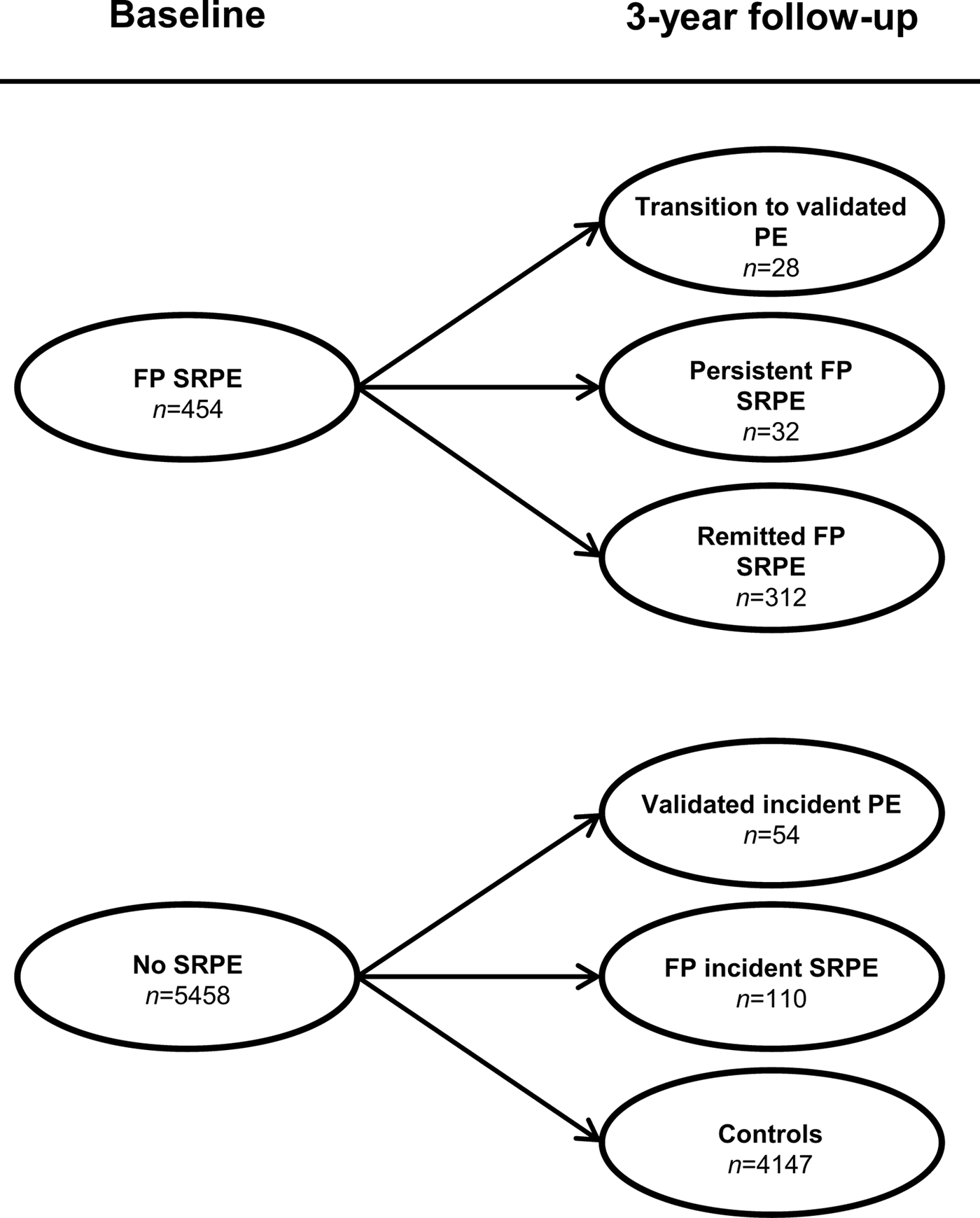
For the analyses, six relevant groups were selected (Fig. 1). The 372 (of 454) participants with FP SRPE at baseline and all data available at follow-up were divided over three subgroups based on PE status at follow-up: (1) at least one SRPE confirmed by clinical re-interview: the ‘transition to validated PE’ group; (2) one or more SRPE, all determined FP by clinical re-interview: the ‘persistent FP SRPE’ group; (3) no SRPE: the ‘remitted FP SRPE’ group. Given the small number of participants who made the transition to validated PE in the current study (n = 28), we chose not to examine transition to psychotic disorder as an outcome, as was done previously by Bak et al. (Reference Bak, Delespaul, Hanssen, de Graaf, Vollebergh and van Os2003).
Sample distribution at baseline and 3-year follow-up.

Participants without SRPE at baseline were similarly divided over subgroups based on PE status at follow-up: (4) one or more SRPE, with at least one confirmed PE by clinical re-interview: the ‘validated incident PE’ group; (5) one or more SRPE, all non-confirmed by clinical re-interview: the ‘FP incident SRPE’ group; (6) absence of SRPE: the ‘control’ group.
Demographics, risk factors and psychopathology at baseline
Participants were interviewed at home by trained interviewers who were not clinicians with the CIDI version 3.0 (The ESEMeD/MHEDEA 2000 investigators et al. Reference Alonso, Angermeyer, Bernert, Bruffaerts, Brugha, Bryson, de Girolamo, de Graaf, Demyttenaere, Gasquet, Haro, Katz, Kessler, Kovess, Lépine, Ormel, Polidori, Russo, Vilagut, Almansa, Arbabzadeh-Bouchez, Autonell, Bernal, Buist-Bouwman, Codony, Domingo-Salvany, Ferrer, Joo, Martínez-Alonso, Matschinger, Mazzi, Morgan, Morosini, Palacín, Romera, Taub and Vollebergh2004). Neuroticism was assessed using the Eysenck Personality Questionnaire (EPQ-revised short scale, Eysenck et al. Reference Eysenck, White and Eysenck1976; Eysenck et al. Reference Eysenck, Eysenck and Barrett1985). Four types of childhood adversity (physical, emotional, sexual and psychological) and peer victimisation were assessed using a questionnaire based on NEMESIS-1, and dichotomised (yes or no). Sexual abuse was assessed as ‘yes’ when it had happened at least once; physical, emotional and psychological abuse when it had happened sometimes or more often; and bullying when it had happened regularly before the age of 16. The presence of ten possible negative life events in the previous 12 months was measured, based on the Brugha life events section and dichotomised (yes or no) (Brugha et al. Reference Brugha, Bebbington, Tennant and Hurry1985). Cannabis use was assessed in the section illegal substance use of the CIDI 3.0 and analysed as a dichotomous variable indicating regular use (⩾1 time per week during the last year). Continuous ratings of general, mental and physical health and social functioning over the past month were assessed by the Medical Outcomes Study Short-form Health Survey (SF-36, Stewart et al. Reference Stewart, Hays and Ware1988; Ware & Sherbourne, Reference Ware and Sherbourne1992). Help seeking in the past 12 months from psychiatrists or psychologists for any psychiatric problem including drug or alcohol problems was also assessed.
Analyses
All analyses were performed in STATA, version 13 (StataCorp., 2013). Logistic regression was used to test the hypothesis that individuals with baseline FP SRPE are significantly more likely to report PE at follow-up than individuals without baseline SRPE (hypothesis 1). The association between the presence of baseline FP SRPE as the independent variable and the presence of SRPE at follow-up as dependent variable was examined, a priori controlling for age and sex. As SRPE were either confirmed or rejected by clinical re-interview at follow-up, we ran two models reflecting both outcomes as the dependent variables: (1) any SRPE (FP and validated PE combined); and (2) clinically validated PE only. Logistic regression was also used to test if baseline FP SRPE predicted the presence of any mood, anxiety or substance use disorder in the last year before follow-up assessment and help seeking in general and specifically for PE. Linear regression was used to test if baseline FP SRPE predicted reduced mental, social, physical and general health functioning in the last month at follow-up (hypothesis 2).
In order to test the hypothesis that risk indicators known to be associated with (transition to) psychotic disorder would predict continued self-report of PE (i.e. persistence of SRPE) over the follow-up period within the group with baseline FP SRPE (hypothesis 3), logistic regression was applied, a priori controlling for age and sex. The presence of SRPE (regardless if these were validated at clinical re-interview), as compared with the absence of SRPE at follow-up, served as the dependent variable. Psychopathological and psychosocial risk indicators as well as PE characteristics served as independent variables. Furthermore, multinomial logistic regression, a priori controlling for age and sex, was applied to examine if associations with risk indicators would be more pronounced in individuals who persist in reporting FP SRPE and those who display progression towards validated PE, compared with individuals with remitted FP SRPE. In all regression models, predictors were entered in separate analyses.
Results
Sample
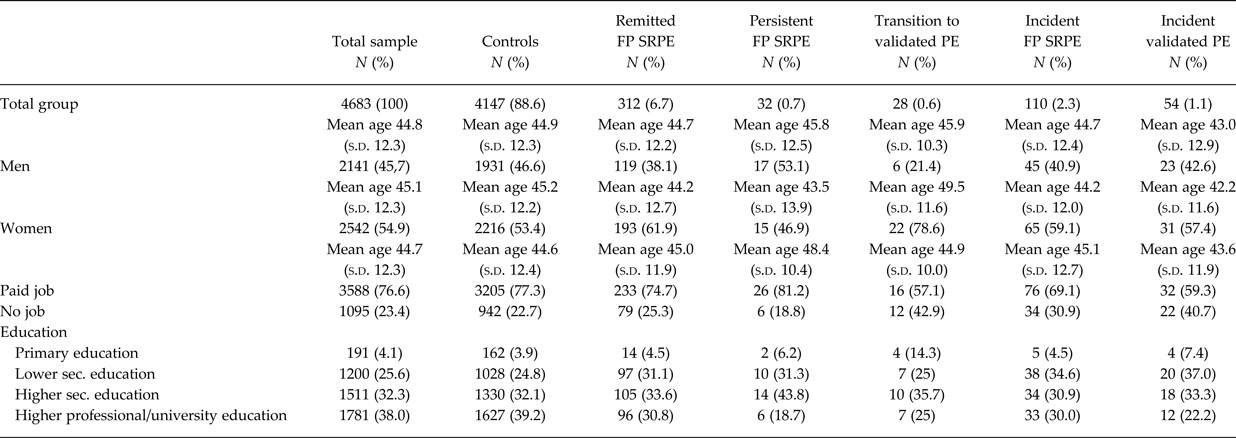
The mean age of the total sample (n = 4683) with complete data available at baseline and follow-up was 44.8 (s.d. = 12.3, range 18–68), with comparable mean ages in the subgroups (Table 1). The groups differed significantly on gender distributions (χ 2 = 17.0, p = 0.004), education level (χ 2 = 38.2, p < 0.001) and job status (χ 2 = 20.6, p = 0.001). At baseline, participants available for clinical re-interview did not differ from non-responders with regard to age, lifetime psychiatric disorders, sex or employment status, while educational attainment was significantly lower (χ 2 = 8.1, p = 0.045). Non-responders were characterised by more SRPE than participants (t(1079) = 5.14, p < 0.001). At follow-up, participants available for clinical re-interview did not differ from non-responders with regard to age, lifetime anxiety and substance use disorder, sex, educational level or employment status as measured at baseline. However, non-responders had more SRPE (t(438) = 3.49, p < 0.001) and lifetime mood disorders (χ 2 = 5.7, p = 0.02) at baseline.
NEMESIS-2 baseline sample and prevalence characteristics
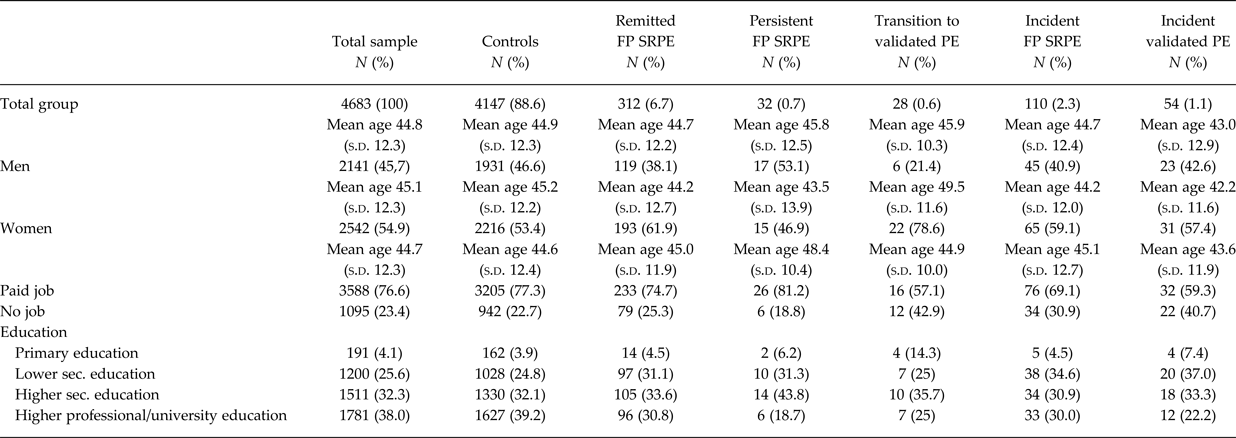
FP, false positive; SRPE, self-reported psychotic experiences; PE, psychotic experiences.
Psychotic experiences
FP SRPE at baseline and PE at follow-up
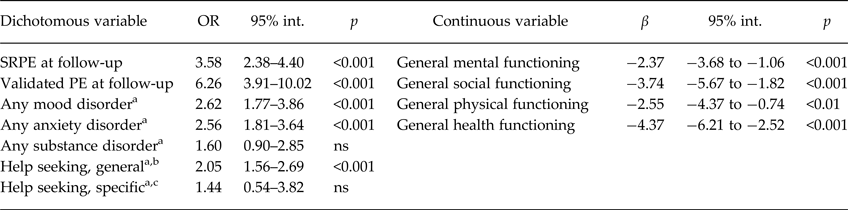
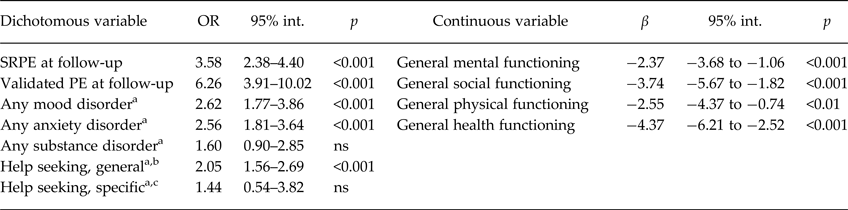
Sixty of the 372 participants with baseline FP SRPE (16.1%) had at least one SRPE at follow-up. These were clinically validated at re-interview for 28 participants (46.7%). Participants with baseline FP SRPE were significantly more likely to have any SRPE as well as clinically validated PE at follow-up than participants without baseline SRPE (Table 2).
Results of logistic and linear regression analyses: associations between the presence of baseline FP SRPE and the presence of SRPE and validated PE, current functioning, presence of psychopathology and help-seeking at follow-up, as compared with no baseline SRPE, adjusted for sex and age
ns, not significant; OR, odds ratio.
a Presence in the last year before follow-up assessment.
b General: psychiatric problems, including drug- or alcohol-related help seeking.
c Specific: psychotic experiences.
FP SRPE at baseline and psychopathology and functioning at follow-up
The presence of baseline FP SRPE was significantly associated with the presence of any mood or anxiety disorder in the previous year, reduced current general mental, social, physical and overall health functioning, as well as general help seeking at follow-up (Table 2).
Risk factors for the persistence of any SRPE at follow-up
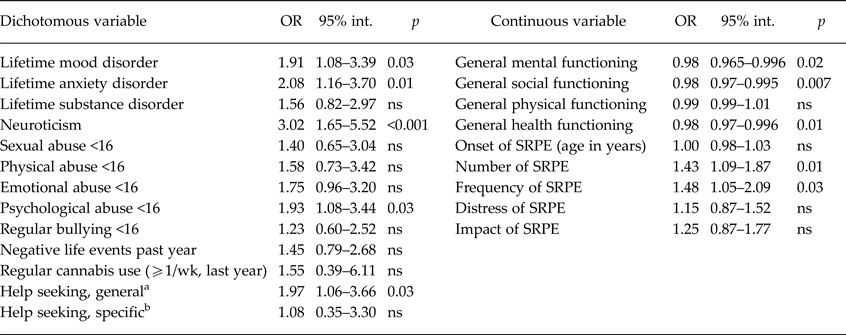
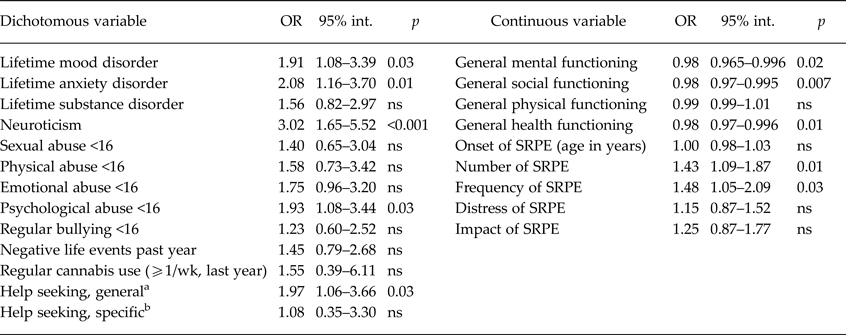
Results of logistic regression analyses showed several risk indicators measured at baseline to be predictive for the continued presence or ‘persistence’ of SRPE at follow-up (Table 3). These included the occurrence of a lifetime mood disorder, a lifetime anxiety disorder, lower general health, social and mental functioning assessed over the last month, high level of neuroticism, the occurrence of psychological abuse before the age of 16 years and help seeking for general psychological problems. Moreover, persistence of SRPE was predicted by the number and frequency of baseline SRPE. More information about the prevalence rates and other characteristics of the examined psychopathological and psychosocial variables can be found in Supplementary Tables S1 and S2.
Results of logistic regression analyses: associations between baseline psychopathological, psychosocial and PE factors and persistence of SRPE at follow-up as compared with remission, adjusted for sex and age
ns, not significant; OR, odds ratio.
a General: psychiatric problems, including drug- or alcohol-related help seeking.
b Specific: psychotic experiences.
Persistence of FP SRPE and transition to validated PE
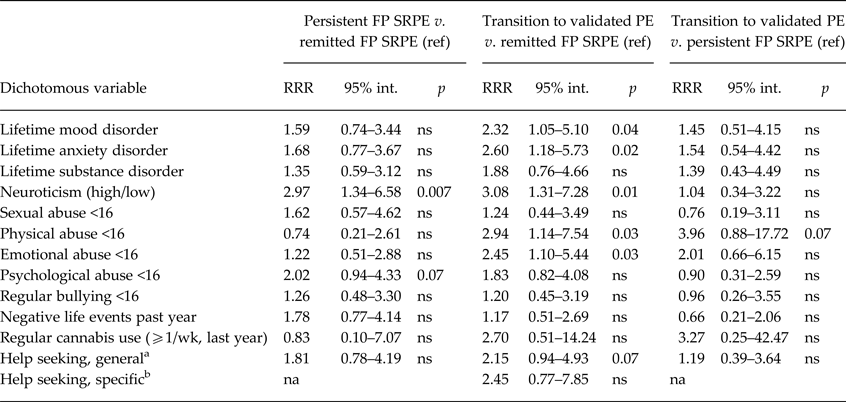
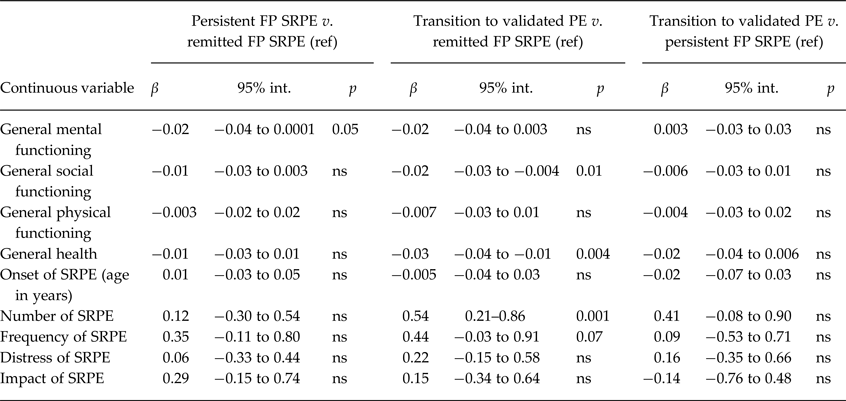
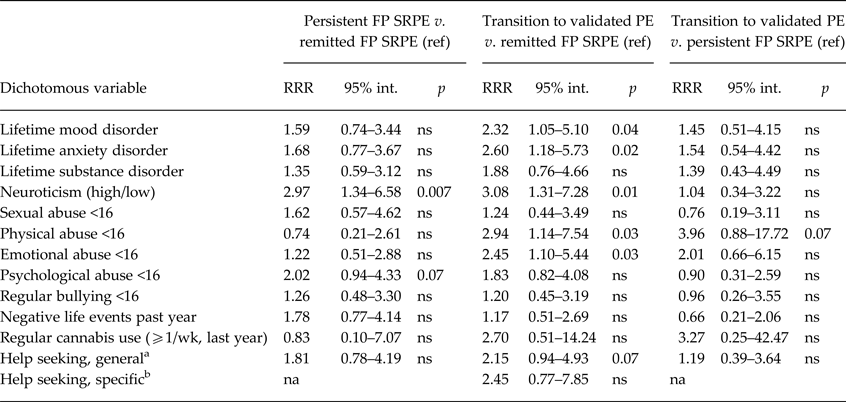
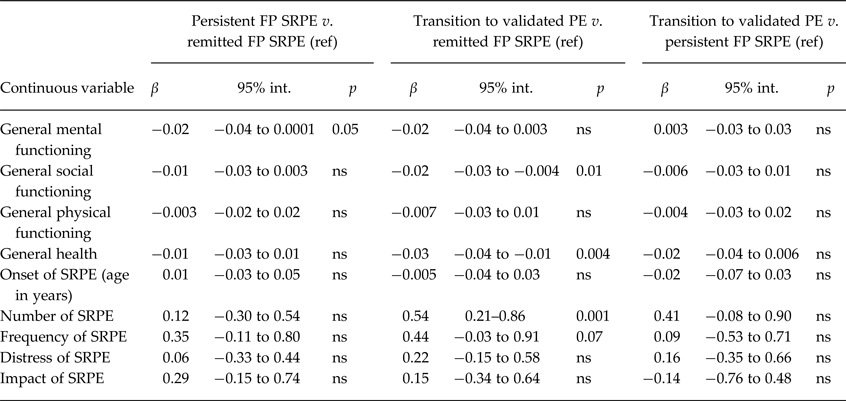
Results of multinomial logistic regression analyses showed that the persistence of FP SRPE, as compared with the remission of FP SRPE at follow-up, was significantly predicted by the presence of high neuroticism and lower general mental functioning at baseline. The occurrence of psychological abuse before the age of 16 years just failed to reach statistical significance (Tables 4 and 5).
Results of multinomial logistic regression showing the effect of baseline psychopathological and psychosocial characteristics on PE status at follow-up, adjusted for sex and age
na, not available; ns, not significant; RRR, relative risk ratio.
a General: psychiatric problems, including drug- or alcohol-related help seeking.
b Specific: psychotic experiences.
Results of multinomial logistic regression showing the effect of baseline psychopathological and SRPE characteristics on PE status at follow-up, adjusted for sex and age
ns, not significant.
Transition to validated PE at follow-up was significantly predicted by the presence of a lifetime anxiety disorder, a lifetime mood disorder, high neuroticism, the occurrence of physical and/or emotional abuse before age 16 and lower health in general. A greater number of baseline SRPE was also associated with transition to validated symptoms, while an increased frequency of these experiences just failed to reach significance. Furthermore, in general, effect sizes were larger than those of the group with persistent FP SRPE, although none reached statistical significance when directly compared (Tables 4 and 5).
Discussion
Three-year outcomes of baseline FP SRPE: remission, persistence and transition
Our study setup allowed us to collect information about PE in an adult general population sample through self-report and interview-based clinical assessment at baseline and 3-year follow-up. The distinction between ‘FP’ and validated PE could therefore be made at both baseline and follow-up. This allowed for an investigation of the prognostic value of baseline FP SRPE on the continued report of PE, psychopathology and functioning at follow-up as well as examination of the association between possible risk indicators assessed at baseline and the differential outcomes of baseline FP SRPE at follow-up.
Discontinuity or remission of PE (83.9%) was the most prevalent outcome, as previously reported (Linscott & van Os, Reference Linscott and van Os2013). However, results also confirmed the hypothesis that individuals with baseline FP SRPE were more likely to again report SPRE at follow-up. They were ~3.5 times more likely to report any SRPE at follow-up and more importantly, ~6 times more likely to report clinically validated PE than participants without baseline SRPE.
Clinical implications of FP SRPE: current functioning, psychopathology and help seeking
The presence of baseline FP SRPE predicted lower current mental and social functioning as well as physical and general health functioning at follow-up. Additionally, the presence of any current (in the previous year) mood or anxiety disorder and help-seeking behaviour were predicted by FP SRPE. Combined with a previous finding that FP SRPE were predictive of transition to psychotic disorder (Bak et al. Reference Bak, Delespaul, Hanssen, de Graaf, Vollebergh and van Os2003), our results confirm the suggestion by van Nierop et al. (Reference van Nierop, van Os, Gunther, Myin-Germeys, de Graaf, ten Have, van Dorsselaer, Bak and van Winkel2012) that individuals reporting FP PE represent a subgroup with the mildest subthreshold expression of psychosis along the psychosis continuum, in which PE are more likely to remain subclinical although need for care may eventually develop. Therefore, SRPE not confirmed by clinical interview, also referred to as ‘FP SRPE’, are not truly ‘false’ as they still index risk for validated psychosis as well as future presence of mood and/or anxiety disorder and reduced functioning. In clinical practice, even FP SRPE thus warrant a ‘watchful waiting’ approach, especially when they co-occur with additional psychopathological and psychosocial problems, in order to intervene promptly when PE do become more crystallised and distressing and therefore clinically relevant.
Predictors of persistence of SRPE
Our study extends the findings of previous general population studies that did not make a distinction between validated and FP SRPE and reported an effect of persistence of SPRE on help seeking and impairment at follow-up (Hanssen et al. Reference Hanssen, Bak, Bijl, Vollebergh and van Os2005; Dominguez et al. Reference Dominguez, Wichers, Lieb, Wittchen and van Os2011). It also extends the findings of Bak et al. (Reference Bak, Delespaul, Hanssen, de Graaf, Vollebergh and van Os2003), who found baseline FP SRPE to be associated with transition to psychotic disorder while not examining possible associated psychopathological and psychosocial factors. More and more frequent baseline SRPE, a diagnosis of mood disorder, anxiety disorder, high neuroticism, lower social and mental functioning and general health in the previous month, childhood adversity (psychological abuse) and help seeking for psychological problems were identified as significant predictors for the persistence of SRPE.
Not unexpected, more and more frequent baseline FP SRPE were found to predict the persistence of SRPE, as both have been previously associated with the risk of transition to psychotic disorder (Kaymaz et al. Reference Kaymaz, Drukker, Lieb, Wittchen, Werbeloff, Weiser, Lataster and van Os2012). Previous studies have found an increase in help seeking and need for subsequent mental health service use in individuals with SRPE (Murphy et al. Reference Murphy, Shevlin, Houston and Adamson2012; Bhavsar et al. Reference Bhavsar, Maccabe, Hatch, Hotopf, Boydell and McGuire2017), especially when reporting multiple PE. In contrast, distress and impact did not predict the persistence of SRPE in the current study. One explanation might be that at baseline any lifetime PE were assessed. Some of those might have existed for a long time and some might no longer have been present at baseline assessment, possibly lowering ratings of distress and impact. Less distress and impact was also reflected by the fact that only four participants (all with validated PE at follow-up) were seeking help specifically for PE. Furthermore, our results are in line with other general population studies of individuals with PE (Hanssen et al. Reference Hanssen, Peeters, Krabbendam, Radstake, Verdoux and van Os2003; Varghese et al. Reference Varghese, Scott, Welham, Bor, Najman, O'Callaghan, Williams and McGrath2011; Wigman et al. Reference Wigman, van Nierop, Vollebergh, Lieb, Beesdo-Baum, Wittchen and van Os2012; McGrath et al. Reference McGrath, Saha, Al-Hamzawi, Andrade, Benjet, Bromet, Browne, Caldas de Almeida, Chiu, Demyttenaere, Fayyad, Florescu, de Girolamo, Gureje, Haro, Ten Have, Hu, Kovess-Masfety, Lim, Navarro-Mateu, Sampson, Posada-Villa, Kendler and Kessler2016), as well as in individuals meeting criteria for the ultrahigh-risk state for psychosis (Fusar-Poli et al. Reference Fusar-Poli, Nelson, Valmaggia, Yung and McGuire2014), showing high comorbidity with mood and anxiety symptoms and disorders.
Characteristics of persistence of FP SRPE and transition to validated PE
This study is unique in the fact that it could directly investigate possible differences in psychopathological and psychosocial characteristics related to the persistence of FP SRPE, as well as transition to validated PE. While the group with persistent FP SRPE was distinguishable from those with remitted FP SRPE by lower general mental functioning in the last month and high neuroticism, the transition group was, in addition to these factors, also characterised by the presence of a lifetime mood and anxiety disorder, instances of childhood adversities and lower health in general as well as more SRPE at baseline. Findings extend those of Van Nierop et al. (Reference van Nierop, van Os, Gunther, Myin-Germeys, de Graaf, ten Have, van Dorsselaer, Bak and van Winkel2012) who reported that individuals with validated baseline PE were more often characterised by mood and anxiety disorder and were four times more likely to seek help for their PE. In conclusion, the present study was able to show, in a longitudinal design, that those who will later develop validated PE were already characterised by high levels of lifetime psychopathology and exposure to psychosocial risk indicators at baseline.
Theoretical implications
Van Os & Linscott (Reference van Os and Linscott2012) proposed an ‘extended psychosis phenotype’ reflecting a behavioural expression of vulnerability for psychotic disorder in the general population. It implies that PE are not exclusive to, and can occur independently of, psychotic disorder. At any point in time, most likely when PE persist over time, individuals may become help seeking, with transition to psychotic disorder eventually occurring in some. This model has recently been reformulated into an ‘extended and transdiagnostic psychosis phenotype’ to account for anxiety and affective symptoms often coexisting alongside PE (van Os & Reininghaus, Reference van Os and Reininghaus2016) and suggests that it is the co-expression of comorbid symptoms that may result in greater severity, socio-environmental risk and poorer functioning. Importantly, a recent study on PE in the general population showed that the relationship between PE and mental disorders is bi-directional in nature (McGrath et al. Reference McGrath, Saha, Al-Hamzawi, Andrade, Benjet, Bromet, Browne, Caldas de Almeida, Chiu, Demyttenaere, Fayyad, Florescu, de Girolamo, Gureje, Haro, Ten Have, Hu, Kovess-Masfety, Lim, Navarro-Mateu, Sampson, Posada-Villa, Kendler and Kessler2016). The probability of transition to a clinical psychotic disorder increases as the load of socio-environmental adverse factors such as instances of childhood trauma increases (McGrath et al. Reference McGrath, Saha, Lim, Aguilar-Gaxiola, Alonso, Andrade, Bromet, Bruffaerts, Caldas de Almeida, Cardoso, de Girolamo, Fayyad, Florescu, Gureje, Haro, Kawakami, Koenen, Kovess-Masfety, Lee, Lepine, McLaughlin, Medina-Mora, Navarro-Mateu, Ojagbemi, Posada-Villa, Sampson, Scott, Tachimori, Ten Have, Kendler and Kessler2017). Our findings provide further evidence for the validity of this model.
Strengths and limitations
Results of this study should be interpreted in the context of its strengths and limitations. A strength is the size of the baseline sample. Furthermore, as the study set-up allowed us to distinguish between FP SRPE and clinically validated PE at baseline and follow-up, this is the first longitudinal study able to examine differential outcomes and characteristics of FP SRPE in the general population.
There are some methodological limitations. First, outcomes of persistence of FP SRPE and transition to validated PE were rare (0.7 and 0.6% of the total baseline sample and 8.6 and 7.5% of those with SRPE at follow-up and available for re-interview, respectively), which may have impacted on the statistical power in the analyses examining associations with psychopathological and psychosocial characteristics, especially when groups were compared. Second, we relied on retrospective reports of lifetime PE at baseline assessment and as a result could have occurred many years before, which may have impacted on the recall of these experiences. Third, as self-report of PE was gathered during an interview with a lay interviewer, this may have led to less acknowledgment of PE than on a traditional pen-and-paper self-report assessment. Fourth, as we could only select data of those participants with complete data at baseline and follow-up, not all tested individuals could be included in some of the analyses. At baseline, non-participants of clinical re-interview were characterised by higher number of SRPE. At follow-up, non-participants reported higher numbers of SRPE and had more often a lifetime mood disorder. It is therefore possible that the effect sizes would have been different if all data had been available. Finally, it has been shown that PE are more common in children compared with adolescents and adults (Kelleher et al. Reference Kelleher, Connor, Clarke, Devlin, Harley and Cannon2012; Maijer et al. Reference Maijer, Begemann, Palmen, Leucht and Sommer2017). The current sample comprises an adult sample with a wide age range and although the sample was nationally representative for the Netherlands, younger subjects were somewhat under-represented (de Graaf et al. Reference de Graaf, Ten Have and van Dorsselaer2010). This might have led to an underestimation of the prevalence of both the persistence of SRPE and transition to validate PE over time. Similarly, the impact of risk factors might be different in younger age groups and studies including child and adolescent samples are therefore needed.
In conclusion, this study showed that SRPE not confirmed by clinical interview are often accompanied by symptoms of general psychiatric problems, reports of childhood adversity and lower psychosocial functioning, especially in those for whom FP SRPE persist or progress into clinically relevant psychotic symptoms. FP SRPE furthermore increase the likelihood of future general psychopathology and lower functioning and therefore warrant follow-up over time.
Supplementary material
The supplementary material for this article can be found at https://doi.org/10.1017/S2045796018000197
Acknowledgements
The Netherlands Mental Health Survey and Incidence Study-2 (NEMESIS-2) is conducted by the Netherlands Institute of Mental Health and Addiction (Trimbos Institute) in Utrecht. The re-interviews are conducted by the University of Maastricht, Department of Psychiatry and Psychology.
Funding
This work was supported by the Dutch Ministry of Health, Welfare and Sport (310253); the Netherlands Organization for Health Research and Development (ZonMw); Genetic Risk and Outcome of Psychosis (GROUP) investigators; ERC consolidator grant (I.M-G., ERC-2012-StG, project 309767-INTERACT) and ‘Op De Pedalen’ Fund (funding the graduate position of Y.S.).
Conflict of interest
None.
Ethical standards
The authors assert that all procedures contributing to this work comply with the ethical standards of the relevant national and institutional committees on human experimentation and with the Helsinki Declaration of 1975, as revised in 2008.
Availability of data and materials
The data on which this manuscript is based are not publicly available. However, data from NEMESIS-2 are available upon request. The Dutch ministry of health financed the data and the agreement is that these data can be used freely under certain restrictions and always under supervision of the principal investigator (PI) of the study. Thus, some access restrictions do apply to the data. The PI of the study is Dr Margreet ten Have, co-author of this paper and can at all times be contacted to request data.
At any time, researchers can contact the PI of NEMESIS-2 and submit a research plan, describing its background, research questions, variables to be used in the analyses and an outline of the analyses. If a request for data sharing is approved, a written agreement will be signed stating that the data will only be used for addressing the agreed research questions described and not for other purposes.