Introduction
“I think the parenting program has helped to shine the light for me to focus on parenting. Main take away is reflective listening and am very much empowered by the assertiveness model. I think I did go overboard at one point . . .” (mother).
The 21st century provides unique challenges and opportunities for parents as they have to make sense of the ever-increasing number of theories and dictates as to what is ideal parenting practice. Parents of young children are generally encouraged to participate in parenting programmes, sometimes as a form of intervention but more often because it is acknowledged that prevention is better than cure. The plethora of such programmes often makes it difficult for parents to choose between what is on offer, and, generally, the decision is determined more by what is most widely promoted rather than detail or evidence to help make an informed choice.
Early parenting programmes such as Parent Effectiveness Training (Gordon, Reference Gordon1970) or Systematic Training for Effective Parenting (STEP) (Dinkmeyer, McKay, & Dinkmeyer, Reference Dinkmeyer, McKay and Dinkmeyer1989) are underpinned by core principles of good communication and the notion that children's behaviour is purposeful. These early programmes have been followed more recently by a range of both targeted and universal programmes. Examples are: the Triple P-Positive Parenting Program (Winter, Morawska, & Sanders, Reference Winter, Morawska and Sanders2012), a multilevel family support programme that aims to prevent problems occurring; the 1–2–3 Magic Program (Bailey, van der Zwan, Phelan, & Brooks, Reference Bailey, van der Zwan, Phelan and Brooks2012), which targets a specific population so as to eliminate difficult behaviours in 6- to 12-year-olds; the Together Parenting Program (Trinder, Soltys, & Burke, Reference Trinder, Soltys and Burke2008), which aims to improve parent–child relationships; and The Boomerang Program, targeting indigenous parents, specifically Aboriginal mothers of children aged between 2 and 5 years of age (Lee, Griffiths, Glassop, & Eapen, Reference Lee, Griffiths, Glassop and Eapen2010). The benefits of targeted programmes are relatively straightforward to determine. It is more challenging to establish what works in a universal programme, as the reasons why parents choose to participate are likely to vary from one individual to another.
In this exploratory investigation, our main purpose was to identify what was helpful, and what was not, in the context of a parenting programme that incorporated adult and child coping as well as a generic communication skills framework. The project enabled us to see which parenting needs were met by a brief parenting programme, with a focus on how coping skills can be developed being a unique feature of Families Can Do Coping. Our purpose is to illustrate the important and helpful features of a parenting programme and how these may be adapted to best meet parents’ needs.
From our research in the coping skills area over the past three decades there is strong evidence of the benefits of teaching coping skills to both adults and children. Moreover, the body of literature on early years’ wellbeing suggests a strong link between children's coping and social emotional competence as it relates to a child's wellbeing (Denham, Reference Denham1998; Mayr & Ulich, Reference Mayr and Ulich1999, Reference Mayr and Ulich2009). Social emotional competence is made up of social, emotional, and cognitive skills and behaviours that children require for successful social adaptation (Denham, Reference Denham1998; Peltokorpi, Määttä, & Uusiautti, Reference Peltokorpi, Määttä and Uusiautti2011). The importance of successful social adaption, which includes the regulation of emotion and emotion-related behaviours, is also emphasised by various coping theorists (Band & Weisz, Reference Band and Weisz1988; Compas, Reference Compas, Skinner and Zimmer-Gembeck2009; Eisenberg, Fabes, & Guthrie, Reference Eisenberg, Fabes, Guthrie, Sandier and Wolchik1997; Rudolph, Dennig, & Weisz, Reference Rudolph, Dennig and Weisz1995; Skinner & Zimmer-Gembeck, Reference Skinner and Zimmer-Gembeck2007). A key theme emerging from these bodies of literature is that highly effective coping skills and behaviour are conducive to healthy social emotional development in young children.
Coping can be defined as the thoughts, feelings and actions that are utilised to deal with everyday situations (Frydenberg & Lewis, Reference Frydenberg and Lewis2000). Compas, Connor-Smith, Saltzman, Thomsen and Wadsworth (Reference Compas, Connor-Smith, Saltzman, Thomsen and Wadsworth2001, p. 89) state that coping means the ‘conscious and volitional efforts to regulate emotion, cognition, behaviour, physiology and the environment in response to stressful events or circumstances’. As young children's cognitive and language skills mature, they become progressively more able to control emotions and tolerate frustration. The empirical research in early years’ coping has demonstrated that young children tend to seek support from adults and withdraw or engage in behavioural activities as a form of distraction in their coping repertoire (Hampel & Petermann, Reference Hampel and Petermann2005; Skinner & Zimmer-Gembeck, Reference Skinner and Zimmer-Gembeck2007). Moreover, it is also widely recognised in the literature that conversations between parents and children, such as the ways in which they discuss the past, increase understanding of emotions (Salmon, Mewton, Pipe, & McDonald, Reference Salmon, Mewton, Pipe and McDonald2011; Van Bergen & Salmon, Reference Van Bergen and Salmon2010). Such findings suggest that parents can play an important role in the social and emotional lives of their children by helping them to manage their responses to challenging or stressful situations in a proactive and productive way. Parents of young children, particularly those between the ages of 2 and 5 years, can support the adoption of productive, situation-specific coping strategies. Research has indicated that it is during these early years that children shift from interpersonal co-regulation to intrapersonal self-regulation (Compas, Reference Compas, Skinner and Zimmer-Gembeck2009). By being aware of their own ways of coping and being able to prioritise engagement in targeted conversations around coping with young children, parents can foster not only the development of a shared language of coping in a family context, but they can also help to build stronger parent–child relationships (Deans, Frydenberg, & Liang, Reference Deans, Frydenberg and Liang2012).
Background
As indicated earlier, there is increasing acknowledgement that children's wellbeing and early school success is linked to a solid foundation of their social and emotional skills; and adults can help to support the building of these skills (Denham, Reference Denham2006, Reference Denham, Bassett, Mincic, Kalb, Way, Wyatt and Segal2012; Frydenberg, Deans, & O'Brien, Reference Frydenberg, Deans and O'Brien2012; Raver, Reference Raver2002). In the past 5 years, Frydenberg and Deans (Reference Frydenberg, Deans, Buchenwald and Moore2011a, Reference Frydenberg and Deans2011b, Reference Frydenberg, Deans, Molinelli and Grimaldo2012) have engaged with children, teachers and parents to determine the elements that enable the development of everyday coping skills for healthy social and emotional development in children aged 4–6 years. The research has included:
• Phase 1 – 2008: Identifying preschool children's coping responses and matching these with parents’ understanding of their children's coping responses.
• Phase 2 – 2009: Development of the Early Years Coping Cards, which is a tool that depicts a range of visual representations of challenging situations, to be used to stimulate children's verbal responses about their coping strategies.
• Phase 3 – 2010: Investigation of the use of Early Years Coping Cards in multiple settings (teachers and parents).
• Phase 4 – 2011: Investigation of parents’ use of the Early Years Coping Cards.
• Phase 5 – 2012: A preliminary investigation of a parenting programme that draws upon Phases 1–4 (reported in this paper).
The five-phase study sought to understand the coping actions of 4- and 5-year-olds and explored how parents’ and teachers’ descriptions concur and amplify those of their children. The first study was conducted in 2008 as a pilot programme, with the second and third studies conducted in 2009 and 2010, followed by the fourth and fifth studies in 2011 and 2012. One outcome of this work has been the development of the Early Years Coping Cards (Frydenberg & Deans, Reference Frydenberg and Deans2011b) as a resource suitable for use with this age group.
Exploratory work with parents in 2011 identified how the Cards may be used with young children by parents in a family context. It was found that the sophisticated use of vocabulary, and the coping strategy repertoire that young children had when handling challenging situations, are often underpinned by the language that adults use with children and how adults themselves cope (Deans, Frydenberg, & Liang, Reference Deans, Frydenberg and Liang2012). Overall, these research findings highlight the importance of building a shared language of coping between practitioners, teachers and parents in order to effectively engage children in deeper, meaningful conversations around coping – an important step in building social and emotional competence. In 2012, the relationship between young children's anxiety and coping was explored and preliminary work on incorporating these understandings into a Families Can Do Coping parenting programme was commenced.
Method
Participants
Participants were recruited from the parents who signed up to attend the five-session parenting programme at The University of Melbourne's Early Learning Centre, as advertised on a noticeboard at the Centre and through pigeonhole invitations. A particular feature of this parenting programme was the participation of the Early Learning Centre Directress in addition to the instructor. Thirteen parents (2 fathers and 11 mothers) who submitted written responses were included in this study.
During the five 2-hour sessions, the researchers provided parents with a framework of parenting in the 21st century that was underpinned by effective communication skills, while empowering parents through equipping them with practical tools to increase both their productive and proactive coping.
The Programme
The five-session parenting programme covered a range of effective strategies using the framework of positive parenting. We examined adult coping skills in depth and explored productive and non-productive coping skills for both adults and children. We also covered the foundational skills of communication, reflective listening and how to take charge as a parent by being assertive when appropriate. In the final sessions we also incorporated the use of the Early Years Coping Cards, the collaborative problem-solving model and how to incorporate elements of mindfulness in parenting. The five sessions were as follows.
Session 1: Parents dealing with difficult situations
The first session focused on how adult coping can be operationalised so as to help parents examine and enhance their coping skills. The topics covered included the importance of recognising the different ways in which people cope; what is good coping and what is not; social learning and what it means to cope as a parent. Parents had an opportunity to examine their own styles of coping by completing the Coping Scale for Adults (Frydenberg & Lewis, Reference Frydenberg and Lewis1997) specifically as it relates to parenting.
Session 2: Everyday worries and anxieties of children
The ages and stages of social emotional development were considered, particularly in the 4- to 8-year-old age group. What worries children and how they deal with worries was presented, particularly as stress is often reflected in physical symptomatology. The neuroscience of communication was addressed with the benefits of reflective listening being considered. Parents were taught to respond to children's concerns and worries in a helpful way.
Session 3: Purposeful behaviour of children: when assertiveness helps
In the third session, the purposeful nature of children's behaviour was considered. Once again parents were taught to take account of the purposeful nature of children's behaviour and to respond appropriately, using a combination of reflective listening and assertive parenting skills.
Session 4: Talking about challenging situations with children
In this session parents completed the Children's Coping Scale (Deans, Frydenberg, & Tsurutani, Reference Deans, Frydenberg and Tsurutani2010) to give them an insight into how their child deals with a particular challenging situation. This was followed by the introduction of the situations depicted in the Early Years Situation and Coping Cards (Frydenberg & Deans, Reference Frydenberg and Deans2011b).
The situation cards provided a resource with which parents could engage in conversations with their child about situations that worry children of their age. The visual tools were provided to enable the child to externalise rather than have to claim the situation as their own. That is, the child could describe what they saw on the card and either identify themselves as having experienced the situation or engage in conjecture about how the child in the picture might deal with such an event. Skills of open questioning and reflective listening were offered as helpful tools in the communication activity.
The Early Years Coping Cards comprise a set of ‘Situation Cards’ that depict the following situations: ‘losing something or someone special’, ‘saying goodbye to someone you love’, ‘being in trouble with an adult’, ‘scared of the dark’, ‘afraid of trying something new’, ‘being teased or bullied’, ‘being left out by your friends’, ‘broken toy’, ‘getting hurt’. The set of cards also includes ‘Coping Cards’ that depict both productive and non-productive coping strategies. The productive coping strategies include: ‘think happy thoughts’, ‘hug a toy’, ‘play’, ‘help others’, ‘talk to an adult’ and ‘work hard’. The non-productive coping strategies include: ‘worry’, ‘runaway’, ‘hide’, ‘scream’, ‘complain of pain’, ‘keep feelings to self’ and ‘blame yourself’.
The cards were introduced to parents, and a number of ways in which these can be used were detailed. Games and various activities were suggested that bring together a situation card representing a situation of concern with the multiple options for coping.
Session 5: Solving problems collaboratively with children
In this session problem solving was presented as a core skill that can be used in diverse contexts. Parents were encouraged to utilise the skill with children's problems when they arise. Additionally it was demonstrated that problem solving can be used with children as a collaborative process.
Mindfulness as a way of achieving wellbeing
Mindfulness, with its emphasis on staying in the moment and paying full attention to the here and now, is a growing philosophy and practice in psychology and education. The historical origins of mindfulness and the contemporary applications were detailed. There was an emphasis on how these skills can be taught to both parents and children, together with provision of the evidence of the benefits for learning outcomes. Mindfulness activities were developed and presented for this age group to benefit both the child and parent.
Parenting Programme Evaluation
To evaluate the utility of the parenting programme, parents were invited to complete a number of open-ended questions on the programme feedback form during the final session and during the follow-up session of the parenting programme. Both these sessions were transcribed and the transcription data were combined with the open responses on the feedback forms that were completed at the end of the parenting programme. The data enabled the researchers to capture the richness and diversity of the participants’ experiences of the programme (Erickson & Kaplan, Reference Erickson and Kaplan2000). For example, participants provided details in their own words on the feedback form as to what they found most valuable in the sessions, what would they like to have done differently, and whether or not they would recommend the programme to others and why. The qualitative text data were analysed using a form of concept mapping which grouped responses elicited by the guiding questions on the feedback form into clusters or themes based on conceptual similarity (Weller & Romney, Reference Weller and Romney1988). Concept mapping, as a methodological blend of the commonly used word-based and code-based approaches, was chosen for this study as it appeared to be well suited for analysing open-ended response data, as well as for studies that are exploratory in nature (Jackson & Trochim, Reference Jackson and Trochim2002).
At the request of some participants, a follow-up session was held 3 months after the final session, which provided parents with the opportunity to share their experiences of parenting subsequent to the five-session programme. Three parents provided data at the follow-up session.
Findings
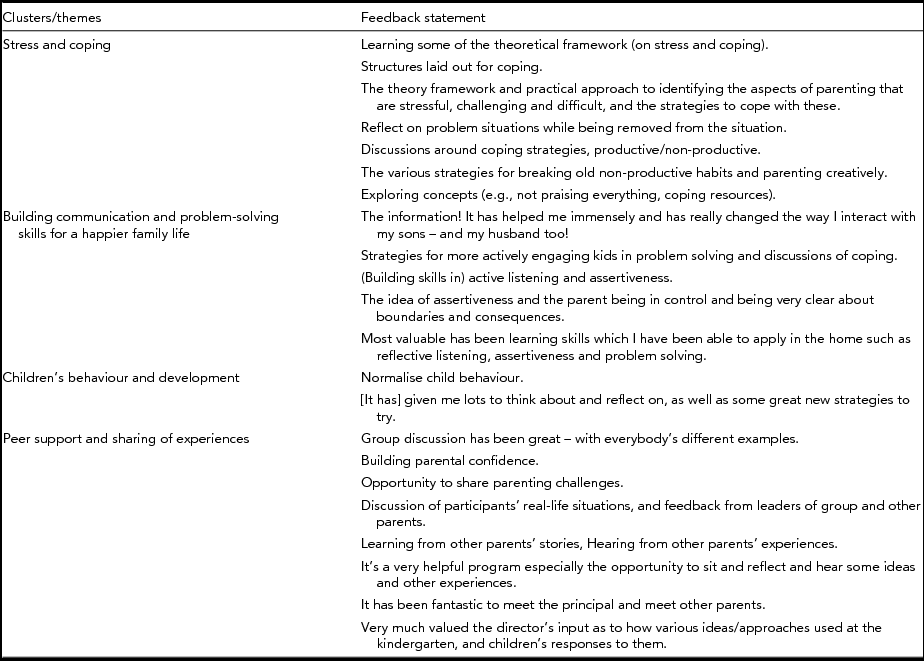
Table 1 shows the thematic clusters identified from the open-ended responses provided by the 13 parents who completed the programme evaluation sheet during the last parenting session. Overall, it is clear that parents found elements of the programme of benefit. Four major clusters or themes related to the utility of the parenting programme were identified from the open-ended responses. The first cluster was related to parents managing stress and coping. Most of the parents found that the sessions had provided them with a framework and some structures to explore their own coping strategies when facing stressful situations. The second cluster of the benefits of the parenting programme was related to building communication skills and problem-solving competencies for a happier family life. For example, parents reported that the new tools and strategies learnt throughout the sessions have helped them to break some of the non-productive habits in parenting and, in turn, changed the pattern of parent–child interaction in a productive way. The main theme identified from the third cluster of benefits was related to children's behaviour and development. The learning of different domains of child development across different age groups was found to be valuable by parents, as that has helped to normalise children's behaviour. The final theme identified from the responses was related to the benefit of sharing experiences and hearing other parents’ stories in an environment where there was time to sit, listen and reflect, and to obtain feedback from the programme facilitators. Other comments provided by the parents highlighted the value of having adequate discussion time and the benefits of having practical examples to illustrate theories or concepts.
Thematic clusters identified from the parenting program evaluation (N = 13).

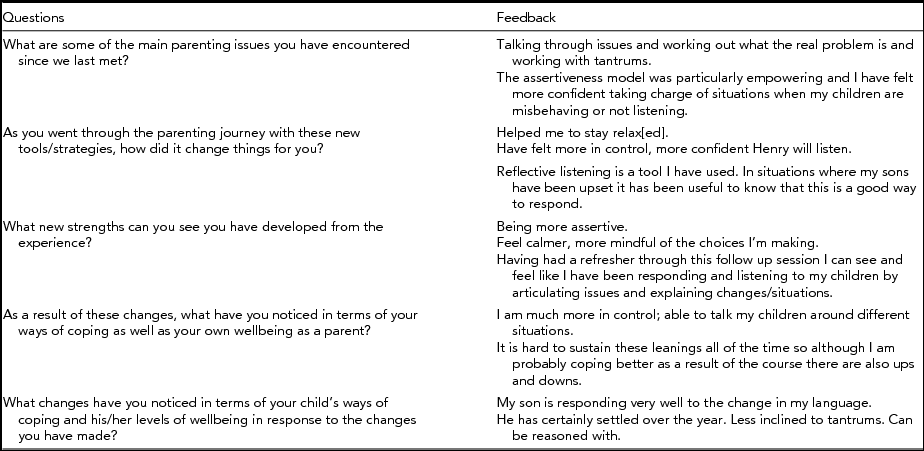
Table 2 provides the feedback from three parents during the follow-up session. In general, parents articulated that the parenting programme had helped them to feel more relaxed and confident in handling parenting issues by adopting the key principles being taught during the session (e.g., the assertiveness model). Parents also highlighted some of the new skills they had developed through the experience, such as mindful parenting, being more assertive and being able to better cope with the ups and downs in their parenting journey. These parents also noticed a positive change in their children's ways of coping in response to the changes they, themselves, had made. For example, one mother commented “My son is responding very well to the change in my language.”
Follow-up session feedback from parents.
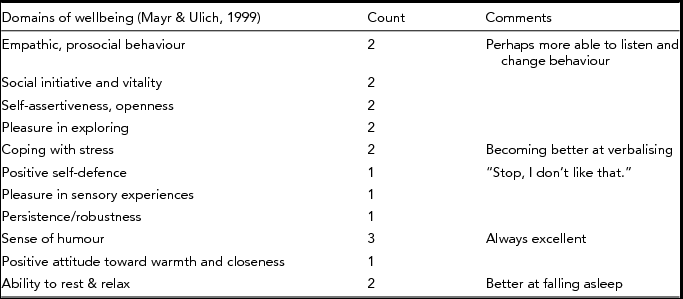
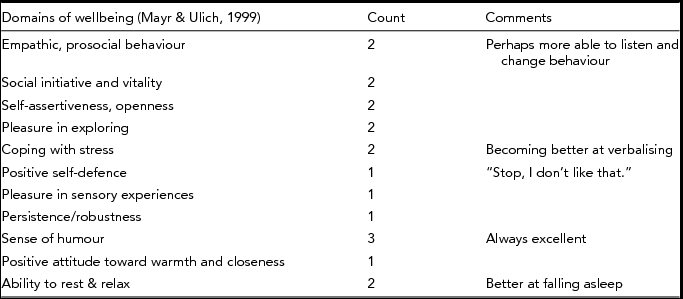
Furthermore, the three parents who provided comments on their children's wellbeing have, collectively, reported noticeable changes across all domains of wellbeing in their children (Table 3).
Parents’ comments on changes noticed in various domains of children's wellbeing.
In summary, parents valued the opportunity to share, learn from others and know that all parents have some concerns some of the time. Thus, the opportunity to meet and reflect on each other's stories was important. Additionally, parents bonded with a shared purpose and appreciation of the support that they received from other participants in the group. When it came to programme content, they commented on the theoretical framework that helped them to understand parenting, particularly theories that related to their own coping and that of their children. For example, one mother commented, “I found my 8yo daughter a lot calmer as I am able to talk her down. She is able to articulate what she likes or dislikes in terms of college [school] selection. I also found myself believing in my son a bit more and creating the space for him (e.g., applying reflective listening skills when he mentioned he wants people to hurt him – the underlying message is [that] he got upset).” With regard to parenting tools, what they valued most was having strategies to handle behavioural problems and ways to make family life happier, particularly through learning how to manage stress.
Discussion and implications
It is readily acknowledged that while there are many parenting programmes available, there are none, to our knowledge, that incorporate the language and concepts of adult's and children's coping alongside universal communication skills. This unique set of tools was made available during a five-session programme, but they could equally be developed in any context by an instructor drawing on the constructs and concepts, rather than a scripted approach. The purpose of this small group study was to determine how helpful parents found this approach and the opportunity it provided for a short-term intervention.
The Families Can Do Coping parenting programme provided parents with a theoretical framework for understanding parenting through a shared language of coping. It also equipped parents with the necessary skills and strategies to manage stress and everyday behavioural issues encountered by families with young children. Moreover, with a deepened understanding of children's development and an emphasis in proactive and productive coping, parents were empowered to take charge in their parenting journey and to discover new skills and strategies to cultivate a healthy family.
The fact that this parenting programme was held at the children's pre-school setting was deemed to add value to the experience; the parents were comfortable and familiar in the setting and, additionally, they valued the opportunity to learn how teachers in the setting managed similar behavioural challenges.
As articulated by parents, they clearly found the experience of benefit for both themselves and their children. This is reflected in the following quote.
“. . . it's really important for children to see parent's involvement in the kindergarten . . . my familiarity with kinder helps to communicate to my child that we are all parts of the kinder community.”
Parents valued the opportunity to share, learn from others and know that all parents have some concerns some of the time. Thus, the opportunity to meet and reflect on each other's stories was important. Additionally, parents bonded with a shared purpose and indicated their appreciation of the support they received from other participants in the group.
Conclusion
Drawing on the recent research in early years coping and parenting, this study piloted a five-session, Families Can Do Coping programme that aimed to introduce the concept of coping for both parents and children in a family context. The findings of this study strengthen the idea that it was helpful in the context of a parenting programme to incorporate adult and child coping, as well as utilising a generic communication skills framework. The clusters or themes relating to benefits identified from the parents’ responses illustrated how parenting needs could be met by a brief programme that provided participants with practical resources, such as effective communication and proactive collaborative problem-solving skills. These were easy-to-implement strategies for parents to access as part of their ‘parenting toolbox’ so as to help raise happy, confident and respectful children. Future research should include a larger sample with recruitment from multiple sites to allow a more comprehensive evaluation of the programme. In addition, multiple forms of evaluation, both qualitative and quantitative, could be used in future studies.