Children exposed to high levels of parental conflict and hostility are at higher risk for developing behavioral and emotional problems than children who live in more harmonious family environments (Cummings & Davies, Reference Cummings and Davies1994; Reference Cummings and Davies2002; Davies & Cummings, Reference Davies, Cummings, Cicchetti and Cohen2006). However, recent studies of physiological stress reactivity indicate that not all children are equally susceptible to the negative effects of family adversity, including marital conflict (El-Sheikh, Keller, & Erath, Reference El-Sheikh, Keller and Erath2007; El-Sheikh & Whitson, Reference El-Sheikh and Whitson2006; Katz, Reference Katz2007; Obradović, Bush, Stamperdahl, Adler, & Boyce, Reference Obradović, Bush, Stamperdahl, Adler and Boyce2010). Individual differences in physiological reactivity to laboratory stressors and challenges have been found to moderate the effects of family adversity on children's adaptation. However, the direction of this moderating effect has not been consistent across different sets of studies. Findings from a growing number of studies support the biological sensitivity to context (BSC) theory, which posits, based on an empirical observation and interpretation by Boyce, Chesney, et al. (Reference Boyce, Alkon, Tschann, Chesney and Alpert1995), that physiologically reactive children are more sensitive to both negative and positive environmental influences (Boyce & Ellis, Reference Boyce and Ellis2005). High physiological reactivity has been found to exacerbate risk for maladaptation in the context of adversity, whereas in supportive and nurturing contexts it can promote healthy development (Obradović, Bush, et al., Reference Bush, Alkon, Obradović, Stamperdahl and Boyce2010). However, some studies have shown the opposite effect: high reactive children tend to be buffered from the deleterious effects of marital conflict, whereas low reactive children seem to be more vulnerable to high levels of marital conflict (El-Sheikh & Whitson, Reference El-Sheikh and Whitson2006; Katz, Reference Katz2007). The goal of the current study was to attempt to reconcile these seemingly contradictory findings by examining whether and how the laboratory context in which children's stress response is elicited and measured affects the relation between their physiological reactivity and psychopathology across different levels of marital conflict.
Autonomic Nervous System (ANS) and Psychopathology
Changes in activation and function of the sympathetic and parasympathetic branches of the ANS allow children to react to and cope with challenges they encounter on a daily basis. In situations of stress, the sympathetic nervous system (SNS) activates physiological arousal and prepares the body for a flight or fight response by increasing heart rate, diverting blood and oxygen flow, stimulating production of glucose, dilating pupils, raising cardiac output, and launching a variety of other physiologic processes (Sapolsky, Romero, & Munck, Reference Sapolsky, Romero and Munck2000). In children, SNS reactivity can be assessed using a cardiac measure of preejection period (PEP). PEP is the period of isovolumetric contraction indexed by the time in milliseconds from left ventricular depolarization to the opening of the aortic valve and the discharge of blood from the left ventricle. High SNS reactivity is indexed by shorter PEP intervals, which are correlated with a faster heart rate and increased cardiac output, whereas low SNS reactivity is indexed by a longer PEP interval, which reflects a slower heart rate and decreased cardiac output. High PEP reactivity reflects the preparatory fight or flight response to threatening or challenging situations (Porges, Reference Porges2007), and it has been also conceptualized as a physiological response to reward or reward anticipation (Beauchaine, Gatzke-Kopp, & Mead, Reference Beauchaine, Gatzke-Kopp and Mead2007; Richter & Gendolla, Reference Richter and Gendolla2009). In contrast, the parasympathetic nervous system (PNS) branch modulates SNS activity, regulates recovery, and restores autonomic homeostasis. PNS reactivity in children can be assessed using a cardiac measure of respiratory sinus arrhythmia (RSA), which reflects vagal regulation of SNS input to the heart and has been considered an index of children's self-regulatory capacity (Beauchaine, Reference Beauchaine2001; Beauchaine et al., Reference Beauchaine, Gatzke-Kopp and Mead2007; Porges, Reference Porges2001, Reference Porges2007). High PNS reactivity is characterized by a decrease in RSA (i.e., vagal withdrawal), which generates a faster heart rate and allows an increase in SNS input to the heart, whereas low PNS reactivity is characterized by an increase in RSA (i.e., vagal augmentation), which slows the heart rate and inhibits SNS input (Porges, Reference Porges2003, Reference Porges2007). High RSA reactivity has been conceptualized as an index of active engagement and coping with mild to moderate stressors (Porges, Reference Porges2007).
Although individuals differ in how they react to various sources of stress, moderate SNS and PNS reactivity in response to normative environmental threats, demands, and challenges has been considered adaptive, as it reflects active coping and self-regulation (Beauchaine, Reference Beauchaine2001; Calkins, Reference Calkins1997; Porges, Reference Porges2007). In contrast, hypoarousal, hyperarousal, and prolonged arousal to negative stimuli have been associated commonly with poor emotion regulation strategies and various behavior problems (Beauchaine et al., Reference Beauchaine, Gatzke-Kopp and Mead2007; Calkins & Dedmon, Reference Calkins and Dedmon2000; Calkins & Keane, Reference Calkins and Keane2004). However, there are no established absolute thresholds for what constitutes high or low reactivity across different systems and developmental periods. Various approaches have been used to define high and low reactivity in the literature, and we highlight only the two most common ones: difference scores and standardized residual scores. Difference scores allow researchers to define high and low reactivity in terms of the absolute change between an individual's baseline and response to challenge. For example, a decrease in RSA from the baseline value can be interpreted as high reactivity or vagal withdrawal, whereas an increase in RSA can be seen as low reactivity or vagal augmentation. Difference scores, thus, do not take into account the disparity in individuals' baseline levels of arousal. In contrast, standardized residual scores enable researchers to take baseline levels into account by defining high and low reactivity as relative deviations from the prediction values calculated by regressing the sample's challenge responses on baseline values (Manuck, Kasprowicz, & Muldoon, Reference Manuck, Kasprowicz and Muldoon1990). In this case, a negative RSA residual score represents high reactivity, as the individual shows lower RSA (less vagal input) in response to challenge than would be expected based on the individual's baseline level and the sample's regression line. A positive residual score represents the converse. Residual scores cannot be interpreted simply as vagal augmentation or suppression, because their absolute meaning depends on predicted values set by the sample's responses, but they yield meaningful information regarding how the reactivity of an individual child compares to other children in the sample. Given a lack of established absolute thresholds for high and low reactivity, we believe that residual scores provide more meaningful information about whether a child's reactivity is relatively higher or lower than the predicted value established by the sample for that age group and that particular stimuli. Many prominent researchers of child psychophysiology have employed residual scores (e.g., Calkins & Keane, Reference Calkins and Keane2004; Doussard-Roosevelt, Montgomery, & Porges, Reference Porges2003; El-Sheikh et al., Reference El-Sheikh, Kouros, Erath, Cummings, Keller and Staton2009). Other less common approaches for identifying high and low reactivity include measures of intensity, variability, and attenuation/slope (see Boyce, Alkon, Tschann, Chesney, & Alpert, Reference Boyce, Alkon, Tschann, Chesney and Alpert1995; Boyce et al., Reference Boyce, Quas, Alkon, Smider, Essex and Kupfer2001, Reference Boyce, Essex, Alkon, Goldsmith, Kraemer and Kupfer2006). As systematic review of different approaches is beyond the scope of this paper, we employ the terms high and low reactivity when citing published literature but acknowledge that studies vary in their approaches.
Externalizing symptoms in children have been linked to low SNS reactivity, as indexed by longer PEP in response to various laboratory challenges (Beauchaine et al., Reference Beauchaine, Gatzke-Kopp and Mead2007; Boyce et al., Reference Boyce, Quas, Alkon, Smider, Essex and Kupfer2001; Crowell et al., Reference Crowell, Beauchaine, Gatzke-Kopp, Sylvers, Mead and Chipman-Chacon2006). When compared to children who display low levels of behavioral symptoms, a community group of children with high levels of externalizing symptoms had lower PEP reactivity in response to a series of challenges (Boyce et al., Reference Boyce, Quas, Alkon, Smider, Essex and Kupfer2001). Similarly, children with clinical levels of externalizing symptoms had lower PEP reactivity in response to reward than their nondisordered age mates (Beauchaine et al., Reference Beauchaine, Gatzke-Kopp and Mead2007; Crowell et al., Reference Crowell, Beauchaine, Gatzke-Kopp, Sylvers, Mead and Chipman-Chacon2006; Shannon, Beauchaine, Brenner, Neuhaus, & Gatzke-Kopp, Reference Shannon, Beauchaine, Brenner, Neuhaus and Gatzke-Kopp2007). Such findings may in part explain why children prone to conduct problems, aggression, or delinquency tend to show low sensitivity to punishment and reward (Brenner, Beauchaine, & Sylvers, Reference Brenner, Beauchaine and Sylvers2005; Raine, Reference Raine2002; Richter & Gendolla, Reference Richter and Gendolla2009). Externalizing symptoms have also been associated with low PNS reactivity, as indexed by low RSA reactivity in response to various stressors and challenges (Boyce et al., Reference Boyce, Quas, Alkon, Smider, Essex and Kupfer2001; Calkins et al., Reference Calkins, Graziano and Keane2007; Calkins & Dedmon, Reference Calkins and Dedmon2000; Calkins & Keane, Reference Calkins and Keane2004; Kibler, Prosser, & Ma, Reference Kibler, Prosser and Ma2004). However, emerging studies suggest that the direction of these associations may vary further across community and clinical samples as well as with the severity and comorbidity of symptoms. Although low RSA reactivity has been linked to externalizing symptoms in some normative samples of young children (Boyce et al., Reference Boyce, Quas, Alkon, Smider, Essex and Kupfer2001; Calkins, Graziano, & Keane, Reference Calkins, Graziano and Keane2007), children with clinical levels of behavior problems exhibit high RSA reactivity (Beauchaine et al., Reference Beauchaine, Gatzke-Kopp and Mead2007; Crowell et al., Reference Crowell, Beauchaine, McCauley, Smith, Stevens and Sylvers2005). Similarly, children who display comorbid internalizing and externalizing symptoms have higher RSA reactivity than children who show only externalizing problems (Boyce et al., Reference Boyce, Quas, Alkon, Smider, Essex and Kupfer2001; Calkins & Dedmon, Reference Calkins and Dedmon2000; Calkins et al., Reference Calkins, Graziano and Keane2007; Crowell et al., Reference Crowell, Beauchaine, McCauley, Smith, Stevens and Sylvers2005; Kibler et al., Reference Kibler, Prosser and Ma2004). This is consistent with the findings of Boyce and colleagues (Reference Boyce, Quas, Alkon, Smider, Essex and Kupfer2001) who reported that a community group of children with high levels of internalizing symptoms showed higher RSA reactivity in comparison to a low-symptom group. However, no differences were noted in terms of PEP reactivity. Because high RSA reactivity has also been associated with indices of sustained attention and increased engagement during challenge tasks (Calkins, Reference Calkins1997; Suess, Porges, & Plude, Reference Suess, Porges and Plude1994), and with higher ratings of sociability, social skills, and work abilities (Blair & Peters, Reference Blair and Peters2003; Doussard-Roosevelt et al., Reference Doussard-Roosevelt, Montogomery and Porges2003), it appears that there may be a physiologically optimal degree of RSA reactivity. Although a certain level of vagal withdrawal may subserve attentional processes involved in engagement with tasks, PNS reactivity that is too high or that lasts too long may reflect the hyperarousal associated with vigilance, anxiety, or poor emotion regulation strategies (Santucci et al., Reference Santucci, Silk, Shaw, Gentzler, Fox and Kovacs2008).
Physiological Reactivity as a Moderator of Contextual Influences
In contrast to the long-standing stress diathesis model, which considers high reactivity as a risk factor for or a marker of maladaptation, Boyce and Ellis (Reference Boyce and Ellis2005) have proposed that physiological stress reactivity is “a nonunitary, multifaceted complex of central and peripheral neural responses” that should be reconceptualized as BSC. According to BSC theory, children who show high BSC are more susceptible to both positive and negative contextual influences than children who show low BSC. Because children's physiological reactivity is assumed to moderate the effect of environment on their adaptation, high BSC may be maladaptive only in the context of adversity, but healthy and promotive in contexts of nurturance and protection (Boyce, Reference Boyce and Masten2007; Boyce & Ellis, Reference Boyce and Ellis2005; Ellis, Essex, & Boyce, Reference Ellis, Essex and Boyce2005). In contrast, the adaptive functioning of children who show low BSC is predicted to be generally less affected by the quality of their environments. Belsky and colleagues have put forth a differential susceptibility hypothesis, which is similar to BSC theory in positing that children who are temperamentally reactive are also more susceptible to both high and low quality environments (Belsky, Reference Belsky, Ellis and Bjorklund2005; Belsky, Bakermans-Kranenburg, & van IJzendoorn, Reference Belsky, Bakermans-Kranenburg and van IJzendoorn2007).
Although the SNS and PNS branches of the ANS clearly play very different roles physiologically with respect to target end organs and tissues, BSC theory does not differentiate between the functions of high SNS and high PNS as they pertain specifically to the organism's biological sensitivity to environmental stimuli. Boyce and Ellis (Reference Boyce and Ellis2005) proposed that “heightened reactivity in each stress response system is reflective of a more elemental biological predisposition to context responsiveness” (p. 283). A growing number of studies actually show that high reactivity as measured by both SNS and PNS indices moderates the effect of environment on health and adaptation, in accordance with BSC theory (for a review see Belsky & Pluess, Reference Belsky and Pluess2009; Obradović & Boyce, Reference Obradović and Boyce2009). A recent study of kindergarten children showed that high RSA reactivity to a series of challenges was associated with poorer adaptation in the context of high family adversity, but in the context of low family adversity high RSA was associated with lower levels of externalizing symptoms and higher levels of school engagement and academic competence (Obradović, Bush, et al., Reference Bush, Alkon, Obradović, Stamperdahl and Boyce2010). By contrast, low reactive children were less affected by levels of adversity exposure and showed similar adaptation in both contexts. Similarly, in a clinical sample of 8- to 12-year-olds, the effect of paternal antisocial personality disorder on depression symptoms was significant only in children who showed high PEP reactivity to reward (Shannon et al., Reference Shannon, Beauchaine, Brenner, Neuhaus and Gatzke-Kopp2007). Evidence that SNS reactivity moderates environmental influences in a direction consistent with BSC theory also comes from studies using skin conductance level (SCL) reactivity, a peripheral measure of sympathetic activation. When compared to their low reactive peers, children with high SCL reactivity have been found to be at higher risk for internalizing symptoms, externalizing symptoms, and other behavior problems in the contexts of high marital conflict (El-Sheikh, Reference El-Sheikh2005; El-Sheikh et al., Reference El-Sheikh, Keller and Erath2007) and paternal depression (Cummings, El-Sheikh, Kouros, & Keller, Reference Cummings, El-Sheikh, Kouros and Keller2007). Finally, high reactivity measured using integrative SNS and PNS indices, such as heart rate and blood pressure, has also been shown to moderate the effects of environment on mental and physical health outcomes (Boyce, Reference Boyce, Bornstein and Genevro1996; Boyce et al., Reference Boyce, Chesney, Alkon-Leonard, Tschann, Adams and Chesterman1995, Reference Boyce, Essex, Alkon, Goldsmith, Kraemer and Kupfer2006).
Researchers examining the effect of marital conflict and domestic violence on children's adaptation have identified individual differences in children's physiological responses as a moderator of marital conflict effects on adjustment (El-Sheikh et al., Reference El-Sheikh, Kouros, Erath, Cummings, Keller and Staton2009). However, in contrast to BSC theory, they conceptualize high PNS reactivity as a protective factor that buffers children against the effects of marital adversity. Several studies have shown that children with high RSA reactivity to laboratory challenges were less affected by the deleterious effects of marital conflict, whereas children with low RSA reactivity were found to be more vulnerable, exhibiting more behavioral problems, poorer health, and lower academic achievement in the context of high marital conflict or domestic violence (El-Sheikh, Harger, & Whitson, Reference El-Sheikh, Harger and Whitson2001; El-Sheikh & Whitson, Reference El-Sheikh and Whitson2006; Katz, Reference Katz2007; Katz & Gottman, Reference Katz and Gottman1997; Whitson & El-Sheikh, Reference Whitson and El-Sheikh2003). Likewise, high RSA reactivity to interpersonal stress emerged as a protective factor against the effects of hostile–withdrawn parenting on peer conflict (Leary & Katz, Reference Leary and Katz2004). In contrast, consistent with a stress–diathesis model, El-Sheikh and colleagues (Reference El-Sheikh, Kouros, Erath, Cummings, Keller and Staton2009) have conceptualized high SNS reactivity as a vulnerability factor, although the empirical evidence has not been as robust. Some studies have shown that children with high SCL reactivity display are at higher risk for behavior problems in the context of high marital conflict than children with low SCL reactivity (Cummings et al. Reference Cummings, El-Sheikh, Kouros and Keller2007; El-Sheikh, Reference El-Sheikh2005; El-Sheikh et al., Reference El-Sheikh, Keller and Erath2007). However, low SCL reactivity has also been found to represent a vulnerability factor for externalizing symptoms in children, especially boys, in the contexts of marital conflict (Cummings et al., Reference Cummings, El-Sheikh, Kouros and Keller2007) and harsh parenting (Erath, El-Sheikh, & Cummings, Reference Erath, El-Sheikh and Cummings2009). Unfortunately, there are no studies to our knowledge that examine the effect of SNS reactivity as measured by PEP in the context of marital conflict.
The Nature of Laboratory Challenges
A distinguishing feature of the marital conflict research is that, in addition to focusing on the effects of interpersonal and emotional forms of family adversity, these studies also employ interpersonal, emotion-evoking challenges to elicit ANS reactivity in children. For example, El-Sheikh and colleagues employ a 3-min audiotaped argument between a man and a woman, whereas Katz and colleagues use simulated peer provocation, where children hear that an unfamiliar peer who they are about to interact with dislikes them. Reactivity to laboratory stressors that match the emotional valance of stressors that children witness in their daily lives may have ecologically different significance for adaptive functioning than reactivity to stressors with less emotional relevance. Thus, there is a need to examine more systematically how the nature of the stimuli used to evoke reactivity affects the relation between reactivity and adaptation across different levels of adversity exposure, as this might explain some of the discrepancies in the current findings.
Studies of developmental psychophysiology frequently use a single challenge task to elicit and measure stress reactivity in a laboratory setting. Alternatively, some researches average the stress response across different types of tasks with the goal of deriving a more comprehensive index of stress reactivity (see Boyce et al., Reference Boyce, Quas, Alkon, Smider, Essex and Kupfer2001; Obradović, Bush, et al., Reference Bush, Alkon, Obradović, Stamperdahl and Boyce2010). Most laboratory challenges fall into two broad categories. Socioemotional tasks are designed to evoke emotions, such as fear, anger, or frustration. Children may be asked to watch or listen to emotionally laden material, or they may be placed in mildly threatening situations, such as interacting with a stranger or giving a self-evaluative speech. Conversely, cognitive tasks take the form of games, puzzles, or problems designed to test children's executive functions, such as attention skills, inhibitory control, or working memory. Studies that explicitly examine children's ANS reactivity across different types of tasks are rare. For example, Chen, Matthews, Salomon, and Ewart (Reference Chen, Matthews, Salomon and Ewart2002) examined different correlates of ANS reactivity to social and nonsocial stressors. They found that adolescents who showed greater ANS reactivity during a social stressor, as indexed by higher blood pressure, heart rate, and RSA reactivity, were rated as having higher interpersonal strivings for others' acceptance and affiliation. Moreover, greater ANS reactivity during a nonsocial stressor, as indexed by cardiac output and stroke volume, was associated with higher ratings of competitiveness, self-defensiveness, and expressiveness. Although El-Sheikh and colleagues report some variation in how SNS and PNS reactivity to a social challenge (listening to an adult argument) and a nonsocial challenge (a star-tracing task) related to adaptation across different levels of marital conflict (Cummings et al., Reference Cummings, El-Sheikh, Kouros and Keller2007; El-Sheikh et al., Reference El-Sheikh, Keller and Erath2007, Reference El-Sheikh, Kouros, Erath, Cummings, Keller and Staton2009), a clear pattern of differences has not yet emerged.
Current Study
The goal of the current study was to further examine whether the interaction effect of marital conflict and ANS reactivity on children's behavioral problems differs with the nature of the laboratory challenge task employed to elicit and measure children's stress response. We have focused our analyses on kindergarten children because ANS reactivity becomes increasingly stable around this age (Alkon et al., Reference Alkon, Goldstein, Smider, Essex, Boyce and Kupfer2003; Doussard-Roosevelt et al., Reference Doussard-Roosevelt, Montogomery and Porges2003; Matthews, Salomon, Kenyon, & Allen, Reference Matthews, Salomon, Kenyon and Allen2002; McGrath & O'Brien, Reference McGrath and O'Brien2001), and because behavioral problems in childhood can contribute to problems in other domains of adaptation (Obradović, Burt, & Masten, Reference Obradović, Burt and Masten2010). We included indices of both externalizing and internalizing symptoms, as both have been frequently reported in children exposed to high levels of marital conflict (Davies & Cummings, Reference Davies, Cummings, Cicchetti and Cohen2006). We examined both SNS and PNS responsivity by measuring PEP and RSA reactivity to an interpersonal, emotion-evoking challenge and to a cognitive challenge. Because ANS activity can be elicited by minor movement, speaking, focused attending, and nonchallenging social engagement (Bazhenova & Porges, Reference Bazhenova and Porges1997; Bush, Alkon, Obradović, Stamperdahl, & Boyce, Reference Bush, Alkon, Obradović, Stamperdahl and Boyce2010; Donzella, Tottenham & Gunnar, Reference Donzella, Tottenham and Gunnar2009; Heilman et al., Reference Heilman, Bal, Bazhenova, Sorokin, Perlman and Hanley2008; Jonsson & Hansson-Sandsten, Reference Jonsson and Hansson-Sandsten2008; Kleinow & Smith, Reference Kleinow and Smith2006), researchers have suggested controlling for these endogenous behavioral triggers of ANS activity in order to ensure that the measured reactivity reflects a response to the challenging component of a task and not merely the accompanying motoric or engagement demands (Kamarck & Lovallo, Reference Kamarck and Lovallo2003; Porges et al., Reference Porges, Heilman, Bazhenova, Bal, Doussard-Roosevelt and Koledin2007). Thus, we employed a stress reactivity protocol in which each challenge task was preceded by a psychologically neutral “control task” that paralleled the motor and engagement demands of that challenge. RSA and PEP values in response to these control tasks were used as baseline values in calculating reactivity scores (see Methods Section).
In accordance with the research reviewed above, we expected that SNS and PNS reactivity would moderate the effect of marital conflict on children's mental health symptoms. However, we hypothesized that the direction of such interactions would depend on the nature of the task used to elicit ANS reactivity. Our exploratory hypotheses were informed both by empirical findings supporting BSC theory and by the marital conflict research showing the opposite effect of ANS reactivity. We believe that physiological reactivity to laboratory challenges that mirror the adversities children face in real life may yield different effects on adaptation than stress responses to less emotionally relevant challenges. Consistent with recent studies on the effects of marital conflict and domestic violence (El-Sheikh et al., Reference El-Sheikh, Harger and Whitson2001; El-Sheikh & Whitson, Reference El-Sheikh and Whitson2006; Katz, Reference Katz2007; Katz & Gottman, Reference Katz and Gottman1995, Reference Katz and Gottman1997), we hypothesized that high PNS reactivity and, to a lesser extent, SNS reactivity to an interpersonal, emotion-evoking task would serve as a buffer against the deleterious effects of marital conflict. For example, children who show low PNS and SNS reactivity to an interpersonal stressor may be less physiologically aroused by marital conflict and, thus, more likely to mirror aggression and develop behavioral problems themselves, whereas high physiological reactivity to an interpersonal stressor may buffer children who are exposed to marital conflict against perpetrating acts of violence because of the associated physiological hyperarousal. In contrast, we expected that high SNS and PNS reactivity to a cognitive task would work as posited by BSC theory: as a risk factor in the context of high adversity, but a promotive factor in the context of low adversity. Although the current formulation of BSC theory does not suggest that the function of high reactivity would vary across different types of challenge tasks, given the two divergent sets of findings it is imperative to examine whether reactivity to a noninterpersonal (i.e., cognitive) stressor captures biological attentiveness and susceptibility to contextual influences better than reactivity to an emotional stressor. Thus, the current study was designed to examine whether discrepancies between the two sets of seemingly opposed perspectives may be partially explained by the nature of the laboratory challenges used to elicit reactivity in children.
Although we were primarily interested in the interactive effects shown increasingly to be predictive of mental health (Cummings et al., Reference Cummings, El-Sheikh, Kouros and Keller2007; El-Sheikh et al., Reference El-Sheikh, Harger and Whitson2001, Reference El-Sheikh, Keller and Erath2007; Obradović, Bush, et al., Reference Bush, Alkon, Obradović, Stamperdahl and Boyce2010), we expected that exposure to higher levels of marital conflict would be directly associated with more behavior problems (Cummings & Davies, Reference Cummings and Davies2002). In accordance with extant findings with similar age groups (Boyce et al., Reference Boyce, Quas, Alkon, Smider, Essex and Kupfer2001; Calkins et al., Reference Calkins, Graziano and Keane2007), we also expected that high RSA reactivity would be associated with a higher level of internalizing symptoms, whereas low RSA and PEP reactivity would be associated with a higher level of externalizing symptoms. However, we recognize that low RSA reactivity is not consistently associated with higher externalizing symptoms (Beauchaine et al., Reference Beauchaine, Gatzke-Kopp and Mead2007; Calkins et al., Reference Calkins, Graziano and Keane2007; Crowell et al., Reference Crowell, Beauchaine, McCauley, Smith, Stevens and Sylvers2005); thus, this hypothesis was somewhat exploratory. The paucity of studies simultaneously examining the main and interactive effects of SNS and PNS reactivity and adversity made it difficult to hypothesize with certainty which system would emerge as more predictive of externalizing and internalizing symptoms in kindergarten children.
Methods
Participants
The participants were drawn from a larger sample of 338 children who participated in a longitudinal study of social status, biological responses to adversity, and child mental and physical health. Because the focus of the current investigation was on the effects of marital conflict, the current sample includes only the 260 children (130 females, 130 males) whose primary caregivers were partnered and completed the measure of marital challenges. Participants were recruited in three waves from 29 kindergarten classrooms within six public schools in the San Francisco Bay Area (Oakland, Albany, and Piedmont Unified school districts) during the fall semesters of 2003, 2004, and 2005. Schools were selected to represent a variety of sociodemographic and ethnic characteristics of the metropolitan area. Families were recruited through a series of efforts that included home mailings, presentations at kindergarten parent welcome nights, and in-person recruitment during drop-off and pick-up. Every family with a child in the target classrooms was invited to participate. However, families who were not fluent in either English or Spanish were excluded to ensure adequate comprehension of study questionnaires. Schools were provided with $20 per child enrolled in the study.
The mean age of the current sample was 5.33 years (SD = 0.31, range = 4.75–6.28) at the kindergarten entry. Participants were ethnically diverse, with 51% of children representing various ethnic minorities (11% African American, 12% Asian, 4% Latino, 22% multiethnic, 2% other ethnicity). As the vast majority of primary caregivers who participated in the study were parents (89% biological mothers, 9% biological fathers, 1.5% adoptive mothers, 0.4% biological grandmothers, and 0.4% other relations), we hereafter refer to all primary caregivers as parents. Average annual household income ranged from less than $10,000 to more than $400,000, with median income falling within the $80,000–$99,999 range. The highest level of educational attainment ranged from less than a high school diploma to advanced degrees, with 77% of parents reporting having at least a college degree. All parents in the study were currently married or partnered; 87% were married or partnered to a biological or adoptive parent of the target child, 5.5% were separated or divorced, and 1.5% had no contact with the other biological parent.
Procedures
Prior to the start of data collection, informed consent and assent were obtained from parents and children, respectively. Children left their kindergarten classrooms to be interviewed about their behavior and experiences in school. On a separate day, children also participated in the 20-min reactivity protocol, designed to measure their autonomic stress responses to various challenge tasks. Parent report of family experiences and children's functioning was collected through a series of home mailings, and families were compensated with $50 for each completed time point. Teacher report of children's functioning was collected through questionnaires dropped off and picked up at the child's school, and teachers were compensated $15 per child for each report returned. Self-report of children's functioning was collected through a series of structured, scripted interviews conducted in a separate, quiet room at elementary schools.
Measures
Stress reactivity
Children participated in a stress reactivity protocol that consisted of various tasks designed to elicit stress response to cognitive, social, emotional, and sensory challenge tasks (Obradović, Bush, et al., Reference Bush, Alkon, Obradović, Stamperdahl and Boyce2010). In order to isolate the psychophysiological response to challenges from the motoric or behavioral triggers of cardiovascular activation, such as gesturing, speaking, focused attending, and nonchallenging social engagement (Bush et al., Reference Bush, Alkon, Obradović, Stamperdahl and Boyce2010; Kamarck & Lovallo, Reference Kamarck and Lovallo2003), each challenge task in the reactivity protocol was preceded by a nonchallenging “control task” that paralleled the motor and engagement demands of the challenge. The levels of autonomic arousal during the control tasks were used as baseline reference values for the calculation of ANS reactivity indices.
For the purposes of the current study, we used only ANS responses measured during the cognitive and interpersonal challenge tasks and their corresponding control tasks. The cognitive challenge task (2 min) was a digit span recitation task derived from the Kaufman Assessment Battery for Children (Kaufman & Kaufman, Reference Kaufman and Kaufman1983), in which children were asked to recall sequences of numbers up to six digits in length and received corrective verbal feedback after making a mistake. This was preceded by the cognitive control task in which children were asked to repeat simple, one- or two-digit number sequences to capture arousal associated with listening, speaking, and social engagement (1 min). The interpersonal challenge task (2 min) consisted of watching a short emotion-evoking movie clip that depicted a boy being bullied on a playground. This was preceded by the interpersonal-control task in which children watched an emotionally neutral movie clip to capture physiological responding associated with attending to visual stimuli (2 min).
Children's ANS stress reactivity was assessed using measures of RSA and PEP. After the child was familiarized with the equipment, four spot electrodes (two current, two impedance) were placed in the standard tetrapolar configuration on the child's neck and chest, and ECG electrodes were placed on the right clavicle and lower left rib. A 4-μA AC current at 100 kHz was passed through the two current electrodes, and the basal thoracic impedance (Z 0) and first derivative of change in impedance over change in time (dZ/dt) signals were acquired from the two impedance electrodes. RSA and PEP levels were monitored continuously during the protocol. Data were acquired using the Biopac MP150 (Biopac Systems, Santa Barbara, CA) interfaced to a personal computer. Analog data were continuously monitored on the computer for signal and noise, and digitized data were stored for off-line analysis. Prior to analyses, each waveform was verified and interbeat intervals were visually checked and edited for artifacts using the MindWare software program (www.mindwaretech.com). In addition, outlier data were checked and verified minute by minute for each ANS measure if they were greater than 3 SD from the group mean. RSA was estimated as the natural logarithm of the variance of heart period within the frequency bandpass associated with respiration at this age (i.e., 0.15–0.80 Hz; Bar-Haim, Marshall, & Fox, Reference Bar-Haim, Marshall and Fox2000; Rudolph, Rudolph, Hostetter, Lister, & Siegel, Reference Rudolph, Rudolph, Hostetter, Lister and Siegel2003). PEP time intervals were calculated based on the time in milliseconds from the ECG Q-point (corresponding to the onset of ventricular depolarization) to the B-point of the dZ/dt waveform (corresponding to the onset of left ventricular ejection; Kelsey & Guethlein, Reference Kelsey and Guethlein1990). Most of the missing ANS data (2.7%–3.1% of RSA values and 4.6%–5.8% of PEP values during challenge and/or control tasks) was attributable to acquisition or scoring problems, such as equipment malfunction, research assistant error, extraneous movement, and electrode misplacement or displacement.
RSA and PEP reactivity to cognitive and interpersonal challenges were assessed using standardized residual scores by regressing RSA/PEP values during each challenge task on the respective control task RSA/PEP values. Residual scores reflect the extent to which the child's RSA/PEP response deviated from the regression line derived from sample responses after taking into account the child's individual baseline level of arousal (Manuck et al., Reference Manuck, Kasprowicz and Muldoon1990). High RSA reactivity, represented by negative residual scores, indicates that a child had a lower RSA value (i.e., less vagal input) in response to a challenge than was expected based on the sample's regression line and the child's baseline value. Similarly, high PEP reactivity, represented by negative residual scores, reflects a lower PEP value (i.e., shorter intervals) in response to a challenge than was expected based on the sample's regression line and child's baseline value. Conversely, low RSA and PEP reactivity were represented by positive residual scores, reflecting a higher RSA value (i.e., more vagal input) and higher PEP value (i.e., longer intervals) than expected based on the sample's regression line and child's baseline values.
Marital conflict
Children's exposure to marital conflict was assessed using the 10-item O'Leary–Porter Overt Hostility Scale, which measures how often parents argue openly, display physical and verbal hostility, and criticize each other in the presence of their children (Johnson & O'Leary, Reference Johnson and O'Leary1987; Porter & O'Leary, Reference Porter and O'Leary1980). The α statistic for the current sample is 0.72.
Externalizing and internalizing symptoms
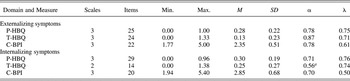
Externalizing and internalizing symptoms were assessed using parent, teacher, and child reports. Parent and teacher reports were collected using parent and teacher versions of The MacArthur Health and Behavior Questionnaire (HBQ; Armstrong, Goldstein, & The MacArthur Working Group on Outcome Assessment, Reference Armstrong and Goldstein2003). Children's perceptions of their own behaviors were assessed using the Berkeley Puppet Interview (BPI; Ablow, Measelle, & The MacArthur Working Group on Outcome Assessment, Reference Ablow and Measelle2003). The BPI combines both structured and clinical interviewing techniques to allow young children to verbally or nonverbally identify themselves with one of two opposing statements about their behavior, as voiced by puppets. Interviewers were extensively trained to deal with unclear, inaudible, indecisive, or alternate responses, and to create a comfortable, engaging, and interactive environment. Videotaped responses were coded using a 7-point scale based on the statement the child chose to endorse and the degree of endorsement. Interclass correlation coefficients were calculated based on 35% of double-coded BPIs (interclass correlation coefficients range = .91–.98), indicating excellent interrater reliability. The validity and reliability of HBQ and BPI measures have been tested with kindergarten children, and all three measures show good measurement properties (for details, see Ablow et al., Reference Ablow and Measelle2003; Armstrong et al., Reference Armstrong and Goldstein2003). Although the BPI is designed to parallel the parent and teacher HBQ items and scales, the items vary slightly across the three informants. For example, both parent and child are asked to report symptoms of separation anxiety, to which the teacher may not be privy. Parent-, teacher-, and child-reported externalizing symptoms scales consisted of subscales measuring oppositional defiant behaviors (e.g., argues, angry, resentful, misbehaves), conduct problem behaviors (e.g., lies, vandalizes, threatens, cheats), and overt hostility behaviors (e.g., teases, fights, kicks, taunts). Parent and child reports of internalizing symptoms consisted of depression, overanxious, and separation anxiety subscales, whereas teacher report of internalizing symptoms excluded items pertaining to separation anxiety, as those behaviors are less salient to teachers. Descriptive and reliability statistics for externalizing and internalizing scales across three informants are presented in Table 1. There was a negligible amount of missing data in child report of externalizing (0.8%) and internalizing (0.8%) and parent report of externalizing (1.5%) and internalizing (4.2%), and teacher report was complete.
Descriptive statistics and factor loadings for externalizing and internalizing symptoms

Note: λ, factor loading; P-HBQ, parent report on Health and Behavioral Questionnaire; T-HBQ, teacher report on Health and Behavior Questionnaire; C-BPI, child report on Berkeley Puppet Interview.
aBivariate correlation.
Using parent HBQ, teacher HBQ, and BPI composite scores, we followed the procedure outlined by Kraemer and colleagues (Reference Kraemer, Measelle, Ablow, Essex, Boyce and Kupfer2003) for obtaining multiinformant indices of externalizing and internalizing symptoms. We conducted two principal components analyses to triangulate three potentially orthogonal sources of information: parent, teacher, and child report of externalizing and internalizing. The first component weighs each source of information in the same direction and represents the common variance across the three informants that is largely free of informant and contextual effects. As such, the first component from each principal components analysis was used as a “trait” measure of externalizing and internalizing symptoms. The factor scores based on the second and third component represent informant and contextual effects, which were not the focus of the present study.
Results
Descriptive statistics
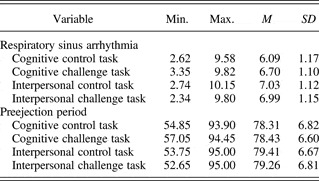
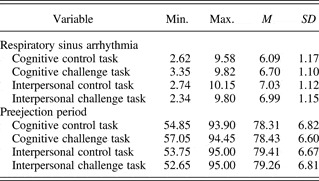
Descriptive statistics for ANS responses to challenge and control tasks are presented in Table 2. Average RSA differences between challenge and control tasks were 0.61 (SD = 0.64) for the cognitive challenge and −0.02 (SD = 0.62) for the interpersonal challenge task. Average PEP differences between challenge and control tasks were 0.08 (SD = 1.61) for the cognitive challenge and −0.15 (SD = 2.41) for the interpersonal challenge task. During the cognitive task, 15.8% of the sample showed a decrease in RSA from the levels elicited by the control task, suggesting that a subsample showed vagal withdrawal in response to cognitive challenge. During the interpersonal task, 47.4% of the sample showed a decrease in RSA from the levels elicited by the control task, suggesting that about half of the sample showed vagal withdrawal in response to interpersonal challenge. During the cognitive task, 43.5% of the sample showed a decrease in PEP from the levels elicited by the control tasks, and during the interpersonal task 48.6% of the sample showed a decrease in PEP from the levels elicited by the control tasks, suggesting that about half of the sample showed sympathetic activation in response to these two challenges. Although sample averages were generally not different from zero, the protocol effectively captured variability in children's responses to laboratory challenges.
Descriptive statistics for autonomic nervous system variables
Bivariate correlations
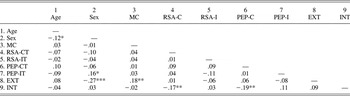
Bivariate correlations among all variables included in the analyses are presented in Table 3. Boys in this sample were slightly older than girls and, consistent with the broader literature on sex differences on behavior problems, they had higher levels of externalizing symptoms. There was no sex difference in the level of internalizing symptoms, which, given the young age of this sample, is also consistent with the literature. In addition, no evidence of comorbidity emerged, as indices of externalizing and internalizing symptoms were not significantly correlated. The intertask correlations between RSA and PEP reactivity to the cognitive task and RSA and PEP reactivity to the interpersonal task were also not significant. Although no sex differences were expected in terms of stress reactivity levels, girls showed lower levels of PEP reactivity to the interpersonal task. As hypothesized, exposure to marital conflict was related to higher levels of externalizing symptoms, but it was not related to internalizing symptoms. Internalizing symptoms were significantly associated with higher levels of both RSA and PEP reactivity to the cognitive task.
Bivariate correlations among key variables

Note: MC, marital conflict; RSA, respiratory sinus arrhythmia reactivity; CT, cognitive task; IT, interpersonal task; PEP, preejection period reactivity; EXT, externalizing symptoms; INT, internalizing symptoms.
*p < .05. **p < .01. ***p < .001.
Regression analyses
The central goal of the regression analyses was to investigate whether the interaction effect between two indices of ANS reactivity and exposure to marital conflict on externalizing and internalizing symptoms varied across cognitive and interpersonal challenge tasks. We conducted two parallel sets of regression analyses. First, we examined how concurrent PEP and RSA reactivity to cognitive and interpersonal tasks interacted with marital conflict to predict children's externalizing symptoms. Controlling for children's sex and the main effects of PEP and RSA reactivity to the two tasks, we tested the significance of four two-way interaction terms (i.e., two systems by two challenge tasks) in the same model. Second, we ran an analogous regression model to examine the effect of these interactions on children's internalizing symptoms. The effects of RSA and PEP reactivity to both tasks were tested concurrently, in order to identify processes that are unique to each ANS branch as well as to each task type. Interactive effects were tested following the procedure outlined by Baron and Kenny (Reference Baron and Kenny1986). Significant interactions were further examined using the simple slopes technique proposed by Aiken and West (Reference Aiken and West1991) by comparing the effect of high (i.e., 1 SD above the mean) and low (i.e., 1 SD below the mean) levels of marital conflict on symptoms in children with high and low RSA AND PEP reactivity. High RSA and PEP reactivity were defined as 1 SD below the mean of standardized residual scores, whereas low RSA and PEP reactivity were defined as 1 SD above the mean of standardized residual scores.
Externalizing symptoms
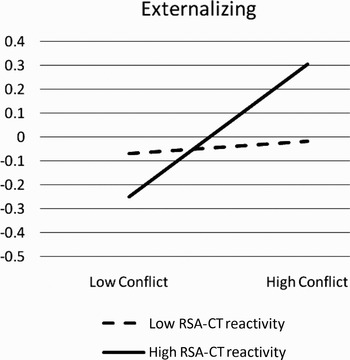
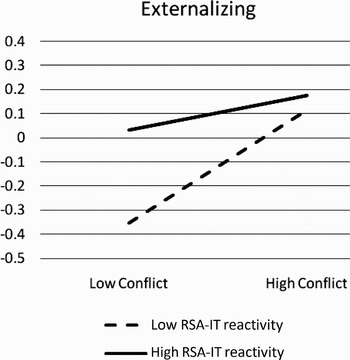
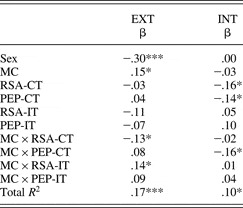
Results from the regression analysis examining the effects of PEP and RSA reactivity to the cognitive and interpersonal challenge tasks on externalizing symptoms are presented on the left-hand side of Table 4. Consistent with the bivariate correlations, male sex and exposure to marital conflict predicted higher levels of externalizing symptoms. However, the main effects of marital conflict must be interpreted in the context of significant interactions. An interaction between RSA reactivity to the cognitive task and marital conflict emerged as a significant predictor of externalizing symptoms. Examination of simple slopes revealed that marital conflict was positively associated with externalizing symptoms only for children who showed elevated RSA reactivity to the cognitive task (b = 0.28, p < .01), but not for children who showed lower levels of RSA reactivity to the cognitive task (b = 0.03, p > .05). In comparison to children with lower levels of RSA reactivity, children with higher RSA reactivity had higher levels of externalizing symptoms in the context of high marital conflict, but lower levels of externalizing symptoms in the context of low marital conflict (see Figure 1). In addition, an interaction between RSA reactivity to the interpersonal task and marital conflict also emerged as a significant predictor of externalizing symptoms. As hypothesized, the direction of this effect was opposite from the interactive effect of RSA reactivity to the cognitive task and marital conflict. According to the test of simple slopes, marital conflict had no effect on levels of externalizing symptoms in children who exhibited higher levels of RSA reactivity (b = 0.01, p > .05). In contrast, marital conflict was significantly related to externalizing symptoms for children who showed lower levels of RSA reactivity (b = 0.30, p > .001). As shown in Figure 2, lower RSA reactivity to the interpersonal task acted as a promotive factor in the context of low marital conflict.
Externalizing symptoms as a function of marital conflict and respiratory sinus arrhythmia (RSA) reactivity to the cognitive task (CT). Low and high marital exposure values are graphed at 1 SD below and above the mean, respectively, whereas low and high RSA reactivity are graphed at 1 SD above and below the residual score mean, respectively.

Externalizing symptoms as a function of marital conflict and respiratory sinus arrhythmia (RSA) reactivity to the interpersonal task (IT). Low and high marital exposure values are graphed at 1 SD below and above the mean, respectively, whereas low and high RSA reactivity are graphed at 1 SD above and below the residual score mean, respectively.

Standardized regression coefficients
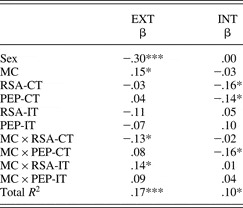
Note: EXT, externalizing symptoms; INT, internalizing symptoms; MC, marital conflict; RSA, respiratory sinus arrhythmia reactivity; CT, cognitive task; PEP, preejection period reactivity; IT, interpersonal task.
*p < .05. ***p < .001.
Internalizing symptoms
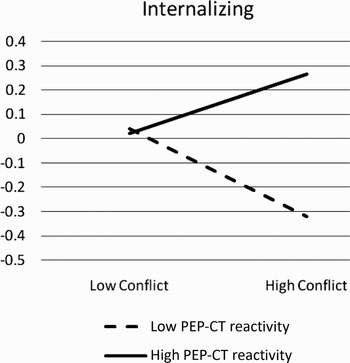
Results from the regression analysis examining the effects of PEP and RSA reactivity to cognitive and interpersonal challenge tasks on internalizing symptoms are presented on the right side of Table 4. Consistent with the bivariate correlations, high RSA and high PEP reactivity to the cognitive task predicted higher levels of internalizing symptoms. However, the main effects of RSA and PEP reactivity must be interpreted in the context of significant interactions. An interaction between PEP reactivity to the cognitive task and marital conflict emerged as a significant predictor of internalizing symptoms. A test of simple slopes revealed a nonsignificant association between marital conflict and internalizing symptoms for children who showed elevated PEP reactivity (b = 0.12, p > .05) and a negative association between marital conflict and internalizing symptoms for children who showed lower PEP reactivity (b = −0.18, p < .05). As shown in Figure 3, in the context of high marital conflict, higher PEP reactivity acted as a risk factor for internalizing, whereas lower PEP reactivity represented a protective factor. In contrast, in the context of low marital conflict, there was no difference in the level of externalizing symptoms across the two groups.
Internalizing symptoms as a function of marital conflict and preejection period (PEP) reactivity to the cognitive task (CT). Low and high marital exposure values are graphed at 1 SD below and above the mean, respectively, whereas low and high PEP reactivity are graphed at 1 SD above and below the residual score mean, respectively.

Discussion
The focus of the current study was to extend our understanding of how children's exposure to marital conflict interacts with children's ANS reactivity to different laboratory stressors to predict externalizing and internalizing symptoms. The findings indicate that the effects of such interactions vary with the nature of the challenge used to elicit physiological reactivity. As hypothesized, the interaction between RSA reactivity to the cognitive task and exposure to marital conflict corroborated the (BSC theory; Boyce & Ellis, Reference Boyce and Ellis2005). Children who responded to the cognitive task with higher RSA reactivity had the highest levels of externalizing symptoms when also exposed to high levels of marital conflict, but they had the lowest levels of externalizing symptoms when living in low marital conflict families. In contrast, lower RSA reactivity to the cognitive task seemed to buffer children against the effect of marital conflict, because conflict exposure did not relate to the level of externalizing symptoms for those children.
Given our interest in task specificity, it is important to consider what high RSA reactivity to a cognitive task may signify in different children. Previous research indicates that high RSA reactivity to a cognitive task may denote a child's engagement and mental effort to perform well on a challenging task (Blair & Peters, Reference Blair and Peters2003; Calkins, Reference Calkins1997; Suess et al., Reference Suess, Porges and Plude1994). Given this, it is possible that for children who live in low-conflict family environments, elevated RSA reactivity indicates adaptive engagement with a challenging cognitive task (Calkins, Reference Calkins1997; Suess et al., Reference Suess, Porges and Plude1994). Thus, it may promote positive behavior, because it makes children more biologically sensitive to nurturing components in their environment. In contrast, high RSA reactivity to the cognitive task could also indicate frustration or anxiety caused by the task's difficulty and the child's poor performance. The cognitive task employed in this study is similar to nonsocial tasks used by other researchers (Chen et al., Reference Chen, Matthews, Salomon and Ewart2002; El-Sheikh et al., Reference El-Sheikh, Kouros, Erath, Cummings, Keller and Staton2009); however, it is possible that the evaluative component of this task may have elicited negative emotions in some children. Children who struggled more with the cognitive challenge may have found the task more stressful due to the experimenter's corrective feedback, and thus may have exhibited higher levels of physiological reactivity. Given that children who come from high conflict families tend to struggle academically in school (Cummings & Davies, Reference Cummings and Davies1994), it is plausible that elevated RSA reactivity in those children indicates poor regulation of negative emotions associated with low performance on the task. According to biological sensitivity theory (Boyce & Ellis, Reference Boyce and Ellis2005), the elevated reactivity makes these children more vulnerable to negative elements in their environment, predisposing them to higher levels of externalizing symptoms than their low reactive peers. Because we do not have a measure of how well children did on the cognitive task, this explanation is only speculative. However, this line of reasoning is consistent with the Boyce and Ellis's (Reference Boyce and Ellis2005) argument that early experiences may influence the development of reactivity phenotypes. Thus, future research should try to differentiate better the implication of high RSA reactivity to a cognitive challenge task as well as examine how experiences in children's lives contribute to the development of different reactivity profiles.
Similarly, the interaction between PEP reactivity to the cognitive task and marital conflict significantly predicted the level of internalizing symptoms in a direction consistent with BSC theory. At low levels of marital conflict, PEP reactivity to the cognitive task was not related to the level of children's internalizing symptoms; but as levels of conflict in a home increased, children who exhibited higher sympathetic activation to cognitive challenge were at greater risk for developing internalizing symptoms. Because SNS reactivity seems to be activated in response to threatening environmental stimuli (Porges, Reference Porges2007), children who exhibited higher PEP reactivity may feel more threatened by marital conflict, which puts them at greater risk for internalizing symptoms. In contrast, children who were not sympathetically aroused by the cognitive challenge were protected against the deleterious effect of marital conflict on their internal well-being. In addition, internalizing symptoms were predicted by both elevated RSA and PEP reactivity. This finding is consistent with the literature showing a link between high SNS reactivity and internalizing symptoms (Boyce et al., Reference Boyce, Quas, Alkon, Smider, Essex and Kupfer2001; El-Sheikh, Reference El-Sheikh2005; Fowles, Kochanska, & Murray, Reference Fowles, Kochanska and Murray2000; Weems, Zakem, Costa, Cannon, & Watts, Reference Weems, Zakem, Costa, Cannon and Watts2005) as well as between PNS reactivity and internalizing symptoms (Boyce et al., Reference Boyce, Quas, Alkon, Smider, Essex and Kupfer2001). However, these main effects must be considered only within the context of the significant interaction described above.
Corroborating our second hypothesis and based on the extant marital conflict literature, the findings revealed that the interaction between RSA reactivity to the interpersonal task and marital conflict had an opposite effect on externalizing symptoms than we found with the cognitive task. Similar to findings reported by El-Sheikh and colleagues and Katz and colleagues (El-Sheikh et al., Reference El-Sheikh, Harger and Whitson2001; Katz, Reference Katz2007; Katz & Gottman, Reference Katz and Gottman1997), the effect of marital conflict on externalizing symptoms did not vary for children who displayed high RSA reactivity to the interpersonal task. In contrast, the effect of marital conflict on the level of externalizing symptoms was significant for children who demonstrated low RSA reactivity to interpersonal conflict: they had the lowest levels of externalizing symptoms in the context of low marital conflict, whereas in the context of high marital conflict they had a level of externalizing symptoms commensurate with that of low reactive children. It is important to note that, in the context of high marital conflict, RSA reactivity to the interpersonal stressor did not differentiate children with various levels of externalizing symptoms in the current study. However, unlike previous studies of children exposed to marital conflict, the current sample was not selected to represent high levels of marital conflict, and the measure used to assess exposure to marital conflict did not include items pertaining to more severe forms of physical and psychological domestic violence. If we were to extend the interaction lines to higher levels of marital conflict than were present in our sample, children who displayed low RSA reactivity to the interpersonal challenge would show the highest level of externalizing symptoms, consistent with the extant marital conflict studies (El-Sheikh et al., Reference El-Sheikh, Harger and Whitson2001, Reference El-Sheikh, Kouros, Erath, Cummings, Keller and Staton2009).
Although consistent with previous studies of RSA reactivity to interpersonal challenges in the context of marital conflict, this finding seems incongruent with BSC theory. The context-sensitive children identified by the interpersonal challenge appear to be a different set of children from those identified by the cognitive challenge, as the correlation between RSA reactivity to the two tasks is near zero. In light of this, we must consider why variation in the level of marital conflict has a stronger effect on externalizing behavior for the former group. It is plausible that children who are least physiologically aroused by viewing a scene of bullying behavior would be the ones least concerned with or engaged in aggressive and defiant behaviors. Under conditions of low intrafamilial conflict, these minimally reactive, conflict-indifferent children show the lowest rate of externalizing behavior problems. Children who are less physiologically aroused by the interpersonal conflict displayed in the bullying movie may also be less physiologically affected by the physical or psychological aggression they witness at home between their parents, and social learning within a high conflict environment may lead to these children exhibiting more aggressive behavior toward their peers. Further, low sensitivity to the emotions experienced by the victim or the potential punishment that may await the bully in the video may make it easier for these children to act out (Beauchaine et al., Reference Beauchaine, Gatzke-Kopp and Mead2007; Raine, Reference Raine2002). Thus, low susceptibility to interpersonal stressors may manifest as low reactivity to potential consequences generated by disruptive behaviors, hostility, and defiance.
Although the current formulation of BSC theory does not postulate that the function of high physiological reactivity varies across different tasks, the findings presented here suggest that the type of laboratory challenge used to elicit children's stress response can influence the direction of interaction effects between ANS reactivity and marital conflict on children's psychopathology. After taking the nature of the laboratory task into account, studies supporting BSC theory and those demonstrating a buffering effect of high reactivity may not appear contradictory, but rather complementary. Although these findings require replication, and some of the interpretations are speculative, this study has important implications for future research. Namely, physiological reactivity is highly context specific, and researchers should attend not only to the context in which children are growing up but also to the nature of the stimuli to which children are responding when reactivity is evoked and measured. Some children may demonstrate very different reactivity to social, cognitive, emotional, and physical stressors. It is more important that distinct reactivity profiles within the same child may have unique predictive significance for indices of adaptation and development. Analogous to the meta-analytic work of Dickerson and Kemeny (Reference Dickerson and Kemeny2004) on adrenocortical reactivity to acute stressors, there is a need for a more systematic examination of how different laboratory stressors influence the effect of the ANS reactivity by adversity interaction on adaptive functioning.
Researchers often refer to stress reactivity as if it is a trait characteristic, a static individual difference. We speak of “high reactive children” and “low reactive children” as if some children are highly reactive and others low reactive across all challenging circumstances. However, physiological stress reactivity is better characterized as a dynamic process that develops over time (Alkon et al., Reference Alkon, Goldstein, Smider, Essex, Boyce and Kupfer2003; Allen & Matthews, Reference Allen and Matthews1997), that is influenced by early childhood experiences (Burgess, Marshall, Rubin, & Fox, Reference Burgess, Marshall, Rubin and Fox2003; Ellis, Essex, & Boyce, Reference Ellis, Essex and Boyce2005; Scheeringa, Zeanah, Myers, & Putnam, Reference Scheeringa, Zeanah, Myers and Putnam2004), and that can vary across different contexts and in response to different stimuli (Alkon et al., Reference Alkon, Goldstein, Smider, Essex, Boyce and Kupfer2003; Chen et al., Reference Chen, Matthews, Salomon and Ewart2002; Quigley & Stifter, Reference Quigley and Stifter2006). Moreover, the longitudinal stability of SNS and PNS stress reactivity in children has been examined mostly across relatively short periods, and although significant, it is not as robust as some other measures of individual differences (Alkon et al., Reference Alkon, Goldstein, Smider, Essex, Boyce and Kupfer2003; Matthews et al., Reference Matthews, Salomon, Kenyon and Allen2002). It is thus important that researchers reconceptualize physiological reactivity as a more complex, dynamic phenomenon that requires examination across different contexts and in response to various types of stimuli. Longitudinal research is also needed to test whether the interplay between children's biology and environment varies across different developmental periods and to tease apart whether this interplay has a different effect on short-term versus long-term adaptation.
The next generation of studies must also address how the interaction between ANS reactivity and environmental effects varies across boys and girls and how it relates to comorbid internalizing and externalizing symptoms. Some sex differences have already been noted by El-Sheikh and colleagues (El-Sheikh et al., Reference El-Sheikh, Keller and Erath2007; Erath et al., Reference Erath, El-Sheikh and Cummings2009), and extant research suggests a unique ANS reactivity profile in children who display both high levels of externalizing and internalizing behavior problems (Boyce et al., Reference Boyce, Quas, Alkon, Smider, Essex and Kupfer2001; Calkins et al., Reference Calkins, Graziano and Keane2007). Similarly, externalizing and internalizing symptoms represent broad categories of behavioral and emotional problems that need to be examined separately. For example, recent studies reveal different reactivity profiles associated with proactive and reactive aggression (Hubbard et al., Reference Hubbard, Smithmyer, Ramsden, Parker, Flanagan and Dearing2002) as well as with physical and relational aggression (Murray-Close & Crick, Reference Murray-Close and Crick2007).
Researchers should continue testing concurrent effects of both sympathetic and parasympathetic reactivity, because the systems operate in a highly synchronized fashion in children. Indices of the two systems should not only be tested in the same model, but the interaction between the two systems needs to be examined as well (see El-Sheikh et al., Reference El-Sheikh, Kouros, Erath, Cummings, Keller and Staton2009). Although our study was interested in ANS reactivity to laboratory stressors, as BSC theory does not address the role of baseline PNS and SNS function, a recent study by Hinnant and El-Sheikh (Reference Hinnant and El-Shiekh2009) highlights the importance of also examining the interplay between baseline and reactivity values when examining children's risk for externalizing and internalizing symptoms. Measurement of ANS stress physiology can also be enhanced by inclusion of indices of SNS and PNS recovery. Understanding the whole trajectory of autonomic response will help distinguish children who initially demonstrate high reactivity but recover quickly from those who maintain high levels of arousal for longer periods. Further, future studies should examine reactivity across different levels of analysis, given that analogous research by Belsky, van IJzendoorn, Bakermans-Kranenburg, and colleagues shows that temperamentally reactive children are also more susceptible to both positive and negative experiences than their behaviorally less reactive peers (Belsky, Reference Belsky, Ellis and Bjorklund2005; Belsky et al., Reference Belsky, Bakermans-Kranenburg and van IJzendoorn2007; Pluess & Belsky, Reference Pluess and Belsky2009). However, it is unclear whether children who exhibit high physiological reactivity to particular stressors also show concurrent high behavioral reactivity. Some studies show significant relations between indices of behavioral and physiological reactivity (Buss, Davidson, Kalin, & Goldsmith, Reference Buss, Davidson, Kalin and Goldsmith2004; Buss, Goldsmith, & Davidson, Reference Buss, Goldsmith and Davidson2005; Fowles et al., Reference Fowles, Kochanska and Murray2000; Lewis, Ramsay, & Sullivan, Reference Lewis, Ramsay and Sullivan2006), whereas others report no significant association (Quas, Hong, Alkon, & Boyce, Reference Quas, Hong, Alkon and Boyce2000; Marshall & Stevenson-Hinde, Reference Marshall and Stevenson-Hinde1998). Thus, it is unclear whether physiological reactivity coupled with heightened behavioral reactivity represents a different marker of sensitivity than either physiological or behavioral reactivity in isolation (Obradović & Boyce, Reference Obradović and Boyce2009).
Limitations and Conclusion
Finally, the current study is limited by several factors. The sample, although ethnically diverse, included a majority of children with a relatively high socioeconomic background, as indicated by family income and parental education. The measure of marital conflict was based only on the report of one parent and did not include indices of more extreme forms of physical and psychological aggression. Future studies should aim to conduct a more comprehensive assessment of marital conflict exposure by pooling the report of both parents as well as the child's perspective. Moreover, the absence of marital conflict does not necessary imply harmonious family environment per se. In order to fully test BSC theory, future studies should explicitly assess the presence of nurturing and supportive factors in low-conflict families. The two laboratory challenges in this study were too short to accommodate indices of both reactivity and recovery to individual stimuli. The study also did not include measures of concurrent behavioral reactivity or quality of performance on the cognitive task, which may further elucidate why the interactive effect of PNS reactivity and marital conflict on externalizing symptoms varies across interpersonal and cognitive tasks. Despite these limitations, this study presents a unique attempt to reconcile two seemingly contradictory lines of research, both examining autonomic stress physiology as a moderator of environmental effects on adaptation. The current study provides initial evidence suggesting that differential ANS reactivity to cognitive versus interpersonal stressors may represent different markers of biological sensitivity to contextual influences and emphasizes the need to move beyond single measures of stress reactivity. We hope that this study will generate research that will help derive a more comprehensive understanding of the interplay between ANS physiology and contextual factors that influence developmental trajectories of psychopathology and resilience.