Introduction
Starch, the major source of carbohydrates in commercial avian diets, is the most abundant storage polysaccharide in plants. Native starches differ in granule size, amylose to amylopectin ratio and amylose structure (Eliasson and Gudmundsson, Reference ELIASSON and GUDMUNDSSON1996). A nutritional classification of starch into rapidly digestible (RDS), slowly digestible (SDS) and resistant starch (RS) has been proposed (Englyst et al., Reference ENGLYST, KINGMAN and CUMMINGS1992), where RDS and SDS are digested in the small intestine and RS is the part of the starch fraction that escape digestion in the small intestine and is slowly fermented in large intestine.
Chemically, starches are glucose polysaccharides, composed of two types of α-glucans: amylose and amylopectin. Starch with high amylose content is often considered to be less digestible. The ratio of the two polysaccharides varies according to the botanical origin, which is of great importance for the chemical and functional properties of a starch. This influence might be attributed to the granule size distribution, to the crystallinity, to the organisation of the molecules within the granule or to the chemical nature of the starch polymers (Fredriksson et al., Reference FREDRIKSSON, SILVERIO, ANDERSSON, ELIASSON and AMAN1998). The interior of the starch granule is composed of alternating crystalline and amorphous regions; thermo-mechanical processing chemically alters several ingredients of feed. When starch is heated in the presence of moisture; it absorbs water, swells and disruption occurs of the organised structure - a process called gelatinisation. Gelatinisation or ‘starch melt’ is a homogeneous phase formed under heat treatment. Viscosity increases during gelatinisation, and the properties of starch gels are very sensitive to factors such as shearing, temperature, heating or cooling rate and of course the source of starch and the presence of other components. The viscosity and gel formation properties are important for four major reasons:
1) Delay in gastric emptying (Johansen et al., Reference JOHANSEN, KNUDSEN, SANDSTORM and SKJOTH1996)
2) Possible reduction of absorption rates in the small intestine (Johnson and Gee, Reference JOHNSON and GEE1981)
3) Increased endogenous secretions (Low, Reference LOW1989)
4) Proliferation of microorganisms in the lower digestive tract (Choct, Reference CHOCT1997).
5) Generally, increased gut viscosity decreases the rate of diffusion of substrates and digestive enzymes and hinders their effective interaction at the mucosal surface.
Factors affecting gelatinisation
lipids
Internal lipids in native cereal starches have been shown to affect swelling and gelatinisation properties of the granules (Morrison, Reference MORRISON1995). Lin et al. (Reference LIN, HSIEH and HUFF1997) reported that increasing the fat content significantly decreased the degree of starch gelatinisation of the extrudates. Also, Becker et al. (Reference BECKER, HILL and MITCHELL2001) found that the presence of amylose-lipid complexes in the granular starch particles played a key role in restriction of water penetration into the particles of these complexes due to the ability of the amylose fraction of starches to bind compounds of the lipid fraction such as fatty acids (Mercier et al., Reference MERCIER, CHARBONNIERE, GREBAUT and GUERIVIERE1980). Similar observations have been reported in other studies (Mälkki et al., Reference MÄLKKI, KERVINEN, OLKKU and LINKO1984). Amylose-lipid interactions and crystallite reorientation have also been found to occur on heat-moisture treatment (Hoover and Manuel, Reference HOOVER and MANUEL1996). The extent of amylose-lipid complex formation is dependent upon both starch and lipid type present in a food. Monoglycerides and free fatty acids are more likely to form complexes than are triglycerides (Bhatnagar and Hanna, Reference BHATNAGAR and HANNA1994).
amylose to amylopectin ratio
Cereals with high amylose content are more resistant to gelatinisation during processing than moderate to high amylopectin cereals. Starch that is high in amylose swells more slowly than the starch rich in amylopectin, and exhibits a loss of order within the granule, followed by its destruction (Colonna and Mercier, Reference COLONNA and MERCIER1985). In contrast, Swanston et al. (Reference SWANSTON, ELLIS, MORRISON, MACKAY, DALE, COOPER, TILLER, DUFFUS, COCHRANE, PRENTICE, PATERSON and LYNN2001) found that the temperature required for gelatinisation was higher for both high-amylopectin and high-amylose barleys compared to mid-range barley.
moisture content
Excess moisture in the feed results in complete starch gelatinisation if combined with elevated temperature. Therefore, increasing moisture usually results in a higher degree of starch hydrolysis (Hakulin et al., Reference HAKULIN, LINKO, LINKO, SEILER and SEIBEL1983). Wood (Reference WOOD1987) determined that high moisture content (30-50%) is required for efficient gelatinisation. Furthermore, Sun et al. (Reference SUN, YANG, SIEBENMORGEN, STELWAGEN and CNOSSEN2002) found that, when limited amounts of water or other solvents are present, more heat is needed to complete gelatinisation and gelatinisation occurs over a wider range. In contrast, several researchers have reported that an increase of water content resulted in a lower degree of starch gelatinisation for different products during extrusion (Bhattacharya et al., Reference BHATTACHARYA, DAS and BOSE1988; Lin et al., Reference LIN, HSIEH and HUFF1997). Lund (Reference LUND1981) reported that, generally, a water: starch ratio of about 1.5:1 is required for complete gelatinisation, and a ratio about 0.3:1 would be required for minimal gelatinisation to begin.
processing/screw speed
Chiang and Johnson. (1977) and Della Valle et al. (Reference DELLA VALLE, TAYEB and MELCION1987) reported that increasing screw speed during processing decreased starch gelatinisation. They hypothesised that the increase of screw speed decreased the retention time of the sample in the extruder, which decreased the extent of its cooking and hence resulted in the decrease of starch gelatinisation. Increased screw speed may have increased the protein digestibility of extruded corn-gluten, because the increase in shear forces in the extruder denatures the proteins more easily, thus facilitating enzyme hydrolysis (Bhattacharya and Hanna, 1985). Changes of screw speed resulted in changes of products temperature, thus affecting starch gelatinisation (Lin et al., Reference LIN, HSIEH and HUFF1997).
During extrusion, shear forces are suspected to play an important role in changing the nutritional value of proteinaceous materials (Marsman et al., Reference MARSMAN, GRUPPEN and VAN DER POEL1993). Normally, shear forces are varied by changing the screw speed. However, by changing the screw speed the residence time is largely affected (Van Zuilichem et al., Reference VAN ZUILICHEM, JAGER and STOLP1988).
granule size
Granule size has also been found to affect gelatinisation. Large starch granules within the endosperm have a higher gelatinisation enthalpy than small granules, reflecting greater crystallinity of large than of small starch granules (Peng et al., Reference PENG, GAO, ABDEL-AAL, HUCL and CHIBBAR1999; Chiotelli and Le Meste, 2002). This means that it is easier to gelatinise large than small starch granules. Extrusion makes starch more accessible for digestive enzymes by the reduction of particle size and changes the crystalline structure of the starch (Thomas et al., Reference THOMAS, HUIJNEN, VLIET, VAN ZUILICHEM and VAN DER POEL1999; Goelema et al., Reference GOELEMA, SMITS, VEASSEN and WEMMERS1999). Some of the beneficial effects of feed particle size may arise from their influence on intestinal morphology, but the published data on these aspects are scarce. The morphological modulations of the intestine will affect function, secretion of digestive enzymes and absorption of nutrients.
Effect of particle size on digestibility and performance
Amerah et al. (Reference AMERAH, RAVINDRAN, LENTLE and THOMAS2008) found that wheat particle size had no effect on villus height and crypt depth. These findings are consistent with previous reports in broilers (Amerah et al., 2007b). The effect of particle size on the size and pH of gastrointestinal organs was studied by Nir et al. (Reference NIR, HILLELN, SHEFET and NITSEN1994), who found that the pH of the gizzard content decreased with increasing grain particle size in broiler. Dikeman and Fahey (Reference DIKEMAN and FAHEY2006) reported that decreasing the particle size resulted in decreased apparent viscosity. Moreover, Yasar, Reference YASAR2003 addressed that particle size reduction has been shown to decrease water holding capacity of excreta in broiler chickens.
Studies which relate particle size to digestibility of nutrients are limited, and show inconsistent results with broiler performance. Cabrera (Reference CABRERA1994) found no effect of diet particle size on growth performance of broiler chicks. Lott et al. (Reference LOTT, DAY, DEATON and MAY1992) reported that larger particle size resulted in reduced growth performance of broilers. On the other hand, Nir et al. (Reference NIR, HILLELN, SHEFET and NITSEN1994) has shown that increasing corn particle size increased broiler performance.
Data from Carré and Melcion (Reference CARRÉ and MELCION1995) showed a higher apparent protein digestibility when chickens were fed a fraction of ground peas remaining on a 3-mm sieve compared to being fed a fraction from a 0.5mm sieve. On the other hand, Kalmar et al. (Reference KALMAR, WERQUIN and JANSSENS2007) demonstrated that particle size had no significant effect on apparent digestibility of CP, EE, and NFE in African grey parrots. Comparable results were observed with Peron et al. (Reference PERON, BASTIANELLI, OURY, GOMEZ and CARRÉ2005) who revealed that no significant effect of wheat particle size for protein and lipid digestibility values in chickens. Impact of feed particle size on apparent digestibility coefficients can be explained by its influence on passage rate through the alimentary tract, which in turn results in altered digestion and absorption times of nutrients.
Effects of feed processing on starch availability
Starch structure is considered to have an impact on the rate of starch digestion in cereals, and is therefore an important factor in regard to optimise the starch quality in animal feed. Starch digestion is affected by animal-related factors, including age, feed intake, and passage rate. Hence, the digestibility of starches in the GI tract of poultry will be dependent on a number of factors including the amylose to amylopectin ratio. The carbohydrate quality may be modified by thermo-mechanical treatments through the gelatinisation of starch (Lankhorst et al., Reference LANKHORST, TRAN, HAVENAAR, HENDRIKS and VAN DER POEL2007) or a shift to the development of resistant starch (Dust et al., Reference DUST, GAJDA, FLICKINGER, BURKHALTER, MERCHEN and FAHY2004).
Under condition of excess water, hydrogen bonds in the less ordered amorphous regions of the granule are disrupted first, allowing water to associate with free hydroxyl group. Donovan et al. (Reference DONOVAN, LORENZ and KULP1983) postulated that the effect of heat moisture treatment may be due to either to new crystallisation or recrystallisation and perfection of the small crystalline regions of starch granules.
High moisture and temperature extrusion results in complete gelatinisation and in a significant increase in in vitro (Murray et al., Reference MURRAY, FLICKINGER, PATIL, MERCHEN, BRENT and FAHEY2001; Dust et al., Reference DUST, GAJDA, FLICKINGER, BURKHALTER, MERCHEN and FAHY2004 and Ljokjel et al., Reference LJOKJEL, SORENSEN, STOREBAKKEN and SKREDE2004) and in vivo (Svihus et al., Reference SVIHUS, UHLEN and HARSTAD2005) starch availability (Bjorck et al., Reference BJORCK, ASP, BIRKHED and LUNDQUIST1984). Camire et al. (Reference CAMIRE, CAMIRE and KRUMHAR1990) found that extrusion enhanced both the in vitro and in vivo digestibility of starch. Likewise, Camire et al. (Reference CAMIRE, CAMIRE and KRUMHAR1990) reported an improvement in starch digestibility using extrusion processes. On the other hand, the results by Plavnik and Sklan (Reference PLAVNIK and SKLAN1995) indicated no significant differences in apparent starch digestibility in broiler fed extruded diet in comparison to unprocessed feeds (Zimonja and Svihus, Reference ZIMONJA and SVIHUS2009). Increases in susceptibility for enzymatic starch breakdown resulting in the higher gelatinisation degree of the starch were reported by Zimonja and Svihus (Reference ZIMONJA and SVIHUS2009).
It is important to optimise processing conditions in the barrel to maximise gelatinisation. If the temperature is outside the range of optimum, starch conversion can be expected to be lower. However, retrogradation of starch after processing is a factor that needs to be taken into account. Retrogradation occurs when the molecules within gelatinised starch start to reassociate. For example, amylopectin retrogradation happens very slowly and needs a long storage time to develop (Lii et al., Reference LII, LAI and SHEN2004), whereas amylose retrogradation is thought to be more immediate and important. The retrogradation process generally depends on water content (Zeleznak and Hoseney, Reference ZELEZNAK and HOSENEY1986). From a nutritional point of view, it is well established that retrograded starch is resistant to digestion in monogastrics (Eerlingen et al., Reference EERLINGEN, JACOBS and DELCOUR1994).
Effect of extrusion on digestibility and performance
Extrusion is a useful processing method, which causes a modification in the starch structure (Van den Einde et al., Reference VAN DEN EINDE, VAN DER VEEN, BOSMAN, VAN DER GOOT and BOOM2005), and nutritive value of extruded poultry feeds can be improved by facilitating its enzymatic degradation (Holm and Bjorck, Reference HOLM and BJORCK1988).
Definition of extrusion
Extrusion technology is characterised as a high-temperature, short dwell time process (Dziezak, Reference DZIEZAK1989), where the feed is exposed to a high temperature (80-200°C) for a relatively short periods of time (10-270 s), and is concurrently exposed to high pressure and shear forces (Bjorck and Asp, Reference BJORCK and ASP1983). The ingredients during the extrusion process are ground, mixed and heat-treated. Extrusion can optimise the beneficial effects of heat treatment as well as minimise its detrimental impacts (Serrano, Reference SERRANO1996). Mild extrusion processing usually enhances the digestibility of plant proteins (Srihara and Alexander Reference SRIHARA and ALEXANDER1984; Hakansson et al., Reference HAKANSSON, JAGERSTAD, OSTE, AKESSON and JONSSON1987).
There are two types of extruders: single screw and twin-screw extruders (Harper and Jansen, Reference HARPER and JANSEN1981). Each type of extruder has its own operating conditions, with advantages and disadvantages. Heat processing typically alters the composition and availability of nutrients and other components in native materials (Dellavalle et al., Reference DELLAVALLE, GUILLIEN and GUEGUEN1994) by starch gelatinisation, protein denaturation, and inactivation of anti-nutritional factors, especially trypsin inhibitors, haemagglutinins, tannins and phytates - all of which inhibit protein digestibility (Armour et al., Reference ARMOUR, PERERA, BUCHAN and GRANT1998; Alonso et al., Reference ALONSO, ORUE, ZABALZA, GRANT and MARZO2000a and Singh et al., Reference SINGH, GAMLATH and WAKELING2007). Undesirable effects of extrusion cooking involve losses of heat-labile vitamins (e.g. vitamin A, E, thiamine), oxidation of lipids (Lin et al., Reference LIN, HSIEH and HUFF1997), destruction and reduction in the availability of amino acids, in particular, of lysine which is related to the Maillard reaction (Camire et al., Reference CAMIRE, CAMIRE and KRUMHAR1990; Moughan and Rutherfurd, Reference MOUGHAN and RUTHERFURD1996). The processing conditions must therefore be controlled during extrusion in order to maximise the desirable effects on feed quality. Araba and Dale (Reference ARABA and DALE1990) and Marsman et al. (Reference MARSMAN, GRUPPEN, VAN DER POEL, RESINK, VERSTEGEN and VORAGEN1995) reported that over-processing may decrease the nutritional value of SBM due to Maillard reactions.
During extrusion, protein structures are disrupted and altered under high shear, pressure, and temperature (Harper, Reference HARPER1981). Jones et al. (Reference JONES, ANDERSON and FERKET1995) revealed that the extrusion process caused some protein and amino acid destruction in broiler feed diets. Therefore, extruded rations should be formulated at slightly higher nutrient density to redress nutrient destruction.
Several reviews of chemical or nutritional changes (Table 1) during extrusion cooking of foods have been published (Bjorck and Asp, Reference BJORCK and ASP1983; Camire, Reference CAMIRE1998; Camire et al., Reference CAMIRE, CAMIRE and KRUMHAR1990; Cheftel, Reference CHEFTEL1986).
General changes in foods during extrusion cooking.

Effect of extrusion processing on performance
Extruder conditions which result in different degrees of starch gelatinisation may cause variations in growth performance. Previous research (Meyer and Froseth, Reference MEYER and FROSETH1988; Marsman et al., Reference MARSMAN, GRUPPEN, VAN DER POEL, KWAKKEL, VERSTEGEN and VORAGEN1997; Nageswara et al., Reference NAGESWARA, REDDY and REDDY2004) on the effects of extrusion on the performance of poultry have been inconsistent results. Meyer and Froseth (Reference MEYER and FROSETH1988) found an improved body weight gain and feed conversion ratio in broiler chicks fed a diet containing extruded versus toasted soybeans. Moreover, Marsman et al. (Reference MARSMAN, GRUPPEN, VAN DER POEL, KWAKKEL, VERSTEGEN and VORAGEN1997) reported the positive effect of SBM extrusion on growth performance in broiler chicks. Similarly, body weight and body weight changes tended to be different between the degree of starch gelatinisation due to dwell time for pigeons (Abd El Khalek et al., 2009). Weurding (Reference WEURDING2002) reported that a diet with slowly digestible starch resulted in a better feed conversion ratio (FCR) of broiler chickens compared with a diet with rapidly digestible starch. On the other hand, Sloan et al. (Reference SLOAN, BOWEN and WALDROUP1971) found that the extrusion process had no effect on body weight gain and feed: gain ratio of 28 day old broilers. Nageswara et al. (Reference NAGESWARA, REDDY and REDDY2004) noticed that the processing of maize-soy or maize-soy-palm kernal diets by pelleting, extrusion cooking or expander extrusion was not beneficial in improving the performance of layers, but extrusion processing of the maize-soy diet improved feed utilisation efficiency.
Effect of extrusion processing on digestibility
Extrusion and/or gelatinisation values do not always correspond to increased digestibility of test ingredients (Davis and Arnold, Reference DAVIS and ARNOLD1995). Heat processing of food influences protein digestibility in different ways:
1) Denaturation of protein, thus increasing protein digestibility (Cheftel, Reference CHEFTEL1979).
2) Side chains of amino acids may be modified, thus delaying the action of digestive enzymes, (Sagum and Arcot, Reference SAGUM and ARCOT2000).
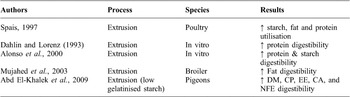
Table 2 shows the effects of extrusion process on digestibility and utilisation of nutrients.
Impact of extrusion processing on digestibility coefficient and utilisation of nutrients.

Heat processing (HP) of cereals gelatinises a proportion of the grain, which many result in improved nutrient availability. However, there is some controversy about effects of heat processing on digestibility. Marsman et al. (Reference MARSMAN, GRUPPEN, VAN DER POEL, KWAKKEL, VERSTEGEN and VORAGEN1997) demonstrated a significantly higher apparent ileal crude protein (CP) digestibility in extruded soybean meal compared with toasted soybean meal (87.2 vs. 82.2%) in broiler. Arija et al. (Reference ARIJA, CENTENO, VIVEROS, BRENES, MARZO, ILLERA and SILVAN2006) similarly showed that extrusion kidney bean significantly improved the ileal digestibility of CP and amino acids in chicken. Lichovnikova et al. (Reference LICHOVNIKOVA, ZEMAN, KRACMAR and KLECKER2004) reported that the extrusion process significantly increased total tract apparent digestibility (TTAD) of fat, nitrogen retention and TTAD of essential amino acids, except for lysine and histidine, in laying hens diet. Still, the decrease in TTAD of these two amino acids was not significant. Also, Dänicke et al. (Reference DÄNICKE, KRACHT, JEROCH, ZACHMANN, HEIDENREICH and LOWE1998) found that increasing the temperature of the thermal treatments resulted in an increase in crude fat digestibility in broilers and laying hens.
On the other hand, many studies have shown that increased heat processing can have a negative effect on amino acids bioavailability in feedstuffs (Parsons et al., Reference PARSONS, HASHIMOTO, WEDEKIND, HAN and BAKER1992). One of the important amino acids that is affected during the extrusion process is lysine, mostly the first limiting amino acids in cereal diets for many animal species. Lysine is very sensitive to heat, due to the presence of a free ε-amino group which can easily react with other nutrients such as sugar. As a result of the Maillard reaction, which occurs during the extrusion process, lysine is damaged and protein digestibility decreases. (Hurrell and Carpenter, Reference HURRELL and CARPENTER1981, Chiang, Reference CHIANG1983).
Ljokjel et al. (Reference LJOKJEL, HARSTAD and SKREDE2000) reported that digestibility of CP and most amino acids were significantly reduced after heat treatment of soyabean meal (SBM) at 120°C and further at 130°C in a monogastric (mink) diet. Also, Skrede and Krogdahl (Reference SKREDE and KROGDAHL1985) showed that heat treatment of SBM by autoclaving at 135°C for 30 minutes caused a decline of total tract digestibility of all amino acids compared to untreated SBM. Ljokjel et al. (Reference LJOKJEL, SORENSEN, STOREBAKKEN and SKREDE2004) evaluated different extrusion processes on the digestibility of a fish meal based diet fed to mink, where they noticed that digestibility of crude protein and total amino acids decreased when increasing extrusion temperature from 100 to 125°C (P< 0.05). Martinez Amezcua and Parsons (2007) studied the influence of increased heating on amino acids digestibility, and found that amino acid digestibility was greatly reduced by increasing heating, particularly for lysine. On the other hand, Fernandez Figares et al. (Reference FERNANDEZ FIGARES, PEREZ, NIETO, AGUILERA and PRIETO1995) observed that after heat treatment (autoclaving), there was a significant increase in the digestibility of amino acids of growing broilers.
Conclusion
In conclusion, the information available on the effects of the extrusion process on nutrient digestibility and performance in poultry is unequivocal, but whether benefits are seen is highly dependent on processing techniques and extrusion conditions.