Introduction
Suicide is a global public health issue and among the top 20 leading causes of death worldwide (World Health Organization, 2019). Suicide rates are highest in people aged 70 years and above for both genders in almost all regions of the world (World Health Organization, 2014). In New Zealand, suicide rates of older men aged 85 years and above between 2011 and 2019 were the second highest among all age groups (Barak et al., Reference Barak, Cheung, Fortune and Glue2020). A past history of self-harm is one of the strongest risk factors for suicide in older adults (Hawton and Harriss, Reference Hawton and Harriss2006; Murphy et al., Reference Murphy2012; Troya et al., Reference Troya2019a). A previous New Zealand study found 2.1% of older adults who self-harm died by suicide within 12 months, a suicide rate that was over 200 times higher than the general older population (Cheung et al., Reference Cheung2017a). Self-harm in older adults is also associated with high suicide intent and closely related to suicide (Fässberg et al., Reference Fässberg2019; Hawton and Harriss, Reference Hawton and Harriss2008; Salib et al., Reference Salib, Tadros and Cawley2001; Schmutte et al., Reference Schmutte, Olfson, Xie and Marcus2019).
Older adults who self-harm have distinct characteristics to younger populations (Troya et al., Reference Troya2019a). Local research suggested that when compared to middle-aged people, older adults who self-harm was more likely to report physical illness as a stressor, have a history of depression and be diagnosed with depression at the time of their attempt (Tan and Cheung, 2019). Other risk factors associated with self-harm in the older age group include alcohol use, social isolation, loneliness, interpersonal problems, low education, housing issues, and financial problems (Barak et al., Reference Barak, Cheung, Fortune and Glue2020; Cheung et al., Reference Cheung2017a; Troya et al., Reference Troya2019a). There are a number of reasons for older adults to self-harm including powerlessness in reaction to losses related to the death of loved ones; physical ill-health; pain; immobility; disappointments; sense of alienation and disconnection from family and society; and sense of meaningless (Troya et al., Reference Troya, Dikomitis, Babatunde, Bartlam and Chew-Graham2019b; Wand et al., Reference Wand, Peisah, Draper and Brodaty2018). However, the relative importance of various risk and protective factors has not been systematically established in the literature. In addition, a recent review criticized that population or community-based data of self-harm in older adults are lacking because previous studies mostly recruited study participants from self-presentations to hospital settings (Troya et al., Reference Troya2019a).
interRAI-Home Care (HC) is a comprehensive geriatric assessment developed by a network of health researchers in over 30 countries. It provides clinical information that can support care planning, resource allocation, quality measurement, and outcome evaluation (Mathias et al., Reference Mathias, Hirdes and Pittman2010). Since 2012, New Zealand has implemented a mandated interRAI-HC assessment for all older adults assessed for publicly funded home support services or long-term aged residential care. Older adults assessed by interRAI-HC typically have comorbid physical illnesses and functional impairment (Cheung et al., Reference Cheung, Edwards and Sundram2017b); and therefore have a higher background risk of suicidal behavior than the general older population (Fässberg et al., Reference Fässberg2016). The main objectives of this study were to (i) estimate the incidences of nonfatal self-harm in a cohort of older adults who had an interRAI assessment; and (ii) quantify a range of demographic, psychosocial, and clinical factors in predicting nonfatal self-harm in this cohort. Knowledge of self-harm in this at-risk group of older adults could potentially be used to inform selective (as opposed to universal and indicated) suicide prevention strategies. In this study, we used a national older adult’s community cohort to predict nonfatal self-harm and would provide some unique information to fill a gap in the literature.
Method
Data source and study population
This is a retrospective cohort study. We used data from 97,426 older adults (age ≥ 60) who had an interRAI-HC (version 9.1) assessment between January 1, 2012 and December 31, 2016. These participants were from all 20 District Health Boards in New Zealand. interRAI-HC data were routinely collected by trained interRAI assessors. Only the first interRAI assessment record of each person during the study period was used for analysis. The date of the first assessment was coded as the index assessment date.
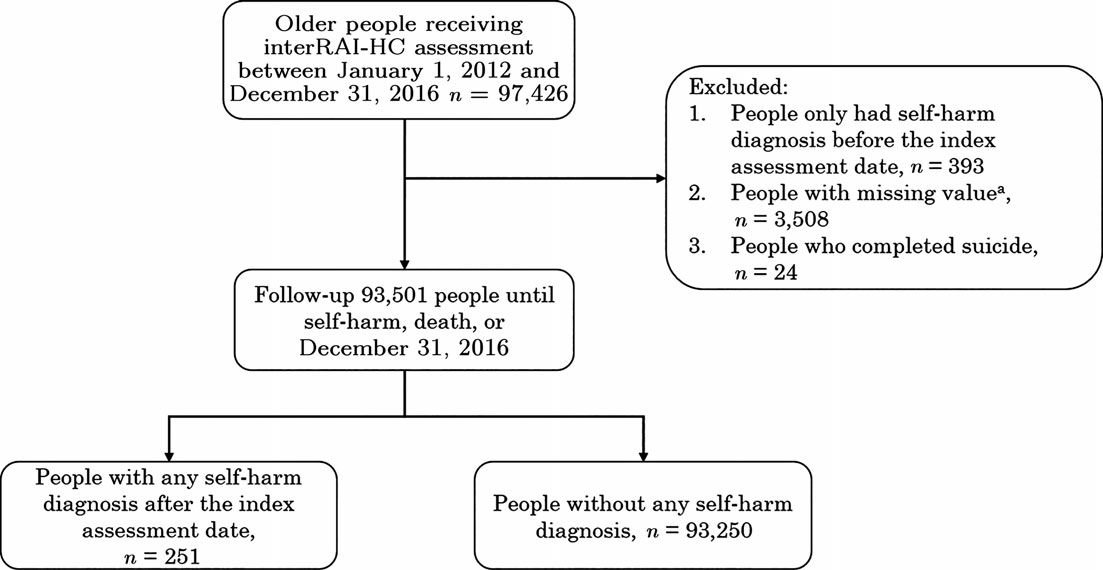
The Ministry of Health National Minimum Dataset (NMDS) and Mortality Dataset contains public and private hospital discharge information and underlying causes of all registered deaths in New Zealand respectively. interRAI-HC assessment records were linked to these two administrative datasets between January 1, 2012 and December 31, 2016, using the National Hospital Index, a unique individual-level identifier, to ascertain self-harm discharge diagnosis and death information. Since we set out to identify predictive factors of self-harm, participants who did not have an interRAI assessment record available before a self-harm episode were excluded. We also focused our study scope on nonfatal self-harm and excluded individuals who had “suicide” recorded as their cause of death (see Figure 1 for the selection procedure of the study cohort). Of the 24 individuals who died by suicide, and therefore excluded from this study, one person had a self-harm episode 1 day before their suicide and another person 19 days before their suicide. The other 22 individuals had not self-harmed in the study period.
Flowchart of study cohort selection.

Measures
The outcome of this study is the first record of nonfatal self-harm during the study period. The self-harm presentation in NMDS was identified according to the International Statistical Classification of Diseases and Related Health Problems, Tenth Revision (ICD-10) diagnostic codes X60–X84 (self-harm) and Y10–Y34 (self-harm, undetermined intention). Since the intention is often difficult to be captured clinically and self-harm are often misclassified as undetermined intention (Turp, Reference Turp2002), we decided to include undetermined cases in this study. This definition is in keeping with previous studies (Chai et al., Reference Chai2020; Geulayov et al., Reference Geulayov2019).
The New Zealand version of interRAI-HC assessment covers more than 250 items measuring demographic profile, clinical characteristics, functional and psychosocial status, and service utilization. There are also several embedded summary scales, which are constructed by using validated algorithms on predetermined interRAI items, and can be used to track changes in clinical status longitudinally. Many of these scales have been validated and showed high reliability (Hirdes et al., Reference Hirdes, Mitchell, Maxwell and White2011).
According to previous studies of self-harm in older adults (Cheung et al., Reference Cheung2017a; Hawton and Harriss, Reference Hawton and Harriss2006; Neufeld et al., Reference Neufeld, Hirdes, Perlman and Rabinowitz2015; Troya et al., Reference Troya2019a), the following variables and scales in the baseline interRAI assessment were selected as predictors in this study.
Demographic variables: Age was recoded into a binary variable with values 0 (80+ years) and 1 (60–79 years). Female gender was treated as the reference group. Four dummy variables, i.e. Asian (1), Maori (2), Pacific Island (3), and Middle Eastern/Latin American/African/Others (4), were created to categorize respondent’s ethnicity, with European as the reference group (0). Marital status was classified as married/civil union/de facto (0; reference), never married (1), widowed (2), separated and divorced (3), and others (4).
Psychosocial variables
Loneliness, major life stressors in the last 90 days, and strong and supportive relationship with family was measured by binary variables with values 0 (no) and 1 (yes). Participation in social activities, conflict or anger with family or friends, being neglected, abused, or mistreated were measured by six categories and recoded into the following categorical variables: no (0; never; reference), yes (1; more than 30 days ago, 8–30 days ago, 4–7 days ago, and in the last 3 days), and missing value (2; unable to determine).
Clinical variables
Self-rated health was classified as excellent and good (0; reference), fair (1), poor (2), and could not (would not) respond (3). They were recoded into dummy variables in the analyses. Daily tobacco consumption was recoded into a binary variable: did not smoke tobacco daily were coded as 0 (no), did not smoke in the last 3 days, but is usually a daily smoker and smokes tobacco daily were coded as 1 (yes). At-risk alcohol use was evaluated by the highest number of drinks in any “single sitting” in the last 14 days. It is treated as a binary variable. None, 1, and 2–4 drinks were combined and recoded as no (0), while 5 or more drinks was coded as yes (1). Binary variables were also created for the diagnosis of depression, bipolar disorder, anxiety disorder, schizophrenia, cancer, and stroke: did not present was coded as no (0) and primary diagnosis/diagnoses for current stay, diagnosis present (receiving active treatment) and diagnosis present (monitored but no active treatment) were coded as yes (1).
Summary Scales
Activities of Daily Living (ADL) Hierarchy Scale is used to evaluate the loss of people’s ADL ability, with scores ranging from 0 (independent) to 6 (totally dependent) (Morris et al., Reference Morris, Fries and Morris1999). ADL Hierarchy Scale was categorized into three levels: independent (0; reference), mild-to-moderate (1–2), and total dependent (3+). Scores of Depression Rating Scale (DRS) range from 0 to 14, with a higher score representing a higher likelihood of depression (Burrows et al., Reference Burrows, Morris, Simon, Hirdes and Phillips2000). A categorical variable was created for DRS: no-minimal (0–2) as the reference group, moderate (3–5), and severe (6+). Note that the binary variable depression is an indicator of the presence of depression diagnosis, while the DRS measures the severity of depressive symptoms. Our preliminary analysis showed that only 27.10 % (n = 3701) of older adults with a DRS score of 3 or above (moderate to severe) had a depression diagnosis, and the correlation coefficient between depression diagnosis and DRS score was relatively low (0.18; p < 0.0001). Therefore, we decided to include both of these variables in the analysis. Cognitive function is evaluated by the Cognitive Performance Scale (CPS), with scores ranging from 0 (intact) to 6 (very severe impairment) (Morris et al., Reference Morris1994). CPS was recoded as a categorical variable: intact (0; reference), mild-to-moderate impairment (1–2), and very severe impairment (3+). Changes in Health, End-stage disease, Signs, and Symptoms (CHESS) Scale measures the health stability and medical complexity. Scores of CHESS Scale range from 0 (stable) to 5 (highly unstable) (Hirdes et al., Reference Hirdes, Frijters and Teare2003). A three-level categorical variable was created for CHESS Scale with stable (0–1; reference), unstable (2–3), and highly unstable (4–5). The Pain Scale examines the frequency and intensity of pain, with scores ranging from 0 (none) to 4 (excruciating) (Fries et al., Reference Fries, Simon, Morris, Flodstrom and Bookstein2001). Pain Scale was recoded as a categorical variable: none (0; reference), less than severe (1–2), and severe-excruciating (3–4).
Statistical analysis
All study participants were followed up from the index assessment date, until the self-harm diagnosis, death, or the end of the study (December 31, 2016), whichever came first. Descriptive statistics of the baseline characteristics for the total sample, as well as people with and without self-harm diagnosis, were tabulated. Demographic, clinical, and psychosocial factors of people with and without self-harm diagnosis were compared using Pearson’s χ2 test for categorical variables. Fisher’s exact test was used for predictors with low cell counts.
The crude incidence of nonfatal self-harm per 100,000 person-years during the total follow-up period and each single follow-up year (the fourth and fifth year were combined due to the small number of events) were calculated using the Poisson distribution with exact 95% confidence intervals (CIs). In addition, the number of self-harm cases observed in the interRAI-HC cohort was divided by the number of expected self-harm cases to estimate the standardized incidence ratios (SIRs). The SIRs measure the increased or decreased self-harm rate in the study cohort compared to the rate in the general population. The population-based, gender, and age-adjusted expected self-harm cases were calculated according to the most recent publicly available data on self-harm hospitalizations between 2009 and 2013 in New Zealand (Ministry of Health, 2020). The 95% CIs of SIRs were estimated using the Vandenbroucke method (Vandenbroucke, Reference Vandenbroucke1982). The same analyses were further performed for subgroups stratified by age (60–79 years; 80+ years) and gender (Female; Male).
Given that death is a competing risk of self-harm, the Fine and Gray competing risk regression model was fitted to estimate the hazard ratios (HRs) and 95% CI of self-harm associated with various predictors (Fine and Gray, Reference Fine and Gray1999). Statistical significance was set as 5% (two-sided p < 0.05). All selected variables were separately fitted in the bivariate regression model to investigate the significance of the relationship between potential variables and self-harm. Significant variables were included in the subsequent multivariate regression model. If the missing value of one variable account for less than 5% of the total sample, all assessment records that include this missing value variable were excluded. Otherwise, the missing value was coded as one independent category. The Fine and Gray competing risk regression model was estimated using the cmprsk package of the statistical software R (version 3.5.2) (Gray, 2020; R Core Team, 2019). The SIRs were plotted using the ggplot2 package (Wickham, Reference Wickham2016). The remaining analyses were conducted using the dplyr package (Wickham et al., Reference Wickham, François, Henry and Müller2020).
Results
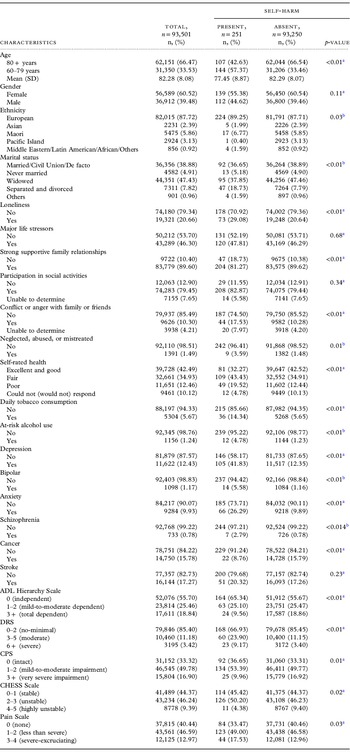
A total of 93,501 participants were included in this study (Figure 1). During the study period, 251 (0.27%) people had a nonfatal self-harm diagnosis and 36,333 (38.86%) people died. Baseline characteristics of the study cohort were summarized in Table 1. The mean age was 82.28 years (SD, 8.08 years) and 62,151 (66.47%) people in the cohort were aged 80 years or older at baseline. The majority of the cohort were female (60.52%), European (87.72%), and widowed (47.43%). Compared with the group without self-harm, the self-harm group was younger with a mean age of 77.45 years (SD, 8.87 years).
Characteristics of the baseline assessment of the study cohort

Abbreviations: ADL, Activities of Daily Living; DRS, Depression Rating Scale; CPS, Cognitive Performance Scale; CHESS, Changes in Health, End-stage disease, Signs, and Symptom.
a Pearson’s χ2 test.
b Fisher’s exact test.
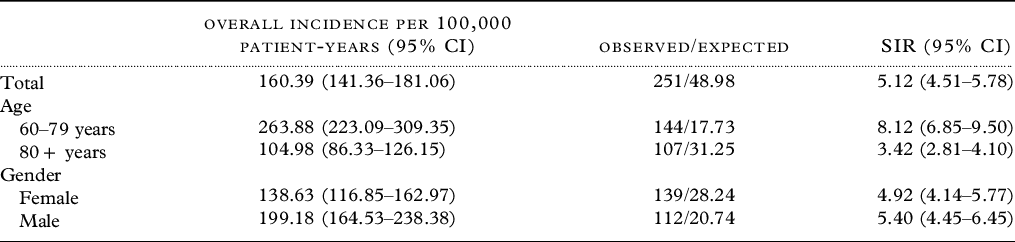
The crude incidence of nonfatal self-harm for the total sample during the study period was 160.39 (95% CI, 141.36–181.06) per 100,000 person-years. The SIR of self-harm was 5.12 (4.51–5.78). Table 2 summarizes the gender and age-specific incidences and SIRs. The incidence was substantially higher for people age 60–79 years (263.88, 223.09–309.35) than people aged 80 years or older (104.98, 86.33–126.15).
Incidence of self-harm per 100,000 person-years and SIRs in the study cohort
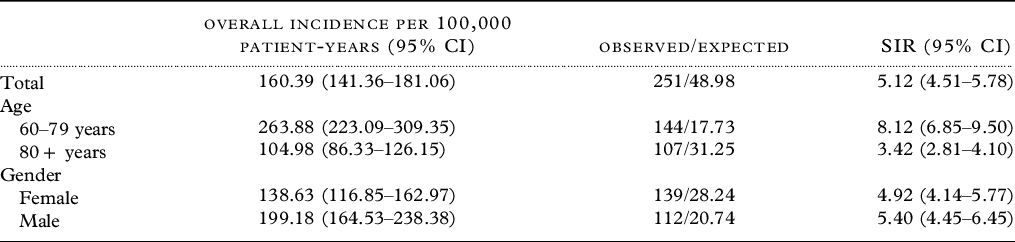
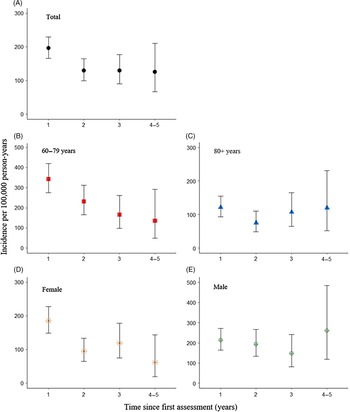
The nonfatal self-harm risk in the study cohort was significantly higher than in the general population, irrespective of gender and age at baseline, with SIRs ranging from 3.42 (2.81–4.10) for people aged 80 years to 8.12 (6.85–9.50) for people aged 60–79 years. Concerning the incidence per follow-up year, all groups demonstrated the highest incidence rate in the first follow-up year (Total: incidence, 196.17, 95% CI, 165.85–229.98; 60–79 years: 342.76, 275.96–420.87; 80+ years: 121.38, 92.99–155.04; Female: 185.82, 149.06–228.17) except for the male group (Figure 2).
Incidence of self-harm per 100,000 person-years per follow-up year in (A) total population, (B) 60–79 years, both genders, (C) 80+ years, both genders, (D) female, all age groups, and (E) male, all age groups.

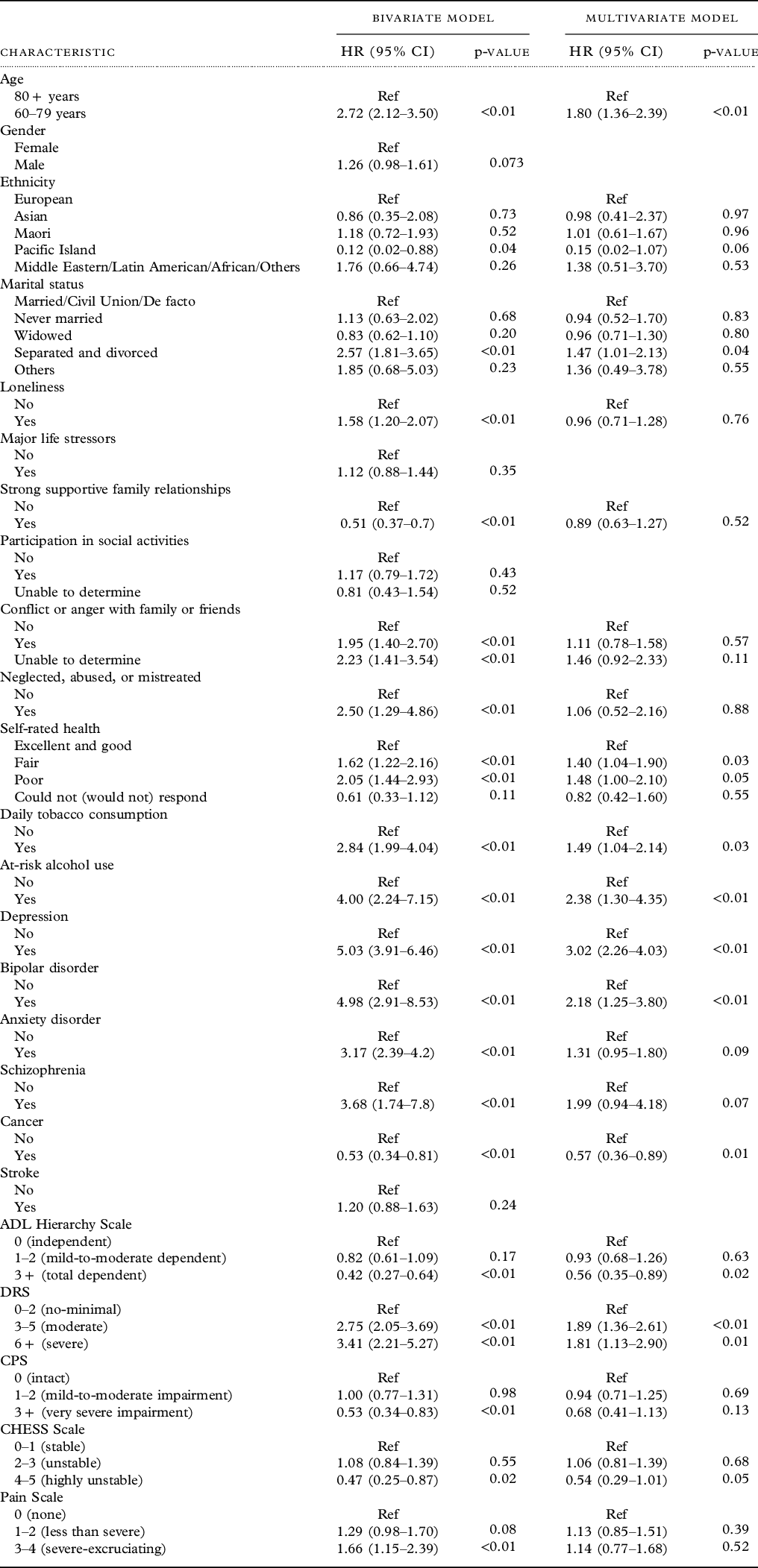
Table 3 shows the results from bivariate and multivariate competing risk regression models. Based on the crude HRs in the bivariate model, substantially higher risks of self-harm were observed in people who were younger and separated or divorced. Regarding the psychosocial factors, people who felt lonely, had conflict or anger with family or friends, and were neglected, abused, or mistreated had a higher risk of self-harm. From the perspective of clinical factors and scales, fair and poor self-rated health, daily tobacco consumption, at-risk alcohol use, the diagnosis of depression, bipolar disorder, anxiety disorder, and schizophrenia, moderate and severe depressive symptoms measured by DRS, and severe to excruciating pain measured by Pain Scale were significantly associated with an elevated risk of self-harm. The significant protective effect can be observed in Pacific Island ethnicity, strong supportive family relationships, diagnosis of cancer, total dependent of ADL measured by ADL Hierarchy Scale, very severe impairment of cognitive performance measured by CPS, as well as highly unstable health status measured by CHESS Scale.
Results from the Fine and Gray competing risk regression models
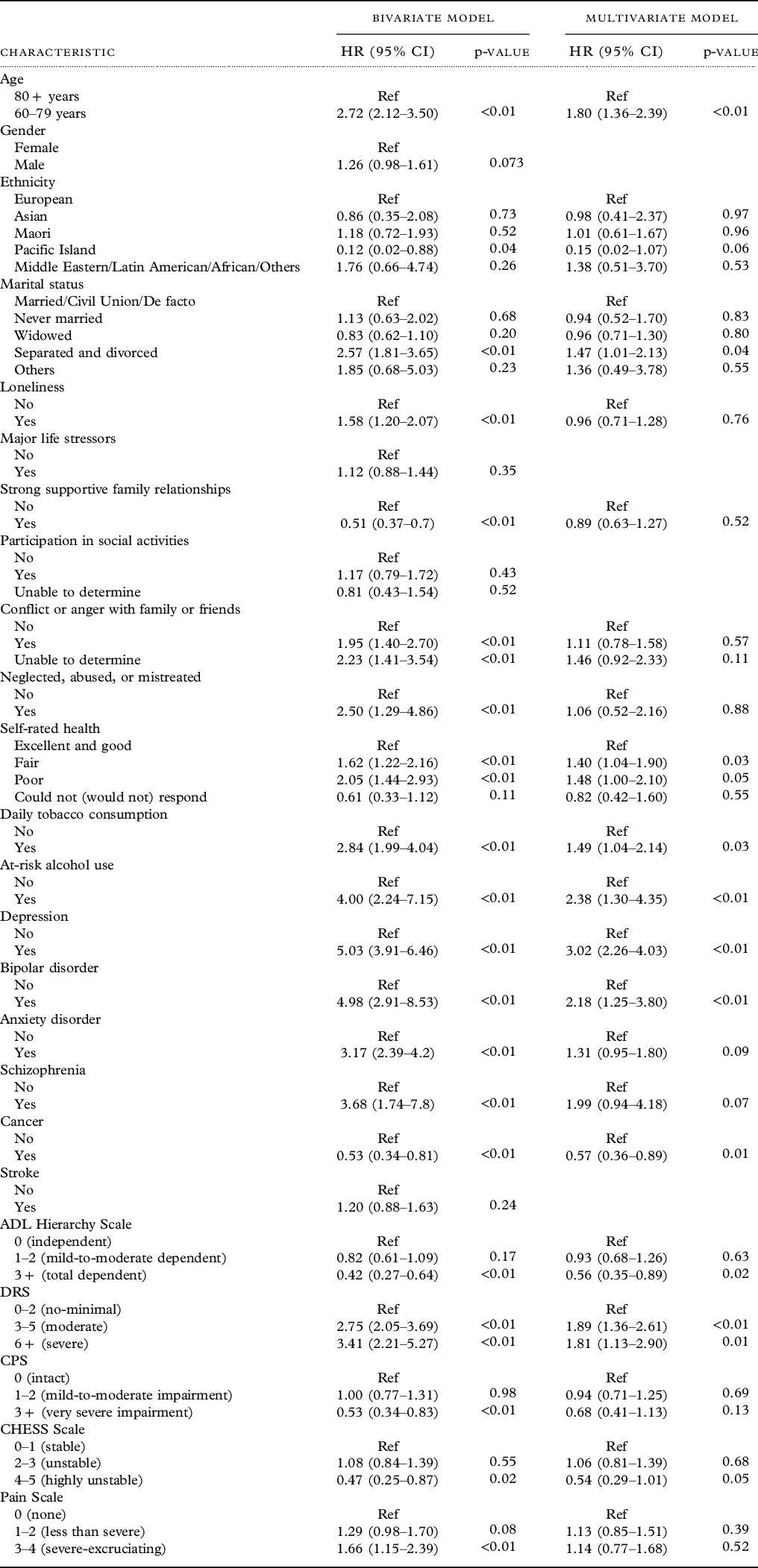
Abbreviations: ADL, Activities of Daily Living; DRS, Depression Rating Scale; CPS, Cognitive Performance Scale; CHESS, Changes in Health, End-stage disease, Signs, and Symptom.
Multivariate model 1 includes significant demographic factors in bivariate model.
Multivariate model 2 includes significant demographic and psychosocial factors in bivariate model.
Multivariate model 3 includes significant all factors in bivariate model.
Results from the multivariate model shows that the highest risk of nonfatal self-harm was observed in depression (HR, 3.02, 95% CI, 2.26–4.03), followed by at-risk alcohol use (2.38, 1.30–4.35) and bipolar disorder 2.18 (1.25–3.80). Younger age, separated and divorced marital status, fair and poor self-rated health, daily tobacco consumption, and moderate and severe depressive symptoms measured by DRS were all significant risk factors for self-harm. Conversely, cancer (0.57, 0.36–0.89) and total dependent of ADL measured by ADL Hierarchy Scale (0.56, 0.35–0.89) were significantly associated with decreased self-harm risk.
Discussion
This study included a national sample of community-dwelling older adults who were assessed for support services in a 5-year period in New Zealand. We found an overall nonfatal self-harm incidence of 160.39 per 100,000 patient-years and a SIR of 5.12. Older adults assessed with interRAI-HC typically have preexisting physical illnesses and/or functional impairment. Our finding of an increased SIR is, therefore, aligned with previous studies that physical illnesses and functional impairment are associated with an elevated risk of suicidal behavior in older adults (Fässberg et al., Reference Fässberg2016). We also observed the highest incidence of self-harm is in the first year of follow-up, a finding similar to previous observations that half of the suicide among nursing home residents occurred within the first 12 months of their admission to nursing home (Murphy et al., Reference Murphy, Bugeja, Pilgrim and Ibrahim2015, Reference Murphy, Bugeja, Pilgrim and Ibrahim2018).
Older adults in the younger age (60–79 years) group had a higher risk for nonfatal self-harm and a substantially higher SIR (8.12) than the older age (80+ years) group. We found depression, bipolar disorder, and at-risk alcohol use had the largest HRs among all risk factors and will therefore discuss them further.
Depression is a well-recognized risk factor for late-life suicidal behavior (Cheung et al., Reference Cheung2017a; Hawton and Harriss, Reference Hawton and Harriss2006; Lapierre et al., Reference Lapierre2011; Murphy et al., Reference Murphy2012; Salib et al., Reference Salib, Tadros and Cawley2001; Schmutte et al., Reference Schmutte, Olfson, Xie and Marcus2019; Troya et al., Reference Troya2019a; Tsoh et al., Reference Tsoh2005). In this study, the depression diagnosis (HR = 3.02) included people with a depression diagnosis for their current stay, receiving active treatment, or monitored but no active treatment. However, the HRs for significant depressive symptoms measured by DRS were lower (moderate depression: HR = 1.89; severe depression: HR = 1.81). It is possible that our heterogeneous grouping of depression diagnoses has over-estimated it as a risk factor. Many of the evidence-based late-life suicide prevention programs target on better screening and treatment of depression. For example, a systematic review of interventions for preventing suicidal behaviors in older adults identified four main areas: (1) primary care-based depression screening and management programs; (2) pharmacological and psychological treatment interventions; (3) telephone counseling for vulnerable older adults; and (4) community-based multilevel programs incorporating education, gatekeeper training, depression screening, group activities, and referral for treatment (Okolie et al., Reference Okolie, Dennis, Simon Thomas and John2017). More recently, an educational intervention found significantly improved clinicians’ knowledge, confidence, and attitudes regarding self-harm in later life. This educational intervention included a combination of didactic/theoretical information, including individualizing care plans and psychosocial responses (Wand et al., Reference Wand, Draper, Brodaty, Hunt and Peisah2020).
Bipolar disorder has one of the highest suicide rates among all psychiatric disorders. It has been estimated that suicide rates in bipolar disorder are 10–30-fold greater than in the general population (Plans et al., Reference Plans2019; Schaffer et al., 2015b). Men with bipolar disorder have higher suicide rates than women with a ratio of 1.7:1 (Schaffer et al., 2015b). More significantly, about a quarter to a third of the people with bipolar disorder attempt suicide in their lifetime (Schaffer et al., 2015b; Tondo et al., Reference Tondo, Pompili, Forte and Baldessarini2016). The relationship between age and risk of suicide in bipolar disorder is mixed (Schaffer et al., 2015a), but there is evidence that bipolar disorder suicide attempters are significantly younger than non-attempters (Schaffer et al., 2015a). The risk factors for suicide in bipolar disorder include living alone, divorced, previous suicide attempts, substance abuse or dependence, anxiety disorder, cluster B personality, early onset of illness, more major depressive episodes, and more frequent hospitalizations (Plans et al., Reference Plans2019). A recent study suggested an association between bipolar disorder and suicide in older adults (Yeh et al., Reference Yeh, Ng and Wu2020), although a previous study reported that only 10.5% of people with bipolar disorder died by suicide were older than 65 years (Clements et al., Reference Clements, Morriss, Jones, Peters, Roberts and Kapur2013).
It has been suggested that bipolar disorder is often under-recognized and undertreated in older adults, and the use of clinical guidelines and protocols could be useful for this age group (Rise et al., Reference Rise, Haro and Gjervan2016). Lithium, a first-generation mood stabilizer, has been consistently shown to be effective in preventing suicide attempts and deaths (Schaffer, Isometsä, Tondo et al., 2015; Tondo et al., Reference Tondo, Pompili, Forte and Baldessarini2016). Electroconvulsive therapy could be effective in treating acute suicidality, while psychological therapy such as cognitive behavior therapy can be used in combination with the pharmacological treatment of suicidal patients (Plans et al., Reference Plans2019). Suicide prevention strategies in bipolar disorder can also include psychoeducation to the patients and their family and friends, monitoring of early warning signs, adherence to treatment, avoiding social isolation, and seeking help in emergency (Dome et al., Reference Dome, Rihmer and Gonda2019).
interRAI-HC routinely screens for alcohol use by recording the highest number of drinks in any “single sitting” in the last 14 days: none, 1, 2–4, 5, or more. For low-risk alcohol drinking in adults, the New Zealand Health Promotion Agency recommends two standard drinks a day for women and no more than 10 standard drinks a week, 3 standard drinks a day for men and no more than 15 standard drinks a week, and at least 2 alcohol-free days every week (1 standard drink = 10 grams of pure alcohol) (Health Promotion Agency, 2018). There is no separate recommendation for older adults but their vulnerability factors of increasing sensitivity to alcohol, existing physical problems and functional disabilities, and interaction with medications are highlighted. The Health Promotion Agency also advises on reducing the risk of injury by drinking no more than four standard drinks for women and five standard drinks for men on any single occasion. Based on this advice and the lack of a separate recommendation for older adults, we decided not to classify the interRAI rating of 2–4 drinks in any single setting as “at-risk alcohol use”. We found five or more drinks in any single setting (“at-risk alcohol use”) was a risk factor for nonfatal self-harm. However, not including the category of two–four drinks in any single setting could have underestimated alcohol use as a risk factor for self-harm in this study. The main issue is that interRAI-HC does not capture enough information to determine whether a person has high-risk drinking or an alcohol use disorder. A previous New Zealand study has already established that a lifetime history of substance misuse disorder was significantly elevated in suicide and near-fatal suicide attempts in people aged 55+ years (Beautrais, Reference Beautrais2002). Another New Zealand study found a positive blood alcohol reading at the time of self-harm are at high risk of repeat self-harm/suicide in older adults within 12 months (Cheung et al., Reference Cheung2017a). Given the literature on alcohol and substance use in self-harm, additional screening, and assessment for alcohol and substance use should be encouraged as part of an effort to prevent self-harm and suicide in the interRAI-HC populations.
Our findings that cancer and severe ADLs impairment were significant protective factors for nonfatal self-harm in this interRAI sample were unexpected. There is an existing body of literature to support an association between cancer, physical disability, and suicidal behavior in older adults (Fässberg et al., Reference Fässberg2016; Henson et al., Reference Henson, Brock, Charnock, Wickramasinghe, Will and Pitman2019; Yeh et al., Reference Yeh, Ng and Wu2020). A recent study found the risk of suicide in older adults with cancer was significantly higher (AdjOR = 8.5) than the control group (Yeh et al., Reference Yeh, Ng and Wu2020). Another study found that a 20% increased suicide risk existed in adult patients with cancer compared to the general population (Henson et al., Reference Henson, Brock, Charnock, Wickramasinghe, Will and Pitman2019). Our finding that cancer was a protective factor is at odds with an Australian study where they found malignancy was associated with self-harm hospitalization in older adults (Mitchell et al., Reference Mitchell, Draper, Harvey, Brodaty and Close2017). However, they used a different methodology including defining older people as 50 years or older and participants were recruited into the study at the time of their admission to a hospital for self-harm. Our study defined older people as 60 years or older and our participants were identified when they had an interRAI-HC assessment and we followed them up until an episode of nonfatal self-harm, death, or end of the study period. Results of other studies investigating the association between cancer/malignancy and suicide attempt were mixed, but none have reported it as a protective factor (Allebeck and Bolund, Reference Allebeck and Bolund1991; Henson et al., Reference Henson, Brock, Charnock, Wickramasinghe, Will and Pitman2019; Takahashi et al., Reference Takahashi1995; Tsoh et al., Reference Tsoh2005).
At the completion of an interRAI assessment, Clinical Assessment Protocols (CAPs) are generated for each patient and they are used to identify specific clinical conditions or situations and inform care plans to address factors that are amenable to clinical intervention. It is possible that the care and support needs of older adults with cancer and severe functional impairment were better met following their interRAI assessment, which acted as an intervention to improve their quality of life and well-being and to reduce their self-harm risk. Interestingly, a previous Canadian interRAI-HC study also found impaired ADLs were associated with a lower risk of self-harm (Neufeld et al., Reference Neufeld, Hirdes, Perlman and Rabinowitz2015). To the best of our knowledge, our study is the first study that used an interRAI-HC sample to examine the association between cancer and self-harm. Before we draw on any conclusion, our unexpected findings need to be replicated in other countries where interRAI-HC is routinely used.
In this study, CPS was used to measure the severity of cognitive impairment. We found very severe cognitive impairment (CPS 3+) is a significant protective factor in the bivariate model (HR=0.53). However, its protective effect disappeared in the multivariate model, which included all significant demographic, psychosocial, and clinical variables. Our negative finding is consistent with the results of a previous systematic review that there is no increase in the overall suicide risk in people with dementia (Draper, Reference Draper2015).
This interRAI-HC sample included older adults with physical illnesses and functional impairment who had a higher incidence of self-harm than the general older population. Therefore, interRAI-HC populations could be considered as a high-risk group where selective suicide prevention is needed, in contrast to universal and indicated suicide prevention. Selective suicide prevention typically aims at high-risk groups that generally do not present with advanced signs of suicidal thoughts or behavior, but are subject to important factors such as losses, physical illness, and life transitions that can make them vulnerable to depression and suicide (Lapierre et al., Reference Lapierre2011). This type of suicide prevention is aimed at reducing risk predictors or improving resilience (Lapierre et al., Reference Lapierre2011). interRAI-HC has existing CAPs for identifying various clinical issues such as mood, tobacco, and alcohol use. However, there is no CAP for self-harm. Work is currently underway to develop a new clinical algorithm to identify people who are at-risk of self-harm by using the interRAI-HC data in Canada, Hong Kong, and New Zealand. Clinicians can then be alerted when an older person presents with self-harm risks and to formulate a person-centered care plan to address potentially reversible risk factors, including those identified in this study.
Strength and limitations
To the best of our knowledge, this study is the first to use a national interRAI-HC sample and explore nonfatal self-harm predictors in older age over a 5-year period. Further strengths to this study include a large sample size of community-dwelling older adults, the use of an internationally recognized standardized instrument, and data linkage to national mortality datasets. We used the first interRAI assessment to identify self-harm risk factors in this retrospective cohort. This can provide information on at-risk individuals and an opportunity for early intervention as soon as they are assessed for support services. We need to acknowledge a number of limitations of this study. First, self-harm methods and lethality were not included in the linked data. Previous local studies have already established self-harm methods in older adults are mainly medication overdose (over 60%), laceration, and multiple means (Cheung et al., Reference Cheung2017a; Tan and Cheung, 2019). Although self-harm in older adults resembles suicide (Fässberg et al., Reference Fässberg2019; Hawton and Harriss, Reference Hawton and Harriss2008; Salib et al., Reference Salib, Tadros and Cawley2001; Schmutte et al., Reference Schmutte, Olfson, Xie and Marcus2019), recent qualitative studies suggested they occur along a spectrum of no-suicidal intent to high levels of intent (Troya et al., Reference Troya, Dikomitis, Babatunde, Bartlam and Chew-Graham2019b; Wand et al., Reference Wand, Peisah, Draper and Brodaty2018). It has been estimated that 73.5% of the subjects included in a late-life self-harm review reported suicidal intention (Troya et al., Reference Troya2019a). Second, the linked self-harm hospitalization data did not include people who self-harmed but did not present to the hospital. We could have missed some of the less-lethal self-harm cases that did not require medical attention. Third, a past history of self-harm is a known risk factor for repeated self-harm. However, the interRAI assessment does not record this information and we were not able to include this risk factor in our analysis. Fourth, although interRAI-HC is a comprehensive geriatric assessment used across 30 countries, some of its scales have been criticized for their poor diagnostic accuracy. For example, Penny et al. (Reference Penny, Barron, Higgins, Gee, Croucher and Cheung2016) concluded that DRS had poor diagnostic accuracy for depression diagnosis and poor to moderate with the Health of the Nation Outcome Scale 65+ depression item score. The authors also commented that the majority of previous studies investigating the performance of DRS have been in long-term care facilities and the existing literature raises concerns about DRS in measuring depression (Penny et al., Reference Penny, Barron, Higgins, Gee, Croucher and Cheung2016). Similarly, although it has been suggested that CPS has moderate to strong correlations with the Mini-Mental State Examination, studies were conducted in long-term care and hospital settings (Martinez-Ruiz et al. Reference Martinez-Ruiz, Huang, Gee, Jamieson and Cheung2020), rather than with community-dwelling older adults. CPS also overestimated the severity of cognitive impairment in dependent patients with comorbidities and depressive symptoms, and underestimated in older patients (Bula and Wietlisbach, Reference Bula and Wietlisbach2009).
Conclusion
We found elevated nonfatal self-harm incidence rates in this interRAI sample, particularly in the first year of follow-up. These findings suggest this community-dwelling sample of older adults had a higher than expected incidence of self-harm, and therefore are at a higher risk of self-harm than the general older population. Psychiatric factors continue to be the most significant predictors for self-harm in older adults, with depression and bipolar diagnoses, as well as at-risk alcohol use being the highest. Wider sociodemographic factors such as younger age, being separated or divorced, fair and poor self-rated health, and daily tobacco consumption was also found to be risk factors for self-harm in older adults in receipt of support services. The present findings highlight the need for timely identification of people at high risk of self-harm and the development of more efficient and targeted prevention strategies, with specific attention to older individuals with depression or depressive symptoms, particularly in the first year of follow-up. Future research with other interRAI-HC populations is needed to clarify the identified protective factors of self-harm, such as cancer and severe functional impairment, in predicting self-harm.
Source of funding
Dr. Gary Cheung was awarded with the 2018 Sir John Logan Campbell Medical Fellowship, which provided traveling expenses for this research collaboration with the University of Hong Kong.
Description of authors’ roles
GC, YC, and HL designed the study and wrote the paper. YC and HL linked the data and carried out the statistical analysis. MIT reviewed the paper and assisted with writing the discussion.
Conflict of interest
None.
Acknowledgments
We would like to thank Costa Karavias (Senior Analyst, Technical Advisory Services) and Alex Waites (Information Analyst, Ministry of Health of New Zealand) for providing the data linkage support required in this study.
Research ethics
Ethics approval for this study was gained from the University of Auckland Human Participant Ethics Committee (reference number 023801).