Like other common developmental disorders, autism spectrum disorder (ASD) has been found to be genetically and phenotypically highly heterogeneous and associated with multiple and widespread differences across brain regions and systems (Courchesne et al., Reference Courchesne, Pramparo, Gazestani, Lombardo, Pierce and Lewis2019). In line with this framework, ASD is frequently reported to co-occur with other psychiatric disorders and developmental delays, complicating both diagnosis and treatment. For example, clinical studies estimate that between 70% and 96% of ASD diagnoses are accompanied by at least one other co-occurring psychiatric disorder (Simonoff et al., Reference Simonoff, Pickles, Charman, Chandler, Loucas and Baird2008).
In response to the challenge of trying to understand how best to help individuals with ASD, and the complexities that comorbidity add to this, a growing number of studies are now investigating the emergence of ASD-related behavior very early in life. The most widely used approach for this purpose is the prospective study of infant siblings of children with ASD (HR-Sibs), a group consistently shown to have an increased recurrence of ASD relative to normative population estimates (Ozonoff et al., Reference Ozonoff, Young, Carter, Messinger, Yirmiya, Zwaigenbaum and Stone2011; Sandin et al., Reference Sandin, Lichtenstein, Kuja-Halkola, Larsson, Hultman and Reichenberg2014). Emerging findings from these studies have provided novel insights into the atypical social and communicative features of HR-Sibs who go on to be diagnosed with ASD. These features have included failure to orient to social stimuli (e.g., not responding to name), reduced social gesturing, diminished eye contact, and reduced positive affect and social smiling (Zwaigenbaum et al., Reference Zwaigenbaum, Bryson, Rogers, Roberts, Brian and Szatmari2005). Interestingly, these studies have also suggested that other behavioral markers exhibited by these infants are associated with later ASD as well, including motor delays and repetitive behavior with objects (Chawarska et al., Reference Chawarska, Shic, Macari, Campbell, Brian, Landa and Bryson2014; Flanagan, Landa, Bhat, & Bauman, Reference Flanagan, Landa, Bhat and Bauman2012; Sacrey et al., Reference Sacrey, Zwaigenbaum, Bryson, Brian, Smith, Roberts and Armstrong2015). Recent work including infants recruited from the general population using a developmental screener for communication delays similarly supports both the early emergence of ASD-related social difficulties and the subsequent diagnosis of ASD following the earlier identification of a non-ASD developmental delay (Pierce et al., Reference Pierce, Gazestani, Bacon, Barnes, Cha, Nalabolu and Courchesne2019).
In sum, and in line with a developmental psychopathology framework (Toth & Cicchetti, Reference Toth and Cicchetti2010), a growing body of research suggests that symptoms of ASD and highly related comorbid conditions are likely to emerge from complex interactions between emerging neurodevelopmental vulnerabilities and early pre- and/or postnatal environments. While some symptoms may therefore reflect vulnerabilities related to genetic or environmental risk factors, others will be manifestations of compensatory processes or secondary “cascading” effects following atypical interactions with the environment (Courchesne et al., Reference Courchesne, Pramparo, Gazestani, Lombardo, Pierce and Lewis2019). As a result, after the emergence of ASD, this prior work suggests that establishing a clear sequence of causal mechanisms capable of informing treatments that can prevent ASD is highly challenging. However, when viewed as the potential product(s) of an unfolding developmental process, it also suggests that attenuating the negative effects of ASD on future development once identified is likely more possible (Brian, Bryson, & Zwaigenbaum, Reference Brian, Bryson and Zwaigenbaum2015).
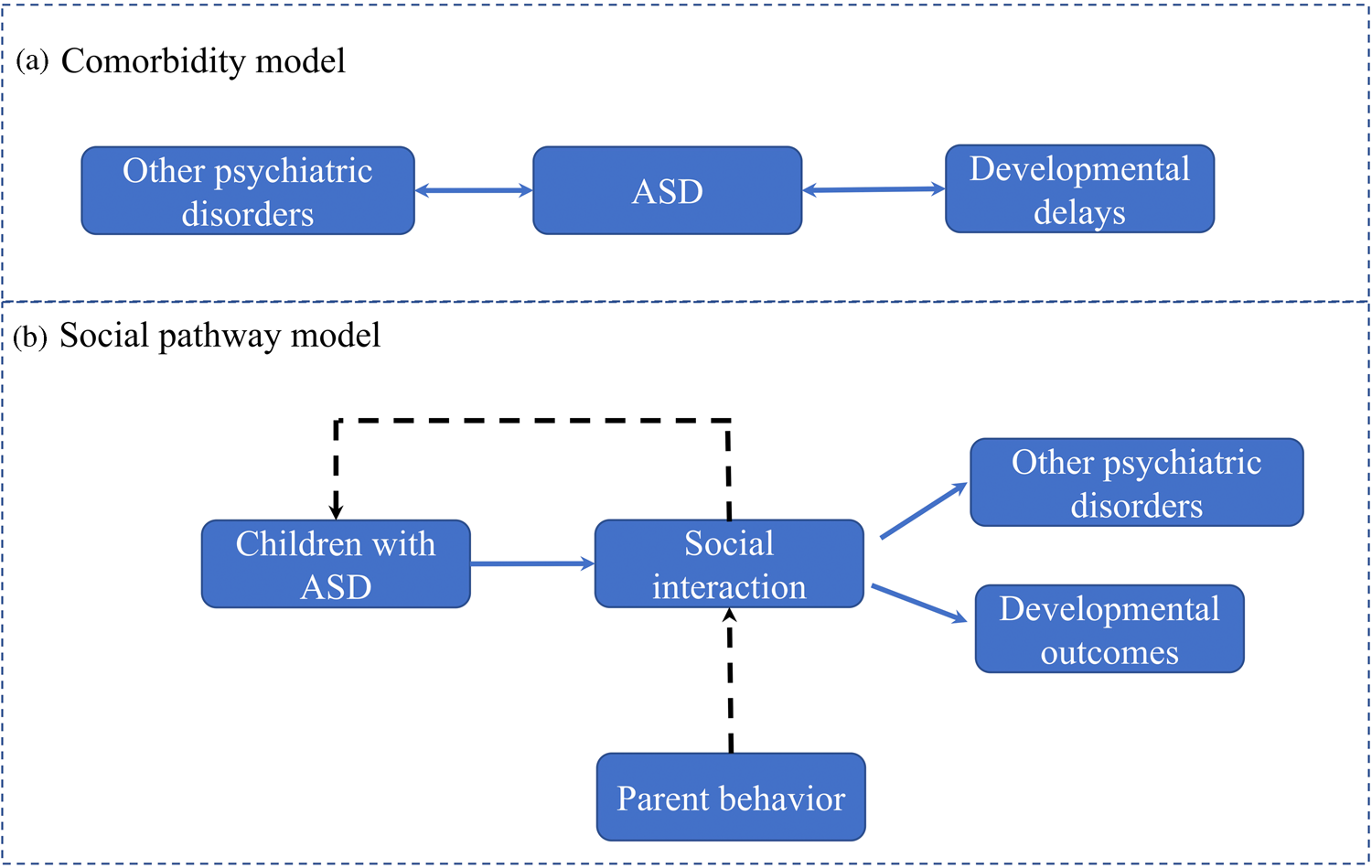
It is now clear that for a significant minority of children a stable diagnosis of ASD can be made within the first two years of life (Ozonoff et al., Reference Ozonoff, Young, Landa, Brian, Bryson, Charman and Iosif2015). What's more, a recent study reported reliable diagnoses assigned as early as 14 months of age (Pierce et al., Reference Pierce, Gazestani, Bacon, Barnes, Cha, Nalabolu and Courchesne2019) and a range of features have differentiated groups of children later receiving a diagnosis even earlier (Miller, Iosif, Young, Hill, & Ozonoff, Reference Miller, Iosif, Young, Hill and Ozonoff2018; Nystrom, Thorup, Bolte, & Falck-Ytter, Reference Nystrom, Thorup, Bolte and Falck-Ytter2019). As to be expected, atypical social engagement with parents and other significant caregivers is a key symptom used to identify very young children with ASD. Not surprisingly, then, the development of other skills critically dependent upon these interactions is highly likely to be compromised. Until relatively recently, developmental delays in nonsocial skills have largely been studied as a comorbid feature of ASD residing within the individual child (e.g., comorbid language delay) rather than the potential product of an atypical learning environment following the emergence of atypical social behaviors (Vivanti & Rogers, Reference Vivanti and Rogers2014). To be fair, the identified presence of a co-morbid condition does not require this distinction. However, traditionally, comorbidity has been viewed as the co-occurrence of psychiatric disorders or developmental delays that are distinct clinical entities with similarly unique etiologies (i.e., natural kinds (Zachar, Reference Zachar2015); see Figure 1a).
Models of comorbidity in autism spectrum disorder (ASD). Models include comorbidity as (a) co-occurring and independent of ASD or as (b) a secondary effect of early emerging disruptions in the early learning environment following the emergence of ASD-related social symptoms (i.e., social pathway model). Dotted lines indicate pathways that are potentially targetable through early intervention.

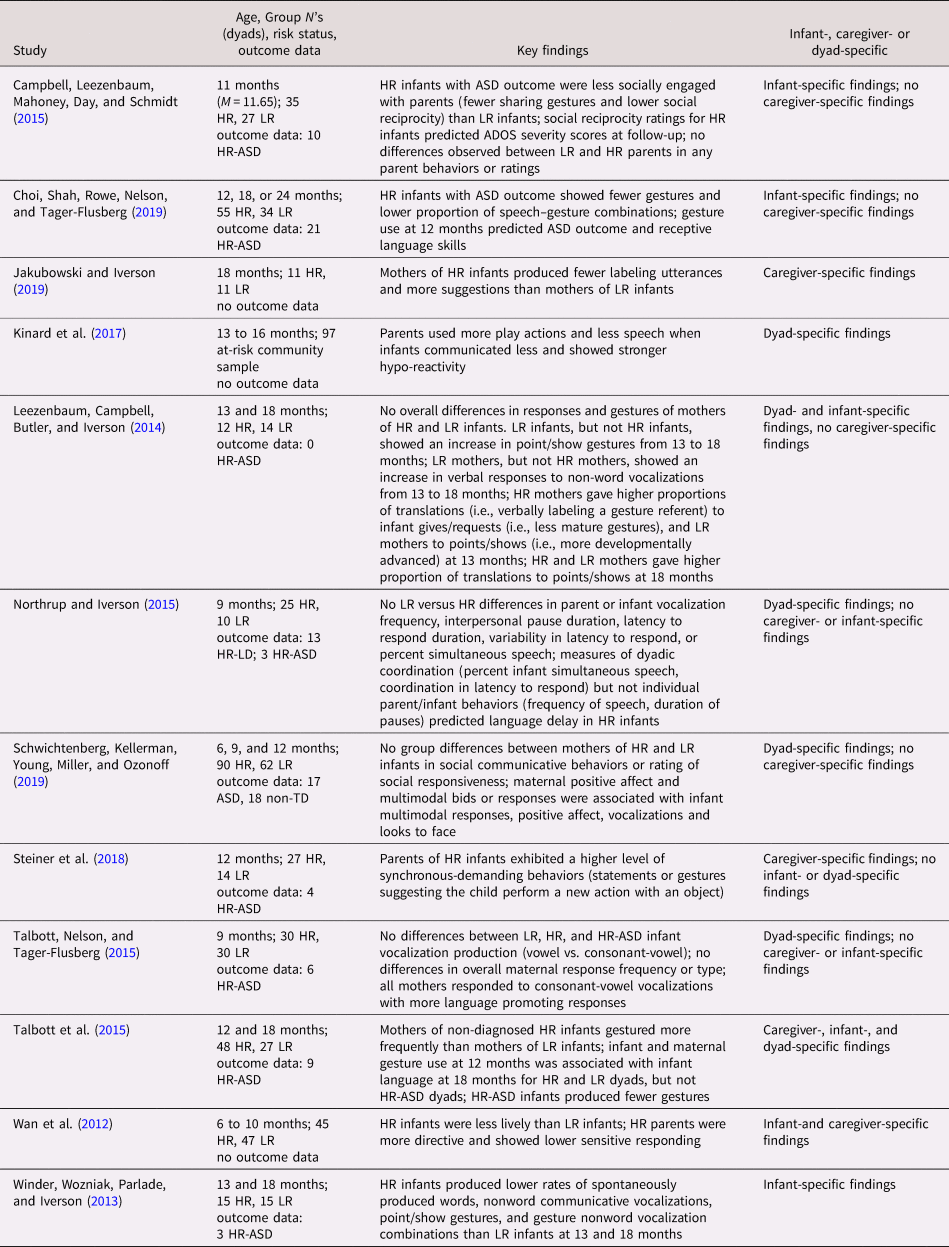
The present paper focuses on a complimentary conceptual social pathway model in which developmental delays in nonsocial skills are the potential product of an altered early learning environment following the emergence of atypical social behaviors associated with ASD during infancy (see Figure 1b). More specifically, from infancy onward, social interactions result in the transmission of behavioral and cultural knowledge from one person to another. Through social interactions infants learn from—and make sense of—others and the world around them. Infant learning is thus dependent upon what the infant encounters in the environment around them (e.g., toy), how their interaction with the encountered stimulus and/or event is shaped by others (e.g., dyadic play with toy), and what information about the encountered stimulus and/or event is also available at that time (e.g., caregiver labels toy; (Clerkin, Hart, Rehg, Yu, & Smith, Reference Clerkin, Hart, Rehg, Yu and Smith2017). As a result, early emerging atypical social behavior has the potential to not only alter contexts for infant learning (i.e., caregiver–infant interactions) but also create large-scale changes in the contents (e.g., number of times a caregiver names an object) of their everyday experience. This complimentary conceptualization leads to two significant implications. First, it provides an opportunity to go beyond the correlational nature of developmental observations and identify causal pathways between early atypical social interaction and later developmental delays. Second, and consequentially, those pathways are potentially malleable (dotted lines in Figure 1b) with appropriate early identification and intervention. Indeed, a growing number of HR-Sibs studies examining the behavior of caregivers and infants during dyadic interactions supports this idea. More specifically, data from HR-Sibs studies have increasingly suggested that altered caregiver and/or high-risk infant behavior during play affects the dyadic qualities of this interaction (Wan, Green, & Scott, Reference Wan, Green and Scott2019). For example, previous studies including HR-Sibs (including some later diagnosed with ASD) have reported differences in infant vocalization, gesture, and movement during play with a caregiver (Wan et al., Reference Wan, Green, Elsabbagh, Johnson, Charman and Plummer2013). They have also reported reduced reciprocity during play between caregivers and HR-Sibs, with potentially important implications for later language development (Northrup & Iverson, Reference Northrup and Iverson2015). As a result, a growing body of research indicates that early emerging features of ASD may interfere with a developing infant's ability to actively engage with others and critically reduce their participation in social interactions that support ongoing and future development across a number of areas. See Table 1 for a focused list of studies on this topic as well as a brief summary of their outcomes.
Parent–infant interaction studies in infants at risk for autism spectrum disorder

Note. Many published parent–infant interaction studies in infants at-risk for ASD do not include diagnostic outcome data for HR groups. In the absence of HR outcome characterizations, challenges are presented to interpreting disorder-specific results and to determining if detected group differences are attributable to risk status or to a subgroup of infants who will later receive an ASD diagnosis. In addition, given the heterogeneity of HR outcomes and ASD, data interpreted from studies including diagnostic outcomes, but with small sample sizes, also face these challenges and should be considered preliminary. Replication studies including larger sample sizes, diagnostic outcome characterizations, and planned post hoc between group comparisons are needed in order to reliably summarize clinically meaningful, group-specific patterns of parent–infant interaction and associated aspects of infant development. See Piven, Elison, and Zylka (Reference Piven, Elison and Zylka2017) for further details on such presented challenges.
ADOS: Autism Diagnostic Observation Schedule; ASD: autism spectrum disorder; HR: high risk; LR: low risk; TD: typically developing
Nevertheless, while this previous HR-Sibs research is notable and an important “down payment” on the potential for atypical caregiver-infant interaction to negatively influence the future development of infants with—or at increased risk for—ASD, no study has systematically evaluated the effects of early emerging ASD on the bidirectional nature of play and the information co-created during this activity. In this integrative review, we will begin with a targeted discussion of how recent caregiver–infant dyadic interaction studies using video data collected from a “first person” perspective (i.e., dyadic head-mounted eye-tracking (D-ET)) illustrate the crucial role caregivers play in shaping infant attention during play. We will also discuss how these data suggest infant sustained attention (i.e., the ability to focus on an object or activity for an extended period of time) plays a critical role in shaping caregiver–infant interactions and the information to be learned during them, with a particular focus on language learning. Next, we will present a working model of how early emerging ASD—or early emerging features of ASD—may work to disrupt dyadic processes supporting the development of self-regulated attention (i.e., endogenous control over one's attention) and language, domains of functioning frequently identified as atypical in ASD. Finally, we will present D-ET data collected from an infant clinically diagnosed with ASD prior to—and following—participation in a brief, parent-mediated, naturalistic, developmental, behavioral intervention targeting caregiver–infant joint engagement (i.e., reciprocal interactions between caregiver and infant centered on an object) as a way to increase infant self-regulated attention and opportunities for socio-communicative learning.
Dyadic Head-Mounted Eye-Tracking: A Unique Window into the Multiple Pathways Supporting the Development of Joint Attention
Early caregiving relationships play a critical role in supporting an infant's ability to learn about the world around them. While commonly referred to as play, sensitive and supportive interactions between caregiver and infant set the stage for how an infant understands their environment, relates to others, and engages in learning. Research has made it clear that these simple, daily interactions have an enormous impact on an infant's current and future functioning (Sroufe, Reference Sroufe2005). This research has further suggested that caregiver sensitivity to infant behavioral cues, as well as subsequent responses to them, may play a critical role in this process (Ainsworth, Reference Ainsworth1979). For example, caregiver responsiveness to infant behavior has been associated with important psychosocial (Stams, Juffer, & van, Reference Stams, Juffer and van2002), cognitive (Mills-Koonce et al., Reference Mills-Koonce, Willoughby, Zvara, Barnett, Gustafsson and Cox2015), and physiological outcomes (Blair, Granger, Willoughby, & Kivlighan, Reference Blair, Granger, Willoughby and Kivlighan2006).
However, despite the established importance of early caregiving relationships, the specific features of caregiver–infant play that are most critical for supporting infant development are less well understood. Nevertheless, answers are beginning to emerge following recent technological advancements allowing D-ET to be used with infants. D-ET makes use of miniaturized video cameras (about the size of a fingertip) and microphones that can be placed on an individual's head to record where an individual is looking as well as what they say during an activity. As a result, when D-ET is used with caregivers and infants during play, patterns of shared and nonshared looking behavior and language can be accurately measured in high temporal (millisecond) and spatial (millimeter) detail. Put another way, D-ET provides a highly unique and critically informative window into the multimodal behaviors (i.e., the “what”) and temporal aspects (i.e., the “when”) of caregiver and infant behavior during play that uniquely shape infant learning and development. Of particular interest to the current conversation is the unique insights D-ET has provided into how moments of coordinated attention between caregiver and infant to each other and objects (i.e., joint attention) take shape and subsequently influence infant attention and language learning.
The ability of children to successfully establish and maintain joint attention with another has been consistently associated with later developmental outcomes, including language development (Adamson, Bakeman, & Deckner, Reference Adamson, Bakeman and Deckner2004; Carpenter, Nagell, & Tomasello, Reference Carpenter, Nagell and Tomasello1998; Mundy et al., Reference Mundy, Block, Delgado, Pomares, Van Hecke and Parlade2007; Tomasello, Reference Tomasello1992). Much of this previous research has focused on identifying intrinsic properties that may explain emerging joint attention abilities as well as variation across individuals. For example, it has been suggested that infants are biased from birth to visually attend to socially relevant stimuli, including others’ faces and eyes (Morton & Johnson, Reference Morton and Johnson1991). And, possibly, these biases reflect a specialized and inherent attunement to social cues regardless of postnatal dyadic experience. However, more recent work in naturalistic environments suggests that shared attention and gaze following arise gradually, and may be incrementally refined and improved through experience and learning (Corkum & Moore, Reference Corkum and Moore1998; Deak, Krasno, Triesch, Lewis, & Sepeta, Reference Deak, Krasno, Triesch, Lewis and Sepeta2014; Yu & Smith, Reference Yu and Smith2016). Similarly, when assessed in more ecologically relevant settings such as the home, infants’ apparent interest in faces and eyes has also been shown to vary with development as new motor skills and postures afford different vantage points from which to explore other potentially appealing objects or activities (Jayaraman, Fausey, & Smith, Reference Jayaraman, Fausey and Smith2015; Kretch, Franchak, & Adolph, Reference Kretch, Franchak and Adolph2014; Smith, Jayaraman, Clerkin, & Yu, Reference Smith, Jayaraman, Clerkin and Yu2018).
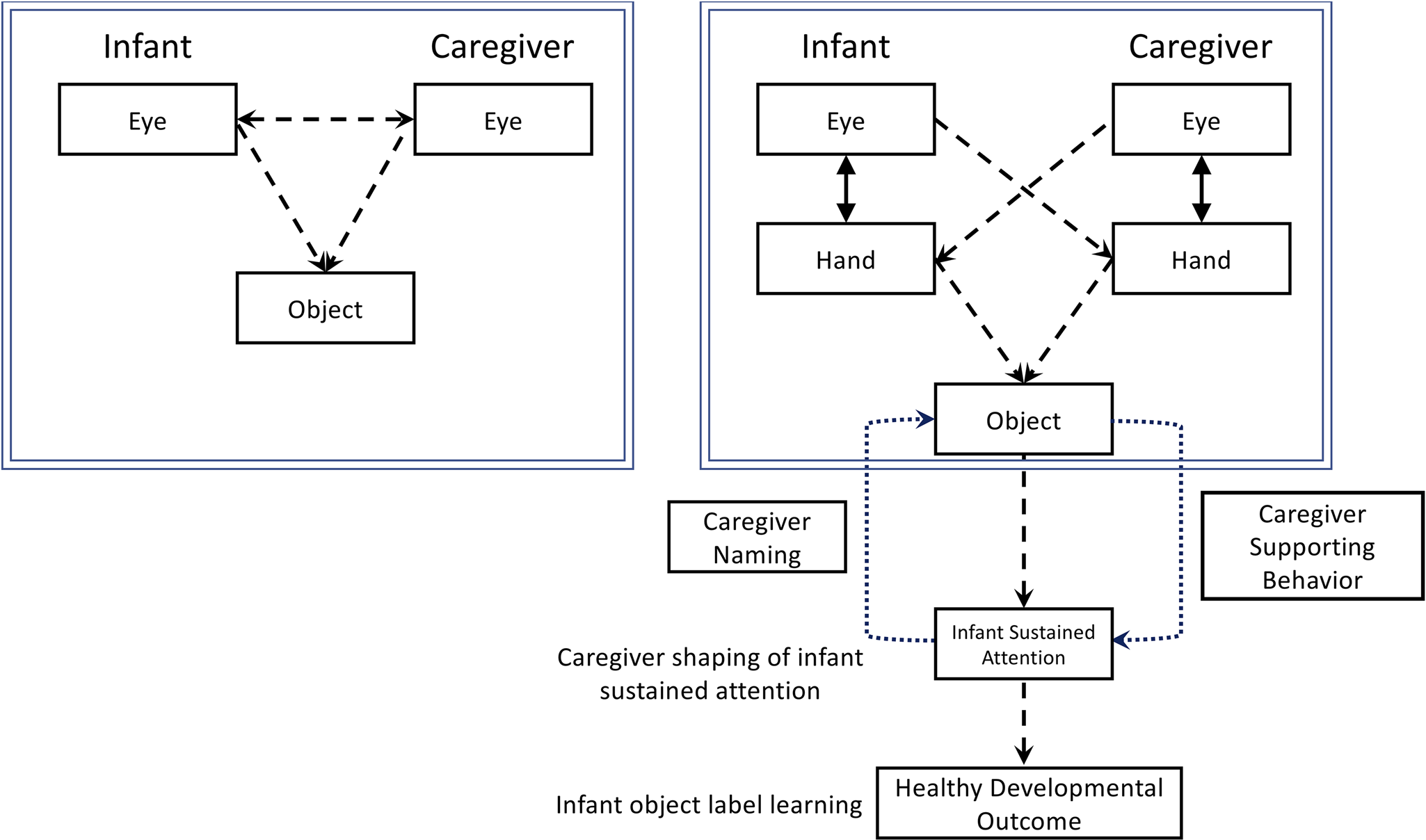
In line with this, instead of emphasizing a single route (e.g., gaze following) to joint attention between caregiver and infant, recent normative research suggests that multiple sensory–motor pathways interact to support the development of joint attention during infancy. That is, both infants and caregivers lead and follow their partner to create periods of joint attention using varied behavioral signals of attention and interest (Yu & Smith, Reference Yu and Smith2017b). Critically, from the perspective of this multiple pathway model (see Figure 2), hand actions on objects have emerged as a highly salient and frequently used behavioral signal capable of coordinating the “read and respond” nature of shared visual attention between caregiver and infant (Deak et al., Reference Deak, Krasno, Triesch, Lewis and Sepeta2014; Yu & Smith, Reference Yu and Smith2013). This is because the hand actions of an actor attract their partner's interest and result in coordinated visual attention to an object held by either partner without requiring gaze following. Critically, this suggests that active manual exploration of an object is an easy indicator of individual attention and interest that is capable of supporting rapid, socially coordinated adjustments of looking behavior during caregiver–infant play (Yu & Smith, Reference Yu and Smith2017a). Thus, infants and caregivers are able to engage in rudimentary social exchanges through shared attention to objects that create multiple opportunities for facilitating infant development (Yu, Suanda, & Smith, Reference Yu, Suanda and Smith2019). And, as recent D-ET data illustrate, caregiver–infant interactions centered on objects also critically support the development of infant sustained attention (Yu & Smith, Reference Yu and Smith2016), a key mechanism supporting language learning during infancy.
Multiple pathway model of caregiver–infant joint attention. Pathways include the creation of dyadic joint attention facilitated by (a) eye-to-eye gaze of interacting partners or (b) eye-to-hand following of interacting partners. The potential for play through objects to facilitate the development of infant sustained attention, and for infant sustained attention to facilitate language learning, are illustrated in 2B.

Caregiver Socialization of Infant Sustained Attention and Language Learning Through Joint Attention
Sustained, focused attention is a major achievement in human development and is generally believed to be the developmental product of increasing self-regulatory and endogenous control over one's attention system. Voluntary control of attention becomes evident as early as an infant's first birthday, but even for 10- and 12-month-old infants, attention is often controlled by novelty, habituation, and distraction, with interest in one moment giving way in the next to some new object or event. Nonetheless, the duration of sustained attention grows incrementally and steadily from infancy through early childhood, becoming more extended in time and better able to withstand distraction. This increase is thought to reflect the increasing maturation of attention-related brain networks that support adaptive responses to environmental stimuli (e.g., orienting network) and an infant's developing ability to use top-down control processes to intentionally examine objects (e.g., executive network; Posner, Rothbart, Sheese, & Voelker, Reference Posner, Rothbart, Sheese and Voelker2014; Richards, Reynolds, & Courage, Reference Richards, Reynolds and Courage2010), reflecting depth—rather than efficiency—of processing (Colombo & Cheatham, Reference Colombo and Cheatham2006). Critically, greater sustained attention has been positively associated with more advanced development and school achievement (Kannass & Oakes, Reference Kannass and Oakes2008; NICHD Early Child Care Research Network, 2003; Steele, Karmiloff-Smith, Cornish, & Scerif, Reference Steele, Karmiloff-Smith, Cornish and Scerif2012; Yu et al., Reference Yu, Suanda and Smith2019).
While sustained attention is often viewed as an individual property of the infant, recent D-ET data have suggested that the development of sustained attention may be in part influenced by caregiver behavior during play. More specifically, infants have been found to visually engage with an object for a longer period of time if their caregiver talks about and touches the object (Suarez-Rivera, Smith, & Yu, Reference Suarez-Rivera, Smith and Yu2019). In addition, these rich play interactions have been shown to support longer periods of sustained infant visual attention to an object even after caregivers have looked away (Yu & Smith, Reference Yu and Smith2016). This last piece is perhaps most important as it suggests that caregiver influences over infant sustained attention in real-time may be linked with individual differences in infant learning over developmental time. Support for this presupposition is perhaps most apparent from studies of joint attention, infant sustained attention, and infant language learning.
Past research has shown that dyadic differences in the frequency with which parents and infants engage in episodes of joint attention predict individual differences in child vocabulary size (Tomasello & Todd, Reference Tomasello and Todd1983). One mechanistic explanation is that naming events characterized by the shared attention of both partners to an object lead to more successful learning of object names (Baldwin, Reference Baldwin, Moore and Dunham1995; Tomasello & Farrar, Reference Tomasello and Farrar1986). However, recent D-ET data show that parent naming within a joint attention episode predicts infant language learning because joint attention and infant sustained attention often coincide. More specifically, a recent prospective study of caregiver–infant dyads measured patterns of visual engagement and caregiver speech during play using D-ET at 9 months to predict vocabulary growth at 12 months and 15 months (Yu et al., Reference Yu, Suanda and Smith2019). As expected, dyadic joint attention, infant sustained attention, and caregiving naming interacted to predict infant vocabulary size at 12 and 15 months. That is, in dyads where there were increased instances of caregiver naming during periods of overlapping joint attention and infant sustained attention, infants showed greater vocabulary growth. However, when caregiver object naming was further evaluated as occurring during periods of dyadic joint attention or infant sustained attention alone, only naming moments during periods of infant sustained attention were predictive of later vocabulary size. As a result, infant sustained attention, but not joint attention, was found to be a stronger predictor of later vocabulary size. Thus, both caregivers and infants were found to play critical roles in shaping how their interactions created a context for infant learning that generated more signal than noise.
In summary, moments of caregiver–infant joint attention centered on an object likely play a significant role in shaping the development of infant sustained attention. Further, infant sustained attention plays a critical role in an infant's ability to learn meaningful information (e.g., object labels) from the world around them. Thus, when shared caregiver–infant object play is compromised in some way, infant development is likely to be disrupted across multiple areas.
Multiple Pathway Model of Joint Attention and its Implications for ASD
D-ET has provided a highly unique and critically informative window into the multimodal behaviors and temporal aspects of caregiver behavior during play that distinctively shape infant learning and development. Put another way, D-ET has been critical for identifying how a caregiver's actions during play can successfully socialize infant self-regulated attention and, as a result, shape language learning during infancy. It is now possible to use what we have learned about these transactional relationships to consider how they may go awry for infants with early emerging features of ASD and what might be done to help attenuate their negative effects on current and future development.
Developmental models of ASD have suggested that early impairments in social attention deprive infants of the opportunity to learn from others through successful social interaction. As a result of the inability to learn from these interactions, and acting like a negative feedback loop, subsequent social development is similarly compromised (Chevallier, Kohls, Troiani, Brodkin, & Schultz, Reference Chevallier, Kohls, Troiani, Brodkin and Schultz2012; Mundy, Reference Mundy2018). The implication of these models is clear. If impairments in social attention could be identified and positively altered early in life, children with ASD might be directed back closer toward the path of typical development. Key to these models is the development of joint attention. Joint attention has been defined both in terms of its goal of sharing experiences with other people and its behavioral properties, including following the attention of another person (e.g., following another person's eye gaze) or spontaneously directing the attention of other people (e.g., directing another's eye gaze by pointing to an object) (Mundy et al., Reference Mundy, Block, Delgado, Pomares, Van Hecke and Parlade2007). In line with this, studies of joint attention have commonly considered referencing another's face as a key element in “confirming” the shared experience between multiple individuals. As such, in developmental studies of ASD, the consistent failure to observe referencing of another's face has been taken to suggest that reduced motivation to orient towards—or attend to—faces may lead to altered joint attention development (Nystrom et al., Reference Nystrom, Thorup, Bolte and Falck-Ytter2019). However, as reviewed above, recent normative research suggests that other non-eye gaze dependent pathways might support the development of joint attention during infancy. If true, considering these multiple pathways rather than privileging just one is undoubtedly critical for not only understanding developmental changes in joint attention and their relation to other developing abilities, but also for determining whether common ASD early intervention practices targeting social engagement can be further refined using this information.
The multiple pathway solution to joint attention has three specific implications for ASD research investigating how intervention can positively alter developmental trajectories of subsequent skill development following the early emergence of ASD. First, if the robust flexibility that characterizes skilled human social interactions across a variety of social contexts lies in a multipathway solution, critical research questions should not be just about whether and how infants are able to use each individual pathway—either gaze following or hand following—in well-controlled experimental conditions. Rather, how infants learn to negotiate moment by moment with their social partners which pathway(s) should be used to achieve joint attention, and how the selection of a specific pathway depends on a particular behavioral cue at a given moment and context, should be questions of central interest. Second, if the robust flexibility that characterizes skilled human social interactions depends not on a single route, but on the development of multiple—partially redundant—pathways, then intervention focusing on one specific route may not be ideal. That is, the key question for understanding and training skilled social interactions may not be determining the “best pathway” among several options for specific contexts and training children with ASD to follow that particular pathway. Instead, it may be how best to foster appropriate sensitivity to multiple cues and encourage rapid adjustment to those cues in such a way that enables multiple pathways to effectively emerge in real time and work together to provide robust social coordination. Through this redundancy, a multipathway solution also offers opportunities for using alternative pathways when individuals may have difficulty following one specific pathway (e.g., gaze following). Third, because multiple pathways share components, they may interact developmentally, training and tuning each other. For example, visually following hand actions may support the development of more spatially precise gaze by providing a clear spatial signal as to the target of interest. If so, training infants with one pathway (e.g., hand following) in an early stage may ultimately lead to the mastery of other pathways (e.g., gaze following) later in development.
With this in mind, and building on the altered patterns of caregiver–infant interaction recently noted in studies of HR-Sibs (some of whom later develop ASD; see Table 1), we propose that altered caregiver–infant interactions have the potential to create—and/or exacerbate—altered developmental trajectories of attention and language development for infants with early emerging features of ASD. Importantly, this is not to say that such challenges would not emerge for some children with caregiver–infant interactions fully intact. Rather, for some infants with ASD, we suggest that altered caregiver–infant interactions disrupt expected exposure to developmentally important information (e.g., caregiver shaping of infant attention) and set the stage for the development of secondary “cascading” effects later identified as comorbid psychiatric conditions (e.g., attentional disorders) or delays (e.g., language). Key aspects of this suggestion are well supported by previous research documenting specific abnormalities in HR-Sibs that, when analyzed at the group level, are predictive of a later diagnosis of ASD. More specifically, it has been suggested that following 6 months of age, HR-Sibs begin to decline in their social interest, showing, eye contact, social smiling, and social responsiveness (Zwaigenbaum et al., Reference Zwaigenbaum, Bauman, Stone, Yirmiya, Estes, Hansen and Wetherby2015). It has also been suggested that these changes may alter the way caregivers interact with their infants, exhibiting increased directedness and/or diminished attempts to engage with their child during play (Wan et al., Reference Wan, Green and Scott2019). As a result, while we cannot assume that disrupted caregiver–infant interactions are responsible for ASD outcomes, transactional models suggest they could negatively affect the subsequent development of skills dependent upon these dyadic interactions (Masten & Cicchetti, Reference Masten and Cicchetti2010).
Nevertheless, the integration of specific mechanisms underlying the development of secondary effects following the emergence of ASD remains largely unresolved. We suggest that the multiple pathway solution to joint attention provides a great deal of insight into these mechanisms, especially as they relate to attention and language development. More specifically, we suggest that ASD disrupts the development of infant sustained attention by altering both the frequency and social nature of dyadic play between caregiver and infant (i.e., sustained engagement with object in Figure 2). We further suggest that disruptions in these early dyadic play experiences not only interfere with the development of infant sustained attention but also early language learning, which is dependent upon opportunities for learning (e.g., caregiver naming object during play) as well as infant readiness to learn (e.g., attending to what is named). Critically, then, it would also follow from the multiple pathway model that specific intervention strategies targeting object play could be used with infants with ASD to shape self-regulated attention. And, if successful in prolonging periods of infant sustained attention that are socially attuned, open up opportunities to use additional therapeutic practices that facilitate infant learning (i.e., language development). Following this line of thinking, many interventions targeting infants with ASD (or infants with emerging declines in social engagement foreshadowing an ASD diagnosis) share the common practice of increasing joint engagement (i.e., shared attention on an object or activity) between caregiver and infant during naturally occurring play (Schreibman et al., Reference Schreibman, Dawson, Stahmer, Landa, Rogers, McGee and Halladay2015). In fact, increased joint engagement is one of the most consistently reported findings following ASD interventions focused on increasing caregiver sensitivity and responsiveness to infant behavior (Green & Garg, Reference Green and Garg2018). Importantly, in the few studies of mechanism, changes in caregiver sensitivity to child pace of information processing were reported to mediate increases in joint engagement following treatment. That is, caregiver sensitivity to identifying their child's current focus of attention and timing their actions in regard to their child's pace of play have been suggested to underlie noted positive outcomes in joint engagement and child communication up to 5 years later (Gulsrud, Hellemann, Shire, & Kasari, Reference Gulsrud, Hellemann, Shire and Kasari2016; Pickles et al., Reference Pickles, Harris, Green, Aldred, McConachie and Slonims2015, Reference Pickles, Le Couteur, Leadbitter, Salomone, Cole-Fletcher, Tobin and Green2016). In the following section we will elaborate further on these findings using the multiple pathway model as a guide for interpreting these potential mechanisms as dyadic in nature. We also illustrate the application of the multiple pathway model within the context of early intervention using D-ET data collected from an infant with early emerging ASD prior to—and following—a brief, parent-mediated intervention focused on increasing joint engagement.
Self-regulated Attention as a Therapeutic Target and Mechanism of Change in Very Early ASD Intervention
The recognized need for developmentally informed very early intervention for ASD has resulted in a number of similar, empirically supported intervention packages. In recognition of this, and as an attempt to unite previous research, a recent review described the common attributes and practices of these intervention packages as “Naturalistic Developmental Behavioral Interventions” (NDBI; Schreibman et al., Reference Schreibman, Dawson, Stahmer, Landa, Rogers, McGee and Halladay2015). NDBI are implemented within natural settings, include shared control between child and therapist/caregiver, and utilize natural contingencies and common behavioral strategies to teach developmentally appropriate skills. In essence, NDBI represent a blend of empirically supported practices known to support young child learning and development that have been adopted from the applied behavioral and developmental sciences. Critically, and similarly supported by decades of research on infant development and mental health (Zeanah, Reference Zeanah2018), NBDI also explicitly emphasize the important role that dyadic joint engagement plays in infant learning and development. That is, the ability of a caregiver (or therapist) to successfully engage with an infant by recognizing, following, and joining the activity of interest to the infant is a core NDBI practice. Multiple NDBI studies have now shown that increases in caregiver–infant joint engagement over a relatively short period of time are possible when caregivers are coached in how and when to use NDBI core practices (Green & Garg, Reference Green and Garg2018). However, the reported influence of these parent-mediated NDBI approaches on infant learning has been mixed, with changes in infant communication, joint attention, and play generally time limited and/or only present within the training context (Edmunds, Kover, & Stone, Reference Edmunds, Kover and Stone2019; Green & Garg, Reference Green and Garg2018). As noted by Green and Garg (Reference Green and Garg2018), in order to build upon the previously noted positive effects of NDBI on caregiver–infant joint engagement, an important next step is to further investigate potential mechanisms of change that increase learning and the generalization of learned skills across individuals, contexts, and time. Building on this, we suggest that such an effort would be best served by investigating potential ASD-relevant mechanisms already identified and supported by research in normative samples of infants. More specifically, as reviewed above, D-ET data indicate that dyadic joint engagement provides a context for caregiver socialization of infant sustained attention through moments of joint attention (Yu & Smith, Reference Yu and Smith2016), and that infant sustained attention provides the opportunity for exposure to caregiver behaviors that facilitate future language development (Yu et al., Reference Yu, Suanda and Smith2019). As importantly, it also indicates that play through objects is frequently the focus of joint attention during this early developmental period (Yu, & Smith, Reference Yu and Smith2017a). This suggests that for intervention to positively affect trajectories of development and learning for infants with ASD, changes in both caregiver behavior as well as infant self-regulated attention are necessary and targetable through object play.
As previously noted, two key factors underlying increased caregiver–infant joint engagement following very early intervention for ASD appear to be the ability of a caregiver to identify their child's current focus of attention and to subsequently pace their actions to match those of their child (Gulsrud et al., Reference Gulsrud, Hellemann, Shire and Kasari2016). By doing so, the caregiver is able to capitalize on their child's current interest to initiate an interaction and use behavioral pacing to prolong it. However, in line with models suggesting that atypical attention development may be a key mechanism underlying the emergence of ASD symptoms (Keehn, Lincoln, Muller, & Townsend, Reference Keehn, Lincoln, Muller and Townsend2010), disrupted attentional flexibility may further complicate this picture. More specifically, studies of HR-Sibs and very young children with ASD have reported both shorter spontaneous fixation durations as well as atypically prolonged periods of visual fixation to stimuli. Thus, successful joint engagement and attention between caregiver and infant might be disrupted by frequent spontaneous changes of infant attentional focus as well as prolonged periods of fixated infant attention to favored objects. Interestingly, previous research including HR-Sibs suggests that atypically shorter spontaneous fixations to nonsocial stimuli may already be present at 6–9 months (Wass et al., Reference Wass, Jones, Gliga, Smith, Charman and Johnson2015), whereas longer latencies to disengage attention from similar stimuli become more apparent at approximately 10–14 months of age (Elison et al., Reference Elison, Paterson, Wolff, Reznick, Sasson and Gu2013; Elsabbagh et al., Reference Elsabbagh, Fernandes, Webb, Dawson, Charman and Johnson2013). Recent research has also suggested that disrupted patterns of visual attention to social stimuli (e.g., human faces or social scenes) may already be present by 6 months of life, perhaps even earlier (Bradshaw et al., Reference Bradshaw, Klin, Evans, Klaiman, Saulnier and McCracken2020). We take these previous findings, and similar others (Chawarska, Macari, & Shic, Reference Chawarska, Macari and Shic2013; Sacrey, Bryson, & Zwaigenbaum, Reference Sacrey, Bryson and Zwaigenbaum2013), to suggest that supporting the development of self-regulated attention and associated brain networks (e.g., reorienting system; (Corbetta, Patel, & Shulman, Reference Corbetta, Patel and Shulman2008) in very young children with ASD or early emerging features of ASD is a key intervention target. More specifically, based on the multiple pathway model depicted in Figure 2, disrupted patterns of visual engagement with an object—whether fleeting or restricted—would negatively affect the dyadic learning context present during successful caregiver–infant interactions. As a result, a critical step in supporting longer periods of caregiver–infant engagement and joint attention around an object would be to teach caregivers how to both “capture” as well as “loosen” their infant's attention during object play. That is, by creating periods of joint engagement characterized by shared play (e.g., both partners are reciprocally influencing which objects are of shared visual attention during play), prolonged periods of reciprocal play around an object capable of shaping infant attention towards socially salient cues can be created by caregivers. And, as a result, generate increased opportunities for supporting infant learning.
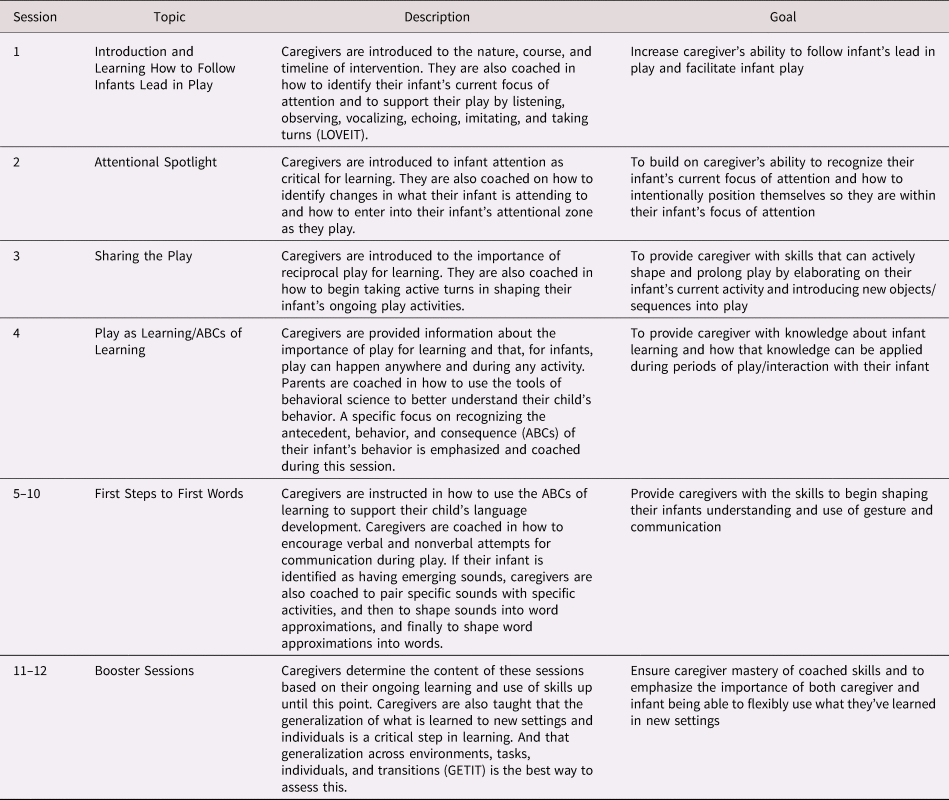
As a first order test of this idea, we present D-ET data collected from a 14-month-old infant exhibiting early signs of ASD prior to—and following—a brief, parent-mediated NDBI intervention we refer to as Motivation, Connection, and Communication (MC2). As with other parent-mediated NDBI, MC2 focuses on teaching caregivers how to recognize their infant's current focus of attention (i.e., what is motivating), how to build on this recognition by joining their infant in whatever it is they are attending to and/or interacting with (i.e., connecting), and finally, once joined in an activity with their infant, how to prolong these interactions and facilitate their child's socio-communicative development through the use of shared play and behaviorally informed practices (e.g., prompting, shaping, contingent responding, etc.). The sequence, scope, and duration of MC2 is presented in Table 2. However, briefly, MC2 was completed with the infant's primary caregiver (the biological mother in this case) and included two, 1-hr visits weekly over a period of approximately three months. Each week included an initial 1-hr visit where the topic for that week was introduced, demonstrated, and coached. Following the first visit, a second 1-hr visit was scheduled to take place when the caregiver thought it would be most difficult to use the just learned skill(s). In this way, caregiver skill learning and generalization where explicitly targeted each week.
Motivation, connection, communication (MC2) session sequence, description, and goals

The parents of “Jack,” a 14-month-old male, were referred for ASD intervention services by an early intervention professional interacting with Jack through his local Part C system because of identified gross motor delays. Following his referral, Jack was initially evaluated by another Part C provider who was also a member of an infant/toddler ASD clinical service at a large medical center. Given Jack's very young age, clear developmental delays in social development and language, and an older sibling with an ASD diagnosis, MC2 was immediately offered to the family and incorporated into Jack's Part C Individual Family Service Plan (IFSP). Early emerging delays noted during this initial evaluation included infrequent reciprocal play extending beyond a single turn with his caregiver, diminished referencing to social bids made by his caregiver, no pointing to—or sharing of—objects of interest, intense visual fixation on functional aspects of toys, little-to-no vocalizations, and no response to name when called by the examiner or his caregiver. A clinical diagnostic evaluation for ASD was not completed prior to MC2 because it was not required for Part C services. However, a medical evaluation completed just after Jack began MC2 (still at 14 months of age) noted that he was exhibiting a number of “red flags” for ASD, including repetitive play, language delay, and reduced bids for social interaction. A follow-up medical evaluation at 18 months concluded that Jack met DSM-5 (American Psychiatric Association, 2013) criteria for a diagnosis of ASD. MC2 was delivered by a master's-level professional with extensive training in special education and ASD and supervised by a licensed clinical child psychologist with expertise in ASD and very early intervention (author MSG).
Before beginning MC2, Jack and his family were enrolled in a research project piloting the use of D-ET with infants prior to—and following—NDBI parent coaching. Following previous D-ET studies reviewed above, Jack and his mother played with sets of novel toys as D-ET data were collected. In brief, Jack and his mother sat on opposite sides of a toddler-friendly table and played with two sets of three toys while wearing head-mounted eye-tracking equipment (Positive Science, Inc.). Each set of toys was rotated after 90 s and presented twice for a total of 6 min of play. In order to provide a qualitative normative comparison for D-ET data collected from Jack and his mother, data from 13 similarly aged peers (average age = 16.8 months, range 14.2–19.9 months) and their mothers were also collected. All experimental procedures were approved by the Institutional Review Boards of Washington University in St. Louis and Duke University. Please see Appendix 1 and Yu et al. (Reference Yu, Suanda and Smith2019) and Yu & Smith (Reference Yu and Smith2015) for detailed methods, including D-ET data collection, processing, and analysis.
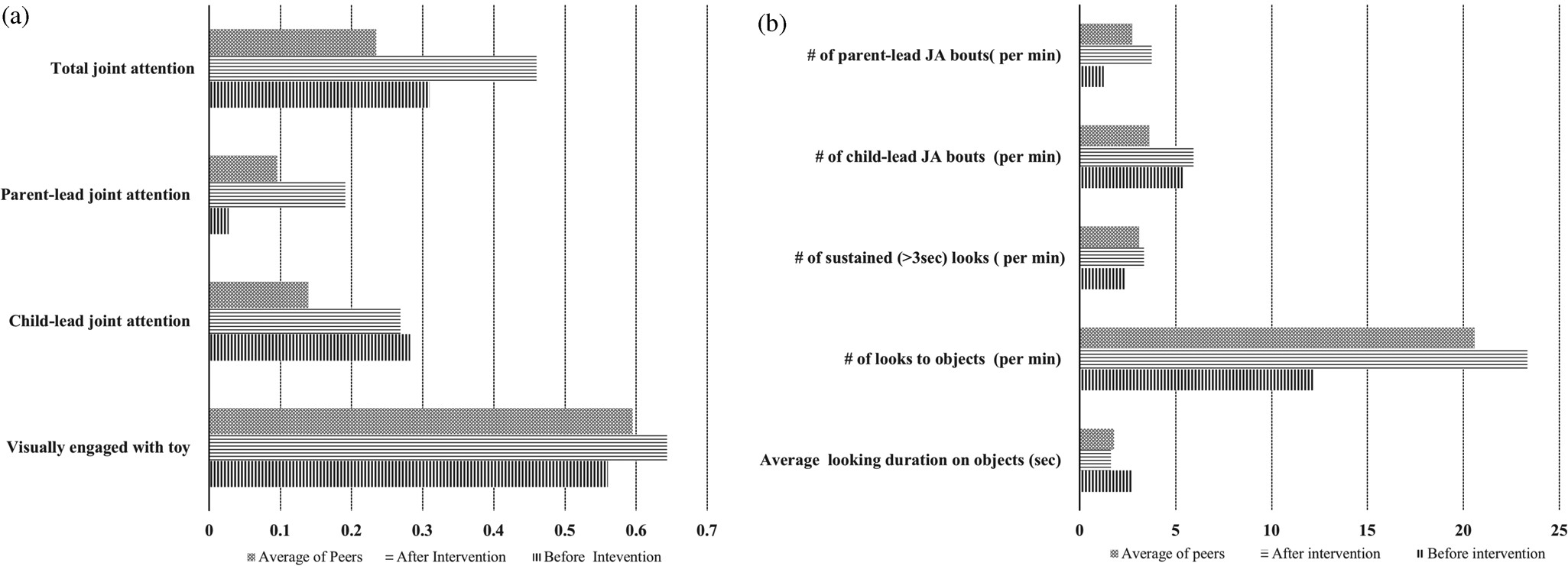
As illustrated in Figures 3a,b, prior to MC2, Jack's pattern of visual engagement during play was notable for a lower proportion of total time visually engaging with objects, a longer average duration of time looking at individual objects, a reduced number of object looks per minute, and fewer periods of sustained visual engagement with objects (i.e., visually engaging with object for > 3 s) per minute relative to his similarly aged peers. In terms of joint attention (i.e., continuous alignment of caregiver–infant fixation >500 ms), Jack spent slightly more time engaged in joint attention with his mother relative to his peers. However, this was primarily defined by a higher proportion of time spent in child-lead joint attention, characterized by a higher per minute rate of child-lead joint attention bouts and a much lower per minute rate of parent-lead joint attention bouts. As illustrated in Supplemental Video 1, periods of joint attention between Jack and his mother were largely defined by Jack's restricted focus on a toy with a propeller that he repeatedly spun. Interestingly, his fixation on this toy both reduced his average number of looks to objects per minute and increased the average duration he spent looking at objects. However, Jack's interest in this toy also appears to have reduced the average number of times per minute that he sustained visual engagement with an object for 3 s or greater. Thus, while a qualitative comparison, relative to his similarly aged peers Jack's patterns of looking behavior and joint attention would suggest differences in self-regulated attention that result in missing many of the socially relevant activities of his play partner and limiting opportunities for exposure to new information as a result.
Dynamic head-mounted eye-tracking data prior to—and following—early intervention for an infant with ASD and a group of similarly aged peers. Proportion of total interaction time for a given activity is reported in 3A and number (#) of actions per minute (per min) or average looking duration in seconds (sec) are reported in 3B.

Following MC2, a number of qualitative changes were present in Jack's D-ET data (see Figure 3). This included an increased proportion of time visually attending to objects, an increased number of shorter looks to more objects per minute, as well as an increased number of sustained object looks (i.e., visually engaging with object for > 3 s) per minute. What's more, the proportion of time Jack and his mother spent jointly attending to objects also increased, with this increase primarily driven by a higher rate of per minute parent-lead joint attention bouts. In summary, following MC2 Jack's D-ET data more closely matched that of his similarly aged peers, with increased moments of sustained attention following more frequent shifts of visual attention towards the activities of his play partner. While no definitive conclusions can be reached based on the qualitative changes in Jack's D-ET data following MC2, they do raise the intriguing possibility that the research-supported practices for engaging and shaping infant attention his mother learned and used over a 3-month period may have positively influenced the way in which he visually attended—and responded—to the actions of his social partner. They also suggest that D-ET has the potential to provide novel insights into how NDBI targeting of caregiver–infant joint engagement can focally increase infant self-regulated attention and systematically increase opportunities for socio-communicative learning as a result.
Discussion
ASD is associated with a high rate of comorbid developmental delays and psychiatric disorders. A growing body of research suggests that increased rates of comorbidity in ASD likely result from complex interactions between emerging neurodevelopmental vulnerabilities and early pre- and/or postnatal environments. As a result, comorbid symptoms potentially reflect vulnerabilities related to genetic or environmental risk factors and/or the manifestations of compensatory processes or secondary “cascading” effects following atypical interactions with the environment (Courchesne et al., Reference Courchesne, Pramparo, Gazestani, Lombardo, Pierce and Lewis2019). With the goal of optimizing development as efficiently as possible, the present paper focused on the potential for early intervention to positively alter secondary effects of ASD on development following the early identification of this disorder (or emerging social features of ASD). In line with this, we offered a complimentary conceptual social pathway model in which developmental delays in nonsocial skills are the potential product of an altered early learning environment following the emergence of atypical ASD-related social behaviors during infancy. We further suggested that by targeting the earliest and foundational manifestations of atypical social development, it is possible to capitalize on the known relationships between caregiver–infant interaction and infant development in healthy dyads to identify potential processes underlying the negative effects of ASD on infant development.
Following emerging insights from research using dynamic head-mounted eye-tracking (D-ET), we made the specific suggestion that understanding how periods of joint attention between caregiver and infant emerge via multiple pathways has the potential to significantly inform how early ASD interferes with the ongoing development of attention and language. We also described how current early interventions for infants with ASD (or emerging features of ASD) could potentially capitalize on this information to teach caregivers how to successfully scaffold opportunities for infant learning through object play, an activity highly conducive to creating periods of joint attention that is not reliant on eye gaze. We further suggested that as a result of capitalizing on potentially greater neural plasticity during this period (Kolb & Gibb, Reference Kolb and Gibb2011), a caregiver's successful use of these skills would likely create multiple moments of object centered social interactions capable of supporting their infants ongoing and future development. In support of this suggestion, we presented a case study where research-based practices (i.e., NDBI) were taught to the caregiver of an infant with ASD and D-ET data were collected from the caregiver–infant dyad prior to—and following—treatment. The D-ET data collected from this dyad, when qualitatively compared to D-ET data from similarly aged healthy caregiver–infant dyads, illustrated the potential of D-ET to provide new insights into how NDBI practices alter specific features of infant attention (e.g., number of objects looked at per minute) and caregiver–infant joint attention (e.g., increased parent lead joint attention). Based on this information, we believe that early intervention for ASD can be further refined using a mechanistic understanding of how caregiver behavior and infant attention interact to support infant learning and development.
The perspective presented in this integrative review is aligned with previous thinking suggesting that ASD is genetically and phenotypically highly heterogeneous. However, it also suggests that understanding how phenotypic heterogeneity emerges may be more tractable when characteristics commonly associated with or co-occurring with ASD (e.g., language delays, psychiatric comorbidities such as attention deficit/hyperactivity disorder) are viewed as potentially resulting from alterations in the typical early learning environment. That is, following the emergence of ASD-related atypical social behavior, disruptions in the transactional relationships between the developing infant and their current environment have the potential to limit opportunities for learning and development in social and nonsocial skills. It is clear that no singular explanation for the co-occurrence of ASD and other related challenges is likely to exist. However, as discussed here, a growing body of literature does indicate that understanding how early emerging ASD-related social delays disrupt early caregiving relationships does have the potential to provide some insight into secondary effects that are targetable in treatment. Nevertheless, continued research in this area is needed to further develop the proposed social pathway model of comorbidity and the application of the multiple pathway model of joint attention to early intervention for ASD and related disorders.
Supplementary Material
The supplementary material for this article can be found at https://doi.org/10.1017/S0954579420000796
Acknowledgments
We would like to acknowledge and thank Ellen Gaffrey and Katie Bogan for their assistance with developing and delivering the MC2 practices and materials described in the current paper. We also want to thank the children and families who participated in our research. Chen Yu's work on this paper was supported by grants NICHD R01HD074601 and R01HD093792.
Conflicts of Interest
None