Introduction
Dehesa is the most common agroforestry system in Europe, and in the Iberian Peninsula in particular, it contributes approximately 5.5 million hectares in Spain and 1.2 million hectares in Portugal (den Herder et al., Reference den Herder, Moreno, Mosquera-Losada, Palma, Sidiropoulou, Santiago Freijanes, Crous-Duran, Paulo, Tomé, Pantera, Papanastasis, Mantzanas, Pachana, Papadopoulos, Plieninger and Burgess2017). Extremadura is the Spanish region with the largest dehesa area (Gaspar et al., Reference Gaspar, Escribano, Mesías, de Ledesma and Pulido2008). The most recent estimates of forest areas being considered as dehesas throw a figure of 1.9 million hectares of dehesa in Extremadura, where a large number of the farms within the region are situated (CAYMA, 2003).
These agroforestry systems are based on extensive livestock production where the farms use the large so-called dehesa areas with low stocking density and autochthonous breeds that are well adapted to the environment (Horrillo et al., Reference Horrillo, Escribano, Mesias, Elghannam and Gaspar2016).
In this context, dehesa proves to be a unique ecosystem in the European territory, not only on account of the extension of its area, but also because of its contribution of environmental, cultural, aesthetical and economic values. Nonetheless, these systems are currently constrained by low profitability (Oviedo et al., Reference Oviedo, Ovando, Forero, Huntsinger, Álvarez, Mesa, Campos, Campos, Huntsinger, Oviedo Pro, Starrs, Diaz, Standiford and Montero2013), which can affect their sustainability (Gaspar et al., Reference Gaspar, Mesías, Escribano, Rodriguez De Ledesma and Pulido2007).
All actors currently involved question the profitability of dehesas and argue that the implementation of sustainable management techniques in extensive farming systems and their transition toward other production models, such as the organic model, would secure the economic sustainability of dehesas and the efficient collection of its produce (López-Sánchez et al., Reference López-Sánchez, Perea, Dirzo and Roig2016).
The latest official statistics (year 2016) reveal that Spain accounts for 7836 organic farms with a total of 1,683,682 animals (MAPAMA, 2016a). These figures translate into 1.57 and 3%, respectively, of the total number of the country's farms and animals in Spain. An analysis of the situation in the various regions sets Andalusia as the largest producer of organic products with 4.4% of the livestock farms and 9.75% of the certified animals, which represents 62.96% of the country's organic farms. Extremadura, on the other hand, with 211 certified farms represents only 0.48% of the certified farms with 0.97% of the organic animals in Spain (MAPAMA, 2016a). The 211 certified farms in Extremadura house 62,886 animals. Their breakdown by species is the following: the number of organic cattle represents 1.46% of the total number of cattle heads in Extremadura; the number of sheep represents 0.21%; goats are 0.078% and pigs are 0.0028%. These figures prove the low level of livestock conversion in the region (SITRAN, 2016; MAPAMA, 2016a). This low level of development of organic production in the central areas of dehesa (in comparison to other areas with similar edaphoclimatic characteristics, such as Western Andalusia) suggests the existing need to understand the circumstances that prevent the development of a productive model which seems to be close to that of extensive livestock farming.
In this sense, the purpose of this paper is to analyze the key aspects that must be taken into account for the conversion of the extensive livestock farms in dehesas into organic/sustainable livestock production models. The interesting aspect of this research is the diagnosis of the difficulties—both technical and regulatory—that these types of farms encounter for their conversion to organic production systems, in spite of the fact that such farming systems are very close to the organic production models (Horrillo et al., Reference Horrillo, Escribano, Mesias, Elghannam and Gaspar2016). Additionally, the commercialization of products certified as organic is a tool that could add value to all the livestock farms in these systems, and therefore increase their profitability.
With this background in mind, a qualitative piece of research with a participatory focus proved to be a valid approach to be used in this project, as this kind of research is often employed to understand a problem situation and its motivating factors, as well as for being flexible and versatile (Stewart et al., Reference Stewart, Olson, Goody, Tinsley, Amos, Betts, Georgiou, Hoerr, Ivaturi and Voichick1994). The research was developed through focus group sessions, a technique being employed in various projects relating to the farming sector, such as that of Alarcon et al. (Reference Alarcon, Dominguez-Salas, Häsler, Rushton, Alarcon, Fèvre, Murungi, Muinde, Akoko, Dominguez-Salas, Kiambi, Alarcon, Dominguez-Salas, Häsler, Rushton, Fèvre, Kiambi and Ahmed2017), who used focus groups in order to identify deficiencies and vulnerabilities in the beef market in the city of Nairobi; Ates et al. (Reference Ates, Yilmaz, Demircan, Gul, Ozturk and Kart2017) who employed the same technique to ascertain the implications of the farming policies' decisions being taken in Turkey from the farmers' point of view; Gaspar et al. (Reference Gaspar, Escribano and Mesias2016) who employed the same technique to analyze the value society places in agroforestry systems and Kaler and Green (Reference Kaler and Green2013) who employed it with the purpose of understanding the current and future role of veterinaries in matters of animal health in the sheep farms of the UK from the farmer's standpoint.
The purposes of this paper can be described as (i) understand the barriers faced by the farming sector in the region in order to convert to organic systems and (ii) explore the possibilities of implementing specific actions for improvement in the systems in order to adapt them to a sustainable model. The reason for the regional scope of this study being Extremadura is due to the fact that dehesa is the predominant agroforestry system in this area; the low number of certified systems in the region compared to other regions of similar edaphoclimatic and socio-demographic characteristics; and lastly, the fact that the Autonomous Community of Extremadura is an administrative unit with its own management.
Materials and methods
Area of study
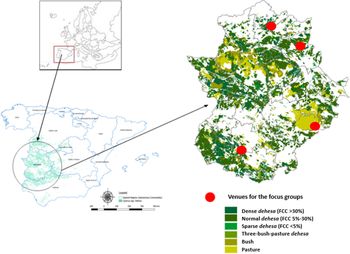
The Spanish region of Extremadura, situated in the south west of Spain, is an area with low population density and 1.9 million hectares of the so-called dehesa areas, representing over 48% of the farming areas. Figure 1 shows the distribution of the dehesa ecosystem, both in the whole of Spain and in the Extremadura region.
Situation of the dehesa areas in the Autonomous Community of Extremadura and the venues used to hold the focus groups.

In this ecosystem, the predominant three species is the genus Quercus with the holm oak (Quercus ilex subsp. Ballota) being present in 80% of dehesas, followed by the cork oak (Q. suber) and the Pyrenean oak (Q. pyrenaica), the gall (Q. faginea) and the kermes oak (Q. coccifera) (Pérez and Del Pozo, Reference Pérez and Del Pozo2001). Dehesa soils consist of shallow acidic sandy loam of little fertility due to the lack of sufficient organic matter and a severe absence of phosphorous, which makes them only appropriate for cereal crops (San Miguel, Reference San Miguel1994).
The climate of the area is continental Mediterranean and the annual average temperatures range from 16 to 17°C. Summers are long, hot and dry, with the average temperatures in July being above 26°C and the top temperatures often surpassing 40°C. Winters are usually mild, with an average temperature of 7.5°C from December to January, although during the coldest nights temperatures may descend several degrees below zero (−2°C). Rainfall is distributed irregularly and ranges between 300 and 800 mm a year with large variations from one year to the next (Granda et al., Reference Granda, Moreno and Prieto1991; Hernández, Reference Hernández and La dehesa1998; Espejo and Espejo, Reference Espejo, Espejo, Espejo, Martín, Matos and Mesías2006).
Such climatic conditions make the extensive grazing of ruminants (suckler cow herds and dual-purpose sheep and/or goat) an optimum use of dehesa in conjunction with the extensive breeding of the Iberian pig, which helps use the acorn and produce Iberian products. The stocking density of these systems is low (<0.5 livestock units ha−1) given the above described characteristics.
Design of the study
The study was based on a qualitative research with a participatory focus (Focus Group). The implementation of the participatory research techniques is a methodology approach that provides an innovative and realistic view of a specific situation (Cuéllar-Padilla and Calle-Collado, Reference Cuéllar-Padilla and Calle-Collado2011), which is the reason such techniques were selected and applied to the study of the dehesa region in Extremadura.
The focus group is a technique based on group dynamics, where a trained moderator conducts a discussion that is stimulated by the exchange of comments amongst participants (Galvez and Resurreccion, Reference Galvez and Resurreccion1992). The main advantage of the focus group is that it enables participants to have greater freedom of expression at the same time as proving to be an adequate technique for studies involving aspects such as the identification of problem situations, service improvement or strategic plan development (Chalofsky, Reference Chalofsky1999).
Participants to the focus groups
The stakeholders in the farm sector of the region were invited to join in this dynamic research. A total of 33 participants were selected by way of convenience sampling (Kinnear, Reference Kinnear and Taylor1993). The sessions were held in January and February 2018.
Four sessions were planned with an average of 6–12 participants each, following the suggestions of Malhotra and Birks (Reference Malhotra and Birks2006). The sessions were held in four strategically-selected municipalities, which helped attract stakeholders from the various parts of the entire region, where it was especially trying to gain the participation of relevant actors, such as organic producers and technical staff from the regional government (at a distance of <100 km from the departure point). Figure 1 shows the location where each session was held.
Participants were 72.8% men and 27.2% women, aged 30–65. In their vast majority, they all held university degrees or professional training associated with livestock farming. The profiles represented and distributed in all sessions were: technical and consultancy people (8), conventional farmers (7), organic farmers (12), technical staff from the regional government (2), researchers (4) and members of livestock farming associations (16). Some of the participants combined more than one of the above characteristics, for example: organic farmers and members of livestock farming associations.
The focus group process
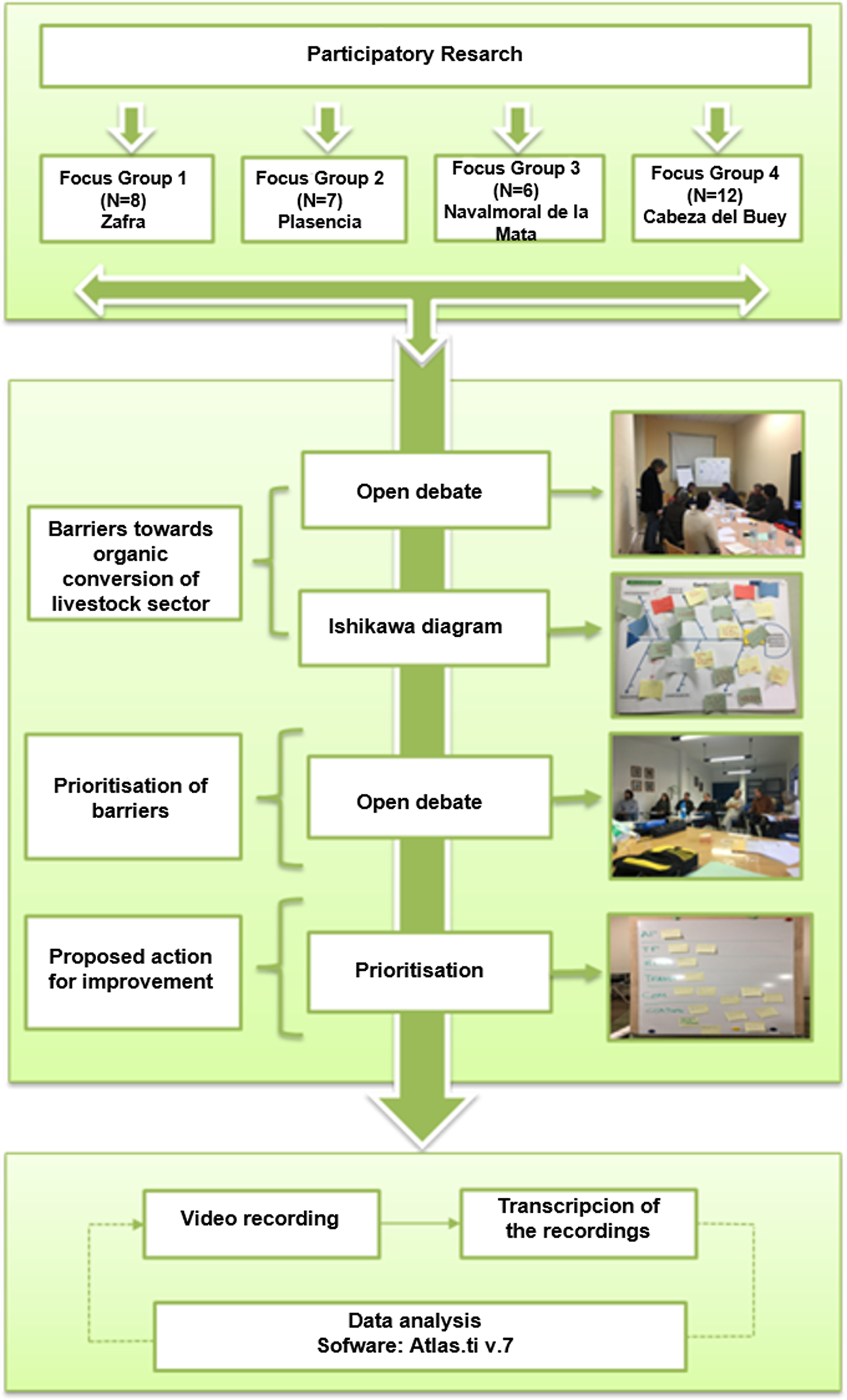
Four focus group sessions were held with the design of various activities requiring involvement and interaction amongst the participants. Each session followed a common protocol that had been developed by the research team. Such protocol was previously provided to the moderator of the session.
Each session began with a briefing of the research project in which the activity was included (Research Project GanEcoEx reference: IB16057), which provided the participants with the necessary preliminary information. Then a three-block structured discussion was initiated. During the first block, an open discussion was promoted based on an Ishikawa diagram with the purpose of identifying the barriers preventing the Extremadura's livestock farming sector from converting to a sustainable organic model.
For this purpose, the moderator proposed a poster (90 × 90 cm) showing the lines of a diagram with each line representing a category under which the barriers for the farming sector in the region to convert to organic farming could be classified, as well as any others arising during the discussions. The initial categories that were defined by the research team were: supply, production techniques, regulations, transformation, commercialization and consumption.
During the second stage, participants were asked to prioritize the barriers identified in the Ishikawa diagram according to how easy it was to eliminate or reduce them. The third stage focused on the proposed specific improvements that would reverse or minimize the barriers identified.
The moderator conducted the group discussions, the discussion times and the change of subject to be discussed in order to ensure that the data being collected were solid. Various strategies were employed, including the extension and rewording of questions as well as a summary of the discussions provided by the moderator, once every discussion was partially finished (Krefting, Reference Krefting1991; Krueger and Casey, Reference Krueger and Casey2009; Ates et al., Reference Ates, Yilmaz, Demircan, Gul, Ozturk and Kart2017).
The sessions were recorded on video and audio for the purposes of analysis at a later stage. All the participants provided their written consent after reading an informative document which detailed the purposes of the study, the methods to be used for data collection, the recording of audio and video evidence and the confidentiality of their data. The total time employed in each session was 120 min on average.
Data analysis
The video and audio recordings of the four sessions were transcribed and made anonymous for subsequent analysis. The analysis of the information collected was carried out using the content analysis technique (Stewart and Shamdasani, Reference Stewart and Shamdasani1991). The content analysis technique attempts to obtain valid and replicable inferences from texts, with an aim to reduce the source material (Flick, Reference Flick2009).
The information was initially processed and organized into common subjects using the Atlas.ti 7.0 software program to analyze the qualitative data. The ideas and concepts repeatedly mentioned during the sessions were classified under each subject matter and then coded according to the profile of the participant who provided the idea in order to produce a count. Once all the transcriptions were coded, they were classified as barriers or proposals for improvement, which is the format employed in this paper. The means of measure used is the frequency of mention, which is the number of times that each barrier comes up in all four sessions.
Given the qualitative nature of this study and with the purpose of improving the validity of the findings, triangulation was used to carry out the analysis. This procedure is frequently used in qualitative surveys (Antmann et al., Reference Antmann, Ares, Salvador, Varela and Fiszman2011; Dundar, Reference Dundar2013; Da Silva et al., Reference Da Silva, Minim, Ferreira, de Souza, da Moraes and Minim2014; Eldesouky et al., Reference Eldesouky, Pulido and Mesias2015). Figure 2 shows a diagram of the full methodological process.
Methodological process used. It shows a diagram with the main activities of the process.

Results
The results are presented into three core subjects for a better understanding of the study. The first one deals with the issues hindering production and the transformation processes in organic livestock farms, as well as the issues associated with the structure of the organic livestock sector. At the same time, the improvement actions that could be implemented to the system are considered at this stage. With a similar structure in terms of content, the second core subject deals with the administration and management of the organic livestock farming systems. Lastly, the third one focuses on the education and training of the various stakeholders, which are key aspects for the analysis of the demand and consumption of organic products.
Barriers inherent to the production and transformation systems in organic livestock farms and to the relationships amongst the stakeholders of the sector
Factors which affect the production and the transformation of the products
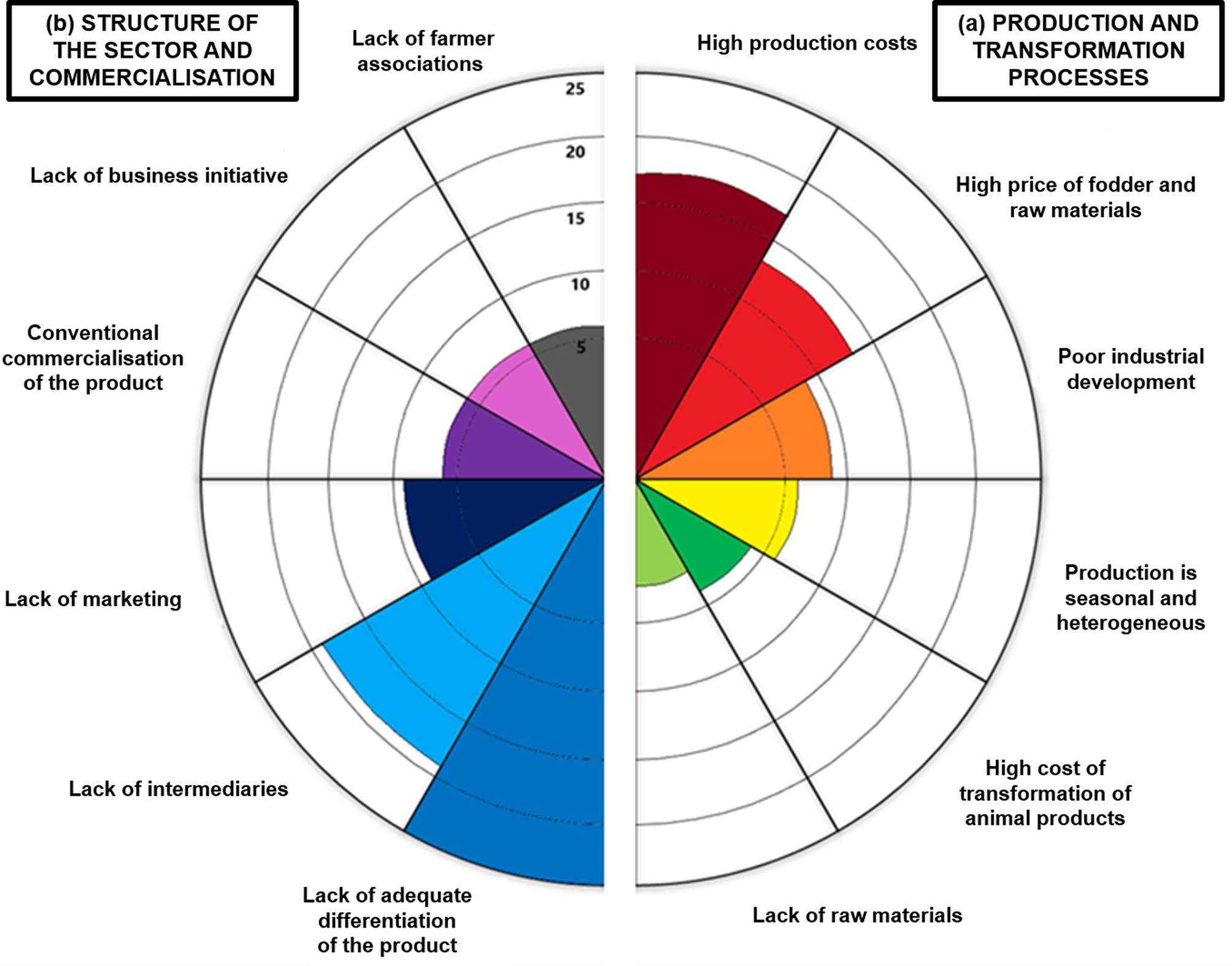
Figure 3 shows the barriers identified in the production and transformation processes of organic livestock farms and those deriving from the relationships amongst the stakeholders of the sector. Every variable in the figure is a barrier and the scale represents how often they are mentioned.
Factors with an impact on the production, transformation, sector structure and commercialization of organic livestock farms (scale: frequency of mention).

With regards to the production and transformation processes, Fig. 3(a) shows the main barriers identified in the sector are the high production costs and the high prices of organic fodder, which are partly caused by the lack of availability of these raw materials in the region.
In this sense, the comments made by the participants in the focus groups were:
‘The inputs are more expensive, organic fodder is very expensive compared to conventional fodder and conventional fodder is already quite expensive’. Male farmer, 35 yrs old.
The following factor that was mentioned in order of importance was the poor level of development of the agroforestry industry for animal products originating in organic farms, which increases the costs with respect to conventional production.
With regards to the production techniques, the main barriers of the respondents pointed out were the fact that the production was seasonal and the difficulty in obtaining homogeneous organic meat production. In one of the participants' own words:
‘These products are clearly seasonal, we must program animal birth timings for the herd in order to be able to produce kids all year round, but without synchronisation methods, this is very hard’. Female farmer, 40 yrs old.
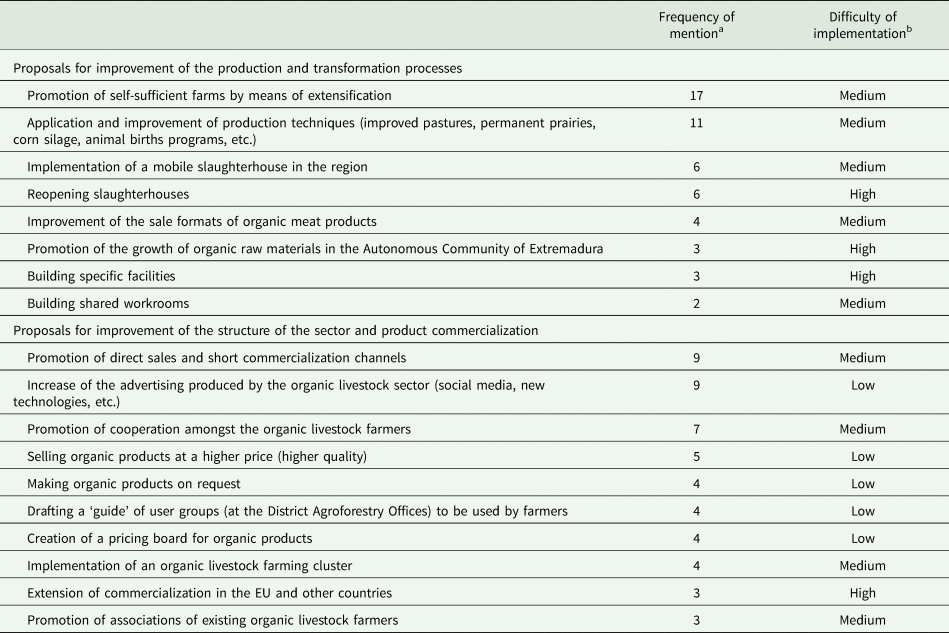
The relevant proposals for improvement that were raised in the focus groups have been put together in Table 1. The outstanding ones among them are the promotion of self-sufficient farms by way of extensification. A participant whose animals or livestock farm is undergoing the conversion process stated:
‘In order to be absolutely organic we must start from way before, we must change the way we manage our farms and make them capable of feeding our animals without the need for the high amount of inputs that conventional farming has created us, then I would start by changing the model’. Male farmer, 45 yrs old.
Proposals for improvement of the production and transformation processes in organic livestock farms and the relationships amongst stakeholders in the sector

a Frequency of mention: In this section, the times the concept is mentioned in all the sessions is shown.
b Difficulty of implementation: In this section, we describe the difficulty of implementing the action and classify it into three categories according to the degree of consensus obtained in the focus group: Low, Medium and High.
Some of the techniques being mentioned in order to attain this purpose were: improvement of pasturelands or producing own corn silage in order to feed the livestock. Another potential measure that the respondents pointed out was to promote the growth of organic raw materials in order to feed organic livestock, such as winter cereal or corn. In this context, a female organic farmer stated:
‘This option should already be implemented and would benefit the entire sector. An increase in the growth of such raw materials would lead to an increase in stock and would lower the price of fodder’. Female farmer, 50 yrs old.
Another improvement proposal that some respondents commented on was programming animal births in the farms, as the seasonality of the livestock production remains a barrier for organic livestock farming. Calving and lambing seasons are very concentrated in one period of time due to the climatic conditions in the dehesa systems. Some participants understood that for commercial purposes, it is very important to continuously provide products to the market in order to achieve better prices and maintain good contracts with retailers. For organic producers, this is very difficult to achieve for two reasons: (i) the availability of food for livestock is very seasonal since it depends to a great extent on pasture production and, (ii) fertility is also seasonal due to photoperiod issues and to the extreme climate conditions in the summer (it leads to the avoidance of births at this time of the year and their concentration usually in spring). For organic farm participants, this seasonality is an added constraint compared to conventional farmers, since they are not allowed to use hormones (e.g., induction or synchronization of the oestrus).
With regards to the poor industrial development in organic farms, the participants proposed the construction of specific facilities, such as a classification center for the exclusive use of organic lambs, or shared industrial infrastructures, such as workrooms that can be used by several organic farmers, making the start of organic production more affordable for small and medium-size businesses. In this sense, an organic farmer pointed out:
‘We should reopen all the small slaughterhouses in the villages where there is demand from livestock farmers’. Male farmer, 40 yrs old.
This respondent stated that he finds great difficulty to slaughter his animals in slaughterhouses certified for organic production.
Another proposal was the implementation of a mobile slaughterhouse in the region. This option is not currently authorized by the regional council, as an attendee pointed out:
‘In other Autonomous Communities these are allowed for the production of chicken and they are working well’. Female farmer, 31 yrs old.
Lastly, some respondents also argued that the sale formats of organic meat products can be greatly improved. Unlike the conventional packaged meat products, the impossibility of using certain food additives makes this packaging task very complex for the sector. The idea of seeking alternatives in order to improve these formats was frequently mentioned during the four sessions.
Structure of the sector and product commercialization
Figure 3(b) also shows the barriers associated with the structure of the livestock farming sector and the commercialization of organic products. As the figure points out, the main barrier identified is the lack of adequate differentiation of the product, followed by barriers associated with the lack of intermediaries in the value change and marketing strategies. An organic producer selling all his products under the organic meat label stated:
‘The product is in demand, but the real issue remains that production is not organised in order to meet the demand. And I think the issue is also the fact that there is no sector, an actual sector that can defend itself’. Male farmer, 56 yrs old.
The lack of an organized sector for organic livestock farm products also implies a lack of commercial initiative. Another participant argued:
‘No target market? Ok, but I sell my product little by little, and thus I am opening my own way into the market. And this is the actual issue, we cannot sit and wait. I insist, the major problem here is that we complain again and again, but we do nothing about it. We are just waiting for a large foreign company to come and buy all our production’. Female farmer, 31 yrs old.
On the other hand, the participants also suggested that commercialization using conventional markets is a huge problem for the organic sector with the loss of the product's added value. Another commercialization problem was associated with inadequate advertising or the lack of marketing in the organic livestock sector. From the participants' standpoint, such a lack of marketing is caused by a poorly developed intermediary sector in the commercialization chain and the insufficient industrialization of the region.
Table 1 also contains the corrective measures to the barriers previously identified. A few of them can be highlighted, such as, the promotion of new commercialization channels such as direct sales or short commercialization channels, which were proposals that were well received by small and medium-size businesses. However, this idea was not supported equally by those participants representing larger farms and businesses. Another business model that was mentioned was at-request or on-demand selling, that is, the preparation of a product once the price and quantity have been agreed. In this sense, one of the participants said:
‘I intend to produce organic pigs, but only provided that I have previously agreed the terms and conditions of the sale’. Male farmer, 42 yrs old.
Other ways the participants thought could help commercialize the products of organic livestock farms is the association or grouping of farmers of the sector, either by promoting cooperation or the creation of associations amongst the existing organic farmers. These organizational structures would be created with the purpose of supporting farmers, facing issues together and participating in sector meetings and events.
They also suggested ideas that would be of great interest on the regional level, such as the implementation of an organic livestock farming cluster, where all the stakeholders in the chain would be in touch. This would mean an improvement of their projection and would make certain activities easier, such as sourcing suppliers, selling end products, raw materials, etc. A participant stated:
‘The idea of a cluster is good, because all suppliers would also share a space’. Male farmer, 56 yrs of age.
In addition to the cluster, another proposal was the implementation of a Price Board to provide price guidance and prevent sale discoordination.
Lastly, the creation of a ‘Farmer's Guide on Consumer Groups’ would help with the commercialization and distribution tasks for the farmers and organic producers.
Barriers related to administrative aspects and governance of organic production systems
This section deals with the findings associated to the way the Government of Extremadura administers organic livestock farms and the procedure used to manage these production systems, in terms of the way the various administrations involved interact with the producers, the organizers and other stakeholders. The regulations governing organic livestock farming in Extremadura at the time of drafting this paper are: (EC) Regulation no. 834/2007 of the Council of 28th of June 2007 and (EC) Regulation no. 889/2008 of the Commission of 5th of September 2008 and Animal Health Act 8/2003 of 24th of April.
Figure 4 shows the various barriers mentioned in this respect.
Diagram of the factors mentioned in relation to the administration and management of organic production systems (scale: frequency of mention).

As shown, the barrier that was mostly mentioned was the way the Government in Extremadura applies and interprets European regulations, which was considered excessively strict in all its areas. The participants commented that this particularity was evident in issues such as the reduction of the stocking density, the introduction of certified raw materials from other Autonomous Communities or other countries in the EU, the conversion timeframes, mobility of studs between farms or the minimum times required to approve the slaughter of chicken.
Another barrier that was also frequently mentioned was the issues associated with the ownership title of the farm land. The attendees stated that currently the majority of the livestock farmers do not own the land they use, but they own it on a rental basis. Provided that the change to organic cannot be made fast (the European regulations establish specific timeframes for reconversion) and since, as tenants, they can only own the land for the term of the contract, the strictness of the regulation brings uncertainty toward making a decision on whether changing to organic or not (what would happen when, as a way of example, the contract on one or several plots of land is not renewed?). This complaint was particularly frequent in the mentions amongst the sheep extensive farmers.
Another barrier that was mostly discussed was the fact that the organic livestock farming sector greatly depends on grants at present. In the words of a participant:
‘Currently, organic production would be very hard without grants. Generally, there are only very few organic farmers with farms that are financially viable in themselves’. Manager, 58 yrs old.
Another barrier that was the delay in the payment of the grants specifically destined to organic production and agroforestry grants. Lack of political/administrative support was also mentioned as a burden for farmers since the origins of organic farming. A participant highlighted:
‘In the 18 years I have been an organic farmer, i.e., since year 1999, I have yet to be convinced that the Administration believes in the term “organic”’. Female farmer, 42 yrs old.
Excessive bureaucracy, this is, the administrative procedures or formalities required to obtain organic certification and maintaining organic farming were considered as an obstacle for the progress of the sector. Additionally, administrative slow responsiveness, especially when dealing with requests to urgently treat sick animals, authorizing non-organic food in times of extended summer, etc., were mentioned. With regards to these issues, participants also mentioned that in other Autonomous Communities of the Spanish territory, some of these formalities are sorted differently and in their opinion perhaps in a more agile and convenient manner. For example, a participant stated:
‘In Andalusia everything is managed by an external company, not the Government. Perhaps we could consider this option’. Female farmer, 40 yrs.
Animal health-related barriers were said to affect livestock farming and, in particular, the measures adopted as a result of the application of the National Plan Against Tuberculosis in Spain, affecting all types of ruminant farms. According to the participants, the restrictions on animal transfers and the reduction in health certificates deriving from the increasing cases of animal sickness in extensive farms are affecting negatively the cattle and goat organic farms.
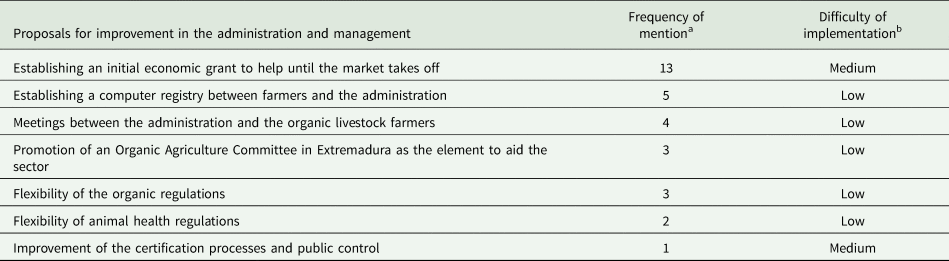
The participants also contributed to potential solutions that are shown in Table 2.
Proposals for improvement related to administrative aspects and governance of organic production systems

a Frequency of mention: In this section, the times the concept is mentioned in all the sessions is shown.
b Difficulty of implementation: In this section, we describe the difficulty of implementing the action and classify it into three categories according to the degree of consensus obtained in the focus group: Low, Medium and High.
As shown, the solution proving most consensual and also mentioned most times by the participants was ‘Establishing an initial economic grant to help until the market takes off’. Some of the ideas the participants suggested during the session were:
‘An initial grant from European funds to help until the market takes off’. Manager, 58 yrs old.
‘Once the organic product commercialisation becomes profitable and the market is prepared to pay the right price for such products, the initial grants can be withdrawn, but while the situation remains as it is, the production shall be impractical without grants’. Male farmer, 56 yrs old.
With regards to the currently-effective regulations, participants referred to a need for flexibility in organic production as well as animal health matters (National Plan Against Tuberculosis) as participants saw that:
‘The regulations exist to be interpreted and not to be used to create obstacles for farmers’. Male farmer, 36 yrs old.
In general, the participants thought there was a need to reinforce the relationships between the Regional Government and the farmers and they proposed that a number of professional meetings were held between the agri-food stakeholders and the Regional Government in order to clarify some issues and make decisions in specific cases. As a participant stated:
‘The solution I see would be a meeting between the Administration and the farmers in order to analyse specific matters and find a joint solution’. Male civil servant, 35 yrs old.
One of the specific ideas proposed in order to speed up and solve issues such as the above-mentioned ‘excessive bureaucracy’ and ‘administrative slow responsiveness’ was the creation of a computerized register. This would help the Regional Government deal more quickly with farmer's enquiries and requests, as well as inform them of their obligations in a secure and instant manner.
Another potential solution that was proposed was the reinforcement of the Organic Agriculture Committee in Extremadura as an intermediary between the agri-food stakeholders and the administration by improving its organization and structure.
Barriers in the training/education and consumption
Training and education as drivers for awareness
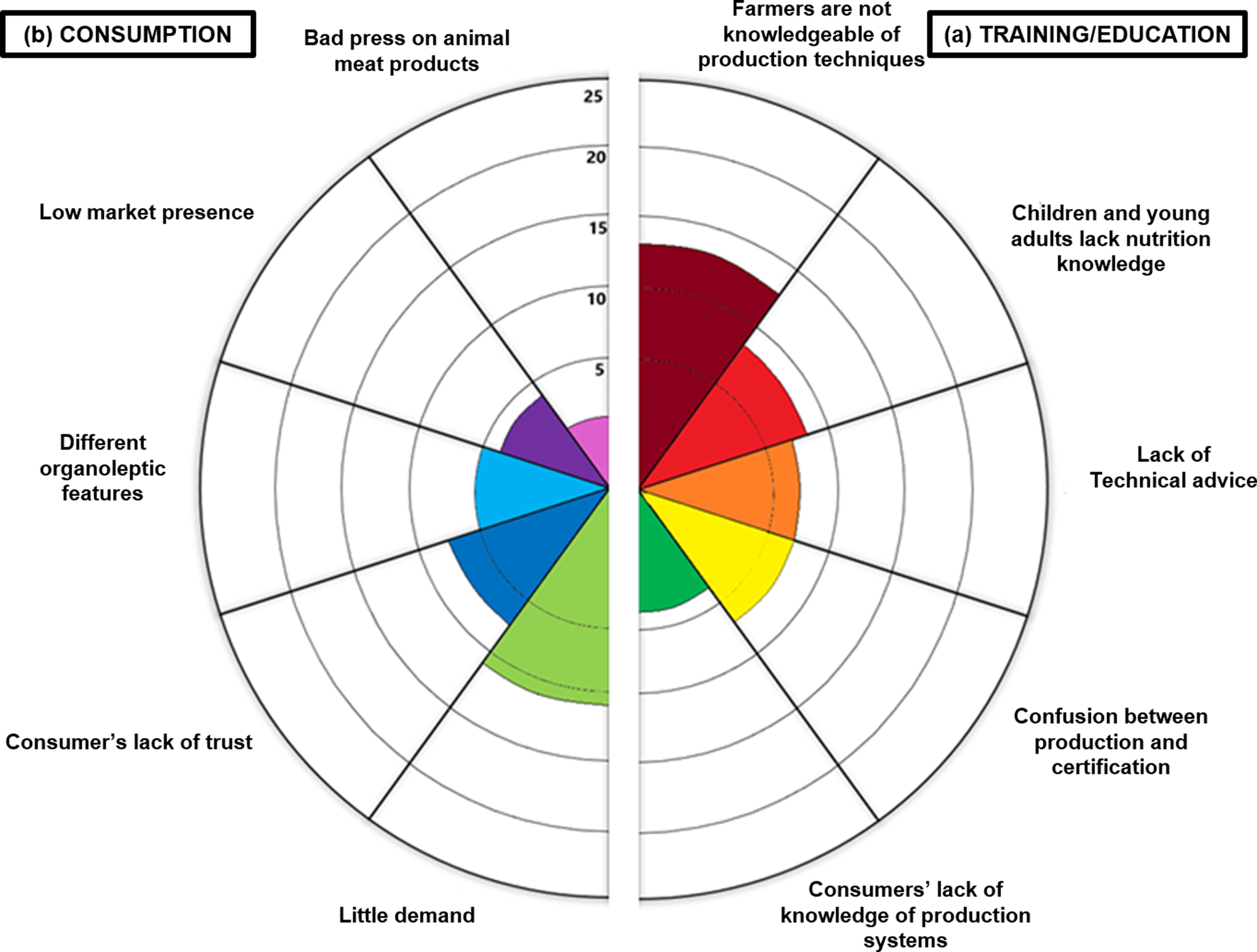
Figure 5 shows the findings associated with education and training, two factors with a direct impact on awareness, which is necessary to drive the change to organic.
Diagram of the barriers mentioned in association with education and training, demand and consumption (scale: frequency of mention).

During the focus group sessions, five barriers associated with training and education were summarized [Fig. 5(a)]. The most frequently mentioned aspect was farmers not being knowledgeable of organic production techniques. This is attributed to a lack of qualified technicians in the sector in the region. Some participant comments in this respect were:
‘After all, the issue is the existing lack of training, as many people start up an organic farm business unaware of what it entails and that ends up being a problem for everyone … consumers, Administrations, etc.’ Female farmer, 31 yrs old.
‘In my opinion there is a need for technical training, because when one becomes an organic farmer, one finds issues and sometimes you don't have many people to go to’. Female farmer, 40 yrs old.
Another barrier mentioned by the participants was the controversy between organic production as a production system or as a concept, and having a farm or a plot of land that is certified as organic, that is, the dichotomy between production and certification. The strict European regulations are not equally applicable to the reality of all systems and this causes issues that are not easily solved by many farmers. Consumers on their side are not even aware of these issues and therefore they are not prepared to compensate them on that account.
Society is not knowledgeable of livestock farming in general and of the various production systems in particular. Participants highlighted that without the appropriate information and education basis, especially addressed to young people who are increasingly less attached to the rural areas and even less to livestock farming, the necessary selling differentiation of animal organic products proves very hard.
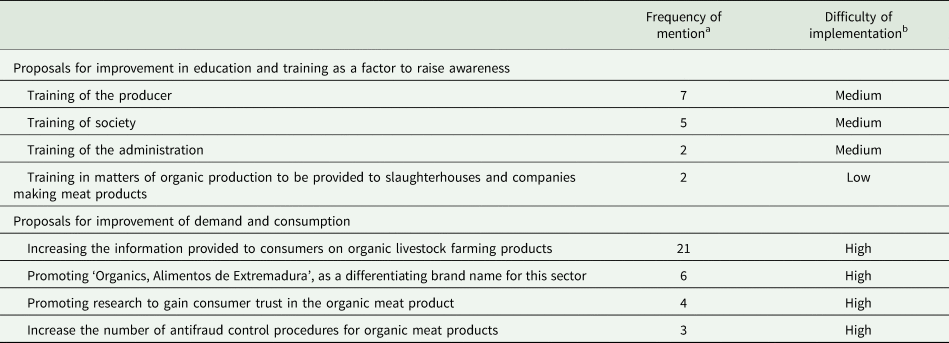
In the same way as with the previous sections, these sessions concluded with the identification of potential solutions, which are shown in Table 3. As the table shows, the aspect that seems to be the pillar to solve the majority of the issues identified earlier on is the reinforcement of the knowledge that society generally has of organic livestock farming, but also raising awareness in public administration staff, the producers and the intermediaries (e.g., slaughterhouses and companies in charge of producing the food of animal origin).
Proposals for improvement of education and training, demand and consumption

a Frequency of mention: In this section, the times the concept is mentioned in all the sessions is shown.
b Difficulty of implementation: In this section, we describe the difficulty of implementing the action and classify it into three categories according to the degree of consensus obtained in the focus group: Low, Medium and High.
The findings shown in Table 3 are followed by some comments made by the participants:
‘The consumer requires more training, there must be more information and more communication …’. Male farmer, 48 yrs old.
‘The key is consumer education, because consumer preferences vary and come and go like fashion; only when you carry out a comprehensive piece of research and manage to reach your clients, you can sell. If your products are not demanded, you will have to stop producing’. Technician, 40 yrs old.
As one of the participants stated with regards to the training of the public administration staff:
‘The public administration staff requires improved training which could be delivered through training courses; teachers and civil servants receive training courses which are delivered internally, that is, courses they are forced to attend and everyone is required to undergo them, therefore technicians and personnel in charge of this should also be able to do the same’. Technician, 45 yrs old.
Finally, with regards to training producers and businessmen with businesses in this sector, the participants stated:
‘Farmer training, not only in the criteria to follow in order to secure their sales, but also in every aspect, because there are techniques that help produce more and better and they are well tested (shepherds school, sales techniques, etc.)’. Male farmer, 43 yrs old.
‘Conventional slaughterhouses should be informed and told that they can slaughter organic animals so that they may prepare the necessary documents and so that we, the organic farmers, may slaughter our animals once a week, and then things would be much easier for us’. Farm Manager, 42 yrs old.
Demand and consumption
The findings deriving from core subject ‘demand and consumption of organic animal products’ are shown in Fig. 5(b). First of all, the scarce demand for animal organic products is the barrier most frequently mentioned, especially in the case of organic meat. A participant said:
‘It is hardly being commercialised; all the organic lamb meat being produced goes in the same batch as conventional lamb, there is no market for organic lamb’. Technician, 48 yrs old.
According to the participants, this lack of demand is also having an impact because there is no sufficient physical presence yet of such animal products or organic meat in the market. Some of the comments along the lines were:
‘The issue with consumption is that you can only have consumers if you are present in the market, if you don't, you cannot have consumers’. Technician, 48 yrs old.
Another barrier that was mentioned was the lack of consumer trust in organic products and in particular those of animal origin. Some participants mentioned that the lack of consumer awareness of the organoleptic characteristics of organic products cause contradictory effects in consumers, who think their appearance or look is less appealing than that of conventional products.
Some also commented on the fact that the bad press affecting meat products in general (diminishment of conventional animals' production systems, such as feedlots, encaged hens, slaughterhouses, slaughter methods, etc.) is also extended to organic products due to the above-mentioned consumer lack of knowledge.
One of the potential solutions that was raised at the focus group session (Table 3) was the reinforcement of the training provided to consumers with scientifically-based information. The development of a piece of research in order to prove that organic meat has benefits that meat produced in intensive or traditional systems do not have. As a way of example here is the comment made by one of the participants:
‘Some studies have come out of recent comparing intensively and extensively produced meats, with the conclusion that these two types of meat are not equally healthy as they vary in protein content, etc. This is an aspect the consumer should be able to appreciate, but the consumer needs to be told first’. Female researcher, 53 yrs old.
Another solution that was contributed in this respect was the need to increase the information that is provided to the consumer, both in terms of the number of media employed as well as the frequency of use. People involved in organic livestock farming at any level can certainly understand the benefits that these organic production systems bring to the environment, but the majority of ordinary people are not aware of this and this lack of information translates into mistrust when shopping.
Lastly, another potential solution for the issue of demand and consumption of organic products relates to the fact that the region needs a distinctive brand for this sector. During several of the sessions the brand name ‘Organics, Alimentos de Extremadura’ came up. This brand name could become the quality label for organic products manufactured in Extremadura provided that sufficient support and promotion were provided.
Discussion
Following an analysis on the barriers affecting the production processes in organic farms, it was considered that the high prices of organic fodder were one of the main reasons preventing extensive farms from converting into organic production systems. In this context, several authors state that the costs of production associated to organic livestock farms are higher than those in conventional farms, especially due to the higher cost of fodders (Hrabalova and Zander, Reference Hrabalova and Zander2006; Veysset et al., Reference Veysset, Bécherel and Bébin2009; Blanco-Penedo et al., Reference Blanco-Penedo, López-Alonso, Shore, Miranda, Castillo, Hernández and Benedito2012; Gillespie and Nehring, Reference Gillespie and Nehring2013). This situation also becomes more complex due to the reduction in productivity of organic livestock farms compared to conventional farming methods (Benoit and Veysset, Reference Benoit and Veysset2003; Blanco-Penedo et al., Reference Blanco-Penedo, López-Alonso, Shore, Miranda, Castillo, Hernández and Benedito2012).
One of the solutions aiming at reducing the high costs of feeding the animals in livestock farms was the introduction of a greater degree of extensification and self-sufficiency in farms. But, the reality is that self-sufficiency in extensive farms is a complex task (Dantsis et al., Reference Dantsis, Loumou and Giourga2009) and the use of external inputs in extensive livestock farming is already high (Toro-Mujica et al., Reference Toro-Mujica, García, Gómez-Castro, Acero, Perea, Rodríguez-Estévez, Aguilar and Vera2011). In this sense, an increased growth of organic raw materials by farmers in the region could reduce prices as availability and the number of offerings increase. This idea, which fully fits into the philosophy of organic production, is controversial, as the conversion from conventional farming to organic farming can mean a reduction of 19.2% in the profits, although this change would be compensated by higher selling prices and would be the necessary step to reduce the costs of organic fodder (Ponisio et al., Reference Ponisio, M'Gonigle, Mace, Palomino, De Valpine and Kremen2015).
The implementation of such changes (increased growth of organic raw materials by farmers in the region and a greater degree of extensification as well as self-sufficient farms) is a complicated task due to the lack of association and organization in the farming sector in general and in the organic sector in particular. This fact proves to be the main barrier but is also the one on which most future expectations are based.
The solution to some of these shortcomings could be the creation of associations between professionals through an organic production cluster, which can help combine synergies form various organic producers, not only meat producers, but also other farm products such as raw materials for animal feeding. This option might well be able to relieve some of the existing barriers and work toward the search for adequate production development paths. But this is not an innovative solution (Colom Gorgues and Colom Espada, Reference Colom Gorgues and Colom Espada2010). Spain can already provide examples of how such clusters have helped solve basic issues of organic production, such as is the case of Catalonia and the projection of its organic food products (Valls, Reference Valls2017). At the time, this paper is being drafted and Operational Group, a project funded by the EU Rural Development policy of the European Commission (EIP-AGRI Service Point, 2014), has recently been set up with the purpose of creating a platform for organic production in Extremadura Region (PTAEEX). The group has commenced to develop its activities, including the creation of a specific working group integrating the main stakeholders within the livestock farming sector.
With regards to the aspects relating to demand and consumption of organic food, we are currently undergoing a global crisis of the agri-food system where the traditional production methods are being questioned. This is having a major impact on the demand and consumption of food. Consumer trust in certain food products is based on ethical aspects such as respect for animal wellbeing, and the growing concern for consumer health. These aspects are key in terms of promoting organic meat products. Although in the short run, the demand of such products will not see an increase, the future trend will be a positive one as the current search of sustainable food production systems and the fight against climate change (Eldesouky et al., Reference Eldesouky, Mesias, Elghannam and Escribano2018; Escribano et al., Reference Escribano, Díaz-caro and Mesias2018) are certainly contributing to the increase of the organic sector.
Success also depends on the review of the consumption patterns and the ability to make such products accessible, as the high prices and the reduced distribution restrict development and expansion. In this sense, various strategies have been developed with the purpose of improving consumption within the food sector, as for example, the European quality system implemented in relation to organic production (Bollani et al., Reference Bollani, Bonadonna and Peira2019) and the certification and labeling schemes that highlight sustainability of a food product (Van Loo et al., Reference Van Loo, Caputo, Nayga and Verbeke2014).
Another important barrier that was pointed out was the commercialization of organic animal products, due to the inability to identify an adequate channel to generate added value for these products. This difficulty makes farms incapable of attaining a premium price for their products and prevents farmers from deciding upon conversion (Tzouramani et al., Reference Tzouramani, Sintori, Liontakis, Karanikolas and Alexopoulos2011; Sahm et al., Reference Sahm, Sanders, Nieberg, Behrens, Kuhnert, Strohm and Hamm2013).
The solutions that the participants contributed to this study in order to help improve the commercialization of organic livestock products in Extremadura focused on exploring other sales channels, such as direct selling or short commercialization channels, which may contribute to the reduction of market prices. These proposals were in line with the opinions of other authors such as Lee and Yun (Reference Lee and Yun2015) and McCabe and Nowlis (Reference McCabe and Nowlis2003).
On the other hand, this study has proved that farmers and producers feel a lack of trust of consumers in organic products, which may be associated with the lack of knowledge of the productive systems used. In their view, it is essential to train the consumer in the knowledge of organic food and reduce the existing high level of uncertainty. Quality brands certifying the geographical origin of a product (PDI and PDO European Union quality schemes) and certified organic products contribute to generate trust in the consumer. However, although consumers from Extremadura value the brands that certify their geographical origin, they do not grant the same value to organic certified products (Mesías et al., Reference Mesías, Escribano, Gaspar and Pulido2008). This is because many of these consumers believe organic products are also some traditional or local products (Mesías et al., Reference Mesías, Mart́nez-Carrasco, Martínez-Paz and Gaspar2011). The brand name Organics has been created by the Regional Government of Extremadura for products that belong to the organic agri-food sector and are produced by companies from Extremadura. They combine those two certifications of geographical origin and production system, but are yet insufficiently developed, especially products of animal origin as only a few companies use them.
The participants also pointed out the lack of demand for organic products. Nevertheless, this idea disagrees with recent studies (IFOAM, 2016; MAPAMA, 2016b; EcoLogical, 2018) which reveal a sustained increase in production as well as in demand for organic products not only in the Spanish market, but also in the global markets.
At the same time, other consumer research (Calatrava Requena and del González Roa, Reference Calatrava Requena and del González Roa2012; MAPAMA, 2012) states that the difficulty in finding organic products at the usual establishments is one of the main barriers for the consumption of said.
This leads us to the conclusion that the ‘lack of demand’ farmers pointed out and the ‘lack of supply’ stated by consumers could be indicative of the disassociation between supply and demand, which causes dissatisfaction to both parties and creates unbalance and disagreement in the organic product market. This would seem to be one of the main obstacles of the organic product market in Spain, although it is being solved by the development of a specialist channel as well as the greater implementation of bio foods in large distribution chains (EcoLogical, 2018).
In this sense, a solution would range from promoting associations of the existing organic farmers in order to enable more competitive commercialization through a collaborative approach. On the other hand, the creation of an efficient database of organic products' consumer groups in the region and the use of the social media as new channels for commercialization (Elghannam et al., Reference Elghannam, Escribano and Mesias2017) could also be complementary to the above-mentioned strategy. In this respect, it is essential to develop the commercialization channel's intermediary sector in the region. In order to do so, the Regional Government of Extremadura is already offering incentives to agricultural associations dealing with organic production within its Strategic Plan.
Apart from offering incentives to promote the creation of associations, this Strategic Plan also considers a set of grants to be awarded within the Rural Development Programme 2014–2020. Approval of this Strategic Plan is very recent, and took place after the fieldwork developed in order to write this paper; therefore, it is only logical to think that the effects on the sector will take some time to emerge. These support lines are similar to those developed in other Autonomous Regions: Andalucía saw the first Andalusian Plan for Organic Agriculture back in 2002 (currently the Plan in effect is called III Plan), whereas Aragón and Castilla y León (the Autonomous Regions with most extensive farming in Spain, together with Andalusia and Extremadura) already approved their respective strategic plans at the beginning of the 2014–2020 program.
The findings reveal that the difficulties posed and the requirements established by European regulation for organic production to be adequately certified are a huge barrier for conversion. This issue is further aggravated by the diversity of the European production systems, which generates some differences in the way regulations are applied in the various European regions or territories.
Specifically, within the Spanish territory, the Extremadura dehesa, is, as previously highlighted, one of the ecosystems with most transformation potential into a sustainable and organic model. However, the lack of regulations that can be applied to the peculiarities of this system prevents in many ways its conversion into an organic production system.
In addition to the regulatory issues, the grants and aids allocated to producers continue to raise discussions, especially those deriving from inadequate administrative and management procedures (e.g., in terms of delays in the materialization of the grants, slow processing of formalities or lack of response to requests and applications). All of the above occurs in a context of organic farms which depend on grants more than traditional farms would (Hrabalova and Zander, Reference Hrabalova and Zander2006; Veysset et al., Reference Veysset, Bécherel and Bébin2009; Blanco-Penedo et al., Reference Blanco-Penedo, López-Alonso, Shore, Miranda, Castillo, Hernández and Benedito2012; Gillespie and Nehring, Reference Gillespie and Nehring2013), a factor that makes it essential to rely on efficient and adequate management.
Conclusions
Participatory research and its development through focus group sessions is a tool which allows the diagnosis of the current situation and the prognosis of the future of organic animal production in dehesa agroforestry systems. The participation of the main stakeholders in the sector in such systems reveals the reality of this production model and its economic, social and environmental implications.
The transformation of dehesa extensive systems into organic models could improve the economic expectations of these production systems at a time when traditional methods of agri-food production are the point of debate in the EU, which is currently looking for more sustainable production models based on ethical reasons, conservation of biodiversity or human health. However, in order to promote the increase in the number of organic systems, it is necessary to analyze the barriers that these production systems encounter and the potential proposals for improvement which would encourage their adequate conversion from conventional livestock farming systems into organic systems.
Although in principle a close link between dehesas and organic systems could be seen, in the practice there have been important barriers that go beyond the production method that limit the latter's expansion, such as: in the organic production model, the high market prices of organic fodders, the scarce development of the agri-food industry and the lack of slaughterhouses and cutting plants are also key factors which slow down the implementation of this production model. In this sense, self-sufficient animal feeding and the improvement of certain infrastructures could attempt to improve the stability and competitiveness of organic farm production. Added to these factors are the classical elements encountered in other green or sustainable products, such as the need for differentiated marketing, and the higher price compared to conventional products as limiting factors. At the same time, the lack of structure of the sector and deficient commercialization has a negative impact on the promotion and development of organic livestock production, while there is a need to create farmer associations and marketing actions to secure the adequate pricing of these products.
In this sense, the improvement of the income made by organic farms will certainly require higher market prices for their products. This is difficult to achieve through the traditional channels. Currently, the demand for these products is restricted to a very sensitive consumer with a specific purchasing power.
At present, we think that the public administrations and the regulations for the sector play a decisive role in their development. The most sustainable production systems with the least impact on the environment that somehow contribute to the fight against climate change have an important potential for compensation in the new CAP.
The development of an adequate organic production model involves the necessary actions to promote education and training of both consumers and the livestock farming sector, which at the same time can secure the demand and consumption of organic products. A sense of trust in the organic product must be reinforced and the promotion of the brand image of organic products. In this sense, adequate advertising efforts and Government support have a transcendental role.
Future research steps will necessarily be looking for certain successful models of organic production in dehesas that allow exporting to potential replicating farms, and explain how to face the transition from one production model to another, how to approach self-sufficient farms and how to do make them economically sustainable.
Acknowledgements
The authors would like to acknowledge the support and funding provided by the Junta de Extremadura and FEDER Funds within the V Plan Regional de I+D+i (2014–2017) through the Research Project GanEcoEx (Project reference IB16057) which made this research possible.