Introduction
There is a growing body of evidence detailing the many benefits of staying active through all stages of the cancer continuum (Courneya and Friedenreich, Reference Courneya and Friedenreich2007). These benefits include lower fatigue levels, improved functional capacity, greater independence, and increased quality of life (Beaton et al., Reference Beaton, Pagdin-Friesen and Robertson2009, Salakari et al., Reference Salakari, Surakka and Nurminen2015, Dittus et al., Reference Dittus, Gramling and Ades2017). Increasingly, patients with advanced cancer (including metastatic cancer) are encouraged to stay physically active and partake in exercise programs, reflecting research in this area (Elsawy, Reference Elsawy and Higgins2010). The symptoms of advanced disease, including fatigue, pain, dyspnea, and nausea, may lead to low physical activity levels, or even inactivity, and, in turn, reduce physical functioning (Oldervoll et al., Reference Oldervoll, Loge and Paltiel2006), making participation in exercise programs very challenging (Albrecht and Taylor, Reference Albrecht and Taylor2012). It follows, therefore, that symptoms may also adversely affect the recruitment and retention rates of patients with advanced cancer to exercise trials; however, currently, these rates are poorly understood. Examining the participation of patients with advanced cancer in exercise trials is essential, as difficulties with patient recruitment and retention can decrease the statistical power of trials, as well as trial integrity and validity (Scianni et al., Reference Scianni, Teixeira-Salmela and Ada2012).
Patients with advanced cancer have a reduced life expectancy (Mack et al., Reference Mack, Cronin and Taback2012), and prognosis is particularly guarded in those with metastatic lesions. However, persons with advanced cancer are now living longer than in previous decades (Cheville et al., Reference Cheville, Girardi and Clark2010). For example, the estimated 5-year survival rate of patients diagnosed with advanced prostate cancer is 30–46% (Cormie et al., Reference Cormie, Newton and Spry2013). These values represent an increase in survival from 26.5% reported in the 1980s (Silverberg et al., Reference Silverberg, Boring and Squires1990). Similarly, the 5-year survival rates of women with advanced breast cancer are now 22%, an increase from 16% in in the 1980s (Silverberg et al., Reference Silverberg, Boring and Squires1990). Previously, the maintenance and recovery of physical function in patients with limited life expectancy received little attention (Oldervoll et al., Reference Oldervoll, Loge and Paltiel2006). Patients with advanced cancer may have been provided with palliative rather than restorative interventions (Porock et al., Reference Porock, Kristjanson and Tinnelly2000). As patients are now living longer, the need for rehabilitation to help counteract the adverse effects of long-term systemic treatments on strength, fatigue, and physical functioning has been increasingly recognized. Many rehabilitation plans include structured exercise programs. The rates of uptake, adherence, and completion of exercise programs reported in cancer populations vary, suggesting that not all patients find it an acceptable or practical therapy (Maddocks et al., Reference Maddocks, Mockett and Wilcock2009). If exercise is to be developed as a therapy suitable for all patients with advanced cancer, a greater understanding of the limitations to its use is needed.
Recruitment of patients with cancer to exercise trials has been described as particularly challenging and time-consuming (Sygna et al., Reference Sygna, Johansen and Ruland2015). Detailed recruitment data for patients with early-stage cancer (Courneya et al., Reference Courneya, McKenzie and Reid2008) are available; however, there is less information on the recruitment and retention of patients with advanced stage cancer. It is suggested that many established barriers to recruitment (e.g., travel distance to centers and lack of interest) reported in healthy populations also exist in patients with advanced cancer, as well as barriers associated with a later stage of disease (e.g., multiple hospital appointments). Additionally, program factors can impact the engagement of patients with cancer on exercise trials. For example, visit frequency and study length have been shown to affect the retention of participants in exercise interventions. (Yu, Reference Yu2013). It is imperative to determine if patients with advanced cancer can adhere optimally to exercise interventions to gain maximum benefits.
Given the differences between persons living with localized disease and those living with advanced disease, results of previous systematic reviews involving localized cancer are not generalizable to persons with advanced cancer (Beaton et al., Reference Beaton, Pagdin-Friesen and Robertson2009). The overall aim of this review was to systematically review the involvement of patients with advanced cancer in exercise interventions. The primary objective was to investigate the recruitment, adherence, and attrition rates of patients with advanced cancer participating in exercise interventions. A secondary objective was to determine the features of exercise programs associated with recruitment and attrition rates including exercise frequency, duration, intensity, and type of exercise.
Research design and methods
1. Inclusion Criteria
Types of participants
Studies were included if the participants were defined by the author of the trial as having advanced cancer. Advanced cancer (also known as metastatic or palliative) cancer includes the American Joint Committee on Cancer definition of Stage IV advanced cancer (Edge and Compton, Reference Edge and Compton2010).
Types of interventions
Exercise was defined as planned, structured, and repetitive body movement done to improve or maintain one or more components of physical fitness (Martin et al., Reference Martin, Morrow and Jackson2000). Only studies that prescribed structured exercise training were included. Studies consisting of general physical activity recommendations or advice were excluded. Studies involving adult survivors of pediatric cancers were excluded. Studies involving yoga, breathing techniques, relaxation, or meditation only as the exercise intervention were also excluded.
Search strategy
PubMed, Cochrane, PsycINFO, and CINAHL databases were searched for articles up to December 2017 for studies relating to exercise programs in patients with advanced disease.
The search keywords, “adherence,” “exercise,” “advanced,” and “cancer,” were used in varying combinations. “Adherence” was supplemented with the associated terms “motivation” and “compliance,” “retention,” “cooperation,” “attrition,” “tolerance,” “participation,” and “engagement”; “exercise” was supplemented with “physical activity,” “aerobic activity,” “fitness,” or “training.” Articles were required to have an original full-text available in English. A full search strategy is available in Appendix 1.
2. Data Extraction and Quality Assessment
Data extraction
The titles and abstracts of all included studies were screened for relevance concerning the research topic. Two authors (G.S. and L.B.) independently assessed the identified titles and abstracts and made proposals to include or exclude these articles. A third author (E.G.) made the final decision based on the inclusion and exclusion criteria. Each reviewer assessed the studies for levels of evidence and methodological quality.
Data extracted included primary tumor site, the number of people screened and recruited, recruitment period, reasons for declining recruitment, the number of patients randomized, the number allocated to exercise, number of dropouts, the reason for dropout, and adverse events. Exercise data extracted included exercise type, frequency, intensity, duration, and session length. Data extraction was completed by 2 authors (G.S. and L.B.) using an adapted version of the Cochrane extraction form (Furlan et al., Reference Furlan, Pennick and Bombardier2009) that was piloted on 2 studies. Any discrepancies were resolved by referring to the original papers and by discussion.
Assessment of methodological quality
The methodological quality of articles was assessed by 2 independent reviewers using the PEDro scale for randomized controlled trials (RCTs) (Maher et al., Reference Maher, Sherrington and Herbert2003, de Morton Reference de Morton2009). The Newcastle-Ottawa Scale (NOS) was used to assess the quality of non-randomized studies. RCTs were considered of excellent quality if they were rated 8 to 11 on the PEDro scale; good quality if rated from 6 to 8; moderate-quality if rated from 4 to 5; and scores <4 were low-quality RCTs. The NOS evaluates 3 domains: selection, comparability, and outcome, with a score of >7 indicating good methodological quality (Viswanathan et al., Reference Viswanathan, Ansari and Berkman2008). Ratings were performed by both authors (G.S. and L.B.), and any disagreements were resolved by consensus through discussion with a third author (E.G.).
The Oxford Centre for Evidence-Based Medicine (Howick, Reference Howick, Chalmers and Glasziou2011) Levels of Evidence provided a scale for stratifying evidence from strongest to weakest on the basis of susceptibility to bias and the quality of the study design: systematic reviews of randomized trials (level 1); randomized trials or observational studies with dramatic effects (level 2); nonrandomized controlled cohort/follow-up studies (level 3); case series, case-control studies, or historically controlled studies (level 4); and expert opinion (level 5).
Definitions
A number of terms were used in the following review:
• Recruitment rate: The number of eligible participants recruited into a clinical trial (Chang et al., Reference Chang, Hendricks and Slawsky2004).
• Adherence: The extent to which a person's behavior corresponds with agreed recommendations from a healthcare provider in a clinical trial (Jack et al., Reference Jack, McLean and Moffett2010).
• Attrition: The loss of eligible participants from clinical trials at any time following consent to participate (Siddiqi et al., Reference Siddiqi, Sikorskii and Given2008).
3. Data analysis
Percentage rates were calculated for proportions of eligible patients entering an exercise study on being approached and, when allocated to an active study arm, completing the program. The characteristics of the sample were described using means, standard deviations (SD), frequencies, and percentages. All predictor variables were analyzed using Pearson r correlations, including the relationship between the independent variables such as program frequency and length and the dependent variables of recruitment and attrition. A p value of <0.05 was regarded as significant. Calculations were performed using Statistical Package for the Social Sciences, version 19.0.
Results
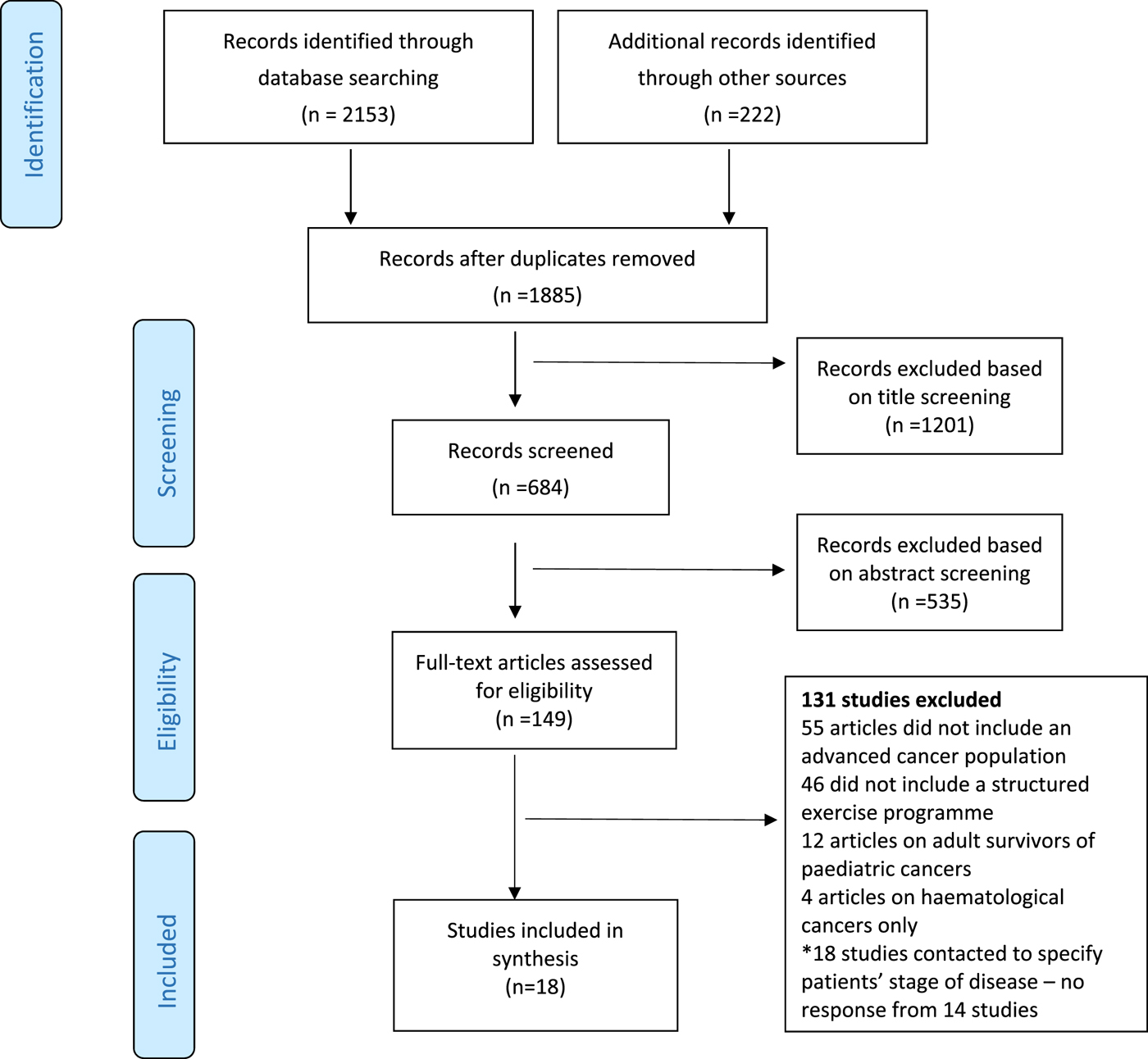
A total of 2,153 studies were originally identified by the search terms in PubMed (n = 90 articles), PsycINFO (n = 470 articles), Embase (n = 1,117 articles), and CINAHL (n = 476 articles) databases, with 222 additional records identified through other sources.
Further, 1,855 articles remained after duplicates had been removed. Titles of articles were screened, leaving 684 articles for abstract review. Finally, 149 articles remained for full-text reading. Authors of 18 studies were contacted for further information to determine the disease stage of included participants. In the absence of a response, these studies were excluded. Additionally, 124 studies were excluded at this point, leaving 18 articles eligible for review. A PRISMA flowchart outlines the study identification process (Figure 1).
PRISMA flowchart

Study characteristics
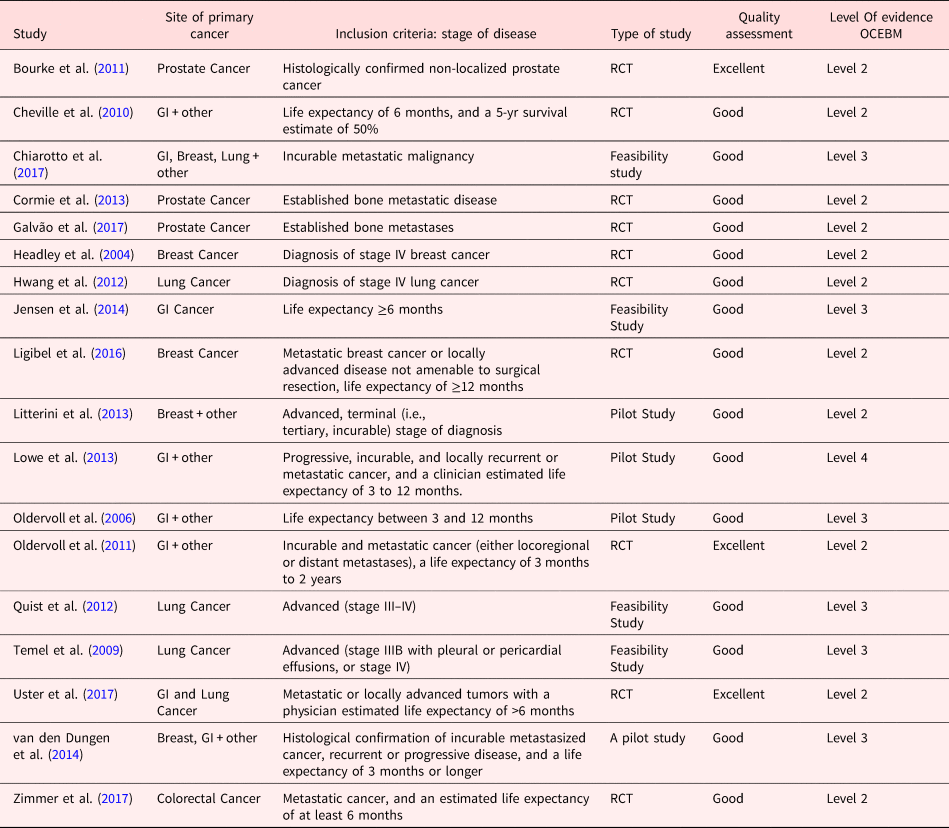
The 18 included studies are summarized in Table 1. Ten of these were RCTs; the remaining studies were feasibility studies (n = 4) and pilot studies (n = 4) with single-arm designs. The mean sample size of the intervention groups was 32 (range 7–121) patients. The included trials involved a total of 952 participants. The mean age of participants ranged from 49.3 to 73.1 years. Inclusion criteria regarding disease staging varied and are outlined in Table 1. Participants completed the exercise intervention in groups in 14 of the 18 trials reviewed. Four exercise interventions were offered as a part of a broader lifestyle intervention. There was a mean PEDro score of 7.4 for RCTs. Three studies were of excellent quality (Bourke et al., Reference Bourke, Doll and Crank2011; Oldervoll et al., Reference Oldervoll, Loge and Lydersen2011; Uster et al., Reference Uster, Ruehlin and Mey2017). Level 2 was the highest level of evidence of the trials included.
Overview of the reviewed studies

*Note: GI: Gastrointestinal Cancer
Exercise interventions
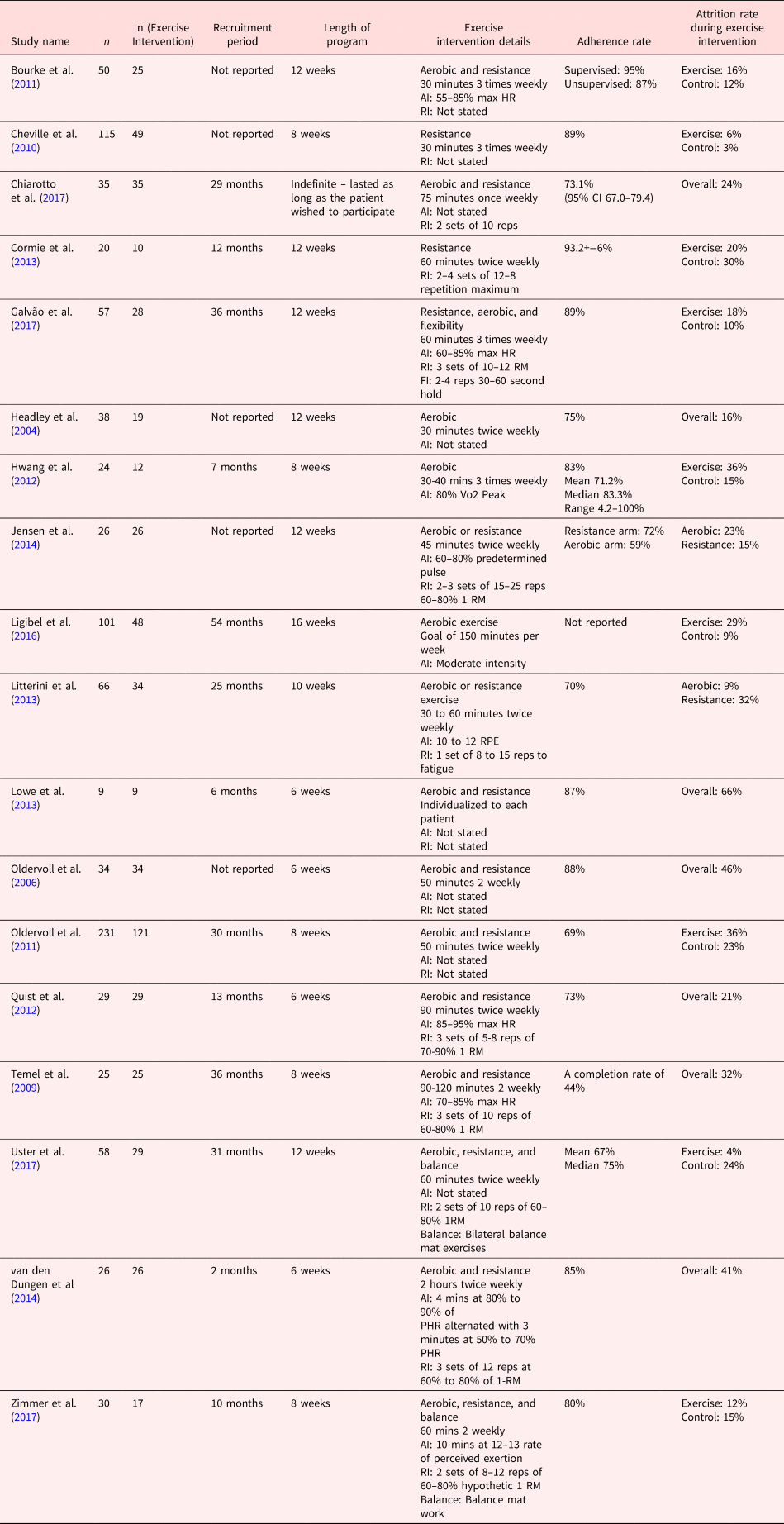
Table 2 details the exercise interventions included. Seventeen trials required participants to attend supervised exercise sessions, and 1 study required that participants exercise unsupervised (Headley et al., Reference Headley, Ownby and John2004). All exercise programs prescribed some aerobic exercise. Fifteen of the 18 trials reviewed included resistance exercise training. Pre-exercise testing was completed as part of the screening process in 2 studies, both in patients with primary lung cancer (Temel et al., Reference Temel, Greer and Goldberg2009; Hwang et al., Reference Hwang, Yu and Shih2012). Three additional studies completed cardiopulmonary testing as a primary outcome measure (Bourke et al., Reference Bourke, Doll and Crank2011; Quist et al., Reference Quist, Rørth and Langer2012; Jensen et al., Reference Jensen, Baumann and Stein2014).
Exercise interventions included in the systematic review

AI: Aerobic intensity
RI: Resistance intensity
FI: Flexibility intervention
HR: Heart rate
PHR: Peak heart rate
The methods used to measure and monitor aerobic exercise intensity varied widely, making it difficult to determine relationships between exercise intensity and trial recruitment/attrition rates. The majority of trials prescribed moderate to vigorous intensity activity and monitored exercise intensity by percentage heart rate maximum (Bourke et al., Reference Bourke, Doll and Crank2011; Galvao et al., Reference Galvao, Taaffe and Spry2017), Vo2 peak (Hwang et al., Reference Hwang, Yu and Shih2012), and the Borg Breathlessness Scale (Temel et al., Reference Temel, Greer and Goldberg2009; Zimmer et al., Reference Zimmer, Trebing and Timmers-Trebing2017). The maximum heart rate target ranged from 55% to 85%, and peak workload targets ranged from 60% to 80%. The intensity set based on the Borg Breathless Scale ranged from 11 to 15. Seven trials provided no details as to how aerobic exercise intensity was measured (Headley et al., Reference Headley, Ownby and John2004; Oldervoll et al., Reference Oldervoll, Loge and Paltiel2005; Oldervoll et al., Reference Oldervoll, Loge and Paltiel2006; Cheville et al., Reference Cheville, Girardi and Clark2010; Lowe et al., Reference Lowe, Watanabe and Baracos2013; Chiarotto et al., Reference Chiarotto, Akbarali and Bellotti2017; Uster et al., Reference Uster, Ruehlin and Mey2017). In trials prescribing resistance exercise, 11 out of 15 programs recorded exercise training parameters including weight, sets, and repetitions. All but 3 trials prescribed resistance training between 60% and 90% of 1 repetition maximum (Temel et al., Reference Temel, Greer and Goldberg2009, Quist et al., Reference Quist, Rørth and Langer2012, Jensen et al., Reference Jensen, Baumann and Stein2014, van den Dungen et al., Reference van den Dungen, Verhagen and van der Graaf2014, Uster et al., Reference Uster, Ruehlin and Mey2017, Zimmer et al., Reference Zimmer, Trebing and Timmers-Trebing2017). One trial prescribed resistance exercise of sets of 8–15 repetitions to fatigue (Litterini et al., Reference Litterini, Fieler and Cavanaugh2013). The remaining trials prescribed 2 to 4 sets of 12-8 Repetition Maximum (RM) or 3 sets of 10–12 RM (Cormie et al., Reference Cormie, Newton and Spry2013; Galvao et al., Reference Galvao, Taaffe and Spry2017).
Recruitment
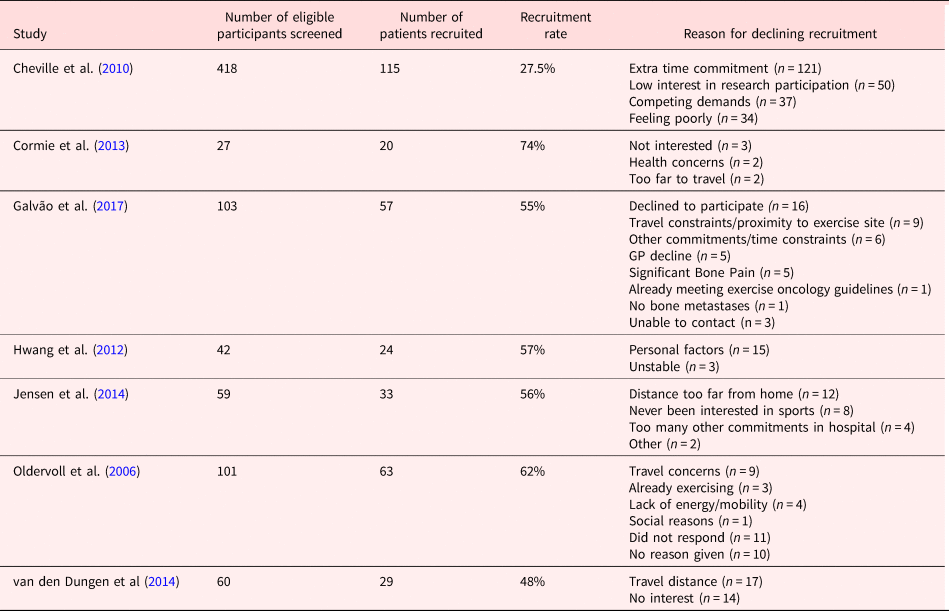
Mean recruitment rate, as reported by 13 of the 18 trials reviewed, was 49% (SD = 17%; range 15–74%). Patients were recruited through cancer centers, outpatient departments, palliative care, and rehabilitation services. There was a positive correlation between older age and recruitment rates (r = 0.4, p < 0.05). Barriers to recruiting patients were systematically recorded in 7 out of 18 studies (Table 3). The most common reason reported for declining participation was a lack of time. In 1 trial, a lack of time was cited as a recruitment barrier by 50% of patients approached (Cheville et al., Reference Cheville, Girardi and Clark2010). Multiple hospital commitments were also a common reason for declining programs. In 1 trial, 52% of patients declined participation as it was too burdensome to get to the hospital more than once a week (Oldervoll et al., Reference Oldervoll, Loge and Paltiel2006). In other studies, transport issues were cited as recruitment barriers, reported by 16–50% of patients approached (Cormie et al., Reference Cormie, Newton and Spry2013; van den Dungen et al., Reference van den Dungen, Verhagen and van der Graaf2014). Other common barriers were a lack of interest in either exercise or participating in research generally (Temel et al., Reference Temel, Greer and Goldberg2009; Cheville et al., Reference Cheville, Girardi and Clark2010; Cormie et al., Reference Cormie, Newton and Spry2013).
Reasons given by participants for declining recruitment

The highest recruitment rate (74%) was reported in a trial recruiting men with advanced prostate cancer, in which patients were referred directly from an oncologist. Similar recruitment rates were reported in another trial in men with advanced prostate cancer, 64%, recruited directly from outpatient clinics (Bourke et al., Reference Bourke, Doll and Crank2011). The lowest recruitment rate of all studies reviewed was 15%, in which 52 out of 61 potential participants with cancer of a gastrointestinal origin declined to participate in a 6-week home-based functional walking program because of severe fatigue (Lowe et al., Reference Lowe, Watanabe and Baracos2013).
Exercise adherence
A level of exercise adherence was reported in all but 1 study (Table 2); however, definitions of adherence varied widely. This heterogeneity limited the ability to examine correlates of adherence and features of exercise prescription. Levels of adherence ranged from 44% to 95%. Three studies recorded adherence to resistance training programs (Cheville et al., Reference Cheville, Girardi and Clark2010; Cormie et al., Reference Cormie, Newton and Spry2013; Jensen et al., Reference Jensen, Baumann and Stein2014). A 2-armed trial comparing resistance and aerobic interventions reported 72% adherence to the resistance arm of a 12-week exercise intervention for gastrointestinal cancer. This was higher than the 59% adherence rate to the aerobic exercise arm of the trial (Jensen et al., Reference Jensen, Baumann and Stein2014). Adherence was defined as completion of scheduled sessions.
Four studies detailed the reasons why patients missed exercise training sessions. A total of 78% of the participants with advanced cancer of mixed primary origins attended all prescribed exercise sessions (Cheville et al., Reference Cheville, Girardi and Clark2010). Reasons for missing sessions included conflicting appointments (54%), feeling too ill (31%) or tired (8%), and patients forgetting appointments (8%). Similarly, medical appointments, travel, and social commitments were listed as reasons for missed sessions in an additional trial (Galvao et al., Reference Galvao, Taaffe and Spry2017). Among a group of patients receiving palliative chemotherapy, the most common reasons patients missed sessions were personal reasons (58%) or chemotherapy-related symptoms such as diarrhea (31%) or nausea/vomiting (11%) (Jensen et al., Reference Jensen, Baumann and Stein2014). A study of high-intensity interval training reported that only 12.5% of the participants with lung cancer attended all 24 prescribed high-intensity interval training sessions; however, an attendance rate of 75% or higher was achieved by 9 participants (69.2%) (Hwang et al., Reference Hwang, Yu and Shih2012). Reasons for missing sessions included time limitations and family problems, as well as medical issues such as fatigue, body discomforts, and falls. The absences reported by Uster et al. (Reference Uster, Ruehlin and Mey2017) included sudden deterioration of health status (2 patients), non-compliance (1 patient), and treatment-related complications (1 patient). No significant change occurred in adherence between the women who had progression of their disease and those who had stable or remitting disease (Headley et al., Reference Headley, Ownby and John2004).
Attrition
The average attrition in studies included was 24% (SD = 8; range 10–42%). Advancing disease was the most common reason for dropout from exercise interventions (Headley et al., Reference Headley, Ownby and John2004; Oldervoll et al., Reference Oldervoll, Loge and Paltiel2005; Oldervoll et al., Reference Oldervoll, Loge and Paltiel2006; Temel et al., Reference Temel, Greer and Goldberg2009; Cormie et al., Reference Cormie, Newton and Spry2013; Lowe et al., Reference Lowe, Watanabe and Baracos2013; Ligibel et al., Reference Ligibel, Giobbie-Hurder and Shockro2016). This included patients suffering from a decline in performance status, an increase in anti-cancer treatment, and an increase in pain levels. Other reasons for dropout included family commitments and unrelated medical conditions, hospitalization, feeling too ill, and patients feeling overwhelmed (Cheville et al., Reference Cheville, Girardi and Clark2010; Bourke et al., Reference Bourke, Doll and Crank2011; Lowe et al., Reference Lowe, Watanabe and Baracos2013). Four studies reported patient deaths; Jensen et al. (Reference Jensen, Baumann and Stein2014) reported that 4 patients died because of rapid tumor progression, and Uster et al. (Reference Uster, Ruehlin and Mey2017) reported 5 deaths during a 3-month intervention and another 5 deaths at the 6-month follow-up. Oldervoll et al. (Reference Oldervoll, Loge and Lydersen2011), which was the largest study in this review, reported 10 deaths during an 8-week intervention, a total of 4.1% of the physical intervention group and 4.5% of the usual care group. Chiarotto et al. (Reference Chiarotto, Akbarali and Bellotti2017) reported 15 patient deaths in an exercise intervention of indefinite duration, with patients withdrawing from the exercise program at a mean of 164 days (95% confidence interval [CI] 76.5–251, median 100 days) prior to their death. The highest rates of attrition (66%) were reported by Lowe et al. (Reference Lowe, Watanabe and Baracos2013) in a palliative care cohort. Patients were forced to withdraw from the program because of hospitalization for seizures (n = 1), feeling overwhelmed (n = 1), dyspnea (n = 2), pain (n = 2), and delirium (n = 1).
Exercise program features
The second objective of this review was to determine the features of exercise programs associated with recruitment and attrition rates including frequency, duration, intensity, and type of exercise.
Recruitment
Recruitment rate did not correlate with the duration of recruitment period (r = 0.13, p = 0.3) or with the duration of exercise programs (r = 0.27, p = 0.07) (Cohen, Reference Cohen1992). The frequency of the exercise programs was considered to be the number of supervised weekly exercise sessions patients were required to attend. The frequency of supervised exercise session in trials included ranged from 2 to 3 times weekly. In 7 studies, supervised exercise sessions were supplemented with additional unsupervised sessions that patients completed at home (Cheville et al., Reference Cheville, Girardi and Clark2010; Bourke et al., Reference Bourke, Doll and Crank2011; Quist et al., Reference Quist, Rørth and Langer2012; Cormie et al., Reference Cormie, Newton and Spry2013; Lowe et al., Reference Lowe, Watanabe and Baracos2013; Jensen et al., Reference Jensen, Baumann and Stein2014; Chiarotto et al., Reference Chiarotto, Akbarali and Bellotti2017). No correlation was found between exercise frequency and recruitment (r = −0.38, p = 0.08) and the number of home exercise sessions that patients were asked to complete and recruitment (r = −.23, p = 0.48).
Attrition
In the included studies, there was no correlation found between the frequency of supervised exercise sessions and program attrition (r = 0.04, p = 0.4). The number of home exercise sessions patients were asked to complete did not correlate with attrition rates (r = -.21, p = 0.46). Similarly, the duration of exercise interventions did not correlate with attrition rates (r = 0.01, p = 0.069).
Discussion
This is the first review to examine the involvement of patients with advanced cancer in exercise interventions comprehensively. The included studies had a large variance in recruitment and attrition rates, as well as the measurement of patient adherence to prescribed programs. This systematic review demonstrates that there is a growing number of studies investigating exercise programs in patients with advanced cancer and highlights a number of areas in which the involvement of this patient group in studies involving exercise could be optimized.
Difficulties with patient accrual were reported by all studies, with 1 program closing recruitment early because of slow accrual (Uster et al., Reference Uster, Ruehlin and Mey2017). Factors contributing to slow accrual need to be considered, as low accrual rates may lead to selection bias, thereby reducing the representativeness of this sample (Oldervoll et al., Reference Oldervoll, Loge and Paltiel2005). First, the inclusion and exclusion criteria of a number of studies included in this review may have limited the eligibility of a large number of potential patients. For example, Quist et al. (Reference Quist, Rørth and Langer2012) excluded 58 participants with bone metastasis because of concerns over pathological fracture risk. Risk of pathological fracture is the most commonly reported physician concern with exercise training in patients in bone metastases (Sheill et al., Reference Sheill, Guinan and Neill2017; Sheill et al., Reference Sheill, Guinan and Peat2018); however, safe approaches to exercise prescription in patients with bone metastases have been established (Oldervoll et al., Reference Oldervoll, Loge and Paltiel2006; Bourke et al., Reference Bourke, Doll and Crank2011; Oldervoll et al., Reference Oldervoll, Loge and Lydersen2011; Cormie et al., Reference Cormie, Newton and Spry2013; Lowe et al., Reference Lowe, Watanabe and Baracos2013). An additional 5 studies excluded patients with bone metastases based on self-reported levels of pain; however, 2 studies did not describe how pain was measured or what threshold resulted in trial exclusion. Three studies excluded patients with a resting pain of >2 out of 10 on the numerical rating scale or >3 out of 10 on the numerical rating scale (Headley et al., Reference Headley, Ownby and John2004; Oldervoll et al., Reference Oldervoll, Loge and Paltiel2006; Oldervoll et al., Reference Oldervoll, Loge and Lydersen2011). Another study excluded only patients with significant pain as determined by the clinician (Galvao et al., Reference Galvao, Taaffe and Spry2017). Of note, pain at rest may not be indicative of fracture risk, with 1 study reporting that only 11% of lesions reported as mildly or moderately painful resulted in a fracture; conversely, all lesions in which pain was aggravated by function resulted in fracture (Fidler, Reference Fidler1981). Pain, particularly pain associated with function, could be used as a criterion that would exclude only those patients at high risk of pathological fracture from participating in exercise programs (Sheill et al., Reference Sheill, Guinan and O Neill2018). Some of the most recent studies in advanced cancer have included patients with bone metastases or excluded only patients with moderate to severe bone pain that limited activities of daily living or those with acute fracture risk (Cormie et al., Reference Cormie, Newton and Spry2013; van den Dungen et al., Reference van den Dungen, Verhagen and van der Graaf2014; Ligibel et al., Reference Ligibel, Giobbie-Hurder and Shockro2016; Zimmer et al., Reference Zimmer, Trebing and Timmers-Trebing2017). This is encouraging, as the unnecessary exclusion of patients with bone metastases may result in a greater decline in musculoskeletal structure and function and deny patients the opportunity to make gains in muscle strength and aerobic capacity that are associated with structured, targeted exercise programs (Cormie et al., Reference Cormie, Newton and Spry2013). A recent study suggested that in mice models, mechanical loading inhibits the growth and osteolytic capability of secondary breast tumors after their homing to the bone (Lynch et al., Reference Lynch, Brooks and Mohanan2013). This potential benefit of weight-bearing exercise now needs further investigation in patients with advanced disease. Broadening inclusion criteria to include patients with skeletal metastases is integral to this.
The inclusion of a clinical estimate of prognosis may also reduce the eligibility of many patients for exercise trials. Studies with the highest recruitment rates in this review did not limit the life expectancy of patients in inclusion criteria (Bourke et al., Reference Bourke, Doll and Crank2011; Bourke et al., Reference Bourke, Gilbert and Hooper2014) or outlined wide acceptable margins of 3 months to 2 years (Oldervoll et al., Reference Oldervoll, Loge and Paltiel2006; Oldervoll et al., Reference Oldervoll, Loge and Lydersen2011; Cormie et al., Reference Cormie, Newton and Spry2013). In contrast, Cheville et al. (Reference Cheville, Girardi and Clark2010) limited inclusion to both life expectancy and 5-year survival rates resulting in a recruitment rate of 27.5% in patients with primary gastrointestinal tumors. Oldervoll et al., who listed no exclusion criteria and included all patients with incurable disease and adequate pain control, recruited the highest number of participants of all the studies reviewed (n = 232) (Oldervoll et al., Reference Oldervoll, Loge and Lydersen2011). Exercise trials involving patients with advanced cancer appear to face many of the same recruitment challenges as trials recruiting patients at an earlier stage of the disease. Reported recruitment rates varied widely among the studies reviewed, similar to studies in early-stage cancer patients or cancer survivors (Irwin et al., Reference Irwin, Cadmus and Alvarez-Reeves2008; Penttinen et al., Reference Penttinen, Nikander and Blomqvist2009). With increasing evidence supporting the safety and efficacy of exercise training in those with complex advanced cancers, broadening the eligibility criteria for exercise interventions may improve accrual numbers of patients with advanced cancer to exercise trials. Exercise interventions should aim to accommodate patients regardless of life expectancy and with multimorbidity related to both cancer and advancing age. This would reflect the complex presentations of these patients in the clinical environment.
Definitions and the measurement of exercise adherence varied widely. Many studies considered patients adherent if they attended a percentage or minimum number of prescribed exercise sessions, e.g., participants were required to attend a minimum of 8 sessions (van den Dungen et al., Reference van den Dungen, Verhagen and van der Graaf2014), and some studies required participants to attend all sessions to be considered fully adherent (Bourke et al., Reference Bourke, Doll and Crank2011). Alternatively, trials did not define any features of adherence (Headley et al., Reference Headley, Ownby and John2004). Adherence was also defined as the number of sessions completed over the number of sessions prescribed (Cormie et al., Reference Cormie, Newton and Spry2013). Another trial required participants to make up for missed days and complete 16 sessions during a 12-week period to be considered adherent (Temel et al., Reference Temel, Greer and Goldberg2009). Many studies reviewed considered adherence solely as patient attendance at exercise sessions and not the level of activity completed at these sessions. This may have resulted in “adherent” patients not completing the exercise programs in full. Studies should complete a multifactorial assessment of adherence to determine the treatment effects of exercise accurately, as in the study by Cormie et al. (Reference Cormie, Newton and Spry2013) that considered adherence in terms of both the number of sessions patients completed and also the amount of sessions completed in accordance with the exercise prescribed. This method provides a means of capturing any deviations from the program, e.g., patients not fully completing exercise sets or attending sessions, but not exercising. Unfortunately, the study by Cormie et al. (Reference Cormie, Newton and Spry2013) was the only study reviewed to monitor the exercise in such a detailed capacity. The variety of exercise adherence definitions used make it difficult to draw commonalities or conclusions from results found. Common assessment methods for exercise adherence include subjective measurements such as self-report inventories and exercise logs, objective measurements such as accelerometers and heart rate monitors, and observational measurements (Adams et al., Reference Adams, Mosher and Blair2015). In this review, assessments included only exercise logs and class attendance (Bourke et al., Reference Bourke, Doll and Crank2011; Bourke et al., Reference Bourke, Gilbert and Hooper2014). Alternative methods of measuring adherence such as heart rate monitors and mobile phone apps have been used previously in trials involving cancer patients (Walsh et al., Reference Walsh, Hussey and Guinan2010) and may have a role in adherence monitoring in future exercise trials to ensure patients follow the parameters of prescribed exercise sessions correctly.
Exercise training parameters were inconsistently measured and lacked standardization, making it difficult to ascertain the relationship between program structure and participant engagement. Standardized outcome sets, which outline a minimum sufficient set of outcomes for important medical conditions, should be used to increase the pool of comparable data in studies examining similar interventions in a cancer cohort (Comet Initiative, 2013). In particular, consensus is required on the measurement of exercise intensity and, as previously mentioned, patient adherence. Aspects of exercise program structure such as the duration and frequency of the exercise intervention did not appear to impact recruitment, retention, or adherence of participants, suggesting that other aspects of study design should be explored to further explain the large variance in these rates in an advanced cancer population. Knowledge about the type of physical exercise most beneficial for patients at different stages of disease progression is still lacking. Not all persons with metastatic or advanced cancer are in the palliative or end-of-life phase, and many have a great need to maintain their functional capacity. Future exercise interventions in this population should monitor the adherence of these participants closely using standardized definitions and objective measurements, if possible, to determine the dose/response effect of exercise in this population (Li et al., Reference Li, Wei and Shi2015). While the exercise interventions included in these studies were tolerated well by participants, a number of barriers remain to recruit patients to these exercise programs. Concentrated efforts are now needed to reduce these barriers.
Strengths and limitations
A strength of the review is the identification of key areas that need to be addressed in future trials, such as the definition of key outcomes and potential ways to optimize trial recruitment. Because of the small number of studies, heterogeneity in populations, and definitions of key variables, the discussion of trends in outcomes was extremely limited. There is a possibility that some studies that included patients with advanced cancer were not included here, as a number of studies screened did not detail the cancer stage of participants. Emails were sent to corresponding authors to clarify this; however, if there was no response, then studies were then excluded.
Conclusion
Participant recruitment and adherence rates varied considerably among the studies reviewed, and there were inconsistencies in how adherence to programs was measured. With increasing evidence supporting the safety and efficacy of exercise training in patients with advanced and complex presentations, broadening the inclusion criteria of exercise trials to increase the number of patients with advanced cancer who are eligible for physical activity interventions would increase recruitment rates and ensure those patients recruited represent the advanced cancer population found daily in clinical practice.