


The study of the lives and experiences of children is becoming ever-more commonplace in the archaeological discourse, and, as these two volumes show, we seem to have passed a tipping-point in the literature, where their inclusion is expected and welcomed, rather than arguments for their inclusion having to be presented. The work by R. Derricourt offers a global overview of the field, focusing on prehistory, while the collected volume edited by E. Murphy and M. Le Roy gives further evidence for the importance of focusing on this stage of the life course. Both show how the field of childhood studies has expanded from works with a strong theoretical focus, to one which is diverse enough to facilitate and support both case studies and wide-ranging syntheses. In both works, the introductory chapters provide helpful context for readers who may be new to the field, and also give references to key works.
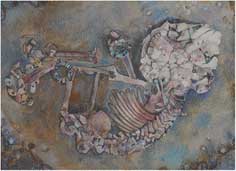
Both publications are of a high quality, with the majority of chapters containing multiple images—the maps and line-drawings in Murphy and Le Roy are particularly attractive—and are an excellent supplement to the written content. Many of their contributors are to be congratulated for showcasing the very high quality of fieldwork at some sites, reflected in the beautiful photography of several complicated infant internments.
The work by Derricourt is a welcome contribution to the literature on childhood, as it focuses on prehistory, an all too often neglected area of childhood research because of the perceived lack of evidence, of both human remains and material culture. In contrast to other archaeological publications on childhood, Derricourt incorporates palaeoanthropological, primatology and ethnographic data, which all bestow fresh perspectives on the balance between the biological necessity for care and specific cultural attitudes to raising children. This approach also serves to emphasise further many of the false divisions between chronological periods created by disciplinary divisions. The aim of the book is to survey the evidence available from across the world, extending from hominid studies to the Iron Age/pre-Roman period in Europe. It is organised thematically (e.g. ‘Wearing’), and although it uses bioarchaeological data, the definition of childhood is social rather than biological. This approach does mean that at times the content receives quite broad-brush treatment, with some chapters almost becoming a catalogue of examples. The book is, however, distinctive in that it includes topics which are often treated separately in the literature, or receive limited treatment in pre-Modern societies, such as ‘Learning’ and ‘Playing’. Nevertheless, the section on ‘Being. Birth, motherhood and infancy’ is diminished by the survey approach taken by the author, as more evidence is given to infanticide than birth, and the key work, on childbirth in prehistory by Elisabeth Beausang and on the evolutionary perspective offered by Wendy Trevathan are not included. Nevertheless, the author is very open about the biases and limitations of their approach and choice of evidence, but the footnotes work well by providing more references, discussion and explanation. Overall, these minor criticisms do not detract from the book’s useful synthesis of information.
The edited volume by Murphy and Le Roy derives from a session at the European Association of Archaeologists held in 2015, and has 15 chapters written by presenters from Ireland, Europe and Russia. The volume builds on Murphy’s long engagement with childhood studies, and forms part of the Childhood in the Past monograph series. The chapters cover a very broad time frame, spanning from prehistory to the nineteenth century, with the overall emphasis upon the funerary and wider archaeological context. The Introductory chapter by the session organisers and subsequent editors provides a very succinct overview of how the funerary treatment of children has become part of mainstream discussion within archaeology across Europe, and highlights the importance of integrating both theoretical and bioarchaeological data to understand sub-adult burials. The chapters range from site-specific case studies to large-scale regional or national syntheses.
The editors identify two key themes within the range of papers: ‘Is everybody included?’ and ‘The social child’; these themes clearly show that a society’s life-course directly influences which children are afforded a recoverable burial rite, their burial location, choice of grave goods and use of their body after death. Although these themes function as a coherent strand throughout the volume, variations in past excavation techniques, limitations of archives and osteological methodologies mean that in some papers, the authors are only able to interpret the evidence to a certain point (e.g. Calliauw’s work on Bronze Age Crete); these constraints, however, do not distract from the insightful and interesting findings achieved by the authors. Several chapters stand out, such as Berseneva’s work on the southern Trans-Ural region, where the funerary evidence from cemeteries used by three different archaeological cultures (twenty-first to fifteenth centuries BC) allowed the author to reconstruct key areas of the early life-course, gender identity and how the burials of children also reflect the status of their care-givers, particularly those buried with adult weaponry. The chapter by Geber focuses on the burial treatment of children in the Kilkenny Union workhouse (Ireland), which was established to cope with the huge numbers of people in distress because of the Potato Famine (1845–1852 AD). Interestingly, Geber discusses the psychological impact of these children being buried in unconsecrated ground for the local community, and includes folklore evidence to help understand the repercussions of this decision.
Overall, these works contribute new perspectives on the archaeological evidence for childhood. Derricourt’s multidisciplinary approach to the evidence, and the tone and style of writing, make his work more suited to a student audience, but it is also a useful text for scholars with an interest in prehistory. The case studies in Murphy and Le Roy offer new evidence and data for a range of archaeological periods, as well as new insights into renowned sites, such as Çatahöyük, and should be valuable to students and scholars alike.


