
Introduction
Energy conservation has been getting an increased amount of attention all over the world as a crucially important strategy for reducing overall energy costs. Energy conservation or energy efficiency is also one of the most effective ways to combat climate change and result in cleaner air. One way to save energy is to develop building envelopes that reduce the heat loss; however, most insulating materials are composed of potentially harmful chemicals and are not biodegradable or compostable. The use of bio-based structural panels made from renewable and natural polymers decreases the usage of petroleum-based products, offers a cleaner environment, and may be a “zero landfill” material. For these reasons, interest and demand in sustainable, eco-friendly, and biodegradable polymers and products derived from organic sources is gaining a more critical role in material science.[Reference Oksman, Mathew and Sain1]
This research focused on developing fire-retardant and water-repellent bio-structural panel (BISP) to provide energy efficiency in an eco-friendly way compared with petroleum-based products on the market. Cellulose nanofibrils (CNFs) and corn-starch (CS) were used to design the BISP. Nanocelluloses; cellulose nanofibrils, cellulose nanocrystals, cellulose nanowhiskers, cellulose microfibrils, and bacterial celluloses are a relatively new field in nanotechnology and material science; however, they are getting significant attention[Reference Hubbe, Rojas, Lucia and Sain2–Reference Samir, Alloin and Dufresne5] due to their lightweight structure that offers high thermal and mechanical performance.[Reference Oksman, Mathew and Sain1, Reference Yildirim and Shaler6–Reference Aitomäki and Oksman8] These materials are also great candidates for reinforcements to strengthen otherwise weak materials.[Reference Lee, Aitomäki, Berglund, Oksman and Bismarck9] CS is another environmentally friendly polymer commonly used in various industries, including food, packaging, and pharmaceutical[Reference Dale and Chem10]. Although both materials are abundant and environmentally friendly polymers, they both have drawback properties, specifically flammability and hydrophilicity[Reference Lavoine, Desloges, Dufresne and Bras11] that limits their use in many potential industrial applications.[Reference Bayer, Fragouli, Attanasio, Sorce, Bertoni, Brescia, Corato, Pellegrino, Kalyva, Sabella, Pompa, Cingolani and Athanassiou12]
The cellulosic and CS-based materials[Reference Yin, Li, Liu and Li13] are flammable due to atoms (C, H, and O) found in their chemical structure that help start combustion. Also, having highly available hydroxyl groups makes them easy to catch fire.[Reference Gaan and Sun14–Reference Salimova, Dimitry and Gaan16] To overcome this challenge and develop fire-retardant BISP; a boric acid [BA—[B(OH)3]—99.94% pure] treatment was applied, which is one of the most frequently used fire retardants for starch-based and cellulosic materials,[Reference Horrocks17, Reference Alongi and Malucelli18]. The addition of BA reduces the flame spread of cellulosic material[Reference Nagieb, Nassar and El19] by increasing char formation and releasing the water in the composite structure. Addition of the BA also provides better mechanical performance by crosslinking.[Reference Yin, Li, Liu and Li13] The available free hydroxyl groups (OH−) in CNFs and CS make final products super-hydrophilic.[Reference Song, Xiao and Zhao20] The easy interaction with water produces chemical and physical degradation and ends up with a decrease in overall mechanical and thermal performances[Reference Topgaard and Soderman21, Reference Hofstetter, Hinterstoisser and Salmen22] through cell collapses. The n-dodecenyl succinic anhydride (n-DDSA), commonly used in pulp and paper industry[Reference Salminen23] was used to create a hydrophobic character.
In this research, a fire-retardant and water-repellent BISP to be used in wall systems as an alternative to petroleum-based products was developed, characterized, evaluated, and compared with the current products on the market (commercially available thermal insulation panels). The competitor products [Owen's Corning Pink Foam (PF), Dow Super Tuff-R (BF), Lowe's Green Foam (GF)] were purchased from local stores, and their performance properties were investigated and compared by applying the same tests to the BISP developed under this research.
Developed BISP uses nanotechnology and bio-based ingredients. It has meaningfully unique features and clearly highlights the significant advantages over the competitors. It is an eco-friendly alternative to petroleum-based rigid insulation panels on the market and potentially has a very low carbon footprint. It is expected to have comparable insulation property to products currently on the market,[Reference Yildirim, Shaler, Gardner, Rice and Bousfield24] is lightweight, is easy to cut and resize, and is very easy to assemble with nails or screws.
Materials and methods
Wood-based CNFs purchased from The University of Maine and industrial CS (Ethylex 2025—Tate&Lyle) were used as raw materials in this study. The n-DDSA (Vertellus Inc., USA) was used to provide water-repellent character to the final product. BA [(B(OH)3—99.94% pure] (Rose Mill Co., USA) was used to obtain fire retardancy.
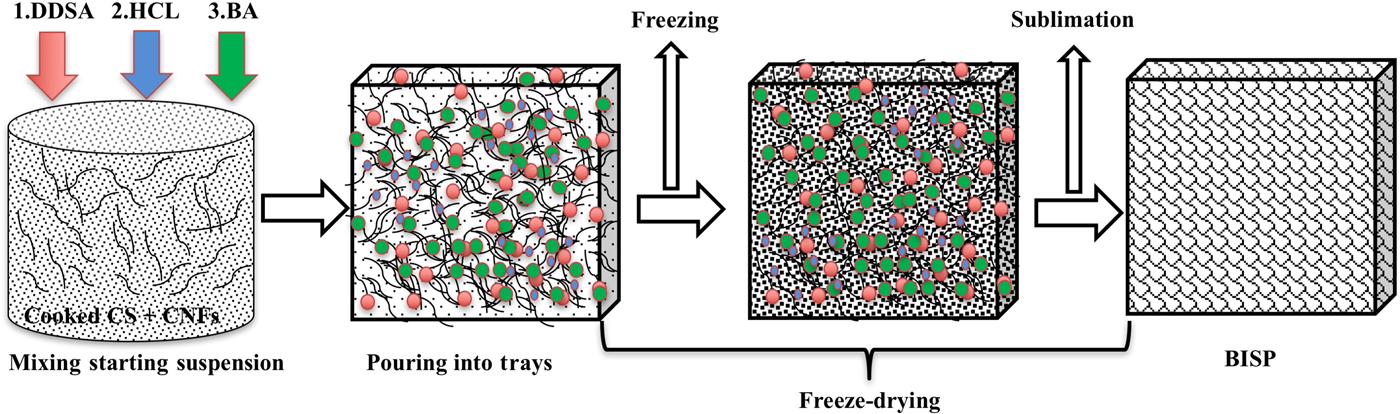
The cooked CS solution (cooking conditions: 20% solid content—1 h at 190°F) was mixed with CNF–water suspension (1% solid content by weight). The DDSA (5% by weight) was added to the suspension and mixed for 20 min at 2000 rpm at 7.8 pH. The pH was adjusted 4.59 using hydrochloric acid (HCl—2% solid content by weight) prior to adding BA (10% by weight) to the suspension. Once all the ingredients were poured into suspension the final mixture was mixed for additional 20 min at 2000 rpm and poured into freeze-drying trays.
The BISPs was manufactured using the freeze-drying technique to remove the liquid without collapsing the cellular structure (Fig. 1). This cutting-edge technique has many different and critical parameters; specifically, temperature, pressure, and time, that directly affects the performance properties of the final product. For instance, the porosity increases with a decrease in initial freezing temperature and the pore diameter is greater for freezing at −80 °C compared with −30 °C.[Reference Balaxi, Nikolakakis and Malamataris25]
Production demonstration of BISP.
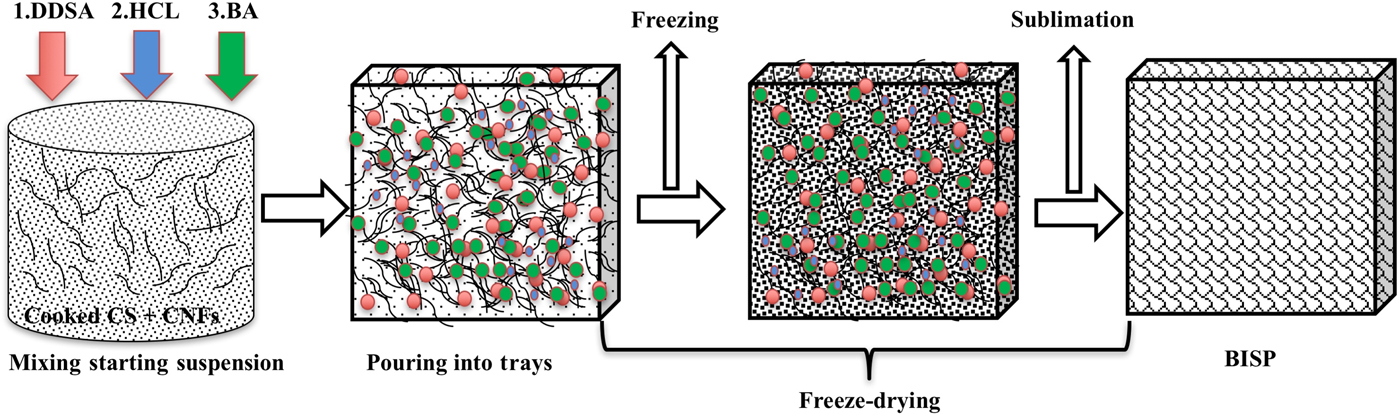
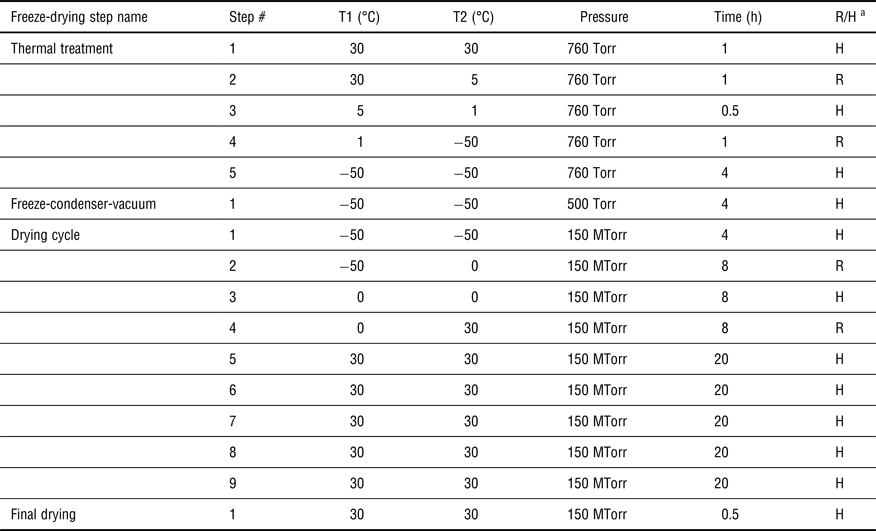
Through the development and manufacturing process of the BISPs, a variety of freeze-drying recipes were developed to determine the optimum freeze-drying parameters. As a result, the recipe was determined using thermocouples and screening the instant temperature changes in different locations of the trays to see when the drying was successfully completed. The successful freeze-drying recipe used in this study is given in Table I.
Successful freeze-drying recipe.

a R, Ramp and H, Hold.
BISPs with rigid character were successfully produced using the recipe given in Table I. Afterward, the physical and thermal properties of BISPs were investigated. In addition to the developed product, performance properties were investigated for the following competitor products, Owen's Corning PF, Dow Super Tuff-R (BF), and Lowe's GF by applying the same tests at same conditions. The following subsections present the measurements and tests performed under this research.
pH Measurement
pH is a critical factor for successful suspension preparation and successful treatment. To achieve successful treatment, each time that a suspension was made a small sample (100 mL) was taken out and its pH was determined using a Symphony B10P pH analyzer. The pH meter was calibrated before each use. Both the temperature and the pH of the suspension were measured and reported.
Density properties
Density measurements were taken according to ASTM C303-10 (2016). The mass of the samples [six (6) repetition] were measured with a scale. Then, the measured mass was divided by the measured volume to acquire the value for density.
Moisture content
Six (6) 50.8 mm × 50.8 mm × 12.7 mm samples were cut from each product for moisture content testing according to ASTM D4442-16. The moisture in each sample was driven off using an oven. The initial and final mass located in the equation provided in the standard and the moisture content of the samples was calculated.
Water vapor transmission
Water vapor transmission tests were conducted according to ASTM E96-16. Water was put into beakers and then covered by the insulation samples and sealed around the top of the beaker. The temperature of the chamber was increased from 23 to 28°C. The samples were removed and weight at various points throughout the test to determine the weight loss, and then the permeance was determined. The tests were applied at 23 ± 1 °C and 50% RH.
Contact angle properties
Contact angle measurements were performed according to ASTM C272-16. A drop of distilled water was placed on three (3) 76.2 mm × 76.2 mm × 12.7 mm samples of each product and the contact angle was measured using an OCA 20 video-based contact angle measuring system.
Burning (flammability) properties
The rate of burning tests was conducted at the University of Maine Advanced Structures and Composites Center according to ASTM D635-14. A sample with dimensions 125 mm × 13 mm × 13 mm was held in a horizontal position and burned from the end. The time for the sample to burn 75 mL was recorded.
Smoke development properties
The density of smoke tests was performed according to ASTM D2843-16. Three (3) 25.4 mm × 25.4 mm × 1.27 mm samples were burned, and the density of smoke was determined by how well the light was transmitted through the smoke.
Thermal resistivity (R-values)
A total of six (6) BISP specimens were cut down to 300 mm × 300 mm × 25.4 mm for thermal conductivity tests. The steady-state thermal transmission was measured (at 25 °C mean temperature) using a heat flow meter (NETZSCH Lambda 2000 heat flow meter) according to ASTM C518-10. The R-values of the commercially available insulation panels were obtained from online sources (Technical Reports).
Trueness and squareness
Trueness and squareness measurements were taken according to ASTM C550-15. The BISPs were measured to see how to square all of the edges and faces were. Total of four (4) 250.4 mm × 250.4 mm × 1.27 mm samples were measured.
Statistical analysis
Under this effort, the density, moisture content, water vapor transmission, contact angle, burning, smoke development behaviors, and thermal resistivity values were analyzed and compared by conducting a one-way means/ANOVA to check if there was a significant overall difference [significance level (α) = 0.01] among the evaluated products (BISP, PF, BF, and GF). Significant differences between groups were evaluated by use of a Tukey–Kramer Honestly Significant Differences (HSD) test, with α = 0.05.
Results
The overall results of the study are discussed in the following sections
pH Measurement
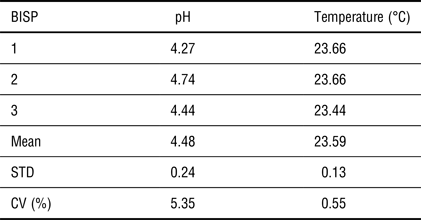
Literature studies showed that then-DDSA response values showed a rise from pH 7 to 8.6[Reference Liu, Li, Cui, Ping, Song, Ravee, Jin, Xue, Xu, Li, Wang and Zheng26] and then fell as the pH went above 8.6. In this research, the pH value was 7.8 for the starting slurry. Therefore, the n-DDSA was added to CNF + CS suspension before the BA addition (at pH 7.8). Then, the pH value was adjusted to 4.59 with 5.35% coefficient of variation (CV), and the temperature was set to be 23.65 °C with 0.55% CV (Table II). These pH value adjustments were performed according to previous studies and technical reports (pH 3.70 for 4.7% solution 20 °C and pH 6.10 for 0.1% solution 20 °C) (http://www.rosemill.com/v/html/msds/borictech.pdf).
The final suspension pH value and temperature.

In previous studies, it was shown that BA provides successful results for flame retardancy under pH 6.0 and shows highly acidic character at pH 4.[Reference Chen and Lin27] Other research on pH dependence of the stability of esters of BA performed in the 1980s provided parallel results to this study.[Reference Duin, Peter, Kieboom and Van Bekkum28]
Wicklein et al. studied the complexation of BA and nanocellulose interactions and showed that the BA treatment creates flame-retardant CNF composites and enhances the thermal stabilities of the final product.[Reference Wicklein, Kocjan, Salazar-Alvarez, Carosio, Camino, Antonietti and Bergström29] As a result, the optimum pH and temperature for the starting material suspension were determined for developing a fire-retardant and water-repellent BISP as discussed in the following sections.
Density properties
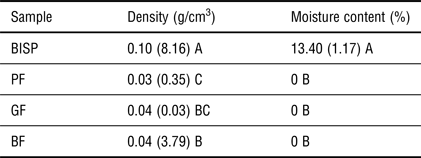
The density of the BISP was found statistically higher than the commercially available products PF, GF, and BF (Table III). In addition, the material's density can be decreased or increased by revising the solid content of the starting suspension. To produce a super light wall system component, the density can be decreased; however; this density reduction also results in lower mechanical performance. For a wall system component with higher mechanical performances and rigidity, the density can be increased by revising the starting material's solids content. Also, the raw and the treatment materials that construct solid structure of the BISP can be revised using higher or lower density raw and the treatment materials to adjust the final product's density.
Density and moisture content (%) results.

Parentheses indicate the coefficient of variation (CV, %). A, B, and C letters indicate the significant differences between the products.
Moisture content
Moisture content was measured in order to provide information about the developed products” condition prior to testing under this study. This information is critical for potential future studies to provide a more accurate comparison with commercial products. The moisture content of BISP varied from 9% to 16% (Table III), and the mean value was determined to be 13.40% with 1.17% CV.
Parentheses indicate the CV (%). A, B, and C letters indicate the significant differences between the products.
The moisture content is a critical factor for any type of hygroscopic materials. Increases in moisture content can affect the thermal properties by creating potential cell collapses or can decrease the mechanical performances by collapsing the beams, columns, or walls that bonds the cells together. It was shown in earlier studies that higher moisture contents decrease the mechanical performances of wood-based materials.[Reference Sombatsompop and Chaochanchaikul30] The CNFs are made from long polymer chains connected with hydrogen bonds parallel to each other. These hydrogen bonds are easily affected by increasing moisture content and this damage negatively affects the overall mechanical performance of the final product. It was determined that the effect of the hydrogen bond damages due to a 9% change in moisture content could result in a 12% reduction in mechanical properties.[Reference Yin, Tang, Li and Wang31]
Water vapor transmission
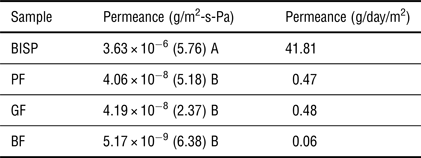
As shown in Table IV, BF has almost no water vapor transmission. This result was expected because the top and bottom of the product are coated with a material that significantly lowers the water vapor transmission rate[Reference Song, Xiao and Zhao20] by creating an additional barrier against transmission.
Permeance results.

Parentheses indicate the coefficient of variation (CV, %). A and B letters indicate the significant differences between the products.
The BISPs were developed using bio-based polymers, which include many hydrogen bonds in their structure. These hydrogen bonds make the BISP a breathable product. This is a positive property because it has less potential for mildew/mold growth (https://www.fema.gov/pdf/rebuild/recover/fema_mold_brochure_english.pdf). However, if the product does not have enough breathable surface and edge to remove the moisture, it can lower the R-value because it may cause cell collapses in the BISP's microstructure and nanostructure. This failure in porous structure and the structural imperfections would produce lower thermal resistivity.
Test results for uncoated BISP showed similar or even better water vapor barrier properties (41.81 g/m2/day) compared with previous studies. The coated (coating weight 40 g/m2) CNF-based composites” water vapor barrier property was reported 34.6—164.9 g/m2/day.[Reference Song, Xiao and Zhao20] BISP also showed very similar water vapor barrier property compared with CNF–nanoclay composites (15.4–70.3 g/m2/day).[Reference Aulin, Salazar-Alvarez and Lindstrom32] Differences in water vapor transmission rates can be explained by the various composite components and their different ratios. Also, because the cellular structure has an effect on the water vapor transmission rate, the tortuosity and water vapor pathway is the critical structural property for water vapor transmission.[Reference Ray and Okamoto33, Reference Yano, Usuki, Okada, Kurauchi and Kamigaito34] The n-DDSA molecules potentially act as physical barriers against water vapor transmission and provide similar or lower water vapor transmission rates for the BISP compared with previous studies.
Contact angle properties
As was shown in previous studies, CNFs and CS have a super-hydrophilic character because of having highly available free hydroxyl groups[Reference Bayer, Fragouli, Attanasio, Sorce, Bertoni, Brescia, Corato, Pellegrino, Kalyva, Sabella, Pompa, Cingolani and Athanassiou12, Reference Cervin, Aulin, Larsson and Wagberg35] that easily adsorb water and loosen the material's cellular structure.
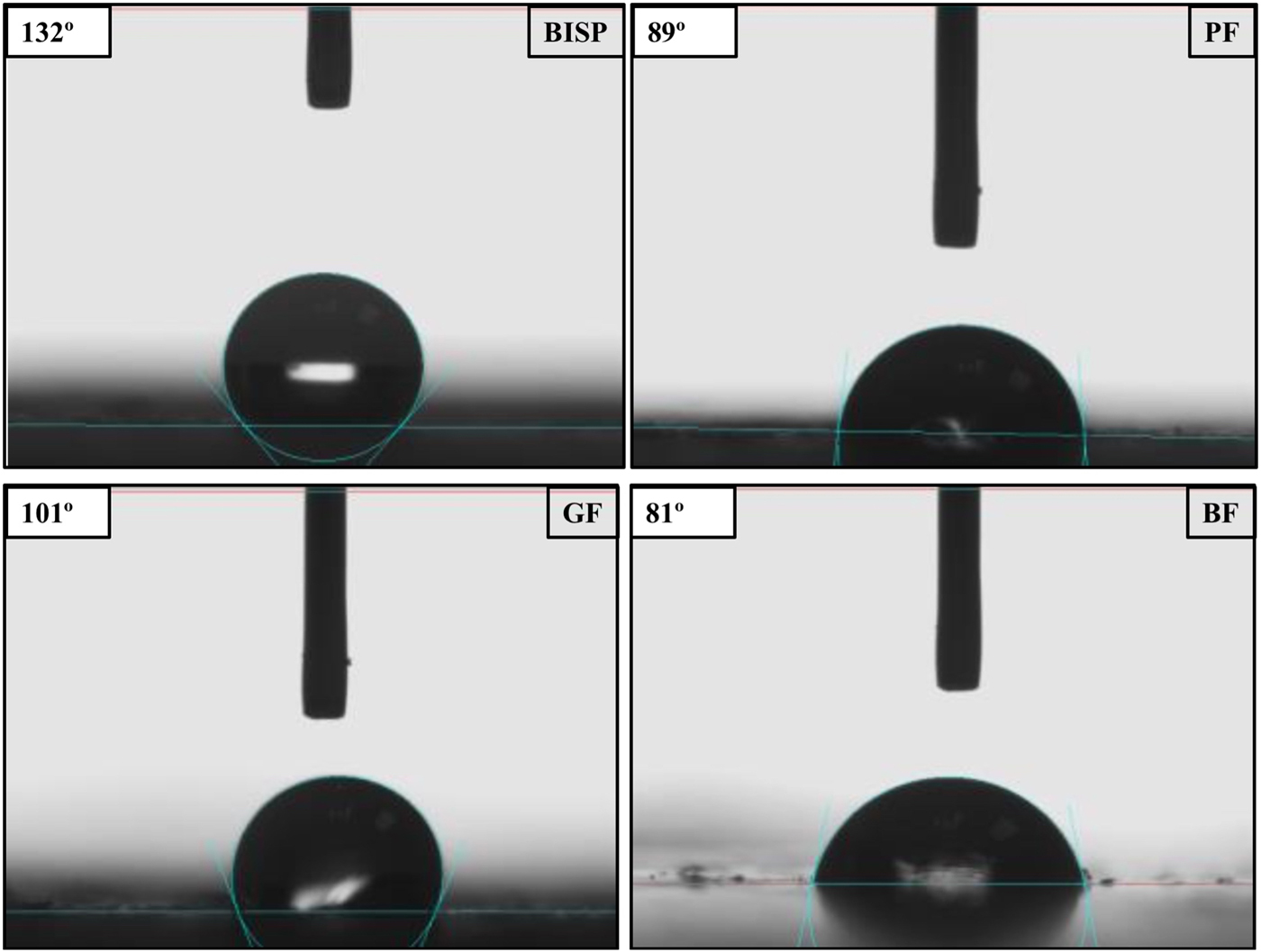
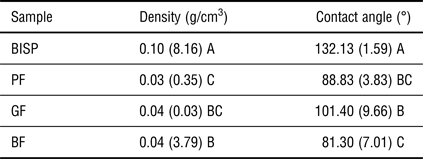
The BISP developed under this study showed a very high water-repellent (hydrophobic) character with a mean contact angle of 132.13° (Table V) (Fig. 2.) that can also be called super hydrophobic.[Reference Jin, Kettunen, Laiho, Pynnonen, Paltakari, Marmur, Ikkala and Ras36]
Contact angle measurements.
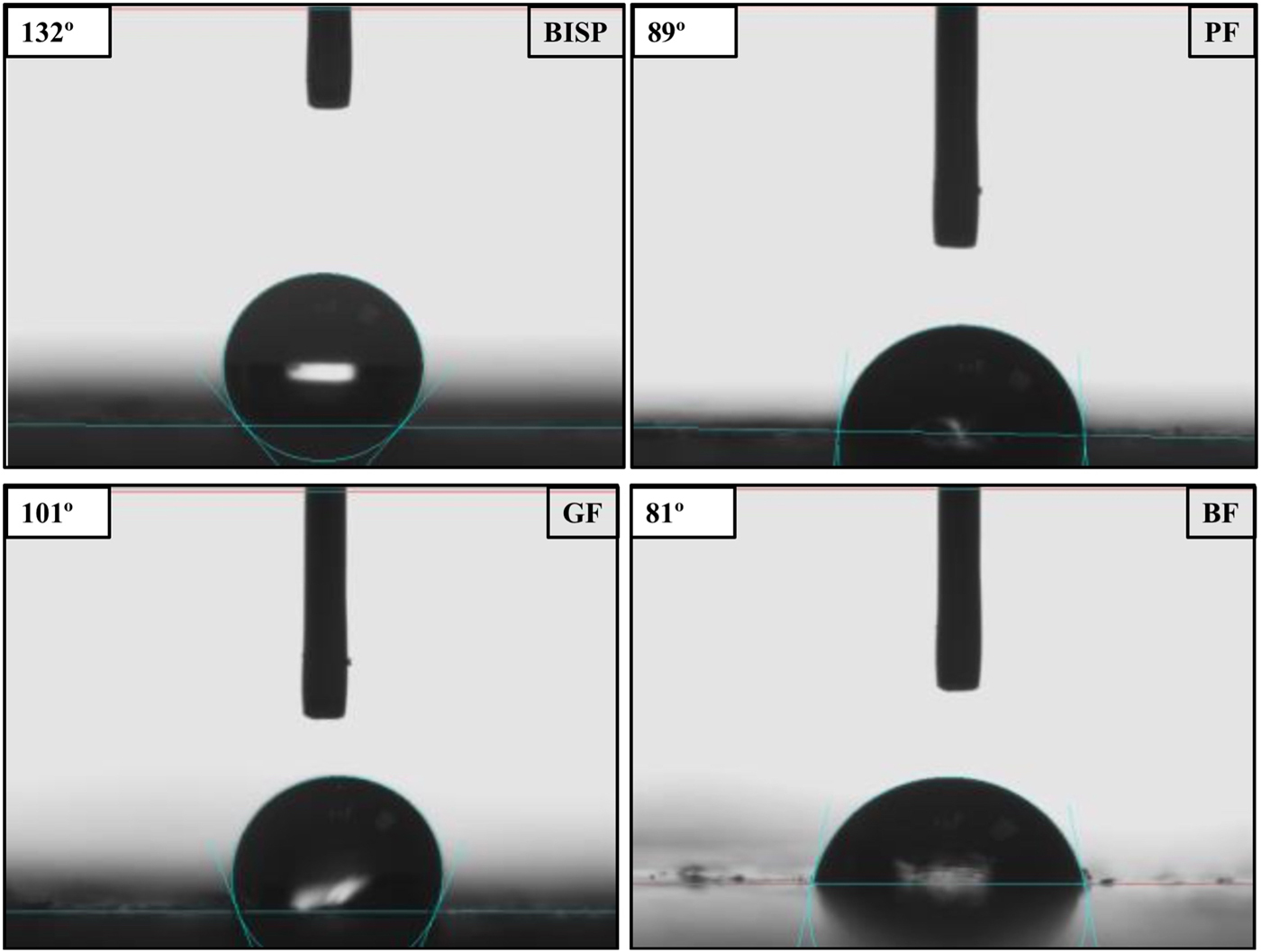
Contact angle (°) results.

Parentheses indicate the coefficient of variation (CV, %). A, B, and C letters indicate the significant differences between the products.
Furthermore, BISP was not only water repellent at the edges and surfaces of the sample, but also inside the panel. Because the BISP was treated for water repellency throughout its three-dimensional (3D) structure, water would not be absorbed on uncoated, cut edges when the product is resized for installation.
Burning (flammability) properties
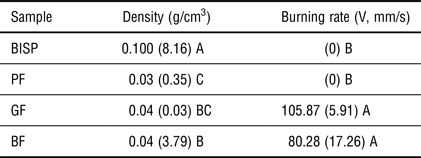
The BA bridged through a hydrogen bond network and successfully increased BISP's flame retardancy. The BISP was found to be statistically better than the other commercially available products evaluated under this study. The BISP found to be a 100% fire-retardant product with zero (0) burning rate after the treatments (Table VI).
Burning rate (V, mm/s) results.

Parentheses indicate the coefficient of variation (CV, %). A, B, and C letters indicate the significant differences between the products.
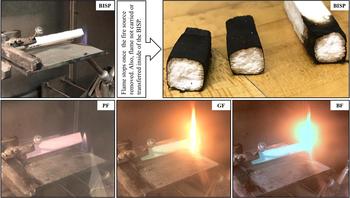
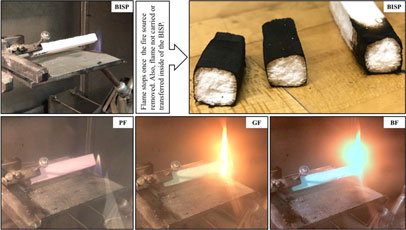
It was interesting to note that Owen's Corning PF melted within seconds of applying the flame; however, the flame did not progress forward. This is why it was reported to have a “0” burning rate even though the material is not fire retardant and clearly melts in seconds and creates hazardous black color smoke. The developed BISP was the only prototype with 100% fire-retardant character (Fig. 3).
Burning properties of BISP and petroleum-based products (PF, GF, and BF).

Researchers who previously studied the flame retardancy of CNF–BA–Sepiolite hybrid composites showed that the BA treatment works successfully against flame retardancy. Also, provides 70% increase in organic residue compared with pure CNF.[Reference Wicklein, Kocjan, Salazar-Alvarez, Carosio, Camino, Antonietti and Bergström29]
Smoke development properties
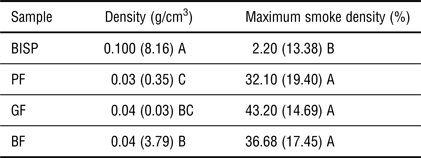
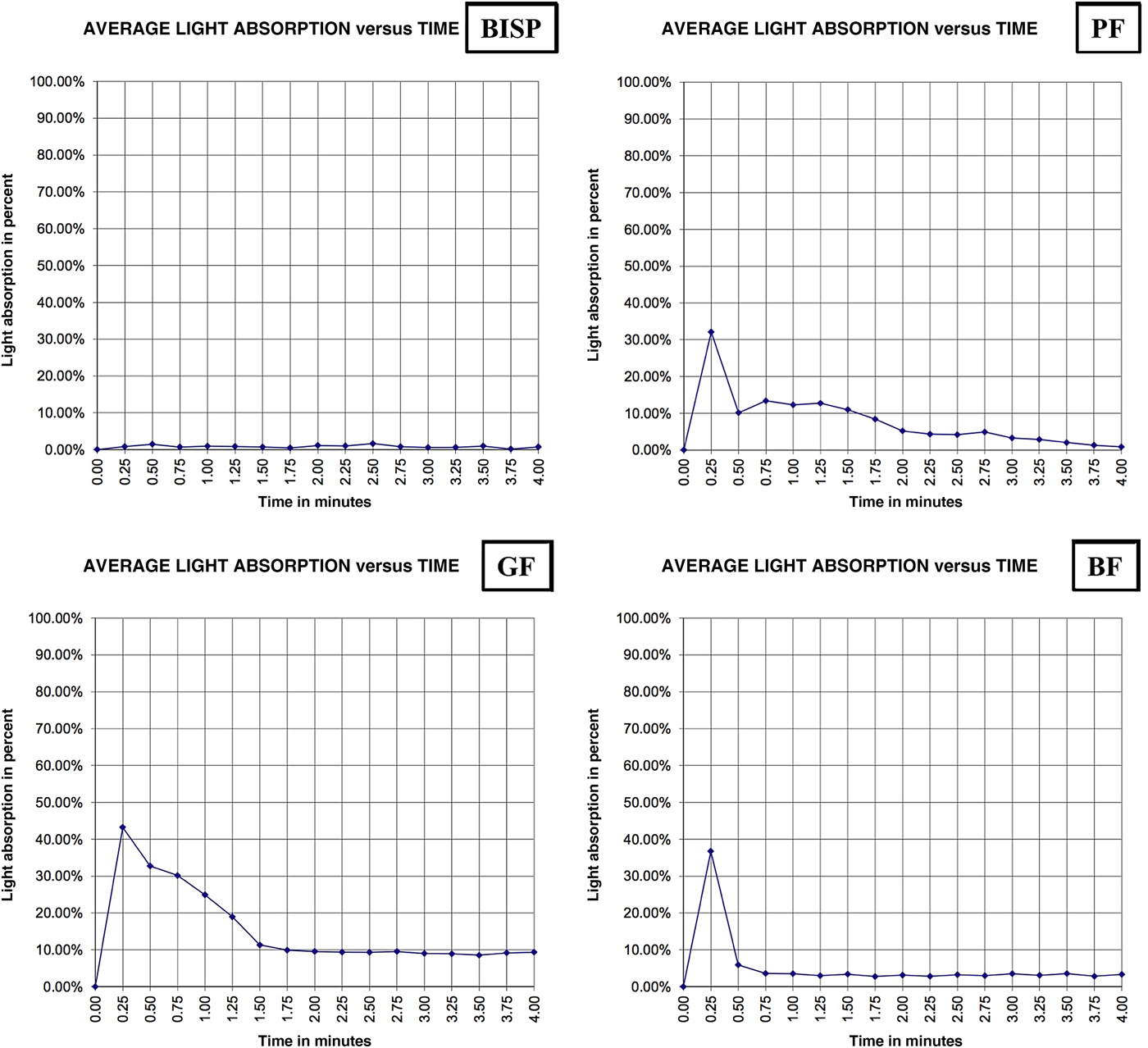
Blackish and hazardous smoke was developed from the commercially available, petroleum-based products tested. As shown in Table VII, BISP created almost zero smoke (2.20% maximum smoke density) while the other market products created 15–20 times more smoke than the BISP. Smoke from the petroleum-based products has been shown to potentially result in death through poisoning in case of fire in buildings.[Reference Stec and Hull37]
Maximum smoke density (%) results.

Parentheses indicate the coefficient of variation (CV, %). A, B, and C letters indicate the significant differences between the products.
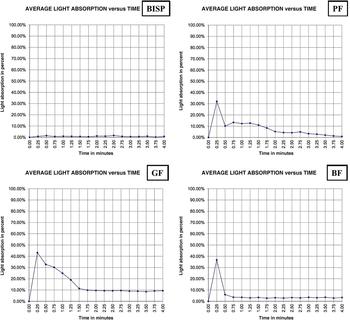
The developed smoke produces light adsorption, which decreases the quality (clearness) of the view in the building. As shown in Fig. 4, BISP creates no smokes over time. The petroleum-based products melt in under 2 min and create a significant amount of blackish smoke.
Light absorption (smoke development) by time.
Thermal resistivity (R-values)
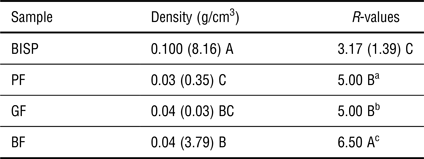
The BISP was designed to be used as a structural panel in wall systems; therefore; the thermal resistivity value of the BISP is a critical property. The R-value of the BISP was determined under this study using heat flow meter and compared with the R-value of the commercial products obtained from the product data sheets available from online sources (Table VIII).
Thermal resistivity (R-values) results.

Parentheses indicate the coefficient of variation (CV, %). The CV values were not reported for the PF, GF, and BF because the values were obtained from online sources. A, B, and C letters indicate the significant differences between the products.
BF, which has surface coatings, showed the highest R-values compared with others. The BISPs” R-value was found to be lower than that of the other products (PF, GF, and BF); however; BISP was not designed to be used as an insulation foam board The BISP was designed to be used as structural panel and also would provide an insulation property to decrease the overall energy consumption in building system. Consequently, BISP is not only a BISP with unique features but also increases the overall insulation value of wall systems.
Trueness and squareness
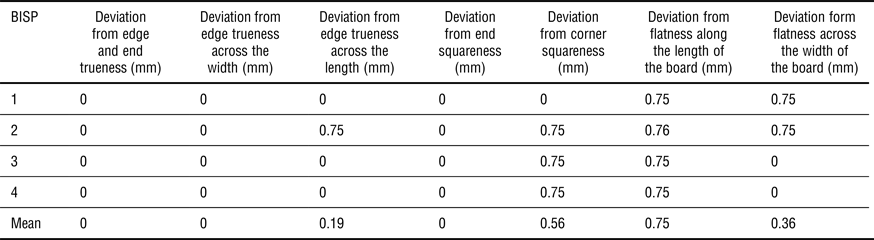
Products that will be used as wall panels need to have a perfect shape at their edges and corners and across the surface. The BISP was evaluated according to ASTM C550-15 standards for this purpose and the shape imperfections were found to be negligible (Table IX).
Trueness and squareness of the BISP.

In this current study, the fire-retardant and water-repellent bio-based structural panel (BISP) made from organic polymers and environmentally friendly treatment materials were introduced. The performance properties and the value propositions against competitors were evaluated and discussed. The BISP showed very promising results based on its use a fire-retardant and water-repellent BISP in the building and construction industry. The BISP developed under this research will not only offer a unique product but also will decrease the use of petroleum-based products, is safer for use, and will decrease the landfill.
Broader impact
The ability to provide a BISP that not only provides unique features but also reduces petroleum usage and has a lower carbon footprint is ideally suited for the eco-conscious market. The innovative production technology (freeze-drying) is currently used in different industries but has not been applied to the construction and insulation industries. The freeze-drying technology is made viable for producing panel products for use in a variety of industries including but not limited to; building and construction.
The developed BISP supports a cleaner environment through using bio-based materials that will not be required to be placed in a landfill when they are ready for disposal.
Conclusions
This research focused on developing a BISP with fire-retardant and water-repellent properties using cutting-edge freeze-drying technology. The BISP developed has 3D hydrophobic (water-repellent) and 3D fire-retardant characteristics; therefore, it can be resized into small pieces and can be thinned as needed without losing its resistance against water and fire.
The physical properties of the BISP were found to be very promising for a product to be used as a BISP in wall systems. The BA and the n-DDSA were found compatible to treat the BISPs against fire and water. The BISP offered good insulation property that will help to enhance the overall energy efficiency of wall systems.
Consequently, a novel fire and water-retardant BISP was introduced as a potential product to be used in the building and construction industry. Future studies will include investigating additional performance properties, economic feasibility, scale-up studies, and the environmental effects of the BISP.
Acknowledgments
The authors thank Revolution Research Inc. for supplying nanocellulose in this study and thank Will West for contributing to the manufacturing process. This work was partly supported by the National Science Foundation (NSF) under the Small Business Technology Transfer (STTR) Phase I Program (Eco-friendly Thermal Insulation Composite Foam Boards—Award #1521326).
Conflicts of interest
The author declares no conflict of interest. The founding sponsors had no role in the design of the study; in the collection, analyses, or interpretation of data; in the writing of the manuscript, and in the decision to publish the results.