Paediatric obesity is a major health concern associated with increased cardiovascular disease risk Reference Berrington de Gonzalez, Phil and Hartge1 and is present in 17% of all U.S. children and adolescents. Reference Sanyaolu, Okorie, Qi, Locke and Rehman2 Cardiovascular sequelae of paediatric obesity include hypertension and changes to the cardiac structure and function. Reference Farpour-Lambert, Aggoun, Marchand, Martin, Herrmann and Beghetti3–Reference Mangner, Scheuermann and Winzer5 Adolescents with intellectual and developmental disabilities represent an understudied population with twice the risk for obesity as their typically developed peers Reference Reinehr, Dobe, Winkel, Schaefer and Hoffmann6 that contributes to multiple other medical conditions, ultimately leads to a shorter life span and diminished quality of life. Reference Jing, Nevius and Friday4 The prevalence of overweight and obesity is especially high in the intellectual and developmental disabilities adolescent population with Down syndrome or autism spectrum disorder. Reference Rimmer, Yamaki, Davis Lowry, Wang and Vogel7 The reported prevalence of obesity in adolescents with autism(24.6%) and Down syndrome(31.2%) was substantially higher compared to their typically developing peers(13%). Reference Pascual, Pascual, Soria, Vicente, Hernández, Tébar and Valdés8 Obesity in adolescence increases the probability of becoming an obese adult and for developing chronic conditions including hypertension, type 2 diabetes, gallbladder disease, cardiovascular disease, and early mortality in adulthood. Reference Lloyd-Jones, Leip and Larson9–Reference Krause, Ware, McPherson, Lennox and O’Callaghan13 While the cardiovascular changes associated with obesity in adolescence have been described in the typically developing population, Reference Jing, Nevius and Friday4,Reference Mangner, Scheuermann and Winzer5,Reference Tumuklu, Etikan, Kisacik and Kayikcioglu14–Reference Baker, Olsen and Sorensen18 a knowledge gap remains in this area for adolescents with Down syndrome or autism.
Traditionally monitored echocardiographic indices for paediatric obesity include ventricular function by ejection fraction, left ventricular mass, and left ventricular volume. There is increasing evidence in typically developing adolescents that more sensitive echocardiographic modalities, such as strain analysis, are necessary for detecting obesity-related changes in ventricular function early in life. Reference Wong, O’Moore-Sullivan, Leano, Hukins, Jenkins and Marwick19–Reference Greenberg, Firstenberg and Castro22 Impairment of cardiac function in typically developing adolescents has been reported to correlate with body mass index and duration of obesity. Reference Pascual, Pascual, Soria, Vicente, Hernández, Tébar and Valdés8,Reference Scaglione, Dichiara and Indovina23,Reference Zarich, Kowalchuk, McGuire, Benotti, Mascioli and Nesto24 Early detection of cardiovascular abnormalities is important because lifestyle interventions to treat obesity are most effective when implemented early in life. Reference Lloyd-Jones, Leip and Larson9 The primary aim of this study was to investigate the effect of obesity on both traditional and novel cardiac measures in adolescents with Down syndrome or autism. The secondary aim was to assess the effect of having a Down syndrome or autism diagnosis on these measures.
Methods
Study design
Adolescents (ages 13–21 years) with intellectual and developmental disabilities and mild to moderate intellectual and developmental disabilities (IQ 35-75) enrolled in a randomised weight loss trial Reference Ptomey, Washburn and Goetz10 (R01HD079642; NCT0256175) were consented for co-enrolment into this ancillary study. Participants in the parent trial who co-enrolled in this ancillary cardiac testing study (64 co-enrolled/110 parent trial) were excluded if they had underlying CHD (n = 0) or an intellectual and developmental disabilities diagnosis other than Down syndrome or autism (n = 3) leaving 28 included participants with Down syndrome and 33 with autism. Cardiac size and function of ancillary study participants were evaluated using echocardiography at a single timepoint prior to beginning the weight loss parent trial intervention. Data collected outside of the echocardiogram included age, sex, intellectual and developmental disabilities diagnosis, blood pressure, and anthropometrics (body mass index). The data from a separate group of 15 age- and sex-matched, typically developing, non-obese adolescents with no cardiac history who were part of previously published strain echocardiography studies were included to provide a non-intellectual and developmental disabilities control group. Reference Aly, Ramlogan and France11,Reference Ramlogan, Aly and France12 Ancillary study inclusion criteria and study protocol were the same for the control and intellectual and developmental disabilities groups. The study was approved by the Institutional Review Board of Children’s Mercy Kansas City and University of Kansas Medical Center.
Anthropomorphic parameters
Weight was averaged over two measurements to the nearest 0.1 kg using a calibrated digital scale (Model #PS6600, Belfour, Saukville, WI) with participants wearing shorts and a t-shirt. Standing height was also averaged over two measurements with a portable stadiometer (Model #IP0955, Invicta Plastics Limited, Leicester, UK). Age- and sex-specific body mass index z-scores were calculated using the SAS program provided by the CDC based on its 2000 growth charts for ages 0 to < 20 years. Reference Wei, Ogden, Parsons, Freedman and Hales25 To use a consistent body mass index z-score process for the whole cohort, the nine patients with ages ranging from 20 to 21 years were temporarily assigned age 19.99 for the purpose of computing their body mass index z-score with the CDC SAS program. Body mass index was categorised as normal (body mass index 5th–85th percentile), overweight (body mass index 85th–95th), or obese (body mass index > 95th percentile). Reference Barlow and Expert26 Specialty Down syndrome growth charts were not utilised in this study as their use remains controversial and the American Academy of Pediatrics recommends the use of standard growth charts from the CDC for all youth older than 9 years with or without Down syndrome. Reference Hatch-Stein, Zemel and Prasad27
Blood pressure measurement
A systolic and diastolic blood pressure was obtained by trained medical care assistants on all patients prior to the echocardiogram using the oscillometric method on a calibrated machine with standard measurement practices and use of an appropriately sized cuff. Age- and sex-specific systolic and diastolic blood pressure percentiles were calculated based on the 2017 American Academy of Pediatrics guidelines. Reference Flynn, Kaelber, Baker-Smith and Blowey28
Conventional echocardiographic parameters
Transthoracic echocardiograms were obtained with grey scale images optimised for speckle-tracking analysis. All participants were scanned using Vivid E9 Ultrasound machine (GE Healthcare, Milwaukee, WI) with age- and size-appropriate transducers. Left ventricular dimensions, mass, fractional shortening, ejection fraction, right ventricular tricuspid annular plane systolic excursion and atrioventricular valve inflow velocities were evaluated based on standard paediatric echocardiographic guidelines. Reference Lopez, Colan and Frommelt29 Left ventricular mass was indexed to body surface area (left ventricular mass index; Left ventricular mass/ht2.7) to provide the optimal assessment of left ventricular mass in obesity. Reference de Simone, Daniels and Devereux30–Reference Sohn, Chai and Lee32 The left ventricular mass was obtained from the m-mode measurements.
Tissue Doppler imaging
Tissue Doppler imaging was obtained from an apical 4-chamber view to obtain longitudinal annular velocities at the lateral mitral wall, septum, and lateral tricuspid wall adjacent to the atrioventricular valve hinge points. Systolic, early diastolic, and late diastolic tissue Doppler velocities were measured at the lateral mitral, septal, and lateral tricuspid walls. The components of myocardial performance index, a marker of global ventricular performance, were measured and myocardial performance index was calculated ([isovolumetric contraction period + isovolumetric relaxation time]/ejection time) as previously reported. Reference Sohn, Chai and Lee32,Reference Vis, De Bruin-Bon and Bouma33
Myocardial strain analysis
Echocardiographic strain analyses were performed using commercially available EchoPAC software (GE Healthcare, Milwaukee, WI). Multiplanar left ventricular apical images (4, 2, 3 chamber view; left ventricular global longitudinal strain), an left ventricular parasternal short-axis image (at the level of the papillary muscle; global circumferential strain) and a 4-chamber right ventricular-focused apical image (right ventricular global longitudinal strain) were optimised for strain analysis using gain, compression, sector width, and depth to maximise frame rate (>60 frames per second) and capture optimal myocardial tissue definition. After manual tracing the endocardial border in the end-systolic frame of a 2D image, the software automatically tracks the motion/deformation of the myocardium through a single cardiac cycle with manual confirmation of tracking accuracy. Global peak strain and strain rate measures were made per standard guidelines. Reference Mor-Avi, Lang and Badano34 The end-diastole reference point was placed at the onset of the QRS.
Statistical analysis
Non-parametric methods were used due to skewness/non-normality in variable distributions. Linear regression models were fit to estimate effects of intellectual and developmental disabilities diagnosis and body mass index. Each outcome variable was modelled as a function of diagnosis group (Down syndrome or autism) and body mass index z-score. Two variables (myocardial performance index and left ventricular mass index) were log-transformed before modelling to reduce skewness. All outcome variables were scaled to have standard deviation of 1. This provides an effect size (β) for each regression coefficient, allowing it to be interpreted as the estimated, average standard deviation change in outcome associated with a 1-unit increase in the explanatory variable, holding other explanatory variables constant. To avoid loss of information and potential bias from case-wise deletion of missing values for regression modelling, multiple imputation by chained equations was used to create 25 complete data sets with non-parametric bootstrapping to compute confidence intervals and p-values for regression coefficients. We compared groups using the non-parametric Brunner-Munzel test, a generalised version of the two-sample Wilcoxon test that does not assume equal variances for the two distributions being compared. To obtain regression estimates informed both by sampling variability, (reflected in bootstrapping), and by the uncertainty in imputation of missing values, (reflected in variability in imputed values across the imputed data sets), bootstrapping was carried out by drawing 1000 bootstrap data samples from each of the 25 imputed data sets. The regression model for each outcome variable was fit to each of these 25,000 data sets to obtain bootstrap distributions for the regression coefficients in each model, from which 95% confidence interval and p-value estimates were computed. Statistical analyses were carried out in R 4.0.3.
Results
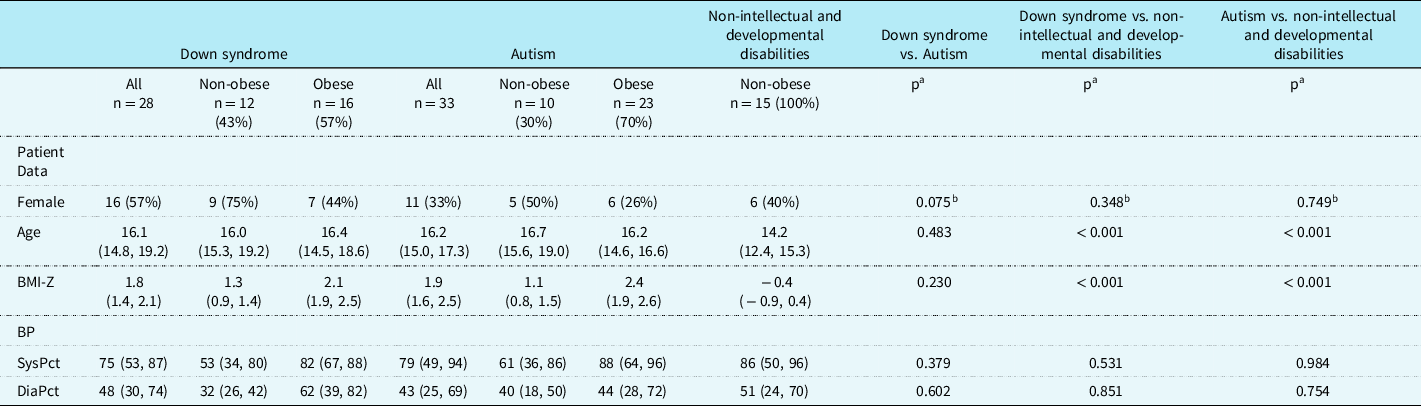
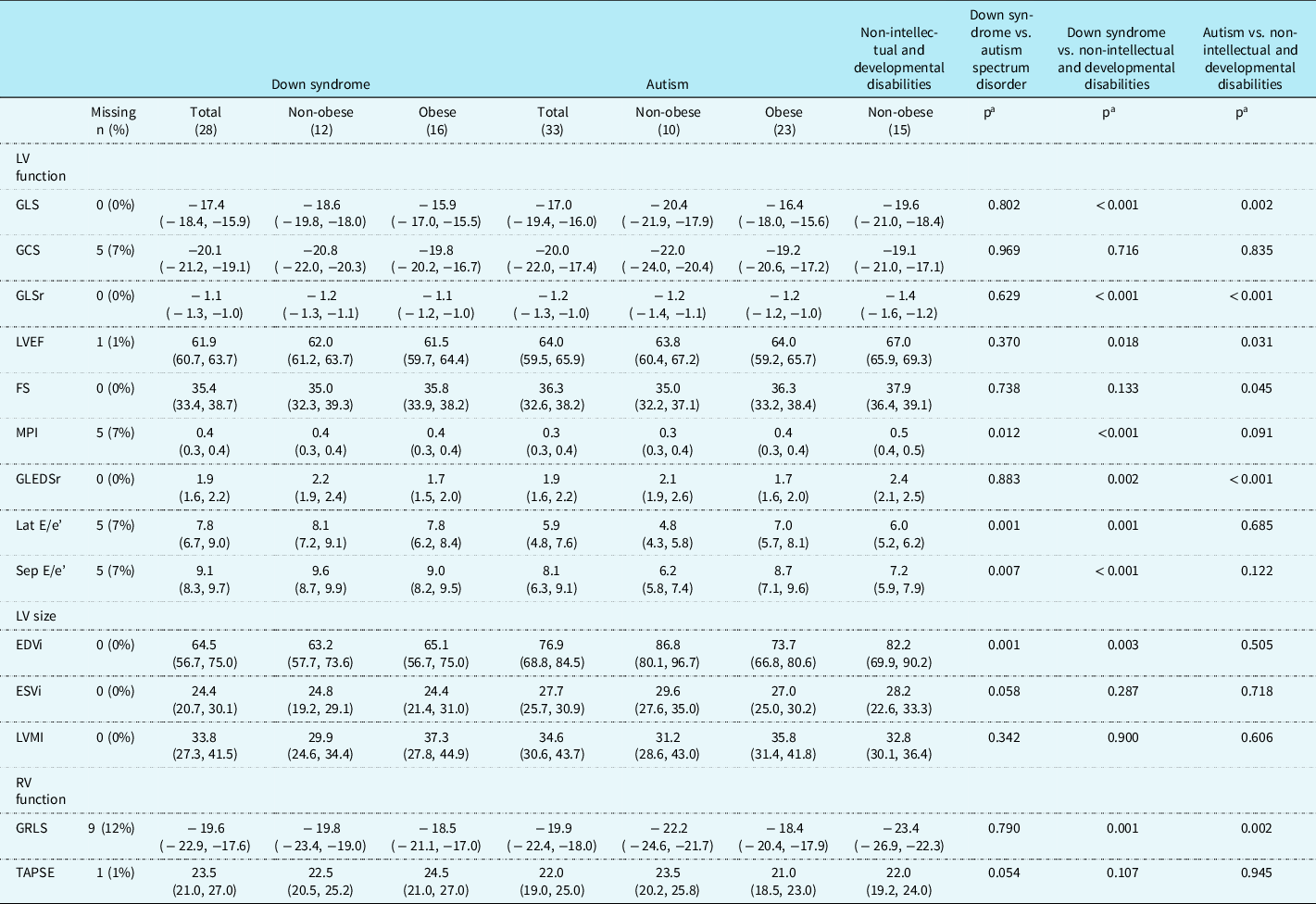
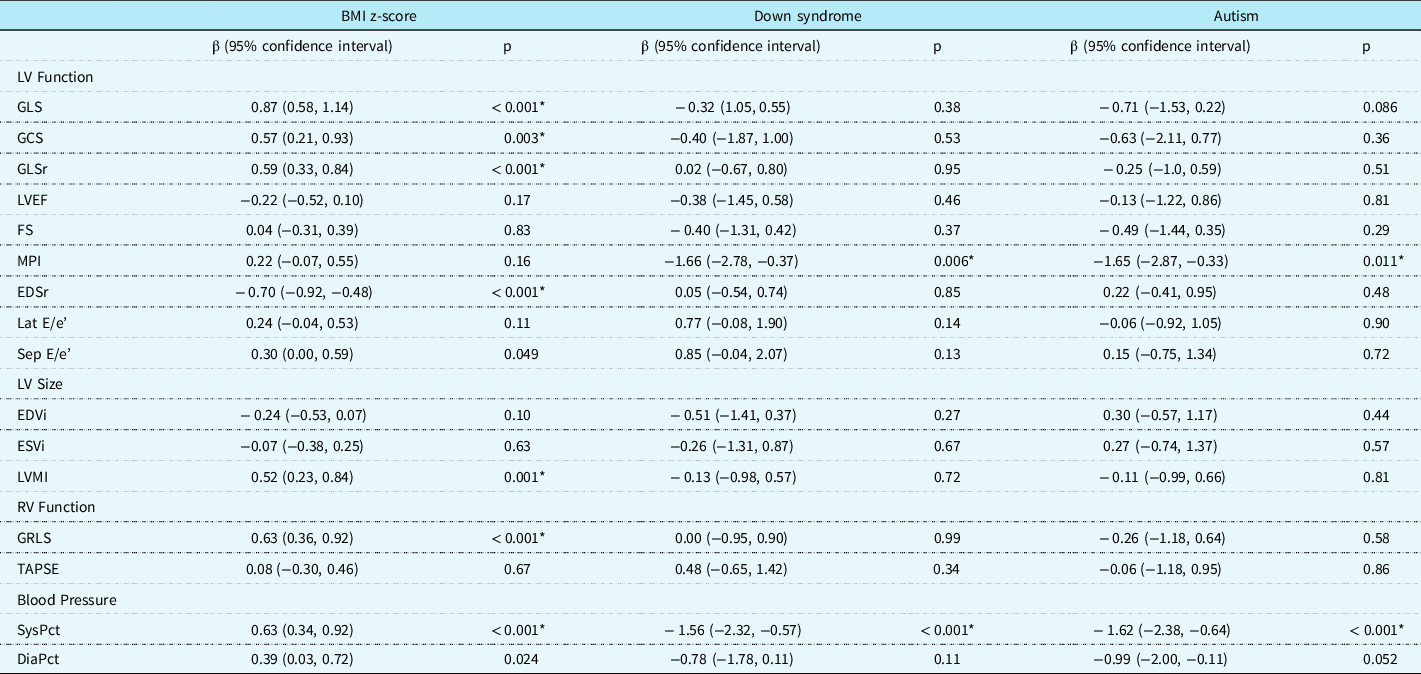
The total cohort of 76 adolescents included 28 with Down syndrome (16 female), 33 with autism (11 female), and 15 (6 female) age- and sex-matched typically developed controls with ages ranging from 12 to 21 years. Patient characteristic and echocardiographic data are reported by group and obesity status in Tables 1 and 2, respectively. Results of multivariate linear regression models fit to evaluate the effects of body mass index, Down syndrome, and autism diagnoses on outcome variables are reported for the entire study population in Table 3. Many of the associations seen in Table 2 between echo measures in the Down syndrome or autism groups and non-intellectual and developmental disabilities group lose their significance when controlling for body mass index in Table 3. An elevated body mass index z-score was associated with diminished systolic biventricular function by strain values (LV GLS β 0.87, P < 0.001; LV GCS β 0.57, p 0.003; LV GLSr β 0.59, P < 0.001; RV GRLS β 0.63, P < 0.001). There was no association found between traditional measures of systolic ventricular function (LV FS, LV EF, RV TAPSE) and body mass index z-score in these adolescents. Diminished left ventricular diastolic function by global longitudinal end-diastolic strain rate was associated with elevated body mass index (global longitudinal end-diastolic strain rate β −0.7, P < 0.001) while Doppler assessment of diastolic function was not associated. Other measures associated with elevated body mass index were left ventricular mass (left ventricular mass index β 0.52, p 0.001) and systolic blood pressure (SysPct β 0.63, P < 0.001). A diagnosis of Down syndrome was associated with a lower global ventricular performance (myocardial performance index) and lower systolic blood pressure while controlling for any body index and autism effects. Similarly, a diagnosis of autism was associated with a lower global ventricular performance (myocardial performance index) and lower systolic blood pressure while controlling for any body mass index and Down syndrome effects. For both the Down syndrome and autism modelling, the lower myocardial performance index and blood pressure remained within the normal range. Effects of having a Down syndrome or autism diagnosis on other measures of ventricular function, size, or mass had p-values.
Patient characteristics by intellectual and developmental disabilities diagnosis and obesity status reporting on median average and interquartile range

a Brunner-Munzel test p-value except as noted
b Fisher exact test p-value.
BMI-Z=body mass index z-score; SysPct=systolic blood pressure percentile; DiaPct=diastolic blood pressure percentile.
Echocardiographic data by intellectual and developmental disabilities diagnosis and obesity status reporting on median average and interquartile range
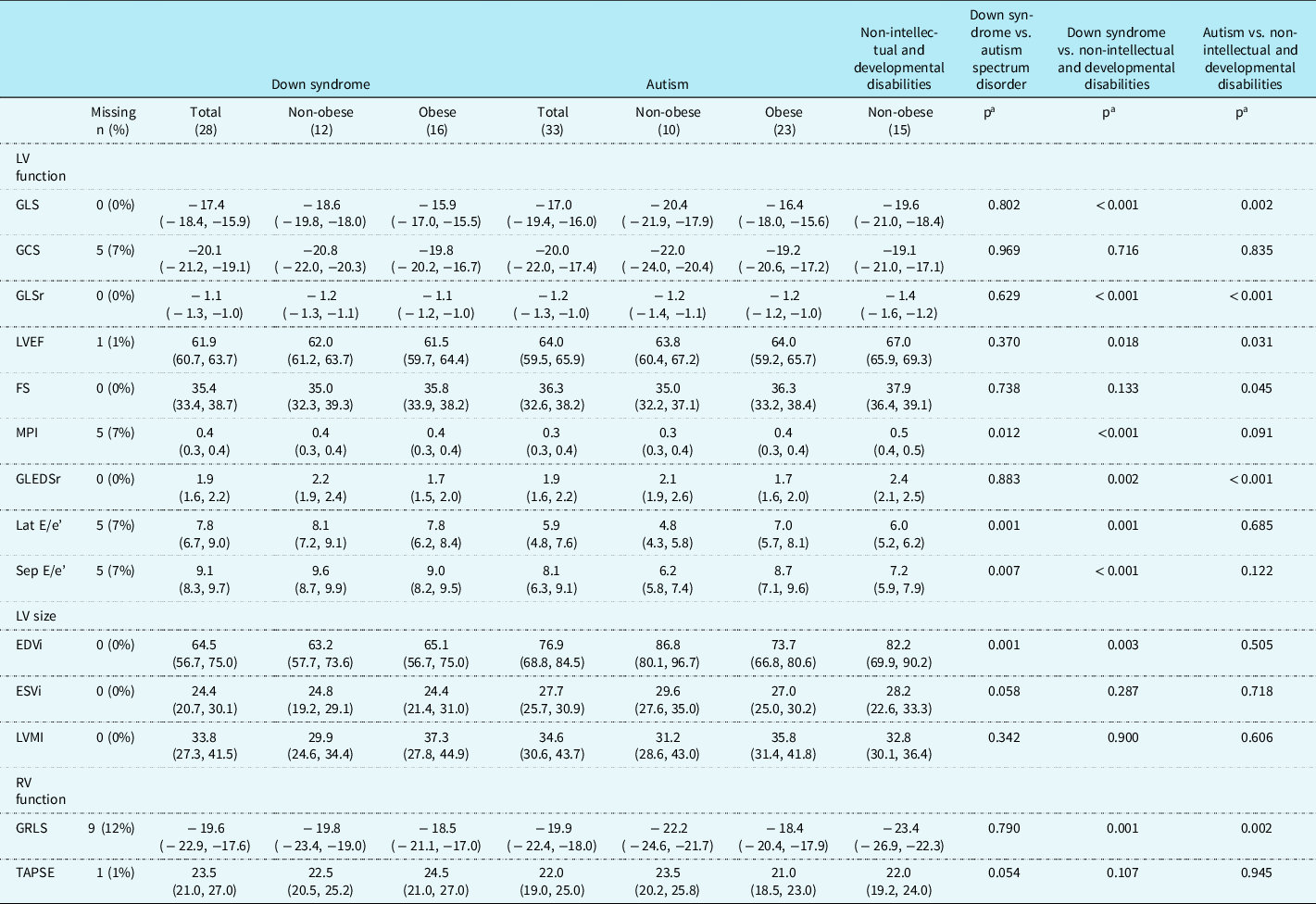
GLS = global longitudinal strain; GCS = global circumferential strain; GLSr=global longitudinal strain rate; LV EF = left ventricular ejection fraction; FS = fractional shortening; MPI = myocardial performance index; GLEDSr=global longitudinal end-diastolic strain rate; Lat E/e’ and Sep E/e’=ratio of mitral inflow E wave to the tissue Doppler e’ wave; EDVi=end-diastolic volume indexed to BSA; ESVi=end-systolic volume indexed to BSA; LVMI = left ventricular mass index, GRLS = global right ventricular longitudinal strain; TAPSE = tricuspid annular plane systolic excursion.
Multivariate linear regression modelling reported using β (scaled to a standard deviation of 1 for dependent variables), confidence interval, and p-value
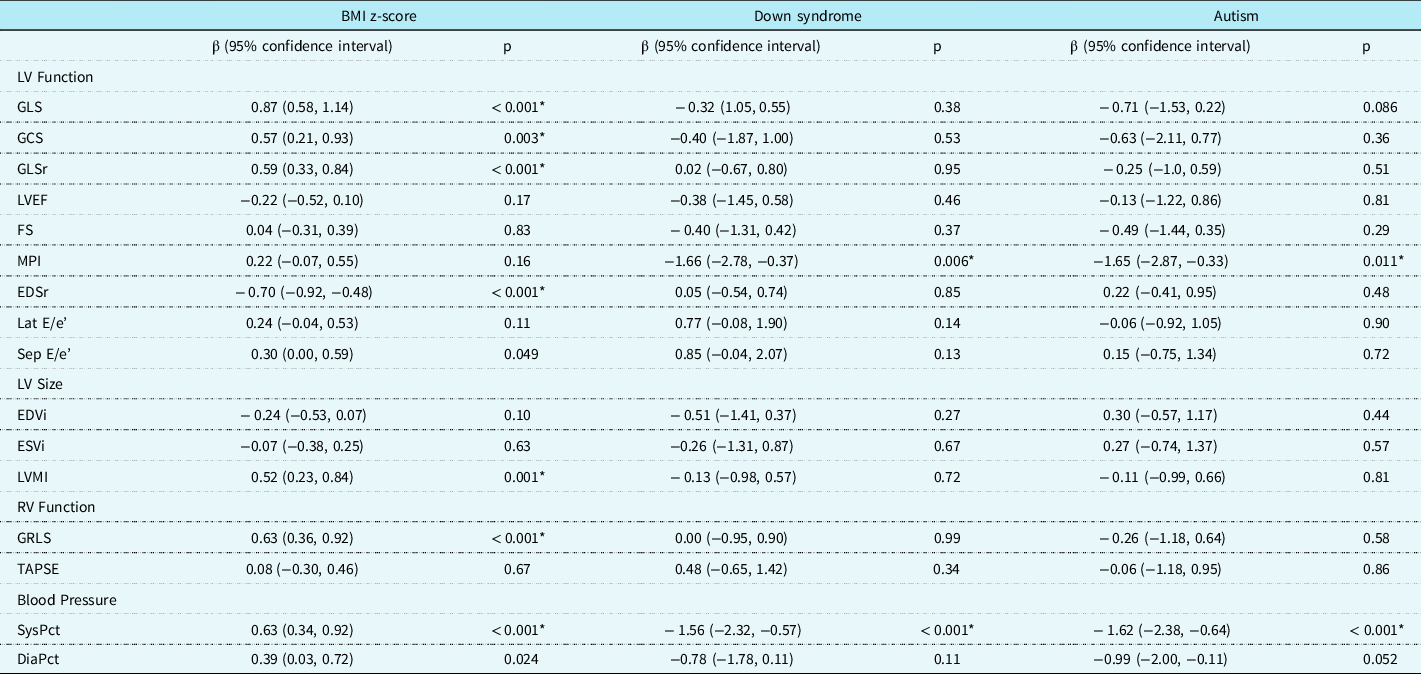
* Results represent those with a larger effect size (β > 0.5 standard deviations) and a p-value < 0.05. Each row represents an echocardiographic or blood pressure measure modelled for BMI Z-score or intellectual and developmental disabilities diagnosis (by column) while controlling for the other two (i.e., modelling GLS as the dependent variable for BMI Z-score while controlling for Down syndrome and autism diagnoses results in a β 0.87, confidence interval from 0.58 to 1.14 and a p-value < 0.001). LVMI, MPI are logarithmically transformed variables.
Discussion
The primary aim of this study was to evaluate the impact of elevated body mass index on cardiovascular measures in an adolescent population with Down syndrome or autism. This study highlights the early cardiac changes associated with obesity in adolescents with Down syndrome or autism spectrum, the most prevalent diagnoses associated with an intellectual and developmental disabilities. Strain measures detected these early abnormalities while the traditional echocardiographic measures of function including LVEF did not have the requisite sensitivity to detect them. When controlling for an elevated body mass index (Table 3), having a diagnosis of Down syndrome or autism spectrum was not associated with clinically meaningful cardiovascular effects except for adolescents with Down syndrome demonstrating a slightly lower myocardial performance index and borderline difference in diastolic measures, as well as slightly lower systolic blood pressure that remained in the normal range.
Impact of obesity on ventricular function
In this study, body mass index z-score was associated with both left ventricular and right ventricular function as seen in multiple strain measures. These findings mirror those found in typically developing adolescents concerning the early impact of obesity on ventricular function. Reference Tumuklu, Etikan, Kisacik and Kayikcioglu14,Reference Tadic and Cuspidi15,Reference Koopman, McCrindle and Slorach35 This is the first study to demonstrate that obesity has an early impact on cardiac function in adolescents with intellectual and developmental disabilities. An association was seen between elevated body mass index z-score and multiple types of left ventricular strain measures including longitudinal and circumferential strain planes, strain and strain rate, and systolic and diastolic phase measures suggesting that obesity has a comprehensive effect overall on many aspects of left ventricular deformation.
This obesity-related impact on cardiac function was not detected using traditional echocardiographic measures of cardiac function. Although left ventricular ejection fraction is a standard measure of left ventricular systolic function, this measure appears insensitive to these early obesity-related changes based on this data and prior studies. Reference Tadic and Cuspidi15 Obesity has been shown to effect Doppler measures of diastolic function in other populations. Reference Seo, Jin, Jang, Yang, Kim and Kim36 In the current study, the Doppler indices of diastolic dysfunction demonstrated borderline p-values when modelled as functions of body mass index z-score models and smaller effect sizes than early diastolic strain rate suggesting this diastolic strain measure is also better able to detect early diastole-related changes. Overall, this adds evidence for the utility of strain echocardiography to detect early obesity-related cardiac dysfunction in adolescent with intellectual and developmental disabilities. The lifetime effects of obesity on cardiovascular function and impact of weight loss on reversal of these early cardiac abnormalities warrant further investigation.
Impact of obesity on ventricular size and mass
The impact of adiposity and obesity on left ventricular mass index has been well reported in children and adolescents Reference Sivanandam, Sinaiko, Jacobs, Steffen, Moran and Steinberger37–Reference Franks, Hanson and Knowler40 with an association persisting even after adjusting for age and blood pressure and persisting into adulthood in the typically developing population. In the current study, the body mass index z-score had an association with left ventricular mass index in this intellectual and developmental disabilities population that was independent of their Down syndrome or autism diagnosis. The elevated systolic blood pressure (afterload) and inflammatory state of obesity contributes to increased left ventricular mass. However, no associations were found between left ventricular volumes and body mass index z-score in this study. A literature review on this topic in typically developing children and adolescents Reference Tadic and Cuspidi15 demonstrated differing results on whether there was an effect of obesity on left ventricular size/volume. Increased adiposity increases circulating blood volume and therefore cardiac output that can increase left ventricular volumes over time, but this progressive change may occur at different timepoints in adolescence or adulthood leading to disagreement in the adolescent studies.
Impact of Down syndrome on ventricular function, size, and mass
The non-intellectual and developmental disabilities control population was included to model the effect of having either a Down syndrome or autism spectrum diagnosis on cardiac size and function while controlling for the body mass index effect. When controlling for body mass index effects (Table 3), the only cardiovascular measures that demonstrated a significant association with a diagnosis of Down syndrome were lower myocardial performance index (global ventricular performance) and lower systolic blood pressure. None of the measures of ventricular function, size, or mass met the p < 0.05 cut-off, although the models involving Doppler measures of diastolic function had moderate effect size with a p-value range of 0.10 to 0.15. There was no association found between the strain measure of diastolic function (left ventricular end-diastolic strain rate) and Down syndrome. A previous study demonstrated diastolic dysfunction with these Doppler diastolic measures in Down syndrome with normal cardiac anatomy. Reference Balli, Yucel, Kibar, Ece, Dalkiran and Candan41 Taken together, these findings would suggest that there is likely diastolic dysfunction inherent to Down syndrome present despite lower blood pressures (afterload) that is better assessed using the Doppler measures than end-diastolic strain rate. However, this result may conflict with the finding of lower (improved) myocardial performance index in those with Down syndrome as impaired ventricular relaxation would be expected in diastolic dysfunction (Doppler indices) but not in those with improved myocardial performance index. Or it is possible that the lower myocardial performance index relates to shorter isovolumetric contraction times due to lower systolic blood pressure (afterload). While most of the evidence points towards some degree of diastolic dysfunction in the Down syndrome population, this study has a moderate sample size with relatively small subgroups and this analysis was not the primary aim of the study, so further research is necessary to confirm these findings.
Impact of autism on ventricular function, size, and mass
There is some overlap in the findings in those with an autism diagnosis as this group also had lower myocardial performance index (global ventricular performance) and lower systolic blood pressure. However, there was no association found between the autism spectrum diagnosis and any measure of ventricular function, size, or wall thickness. The myocardial performance index may also be explained in the autism group by a shorter isovolumetric contraction time secondary to lower systolic blood pressure. No other studies assessing cardiovascular measures in adolescents with autism were found. This study would suggest that there are few/minor differences compared to the typically developing population for these measures.
Limitations
This study has the following limitations: 1) This is a moderate-sized study with relatively smaller subgroups. Enrolment of the adolescents with intellectual and developmental disabilities was reliant on enrolment in the parent trial as well as the participant’s willingness to co-enrol in this ancillary study. 2) Obesity was measured using body mass index with no measurements of body fat distribution. It may be beneficial to show a relationship between the measures of body fat distribution and echocardiographic parameters. 3) This study suggests that obesity is associated with decreased ventricular function and increased ventricular mass in this intellectual and developmental disabilities population, but further research is necessary to determine whether weight reduction may reverse this cardiac remodelling.
Conclusion
This study fills a prior knowledge gap by demonstrating that ventricular strain measures of systolic and diastolic function and ventricular mass were independently associated with elevated body mass index in adolescents with intellectual and developmental disabilities. This relationship was not detected by traditional echo measures suggesting the potential for use of strain echocardiography in the assessment of adolescents. These findings were similar to those found previously in the typically developing adolescent population. No associations were found linking the diagnoses of Down syndrome or autism spectrum with abnormal ventricular systolic function, mass, or size but suggest potential abnormal diastolic dysfunction in the Down syndrome subgroup, although further evidence is necessary.
Financial support
This study was funded by the American Heart Association (18CDA34110070). The parent trial was funded by the National Institute of Health (R01HD079642).
Conflicts of Interests
The authors have no competing interests to declare that are relevant to the content of this article.