Extracorporeal cardiopulmonary resuscitation may be defined as the use of extracorporeal membrane oxygenation for the support of patients who do not respond to conventional cardiopulmonary resuscitation. Data from national and international paediatric databases indicate that the use of extracorporeal cardiopulmonary resuscitation is increasing.Reference Thiagarajan, Laussen, Rycus, Bartlett and Bratton1 Despite the increasing experience with extracorporeal cardiopulmonary resuscitation, outcomes remain suboptimal, with most centres reporting overall rates of survival to discharge from the hospital between 30% and 40%.Reference Thiagarajan, Laussen, Rycus, Bartlett and Bratton1–Reference Morris, Wernovsky and Nadkarni4 Recent studies suggest that patients with a cardiac indication for extracorporeal cardiopulmonary resuscitation generally have more favourable outcomes, with rates of survival as high as 50%.Reference Kane, Thiagarajan, Wypij, Scheurer, Fynn-Thompson, Emani, del Nido, Betit and Laussen5–Reference Duncan, Ibrahim and Hraska7
The 2010 guidelines from the American Heart Association for Pediatric Advanced Life Support recommend the use of extracorporeal cardiopulmonary resuscitation for children in cardiac arrest refractory to standard attempts at resuscitation.Reference Kleinman, Chameides and Schexnayder8 The recommendation is qualified in that extracorporeal cardiopulmonary resuscitation should be considered for use for patients with a potentially reversible cause of arrest that occurs in an environment with established protocols and the equipment and expertise available to initiate it rapidly.
In this review, we will summarise existing knowledge of acute issues for extracorporeal cardiopulmonary resuscitation, such as selection of patients, techniques of cannulation, and early morbidity and mortality. Topics of uncertainty that require future investigation will also be discussed. Intermediate-term outcomes for children who previously required extracorporeal membrane oxygenation are reviewed in detail in a separate paper in this supplement of Cardiology in the Young, and thus will only be briefly discussed.
Selection of patients
Extracorporeal cardiopulmonary resuscitation is currently associated with a 50–70% risk of mortality before discharge from the hospital, as well as significant early and late morbidity. In addition, the financial and programmatic resources needed to support a programme of extracorporeal cardiopulmonary resuscitation are substantial.Reference Mahle, Forbess, Kirshbom, Cuadrado, Simsic and Kanter9 Given these issues, identification of populations of patients that would most benefit from extracorporeal cardiopulmonary resuscitation would be very helpful. Questions to be considered include:
• which patients with refractory cardiac arrest should be offered extracorporeal membrane oxygenation;
• whether there is a “cut-off time” of resuscitative efforts beyond which survival or intact neurological function is unlikely; and
• whether there are any factors we can use to determine who might be at greater risk for adverse outcome or neurological injury before placement on extracorporeal membrane oxygenation during cardiopulmonary resuscitation.
Characteristics of patients
The vast majority of children who receive extracorporeal cardiopulmonary resuscitation have underlying cardiac disease. In a recent Extracorporeal Life Support Organization Registry study involving 688 children, the underlying indication for extracorporeal cardiopulmonary resuscitation was cardiac disease in 73%, paediatric or neonatal respiratory failure in 11%, sepsis in 8%, miscellaneous in 5%, and accidental injury in 2%.Reference Thiagarajan, Laussen, Rycus, Bartlett and Bratton1 A review of the literature suggests that patients with underlying cardiac disease have rates of survival to discharge from the hospital of 42–54% with extracorporeal cardiopulmonary resuscitation.Reference Kane, Thiagarajan, Wypij, Scheurer, Fynn-Thompson, Emani, del Nido, Betit and Laussen5–Reference Duncan, Ibrahim and Hraska7 In the largest available Extracorporeal Life Support Organization Registry report, 499 children with a cardiac indication for extracorporeal cardiopulmonary resuscitation were included, of which 211 (42%) survived to discharge from the hospital. Neonates with respiratory failure in this study had similar outcomes: 17 of 34 neonates (50%) survived. In contrast, the rates of survival for extracorporeal cardiopulmonary resuscitation varied with diagnosis as followsReference Thiagarajan, Laussen, Rycus, Bartlett and Bratton1:
• paediatric respiratory failure: 9 of 43 children (21%);
• sepsis: 12 of 50 children (24%);
• accidental injury: 3 of 17 children (18%); and
• miscellaneous indications: 9 of 35 children (26%).
Thus, for children who receive extracorporeal cardiopulmonary resuscitation, rates of survival to discharge from the hospital for those with cardiac or neonatal respiratory failure as their indication have superior outcomes compared with patients with other underlying diagnoses. The better cardiac outcomes may be explained partly by multiple factors:
• differences in the aetiology of arrest,
• extent of invasive monitoring in use before the event,
• direct access to the heart and great vessels via the sternum in those patients who recently underwent cardiac surgery, and
• familiarity of cardiac surgeons and cardiac intensivists and with techniques of cannulation and strategies of perfusion.
The role of extracorporeal cardiopulmonary resuscitation in selected subsets of children with underlying cardiac disease warrants discussion. Compared with children who have a biventricular circulation, those with univentricular physiology present unique challenges to the conduct of extracorporeal cardiopulmonary resuscitation. Somewhat surprisingly, several contemporary studies reveal little difference in survival when comparing patients with shunt-dependent univentricular physiology sustaining post-operative cardiac arrest with patients with two ventricles sustaining post-operative cardiac arrest. Of patients with congenital cardiac disease who received extracorporeal cardiopulmonary resuscitation at Children's Hospital Boston, 41 out of 81 (51%) patients with univentricular physiology and 35 out of 75 (47%) patients with biventricular circulation survived.Reference Kane, Thiagarajan, Wypij, Scheurer, Fynn-Thompson, Emani, del Nido, Betit and Laussen5 Investigators from The Hospital for Sick Children in Toronto reported survival in 47% of infants and children with univentricular circulation compared with 27% with biventricular circulation treated with extracorporeal cardiopulmonary resuscitation.Reference Alsoufi, Al-Radi and Nazer2
Several studies have described outcomes in neonates with shunted univentricular physiology. Ravishankar et al described 22 neonates rescued with extracorporeal cardiopulmonary resuscitation following stage 1 Norwood reconstruction for hypoplastic left heart syndrome or other univentricular variants. The overall survival rate was 39%. Notably, all five patients in this study, who had cardiac arrest requiring extracorporeal cardiopulmonary resuscitation because of thrombosis of their shunt, survived (100%), whereas only 6 out of 17 (35%) patients who had other aetiologies of arrest survived.Reference Ravishankar, Dominguez and Kreutzer3 Allan et al reported 44 infants with shunted univentricular physiology who were supported with extracorporeal membrane oxygenation, of whom 70% were receiving cardiopulmonary resuscitation during cannulation.Reference Allan, Thiagarajan, del Nido, Roth, Almodovar and Laussen10 The overall survival rate was 48%. Of the 16 infants cannulated for hypoxaemia, 13 survived (81%), including 10 out of 12 who had acute problems with their shunt. In contrast, of 28 patients cannulated for hypotension, including 22 with myocardial failure, only eight survived (29%). These data indicate that infants with shunted univentricular physiology, who experience cardiac arrest secondary to acute hypoxaemia or thrombosis of their shunt, are good candidates for extracorporeal cardiopulmonary resuscitation.
Successful palliation of univentricular cardiac defects is contingent on the long-term patency of the superior caval vein. Cannulation of the cervical vessels in such patients may compromise the ability to complete future cavopulmonary connection. Of six neonates with univentricular circulation, for whom repair of the right internal jugular vein was performed following decannulation from extracorporeal membrane oxygenation, none were found to be patent when subsequently assessed by angiography.Reference Ravishankar, Dominguez and Kreutzer3 In contrast, for five such neonates in whom the right carotid artery was repaired at the time of decannulation, all were patent at follow-up. Of these six patients, only one completed Fontan palliation, two underwent cardiac transplantation, and three died. It should be noted that none of these studies examined neurological function in the survivors, and thus the question of the effectiveness of cardiopulmonary resuscitation in patients with occlusion of their shunt or dependence on their shunt remains unknown.
Data are emerging regarding the efficacy of extracorporeal cardiopulmonary resuscitation in patients with univentricular hearts and cavopulmonary anastomoses. During cardiac decompensation, patients with Glenn or Fontan physiology typically developed very high pressure in the superior caval vein, and thus – by definition – elevated cerebral venous pressure. Significant atrioventricular valvar regurgitation may also be present in such patients. These haemodynamic features may limit the ability of clinicians to provide effective systemic perfusion, and in particular adequate cerebral perfusion, during cardiopulmonary resuscitation. In these patients, the flow of blood in the pulmonary circulation is dependent on passive venous return. This flow of blood in the pulmonary circulation can be significantly compromised during cardiopulmonary resuscitation because increased intrathoracic pressure from compressions of the chest and assisted ventilation can restrict the flow of blood in the pulmonary circulation.Reference Aufderheide, Sigurdsson and Pirrallo11 In addition, it may be difficult to achieve adequate venous cannulation and decompression on extracorporeal membrane oxygenation because of the presence of cavopulmonary anastomoses, and thus a second venous cannula may be required.
Booth et alReference Booth, Roth, Thiagarajan, Almodovar, del Nido and Laussen12 reported 20 patients with cavopulmonary anastomoses supported on extracorporeal membrane oxygenation. Of these, 14 had Fontan physiology and six had undergone a bidirectional Glenn operation. It is important to note that only 8 out of 20 patients (40%) in this series required cardiopulmonary resuscitation before cannulation. Of the 20 patients reviewed, 50% were decannulated successfully; however only six (30%) were alive at follow-up. Of the 14 patients with Fontan circulation, seven were decannulated and successfully survived to discharge, with only five still alive at follow-up. Of the six patients with only bidirectional cavopulmonary anastomoses, only one survived to discharge and this patient had significant neurological injury.Reference Booth, Roth, Thiagarajan, Almodovar, del Nido and Laussen12 Kane et alReference Kane, Thiagarajan, Wypij, Scheurer, Fynn-Thompson, Emani, del Nido, Betit and Laussen5 reported that 7 out of 16 patients (44%) with cavopulmonary anastomoses treated with extracorporeal cardiopulmonary resuscitation survived to discharge; however, this group of patients tended to have more severe neurological injury compared with shunted univentricular patients in their cohort. Using data from the Extracorporeal Life Support Organization Registry, Rood et alReference Rood, Teele and Barrett13 recently reported 230 patients who required extracorporeal membrane oxygenation after the Fontan operation. Overall, 81 patients (35%) survived to discharge from the hospital. Only 22 patients with Fontan circulation in this series received extracorporeal cardiopulmonary resuscitation, of whom six survived (27%).
Limited data are available regarding the use of extracorporeal cardiopulmonary resuscitation in children with a primary diagnosis of pulmonary hypertension. In the midst of a cardiac arrest, presumably most of these patients will have very high pulmonary arterial pressures and pulmonary vascular resistance, as well as displacement of the interventricular septum into the left ventricle. These haemodynamic changes may preclude the establishment of adequate flow of blood in the pulmonary circulation and adequate left ventricular filling during cardiopulmonary resuscitation. In one study, seven patients with pulmonary hypertension received extracorporeal cardiopulmonary resuscitation, with only two survivors.Reference Kane, Thiagarajan, Wypij, Scheurer, Fynn-Thompson, Emani, del Nido, Betit and Laussen5
Those neonates with underlying cardiac disease, who also are premature and/or have low weight at birth, present multiple challenges including procedural challenges and challenges of management. Occasionally, such patients will experience cardiovascular collapse, yet little is known regarding the utility of extracorporeal membrane oxygenation in general or extracorporeal cardiopulmonary resuscitation in this population of patients. In an analysis of Extracorporeal Life Support Organization Registry data from 1992 to 2000, 68 premature neonates were placed on extracorporeal membrane oxygenation for a cardiac indication, with 22% surviving to hospital discharge.Reference Hardart, Hardart and Arnold14 When analysing all 1398 premature neonates included in this study, who were placed on extracorporeal membrane oxygenation for a variety of indications, younger post-conceptional age – gestational age plus postnatal age – was associated with greater rates of intracranial haemorrhage. For example, in patients with post-conceptional age less than 32 weeks, intracranial haemorrhage occurred in 26% compared with 6% of patients whose post-conceptional age was 38 weeks. Although these data are somewhat informative, one must be careful not to extrapolate these findings to premature neonates with cardiac disease. Compared with non-cardiac neonatal extracorporeal membrane oxygenation patients, cardiac patients are likely to be cannulated in the post-operative period through a sternotomy, which may reduce the cerebral venous congestion associated with cervical cannulation. Furthermore, the indications for extracorporeal membrane oxygenation and clinical states before cannulation likely differ, and the duration of support may be shorter. In theory, these and other differences could result in a lower incidence of intracranial haemorrhage in premature cardiac patients. To inform decision making regarding extracorporeal membrane oxygenation and extracorporeal cardiopulmonary resuscitation for premature neonates with cardiac disease, more data are needed on the relationships between weight and gestational age at cannulation and outcomes.
The data presented above for paediatric extracorporeal cardiopulmonary resuscitation outcomes raise a number of important and largely unresolved questions:
• Should selected patients be deemed not to be a candidate for extracorporeal cardiopulmonary resuscitation based on data from retrospective studies indicating that certain characteristics place them at greater risk for adverse outcomes?
• What degree of baseline developmental delay or extent of multiple comorbidities precludes consideration for extracorporeal cardiopulmonary resuscitation?
• What are the perceptions of parents of children with cardiac disease on these matters?
• Given the highly invasive nature of extracorporeal cardiopulmonary resuscitation and its imperfect outcomes, should written informed consent for its use be obtained empirically and in advance from parents of hospitalised children who are perceived to be at great risk for sustaining a cardiac arrest?
• The occurrence of cardiac arrest in patients admitted to the paediatric or cardiac intensive care unit is not rare, approximately 3–4%. However, the ability of clinicians to predict which patients are at risk for cardiac arrest, and which of those will have a prolonged cardiac arrest, is obviously imperfect. Thus, in institutions where extracorporeal cardiopulmonary resuscitation is offered, should written parental consent be obtained for all children admitted to an intensive care unit who otherwise do not have a contraindication to resuscitation and extracorporeal membrane oxygenation?
These and other complex issues will continue to challenge all clinicians who provide care for critically ill children.
Characteristics of resuscitation
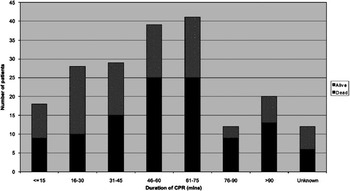
A longer duration of conventional cardiopulmonary resuscitation has been associated with lower rates of survival in paediatric patients who experience a cardiac arrest.Reference Samson, Nadkarni, Meaney, Carey, Berg and Berg15 However, several studies have not found such an association in children undergoing extracorporeal cardiopulmonary resuscitation. In an analysis of data from the American Heart Association Registry of Cardiopulmonary Resuscitation, Raymond et al reported outcomes for 199 children who received extracorporeal cardiopulmonary resuscitation. The median duration of cardiopulmonary resuscitation before cannulation for extracorporeal membrane oxygenation in 87 survivors and 112 non-survivors was 46 and 57 minutes, respectively (p = 0.12; Fig 1).Reference Raymond, Cunnyngham, Thompson, Thomas, Dalton and Nadkarni16 Similar findings have been reported in studies involving single centres as well.Reference Alsoufi, Al-Radi and Nazer2, Reference Kane, Thiagarajan, Wypij, Scheurer, Fynn-Thompson, Emani, del Nido, Betit and Laussen5 Multiple reports have been published of patients having relatively intact survival following the receipt of greater than 60 minutes of cardiopulmonary resuscitation before the establishment of circulatory support on extracorporeal membrane oxygenation.Reference Morris, Wernovsky and Nadkarni4 Despite these findings, every effort should be made to shorten the duration of cardiopulmonary resuscitation before cannulation. Potentially useful strategies in this regardReference Allan, Thiagarajan and Beke17 include:
Duration of cardiopulmonary resuscitation (CPR) and the number of surviving patients managed with extracorporeal CPR. The duration of CPR was defined as the time from cardiac arrest until extracorporeal membrane oxygenation was started. There was no association with the duration of CPR and survival based on time cut-points (p = 0.12; Raymond et alReference Raymond, Cunnyngham, Thompson, Thomas, Dalton and Nadkarni16).

• the use of simulation, during which teams practise extracorporeal cardiopulmonary resuscitation;
• “group paging systems” to mobilise essential clinicians; and
• initiation of extracorporeal membrane oxygenation with a clear-primed rather than blood-primed circuit.
A higher pH on the analysis of the arterial blood gas immediately before cannulation has been associated with better survival in several investigations. In a study of paediatric data from the Extracorporeal Life Support Organization Registry, Thiagarajan et alReference Thiagarajan, Laussen, Rycus, Bartlett and Bratton1 found that a pre-cannulation arterial pH less than 6.9 was independently associated with an increased risk of mortality compared with children having an arterial pH greater than 7.17. In a single centre study of 172 children undergoing extracorporeal cardiopulmonary resuscitation reported by Kane et al,Reference Kane, Thiagarajan, Wypij, Scheurer, Fynn-Thompson, Emani, del Nido, Betit and Laussen5 a lower initial arterial pH and higher level of lactate in the arterial blood once extracorporeal membrane oxygenation flow had been established were both independently associated with greater mortality. Neurological injury has also been associated with the pH on the arterial blood gas before establishing extracorporeal membrane oxygenation. In an analysis of the data in the Extracorporeal Life Support Organization Registry, Barrett et alReference Barrett, Bratton, Salvin, Laussen, Rycus and Thiagarajan18 reported that a pH less than 6.86 on the arterial blood gas before establishing extracorporeal membrane oxygenation was independently associated with increased odds of acute neurological injury.
The pH of the arterial blood gas and the level of lactate obtained during a cardiac arrest in the hospital are measures of the timeliness and effectiveness of cardiopulmonary resuscitation. What these studies likely suggest is that quality and not duration of the resuscitation provided is generally more important in determining good outcomes in patients undergoing extracorporeal cardiopulmonary resuscitation.
Neurological injury
Neurological injury has been found to occur in a significant number of patients treated with extracorporeal membrane oxygenation. A review of 682 children treated with extracorporeal cardiopulmonary resuscitation from the Extracorporeal Life Support Organization Registry revealed 22% incidence of acute neurological injury, defined as “brain death”, cerebral infarction, or intracranial haemorrhage.Reference Barrett, Bratton, Salvin, Laussen, Rycus and Thiagarajan18 The incidence of “brain death” was 11%. A study from Boston looking at outcomes in a single centre after extracorporeal cardiopulmonary resuscitation in children with cardiac disease revealed a rate of acute neurological injury at 35%.Reference Kane, Thiagarajan, Wypij, Scheurer, Fynn-Thompson, Emani, del Nido, Betit and Laussen5 What remains unknown is
• the impact of this neurological injury on the development and quality of life of these individuals and
• whether these potential outcomes should influence decision making on who should receive extracorporeal cardiopulmonary resuscitation.
In one of the earliest descriptions of neurodevelopmental outcome following extracorporeal membrane oxygenation outside the population of patients with neonatal respiratory failure, Hamrick et alReference Hamrick, Gremmels and Keet19 reported on 53 infants treated following cardiac surgery. The average age at follow-up was 55 months, or about 2.5 years following extracorporeal membrane oxygenation in most patients. Overall, only 13% were described as “completely intact” based on overall testing and clinical examination. Among the 17 survivors, 16 were available for follow-up and 50% had normal cognitive outcome. In three patients (21% of survivors), cognitive outcome was one to two standard deviations below the mean, whereas in four patients (29% of survivors) cognitive outcome was greater than two standard deviations below the mean. Neuromotor outcome was normal in 72% of survivors, 7% were “suspect”, and 21% had abnormal neuromotor performance. As with other reports, the need for renal replacement therapy was associated with poor outcome. Cardiac arrest was also found to be predictive of death in this study, although this centre did not have a circuit and protocol for rapid resuscitation in place over the period of the study period, and this likely contributed to this factor as a risk for death. Neurological haemorrhage, noted by ultrasound, was cited as an indication to withdraw support in 25% of patients, with specific details of extent and location of damage not described. Among survivors, neuroimaging by ultrasound or magnetic resonance imaging correlated with the observed neurological deficits.
In one evaluation of outcomes following extracorporeal life support applied during cardiac arrest at the Children's Hospital of Philadelphia, 50% of 66 patients with cardiopulmonary resuscitation events were decannulated and survived for at least 24 hours.Reference Morris, Wernovsky and Nadkarni4 Overall, 33% of children undergoing extracorporeal cardiopulmonary resuscitation survived to discharge from the hospital. Neurological outcome was evaluated by review of medical records and discharge summaries from the hospital. A meaningful neurological impairment was prospectively defined as a new seizure disorder, loss of developmental milestones, loss of muscular tone, or focal weakness. Paediatric Cerebral Performance Category and Paediatric Overall Performance Category were calculated at admission and discharge for surviving children older than 2 months of age. Of 21 survivors, 24% was noted to have significant neurological impairment at discharge, three with stroke and three with seizure disorder. Paediatric Cerebral Performance Category and Paediatric Overall Performance Category at admission and discharge were available in 10 out of 13 survivors who were older than 2 months of age. Of three patients older than 2 months of age who survived after greater than 60 minutes of cardiopulmonary resuscitation, two had no change in these scores, whereas one patient had a change of one in the Paediatric Cerebral Performance Category and Paediatric Overall Performance Category scores. Of three infants less than two months who had cardiopulmonary resuscitation for greater than 60 minutes, two developed a new seizure disorder and one had no apparent sequelae. Thus, three out of six (50%) patients with greater than 60 minutes of cardiopulmonary resuscitation before extracorporeal membrane oxygenation had no gross neurological injury at discharge. Of 10 patients who died within 24 hours of decannulation from extracorporeal membrane oxygenation, three had support withdrawn because of neurological devastation, two died from ongoing multi-organ failure, three suffered an additional cardiac arrest from which resuscitation was not successful, and the cause of death was unclear in two patients. Another finding from this review was that patients with underlying cardiac disease – 19 out of 43 patients, with 44% survival rate – had improved outcome as compared with those with other medical conditions – 2 out of 21 patients, with 9.5% survival rate. It is unclear whether this finding reflects intrinsic differences in the physiology of the patients, differences in the process of selection of the patients, or differences in access to extracorporeal cardiopulmonary resuscitation itself. In comparison, an analysis of 79 patients who had suffered cardiac arrest in the same institution between 2000 and 2002, who did not receive extracorporeal membrane oxygenation for resuscitation, reveals that 36% survived to discharge. However, zero out of 10 patients survived after undergoing conventional cardiopulmonary resuscitation for greater than 30 minutes, whereas 14 out of 43 patients survived after undergoing conventional cardiopulmonary resuscitation for greater than 30 minutes followed by extracorporeal cardiopulmonary resuscitation.
In another recent review of neurological morbidity in children receiving extracorporeal membrane oxygenation for cardiac disease, Chow et alReference Chow, Koirala and Armstrong20 examined the outcomes of 90 children treated at the Hospital for Sick Children in Toronto between 1990 and 2000. Short-term outcomes assessed included seizures, paresis, dystonia or chorea, coma, gaze palsies or visual field defects, and other findings such as brachial plexus injury. Long-term outcome was determined by contacting families with a standardised questionnaire by phone (19 patients), in cardiac outpatient clinic (5 patients), neurodevelopmental clinic (1 patient), and during re-hospitalisation (1 patient). Deficits were divided into motor impairment, cognitive/behavioural impairment, seizures, and other.
Of patients with repair of congenital defects, 40 children were placed on extracorporeal membrane oxygenation directly from cardiopulmonary bypass, three patients were bridged to cardiac transplant, and eight patients had multiple extracorporeal membrane oxygenation runs – seven patients had two runs and one patient three runs of extracorporeal membrane oxygenation. A total of 34 of the 90 children (38%) required cardiopulmonary resuscitation for cardiac arrest before extracorporeal membrane oxygenation. Patients with congenital cardiac defects had worse outcome than patients with myocarditis or cardiomyopathy (68% versus 32%, p = 0.03). There was no difference in outcome based on whether extracorporeal membrane oxygenation was used for resuscitation, for inability to separate from bypass, for myocardial dysfunction, or for post-operative low cardiac output state. Univariable analysis found that congenital cardiac disease and abnormal neuroimaging were predictive of short-term neurological sequelae. Both the presence of congenital cardiac defects and the presence of short-term neurological events were associated with death. The overall outcome from this report noted a 66% short-term mortality, with another 3% of patients dying following discharge from the hospital, with an overall survival rate of 28%. Short-term neurological events occurred in 22% (20 out of 90) of patients and long-term sequelae were noted in 12% (11 out of 90), which accounted for 39% (11 out of 28) of survivors.
Rapid-response extracorporeal membrane oxygenation at the Congenital Heart Institute of Florida
The Congenital Heart Institute of Florida, located in Saint Petersburg and Tampa, Florida, in the United States of America, is a high volume and comprehensive programme providing services for patients with paediatric and congenital cardiac disease in Florida. It is composed mainly of two hospitals in the area: All Children's Hospital, Saint Petersburg and Saint Joseph's Children's Hospital, Tampa. The two hospitals do not have cardiac surgeons, or staff for the operating theatre remain “in-house” during off hours, and thus response times to cardiac arrest during these off hours are subject to the time required for the surgeon and team to travel to the hospital. Our current policy is to offer extracorporeal cardiopulmonary resuscitation to patients with refractory cardiac arrest and potentially reversible causes of arrest. For extracorporeal cardiopulmonary resuscitation, we use a circuitReference Ojito, McConaghey, Jacobs and Burke21, Reference Jacobs, Ojito and McConaghey22 designed for rapid response composed of the following components:
• a pre-assembled Carmeda-coated circuit,
• a Biomedicus centrifugal pump, and
• a Minimax membrane oxygenator.
The entire circuit can be primed and ready for use in minutes. Response time of the on-call team is usually no more than 20 minutes.
A review of our data from All Children's Hospital showed a total of 153 patients treated with extracorporeal membrane oxygenation from 1998 to 2010 with an overall survival to discharge from the hospital of 31% (48 out of 153). A total of 53 patients received extracorporeal membrane oxygenation for refractory cardiac arrest, with an overall survival rate of 35% (19 out of 53). Acute neurological injury was documented in 47% of patients (25 out of 53). Survival was better for extracorporeal cardiopulmonary resuscitation in cardiac patients versus non-cardiac patients (39% versus 14%); however, there were only seven total non-cardiac patients treated with extracorporeal cardiopulmonary resuscitation in our review. As seen in other reviews, there was no significant difference in the duration of cardiopulmonary resuscitation before initiation of extracorporeal membrane oxygenation between survivors and non-survivors.
Discussion
Use of extracorporeal cardiopulmonary resuscitation has been increasing; however, rates of survival remain fairly constant. Post-operative cardiac patients or patients with cardiac-only pathology may be one population of patients that may most benefit from the use of extracorporeal cardiopulmonary resuscitation, as their survival has consistently been reported higher compared with non-cardiac patients. Steps to ensure a positive outcome should focus on delivery of as high quality and effective cardiopulmonary resuscitation as possible. Early activation of the extracorporeal membrane oxygenation team is beneficial to limit the possibility of prolonged ineffective cardiopulmonary resuscitation. Cervical cannulation over chest cannulation should be considered if it appears to enhance the ability to provide effective cardiopulmonary resuscitation.
Strategies to optimise neurological protection should be implemented as soon as a cardiopulmonary resuscitation is initiated. These include avoidance to the extent possible of hypoxaemia and hyperventilation and performance of adequate chest compressions to maintain cerebral perfusion pressure. The use of regional or global hypothermia as a cerebral protective strategy is currently advocated by some authorities. More information regarding the safety and efficacy of this practice will be known once the results of the ongoing multi-centric Therapeutic Hypothermia After Pediatric Cardiac Arrest trial are known (ClinicalTrials.gov identifier NCT00880087). Limiting repetitive doses of epinephrine should be considered once the decision to proceed to extracorporeal membrane oxygenation is made, as severe increases in systemic vascular resistance likely limits the effectiveness of cardiopulmonary resuscitation before the initiation of extracorporeal membrane oxygenation.
The American Heart Association guidelines state that any patient with refractory cardiopulmonary resuscitation and potentially reversible causes of cardiac arrest is a candidate for extracorporeal cardiopulmonary resuscitation. One possible framework for selection of patients for extracorporeal cardiopulmonary resuscitation includes dividing patients on the basis of favourable or unfavourable characteristics. Favourable characteristics include:
• cardiac disease,
• witnessed event in the intensive care unit,
• ability to deliver effective cardiopulmonary resuscitation,
• active patient monitoring present,
• favourable arterial blood gases, and
• early institution of extracorporeal membrane oxygenation.
Unfavourable characteristics potentially include:
• non-cardiac disease,
• an unwitnessed cardiac arrest,
• ineffective cardiopulmonary resuscitation, and
• severely acidotic arterial blood gases.
Considering the significant resources and cost involved in the use of extracorporeal cardiopulmonary resuscitation, its use needs to be critically examined to improve outcomes, assess neurological recovery and quality of life, and help identify populations and other factors that may help guide in selection of patients for successful extracorporeal cardiopulmonary resuscitation.