Introduction
Asturias is a region located in the north of Spain, with an area of 10,603.57km2 and a population of 1,085,319 inhabitants in 2016. The center of the region is eminently urban with a flat terrain, while the ends are semi-urban and rural with a mountainous terrain that makes it difficult to transport and presents an important dispersion of the population. 1 , 2 The Asturian Health Service (SESPA; Asturias, Spain) is financed with public money; SESPA is characterized by providing health coverage to the entire population, as well as equity in access to benefits and promoting social participation. 3 Another important feature of the Spanish Health System is that it is decentralized: each region, as in the case of Asturias, manages most of the health functions, organizing itself in health areas, each with its reference hospital. 3
In 2013, the public organizations “112 Asturias” and “Firefighters of Asturias” were unified into the Emergency Service of the Principality of Asturias (SEPA; Asturias, Spain); SEPA is the managing organization of emergency and emergency call attention services. The citizens access this call management service through 112. 4
At the moment that a health claim is received, from any geographical point of Asturias, the urgent care system of the Principality of Asturias is transferred to the Emergency Coordination Center (CCU) of Servicio de Asistencia Médica Urgente del Principado (SAMU; Urgent Medical Assistance Service of the Principality)-Asturias, where the demand is received, regulated, and assigned to an adequate sanitary resource for the resolution of the emergency. 4 In 2015, the SAMU-Asturias CCU received 205,178 calls requesting urgent attention; 42,292 of them were transferred to primary health care (PHC) professionals (doctors and nurses) to provide assistance, which represented 20.6% of the total. 5 Within out-of-hospital emergencies, PHC professionals must face life-threatening emergencies (LTEs); a LTE is defined as “a situation associated with an imminent life risk that entails the start-up of resources and special means to resolve the situation.”Reference Moya-Mir 6
The objectives of this study were to know the training received for out-of-hospital LTEs by PHC nurses of the Principality of Asturias and the perception they have about their theoretical knowledge and practical skills in a series of emergency procedures used in LTEs; as well as to analyze the differences according to the geographical scope of their work.
Methods
This was a cross-sectional survey of the training received and the theoretical knowledge and practical skills, as self-perceived, regarding 36 procedures or techniques that are employed in treatment of LTEs, in a simple random sample with replacement of 236 nurses (n) from PHC centers in the eight health care districts of Asturias from among the total of 730 nurses (N) who make up the staff of nurses of the PHC Service of Asturias. The interview was conducted by mail from April through May 2018, and the sample was determined by a computer generating system.
In the previous review of the bibliography, any validated survey to detect self-perception of the degree of theoretical knowledge and practical skills was found. For this reason, an ad hoc survey was drafted using the Doctrinal Body of Emergency Nursing (DBEN) proposed by the Spanish Society of Emergency Medicine (SEMES; Madrid, Spain), which indicates the theoretical and practical procedures that must be acquired by the PHC nurses. 7 From among all the procedures included in the DBEN, 37 were selected because they are used systematically in LTEs using an 11-point Likert scale rating to detect self-perception of the degree of theoretical knowledge and practical skills from zero (“Minimum”) to ten (“Maximum”).
Firstly, a pilot test and cognitive pre-test of the 30 nurses from the PHS was conducted in order to establish the most suitable type of question and response scale; the extent, comprehensibility, and logical order of the questions; and also, the duration and acceptance of the survey. The value of the Cronbach Alpha coefficient considered adequate in terms of internal consistency was an alpha value greater than 0.7. Finally, the definitive survey was drafted. The survey also included questions regarding the training received in procedures of Emergency Medicine (EM) and its features and time-frame.
In order to demarcate the geographical areas of work into rural, suburban, and urban, the classification used by the Spanish Institute of Statistics (INE; Madrid, Spain) was used. In this manner, the category “rural” corresponded to population centers with 2,000 or less inhabitants; the category “suburban” corresponded to population centers from 2,001 to 10,000 inhabitants; and the category “urban” included population centers with 10,001 inhabitants or more. 8
The data-processing made use of absolute and relative frequencies, central tendency parameters, and dispersion parameters. Correlation analysis had been used in the bivariate analysis. The estimates for the entire population have been made using confidence intervals for the mean of 95%. In comparisons of parameter difference, parameters with a probability of error less than five percent (P < .05) have been considered significant. In order to compare averages between the different techniques in the different working areas, Kruskal Wallis’ test was used.
The statistics software used was SPSS Statistics v20 (IBM; Armonk, New York USA). This study has been examined by Ethics Committee of the Faculty of Medicine and Health Sciences of the University of Oviedo (Oviedo, Spain), and due to its features and design, it did not need the approval of that Ethics Committee.
Results
Of the 236 nurses, 37 (15.6%) were men and 199 (88.4%) were women. Of these, only 3.8% had a nursing specialty acquired in the Resident Nursing Intern program.
Regarding training in Basic cardiopulmonary resuscitation (CPR), 2.8% of the total had not taken any course in Basic CPR in their professional career; 3.8% had taken only one course; 13.1% had taken two courses; 22.1% had taken three courses; 12.7% had taken four courses; 40.0% had taken five or more courses during their professional career; and 5.5% refused to answer the question. As for the most recent year of completion of this type of training, 67.1% had taken the last course five years ago or less; 15.7% between five and ten years ago; 3.6% had taken the last course ten years ago or more; and 13.6% refused to answer the question.
Regarding training in Advanced CPR, 40.9% of 236 nurses had not taken any course during their professional career; 30.8% had taken one; 15.2% had taken two; 5.9% had taken three; 4.7% had taken four or more courses during their professional career; and 2.5% refused to answer the question. As for the most recent year of completion of this type of training, 30.7% had taken the last course five years ago or less; 15.7% between five and ten years ago; 7.9% had taken the last course ten years ago or more; and 45.7% refused to answer the question.
Regarding training in an Advanced Trauma Life Support (TLS) course in their entire professional career, 28.7% had taken one; 13.9% had taken two courses; 0.8% had taken three courses; 0.4% had taken four courses; 0.8% had taken five courses or more; 51.9% had not taken any course during their professional career; and 3.5% refused to answer the question. As for the most recent year of completion of this type of training, 20.7% had taken the last course five years ago or less; 15.6% between five and ten years ago; 5.4% had taken the last course ten years ago or more; and 58.3% refused to answer the question.
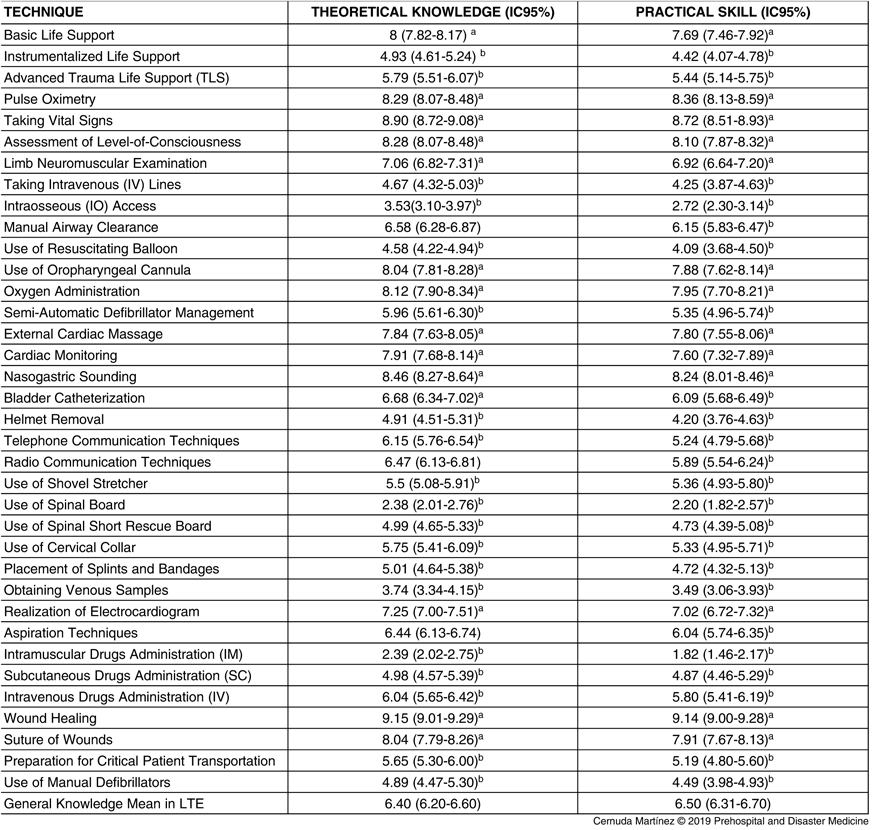
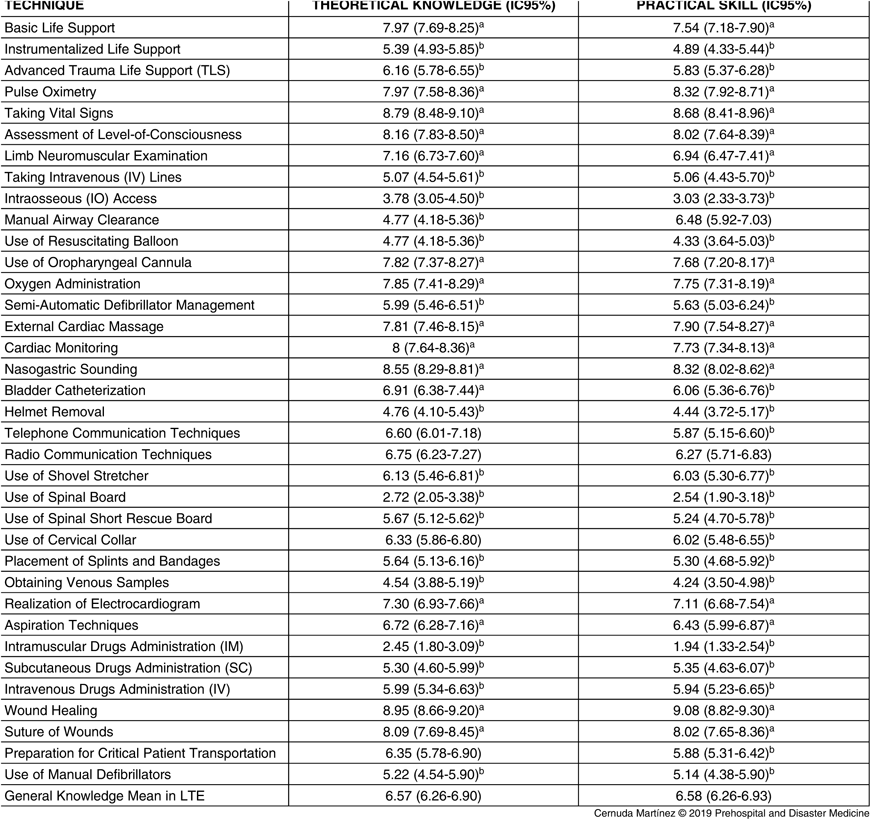
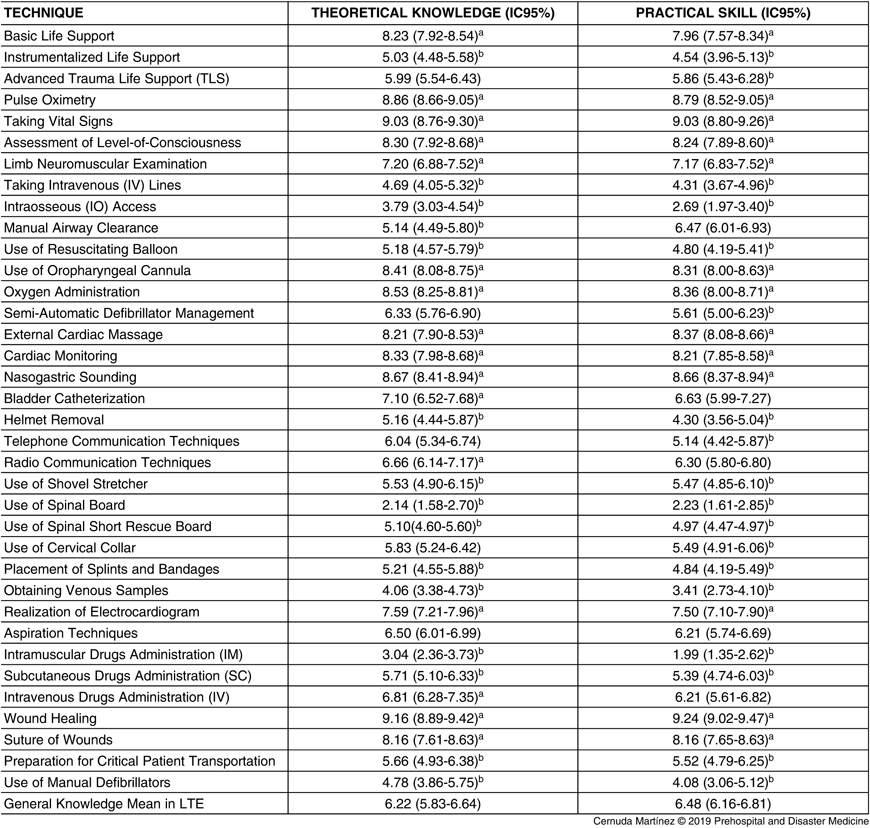
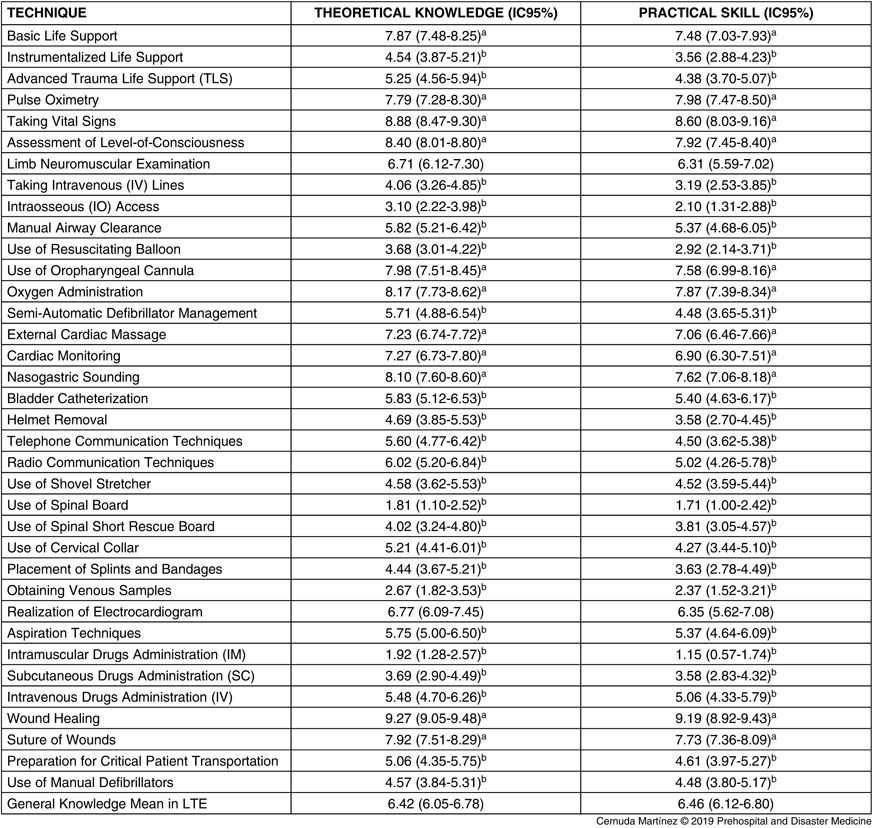
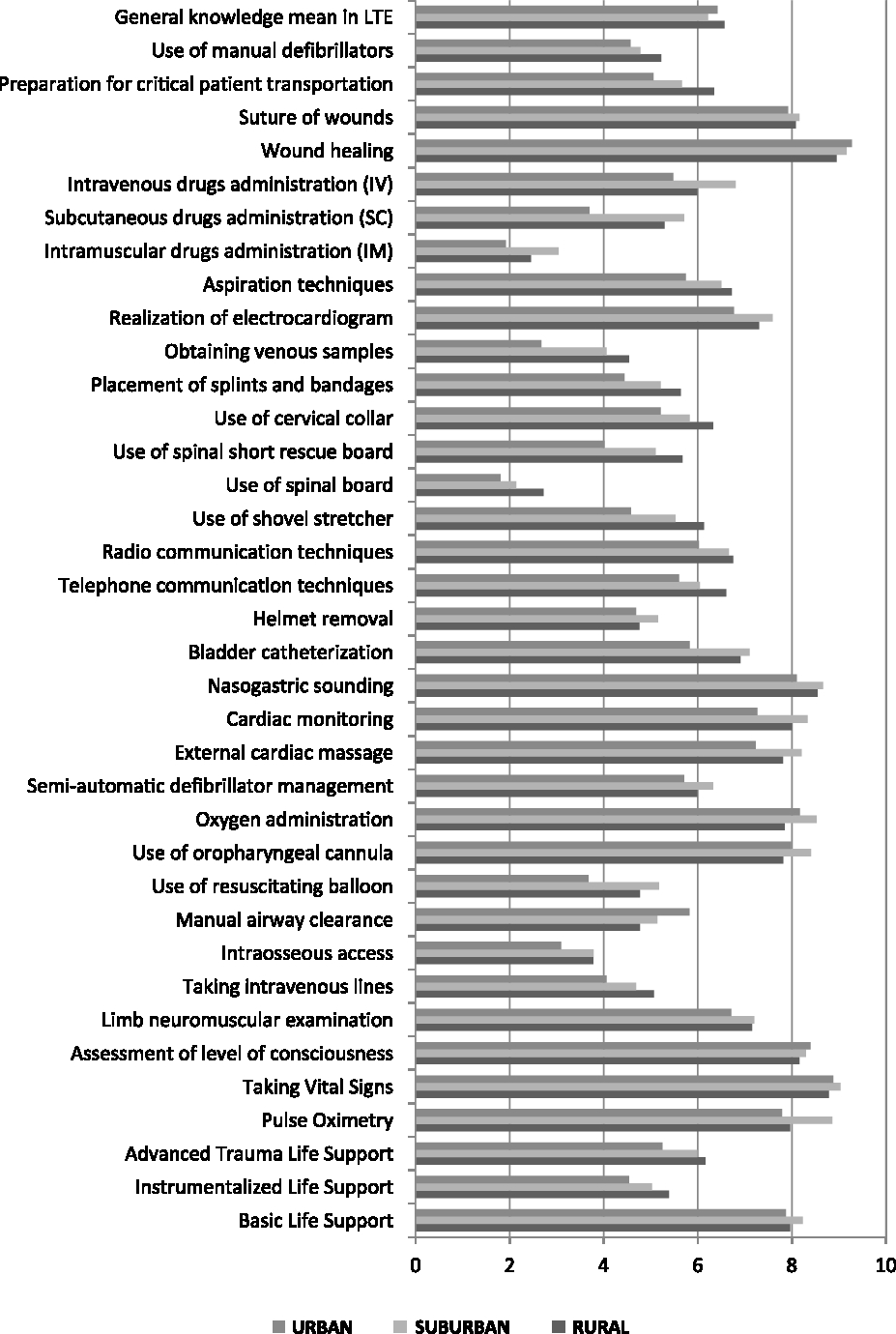
Table 1 displays the average theoretical knowledge and practical skill in emergency procedures for all PHC nurses in Asturias. Table 2, Table 3, and Table 4 show, respectively, the averages of perception of theoretical knowledge and practical skill in EM procedures for PHC nurses in Asturias who work in rural, suburban, and urban areas. Figure 1 and Figure 2 show, respectively, the comparison of the average degree of theoretical knowledge in emergency procedures for PHC nurses in rural, suburban, and urban areas in Asturias, and the comparison of the average of the degree of practical skills in emergency procedures for PHC nurses in rural, suburban, and urban areas of Asturias. There was a strong correlation between the average degree of theoretical knowledge and the average degree of practical skill in emergency procedures (R2 = 0.986; P < .000). The average that allows establishing a group has an acceptable knowledge is at least 6.0 out of 10.0, since this is the minimum score the Spanish educational health system considers must be reached to pass a test of knowledge or practical ability.
Average Theoretical Knowledge and Practical Skill in Emergency Procedures for All Primary Health Care Nurses in Asturias in Techniques Employed in Life-Threatening Emergencies (LTEs)

a Significantly greater than the mean (P < .05).
b Significantly lower than the mean (P < .05).
Average Self-Perception of Theoretical Knowledges and Practical Skills of Rural Primary Health Care Nurses in Asturias in Techniques Employed in Life-Threatening Emergencies (LTEs)

a Significantly greater than the mean (P < .05).
b Significantly lower than the mean (P < .05).
Average Self-Perception of Theoretical Knowledges and Practical Skills of Suburban Primary Health Care Nurses in Asturias in Techniques Employed in Life-Threatening Emergencies (LTEs)

a Significantly greater than the mean (P < .05).
b Significantly lower than the mean (P < .05).
Average Self-Perception of Theoretical Knowledges and Practical Skills of Urban Primary Health Care Nurses in Asturias in Techniques Employed in Life-Threatening Emergencies (LTEs)

a Significantly greater than the mean (P < .05).
a Significantly lower than the mean (P < .05).
Comparison of the Average Degree of Theoretical Knowledge in Emergency Procedures for Primary Health Care Nurses in Rural, Suburban, and Urban Areas in Life-Threatening Emergencies (LTEs).

Comparison of the Average Degree of Practical Skill in Emergency Procedures for Primary Health Care Nurses in Rural, Suburban, and Urban Areas in Life-Threatening Emergencies (LTEs).
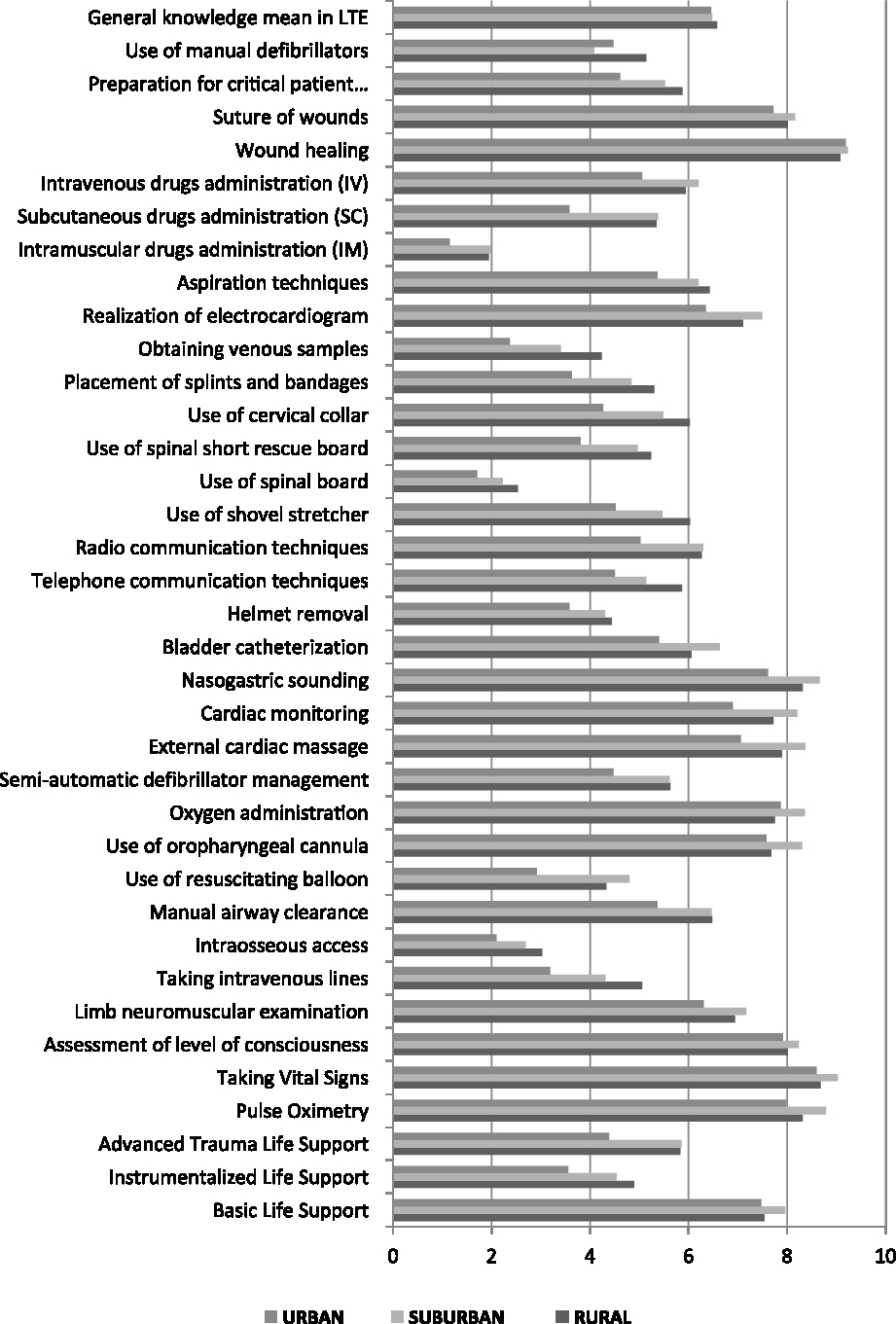
As for the training of nurses, in general, for theoretical LTEs, regarding the areas of work, it was the rural area that showed a greater average in general level of theoretical knowledge (6.57 of 10.0), followed by the urban (6.42 of 10.0), and the suburban (6.22 of 10.0). According to practical skills, it was the rural area that showed a greater average in general level of theoretical knowledge (6.58 of 10.0), followed by the suburban (6.48 of 10.0), and the urban (6.46 of 10.0). These differences were not significant.
There were significant differences in the mean of theoretical knowledge and the mean of practical skills in the procedures studied, depending on the different areas of work, in favor of rural over suburban and urban areas.
Regarding techniques with significant differences between rural areas and suburban and urban areas in theoretical knowledges (P < .05), these techniques were: instrumentalized life support (P = .04), pulse oximetry (P = .027), taking vital signs (P = .023), assessment of level-of-consciousness (P = .001), intraosseous access (P = .002), use of shovel stretcher (P = .008), use of spinal board (P = .028), intramuscular drug administration (P = .016), intravenous drugs administration (P = .004), and preparation for critical patient transportation (P = .023).
Regarding techniques with significant differences between rural areas and suburban and urban areas in practical skills (P < .05), these techniques were: taking vital signs (P = .004), taking intravenous lines (P = .034), nasogastric sounding (P = .035), bladder catheterization (P = .002), helmet removal (P = .026), use of shovel stretcher (P = .011), aspiration techniques (P = .021), intravenous drug administration (P = .046), and preparation for critical patient transportation (P = .014).
Discussion
According to the data from this study, there seems to be differences in the PCS nurses’ self-perceived abilities to perform their duty in situations of LTEs, if the area in which they work is taken into account. These differences may be due to the specific geographical and organizational features of the suburban and rural areas, since the geographical spread is greater due to the features of the terrain, and some important population centers are not equipped with mobile Advanced Life Support (ALS) ambulances. Hence, it is the PHC nurses’ themselves who must handle the situation from the outset. These data could not be compared with previous studies, since no evidence has been found in the available literature.
Regarding the techniques most often employed in LTEs, it is noteworthy that, at the individual level of each technique, the nurses who work in the suburban areas consider themselves better prepared, both at the theoretical and practical level, than their counterparts in the rural and urban areas, and also that this perception is greater regarding the degree of theoretical knowledge than the degree of practical skill. These data suggest that in the rural and suburban areas, since the nurses must perform these techniques more often since they often do not have access to ALS units, they consider that they are better trained to perform these techniques, both at the theoretical level and the practical level. On the other hand, in the urban areas, nurses do not usually intervene in LTEs that require the use of these techniques, and hence, their perception of their theoretical knowledge and practical skills are significantly lower than those of their colleagues in the rural and suburban areas. It is noteworthy also that more significant differences are in regard to the practical skill in the different techniques. This may be because the theoretical training received is more or less uniform, but the frequency of use of the different techniques causes a better perception of their practical skill.
In light of the data obtained in this study, the PHC nurses in Asturias themselves, in general, and in any of the areas of work analyzed, have the perception that they are not sufficiently trained to intervene in LTEs and to apply the techniques necessary to provide adequate attention in these situations.
Nurses have scored higher than average in some of the procedures studied, such as intraosseous access or use of the spinal board. These procedures are not studied in the Spanish curricula of Degree in Nursing, so probably the nurses have acquired them after their studies.
In Asturias, there is a response to vital health emergency demand 24 hours a day, 365 days a year; however, in all Asturian health areas, there are not the same resources for it.Reference Hernández Aguado, Santaolaya Cesteros and Campos Esteban 9 The Asturian health structure includes the provision of ambulances with ALS, Basic Life Support, and conventional ambulances. However, in the area of greater rural predominance and greater dispersion, there is no assigned ambulance for ALS.Reference Hernández Aguado, Santaolaya Cesteros and Campos Esteban 9 In contrast to this situation, rural areas in Norway are endowed with a large amount of resources and personnel, Reference Vaardal, Lossius, Steen and Johnsen 10 due mainly to the population dispersion, a characteristic shared with the rural areas of Asturias and that should be taken into account for the re-organization of the resources destined to solve the LTE.
Although a series of techniques that could be used in out-of-hospital emergencies by PHC professionals has been considered, not all are done with the same frequency. Some of them as immediate life support, removal of helmet, or taking intravenous lines, it would be convenient to reinforce them, since, with the acquisition of the theoretical knowledge and the necessary practical skills, it could be enough to successfully solve a large part of the extra-hospital emergencies on the part of the PHC nurses.
On the other hand, there is no doubt about the importance of training PHC nurses in emergency techniques used in LTEs and mass-casualty incidents. In a study conducted in Turkey in 2008 in PHC nurses, Reference Yorganci and Yaman 11 they achieved 58.6 points out of 100 in theoretical knowledge in emergency techniques. These data move in the range obtained in the self-perception of the surveyed Asturian nurses. This level of training is low, so it would be necessary to increase training in this field. The care that a PHC professional must provide in a LTE is complex, so they must be systematized. In this way, the professionals involved in LTEs (in this case the nurses) must be trained to carry out this care.Reference Traub, Bradt and Joseph 12
In some countries, such as Brazil, the law supports the nurses’ performances on the critically ill patient and allows the execution of activities of greater technical complexity and which require a scientifically based knowledge and ability to make immediate decisions.Reference Salvador, Dantas, Dantas and Torres 13
In the United States, a study conducted by nurses from the Massachusetts General Hospital (Boston, Massachusetts USA) concluded that the role of nursing in disaster medicine and LTEs will continue to grow in years to come, hence, the importance of nurses being adequately trained in this field.Reference Cox and Briggs 14
BoydReference Boyd 15 states that urgent care must correspond to a comprehensive emergency system as a set of sequential activities complex and ordered through protocols aimed at optimizing the care of critical patients from the moment of appearance of the process to their reincorporation to life social or labor. Therefore, the nursing professionals who have among their functions the care of out-of-hospital LTEs should know these procedures, as well as the correct way to apply them, causing maximum benefit and minimum risk to the patient.
In a study carried out in Navarra (Spain), using the Delphi method, training deficiencies were identified as one of the most important problems referred to the non-existence of an optimal functioning of the out-of-hospital emergencies.Reference Pérez-Ciordia, Brugos, Guillén-Grima, Fernández-Martínez and Aguinaga 16
In view of the results obtained in the present study, it would perhaps be necessary to promote nurses with better training than nurses working in health centers, and those who participate in LTEs where it is not necessary to mobilize an ALS team. An example of this already exists in Sweden, since the out-patient emergency service has the figure of the “registered nurse.” There must be a nurse in each ambulance, and this results in better care for patients and faster application, since their training curriculum includes knowledge and skills that will be used in LTEs.Reference Skog, Linda and Lindström 17 In Spain, there are already Vital Nursing Support Units (SVE), composed of a health emergency technician and a nurse, consulting only with the doctor when necessary.Reference Albero Gea and Martínez Gracia 18 These nurses can act with suspicion of acute pathology or exacerbation of a chronic pathology, without probable immediate vital or functional threat, and that therefore require attention as soon as possible, or in inter-hospital health transport of moderate-risk that do not require the physical presence of a doctor.Reference Albero Gea and Martínez Gracia 18 The implementation of new competency development models through Advanced Nursing Practices and the initiation of new activities related to the pharmaceutical provision of these, professionals can increase the resolution capacity of nursing personnel.Reference Albero Gea and Martínez Gracia 18
But is it enough with the theoretical and practical training in LTEs to be able to solve these situations well? Several authorsReference Wehbe and Galvão 19 – Reference Gentil, Ramos and Whitaker 22 consider that PHC nurses working in LTEs must have other qualities, such as effective stress management, defining priorities, or knowing how to work in a team.
Limitations of the Study
This study explores self-perception of theoretical knowledges and practical skills, and results don’t allow verifying if they are really qualified to intervene in LTEs. On the other hand, this study is restricted to a specific region with particular characteristics, so it is not appropriate to generalize to the rest of the countries. It would be necessary to compare this study with other European studies to check if results by geographical area are similar.
Conclusions
The data obtained in the study show the existence of procedures or techniques in which both theoretical and practical knowledge is more limited and needs to be strengthened. Some of these techniques are the use of defibrillators, intraosseous access, or intramuscular injection.
Some PHC nurses constantly attend LTEs during their work day, in which they must use the procedures studied. Therefore, it is necessary that they frequently reinforce their theoretical and practical knowledge about procedures or techniques. This way nurses will provide quality care in these situations.
Conflicts of interest
none