Aging well on the autism spectrum: the perspectives of autistic adults and carers
A burgeoning discourse on the topic of “successful aging” or “aging well” (AW) (Rowe and Kahn, Reference Rowe and Kahn1987, Reference Rowe and Kahn1997) has emerged over the past few decades. Although it lacks a universally agreed-upon definition or inclusive conceptual framework (see Cosco et al., Reference Cosco, Prina, Perales, Stephan and Brayne2013 for review), the term has generally referred to the idea of a desirable and attainable standard of health and well-being in later life. Since the seminal paper by Rowe and Kahn (Reference Rowe and Kahn1987), thousands of papers have addressed the concept and over a hundred variations have been suggested to their original model of “successful aging” (Rowe and Kahn, Reference Rowe and Kahn2015).
The topic of AW remains an ongoing priority in aging research, evidenced by the persistent presence of peer-reviewed articles, editorials, and special edition journal issues dedicated to the topic. The expanding body of literature has included both empirical explorations of the prevalence and correlates of AW for different populations (e.g. Kok et al., Reference Kok, Aartsen, Deeg and Huisman2015; Bosnes et al., Reference Bosnes, Almkvist, Bosnes, Stordal, Romild and Nordahl2016) as well as theoretical discussions of the concept. Theoretically, authors have offered a range of criticisms to Rowe and Kahn's dominant conceptualization and of the concept itself (Martinson and Berridge, Reference Martinson and Berridge2014), while a smaller body of work has focused on the development of more improved models (Pruchno et al., Reference Pruchno, Wilson-genderson and Cartwright2010). Recent trends in the AW literature appear to include the following: the expansion of the concept to include more psychosocial and environmental dimensions (e.g. Pruchno et al., Reference Pruchno, Wilson-genderson and Cartwright2010), considering lay perspectives in defining AW (Brown and Bond, Reference Brown and Bond2016), including both subjective and objective measures of AW (Brown and Bond, Reference Brown and Bond2016), accounting for wide variation in AW both between individuals and within individuals over time (Kok et al., Reference Kok, Groen, Becke, Fuermaier and Tucha2016), and exploring AW for different populations (Reppermund and Trollor, Reference Reppermund and Trollor2016; Amin, Reference Amin2017).
Despite adults with lifelong developmental disabilities representing a significant proportion of current populations, they have not been adequately considered in existing conceptualizations of AW. The most influential model of AW (Rowe and Kahn, Reference Rowe and Kahn1997) argues that “avoiding disease and disability” is one of the three core indicators of AW. The other two indicators include “high cognitive and physical function” and “active engagement with life.” Similarly, objective indicators of physiological health and functioning have been predominantly used in AW (Cosco et al., Reference Cosco, Prina, Perales, Stephan and Brayne2013). Such measures naturally preclude adults with chronic and/or lifelong disabilities from the possibility of AW. Directions for future research have included the need for new models that properly account for the aging of disabled individuals (Freedman, Reference Freedman2014).
Autism spectrum disorders (ASD or autism) are a group of lifelong neuro-developmental disorders. Core symptoms of autism include persistent deficits in social communication and interaction, as well as restricted, repetitive, or stereotyped behaviors or interests (American Psychiatric Association, 2013). A general increase in the prevalence of ASD has been documented over time with recently published figures as high as 1 in 68 children (Christensen et al., Reference Christensen, Baio and Braun2016) and 1% of adults (Brugha et al., Reference Brugha2016). Alongside the possibility of a true increase in prevalence of ASD, this increase most likely reflects the broadening of diagnostic criteria for ASD and increased public and clinical awareness. Research indicates that autistic children retain their symptoms into adolescence and adulthood (Billstedt et al., Reference Billstedt, Carina Gillberg and Gillberg2007). However, there remains a lack of robust evidence examining autism in adulthood.
With the first cohorts of children diagnosed with ASD now entering middle and older age, there is an urgent need for a better understanding of the circumstances and needs of autistic adults as they age in order to prepare the relevant policy and systems for these significant demographic changes and to maximize positive outcomes for this population. Autism is reported to incur economic costs in the billions annually for countries such as the United Kingdom and Australia (Synergies Economic Consulting, 2011). The increasing prevalence of ASD and the lack of understanding regarding it in adulthood have prompted some to express this as an “emerging public health problem” (Hategan et al., Reference Hategan, Bourgeois and Goldberg2017). The need for robust research evidence exploring age-related changes in physical, cognitive, social, and psychological functioning and associated formal and informal support needs has been made clear in recent discussions (Murphy et al., Reference Murphy2016; Hategan et al., Reference Hategan, Bourgeois and Goldberg2017). Qualitative explorations of the needs, experiences, and quality of life of autistic adults are also expressed to be of importance (DePape and Lindsay, Reference DePape and Lindsay2015).
The challenges for autistic adults as they age include not just “natural” age-related changes common to all aging adults, but also a specific range of challenges in daily functioning, health management, and participation. Available evidence indicates poor health status for autistic adults relative to the general population (Schendel et al., Reference Schendel2016) as well as low levels of employment, education, independence, and social integration (Henninger and Taylor, Reference Henninger and Taylor2013). In a recent call for attention in this area, Wright et al. (Reference Wright, Wright, D'Astous and Wadsworth2016) acknowledge that while there have been a handful of high-quality, relevant publications, there still exists a noticeable knowledge gap in the topic of aging with autism.
Authors have highlighted the unsuitableness of existing AW frameworks for aging adults with a disability (Minkler and Fadem, Reference Minkler and Fadem2002). Reppermund and Trollor (Reference Reppermund and Trollor2016) recently discussed how conceptualizations of AW may be shaped to be more accommodating of those with intellectual disabilities and made practical suggestions for policy and programs targeting areas such as social and community participation. Similarly, autistic adults are a population with unique needs for whom targeted strategies aimed at attaining and maintaining AW would be beneficial.
Importantly, policies and tools that are based solely on researchers’ conceptualizations of AW may potentially be considered irrelevant or unsuitable by adults themselves. Models of AW have therefore begun to consider the perspectives of the adults (Pruchno et al., Reference Pruchno, Wilson-genderson and Cartwright2010; Jopp et al., Reference Jopp, Wozniak, Damarin, De Feo, Jung and Jeswani2015). In contrast to researcher-defined conceptualizations, adults from the general population tend to define AW as a broad, multidimensional concept, encompassing a range of personal, psychosocial, and environmental-level factors, such as community support, personal attributes, and self-acceptance (e.g. Reichstadt et al., Reference Reichstadt, Sengupta, Depp, Palinkas and Jeste2010). To date, the perspectives of adults with developmental disabilities and their carers have not been sought. Doing so would allow for a more complete understanding of AW for this population and enhance the ecological validity of subsequent models and instruments.
This study thus aimed to explore the meaning of AW from the perspective of autistic adults and their carers. Given the unique functional limitations and support needs that autistic adults experience, it was expected that both similarities and some differences would be found between participants’ conceptualization of AW and that found in past literature for non-autistic adults.
Design and methods
In order to explore the meaning of AW, semi-structured interviews were conducted with autistic adults and carers.
Participants and recruitment
Participants for the current study were sampled from a separate, questionnaire-based study: the Australian Longitudinal Study of Adults with Autism (ALSAA). Two groups of participants were sampled: (i) adults aged 25 years or older, living in Australia with diagnosis of ASD according to any version of the DSM, and (ii) adult carers, defined by Carers Australia NSW as someone who provides informal care and support for an autistic adult meeting the first criteria. Participation required fluency in written and spoken English. Exclusion criteria included any adult with no or assumed diagnosis of autism. The date and type of autism diagnosis (e.g. autistic disorder) and the type of professional involved was self-reported by participants but was not verified. In the fifth and most recent version of the DSM, the separate diagnostic labels of ASD, Autistic Disorder, Asperger Syndrome/Disorder and Pervasive Developmental Disorder Not Otherwise Specified were assumed under the umbrella term of “ASD” (American Psychiatric Association, 2013). Due to the recency of this change, we expect many autistic adults to have been diagnosed using the DSM-IV or older versions and thus participants with any of the aforementioned diagnoses were included in the present study.
Recruitment for the ALSAA occurred by disseminating information to autism-specific organizations, aged-care and disability service providers, universities, medical centers, and relevant online communities. Potential participants who had given permission in the ALSAA to be contacted for further studies were invited to participate via email. Given the heterogeneity of the autism spectrum, participants were sampled using maximum variation sampling (Creswell and Clark, Reference Creswell and Clark2011) to maximize the diversity of participants’ age and location. All participants who were invited agreed to participate. Analyses and recruitment occurred in parallel until data saturation was reached, such that additional participants were no longer contributing new information that was important given the research aims (Charmaz, Reference Charmaz2006).
Procedure
Ethical approval for both the ALSAA and the current study was obtained from the University of New South Wales Human Research Ethics Committee (UNSW HREC number: HC15001 and HC15590, respectively). Autism-specific considerations were made in conducting this research. These included adjustments for sensory sensitivities and differences and for social interaction and communication differences present in autistic adults. These adjustments were guided by existing literature involving qualitative research with autistic individuals (e.g. Arthur-Kelly et al., Reference Arthur-Kelly, Sigafoos, Green, Mathisen and Arthur-Kelly2009) and input from the ALSAA Research Advisory Network. This network consists of autistic adults and carers who assisted in developing and reviewing the research materials and processes. The interviews were shaped and piloted in consultation with this network to ensure the research process was clear and as anticipated for participants. Particular attention was paid to the wording of the questions to ensure autistic adults were clear about the concept of “AW” and what was being asked of them. Interviews were offered in four formats: telephone, Skype, face-to-face, and email. Pre-interview information packages included documents detailing the background and rationale of the study, consent forms, and a copy of the interview questions with instructions for completion. Also enclosed was an information sheet detailing the entire interview process in a series of concise steps, accompanied by visual supports.
Interviews were conducted by the first author (JH) over three months. The interviews included three, open-ended questions exploring what it meant for autistic adults to age well and what factors might hinder or help their AW. Email interview responses were saved as Microsoft Word documents. Skype, face-to-face, and telephone interviews were recorded on hand-held audio-recording devices (typical duration was 30 minutes to an hour), then transcribed verbatim by JH. De-identified transcripts and demographic information were imported into NVivo qualitative analysis software (QSR International Pty Ltd, 2012).
Analyses
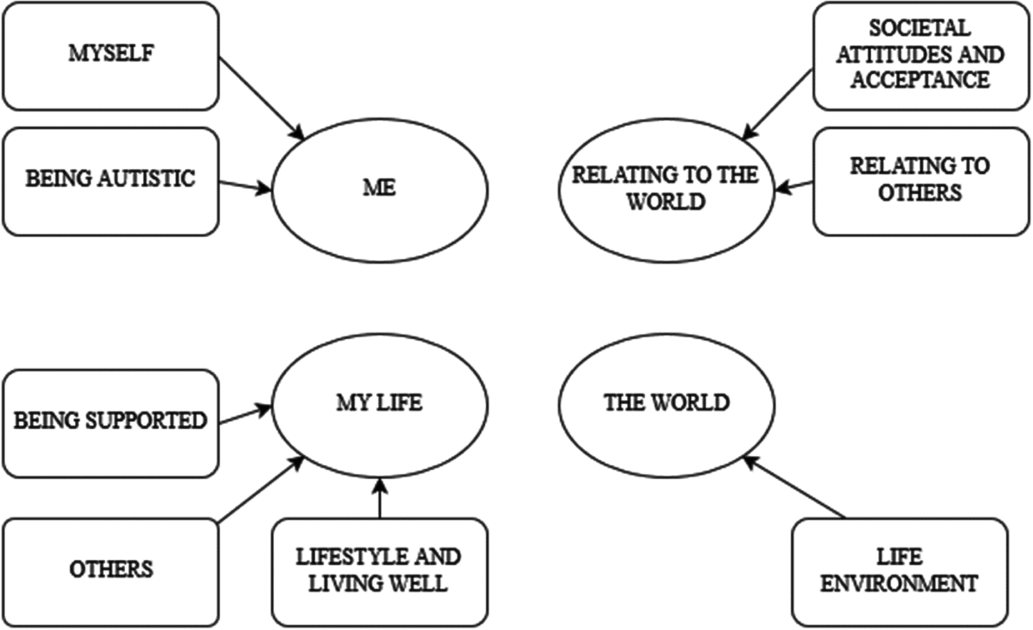
Thematic analysis was conducted with an inductive approach. This involved finding “themes” or patterns of meaning that are common across participants’ responses (Braun and Clarke, Reference Braun and Clarke2006) without imposing the researchers’ preconceptions or interests on the analysis. Each transcript was read carefully, multiple times by JH to gain a comprehensive understanding of the data in its entirety. Meaningful sections of the transcript were extracted into broadly labeled codes in NVivo. This process resulted in dozens of codes per transcript. Codes that appeared similar in content were then organized into basic themes. The same code could be included in multiple themes. The themes were continuously reviewed and refined in an iterative process with Patton's (1990) two guiding principles of “internal homogeneity” and “external heterogeneity” to ensure that each theme was internally coherent and consistent while also being distinct from the others. This occurred until the researcher was satisfied that the themes sufficiently represented the gathered data. The agreed-upon themes were then further organized into eight broader themes. At this point, all the transcripts were re-read to confirm that the eight themes accurately and sufficiently represented the whole dataset. Finally, the broad themes were further organized into four global themes and represented visually (see Figure 1).
Illustration of broad and global themes in the meaning of aging well as an autistic adult.

Analytic rigor
Details regarding each theme, including a description, example code within that theme, inclusion and exclusion criteria, and related themes, were recorded in a codebook. This codebook was given to a second researcher (KF), who applied the themes from the codebook to one of the interview transcripts that had already been coded by JH. The percent agreement in coding between the two researchers for this transcript was high, at 92%. Discrepancies in coding were resolved by discussion and negotiated consensus. Suggestions for rearrangement or renaming of themes were invited and discussed.
A personal journal was kept by JH, documenting any processes or events that may have affected the research process (Ortlipp, Reference Ortlipp2008). Examples of details included in this journal were as follows: the reasoning behind the development and/or elimination of codes and any preconceptions about or interactions had with participants. Contradictory cases found within the data were labeled in NVivo, were considered at all stages of analysis and are addressed in the findings.
Results
Sample characteristics
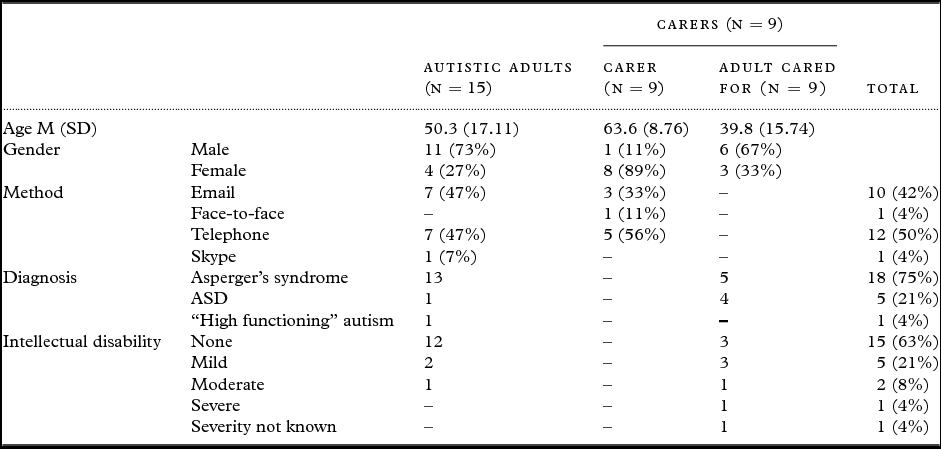
There was a higher proportion of male than female autistic participants, reflecting the gender ratio found in autistic populations (Halladay et al., Reference Halladay2015) (Table 1). The mean age of autistic participants was 50.3 years (SD = 17.11), and 39.8 years (SD = 15.74) for those autistic adults being cared for by carers. 11 (45.8%) of the autistic adults were between 25 and 44 years old, 8 (33.3%) were between 45 and 64 years old and 5 (20.8%) were over 65 years old. Carers were predominantly female with a mean age of 63.6 (SD = 8.76).The majority of the autistic adult group reported having a diagnosis of Asperger's syndrome.
Demographic characteristics of participants by group

Overview of findings
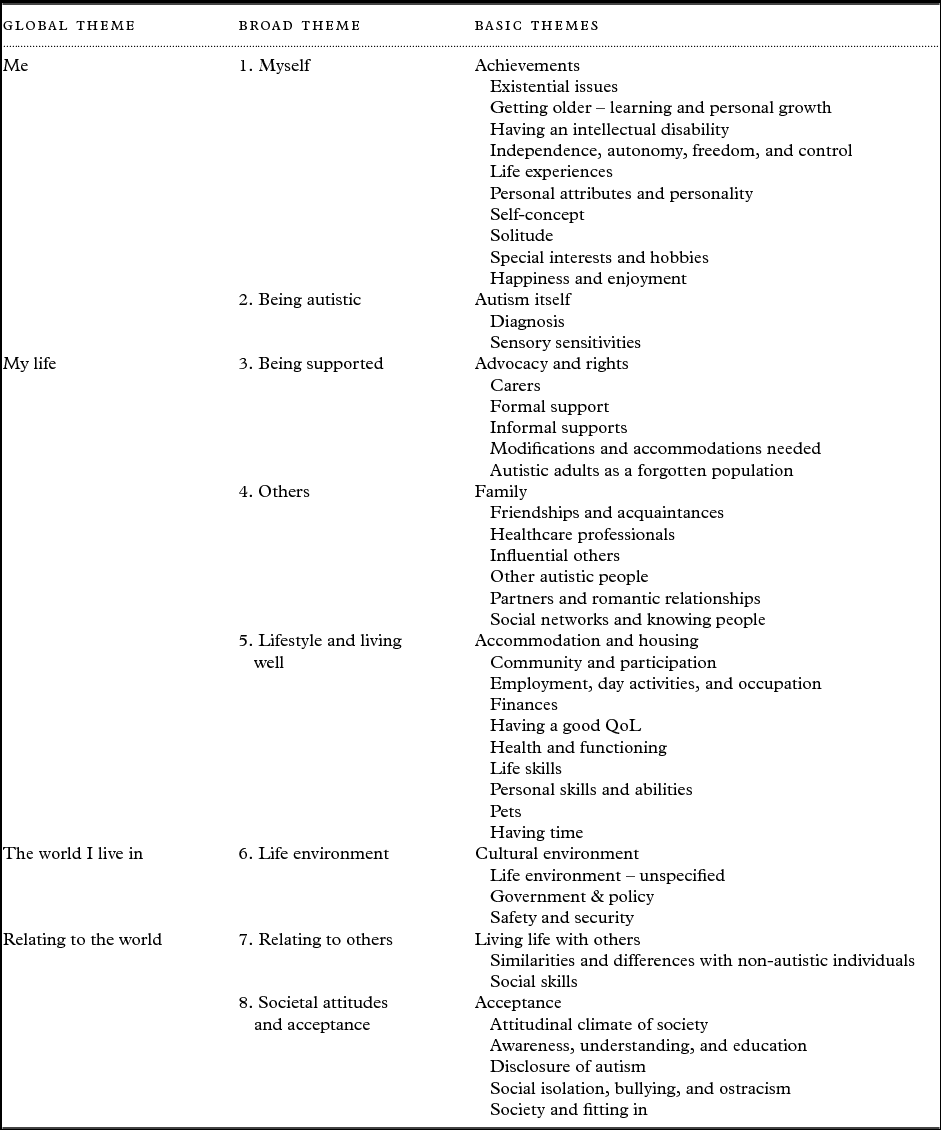
Eight broad themes emerged from the data: “myself,” “being autistic,” “others,” “being supported,” “lifestyle and living well,” “life environment,” “relating to others,” and “societal attitudes and acceptance.” See Figure 1 and Table 2 for illustrations of the themes that resulted from these analyses.
Themes present in aging well for autistic adults

Theme 1: myself
All participants believed that aspects specifically related to themselves as individuals were central to AW. This included the adult's personality, achievements, growth, personal development, and their life experiences. Of particular prominence was the importance of resilience and coping, being optimistic and having positive attitudes. As one autistic adult articulated:
I think that if people on the autism spectrum can be optimistic, that will also help [them] to age well. I'm a lot more optimistic now than what I have been in a lot of years. . . I hope that I can see a happier future for me than what I have seen in the past. – Autistic adult, 37
In terms of personal development, learning from experience about themselves and others was seen as a key facilitator of AW.
. . . to be able to continuously learn and grow and understand. I find there's more peace for me the older I get, the more I'm understanding people and social situations and that sort of thing. – Autistic adult, 50
The life experiences discussed by participants were mainly negative and were discussed in terms of the influence they have on the future of the autistic adult. These negative experiences were mostly that of school or workplace bullying. The emotional and psychological effects of these events were seen as something to be overcome in order to age well.
. . .life experiences aren't confined to adulthood and I believe those experiences at whatever age have the potential to influence our responses throughout life. . . those negative experiences from school. . . All sorts of negative aspects which is I think, well, affected his self-image and I confess that as parents, we were responsible for some of these too. – Mother of 44-year-old autistic adult
Adults seemed to take in these life experiences as an intrinsic part of who they are presently and expressed that an important part of AW would be to help stop others from having similar undesirable experiences.
Another fear would be to not only have lived a life of abuse, but then to have that go unnoticed and then for other people to tragically go through that as well I think that's a fear. – Autistic adult, 34
Theme 2: being autistic
The second theme included matters specifically related to being autistic. Participants referred to receiving the autism diagnosis as an important and positive experience. For reasons such as the relatively short history of ASD, difficulties associated with diagnosing in adulthood and changes in diagnostic criteria, it is likely that many autistic adults have either not been formally diagnosed or have been misdiagnosed with other mental disorders (Stuart Hamiltonand Morgan, Reference Stuart Hamilton and Morgan2011). According to participants, obtaining a diagnosis in adulthood had valuable benefits, such as allowing the adult to make sense of their self-identity and more formally in obtaining supports.
The second thing that has impacted on my life, that made it better for me, is my diagnosis. I was not diagnosed until I'd just turned 50. And that made a huge difference because I didn't realise why I was different. I didn't realize why I wasn't getting things like others or interpreting events and actions the way other people did. But that made me come to accept my strengths and my limitations. – Autistic adult, 57
Participants often mentioned managing their sensory sensitivities as an important aspect of AW. Participants described the negative impact of these sensitivities on their lives, due to their interruption of daily life.
My worst sensitivity is noise. It's really only bad when I'm dog tired and I've had a long day. . . The ideal is being aware of the sensitivities and picking a time where I need the solitude. . .– Autistic adult, 65
Theme 3: being supported
The need for support, both formal and informal, was another common idea. Participants expressed the importance of having appropriate and accessible formal supports as they get older. The type of supports mentioned were predominantly healthcare-related but also included supports for housing, employment, and social networking.
I'm extremely grateful to live in a country where these healthcare opportunities are available to me for free and I believe they are essential to AW as an autistic adult. – Autistic adult, 63
The lack of and subsequent need for appropriate formal supports was particularly apparent for those adults with higher cognitive functioning and less severe autism symptoms.
There's minimal services for adults who are higher up on the spectrum, like me, and I think this needs changing. – Autistic adult, 38
In terms of healthcare, accessing knowledgeable and skilled providers was commonly mentioned as important for AW.
GP's lack of knowledge is a huge obstacle. Much of what a GP tells me I should do to manage symptoms of my ASD is unhelpful, I get the feeling he doesn't know much about ASDs and I really would like to be able to go to a doctor that ‘gets it’. – Autistic adult, 31
Participants expressed their belief that autistic adults were a “forgotten population” who receive very little attention in both research and policy. The resultant lack of appropriate services and the likelihood of them falling through the gaps of service provision were discussed as hindrances to AW.
I know that children obviously have got to be the first to be considered, but the adults seem to have missed out for some years. . . I just feel surrounded by this inertia that's widespread. And I don't really see a lot of positives in the pipeline for adults. . .– Mother of 44-year-old autistic adult.
In the face of this lack of support, most of the carers expressed concern over the fact they themselves were also aging and would soon be unable to support the autistic adult, with negative consequences on the adult's capacity to age well. Informal support was also considered important for AW. This included the help of family, friends, and others for managing specific daily tasks and situations.
Having the support of somebody who understands business and that sort of thing to be able to help me and that I can sort of bounce questions off of and she completely accepts me for what I am. . . – Autistic adult, 50
Theme 4: others
Another theme referred to the role and influence of other people in AW, beyond just the supportive functions they provide. First, having fulfilling, consistent friendships, both in person and online, was believed to be important for AW. Participants expressed the desire to have company of a few, rather than many, friends who were sensitive to their needs as an autistic adult.
A relatively small but comfortable group of friends and intimates whose interactions with me are in no way threatening, intrusive or intimidating, also who are able to lend me their expertise or direct help in the odd instances of my incapacity or ill-health – Autistic adult, 80
There were notable differences between participants’ responses regarding the role of family in AW. While the company of family members and partners was valued, some expressed the desire to be independent of family, both financially and physically. Furthermore, some explicitly expressed that having a family was neither desirable nor important for AW. Notably, this opinion was voiced by autistic adults of both genders, but not carers. This belief appeared to stem from the burden of responsibility and constant social contact associated with having a family.
I don't think it's absolutely essential to form intimate relationships and marry and have children, etc. You can learn to live without this. It's a huge responsibility to maintain a stable happy family life. – Autistic adult, 31
Other groups of people included mainly non-autistic individuals who autistic adults are likely to have interactions with in day-to-day life, such as health professionals, colleagues, teachers, and social workers. It was believed ideal to have such people who understood and were sensitive to the autistic adult to create more positive outcomes in areas such as schooling, work, and health management.
Theme 5: lifestyle and living well
This theme included the “tangible” aspects of the adult's day-to-day lifestyle. It included a wide range of living and lifestyle factors, such as health, occupation, engagement in activities, and living arrangements. An overwhelming majority of participants included issues related to health conditions and management in their responses. Health was a holistic concept involving physical and psychological health and their interrelatedness. Common ideas included maintaining healthy diet and exercise and managing or preventing physical and mental health conditions that the autistic adults already have or may develop as they age. Depression and anxiety were specifically and commonly noted as hindrances to AW for autistic adults.
I think emotional and psychological health are the most important aspects. Without working on these aspects it is difficult to make the others work. – Autistic adult, 31
Development of a chronic illness such as diabetes, heart attack, stroke etc. which will be extremely difficult for her to manage effectively independently [would hinder AW]. – Carer of 27-year-old autistic adult
Another important aspect of lifestyle was occupation. Participants believed that it was important to be engaged in employment that was meaningful and rewarding, whether it be in formal employment or volunteering. Key benefits of employment included occupying one's time and building self-confidence. Given this, the “un-employability” of autistic adults was commonly discussed as a barrier to AW. This often stemmed from the inability of employers and workplaces to appropriately support autistic employees. Resultantly, stable or regular employment was considered precious and the stability of their employment was often questioned.
I don't know how secure my current employment is. Having work gives me some sense of purpose and an income. I have been given the opportunity to work by a generous former classmate who has been sympathetic to my situation. – Autistic adult, 36
When talking about a lifestyle that reflects AW, participants often spoke about their physical living arrangements, with some autistic adults specifically mentioning the company of pets in their conceptualization of AW. Participants also emphasized the importance of having adequate daily living skills, such as doing household tasks and maintaining personal hygiene.
Having and being able to live in a comfortable home which can accommodate all the possessions and activities that are most important to me as well as that are possible to me. – Autistic adult, 80
More subjective lifestyle ideals included the time and ability to engage in enjoyable activities.
Ability to enjoy the majority of the things I enjoy now. . . as Television programmes, stimulating books, beautiful music, works of art; - Autistic adult, 79
Overall, this theme included a diverse range of factors that contribute to the nature and quality of the adult's day-to-day life and their overall standard of living.
Theme 6: life environment
The wider environmental context was also reported to be of importance for AW. Key elements within this theme included the following: cultural environment, government, and policy. Cultural environments could be negative, for example, binge drinking culture was mentioned as a hindrance to maintaining friendships for an autistic adult who does not drink. In contrast, one autistic adult mentioned the diversity of ethnicities within Australia as an ideal environment.
Australian society is brilliant because it's so open. [you get] such a beautiful perspective. You realise that you're not Lebanese or Greek, you are of this earth. – Autistic adult, 34
In particular, government and policy were expressed to have important implications for AW. Carers in particular voiced concern over existing or impending policies being unaccommodating of or exclusive of autistic adults. Issues such as a lack of appropriate policies and unpredictable policy changes were believed to impair their AW.
Another thing too is. . . a lot of these policy changes and you know, changes to the state federal laws come in without a lot of fanfare. So people don't even realise that these things are in place . . . – Mother of 50-year-old autistic adult
Theme 7: relating to others
Issues relating specifically to how the autistic adult relates to others were also central to AW. This theme included the social skills and understanding involved in living with others, especially those who are not autistic. The underlying idea was that there are fundamental differences in the way autistic adults and non-autistic adults think, feel, and function. Participants expressed the difficulties that such differences present when relating to those around them. They believed managing and overcoming these differences were important for AW.
Retention of my basic tolerance of people and their variations in non-routine everyday life, along with the ability to enjoy the right people in brief and limited circumstances preferably by appointment – Autistic adult, 79
It's important for other people to understand what you mean when you say things and for them to also understand that what they're saying is most likely not what we're hearing. – Autistic adult, 80
I suppose some improved social skills [would help AW]- that's been fantastic for me. . . it's certainly helped me in my workplace and I think that it certainly has helped some of my family members.- Autistic adult, 60
In terms of relating to others, the desire for solitude was commonly expressed by several autistic adults and a noteworthy distinction was made between solitude and isolation. Autistic adults expressed their desire to be alone at different times and places on their own volition but not wanting to be isolated from others.
Theme 8: societal attitudes and acceptance
This theme included the attitudinal climate of society; how others perceive and receive autism and autistic adults. Many participants believed that in order to age well it was necessary for them and autism to be understood. Importantly, they believed that in addition to education and awareness about autism, people needed to personally experience autistic individuals in order to encourage positive impressions of them.
I think a lot of people are not educated on many aspects on autism, this can be very unnerving for some people that do not know about autism, which leaves the autistic adult feeling isolated from the norm. – Autistic adult, 58
. . .she said if people were a little bit more understanding if there were perhaps more knowledge out there in the general public, her difference in fact can be a great advantage. . .– Mother of 25-year-old autistic adult
Lack of awareness and understanding was commonly discussed as being the underlying cause of bullying, ostracism, and social isolation. Judgment, ignorance, and fear were commonly cited reactions of people from the general public towards autistic adults.
People ignore him a lot. . . and they don't talk to him and they do avoid him and ignore him and given that he struggles with eye contact and then other people avoid eye contact with him. . . It affects him more than we realise. So I guess that's awareness. . . They get shunned and ostracised a lot, you know. A lot of loneliness. . . we're all intolerant aren't we. Intolerant. Ignorant. – Mother of 29-year-old autistic adult
Several autistic adults explicitly expressed that it was not important to “fit in” to society. However, some participants also mentioned that they would “hide” characteristics of their autism or deliberately choose not to disclose their diagnosis to others to avoid negative judgment.
I have to control my movements to make sure they're not jerky and the way I walk has to be constantly imitating [non-autistic people] so that I don't show my identity. And it's not showing your identity that's the problem, it's how people will react when they realise you're different. – Autistic adult, 43
Discussion
This study aimed to qualitatively explore the meaning of AW from the perspective of autistic adults and carers involved in their lives. AW was found to be a holistic concept that broadly encompasses the individual, their life, the world in which they live, and the relational issues connecting these domains. Eight key themes were found to be common across participants’ responses: “myself,” “being autistic,” “others,” “lifestyle and living well,” “being supported,” “relating to others,” “life environment,” and “societal attitudes and acceptance.” This study provides the first exploration of AW ideals, needs, and circumstances for autistic adults, which are important to consider for developing effective and appropriate models and policy initiatives. In particular, it has provided insights into the applicability of existing models of AW to autistic populations.
AW was considered to be a broad, multifaceted concept. This is similar to extant literature in adults generally, who also identify diverse factors, such as health, lifestyle, psychological resources, and social engagement as important for AW (Jopp et al., Reference Jopp, Wozniak, Damarin, De Feo, Jung and Jeswani2015). Of the eight themes found in the present study, Rowe and Kahn's conceptualization only adequately covered the one theme of “lifestyle and living well.” Moreover, while functioning and other health-related issues were acknowledged by participants, these were only a few among a diverse range of factors that were involved in AW. Thus, Rowe and Kahn's (Reference Rowe and Kahn1987) three-factor model with a heavy focus on physiological functioning is limited in its ability to capture the concept of AW for autistic adults. Researchers have often recommended the expansion of Rowe and Kahn's model to include a more diverse range of factors (Martinson and Berridge, Reference Martinson and Berridge2014). Multidimensional approaches have also been argued to be more powerful for predicting quality of life outcomes than narrower approaches (Bowling and Iliffe, Reference Bowling and Iliffe2011).
Attributes of the individual, such as their personality, self-concept, and experiences were expressed to be important resources to assist AW. Again, this resonates with findings in adults generally for whom aspects such as attitudes and self-growth are seen as key (Reichstadt et al., Reference Reichstadt, Sengupta, Depp, Palinkas and Jeste2010). The need for models of AW to incorporate personal, psychosocial resources has already been widely suggested by critics of the Rowe and Kahn model (Pruchno et al., Reference Pruchno, Heid and Genderson2015). Consideration of such factors is key to positive discourses of aging, which shift away from pathological perspectives and embrace the strengths and resources available to individuals in later life. In a longitudinal examination of non-autistic adults, psychological resources, including self-efficacy, optimism, and coping were found to be a significant predictor of quality of life at follow-up (Bowling and Iliffe, Reference Bowling and Iliffe2011). Models that place disproportionate emphasis on being free from functional limitations may inappropriately deem most autistic adults unable to age well. A more balanced model that considers both personal resources as well as challenges in later life would be more useful.
AW for autistic adults also involves a range of environmental-level factors. A reoccurring idea in the present study was that AW is affected by others around them, their socio-cultural contexts, and other wider environmental influences. It is both sensible and important to consider the interdependence between an individual and their wider life contexts in order to more fully understand their circumstances and capacity for AW. This is especially relevant when considering adults with disabilities, who experience unique and persistent challenges and support needs as they age. Indeed, in a recent reconceptualization of their ideas, Rowe and Kahn acknowledged the importance of the interaction between person and environmental factors, stating that “Successful aging at the societal level will obviously facilitate successful aging at the level of the individual, and, most likely, vice versa (2015, p. 594)”.
Social and relational issues were of prominence to AW in this study. How the autistic adult connects with non-autistic individuals and the way their relations with others affects them was a topic frequently discussed by participants. Although relationships with others have been consistently mentioned by general populations (Reichstadt et al., Reference Reichstadt, Sengupta, Depp, Palinkas and Jeste2010), a differentiating feature of the current study was that participants referred specifically to autistic adults as a unique group and discussed the prejudices and misunderstandings held by society towards them. Learning specifically about non-autistic adults and the skills needed to relate to them was considered to be important. This is likely the result of the social communication and interaction difficulties inherent in ASD (American Psychiatric Association, 2013), making it a more salient issue for autistic adults compared to the general population.
Importantly, being autistic was not considered to be a hindrance to AW. In contrast to the underlying idea that being disabled precludes one from AW (Rowe and Kahn, Reference Rowe and Kahn1987), autism-specific attributes such as their special abilities and personal qualities were seen as strengths and potential facilitators of AW. This supports the emerging neurodiversity movement, which advocates autism to be a difference, rather than a disability (Bagatell, Reference Bagatell2010). This view eschews language or ideas that frame autism as a “deficit” that needs to be cured or overcome. Champions of this movement advocate a society that encourages both autistic and non-autistic individuals to understand and accept such differences and propose that society recognize and find a place for the unique skills and qualities that autistic individuals offer (Bagatell, Reference Bagatell2010). This again confirms the need for models of AW to shift their focus away from limitations and pathology and consider instead nurturing each adult's strengths and abilities. For autistic populations, AW appears to involve the appropriate management of their symptoms and importantly living in an environment that understands, encourages, and nurtures their strengths.
Limitations
Despite the purposive sampling method used to obtain a heterogeneous sample, these findings remain specific to the participants of the present study. Also, in spite of processes of reflexivity used to reflect upon and document preconceptions, researcher bias is difficult to eliminate in any qualitative work (see Malterud, Reference Malterud2001). Self-selection bias is also likely, given that autistic adults and carers self-selected to participate in the ALSAA.
The age range of the current study included adults that are younger than those traditionally examined in studies of AW. This was deemed appropriate for several reasons. Examination of only older adults in studies of AW has been argued to increase the potential for survivor effects, which is particularly problematic for those with intellectual and developmental disabilities who experience decreased life expectancy in comparison to the general population (Perkins and Berkman, Reference Perkins and Berkman2012). Given the relative youth of ASD as a diagnosis and the difficulty associated with obtaining a diagnosis in adulthood, including only those who are both older with a formal diagnosis posed significant limits to the representativeness of the present study. The extended age range provided an expansive and exploratory illustration of the current autistic adult population and eight key themes were clearly identified to be common across the entire sample. In existing studies with the general population, age has been a constant predictor of health-related facets of AW but not of psychosocial and environmental aspects (Weir et al., Reference Weir, Meisner and Baker2010; Hodge et al., Reference Hodge, English, Giles and Flicker2013) which were central to the present findings.
It is important to note, however, that as a cross-sectional study, the present findings are limited to an illustration of what individuals of different ages on the autism spectrum believe to be involved in AW at the time of the interview and cannot capture any changes over time. While the present study is able to provide insight into the key aspects of AW, more focused investigations of age differences in the meaning of AW and whether changes may occur when observed longitudinally would allow for elucidation of the specific challenges and priorities present at each stage of adult life.
The majority of the autistic adults and several of the autistic adults being cared for had been diagnosed with Asperger Syndrome. While meeting the same basic criteria for ASD, those with Asperger Syndrome display no delays in language development during childhood and normal to higher intellectual functioning in comparison to others on the spectrum. As such, they are often considered those on the “higher functioning” end of the autism spectrum to which the findings of the current study are biased. Similarly, those with comorbid intellectual disability may have been somewhat under-represented in the present sample. The functional and other limitations experienced by this group are likely to pose unique and compounded challenges for them and their carers as they get older, over and above those with autism alone.
Future research
There have been only a few examples of research exploring aging in adults with intellectual disability and, to our knowledge, no studies exploring aging experiences of those with both autism and intellectual disability. Further exploration of AW that focuses specifically on autistic adults with intellectual disability is necessary in order to capture AW across the full autism spectrum.
There has been recent interest in exploring cross-cultural variation in the concept of AW (e.g. Cosco et al., Reference Cosco2015). Given that “being supported” and relational issues were of importance to participants, and that support systems and socio-cultural climates are likely to differ according to locational contexts, similar explorations are needed in different countries in order to provide the most relevant and appropriate understanding of AW for different populations. Given the heterogeneity of the spectrum and the complexity of AW as a construct, further dissection of how it may differ for participants of different ages, genders, socioeconomic status, education levels, and level of intellectual functioning may also be useful.
Finally, this study did not ask participants whether they believed that they themselves or the autistic adults they cared for were AW. Studies that have incorporated subjective ratings of AW have found substantially increased rates of adults who may be classified as AW in comparison to when only objective measures were used (Brown and Bond, Reference Brown and Bond2016).
Theoretical and practical implications
The present findings found Rowe and Kahn's conceptualization of AW (Reference Rowe and Kahn1987, Reference Rowe and Kahn1997) to be limited in capturing AW for autistic adults, which is unsurprising given that those with disability were disregarded in their original work. These findings offer important insight for the ongoing development of AW as a concept. First, they call for a change in perspective regarding the nature of disability and its role in AW. According to participants of the present study, being autistic was not a hindrance to AW. In recent decades, the gerontology literature has seen a shift away from pathological, deterioration-oriented perspectives of aging to ones that embrace opportunity and growth, and the present findings appear to support this movement. This study shows that a strength-based approach may be the most appropriate approach for autistic adults. Future models of AW should also consider a broader range of physical, psychological, social, and lifestyle factors as involved in AW. It is important to take a broader, ecological approach that considers the social, cultural, and environmental contexts involved in the aging of the individual.
Themes such as “lifestyle and living well” and “life environment” largely overlap with existing work in the general population and practical implications such as improved access to public places and health resources have been suggested in extant literature (e.g. Jopp et al., Reference Jopp, Wozniak, Damarin, De Feo, Jung and Jeswani2015). In addition to this, findings from the present study that are unique to the autistic experience, such as “societal attitudes and acceptance” and “relating to others” lend themselves to additional implications. The theme of “societal attitudes and acceptance” suggests the need for educational and research efforts to increase public understanding and awareness of autism and autistic people, while the far-reaching influence of other people, embodied in the theme of “others,” points to a relatively non-traditional way of encouraging AW that does not focus solely on the individual. Translational efforts could lie within capacity building for healthcare professionals and others through via development of tools and training that better equip them to interact with autistic individuals.
The current findings have also highlighted several areas of need with clinical implications. Past experiences of school and workplace bullying are common and have lasting consequences for autistic adults as they age. Interventions that aim to prevent such experiences and those that reduce their lasting effects are needed. Second is the need for improved access to diagnosis for autistic adults. Under-diagnosis and delayed diagnosis have been found to be common for this population and have significant impact on health and well-being outcomes (Spencer et al., Reference Spencer, Lyketsos, Samstad, Dokey, Rostov and Chisolm2011).
In moving forward, these findings should be complemented with relevant objective health data, expertise, and empirical work in order to produce the most complete and appropriate model of AW for these populations. Given that many areas of life are implicated in AW, in addition to global measures of AW, targeted instruments for improving outcomes in each of these areas may be appropriate.
Conflict of interest
None.
Description of authors’ roles
Ye In Hwang was involved in formulating the research question, designing the study, ethics preparation, recruitment, data collection, data analysis, and writing the manuscript. Kitty-Rose Foley was involved in formulating the research question, designing the study, recruitment, data analysis, and editing the manuscript. Julian Trollor was involved in formulating the research question, designing the study, and editing the manuscript.
Acknowledgments
The authors acknowledge the valuable contribution of the Research Advisory Network and members of the Autism CRC Research Academy whose insight and recommendations shaped this work. We also gratefully acknowledge the cooperation and participation of all participants on the autism spectrum and their carers involved in this study. The authors also acknowledge the financial support of the Cooperative Research Centre for Living with Autism (Autism CRC), established and supported under the Australian Government's Cooperative Research Centres Program.