Introduction
Since the mid twentieth century, social and economic changes have altered traditional patterns of family life in many societies throughout the world (Ochiai, Reference Ochiai1996; Hakim, Reference Hakim2000; Coontz, Reference Coontz2005; Gilbert, Reference Gilbert2008; Ochiai and Molony, Reference Ochiai and Molony2008; United Nations, Department of Economic and Social Affairs, 2012). Along with climbing rates of divorce, cohabitation, and single parenthood, these changes include declining fertility rates and the rising level of female labour force participation backed by the increasing expression of egalitarian attitudes toward gender relations. Data from twenty-two societies, for example, reveal the majority of respondents surveyed in every region supported women’s right to work outside the home and a substantial majority endorsed the broader claim that ‘women should have equal rights’ (Pew Research Center, 2010). Similarly, most respondents to the social survey of twenty-five European societies agreed with the statement that ‘Men should take as much responsibility as women for home and children’ (European Social Survey Round 2 Data, 2004).
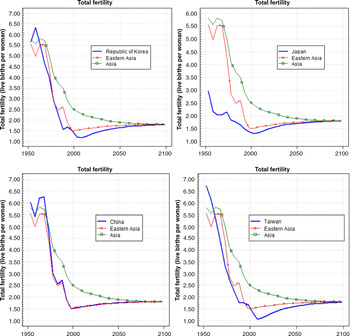
One of the most significant trends accompanying the increasing expression of egalitarian attitudes involves the declining fertility rate, which has plunged about 50 percent worldwide since 1950. Amidst this global trend, East Asian societies stand out as having among the lowest total fertility rates (see Figure 1); most produce below 1.5 births per women, which places them in a reproductive danger zone (McDonald, Reference McDonald2006). Once a country’s fertility rate falls this low it is hard to climb back to the standard replacement level of 2.1 (Lutz et al., Reference Lutz, Skirbekk and Testa2006).
Low Fertility Rates in East Asian Societies.

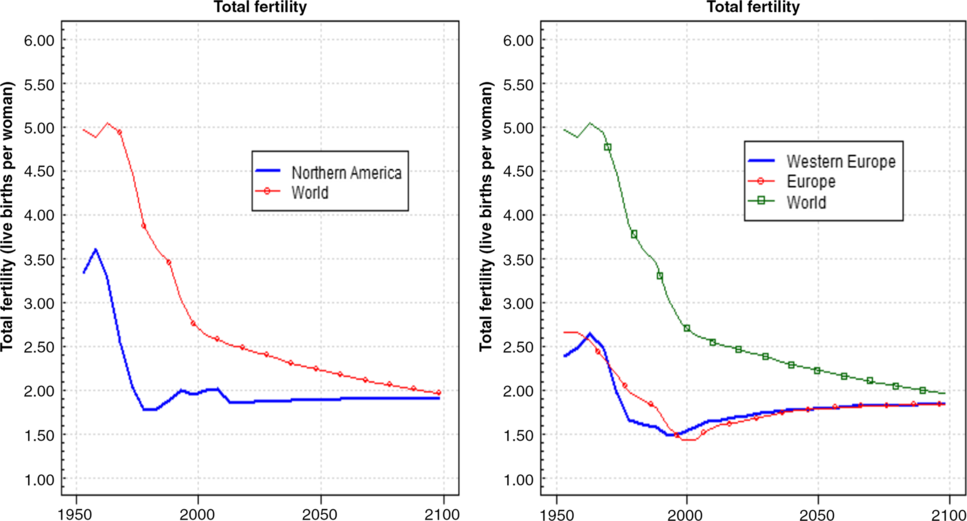
Although the fertility rates in most Western industrialised societies have also fallen below the standard replacement rate of 2.1, as seen in Figure 2 on average they are somewhat above the 1.5 level. Within these regions, demographic analyses reveal that secular and highly educated segments of the population tend to reproduce at much lower rates than the religious, traditional, conservative segments of the population (Longman, Reference Longman2006; Last, Reference Last2014).
Fertility rates in western industrialised regions.
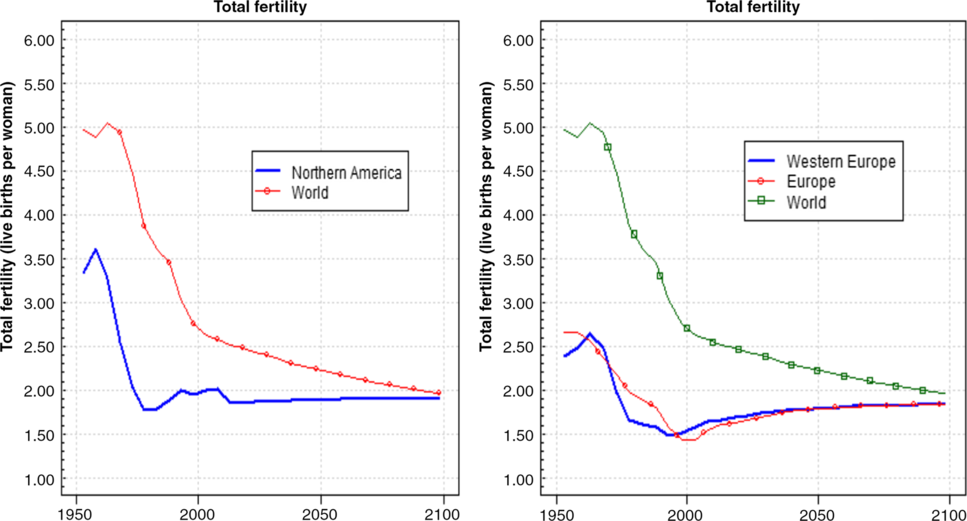
The rapid decline in fertility rates in these regions has various implications. On one hand it can be seen as reducing the pressures of overpopulation, regulating the consumption of the earth’s resources, and promoting the advantages of a ‘childfree’ lifestyle, one unencumbered by the financial and social costs of childrearing. Sometimes referred to as the second demographic transition, this trend has been linked to the growing importance of individual autonomy (Beaujot and Ravanera, Reference Beaujot and Ravanera2008). At the same time, low fertility rates in these societies pose an increasing challenge to both the family’s and the state’s capacity to care for dependents. With life-expectancy rising, the declining fertility rates amplify the old-age dependency ratio, which is projected to climb from 31 percent in 2015 to 51 percent in 2050 in Western Europe and from 15 percent to 42 percent over the same period in East Asia. This is already creating immense fiscal pressures on public social security systems as well as on familial obligations to care for the elderly and other dependent members. In the United States, for example, it is estimated that the provision of social security benefits will result in a deficit of $13.2 trillion over the next seventy-five years (OASDI Trustees Report, 2018).
Theoretical perspectives
Various theoretical explanations have been offered to help explain declining fertility rates. Lee and Goldstein (Reference Lee and Goldstein2003) suggest that with increasing longevity young people have internalised the likelihood of living into their nineties, which leads to a ‘rescaling of the life cycle’ that involves delaying marriage and postponing childbirth. With the tendency to wait until they are in their thirties to start having children, some women end up waiting too long and have difficulty conceiving their first or second child.
Although some believe that the declining fertility rate has been influenced by financial duress associated with the modern costs of childrearing, an analysis of data on thirteen European societies reveal that the decline in fertility is associated with a rise in the pursuit of leisure activities; these data suggest that the decline is more of a lifestyle preference than a misfortune imposed by low-income or poverty (Gilbert, Reference Gilbert2008). Hakim’s (Reference Hakim2000) ‘preference theory’ maintains that women have different innate predispositions toward work and family life; some are home-centred preferring a life concentrated around family and children while others are work-oriented and not all that keen to have children. As modern contraception has allowed women greater control over reproduction at the same time that employment opportunities have expanded, those who prefer careers to family-centred activities are increasingly able to exercise their innate tendencies. However, Moreno-Mínguez et al. (Reference Moreno-Mínguez, Ortega-Gaspar and Gamero-Burón2018) found that, rather than innate tendencies, gender roles in family life are influenced by significant external socio-structural factors such as age and education. Pfau-Effinger’s (Reference Pfau-Effinger2004, Reference Pfau-Effinger2012) theory of a gender culture also suggests that innate preferences may be less influential on the division of labour in family life than social values concerning employment of family members and parental roles in child care.
Coming at this issue from a different perspective, Becker’s (Reference Becker1981) application of rational choice theory to decisions concerning family life poses a question of why with increasing educational achievements and expanding employment opportunities women would choose to have children. Based on a rational cost-benefit calculation bearing and rearing children is a costly investment that does not generate much of a financial return. According to Becker, the sacrifices of parenthood are repaid in ‘psychic income,’ the intangible fulfilment of emotional life. Gilbert (Reference Gilbert2008) argues that the culture of capitalism undervalues the economic worth of childrearing activities and domestic production, while feminist expectations emphasise the benefits of labour force participation; together these influences dampen interest in the role of motherhood.
Aiming to increase fertility rates, many governments have introduced social policies to lighten the financial costs of childbearing and to advance the egalitarian division of labour in the home to make it easier for parents, particularly women, to maintain labour force participation while raising children (Gornick and Meyers, Reference Gornick and Meyers2003). These measures involve early education and child care, maternity and parental leave, child care tax credits and family benefits; often referred to as family-friendly policies, they seek to facilitate a balance between work and family life (Plantenga and Remery, Reference Plantenga and Remery2005; Lohmann et al., Reference Lohmann, Peter, Rostguaard and Spiess2009). The overall impact on birthrates of these various measures to balance work and family life has been ambiguous. Regarding the European experience, Sleebos’s (Reference Sleebos2003) analysis of forty-two multivariate studies of family-friendly policies found the evidence inconclusive and contradictory. There is much evidence that, despite public policies designed to help balance work and family life, women still perform an extremely disproportionate share of household and childcare labour (Goldscheider and Waite, Reference Goldscheider and Waite1991; Brines, Reference Brines1994; Spain and Bianchi, Reference Spain and Bianchi1996; Hoschild and Machung, Reference Hoschild and Machung1998; Greenstein, Reference Greenstein2000; Kroska, Reference Kroska2004; Ravanera et al., Reference Ravanera, Beaujot and Liu2009; Liu and Dyer, Reference Liu and Dyer2014). Women who work in the labour market and are still expected to carry the responsibility for household production and childcare experience double labour duties that often force them to make a hard choice between commitments of time and energy to the market and their home (Ma and Chang, Reference Ma and Chang2006).
McDonald (Reference McDonald2002) suggests that declining fertility rates are influenced by contradictory expectations between gender equality for women in the home and market. Specifically, when women’s opportunities for education and employment are nearly equivalent to those of men, but they are still expected to carry the full responsibility for the traditional roles of mother and homemaker, this inequality in the home limits their ability to fully exercise the equal opportunities in the market. According to this perspective, women tend to restrict the number of children they have when confronted by normative expectations that emphasise the modern egalitarian gender division of labour in the market and the more traditional gender division of labour in the home. Regarding the relationship of gender equality and fertility, McDonald hypothesises: When gender equality rises to a high level in individual-oriented institutions (e.g. education and market) while remaining low in the family institution, fertility will fall to low levels. Equality in the institution of family often advances more slowly than in individual-oriented institutions, because the family system is strongly linked to conservative ideals (McDonald, Reference McDonald2000).
These various theoretical perspectives on women’s preference – rescaling the lifecycle, rational choice, balancing work and family life, the culture of capitalism and contradictory expectations – suggest different factors that may help to account for declining fertility rates. Drawing upon McDonald’s (Reference McDonald2002) observations, our study is concerned with the way contradictory expectations about the gender division of labour in the home and market might be associated with the declining fertility rates in East Asian and Western societies. Specifically, we examine the relationship between fertility rates and the extent of cognitive dissonance in regard to the gender division of labour in the market and the home as reflected in the attitudes expressed in surveys of sixteen societies.
Data and research questions
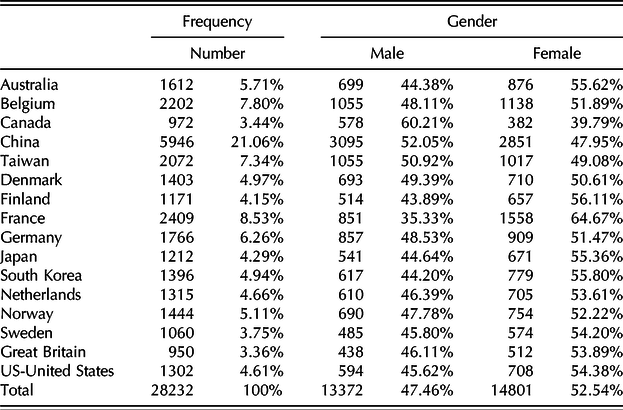
This study analyses attitudinal data from the International Social Survey Program’s (ISSP) 2012 survey on ‘Family and Changing Gender Roles IV’. The survey covers forty-one societies and includes a sample of 61,754 respondents ages fifteen to 102 years old (ISSP Research Group, 2016). Sixteen of the societies surveyed were selected for analysis in this study. There were 28,232 respondents surveyed in these societies. Their gender was split 52.54 percent female and 47.46 percent male. A description of the sample size and gender by country is shown in Table 1.
Sample description and percentage

In selecting the sample societies, we sought to include representative groups of western industrialised societies with well-developed welfare states and East Asian societies with developing welfare states that shared a cultural affinity for Confucianism. The twelve western industrial societies were chosen as representative of Gosta Esping-Andersen’s (Reference Esping-Andersen1999) well-known typology of social welfare regimes, that provide varying degrees of support for family-oriented benefits (Guo and Gilbert, Reference Guo and Gilbert2007). Since it was first conceptualised this welfare state typology has been a topic of lively debate. Thus, for example, Deeming (Reference Deeming2017: 416) sees it as ‘a work in progress,’ while Ferragina and Seeleib-Kaiser’s (Reference Ferragina and Seeleib-Kaiser2011: 595) analysis ‘confirms the overall validity of Esping-Andersen’s typology.’ In addition, four East Asian societies were selected as developing welfare states that share a similar Confucian culture, which recognises individuals’ lives as the continuation of their parents’ physical lives and conceptualises family members as one body; here filial piety and family are important influences in people’s lives (Hwang, Reference Hwang1999). The sixteen societies in this study are listed below:
Anglo America: Australia, Canada, UK, US
Scandinavian Europe: Denmark, Finland, Norway, Sweden
Western Europe: Belgium, France, Germany, Netherlands
East Asia: China, Japan, Korea, and Taiwan
Attitudes toward the gender division of labour will be analysed on three levels: country as the context level, generation as the cohort level and gender as the individual level. The respondents’ attitudes toward the gender division of labour are operationally defined by the following questionnaire items that tap the extent to which they agree or disagree on a scale of 1 to 5 with statements that represent traditional and modern expectations of gender equality involving men and women’s roles in the home and the market1.
Family Life (traditional expectation): A man’s job is to earn money; a woman’s job is to look after the home and family. (Disagreement with this statement is interpreted to support equal gender participation in family responsibilities)
Labour Market (modern expectation): Both the man and woman should contribute to the household income. (Agreement with this statement is interpreted to support equal gender participation in the labour market)
The operational definition of cognitive dissonance is based on the degree to which individual respondents hold conflicting attitudes toward equality in the gender division of labour in the home and market. That is, for example, when a respondent strongly agrees with gender equality in the market and at the same time strongly agrees with inequality (or the traditional division of labour) in the home. These attitudes reflect expectations that women will be working as hard as men in the labour market and at the same time carrying the full burden of responsibility for the cooking, cleaning, childcare and other work involved in looking after the home and family. According to Festinger (Reference Festinger1957), holding two contradictory ideas and expectations creates psychological discomfort that people seek to resolve by changing one of the views or their behaviour.
In analysing these attitudes, we compare societies, generations within societies and gender within generations asking the following research questions:
How much do the societies, generations, and genders differ on attitudes toward gender equality in the home and in the market?
To what extent are these attitudes associated with varying fertility rates?
To what extent are varying fertility rates associated with cognitive dissonance regarding these expectations, reflected in the degree to which respondents hold conflicting attitudes (modern and traditional) toward equality in the gender division of labour in the home and market.
To what extent do the expectations expressed regarding the gender division of labour in East Asian and Western societies shed some light on the apparent discrepancy between the comparatively low fertility rates and the relatively strong family-oriented emphasis of the Confucian culture in East Asian societies
Findings
Gender equality in family life
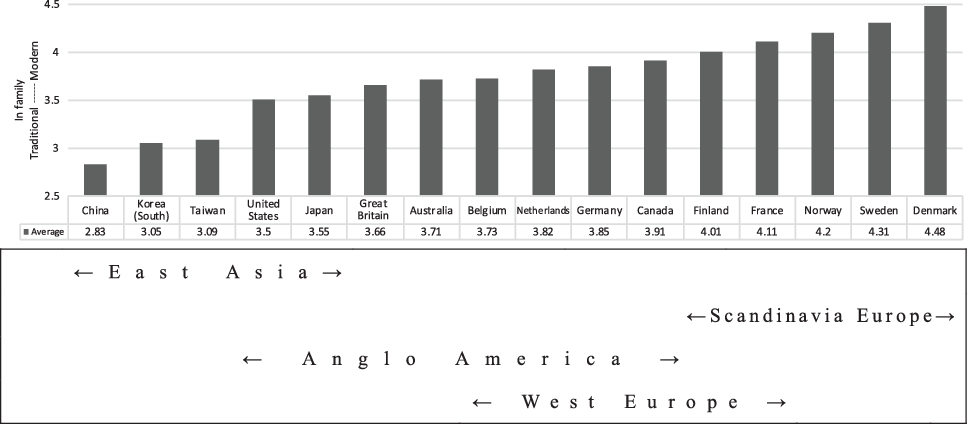
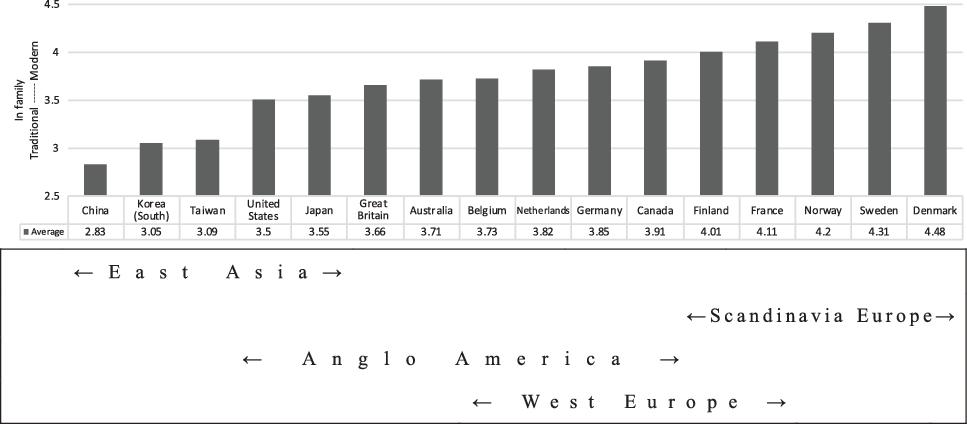
Figure 3 illustrates the degrees of support for the modern attitude (of equality) toward the gender division of labour in family life among the sixteen societies. An analysis of these results indicates that the differences among these societies are statistically significant (F = 414.461, p ≦ .001). Clustering around the lowest scores, respondents in the East Asian societies expressed the most support for the traditional division of labour in family life, under which women were expected to carry the major responsibilities in caring for the home and family. At the other end of the scale, the Scandinavian societies expressed the least support for gender inequality in family life. The Anglo America and West European societies were in between. With several exceptions, the varying degrees of support for gender equality in family life tended to cluster around the Western societies grouping by welfare state regimes and the East Asian grouping of developing welfare states.
Attitudes regarding gender equality in family life: average score by country.
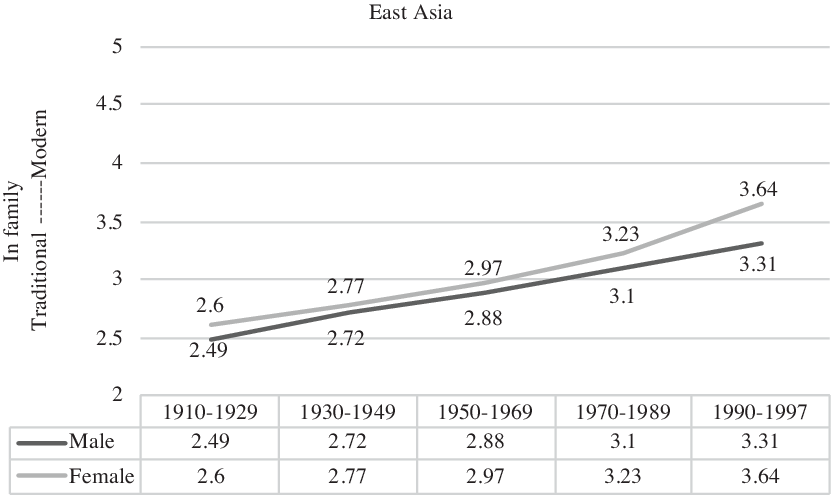
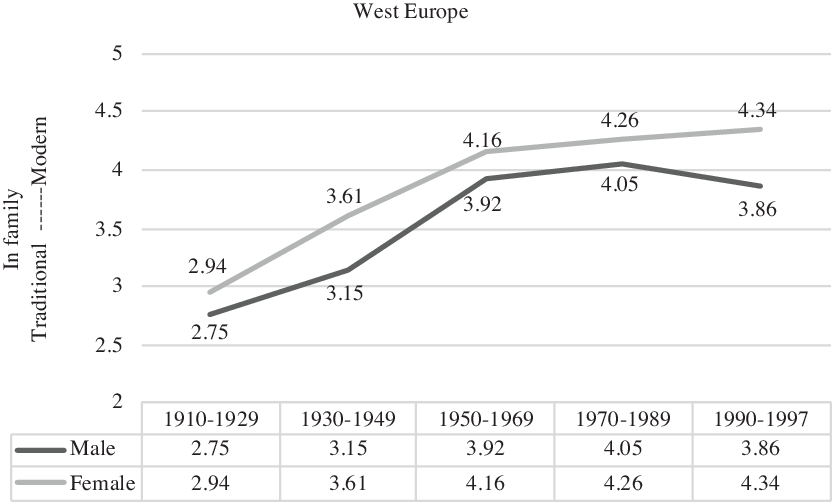
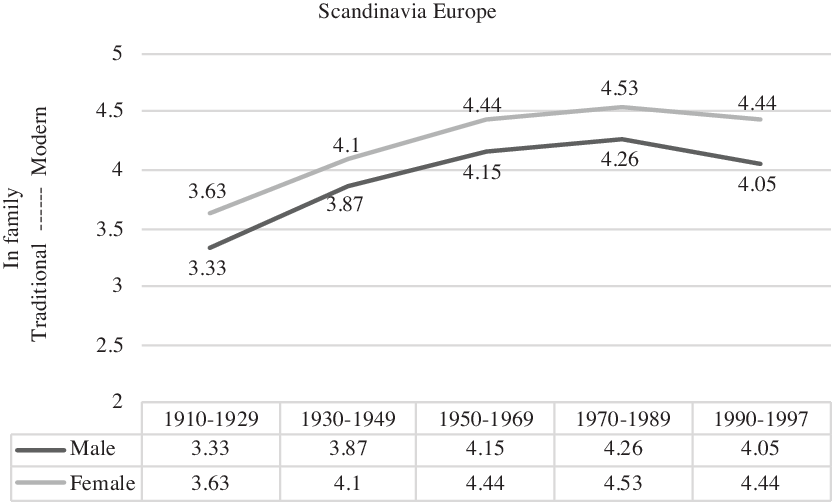
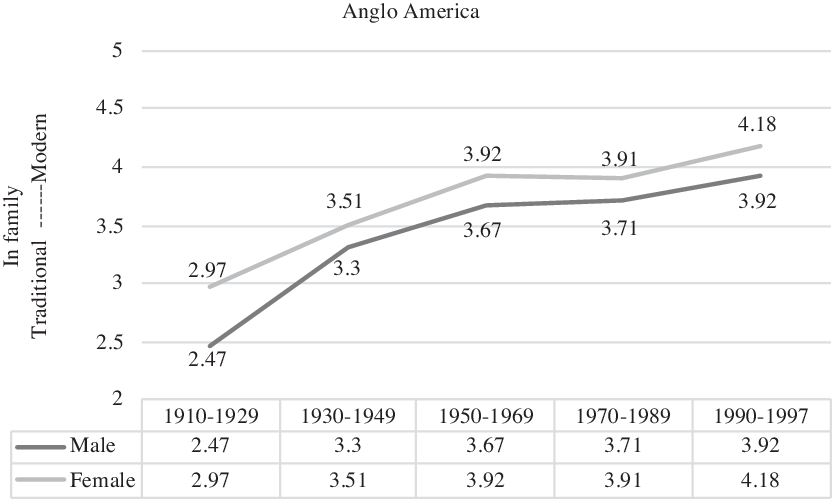
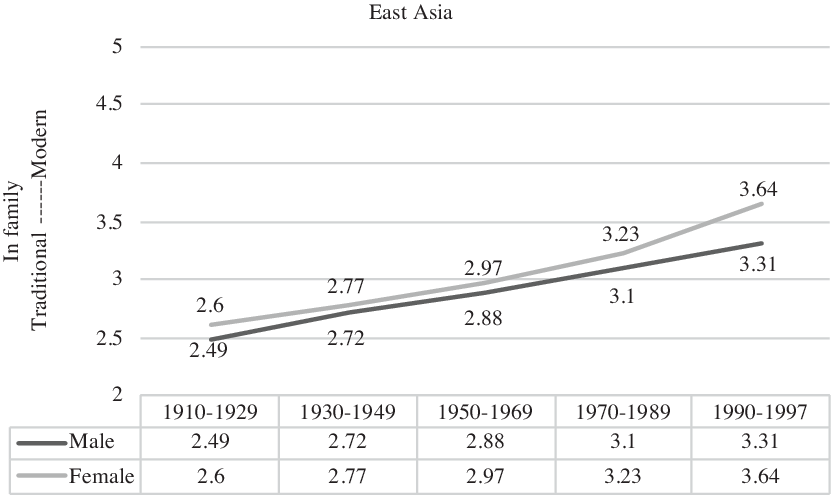
Analysing the clusters of these attitudes in greater detail, the findings in Figures 4-7 illustrate the average support for gender equality in family life by the respondents’ gender and age-cohort within each of the four groups of societies. These data show that in each group of societies expression of modern attitudes toward gender equality in the division labour in family life tends to increase with the movement from older to the younger generations. However, the average support levels-off and even shows a slight decline among the youngest generations in Western Europe and Scandinavian societies; this flattening trend-line may represent a ceiling effect, as the response averages are approaching the maximum value in these clusters. In each set of societies female respondents are on average more supportive of the equal division of labour in family life than male respondents. This gender difference increases over time in every cluster of societies except for the Anglo American group.
Attitudes toward gender equality in family life: average score by gender and generation in East Asia.
Attitudes toward gender equality in family life: average score by gender and generation in Western Europe.

Attitudes toward gender equality in family life: average score by gender and generation in Scandinavia Europe.

Attitudes toward gender equality in family life: average score by gender and generation in Anglo American societies.

Gender equality in labour market activity
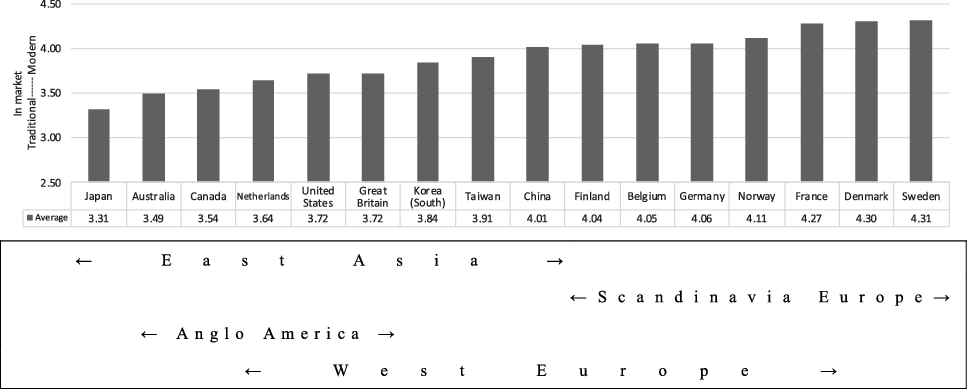
Figure 8 illustrates the degrees of support for the modern attitude of equality toward the gender division of labour in market activity among the sixteen societies. Although the differences among these societies are statistically significant (F = 151.898, p ≦ .001) the range of difference is narrower (3.31-4.31) than on the attitudes towards equality (2.83-4.48) in family life and there is much great overlap among the four groups of societies. As on the attitudes towards equality in family life, the Scandinavian societies are clustered at the high end of support for equality in the gender division of labour in market activity. The Anglo American group was in the lower half of the average scores on support for gender equality in labour market activity. Overall these findings indicate more widespread support for an equal division of gender in the market than in family life across all the societies.
Attitudes regarding gender equality in labour market activity: average score by country.

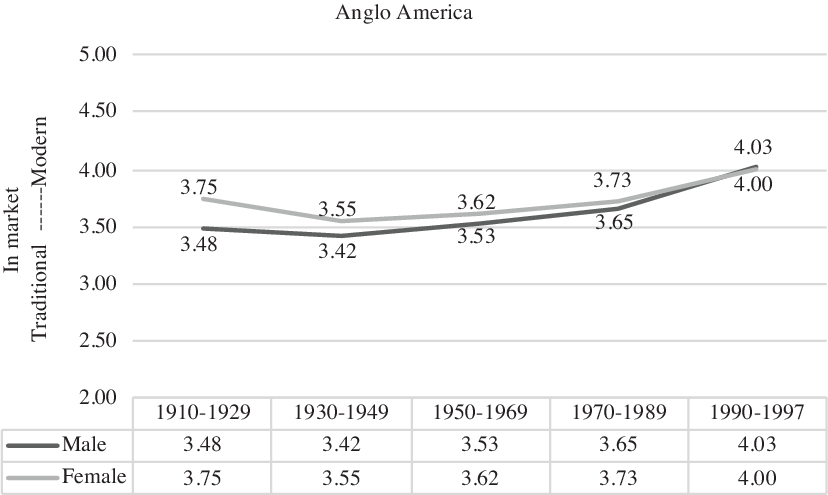
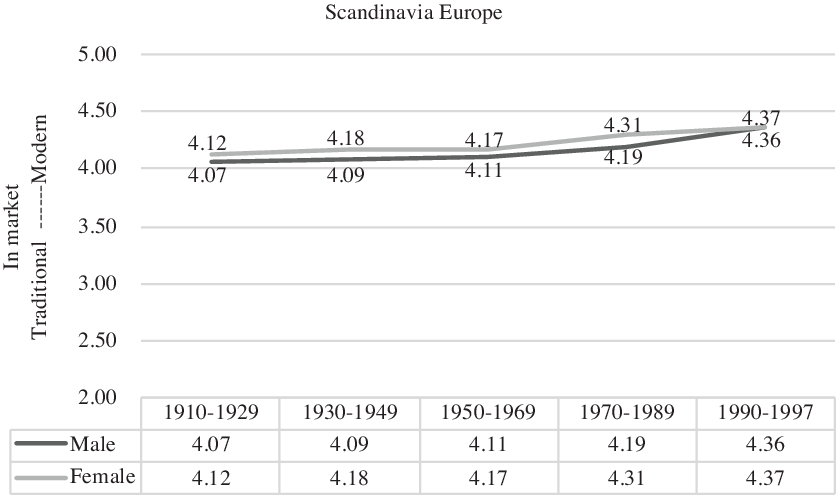
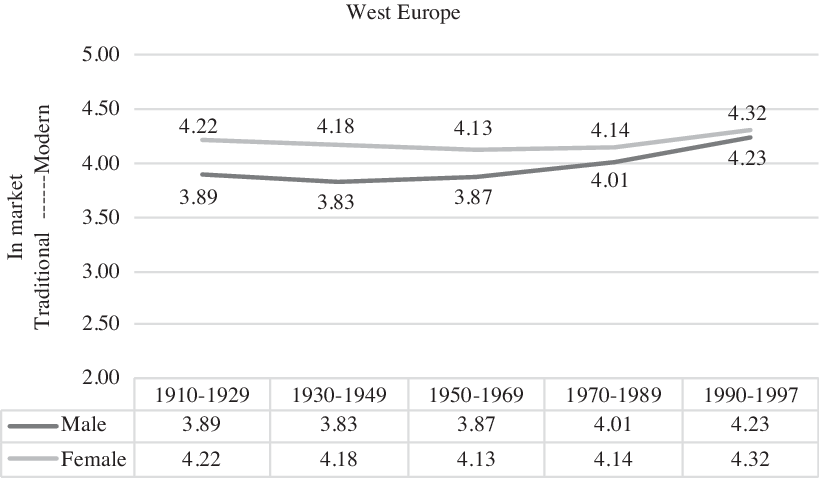
Analysing the clusters of these attitudes in greater detail, the findings in Figures 9-12 illustrate the average support for gender equality in labour market activity by the respondents’ gender and age-cohort within each of the four groups of societies. In three of the four groups – Anglo American, Western Europe, and Scandinavian societies – the data show that support for modern attitudes toward gender equality in labour market activity tends to increase as we move from older to younger generations, which parallels the attitudes expressed in these societies toward equality in family life. However, unlike the trend lines in attitudes toward equality in family life, the differences in attitudes towards labour market activity between male and female respondents in these three groups of societies decrease over time. Among the younger generations in these societies there is stronger agreement between male and female attitudes in their support for gender equality in labour market activity than for equality in family life.
Attitudes regarding gender equality in labour market activity: average score by gender and generation in Anglo American societies.

Attitudes regarding gender equality in labour market activity: average scores by gender and generation in Scandinavia Europe.

Attitudes regrading gender equality in labour market activity: average score by gender and generation in West Europe.

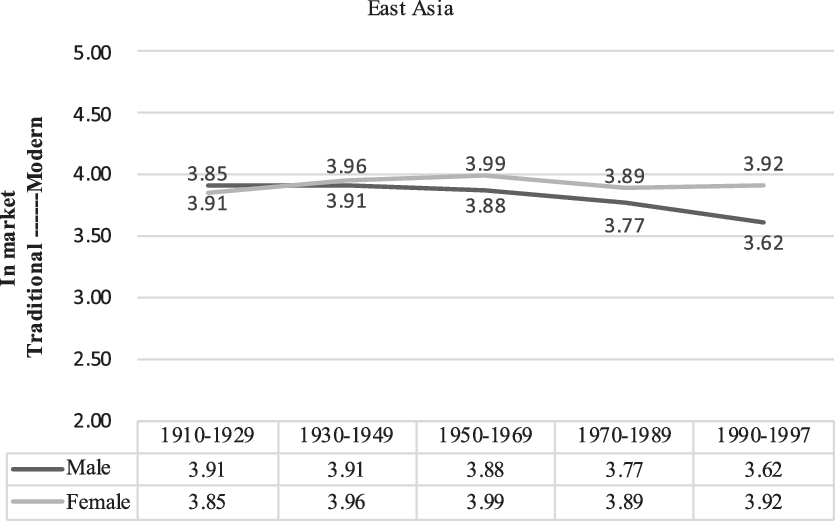
Attitudes regarding gender equality in labor market activity: average score by gender and generation in East Asia.

In comparison to the increasing support exhibited in the Anglo American, Scandinavian, and Western European societies, the average scores for the East Asian societies show that in moving from the older to the younger generations support for gender equality in labour market activity initially increased, levelled off and then declined, particularly among men; and the differences between men and women increased over time. That is, in contrast to the other societies, attitudes regarding women’s activity in the labour market appear to have become more traditional among the younger generations in East Asia. However, even with this downward trend the overall degree of support for gender equality in the market is still quite positive (between 3.62-3.92 on the scale of 1-to-5).
Cognitive dissonance regarding gender equality
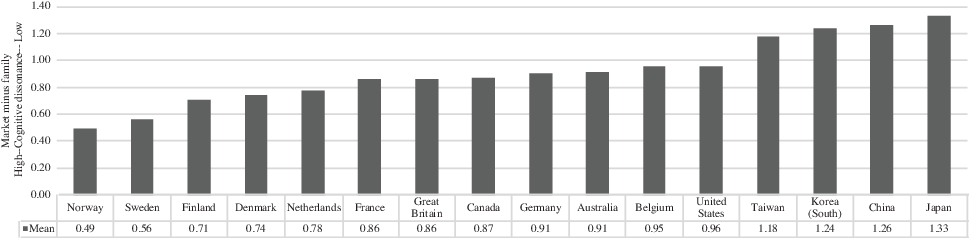
Cognitive dissonance is defined as the degree to which respondents hold contradictory attitudes toward equality in the gender division of labour in family life and the labour market. The average cognitive dissonance score for each country is based on the absolute value of the difference between each respondent’s attitude toward gender equality in the family and the market. Thus, for example, a respondent who strongly supports (score of 5) equality in the gender division of labour in the market and the family would have a dissonance score of zero.
As illustrated in Figure 13, the East Asian societies have the highest average dissonance scores and the Scandinavian societies have the lowest degrees of dissonance, with the Anglo American and West European societies in between.
Level of cognitive dissonance by country.

The differences among these societies are statistically significant (F = 98.544, p ≦ .001).
Attitudes toward gender equality, cognitive dissonance and fertility
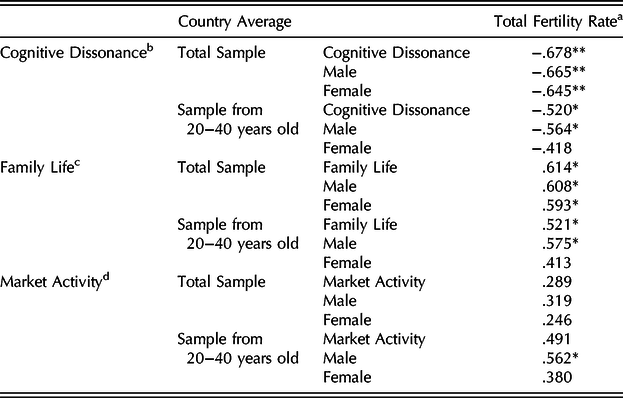
To what extent are there relationships between the fertility rates in the study sample of sixteen societies and the attitudes expressed by respondents toward the gender division of labour in family life and the labour market? Addressing this issue, the findings in Table 2 present the correlations between the 2016 total fertility rates in the sixteen societies and attitudes toward gender equality in three categories: the degree of support for equal participation in family life; the degree of support for equal participation in the labour force and the degree of cognitive dissonance between support for equality in the family and the market. In each category the data are analysed on two levels that focus on the relationships between the societies’ total fertility rates and 1) the average attitudinal scores for the total samples within the societies and 2) the average attitudinal scores for the sub-samples of twenty-to-forty-year-olds (those born between 1976 and 1996 were twenty to forty years old in 2016 as the year of TFR in this research) within the societies, the primary ages for childbearing. In addition to examining these relationships the analysis also includes the separate correlations for males and female respondents in all of the categories.
Gender equality and cognitive dissonance: correlations with total fertility rates
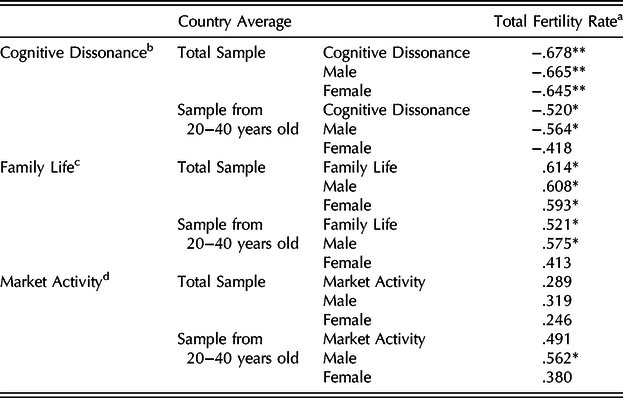
Notes: aFertility in 2016 from Central Intelligence Agency United State of America (2016); bCognitive dissonance is scored from 0 (no dissonance) to 4 (the highest cognitive dissonance); c & dSee footnote 1; *p ≦ .05; **p ≦ .01.
The findings in Table 2 reveal a sharp difference in the extent to which respondents’ attitudes regarding equality in the gender division of labour in the family and in the market are related to their societies’ total fertility rate. Positive statistically significant relationships are found between the societies’ average scores in support of equality in family and their total fertility rates. The strongest correlation (.614, p < .05) in this category is between the average scores for the total populations sampled in each country and their total fertility rates. Although this relationship held for both male and female respondents in the total samples, the strength of the relationship declined in the sub-samples of twenty-to-forty-year-old respondents and was not significant for females in that category. In contrast to the moderate and significant correlations between the societies’ fertility rates and respondents’ support for gender equality in family life, the correlations between support for gender equality in the labour market and fertility rates were weak and non-significant, with one exception; there was a significant positive relationship between fertility rates and the sub-sample of twenty-to-forty-year-old males’ support for equal gender participation in the labour market.
The findings reported in Table 2 show that fertility rates are more strongly related with cognitive dissonance than with attitudes toward gender equality in the family and market. That is, among all the categories the highest correlations and levels of significance are between fertility rates and cognitive dissonance for the total sample (−.678, p < .01) as well as for males (−.665, p < .01) and females (−.645, p < .01) within the populations surveyed. These findings suggest that, while high average scores in support of gender equality in the realms of family and the market are associated with high fertility rates, large differences between the level of support for gender equality in each realm are associated with low fertility rates.
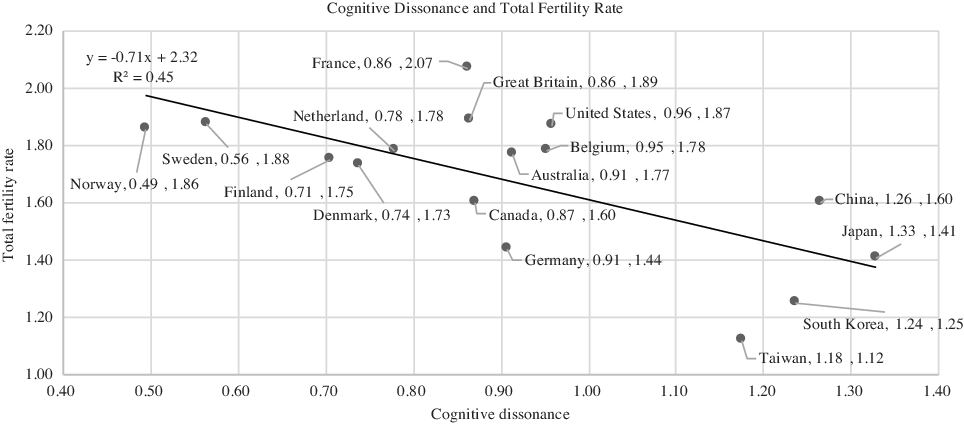
The results of a bivariate regression of cognitive dissonance scores and fertility rates shown in Figure 14 highlight how the sixteen societies align with the data points on these variables. This scatterplot shows the fertility rise as we move from societies with lower cognitive dissonance scores to societies with higher levels of cognitive dissonance. The regression line, which most closely fits the data points, is anchored by Scandinavian societies at the lower levels of cognitive dissonance and higher rates of fertility and by East Asian societies at the lower rates of fertility and higher levels of cognitive dissonance.
Bivariate regression of cognitive dissonance scores and fertility rates.

Limitations and implications
This study has several limitations. Although the cognitive dissonance scores appear to explain 45 per cent of the variance in fertility rates among the sixteen societies, the sample of societies is small and geographically limited; it’s not clear that the findings would be replicated in a larger more diverse sample. In the selection of these societies we sought to achieve a balanced representation of different regions and welfare regimes. Attitudinal data were not available on a larger number of East Asian societies sharing the Confucian culture. In addition, correlations and two variable regression analysis do not establish causal links between the attitudes toward gender equality and fertility rates; and the theoretical explanation that might support causality based on these variables does not account for the potential impact of other factors discussed earlier, such as rescaling the life cycle and the availability of social provisions designed to balance work and family life. Individual’s attitudes toward gender roles in family life can also be influenced by the societal contexts in which these attitudes are formed (Guo and Gilbert, Reference Guo and Gilbert2014). In analysing public attitudes, cause and effect are difficult to untangle. Welfare regimes that promote policies in support of gender equality may encourage attitudes in that direction.
Moreover, there are a number of issues regarding the survey questions used to operationally define attitudes toward equality in the gender division of labour in market activity and family life. Two single-item questions do not capture the full and multi-dimensional meaning of gender equality in these public and private realms. The pre-coded response sets exclude more nuanced answers that respondents might prefer (May, Reference May2008). The ISSP survey employs different modes of administration, which can influence the responses obtained (Bowling, Reference Bowling2005; Skjäk, Reference Skjäk, Harkness, Braun, Edwards, Johnson, Lyberg, Mohler, Pennell and Smith2010). And the translation of questions and answers in cross-national surveys such as the ISSP introduces additional complications. For example, Skjäk (Reference Skjäk, Harkness, Braun, Edwards, Johnson, Lyberg, Mohler, Pennell and Smith2010: 504) notes ‘that different translations of “agree” in Japan (where strong adverbs seem far more difficult to use than in other East Asian societies) resulted in different distributions.’ Bearing these limitations in mind, however, the findings lend some support to McDonald’s (Reference McDonald2000) hypothesis, which suggests that future research based on a more comprehensive measure and a larger sample of societies would constitute a useful line of inquiry.
The research findings also offer some possible insight into reasons for the very low fertility rates in East Asia, which are somewhat at odds with the Confucian devotion to parents and family in these societies. Although up until recently the fertility rate in China appeared to be held in check by the one-child policy, the birth rate remained low even when this policy was rescinded. Some people thought that the initial response might have been influenced by the cultural tradition under which Chinese are disinclined to have children in certain years that are seen as less auspicious than others in the Chinese zodiac cycle; for example, 2015, was the year of the sheep, which is considered a less favourable time to have a child than the year of the dragon. However, the birth rates in China have continued to decline through 2018 (Gietel-Basten, Reference Gietel-Basten2019; Bloomberg News, 2019).
With the exception of Japan, the East Asian societies’ average attitude scores in support of gender equality in the market placed them in the middle of the sample. In Korea, Taiwan and China, for example, there was greater support for the expectation that both men and women should contribute to household income than in the U.S., Great Britain, the Netherlands, Canada, and Australia. In contrast, the East Asian average attitude scores in support of gender equality in family life ranked at the bottom of the sample. The discrepancy here contributes to the East Asian societies generating the highest scores on the scale of cognitive dissonance. As McDonald (Reference McDonald2000) suggests, the expectation that a woman’s job is to manage the home and family while at the same time she is expected to actively participate in the labour market creates a double burden that may cause one to hesitate in assuming the responsibilities of motherhood. This may help explain the discrepancy of low fertility in the context of the Confucian culture faithful in its devotion to family life.
Overall, the data suggest that the more positive the support for gender equality in both the family and the market the higher the country’s fertility rate. Yet, with the exception of equality in market activity in East Asia, when these attitudes are viewed across the generations, the data tend to show lower levels of support for gender equality in family and market during previous decades, from the 1930s to the 1970s, periods when we know (Figures 1 and 2) that fertility rates overall were much higher than in 2016. Thus, from a longitudinal perspective, fertility rates declined as supportive attitudes for gender equality increased. This would seem to contradict the cross-sectional finding for fertility rates in 2016. Some of the differences, of course, would be accounted for by advances in contraceptive technology. Still, the findings indicate that none of the societies with the highest and most consistent degree of support for gender equality in both the market and the family had a total fertility rate as high as 2.1, which is the standard level of replacement in industrialised societies.
As noted earlier, many governments have introduced social policies that seek to increase fertility rates through family-friendly benefits that seek to facilitate an egalitarian division of labour in the home and market. This study’s findings have mixed implications for social policy. On the one hand they imply that to the extent that social policies can influence normative expectations, those designed to promote gender equality in both the family and the market may lend a boost to fertility rates. At the same time, they indicate that, from a longitudinal perspective, overall fertility rates have declined as normative expectations for gender equality have increased over time.
Acknowledgements
This research is supported by the ‘Academic Exchange and Cooperation Project’ between the Top University Strategic Alliance (Taiwan) and the University of California, Berkeley (U.S.A.) under grant no. USA-UCB-105-SR01, and also supported by the ‘Overseas Project for Post Graduate Research’ of Ministry of Science and Technology (Taiwan) under grant no. MOST107-2917-I-003-010.