Introduction
In Lebanon, as in most Arab countries, people value the family as a social institution, and co-residence is a customary way by which families meet the needs of older adults, but studies of older adults' living arrangements in these countries have been limited to Egypt, Kuwait and Lebanon (e.g. Khadr Reference Khadr1997; Shah et al. Reference Shah, Yount, Shah and Menon2002; Sibai, Beydoun and Tohme Reference Sibai, Beydoun and Tohme2009; Sibai, Yount and Fletcher Reference Sibai, Yount and Fletcher2007; Yount Reference Yount2005; Yount and Khadr Reference Yount and Khadr2008). The dearth of such studies is surprising because Lebanon, a small, middle-income country has the highest percentage of older people amongst all Arab countries (7 per cent are aged 65 or more years) (Economic and Social Commission for Western Asia 2008) but old-age pensions are lacking for the majority of its older population (Sibai et al. Reference Sibai, Sen, Beydoun and Saxena2004). Consequently, information on the composition of households and living arrangements is all the more pertinent to formulate evidence-based policies about how to meet the needs of older people.
Studies conducted in the West have shown that living with others promotes health in middle and old age, and is conducive to the exchange of social support, the promotion and support of healthy behaviour, and the supply and consumption of economic resources (Hughes and Waite Reference Hughes and Waite2002; Lund et al. Reference Lund, Due, Modvig, Holstein, Damsgaard and Andersen2002; Michael et al. Reference Michael, Berkman, Colditz and Kawachi2001). Of all the various living arrangements, living alone is an ambivalent category with respect to older adults. On the one hand, solitary living may signify financial and psychological independence; while on the other, it might indicate social isolation and social deprivation. Studies of solitary living are especially relevant in the Middle East, given that older adults living alone defy the customary Arab arrangement of intergenerational co-residence and support. In this paper, we make use of nationally representative data from the recent ‘Pan Arab Project for Family Health’ (PAPFAM) survey in Lebanon to describe the living arrangements of older Lebanese men and women and to examine the characteristics of solitary living with particular reference to socioeconomic resources and financial security.
Living arrangements and theories of social and economic change
During the past three decades in Lebanon, rapid declines in the total fertility rate (to 2.2 children per woman in 2006), and in mortality (to 5.4 deaths per 1,000 individuals), especially among children aged less than five years (to 31 deaths per 1,000 live births), have accelerated the demographic transition, and brought about a rising absolute and relative number of older adults, and increased survival into later life (United Nations Children's Fund 2006). Population projections indicate that people aged 65 or more years will constitute 10.2 per cent of the population by the year 2025, a level similar to that of contemporary Europe (Sibai et al. Reference Sibai, Sen, Beydoun and Saxena2004). Nevertheless, changes to the structure and composition of the population have not yet been matched by corresponding increases in public support, either through pension or social security schemes, or by health or social care measures such as subsidies for health care, home helps or domiciliary nursing (Sibai et al. Reference Sibai, Sen, Beydoun and Saxena2004).
While socio-cultural values still espouse the protection of older people in Lebanon, it is unclear whether, in reality, the family's customary role is being eroded. Increasing female workforce participation, declining fertility and waves of youth migration are consequences of the socioeconomic changes and of years of political and civil strife in the country. It is estimated that the continuous wars and turmoil in Lebanon drove almost 20 per cent of the population to emigrate (Ratha and Xu Reference Ratha and Xu2008). The majority of the migrants have been young recent graduates, many with advanced professional degrees, in search of work opportunities and a safe environment. One implication of this outflow is a decrease in intergenerational co-residence and an increasing number of older parents living on their own, but migrants are also an important source of remittances to the country. Recent findings have shown that migrants, a few years after establishing themselves in the foreign countries, start sending remittances to their families in Lebanon, which become a source of financial support to their older parents (Amery and Anderson Reference Amery and Anderson2008). These demographic, cultural and economic changes in Lebanon have uncertain, but probably important, implications for the living arrangements of older adults.
Modernisation theorists propose that improved standards of living, urbanisation and industrialisation decrease intergenerational co-residence as a result of increasing affluence (Michael, Fuchs and Scott Reference Michael, Fuchs and Scott1980), falling fertility (Schoeni Reference Schoeni1998), and housing experiences in early life (Goldscheider and Lawton Reference Goldscheider and Lawton1998). Intergenerational co-residence has declined in the United States of America (USA) since the 1930s (Schoeni Reference Schoeni1998), and during the latter half of the 20th century in some Asian countries and regions (Chattopadhyay and Marsh Reference Chattopadhyay and Marsh1999; Frankenberg, Chan and Ofstedal Reference Frankenberg, Chan and Ofstedal2002; Yang Reference Yang1999). Frankenberg, Chan and Ofstedal (Reference Frankenberg, Chan and Ofstedal2002) have shown that co-residence with children declined in countries of the Far East during the 1990s, for example from 76 per cent to 66 per cent between 1996 and 1999 in Taiwan. Still, persistently high levels of intergenerational co-residence prevail in parts of China and among most Asian immigrants in the USA (Kritz, Gurak and Chen Reference Kritz, Gurak and Chen2000; Logan, Bian and Bian Reference Logan, Bian and Bian1998; Wilmoth Reference Wilmoth2001), and these levels have been attributed to resilient cultural norms (Hirschman and Huu Minh Reference Hirschman and Huu Minh2002; Kamo and Zhou Reference Kamo and Zhou1994; Lee, Parish and Willis Reference Lee, Parish and Willis1994), and to legal and institutional barriers to independent living (Logan and Bian Reference Logan and Bian1999; Logan, Bian and Bian Reference Logan, Bian and Bian1998).
Other scholars have argued that relative economic prosperity and greater security coverage for older adults may promote co-residence, as the younger generations are more likely to depend on their parents financially and instrumentally (Knodel and Chayovan Reference Knodel and Chayovan1997; Mason Reference Mason1992; Natividad and Cruz Reference Natividad and Cruz1997). Such trends are most apparent in poorer countries (Khadr Reference Khadr1997; Kramarow Reference Kramarow1995; Shah et al. Reference Shah, Yount, Shah and Menon2002), while findings from wealthier countries reveal the opposite, that higher income promotes independence, individualism and the purchase of privacy among older adults (Burr and Mutchler Reference Burr and Mutchler2007; Costa Reference Costa1997, Reference Costa1999; Englehardt, Gruber and Perry Reference Englehardt, Gruber and Perry2002; McGarry and Schoeni Reference McGarry and Schoeni2000). For example, whereas the introduction of a more universal state pension in South Africa increased the average number of children co-residing with older adults (Edmonds, Mammen and Miller Reference Edmonds, Mammen and Miller2004), increases in social security coverage and old-age benefits in Greece coincided with decreases in co-residence and increases in independent living (Karagiannaki Reference Karagiannaki2005). Similarly, US studies have shown a positive relationship between economic resources and independent living. These variations might relate to differentials in the economic drive for living arrangements between wealthier and poorer populations, such that among the latter, economies of scale and greater costs of living are added incentives to co-reside (Edmonds, Mammen and Miller Reference Edmonds, Mammen and Miller2004).
In most Arab countries, including Lebanon, children tend to live with their parents until marriage, when those who couple normally leave their parents' homes and establish an independent household (Khadr Reference Khadr1997; Nawar, Lloyd and Ibrahim Reference Nawar, Lloyd, Ibrahim and Obermeyer1995; Yount Reference Yount2005; Yount and Khadr Reference Yount and Khadr2008). As the parents age and experience declining health, financial shortages or the death of a spouse, they may resume residence with a child, especially a married son (Yount Reference Yount2005; Yount and Khadr Reference Yount and Khadr2008). Demographic trends and population data from several Arab countries suggest, however, increasing heterogeneity, by place and person, in the norms that drive living arrangements and the expression of intergenerational support. In Kuwait, for example, only 0.3 per cent of older men and 1.9 per cent of older women lived alone in 2000 (Shah et al. Reference Shah, Yount, Shah and Menon2002), whereas much higher percentages of older men (3.1%) and women (12.3%) lived alone in Egypt in the same year (Yount and Khadr Reference Yount and Khadr2008). In Lebanon, a national Population and Housing Survey (PHS) conducted in 1995 by the Ministry of Social Affairs in collaboration with the United Nations Population Fund (UNFPA) revealed that older women were three times more likely to be living alone than men (15.2% and 4.9%, respectively) (Sibai et al. Reference Sibai, Sen, Beydoun and Saxena2004).
Methods
This paper draws on data from the Pan Arab Population and Family Household Health Survey that was conducted by the Lebanese Ministry of Social Affairs in collaboration with the League of Arab States in 2004 as part of the ‘Pan Arab Project for Family Health’ (PAPFAM). We focus on the economic costs and benefits of living alone and examine whether the positive relationships between economic resources and independent living found in many western societies apply to Lebanese older adults. Compared to the earlier PHS of 1995, the data at hand offer two unique advantages. First, the survey included a separate questionnaire designed specifically to address older adults' demographic and socio-economic characteristics. Second, information on health-related characteristics, which is often lacking in routine demographic surveys, was solicited.
Study sample
The sample was drawn using a three-stage, stratified, cluster-sample design. In the first stage, a systematic random sample of 15 geographical areas was selected covering Lebanon's six governorates. In the second stage, 459 probability sampling units were chosen randomly, and at the third stage, a random selection of 7,098 houses proportionate to population size was undertaken. Of these, 6,505 households were visited and 5,532 household interviews were conducted (85% response at the household level) yielding a total of 1,856 eligible older adults (aged 65 or more years) and 1,759 completed older adult interviews (94.8% response).
Measures
Living arrangements, the outcome variable, was initially classified according to the presence and marital status of the co-residing child into five mutually exclusive groups: (1) living alone, (2) living with spouse and non-children others, (3) living with unmarried children with or without others such as spouse or siblings, (4) living with any ever-married child with or without others, and (5) living with non-spouse and non-children others. For the objectives of this study, this outcome was dichotomised as ‘living alone’ versus ‘not living alone’. Measures of socio-economic resources were the main independent variables and captured work status and schooling. While the retirement age in Lebanon is set at 64 years, because pensions are lacking or very low, many older adults continue to work after the legal age of retirement and for years afterwards (Chaaya et al. Reference Chaaya, Sibai, Tabbal, Chemaitelly, El Roueiheb and Slim2010). Work status was assessed as a three-category variable (never, ex- and current) and, given the low schooling attainment of older adults in Lebanon, schooling level was dichotomised into ‘no formal schooling and illiteracy’ and ‘any schooling’. Other socio-economic factors included self-reported financial status and self-perceived satisfaction with current income. Self-reported financial status was examined through the responses to a single question, ‘how do you describe your financial role in the family: financially dependent on others, financially independent, or financial provider to others? Self-perceived satisfaction with current income was coded into a dichotomy (satisfied versus not satisfied). The level of schooling captured older adults’ early relative endowment of socio-economic resources, while measures of work status, self-reported financial status, and satisfaction with income indicated their current economic resources.
The control variables included socio-demographic and health-related characteristics that the literature suggested would be influential. The former included age in two groups (65–79 and 80 or more years), gender, marital status (never and ever-married), and the number of living sons and daughters. Using two age groups allowed comparison of the oldest old with the younger, as many of the former require support and help in daily activities and have a higher propensity for co-residence (Chucks Reference Chucks2002; Shah et al. Reference Shah, Yount, Shah and Menon2002). Previous studies have shown consistently that gender is a significant predictor of living arrangements, and that women are more likely to live alone as a result of higher life expectancy, earlier widowhood and a lower rate of remarriage (Andrews and Hennink Reference Andrews and Hennink1992; Eldemire Reference Eldemire1997; Yount Reference Yount2005, Reference Yount2009; Yount and Khadr Reference Yount and Khadr2008). Marital status and availability of living sons and daughters captured social support and it was expected that the ever-married and those with more children would be less likely to live alone (Kramarow Reference Kramarow1995; Sibai, Beydoun and Tohme Reference Sibai, Beydoun and Tohme2009; Wolf Reference Wolf, Martin and Preston1994).
Health status is also significantly associated with living arrangements (e.g. Angel, Angel and Himes Reference Angel, Angel and Himes1992; Silverstein Reference Silverstein1995). In Lebanon, older adults living in three-generation households have been shown to have higher morbidity and mortality (Sibai, Yount and Fletcher Reference Sibai, Yount and Fletcher2007). In this study, health status was evaluated by self-reported morbidity and disability based on the presence of a number of chronic diseases and need for assistance with the activities of daily living (ADL). For the purpose of this analysis, a chronic conditions score was computed by summing the number of reported diseases (‘1’ if condition or disease present, ‘0’ if absent) that are likely to cause disability or to require assistance in management. The condition items included cardiovascular (heart disease, stroke), neurological (chronic headache, epilepsy), rheumatic (pain or disease in the articulations, back pain), pulmonary (asthma, and chronic lung disease), ophthalmic (cataract, glaucoma), and mental disorders, as well as problems with urinary or bowel incontinence. The score was later grouped into four categories (no condition, one, two, and three or more conditions). Similarly, an ADL score was computed (summing ‘1’ scores for each disability item: using the toilet, bathing, dressing, moving and eating). The ADL scores were grouped on the basis of the frequency distribution into three categories (0, 1–3, 4+ disabilities).
The analysis
Using the weighted data, the frequency distributions, means and standard deviations (s.d.) of the different types of living arrangements and the socioeconomic, socio-demographic and health characteristics were examined for the total sample and for men and women. Multivariate logistic regression then was conducted to examine the association between the various measures of socio-economic resources (education, work status, satisfaction with income and financial dependence) with the outcome variable (living alone) while controlling for the confounders described above. Prevalence odds ratios (ORs) were obtained, and the significance of each was assessed using the Wald test. All statistical analyses were performed using SPSS version 16, and a 5 per cent level (p<0.05) applied for statistical significance.
Results
Characteristics of older adults in Lebanon
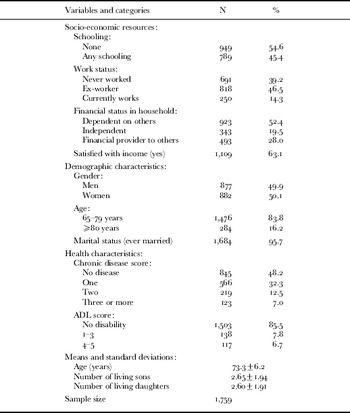
Table 1 presents the summary socio-economic, socio-demographic and health characteristics of the analysis sample of 1,759 older adults in Lebanon in 2004. More than one-half had no formal schooling, and significantly more women (63%) than men (46%). Almost 15 per cent were beyond the retirement age but still working, including significantly more of the men (25.8%) than women (2.8%). More than half of the sample were financially dependent on others, but almost two-thirds were satisfied with their current income, which was received either from their children (74.8%) or self-acquired (25.2%) (data not shown). The mean age of the participants was 73.3 years (s.d. 6.2) and men and women were almost equally represented in the sample (Table 1). The vast majority of the older adults were ‘ever married’ (95.7%) and the mean numbers of living sons and daughters were, respectively, 2.7 (s.d. 1.9) and 2.6 (s.d. 1.9). Hypertension (36.8%), heart disease (23.2%), diabetes (21.6%) and rheumatic problems (19.2%) were the most prevalent reported chronic conditions. More than half of the sample suffered from at least one chronic disease, and 7 per cent reported three or more diseases. Almost 15 per cent of the sample suffered from at least one ADL limitation and 6.7 per cent reported more than four.
Socio-economic, socio-demographic and health characteristics of older adults in Lebanon, 2004

Notes: Some numbers do not sum to 100 per cent because of non-response to selected questions. ADL: activities of daily living.
Living arrangements and associations with living alone
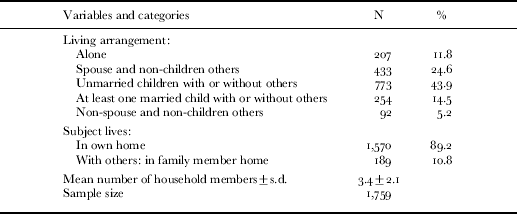
Table 2 shows the living arrangements of the sample. Around 12 per cent lived alone, with the percentage being around three times higher among women (17.3%) than men (6.2%). The majority were living with unmarried children and non-children others (43.9%), mainly in their own homes (89.2%), and the mean number of household members was 3.4 (s.d. 2.1). Supplementary analysis revealed that the percentage of those who were financially independent was highest among those living in their own homes (20.3%) and lowest among those living in another relative's home (13.2%) (p<0.001) (data not shown).
Living arrangements of older adults in Lebanon, 2004
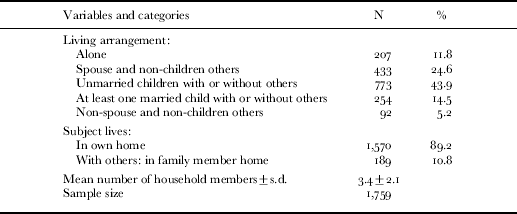
Note: s.d.: standard deviation.
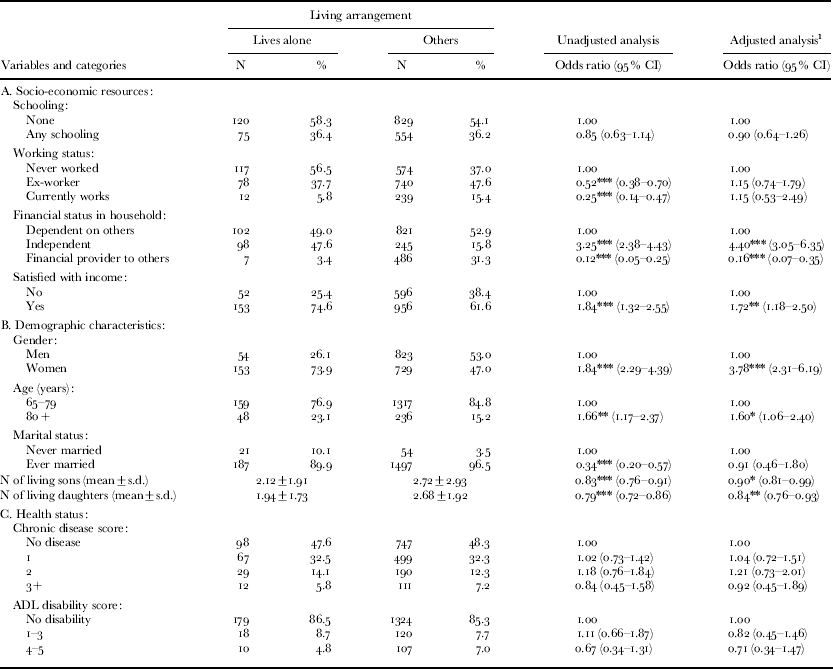
Table 3 presents the unadjusted and adjusted ORs for living alone (as against other living arrangements) by the socio-economic, socio-demographic and health measures. The socio-economic resources measures produced the strongest effects, and these remained robust after adjusting for other covariates. Older adults who were financially independent and those who reported being satisfied with their income were, respectively, 4.4 (95% confidence interval (CI) 3.1–6.4) and 1.7 (95% CI 1.2–2.5) times significantly more likely to live alone than their counterparts. In contrast, those who were providing financial resources to others were less likely to live alone. Whereas the propensity to be living alone was negatively associated with schooling attainment and work participation in the univariate analysis, these variables were not significant after controlling for other variables. Some associations with other characteristics merit attention. The propensity to live alone was significantly higher among women (adjusted OR=3.8, 95% CI 2.3–6.2) and among the oldest-old (adjusted OR=1.6, 95% CI 1.1–2.4) compared to their counterparts. While the association of living alone with marital status lost its significance in the adjusted model, its association with the number of living children remained significant, with the likelihood of living alone decreasing by 10 per cent and 16 per cent as the number of sons and daughters increased by one unit, respectively.
Logistic regression of living alone by socio-economic, demographic and health characteristics of older adults in Lebanon, 2004
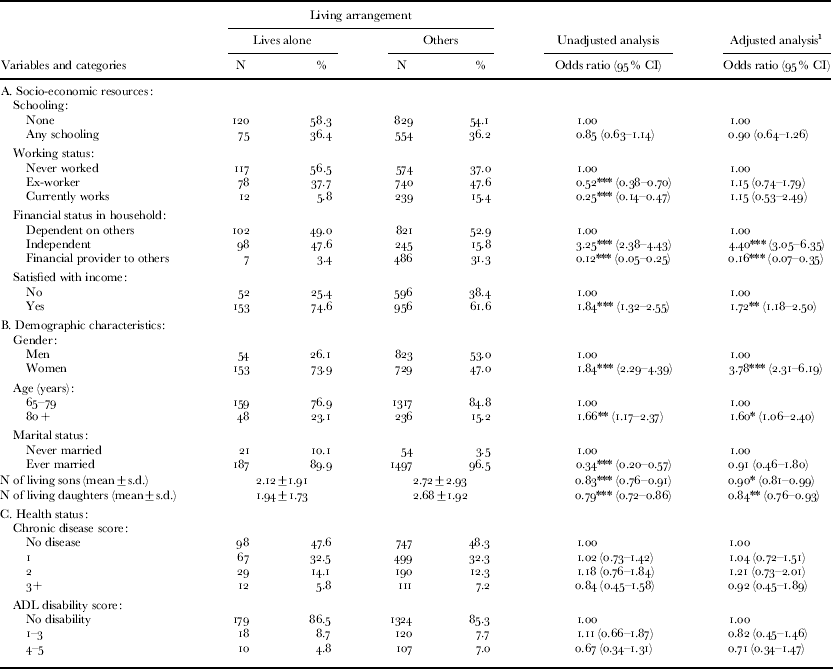
Notes: Note that some numbers do not sum to 100 per cent because of non-response to selected questions.
1. Adjusted for all variables in the table. CI: confidence interval. s.d.: standard deviation. The sample sizes are: living alone (207); other living arrangements (1,552).
Significance levels: * p<0.05, ** p<0.01, *** p<0.001.
Discussion
This study has been the first to investigate the correlates of living alone among Lebanese older adults, and has focused on their socio-economic resources. As elsewhere, Lebanon has recently experienced marked demographic, economic and social changes, which may have differentially affected shared living arrangements among its older population. Unlike many other countries, however, waves of youth migration consequent to years of civil strife, wars and conflicts may have contributed to a marked shift in patterns of co-residence and other forms of intergenerational exchange, the focus of the paper.
The findings show that the percentages of older adults living alone in Lebanon (17.3% of women, 6.2% of men) is similar to that in western nations (Costa Reference Costa1999; Iacovou Reference Iacovou2000; Kramarow Reference Kramarow1995; Mancunovich et al. Reference Mancunovich, Easterlin, Crimmins and Schaeffer1995) and higher than in other Asian countries (Frankenberg, Chan and Ofstedal Reference Frankenberg, Chan and Ofstedal2002); indeed, the highest in the Middle East. By comparison, for example, in Egypt 3.1 per cent of men and 12.3 per cent of women lived alone in 2000 (Yount and Khadr Reference Yount and Khadr2008), and in Jordan a decade ago, the percentage of older adults living alone was around 6.1 per cent (Mahasneh Reference Mahasneh2000). The lowest reported percentage of older adults living alone in Arab countries is in the oil-rich country, Kuwait (0.3% of men, and 1.9% of women) (Shah et al. Reference Shah, Yount, Shah and Menon2002). Furthermore, older adults in Lebanon do not seem to follow the tendency noted in Arab countries where wealth and higher standards of living increase the likelihood of co-residence with children (Khadr Reference Khadr1997; Shah et al. Reference Shah, Yount, Shah and Menon2002). Rather, the present analysis suggests that solitary living is chosen by those who can financially afford it. Being financially independent and being satisfied with one's income associated with a raised likelihood of living alone.
To some extent, the living arrangements and their economic correlates in Lebanon appear to be following trends noted in western nations and are consistent with the ‘convergence’ and ‘modernisation’ theories (Goldscheider and Lawton Reference Goldscheider and Lawton1998; Goode Reference Goode1963; Michael, Fuchs and Scott Reference Michael, Fuchs and Scott1980; Schoeni Reference Schoeni1998). It should be noted, however, that the propensity among older people in Lebanon to live alone may have been raised by the waves of youth migration in response to years of civil strife and wars. Youth migration has two relevant implications: it reduces opportunities for intergenerational co-residence, and raises the financial status of older parents who receive remittances from their emigrant children. The PAPFAM data indicate that the incomes of Lebanese older adults are provided mainly by their children (74.8%) and that comparatively little derives from pensions. Recent data have indicated that remittances to Lebanon, with a population of less than four million, amount to US $5.5 million every year (Ratha and Xu Reference Ratha and Xu2008). In the absence of old-age pension plans for the majority of workers in the private sector, remittances to a great extent substitute for private pension schemes, reduce poverty among older people, and enable residential independence. Research in wealthier countries, such as the USA, suggests that material wellbeing is the main driver of independent living, which in turn indicates that older adults prefer to live alone as long as they have the financial resources (Burch and Matthews Reference Burch and Mathews1987; Burr and Mutchler Reference Burr and Mutchler2007; Costa Reference Costa1999; McGarry and Schoeni Reference McGarry and Schoeni2000). Similar findings from Malaysia have indicated that older adults were more likely to ‘purchase’ their privacy when they received a pension (Da Vanzo and Chan Reference Da Vanzo and Chan1994). Relatively prosperous individuals are generally better able to care for themselves, or have sufficient resources to purchase in-home care and household help if needed (Sinunu, Yount and El Afify Reference Sinunu, Yount and El Afify2009).
In accordance with most studies in western and non-western countries including the Arab region (Andrews and Hennink Reference Andrews and Hennink1992; Eldemire Reference Eldemire1997; Iacovou Reference Iacovou2000; Kinsella and Velkoff Reference Kinsella and Velkoff2001; Yount Reference Yount2005; Yount and Khadr Reference Yount and Khadr2008), this analysis has shown that solitary living in later life positively associated with being a woman – they were almost four times more likely than men to live alone. Compared to men, women's higher life expectancy, the median age differential between husband and wife, their higher rate of widowhood and lower propensity to remarry upon widowhood and divorce may explain women's higher propensity to live alone in old age. In recent years, however, the increase in the rate of living alone was generally more pronounced among men than women. Between 1995 and 2004, while living alone among older women increased by 13 per cent (from 15.2% to 17.3%), the increase among older men was 26 per cent (from 4.9% to 6.2%) (Sibai et al. Reference Sibai, Sen, Beydoun and Saxena2004). A similar gender differential has been shown in Egypt, where between 1988 and 2000 the rate of living alone increased faster among older men than older women (Yount and Khadr Reference Yount and Khadr2008), and the gender differential has been attributed to women's greater investments in care-giving, leading to the maintenance of emotional and financial support from the children (Wolf Reference Wolf1972; Yount Reference Yount2005, Reference Yount2009; Yount and Khadr Reference Yount and Khadr2008).
The findings of this analysis should be interpreted with caution for some of the described findings can be confounded. First, while the older adults who lived alone seemed to have higher socio-economic status and better material circumstances compared to other older adults, the group is selective in that frail, impaired and possibly poorer people who had moved to a formal care setting were not observed. The effect of such a selection bias will not be great, however, because recent data indicate that less than 1 per cent of older Lebanese adults live in institutions (Hospers, Chahine and Chemali Reference Hospers, Chahine and Chemali2007). Second, it is likely that an older adult living alone who falls ill would move in with a relative – given the cross-sectional nature of the study, any such temporary arrangements could not be ascertained. Third, the PAPFAM data do not permit the close study of some potentially relevant associations. For example, urban and rural residence was not distinguished and there was no information about the number of children living abroad or on the number of older adults who received remittances by the country locations of their children. Additionally, Lebanon's population has different religions and religious affiliations, which may be associated with different preferences regarding living arrangements and so modify the relationships observed between the independent variables and the outcome. The roles of urban–rural differentials in living arrangements, remittances and religious affiliations require further investigation. Finally, the PAPFAM survey did not provide information on the residential proximity of older adults to non-coresident children. Because Lebanon is a small country, many parents who do not co-reside with their children live within a short distance, which facilitates frequent visits and the exchange of various resources. In fact, almost 94 per cent of older adults in this sample noted that they received regular visits from their friends and children. Further research into the contacts and resource exchanges of older people who live near their children would be informative.
In conclusion, and contrary to findings from other Arab countries, living alone in Lebanon seems to be a choice taken by those who can afford it. The trend in living arrangements among older adults in Lebanon appears to be following the western model whereby older individuals with financial resources, often received from their children, are the most likely to live alone. Given the country's socio-political setting, it is reasonable to suggest that additional to the demographic and social forces that are promoting solitary living, the waves of youth emigration have challenged the deeply rooted cultural norms of intergenerational co-residence, and raised the likelihood of older people living alone. The emigrants' remittances make solitary living affordable for many older parents and increase their residential independence.
Acknowledgements
This study was supported by a grant from the Gender Economic Research and Policy Analysis programme funded by the World Bank and the University Research Board (URB) at the American University of Beirut. The data were kindly provided by Dr Ahmad Abdel Monem, the Project Manager of the Pan Arab Project for Family Health (PAPFAM).