CHD are common in the general population, and are present in an estimated 50 per 1000 live births.Reference Pierpont, Basson and Benson 1 The long-term care needs of this population are becoming increasingly important as an estimated 85% of children with CHD survive into adulthood.Reference Hoffman, Kaplan and Liberthson 2 It has become apparent that survivors of CHD, with brain immaturity at times of corrective or palliative operative interventions with altered cerebral blood flow and requisite intensive care support, have neurocognitive effects including developmental disabilities.Reference Marino, Lipkin and Newburger 3 , Reference Cheng, Wypij and Laussen 4
It is also understood that there is a high burden of genetic diagnosis in individuals with CHD with over 750 associated syndromes described.Reference Marino, Lipkin and Newburger 3 Genetic syndromes can potentially cause more severe developmental delay than would be expected by surgical intervention alone; 8–13% of patients with CHD have abnormal chromosome analysis.Reference Ferencz, Neill and Boughman 5 An additional 20% or more patients with CHD may be identified as having a confirmed genetic syndrome with re-examination by a geneticist at 1 year of age,Reference Ferencz, Neill and Boughman 5 , Reference Fuller, Nord and Gerdes 6 lending support for genetic follow-up and serial examinations. The presence of a genetic syndrome is highly associated with more severe neurodevelopmental delay in children with widely varying congenital heart anomalies.Reference Fuller, Nord and Gerdes 6 – Reference Zeltser, Jarvik and Bernbaum 8
A cardiovascular genetics approach with a personalised genetic differential based on CHD findings may lead to a higher diagnostic rate – for example, 80% of individuals with certain characteristic heart lesions have 22q11.2 deletion syndrome confirmed by genetic testing.Reference Rauch, Rauch and Koch 9 In addition, clinically available genetic testing has increased dramatically, including chromosome microarray, gene panels utilising NextGen sequencing, and whole exome or genome analysis. Beyond genetic testing, a trained geneticist can request additional specialist referrals for phenotyping that may lead to refining the differential, as well as imaging that may detect other congenital or skeletal findings characteristic of a suspected syndrome.
Owing to the presumed likelihood of undiagnosed genetic causes of CHD in the Cincinnati Children’s Hospital Medical Center (CCHMC) Heart Institute Neurodevelopmental and Educational Clinic (NDEC), and with the premise that knowledge of a unifying diagnosis would affect health as well as developmental and educational recommendations, a cardiovascular geneticist was recruited to see patients as part of the multidisciplinary team evaluation. The purpose of this study was to describe the prevalence of new genetic syndromic diagnosis and medical management needs in a selected population seen in a cardiac neurodevelopmental follow-up clinic.
Materials and methods
Study design
This study was a retrospective case series approved by the CCHMC Institutional Review Board (2013–2632).
Patient population
In the course of the Heart Institute NDEC evaluation at CCHMC, 214 consecutive patients were evaluated from 6 December, 2011 to 16 April, 2013. All patients were referred by physicians who cared for them within the Heart Institute. Eligible patients for this clinic were assessed to be at high-risk of developmental delay by previously described American Heart Association guidelines:Reference Cheng, Wypij and Laussen 4 open heart surgery, cyanotic heart lesion, prematurity and/or developmental delay recognised in infancy, genetic abnormality or syndrome associated with developmental delay, mechanical support or heart transplantation, cardiopulmonary resuscitation, prolonged hospitalisation (>2 weeks), perioperative seizures related to heart repair, and significant abnormalities on neuroimaging or microcephaly. No referred patients were excluded. All patients were evaluated by a multidisciplinary neurodevelopmental team including a paediatric cardiologist, developmental-behavioural paediatrician, cardiovascular geneticist, neurologist, psychologist, educational specialists, social worker, nutritionist, child life specialist, and occupational/physical therapists. After a half-day evaluation, the team created an integrated global impression and plan with specific recommendations, which was shared with the parent/guardian, primary cardiologist, and primary care provider. Follow-up assessments by other ancillary medical providers and scheduling for specific neuropsychological testing were coordinated by the clinic’s advanced practice nurse who functioned as the programme manager. Educational specialists coordinated implementation of NDEC team recommendations in each patient’s school. Follow-up evaluations were recommended based on the specific needs of the child, team consensus, and the 2012 American Heart Association/American Academy of Pediatrics neurodevelopmental follow-up guidelines for children and adolescents with CHD.Reference Marino, Lipkin and Newburger 3
Data collection
This study was approved by the CCHMC Institutional Review Board. Demographic, clinical, and genetic data were obtained via chart review, electronic and/or paper chart. Demographic data included date of birth, date of visit, gender, and race. Clinical data included cardiac and pre- and post-visit genetic diagnosis, which were classified as “isolated heart defect”, heart defect without other known congenital anomalies or dysmorphic features, “multiple congenital anomalies”, that is, >1 congenital anomaly, inclusive of dysmorphic features, with unknown unifying diagnosis, “clinical syndrome”, clinical features of a recognisable genetic syndrome or prenatal exposure without laboratory confirmation, or “laboratory-confirmed syndrome”, clinical laboratory results consistent with diagnosis of syndrome. Clinical diagnosis was established using peer-reviewed published guidelines for clinical diagnosis when available.Reference Niikawa, Matsuura and Fukushima 10 – Reference Loeys, Dietz and Braverman 12 Genetic data included clinical genetic testing results, family history, and pedigree.
Statistical analysis
Summary statistics were performed to tabulate categorical variables. The cohort was divided into the four discrete diagnosis categories as noted above. Pearson’s χ2 analysis was used to compare the distribution of diagnostic categories before and after visit. Stata 11 software 13 was used for analysis (StataCorp, College Station, Texas, United States of America).
Results
Patient population
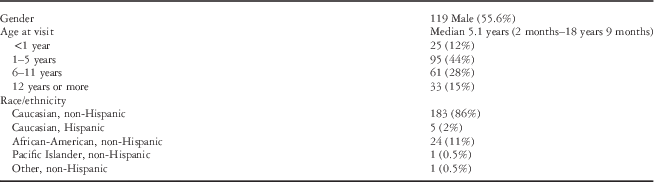
We report 214 consecutive NDEC patients who were seen by a medical geneticist with genetic counselling support during the course of the Heart Institute NDEC multidisciplinary evaluation at CCHMC. Demographic data are summarised in Table 1; 56% of the patients were male, and the primary race/ethnicity group was Caucasian (Non-Hispanic). The median age was 5.1 years (2 months–18 years 9 months). The majority of patients were older than 1 year of age (88%), with 44% aged 1–5 years. Of the 214 patients, 144 (67%) had biventricular CHD with (27) or without (117) aortic arch obstruction and 70 (33%) had single ventricular CHD with (34) or without (36) aortic arch obstruction.
Study population demographics (n=214).

Clinical and genetic findings
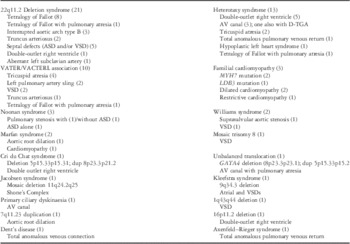
In all, 64 patients (30%) had a previously identified clinical (26) or laboratory-confirmed syndrome (38) (Table 2). In the 176 patients without a laboratory diagnosis (82%), the following normal testing had been performed previously: chromosome microarray (48), chromosome analysis (32), fluorescent in situ hybridization (FISH) probe for 22q11 deletion syndrome (33) or Williams Syndrome (1), single-gene sequencing (ZIC3, DNAI2, MYH7, COL3A1), seven NextGen panels (heterotaxy or Noonan Syndrome), three metabolic screens, and one chromosome breakage study for Fanconi anaemia.
Diagnoses before Neurodevelopmental and Educational Clinic visit (n=64)Footnote * and primary heart lesion.

ASD=atrial septal defect; AV=atrioventricular; D-TGA=D-transposition of the great arteries; VATER/VACTERL=vertebral anomalies, anal atresia, cardiac defects, TE fistula, esophageal atresia, renal dysplasia, limb defects; VSD=ventricular septal defect
* One patient had both cardiomyopathy and Marfan syndrome
After examination by a dysmorphologist specialising in cardiovascular genetics, the following recommendations were made: 112 patients (52%) were recommended to have additional genetic testing; 73 patients (34%) were referred to additional medical specialists; 17 patients (8%) were recommended to have radiological imaging recommended by the geneticist, for example, bone age and MRI of the brain; and 14 patients (6%) were recommended to have clinical laboratory studies, for example, thyroid stimulating harmone. The referred services included, in order of frequency, the following: ophthalmology, endocrinology, urology, craniofacial team, gastroenterology, psychiatry, dentistry, and nutrition.
Healthcare management based on diagnosis was provided for 32 patients (15%) who received syndrome-specific published guideline healthcare management recommendations. Healthcare management was performed for 26 patients with the following diagnoses: 22q11.2 deletion, Noonan syndrome, and Williams syndrome;Reference Bassett, McDonald-McGinn and Devriendt 14 – 16 six additional patients with heterotaxy syndromes and asplenia or polysplenia received recommendations according to the American Academy of Pediatrics Red Book Guideline for asplenia,Reference Pickering, Kimberlin and Long 17 including additional immunisations, and discontinuation and/or initiation of antibiotic prophylaxis may have been recommended. Cardiac imaging was recommended for first-degree relatives in 23 families (11%) because of diagnoses of left ventricular outflow tract obstruction defects such as bicuspid aortic valve or hypoplastic left heart syndrome or cardiomyopathy in the proband.
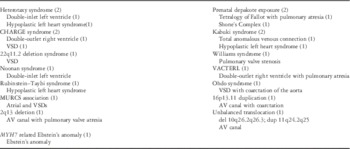
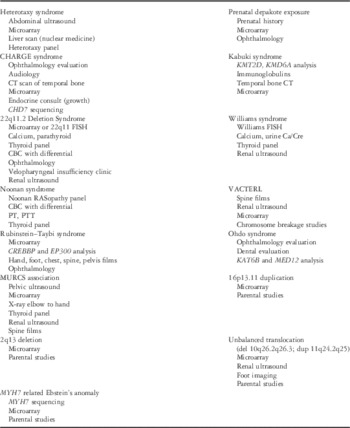
Following these cardiovascular genetic evaluations, 19 patients (13%) received a new clinical or laboratory-confirmed diagnosis (Table 3). Recommended studies that led to diagnosis and initial management are outlined in Table 4. Overall, in the NDEC cohort, the clinical and laboratory-confirmed diagnosis rate increased from 30% (64/214) to 39% (83/214).
New diagnoses following Neurodevelopmental and Educational Clinic genetics evaluation (n=19) and primary heart lesion.

AV=atrioventricular; CHARGE syndrome=coloboma, heart defects, atresia choanae, retardation of growth or development, GU anomalies and hypogonadism, ear anomalies and deafness; Müllerian=duct, renal, and cervical vertebral defects; VSD=ventricular septal defect
Genetic evaluation leading to diagnosis.

CBC = complete blood count; PT = prothrombin time; PTT = partial thromboplastin time
Pre- and post-visit patient classifications were compared (Table 5). Before evaluation, more than half of the patients were considered to have isolated cardiac defects without multiple congenital anomalies; however, after genetic evaluation, there was a significant decrease in the number of patients considered to have CHD as an isolated finding and an increase in the post-visit number of patients with clinical and laboratory-confirmed genetic diagnoses in the between-group analysis (p<0.0001).
Comparison of pre-visit and post-visit diagnostic classification (n=214).

Discussion
In this study, consecutive patients were screened by a cardiovascular geneticist in a cardiac neurodevelopmental follow-up clinic. Before NDEC evaluation, the population was well characterised from a genetics standpoint with 30% having a known clinical or laboratory-confirmed genetic diagnosis. As this was a cardiac at-risk population referred for multidisciplinary developmental evaluation, not all genetic diagnoses were necessarily associated with neurodevelopmental delay, such as VATER/VACTERL, Marfan, and heterotaxy syndromes, as well as cardiomyopathy.
The important finding was that an additional 13% of the aggregate undiagnosed patients were given a new genetic diagnosis following initial brief evaluation by a geneticist in the context of the multidisciplinary evaluation. Most of these patients had not seen a geneticist previously. With these diagnoses, 39% of the patients in the cardiac neurodevelopment clinic had an identifiable environmental or genetic cause of their heart disease.
In addition to identifying new unifying diagnoses, this study shows the value of consultation with a genetics subspecialist for ongoing evaluation and management in patients with identified clinical or laboratory-confirmed syndromes. Of those patients with pre-existing genetic diagnoses, there were additional interventions recommended by the geneticist, including additional genetic testing, for example, chromosome microarray or chromosome breakage studies in patients with VACTERL to assess for Fanconi anaemia, additional imaging studies to screen for associated anomalies, for example, renal ultrasound and scoliosis series, additional consultations, for example, ophthalmology, and laboratory testing. Patients with identified syndromes with health supervision recommendations were given medical management for these conditions. Many of these patients were not followed-up by a geneticist on a regular basis, and these evaluations would not have occurred otherwise.
The findings of new genetic diagnoses in this study are similar to previous studies at The Children’s Hospital of Philadelphia, where a geneticist evaluated 359 patients with CHD at 1 year of age and an additional 8% were diagnosed with a new syndrome, as well as an additional 15% were suspected of having a syndrome;Reference Fuller, Nord and Gerdes 6 two other cardiac defect-specific papers from this group described newly confirmed or suspected diagnoses in 35% of patients with ventricular septal defectReference Zeltser, Jarvik and Bernbaum 8 and in 18% of patients with tetralogy of Fallot.Reference Zeltser, Jarvik and Bernbaum 8 These studies found that confirmed or suspected genetic syndrome was the most important predictor of neurodevelopmental outcomes in patients with CHD at 1 year of age.Reference Fuller, Nord and Gerdes 6 – Reference Zeltser, Jarvik and Bernbaum 8 It can be difficult to discern dysmorphic features in newborns who are critically ill with CHD, and all congenital anomalies as well as developmental concerns may not yet be apparent, underscoring the importance of genetic re-evaluation over time.
The burden of genetic disease in individuals with CHD is becoming more apparent with revolutionary improvements in genetic testing. Previously, a unifying diagnosis was determined by genetics screening or consultation, possibly with studies of metabolic aetiologies, and chromosome analysis. Many school-aged and adolescent patients in NDEC were assessed as newborns with these technologies, with no further genetics follow-up. With more sophisticated clinical testing available, older patients should have the benefit of re-evaluation by a medical geneticist to determine whether additional testing would be beneficial.
Genetic diagnosis has multiple benefits, including providing a unifying context for multiple co-morbidities, and potentially uncovering genetic disorders that may affect a patient’s developmental performance;Reference Fuller, Nord and Gerdes 6 – Reference Zeltser, Jarvik and Bernbaum 8 for example, a suspicion of CHARGE syndrome in a toddler patient in NDEC led to evaluations that discovered retinal colobomas and abnormal semicircular canals, clarifying difficulties with vision, imbalance, and gross motor delay. With genetic evaluation, there may be an end of a diagnostic odyssey and costly diagnostic evaluations and a shift in focus of care to healthcare management and developmental/educational support. Finally, having a genetic or syndromic diagnosis offers families the opportunity to connect with other families via social media, non-profit support groups, and syndrome-specific conferences.
Evaluation by a cardiovascular geneticist identified a number of families who may be at risk for cardiac anomalies or cardiomyopathy. Bicuspid aortic valve is a common CHD present in 0.5–1.4% of the general population.Reference Evangelista 18 This common heart defect is highly heritable and may be present in parents or siblings of an affected patient.Reference McBride, Zender and Fitzgerald-Butt 19 , Reference Calloway, Martin and Zhang 20 There is an increased risk of bicuspid aortic valve in other family members of individuals with hypoplastic left heart syndrome.Reference Hinton, Martin and Tabangin 21 Echocardiograms are recommended for first-degree family members of individuals with a bicuspid aortic valve or hypoplastic left heart syndrome.Reference Warnes, Williams and Bashore 22 Any affected individuals in the family should have cardiology care and follow-up.
Cardiomyopathy is a common and progressive condition. Cardiomyopathy can be familial, most commonly with autosomal dominant inheritance due to sarcomeric mutations, but in paediatric populations there can also be underlying metabolic or syndromic aetiologies that may elevate the risk for neurodevelopmental delay.Reference Kindel, Miller and Gupta 23 Thus, echocardiograms of first-degree relatives of affected individuals are recommended, and cascade genetic screening should be performed if a disease-causing mutation is identified in the proband.Reference Hershberger, Lindenfeld and Mestroni 24 In total, four families of patients with cardiomyopathy – restrictive, dilated, and left ventricular non-compaction – were seen in NDEC, and following unremarkable genetics examination surveillance echocardiograms, genetic testing for cardiomyopathy of the proband, or known familial mutation testing were recommended as appropriate.
As a member of the multidisciplinary team, cardiovascular geneticists have a responsibility for educating team members regarding a patient’s unifying diagnosis and potential developmental, educational, neurological, and nutrition implications – for example, in NDEC, the geneticist may inform the developmental paediatricians regarding syndrome-specific developmental and neurocognitive profiles, education strategies, co-morbidities, and growth charts. The multidisciplinary setting facilitates immediate communication between the geneticist and other subspecialists, resulting in a more personalised and informed evaluation.
Our study does have some limitations. This study may have a possible ascertainment bias in that patients referred to NDEC may have had suspected genetic disorders or more severe developmental concerns prompting the referral to NDEC. Arguing against bias is the fact that the cardiovascular geneticist had an independent genetics clinic and was available for referrals from specialists both within and outside CCHMC, the geneticist was embedded in the Heart Centre on a full-time basis, and our findings were similar to the study by Fuller et al, which found new genetic diagnoses in 8% of patients. A second limitation of this retrospective case series may be that the data are historic and may be incomplete – for example, not all medical data were available for patients who were initially seen at other institutions or where records were lost. Some families did not follow-up with the recommended genetic testing, and the ascertainment of genetic diagnosis is likely underestimated. No patients were studied with whole-exome or whole-genome sequencing, which may have increased the yield of genetic evaluation. Finally, this case series reflects evaluations by a single medical geneticist, and additional geneticist input might have increased the diagnostic yield.
Conclusion
Participation by a medical geneticist in the Heart Institute cardiac Neurodevelopmental and Educational Clinic was associated with significantly increased clinical and laboratory-confirmed diagnoses in patients. The healthcare management of patients and families with a variety of diagnoses was specifically addressed using the most current guidelines. Identifying an underlying genetic aetiology for CHD can improve the care team’s ability to provide the best-informed developmental guidance, ensure that patients receive the most appropriate medical surveillance and treatment, and provide important information and psychosocial support to patients with CHD and their families.
Acknowledgements
The authors acknowledge the substantial contribution by all members of the Heart Institute-Kindervelt as well as the Neurodevelopmental and Education Clinic team.
Financial Support
This research received no specific grant from any funding agency or commercial or not-for-profit sectors.
Conflicts of Interest
None.
Ethical Standards
The authors assert that all procedures contributing to this work comply with the ethical standards of the relevant national guidelines on human experimentation (Cincinnati Children’s Hospital Medical Center Institutional Review Board) and with the Helsinki Declaration of 1975, as revised in 2008, and has been approved by the institutional committee of Cincinnati Children’s Hospital Medical Center.