Introduction
Australia has a spatially diverse population, with 30% of residents living outside of the major cities in regional and remote communities (Australian Bureau of Statistics, 2013). Rural and remote residents may be exposed to a variety of risk factors for poor mental health tied to their location, including environmental adversity, geographical isolation, restricted access to services and poorer socioeconomic circumstances (Smith et al. Reference Smith, Humphreys and Wilson2008). Socioeconomic disadvantage has been shown to increase with decreasing population density (Australian Institute of Health and Welfare, 2012), with 39% of those living in remote areas meeting criteria for low socioeconomic status compared with 24% of those living in regional areas and 17% of those in major cities (National Rural Health Alliance, 2013). Financial hardship or deprivation in particular has been identified as a strong and consistent correlate of poor mental health (Lewis et al. Reference Lewis, Bebbington, Brugha, Farrell, Gill, Jenkins and Meltzer1998; Weich & Lewis, Reference Weich and Lewis1998; Mirowsky & Ross, Reference Mirowsky and Ross2001; Skapinakis et al. Reference Skapinakis, Weich, Lewis, Singleton and Araya2006; Butterworth et al. Reference Butterworth, Rodgers and Windsor2009; Kiely et al. Reference Kiely, Leach, Olesen and Butterworth2015). Measures of financial hardship assess the ability to meet basic individual needs (such as food and shelter), and therefore identify those excluded from minimally accepted standards of living in society (Whelan et al. Reference Whelan, Layte, Maitre and Nolan2001). Evidence suggests the experience of hardship or deprivation mediates much of the association between other measures of socioeconomic status and mental health (Butterworth et al. Reference Butterworth, Olesen and Leach2012). Thus, hardship/deprivation may be a potentially important target for regional and remote mental health strategies.
In contrast to evidence of the adversity associated with residing in a rural location, a separate body of research has shown protective effects of rural living. For example, living in close proximity to ‘green’ space has been shown to moderate the effects of stressors such as adverse life events, and income inequality, such that the consequence of these stressors on health and mortality is reduced (Mitchell & Popham, Reference Mitchell and Popham2008; van den Berg et al. Reference Van Den Berg, Maas, Verheij and Groenewegen2010; Astell-Burt et al. Reference Astell-Burt, Mitchell and Hartig2014). In analysis that considered area-based differences in the influence of social capital on psychological distress, Allen et al. (Reference Allen, Inder, Lewin, Attia and Kelly2012) found that low levels of social support (a composite index reflecting perceptions of emotional support and social network size and frequency of contact) were less strongly associated with psychological distress amongst those living in remote locations than those in more urban environments. It may be that other personal or social features of remote communities are protective of mental health, such as sense of community. Our previous research suggested that, for those residing in remote locations, mental health was more closely tied to their family and household circumstances than for those in more urbanised locations (Butterworth et al. Reference Butterworth, Handley, Lewin, Reddy and Kelly2014). Thus, while people living in more remote and regional areas may experience greater rates of poverty and hardship, the positive features of living in these areas may reduce the impact of these exposures on their mental health. To date, little research has explored the relationship between financial hardship and mental health across geographical areas; hence, it is unclear whether a differential effect exists across regions. In one relevant study, Law et al. analysed suicide register data from the Australian state of Queensland. They found the area-based indicators of deprivation (e.g., levels of unemployment, income and public housing), while strongly associated with suicide mortality in urban regions, showed no such association with suicide mortality in rural Queensland (Law et al. Reference Law, Snider and De Leo2014).
The aim of this paper is to enhance our understanding of the relationship between hardship (assessed at the individual level) and mental health. We report an analysis of longitudinal data from a large study of the mental health of individuals living in remote and regional communities in the Australian state of New South Wales. On two occasions this study included a module of financial stress/deprivation items previously demonstrated to explain much of the variance in mental health due to other socioeconomic measures (Butterworth et al. Reference Butterworth, Olesen and Leach2012). Our first aim is to contrast the distribution of hardship and other measures of socioeconomic disadvantage among residents of regional and remote communities to determine if exposure to this key stressor is elevated in the most remote areas of Australia. Second, we will explore the relationship between hardship and mental health across geographical regions to assess whether the strength of the association between deprivation and psychological distress varies by remoteness of residence. Subsequent analyses will test the robustness of the findings via a range of sensitivity tests, including replication with a different dataset, the application of different analytic methods, considering the consistency of the association between hardship and alternative markers of socioeconomic circumstances, and investigating whether the pattern of results observed can be explained by key individual and community-level characteristics.
Method
Data
Data were from the Australian Rural Mental Health Study (ARMHS), a longitudinal population-based study exploring the determinants of mental health in rural and remote communities. ARMHS commenced in 2007, with respondents randomly selected from non-metropolitan NSW through the Australian Electoral Roll. A household sampling frame was used whereby a household informant, identified through an initial telephone contact, provided family and household membership information. Postal surveys were then mailed to all adult members of each household. Remote and very remote regions were oversampled to ensure an adequate sample size from these regions. A full description of the study methodology is available in Kelly et al. (Reference Kelly, Stain, Coleman, Perkins, Fragar, Fuller, Lewin, Lyle, Carr, Wilson and Beard2010, Reference Kelly, Lewin, Stain, Coleman, Fitzgerald, Perkins, Carr, Fragar, Fuller, Lyle and Beard2011).
This analysis draws on baseline data conducted in 2007 and the wave 4 data collected in 2013. Overall, 2639 survey respondents from 1879 households completed a baseline postal survey (response rate 27%), with 28% of respondents residing in remote or very remote regions. On average, there were 1.4 respondents per household. At baseline the key hardship measures were included in a supplementary questionnaire, which was mailed to all participants two weeks after the initial survey, and was returned by 2161 (82%) respondents. These same items were also assessed in the final wave questionnaire, with 1165 of the original respondents participating in this wave (44%). Thus, this analysis is based on a total overall sample of 2161 persons with 3121 observations: 1082 provided data at baseline only, 119 provided data at wave 4 only, and 960 contributed data at both waves.
Measures
Geographical area
Remoteness was assessed using the Australian Standard Geographic Classification (ASGC; Australian Institute of Health and Welfare, 2004). The ASGC classifies geographical areas by the distances that need to be travelled (by road) to reach the nearest urban localities of various sizes. Thus, it provides a measure of accessibility to goods and services (Australian Bureau of Statistics, 2006). The current analyses contrasted respondents identified in regional areas (inner and outer regional; n = 1595) with those residing in remote or very remote locations (n = 566).
Psychological distress
The key outcome measure for this analysis was experience of psychological distress assessed by the Kessler-10 scale (K10; Kessler et al. Reference Kessler, Andrews, Colpe, Hiripi, Mroczek, Normand, Walters and Zaslavsky2002) using published cut point to classify clinically meaningful distress (i.e., a score of 16 or greater; Slade et al. Reference Slade, Grove and Burgess2011). The K10 assesses the frequency, during the previous 4 weeks, of ten psychological symptoms and is commonly used as an indicator of general mental health and wellbeing.
Hardship
The key-independent measure was derived from seven items assessing whether people were excluded from minimally accepted standards of living due to insufficient economic resources (Bray, Reference Bray2001; Butterworth & Crosier, Reference Butterworth and Crosier2005). These items were developed by the Australian Bureau of Statistics for use in income and expenditure surveys (Australian Bureau of Statistics, 2000), and have been used in other Australian surveys (2007 National survey of Mental Health and Wellbeing; Household Income and Labour Dynamics in Australia Survey). The scale assesses whether the following events had occurred in the past 12 months due to a shortage of money:
• Could not pay electricity, gas or telephone bills on time
• Asked for financial help from friends or family
• Could not pay mortgage or rent on time
• Sold something
• Unable to heat or cool home
• Went without meals
• Asked for help form welfare/community organisations.
Exploratory factor analysis and structural equation modelling demonstrated all seven items loaded on a single factor. A summary measure of number of hardships experienced (top-coded at 5) was constructed as a proxy of severity of hardship in the past 12 months.
Individual-level characteristics
A range of demographic variables were included in all models, including age, sex and partner status (married/de facto). Individual-level factors included any reported chronic physical health condition (i.e., contrasting those who reported no health condition (reference category) with those participants who reported any experience of heart disease/attack, high cholesterol, high blood pressure, stroke, cancer or diabetes). Individual-level socioeconomic measures included employment status (working in the past week or not) and educational attainment (classified into three categories: those who had completed high school or not, with the status of 6.9% of respondents unable to be determined). Household income was also included. Owing to differences in income categories across waves, there was some variability in cut-points, but respondents were classified into four categories: low (<approx. $AUS20 000 per year), medium, high (>approx. $AUS90 000 per year) and missing/negative income.
Area-level characteristics
The Index of Relative Socio-Economic Disadvantage (IRSD) is a widely used standardised summary measure of area-level socioeconomic circumstances produced by the Australian Bureau of Statistics. The index summarises a range of socioeconomic markers of individuals and households within areas (e.g., proportion of respondents with low levels of educational attainment, unemployed or working in unskilled occupations, lack access to a car, single parent families, no internet connection at home and low household income). The present analysis collates data at the postcode level, and categorises scores as quintiles (higher categories representing lower levels of disadvantage; Australian Bureau of Statistics, 2008).
ARMHS measures and other data used in post hoc analysis
To better understand the current results, a series of post hoc analyses were conducted. These analyses considered the potential explanatory role of respondents’ sense of community (Chipuer & Pretty, Reference Chipuer and Pretty1999), concerns about rural community infrastructure (Kelly et al. Reference Kelly, Lewin, Stain, Coleman, Fitzgerald, Perkins, Carr, Fragar, Fuller, Lyle and Beard2011), sense of place (the connection individuals have with their local environment and landscape; Higginbotham et al. Reference Higginbotham, Connor, Albrecht, Freeman and Agho2006), perceived social support (Henderson et al. Reference Henderson, Duncan-Jones, Byrne and Scott1980), social networks (Berkman & Syme, Reference Berkman and Syme1979), recent adverse life events (Brugha & Cragg, Reference Brugha and Cragg1990), trait neuroticism (EPQ; Eysenck et al. Reference Eysenck, Eysenck and Barrett1985), the Hunter Opinions and Personal Expectations Scale (HOPES; Nunn et al. Reference Nunn, Lewin, Walton and Carr1996) as a measure of dispositional optimism and single items to assess overall quality of relationships, worry/stress about family relationships (not at all to a lot; see Butterworth et al. Reference Butterworth, Handley, Lewin, Reddy and Kelly2014) and sense of control in life (Allen et al. Reference Allen, Inder, Harris, Lewin, Attia and Kelly2013). A subjective measure of financial circumstances was assessed via a single question, with 6 scale responses ranging from prosperous, very comfortable, reasonably comfortable, just getting along, poor or very poor.
Finally, we examined the consistency of key study results through analysis of wave 13 of the Household, Income and Labour Dynamics in Australia (HILDA) Survey. Further detail of the HILDA Survey is available elsewhere (Watson & Wooden, Reference Watson and Wooden2012). In brief, the study has a national household sampling frame, and our analysis utilised population weights provided with the dataset to ensure the results better resembled the characteristics of the Australian population. We report analysis of a sample of 15 253 respondents from remote (n = 225), regional (n = 5359) and major cities (n = 9669), using the same measures of psychological distress and financial hardship, and consistent covariates.
Analysis
We initially present descriptive characteristics of the baseline sample, stratified by remoteness. Multilevel generalised linear regression models were used to account for the clustering of observations (over time) within individuals and within households. Negative binomial and logistic multilevel regression models were used to evaluate evidence of regional differences in the distribution of the overall and individual hardship measures, as well as other socioeconomic indicators. A further series of multilevel logistic regression models were used to model the association between hardship and psychological distress, and to test whether this association differed according to remoteness of residence via the inclusion of interaction terms.
Sensitivity analyses replicated these multilevel models using a Generalised Estimating Equations (GEE) approach and Bayesian MCMC models, and applying different cut-points on the K10. A final series of exploratory models examined alternative explanations of the reported results and are reported in an online Supplement. All results are reported with 95% confidence intervals.
Results
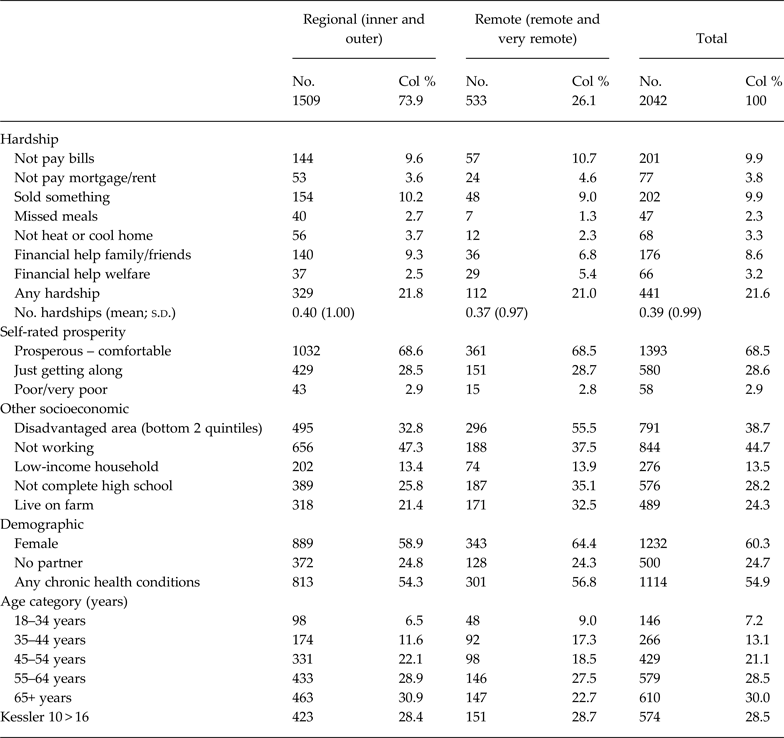
Table 1 presents the key baseline characteristics of the sample, by residential remoteness. Around 60% of respondents were female and were over the age of 55 years, three-quarters were married or in a marriage-like relationship, and just over half reported one or more chronic physical conditions. About 30% of respondents were identified with significant levels of psychological distress at baseline.
Baseline characteristics of the sample used in analysis

A series of multilevel logistic regression models assessed regional differences in mental health, and the key socioeconomic and hardship measures, while controlling for other sociodemographic characteristics (sex, partner status, any physical health conditions and age). These results showed that, compared with those living in regional areas, respondents living in remote locations were more likely to be residing in disadvantaged communities (odds ratios (OR) 2.68, 95% confidence interval (CI) 2.18–3.31), and to have not completed high-school (OR 1.61, 95% CI 1.3427–2.05). However, respondents from remote areas had lower odds of not working compared with those in living in regional areas (OR 0.51, 95% CI 0.38–0.68). There were no locational differences evident in levels of psychological distress (OR 1.02, 95% CI 0.72–1.30) or household income (i.e., low-income households: OR 1.12, 95% CI 0.76–1.67).
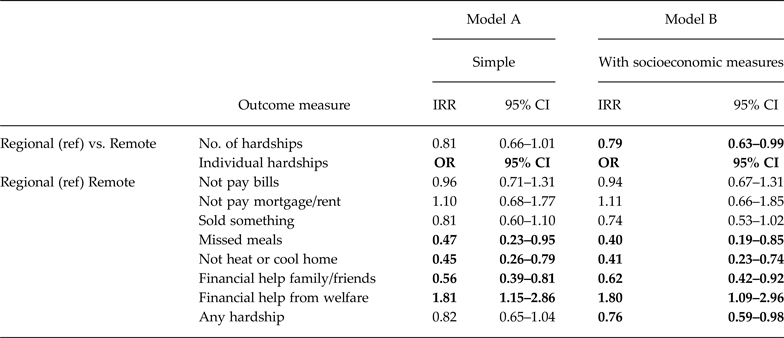
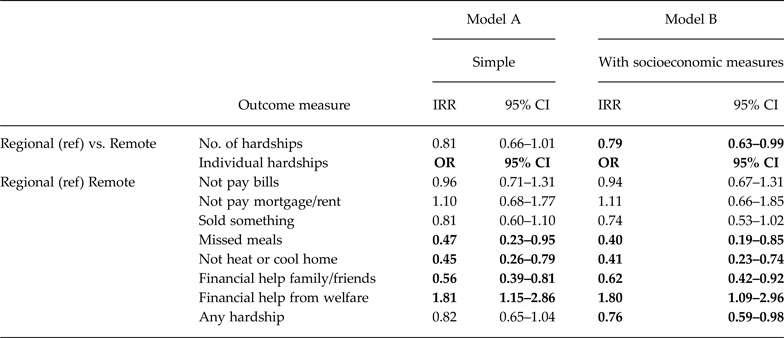
Table 2 presents the results from a series of multivariate multilevel negative binomial and logistic regression models assessing regional differences in reported hardship. Model A controls for general sociodemographic characteristics, while model B also incorporates the range of other socioeconomic measures. Contrary to expectations, the results suggest living in a remote location was associated with a lower overall number of hardships, lower risk of any hardship, and lower risk of reporting three of the seven individual hardship items (missing meals, unable to heat or cool home, and asking for help from family or friends). For example, the final model of overall number of hardships indicates that living in a remote area is associated with 21% fewer hardships than living in a regional location. One individual hardship item showed the opposite pattern of association, with respondents from remote areas more likely to report seeking help from welfare organisations than regional residents.
Incidence rate ratios (IRR) from negative binomial multilevel models and odds ratios (OR) from logistic regression multilevel models (and 95% CI) assessing regional differences in reported experience of hardship (overall and individual items), controlling for general sociodemographic characteristics (A) and the range of other socioeconomic measures (B)
Both models control for gender, partner status, baseline age, wave and presence of chronic health conditions.
Bold indicates p < 0.05.
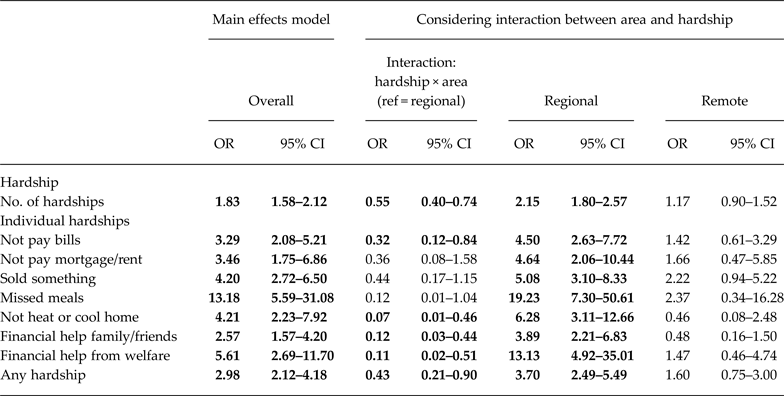
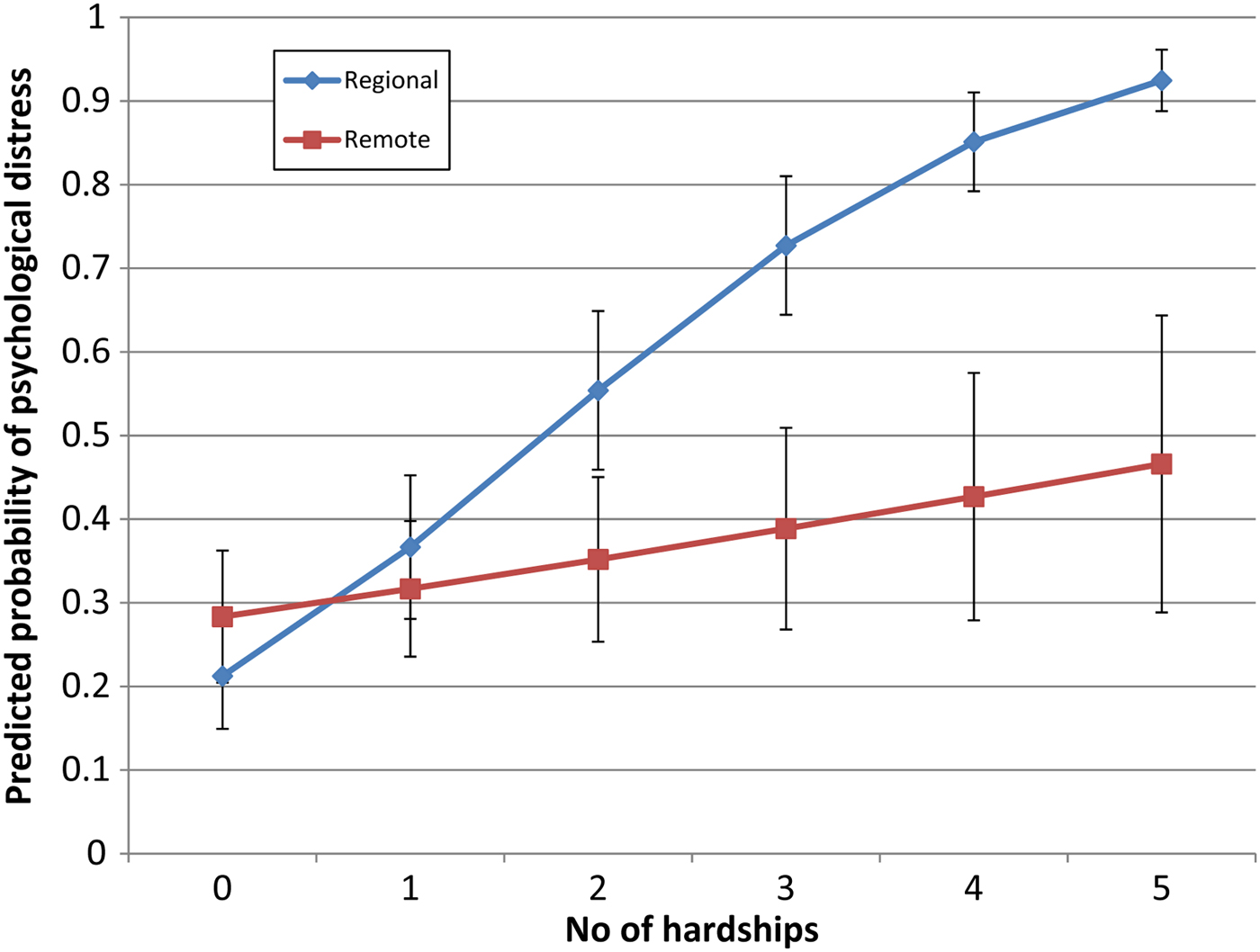
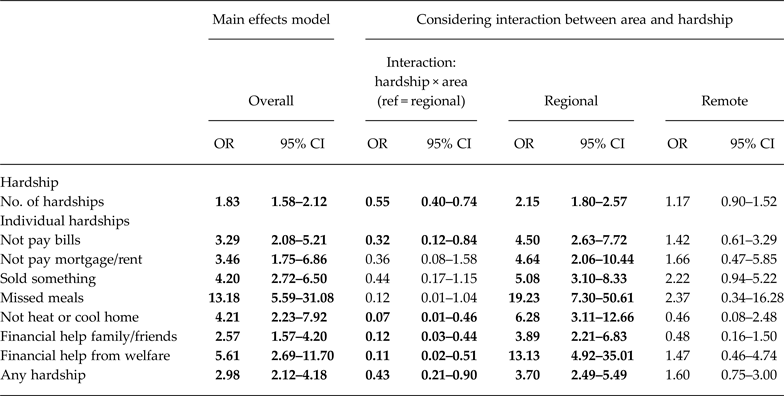
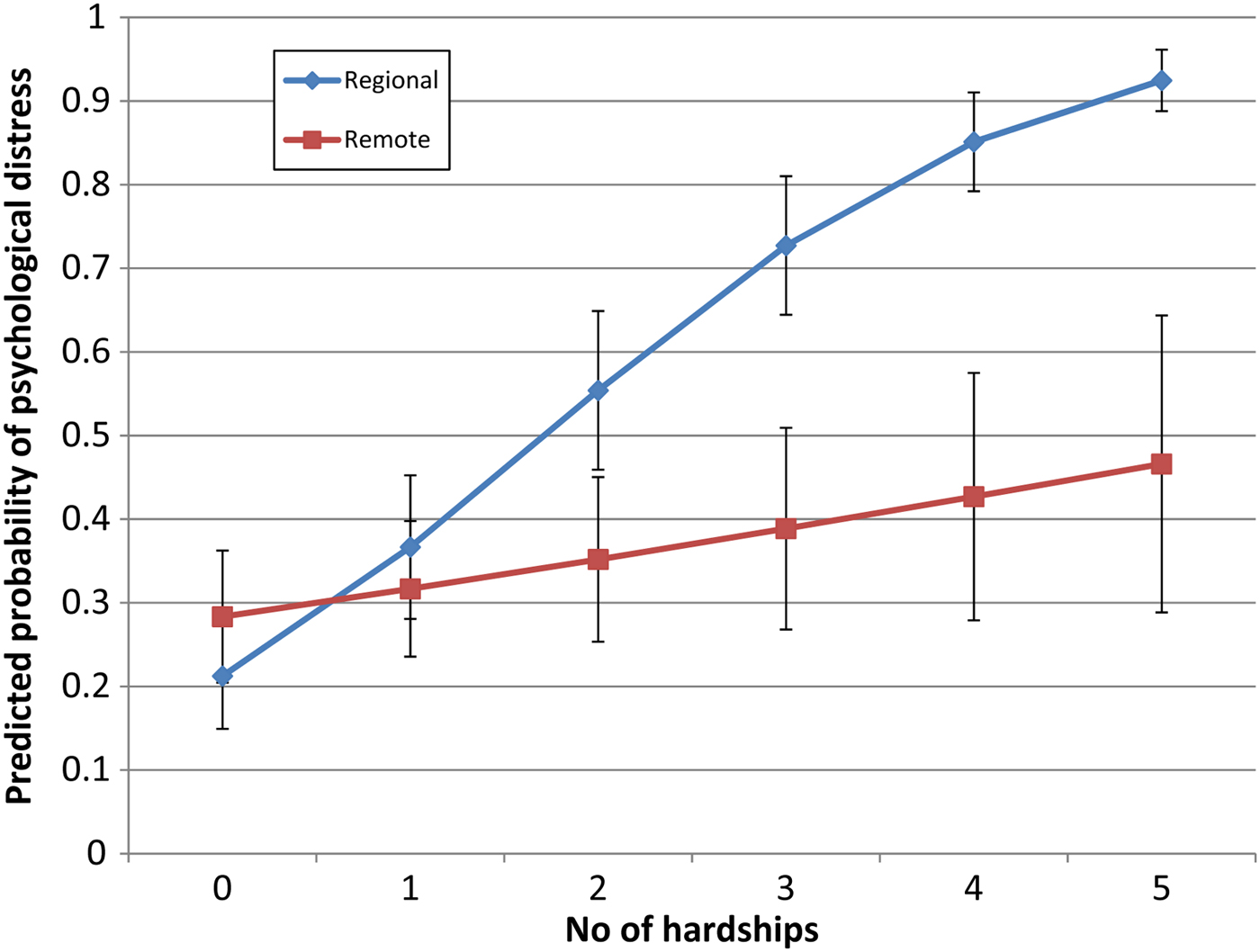
Table 3 presents the results from a series of multilevel logistic regression models to assess whether the experience of hardship was associated with increased risk of psychological distress and, more importantly, whether this association differed by remoteness of residence. Considering the overall number of hardships, the main effect model (see first panel of Table 3) shows that each additional hardship reported was associated with an 83% increase in the odds of reporting psychological distress. Location of residence was not significantly associated with psychological distress (result not shown: OR 1.12, 95% CI 0.79–1.58). When a term representing the interaction between number of hardships and location of residence was added to this model it was statistically significant (OR 0.55, 95% CI 0.40–0.74), indicating that the association between hardship and psychological distress was weaker for those living in remote areas. The predicted probabilities of psychological distress arising from this model are graphically presented in Fig. 1 and, to aid interpretation, models stratified by location are presented in the next two panels of Table 3. These results show that, for residents of regional areas, each additional hardship more than doubled the odds of experiencing psychological distress. In contrast, increasing hardship was not associated with any change in distress for those respondents living in remote areas.
Odds ratio (and 95% CIs) from logistic multivariate multilevel models reflecting risk of psychological distress by reported hardship
Controlling for gender, partner status, baseline age, wave, presence of chronic health conditions and other socioeconomic measures.
Bold indicates p < 0.05.
Predicted probability of experiencing psychological distress (with s.e.) by number of hardships reported and remoteness of resident. *Holding other covariates constant (male, partnered, aged 45–54 years at baseline, wave 1, no health conditions, not living on farm, currently working, completed high school, in an area at median level of socioeconomic disadvantage and reporting household income at the medium level).
This pattern of results was repeated for the individual hardship measures. The main effect models show that respondents who reported each of the individual hardship items had significantly elevated odds of psychological distress ranging from a two and one half fold increase for those who had sought help from family or friends through to odds 13 times greater for those who reported that they had missed meals because of financial reasons. The stratified analyses show that all associations between hardship and psychological distress were significant for residents of regional centres, whereas the association was non-significant in all models for those in remote locations. This was not simply a consequence of the reduced power (i.e., the smaller sample) in remote areas as the ORs in all instances were much smaller (or in the opposite direction).
Sensitivity analyses
Given the unexpected pattern of results, a series of post hoc sensitivity analyses were conducted to evaluate the robustness of the current results. More comprehensive details of these data and analyses are available as online Supplementary material.
A first set of analyses examined whether the measures of hardship used, which are specific instances of exclusion or deprivation from minimally accepted standards of living, may have a different meaning for residents in remote locations. That is, whether these specific items represent the same construct for those living in remote and non-remote locations. To test this we assessed the consistency in the association between hardship and a range of other socioeconomic indicators across remote and regional locations. A series of multilevel negative binomial models initially regressed number of hardships onto alternative measures of financial circumstances, and then considered whether the inclusion of the interaction between this measures and location improved overall model fit. The results confirmed that reported number of hardships was significantly associated with lower ratings of prosperity (incidence rate ratios (IRR) = 6.78, 95% CI 5.63–8.16), with household income (reference = highest income tertile, medium income: 3.17, 95% CI 2.38–4.23; low income: 7.55, 95% CI 5.23–10.89), and increasing deciles of area advantage (1.19, 95% CI 1.10–1.29). More critically, however, there was no evidence that the associations between alternative markers of socioeconomic circumstances and hardship differed for respondents from remote or regional locations. Results were similar for each of the individual hardship items.
Another potential explanation is that those living in remote locations are exposed to a greater range of stressors and, thus, the relative impact of these elements of hardship is reduced in the context of the exposures more specific to remote Australia. To investigate this, we considered three potential proxies for exposure to remote stressors: reported concern about levels of community infrastructure (Kelly et al. Reference Kelly, Lewin, Stain, Coleman, Fitzgerald, Perkins, Carr, Fragar, Fuller, Lyle and Beard2011), a schedule of recent adverse life events (see Kelly et al. Reference Kelly, Stain, Coleman, Perkins, Fragar, Fuller, Lewin, Lyle, Carr, Wilson and Beard2010), and whether respondents reported that they lived on a farm. While the likelihood of experiencing community distress or living on a farm were greater among those living in remote locations, the number of reported life events was (marginally) lower for those in remote compared with regional locations. Further, there was no evidence that any of these factors moderated the association between hardship and distress.
It may be that the characteristics of individuals living in remote locations and aspects of their surrounding environment promote greater resilience or better ways of coping with hardship and, thus, helps to minimise the adverse mental health consequences. The prior analysis of the individual hardship items showed that residents in remote locations were more likely to report seeking financial assistance from community and welfare organisations than those living in regional locations. However, further analysis showed that such help seeking did not moderate the association between hardship (excluding this item) and distress. Similarly, while respondents residing in remote locations reported greater levels of control, optimism, social support, social network size, sense of community and connection with their local environment than the respondents from regional areas, there was no evidence that any of these personal qualities (sense of control, dispositional optimism), interpersonal characteristics (social support, social network) or community characteristics (sense of place, sense of community) moderated the association between hardship and distress.
Finally, to assess the generalisability of the current results, we replicated key analyses using data from wave 13 of the HILDA Survey. The results confirmed that the average number of hardships for respondents from remote and regional areas was consistent with that observed in the ARMHS data. Again, we found that respondents from remote areas were more likely to report seeking help from welfare organisations (4.4%) than those from regional locations (3.7%) or major cities (3.1%). Analysis stratified by area and controlling for all covariates showed that the experience of any hardship was associated with increased risk of psychological distress amongst those in major cities (OR 2.12, 95% CI 1.81–2.49), and those in regional areas (OR 2.51, 95% CI 2.14–2.94), but not for those resident in remote Australia (OR 1.49, 95% CI 0.66–3.37).
Discussion
Addressing the health needs of people in rural and remote regions has been an international focus of health and social policy; particularly driven by the inequities in health outcomes, the acknowledged barriers to equitable provision of health services, the disparities in socioeconomic status and the demographic characteristics of many remote regions, conferring greater health needs and hardships in these regions. Many rural regions are more vulnerable to economic hardship through more limited employment base and volatility of primary industry on which rural communities are often based (Fraser et al. Reference Fraser, Jackson, Judd, Komiti, Robins, Murray, Humphreys, Pattison and Hodgins2005). The association between socioeconomic status and health is well established. Research has also demonstrated the important role of locality socioeconomic status on health outcomes (Weich et al. Reference Weich, Lewis and Jenkins2001, Reference Weich, Twigg, Holt, Lewis and Jones2003). Other studies and national population datasets have identified the greater disadvantage in regional and remote areas relative to urban areas (Smith et al. Reference Smith, Humphreys and Wilson2008), with lower educational attainment (Australian Institute of Health and Welfare, 2012), lower employment and income levels.
This study aimed to examine the relationships between remoteness, financial hardship and levels of psychological distress in a large community-based cohort residing in regional and remote areas in the state of New South Wales, Australia. We hypothesised that financial hardship would increase with levels of community remoteness, and that this hardship would contribute to poorer mental health among remote residents. A significant association was detected between the number of hardship items and psychological distress in regional areas. In contrast, living in a remote location was associated with a lower overall number of hardships, lower risk of any hardship, and lower risk of reporting three of the seven individual hardship items. Increasing hardship was associated with no change in distress for those living in remote areas. Nevertheless, respondents from remote areas were more likely to report seeking help from welfare organisations than regional residents. The findings were confirmed with a range of sensitivity tests, including replication with HILDA dataset, the use of alternative measures of socioeconomic circumstances, and the application of different analytic methods.
The findings suggest that those residing in remote locations have less exposure to deprivation/hardship, using conventional measures of hardship as applied in other national datasets. Furthermore the findings suggest that hardship was unrelated to mental health in remote locations. This raises important questions, a number of which were explored in confirmatory analysis. Is the measure of hardship inappropriate for remote localities, hence lacking sensitivity to the manifestations of financial hardship for those living in these localities? Is the perception of hardship modified by prevailing community-wide disadvantage? Seeking help from welfare organisations was more frequently reported among remote residents. A number of assistance programs have been launched to assist remote communities through a series of environmental adversities (such as prolonged drought and floods) and hence may explain this greater use of welfare support, linked to sources of financial hardship not captured in the items used. Broader contextual factors may be relevant and mitigate impact on perceived hardship and wellbeing, such as the relative prosperity of the community, shared aspirations and the shared exposure to hardships within such communities (Weich et al. Reference Weich, Lewis and Jenkins2001; Kahneman & Deaton, Reference Kahneman and Deaton2010). Such experience of shared exposure may be underpinned by the smaller community size and greater awareness of this shared adversity (as might be experienced in the impact of severe drought on all sectors of small rural communities that are characteristically more reliant on local primary industries such as farming) (Fraser et al. Reference Fraser, Jackson, Judd, Komiti, Robins, Murray, Humphreys, Pattison and Hodgins2005). Such shared adversity may facilitate attitudes that are more permissive towards help seeking and broader community support. Perhaps adversity is more openly acknowledged and hence people in remote areas are more comfortable seeking assistance, with more support in place. Adversity may be a shared experience that forms part of remote community identity, resulting in a lesser impact on mental health.
A limitation of this analysis is that it may have been affected by sample bias, in that we may have recruited a population that is more resilient and hence represents a unique subsample of remote residents. Remote respondents were more likely to make use of community welfare organisations, and may have been more inclined towards research participation. It is also important to note that ARMHS data were collected from NSW only, while HILDA data were collected nationally, which may limit the comparability of these samples.
These findings may serve to highlight the importance of more detailed exploration of the experience of financial hardship in diverse localities, and the specific markers of such hardship that are not captured by items that reflect more urbanised concerns (e.g., rent payment, heating or cooling home). Enhanced understanding of the social and personal context of hardship in remote communities is needed.
Supplementary material
The supplementary material for this article can be found at https://doi.org/10.1017/S2045796017000117.
Acknowledgements
We would like to acknowledge the support of Area Directors of Mental Health Services during the course of this phase of the study: Dr Russell Roberts, Richard Buss, Judy Kennedy, Dinesh Arya and particularly acknowledge the research site coordinators in each site: Jan Sidford, John Ogle (Broken Hill), Trim Munro, Amy Strachan (Moree), Louise Holdsworth, Kath O'Driscoll (Lismore), Cheryl Bennett, Jannelle Bowler (Orange), along with Fleur Hourihan, Dr Gina Sartore, Denika Novello and the team of CIDI interviewers. The authors would also like to acknowledge the other investigators on this study: Professors David Perkins, Jeff Fuller, John Beard, Vaughan Carr, Associate Prof Lyn Fragar, David Lyle, Prasuna Reddy and Dr Helen Stain.
Financial support
The Australian Rural Mental Health Study was funded by the National Health and Medical Research Council (Project Grant #401241, #631061); and also supported by a Research Capacity Building Grant to the Australian Rural Health Research Collaboration. Tonelle Handley is supported by a postdoctoral fellowship from Australian Rotary Health, which is acknowledged with gratitude.
Conflict of interest
None.
Ethical standards
The authors assert that all procedures contributing to this work comply with the ethical standards of the relevant national and institutional committees on human experimentation and with the Helsinki Declaration of 1975, as revised in 2008.
Availability of Data and Materials
Data are available by written request to the ARMHS chief investigator Brian Kelly (brian.kelly@newcastle.edu.au).