




No CrossRef data available.
Psychological functioning in parents of children undergoing elective cardiac surgery
Published online by Cambridge University Press: 20 January 2005
Abstract
Purpose: To assess levels of distress, the marital relationship, and styles of coping of parents of children with congenital heart disease, to evaluate any change in these parameters following elective cardiac surgery for their child, and to compare these parents with parents of children undergoing another form of hospital treatment, and with parents of healthy children. Design: A prospective study in which parents were assessed the day before the surgical procedure being undergone by their child, and 12 months afterwards. Participants: We assessed three groups of parents of 75 children, aged from birth to 16.9 years. The first was a group whose children were undergoing surgery because of congenital heart disease, the second was a group whose children were undergoing transplantation of bone marrow, and the third was a group whose children were healthy. Measures used for assessment included the General Health Questionnaire, the Dyadic adjustment scale, and the Utrecht coping list. Results: Parents in both groups of children undergoing surgery had significantly higher rates of distress prior to the surgical procedures than did the parents of the healthy children, but within those whose children were undergoing cardiac surgery, there were no differences between parents of children with cyanotic and acyanotic lesions. Following treatment, there was a significant reduction in the levels of distress in both groups whose children had undergone surgery. There were few differences between any of the groups on the other parameters, and the evaluated indexes showed stability over time. Conclusion: Despite elevated levels of psychological distress prior to surgical procedures, which had fallen after one year, the stability of other parameters of parental functioning over time suggests that the surgical interventions are of less significance than either factors attributable to the presence of chronic illness, or the individual characteristics of the parents.
Information
- Type
- Original Article
- Information
- Copyright
- © 2004 Cambridge University Press
Significant advances in medical technology have resulted in a dramatic decrease in mortality rates for children with congenital cardiac malformations, with a resultant increase in the number of such children being cared for at home. Whilst caring for a child with a chronic illness has been identified as one of the most stressful experiences for any family,1 parents of children with congenital heart disease report greater levels of stress than do parents of children diagnosed with other chronic illnesses.2
Congenital heart disease can create difficulties in adjustment out of proportion to the severity of the lesion due to the emotional and psychological significance attached to the heart,3 with families of children with congenital cardiac malformations experiencing more difficulties and stress than those with other congenital problems,4 attributed in part to the hidden nature of the cardiac lesions. Studies of parents of children with congenital heart disease of all ages have highlighted the particular vulnerability of these parents in the development of “normal” relationships with their children.5–8 Elevated levels of psychological distress have been reported for parents of children awaiting elective cardiac surgery, with mothers demonstrating higher levels of distress, and greater problems with coping, than fathers.9 Maternal adjustment has been found to be associated with high levels of daily stress, and with the use of palliative strategies for coping.10
Studies of children with congenital cardiac malformations, and other chronic illnesses, have consistently shown that psychological adjustment is associated with adaptational processes rather than the severity of the disease.10–13 Studies of parents of children with cardiac lesions found no higher rates of divorce than among parents of healthy children,14, 15 although these studies did not assess parental satisfaction, nor happiness with the marital relationship. A further area of study has been on the role of locus of control. Individuals with an external locus of control perceive that what happens is determined by fate, luck or chance, whereas those with an internal locus of control perceive that events are dependent on personal action. Both children with congenital cardiac disease and healthy children from families with an external locus of control, tend to have increased absences from school compared with children from families with a more internal locus of control, thus highlighting the interaction of parental characteristics with the functioning and adjustment of their child.16
The studies described above have been predominantly cross-sectional. The majority of children with congenital heart disease will undergo cardiac surgery, yet there has been little systematic attempt to look at the impact of surgery on the adjustment of the parents. In order to address some of the deficits in the existing literature, we have evaluated prospectively the levels of distress, the marital relationship, the locus of control, and the styles of coping of parents whose children had been admitted for elective surgery. We then re-evaluated the parents one year after the surgical procedure. Furthermore, we compared the parents of children with cardiac lesions with parents of children undergoing a different surgical procedure, namely transplantation of bone marrow, and with parents of healthy children.
Methods
Institutional approval for the study was obtained from all of the units taking part, and individual consent was obtained from the parents of each child.
Sample
The sample of parents of the 75 children with congenital heart disease was recruited from three specialist units in London admitting the children for elective procedures over a period of 2 years. Overall, 98 patients were initially eligible for inclusion during the time period of the study, but 23 (23.5%) had to be excluded because, in 12 instances, they were too ill at the time of admission for surgery to undergo testing, three were unavailable for follow-up, seven were not sufficiently able to communicate in English, while the final set of parents declined to participate. Of the children, 70 (93%) underwent corrective surgery, with 4 (5%) having palliative shunts. One child with a common arterial trunk was taken to the operating room and her chest opened, but the lesion was found to be inoperable and no further surgical procedures were performed. In 63 cases (85%), the interventions were open heart procedures. The sample of parents of the 75 children undergoing transplantation of bone marrow were recruited over 33 months from 4 specialist units, and represented 78% of the eligible sample of 96 children. Reasons for exclusion in this group were similar to those of the parents of children undergoing cardiac surgery. The group of parents of the 75 healthy children was recruited from a dental clinic for 35 children, from local health centers for 25 children, and from 2 schools in London for the remaining 15 children. Healthy children were initially matched for age, gender and social class with the patients undergoing transplantation of bone marrow. All 3 groups of children were recruited during the same period of time.
The characteristics of the sample are summarised in Table 1. Of the 75 children undergoing cardiac surgery, 29 had cyanotic and 46 had acyanotic lesions. The mean age of the children undergoing cardiac surgery, at 5.2 years, with a standard deviation of 3.8 years, was significantly younger than the mean age of those having transplantation of bone marrow, at 6.6 years, with a standard deviation of 4.2 years, and the healthy children, whose mean age was 6.7 years, with a standard deviation of 4.2 years.
Table 1. Characteristics of the initial sample of parents of children about to undergo cardiac surgery (“cardiac”), of those about to have transplantation of bone marrow (“bone marrow”), and of healthy children (“healthy”).

Procedure
Parents of the children undergoing cardiac surgery or transplantation of bone marrow were assessed before the procedure, and again 12 months after these procedures. The parents of the healthy children were seen at home, and were assessed on two occasions, 12 months apart.
Measures
The mental and emotional state of parents was assessed with the 30 item version of the General Health Questionnaire.17, 18 This questionnaire focuses on two major classes of phenomenons, specifically the inability to continue to carry out normal “healthy” functions, and the appearance of new phenomenons of a distressing nature.18 Satisfactory reliability and validity have been reported. Following standard conventions,18 scores of 5 or more on this questionnaire were considered indicative of psychological distress. The Dyadic satisfaction subscale of the Dyadic adjustment scale19 was used to assess parental satisfaction with their relationship with their partner. This scale, involving 10 items, rates overall happiness and satisfaction with the relationship. Satisfactory reliability and validity have been reported.19–21 In addition, responses to one global item assessing overall happiness within the relationship were looked at, which has been found to be a sufficient means of classifying respondents into groups showing high and low adjustment.22 The most widely used scale to determine locus of control23 was felt to be too lengthy, and too non-specific, for this study, so we devised a questionnaire specifically for this research. The six item scale comprised those five items from the Rotter scale which had a correlation of 0.30 or higher with the total test score,23 and one question from a similar questionnaire devised by Van der Ploeg.24 Higher scores indicate a more external locus of control. The internal consistency between the items, with an alpha value of 0.56, was considered to be a satisfactory measure of reliability. The Utrecht Coping List25 was used to assess the strategies of coping of the parents. This questionnaire, with 47 items, addresses 7 styles of coping, specifically active problem solving, palliative reaction, avoiding/waiting, seeking social support, passive patterns of reaction, expression of emotions, and using reassuring thoughts. The instrument has been reported to have satisfactory reliability and validity,26 and has previously been used with parents of children with congenital heart disease.9, 27
In addition to the completion of structured questionnaires, parents were seen for a semi-structured interview on each occasion, during which information was collected on demographic, social, and medical variables.
Statistical analysis
The scores for the General Health Questionnaire were analysed using non-parametric tests. Comparisons between groups of frequency of psychological distress were analysed by chi-squared tests, and changes over time in levels of psychological distress were analysed by McNemar tests. Results concerning the marital relationship, locus of control, and styles of coping, were compared by one way analysis of variance, and Scheffe’s multiple comparison tests were used to identify the source of any differences between the groups. Scores in the subgroups of children with cyanotic and acyanotic cardiac lesions were compared by indepen-dent t-tests. Changes within groups over time were analysed by paired t-tests. Correlations between pre- and post-operative scores, and between psychological, demographic and medical variables, were measured using Pearson or Spearman correlation coefficients, as appropriate.
Results
Initial assessments
Completed questionnaires were received from 54 of the 74 mothers (73%), and 48 of the 71 fathers (68%) of the children with cardiac lesions. The reason for non-response was that the questionnaires were not completed prior to surgery. In the reference groups, questionnaires were received from 67 of the 74 mothers (91%) and 47 of the 68 fathers (69%) of the children undergoing transplantation of bone marrow, and from 66 of the 75 mothers (88%) and 56 of the 64 fathers (88%) of the healthy children. In the group of children with cardiac malformations, 35 of the 54 mothers (65%), and 23 of the 48 fathers (48%), showed evidence of psychological distress, scoring 5 or more on the General Health Questionnaire (Table 2). There were no significant differences in the prevalence of psychological distress between parents of cyanotic and acyanotic children. Comparison with the reference groups indicated that there were no significant differences between the parents of children with cardiac disease and those having transplantation of bone marrow in the prevalence of psychological distress. Both mothers and fathers of children with cardiac lesions had significantly higher rates of psychological distress than mothers or fathers of healthy children (Table 2). On the scale concerned with the marital relationship, there were no significant differences between parents of the cyanotic and acyanotic children, or between parents in the various groups. Concerning locus of control, there were no significant differences between parents of cyanotic and acyanotic children. Mothers of children having transplantation of bone marrow were significantly more external in their beliefs concerning locus of control than mothers of the children with cardiac lesions, who had mean scores of 14.4 and 11.8 respectively, with 95% confidence intervals of the difference from 1.385 to 3.810 (p < 0.05), and the mothers of the healthy children, who had mean scores of 14.4 and 12.1 respectively, with 95% confidence intervals of the difference from 1.160 to 3.458 (p < 0.05). There were no significant differences in the use of any particular strategy for coping between mothers or fathers of the children with cyanotic and acyanotic cardiac lesions (Table 3). Of the different mechanisms for coping, mothers and fathers in both subgroups used comforting cognitions and active problem solving most frequently, and a mechanism of passive reaction least frequently. There were no significant differences between the different groups of parents in the use of any particular strategy for coping.
Table 2. Pre- and post-operative prevalence of psychological distress.

Table 3. The mean scores of the parents prior to the operative procedures, with standard deviations, for the various subscales dealing with styles of coping.

Follow-up assessments
Of the children, 10 with cardiac lesions and 31 undergoing transplantation of bone marrow had died prior to the follow-up, and one further child in each group was also not followed up because their surgery or treatment had not been carried out. The eligible sample for follow-up, therefore, consisted of 64 families of children undergoing cardiac surgery, and 43 families of children who had undergone transplantation of bone marrow. Completed questionnaires were received from 53 of the 64 mothers (83%) and 46 of the 58 eligible fathers (79%) of the children who had undergone cardiac surgery. In 3 cases, fathers were not available for follow-up because the parents had separated. Completed surveys were received from 32 of the 42 (76%) mothers, and 21 of the 38 (55%) fathers in the group of children having transplantation of bone marrow.
At follow-up, there were few differences between any of the groups on any of the measures. Compared with mothers of children having transplantation of bone marrow, mothers of children who had undergone cardiac surgery rated their marital satisfaction significantly more positively, both in the overall scores on the dyadic scale for adjustment, where the mean scores of mothers of children with congenital heart disease were 40.4, compared to 36.3 for mothers of children having transplantation of bone marrow, with 95% confidence intervals of the difference from −6.996 to −1.241 (p < 0.05), as well as on their mean scores on the single item for marital happiness. For this item, the mean scores for mothers of children with congenital heart disease were 4.1, compared to scores of 3.3 for mothers of children who had undergone transplantation of bone marrow, with the 95% confidence intervals of the difference being from −1.352 to −0.232 (p < 0.05). This indicates a higher degree of marital satisfaction for mothers of children who had undergone cardiac surgery. Despite this, the data revealed that, in three of the families, the parents of children with cardiac lesions had separated since the surgical procedures. The more external locus of control that had been evident in the initial evaluation of mothers of children having transplantation of bone marrow compared with mothers of children having cardiac surgery persisted at follow-up. At the second evaluation, the mean score for mothers of children with congenital heart disease was 11.6, compared with 13.7 for mothers of children having transplantation of bone marrow, with 95% confidence intervals of the difference from 0.741 to 3.37 (p < 0.05).
Changes over time
There was a significant decrease over time in the prevalence of levels of psychological distress in mothers of the children with acyanotic cardiac lesions, and in the total group of mothers of children with cardiac lesions and those undergoing transplantation of bone marrow, as well as for the fathers of children with acyanotic cardiac lesions, and the total group of fathers of children undergoing cardiac surgery, with all changes significant at the level of p less than 0.01. There were no significant changes over time in the parents of the healthy children. For mothers of the overall group of children having cardiac surgery, there was also a significant correlation between psychological distress pre-operatively and 12 months later, but this did not apply to the mothers of the children having transplantation of bone marrow, or the healthy children. For the fathers, there was no association between pre- and post-operative distress in any of the groups (Table 2). On the scale assessing the marital relationship, there was a significant increase in the mean score on the item concerning marital happiness for all the parents of children undergoing cardiac surgery, except for the fathers of cyanotic children (Table 4). Fathers of cyanotic children, as did the overall group of fathers of children undergoing cardiac surgery, had a significantly higher mean total score on the occasion of the second test. There were no significant changes over time in mean total scores of the parents of either healthy children, or those having transplantation of bone marrow. There was also a significant correlation between pre- and post-operative mean total scores for mothers and fathers in all groups (p < 0.05 in all cases). There were no significant changes over time in the mean scores concerning locus of control, and again the correlations between pre- and post-operative scores were significant for all groups of parents (p < 0.01 in all cases). On the scale concerning coping, the only significant change over time for any of the mothers of children undergoing surgical procedures was that mothers of children having transplantation of bone marrow used palliation significantly less after treatment than beforehand. Their mean score prior to transplantation was 2.25, compared to 2.1 afterwards, with a t value of 2.26, and 95% confidence intervals of the difference from 0.112 to 2.528 (p = 0.033). The only significant change for the fathers was for those of the children with cyanotic cardiac lesions, with a decrease in the use of social support at follow-up compared with before surgery. Their mean score prior to surgery was 2.4, compared to 1.9 after surgery, giving a t value of 2.22, and 95% confidence intervals of the difference from 0.011 to 3.022 (p = 0.049). Repeated measures of analysis of variance indicated that there were no significant interactions between group and time for any of the strategies for coping, either for mothers or fathers, apart from the fact that, relative to the parents of healthy children, there was a change in the use of palliative reactions by mothers of the children undergoing transplantation of bone marrow.
Table 4. The values scored in the scales assessing the marital relationship before and after the procedures, showing the mean total scores, and the mean scores for the item “happiness”, with standard deviations in parentheses, for the total group and the sub-groups of the parents of the children undergoing cardiac surgery.

Parents not followed-up
We did not follow-up 6 of the 54 mothers (11%) and 2 of the 48 fathers (4%) of the children undergoing cardiac surgery who completed the questionnaires pre-operatively. This was because 5 of the 6 mothers, and both fathers, were lost to follow-up, with the other mother not being followed-up because her child had died. Comparison between those who were or were not followed up indicated that the only significant difference was on the marital relationship scale for mothers, on which the mean total score for the mothers who were not followed up was significantly lower than that of the mothers who were followed-up. The mean total score for those followed up was 39.8, with a standard deviation of 5.7, compared to a mean for mothers not followed up of 30.3, with a standard deviation of 13.8. This gave a t value of 2.83, with 95% confidence intervals of the difference from −16.382 to −2.784 (p = 0.007).
Relationship between variables
There were no significant correlations between demographic variables, such as the ages of either the children or their parents, or medical variables, such as diagnosis, and any of the psychological parameters for any of the groups of parents of children undergoing the surgical procedures.
Pre-operative scores on the General Health Questionnaire were significantly correlated for mothers of children undergoing cardiac surgery or transplantation of bone marrow with the use of avoidance or waiting (cardiac: r = 0.385; p = 0.004; bone marrow: r = 0.364; p = 0.010), passive patterns of reaction (cardiac: r = 0.438; p = 0.001; bone marrow: r = 0.543; p < 0.001), and expression of emotions (cardiac: r = 0.489; p < 0.001; bone marrow: r = 0.355; p = 0.012). The scores preoperatively for the General health questionnaire were significantly correlated with use of passive patterns of reaction (r = 0.444; p = 0.002) and palliation (r = 0.361; p = 0.012) for fathers of children undergoing cardiac surgery, and with the use of passive patterns of reaction (r = 0.402; p = 0.011) and expression of emotions (r = 0.432; p = 0.006) in the fathers of those having transplantation of bone marrow. Postoperative distress levels for mothers of all children undergoing surgical procedures were correlated only with the use of passive patterns of reaction (cardiac: r = 0.306; p = 0.028; bone marrow: r = 0.519; p = 0.003). For fathers of children undergoing cardiac surgery, post-operative levels of distress were correlated with expression of emotions (r = 0.305; p = 0.039), while for fathers of children having transplantation of bone marrow, levels of distress were correlated with the use of active problem solving (r = 0.456; p = 0.043), avoidance or waiting (r = 0.755; p < 0.001), and the use of passive patterns of reaction (r = 0.871; p < 0.001).
Discussion
Our study was aimed at evaluating prospectively the impact of cardiac surgery on parental functioning, and at comparing the reactions of parents of children with congenital heart disease with parents of children having another chronic physical condition, and parents of healthy children.
The study does have some limitations, which need to be borne in mind when interpreting the results. Firstly, the parents were seen for the first time on the day before surgery, which was necessary for practical reasons, but resulted in them being seen when they were distressed, which may have influenced their reporting of their functioning. Furthermore, in some cases it was not possible to collect all of the data on that first occasion, which necessitated returning to see the families again during the period of hospitalisation. In some cases, parents did not complete the questionnaires prior to surgery, and so the data could not be included. Secondly, in the majority of cases it was only the mothers who were seen, a problem common to much of the research in this area, although most of the fathers did complete the questionnaires which were left for them. Thirdly, although most of the cardiac surgery was corrective, the physical state of the children at follow-up was not assessed. Thus, changes in parental psychological factors could not be related to changes in the physical state of their children. As noted below, however, the physical state of the child was probably less important than other factors in determining parental responses. Fourthly, although all the parents of children undergoing surgical procedures were seen in a hospital setting, the parents of the healthy children were seen at home, which may have influenced responses. Finally, the sample was relatively small and heterogeneous, with patients ranging in age from birth to 16 years, and covered a wide spectrum of cardiac diagnoses. Furthermore, although the groups were comparable on the majority of demographic parameters, mothers of children undergoing cardiac surgery were significantly younger than the mothers of healthy children.
One further difficulty with research with chronically ill children and their families involves those situations where the child dies. This was particularly evident in the parents of our children undergoing transplantation of bone marrow, and is a limitation of the research. Response rates for eligible parents, nonetheless, were satisfactory both before and after the surgical procedures.
The lack of difference between parents of cyanotic and acyanotic children on all measures of functioning, both before and after surgery, confirms previous findings from cross-sectional studies that the severity of disease is relatively unimportant in determining levels of psychological distress, marital happiness, beliefs concerning locus of control, or coping,10–12, 28, 29 but that mothers of ill children do have difficulties concerning their mental health.12, 13, 29–31 The scores on the General Health Questionnaire for our parents of children undergoing cardiac surgery are comparable to those previously reported in other groups of parents of children with congenital heart disease.9 As expected, preoperative rates of psychological distress were significantly higher in parents of the ill children compared with parents of healthy children, but there were few other differences between any of the groups at either time point. Our results do not support earlier findings of higher levels of stress in parents of children with congenital heart disease compared with parents of children with other chronic illnesses.2 There are a number of reasons which might explain this apparent discrepancy. Firstly, in the study of Goldberg et al.,2 the parents studied were those of newly diagnosed infants with congenital heart disease or cystic fibrosis. Although both are congenital conditions with significant and potentially life limiting implications, the immediate impact and consequences are likely to be different, with parents of children with congenital heart disease more likely to have to be involved in immediate decision-making about treatment, including potentially life-threatening surgical intervention. Secondly, the other parents in our study with ill children were all seen prior to the life threatening intervention of transplantation of bone marrow for conditions such as leukaemia. For many of these children, this was the last option for treatment. All the parents of the ill children, therefore, were facing different but equally stressful interventions, resulting in levels of distress that were not significantly different.
At follow-up, there was a reduction in the prevalence of psychological distress for parents of all the children undergoing surgical procedures, including parents of children with both cyanotic and non-cyanotic lesions, a finding in keeping with those published previously.6, 27 As expected, there were no significant changes over time in the findings from the parents of healthy children. The reduction in psychological distress was less marked in parents of children with cyanotic lesions than in parents of those with acyanotic malformations, which is likely to be partly attributable to the ongoing medical problems experienced by some of the children with lesions predisposing to cyanosis. Again, there were no differences between the levels of distress in the parents of those with cardiac malformations or those undergoing transplantation of bone marrow, due in part to the fact that some children in both groups still faced further uncertainty, and possible further treatment. In the parents of the children undergoing cardiac surgery, marital satisfaction increased after treatment, both for mothers and fathers, suggesting that the intervention of largely corrective surgery had had some positive effects. The finding for all parents of children undergoing surgical procedures that pre-operative scores were significantly correlated with post-operative scores also indicates the stability of marital relationships over time, irrespective of the health of the child or the interventions needed for treatment, although this does not include the three sets of parents of children undergoing cardiac surgery who had separated in the intervening year. The finding of an increase in marital satisfaction over time, together with the significant correlation between pre- and post-operative scores, indicates that parents who were less satisfied with their relationship pre-operatively remained so post-operatively relative to the other parents of children undergoing cardiac surgery, and similarly for those who were more satisfied pre-operatively, although the degree of satisfaction increased over time. On the measure concerning the locus of control, there was a significant correlation between scores at the two test occasions for all mothers and fathers, indicating the stability of this locus over time. Regarding the styles of coping, there were few changes in any of the groups over time, indicating that the strategies used for coping were relatively stable. The only significant change over time in the parents of children undergoing cardiac surgery was that fathers of the patients in the cyanotic group used social support less at follow-up than prior to the operative procedure. One reason for this may be the change in situation, with social support being more readily available prior to surgery. Fathers may also have felt that it was more acceptable to look for support from others when surgery was pending, rather than one year after treatment, when the surgery was behind them.
Utens et al.,27 using the same measure of coping, found, contrary to our findings, that the strategies used for coping did change over time, with a significant decrease in the use of palliative reactions, social support and passive patterns of reaction by mothers after the surgical procedure performed on their child, and in palliative reactions and reassuring thoughts by fathers subsequent to the operative procedure. Utens et al.27 also found no change in the use of strategies for coping after interventional catheterization in children with cardiac malformations, although again, in contrast to our findings, there were differences between the parents of children with cardiac malformations and their healthy peers. A possible explanation for the contrasting findings with respect to parents of healthy children is related to the choice of the reference group, which was drawn from the general population in the study of Utens et al.27 Although our group of parents of healthy children used for comparison was relatively small, it was made up of parents of children who were experiencing comparable stresses in life in terms of aspects such as child-rearing, education, and family pressures. Furthermore, the two studies were conducted in different countries, with different systems for health care, and different cultural influences, which may also explain some of the differences in the findings.
Research on the effects of congenital cardiac malformations on the marital relationships of the parents of afflicted children has tended to focus on the prevalence of divorce in such families.14, 15 Rates of divorce have not been found to be higher than in the general population, and are not related to the severity of the cardiac lesion of the afflicted child.14 In our study, over nine-tenths of the children with cardiac malformations came from homes with two parents still co-habiting, compared with 85% of the healthy children, which is also in keeping with previous findings.14, 15 Previous research, however, has revealed significantly higher marital distress in parents of ill children compared with those of healthy children,15, 32, 33 a finding not replicated by our experience. Still other research has shown that coping with disease can have a positive effect on the relationships between parents,34, 35 but in view of the lack of data collected before our children became ill, we cannot comment on such conclusions based on our experience.
The results of our study showed that, both before and after treatment, parents of the children undergoing cardiac surgery or transplantation of bone marrow, as well as the parents of healthy children, used the same mechanisms for coping with greatest and least frequency, suggesting that neither the presence nor the nature of the chronic illness was influential in determining the type and frequency of strategies used. Little information has been published about strategies used for coping by parents of children with congenital heart disease, but in studies of other groups of chronically ill children, parental strategies for coping have been found to influence the way the children adjust,36, 37 and to vary according to the specific disease involved.38 Mechanisms for coping have also been linked to parental adjustment, with poor adjustment being associated with more use of palliative methods,12, 39 which has also been identified in mothers of children with congenital heart disease.10 Our findings support the findings of this latter study,30 which defined “palliative coping” as constituting emotion focused, avoidance, wishful thinking, and self-blame factors. For all groups of parents of ill children in our study, higher levels of distress were associated with the use of emotional focusing and avoidance as mechanisms of coping, both pre- and post-operatively. Although the measure used in this study was a general questionnaire about coping, we considered that the illness of the child was the most salient factor in the lives of the parents, and that the strategies for coping adopted by parents would also apply to their own coping with the illness.
Overall, there were few differences in measures of parental functioning between the parents of the children undergoing cardiac surgery compared with those having transplantation of bone marrow. Furthermore, there were few changes over time, suggesting that the therapeutic interventions were of less significance than either factors attributable to the presence of chronic illness, or the individual characteristics of the parents. Recent research has suggested that the mothers of children with congenital heart disease may enhance their coping by fostering adaptive strategies, and by decreasing daily stress.10 Further research now needs to focus on the identification of parents at risk of adjusting poorly, and the development of intervention studies to facilitate adaptive coping in both mothers and fathers of children with congenital heart disease.
Acknowledgements
The Garfield Weston Trust, the Cancer Research Campaign, the Westminster Hospital Trustees, and the Lord Ashdown Charitable Settlement funded our work.
We gratefully ackowledge the co-operation of Professor H. Zeitlin, and Dr. C. Pot-Mees, formerly of Westminster Children’s Hospital, during the collection of the data.
References
Bouma R, Schweitzer R. The impact of chronic childhood illness on family stress: a comparison between autism and cystic fibrosis. J Clin Psychol 1990; 46: 722–730.Google Scholar
Goldberg S, Morris P, Simmons RJ, Fowler RS, Levison H. Chronic illness in infancy and parenting stress: a comparison of three groups of parents. J Pediatr Psychol 1990; 15: 347–358.Google Scholar
Wray J, Sensky T. How does the intervention of cardiac surgery affect the self perception of children with congenital heart disease? Child Care, Health and Development 1998; 24: 57–72.Google Scholar
Cohn JK. An Empirical Study of Parents’ Reaction to the Diagnosis of Congenital Heart Disease in Infants. Social Work in Health Care 1996; 23: 67–79.Google Scholar
Gardner FV, Freeman NH, Black AMS, Angelini GD. Disturbed mother–infant interaction in association with congenital heart disease. Heart 1996; 76: 56–59.Google Scholar
Sparacino PSA, Tong EM, Messias DKH, Foote D, Chesla CA, Gilliss CL. The dilemmas of parents of adolescents and young adults with congenital heart disease. Heart Lung 1997; 26: 187–195.Google Scholar
Clark SM, Miles MS. Conflicting responses: the experiences of fathers of infants diagnosed with severe congenital heart disease. J Soc Pediatr Nurs 1999; 4: 7–14.Google Scholar
Utens EM, Versluis-Den Bieman HJ, Verhulst FC, Witsenburg AJJC. Psychological distress and styles of coping in parents of children awaiting elective cardiac surgery. Cardiol Young 2000; 10: 239–244.Google Scholar
Davies CC, Brown RT, Bakeman R, Campbell R. Psychological adaptation and adjustment of mothers of children with congenital heart disease: stress, coping, and family functioning. J Pediatr Psychol 1998; 23: 219–228.Google Scholar
DeMaso DR, Campis LK, Wypij D, Bertram S, Lipshitz M, Freed M. The impact of maternal perceptions and medical severity on the adjustment of children with congenital heart disease. J Pediatr Psychol 1991; 16: 137–149.Google Scholar
Thompson RJ, Gustafson KE, Hamlett KW, Spock A. Stress, coping and family functioning in the psychological adjustment of mothers of children and adolescents with cystic fibrosis. J Pediatr Psychol 1992; 17: 573–585.Google Scholar
Thompson RJ, Gil KM, Burbach DJ, Keith BR, Kinney TR. Psychological adjustment of mothers of children and adolescents with sickle cell disease: the role of stress, coping methods and family functioning. J Pediatr Psychol 1993; 18: 549–559.Google Scholar
Finley JP, Putherbough C, Cook D, Netley C, Rowe RD. Effect of congenital heart disease on the family: divorce, separation and stability in families of children with Tetralogy of Fallot. Pediatr Cardiol 1979; 1: 9–13.Google Scholar
Silbert AR, Newburger JW, Fyler DC. Marital stability and congenital heart disease. Pediatrics 1982; 69: 747–750.Google Scholar
Fowler MG, Johnson MP, Welshimer KJ, Atkinson SS, Loda FA. Factors related to school absence among children with cardiac conditions. Am J Dis Child 1987; 141: 1317–1320.Google Scholar
Goldberg D. The Detection of Psychiatric Illness by Questionnaire. Maudsley monographs, 21. Oxford University Press, London, 1972.
Goldberg D. Manual of the General Health Questionnaire. NFER-Nelson, Windsor, 1978.
Spanier GB. Measuring dyadic adjustment: new scales for assessing the quality of marriage and similar dyads. Journal of Marriage and the Family 1976; 38: 15–28.Google Scholar
Spanier GB, Thompson L. A confirmatory analysis of the Dyadic Adjustment scale. Journal of Marriage and the Family 1982; 44: 731–738.Google Scholar
Antill JK, Cotton S. Spanier’s dyadic adjustment scale: some confirmatory analyses. Australian Psychologist 1982; 17: 181–189.Google Scholar
Sharpley CF, Cross DG. A psychometric evaluation of the Spanier dyadic adjustment scale. Journal of Marriage and the Family 1982; 44: 739–741.Google Scholar
Rotter JB. Generalized expectancies for internal versus external control of reinforcement. Psychological Monographs 1966; 80 (No. 609): 1–28.Google Scholar
Van der Ploeg JD. The Environment in Orthopedagogical Perspective. Rotterdam: Samsom, 1983.
Schreurs PJG, Tellegen B, Van de Willige G. Health, stress and coping: The development of the Utrecht Coping Scale. Gedrag 1984; 12: 101–117.Google Scholar
Schreurs PJG, Van de Willige G, Tellegen B, Brosschot JF. The Utrecht Coping List. Utrecht: Swets & Zeitlinger, 1988.
Utens EM, Versluis-Den Bieman HJ, Witsenburg M, Bogers AJ, Hess J, Verhulst FC. Does age at the time of elective cardiac surgery or catheter intervention in children influence the longitudinal development of psychological distress and styles of coping of parents? Cardiol Young 2002; 12: 524–530.Google Scholar
Kitchen LW. Psychological factors in congenital heart disease in children. J Fam Pract 1978; 6: 777–783.Google Scholar
Wallander JL, Varni JW, Babani L, DeHaan CB, Wilcox KT, Banis HT. The social environment and the adaptation of mothers of physically handicapped children. J Pediatr Psychol 1989; 14: 371–387.Google Scholar
Hughes PM, Lieberman S. Troubled parents: vulnerability and stress in childhood cancer. Br J Med Psychol 1990; 63: 53–64.Google Scholar
Bradford R. Children with liver disease: maternal reports of their adjustment and the influence of disease severity on outcomes. Child Care Health Dev 1994; 20: 393–407.Google Scholar
Barbarin OA, Hughes D, Chesler MA. Stress, coping and marital functioning among parents of children with cancer. Journal of Marriage and the Family 1985; 5: 473–480.Google Scholar
Dahlquist LM, Czyzewski DI, Copeland KG, Jones CL, Yaub E, Vaughan JK. Parents of children newly diagnosed with cancer: anxiety, coping and marital distress. J Pediatr Psychol 1993; 18: 365–376.Google Scholar
Pless IB, Satterwhite BB. Family functioning and family problems. In: Haggerty RJ, Roghmann KJ, Pless IB (eds). Child Health and the Community. John Wiley & Sons, London, 1975, pp 41–54.
Vance JC, Fazan LE, Satterwhite B, Pless IB. Effects of nephrotic syndrome on the family: a controlled study. Pediatrics 1980; 65: 948–955.Google Scholar
Sanger MS, Copeland DR, Davidson ER. Psychosocial adjustment among pediatric cancer patients: a multidimensional assessment. J Pediatr Psychol 1991; 16: 463–474.Google Scholar
Sloper T, Larcombe IJ, Charlton A. Psychosocial adjustment of five-year survivors of childhood cancer. J Cancer Educ 1994; 9: 163–169.Google Scholar
Eiser C, Havermans T. Mothers’ and fathers’ coping with chronic childhood disease. Psychol Health 1992; 7: 249–257.Google Scholar
Thompson RJ, Gil KM, Gustafson KE, George LK, Keith BR, Spock A, Kinney TR. Stability and change in the psychological adjustment of mothers of children and adolescents with cystic fibrosis and sickle cell disease. J Pediatr Psychol 1994; 19: 171–188.Google Scholar
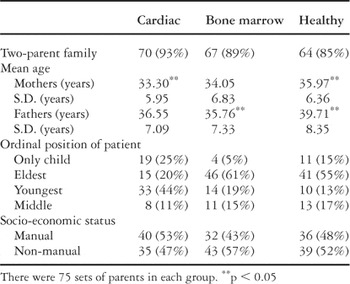
Table 1.
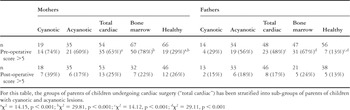
Table 2.
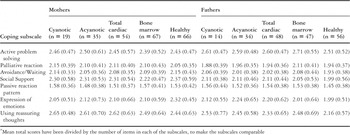
Table 3.
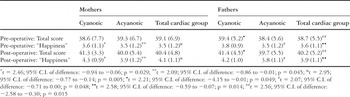
Table 4.
 You have
Access
- 51
- Cited by